Once upon a time, the tower stood up to ten metres tall on an island in Loch Clickimin in Shetland. And to this day, it remains a mystery.
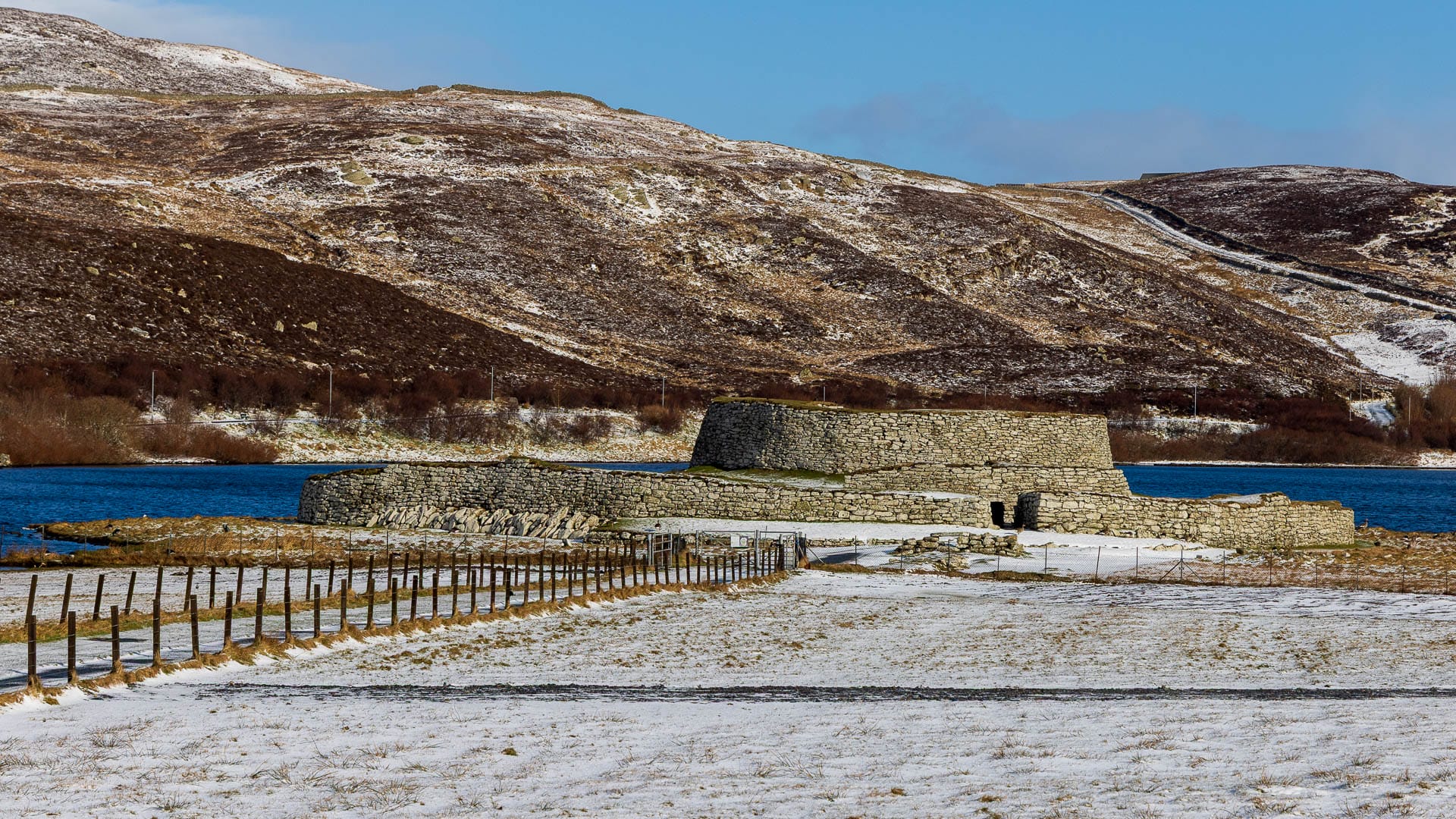
Although brochs like the one at Clickimin are common in Scotland –Dun Carloway in the Outer Hebrides, Gurness in Orkney, Dun Telve and Dun Troddan on Skye – to this day nobody knows exactly what purpose these brochs once served.
Of course, there are theories: the residence of powerful people, a refuge for the local population, or a watchtower offering a panoramic view. The latter theory is supported by the fact that various brochs stood within sight of one another, and many of them faced the sea. Did enemies threaten from there?
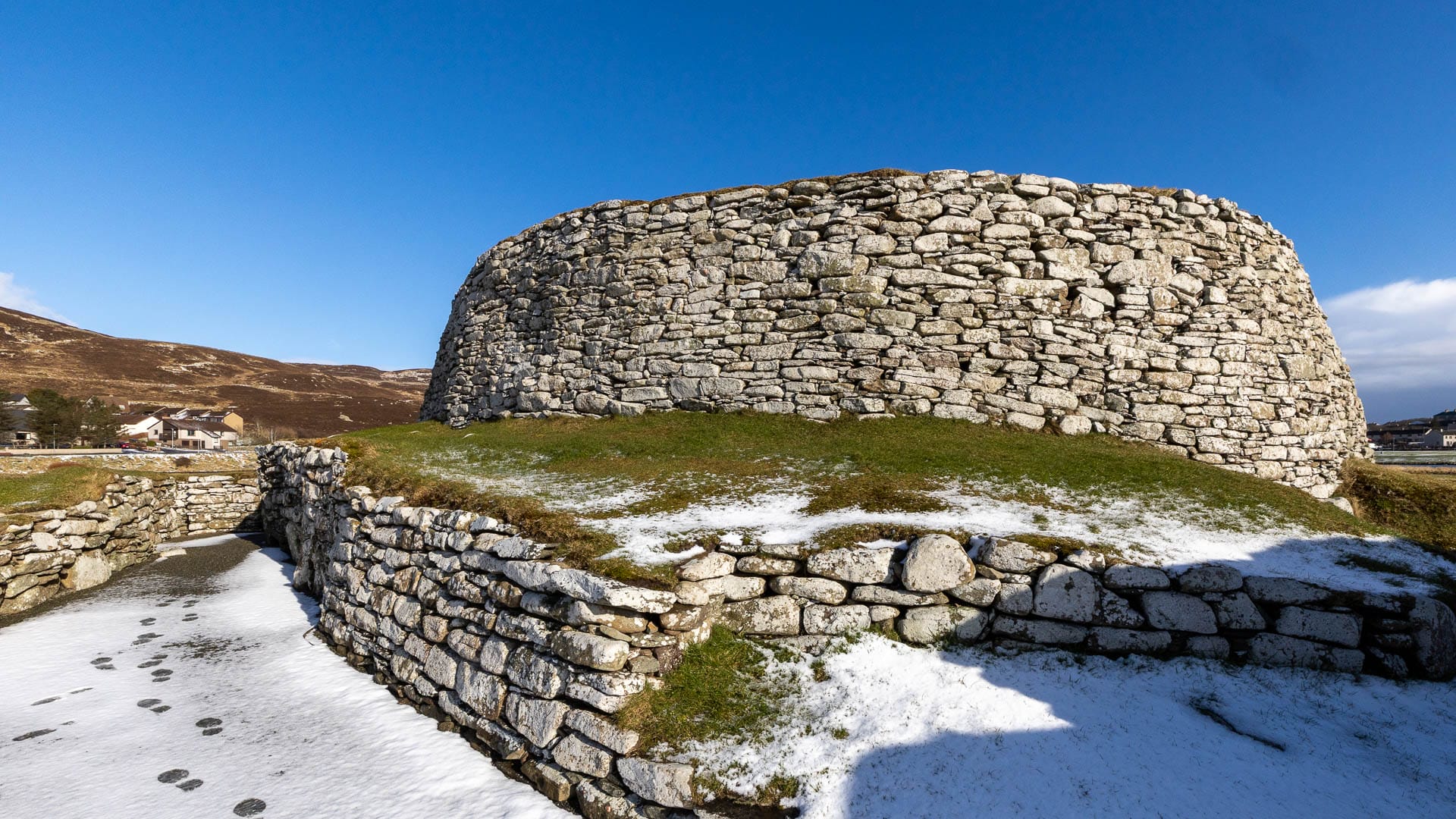
The broch once stood ten metres tall and tapered towards the top. You can see what it might once have looked like at the nearby Broch of Mousa.
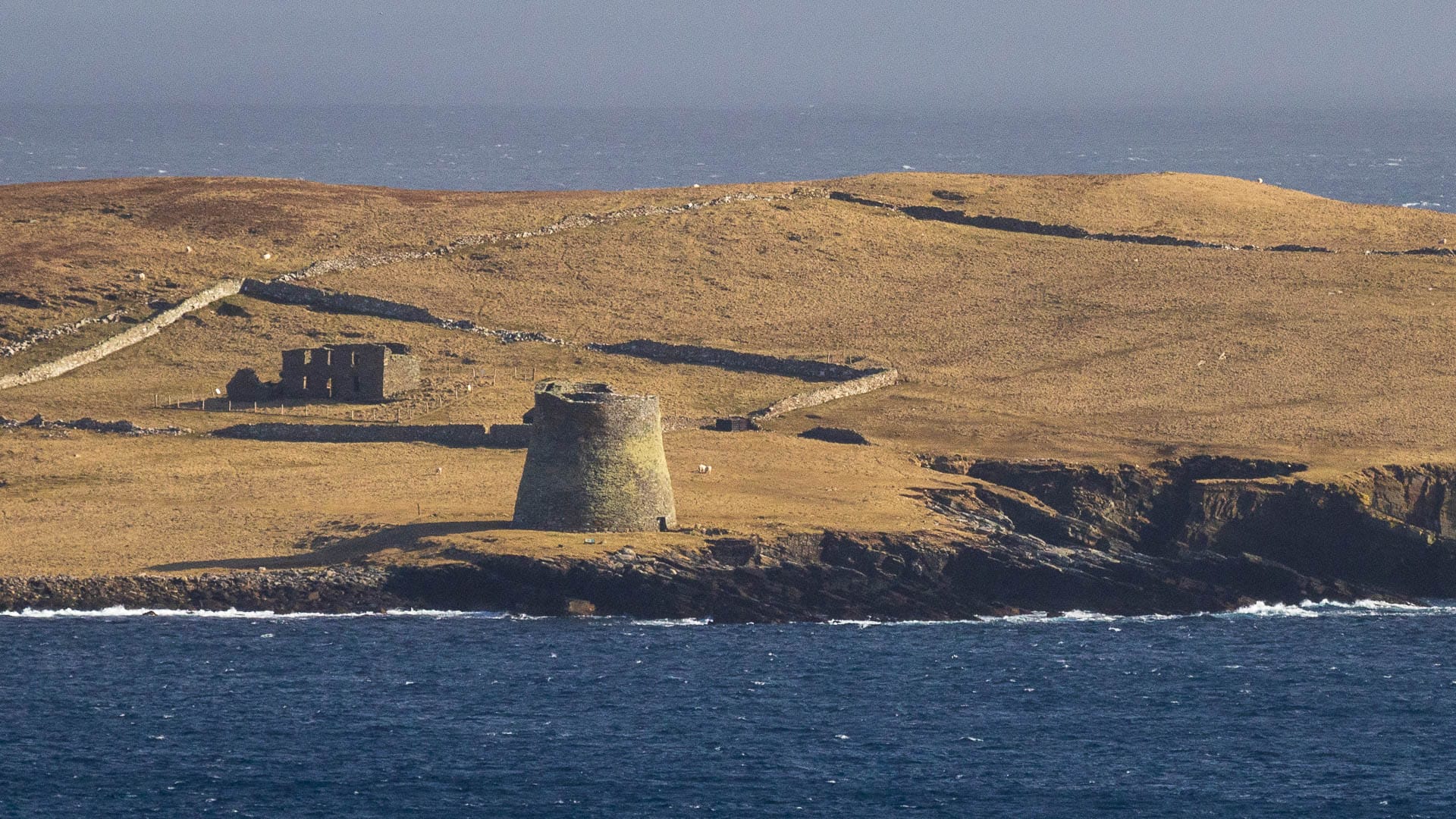
Yet although Clickimin is not particularly well-preserved, it does have some distinctive features. For one thing, the broch stood on an island in the middle of the lake. From a certain point onwards, only a small causeway led across to it.
Where this causeway once met the island, a kind of threshold can still be seen today. And two footprints can be seen in the stones of this threshold.
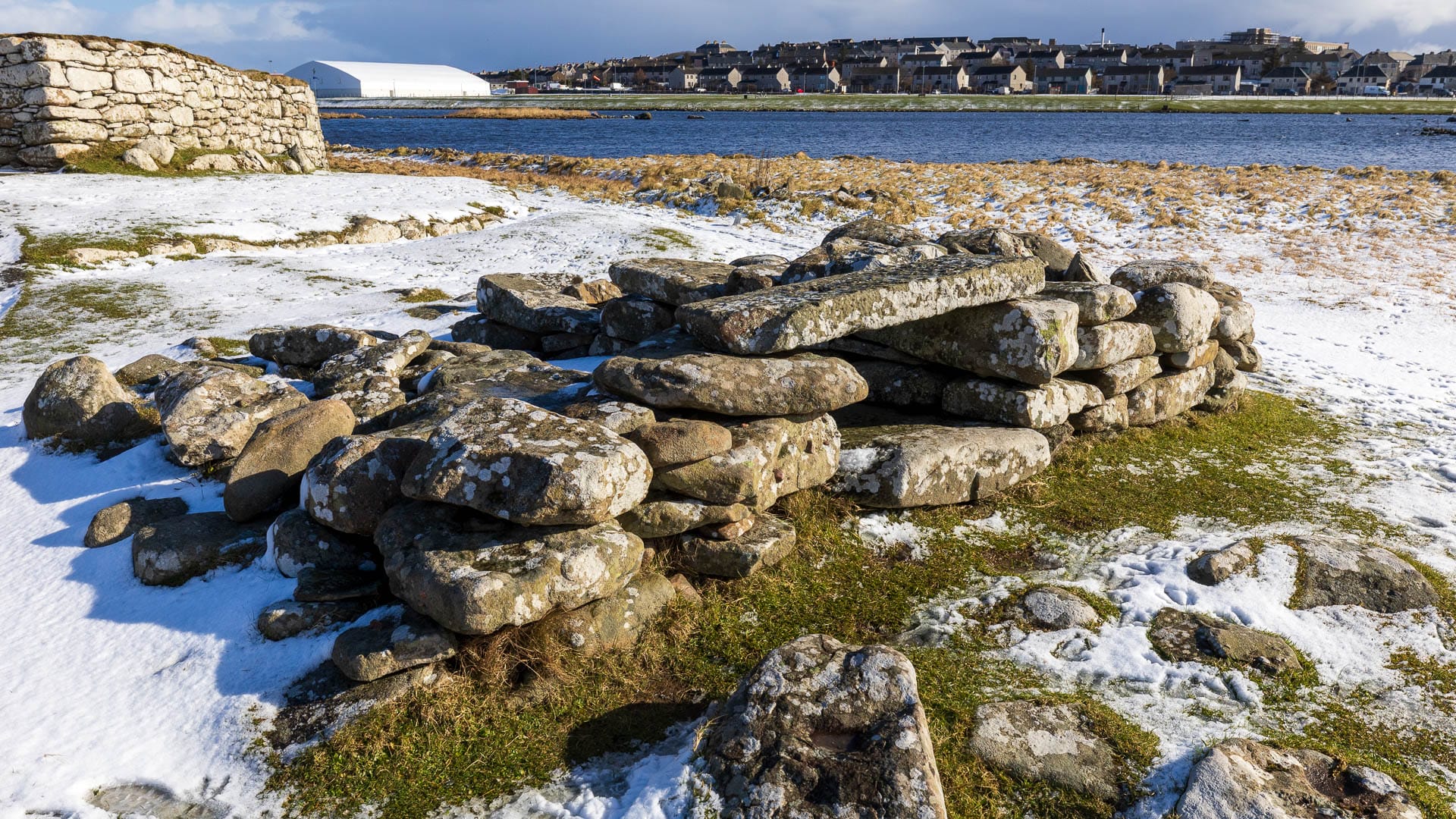
A protective wall encircles the site, through which there used to be only one entrance. Behind it, it initially feels like a labyrinth to today’s visitors. This is because Clickimin – much like Jarlshof in Shetland – has witnessed various eras. The island has been inhabited since the Bronze Age. And so, around the actual broch, there are still remains of old houses from different periods.
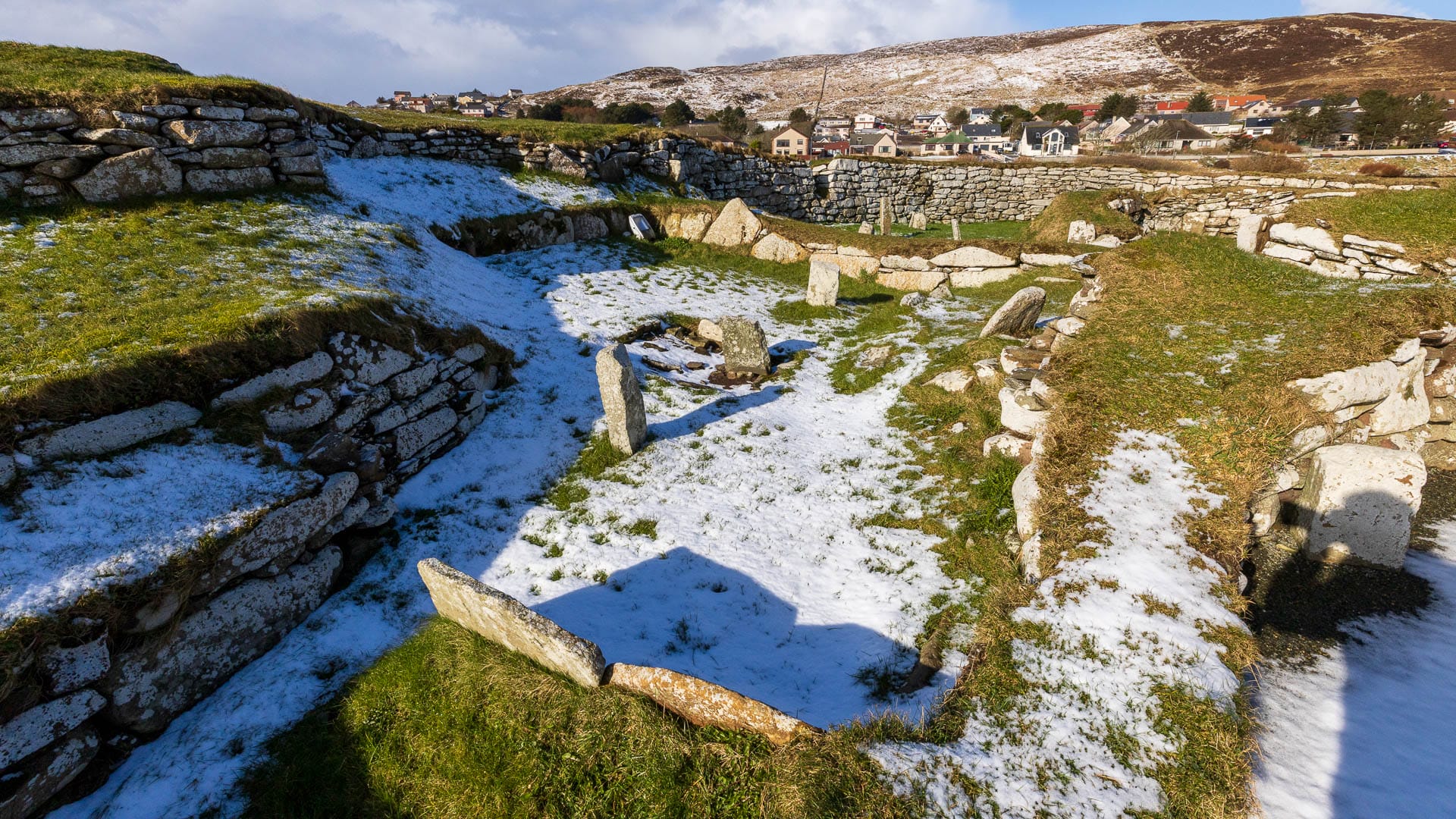
The entrance to the tower itself is offset from the passage through the protective wall. You walk through a long, dark passageway. Then you find yourself inside. An astonishingly large chamber, with at least two further storeys, comes into view.
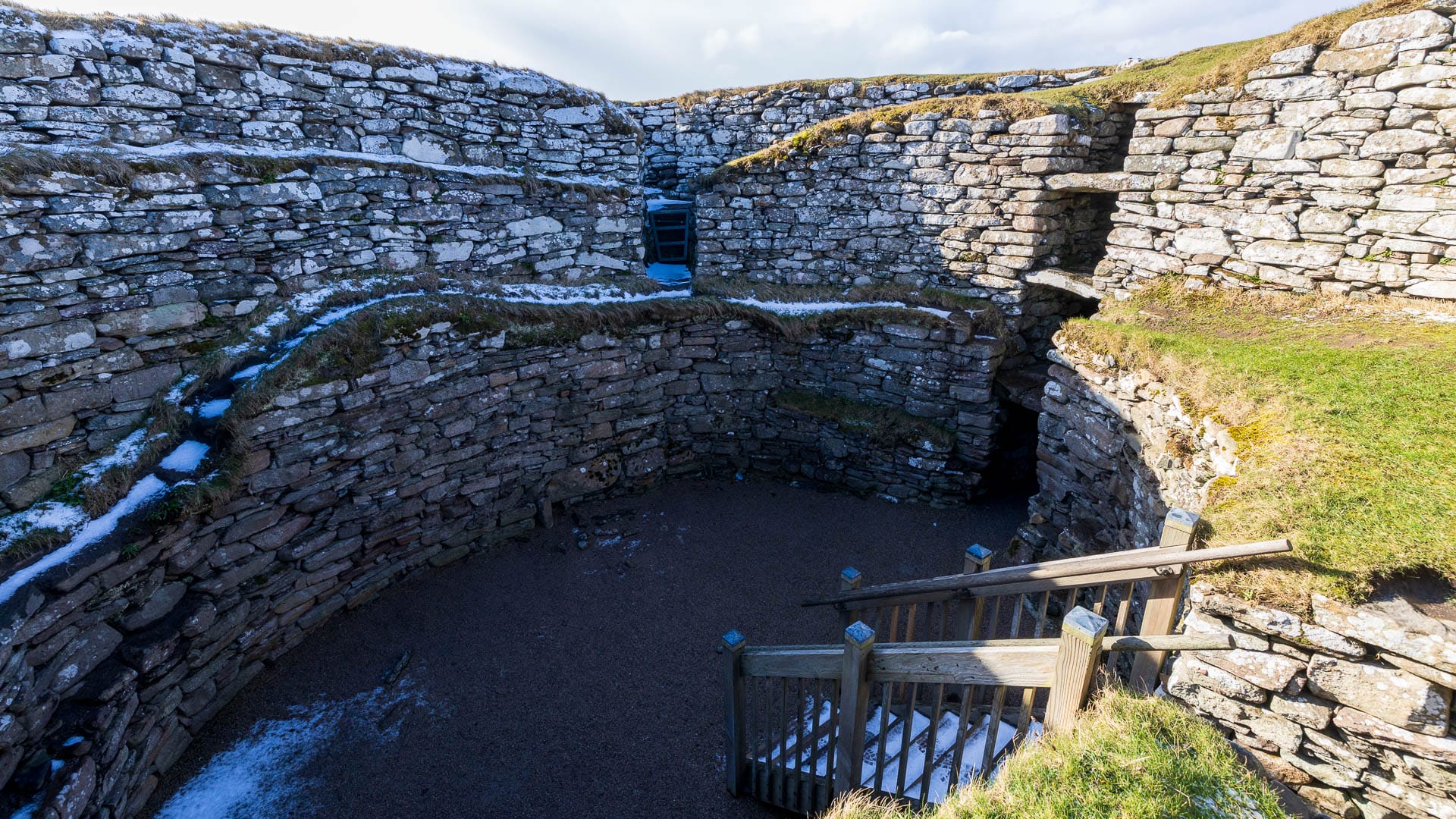
The Clickimin broch is an impressive site, inhabited some 2,000 years ago, whose structures were built solely from stones without mortar. Situated right at the entrance to Lerwick, no visitor to Shetland should miss a visit here.
Facts: The name Clickimin and controversy
The site on the island comprises a Bronze Age house, an early Iron Age ring wall, the broch itself and, later, further buildings. The site was probably inhabited for over 1,500 years.
Originally, the whole site was situated on an island and not, as it is today, on a headland. It was not until the 19th century that a farmer partially drained the water from the loch and even used the stones from the broch as building material. He was later punished for this.
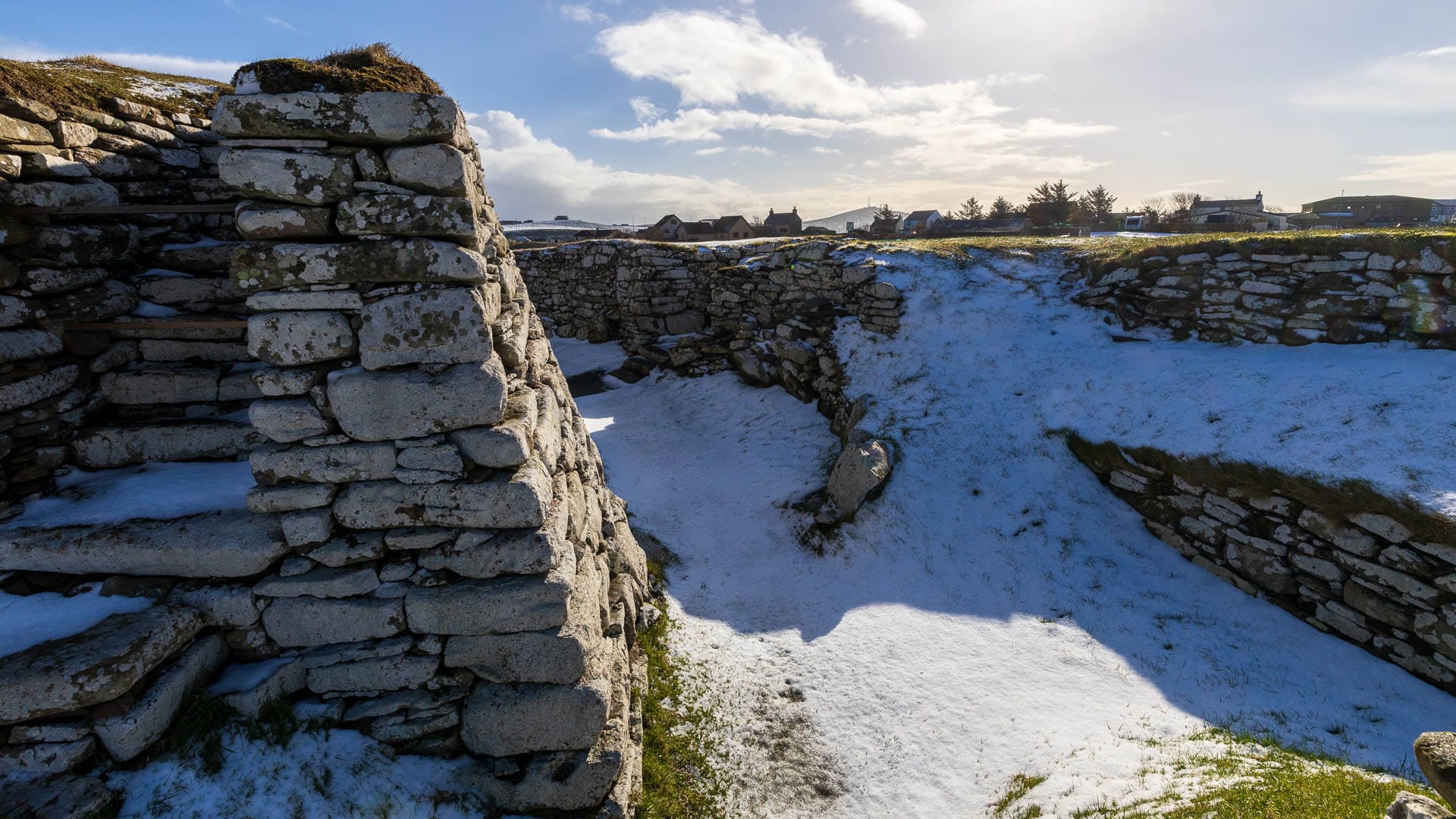
The site, as it can be seen today, was restored at the beginning of the 20th century. In the process, many changes were made, which led to misconceptions among a scientist around 1950. A paper by Brian Smith from 2015 partially corrects this.
The name is also surprisingly modern. ‘Clickimin’ does not appear to date back to the Iron Age – but rather to a later ‘Cleikum Inn’, an inn that has since disappeared. This name for an inn was not unusual; such pubs can still be found today. The name Cleikum Inn also became famous through Sir Walter Scott’s novella St Ronan’s Well.
Directions
With a sat-nav: Enter “177-169 South Rd, Sound, Shetland ZE1 0RY”.
Without sat-nav: Coming from Lerwick, take the A970 towards “The South”. After a short while, you’ll come to a roundabout which also leads to a Tesco. Parking at the broch itself is difficult; there are no bays or parking spaces. It’s therefore best to park in the Tesco car park and walk a few metres across the road.