Lochranza Castle never saw any great battles, was never the seat of a clan chief, and yet it’s famous. A Belgian comic-book hero helped make it well known. And at sunset, it gets some wonderful visitors.
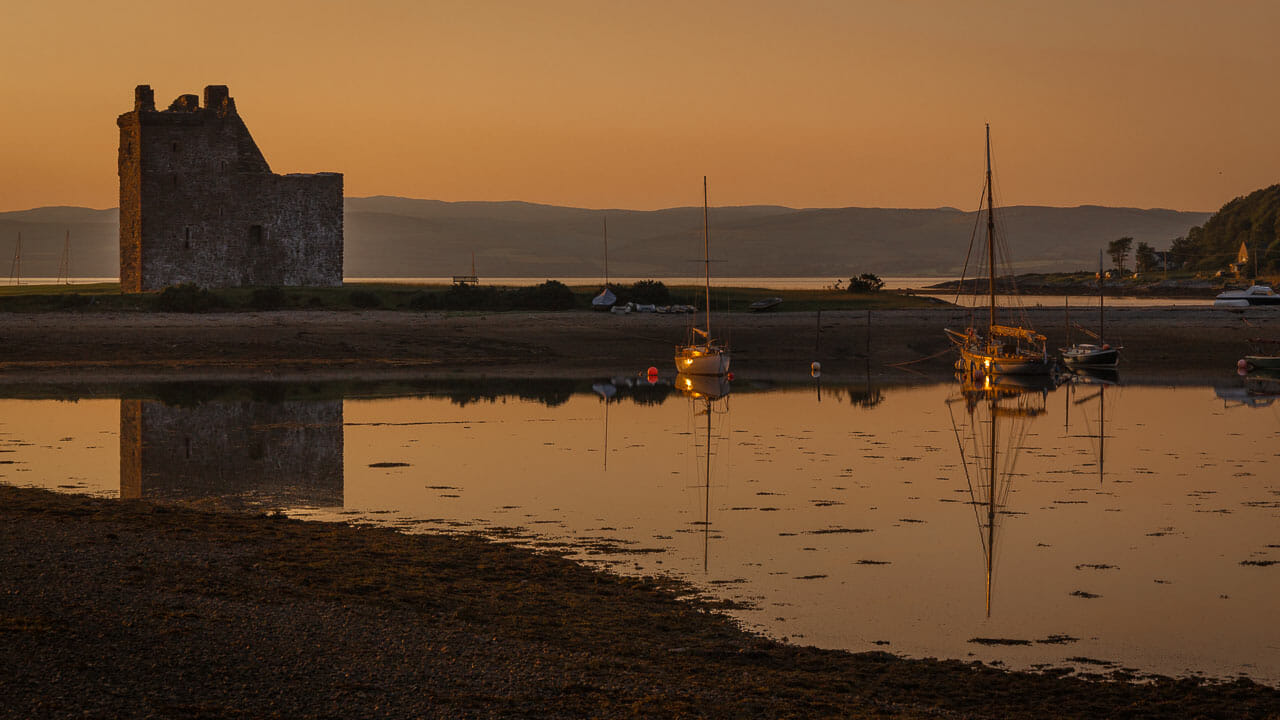
A bay, the sunset, a ruin – it’s hard to get much more Scottish romance than here in Lochranza on the Isle of Arran. But it’s possible, because on our visit a very special surprise was waiting for us.
We’d just crossed over by ferry from Kintyre, and hadn’t even checked in at our bed and breakfast yet. As I said: the sun was setting, bathing the castle and its surroundings in a warm orange-red glow.
Naturally, I wanted to photograph this straight away, so we stopped. I grabbed the tripod and hurried along the road to find a good spot.
There was no wind, the water was perfectly still, so the castle was reflected in it – a perfect shot. Otherwise, the sea had just retreated from the bay, exposing the seaweed. Midges swarmed around me in clouds.
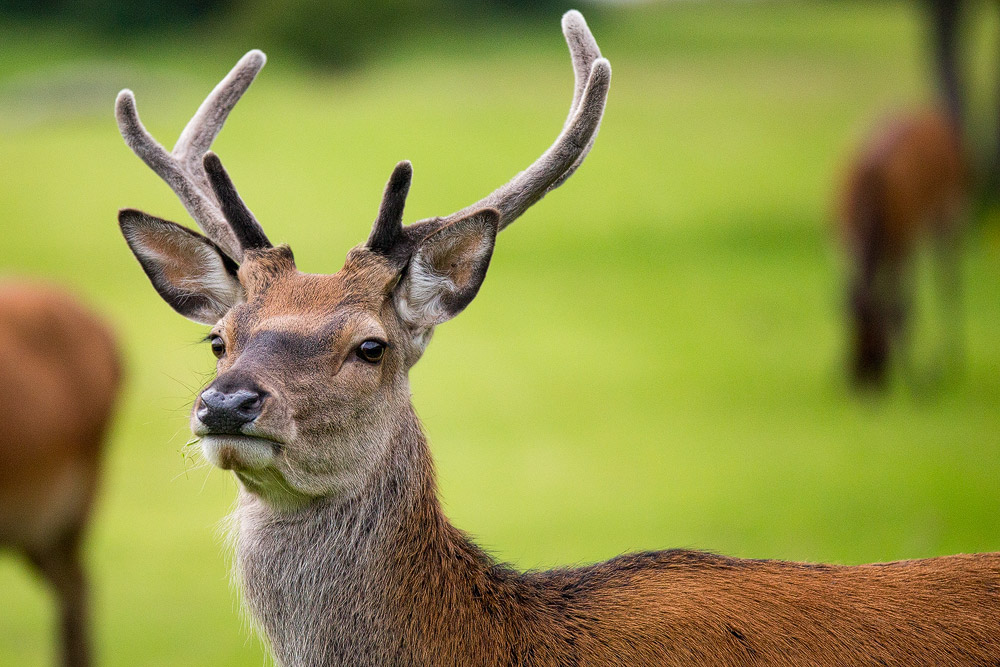
Beset by midges but focused on the castle, it took me a while to notice what was happening behind my back: a long line of red deer was making its way down from the hill behind me into the bay. Confidently, they crossed the road, then a small stream, and finally reached the seaweed.
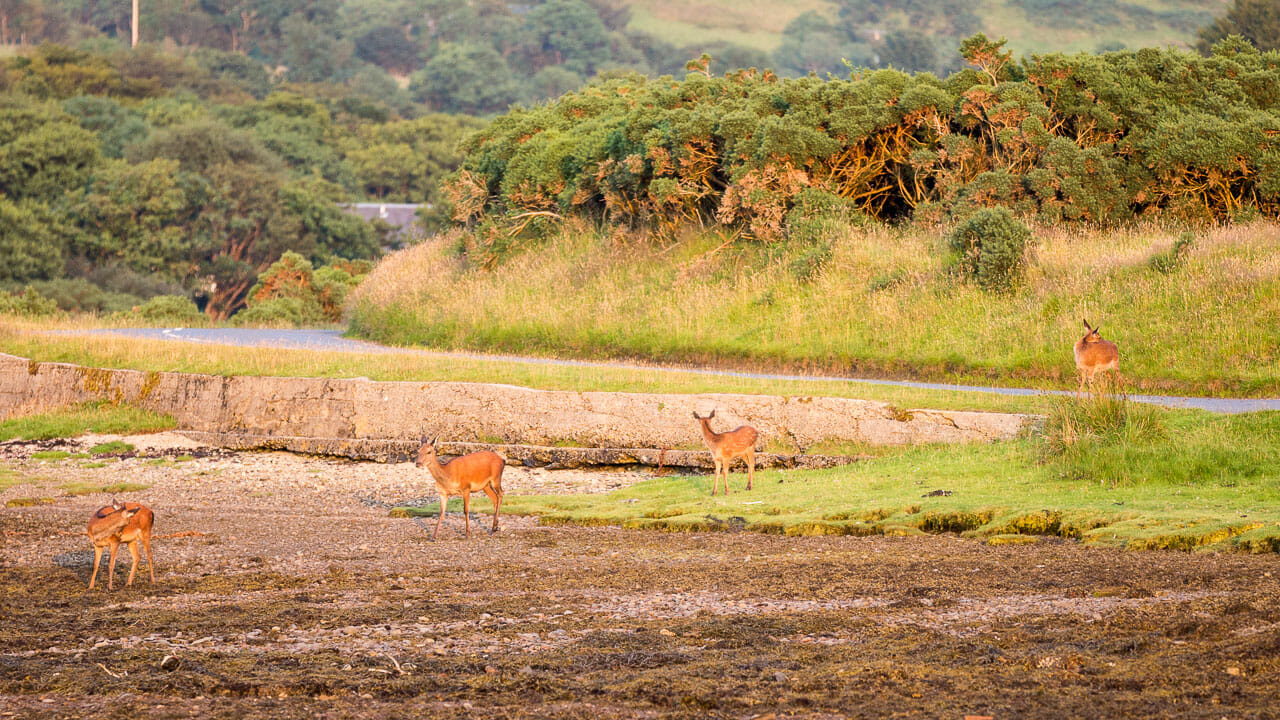
Lens change! Quick, out with the telephoto and onto the camera. Deer in a bay in front of a castle – I certainly wasn’t going to see that again anytime soon.
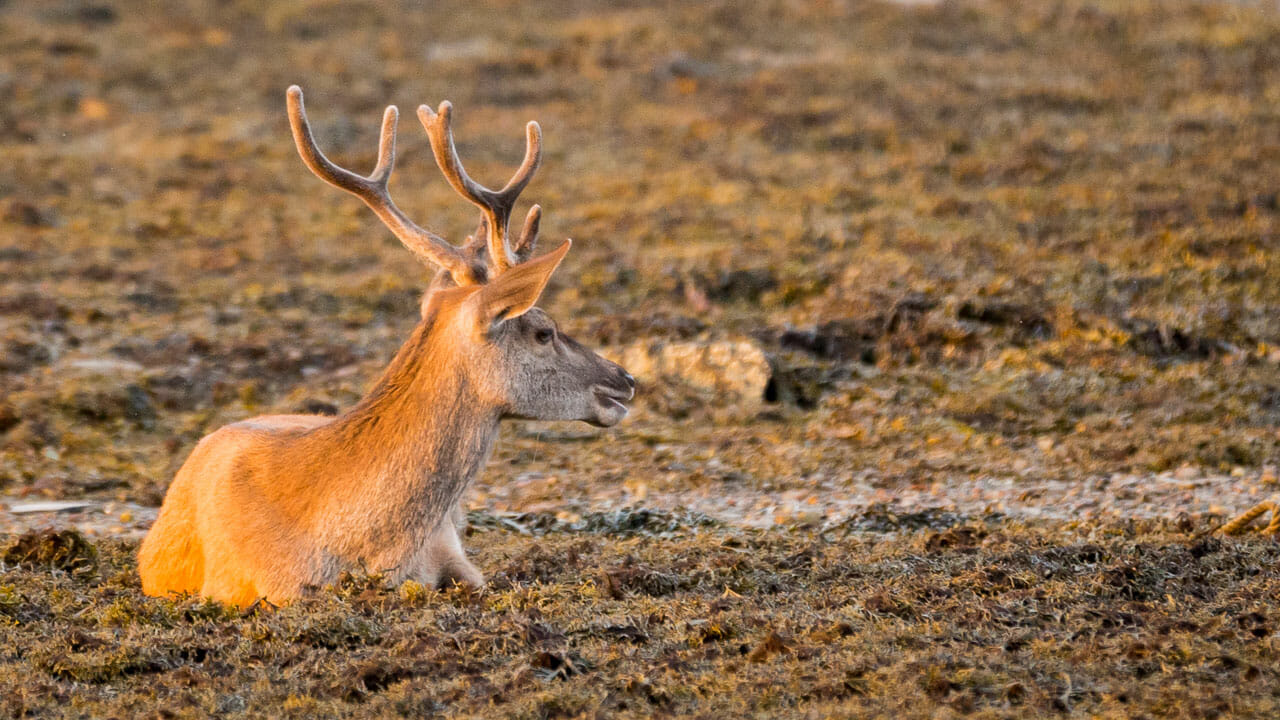
The deer made themselves right at home here, wallowing in the mud and seaweed and playfully nudging each other. Two of them discovered a buoy as a toy and pushed it back and forth with their antlers.
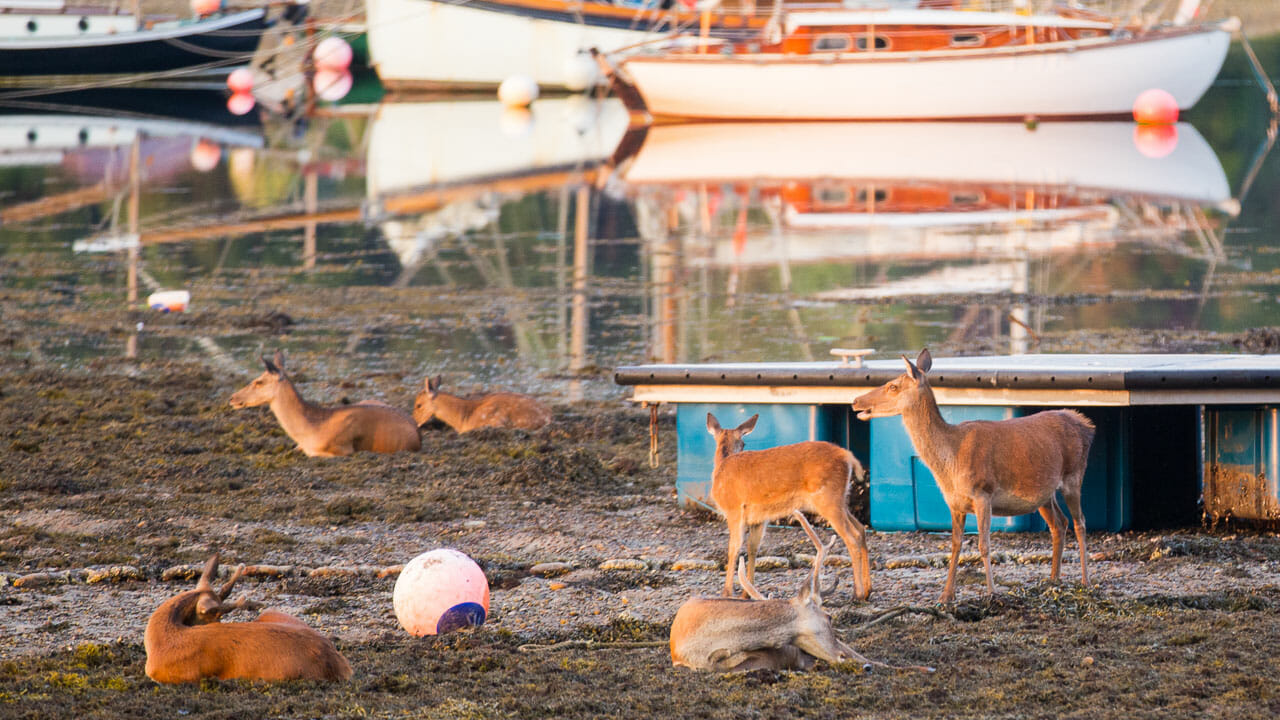
I spent the remaining minutes of the sunset here – this many red deer, and this little shyness, is something I’ve only ever experienced on Arran. And the great thing was, the deer were back again the next evening too. They belong to Lochranza, and you can tell the residents have adapted to their permanent guests: through unusually high garden fences, a lot of patience on the nearby golf course, and even on the restaurant menus.
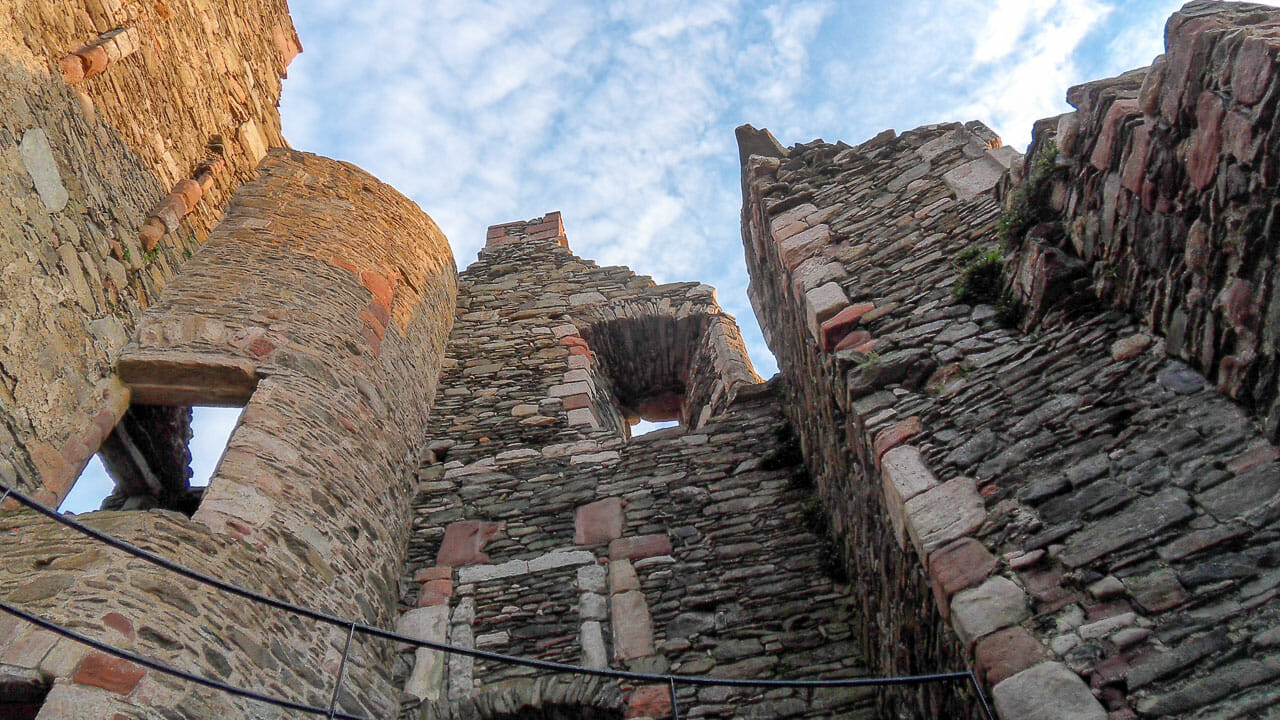
We took a look at the castle again in daylight the next day.
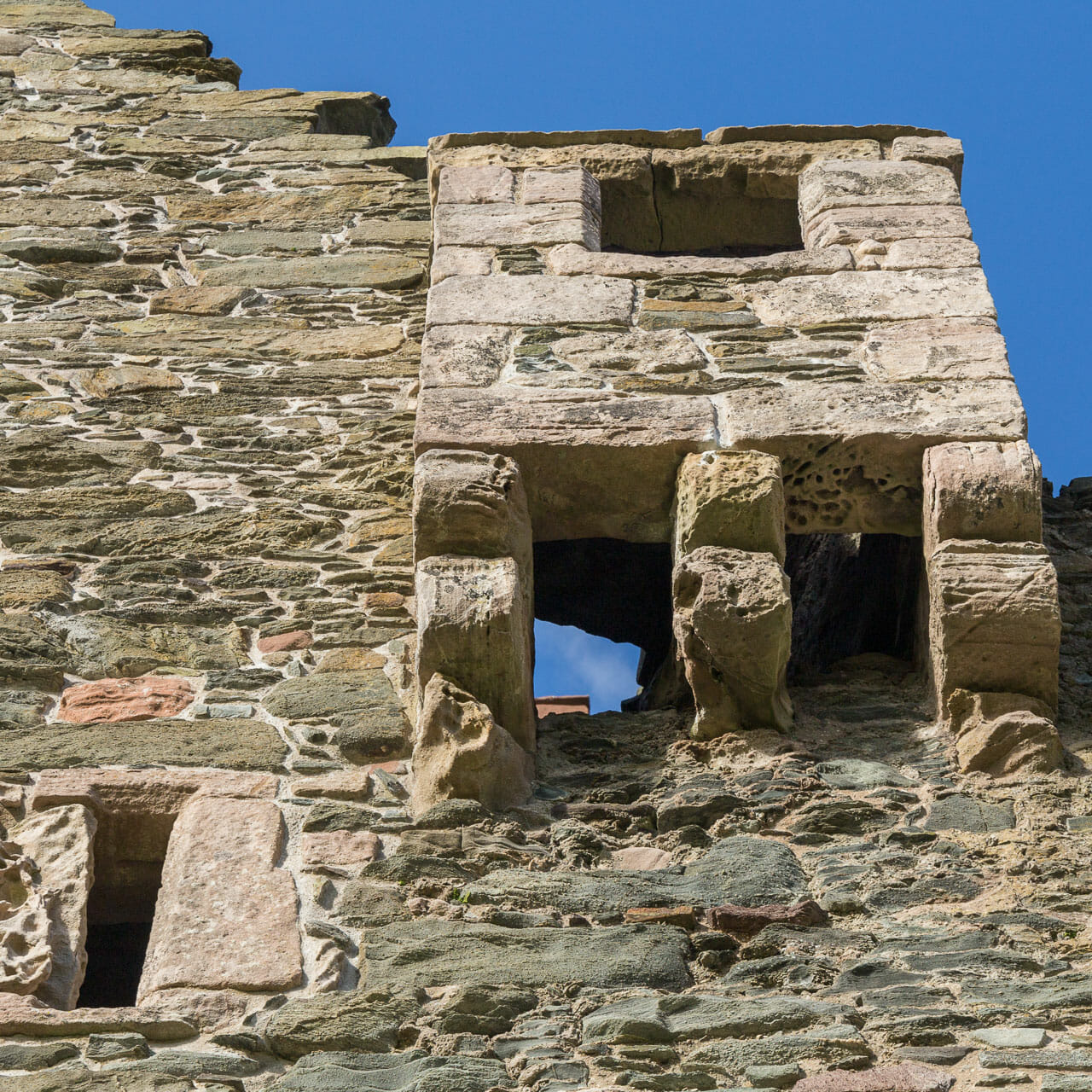
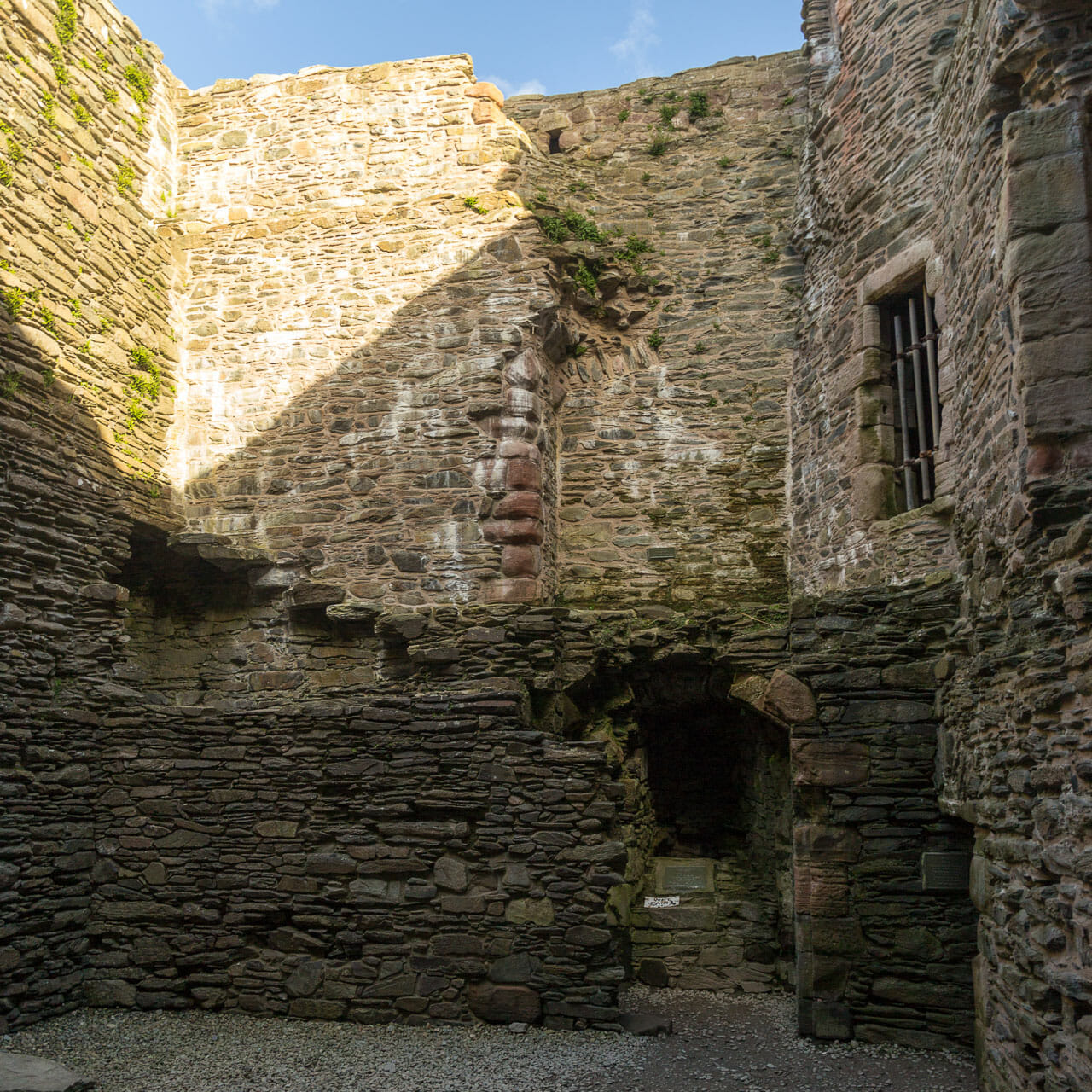
There are some details worth admiring, such as the machicolation on the outside.
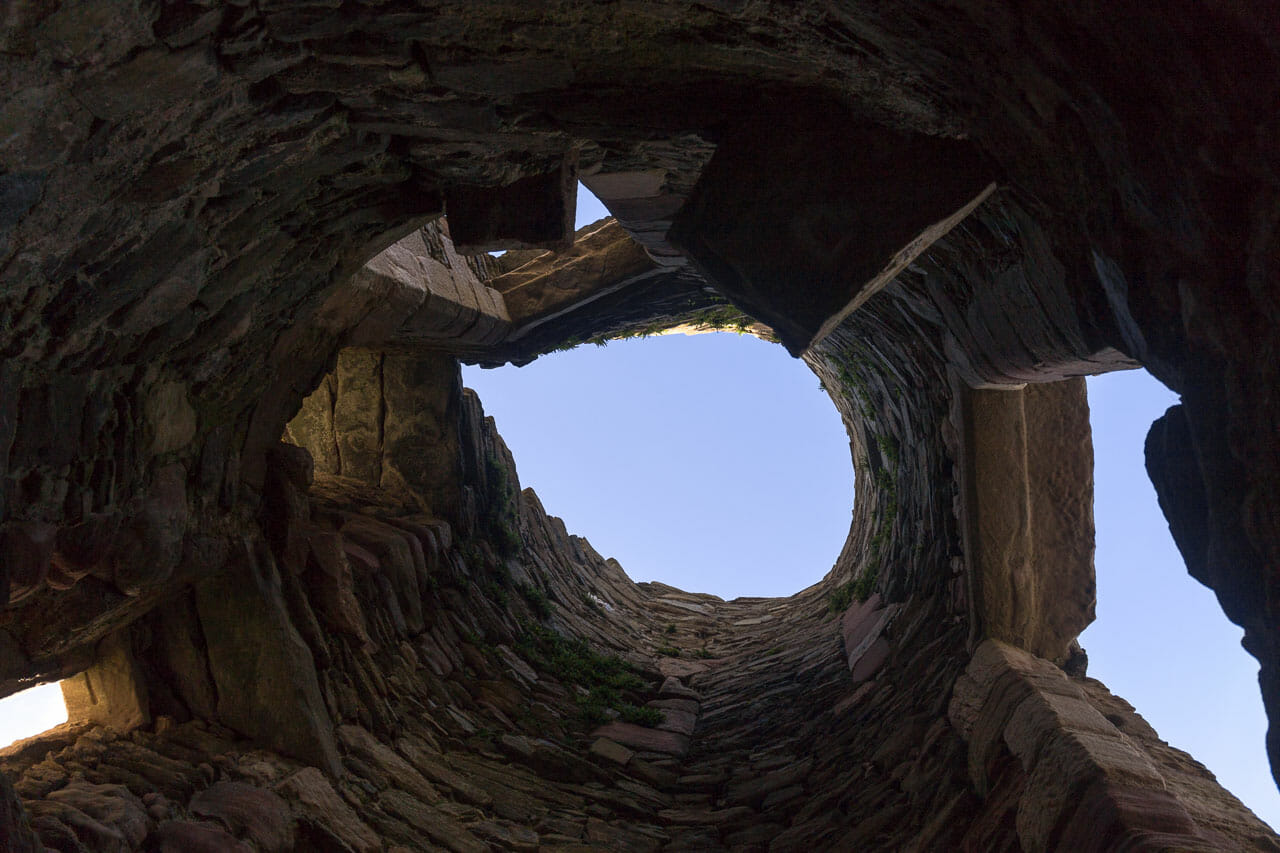
Or the former spiral staircase.
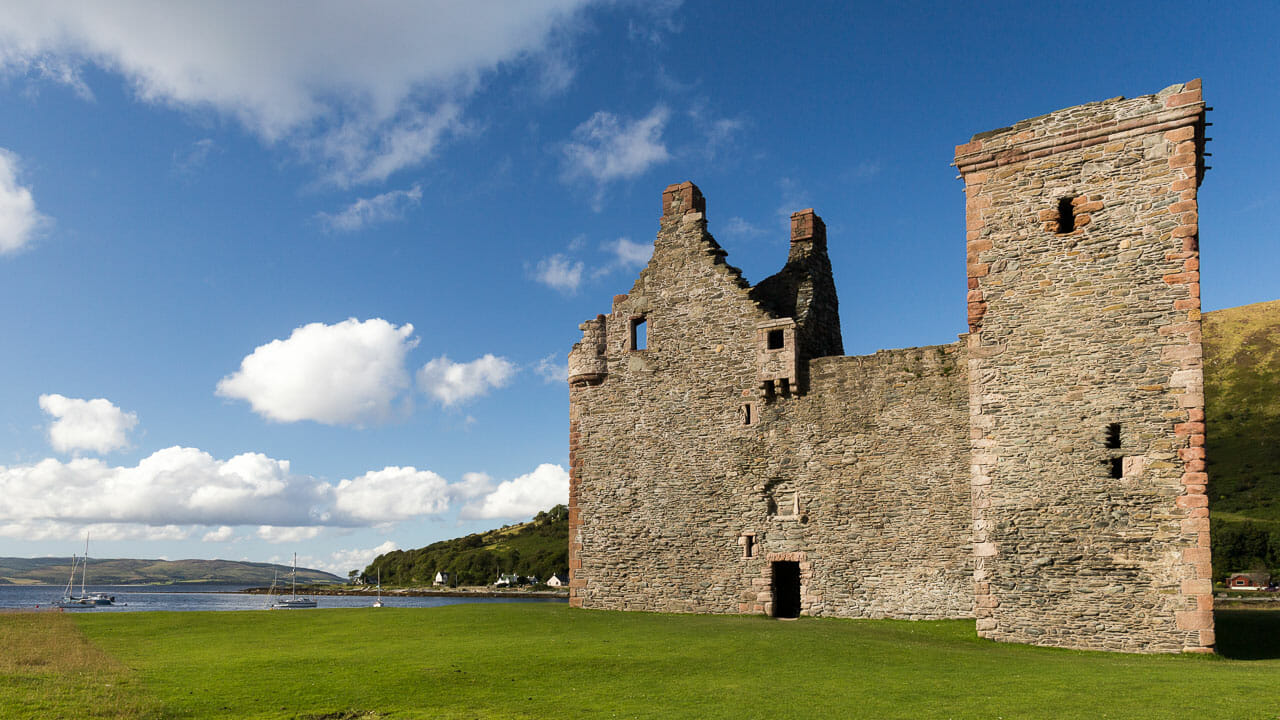
On the whole, though, the castle is more rewarding from the outside.
Good to know: About Lochranza Castle and Tintin’s adventure
Lochranza comes from the Gaelic “Loch Raonsa”. As so often, the spelling has been more or less roughly “anglicised”. The “loch” in this case is a sea inlet nestled among the surrounding mountains in the north of Arran, providing a natural harbour.
The castle, in turn, stands on a spit of land that cuts sideways into the loch, dividing it into two halves.
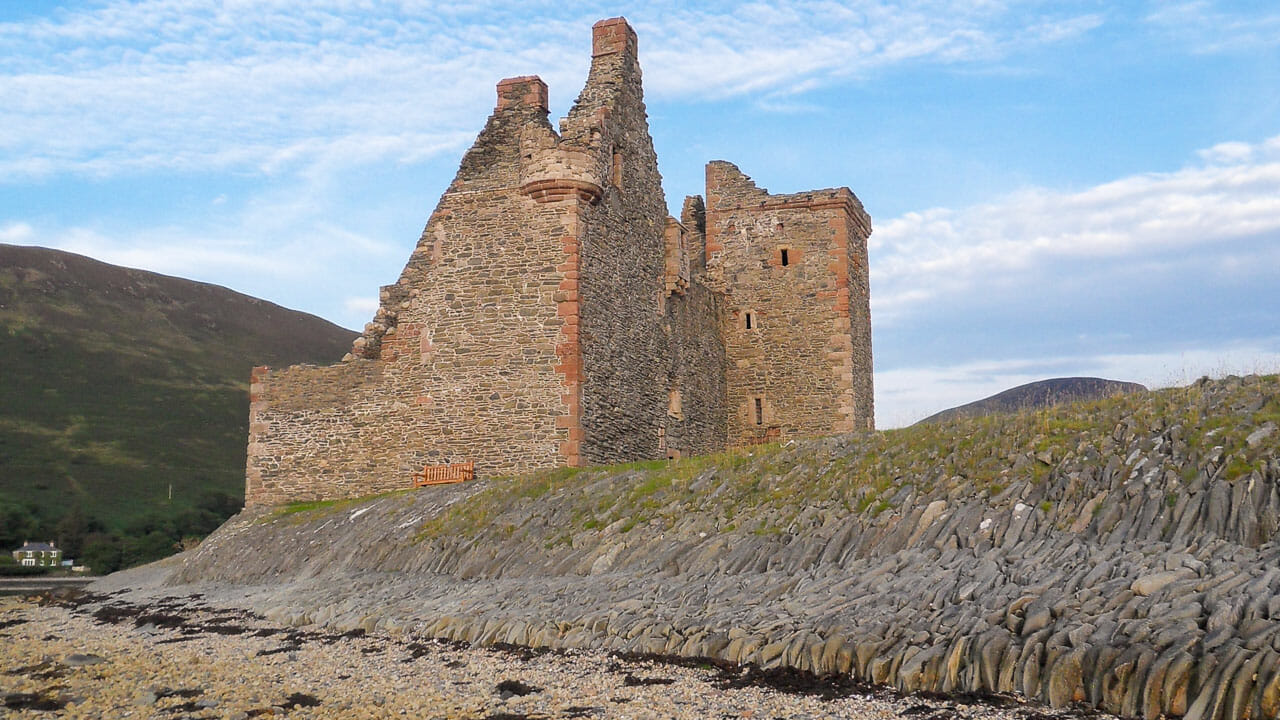
Lochranza Castle is indeed an old castle. It’s thought the MacSweens built the first version here as a “hall house” (interestingly, a term that always comes up in connection with this castle, though it’s also questioned academically). It’s said to have originally faced out to sea, only later being redesigned and extended so that it looked towards the village instead.
The MacSweens – or Mac Suibhne in Gaelic, meaning “sons of Sven” – are an Irish clan of Scottish origin. In the 13th century they held land in Argyll stretching all the way to Loch Awe. But in Scotland they backed the wrong alliances, siding for instance against Robert the Bruce. The result: they lost their lands and withdrew to Ireland, where they regained power as Clan Sweeney. The members of the clan who remained in Scotland soon became known, among other names, as the MacQueens.
Lochranza Castle passed to the Stewarts as early as the 13th century, and eventually, in the 18th century, to the Hamiltons, who came to dominate all of Arran. The castle stood in the shadow of the more important Brodick Castle, and was eventually left to fall into ruin.
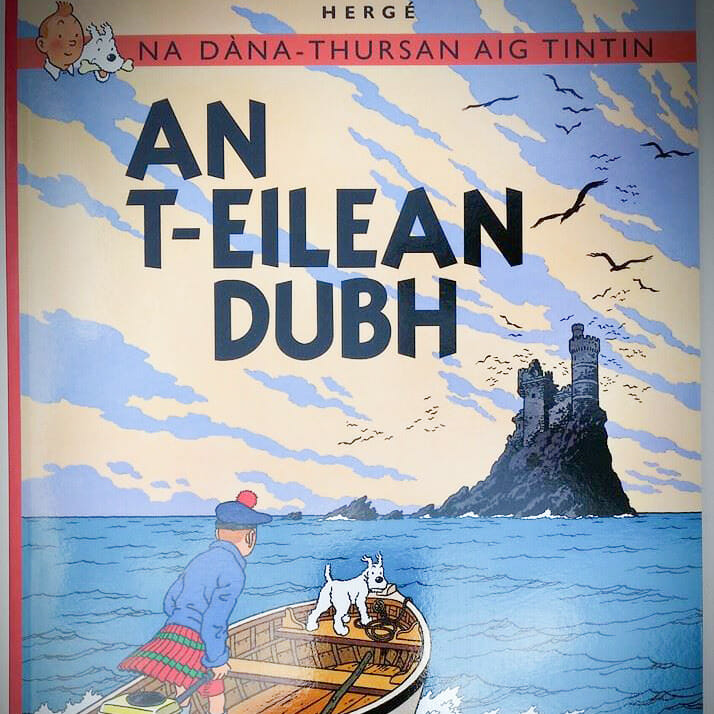
It gained its fame only through a Belgian reporter named Tim, or “Tintin”, who in the 1960s comics also had an adventure in Scotland. In the volume “The Black Island”, he visits a castle. Comic artist Hergé never set foot in Scotland himself, but based his drawings on photographs taken by his colleague Bob de Moor. It’s widely suspected that Lochranza served as a model for the comic’s black castle.
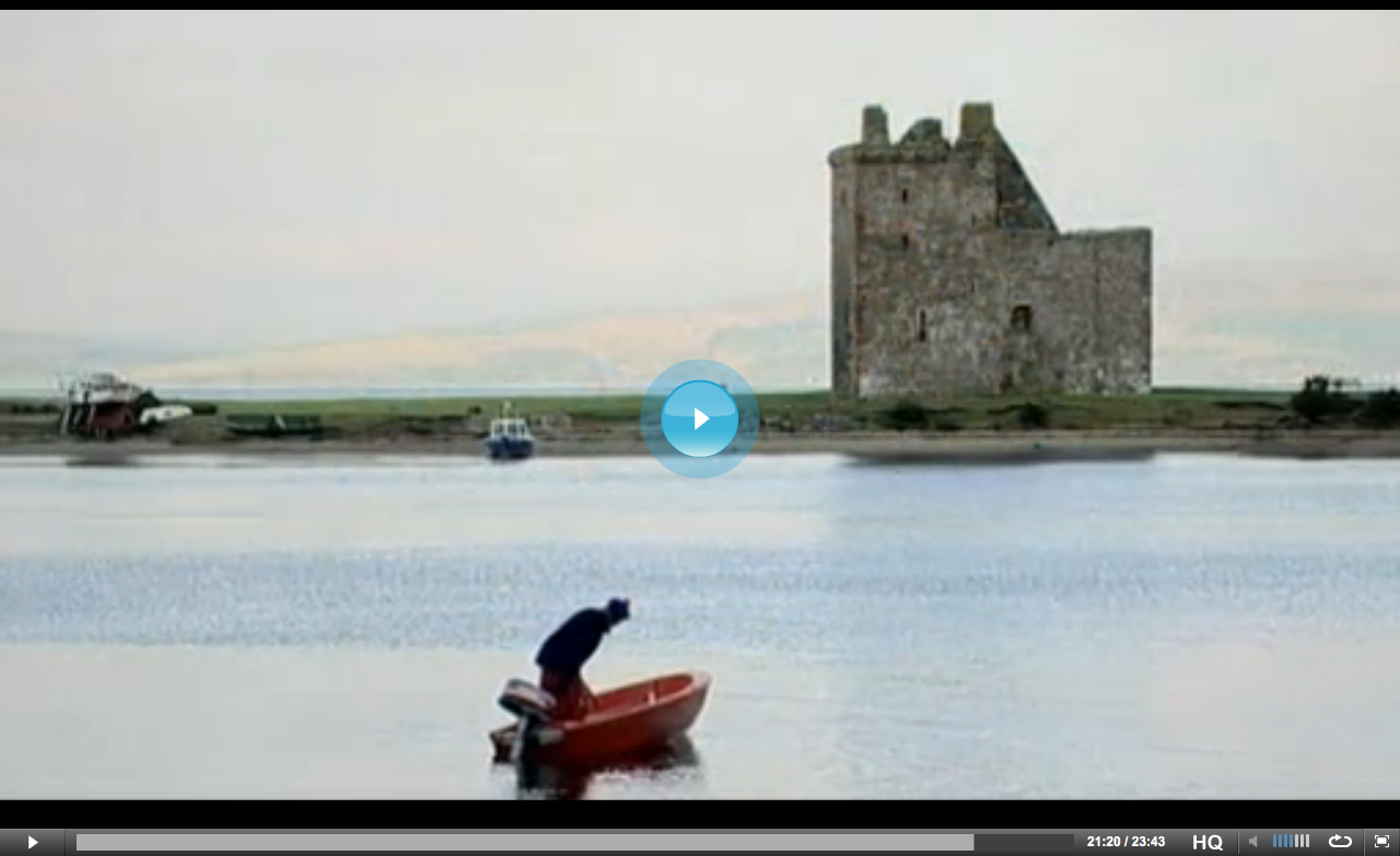
In 2008, British comedian Dom Joly made a documentary about the comic and visited the locations. He suspects Kisimul is the castle from the comic, which would also fit. Strangely, though, in the documentary he then jumps as if by magic to Lochranza Castle …
Tip: Spend a little time at the castle
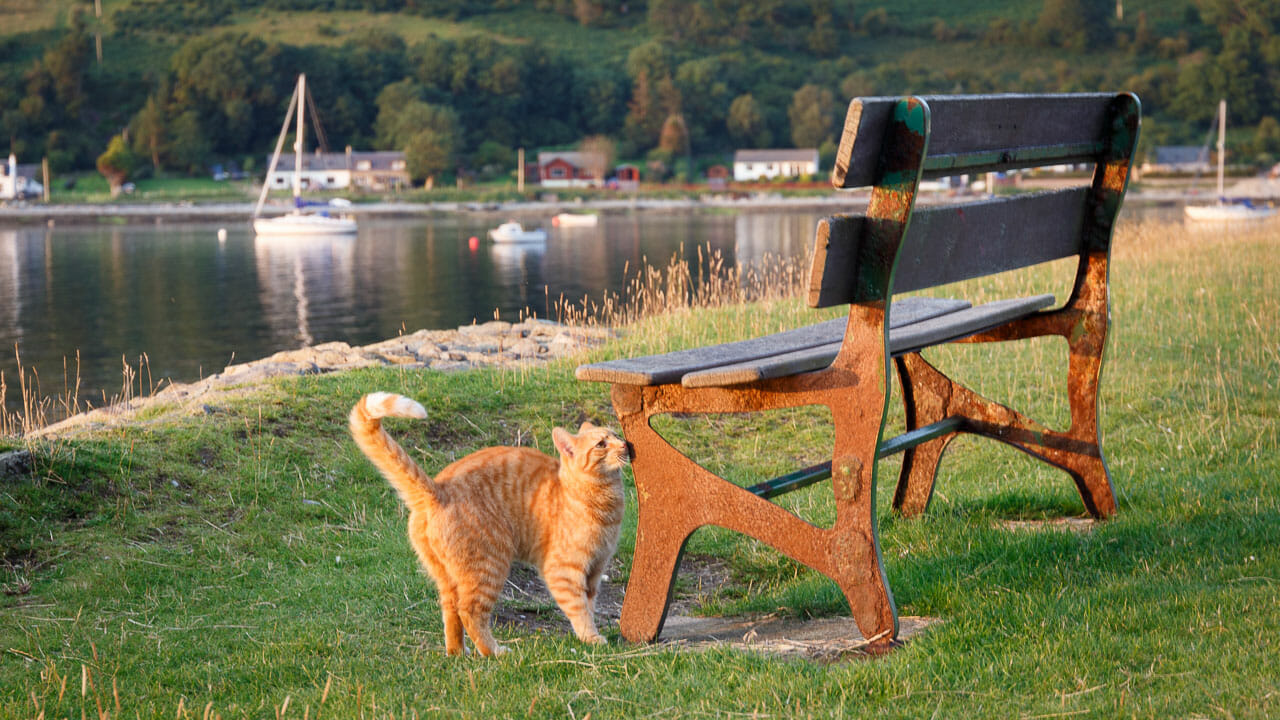
As already mentioned: the inside of Lochranza Castle isn’t really the main draw. But on the headland there’s well-kept grass and benches with a view over the bay and its many sailing boats. In good weather, it’s a lovely spot to relax. And with a bit of luck, you might also see deer here, or at least a playful cat.
Getting there:
With sat nav: “KA27 8HQ” takes you to Lochranza, where the castle is easy to find on the bay.
Without sat nav: if you’re coming from Kintyre, for instance having previously been on Islay or in Kilmartin, the ferry docks right in Lochranza, in sight of the castle. If you’re coming from Brodick instead, you need to take the ring road heading north. This also leads straight past the castle. You can park right on the road near the castle, and a path then leads on to the entrance.