Built for the military, feared for its ruggedness, admired for its beauty. The Rest and Be Thankful Pass is one of the most memorable experiences on a tour of Scotland.
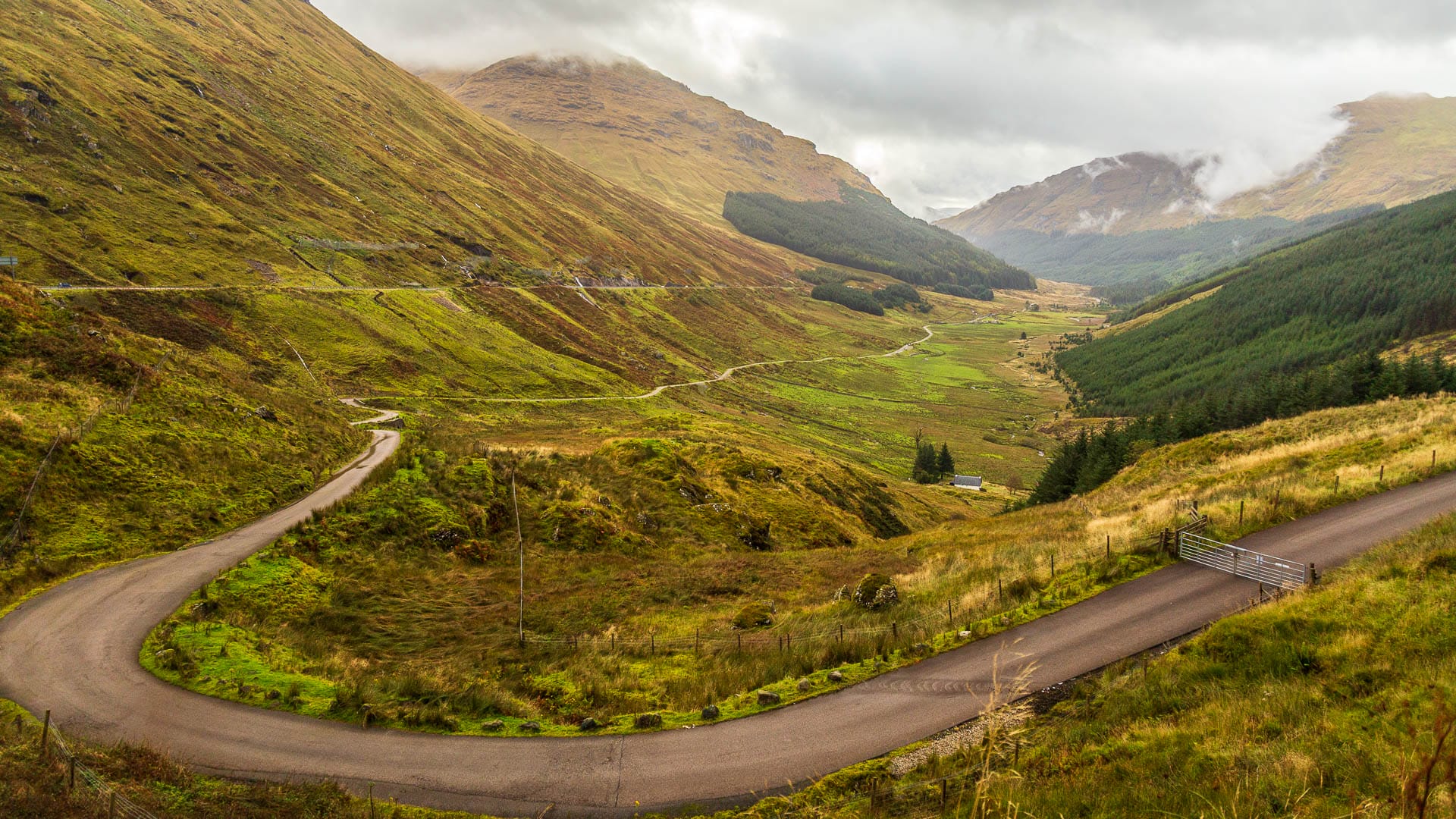
The view from above into Glen Croe shows why the pass is called Rest and Be Thankful. It was built in the 18th century for soldiers. Once they had endured the hardships of the climb on foot, they were allowed to rest, exhausted, and enjoy the view.
Although the pass is only about 245 meters high, the ascent through Glen Croe in the Arrochar Alps was—and still is—one of the most dangerous in Scotland. And the soldiers who built and maintained it accomplished true feats of mastery.
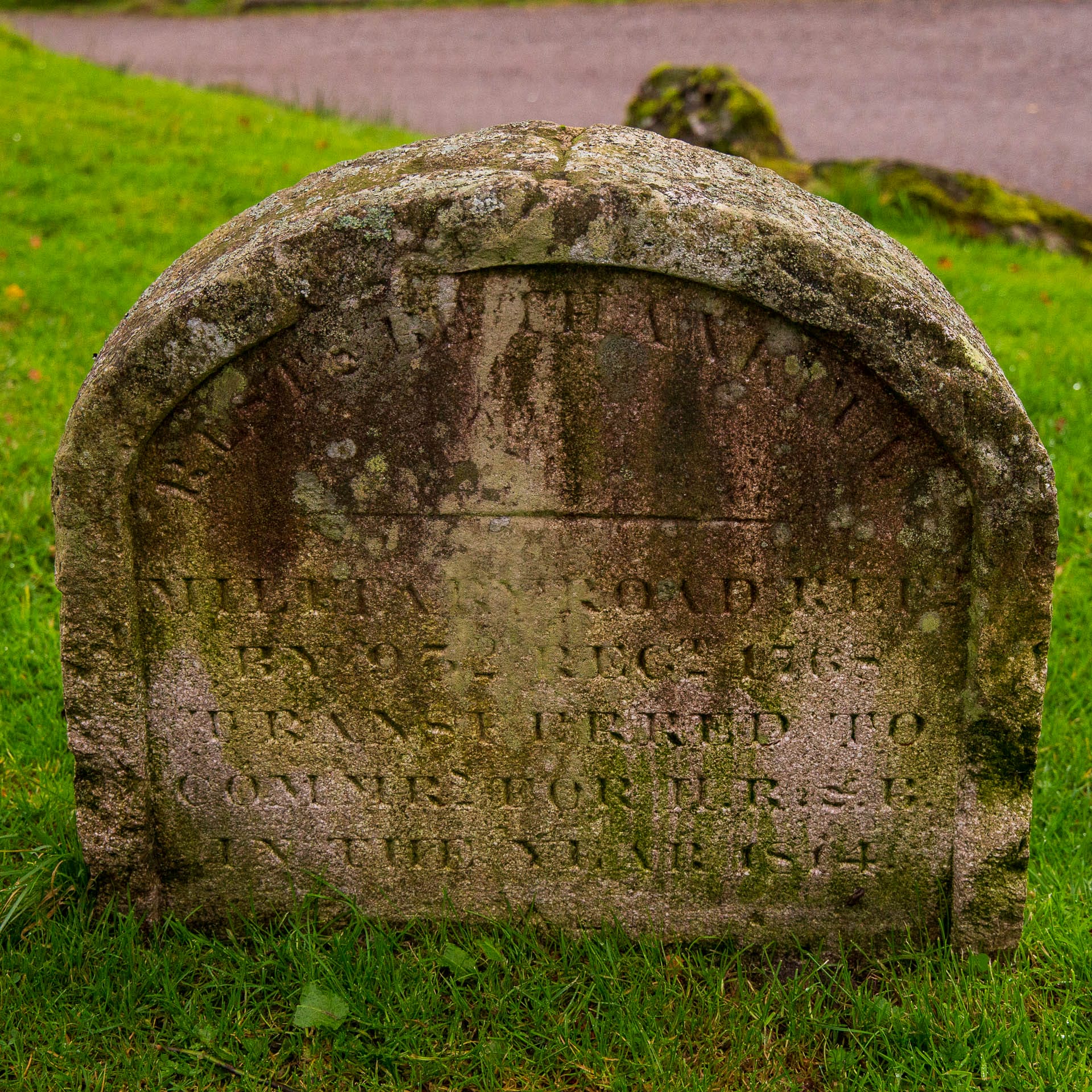
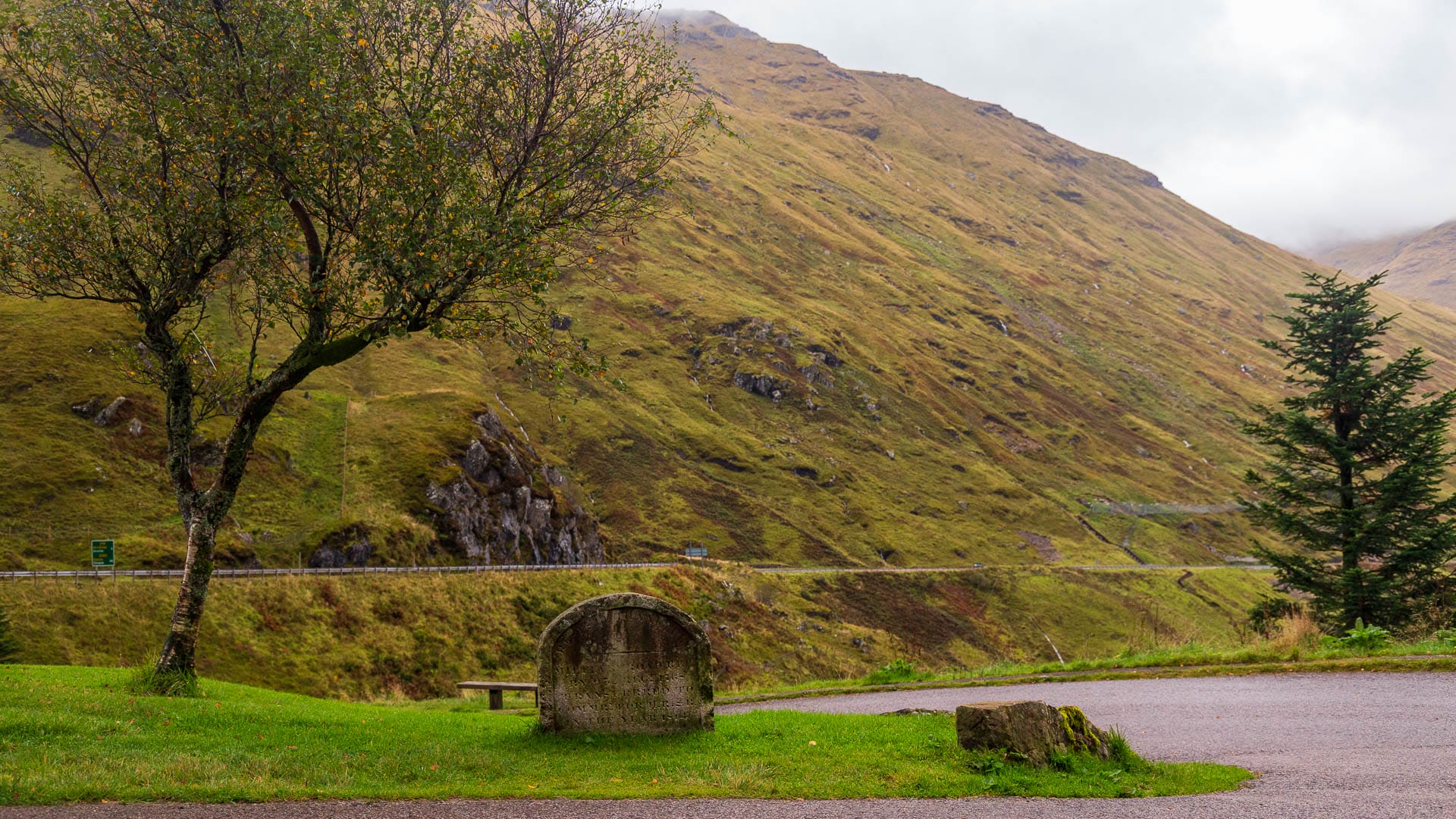
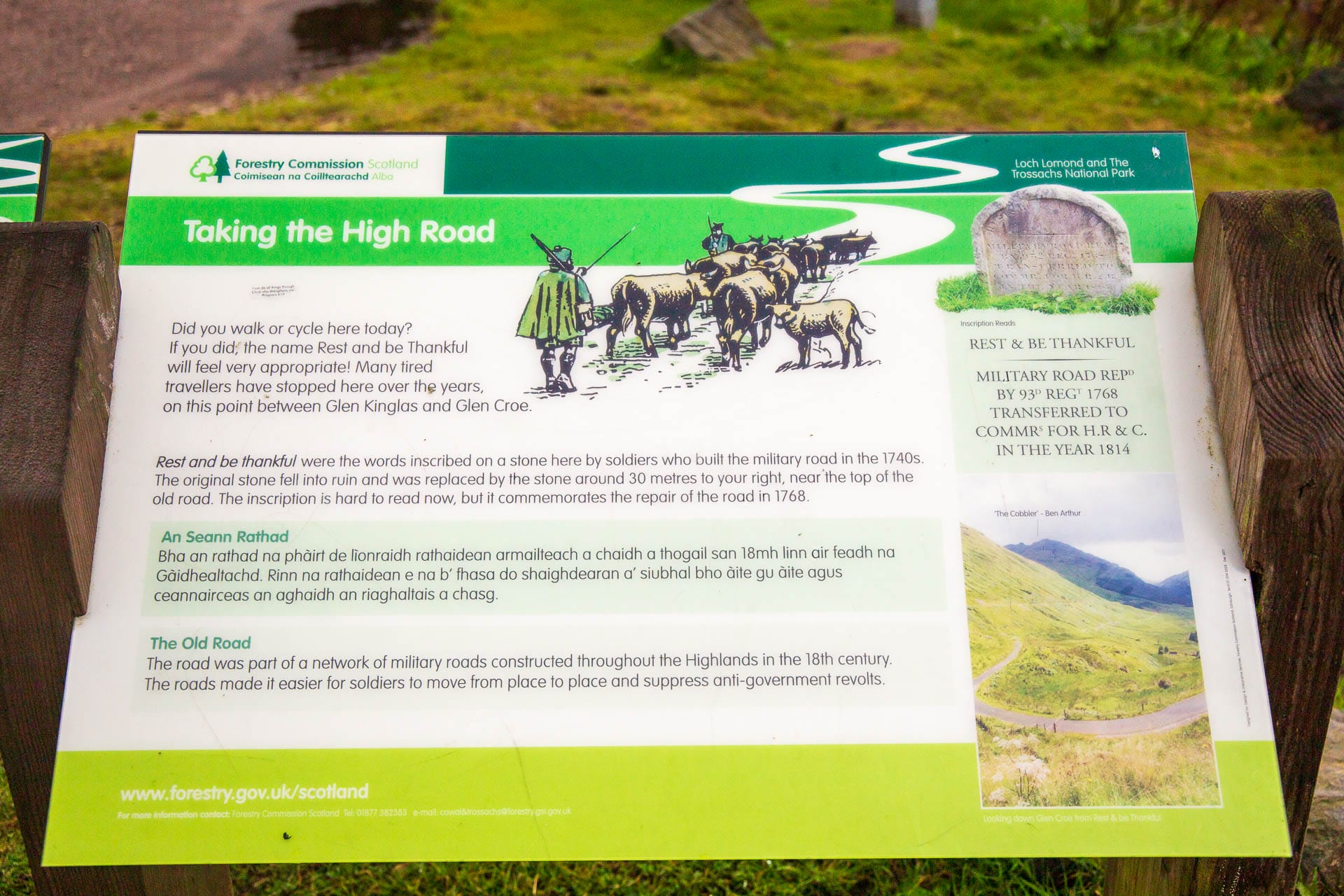
A monument was erected at the top in honor of the Sutherland Highlanders after they had further improved the trails in 1768. That is the stone that can be seen today near the parking lot. It also bears the words that give the pass its name: “Rest and be thankful.”
The pass connects three valleys: The main A83 route runs through Glen Croe and Glen Kinglas. Glen Croe can also be translated from Gaelic as “Eye of the Needle Valley.” A road also branches off from the pass toward Lochgoil, running through Gleann Mòr.
The A83 is one of the most important connections between the major cities and the Cowal and Kintyre peninsulas. When it’s closed, residents and tourists have to take major detours. And unfortunately, that happens quite often.
This is because the slopes in Glen Croe are prone to landslides. Especially after prolonged periods of rain, mud and debris frequently wash onto the road.
Travelers should therefore always check with Traffic Scotland beforehand to make sure the road is passable.
In any case, if your journey takes you along the A83, be sure to stop at Rest and Be Thankful and enjoy the view.
Did YouKnow: The Eventful History of Rest and Be Thankful
The idea to build a road here dates back to General Wade. After the Jacobite Rising of 1715, he was tasked with making the Highlands more accessible in order to better control them.
However, a military road to Inveraray—in the heart of the territory of the pro-government Campbells—was not intended to send troops there, but rather to allow for their rapid redeployment from that location.
The Jacobite Rebellion of 1745–46, however, thwarted these plans, and so construction of the road did not begin until 1748. The pass was previously known to the locals as “Bealach na Easain Duibh”—“Pass of the Dark Waterfall.” They also used it to drive their livestock to market.
Its military significance soon gave way to a romantic one. Poets and scholars discovered Scotland and traveled throughout the country. Among them was William Wordsworth, who conquered the route in 1803, partly on foot and partly by carriage. He subsequently wrote a poem titled “Rest and Be Thankful.” The pass became famous.
With the advent of automobiles, the sporting side of Rest and Be Thankful came to the fore: car races were held on the road. Until the mid-20th century, the goal was to make the ascent as quickly as possible. The pass’s final hairpin curve, the “Devil’s Elbow,” was particularly famous.
It can still be seen today, as two roads lead up through Glen Croe to the pass. The newer road runs higher up the slope of Ben Arthur in a long straight stretch. The older road, on the other hand, runs through the center of the valley and features the famous hairpin curve at its end.
Since the A83 in Glen Croe is one of the routes most affected by landslides, the old road has been restored in recent years—as a potential alternate route. And for some time now, car races have been taking place here again.
Personal note: So far, only in the rain
Whenever I’ve been up there, I’ve never had sunny weather. But that doesn’t take away from the pass’s beauty. On the contrary: it shows why it’s so challenging and why there are so many landslides here. After all, clouds hang low over the mountains of the surrounding Arrochar Alps, some of which reach heights of up to 900 meters.
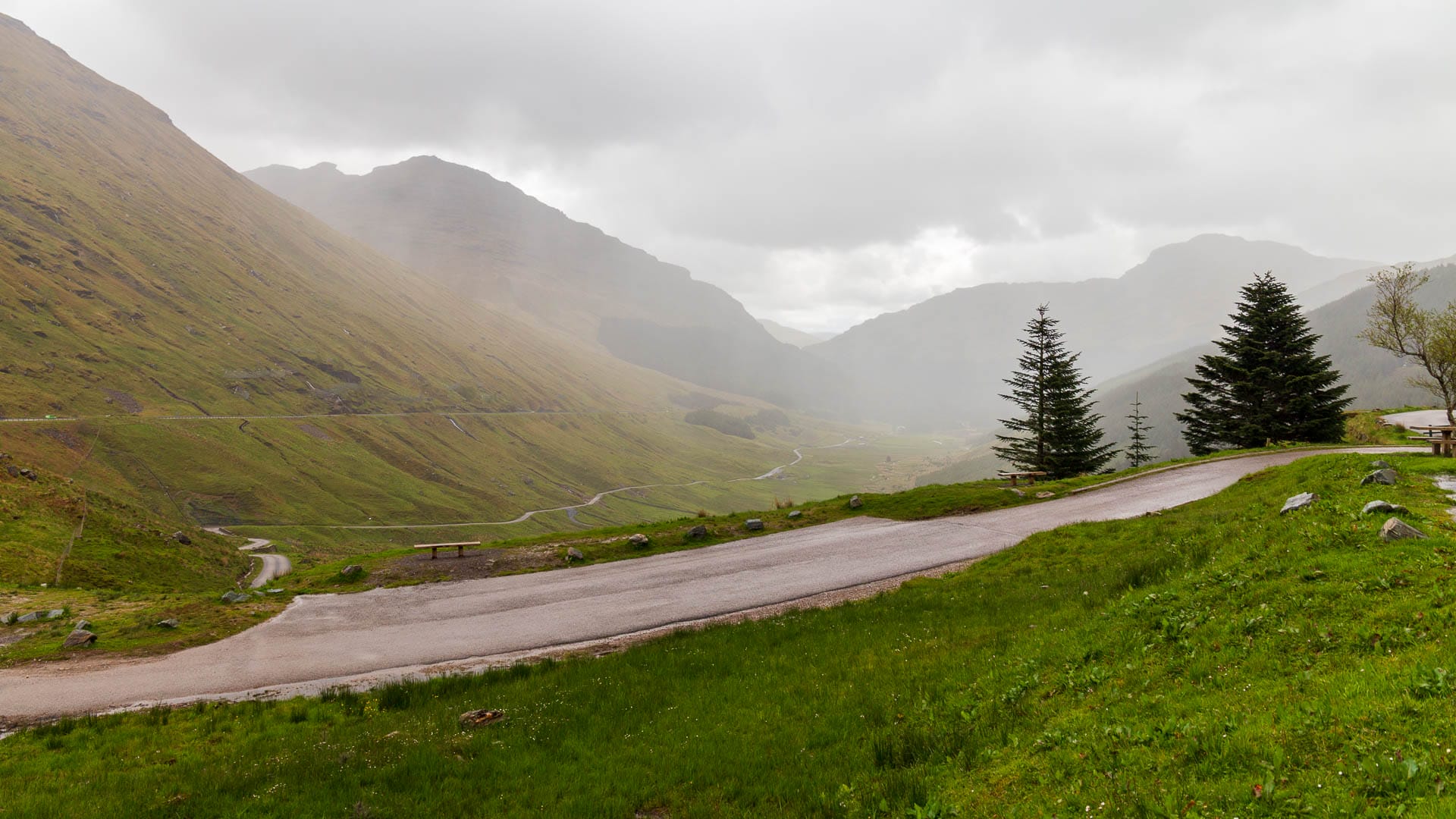
The fact that I wasn’t the only one to experience this is evident from the words of many travelers from the 18th and 19th centuries. As Sarah Murray wrote in 1796: “And when is there a day in the year free from rain in Glen Croe?”
Indeed.
Directions
With a GPS: Entering “PA26 8BQ” will take you very close.
Without a GPS: Simply take the A83 from Tarbert near Loch Lomond toward Inveraray. You’ll reach the parking lot by turning onto the road toward Lochgoilhead. It’s on the left. Caution: Coming from Inveraray, this turn-off appears quite suddenly after Loch Restil.