Around St Blane’s Church lies the site of an early medieval monastery. This article explains why the ruins are still worth a visit today.
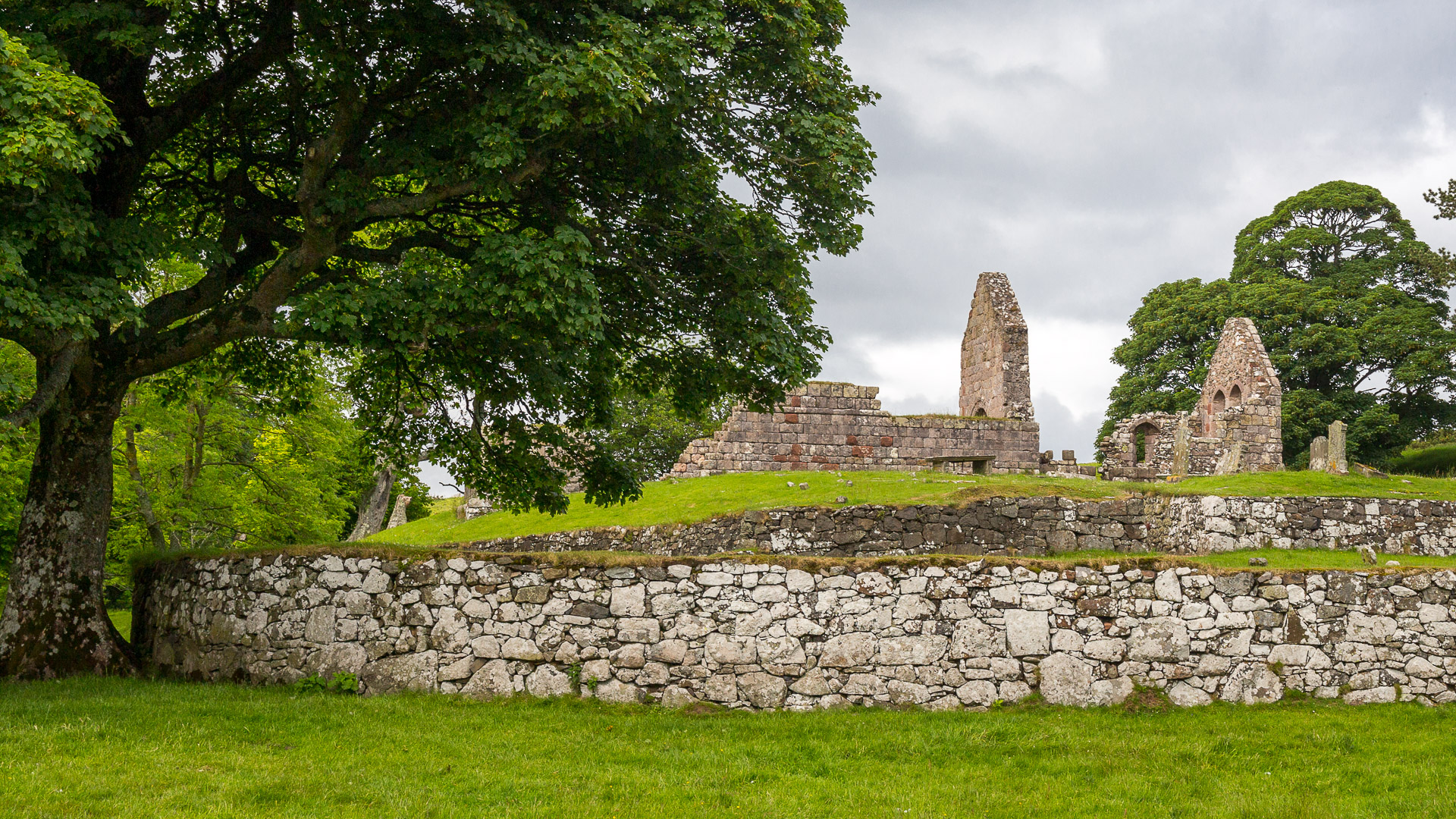
On the little-visited Isle of Bute, near the village of Kingarth, remote and reachable only on foot, lie the ruins of St Blane’s Church. Odd stone steps, long stretches of wall, graves and ditches, woodland and open space – all of it is found up here. Along with, for the most part, a good deal of peace and quiet for reflection. But it wasn’t always like that.
Jump back in time: around 1,400 years ago, around 600 AD, the monastery of Kingarth formed the Christian centre of the Cenél Comgaill, part of the old Irish-Scottish kingdom of Dál Riata. It thus held a significance similar to its counterpart on Iona. Where only wall remnants are visible today, there were once clear boundaries marking it off from the outside world.
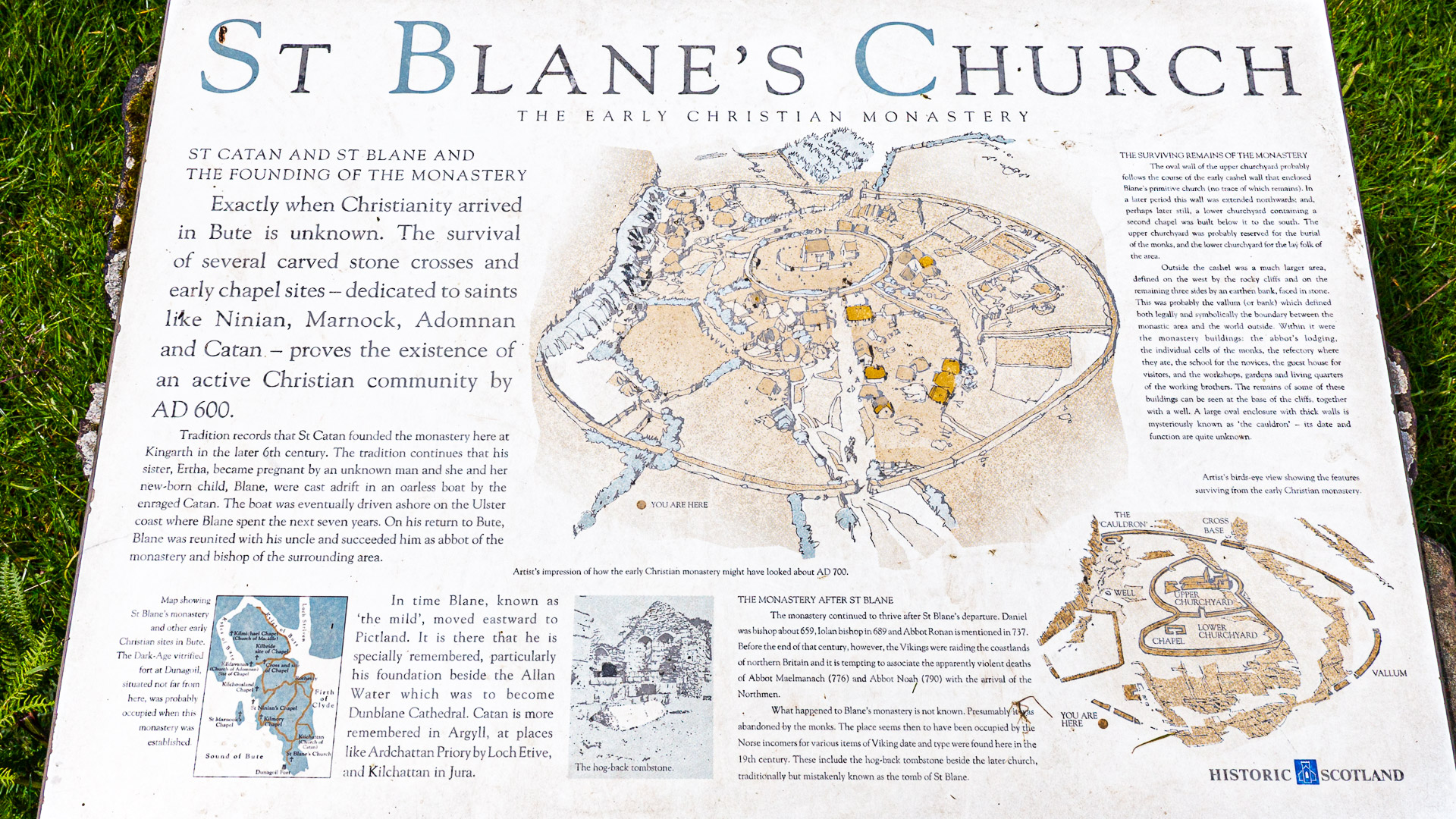
Inside, there was bustling activity meant to keep the monastery and any visitors provided for. Far less idyllic, far less peaceful than today.
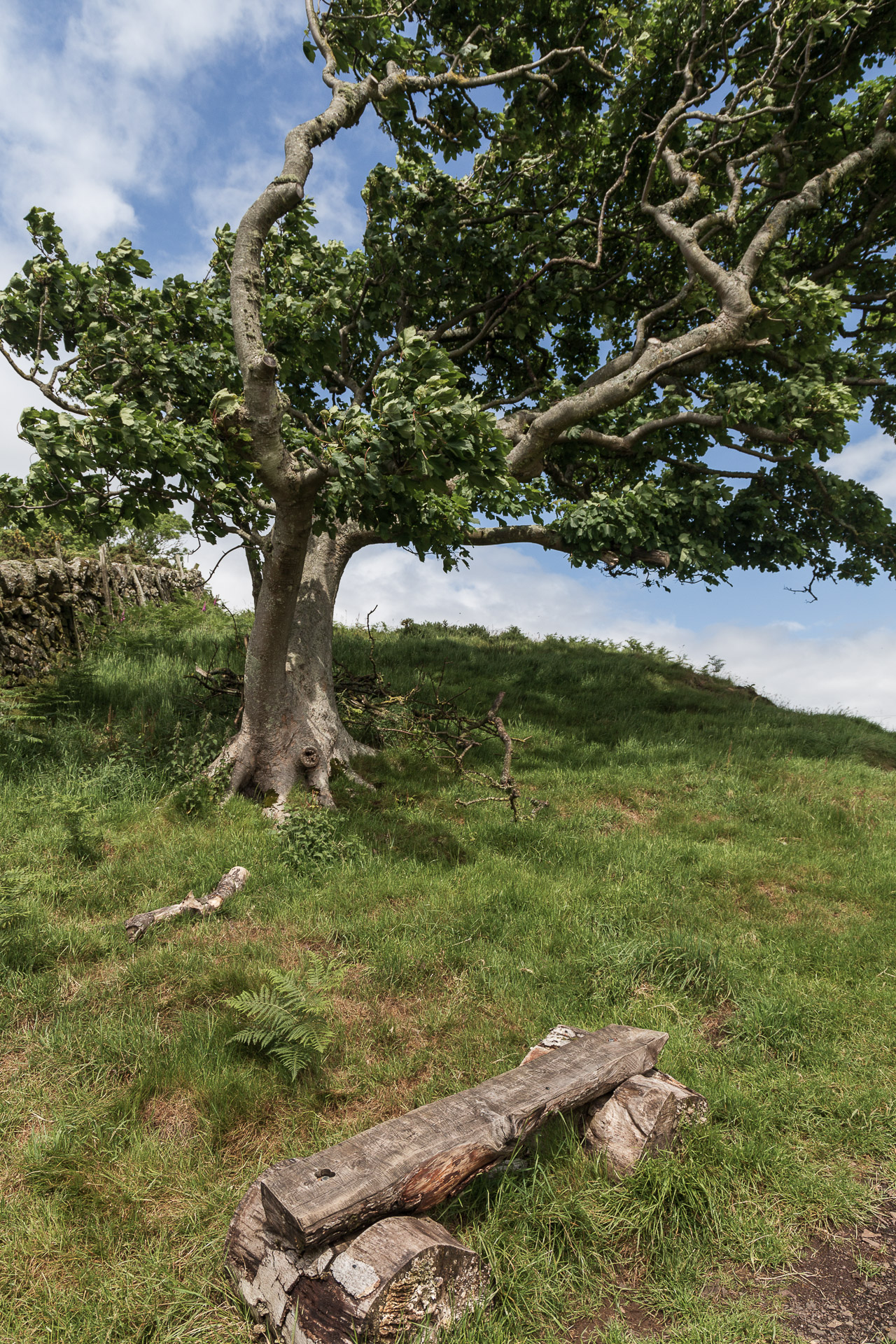
For visitors wanting to take the short journey from the present into the past, the car has to be left behind first. From the small car park, a path leads up the hill, past cattle pastures and old trees.
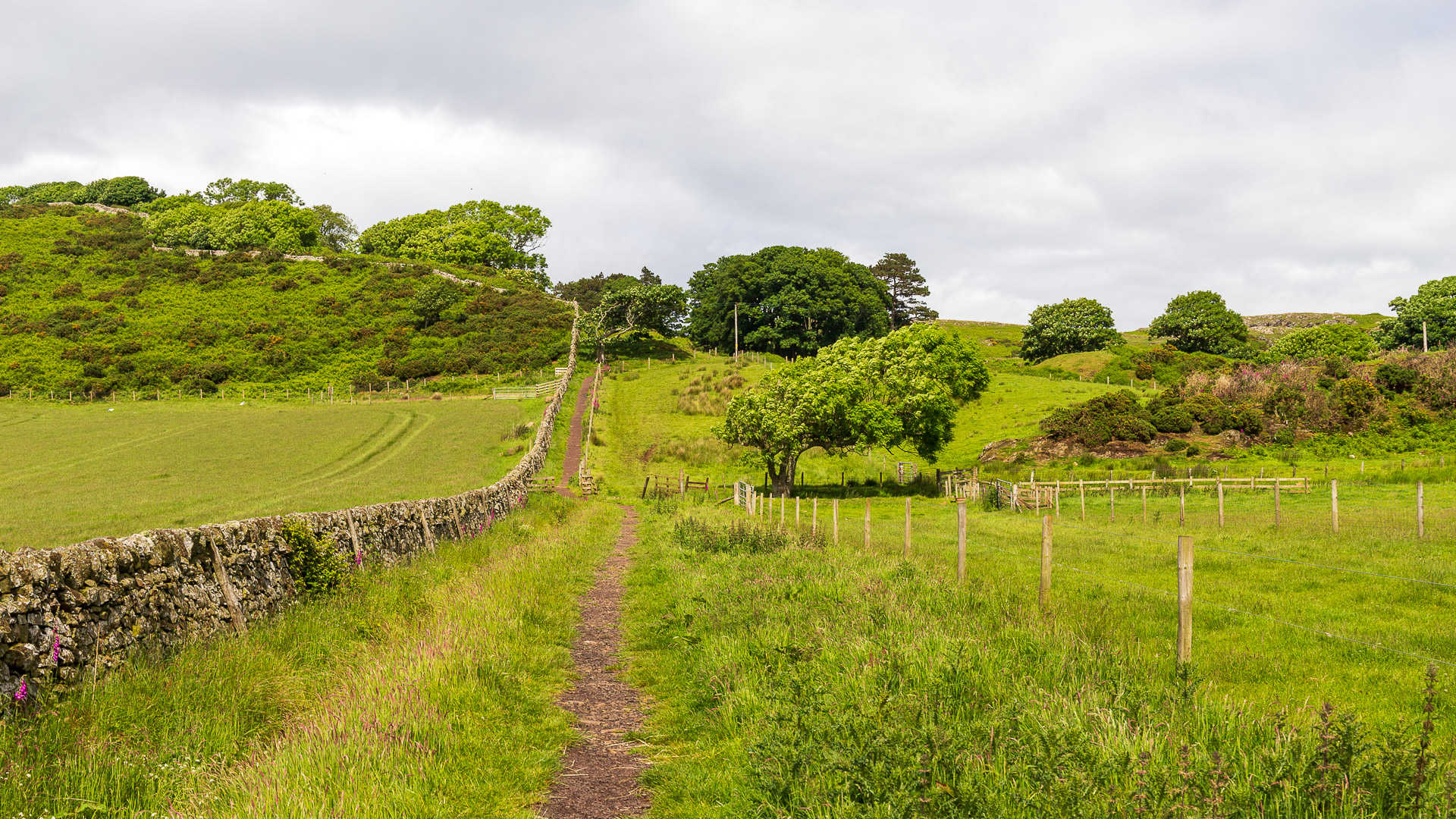
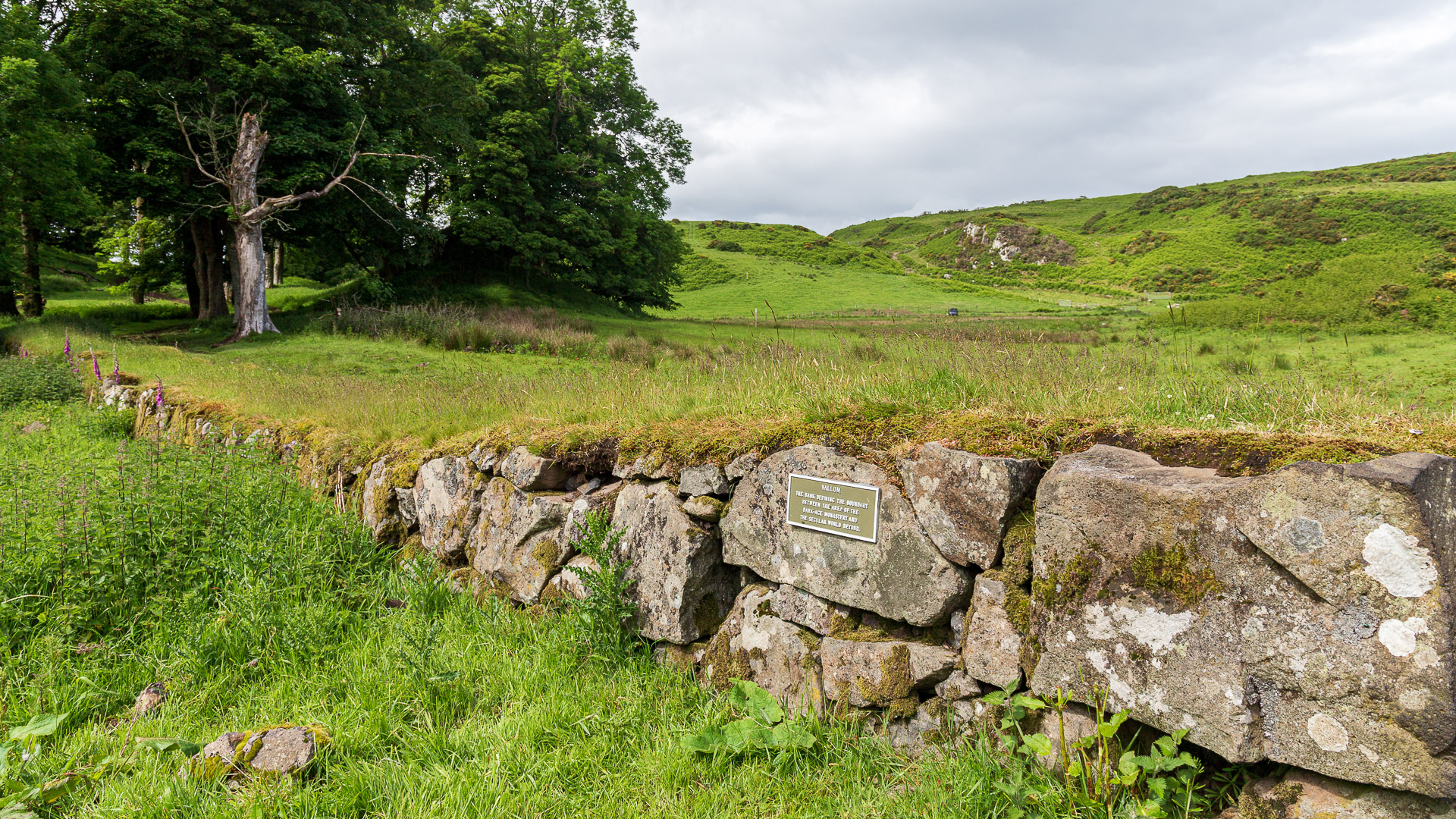
The path climbs for about 500 metres before the first remains of the old wall come into view. It once separated the monastery grounds from the rest of the world. However, the stone wall visible today wasn’t actually built until the 19th century – at the time, the 3rd Marquess of Bute had had the site restored. That said, the workers are said to have followed the lines of the old wall.
Incidentally, the island also owes its main attraction to the 3rd Marquess of Bute: the well worth seeing Mount Stuart House.
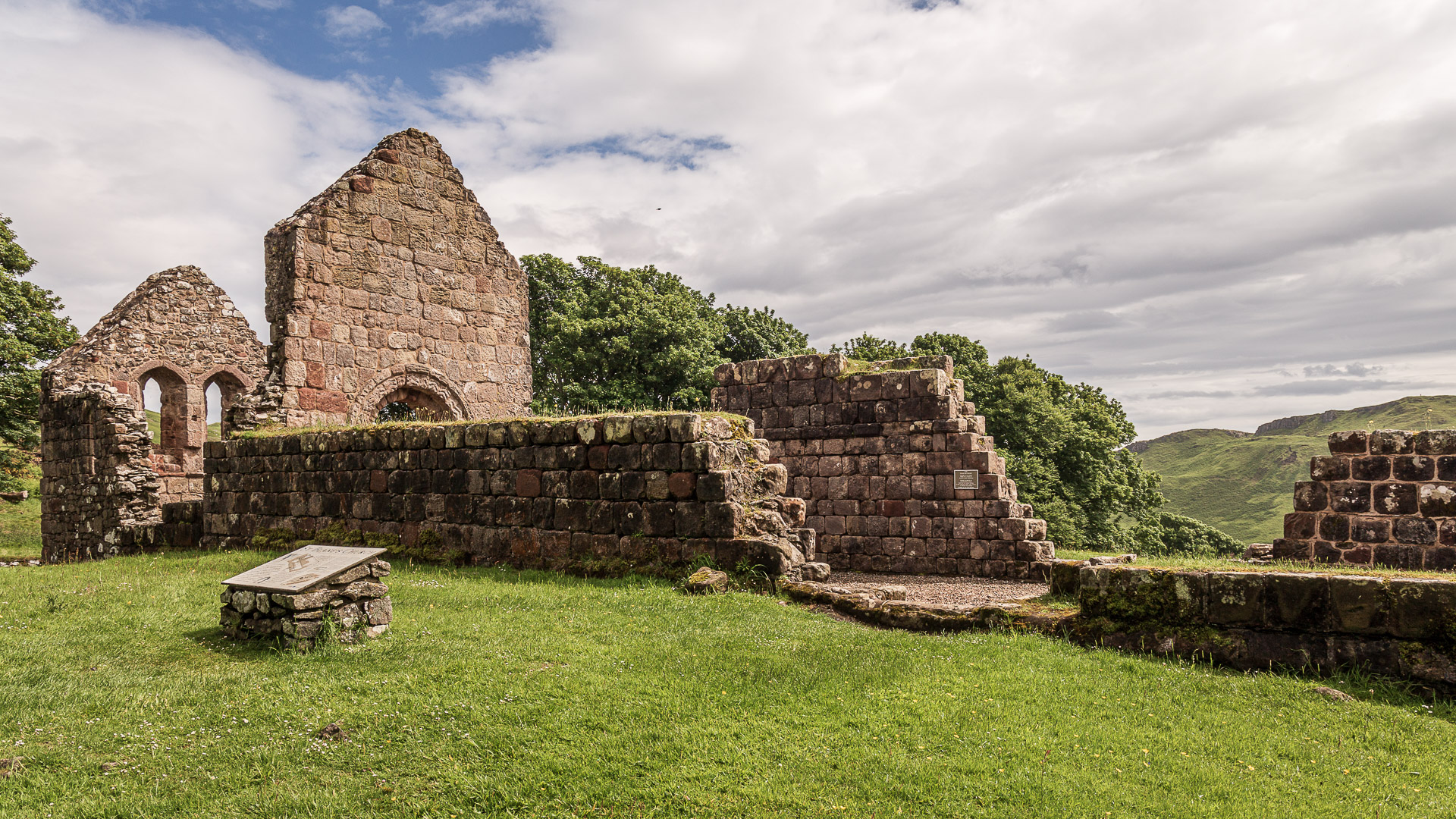
Beyond it, the first view of the ruins opens up. Raised on several terraced steps sits St Blane’s Church, surrounded by graves and walls. The remains of a chapel can also be made out.
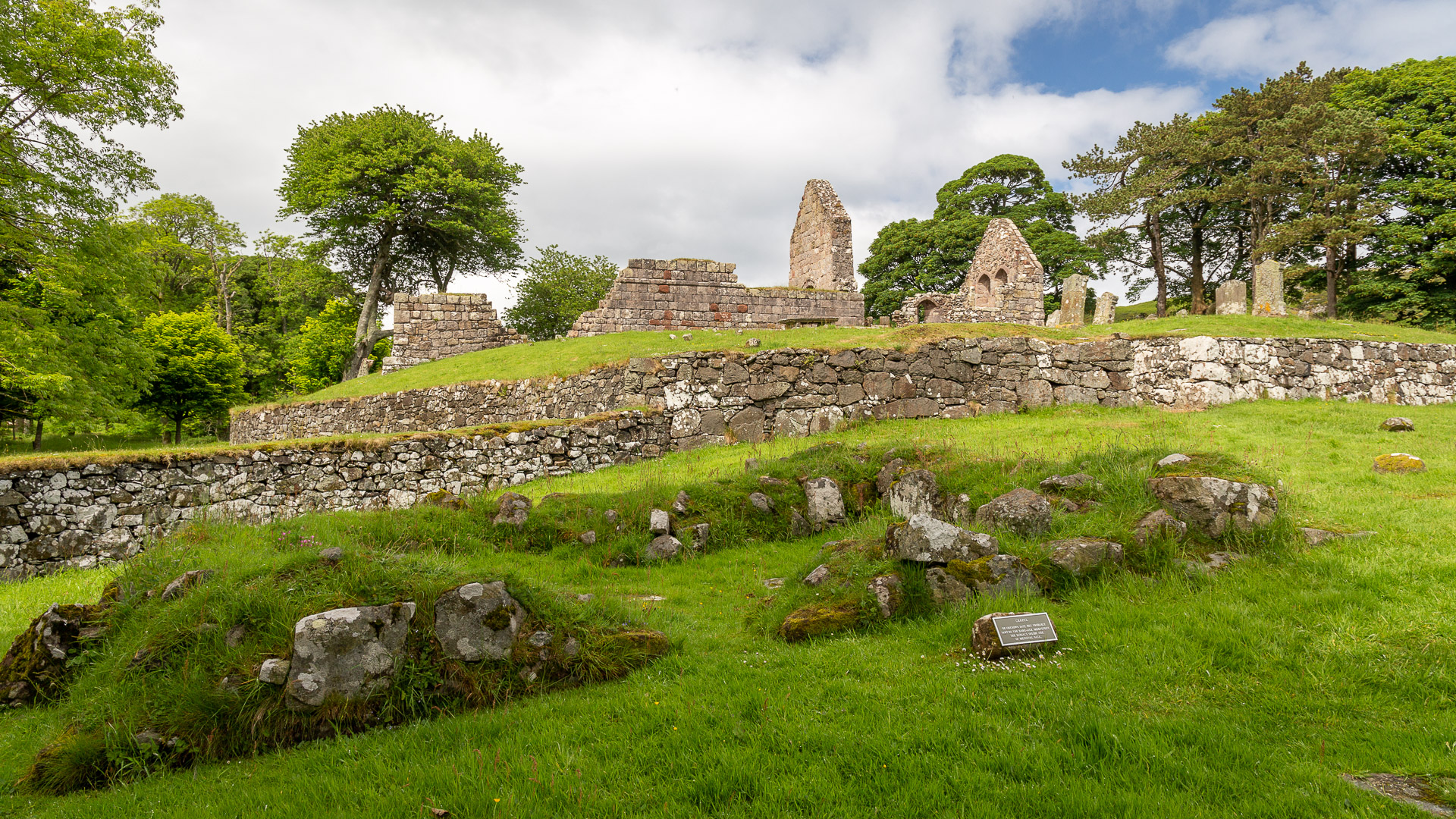
The church at the centre, however, doesn’t date from around 600 AD – it’s roughly 600 years younger, and served the parish of Kingarth, which covered no less than half the island.
Inside it, further gravestones and grave slabs can be found.
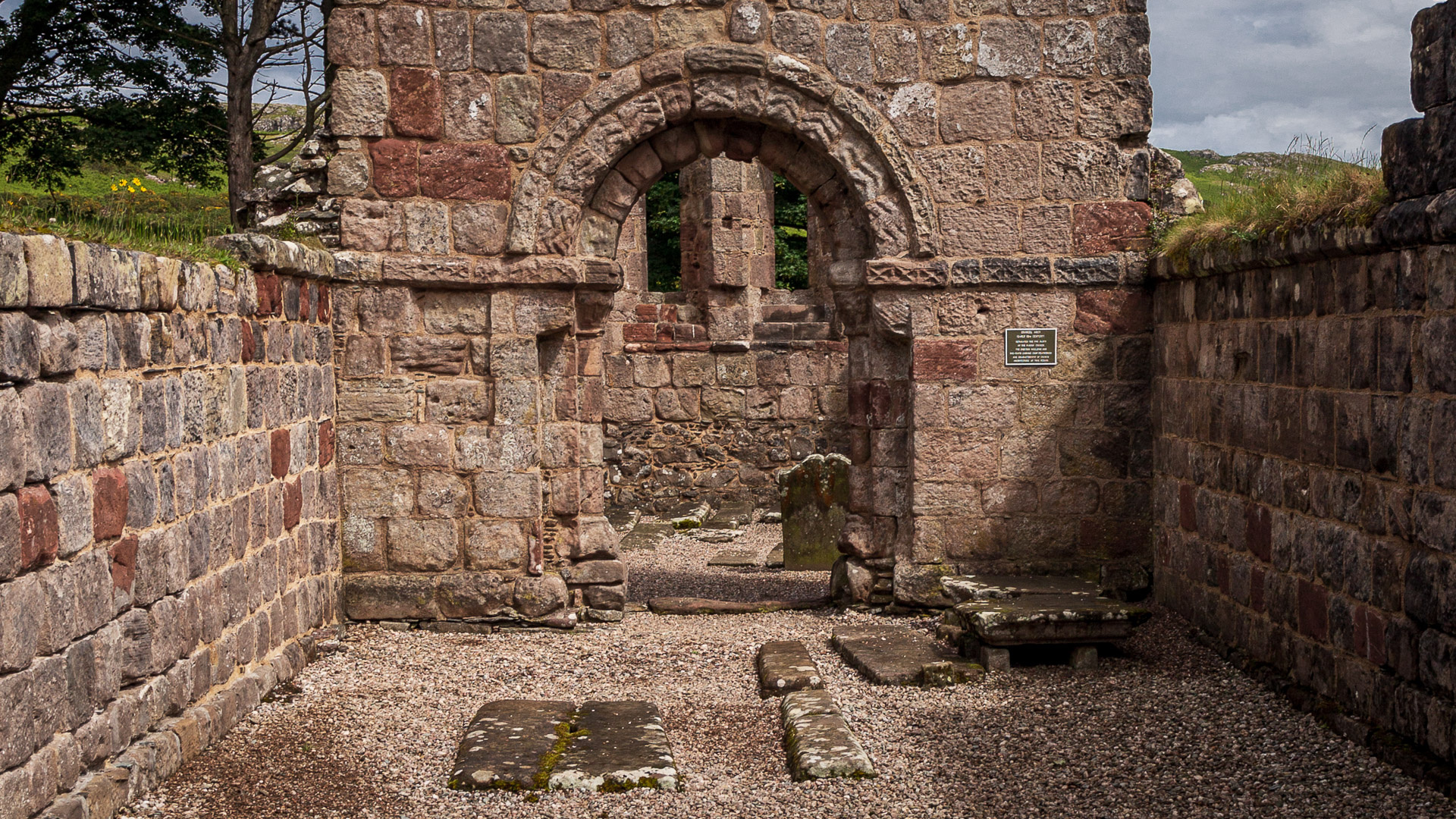
At the end of the nave lies the transition into the chancel. The doorway between the two sections is one of the church’s highlights. The arch still shows the faded remains of rich decoration. For instance, the zigzag frieze, known as “chevron”. Already quite corroded is the dogtooth ornament, considered typical of the Early Gothic period. It runs horizontally away from beneath the arch. “Dogtooth” is essentially a pyramid shape with sections scooped out of it.
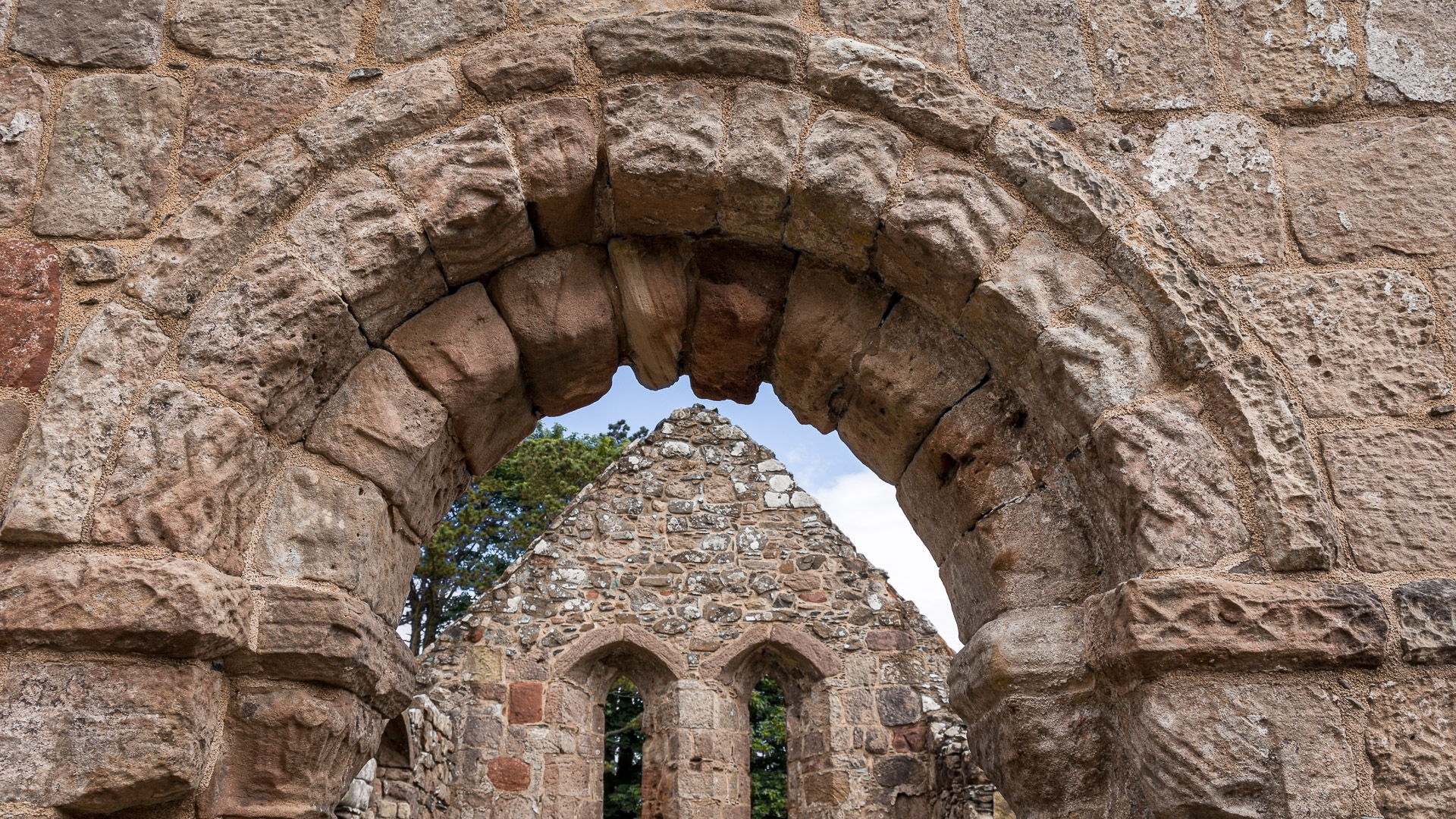
Beyond the doorway lies the chancel, which was extended once more around 1400. Grave slabs can be found here too. Services are said to have been held here until as late as 1677, before a church further north took over the parish.
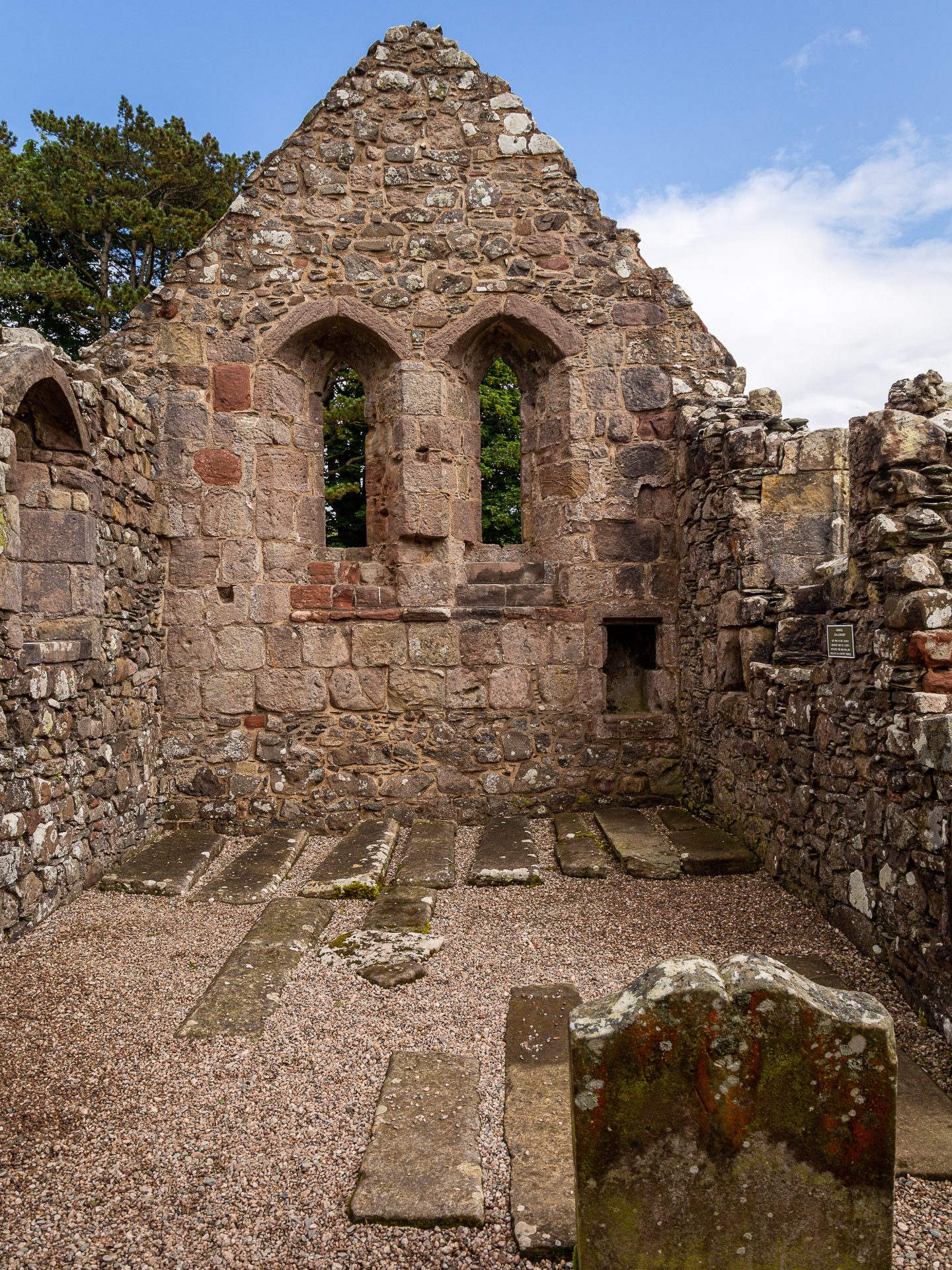
The two pointed Gothic windows would once have cast light onto the altar.
As visitors leave the church ruin, they enter the upper graveyard. This is where the monks, and later the male members of the parish, were once buried.
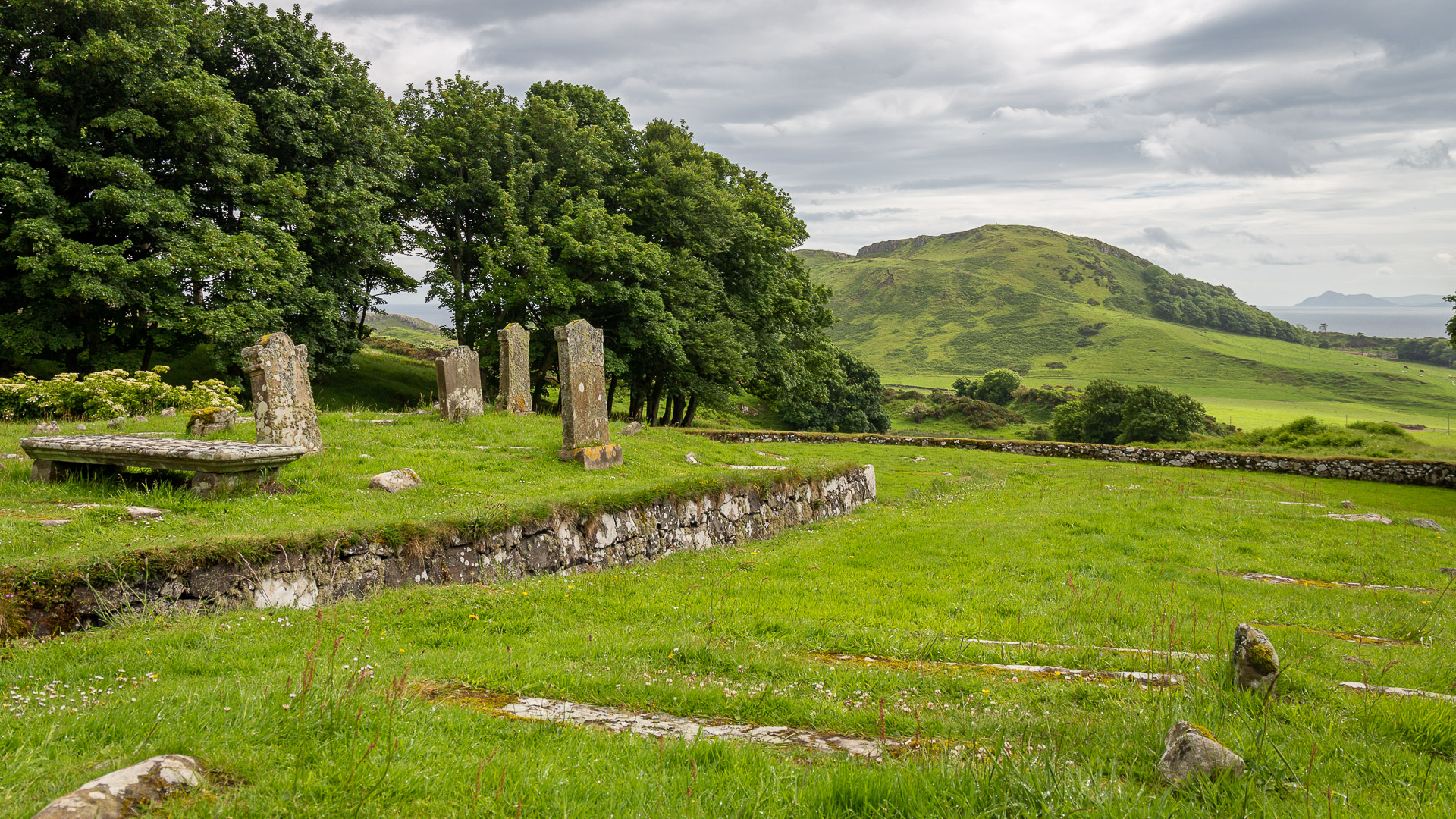
Also worth mentioning is the hogback gravestone. For a long time, people believed it to be the grave of St Cattan. In fact, it “merely” marked the final resting place of a Norse settler (in plain terms: a Viking).
A ramp dug deep into the ground leads down to the lower graveyard – this construction, too, dates from the 19th century, built to provide better access. In the lower graveyard there’s then a beautiful enclosed burial plot.
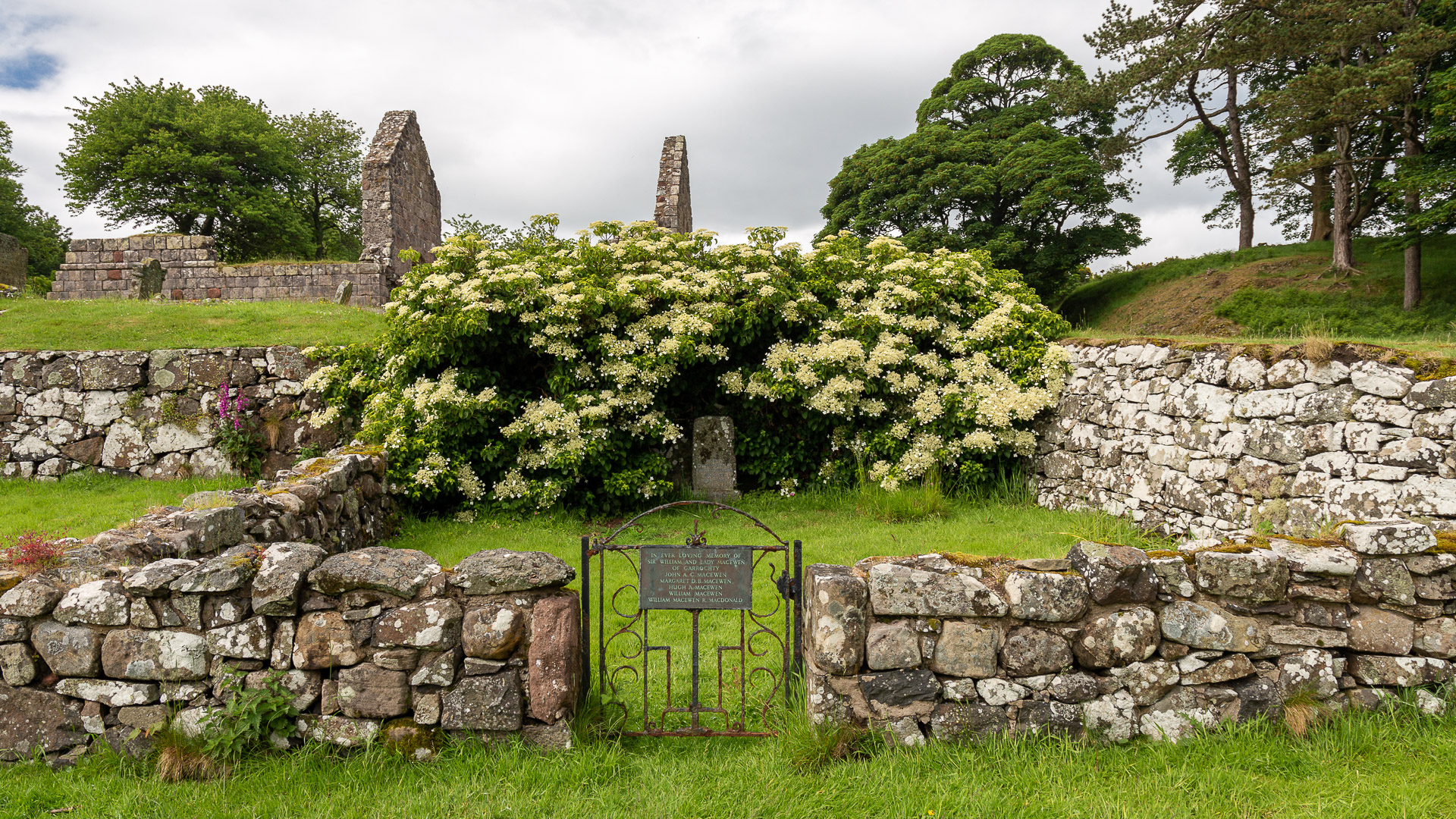
Buried here, among others, is William MacEwan of Garrochty. In the early 20th century he made a name for himself as an innovative surgeon, whose methods are still used in medicine to this day.
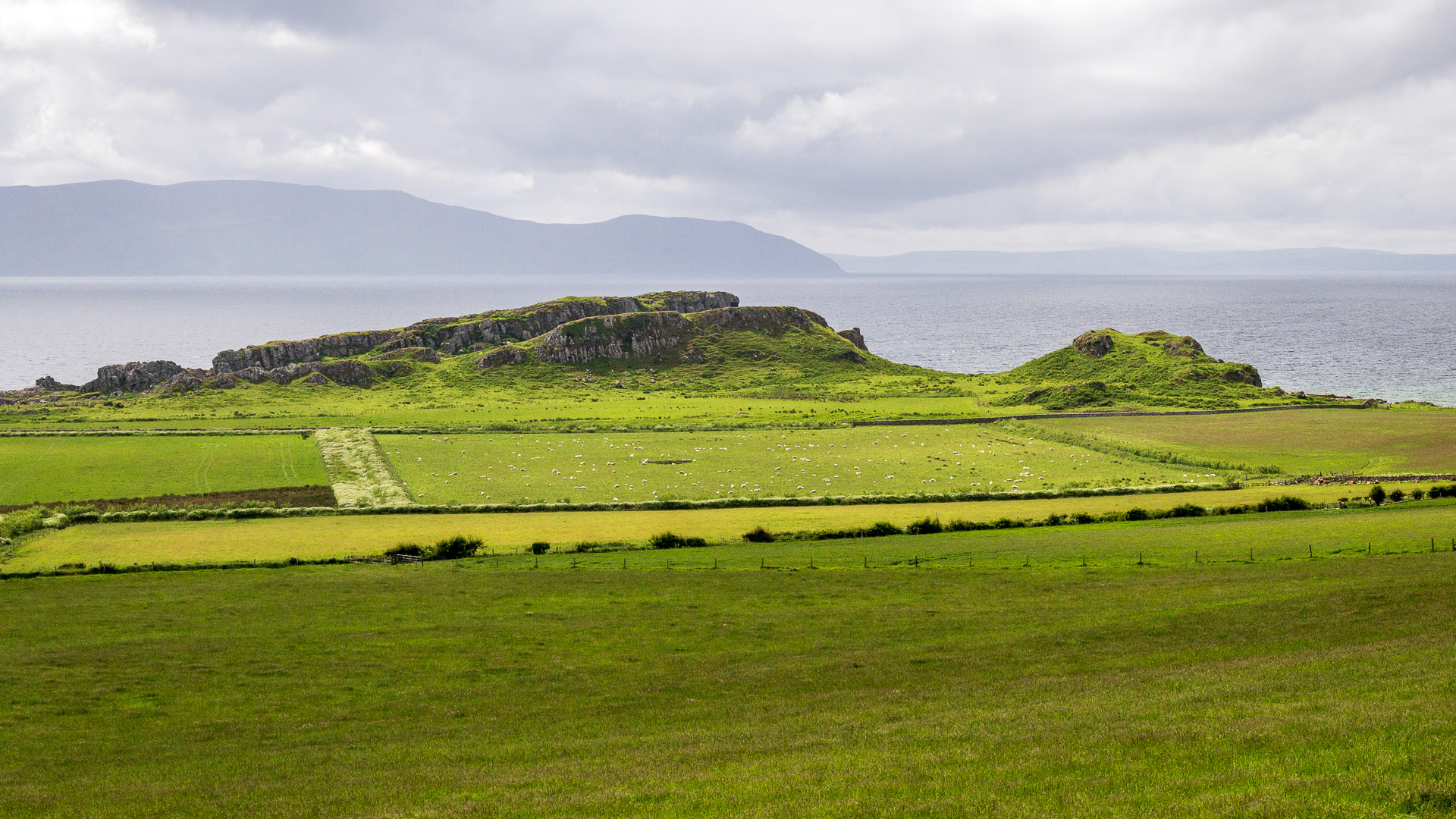
Finally, as visitors leave the former monastery and climb back down to the car park, a landscape opens up before them, combining views of the coast of Bute, the tip of Arran, and Kintyre in the distance.
Did you know: St Blane, St Cattan and St Blane’s Church
Gruesome tales tend to spread easily. This is one of them: because St Cattan was furious about his sister’s pregnancy, he is said to have set her and her newborn child adrift on a boat without oars. The child was later supposed to return as St Blane.
How much truth there is to the story is uncertain. What’s more certain is this: St Cattan was one of the first monks to come to the island of Bute from Ireland (which at the time didn’t exist as a kingdom in that form, but was partly part of Dál Riata). Cattan is said to have founded the monastery at Kingarth and led it as bishop. It’s likely that he oversaw the education of his nephew Blane in Ireland, until Blane himself became a missionary and converted parts of the Picts. He’s even said to have revived a dead boy. St Blane was buried on Bute, presumably near the monastery.
Incidentally, both saints have left their mark in place names right across the country. “Kilchattan” – meaning the church of Cattan – can be found on many islands. And places such as “Dunblane” – meaning “Blane’s fort” – point to his influence reaching deep into the east of the country.
But what happened to the monastery after the two of them? It existed until the end of the 8th century. It was presumably then overrun by the Vikings, as was the entire west coast of Scotland at that time. The Norsemen settled here themselves, and a few centuries later they had become Christians themselves. And so it was that a St Blane’s Church came to be here.
Getting there:
With a sat nav: “PA20 9LX” takes you to Kilchattan.
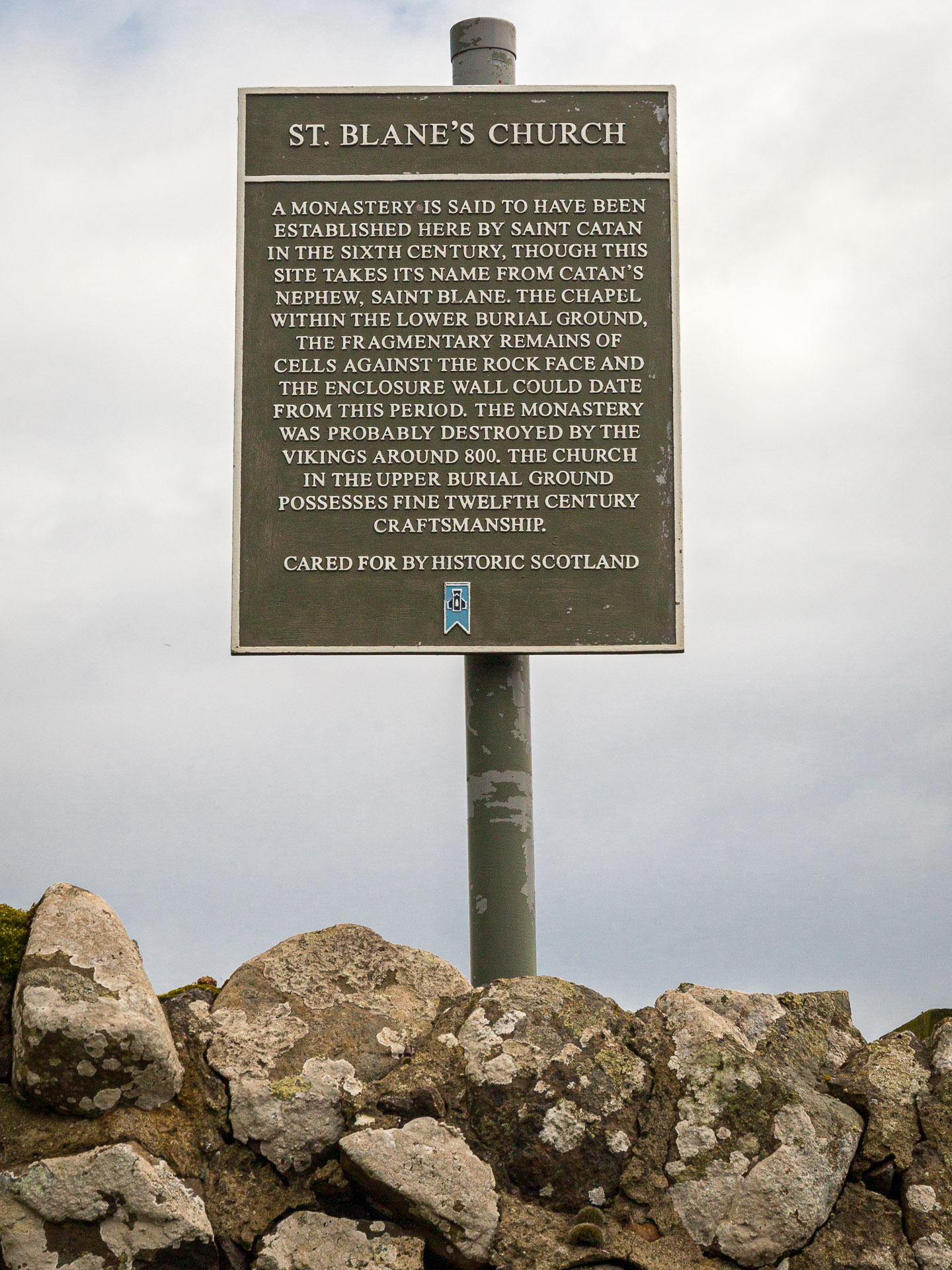
Without a sat nav: On Bute, the circular road A844 runs around the island. At the very south of this loop, just before it turns north again, a smaller road branches off and continues south. It’s marked with a brown sign already pointing to St Blane’s Church. Follow this road until it eventually ends at a gate with a turning space, where the tarmac road stops. This is where the sign above stands. Go through the gate and follow the signposts until the church comes into view.