Among Scotland travellers, the Isle of Bute is an insider tip. Why that is, what the island has to offer, and what there is to see – find out here.
Isle of Bute Info:
» Climate
» Attractions
» Ferries and Transport
» History
Today, things are pretty quiet on the Isle of Bute, as most tourists pass the island by on their way to the west coast, on to the islands, or into the Highlands. Yet more than a hundred years ago, the Isle of Bute was a genuine tourist magnet for the people of Glasgow. “Doon the watter” is what the Glaswegians called it back then, roughly meaning “down the river”. They meant the River Clyde, which widens into the Firth of Clyde, where the Isle of Bute lies.
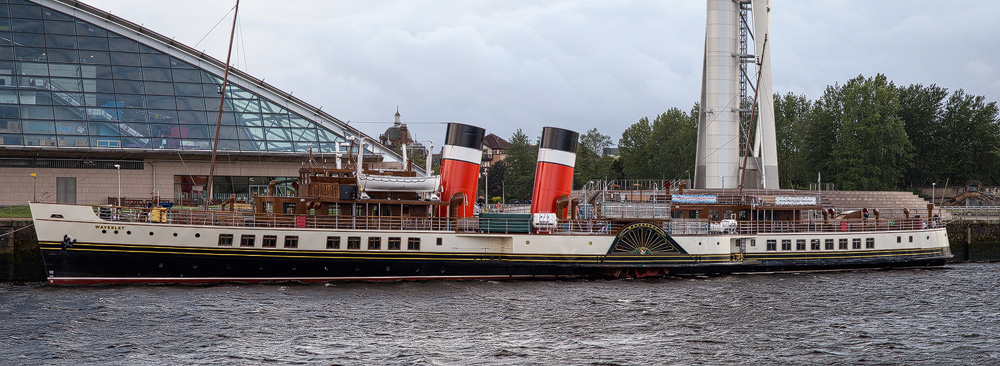
“Doon the watter” was synonymous with “going on holiday” back then. Glasgow’s wealthier residents would take one of the many paddle steamers that carried them all the way to Rothesay.
But what does that have to do with visitors today?
Quite simply: the buildings and facilities built roughly 100 to 150 years ago to welcome those tourists are today some of the finest attractions on the Isle of Bute. Most date from the Victorian era, whose architectural style was elaborate and ornate. Real eye-catchers, in other words.
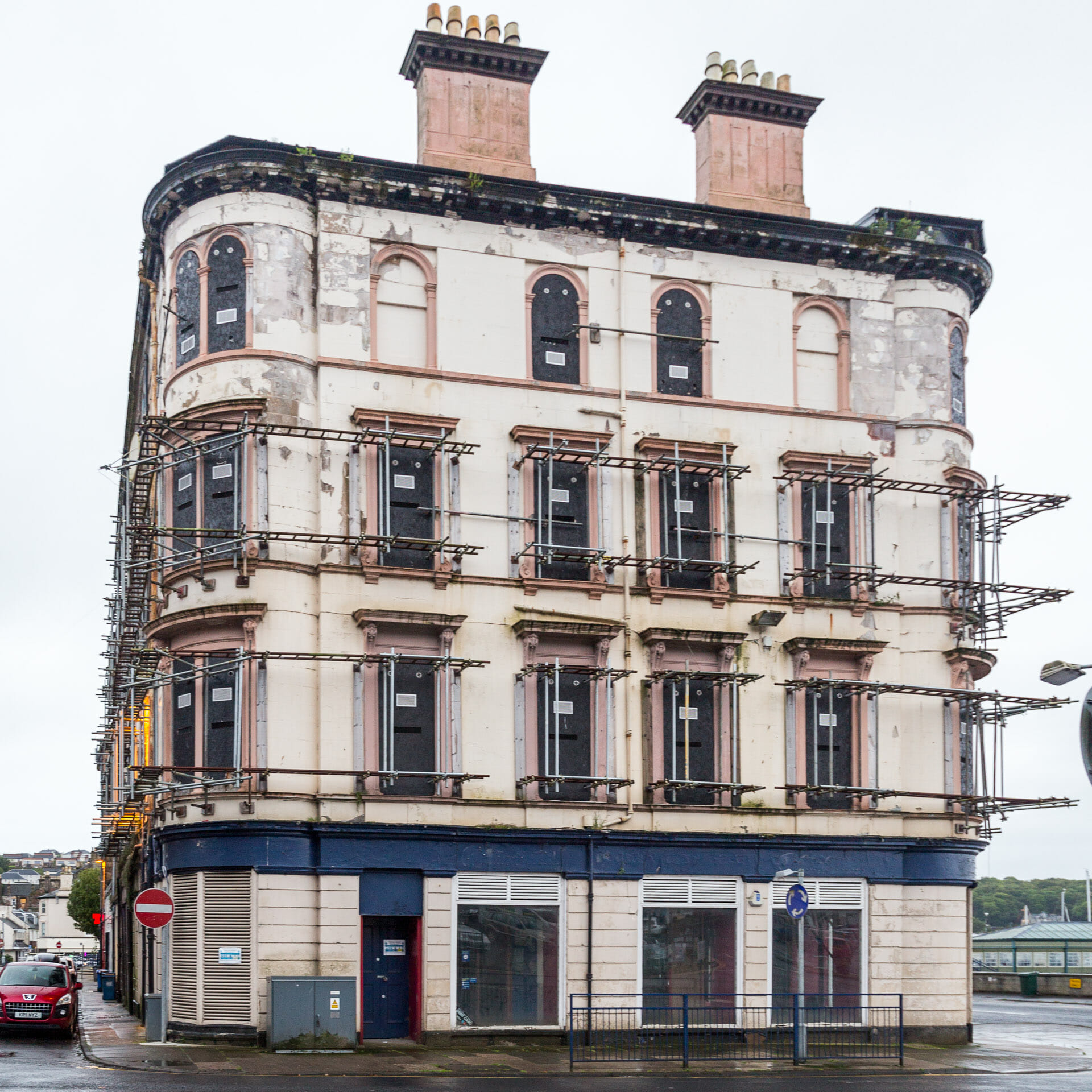
On the other hand, the Isle of Bute is not well known among travellers and is not exactly beloved either. That’s surely partly down to the slightly shabby image of Rothesay, the main town. Alongside lovely rows of shops and wonderful old architecture, there are also plenty of derelict buildings.
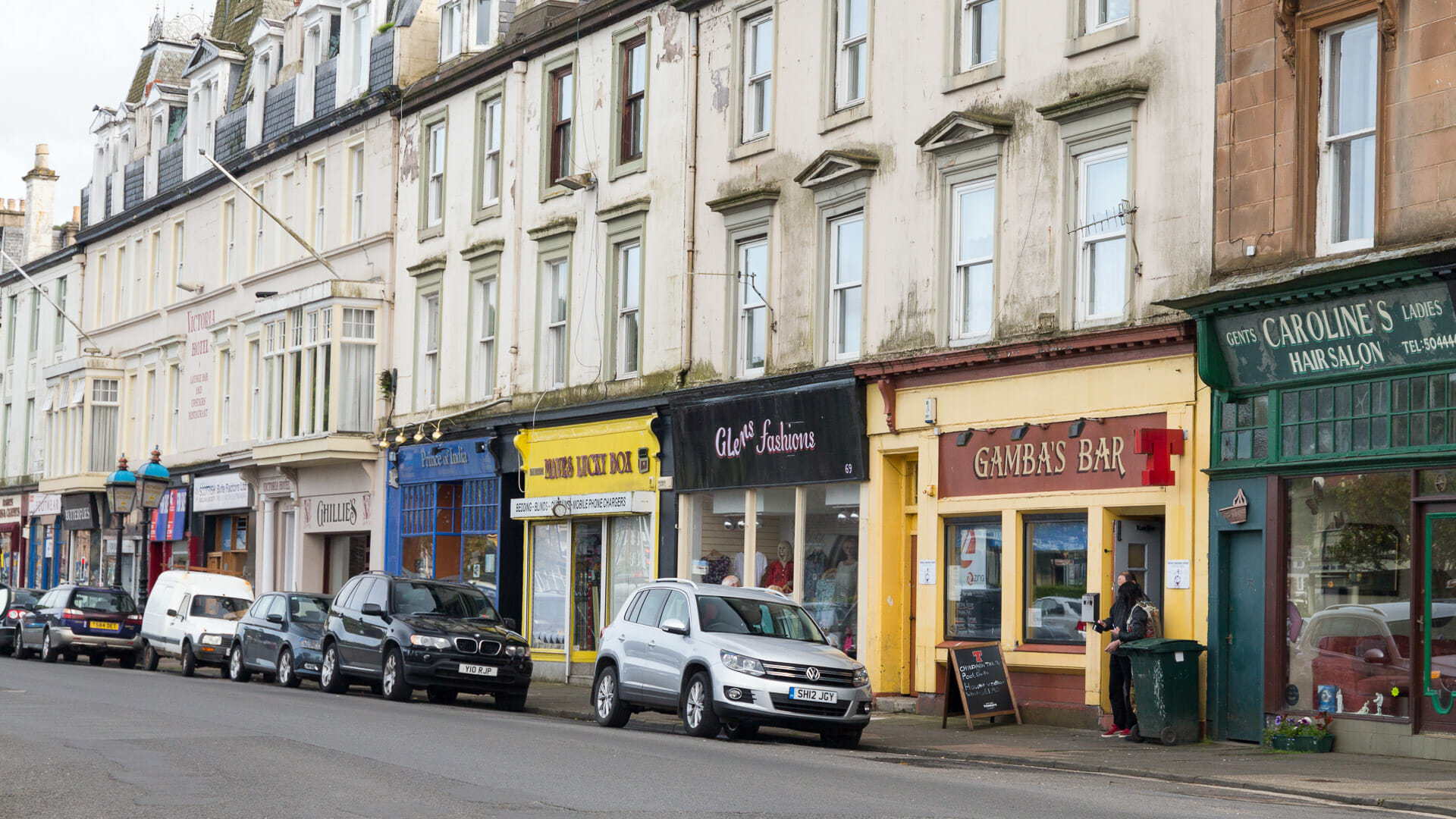
So Rothesay combines light and shadow. Some buildings have been beautifully restored today, while others are waiting for a developer to wake them from their sleeping-beauty slumber.
But the mix of fantastic buildings, lush nature and a long history definitely make a visit to the Isle of Bute worthwhile. Especially on road trips heading into the Highlands, this small island can be used as a stepping stone to the west coast.
About the Isle of Bute: Climate and Geography
Roughly speaking, the Isle of Bute can be described like this: the larger settlements, such as Port Bannatyne, Rothesay and Kilchattan, are strung along the east coast. Kames Castle and Mount Stuart House are also found here. The west, by contrast, tempts with sandy beaches.
The Highland Boundary Fault – the geological border with the Highlands – runs through the Isle of Bute. It also divides the island into a relatively flat, fertile south and a somewhat rougher north, home to the highest point, Windy Hill. Its summit stands at 273 metres.
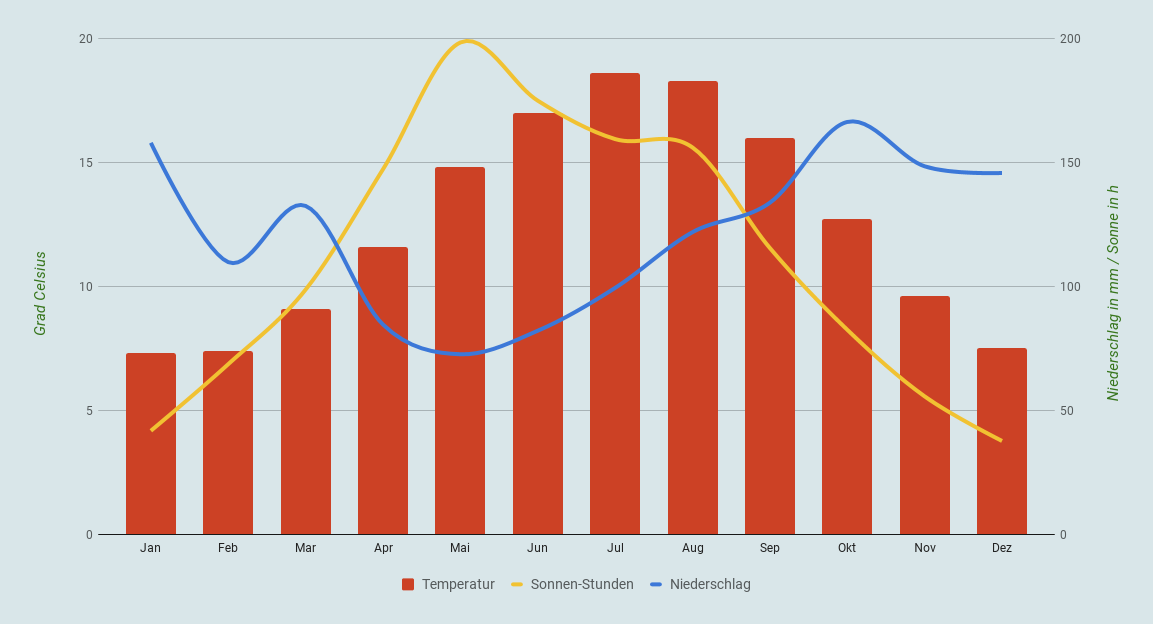
Climate-wise, the Isle of Bute falls within Scotland’s west coast catchment, where rainfall is more likely than in the east. As with the rest of Scotland, statistically (no guarantee it’ll actually work out that way!) the best time to visit is May. That’s the month with the least rainfall and the most hours of sunshine. Midges also aren’t yet an issue.
Attractions: Culture and Nature on the Isle of Bute
The island can certainly be explored in a single day, since it’s only about 25 kilometres long and at most eight kilometres wide. With just an hour and a half of actual driving time, a visitor will already have seen almost everything important.
Even so: you should allow a bit more time, since the attractions themselves are well worth lingering over.
The attractions below are listed clockwise, starting from Rothesay, so you can also drive round them in that order.
My recommendation would be to work the Isle of Bute into your route to the West Highlands. Cross over in the evening, start the next day with Rothesay and Mount Stuart House, then relax at Ettrick Bay in the afternoon. In the evening, either spend another night, or catch one of the last ferries from Rhubodach over to the Highlands. I’ve put a sample schedule at the end of the attractions section.
Rothesay Castle
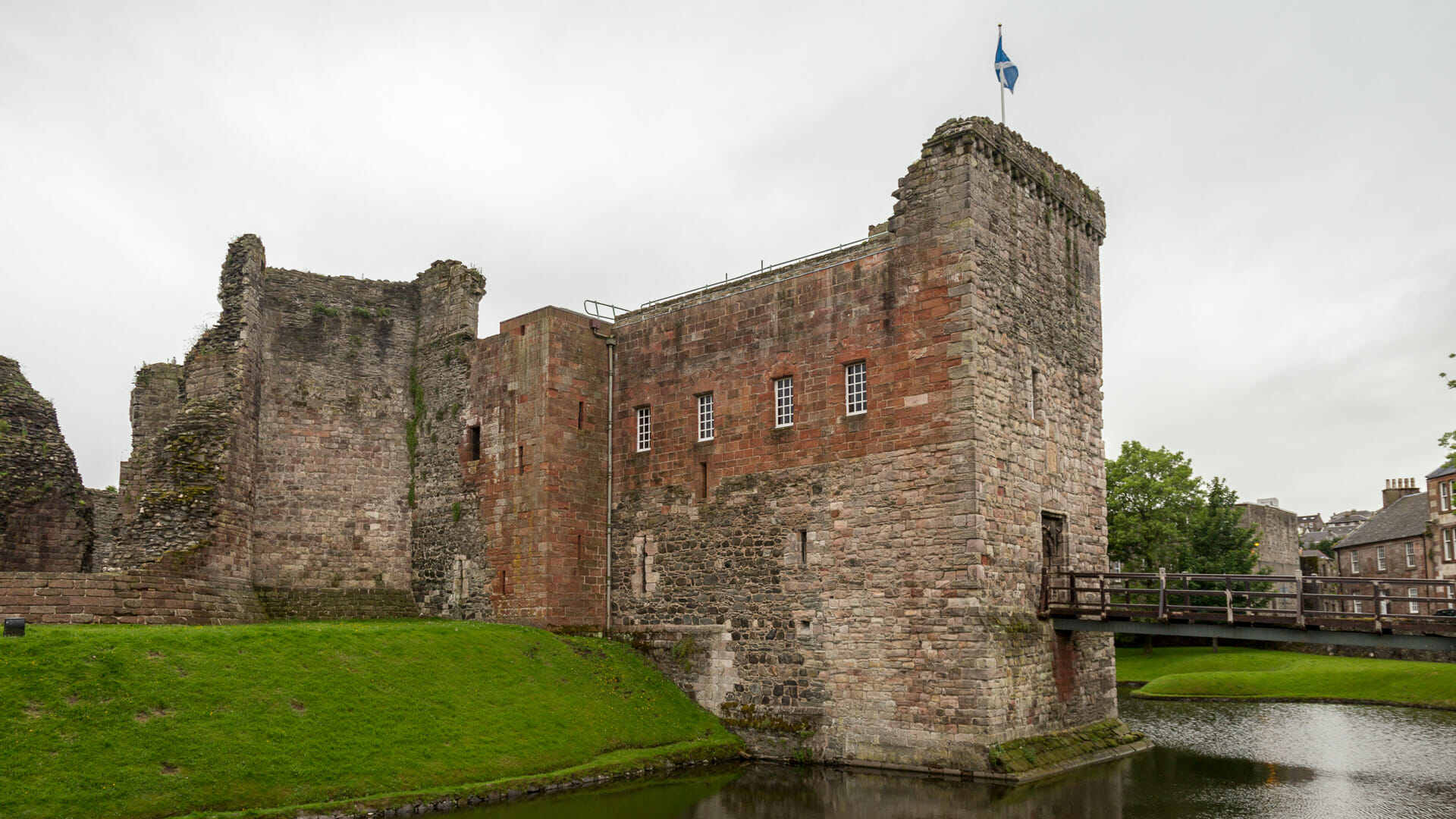
In the island’s main town, right where the ferries dock, stands Rothesay Castle, surrounded by a moat. The castle’s origins date back to the early 13th century, making it one of the oldest in Scotland. Rothesay Castle was meant to be a bulwark against the Norwegians, who as Vikings had previously taken over large parts of Scotland. Even so, it was captured by the Norwegians twice. It later became a royal castle, before being left to fall into ruin in the 19th century.
The castle is also worth seeing because it’s the only one in Scotland with a perfectly circular wall. Admission costs around £5. Personally, though, I’d rather spend that time at Mount Stuart House.
Victorian Toilets
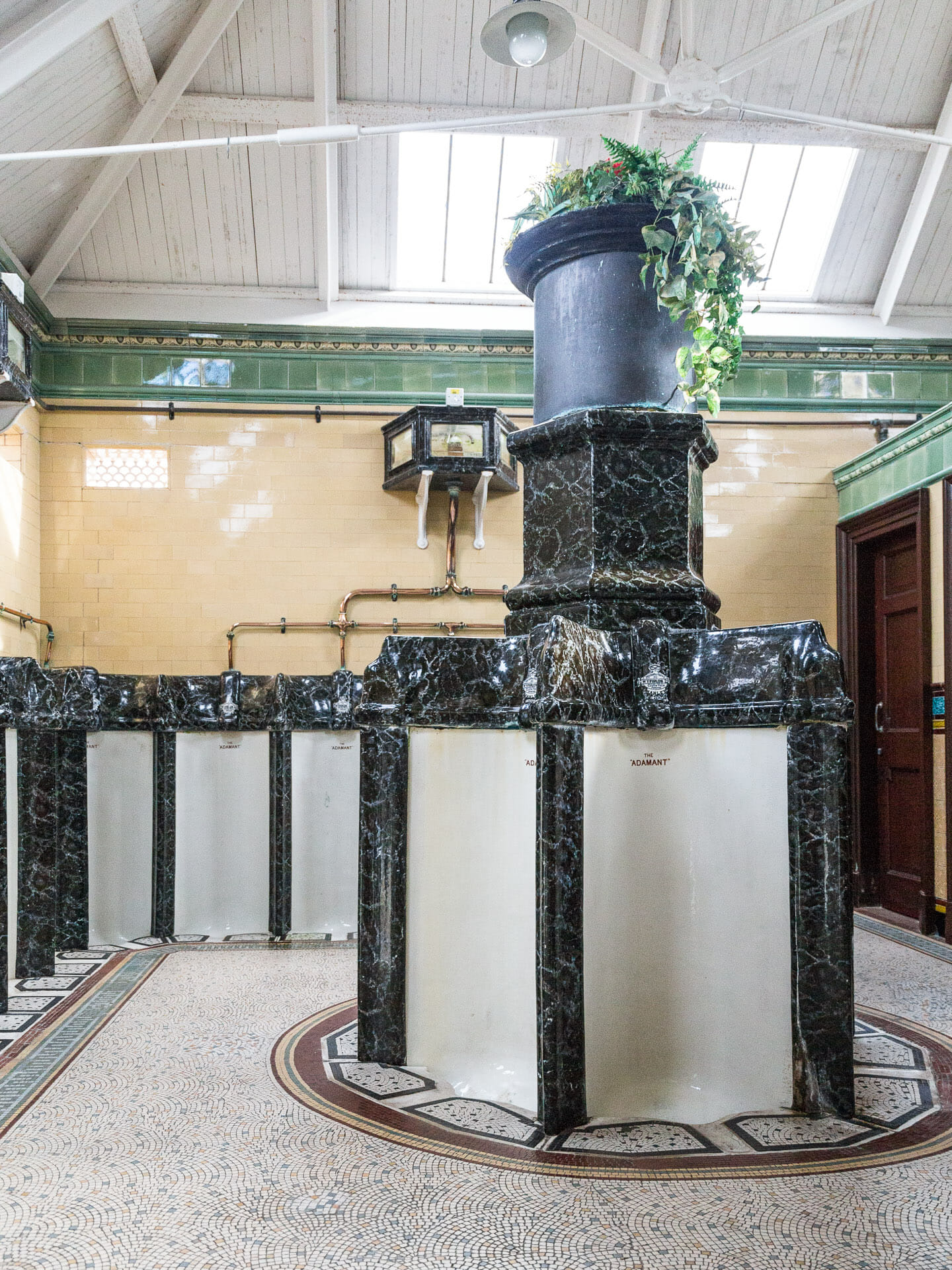
Toilets as a tourist attraction? Yes, on the Isle of Bute they are. Presumably the well-to-do folk of the 19th century were under such pressure after the ferry crossing that it was worth building a proper toilet house right on the pier at Rothesay. The gentlemen’s section in particular can safely be called a temple to relief. The mosaic and marble are genuinely impressive for a toilet.
Men and women alike can go in for a small entrance fee of around 40 pence. Women are also allowed to have a peek at the gentlemen’s side when it’s not busy. The ladies’ toilet isn’t quite as impressive. When we asked why, the attendant explained that back then, ladies in their hooped skirts didn’t actually use the toilet at all, which is why only the gentlemen’s side was built up so grandly. She couldn’t, however, answer the question of how the ladies then relieved themselves.
More photos and information on the Victorian Toilets can be found here.
Rothesay Winter Gardens (Isle of Bute Discovery Centre)
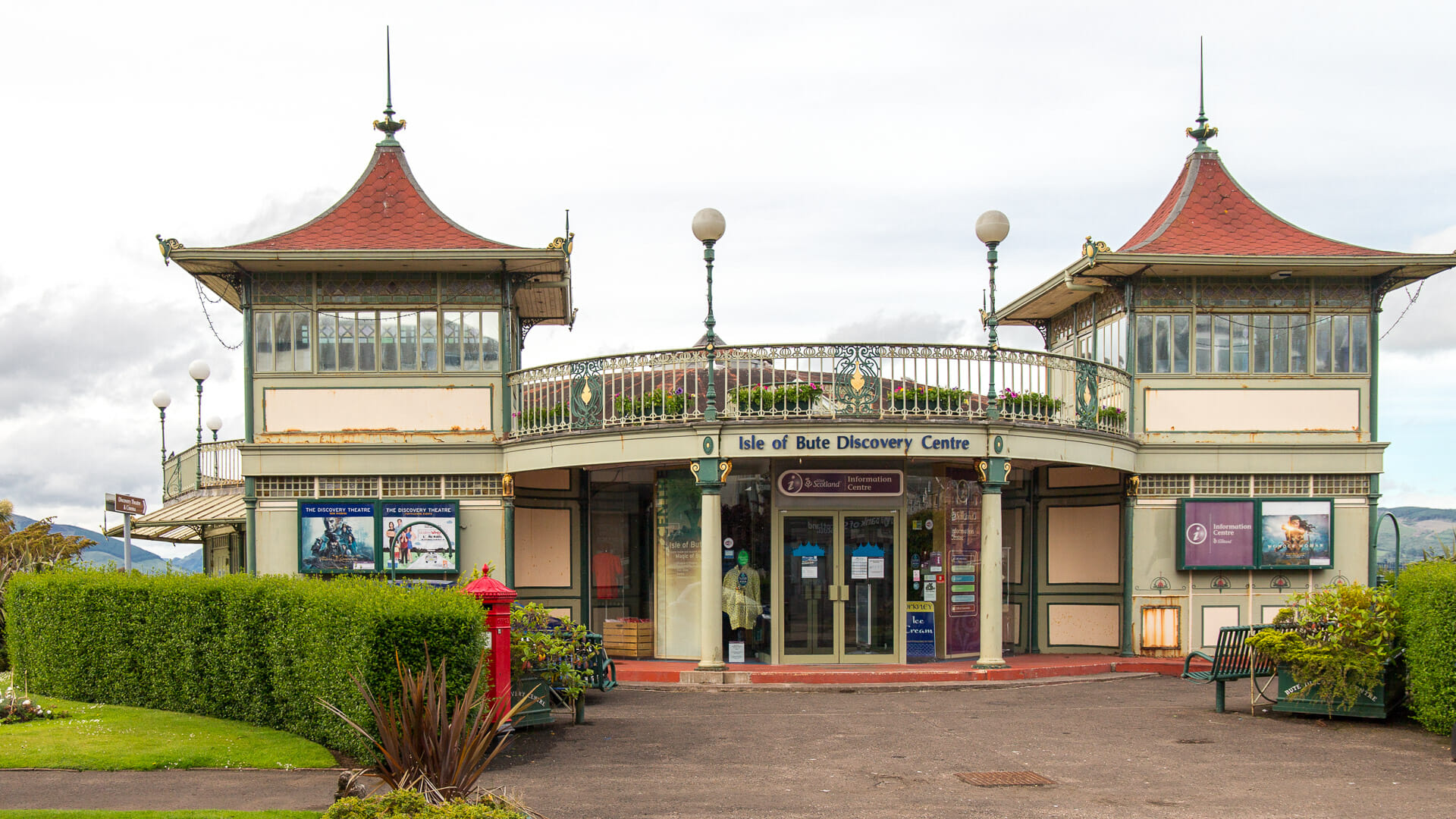
In a small park along Rothesay’s waterfront promenade stands the Winter Gardens, with its towers reminiscent of Chinese architecture. The building dates from 1924 and was built to offer tourists events such as plays and concerts too.
When visitor numbers finally dried up from the 1960s onwards, the building stood empty and demolition loomed. Thankfully, it was decided to restore it instead, and it reopened in 2001. Today, alongside a cinema, the Winter Gardens also houses the tourist information centre. Either way, the building’s architecture is magnificent.
Rothesay Pavillon
The quirky Rothesay Pavilion dates from 1938. Stylistically rooted in Art Deco and Bauhaus, it’s one of the most impressive buildings on the island. It stands at the northern entrance to the town of Rothesay.
Mount Stuart House
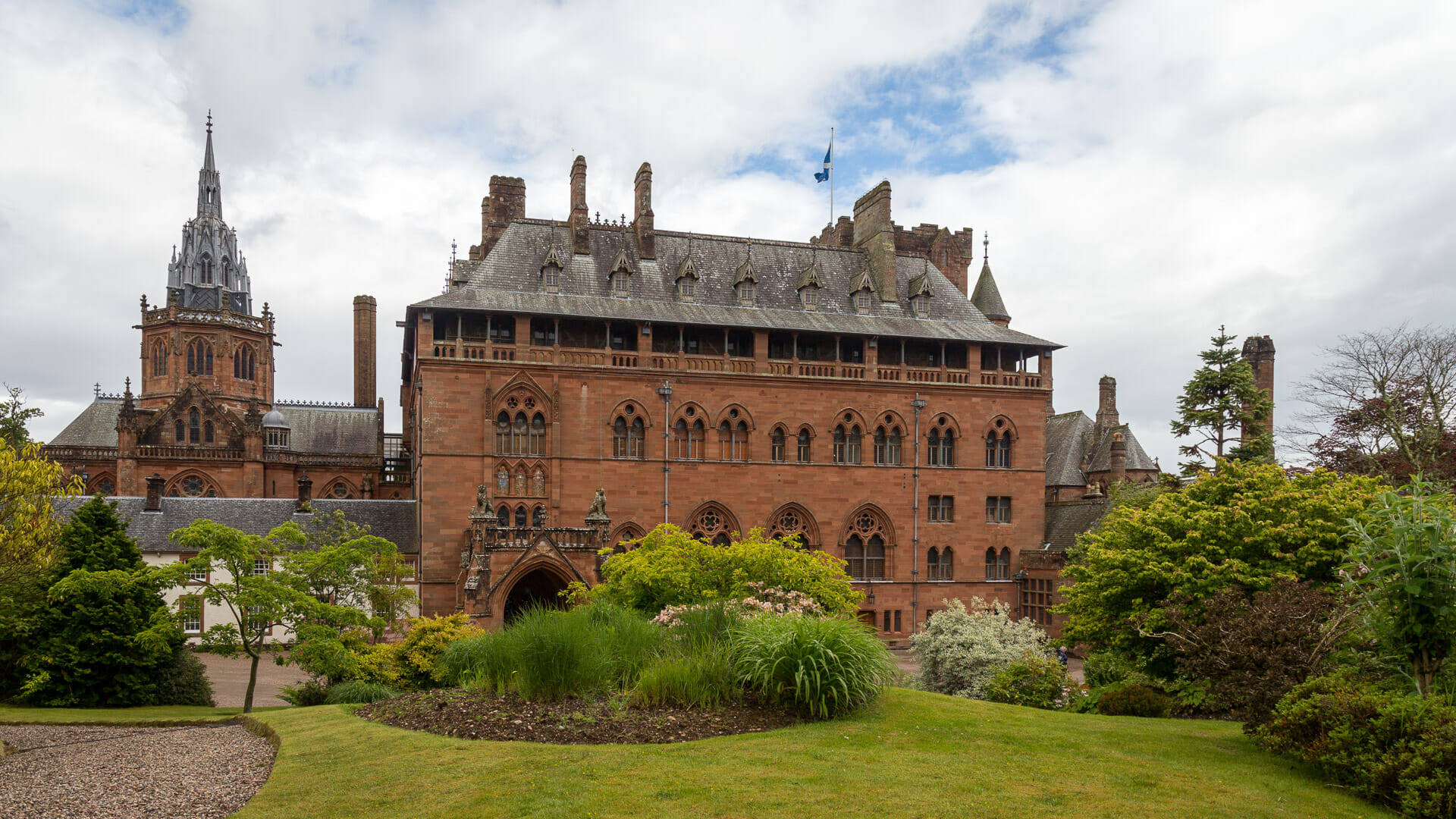
In my view, the most beautiful house in Scotland, and reason enough on its own to visit the Isle of Bute. Mount Stuart House already makes a grand impression from the outside, but it’s the interior that really blows visitors away: every room is markedly different from the last. The entrance hall, with its stained glass and marble columns, is unique; the staircase is elegant; the corridors are enchanting … In short: brilliant, an absolute must-see, and be sure to enjoy the gardens too. Definitely allow several hours – we spent around three there and still only saw a fraction of the gardens.
Timing: the gardens open at ten o’clock, while the house stays closed until twelve. BUT: at eleven you can already join a guided tour through the house, and it’s genuinely well worth it. At twelve you can then do a second, unguided round through the rooms. After that, back to the gardens once more, before heading on to the other attractions.
A detailed write-up on Mount Stuart House with lots of photos can be found here.
Kilchattan Bay
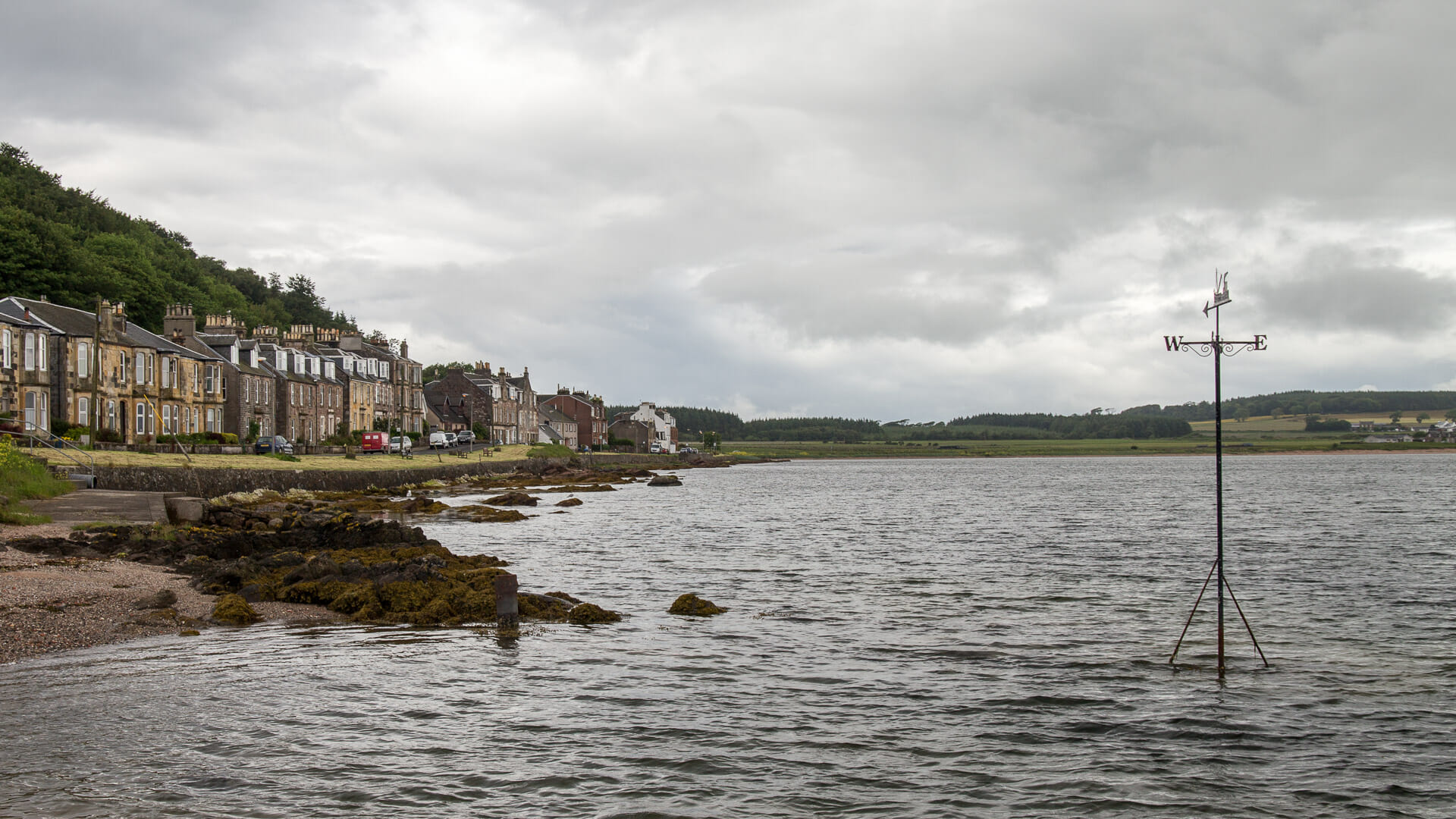
The village of Kilchattan forms the south-eastern tip of the island. Holiday steamers carrying tourists used to dock here too. That ended in 1955, but Kilchattan, with its long bay, has kept the charm of a cosy holiday village. You don’t necessarily need to build it into a tour, unless it’s for lunch.
Standing Stones Kingarth
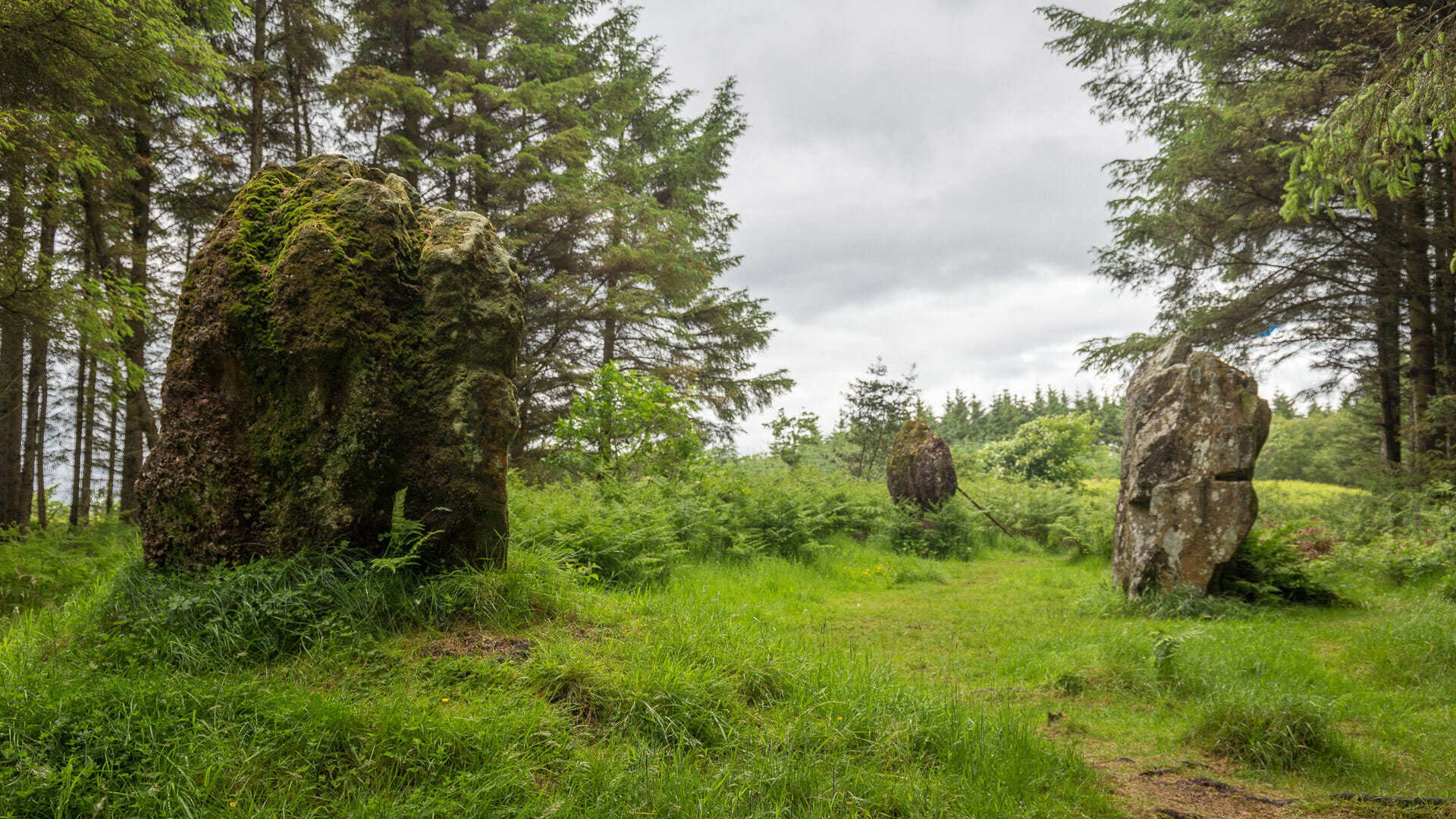
On the way south, on the road to St Blane’s Church, a short stop in Kingarth Wood is worthwhile. Just a little way off the road stand the remains of a stone circle. Three monoliths survive here from what was once seven; they stand between 2.2 and 2.8 metres tall.
Dunagoil Fort
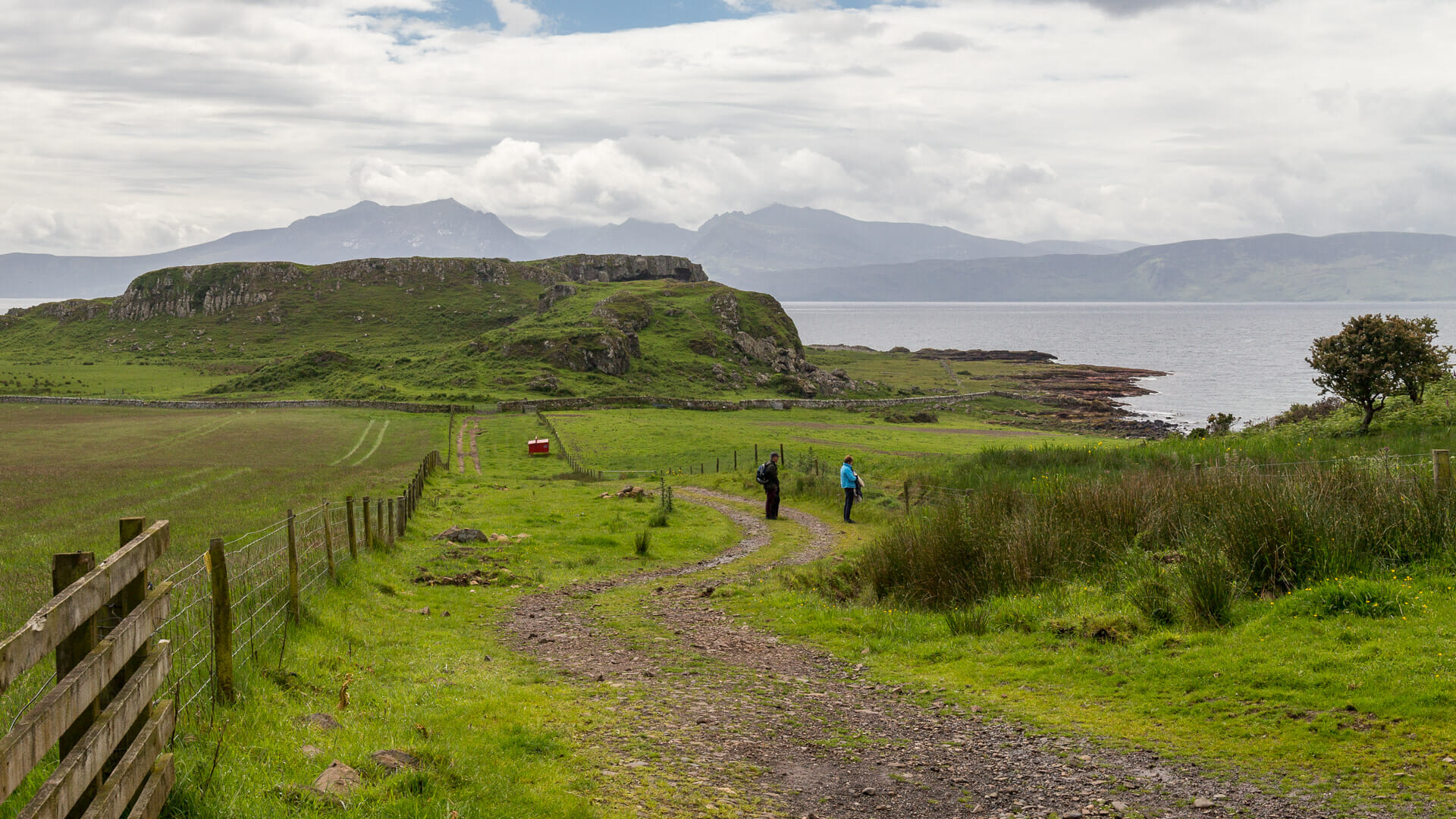
Continue on the road to St Blane’s Church and the Isle of Arran soon appears on the horizon. After a while, a footpath branches off to Dunagoil Fort, which sits on a rocky outcrop. On a day trip, I’d skip this and take the walk to St Blane’s Church instead.
St Blane’s Church
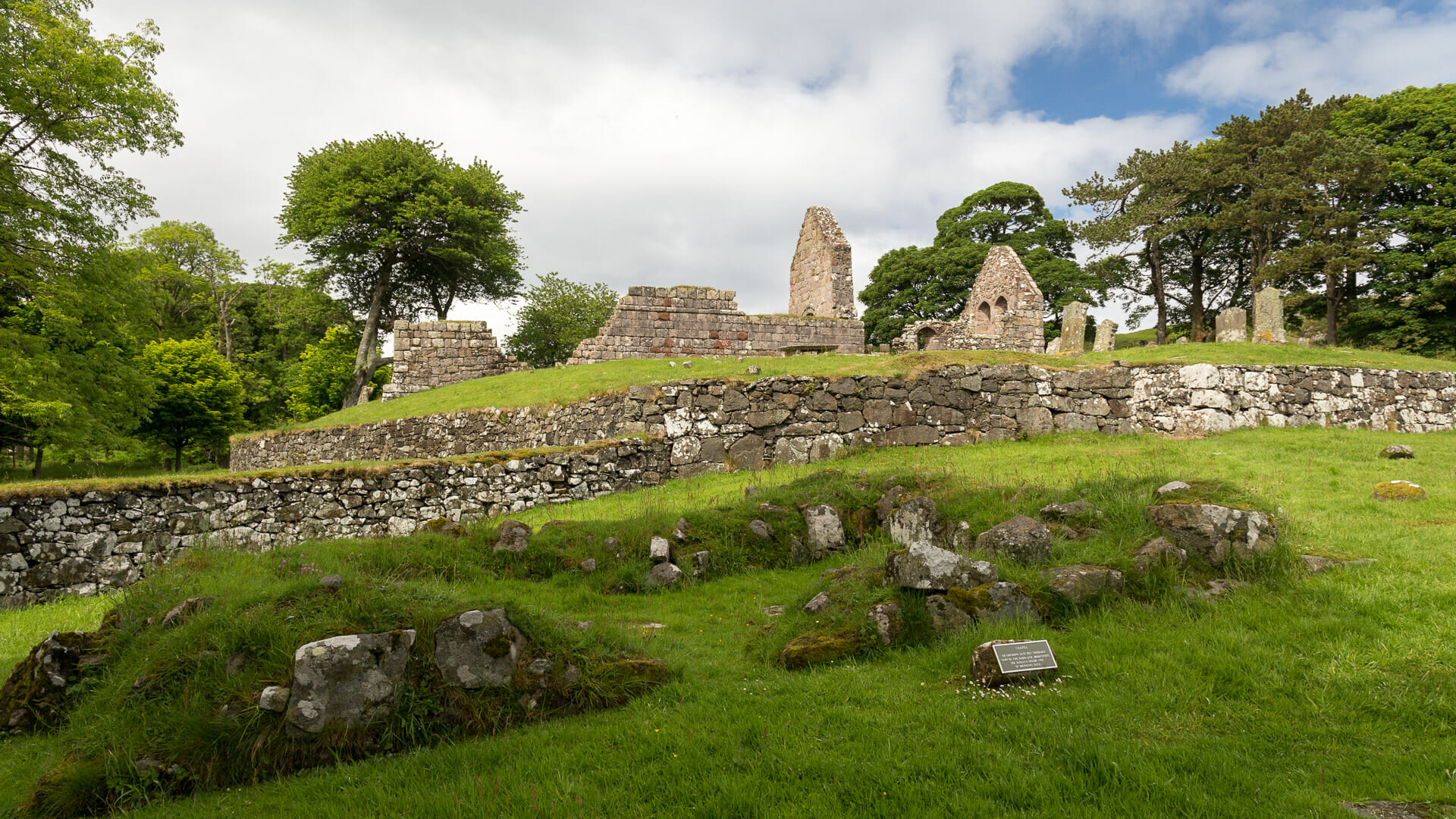
As early as around 600 AD – during the period when St Columba brought Christianity to Scotland from Iona – monks settled here in a monastery at the southern tip of the Isle of Bute. They were later driven out by the Vikings, but from around 1100 Christians built a church here again. The remains of the old site can still be visited; it’s about a ten-minute walk from the car park.
More information on St Blane’s Church here.
Scalpsie Bay
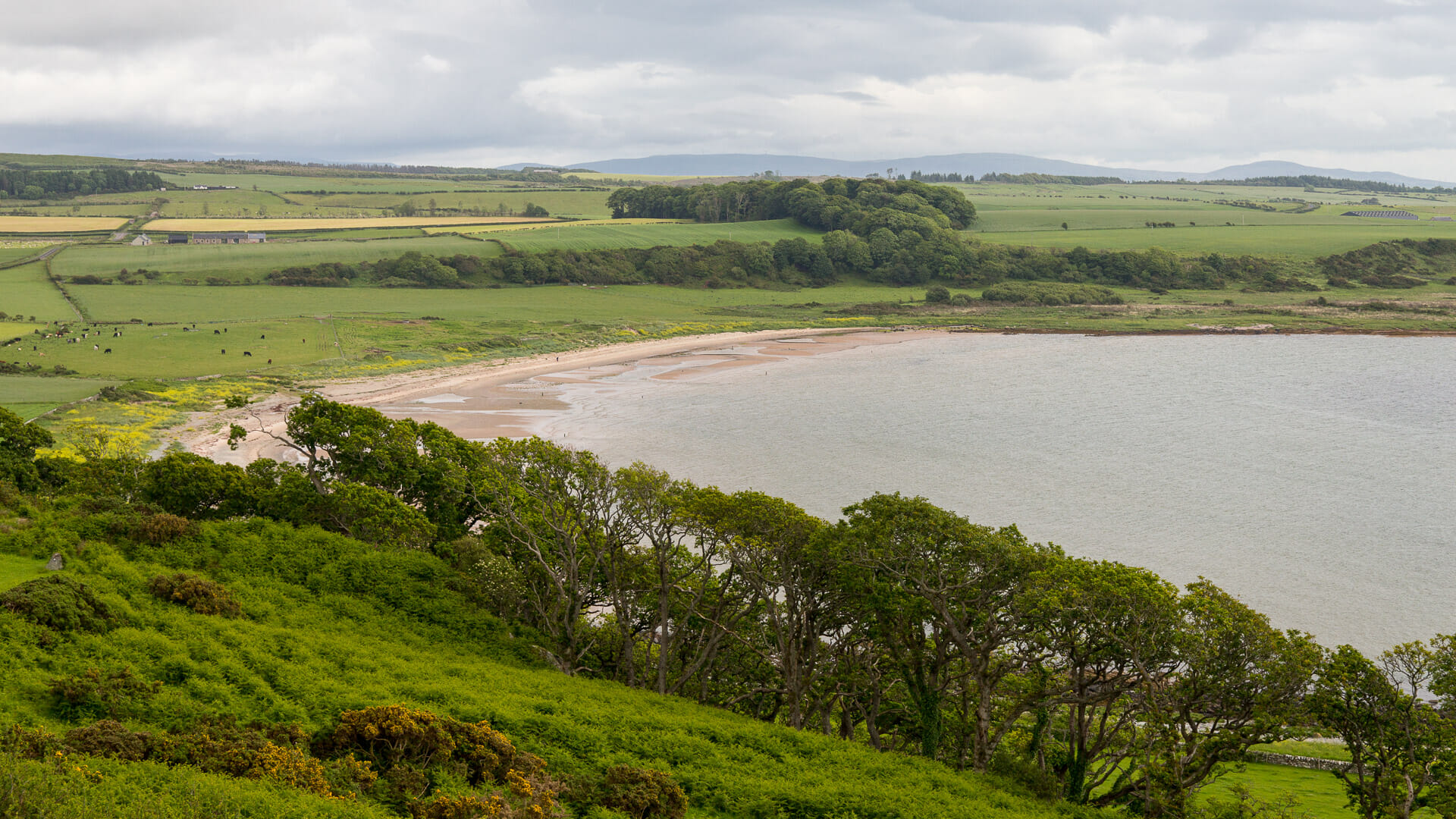
Continuing along the main road, it swings north up the west coast, where Bute’s sandy beaches await. The first is at Scalpsie Bay. You don’t necessarily need to visit it, but a brief stop at the viewpoint above the bay, right by the road, offers a wonderful view.
Ettrick Bay
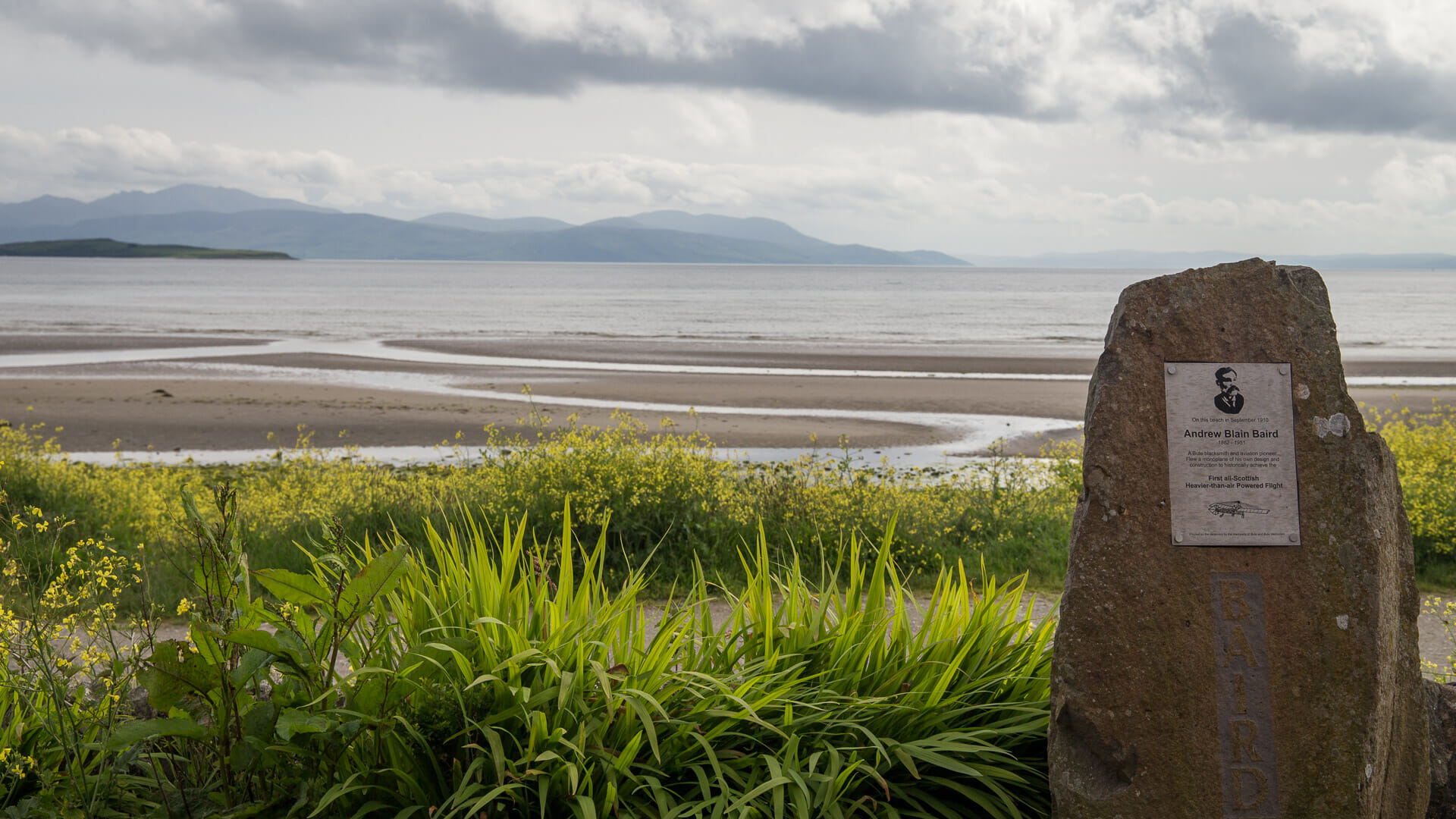
At the point where the main road turns off again to head back to Rothesay, the road to Ettrick Bay branches off to the left. This wonderful bay, with the Isle of Arran visible on the horizon, is worth a stop. (Unfortunately, the tearoom on the beach is currently not being leased out.)
St Colmac Cottages Stone Circle
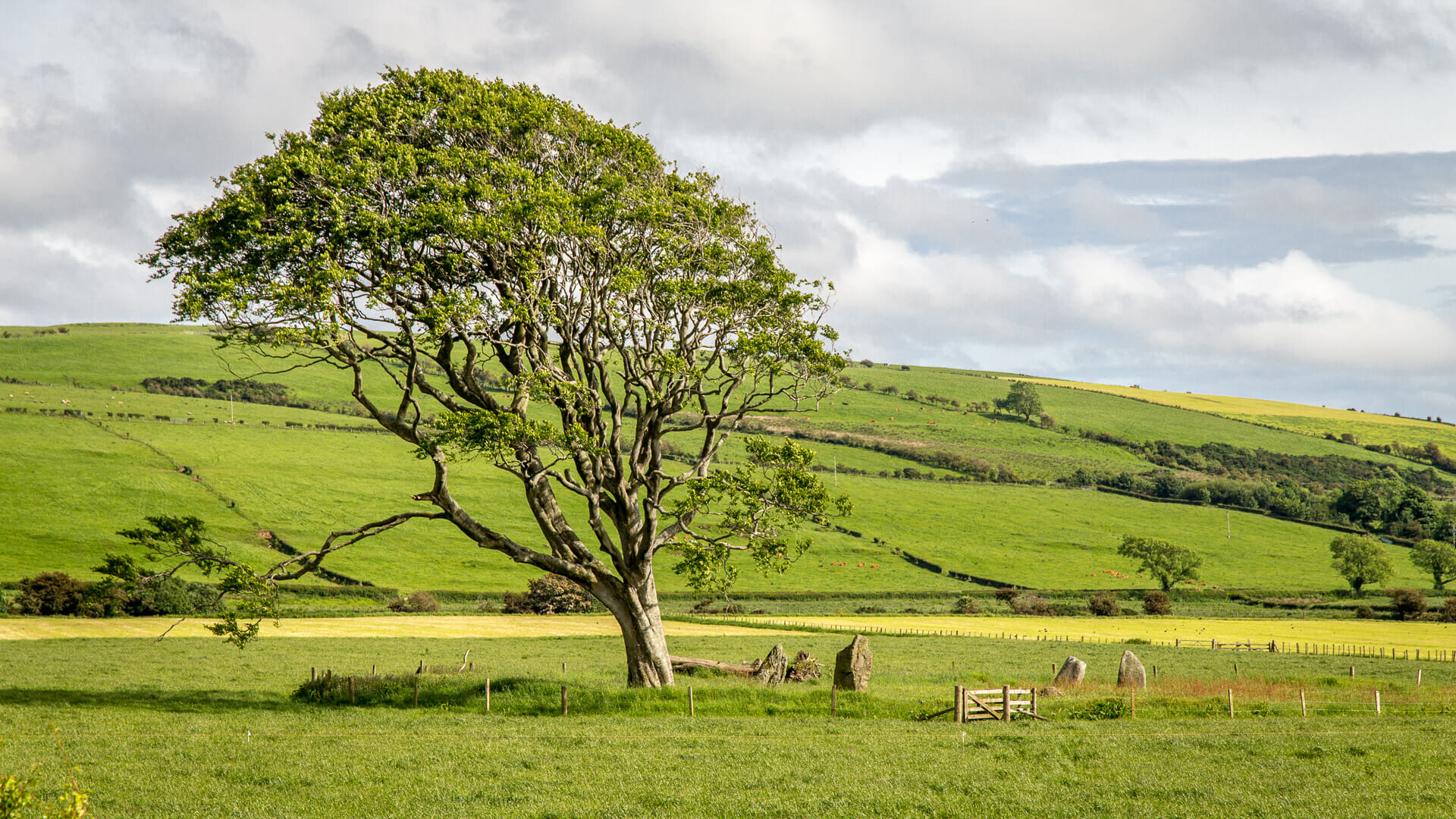
Had enough of the beach? Then back onto the road towards Rothesay. If you like, you can also take a look at the stones near St Colmac Cottage. Thanks to the distinctive tree, they’re easy to spot from the road.
Sample Schedule for a Day Trip Around the Isle of Bute
| Time | Attraction | Mapcode |
|---|---|---|
| 10:00am | Mount Stuart House | FFZC.LQ5 |
| 1:30pm | Kilchattan | FFZJ.CBQ |
| 2:00pm | Standing Stones | FFXH.JK5 |
| 2:30pm | St Blane’s Church | FFYK.DQ9 |
| 3:30pm | Scalpsie Viewpoint | FFRF.QVX |
| 4:00pm | Ettrick Bay | FFP7.V5C |
| 5:30pm | Rothesay Pier with Victorian Toilets | FFW8.ZLW |
Information on Mapcodes.
Transport: Ferries and Public Transport
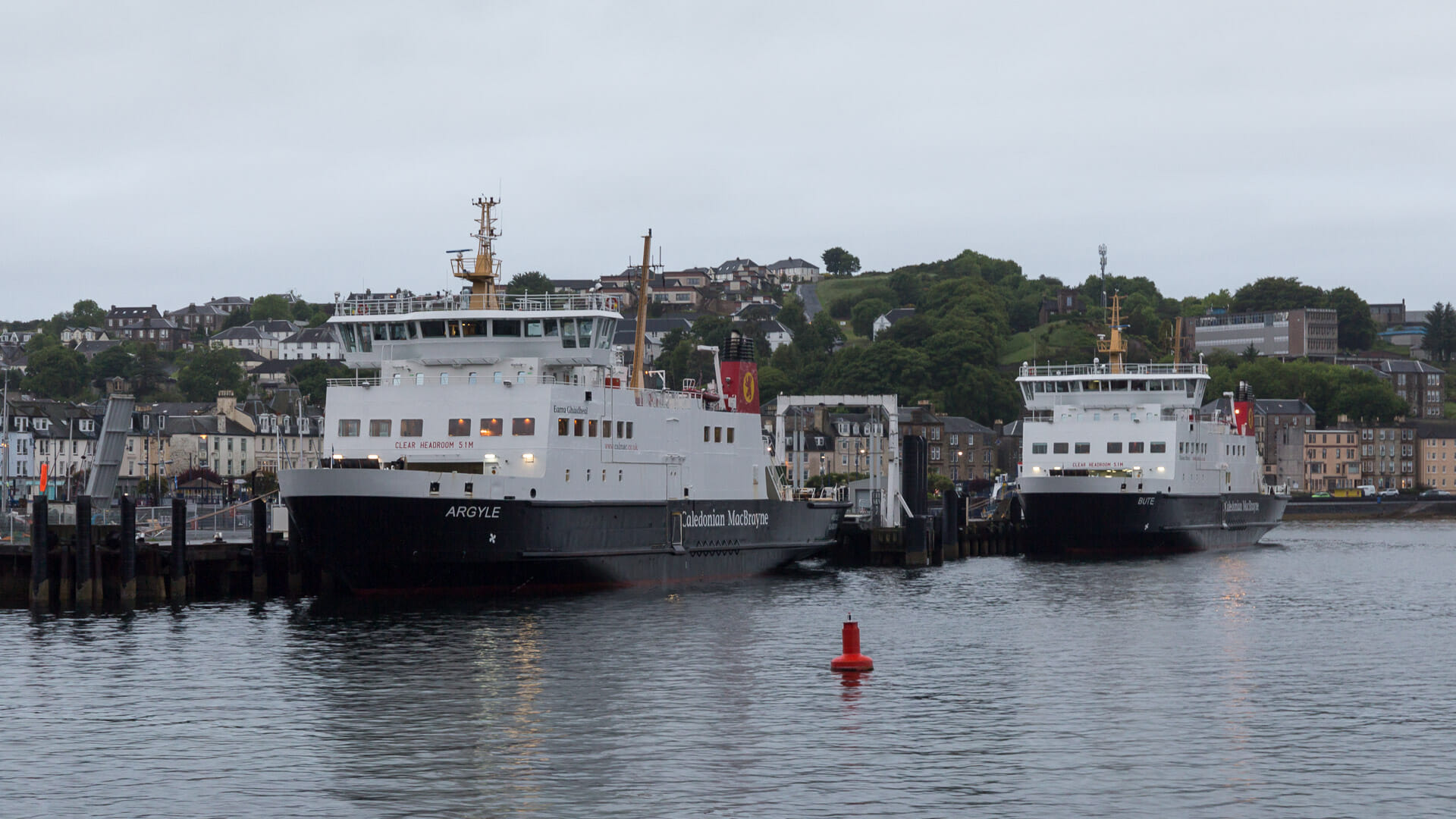
There are two ferry connections to the Isle of Bute. The main route runs from Wemyss Bay across to Rothesay, where the two ferries “Argyle” and “Bute” share the service. In summer, sailings from Wemyss Bay run hourly, starting at around 7:15am and continuing until 7:45pm in the evening. From Rothesay, ferries in summer start at around 7:00am and run until 7:00pm, or even 7:45pm at weekends. Each crossing takes 35 minutes.
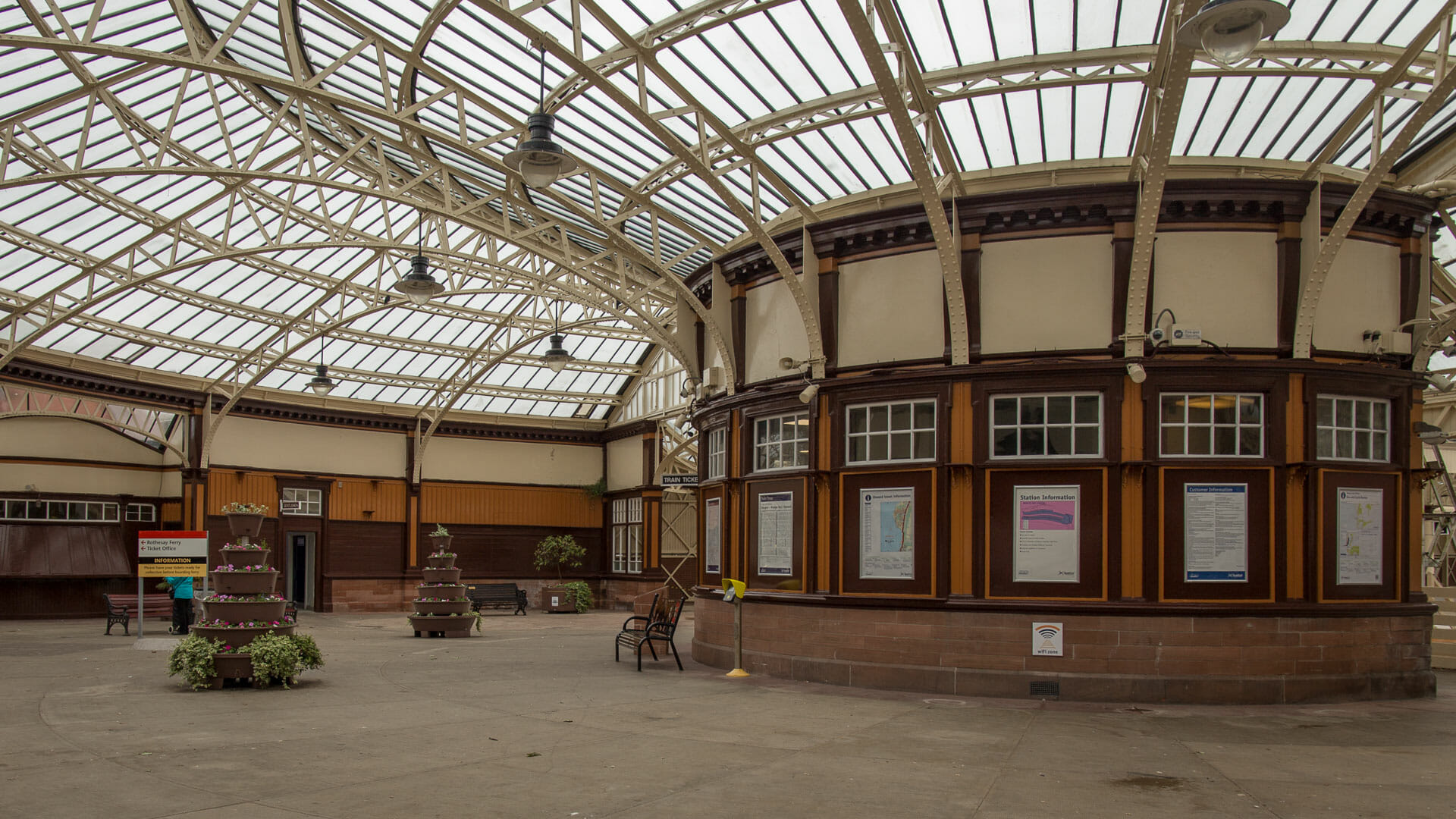
By the way: holidaymakers were already arriving at Wemyss Bay railway station around 1900. If you have a little time, you should definitely take a look inside the station – a fine example of Victorian architecture.
A one-way ferry crossing costs around £11 per car, plus around £3 per person. Motorhomes start at around £11.
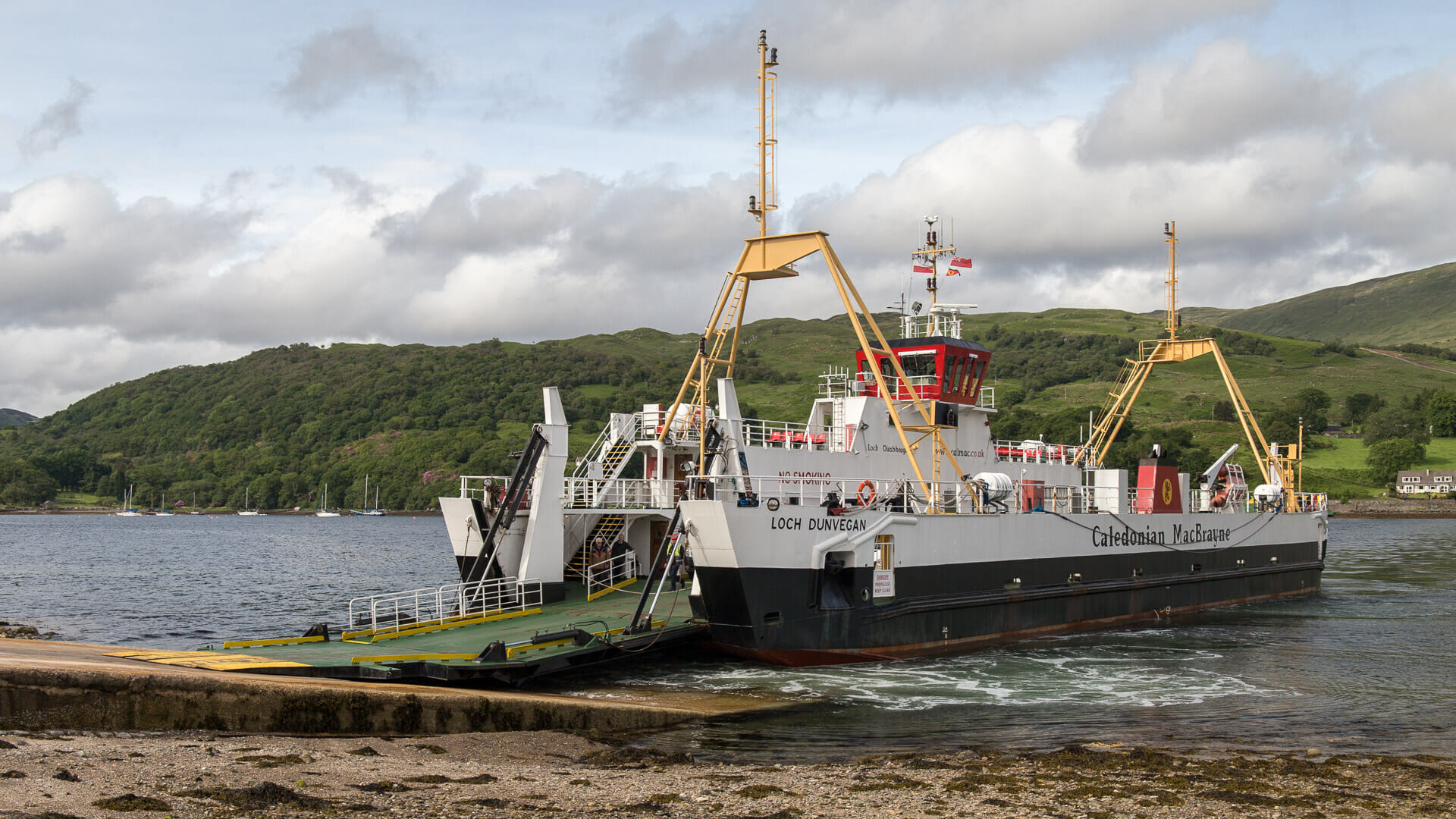
Up in the north of Bute, there’s a connection between Colintraive on the mainland and Rhubodach on the Isle of Bute. The ferry here is called the “Loch Dunvegan” and shuttles back and forth in summer at least every half hour between around 5:30am and 9:00pm. The crossing takes five minutes and costs just under £6 per car one-way, plus around £1.10 per passenger. Motorhomes start at around £6.
The exact timetables and prices for both ferry routes can be found on the Caledonian MacBrayne website.
Most visitors use a car to explore the island. That said, the roads are pretty good, so you’ll even come across a few road cyclists and other two-wheelers.
History of the Isle of Bute
The earliest confirmed traces of settlement on Bute date back to around 4500 BC. On the small island of Inchmarnock off Bute’s west coast, graves from around 2000 BC were also found. The skull of a woman from these graves has been reconstructed and given a face; it’s on display in Bute Museum, along with an elaborate jet necklace.
After that, Bute went through the typical development experienced by the whole west coast: the island first became part of the kingdom of Dal Riata, then came Christianisation, followed by the Vikings. As the Norsemen’s power waned, the Scots built the first stronghold: Rothesay Castle, whose roots go back to the 13th century.
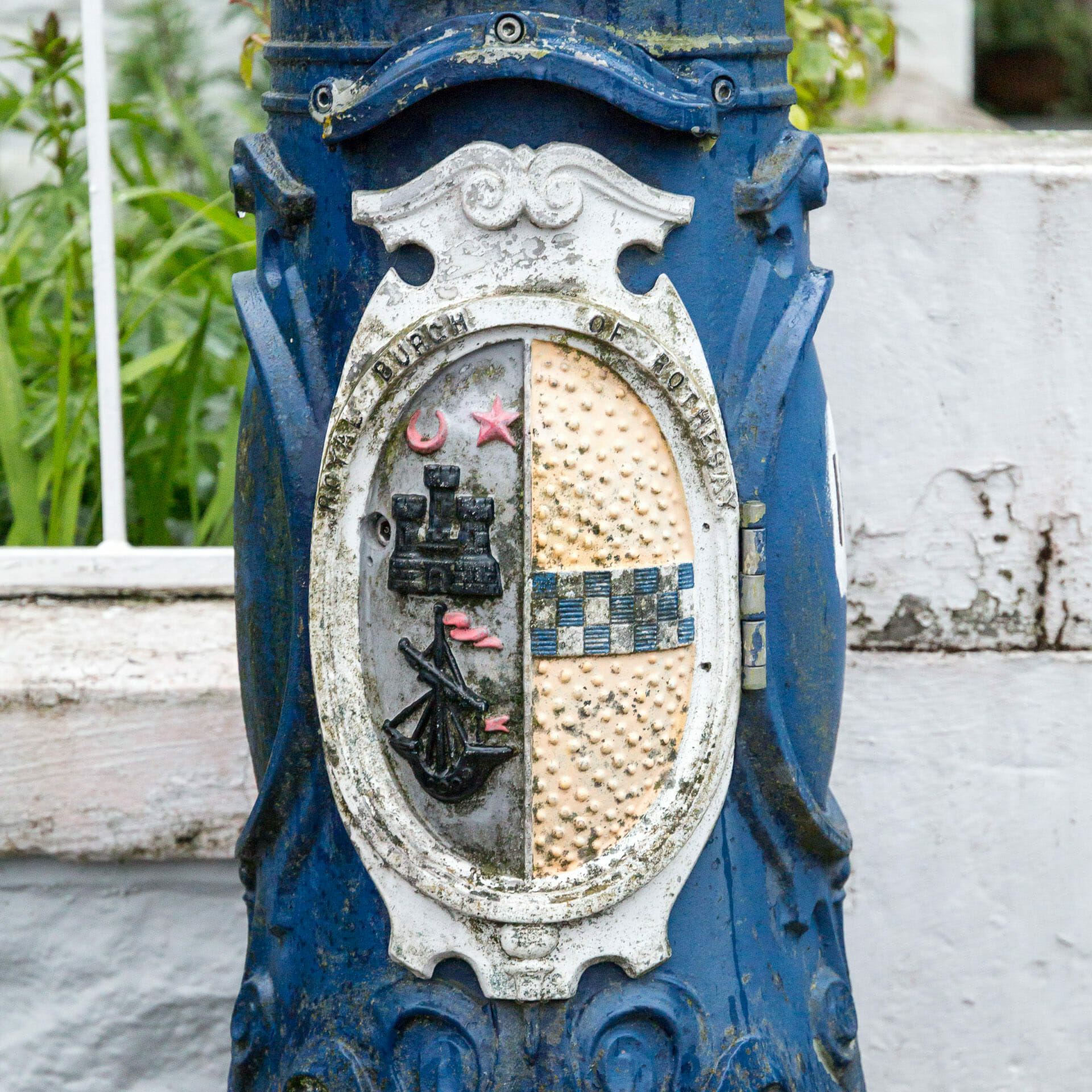
The building is thought to have been commissioned by the third High Steward of Scotland, Walter II of the House of FitzAlan. The High Steward was the highest court office in Scotland. The FitzAlans passed this office down through the family, who soon became known as the Stewarts, or Stuarts, and who later became kings themselves.
In the 19th century, as mentioned earlier, Victorian tourists were then drawn to Bute. Today, around 6,500 people live on the island. Its main sources of income are tourism and agriculture.
