Ardnamurchan Lighthouse marks the westernmost point of the British mainland. But that’s not its only claim to fame. The lighthouse also boasts a very distinctive architecture.
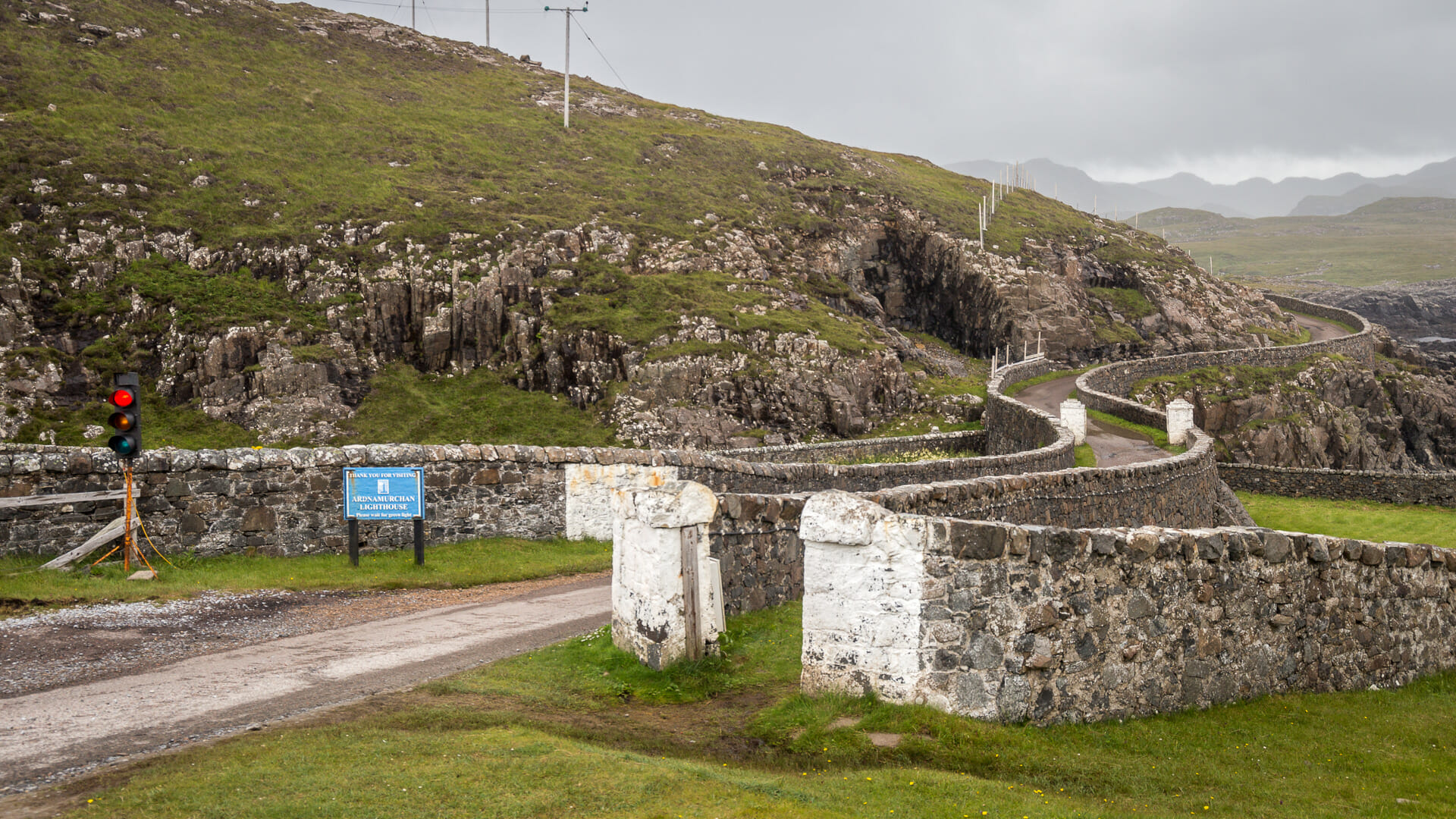
Even the drive to Ardnamurchan Lighthouse is an adventure in itself. Along some jagged mountain ridges that form the rim of a huge caldera, the road winds through a green wilderness.
At the end, just before reaching the car park, it narrows into a sunken lane flanked by a stone wall. Any passing places? – None! That’s why one of the few traffic lights in the Highlands controls traffic here.
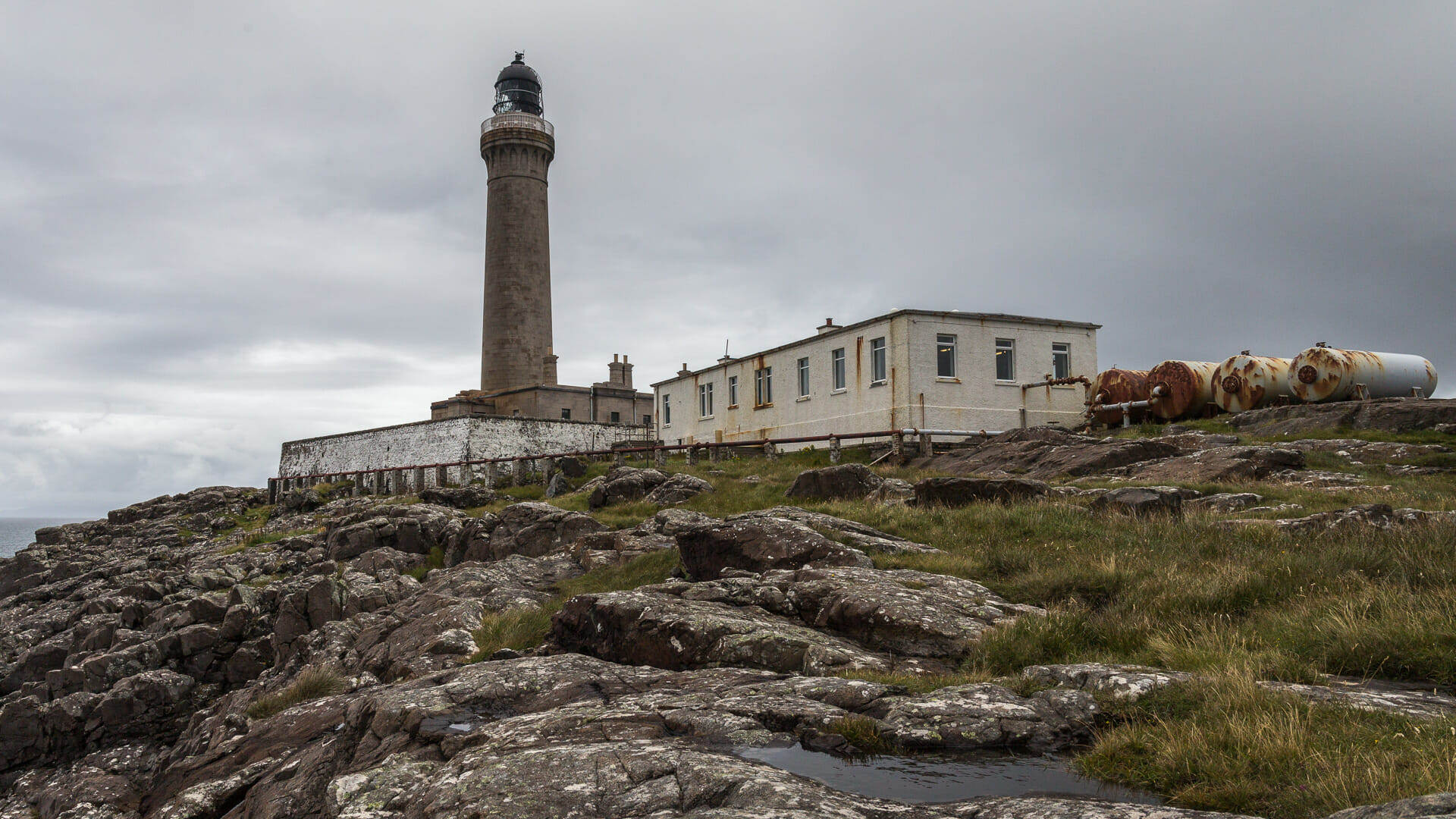
From the car park it’s only a few metres on foot, and then a statement in granite rises before you: Ardnamurchan Lighthouse rises entirely in grey stone. Completely atypical, since almost all Scottish lighthouses otherwise appear in yellow-and-white paint. Why is this one different?
Like almost all lighthouses in Scotland, the design for Ardnamurchan Lighthouse also comes from the engineering dynasty of the Stevensons. In this case, the man responsible was Alan Stevenson.
But Alan Stevenson was more than just an engineer. Unlike his father, he had a passion for art and classical antiquity. He spoke Ancient Greek and Latin alongside French, Italian and Spanish. And had his father not pushed him into it, he probably wouldn’t have become an engineer at all, but an artist.
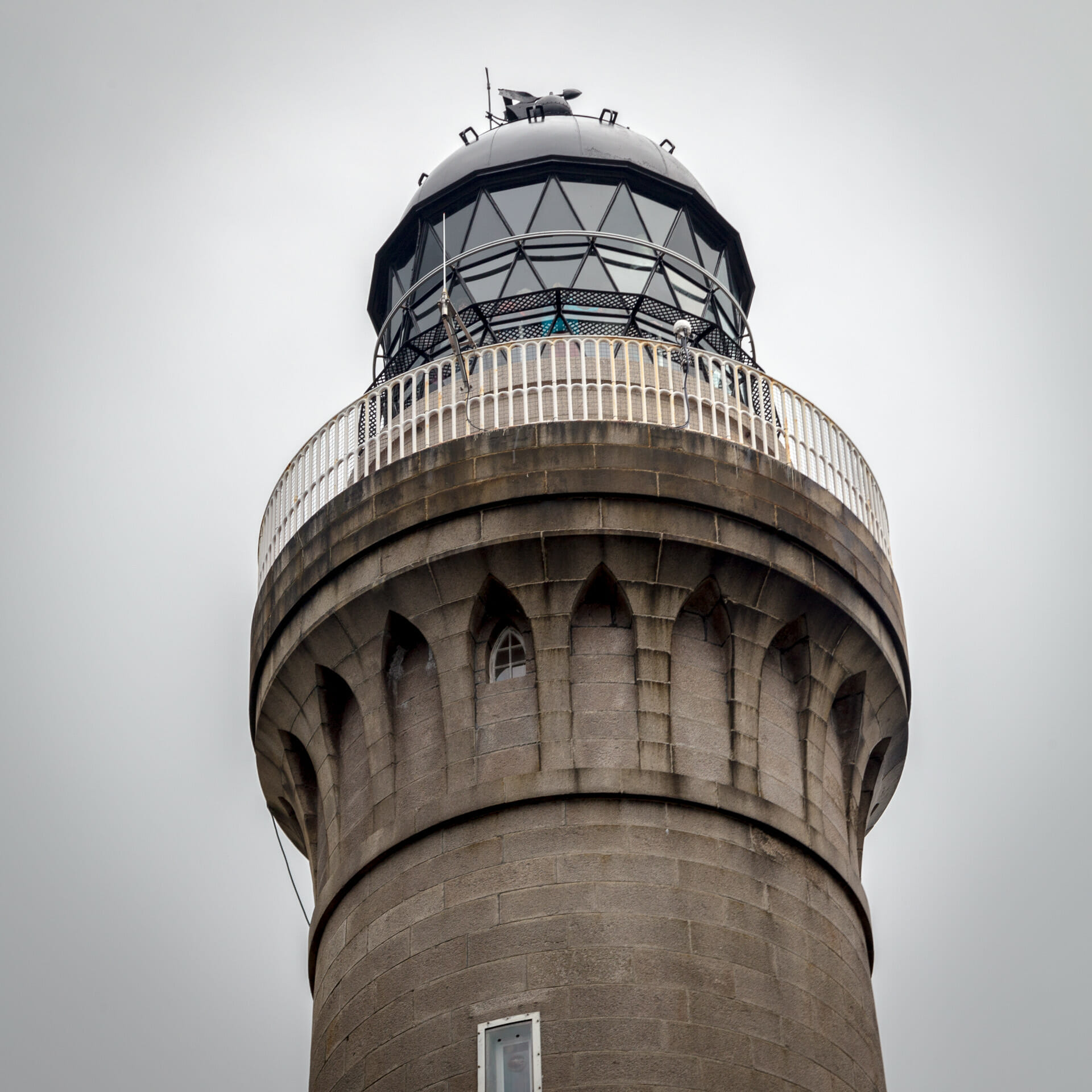
So classical references kept slipping into Alan’s otherwise rather sober commissions: bull-shaped bases, ventilation covers bearing the face of a Greek goddess, and arches and pillars modelled on Egyptian designs all turn up in his lighthouses.
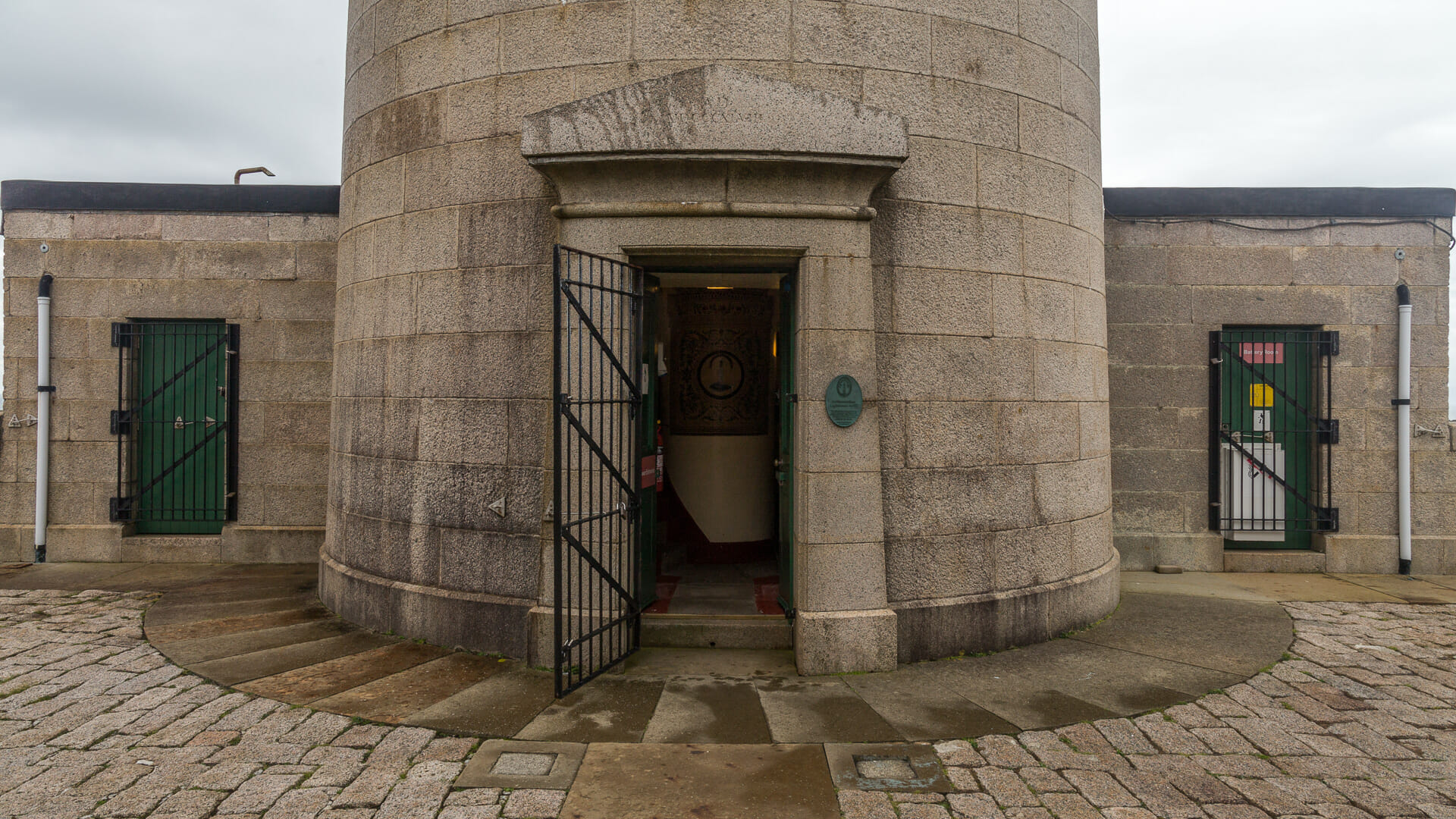
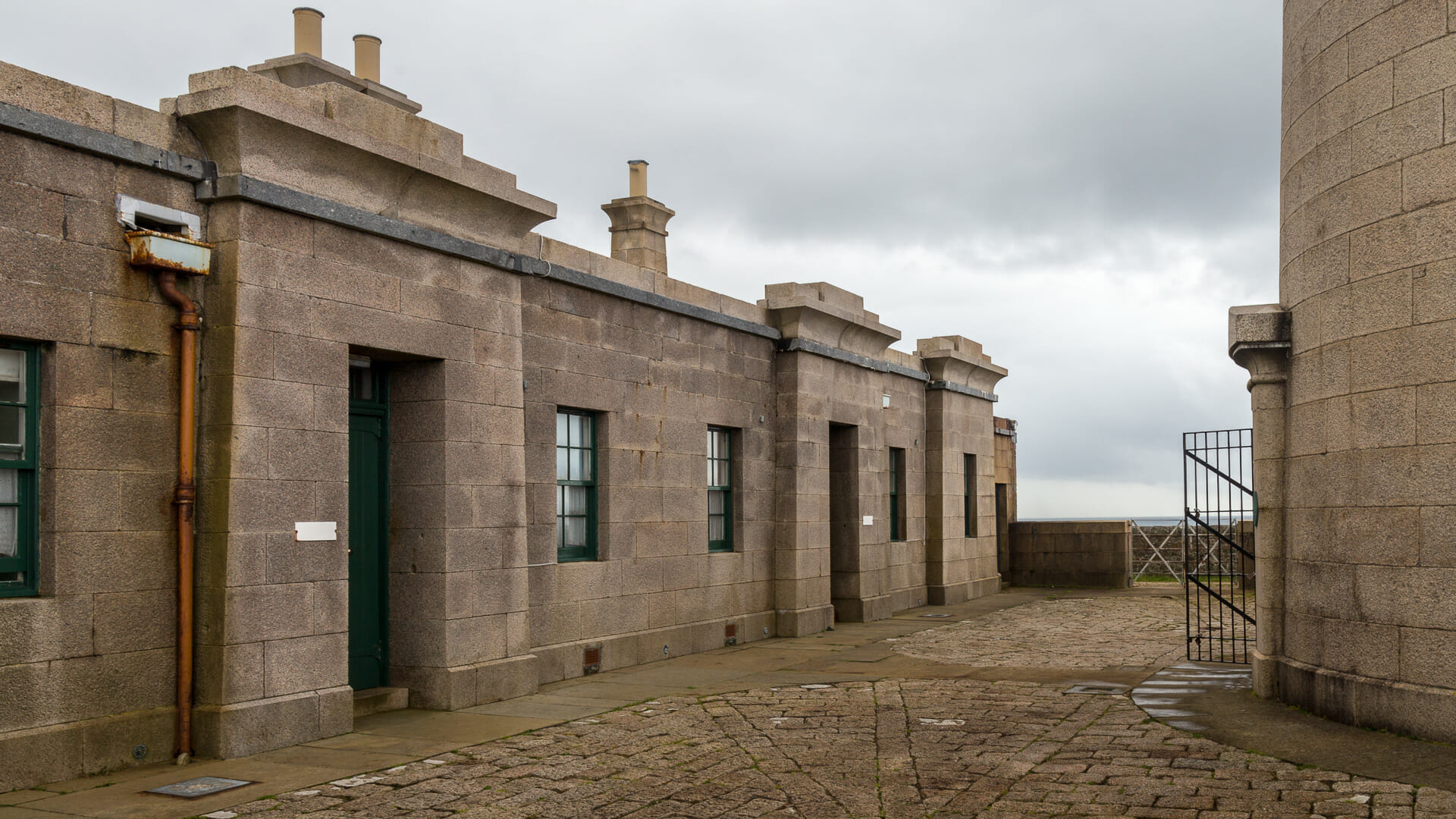
At Ardnamurchan Lighthouse, he finally carried the Egyptian theme all the way through, perhaps also to recall the legendary Lighthouse of Pharos at Alexandria. The entrances to the lighthouse and to the lighthouse keepers’ quarters take up motifs from the palaces and tombs of the pharaohs.
Typically Scottish nature, however, sets up a stark contrast to the Egyptian references. Bare reddish-brown rock, broken up by a few sparse patches of green turf, dominates the landscape. Steeply falling cliffs plunge down to the roaring sea.
A good view of the sea can be had from the foghorn platform. It sits a little way below.
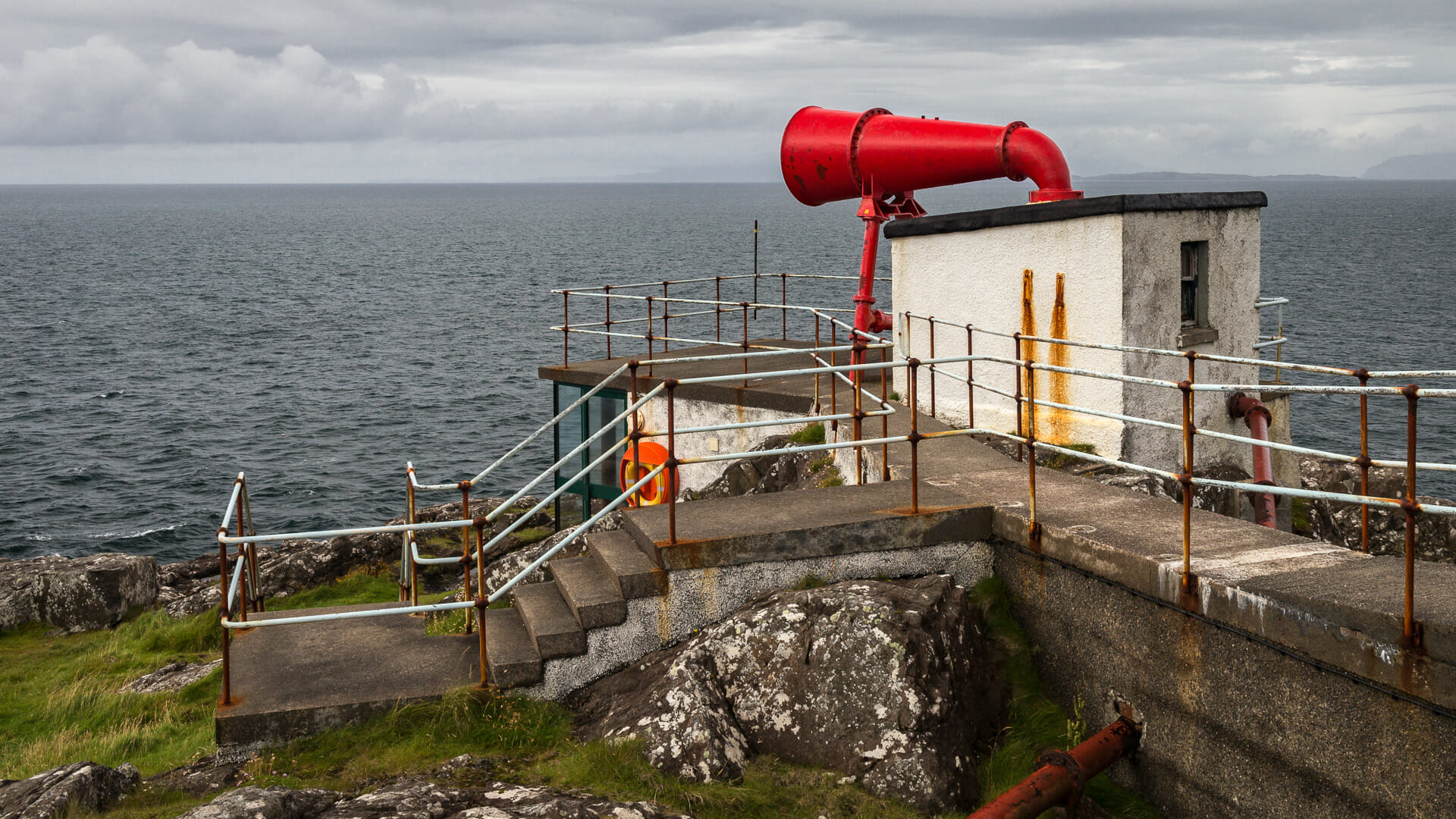
Visitors can hardly go any further west than the end of this platform. In fact, though, Ardnamurchan Point isn’t quite the westernmost point of the Scottish mainland. That lies 800 metres further south, at Corrachadh Mòr.
By the way: in good weather and with a bit of luck, rare seabirds fly past here, or dolphins appear.
Looking back, the tower with its Egyptian look catches the eye once more. You could almost say: here you’ll find a piece of the Near East in the far west of Scotland.
Know-how: Ardnamurchan Lighthouse and Alan Stevenson
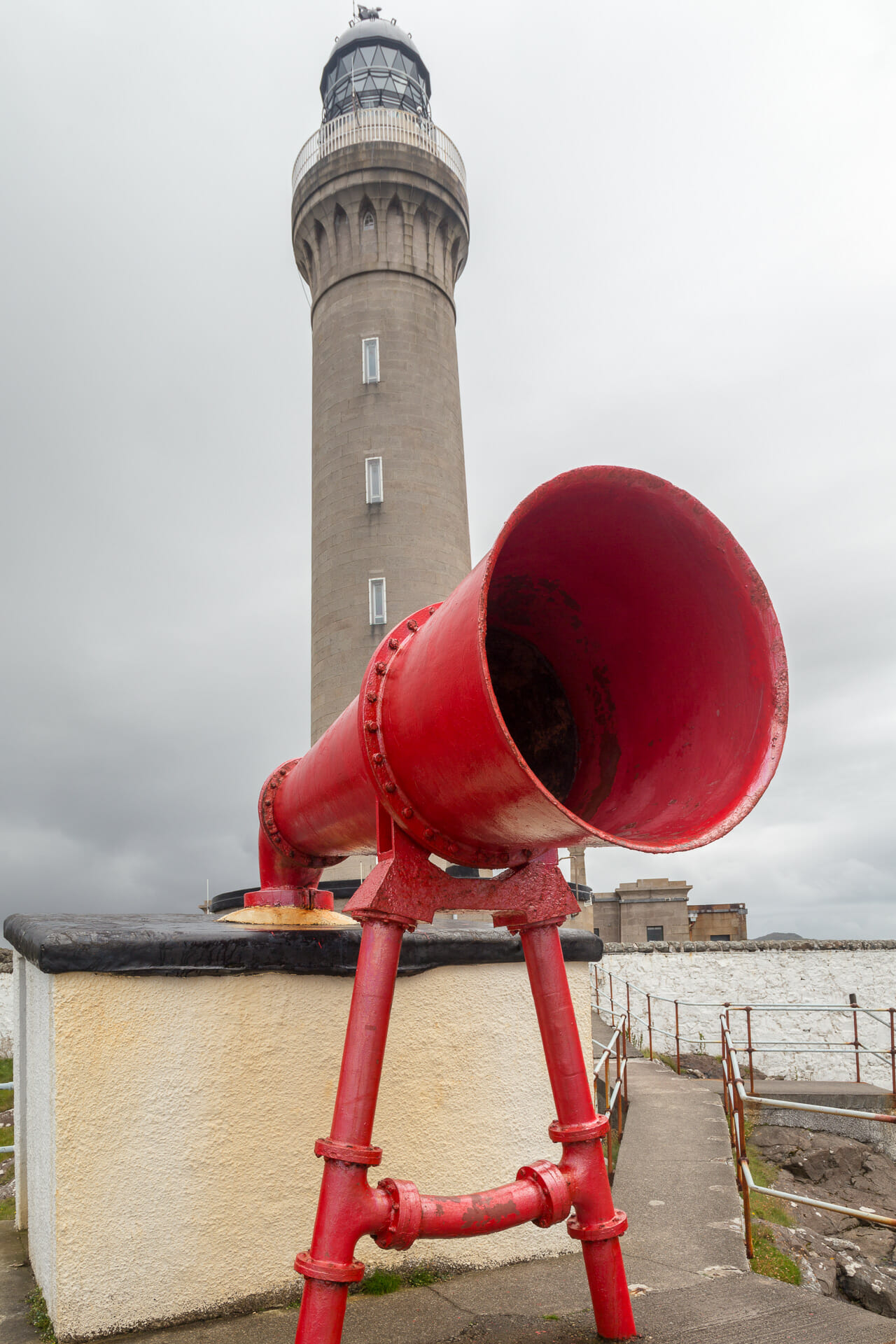
First, the hard facts about the lighthouse: at 35 metres tall, it raises the light to 55 metres above sea level. It was completed in 1849. Like all lighthouses by now, it has been operated automatically since 1988. 152 steps lead up the tower. Incidentally, the large foghorn below is no longer in service; a modern one now sits directly at the tower instead.
Although Ardnamurchan Lighthouse is considered the only Egyptian-style lighthouse in the entire world, it wasn’t Alan Stevenson’s masterpiece. He had already delivered that five years earlier, when he built the tallest lighthouse in Scotland on a bare rock off the island of Tiree, in the middle of the sea: Skerryvore Lighthouse. It is regarded as one of the most elegant lighthouses in the world, even though it too is built entirely of grey granite.
Alan Stevenson built 13 lighthouses in just ten years. He paid for it with his health and died at the age of 58. The artistic streak in the Stevenson family later came into full bloom in Alan’s nephew: Robert Louis Stevenson, who wrote novels such as “Treasure Island” and “Dr Jekyll and Mr Hyde”.
Tip: Tower, exhibition, café
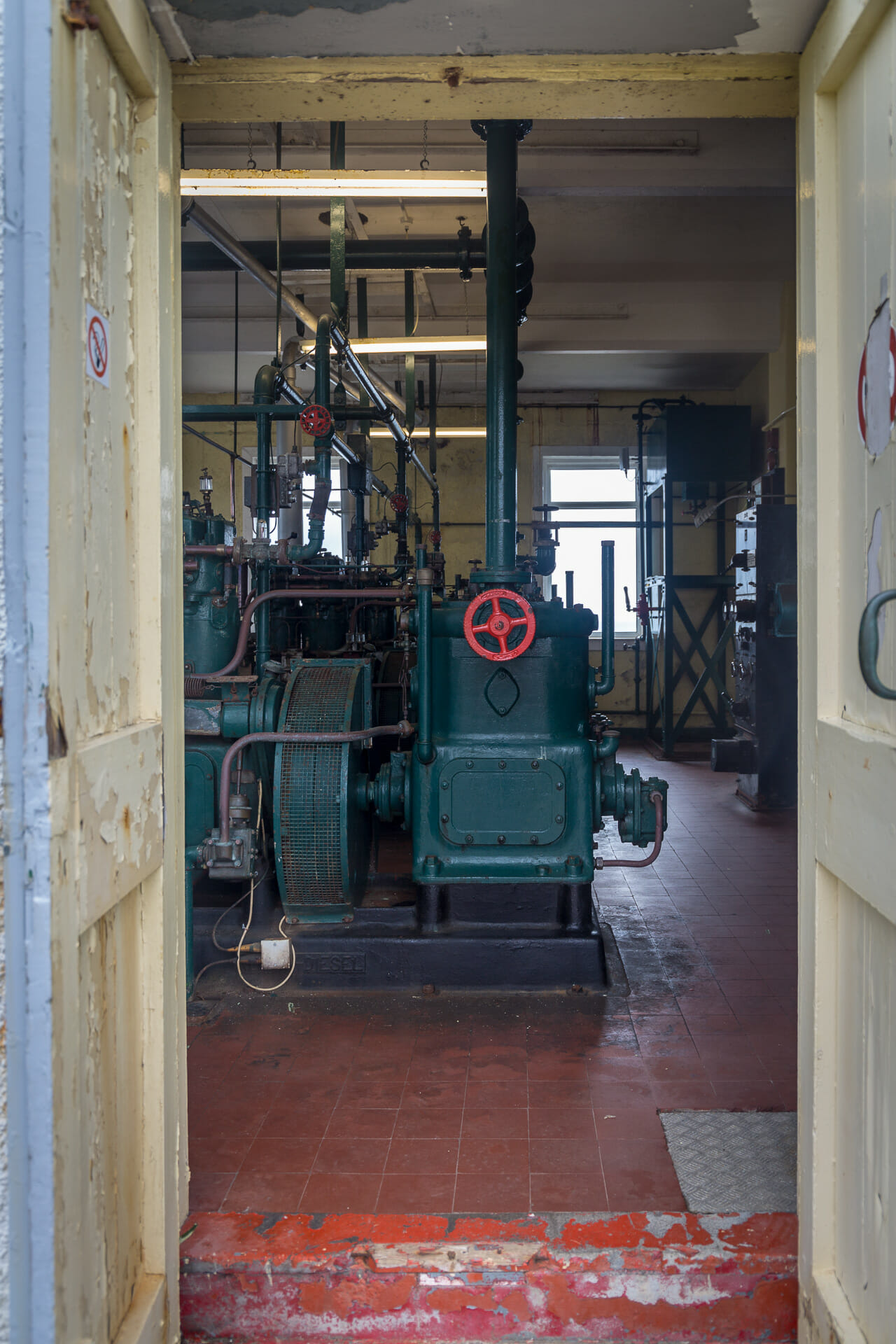
For a few pounds you can climb the tower. From the top you can look out over Ardnamurchan, the sea and across to the islands. The entrance fee also covers the exhibition and the engine room.
In the exhibition, visitors also learn a great deal about life in the west of Ardnamurchan.
Personal note: Sadly, not up the tower
Ardnamurchan is beautiful – it’s just that, sadly, it doesn’t seem to like me much. Because every time I’ve been there, it has greeted me with the worst possible weather. Just as at the wonderful Sanna Beach, so too here at Ardnamurchan Lighthouse. So I spared myself the climb to the top, and with it the visit to the exhibition. I’ll make up for that as soon as Ardnamurchan drops its stubborn attitude towards me on the weather front – I’ve seen photos. There is sunshine there!
Getting there:
With satnav: enter “PH36 4LN”, but don’t drive all the way to Portuairk – instead turn off at Achosnich, see the next paragraph.
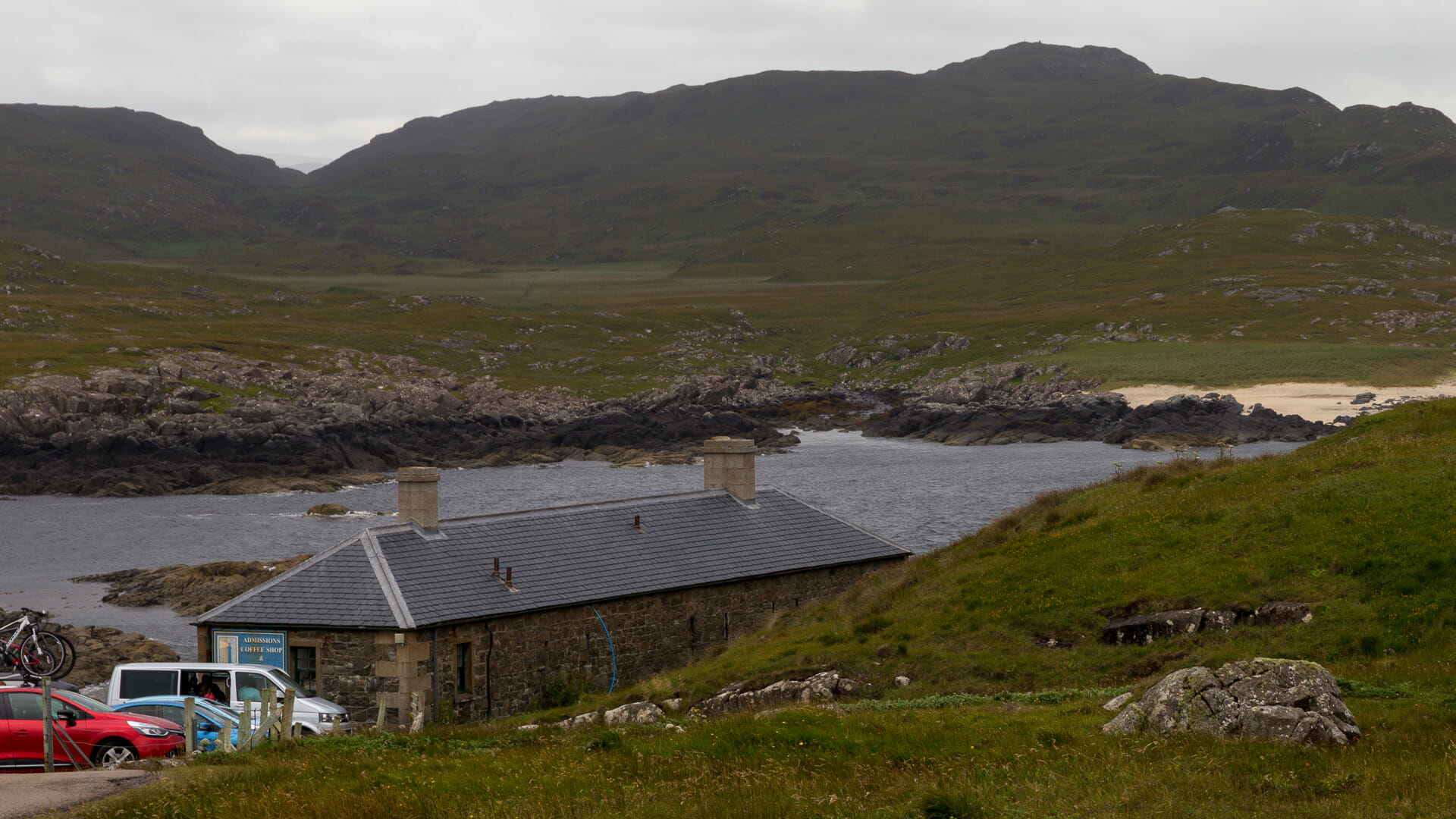
Without satnav: Take the B8007 to Kilchoan, where the ferry to and from Mull runs. There, follow the sign towards Portuairk and the lighthouse. Careful: turn left at Achosnich, towards Grigadale and the lighthouse. Simply follow this road right to the very end, until the narrow road with the traffic light appears. At the lighthouse there are two car parks, one down at the café and one up at the tower.
