Colonsay offers all that makes the Scottish Highlands so beautiful: white beaches, green hills, soothing solitude. Yet hardly anyone knows it.
Colonsay Info:
» Attractions
» Activities
» Festivals
» Getting There and Around
» Accommodation
» Best Time to Visit
» History
Colonsay is one of the Inner Hebridean islands off Scotland’s west coast, situated between its larger neighbours Islay to the south, Jura to the east, and Mull to the north. The island measures only about 13 kilometres in length and five kilometres in width.
The landscape? Steep cliffs interrupted by bays with wonderful sandy beaches, while larger hills rise in the middle that almost feel like mountains here. A valley runs from north to south with a long loch.
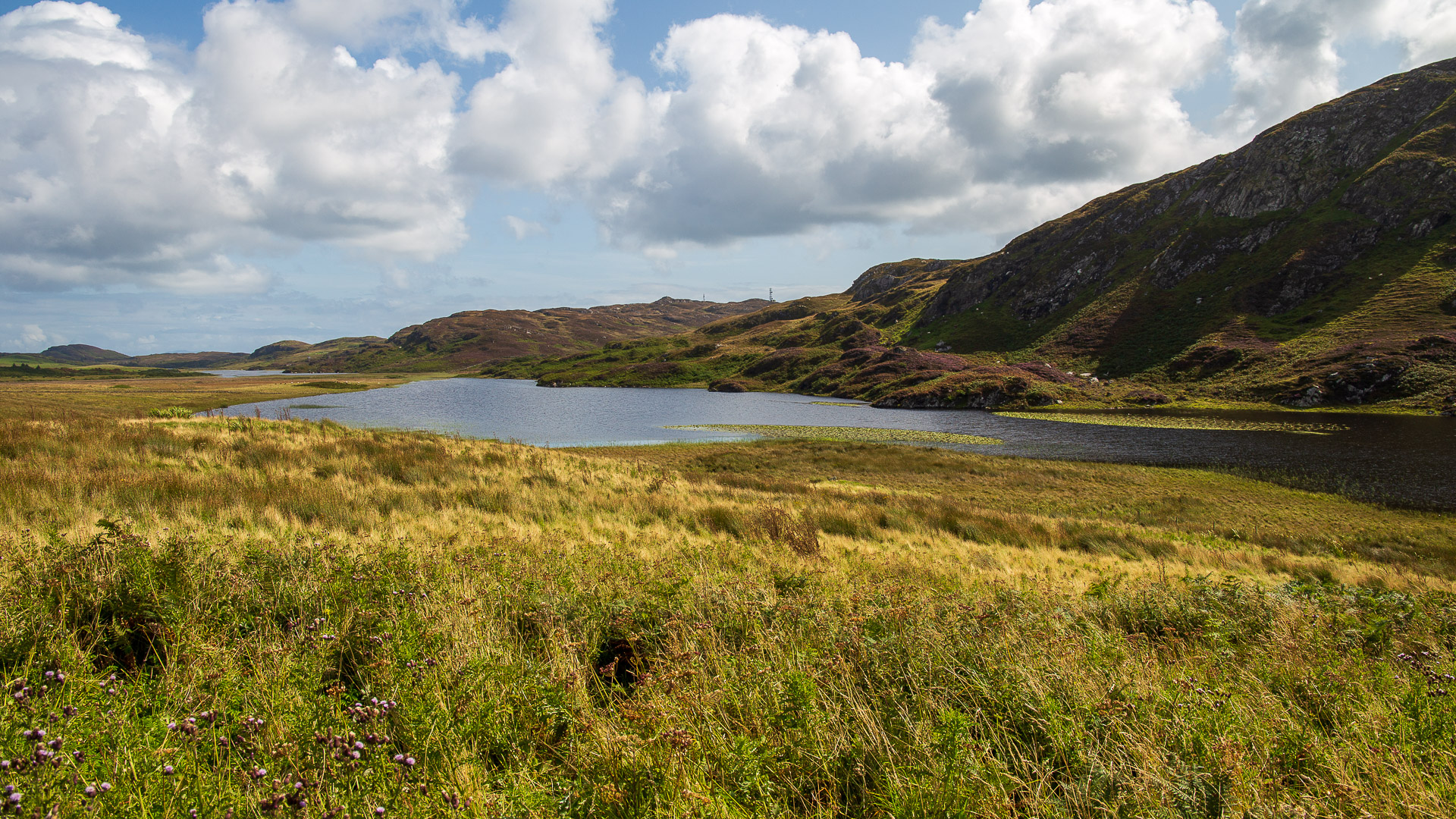
In spring the increasingly rare machair blooms, framing the beaches with a colourful meadow landscape. In summer the dark green bracken grows so tall in places that it towers over some people. At the same time, flowering heather contrasts the grey of the rocks with a delicate lilac.
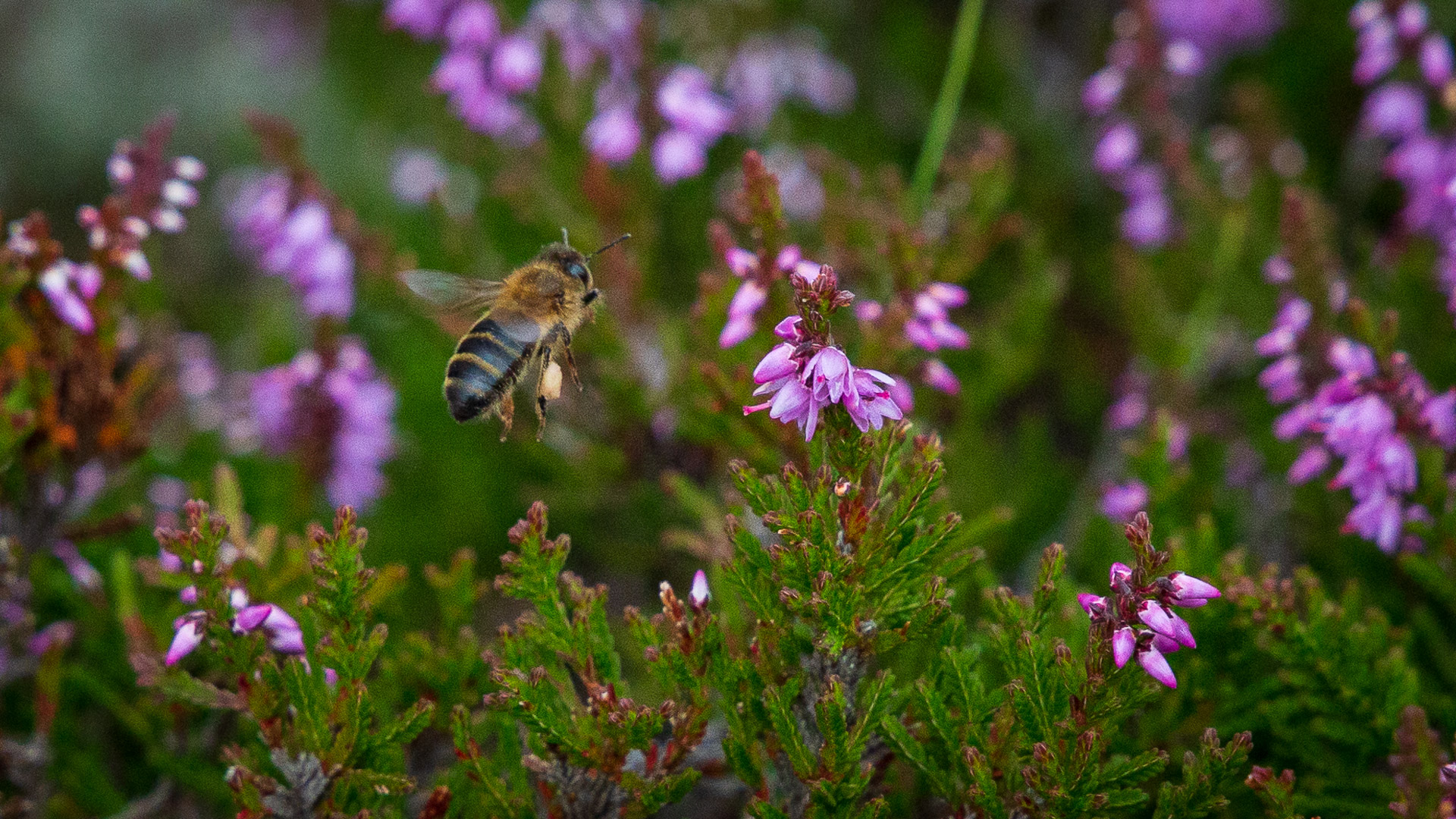
Colonsay’s culinary scene is flourishing too: its now-famous bees produce delicious honey. Home-grown oysters, lobster and salmon give the chefs at the island’s two restaurants tasty foundations for their dishes. And although no whisky is distilled here (yet?), there are two gin distilleries and a brewery.
Fewer than a hundred people live on Colonsay. Even though the last census recorded 130 residents, many of them aren’t really on the island, but are studying on the mainland or only come to their house in summer.
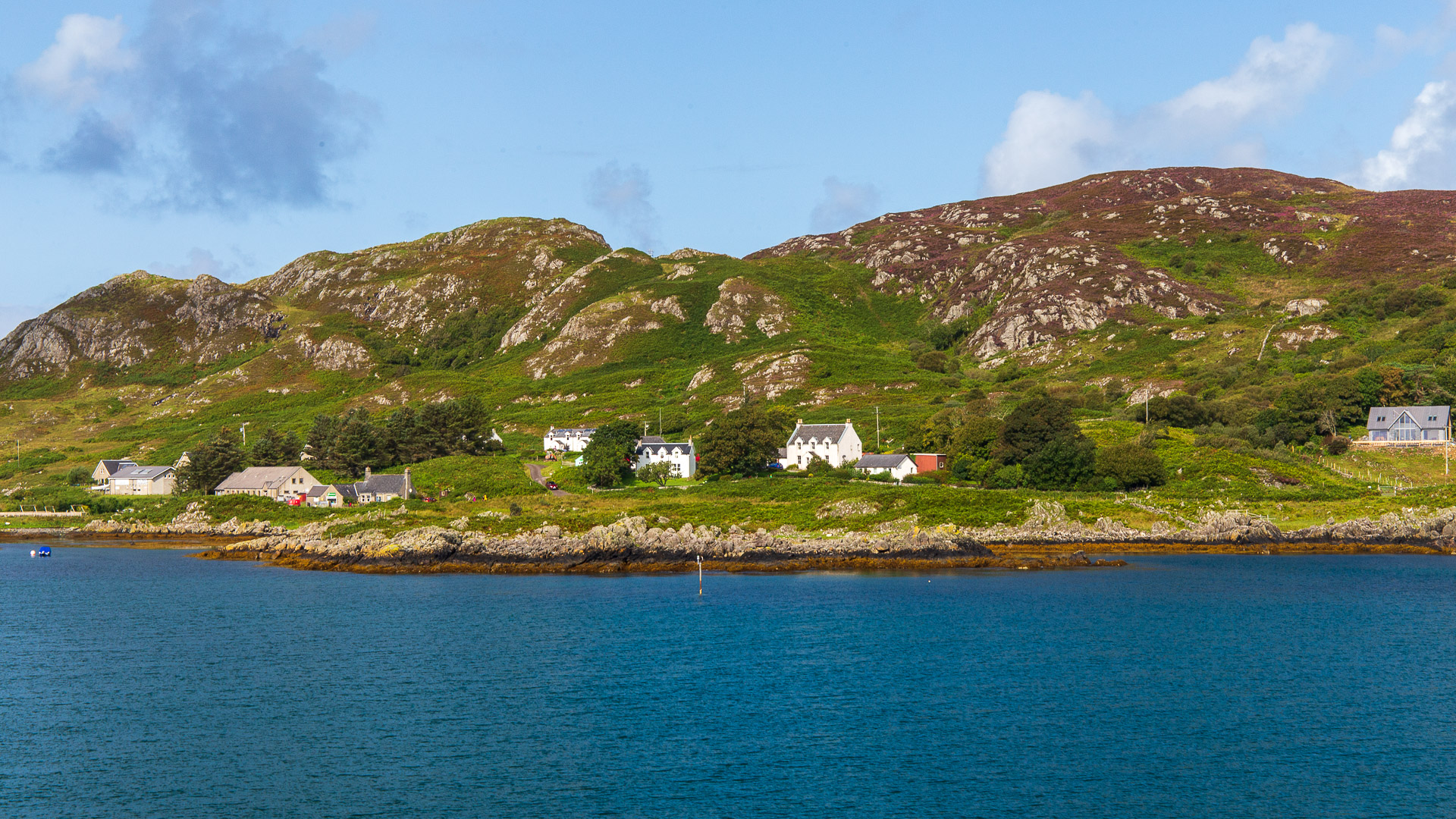
Scalasaig is the island’s most important and only larger settlement. The shops, restaurants and public services are grouped around it. Beyond Scalasaig, soothing solitude awaits the visitor.
But at the latest in the evening, it’s worth seeking out company. In the hotel’s pub or the village hall, tourists and residents meet for a chat. Ceilidhs – festivities with music and dance – take place now and then in the village hall.
So why, with all this beauty, do so few visitors come to this island? The main reason is probably the ferry. It runs only once a day and takes two hours from Oban. There’s also a connection from Islay, twice a week. Another reason: not many people yet know about this island’s beauty, since it has been marketed so little. Yet some islanders would certainly welcome more visitors – especially the kind who come back again and again.
Mein Reiseführer Islay, Jura, Colonsay & Gigha
Auf 214 Seiten beschreibe ich 38 Sehenswürdigkeiten auf den Inseln Islay, Jura, Colonsay und Gigha. Zusätzlich Infos zur Anreise, zum Klima, zur Geschichte, Festivals und mehr. Mit drei sechs Tagestouren.
Mehr Info hier.
Colonsay’s Attractions
An overview of the attractions on the map:
Here are Colonsay’s most important attractions.
Kiloran Bay and Tràigh Bàn
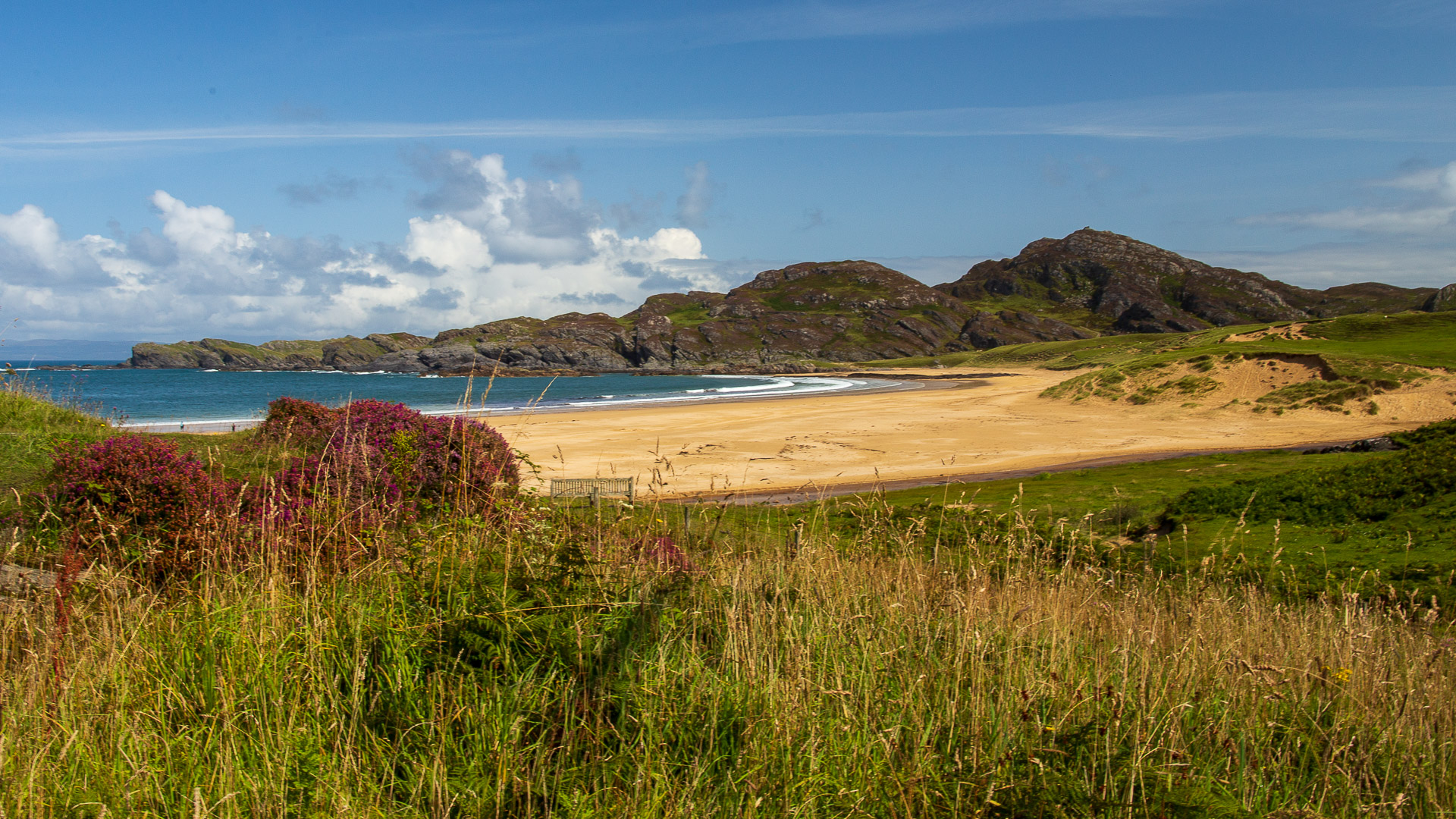
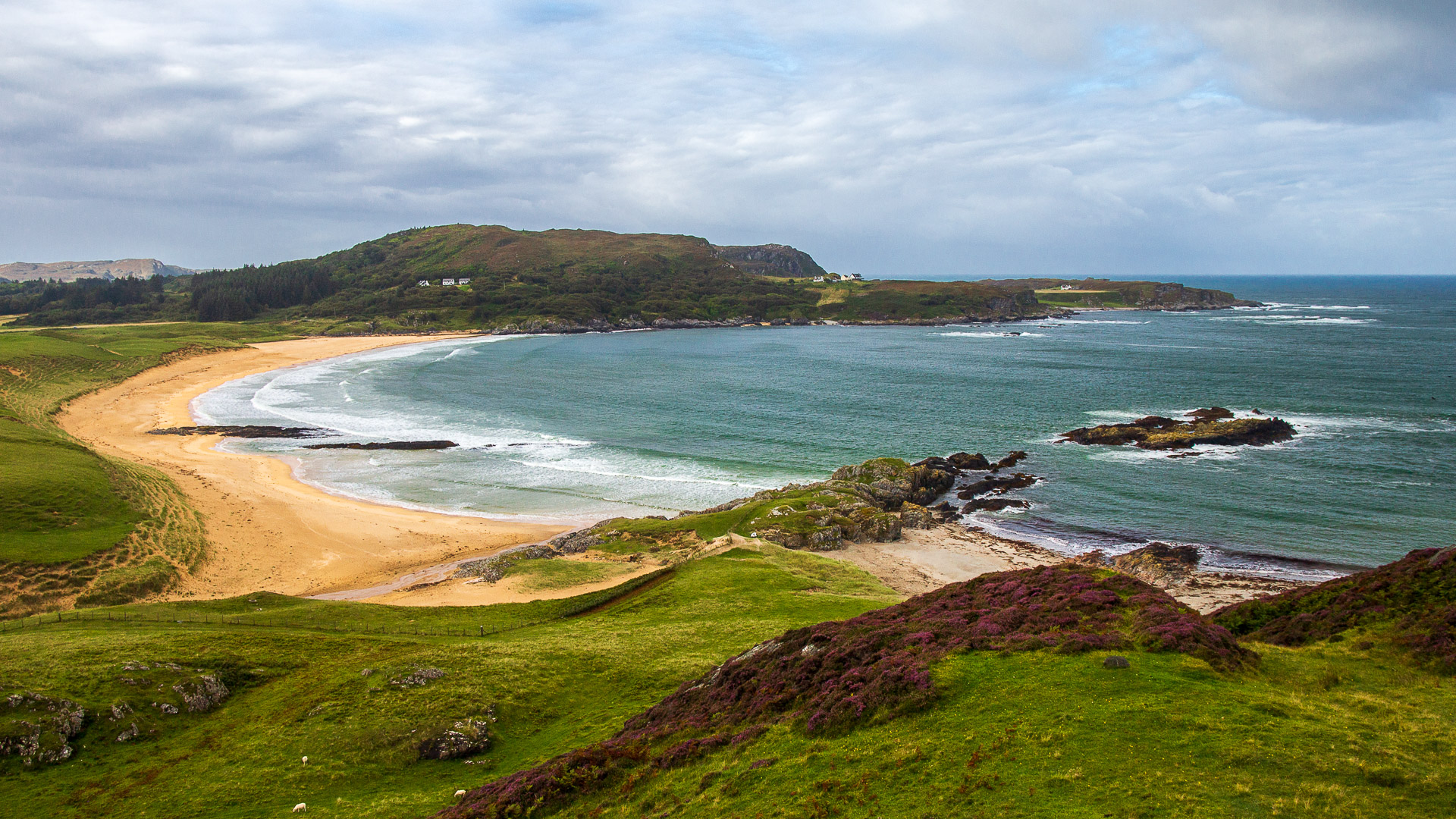
The Visitcolonsay logo depicts this bay. No wonder, since Kiloran Bay with its huge beach is the most picturesque spot on the island. The turquoise Atlantic rolls in here onto beige-white sand, and this picture is framed by green hills where, in the right season, the heather blooms. Behind the dunes begins the machair, a delicate, thin layer of meadow where a colourful carpet of flowers appears in early summer. An important breeding ground for rare bird species.
Above Kiloran Bay there is a small car park that offers a wonderful view. From here the beach can be used for an extensive walk.
Colonsay House and Gardens
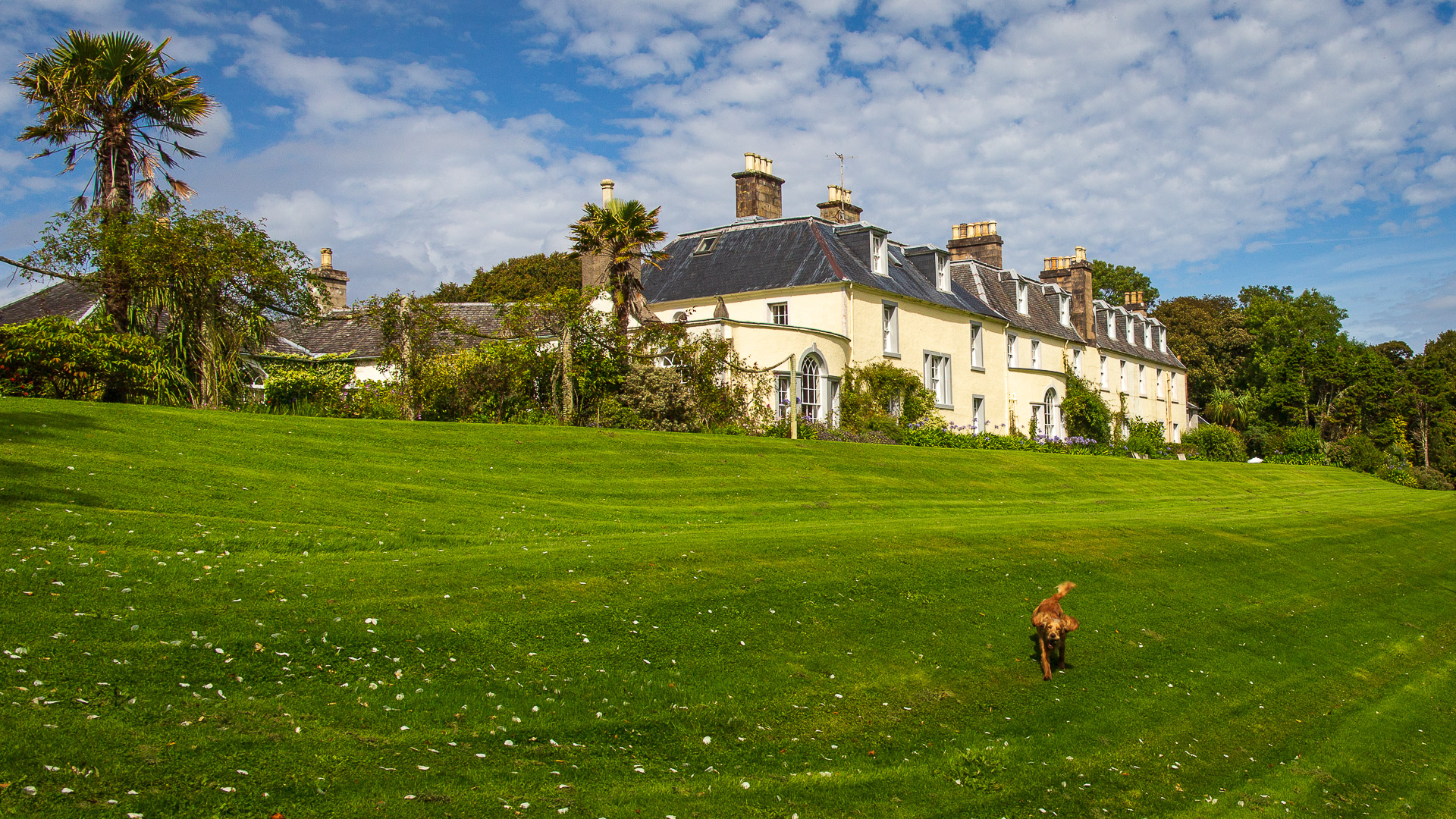
The island’s owners, the Strathconas, reside in this house. The building stands on the site of an old abbey that was abandoned during the Reformation.
Extensive, well-tended gardens where exotic plants thrive surround the manor house. In the walled garden, the large lens of an old lighthouse serves as a garden house. Also well worth seeing is the Dealbh na leisg stone at a spring. It is said to have been carved around 700 AD.
Access to the gardens is only possible three times a week: Wednesday and Friday from noon to 5pm, Saturday 2pm to 5pm. Admission costs £2.50 and is collected at the café, whose terrace is a lovely place to sit under parasols.
Oronsay Priory and Celtic Cross
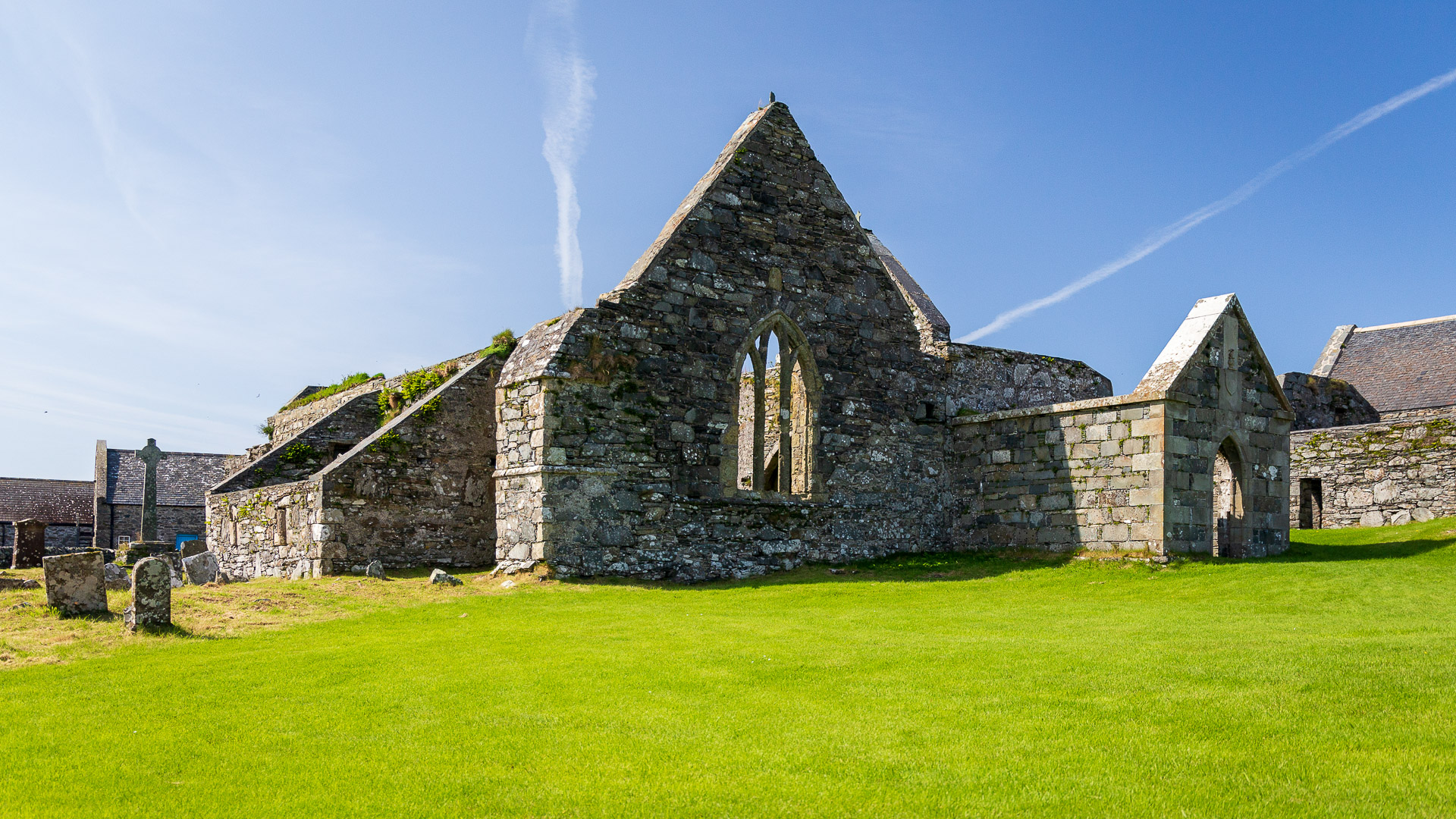
Colonsay’s smaller neighbouring island can be reached on foot at low tide. It is home to the priory, whose power extended over this and other islands. In and around the ruins you can admire a large and a small, richly decorated stone cross, the remains of a cloister, and a collection of old gravestones with elaborate ornamentation. A large sandy beach also begins right next to the priory. Oronsay is also a bird sanctuary.
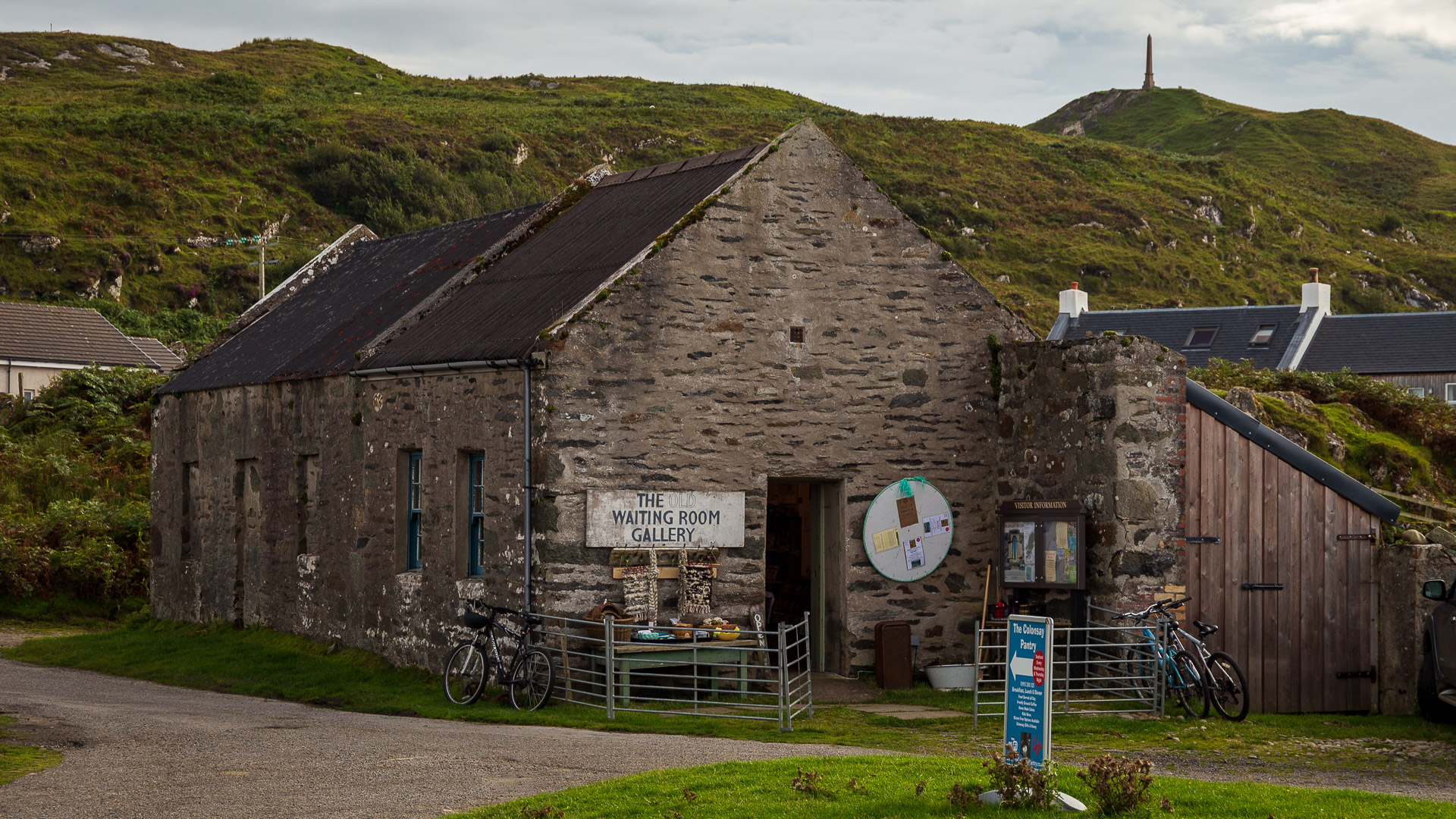
Tide tables for a safe crossing are posted both outside the Waiting Room Gallery and in the hotel’s entrance area.
More information on Oronsay Priory here.
Heritage Centre Kilchattan
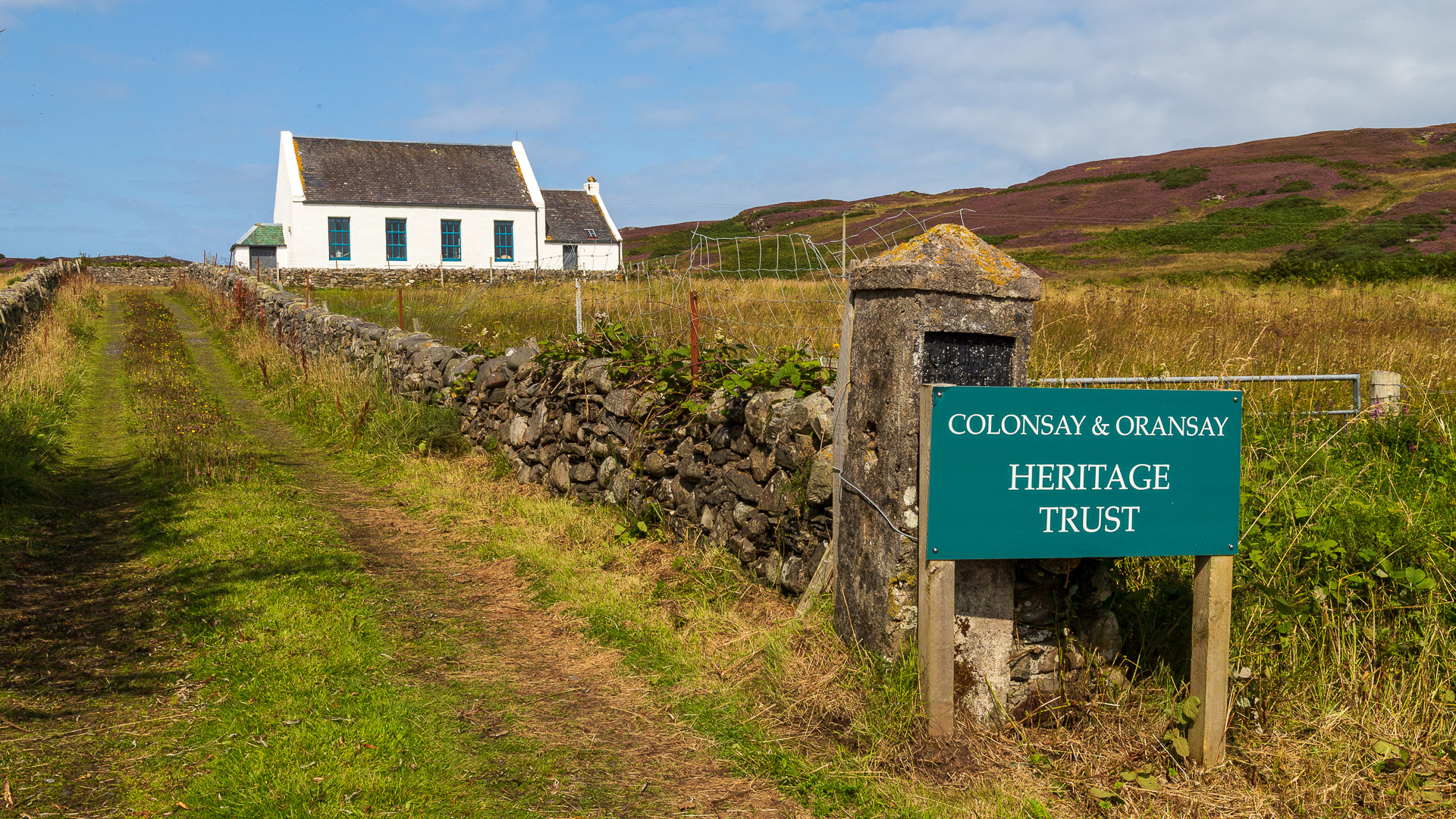
Especially on a rainy day, this small museum invites history enthusiasts to a short visit. On display are artefacts such as whalebones and the island’s old telephone switchboard. More important, though, are the history boards, texts and photographs. A German connection exists through the tragedy of the ship Arandora Star, which is told in detail.
The museum is always open, admission is free – a donation, however, is appropriate to support the work and upkeep of the building.
Dùn Eibhinn
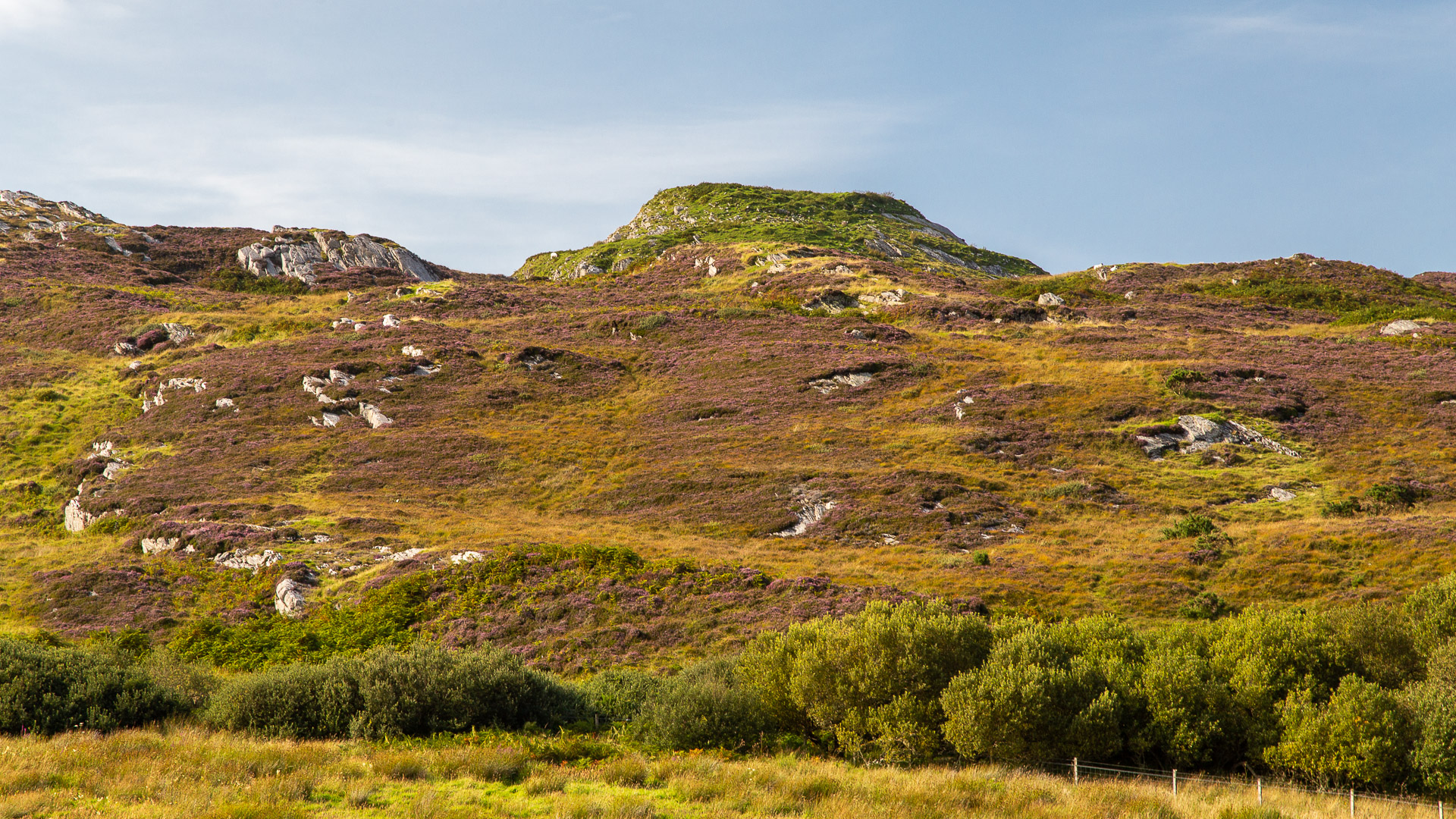
So-called duns, meaning Iron Age forts, are widespread throughout Scotland. Colonsay too has many of these strongholds, most of which are now recognisable as hills with a flat top. Dùn Eibhinn (pronounced “Dun Evin”) was an important site in the days of Dalriada and the Vikings. Under the Lords of the Isles, Clan MacPhee looked after the fort on behalf of the MacDonalds. With the decline of the clan system, Dùn Eibhinn fell into ruin too.
Dùn Eibhinn can be seen well from the main road near the hotel. A small parking bay and an information board are enough for a view from a distance.
Riasg Buidhe abandoned fishing village

A short distance behind Colonsay’s recycling centre rise the ruins of the fishing village of Riasg Buidhe. The eight connected houses were built in their current form in the early 19th century. After the First World War, however, the last residents left the settlement. Not far away lie the village’s former chapel and a few graves.
Lord Colonsay Monument
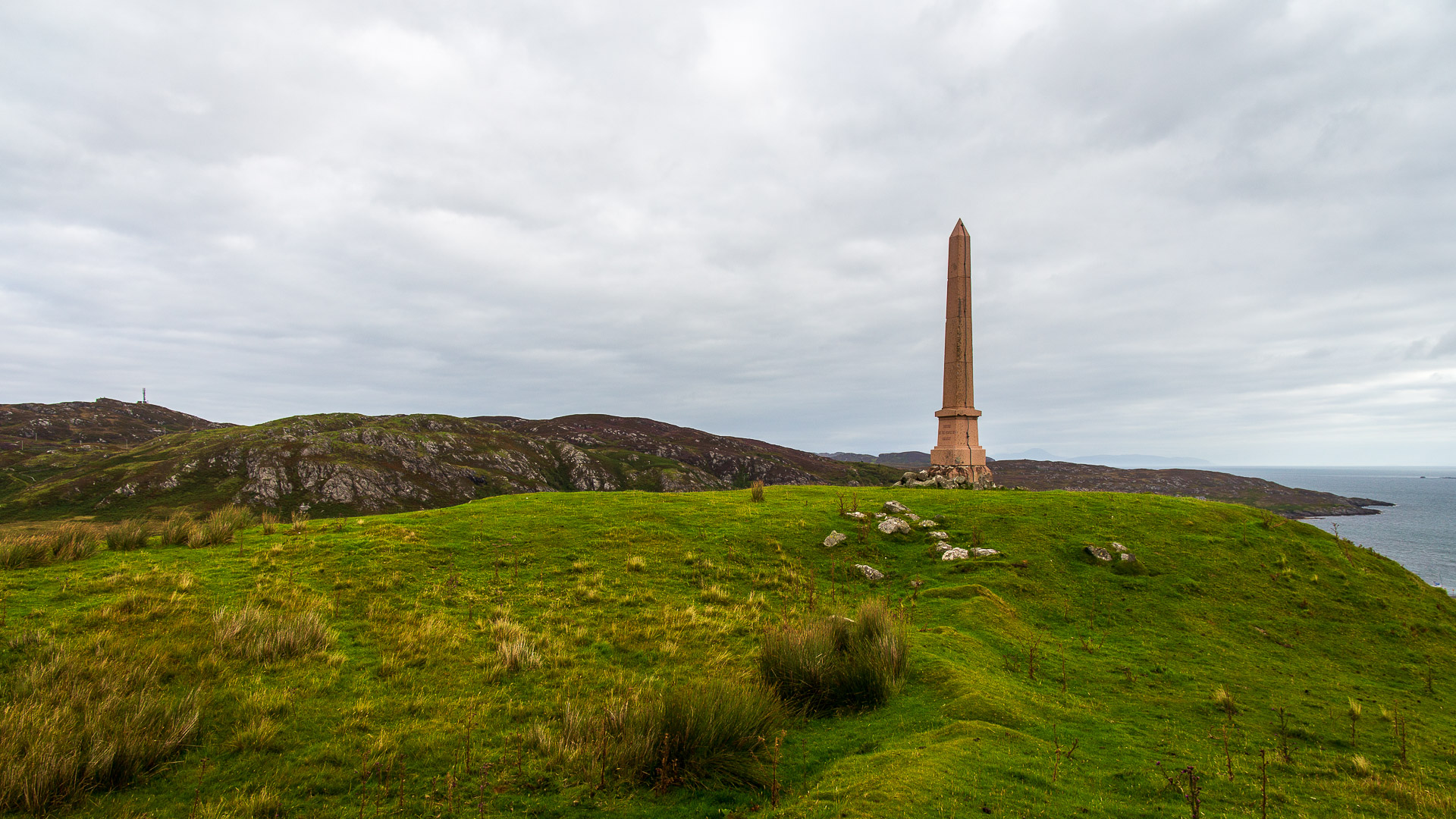
The islanders erected the far-visible obelisk above Scalasaig in memory of Duncan McNeill, Lord Colonsay, in 1876. It is made of red stone from the Isle of Mull. The climb up can be made from the church or from the pier (passing the Pantry Restaurant) and is worthwhile for the view over Scalasaig. Continuing a little further south from there, you can look down into the neighbouring bay.
Minor Light Lighthouse

It’s tiny and shaped more like a baby’s milk bottle – and yet this little lighthouse was designed by the same engineers as the great ones: the Stephenson family designed the Scalasaig Minor Light, originally fuelled with sperm whale oil. It speaks to the islanders’ diligence that they took care of even this small gem. Thankfully, though, they’ve done away with the whale-oil flame.
Stone Circles and Standing Stones
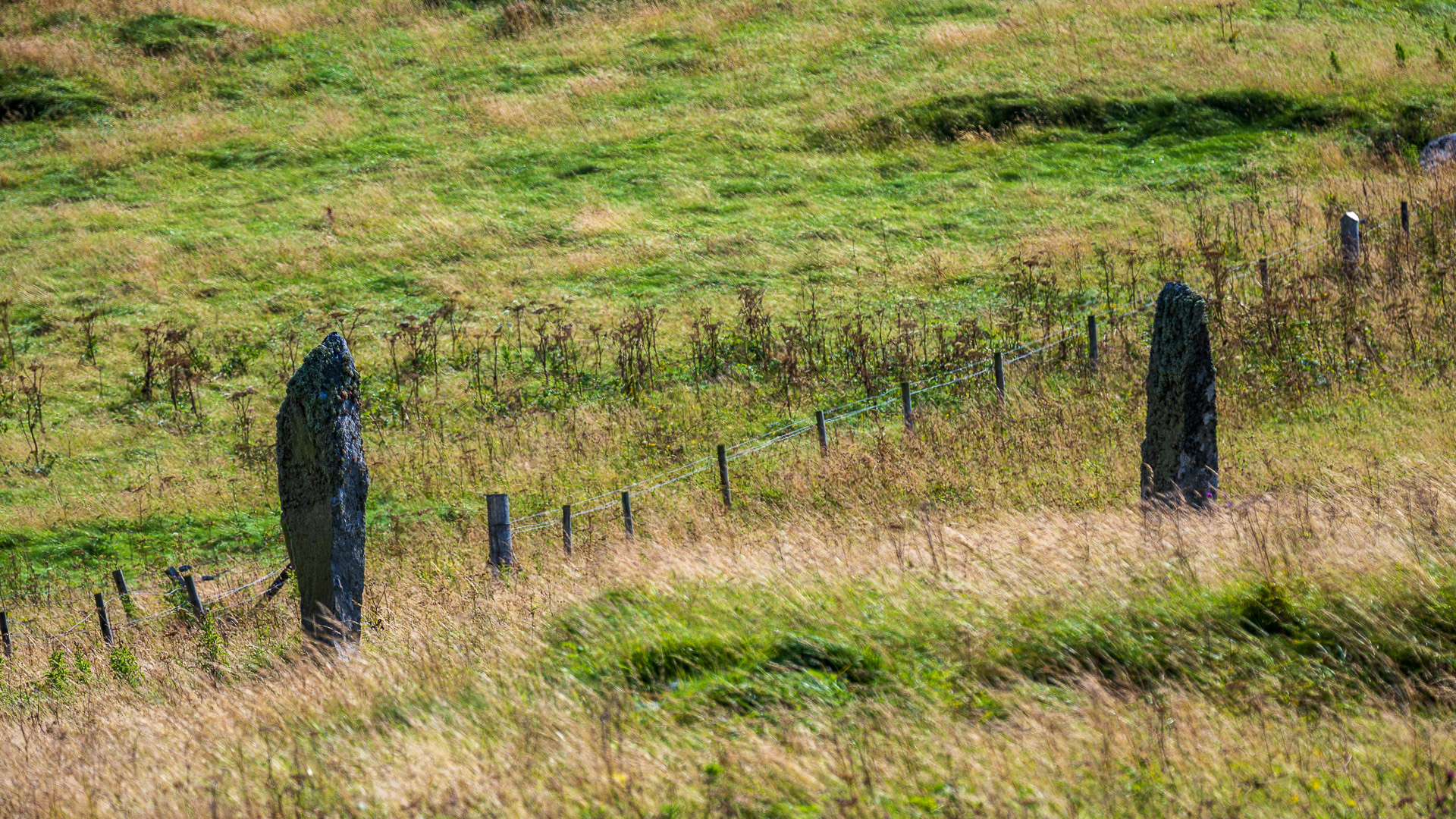
Scattered across the island stand a few monoliths that may once have formed stone circles. The largest of them rise visibly in a field at the west end of Loch Fada. These are the Fingal’s Limpet Hammers. They date from the Bronze Age. You can reach them from the road through an old gate and across the field.
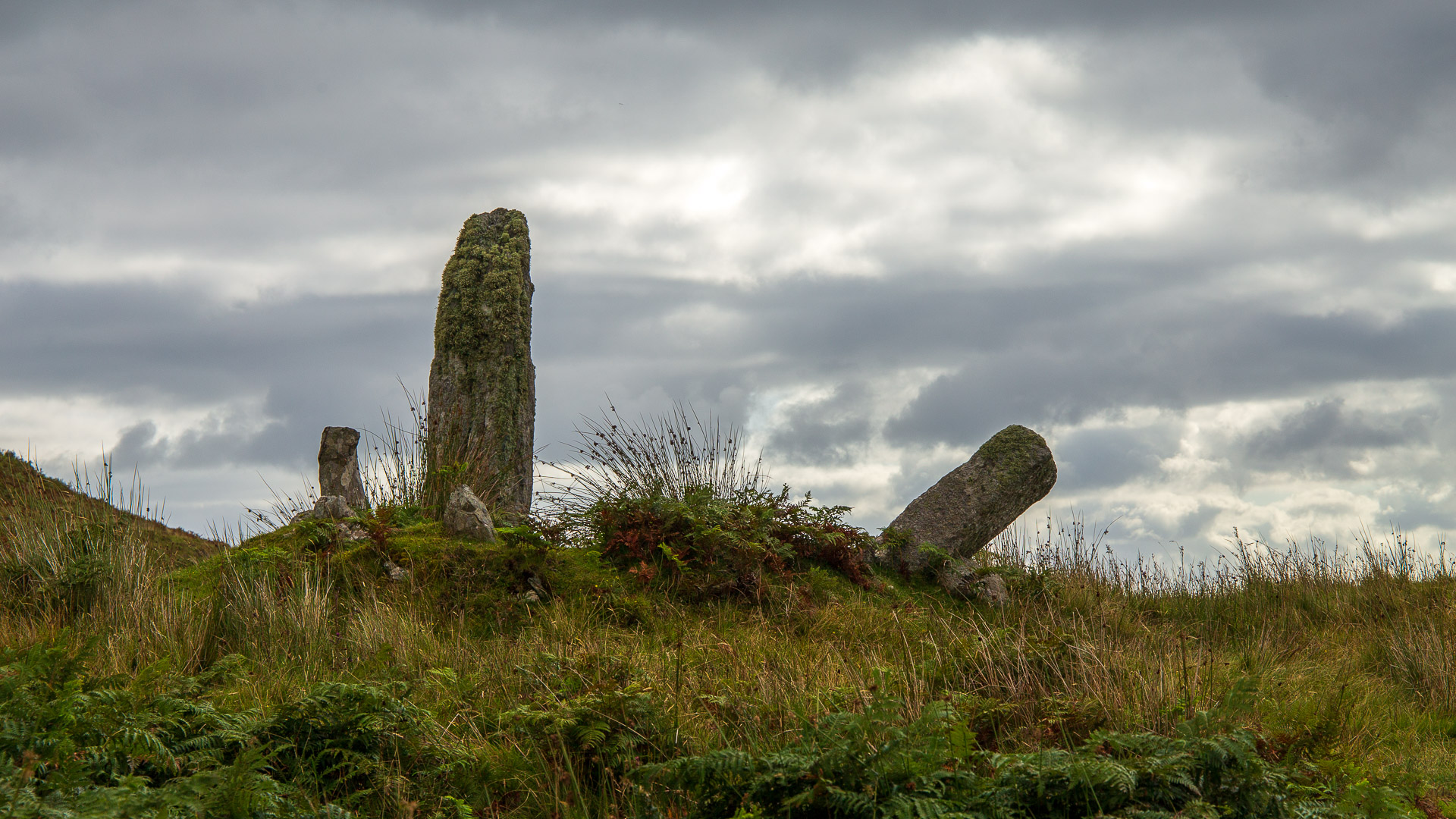
Just behind the hotel, up the old road up the hill, the small stone circle “Buaile Riabhach” appears on the right. It’s not entirely clear what this arrangement actually is, since it seems to be a mix of stone circle and cairn. It dates from around 100 BC.
Bookshop, Distilleries, Brewery and Galleries
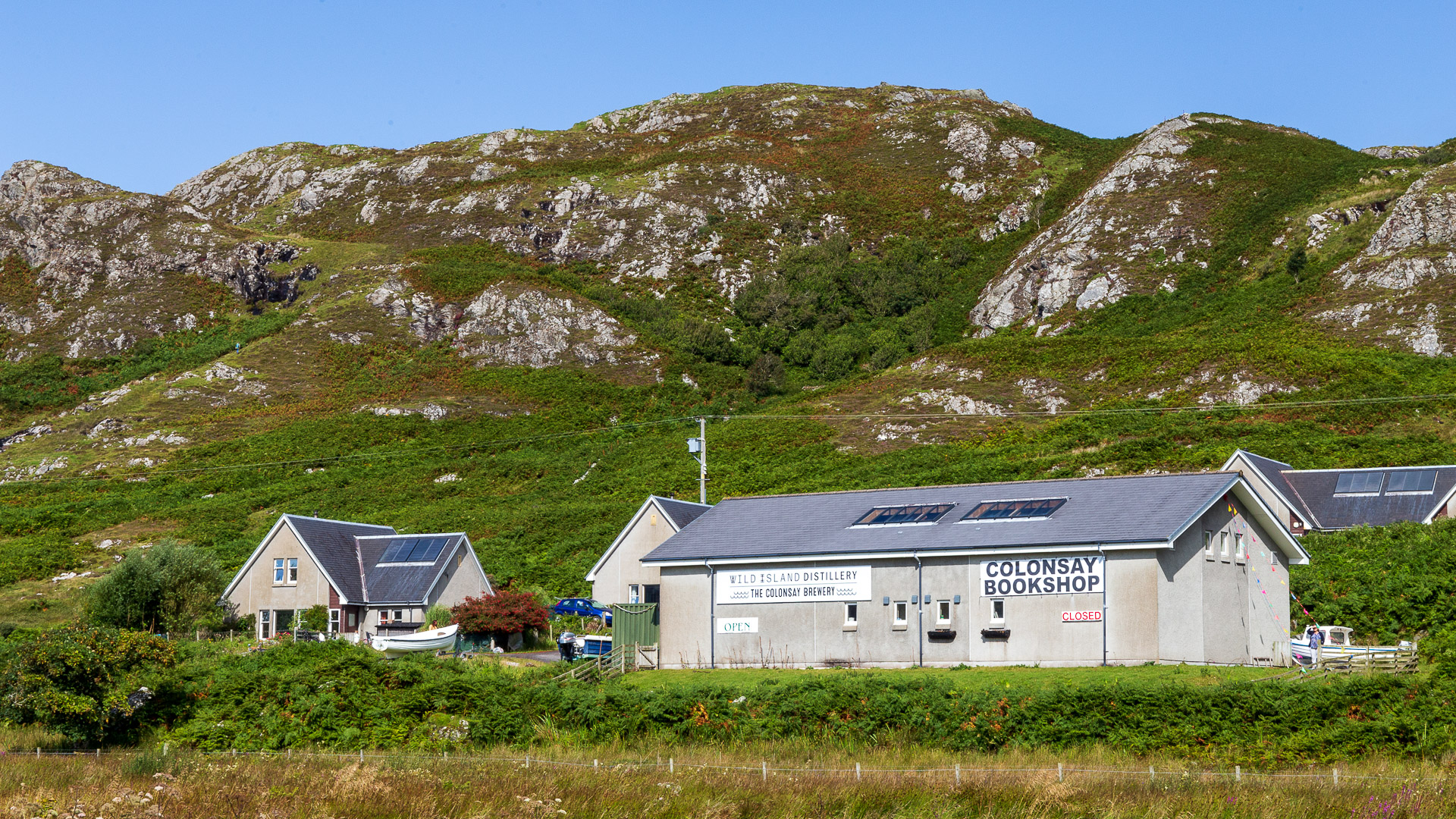
Hard to miss in Scalasaig is the bookshop – thanks to the large lettering on the building. It’s a real gem for people interested in the culture and history of Gaelic Scotland. Open daily between 3pm and 5:30pm.
Things get spirited right through the door next door: behind it is the Wild Island Gin distillery. The shop also sells vodka and beer, made to the owner’s recipe on the mainland. If there’s time and you ask nicely, you can take a look at the gin-making equipment.
Another gin distillery lies further into the island: Wild Thyme Spirits. Groups can arrange tours and tastings here.
Anyone wanting to stock up on supplies visits the General Store, Colonsay’s “supermarket”. The post office is also located in the same building.
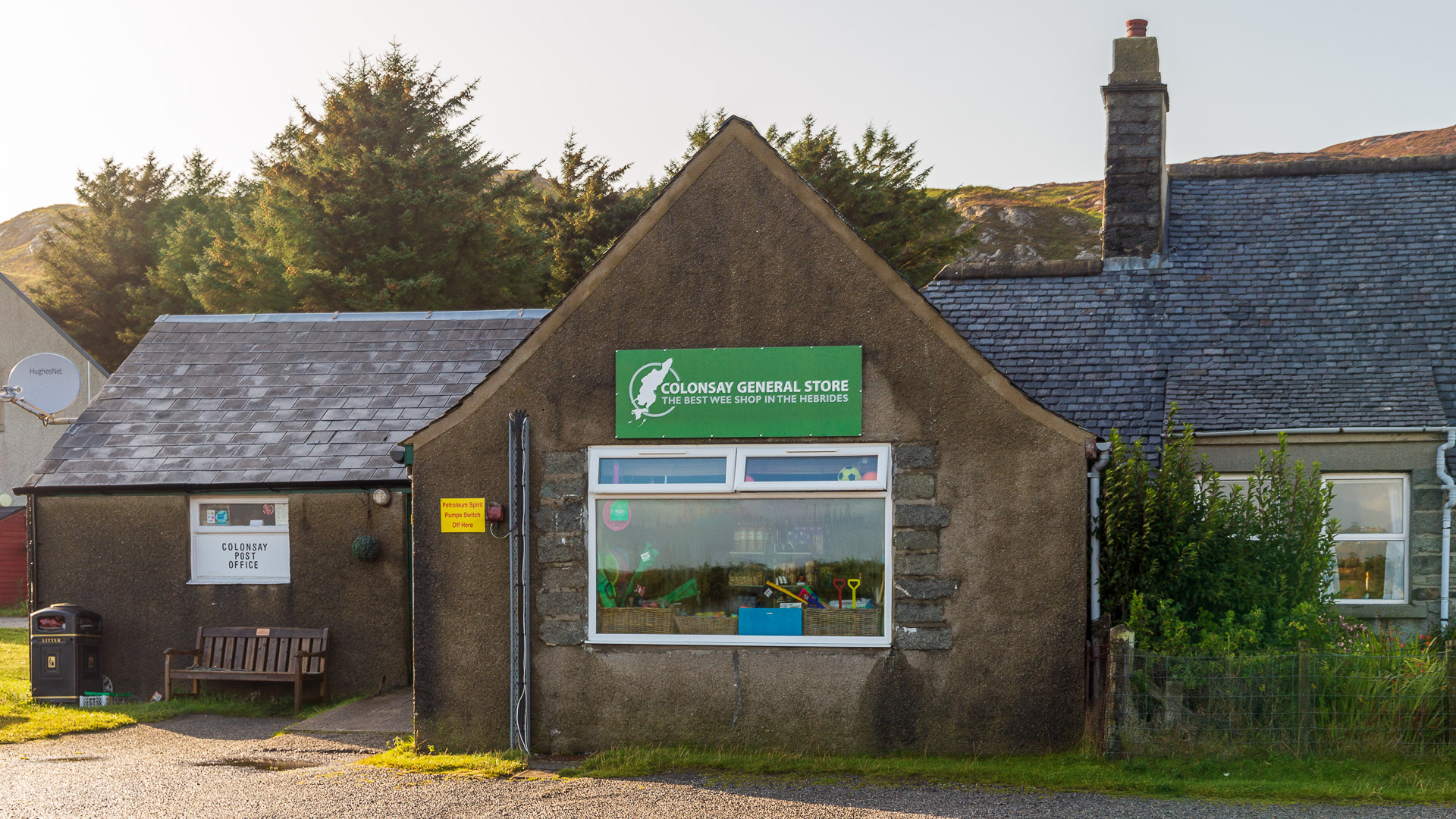
More shopping options: up the road behind the supermarket and post office in Scalasaig lies the small craft shop Christine’s Den. And the already-mentioned Waiting Room Gallery sells, alongside pictures and jewellery, self-dyed crochet wool and more. Owner Sarah is also a tourism officer for the island.
Mein Reiseführer Islay, Jura, Colonsay & Gigha
Auf 214 Seiten beschreibe ich 38 Sehenswürdigkeiten auf den Inseln Islay, Jura, Colonsay und Gigha. Zusätzlich Infos zur Anreise, zum Klima, zur Geschichte, Festivals und mehr. Mit drei sechs Tagestouren.
Mehr Info hier.
The Nature of Colonsay
The island’s flora and fauna are also among its attractions, as there are a number of special species here.

The Colonsay Bee is in fact the dark European honey bee Apis mellifera mellifera, which had nearly become extinct on the island. But from 1960 onwards a beekeeper on Colonsay looked after these insects intensively, and today they buzz around the whole island. To protect them, it’s forbidden to bring other bee species to the island. Of course, other interesting insects such as dragonflies also fly about here.
206 different bird species are native to Oronsay and Colonsay, including the rare corncrake “Crex Crex”.
Old Scottish plants and trees have survived in many places. Hazel, birch, oak and others are among them. Meadowsweet grows in some spots, along with rock samphire, narrow-lipped helleborine, bog myrtle, the rare orchid species Spiranthes romanzoffiana, and six species of St John’s wort – just a few more of the 500 different plant species on the island.
Some things, on the other hand, are important precisely because they are not there. For instance, Rhododendron ponticum has been successfully eradicated on Colonsay. This species, not originally native to Britain, spreads like a plague. Though attractive to look at, it displaces other species and is toxic to bees. Hedgehogs, too, have found no foothold on the island yet – they are considered a pest on some of the Outer Hebrides.
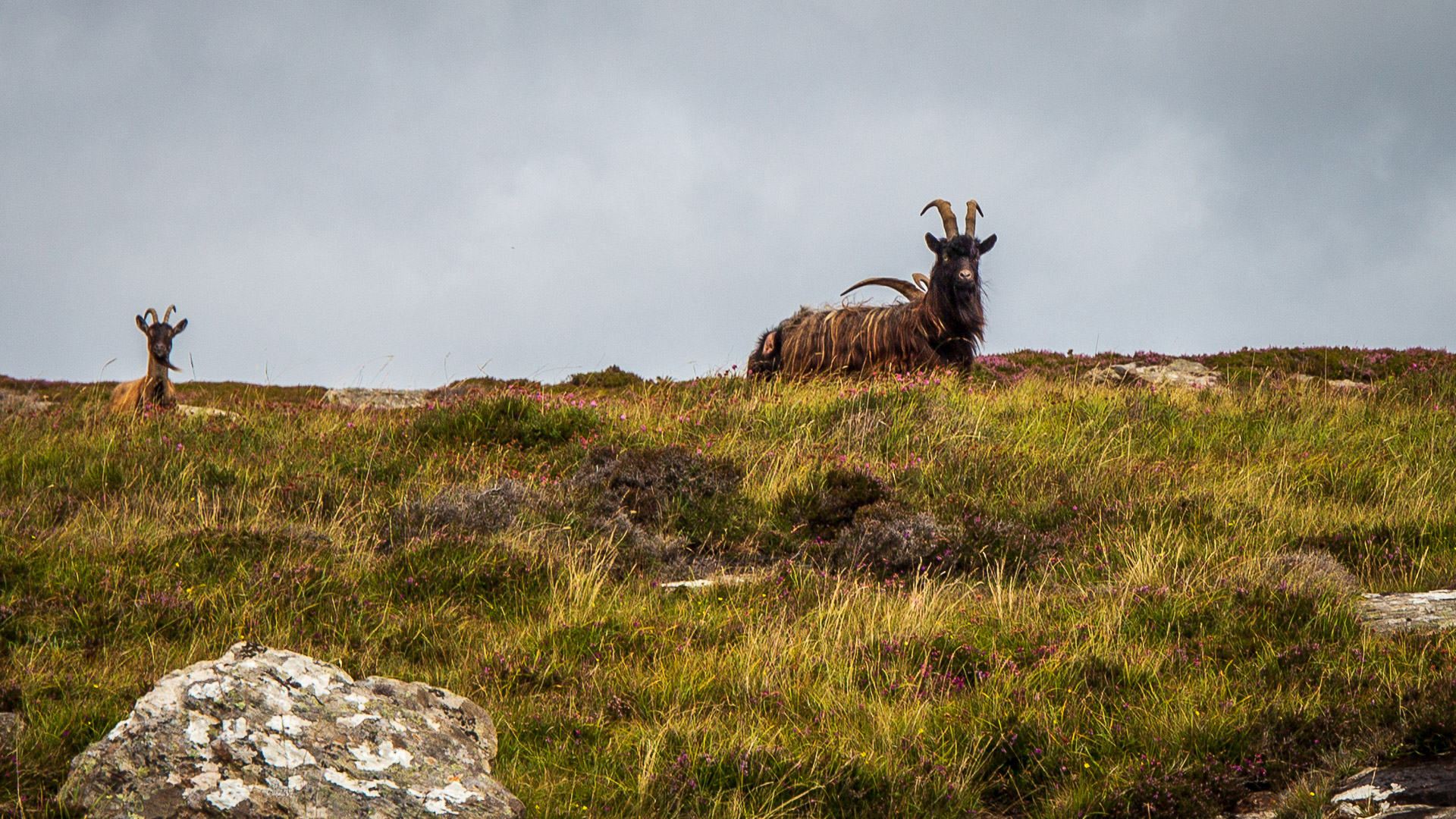
However, no one hears the roar of red deer here either. On the east coast, though, it can happen that walkers are followed by the curious eyes of wild goats, which – as folklore has it – were left behind here after the wanderings of the defeated Spanish Armada.
Activities
Hiking
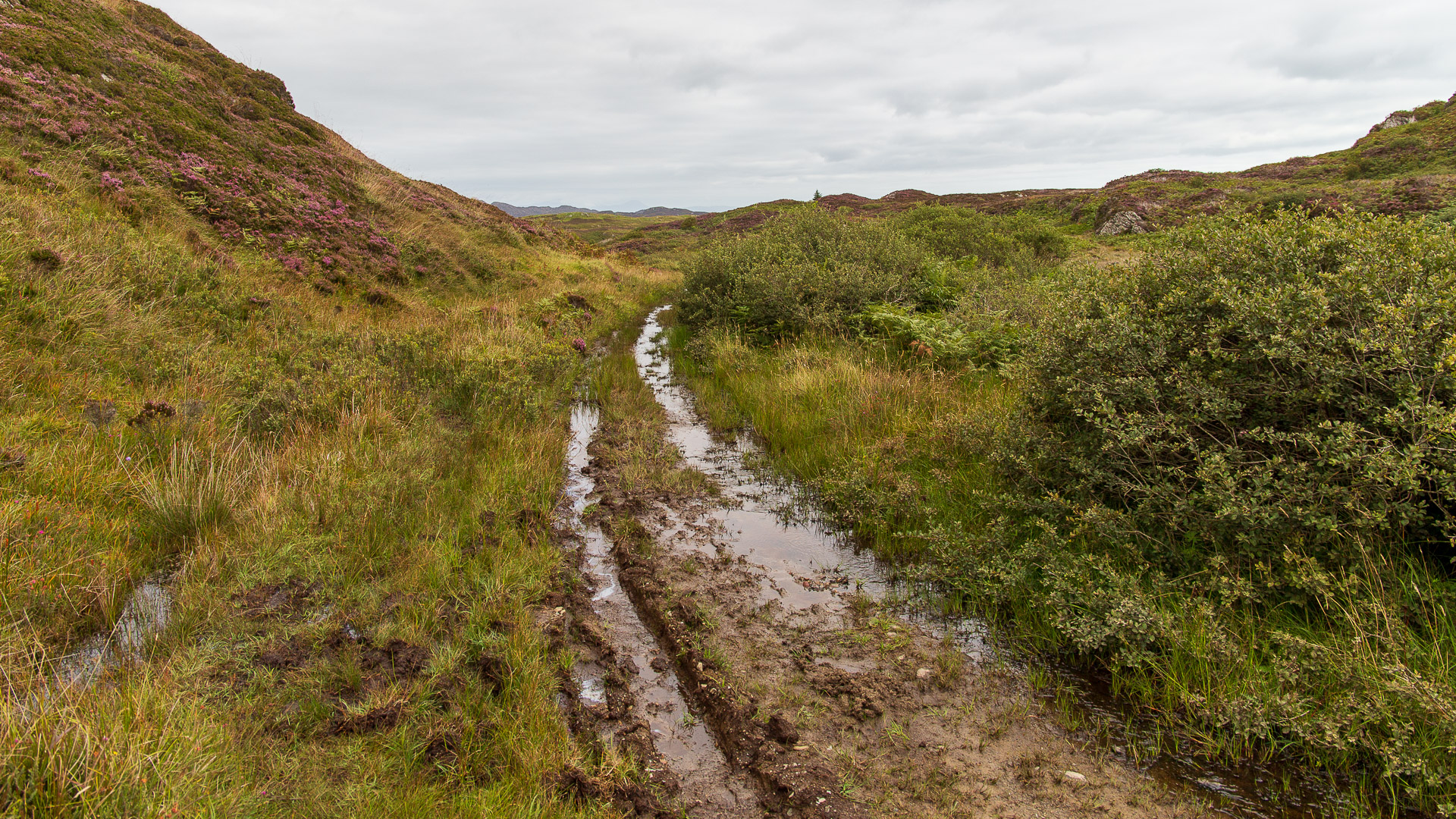
It’s worth venturing into the island’s nature – some attractions only reveal themselves that way. Some are reached on well-built paths, others across open landscape. Especially in late summer, though, the bracken off the paths can become a real obstacle. And after rainfall, even well-built paths are often extremely muddy.
Cycling
The ring road on the island is practically made for cyclists. The surface is suitable for most bikes. All the major attractions can be reached this way – except perhaps Oronsay.
Bikes can be hired from Colonsay Bikes and Boards. With advance booking, the operator brings the bikes to an agreed spot and picks them up again afterwards – often at the Waiting Room Gallery right by the pier.
Island Tour with Kevin Byrne
For £40 to £60, the former hotel manager and now island historian drives one or more people around the island in his own car. Along the way he shares fascinating facts about both the history and the plant life. Hardly any question stumps him, and afterwards visitors see the island through completely different eyes.
Getting out is only rarely possible, so the tour should be seen more as a basis of information for further exploring on your own. Kevin also offers various guided walks, for instance the “Fern Appreciation Walk”.
More information here.
Playing Golf on an Old Course
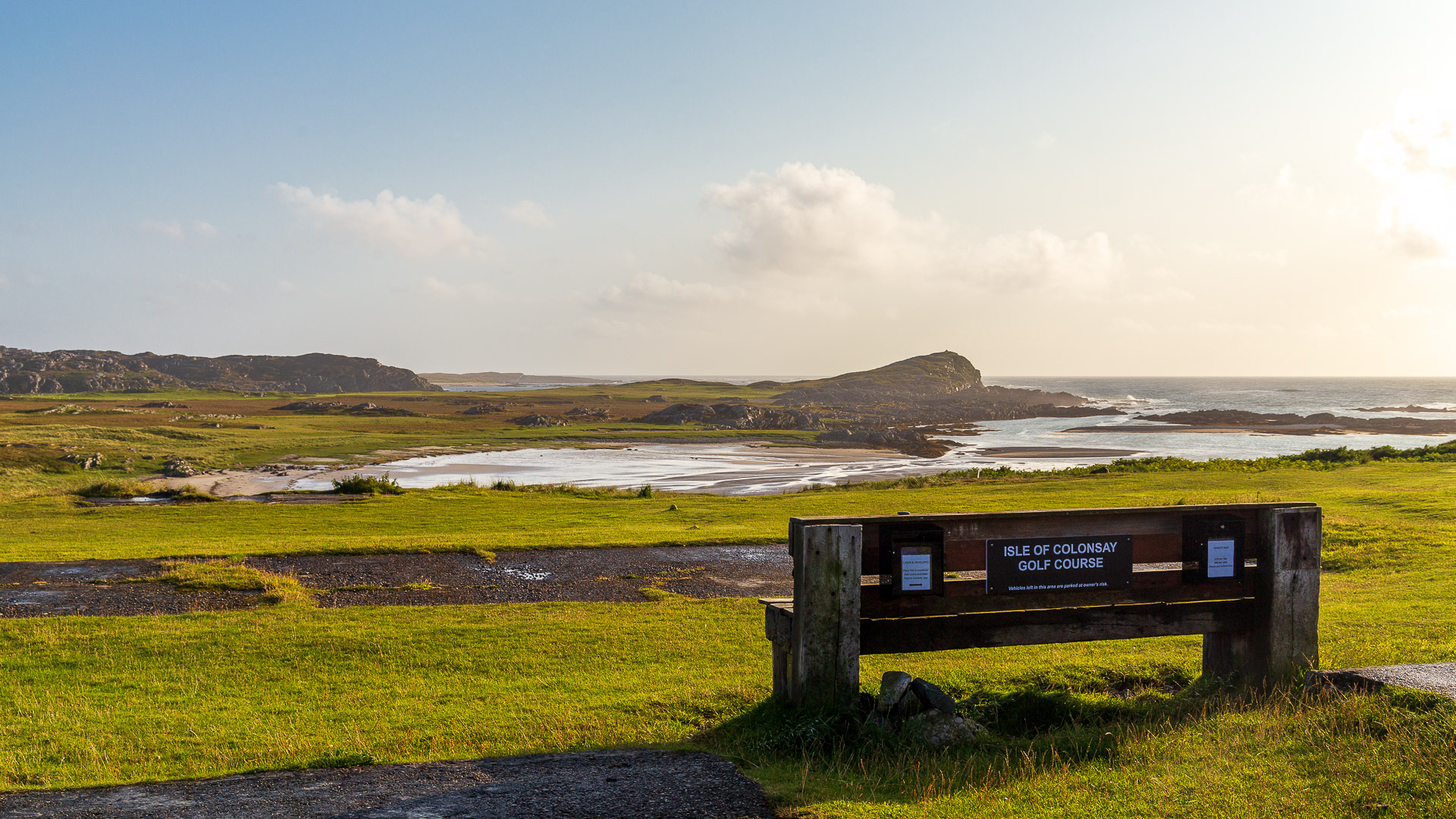
Colonsay’s rather unusual golf course has a full 18 holes. Unusual because there’s no clubhouse in sight – just a bench marks the start. What’s more, the course is also around 200 years old. Not to mention the setting amid rugged hills and beautiful bays.
A playing permit can be bought at the hotel or at Colonsay House.
Festivals on Colonsay
For a small island, Colonsay still offers a fair number of celebrations. Besides the regular ceilidhs (Scottish dance and music) in the Village Hall of Scalasaig, there’s also:
Colonsay Book Festival – The last weekend of April belongs to book lovers. Two intense days, with well-known authors among the guests. Programme and information here.
Colonsay Festival of Spring – Runs for three weeks in May. During this time there are walks into the island’s nature and history, and participants can try their hand at various old and new crafts, such as dry-stone walling, crochet, fabric dyeing, stained glass, and much more. Programme and information here.
Ceòl Cholasa Folk Festival – For four days each mid-September, well-known and up-and-coming musicians devoted to Scottish music perform here. Programme and information here.
Autumn Food and Drink Festival – For two weeks in mid-October, everything revolves around food and drink – both producing and preserving food as well as enjoying it. More information here.
Getting There, Around, and Length of Stay

The most important connection to the island is the ferry from Oban. The crossing takes about two hours and passes the Isle of Mull along the way. It docks at the main village, Scalasaig. Costs with a car are around £82.
In summer, Colonsay can also be reached as a day trip by ferry from Islay on Wednesdays and Saturdays. But visitors only really do the island justice if they stay two or three days. Continuing on to Islay, however, does offer the chance for island hopping.
The times and current costs can be found on operator Caledonian MacBrayne’s website.
For initial orientation, it’s worth stopping by the Waiting Room Gallery, which is right at the pier and always open whenever ferries dock. Information and brochures are available here.
Once a week a plane from Hebridean Air Services lands on the airfield behind the golf course. More information here.
There are no scheduled buses or taxis on Colonsay. Getting around the island is therefore done by your own car, a bicycle, or on foot along the island’s single-track ring road, which is 12.5 kilometres long in total.
If visitors arrive by car with a full tank, the petrol will barely run low over the short distances. But if needed, there’s a fuel pump opposite the island’s supermarket.
WARNING: Some satnavs believe the old main road still exists and will try to send you along it after the hotel or near Loch Turaman. This old road is impassable. As a rule of thumb: on Colonsay you almost never leave the paved road.
Mein Reiseführer Islay, Jura, Colonsay & Gigha
Auf 214 Seiten beschreibe ich 38 Sehenswürdigkeiten auf den Inseln Islay, Jura, Colonsay und Gigha. Zusätzlich Infos zur Anreise, zum Klima, zur Geschichte, Festivals und mehr. Mit drei sechs Tagestouren.
Mehr Info hier.
Accommodation on Colonsay
There are only a few cottages and perhaps two bed & breakfasts on the island, which is why the hotel and the lodges behind it are the most common accommodation. The Backpackers Lodge is located in the middle of the island – which could be a problem for travellers relying purely on foot, since the ferry often docks late and the walk afterwards is still several kilometres long. There is no public transport.

There is no campsite. Anyone may camp anywhere as long as they follow the Scottish Outdoor Access Code. In the interest of residents and other visitors, though, a discreet spot should be chosen.
You won’t see motorhomes on Colonsay. The reason: there is no infrastructure for them whatsoever. No pitches, no sanitary facilities, etc. The ring road is entirely single-track with narrow passing places. Two motorhomes travelling in opposite directions would likely bring all traffic on the island to a standstill. If you still want to visit Colonsay on a motorhome tour, the best solution would be to book into the hotel, leave the vehicle in its car park, and explore the island by bike or on foot. Without proof of accommodation, motorhomes are not permitted on the island:
Colonsay Community Council does not permit campervans on Colonsay unless you have booked accommodation in advance.
Best Time to Visit Colonsay
For visitors, the island season begins at Easter. May, as everywhere in Scotland, proves to be a glorious month, with hardly any rain and the sun standing long in the sky already providing pleasant temperatures. For Colonsay too, this is one of the best months to travel. But since the climate here is mild and somewhat drier compared to other Scottish places, a visit is well worthwhile throughout the whole summer.

Between October and Easter, most accommodations take a break – including the hotel. Since the weather also disrupts the ferry service more often during this time, the island more or less “closes” to visitors during this period. Which doesn’t mean you can’t still give it a try.
History
No castle to be seen on Colonsay, no great abbey. It seems as though the island played no role at all in the grand history of Scotland’s Highlands & Islands. But appearances deceive. Anyone who knows about the events on this island will suddenly see the boggy landscape with different eyes.
Even in the days of Stone Age hunter-gatherers, Colonsay was an important transport hub. Of all things, rubbish heaps prove it. The famous Colonsay Middens are veritable treasure troves for archaeologists, showing that hunter-gatherers lived here for an extended time 8,700 years ago – mainly on hazelnuts, but also on seafood. Genuine settlement took place at the end of the Neolithic period, the same time in which the stone circles on Orkney arose.
In the Gaelic kingdom of Dalriada, through which Christianity also became established, Colonsay was an important island on the shipping routes. St Columba landed on the south of the island in the year 563. Monks have been here ever since. The island of Iona can be seen clearly from parts of the west coast – the connection between these two islands is also reflected in the stonemasonry. The cross carving dealbh na leisg at Colonsay House dates from around 700 AD.

As on all the Hebridean islands, the Vikings brought an abrupt end to this culture from the late 8th century onward. Colonsay was important to them too, on their trade and shipping routes to Ireland. The discovery of the grave of a high-ranking Viking in a longboat underlines that the island wasn’t merely a stepping stone but a genuinely sought-after settlement area and tactical base. On one hand the land was fertile, on the other almost every other important island can be seen from here, allowing the waters between them to be controlled.
The famous Somerled also launched his attack against his Norse rival from Colonsay in 1156, gaining Islay, Jura and Mull as a result. The island subsequently became part of the island kingdom from which the Lords of the Isles later emerged. The MacDonalds were consequently the island’s rulers. Their governors on the island were Clan MacPhee.
Under them, the island’s monasteries continued their work. Both the Abbey of Kiloran – where Colonsay House stands today – and the Nunnery of Balnahard further north. And of course Oronsay Priory, where medieval grave slabs of the highest beauty are still displayed today.
The island produced a famous son during the civil war in the mid-17th century: Alasdair MacColla was a gifted strategist and military commander who was able to defend the king of the time right to the end. For that, he was of course executed at Dunstaffnage Castle – by a Campbell, naturally.
After that, the MacNeill of Barra took over rule here. And a good number of islanders can still trace their line back to the first MacNeills today, namely to Iain a’ Chuaich – John of the Ocean. He is said to have been born on board the boat during a storm while sailing from Barra. So that he wouldn’t freeze to death, the sailors slaughtered a cow and placed the child inside its belly to keep him warm.
The defeat of the Jacobites, however, accelerated a development that had already begun before: the clan system with its way of managing the land had run its course. Many residents had to give way. The notorious Highland Clearances reached Colonsay too. In several waves residents emigrated from the island – some to South Carolina, some to Prince Edward Island near Nova Scotia.
From then on, Colonsay belonged to the landlord, the large landowner. That hasn’t changed to this day, even though the landlords’ names have changed a few times.
Despite the emigration, the number of residents didn’t decline so drastically over the decades. Child mortality fell due to better hygiene measures. Potato cultivation fed the population well for a while.
But when the potato blight struck in the mid-19th century, things went downhill for Colonsay. Not only hunger but also several epidemics afflicted the residents. Men who died in colonial wars, the disappearance of the herring, migration to big cities… two thirds of Colonsay’s population vanished by the start of the 20th century. It makes no difference that the First World War didn’t decimate the island’s population nearly as much as was the case on, say, the Isle of Skye.
In 1904 the last MacNeill landlord died. The Strathconas, who are still the landlords today, bought the island. Even wealthy retirees can at most build a house here – the land beneath it remains in the hands of the Strathcona family.
The once lively island had now become a deserted wasteland. A feeling of solitude spread. And this too still contributes to why people today prefer to build their working lives elsewhere. But not everyone feels that way. And so today’s visitor encounters a small but lovable and thoroughly modern island community.
Mein Reiseführer Islay, Jura, Colonsay & Gigha
Auf 214 Seiten beschreibe ich 38 Sehenswürdigkeiten auf den Inseln Islay, Jura, Colonsay und Gigha. Zusätzlich Infos zur Anreise, zum Klima, zur Geschichte, Festivals und mehr. Mit drei sechs Tagestouren.
Mehr Info hier.
