Azure sea washes around fertile land: the Isle of Gigha, off Kintyre’s west coast, is a genuine insider tip. Here are the attractions and all the information.
Isle of Gigha Info:
» Overview
» Attractions
» Best time to visit
» Getting There
» Accommodation
» History
Gigha is a small island, wedged between Islay and Jura to the west and the Scottish mainland to the east. At just 9.5 kilometres long and around 2.5 kilometres wide, it can easily be overlooked – and many tourists do just that.
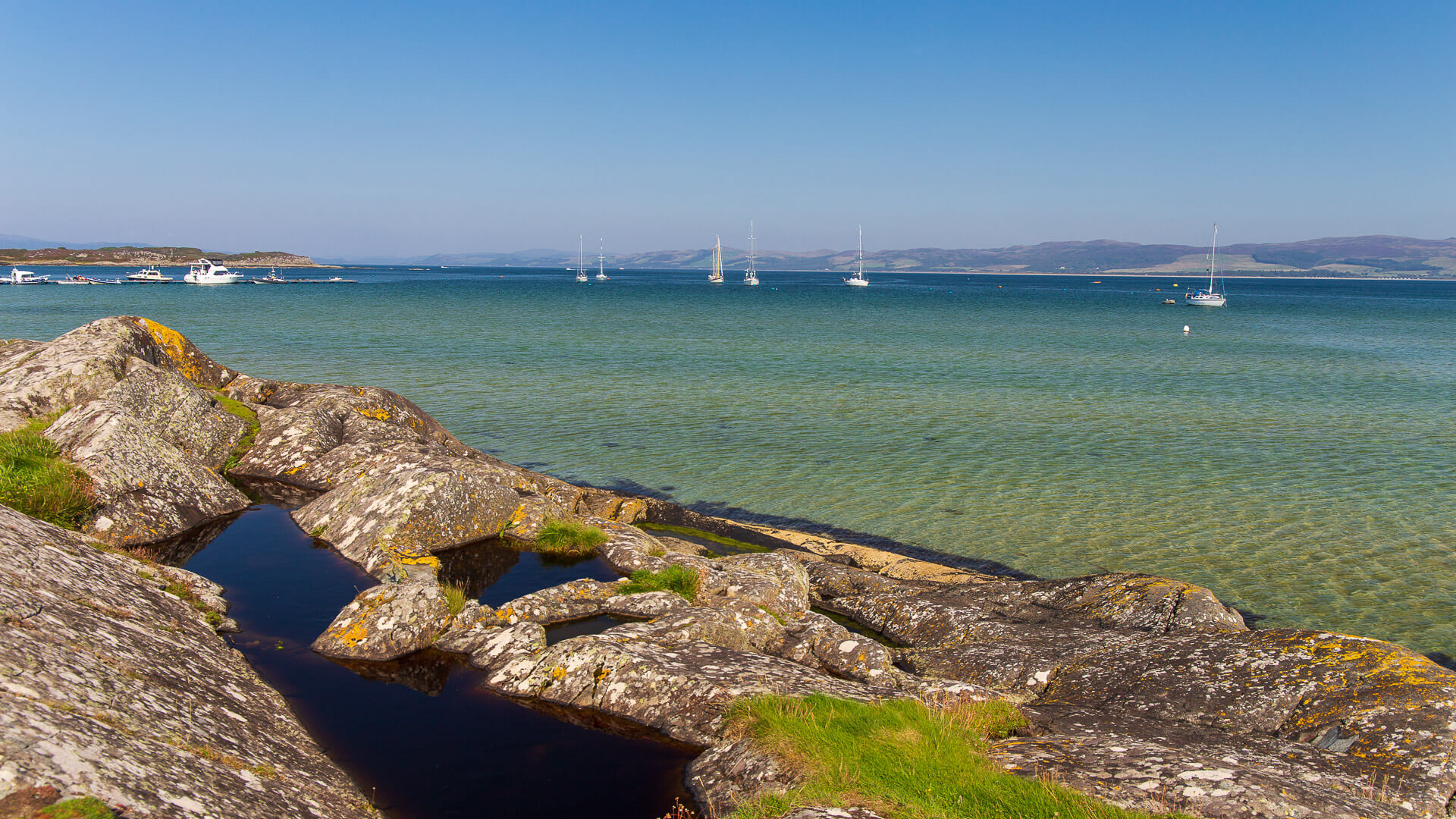
A mistake. The fertile land here is washed by clear seas. Small rocky coves often shelter sandy beaches at their far end. The soil in between is so fertile that not only do farmers work the land here, but wonderful gardens also flourish.
The name Gigha is pronounced without the “gh” in the middle, roughly as “Gee-a”. It likely dates from the time when the Vikings ruled over large parts of Scotland’s islands. They called the island either “Gudey” – “good island” – or “God’s island”. Little wonder, given its beauty and mild climate, which promised bountiful harvests.
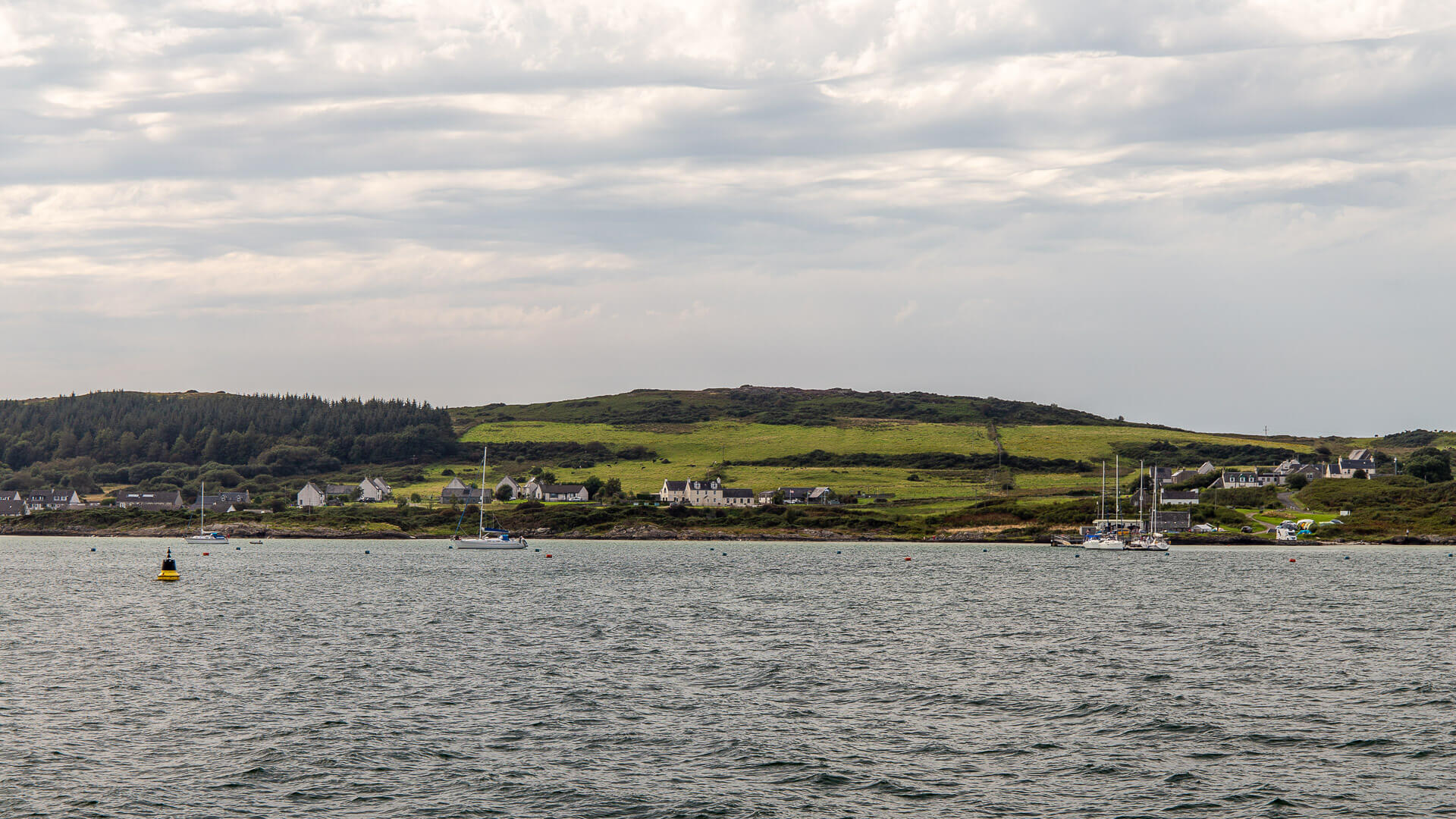
For visitors today, the Isle of Gigha offers a small refuge. It can be explored on a day trip, or provide a few days of peace and relaxation. Keen hikers may find themselves a little short-changed, but extended walks are always an option.
What’s interesting to see on Gigha is set out below.
You can also order my matching travel guide as a book here:
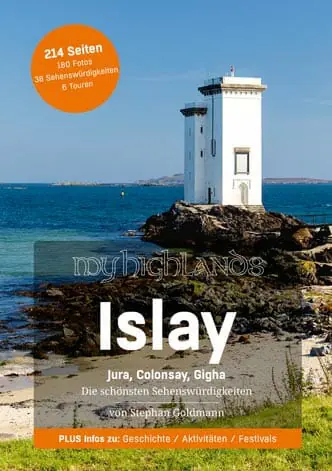
Mein Reiseführer Islay, Jura, Colonsay & Gigha
Auf 214 Seiten beschreibe ich 38 Sehenswürdigkeiten auf den Inseln Islay, Jura, Colonsay und Gigha. Zusätzlich Infos zur Anreise, zum Klima, zur Geschichte, Festivals und mehr. Mit drei sechs Tagestouren.
Mehr Info hier.
Attractions
Achamore Gardens
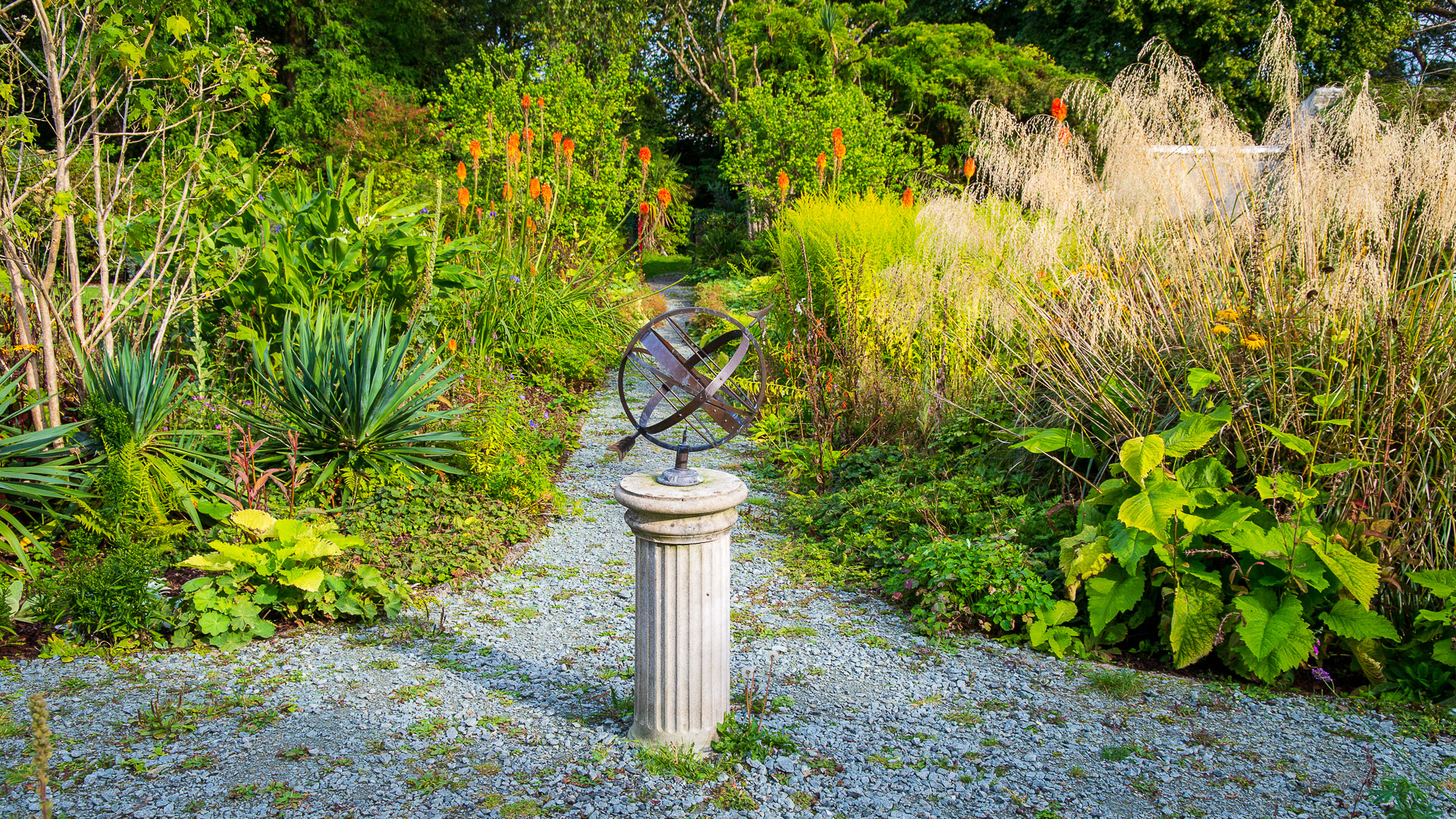
It’s the island’s biggest attraction: the former manor house and its surrounding gardens. It was once tended by three gardeners and many helpers, funded by the estate’s owner. Today, the gardens belong to the community, which can’t afford quite so many workers. As a result, the outer areas of the gardens are growing wild, which is genuinely fascinating to see in its own right. The walled gardens and some other areas, though, remain well kept and beautiful.
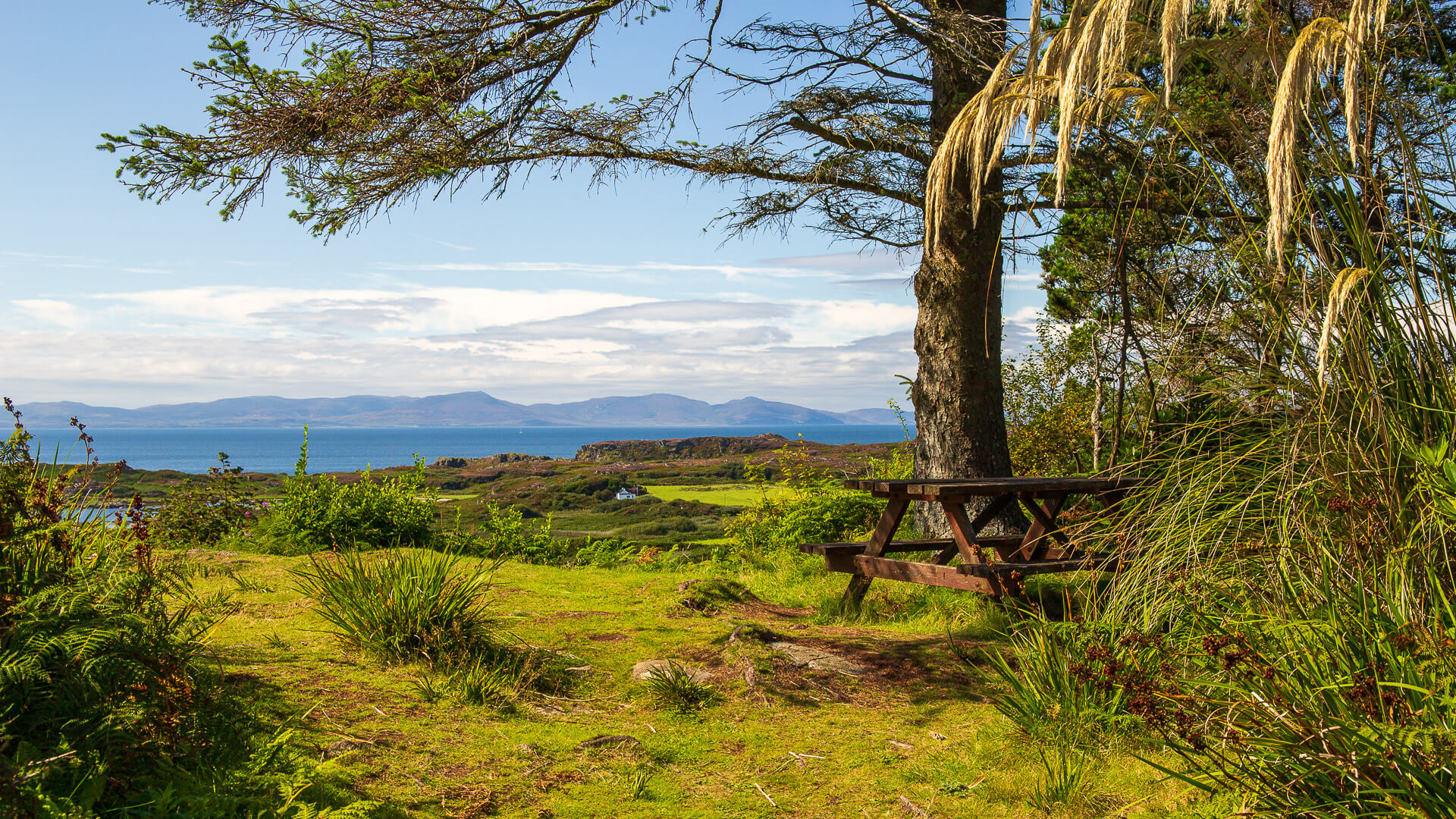
The garden’s viewpoint is especially interesting – don’t miss it. And keep an eye out for Cheeky, the cat who lives at the viewpoint.
More information on Achamore Gardens can be found here.
Kilchattan Chapel
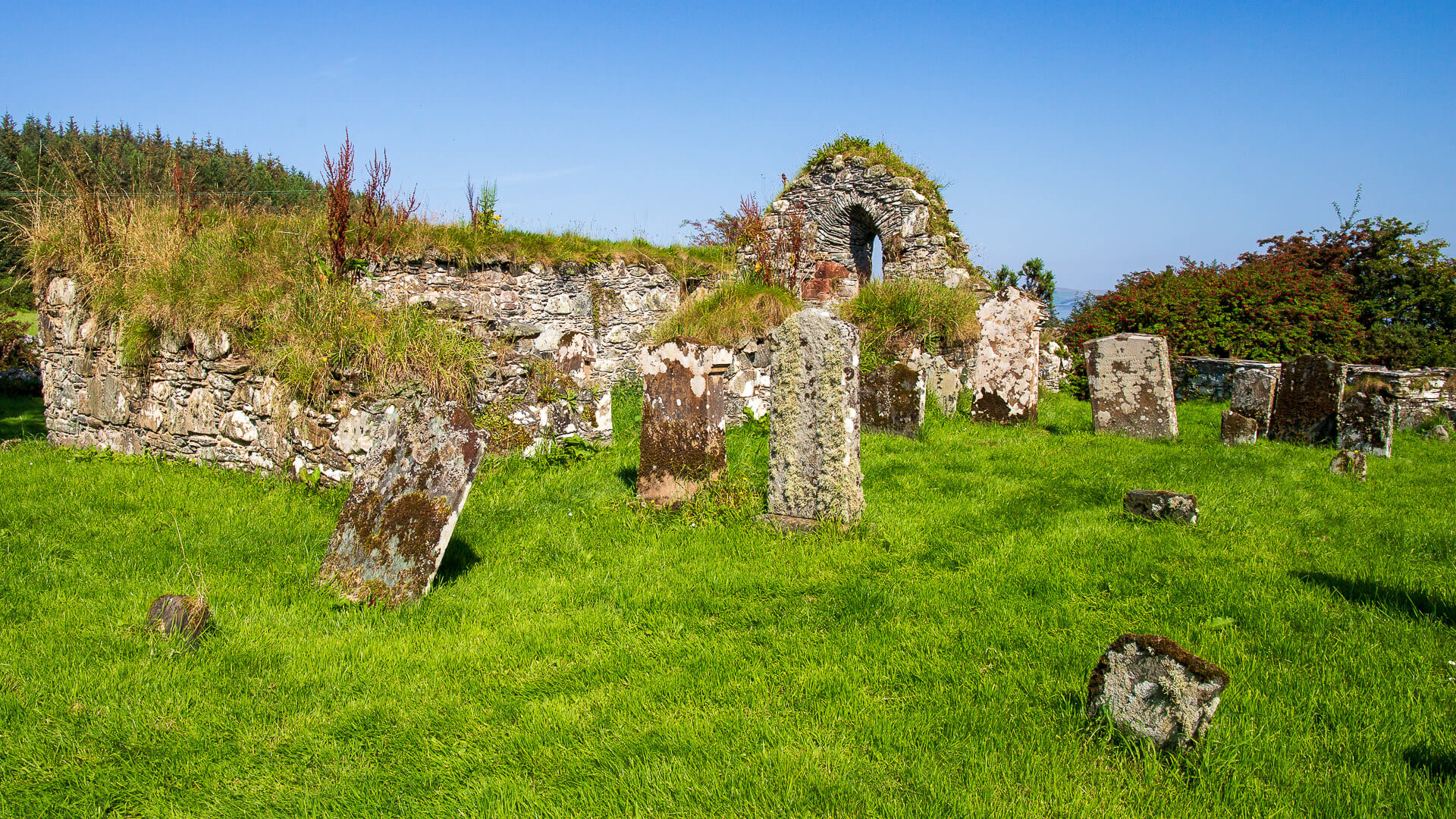
Kilchattan Chapel lies just a few hundred metres north of the Achamore Gardens car park, on the road. It’s best to walk up the gravel track on foot and leave the car in the car park.
The small chapel’s origins date back to the 13th century, though today it’s just a ruin – a beautiful one, surrounded by old gravestones.
Ogham Stone
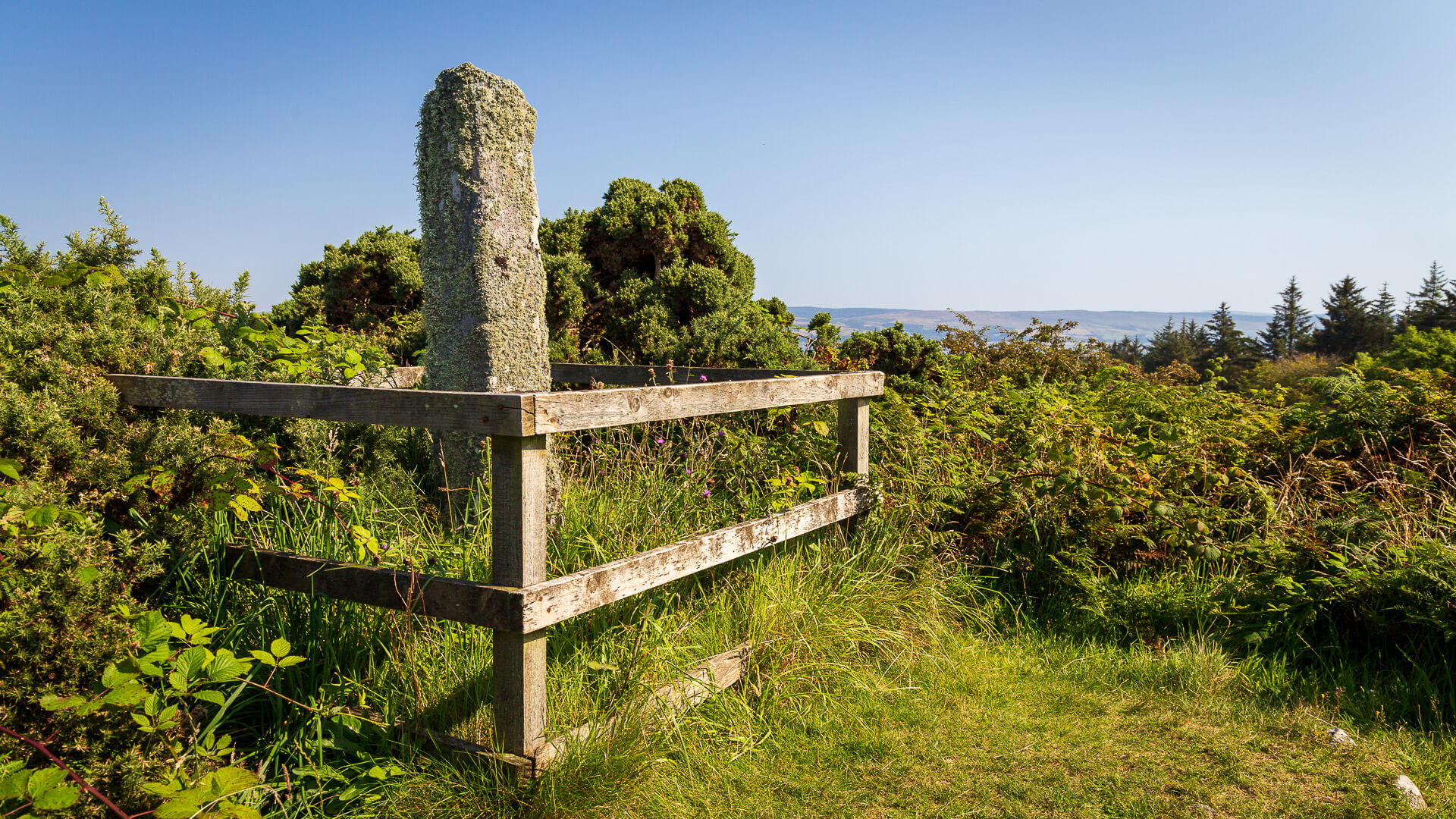
Just a few metres further up the road, a small path heads off to the right into the undergrowth – mostly just a cut through the bushes. The path leads to the Ogham Stone, a standing stone with an ancient script carved into it. There’s only one other known stone in Scotland bearing this kind of writing, though the inscription here is barely legible any more.
If you feel like it, carry on past the stone for a view across the island.
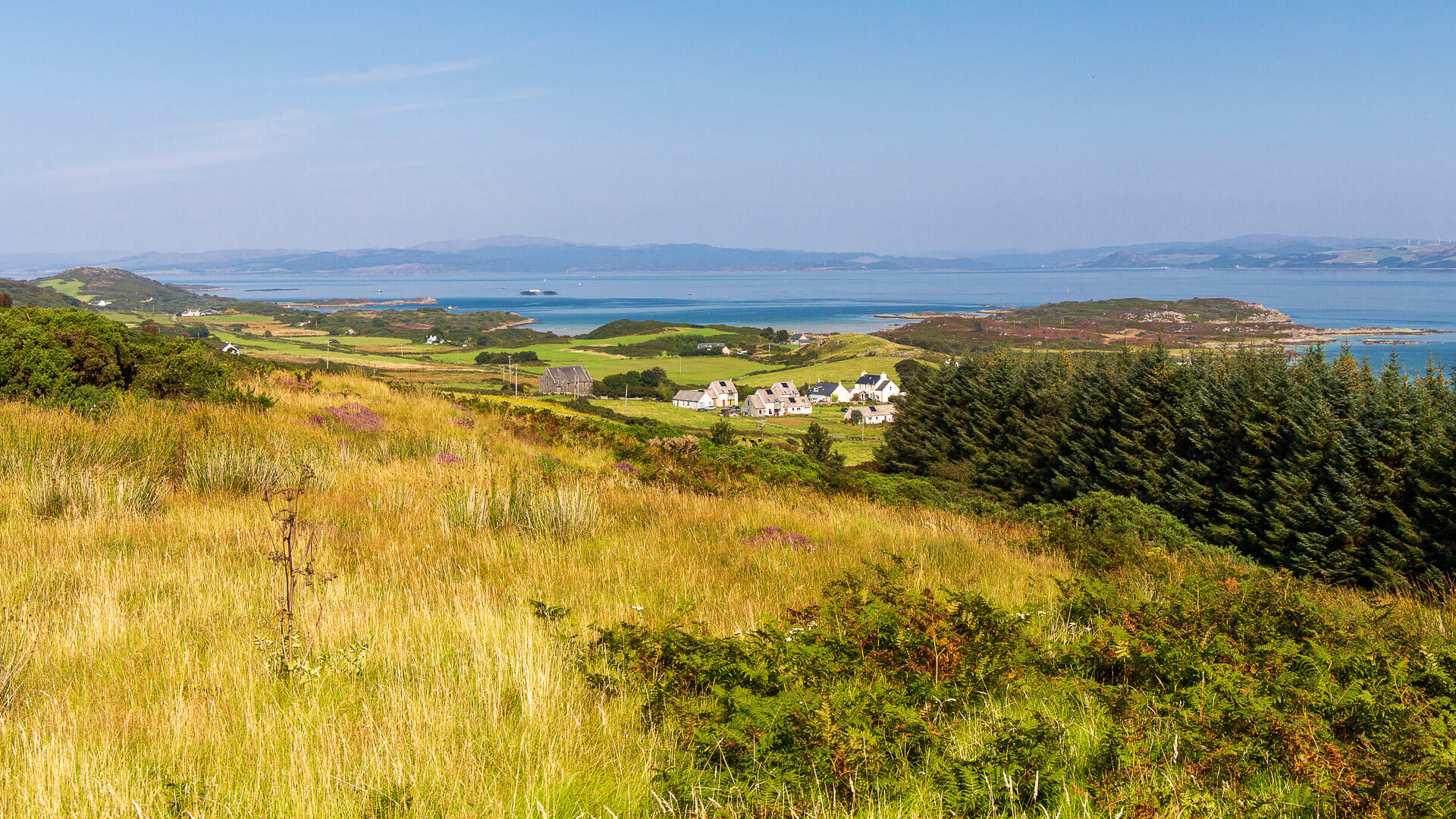
This short path is marked on the map here.
Bodach und Cailleach Standing Stones
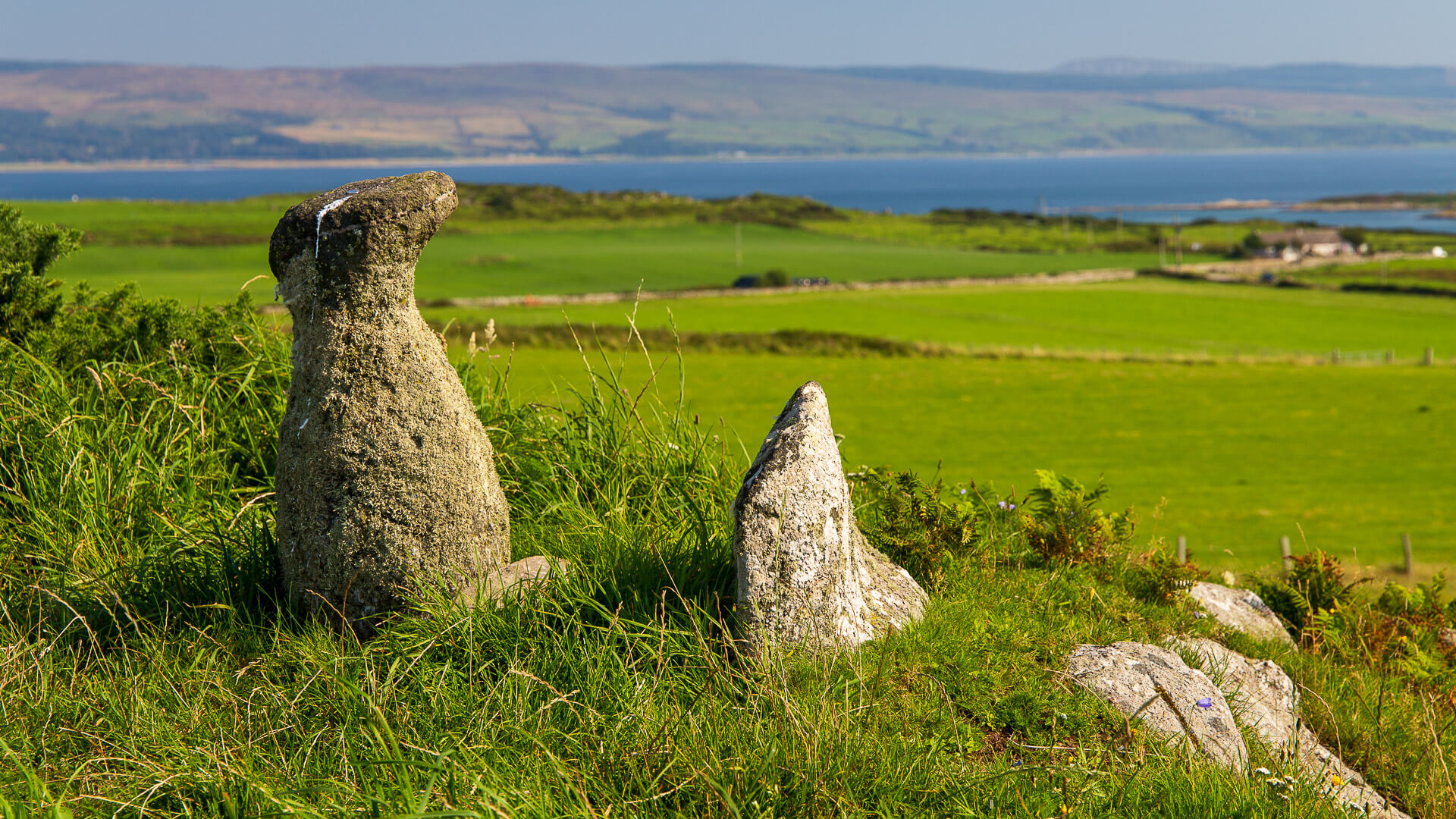
Two further standing stones, barely knee-high but special in their own way. They’re called Bodach (Gaelic for “old man”) and Cailleach (Gaelic for “old woman”). Legend has it they come to life at night and wander through the moor, and if they fall over, it’s said to bring great misfortune.
Both stones stand on a hill that once was also home to a dun, an old hillfort. The path there leads on foot from the main road, past the five wind turbines and across fields:
Gigha Parish Church
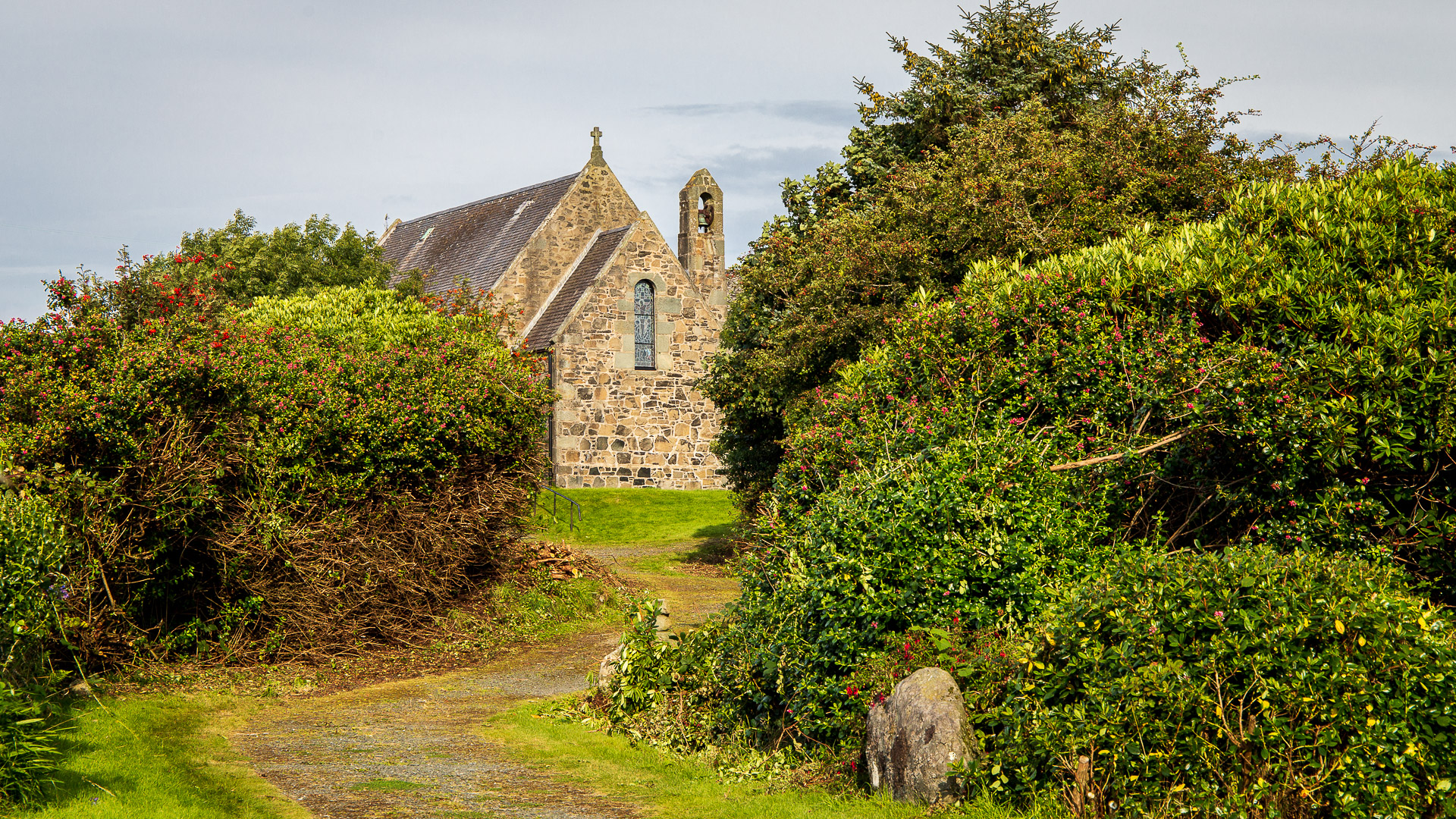
Built in 1923 on the site where a church had already stood since 1780. Inside, you’ll find some stained-glass windows as well as an old baptismal font. Access to the grounds is through a gate directly opposite the island’s shop.
The Hanging Stone/Giant’s Tooth
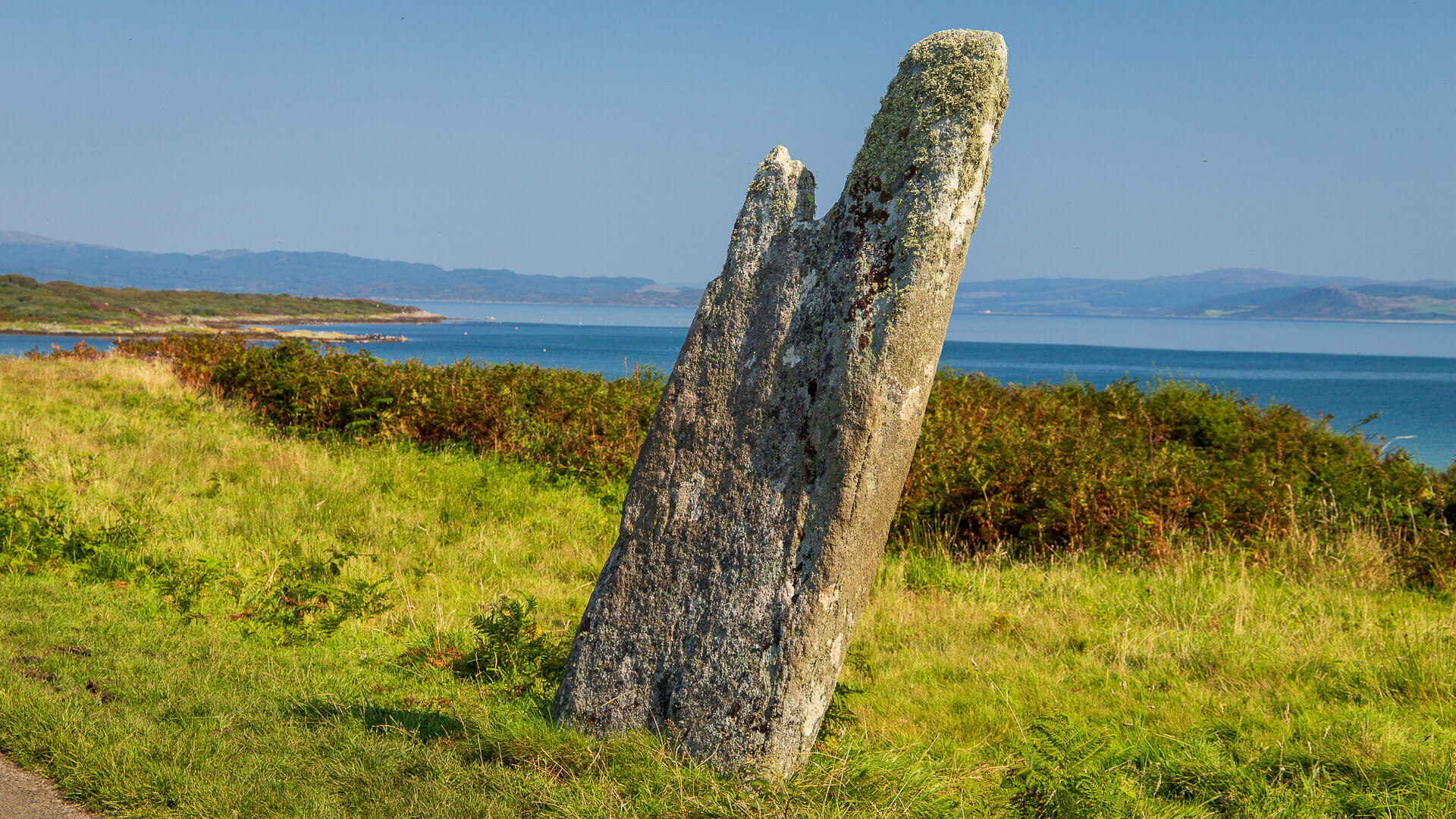
Further north on the island, right by the road, stands a Bronze Age stone. Its distinctive feature: weathering has worn a notch into the stone, giving it a certain resemblance to a tooth. That explains one of its names, Giant’s Tooth. Its other name, “Hanging Stone”, comes from the story that condemned criminals were once hanged from it.
Twin Beaches
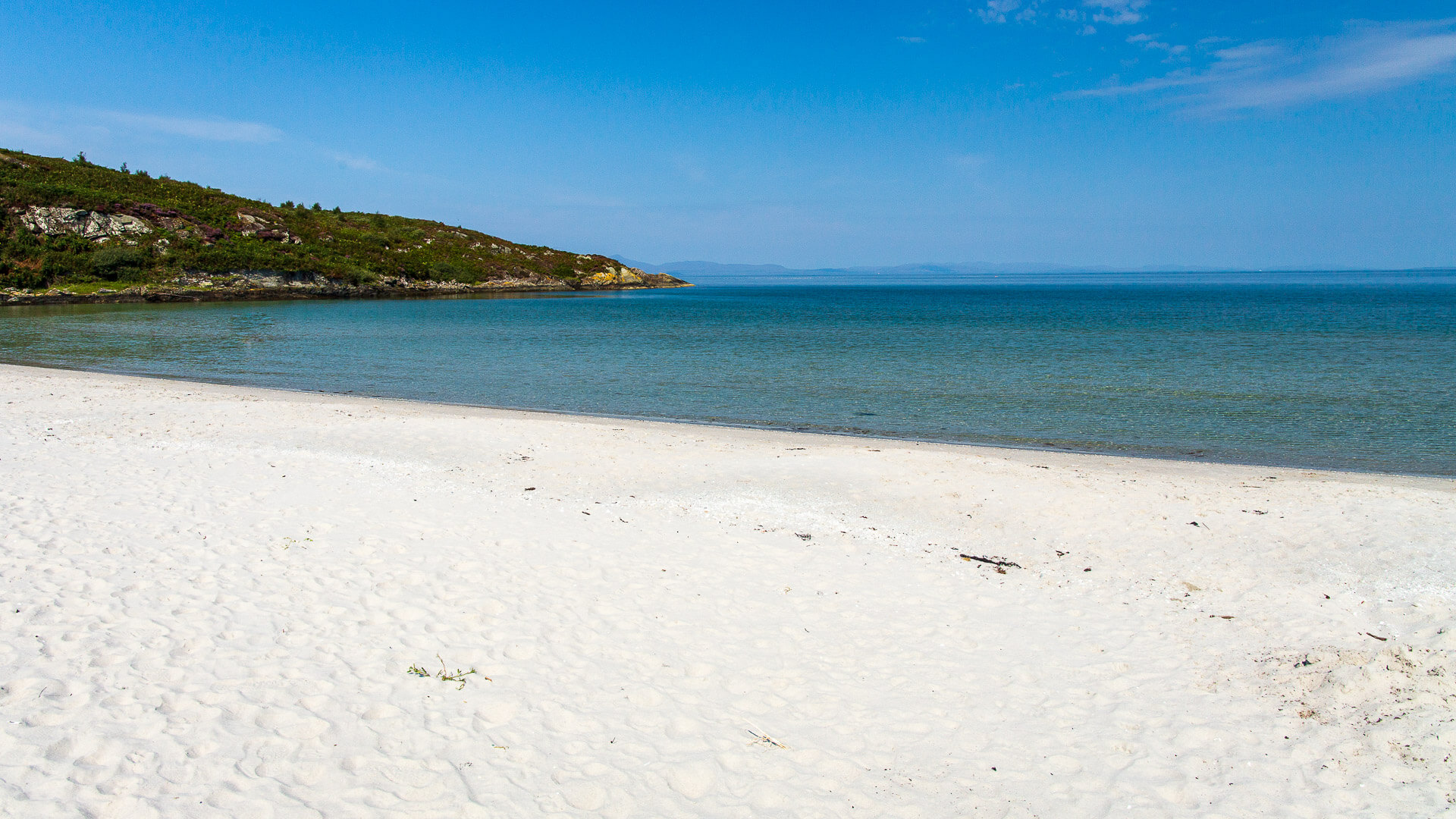
In the north-west of the island lies a small peninsula, connected to Gigha by a very narrow strip of land. A sandy beach has formed on each side of this strip. There’s a car park for these beaches by the road, from which it’s a few minutes’ walk.
Mein Reiseführer Islay, Jura, Colonsay & Gigha
Auf 214 Seiten beschreibe ich 38 Sehenswürdigkeiten auf den Inseln Islay, Jura, Colonsay und Gigha. Zusätzlich Infos zur Anreise, zum Klima, zur Geschichte, Festivals und mehr. Mit drei sechs Tagestouren.
Mehr Info hier.
Best Time to Visit: Climate and Weather
Gigha is characterised by mild temperatures and, for the west of Scotland, moderate rainfall. Your chances of good weather increase in May, when rainfall is on average at its lowest, and the sun shines more often than usual – not just because of the longer days.
The whole summer, however, remains mild, making May to early September a good time to visit Gigha.

Getting There and Around: Ferry to Gigha and Getting Around
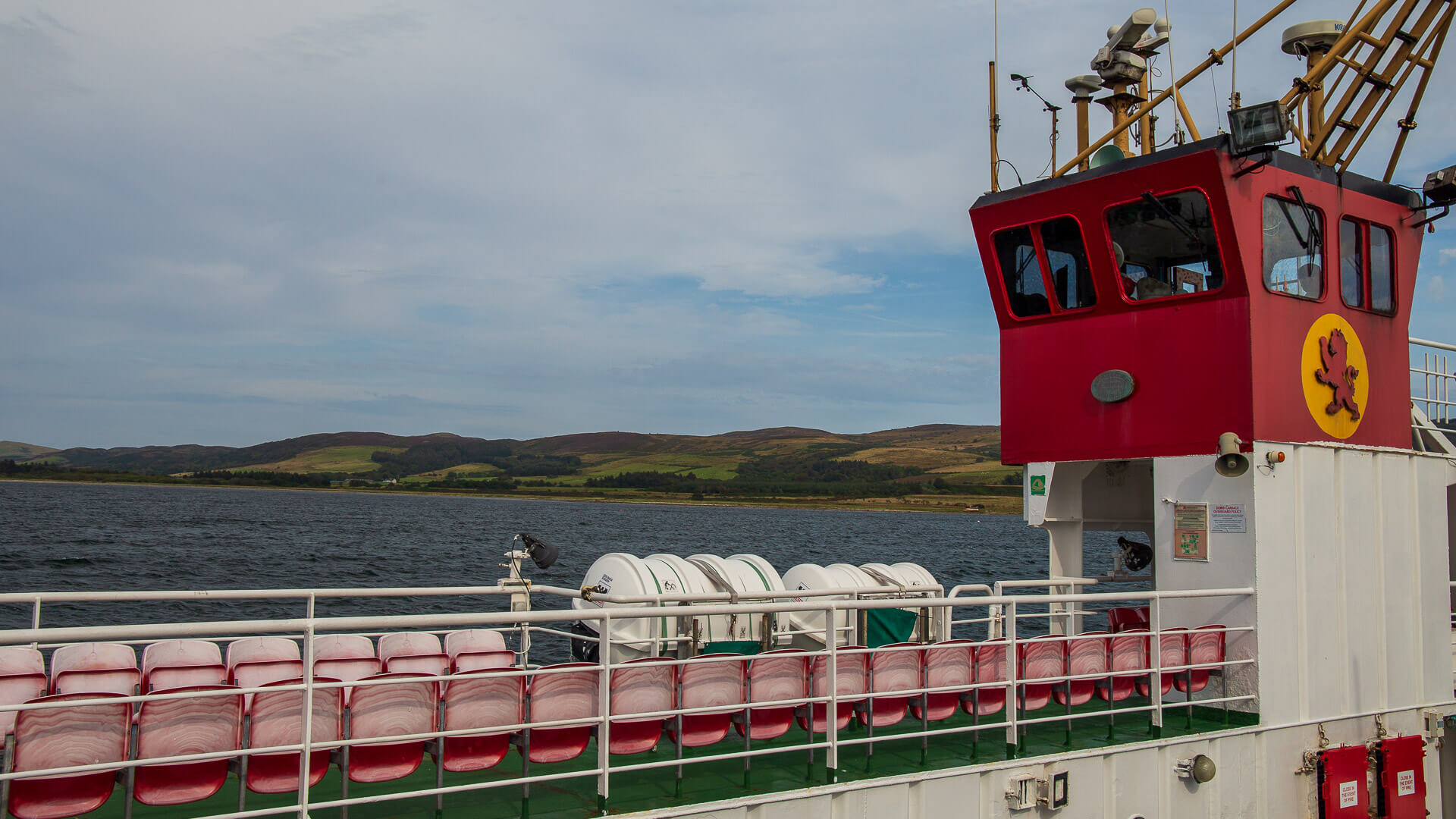
You reach Gigha by car ferry, which departs from Tayinloan. The crossing takes 20 minutes. On weekdays, it sails roughly once an hour between 8am and 6pm and costs around £22 return with a car and one passenger. If you leave the car in the ferry car park, it costs only around £6 return.
For yachts, there are 22 moorings and a pontoon. If you own a small private plane, you can also land on the grass airstrip in the south.
If you do leave the car behind, you can rent bikes right by the ferry terminal at the Gigha Activity Centre. Since Gigha has no serious hills on its roads, cycling here isn’t too strenuous.
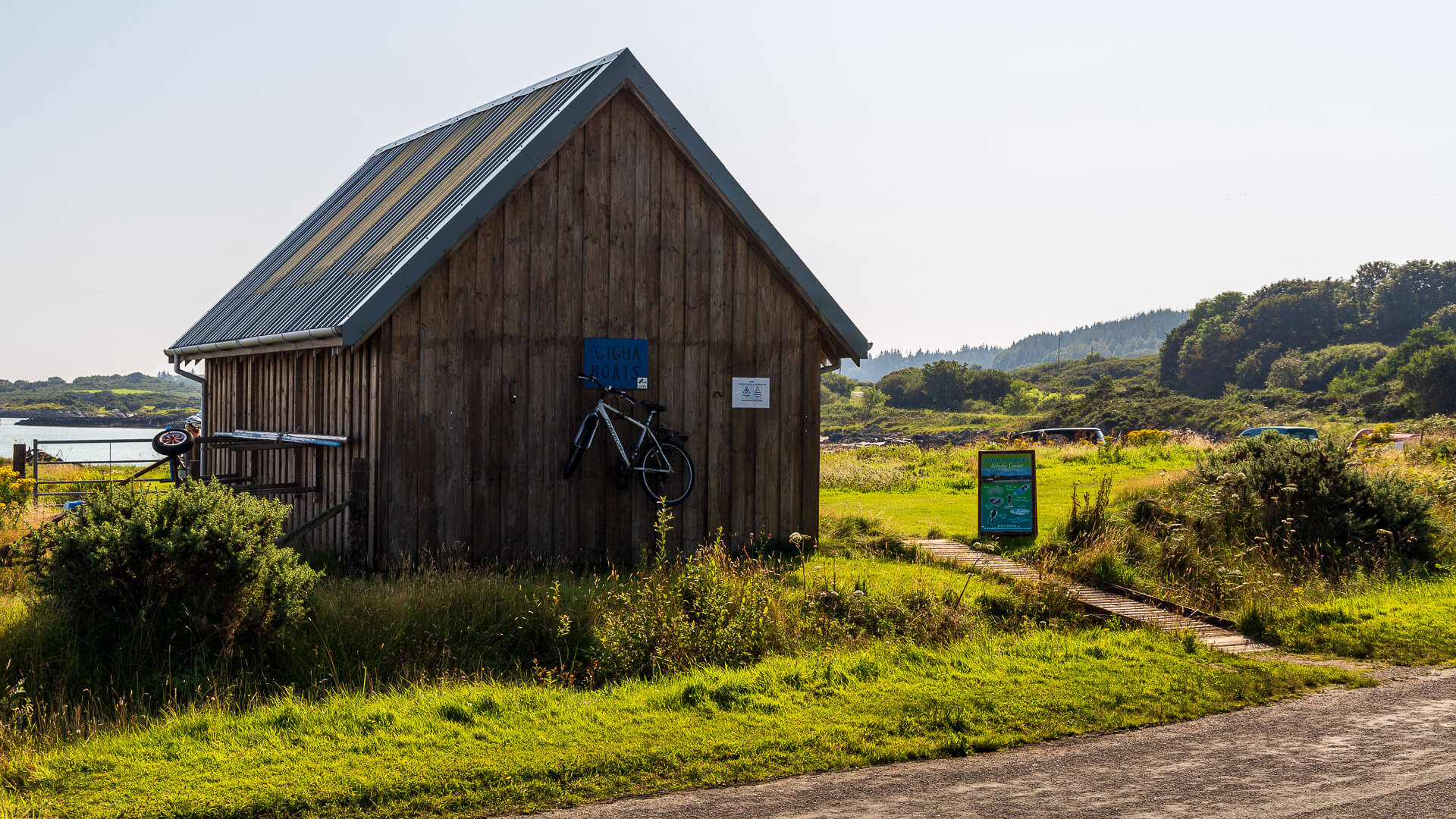
To give you an idea: it’s just under nine kilometres from the north end to the south. The route takes between half an hour and three-quarters of an hour by bike, while a car needs about a quarter of an hour.
The main road is paved throughout; side roads are mostly gravel tracks and can have potholes.
Mein Reiseführer Islay, Jura, Colonsay & Gigha
Auf 214 Seiten beschreibe ich 38 Sehenswürdigkeiten auf den Inseln Islay, Jura, Colonsay und Gigha. Zusätzlich Infos zur Anreise, zum Klima, zur Geschichte, Festivals und mehr. Mit drei sechs Tagestouren.
Mehr Info hier.
Staying There: Accommodation, Restaurants, Shops
Accommodation on Gigha is limited and should be booked in advance, especially in summer.
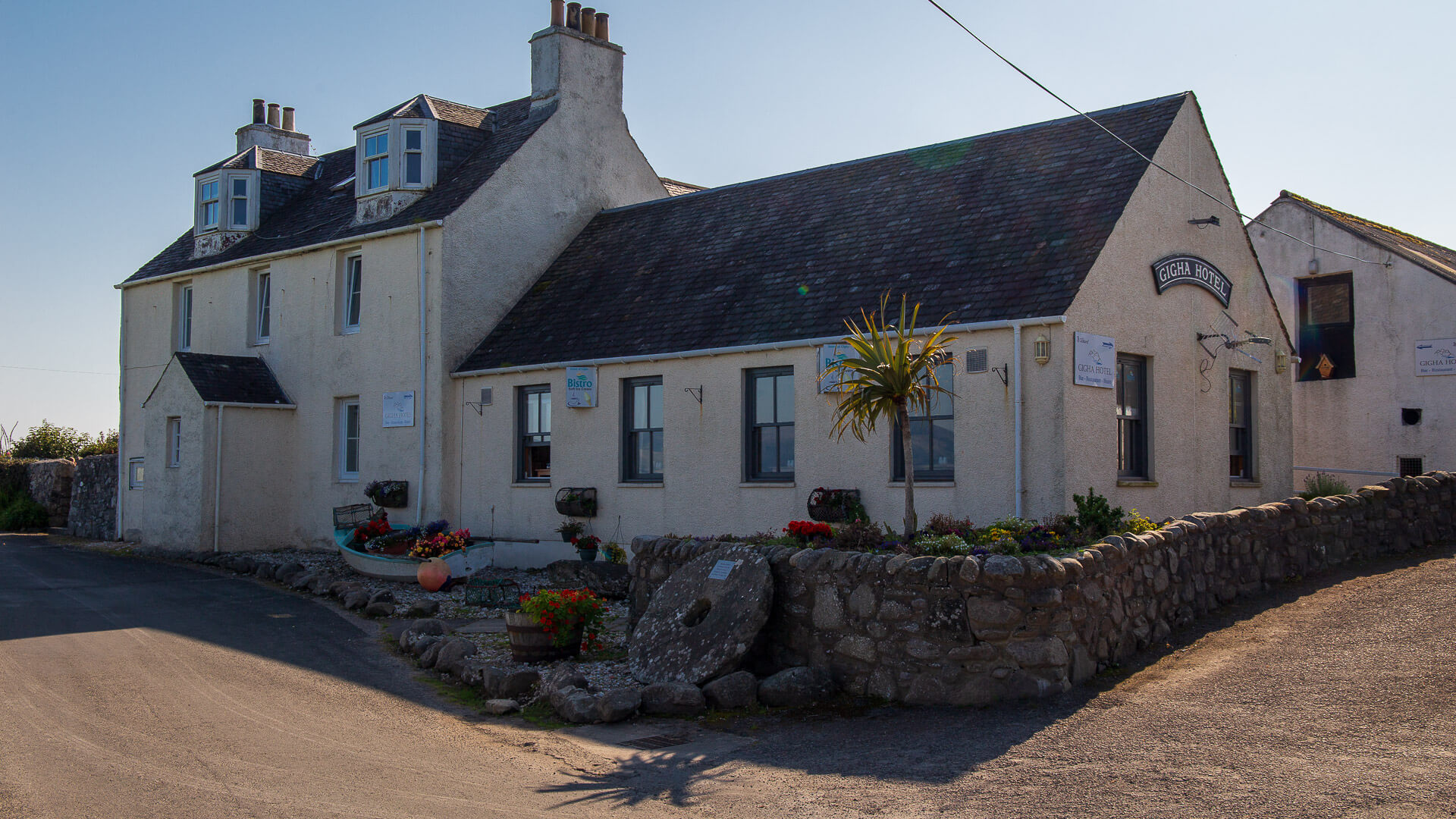
There’s one hotel on the island, the Gigha Hotel, about a kilometre by road from the ferry terminal. Bed and breakfasts are scarce on the island; near Achamore Gardens there’s the Springbank B&B, and this website lists two further ones.
The existing campsite is by the Boathouse restaurant near the ferry and is fairly small. From mid/late 2022, a new campsite was due to open, with space for ten motorhomes and 15 tents, again located near the ferry terminal, like the current one.
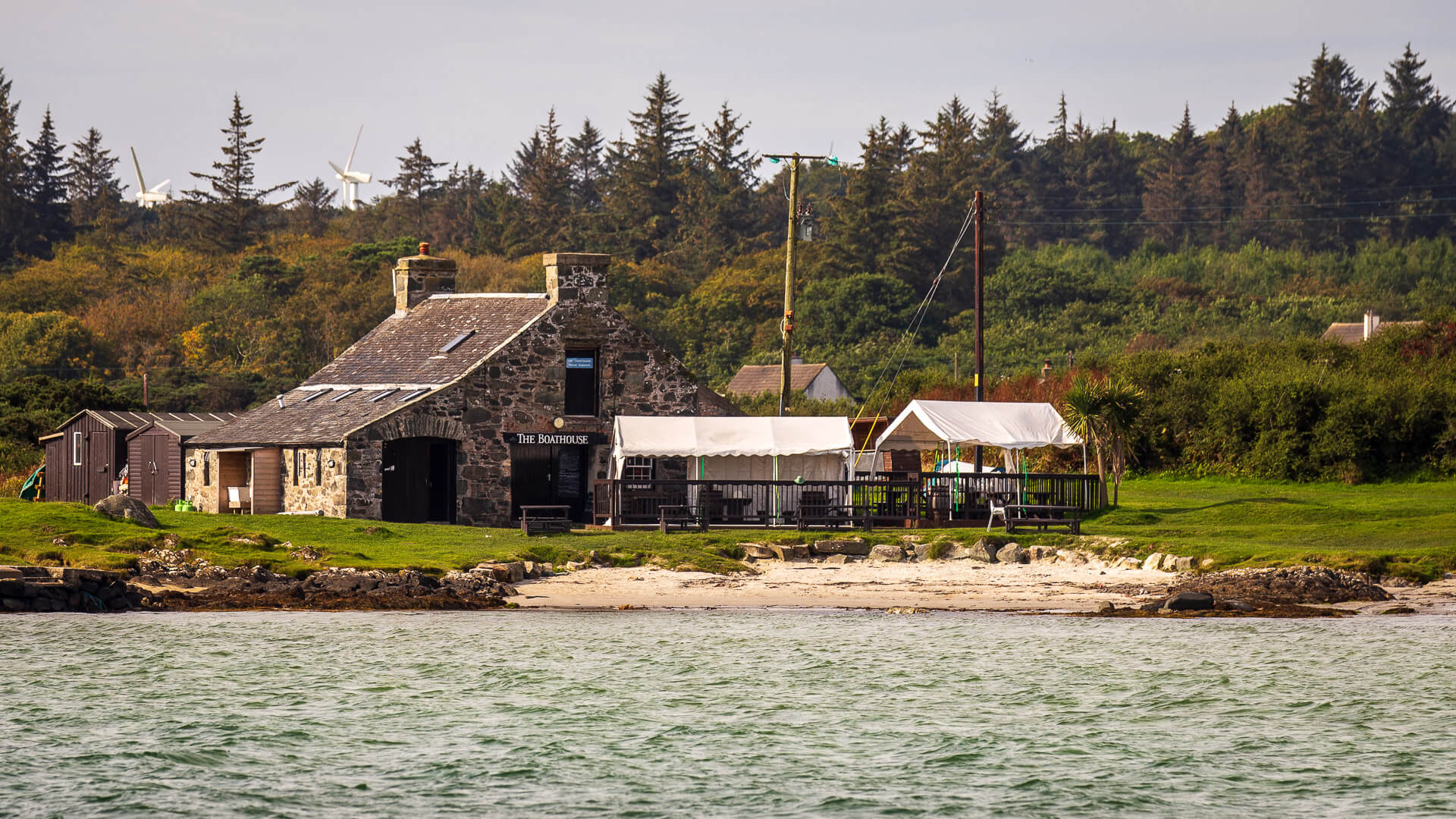
Just as scarce as accommodation are the island’s bars and restaurants. In essence, there’s only the hotel and the Boathouse, both of which serve seafood and local dishes. Coffee and cake, at least, can still be found at the Gigha Gallery building, right next to the hotel.
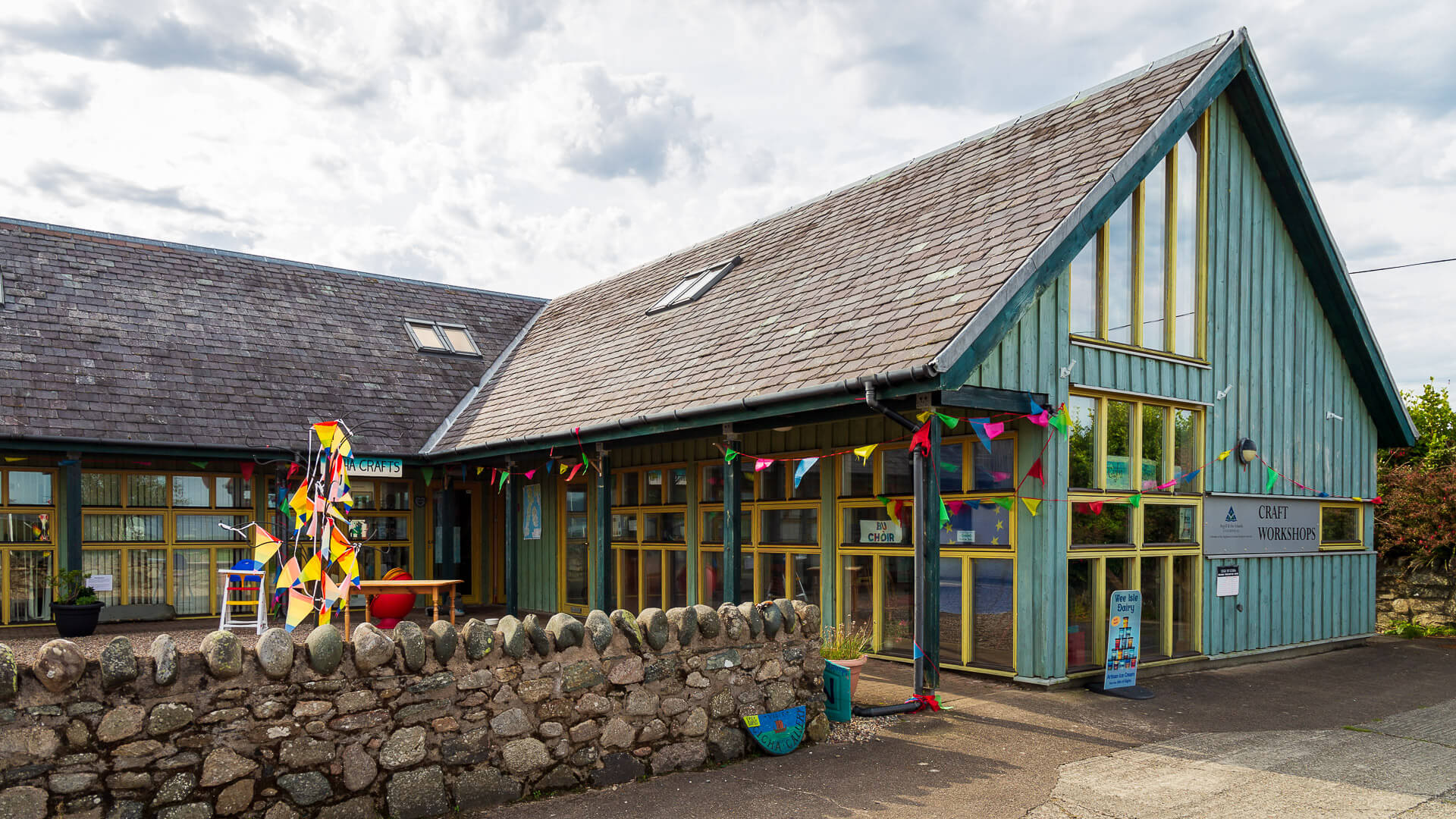
In the main village of Ardminish, above the ferry terminal, there’s also the island’s shop. Alongside groceries and everyday items, you can also buy the island’s own Wee Island Dairy ice cream here – both in tubs and in a cone.

History: Of Lords and Landownership
The many standing stones and other remains suggest that people have lived on Gigha for more than 5,000 years. Hunter-gatherers were likely already roaming the island even earlier than that.
Given its convenient position between the fort of Dunadd, Islay and Ireland, it was almost certainly part of the early Gaelic kingdom of Dalriada. Their rule was later replaced by that of the Vikings. Finally, in 1335, Gigha came into the possession of the Lords of the Isles.
After the realm of the Lords of the Isles collapsed, the MacNeills of Taynish ruled over Gigha, with a brief interlude of the MacDonalds of Islay, and, around 1779, the MacNeills of Colonsay.
From the 19th century onward, Gigha changed hands very frequently, a circumstance that surely took its toll on the islanders. In 1944, Sir James Horlick bought the island and had the wonderful garden around Achamore House laid out.
But things were about to get worse. In 1989, “Tanap Investments” acquired the island for £5.4 million. Following insolvencies, Gigha soon passed for £2.3 million to the Holt Leisure Group, who in turn wanted to sell the island again in 2001.
The frequent sales created uncertainty, and more and more residents left the island. Around the year 2000, fewer than a hundred people still lived here. If the island wasn’t to become an uninhabited patch of land, something had to change.
In 2002, the residents took action. They formed the “Isle of Gigha Heritage Trust”, which bought the island for four million pounds. The land now belongs to the people who live on it, who decide for themselves how the island should develop. And it’s working: today, 160 people once again call it home.
Mein Reiseführer Islay, Jura, Colonsay & Gigha
Auf 214 Seiten beschreibe ich 38 Sehenswürdigkeiten auf den Inseln Islay, Jura, Colonsay und Gigha. Zusätzlich Infos zur Anreise, zum Klima, zur Geschichte, Festivals und mehr. Mit drei sechs Tagestouren.
Mehr Info hier.
