More deer than people – the Isle of Jura offers solitude amid magnificent nature. Why a visit is worthwhile, and what else defines the island.
Isle of Jura Info:
» Overview
» Attractions
» Best time to visit
» Getting There
» History
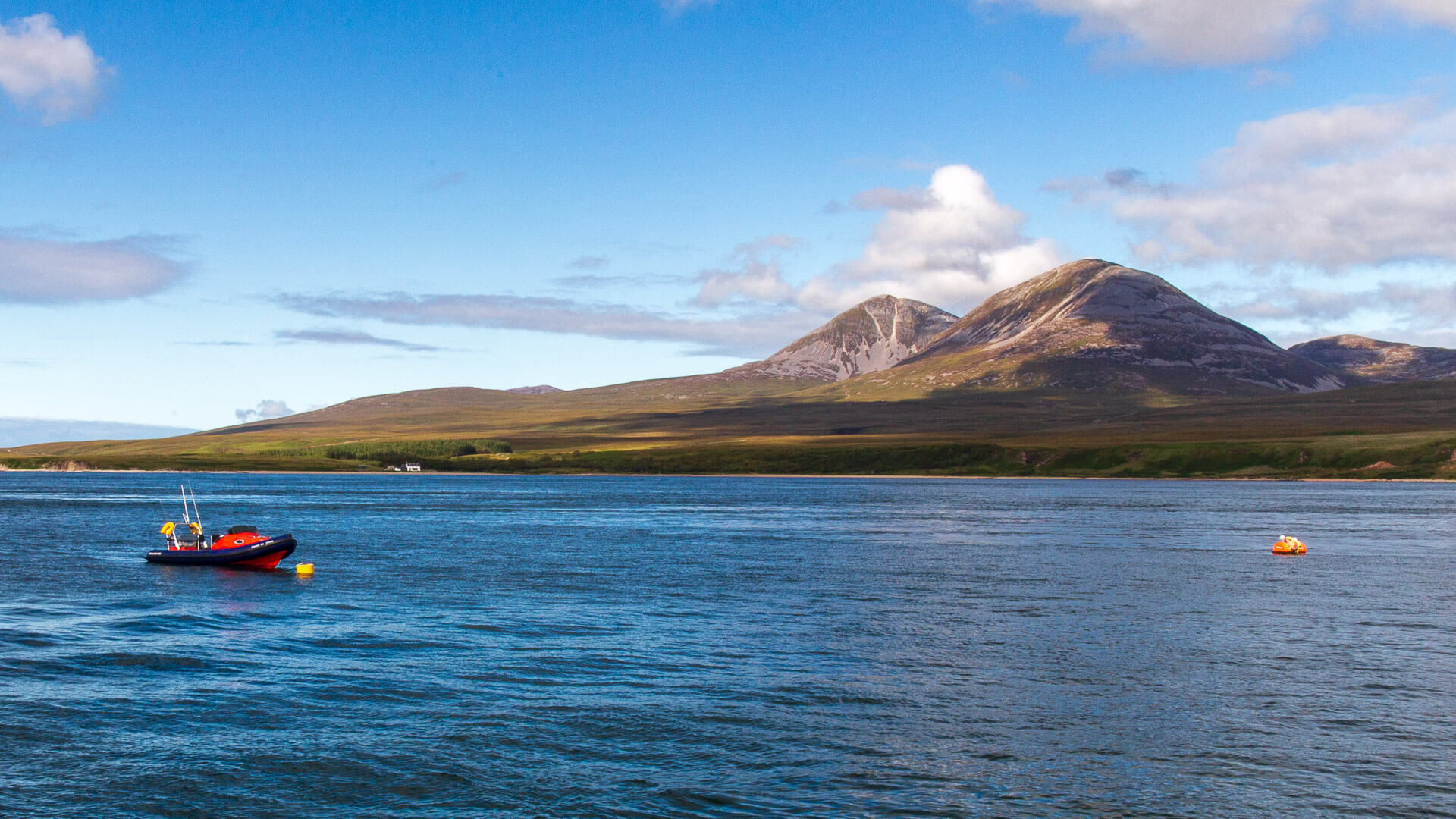
Wild, mountainous and remote – that’s a good way to describe the Isle of Jura. Fewer than 200 people live here, spread across an island 44 kilometres long and 12 kilometres wide. By comparison, Jura’s neighbour Islay, with almost 3,300 residents, is densely populated.
So why so few people? Partly because Jura isn’t as fertile as Islay. And partly because the Paps of Jura, the three mountain peaks in the middle of the island, take up a fair amount of space.
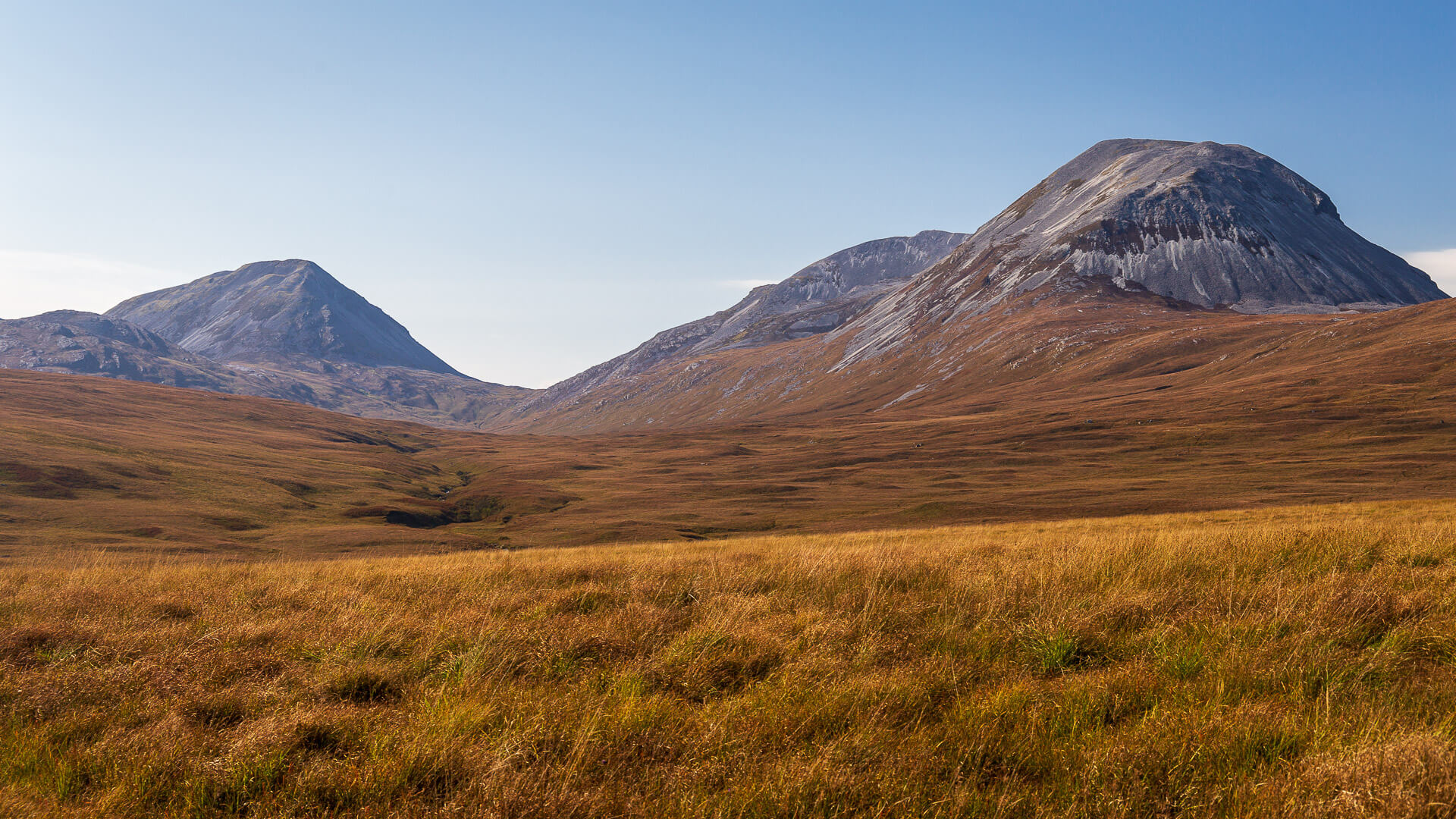
Usually only two of the three mountains are visible, and their rounded shape gave them their name: “Paps” comes from Old Norse and refers to a woman’s breasts.
The island’s name also comes from the Vikings and is said to mean “deer island”. Little wonder: over 5,000 deer are said to live here. Other interpretations say Jura actually means “island of wild animals”. Either way, as a visitor you’d need a lot of bad luck not to spot any red deer.
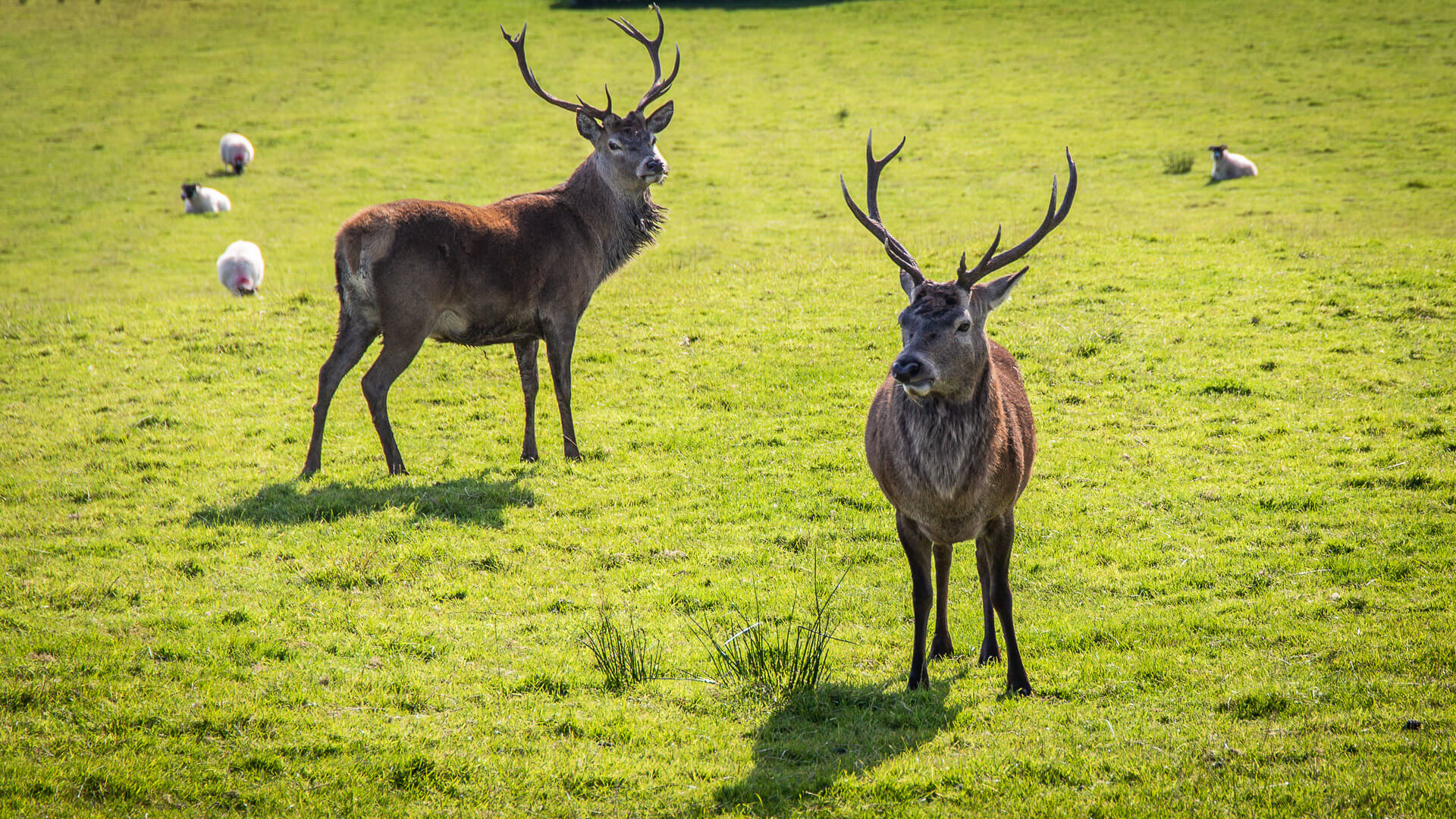
The Isle of Jura is also home to a good number of white-tailed eagles, golden eagles, herons, snakes and otters.
A single road runs from the Feolin ferry terminal on the island’s west side, over the southern tip, up the west, past the main village of Craighouse, and on north until it finally ends beyond Ardlussa and becomes a farm track.
Most residents are concentrated in the main village of Craighouse, on the east side of the Isle of Jura. The distillery stands here too, with the island’s only hotel opposite.
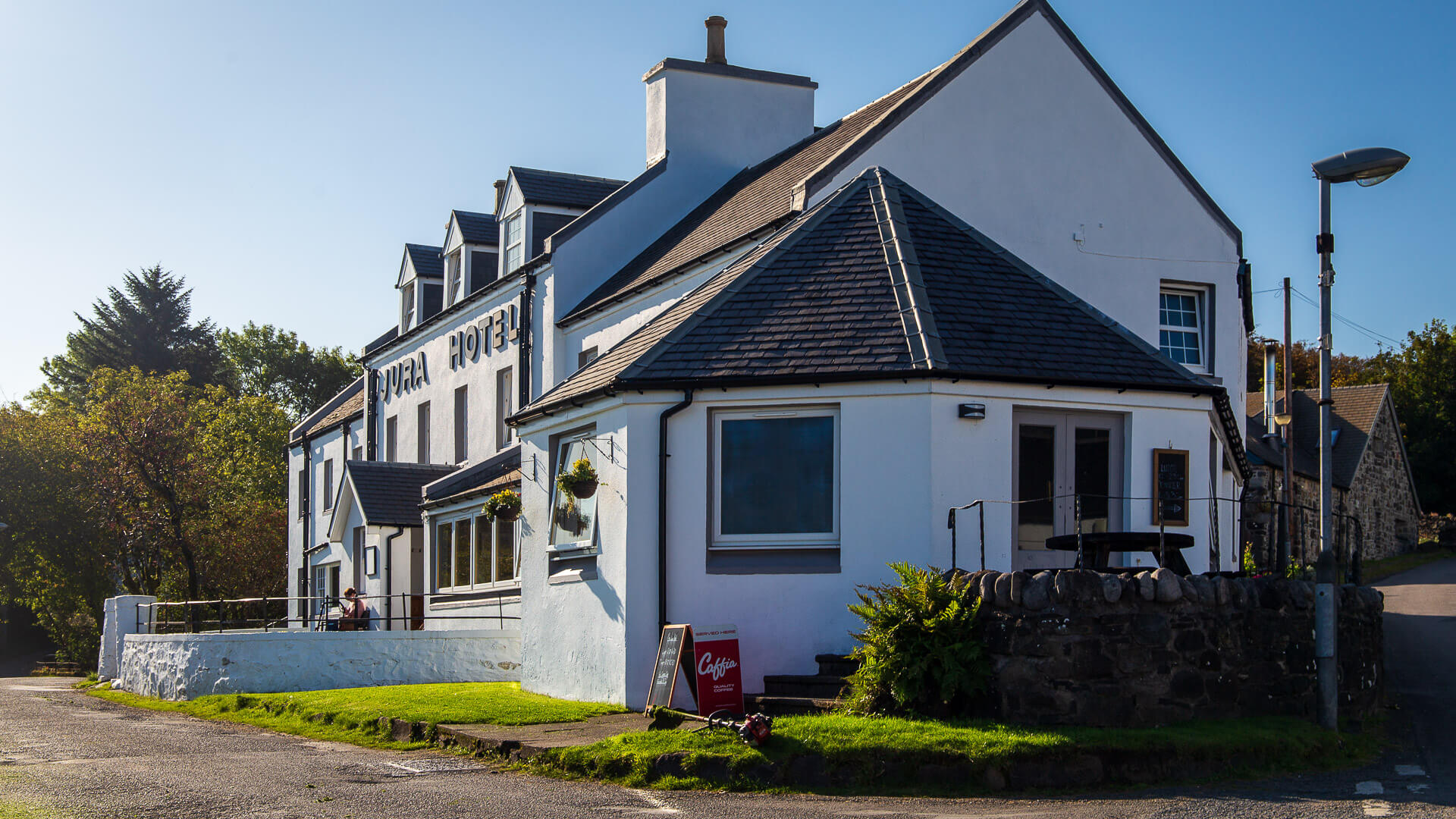
Everything that keeps the island running comes together in Craighouse, such as the petrol station and the community store.
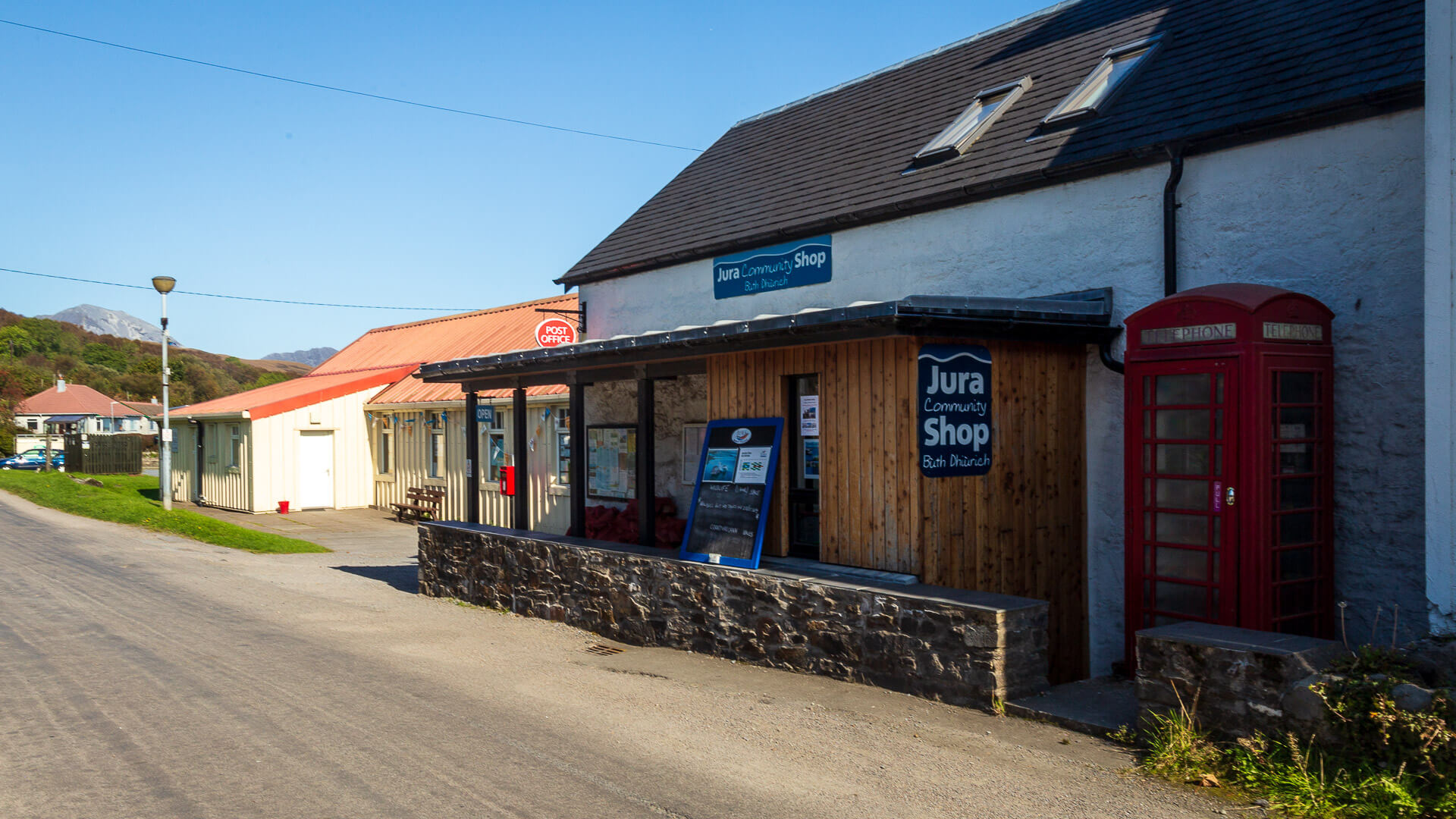
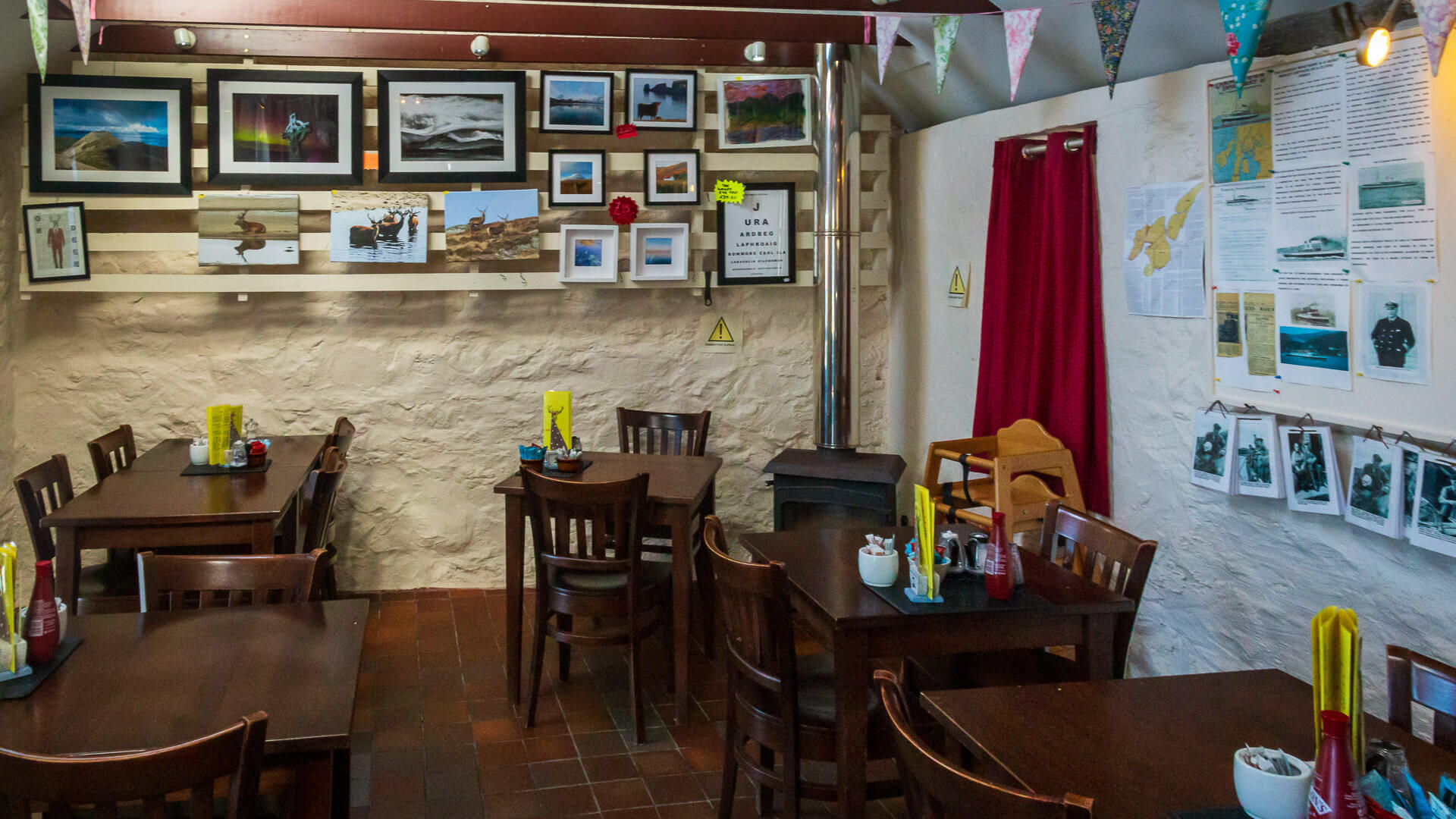
For snacks, or coffee and cake, The Antlers in Craighouse is a good choice.
Away from the main village, things become remote. Ardlussa, further north, offers one more small settlement – and that’s about it. Good news for hikers, who love the island for its routes. Evans’ Walk is a popular one, as is, of course, the ascent of the Paps of Jura, though this should only be attempted by experienced walkers.
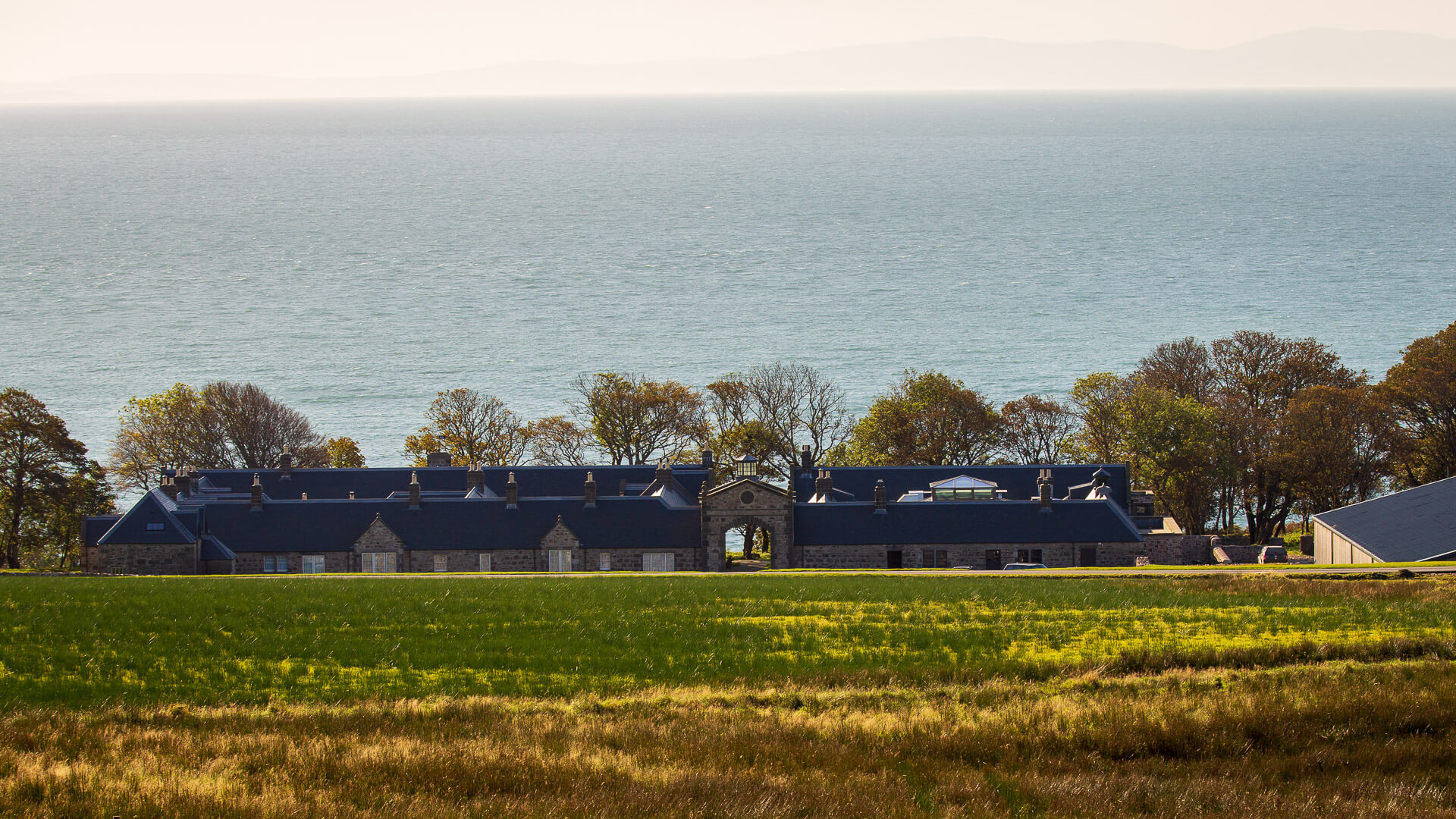
Right at the southern tip lies Jura House on the Ardfin Estate. It’s barely visible from the road – and that’s exactly how the owner, billionaire Greg Coffey, wants it. He made his money in hedge funds and later bought parts of the island. He closed the once-famous Jura House Gardens and opened an 18-hole golf course instead, which only he and his friends are allowed to play. In the former stable block, he’s fitted out a seven-star hotel – also mostly reserved for friends.
The Isle of Jura’s Attractions
The attractions at a glance on the map:
Camas an Staca
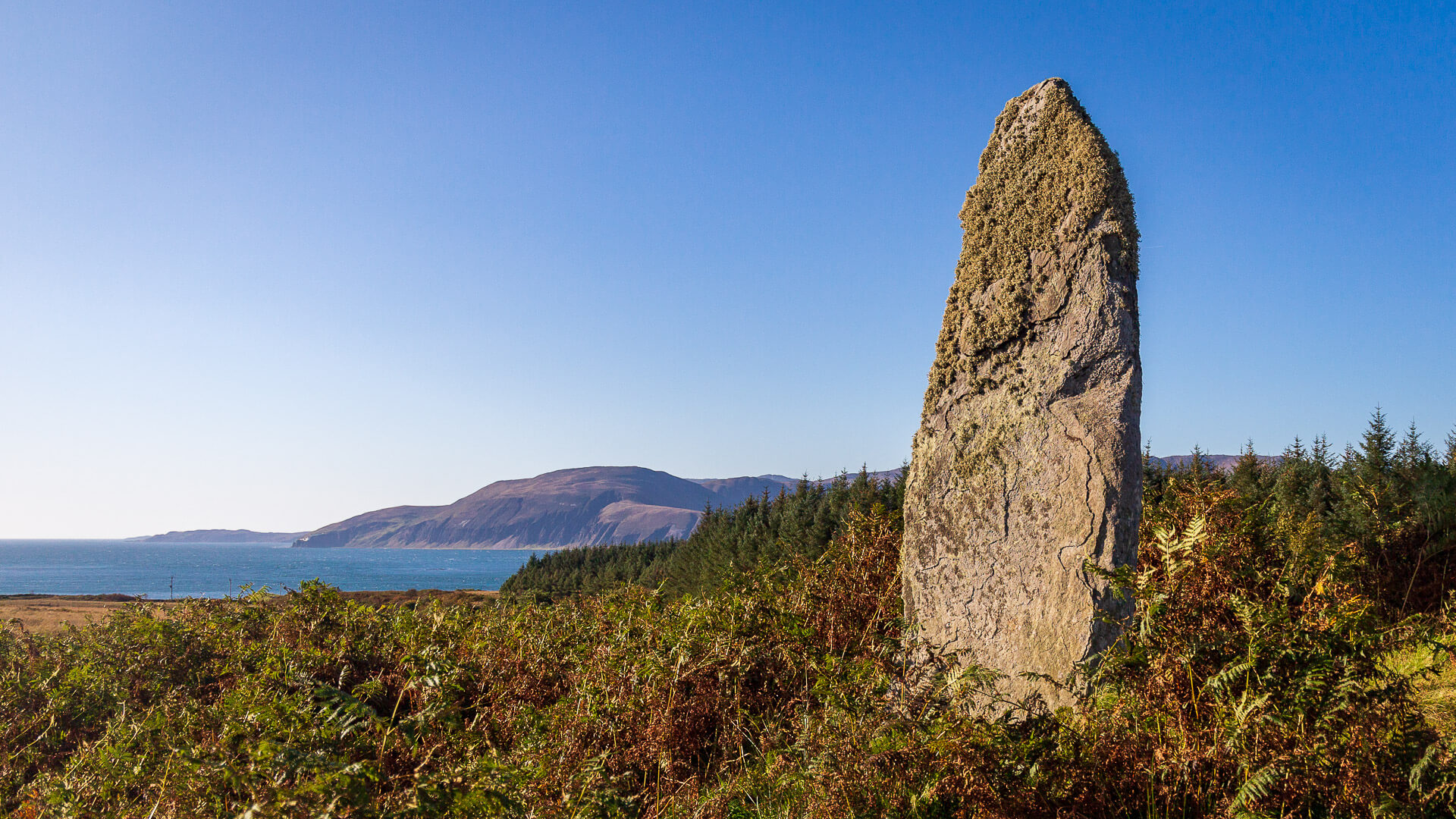
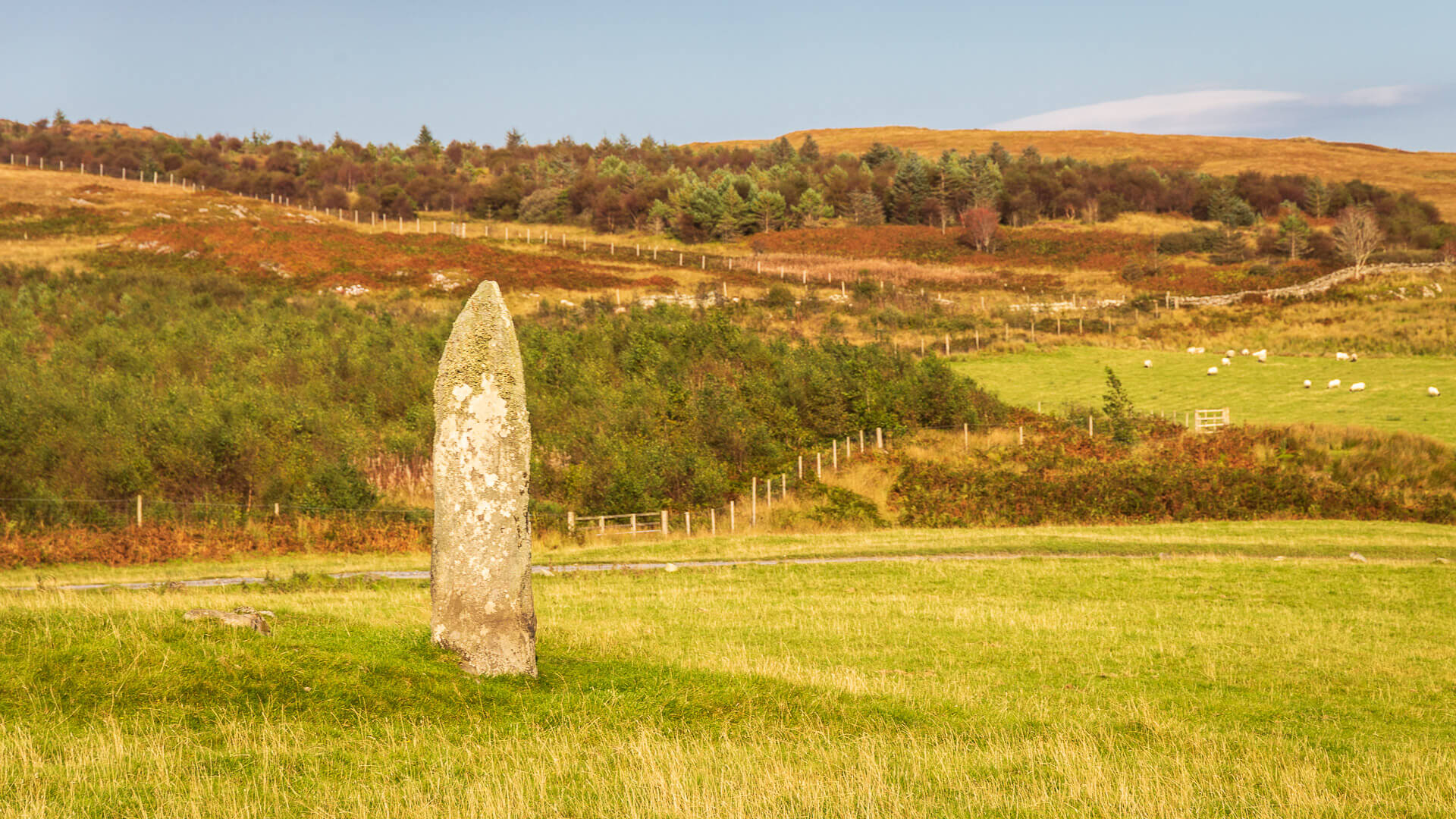
Not much is known about the monolith “Camas an Staca”. It rises 3.5 metres and is 1.2 metres wide. Behind it, visitors can see the strait to Islay and its cliffs. The stone stands about 225 metres south-west of the road, with a signpost showing the way. Note: the path crosses open, and therefore often muddy, ground.
Jura Distillery
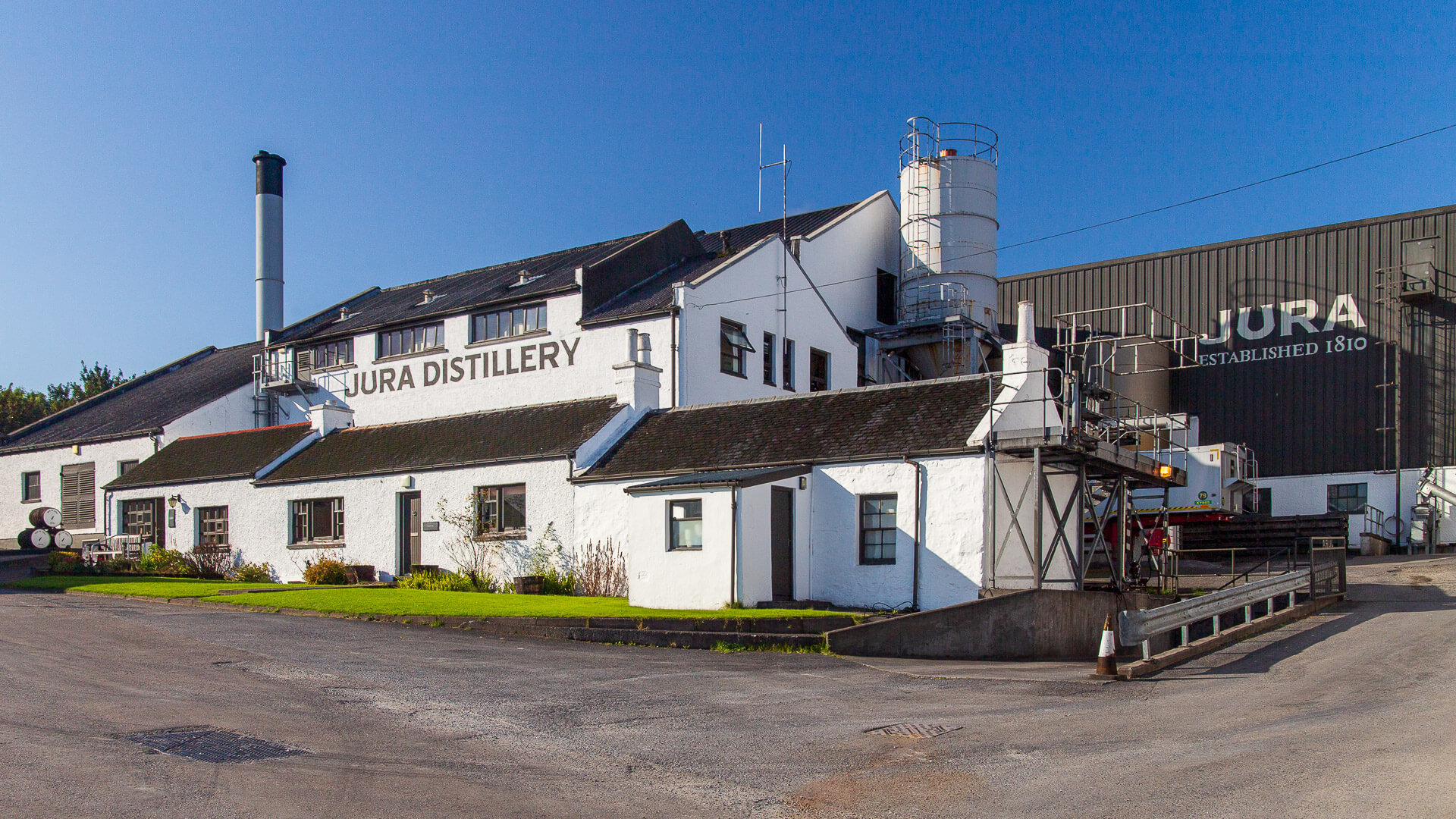
A distillery for Isle of Jura whisky has stood on this spot since as far back as 1810. However, it came to a halt at the start of the 20th century when the then owner ran out of money. In 1963, though, two islanders reopened the distillery, and it has been producing again ever since. Visitors can join tours here, best booked in advance via the website.
Opening hours:
April-October
Mon-Sat: 10:00am-4:30pm
Sun: closed
November-March
Mon-Fri: 10:00am-4:00pm
Sat & Sun: closed
Admission:
Tour: between £6 and £25 depending on the type of tour
The Whisky Island Gallery and Studio
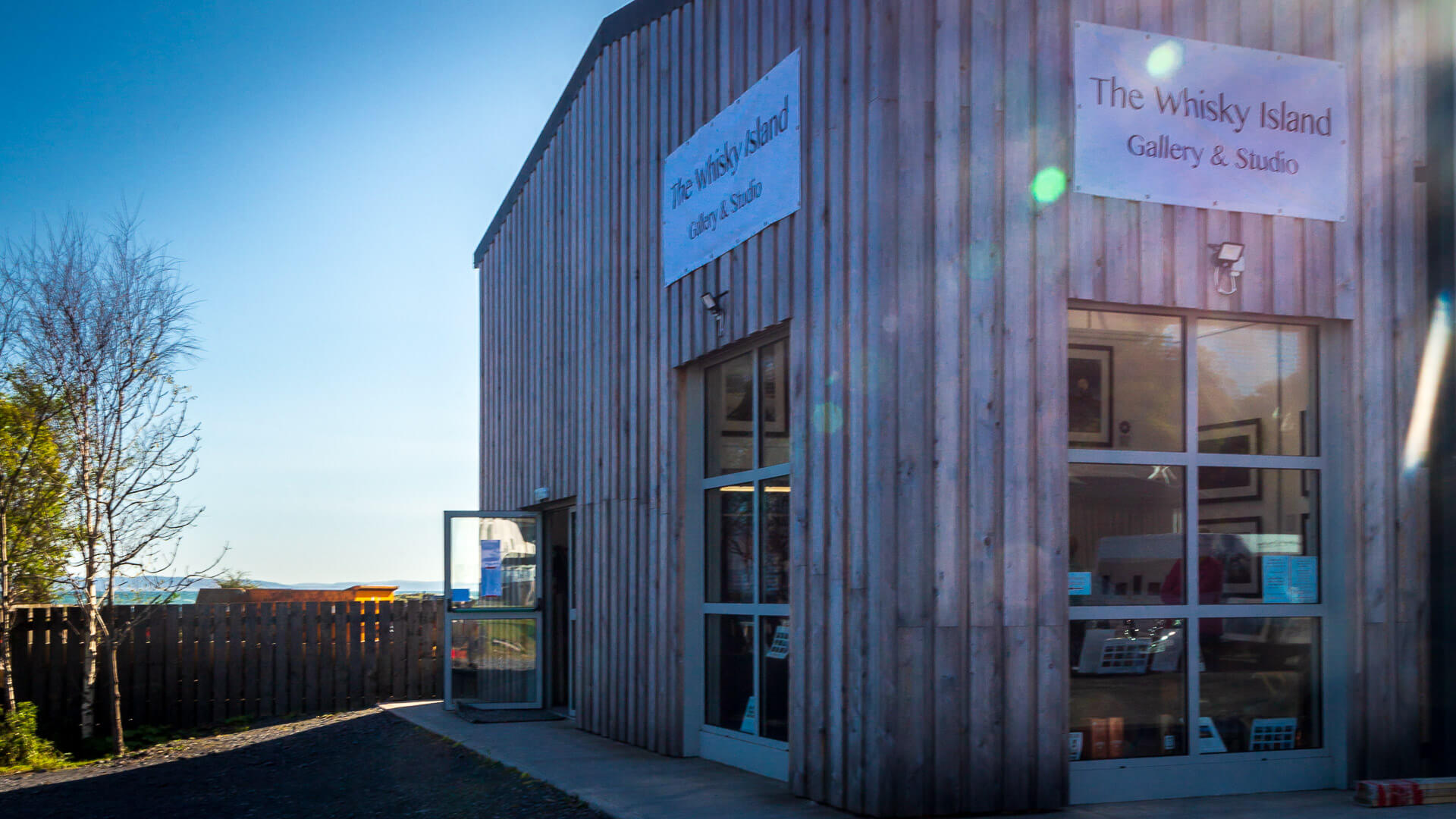
What the Isle of Jura and Islay look like at night beneath the aurora, how they appear in winter, or how they look from a plane overhead – at the Isle of Jura Gallery & Studio, photographer Konrad Borkowski exhibits his work. The Polish-born artist worked for numerous well-known print magazines around the world before settling on Jura. His photos in the small exhibition also include shots from distilleries he was booked to photograph for advertising campaigns. And, of course, visitors can buy prints, fridge magnets or photo albums here.
Opening hours:
Until October
Mon-Fri: 10:30am-5:00pm
Sat: 11:00am-3:00pm
Admission: free
Jura Parish Church/Keils Church
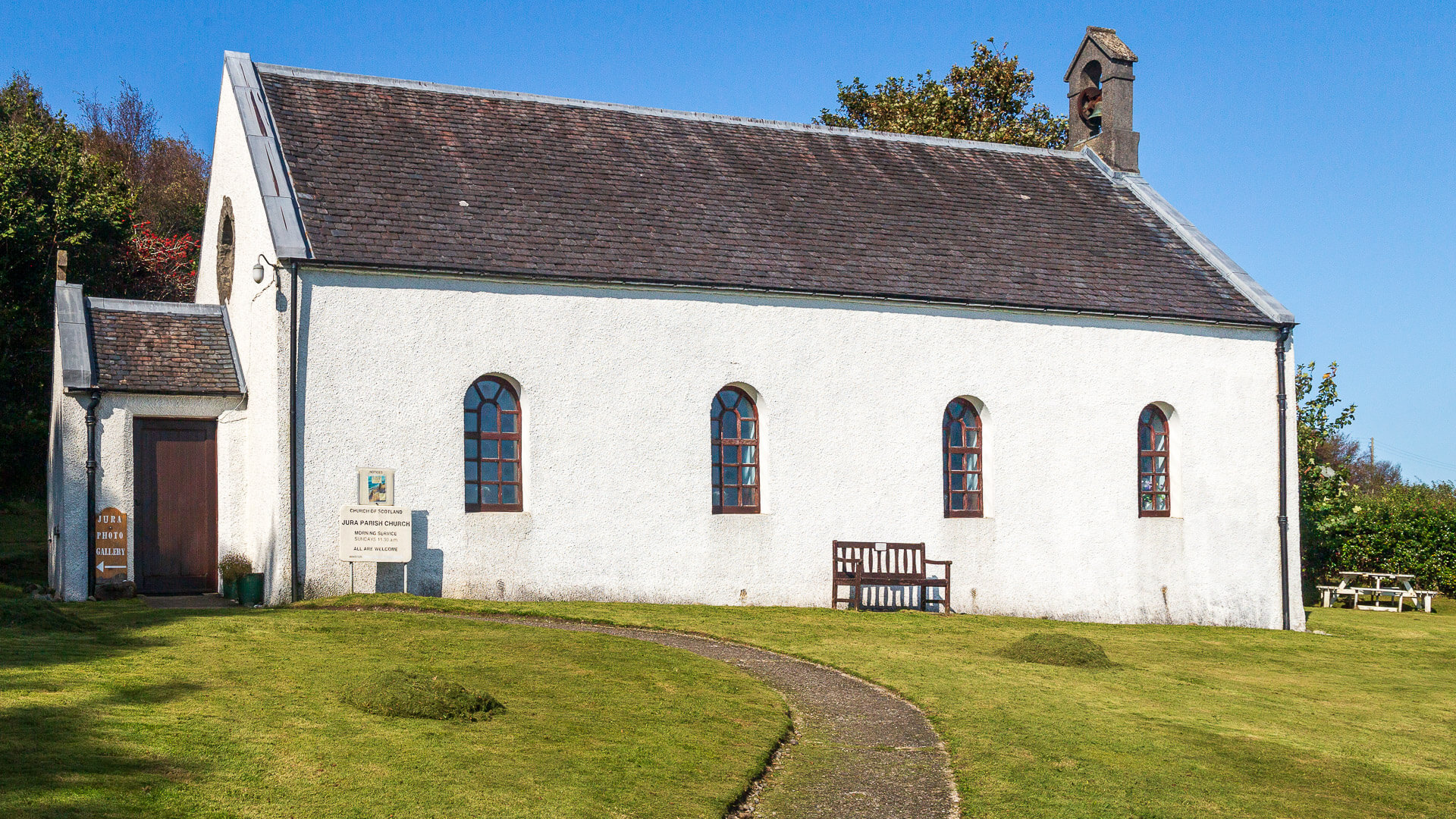
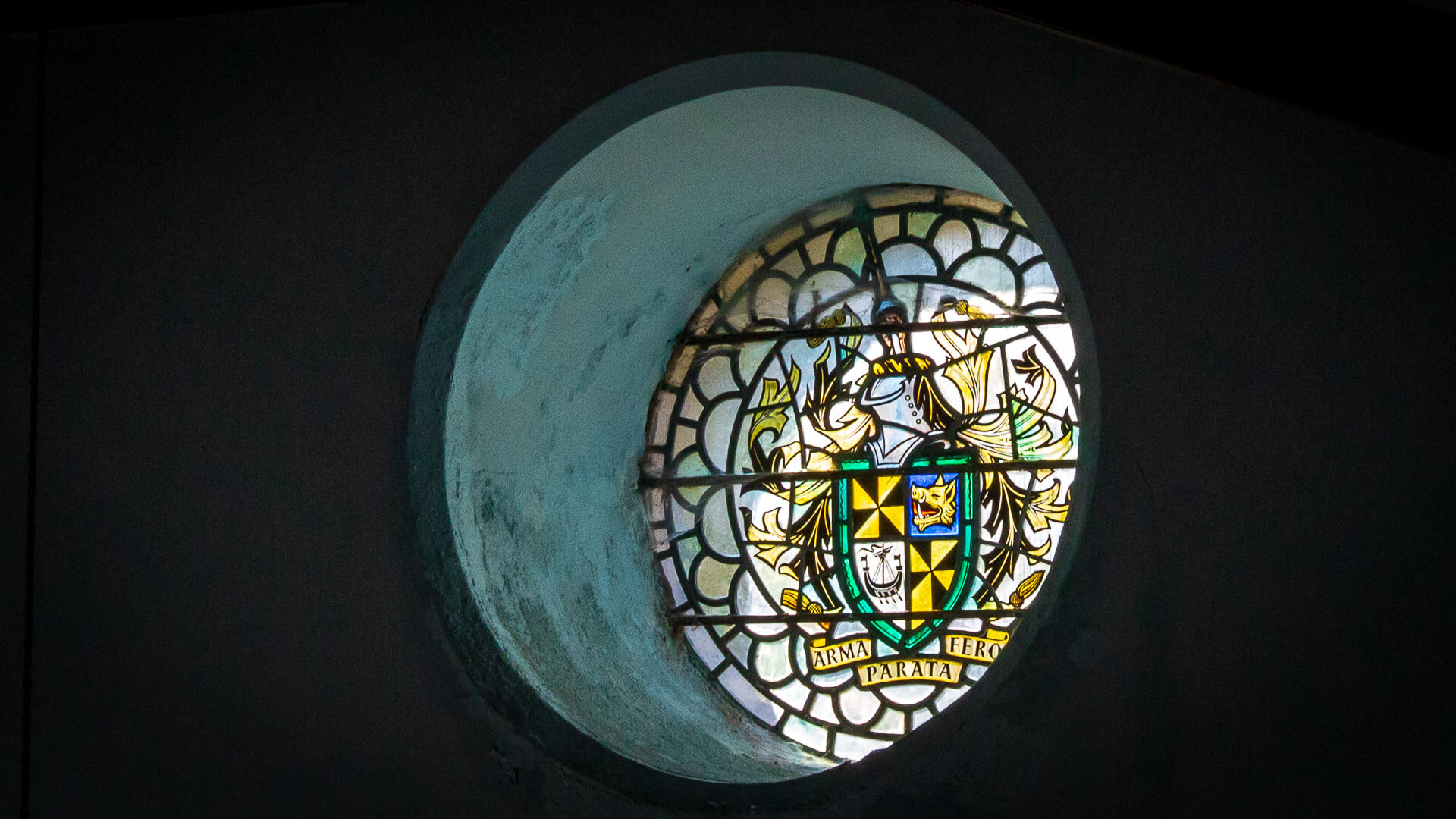
It looks quite simple, Craighouse’s parish church, but it has stood on this spot since as far back as 1777. Inside, the round stained-glass window bearing the Campbells’ coat of arms is particularly interesting. Upstairs, there’s also a small photo exhibition showing old black-and-white images of life on Jura. Some buildings that now stand derelict by the roadside appear intact here, pictured with people – the old school, for instance. Access to this exhibition is via its own staircase behind the church.
Opening hours:
open daily at all times, service Sun 11:30am
Kilearandale Burial Ground
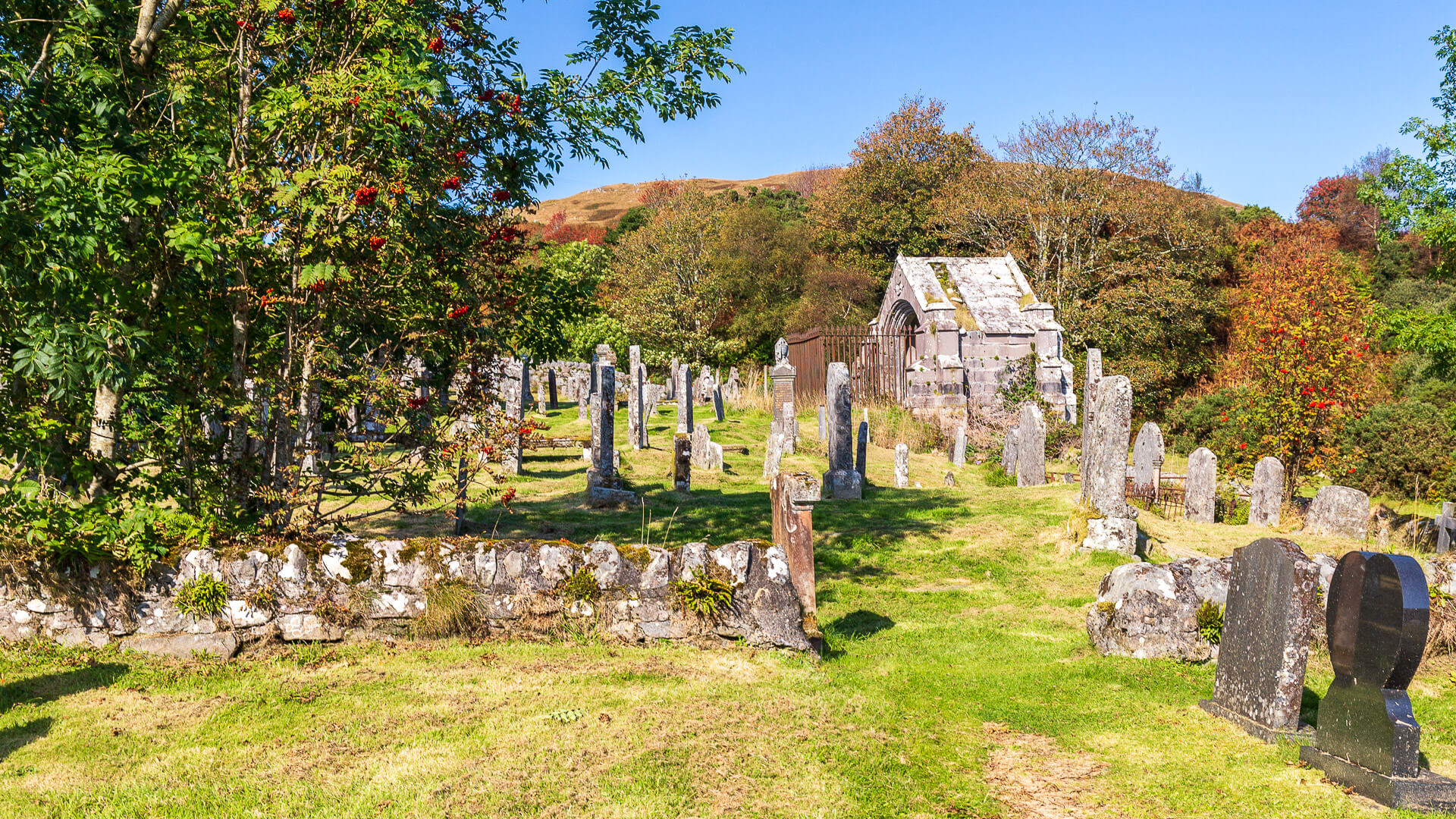
The small mausoleum is naturally what stands out most here. Built in 1838, it watches over the mortal remains of the Campbells of Jura. The graveyard itself, however, is considerably older, as proven by several gravestones bearing the typically medieval carvings also seen at Kildalton or Finlaggan on Islay.
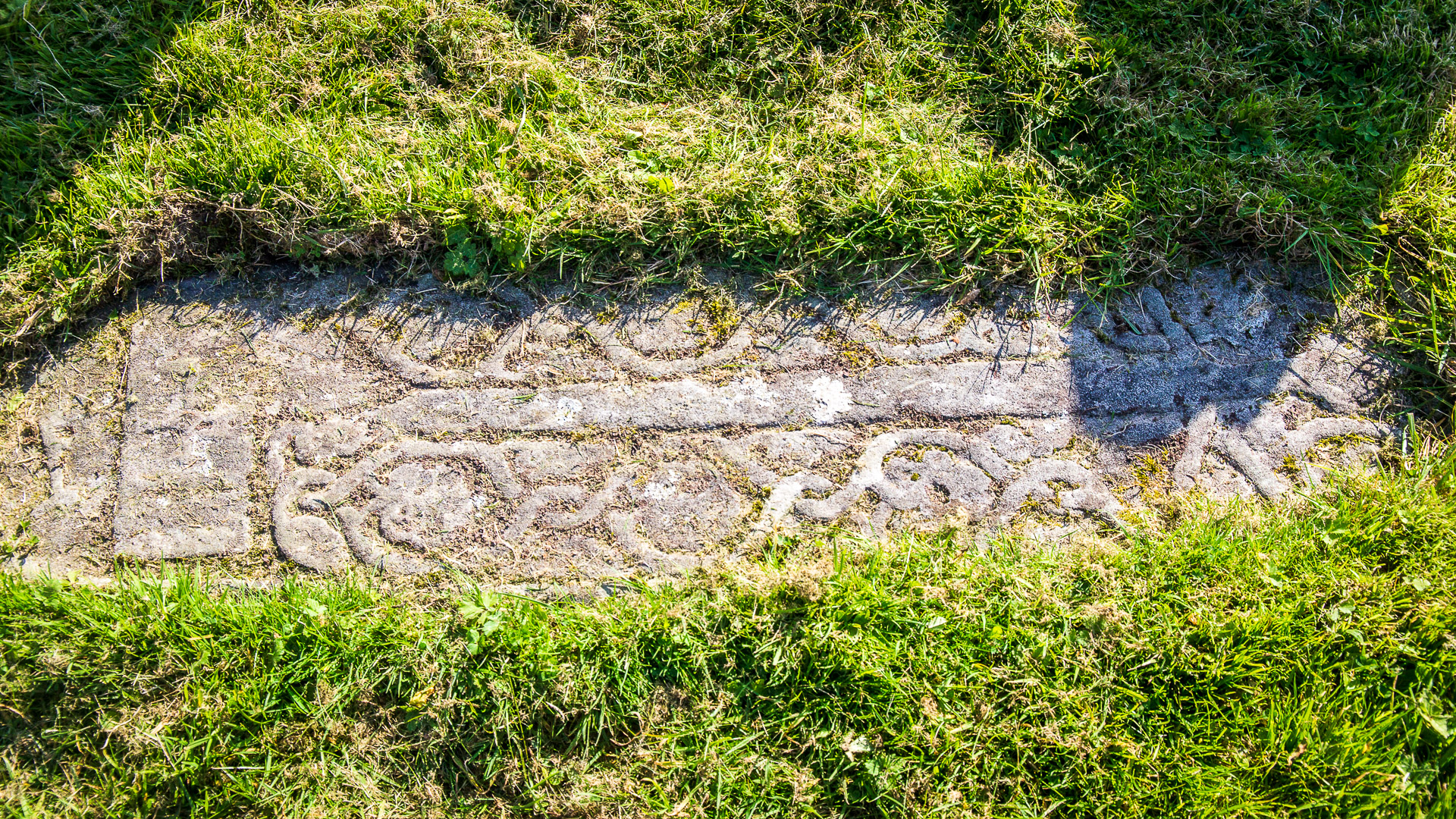
According to legend, even St Ernan, from the 6th century, is said to be buried here. He was, after all, the uncle of St Columba, the man who brought Christianity to Scotland.
Corran Sands
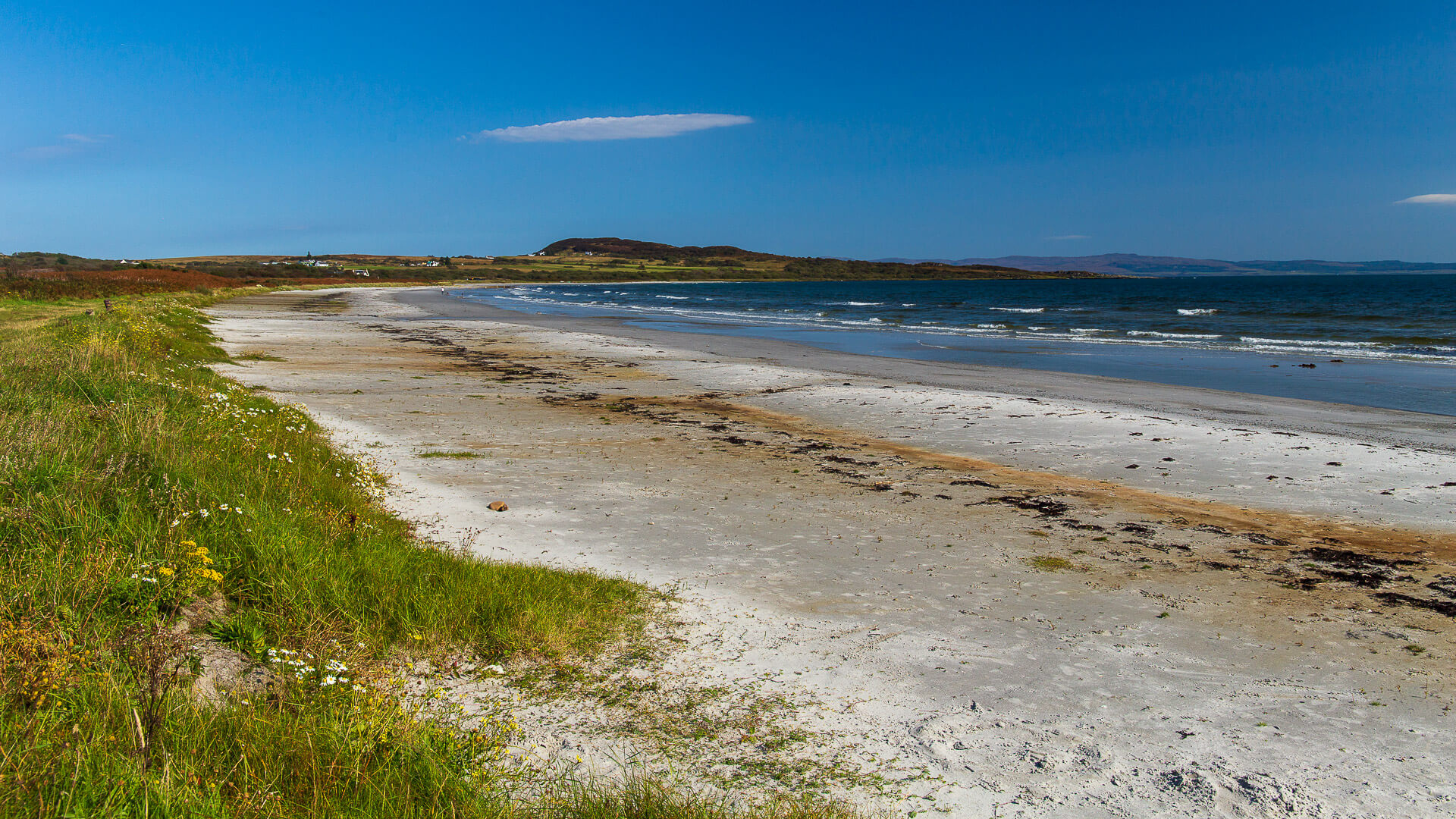
A wonderful long sandy beach a little way north of Craighouse. The bay once also served as a good harbour for shipping cattle. Sadly, it was also from this beach that many of Jura’s residents emigrated during the Highland Clearances.
Lussa Gin
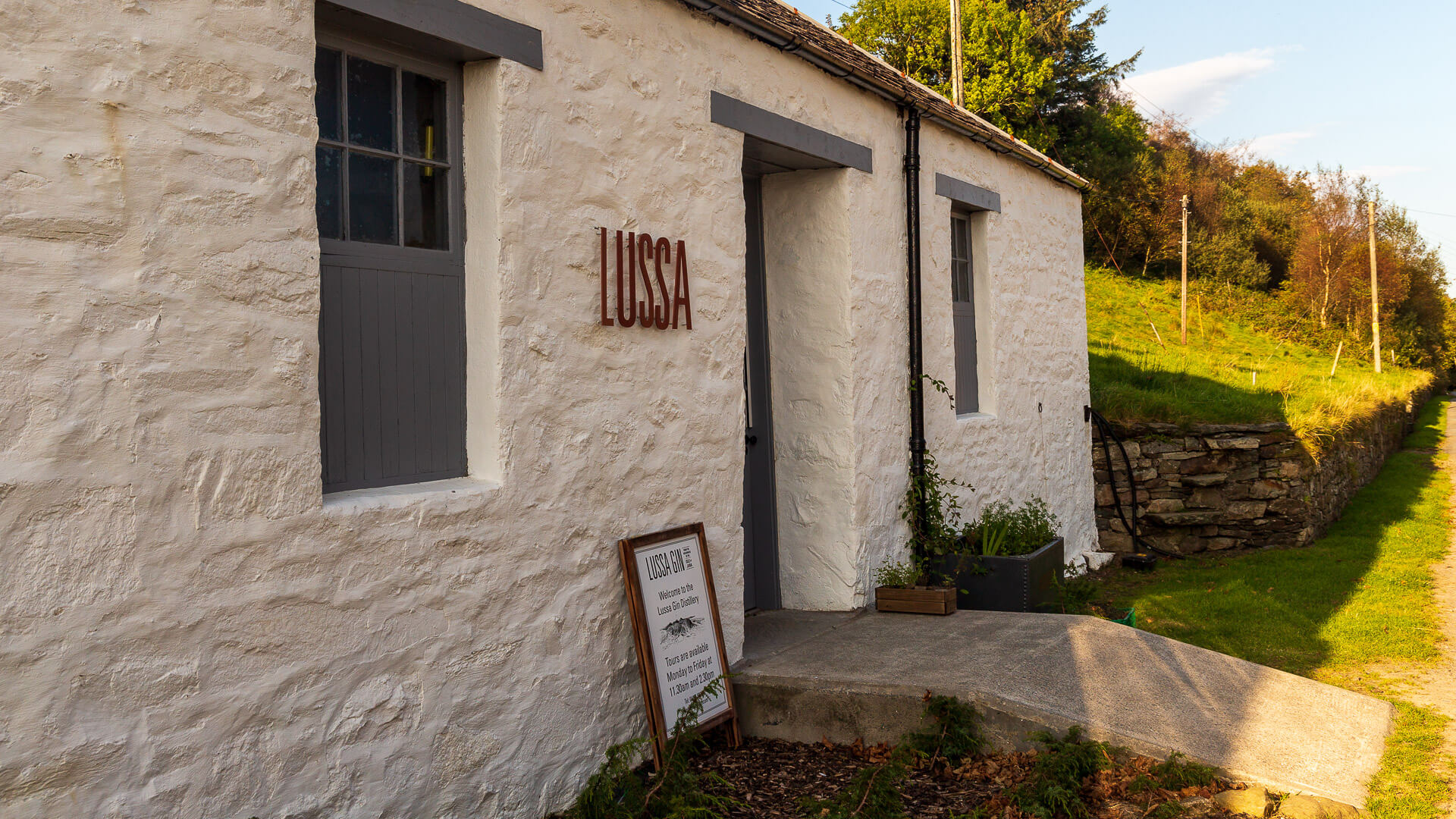
In 2015, three women joined forces to distil gin. The result today is Lussa Gin, a genuine Isle of Jura success story from the village of Ardlussa. Georgina Kitching, Claire Fletcher and Alicia MacInnes know a great deal not only about the island’s herbs and plants, but also about their history.
Tours:
Mon-Fri: 11:30am and 2:30pm (best to check in advance)
Corryvreckan
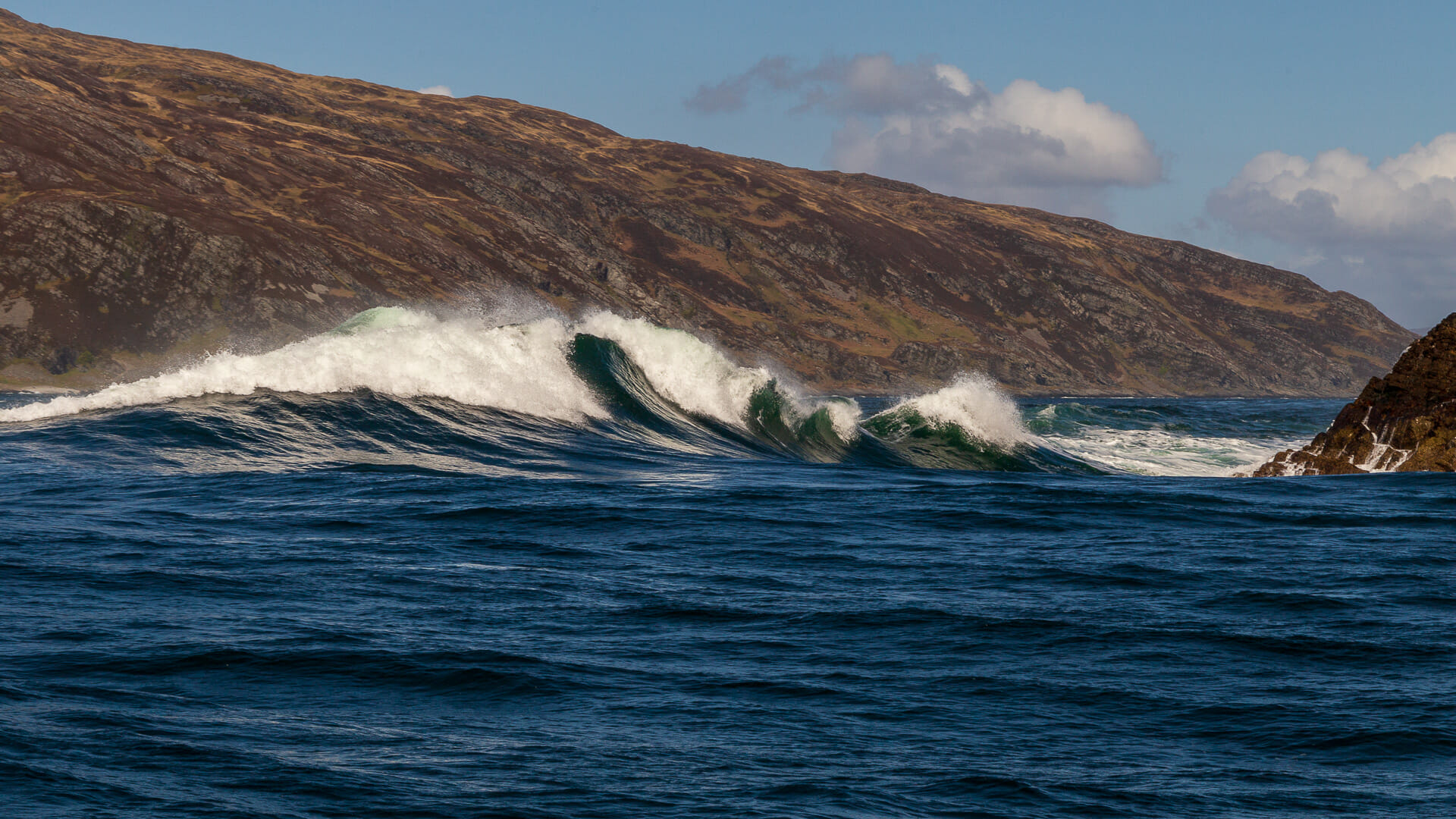
The Corryvreckan lies to the north of the island and is, no less, the third-largest whirlpool in the world. It can be reached on foot via a long hike from Lealt. When it’s really active, thanks to the right tidal conditions, you can even hear it from there. Easier, and arguably even more interesting, is a boat trip into the whirlpool. Jura Boat Tours run trips from Craighouse between March and September.
You don’t always see a clear whirlpool, but aboard the rigid inflatable boat (RIB), the danger of the place becomes quickly apparent. There are also standing waves here, where currents crash against rock. Either way, the Corryvreckan is quite an experience. Prices are around £40 per person.
More information, photos and a trip report on the Corryvreckan here.
Best Time to Visit: Weather and Climate
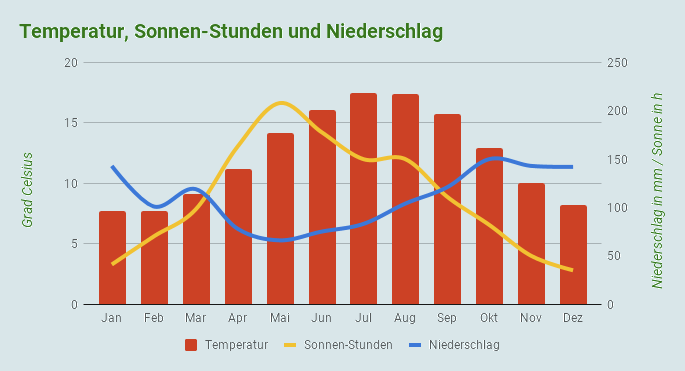
With the Paps, the Isle of Jura has three tall mountains. Naturally, these catch their share of rain clouds too, yet the island doesn’t see significantly more rainfall than its neighbour Islay.
Here too, the same rule applies: May is the standout month. The days are long and rainfall is low. These are, of course, only averages, so you can just as easily get a wet May and a dry December.
Getting There: Ferries to the Isle of Jura
There are two ferries to Jura. If you want to bring your own car to the island, you have to come via the Feolin ferry, which departs from Port Askaig on Islay. So you first need to drive to Islay.
The Feolin ferry takes just 5 minutes to cross the Sound of Islay, the strait between Islay and Jura, though it must constantly battle the strong sideways current.
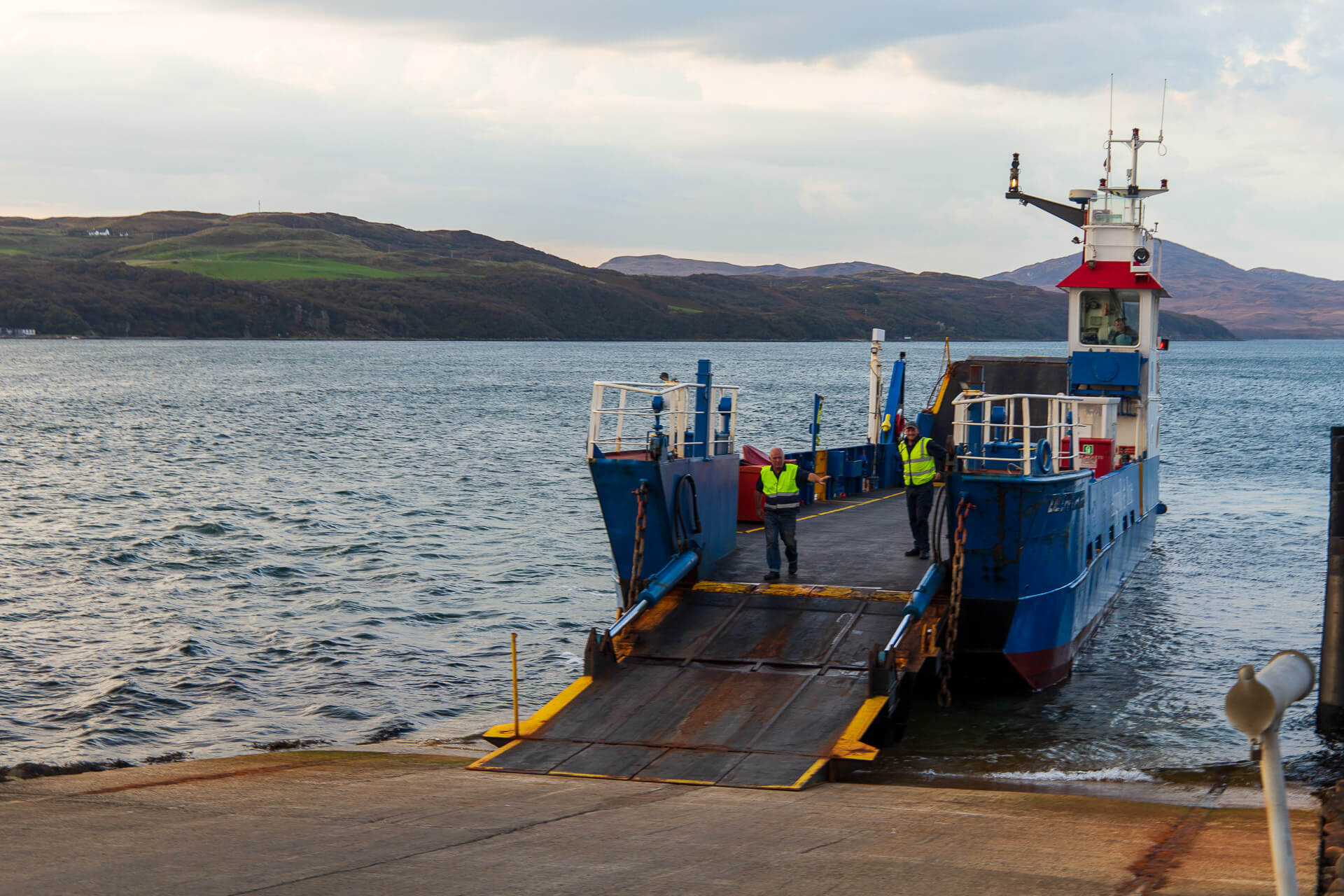
A return crossing costs around £16 by car and around £4 on foot. The ferry runs between 6:30am and 6:30pm, fairly irregularly, but roughly every half hour. The exact timetable is on this website.
If you want to travel directly from the mainland to Craighouse on foot, take the passenger ferry from Tayvallich. It runs four times a day and takes 50 minutes. A one-way trip costs around £20. More information on the website.
There is no airport on Jura.
History of Jura: Of Vikings and Campbells
The Isle of Jura was once a paradise – a paradise for hunter-gatherers, who arrived here around 8,500 BC and lived off game and seafood. Evidence of this includes arrowheads found near Lussa. Back then, Jura was covered in forest.
That began to change in the Neolithic period, as people started farming. By 1,000 BC, much of the forest had been cleared, and peat began giving the island its present-day appearance. Some of the standing stones also date from this period and the Bronze Age (the one in Craighouse is a modern addition).
During the early kingdom of Dalriada, Jura was rarely mentioned in writing. But the island lay right at the heart of the kingdom, and there is clear evidence of the early missionaries who brought Christianity to Scotland.
The Vikings left their mark on the island through its very names: Jura and Paps both come from Old Norse. Jura later became part of the Kingdom of the Isles, and later still of the Lords of the Isles, who ruled from the neighbouring island of Islay.
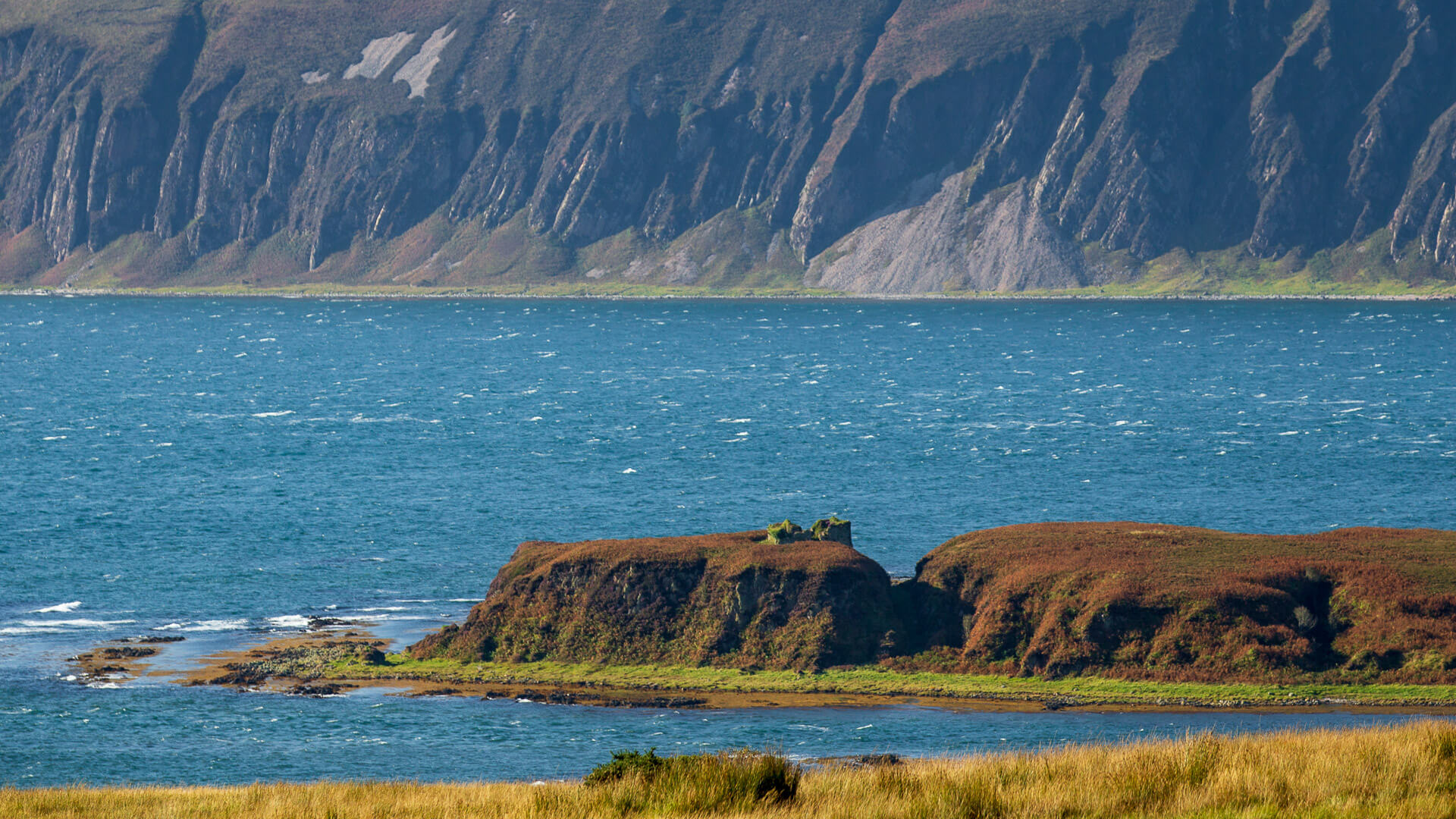
In the south of the Isle of Jura, visitors can still see traces of their rule. On Fraoch Eilean, the “heather island”, the remains of Claig Castle can still be made out – visible from the road, if you know where to look.
After the MacDonalds were forced to give up their land piece by piece following the collapse of the Lords of the Isles, the Campbells took over power on Jura too.
In the 19th century, Jura was not yet a remote island: around 2,300 people still lived here in 1831. But over the following decades, many emigrated, partly driven by hunger when the potato blight struck around 1845. Resettlements and new opportunities, both on the mainland and overseas, added to the exodus.
But even the Campbells eventually had to give way. In 1938, they sold the last of their land on the island.
One later resident is worth mentioning: the writer Eric Blair, better known as George Orwell, wrote his dystopian novel “1984” at Barnhill House in the north of Jura between 1946 and 1948. He nearly lost his life, incidentally, on a boat trip in the Corryvreckan.
