A unique, rather cultivated landscape and the flair of a distinguished history – that’s what the county of Argyll and Bute has to offer.
Argyll & Bute Info:
» Overview
» Best time to visit
» Islay
» Isle of Arran
» Isle of Bute
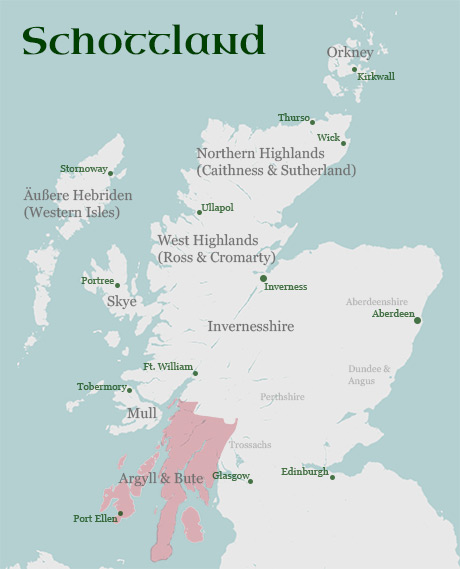
Its proximity to Scotland’s major centres – Glasgow and Edinburgh – makes Argyll and Bute a somewhat less wild, but extremely beautiful, stretch of the Highlands. For Glasgow’s wealthier citizens, for instance, Kintyre was a popular place to spend the summer.
Extent and History
To the north runs the famously infamous Glen Coe – famous for its unique scenery and mountains, and a fantastic destination for walkers and climbers. Glencoe is infamous for the massacre of Clan MacDonald that took place here: on the orders of King William of Orange, soldiers slaughtered 38 men in the valley and left a further 40 women and children to freeze to death in the snow.
To the west lie some of the islands of the Inner Hebrides: Islay, for example, famous for its whiskies – Ardbeg, Bowmore, Bruichladdich, Bunnahabhain, Caol Ila, Lagavulin, Laphroaig, or Kilchoman.
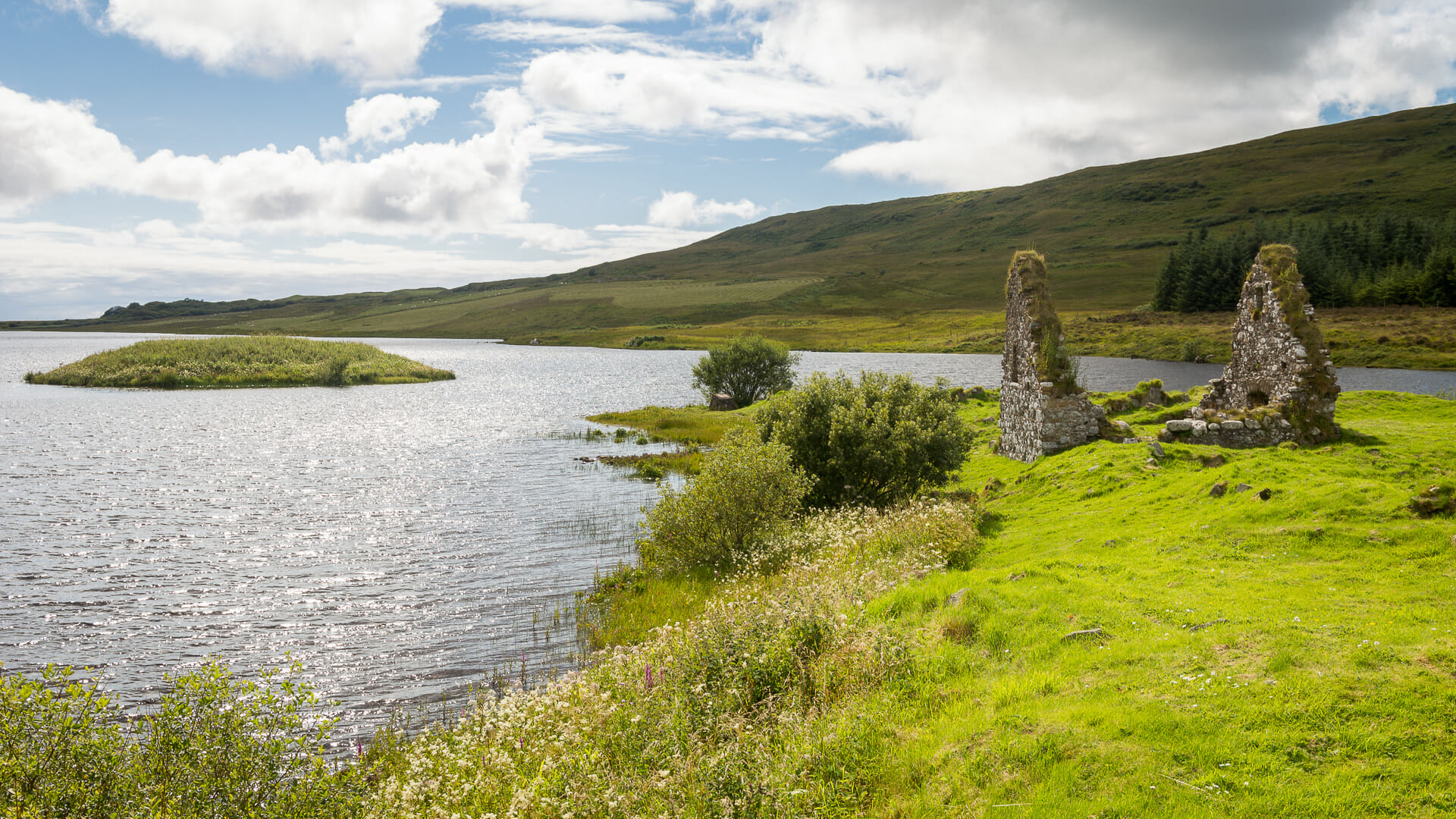
But Islay isn’t only remarkable for its spirits. The island was once the seat of power of the Lords of the Isles, who made life difficult for the Scottish king right up until the 15th century. Even today, you can marvel at the Lords’ settlement at Finlaggan.
The Isle of Mull technically belongs to Argyll and Bute too, but we’ve given Mull its own dedicated region page.
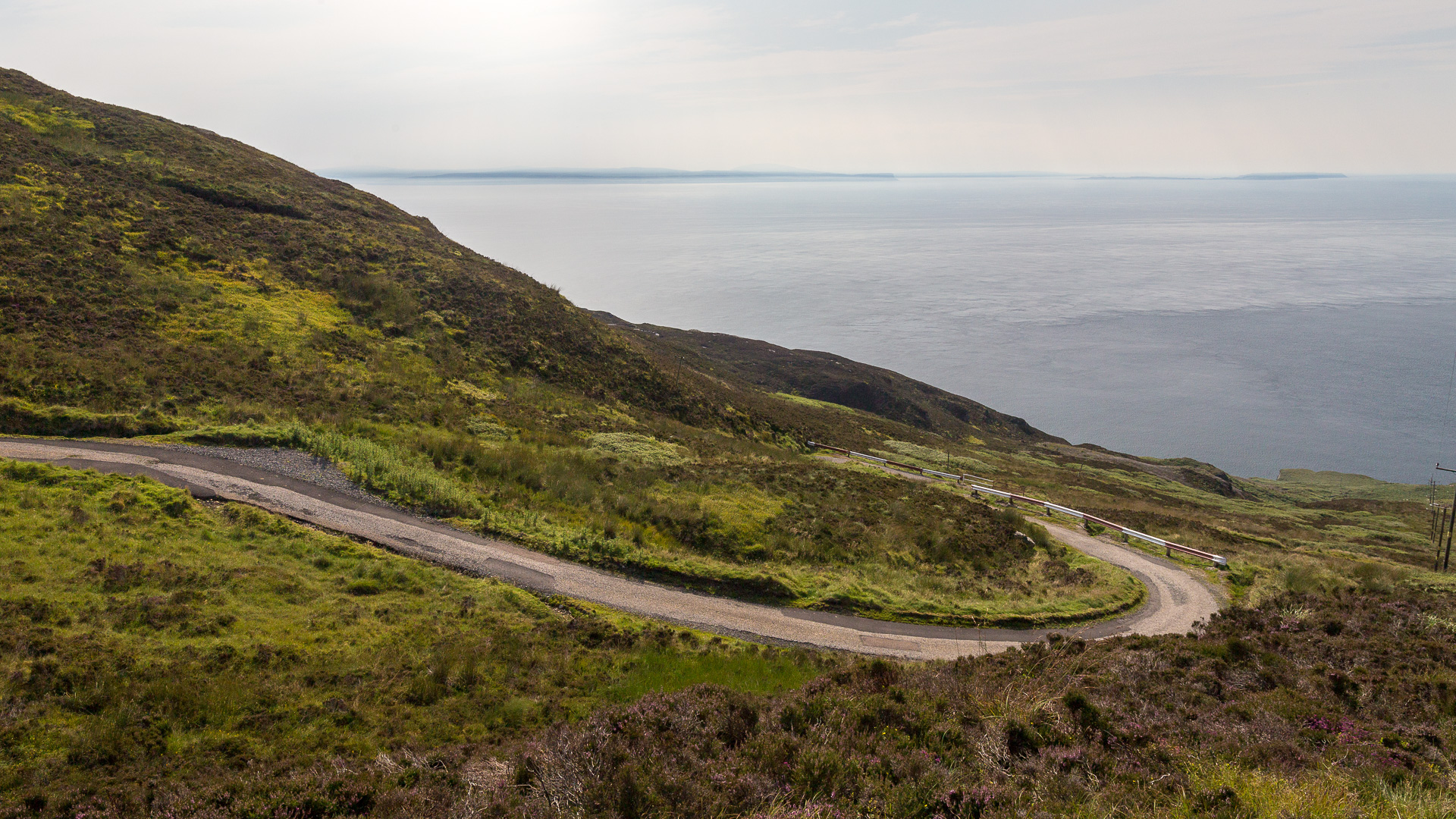
To the south, Argyll and Bute tapers off into a long tail, the Kintyre peninsula, which inspired Paul McCartney’s song “Mull of Kintyre”. From the southern tip of Kintyre, it’s just 20 kilometres across the sea to Ireland.
In the south-east, you’ll also find the county of Bute, which includes the peninsula of the same name, and the Isle of Arran, lying directly below it.
Arran is a small, fine island, shaped by a few high mountains and beautiful sandy beaches. And Arran is interesting for a second reason too: the Highland Boundary Fault runs from here to the north-east. As a result, this small island has a wealth of rock layers and fossils that are of great interest to geologists, for whom Arran is essentially a miniature version of the whole of Scotland.
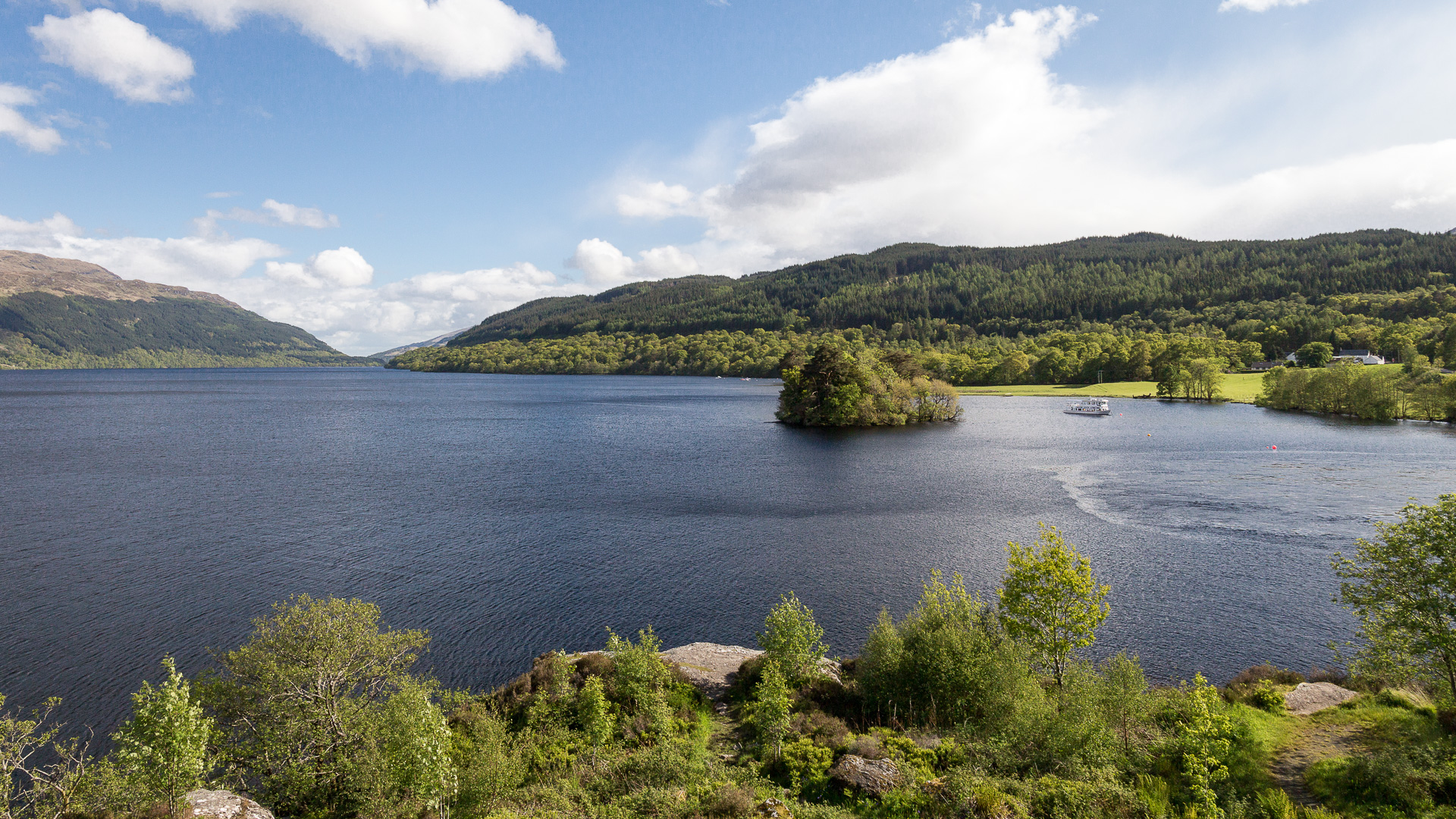
To the east, Argyll and Bute borders the wonderful natural area around Loch Lomond and the sea inlet of the Firth of Clyde. The county stretches almost as far as Glasgow.
Places and People
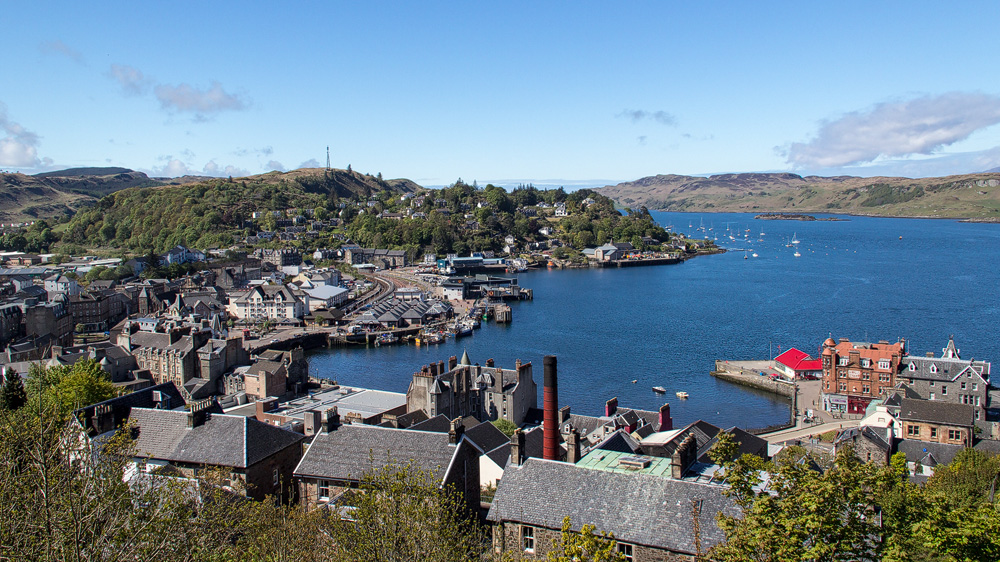
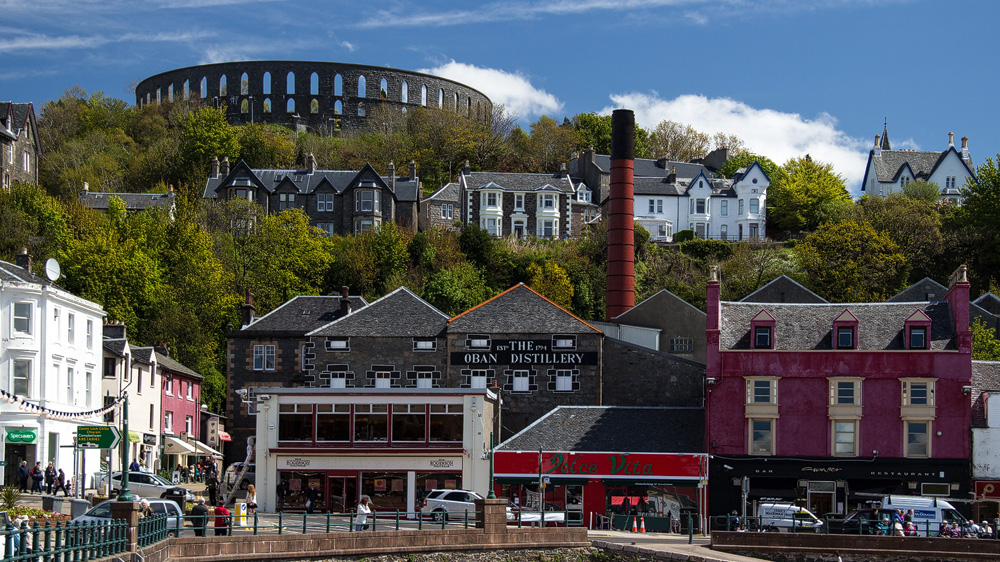
Lochgilphead is today officially the county town of Argyll and Bute, with around 3,000 people living there. But the largest settlement in Argyll and Bute is Oban. The town, with its ferry port to the Outer Hebrides and Mull, has more than 8,000 residents. Even on Kintyre, Campbeltown is home to some 5,000 people, making it bigger than Lochgilphead. On Islay, the largest settlement is the port of Port Ellen.
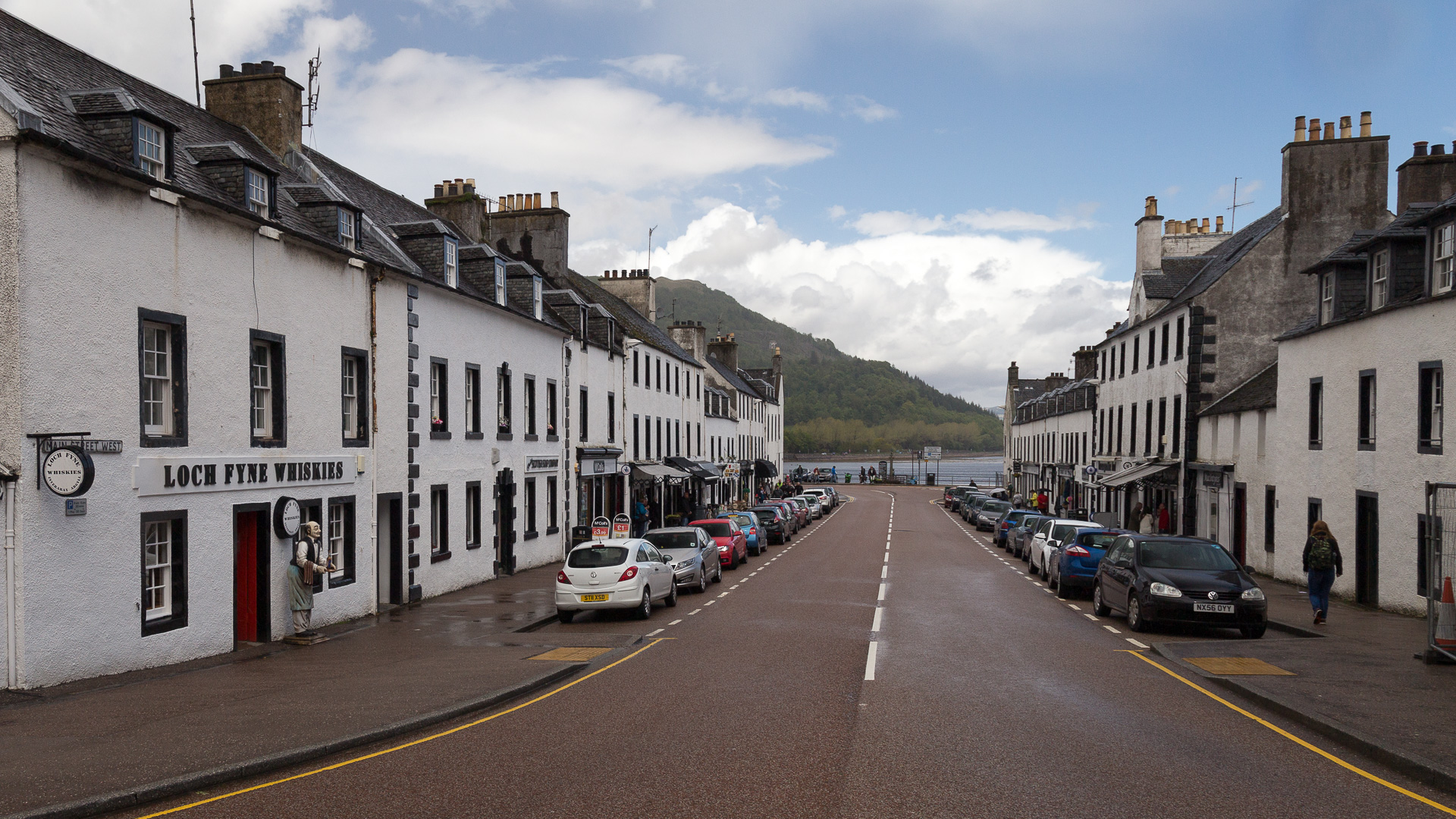
Inveraray, once the administrative and judicial seat of the county of Argyll and home to the Duke of Argyll, is certainly one of the most beautiful places here – not just for the famous bridge leading into the town, but also for its castle and Inveraray Jail, which brings the justice system of the past vividly to life today.
The Gaelic language plays hardly any role in Argyll and Bute. A census in 2001 found only two to six percent of people speaking the language. Islay is the exception – here, almost a third of residents still speak the Celtic tongue.
