City, country, river – the Scottish city of Perth ties these three ideas together like no other. Why that is, and what there is to experience there, is covered here.
Perth Info
» Attractions
» Food, Drink & Shopping
» History
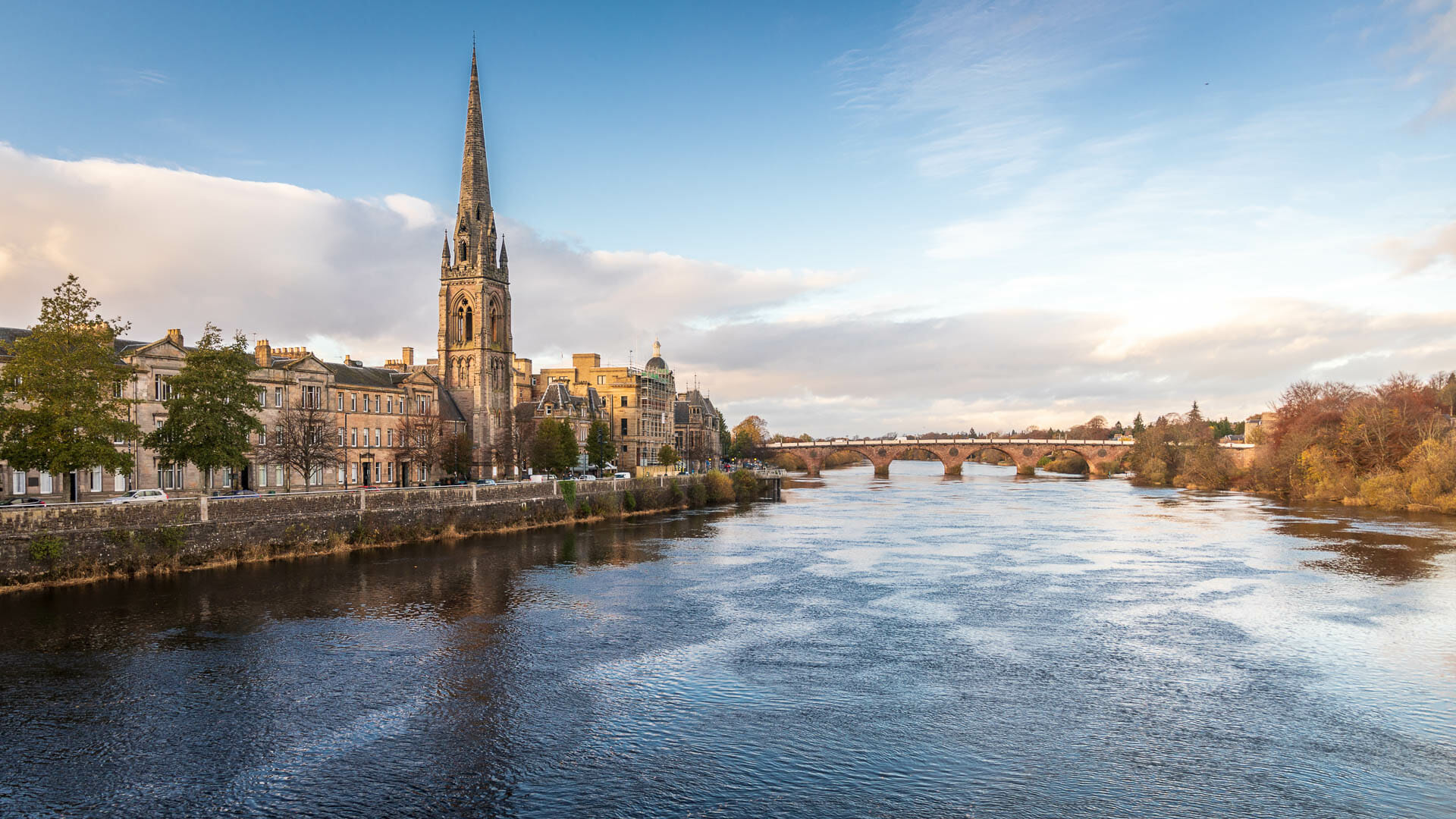
Perth and the Tay simply belong together. Scotland’s longest river shaped, and still shapes, the fate of this once so important city. Where the Tay divides the land, Perth connects its banks. At the same time, the Tay gives the city access to the sea. City, country, river – in Perth, they all come together.
It’s no coincidence that Perth was also so important to Scotland’s kings – strategically, because of its location, but also historically, since coronations on the Stone of Scone took place at nearby Scone Palace. The stone was meant to symbolise the king’s bond with the land.
And today? Perth is an important transport hub, and its three bridges still connect the land divided by the Tay. Yet somehow, few visitors seem inclined to stop here.
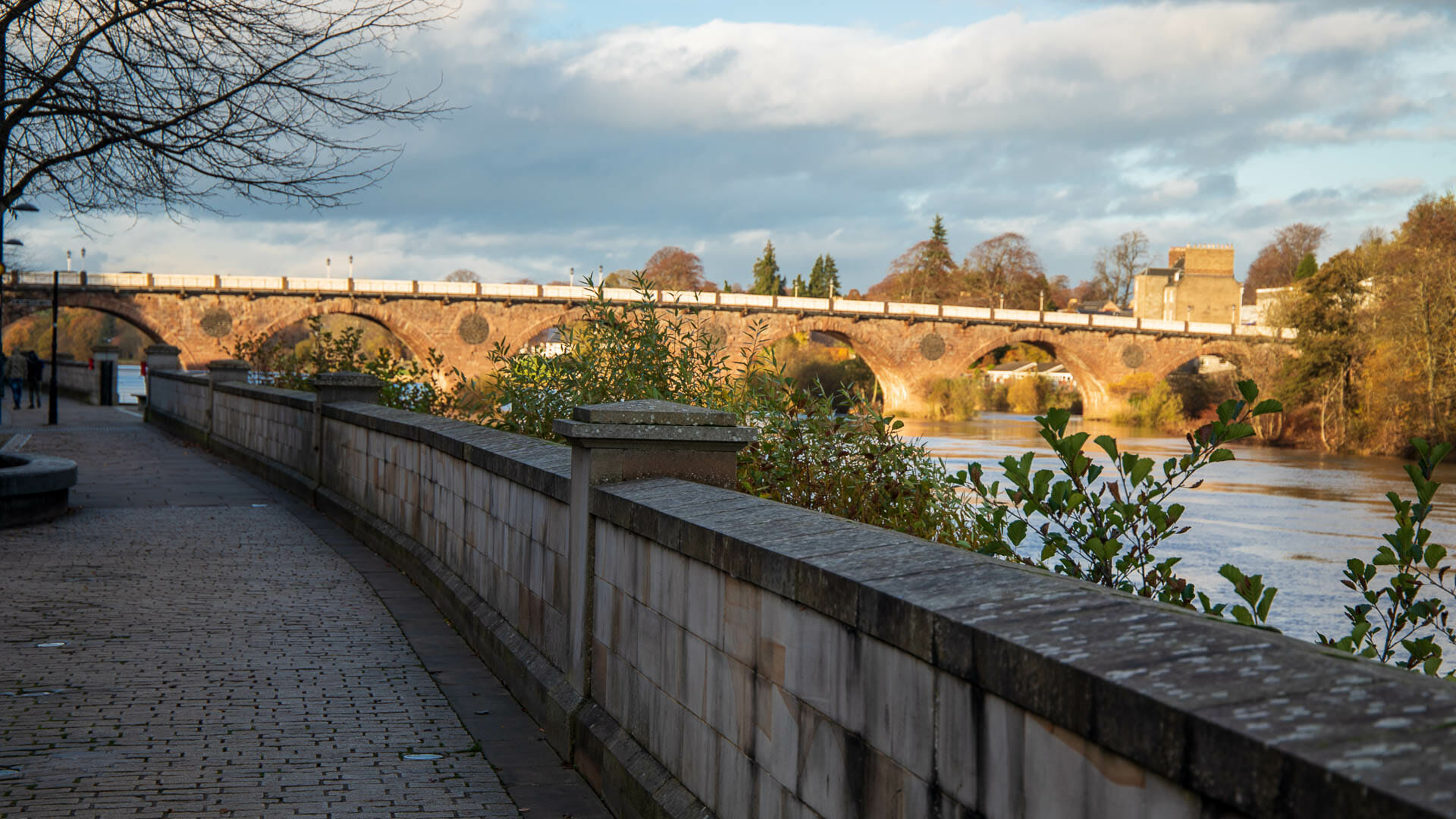
And yet Perth does seem capable of charming visitors. The city even carries the nickname “the fair city”, since Scotland’s national poet Sir Walter Scott set his novel “The Fair Maid of Perth” here.
Still, Perth is no picture-postcard backdrop. The city has its rough edges, and it wears its history openly. Perth is particularly worthwhile for frequent visitors to Scotland who want to discover something new.
Attractions in Perth
You are currently viewing a placeholder content from Default. To access the actual content, click the button below. Please note that doing so will share data with third-party providers.
More InformationOverview of Perth’s Attractions
- Perth Bridge
- Perth Museum
- The North Inch
- Balhousie Castle & Blackwatch Museum
- Perth Art Gallery
- Perth Concert Hall
- The Fair Maid’s House
- St. John’s Kirk
- Tay Street Waterfront
- Salutation Hotel
- St Leonard’s-in-the-Fields Church
- South Inch
Perth Bridge
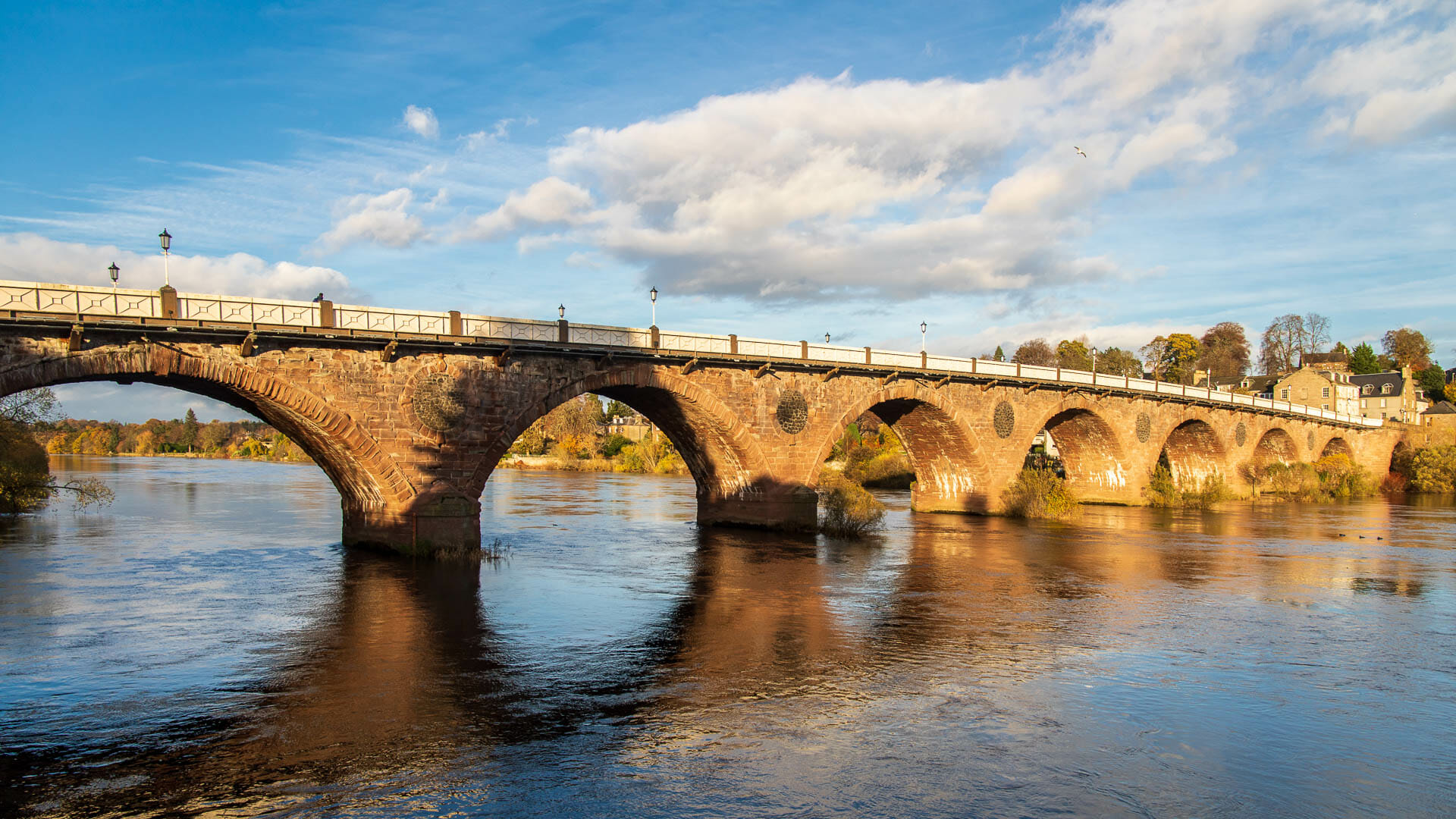
Yes, this bridge is a genuine attraction. It symbolises exactly what made Perth so strategically important: providing a crossing over the Tay. There has been a bridge here since at least the 11th century. Floods and other disasters destroyed earlier structures, but a replacement was always built.
The current Perth Bridge, with its nine arches, was completed in 1771. It’s therefore already more than 250 years old, yet daily commuter traffic still rushes across it. It stretches for a length of 268 metres.
In the golden evening sun, the red sandstone glows a rich orange. A look from the bridge shows Perth’s promenade on one side and a view towards the Highlands on the other.
Perth Museum

Perth Museum reopened in 2024. It displays exhibits spanning thousands of years of history around Perth. The undoubted highlight is the Stone of Destiny, the Scottish stone that played an important role in the coronation of kings. For a time it also lay at nearby Scone Palace. Other fantastic pieces include a huge dugout canoe, Bronze Age weapons, elaborately carved Pictish stones, Japanese and New Zealand weapons and clothing, and much, much more.
The interior of the museum is beautifully laid out, and at its centre stands the impressive shrine housing the Stone of Destiny. You need to collect a ticket for this, which assigns you a time slot with a group.
More about Perth Museum here.
Opening hours:
Mon, Tue, Wed, Fri, Sat, Sun: 10:00am-5:00pm, Thu: 10:00am-7:00pm
Admission: free
Info: Perth Museum
The North Inch
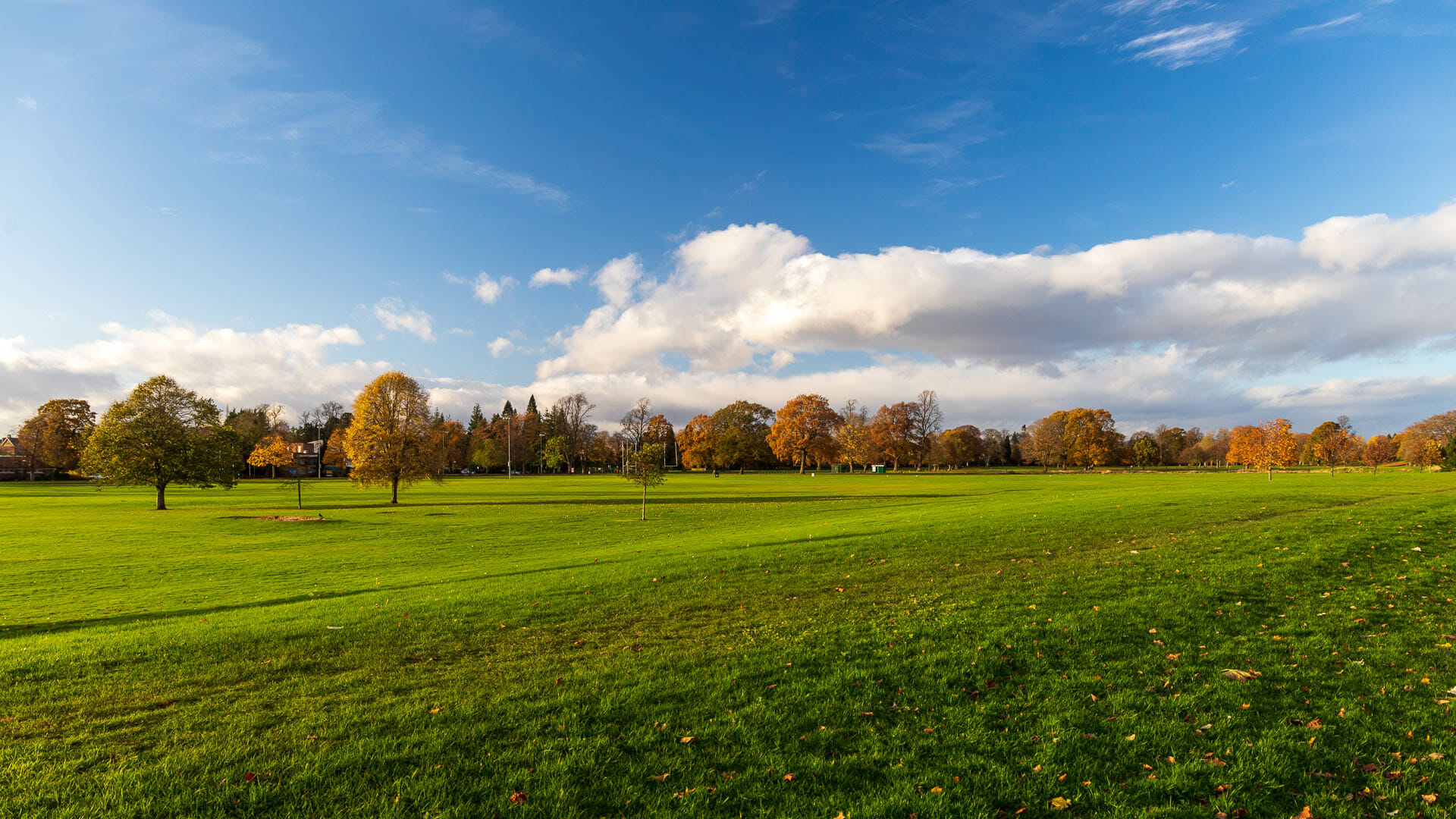
In the north of Perth, the North Inch runs along the west bank of the Tay. It’s a park about a kilometre long, offering local residents plenty of opportunities for sport. There are rugby pitches and a golf course here. Today, activities on the North Inch are fairly peaceful, but in 1396 things turned bloody here during the Battle of the Clans: 30 men of Clan Chattan were to duel an equal number of opponents from Clan Kay, to finally settle a long-running feud. However, one of Kay’s men fled by jumping into the Tay and swimming away. Since the rules required 30 against 30, an uninvolved bystander took his place for payment. In the end, eleven of Chattan’s men and one of Kay’s were still standing. The feud was over.
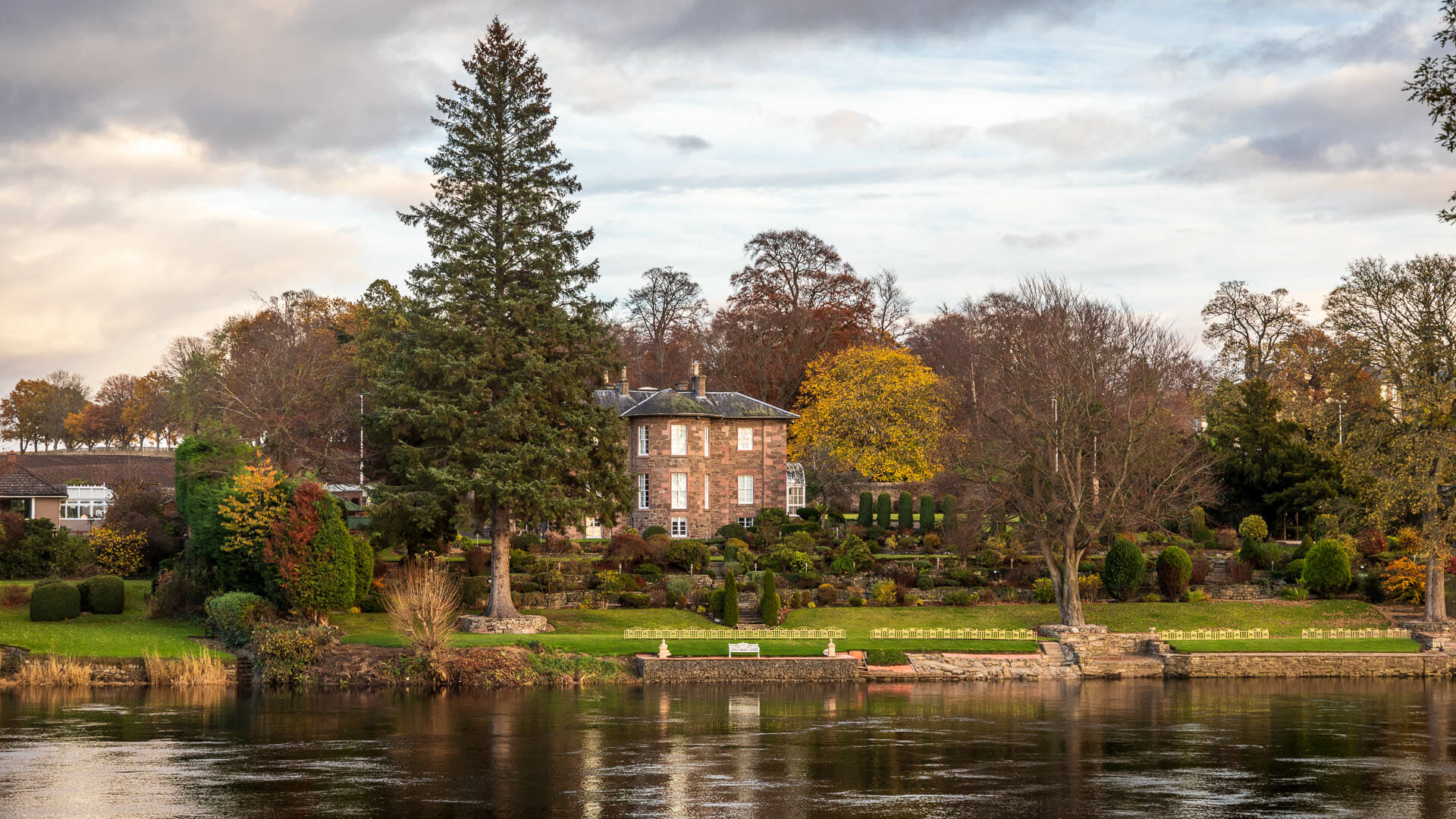
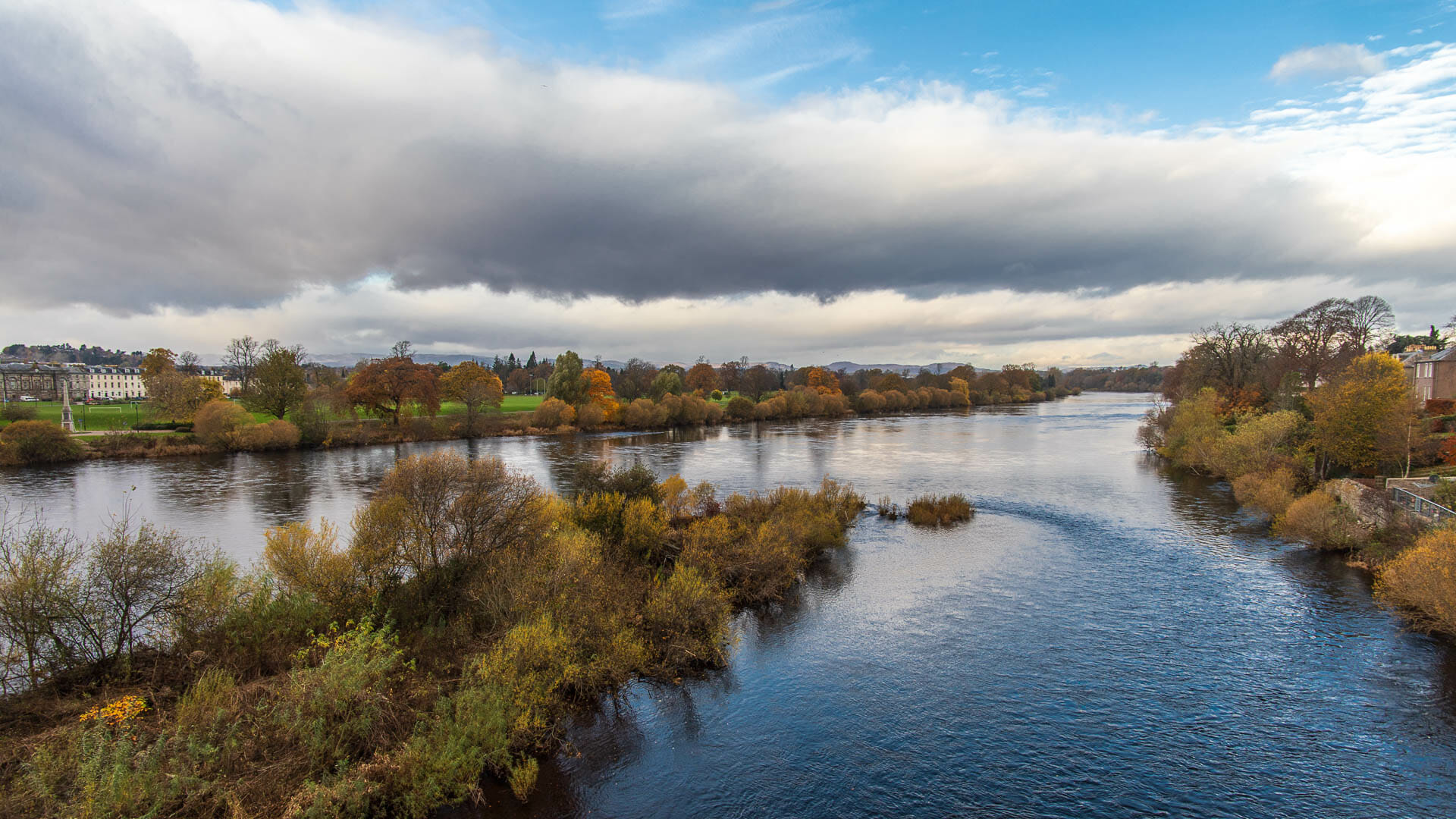
A path runs around the Inch, passing smaller sculptures, going by Balhousie Castle, and finally returning along the bank of the Tay to Perth Bridge. Walkers get a lovely view of the houses on the opposite bank along the way.
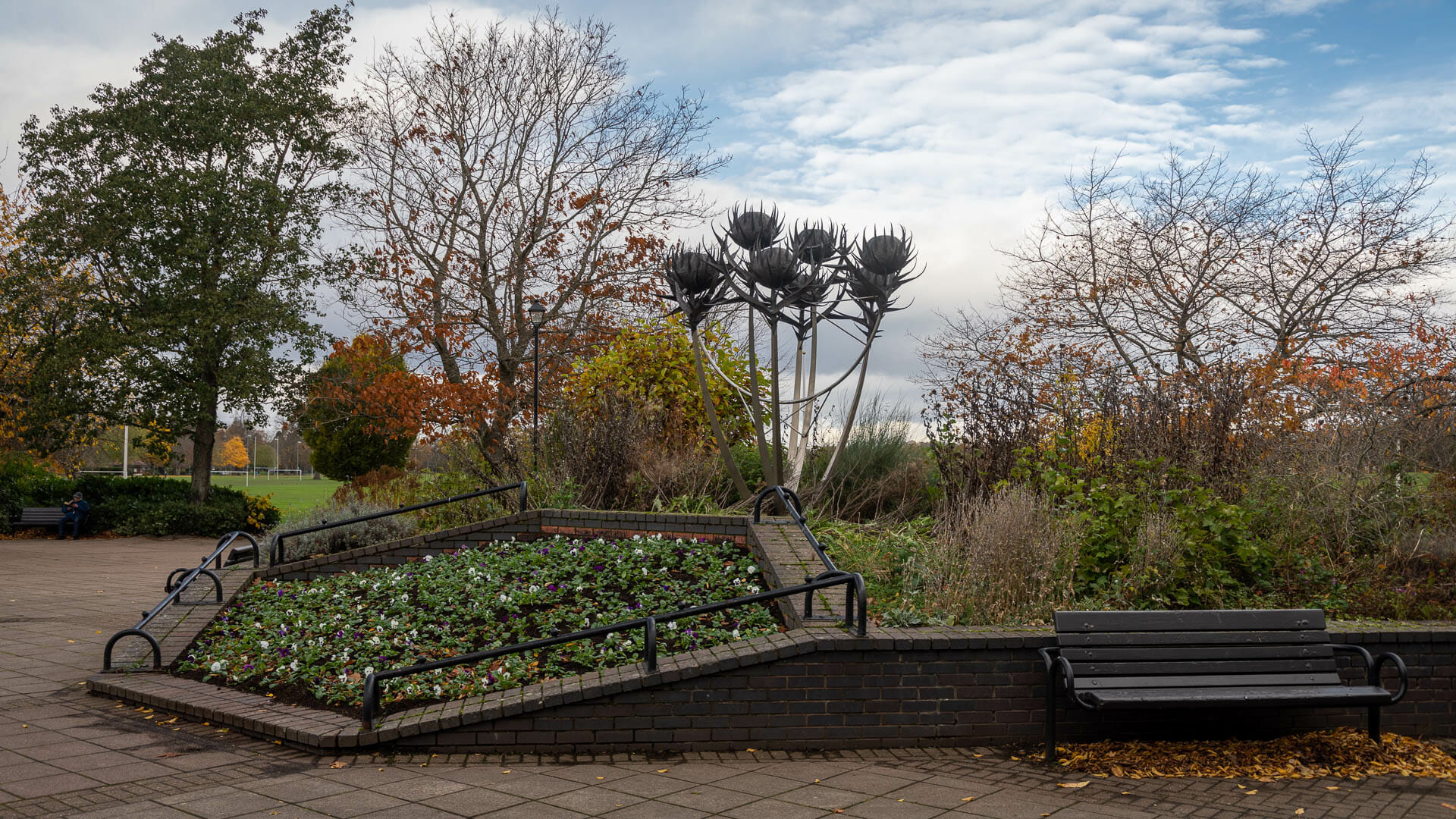
The circular route is three kilometres long and can be walked in 30 to 40 minutes. Along the way, you’ll also come across a few smaller artworks.
There’s also a statue of Queen Victoria’s husband, Prince Albert, on the road at the southern end of the North Inch.
Info: North Inch
Balhousie Castle & Blackwatch Museum
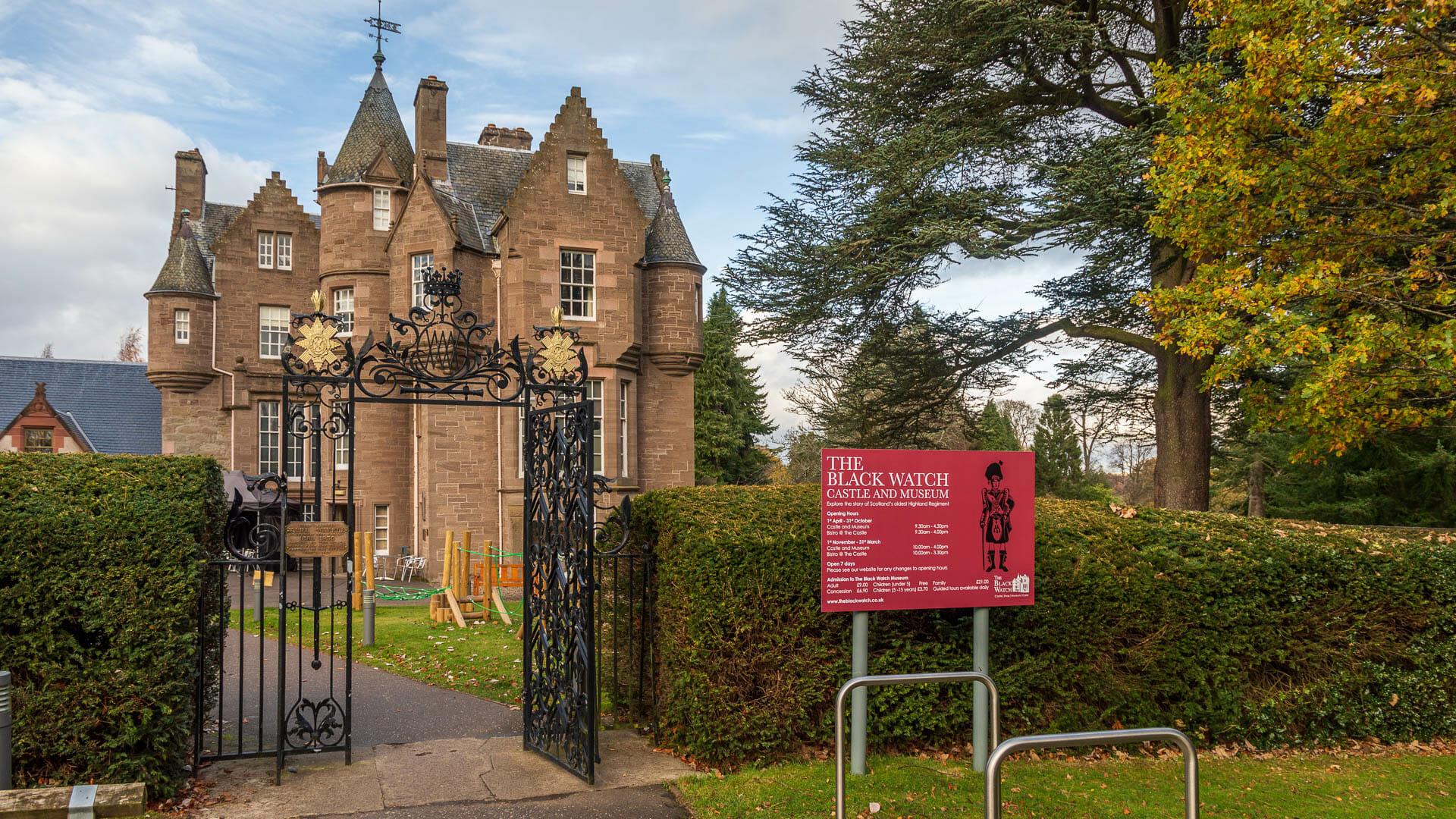
Things get more martial at Balhousie Castle. The building in its current form dates from the 19th century and stands in the north of Perth, by the large park, though its origins go back as far as the 12th century. For around 60 years, Balhousie Castle has been home to the Black Watch Museum. This Scottish regiment was founded back in 1725. Since then, it has fought in Egypt, South Africa, and in both World Wars. The history of the Black Watch is told in the museum through photographs, paintings and artefacts.
The building also houses a bistro and a museum shop.
Opening hours:
Apr-Oct, daily: 9:30am-4:30pm
Admission:
Adults: £12, Children: £5, Concessions: £9, Family: £28.25
Nov-Mar, daily: 10:00am-4:00pm
Info: Balhousie Castle & Blackwatch Museum
Perth Art Gallery
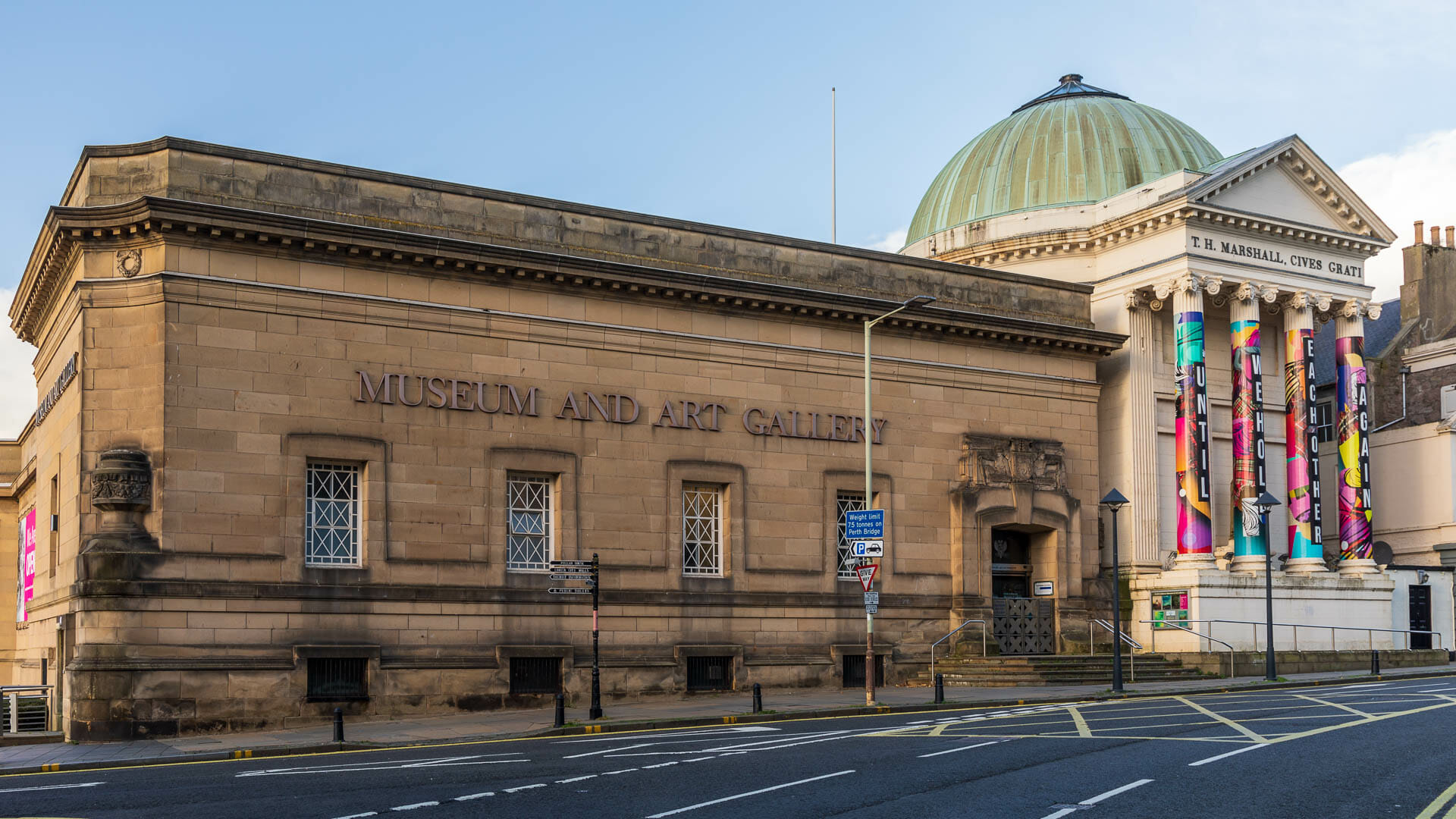
It’s actually one of the oldest museums in the United Kingdom: the first part of the building opened as early as 1834. Inside are exhibitions covering the history and nature of Perthshire. For example, there’s a large grave slab bearing a Pictish cross. The museum in Perth also showcases the work of well-known local craftspeople, such as beautiful furniture by Tim Stead or various glass objects. Other curiosities include a mummy and a meteorite. Paintings are, of course, also on display here.
Opening hours:
Mon, Tue, Fri, Sat: 10:00am-5:00pm
Thu: 10:00am-7:00pm
Sun: 10:00am-4:00pm
Wed: closed
Admission: free
Info: Perth Art Gallery
Perth Concert Hall
Right next to the museum stands Perth Concert Hall. The round building is a fine example of modern architecture in this old Scottish city. Worth a quick look if you’re already there.
Info: Perth Concert Hall
The Fair Maid’s House

This unassuming building dates from the 17th century, making it the oldest secular house in Perth. It’s also said to have inspired Scotland’s national poet Sir Walter Scott to write “The Fair Maid of Perth”, part of his famous Waverley novels – which is why it carries that name today.
The Fair Maid’s House today belongs to the Royal Scottish Geographical Society, which runs an exhibition there. Only volunteers staff the visitor centre, so it isn’t open very often.
Opening hours:
May-Oct
Thu-Sat: 1:00pm-4:30pm
Mon, Tue, Wed, Sun: closed
Admission: free
Info: Fair Maid’s House
St. John’s Kirk
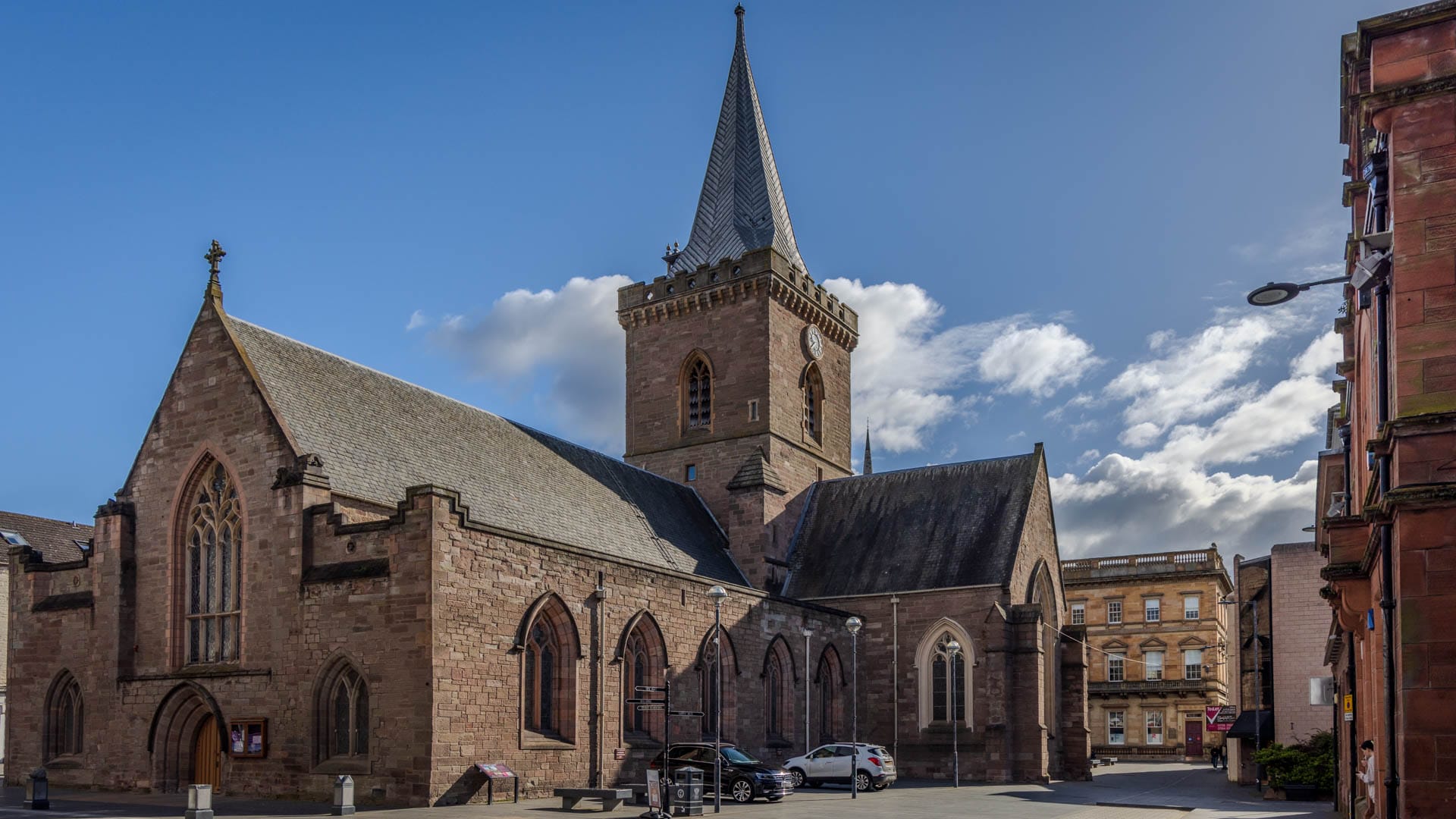
St. John’s Kirk stands in the centre of Perth. Its long history goes back at least to the 12th century, making it the oldest building in the city – some historians believe a church already stood here around 800 AD. It is, however, definitively recorded in 1126, in connection with a grant by David I.
Info: St. John’s Kirk
Tay Street Waterfront
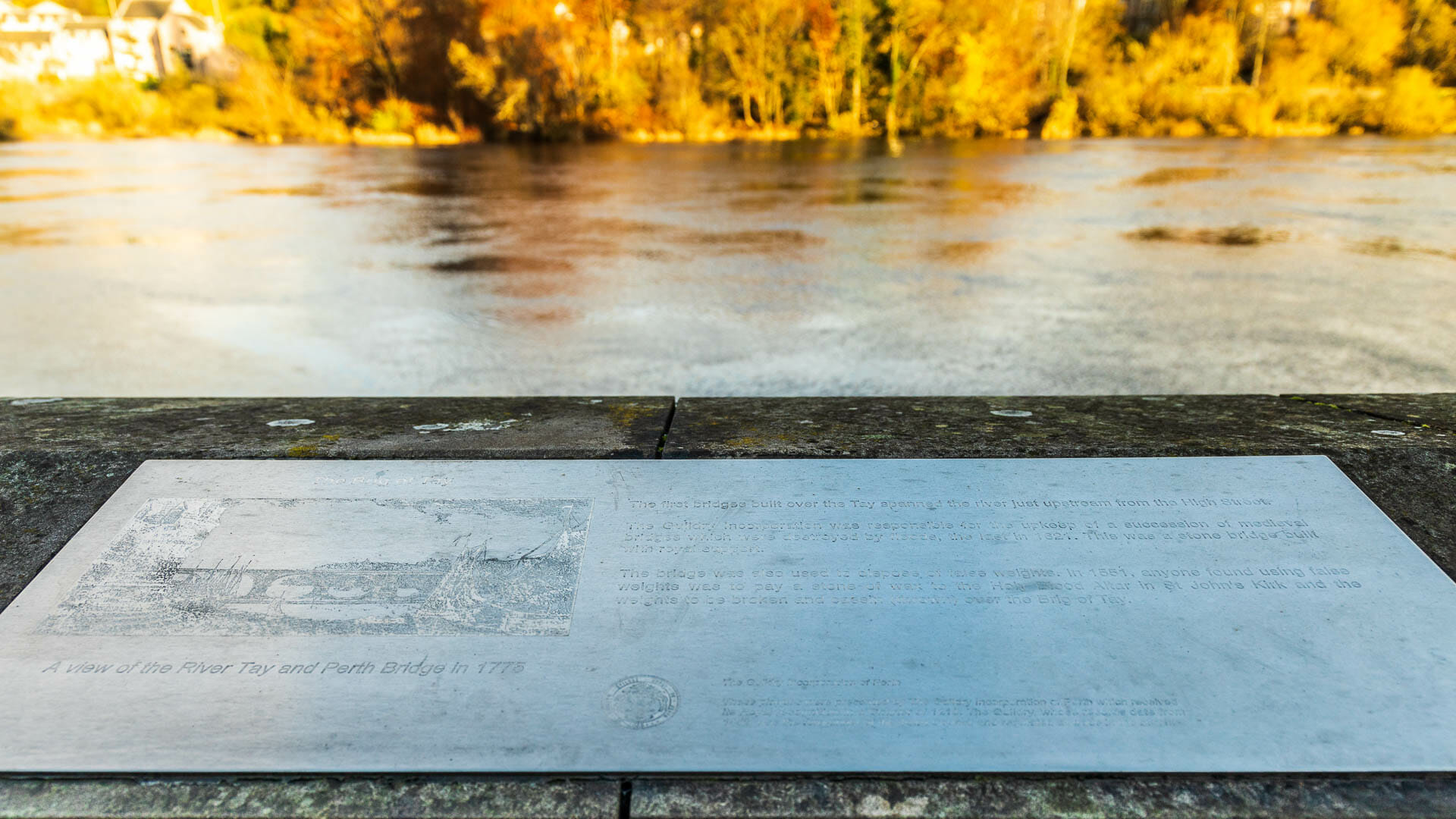
A stone parapet runs along the River Tay. Here, the city has gone to great lengths to create an experience through information boards on medieval history and small decorative touches. At one point there’s a viewing bay projecting out over the river, from which the bridges can also be seen.
On the street side, there are also some interesting buildings to see, such as the Middle Church Building, Perth & Kinross Council, or Perth Sheriff Court.
Salutation Hotel
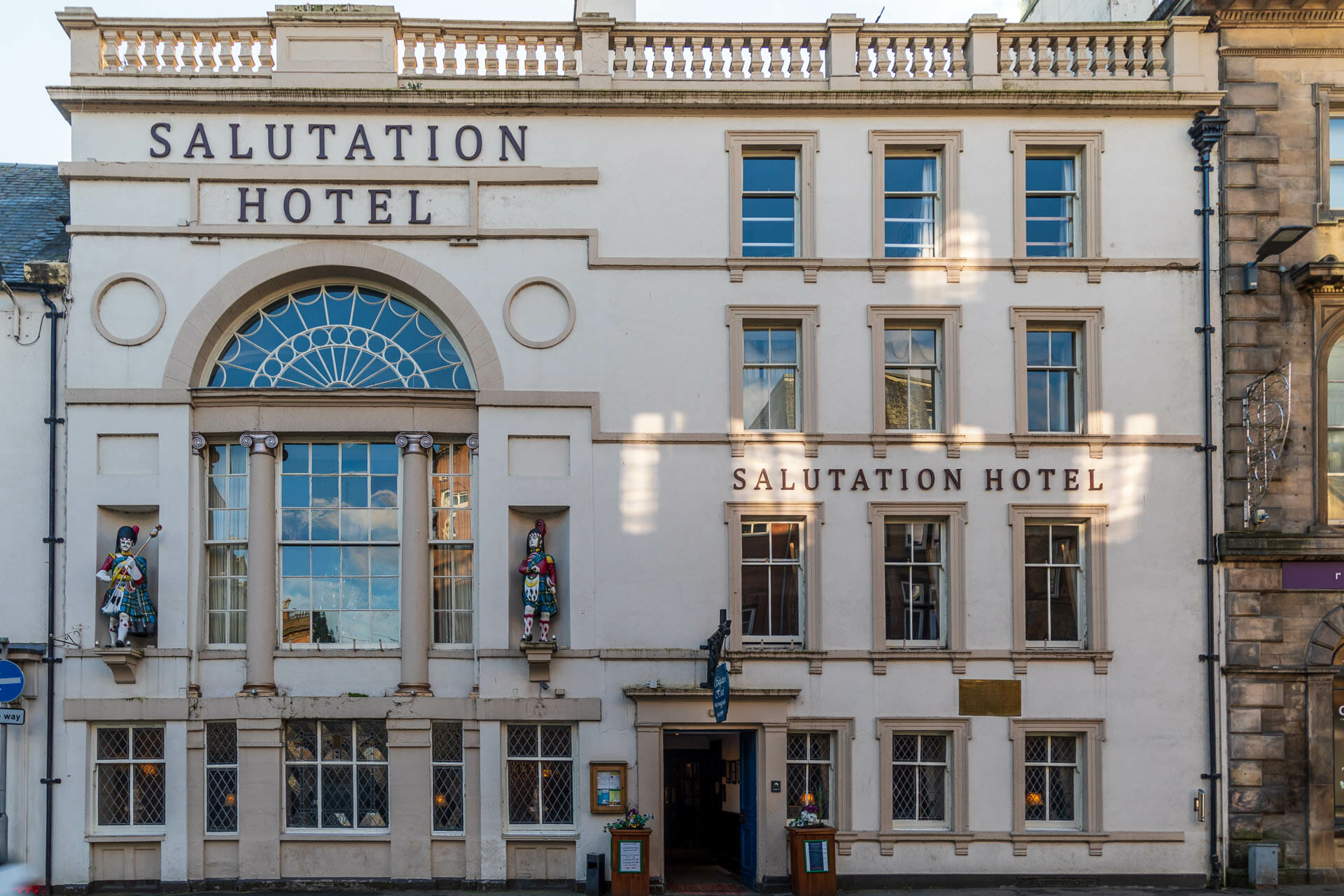
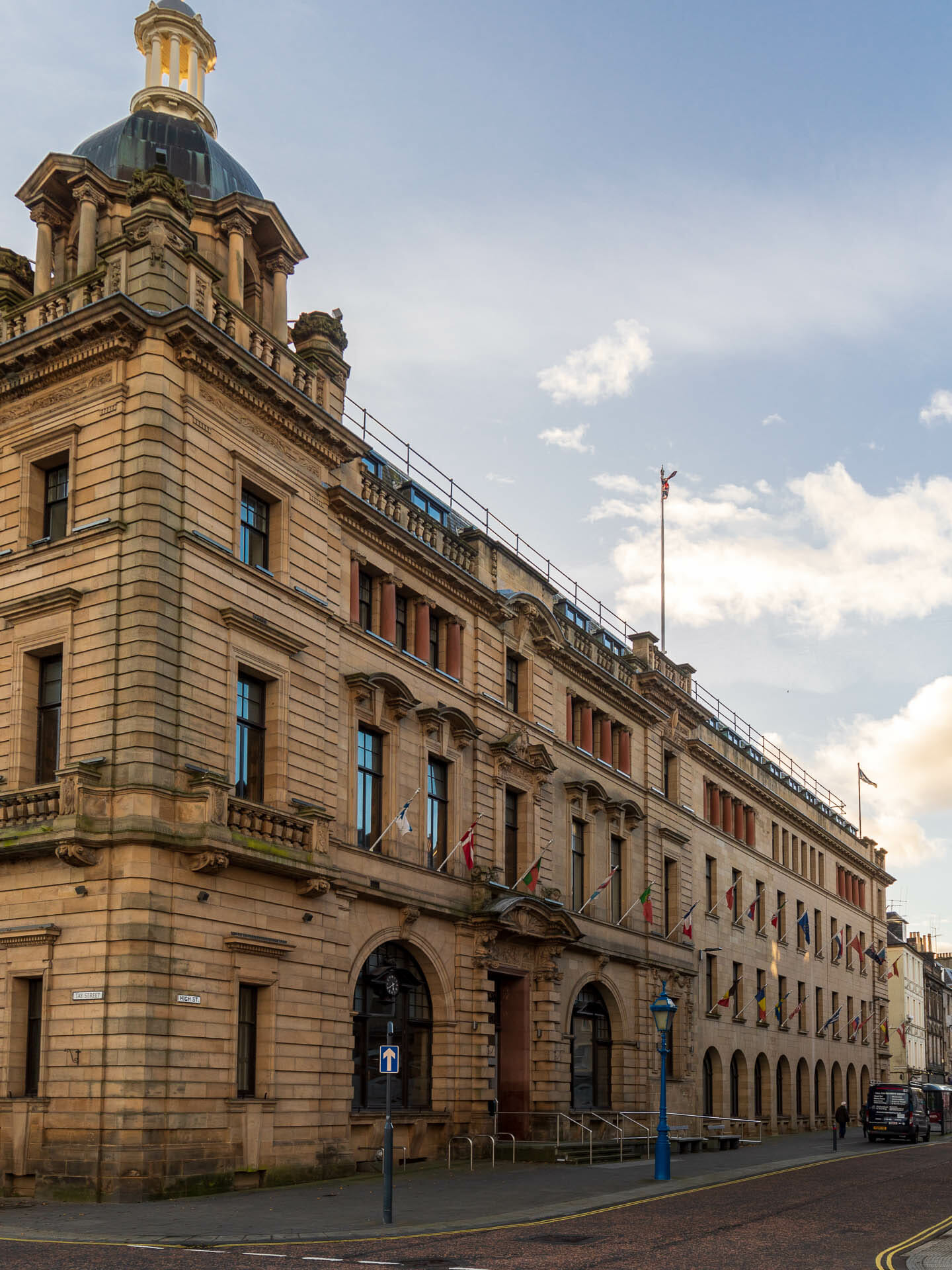
The Salutation Hotel stands out from the row of houses with its striking facade. That facade dates from 1810, although the building and the hotel itself are older still. “Salutation” means “greeting” – one story explaining the name goes that in 1745, the owner John Burt welcomed the royal rebel Bonnie Prince Charlie here. He was in Perth between the 4th and 10th of September and is said to have received his commanders and financiers at this hotel.
Set into the facade are two brightly painted statues, said to represent members of the Black Watch.
Info: Salutation Hotel
St Leonard’s-in-the-Fields Church
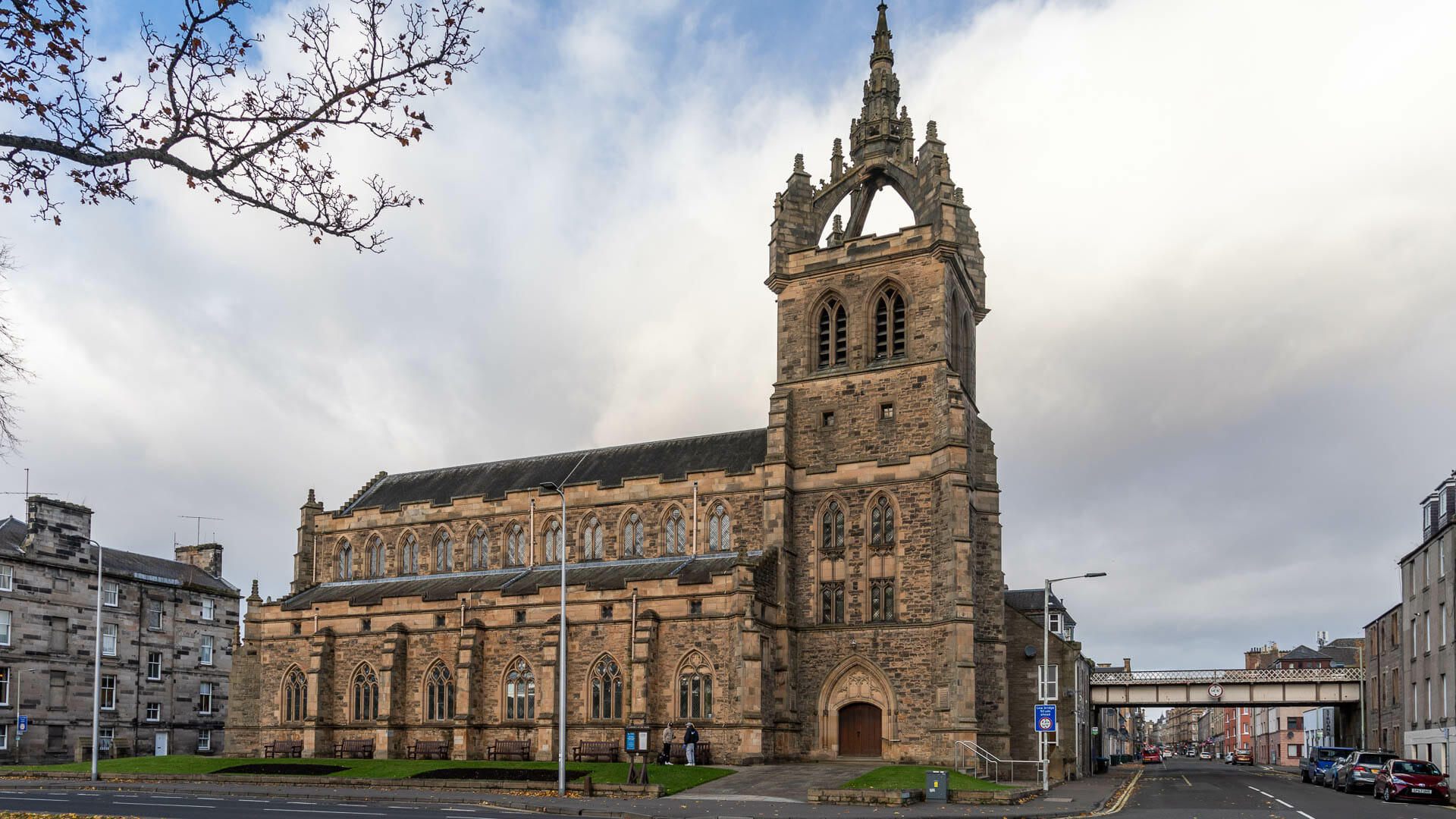
The building of St Leonard’s-in-the-Fields Church has stood here since 1885. Glasgow architect John James Stevenson built the church in the Gothic Revival style. The crown atop the church tower is particularly striking. Today, St Leonard’s-in-the-Fields belongs to the Church of Scotland, and the building itself is Category A listed as a protected historic building in Scotland.
Info: St Leonard’s-in-the-Fields
South Inch
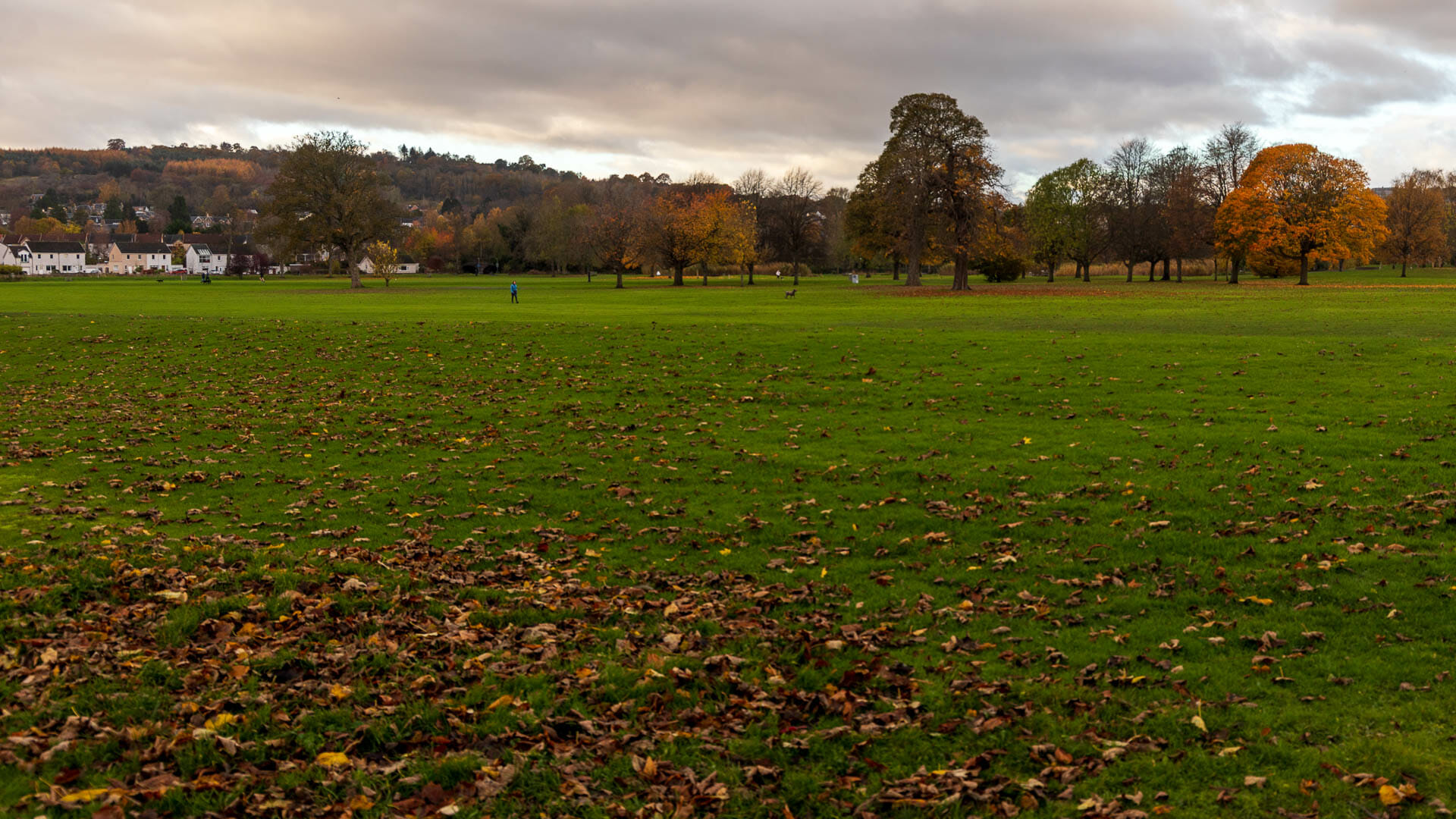
As the counterpart to the North Inch, the smaller South Inch lies in the south of Perth. It, too, invites relaxation, though it’s less peaceful here, since larger roads such as Edinburgh Road run around and through the park. At least there’s affordable roadside parking here, which makes the South Inch a good starting point for visitors touring Perth by car.
Incidentally, where the car park now stands, a fortress built by the notorious commander Cromwell once stood, around 1650.
Info: South Inch
Food and Drink in Perth
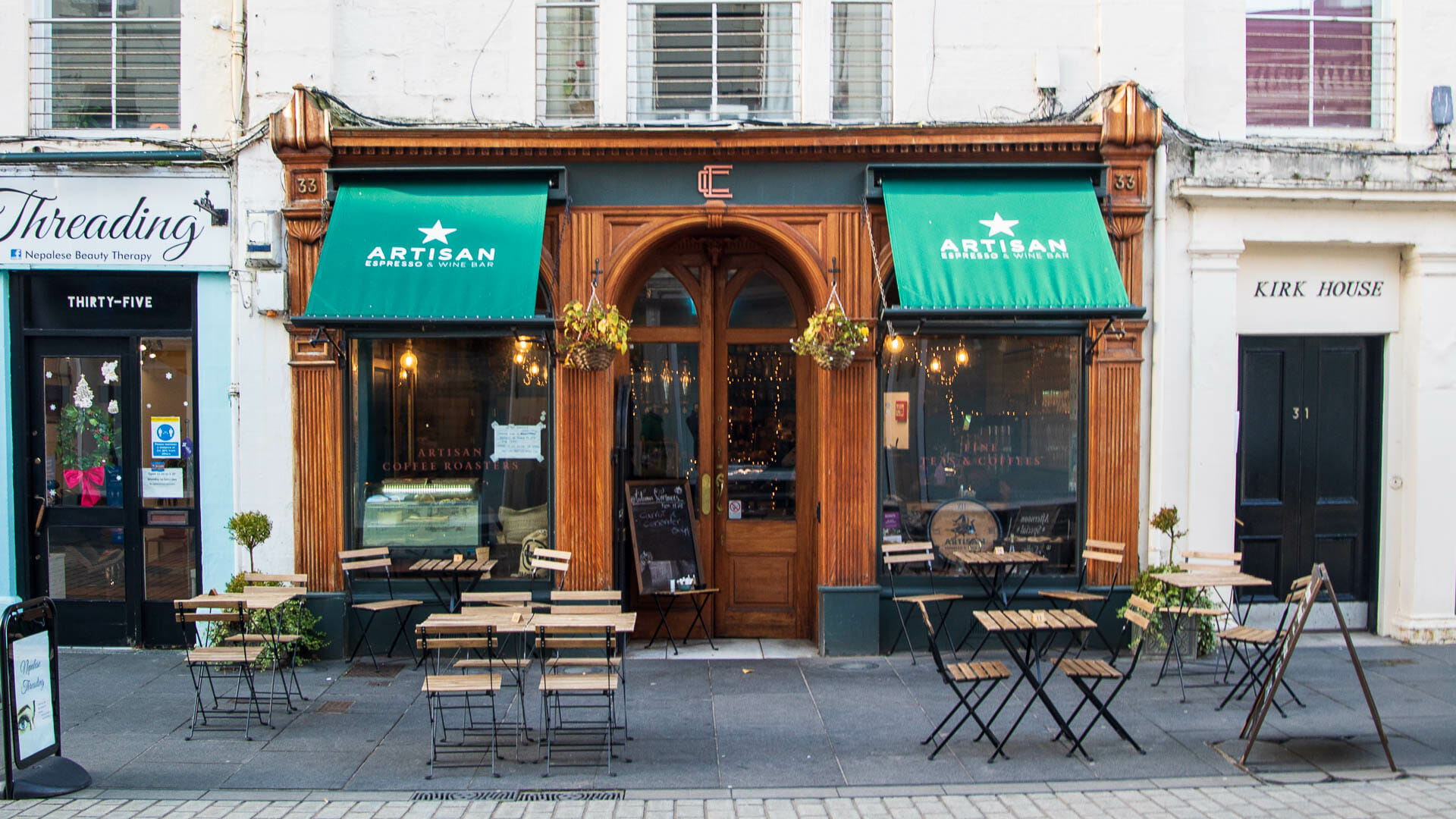
In the centre of Perth you’ll find a number of great cafes and restaurants. Especially around the pedestrianised St John’s Street, there are plenty of good places to eat, such as “Coffee & Things” or the Artisan.
At the end of Bridge Lane, next to the museum, the corner building houses Café 80, which also serves good coffee and cake (we tried it ourselves).
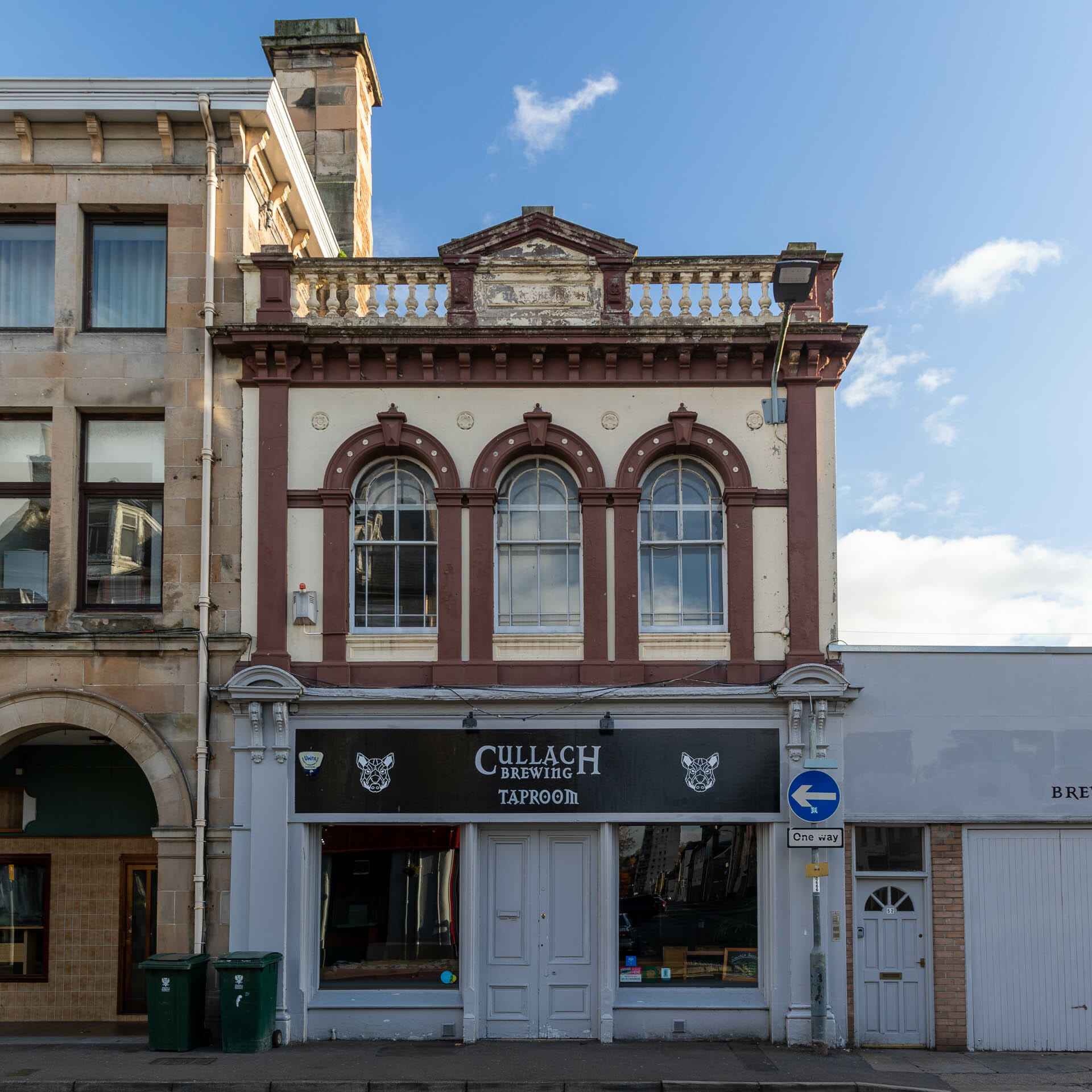
Perth, incidentally, also has a craft beer brewery called Cullach – a nod to fully grown predators. In the taproom, you can not only sample the beers but also enjoy hearty bar food such as pizza or burgers.
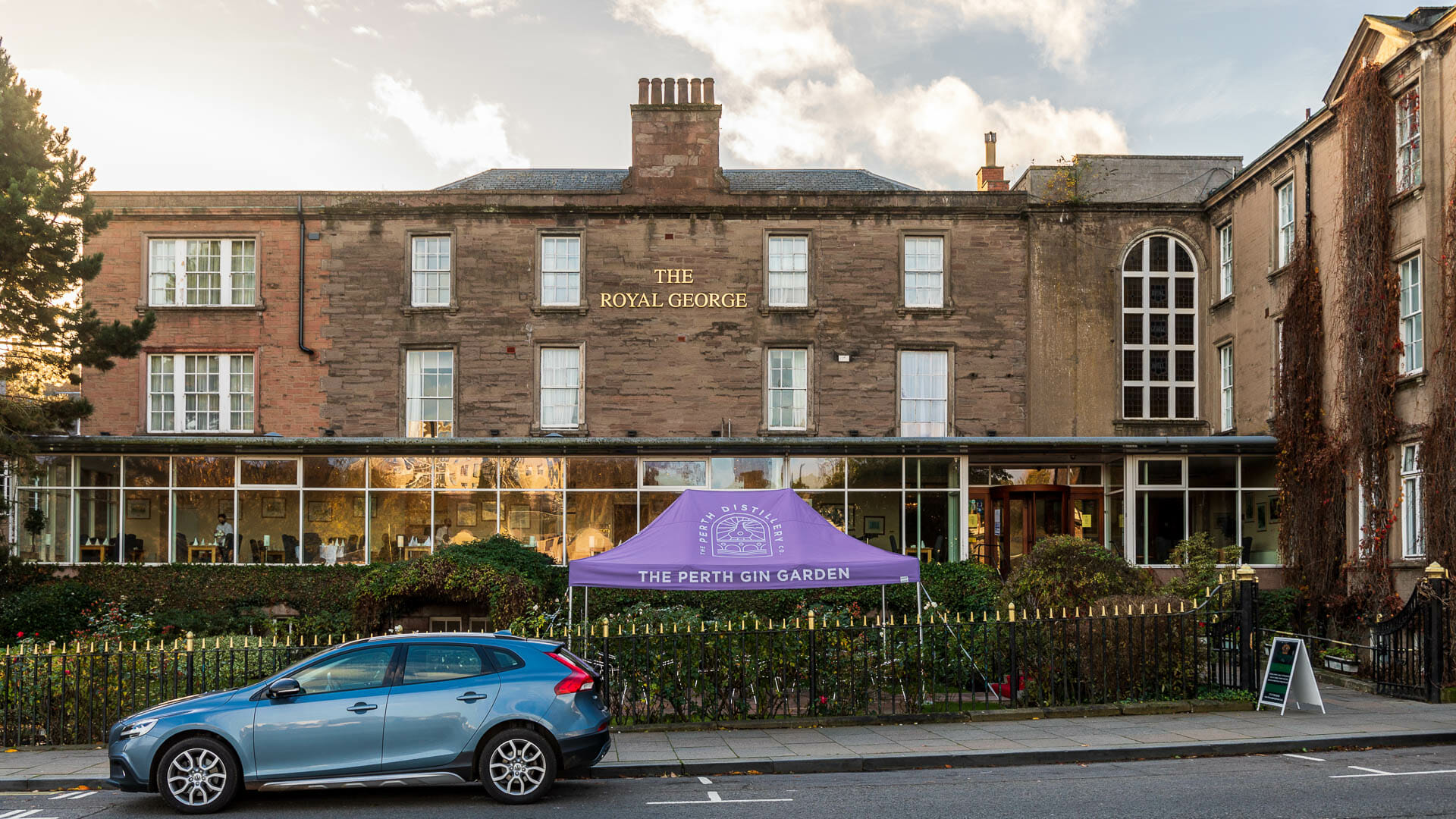
A bit more alcohol can be found in Perth Gin. Its home is on George Inn Lane, which branches off Tay Street right by The Royal George Hotel.
When it comes to shopping, the pedestrianised area around St John’s Kirk, as well as the streets around the church and the City Hall Museum, is a real hotspot.
Anyone who enjoys browsing vintage items and antiques, on the other hand, will find their fortune on Princes Street near the South Inch, home to the two shops Underneath the Arches and Vectran Vintage.
History: Perth, the River and the Scottish Kings
Perth’s history probably begins with the Picts, one of Scotland’s original peoples. They spoke a form of Celtic related to modern Welsh, and the name roughly means “wood” or “copse”. Perth was part of the Pictish heartland around 900 AD, and there are a few references to the area – Domnall, son of Kenneth MacAlpin, is said, for instance, to have died in a palace called Cinn Belachoir.
This palace was probably located roughly where Perth stands today. And naturally, the proximity to Scone played a major role – the place where kings were traditionally crowned. Scone was first mentioned in writing around 905 AD, in connection with the Scottish king Constantine II.
Perth as a Royal Burgh
From then on, things looked up not only for Scone as an important ceremonial site for kings, but also for Perth. The reason was its location: the Tay was still navigable here, while the spot also offered a natural crossing point to the other side. Roads from across the whole kingdom converged here as a result. And although the Tay repeatedly tried to reclaim its space with devastating floods, Perth’s fortunes kept rising.
Perth developed harbours where goods from the Netherlands, the Baltic, or France were landed, and from which the city shipped out its own products in return.
King David I soon began granting so-called burgh rights – roughly comparable to market town charters. Perth was one of the first to receive them; it was in this context that Perth was first mentioned in a document at all, in the year 1127 AD. Perth appears to have held an outstanding position among the burghs of the surrounding region.
There was, incidentally, actually a castle here once too, though it was destroyed by a major flood of the Tay in 1209 – the river gives, and the river takes away. Exactly where this castle stood remains unresolved to this day; some scholars believe it stood roughly near today’s Concert Hall.
Guilds developed in the medieval town, and Perth became one of the kingdom’s wealthiest trading ports. The church’s standing added to this – a St John’s Kirk likely existed here even before the burgh rights were granted, though it was certainly consecrated by the Bishop of St Andrews in 1242.
The Wars of Independence with England
During the wars around Robert the Bruce, the city fell to the English in 1296. Bruce recaptured it in 1312, but as early as 1332 an England-backed claimant to the throne took Perth. Seven years later, the last of his followers were driven out again. The 14th century, in short, was a turbulent one.
As a result, strong city walls were built around Perth. In the medieval period, they were probably the strongest fortifications in the entire kingdom. Nothing of them, however, survives today.
Reformation
Merchants brought more than just goods to Perth from mainland Europe – they also brought new ideas, and one of them quickly took hold here: the Reformation of the church. It’s no surprise, then, that in 1544 five citizens of Perth were among the first martyrs of the new religious movement. On the orders of Cardinal Beaton, they were hanged or drowned. Their offences included denying the Virgin Birth and eating goose on a fasting day.
Yet these executions failed to deter anyone. When the famous reformer John Knox finally arrived in Perth in 1559, having come from exile in Switzerland, he preached a sermon at St John’s Kirk on 11 May. Afterwards, his followers rampaged through Perth for two days, destroying religious images and driving the resident monks out of the city.
The centuries that followed, however, saw Perth’s decline. Devastating floods, famine, plague, and recurring wars with England all took their toll on its trading success.
Education, however, became established in Perth instead. Perth Academy was founded in 1696, focusing on sciences such as mathematics. You can still see the old Academy schoolhouse in the city today, although it wasn’t actually completed until 1807.

Jacobites and Bonnie Prince Charlie
Of course, a port town like Perth handles more than just goods. Its strategic location and access to the sea made the city strategically important, something the “Lord Protector” Oliver Cromwell was well aware of. He took Perth and had a huge citadel built there around 1650. It stood roughly where the South Inch car park is located today.
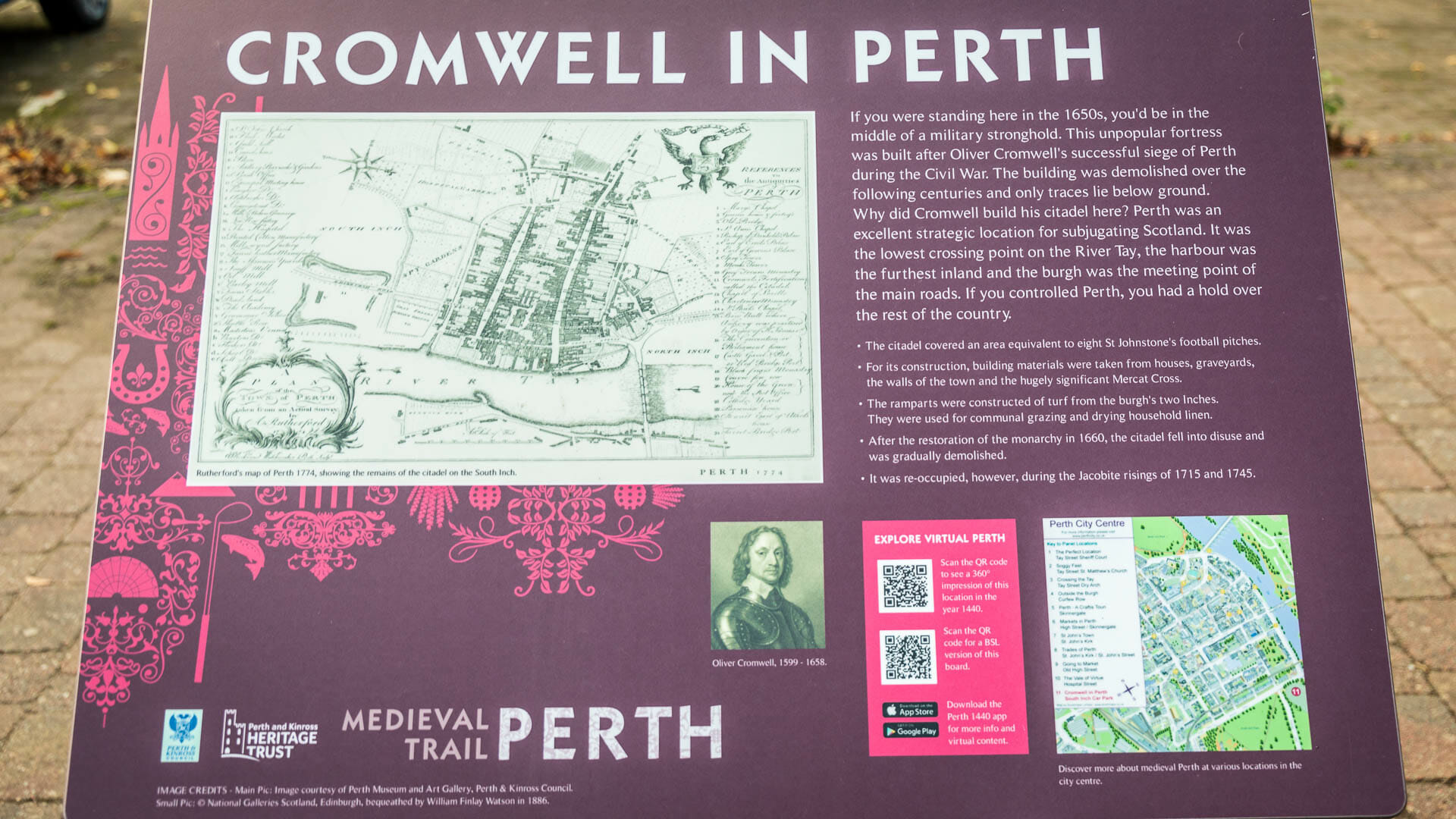
Things didn’t quieten down afterwards either: the Jacobites took possession of the city a total of three times during their uprisings, usually without meeting much resistance, since Perth was quite favourably disposed towards them. The Jacobites even used Cromwell’s citadel as a camp at one point. Perth, however, was never directly caught up in the fighting itself, and so suffered no great harm from the Jacobites’ defeat at Culloden.
From the 18th Century Onwards
Industrialisation didn’t transform Perth to the same extent as, say, Glasgow or Dundee. Linen and cotton production did take root here, and the railway soon found its way here too, but the underlying conditions had also changed: the Tay became less and less navigable while ships kept getting bigger, since trade was now conducted not just across the North Sea but across the Atlantic. As a result, nearby Dundee, at the mouth of the Tay, rose to new heights – not to mention Glasgow in the west.
On top of that, the Highlands lost significance as a trading region and gateway to the north following the defeat at Culloden and the Highland Clearances that followed.
So the citizens and the town council turned to other kinds of business instead. The harbour was eventually filled in for good, and Tay Street was created in its place as a paved waterfront street, along which insurance companies, banks, shops and regional administrative offices took up residence.
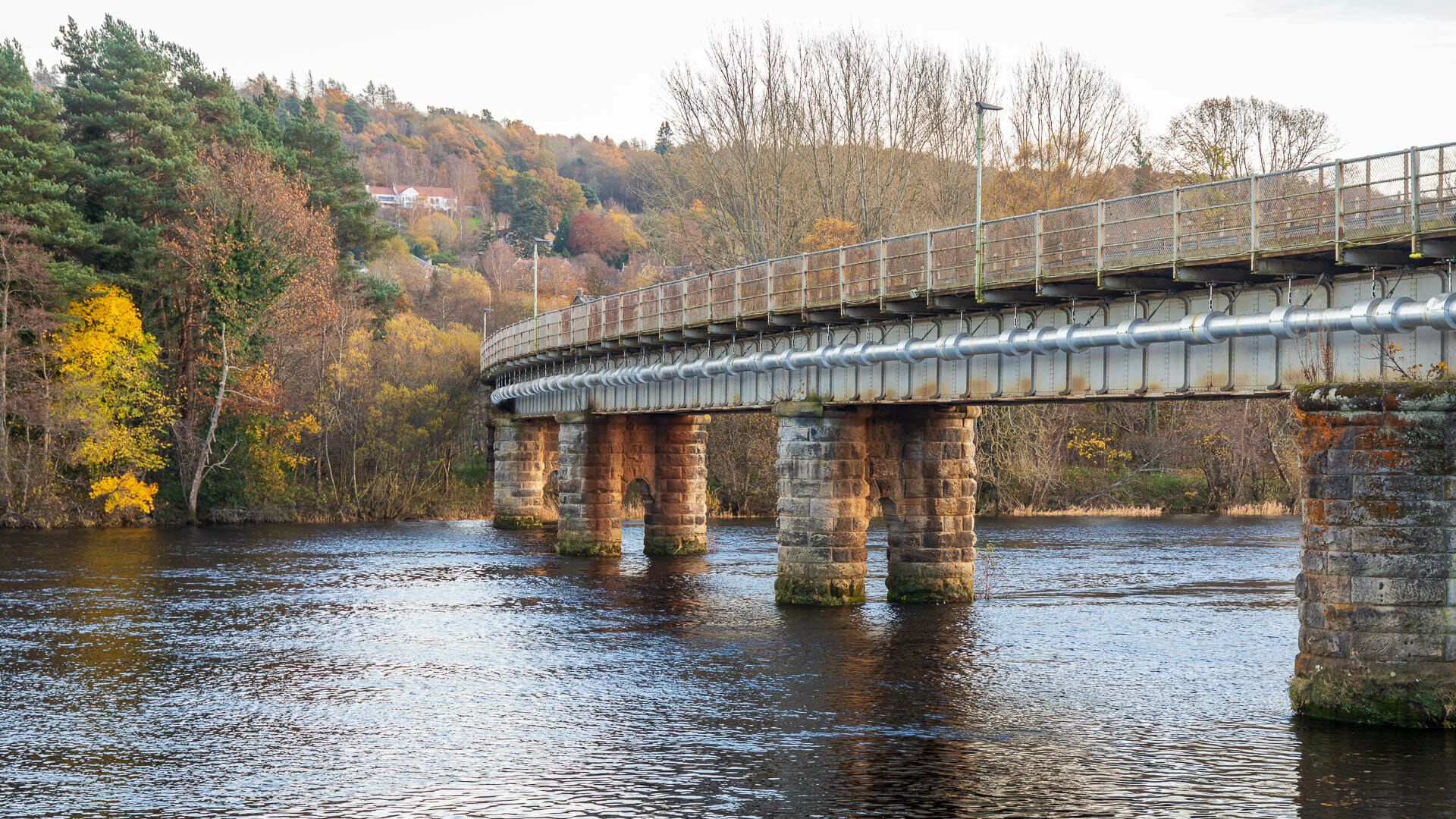
The railway was deliberately routed around the old town centre – which is why Perth’s historic centre remains largely unchanged today. Lucky for us visitors.
Sources:
- https://medievalperth.org/
- https://www.futurelearn.com/info/courses/ems-palaeography/0/steps/30872
- https://tafac.org.uk/perth.pdf
- Diethe, Jürgen. Die Pikten: Geschichte und Mythos eines rätselhaften Volkes (German Edition)
