St Andrews has given the Scots a great deal: a religious centre, the sport of golf, and many famous university graduates. Why a visit is worthwhile.
St Andrews Info:
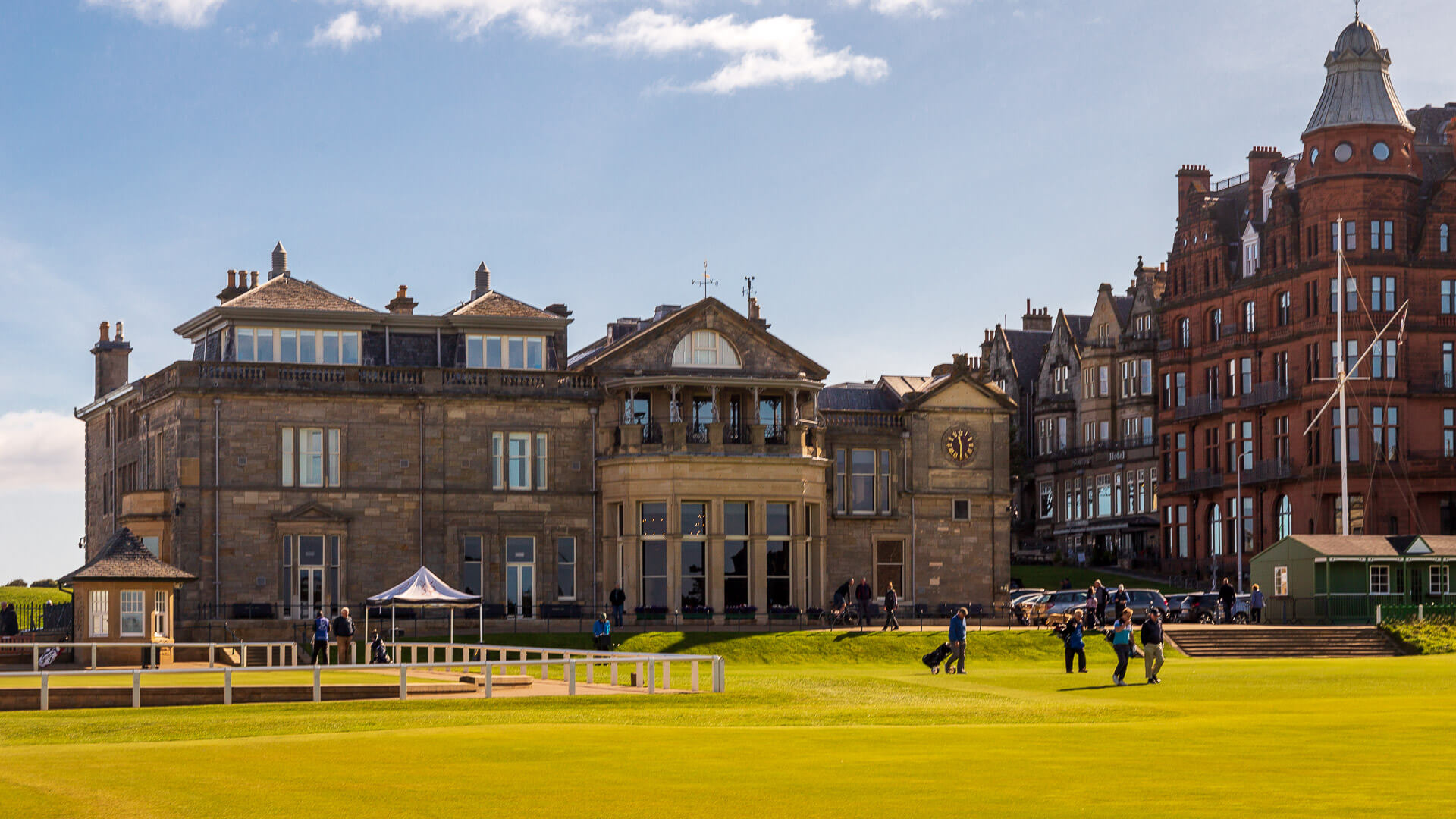
With around 16,000 residents, St Andrews is already a sizeable town by Scottish standards. But no one should measure St Andrews’ significance by its population. For Scottish history, this town on the North Sea coast, in the Kingdom of Fife, is far more important than that.
St Andrew, who gives St Andrews its name, is after all the patron saint of Scotland. The Scottish flag bears the so-called Saltire, the cross on which the apostle met his martyr’s death. Legend has it that St Regulus (St Rule) brought some of St Andrew’s relics to this coast around 345 AD, and so a Christian centre grew up here, with its enormous cathedral. That cathedral, in turn, founded the university that still makes the town famous today.
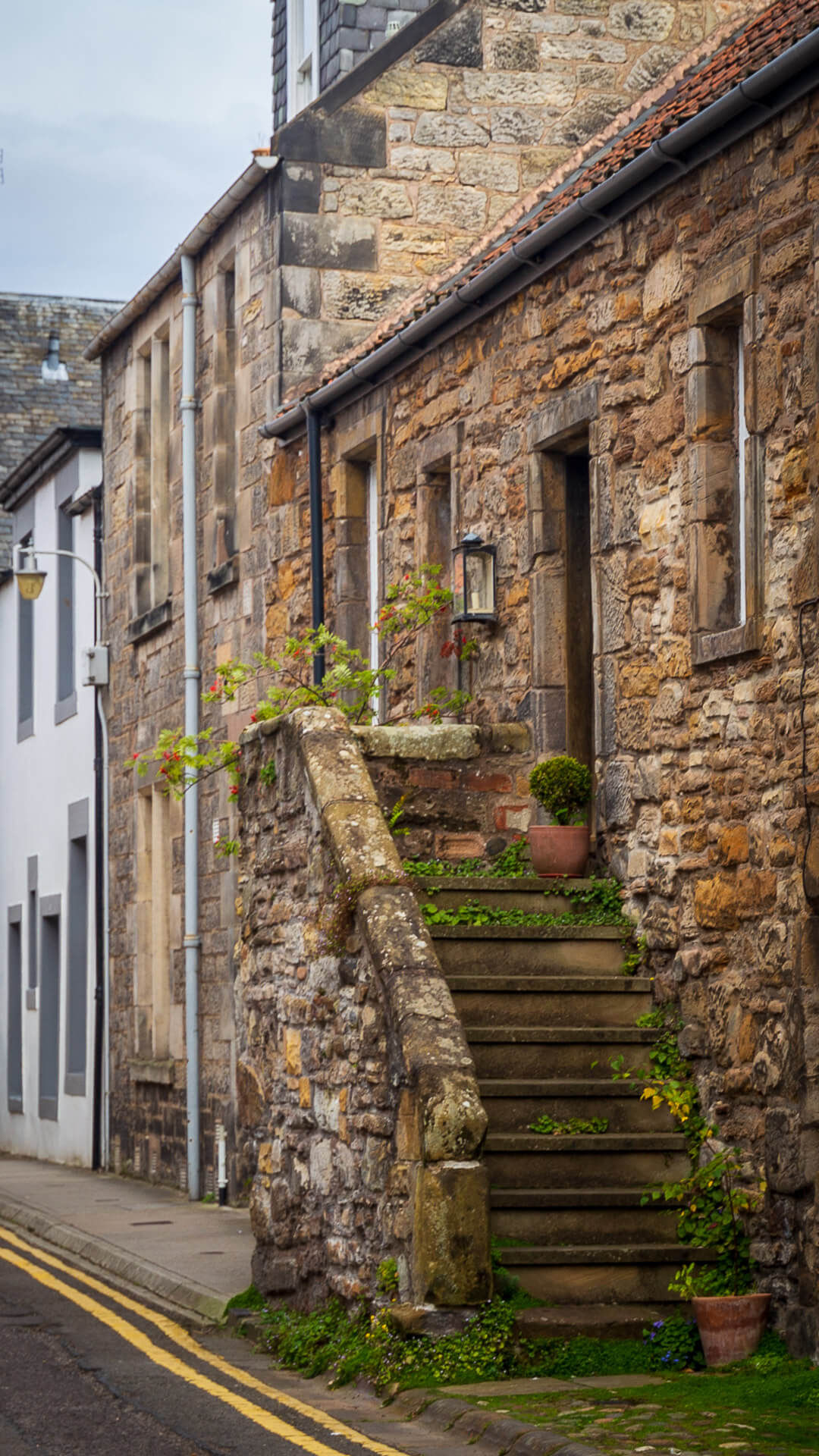
In the town you’ll find both opulent Victorian buildings and small granite houses with outside staircases – a building style found throughout Fife, such as in Falkland, 30 kilometres away.
Shopping and dining are excellent around Market Street and its side lanes.

St Andrews is also famous for its café culture, which is naturally sustained by the town’s students too.
Attractions
St Andrews Links Old Course
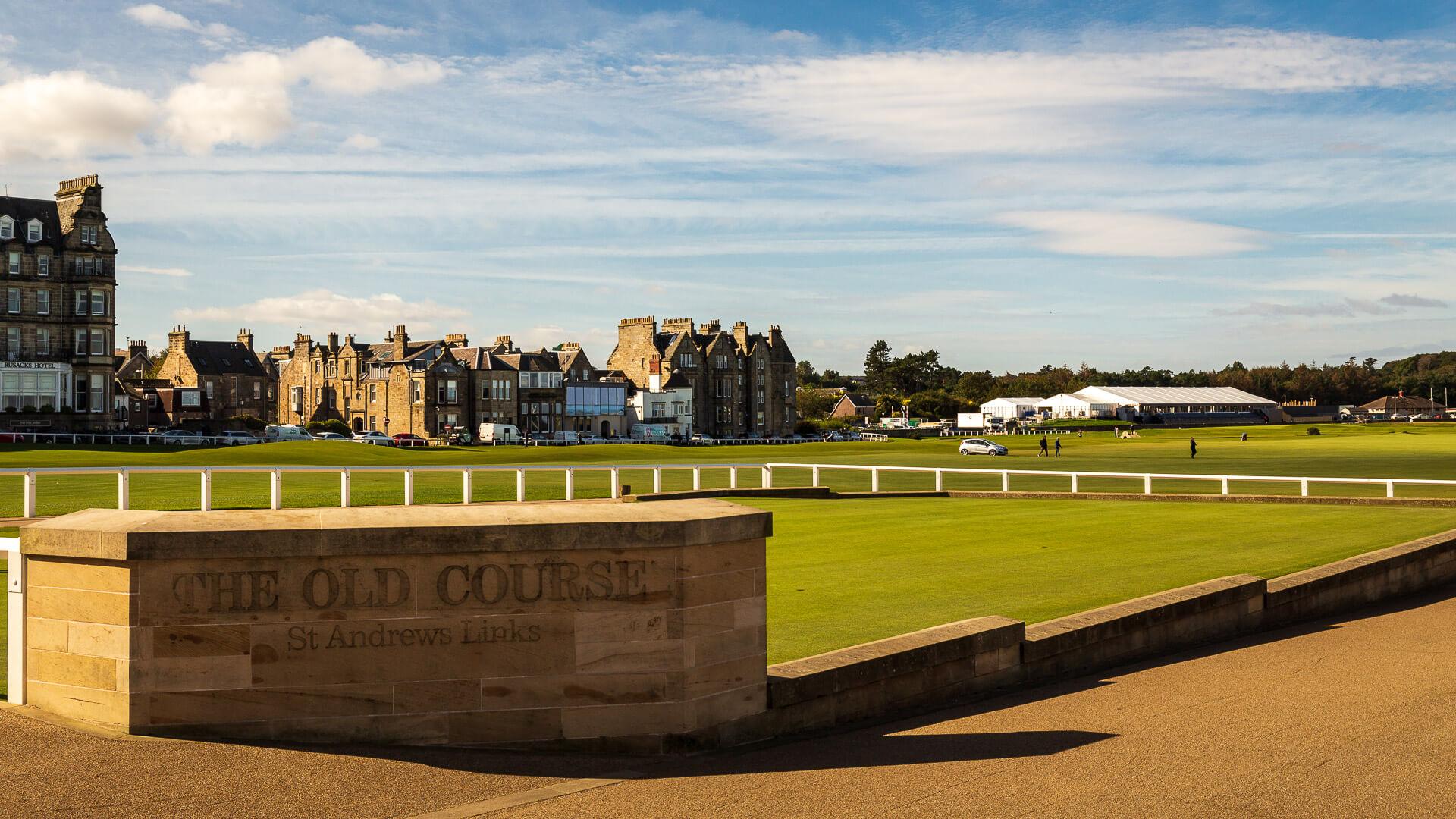
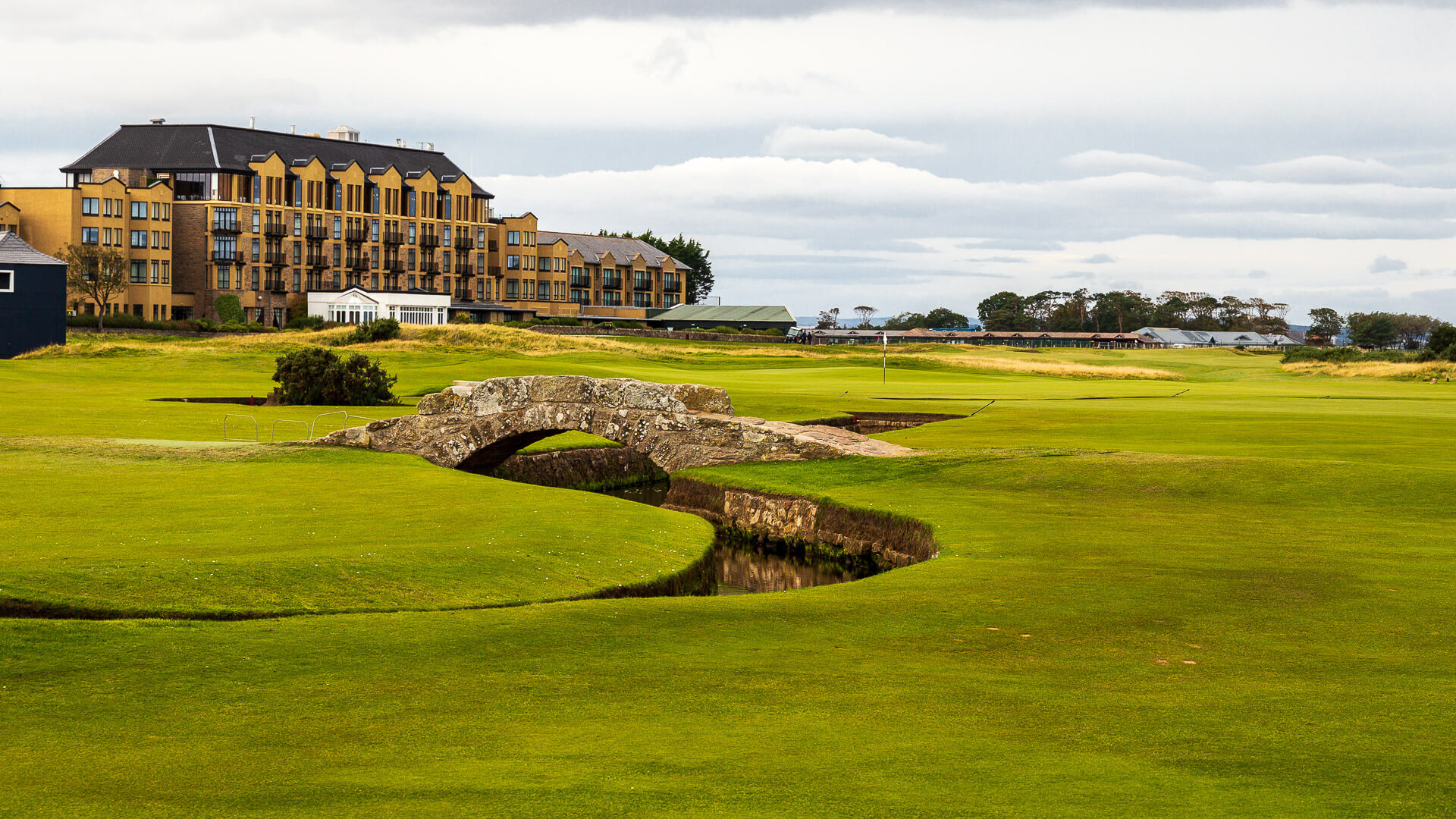
The Old Course is, after all, the oldest golf course in the world, said to have been laid out in 1764. Little wonder that self-respecting golfers want to sink a putt here at least once in their lives. In theory, anyone can play here – you just need the right handicap and a correspondingly large budget. In the low season, the green fee costs around £100, rising to around £200 in peak season.
Visitors who just want to soak up the sport’s atmosphere can walk around the grounds, and there’s even a path that crosses the Old Course. Just be careful, though – balls do fly through the air. Usually, though, there are marshals along the path who let you know when it’s safe to cross and when it isn’t.
At the top end of the Old Course, just across the road, is the British Golf Museum. Here visitors can learn all about the history of golf and its heroes and heroines. Admission costs around £9 for adults.
Band Stand and Martyrs Memorial
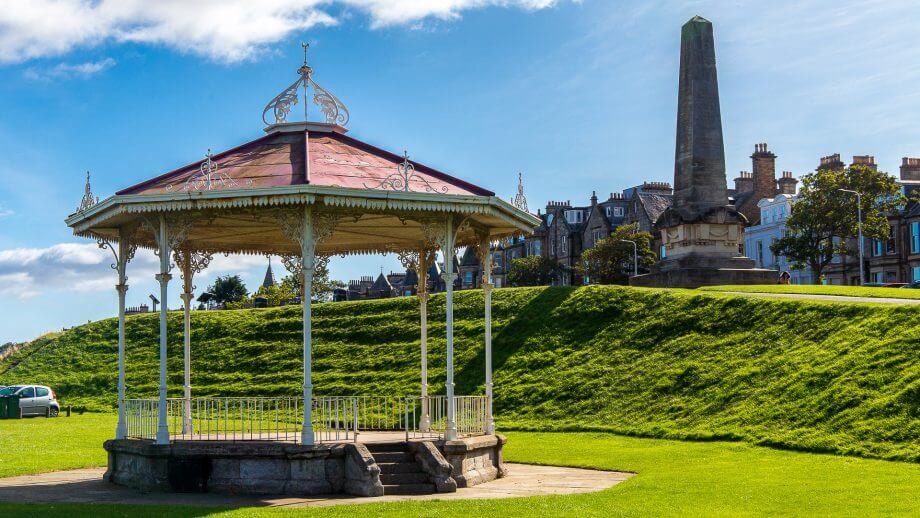
Walking along the coast from the golf course towards the castle, visitors first pass a dip in the land. Archers practised here in the Middle Ages. In Queen Victoria’s day, a covered platform was built here, the Band Stand – a charming Victorian ironwork structure.

From the small rise right next to it, the Martyrs’ Monument looks down. It commemorates the reformers who were killed, executed in and in front of St Andrews Castle, or who died in the fighting.
St Andrews Castle
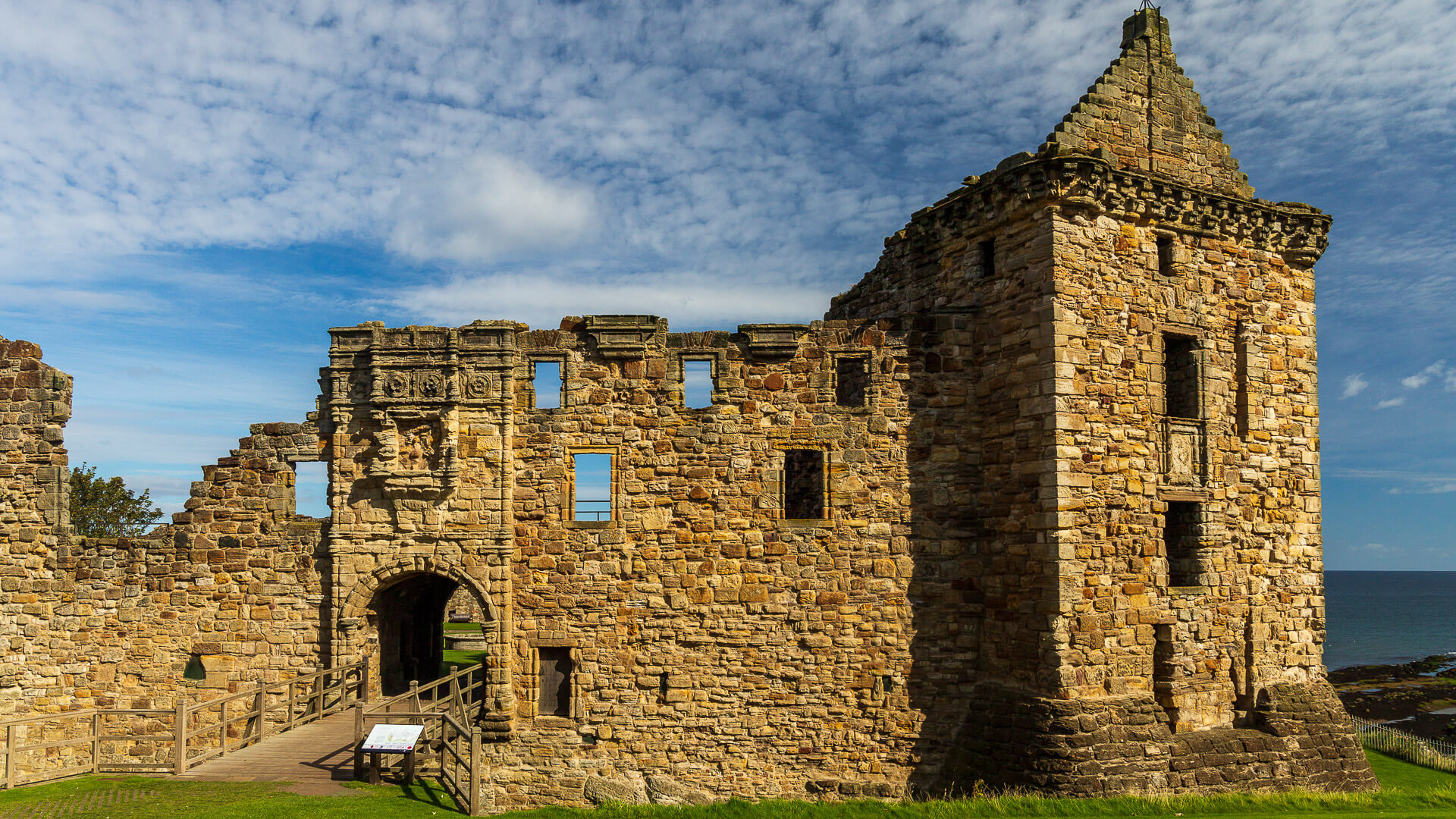
Looking out over the North Sea stand the ruins of St Andrews Castle. This castle’s history goes back a long way; it was originally built as early as the 12th century – though not in its current form, since it frequently changed hands during the wars between England and Scotland, and the Scots even destroyed their own castle around 1336 to keep it from falling into enemy hands again.
Achtung: Die Betreiber dieser Sehenswürdigkeit, das Historic Environment Scotland (HES), führt seit 2021 an vielen Sehenswürdigkeiten Untersuchungen oder Baumaßnahmen zum Erhalt der Gebäude durch. Dieses gehört dazu. Darum vorher informieren, ob und was begehbar ist. Mehr Hintergrund hier.
But barely 70 years later, a bishop rebuilt it, and from then on it served as the seat of the archbishops of the nearby cathedral. In the following decades, future kings were educated here, and some were even born here.
At the time of the Reformation, however, the battle for these walls raged once again. Protestants were initially imprisoned here, among them George Wishart, teacher of the famous reformer John Knox. Cardinal David Beaton had him thrown into the dungeon and then burned at the stake. In return, Protestants disguised as masons snuck into the castle, killed the cardinal, and hung his body from a window.
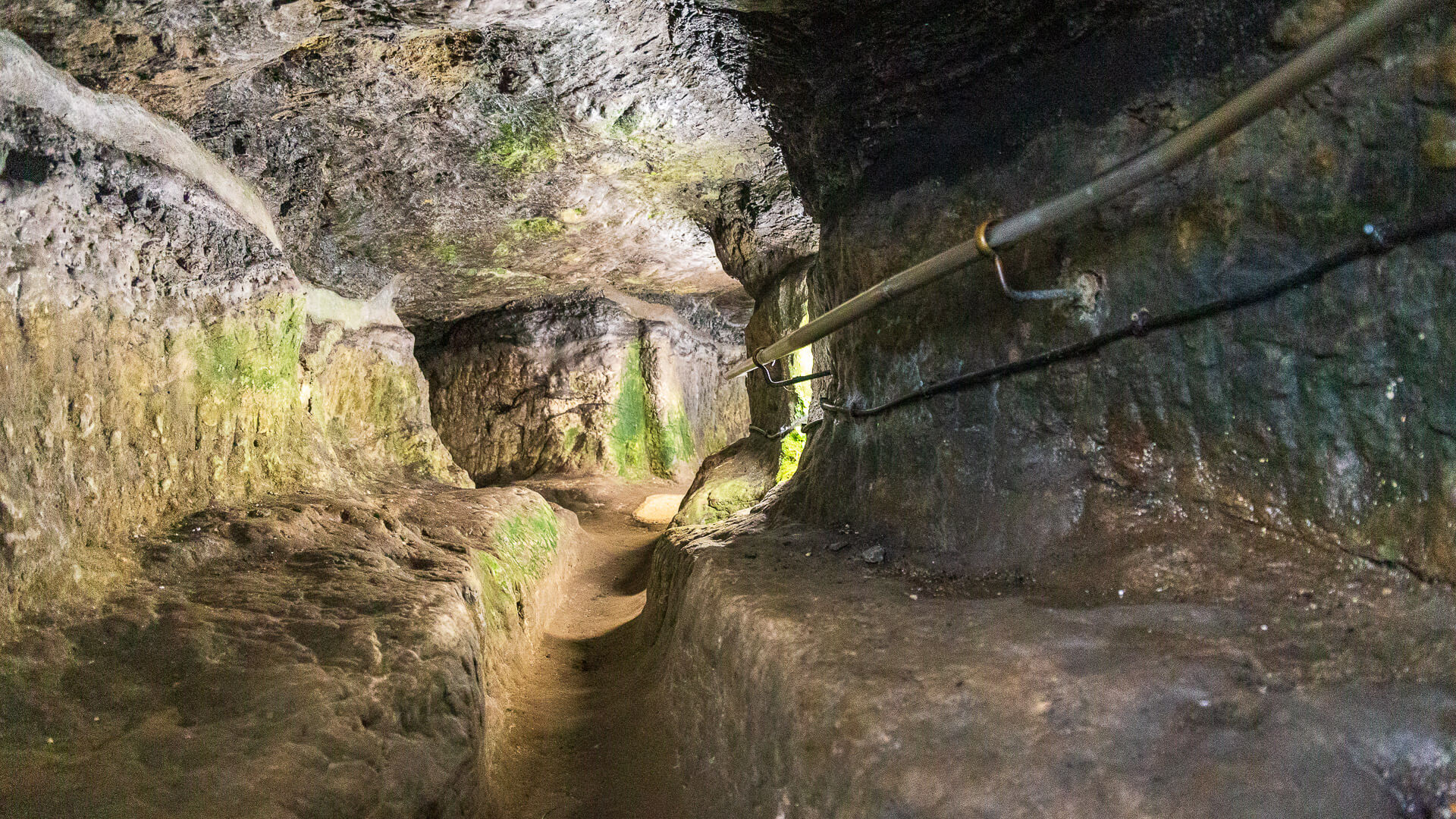
The Protestants barricaded themselves inside the castle and were besieged. Catholic miners tried to dig a tunnel under the wall to plant an explosive charge beneath it. The Protestants countered by digging their own tunnel to intercept them. Visitors can still climb into this tunnel today – it’s one of the highlights of a visit to the castle.
The Protestants nevertheless had to surrender to the superior force. And in the 17th century, the castle gradually fell into ruin, having lost its purpose.
In front of the castle there’s a visitor centre with plenty of information on these events. Admission costs around £9, and there’s a combined ticket for £12 that also covers the neighbouring cathedral.
St Andrews Cathedral
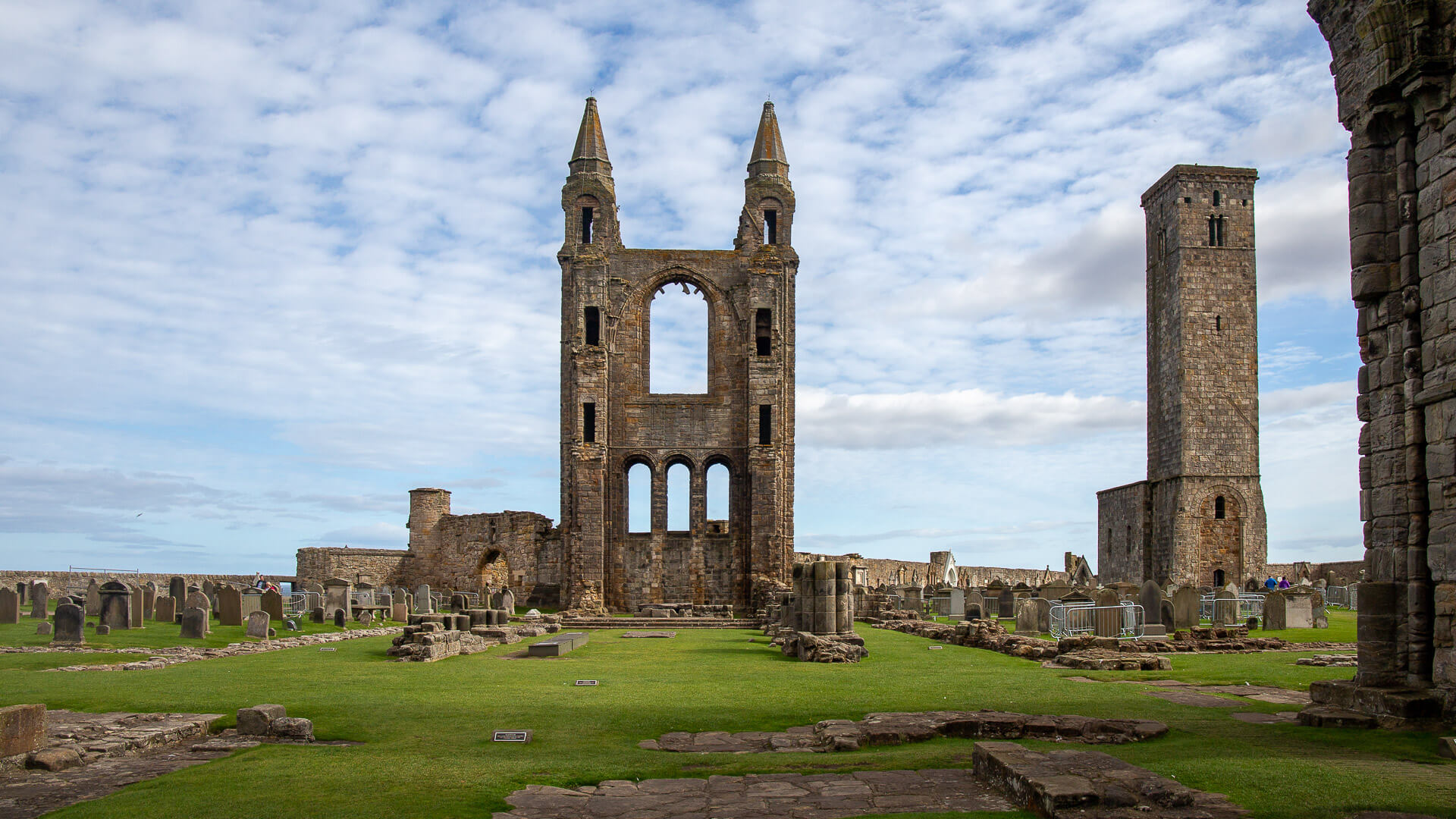
Relics of Scotland’s national saint, St Andrew, who also gave the town its name, once lay here. They soon made the cathedral a place of medieval pilgrimage.
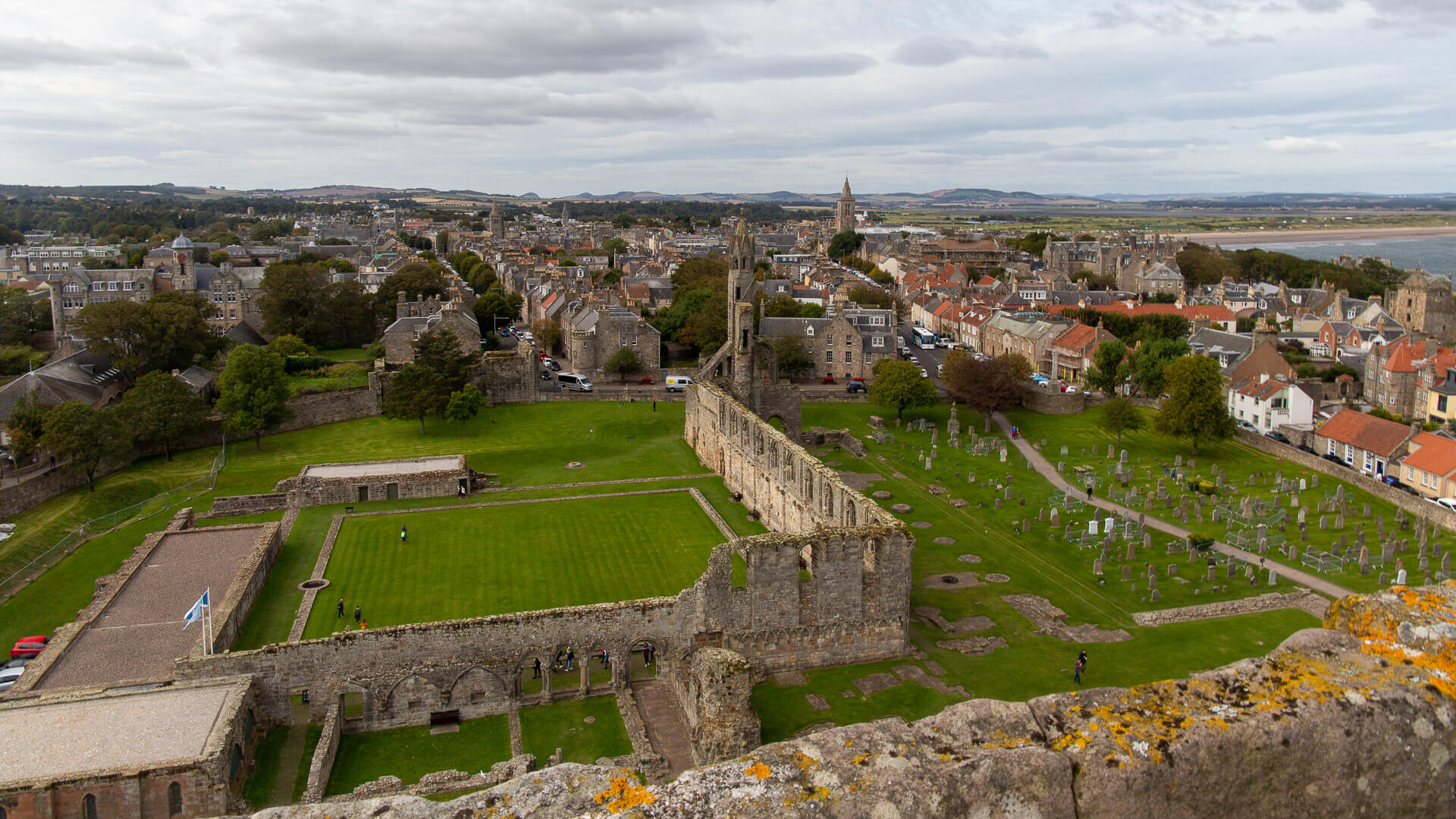
Today, its former significance and scale can only be guessed at from the foundations that remain. Still, the ruins are well worth a visit. Tickets cost around £9, and there’s a combined ticket with the castle for around £12. The square St Rule’s Tower can be climbed, though you’ll need a token from the visitor centre to do so. From the top, you get a great view over the cathedral and across the whole of St Andrews.
More information on St Andrews Cathedral in this article.
University of St Andrews
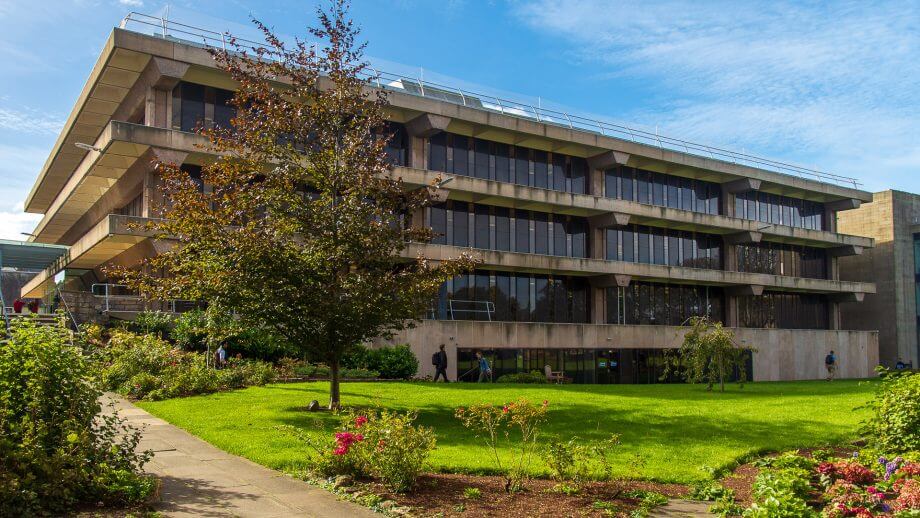
It’s Scotland’s oldest university, and a highly renowned one too – it recently pushed arch-rival Oxford down to third place in the rankings, coming second only to Cambridge. Since its founding in 1413, it has produced a long line of notable graduates: the military commander Montrose, King James I of Scotland, or – more recently – Prince William and his Kate. There have also been several Nobel laureates, as well as a former First Minister of Scotland, Alex Salmond.
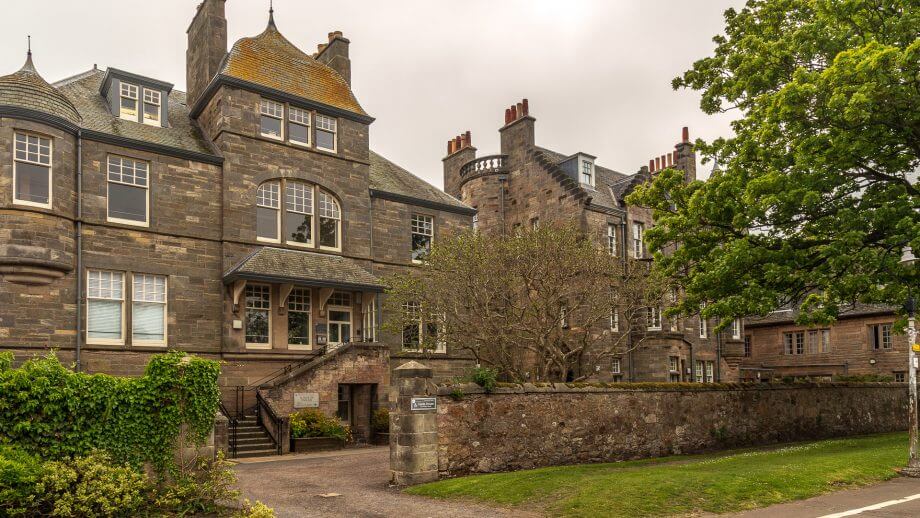
The heart of the college is St Salvator’s Quadrangle, the courtyard formed between the university’s old buildings. There are, of course, also numerous newer buildings and other small buildings associated with the university.
West Sands Beach
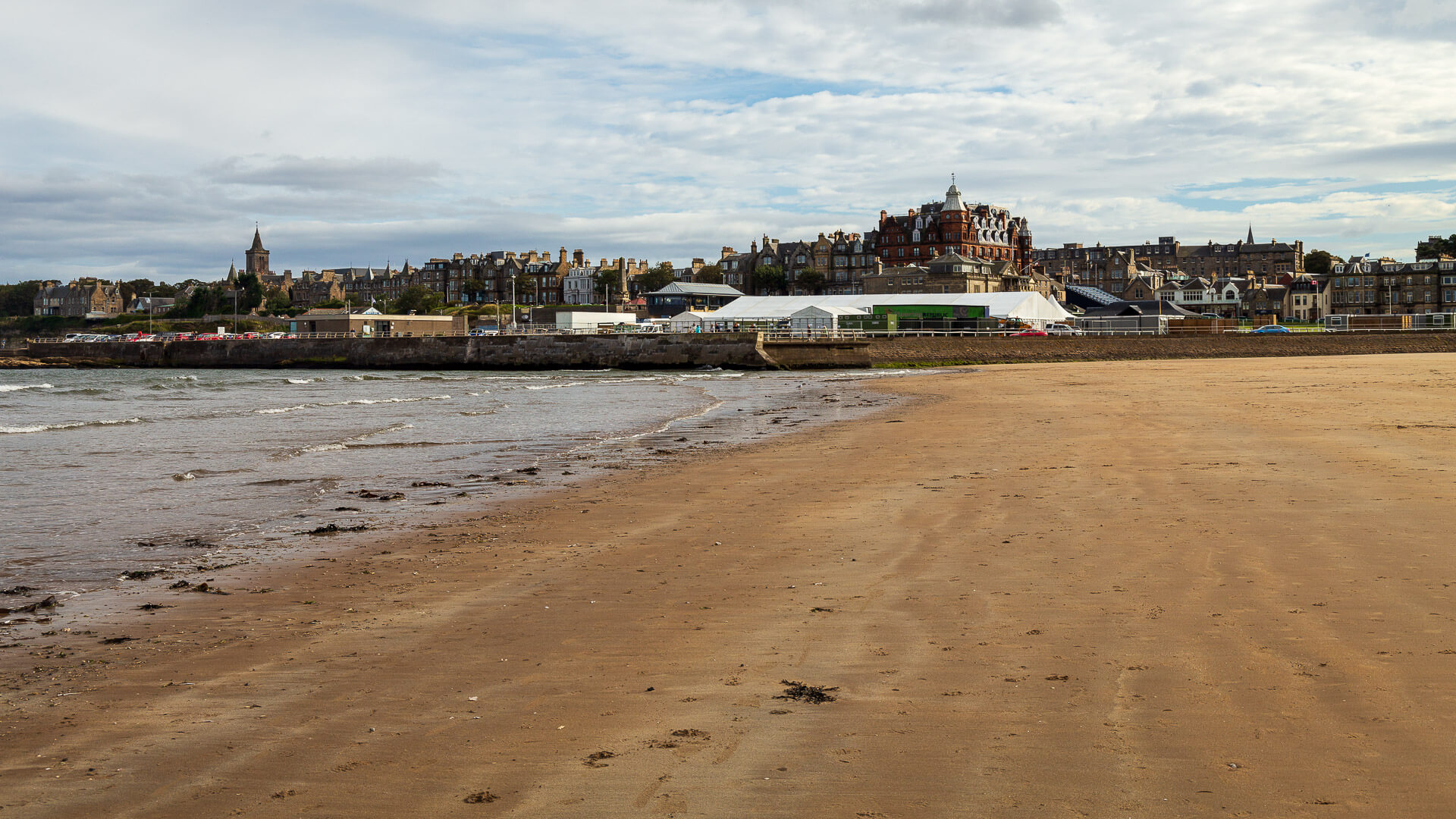
At the foot of the Old Course begins the town’s West Sands, a broad sandy beach lined with dunes, stretching two kilometres along the coast. Locals play here with their children and walk their dogs. Especially at the end of a tour of the town, it’s a real pleasure to get a breath of North Sea air here.
East Sands Beach
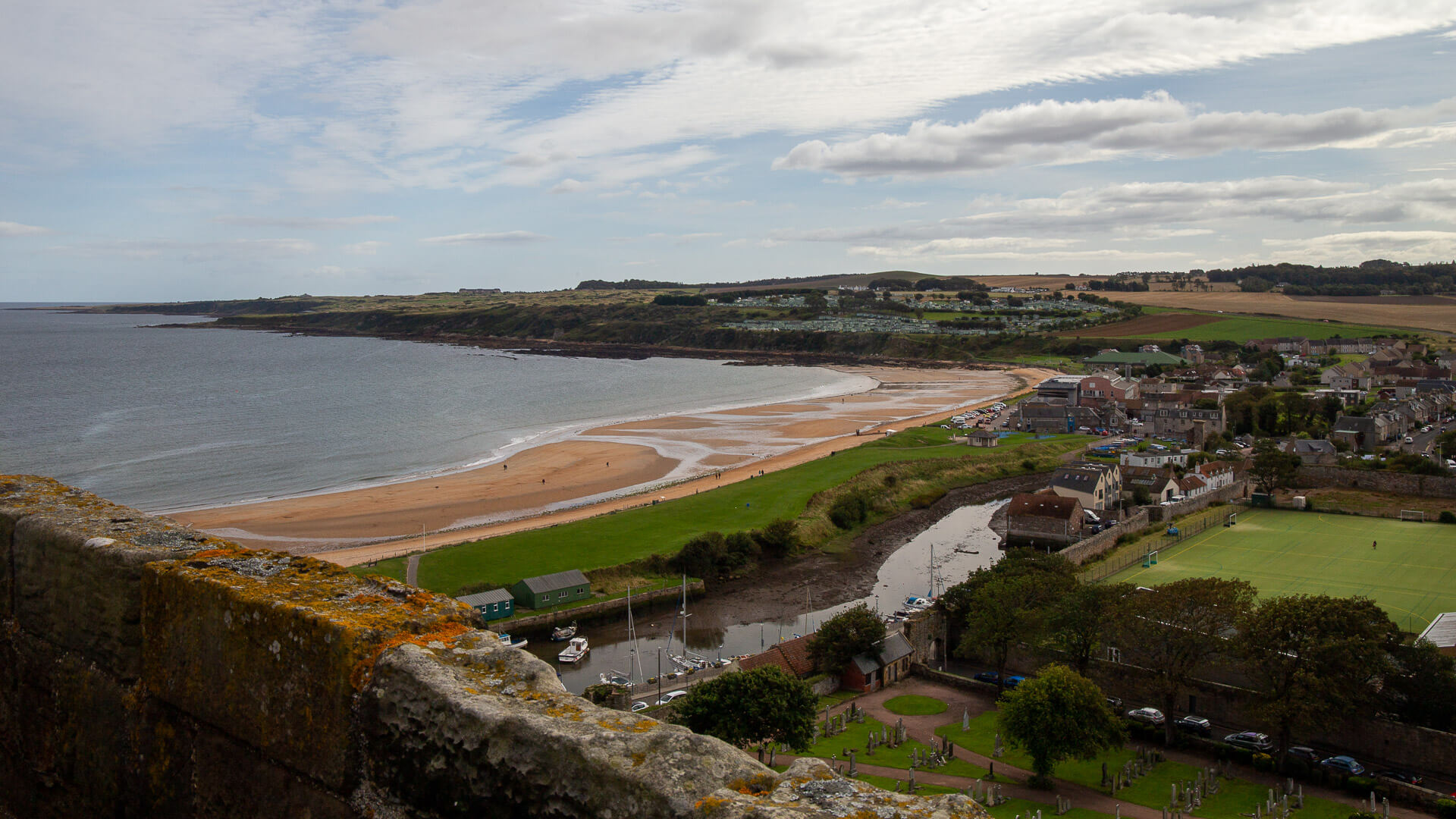
Several hundred metres of sandy beach stretch along the east of the town, below the cathedral. A walk here is also enjoyable.
Whyte-Melville Memorial Fountain
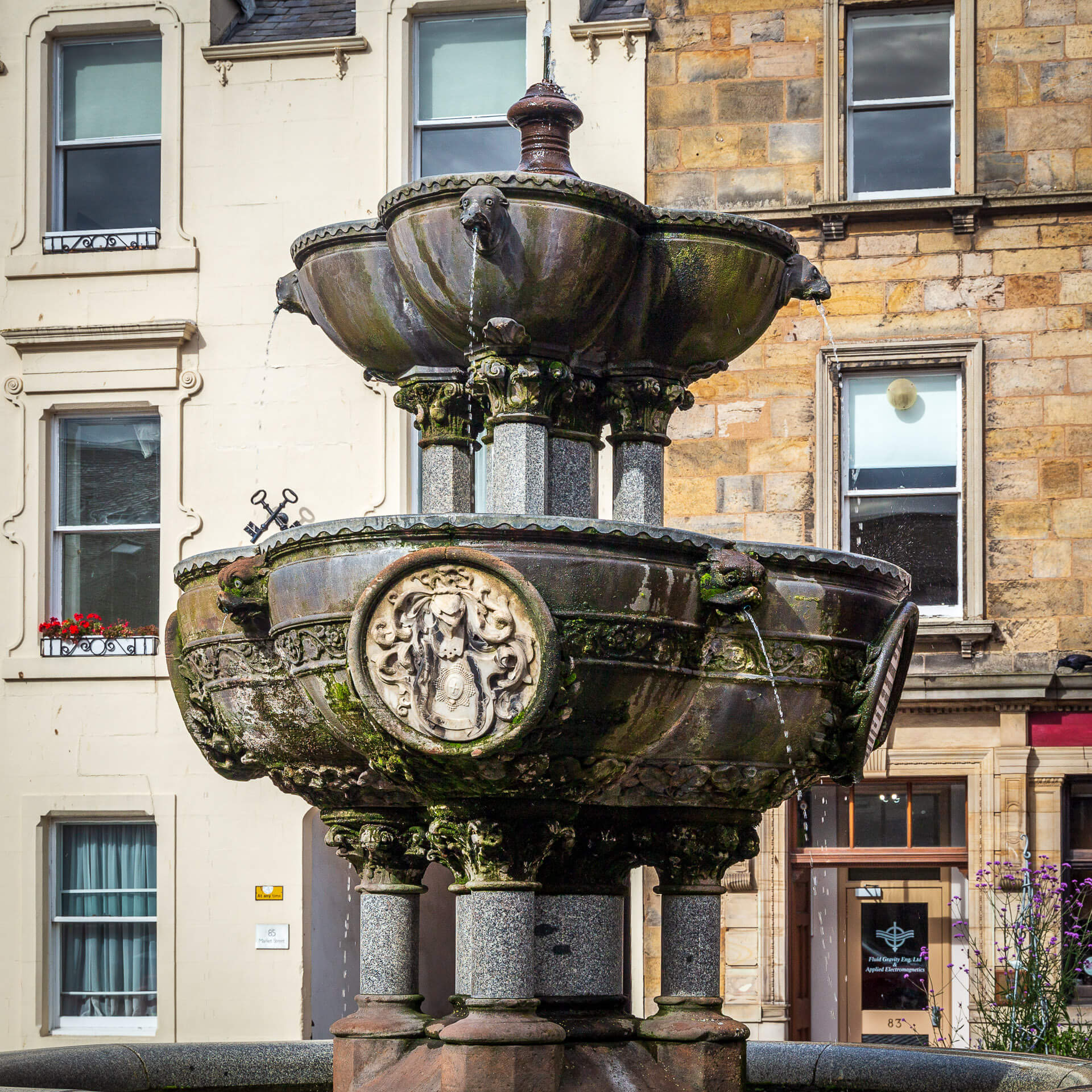
The Whyte-Melville Memorial Fountain is the centrepiece of St Andrews’ Market Street. Sadly, it’s usually surrounded by parked cars, but it’s still worth a look. You’ll immediately notice that some parts look new and others old – the fountain was only restored in 2015, at the initiative of local residents; before that, its basins had been misused as flower beds.
George John Whyte-Melville was a novelist and soldier from St Andrews. He died in a riding accident in 1878. In 1880, patrons erected the fountain as a memorial to him, though a good 50 years later it had already fallen into disrepair.
Botanic Gardens
In the south-west of the town, the university laid out a botanic garden in 1889, which over time has amassed a collection of more than 8,000 plants. Admission costs around £6; students and children go free. More information on the website.
St Andrews Museum
St Andrews Museum tells the story of the town’s history. The Victorian mansion sits in a park. Admission is free. More information here.
St Andrews Aquarium
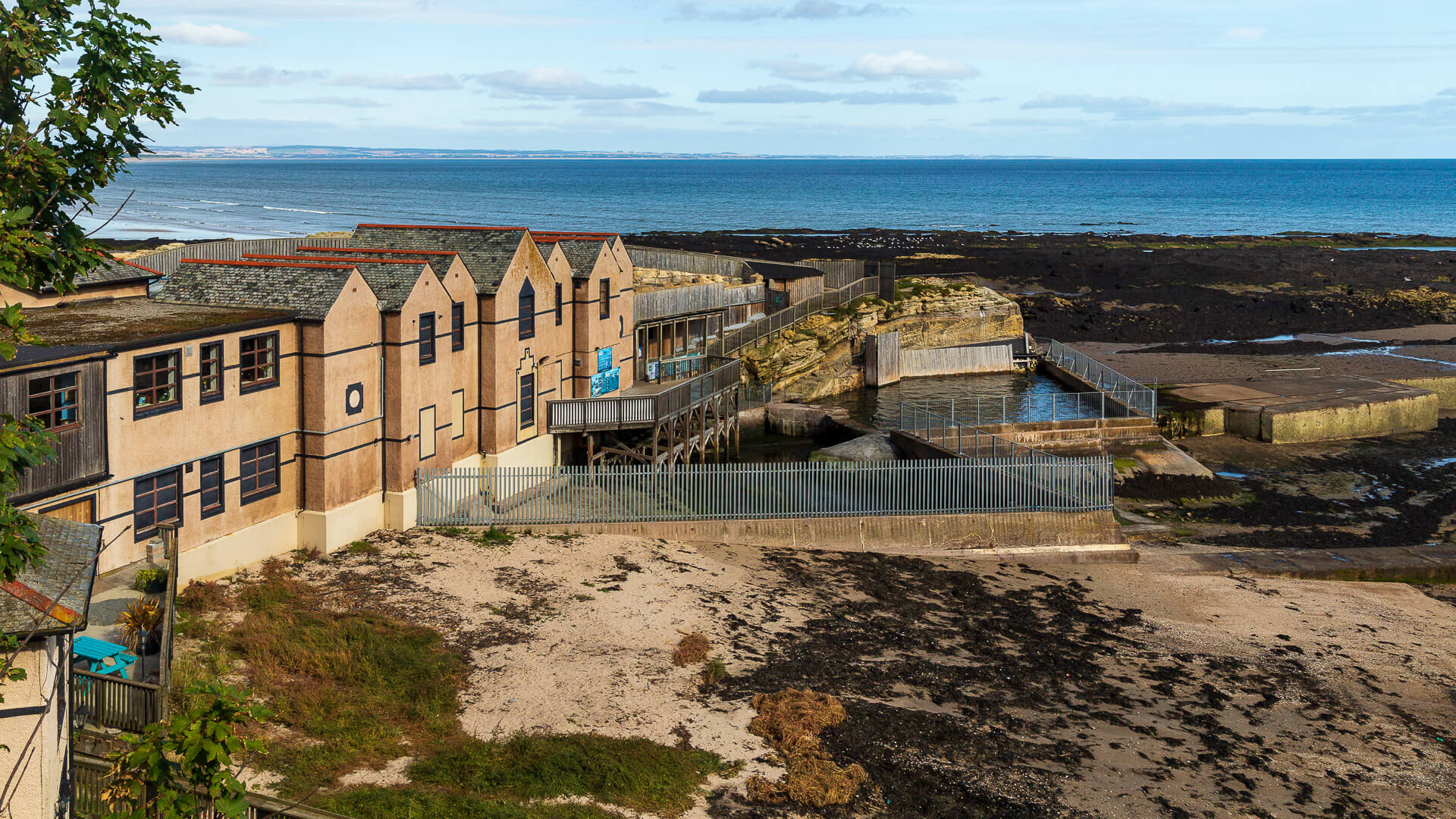
Reptiles, insects, fish – you can see them all at St Andrews Aquarium. At around £11, the aquarium isn’t exactly cheap, but it’s a good option, especially on rainy days. More information here.
Best Time to Visit: Climate and Weather
Compared to Scotland’s west coast, Fife’s east coast proves mild and low in rainfall. As a result, even in winter, St Andrews is largely spared from the rain. As is typical for weather and climate in Scotland, May proves the brightest and sunniest month.
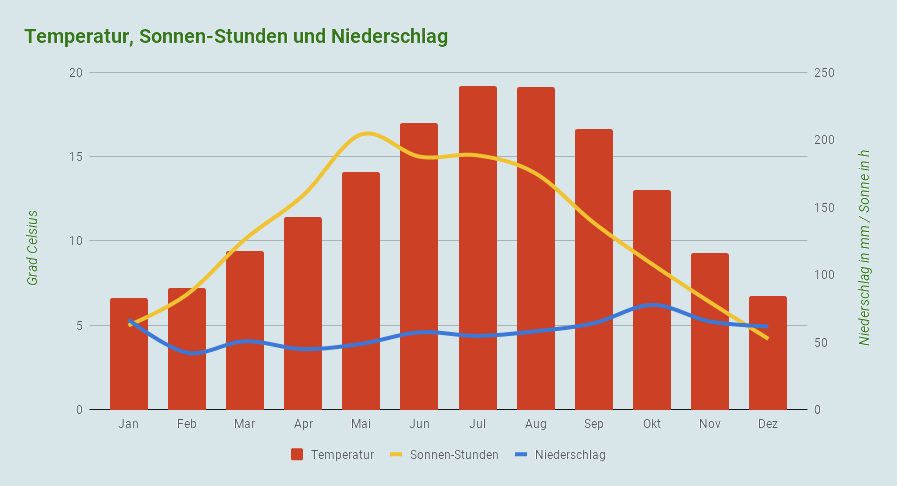
But the sun also shines in June, July and August, with rainfall staying low. September remains surprisingly warm. October, November, December and January are the dark, cold months. In February, March and April, hours of sunshine and temperatures climb steeply.
Getting There
By car, head north from Edinburgh on the M90 across the Firth of Forth. Immediately after, take the A92 towards Glenrothes and Kirkcaldy. At the roundabout, turn first towards Kirkcaldy East, then at the next roundabout towards Randolph Industrial Estate and Windygates. At the next roundabout, go straight on towards Levenmouth and Wemyss. Finally, another roundabout appears that finally signposts St Andrews and leads onto the A915. Continue on this road all the way to St Andrews.
Several large car parks are available at the St Andrews Links on West Sands. In St Andrews, follow the brown signs for the Links and the Aquarium. If you’re happy to walk a bit, use the car parks behind the beach – they’re usually free.
The train is a good alternative for a day trip from Edinburgh. It takes around 50 minutes to Leuchars, from where buses take you on to St Andrews.
