Right at the northern tip of Scotland, an old county stretches across a vast area – yet hardly anyone lives here. Sutherland is one of the wildest stretches of the Highlands. And neighbouring Caithness in the north-east has plenty to discover for amateur archaeologists.
North Highlands info:
Overview
Best time to visit
Round trips
“Southland” – Sutherland – is what the Vikings called the north of Scotland. A question of perspective, of course, since the Vikings came from the north. Sutherland stretches from the east coast to the west coast, and from the north coast down to Dornoch and Lochinver.
While the east coast is dotted with numerous small settlements, the interior and the west are home to barely a soul.
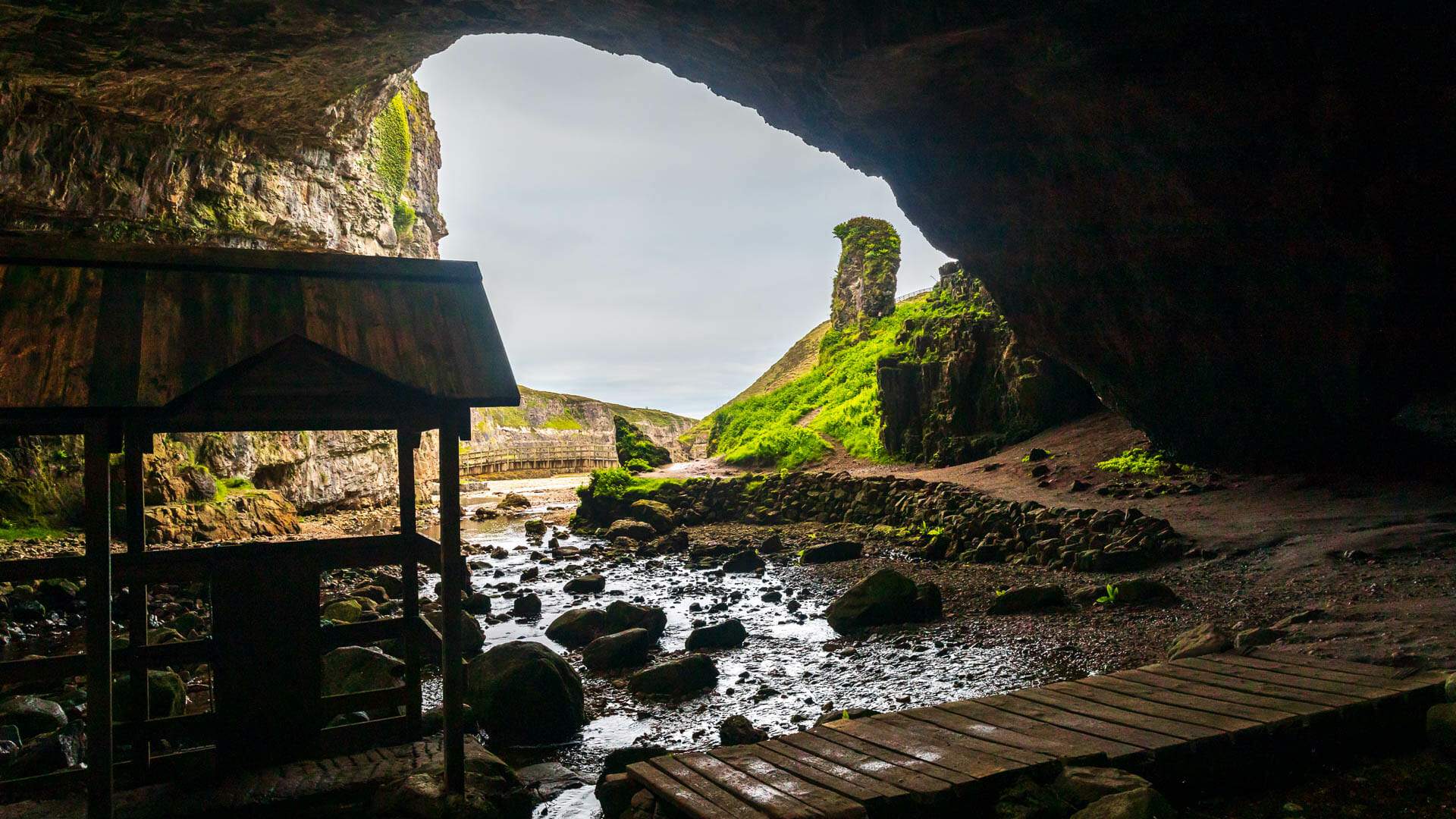
In return, the North Highlands are blessed with a remarkable variety of scenery: in the east, cliffs and rocky outcrops dominate the coastline, while gentle hills and fields roll inland. Rivers full of salmon flow through here, such as at the Falls of Shin. In the north, though, where the North Sea and the Atlantic clash stormily together, wonderful sandy beaches appear here and there in sheltered bays, such as Ceannabeinne or Sango Sands. Add to that geological gems such as the sea cave Smoo Cave.
Right in the far north-west, the land then drops away steeply at Cape Wrath. The west coast is riven by sea lochs and boasts a number of majestic mountains, such as the 700-metre-plus Suilven.
Here in Sutherland, the Highlands are at their most untamed, wild and remote – reason enough on its own to visit. Add to that the region’s eventful history and its still-visible legacy.
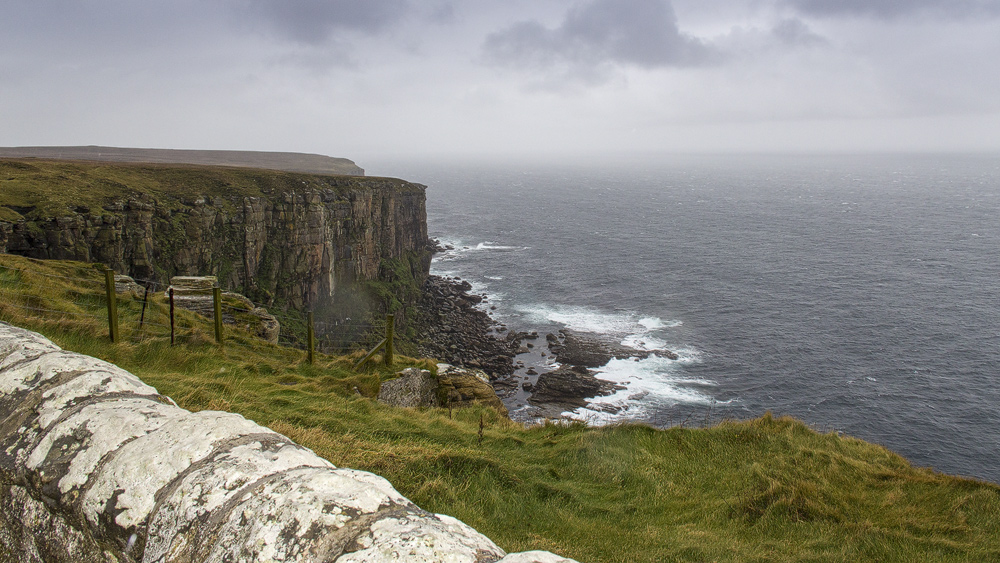
In the north-east, in the county of Caithness, there are beautiful cliffs, in places with rock stacks such as at Duncansby Head. The northernmost point of the British mainland lies at Dunnet Head, and a few kilometres further east you’ll find John o’ Groats, the starting point of the end-to-end route between Scotland’s north-eastern tip and “Land’s End” at England’s south-western tip.
History
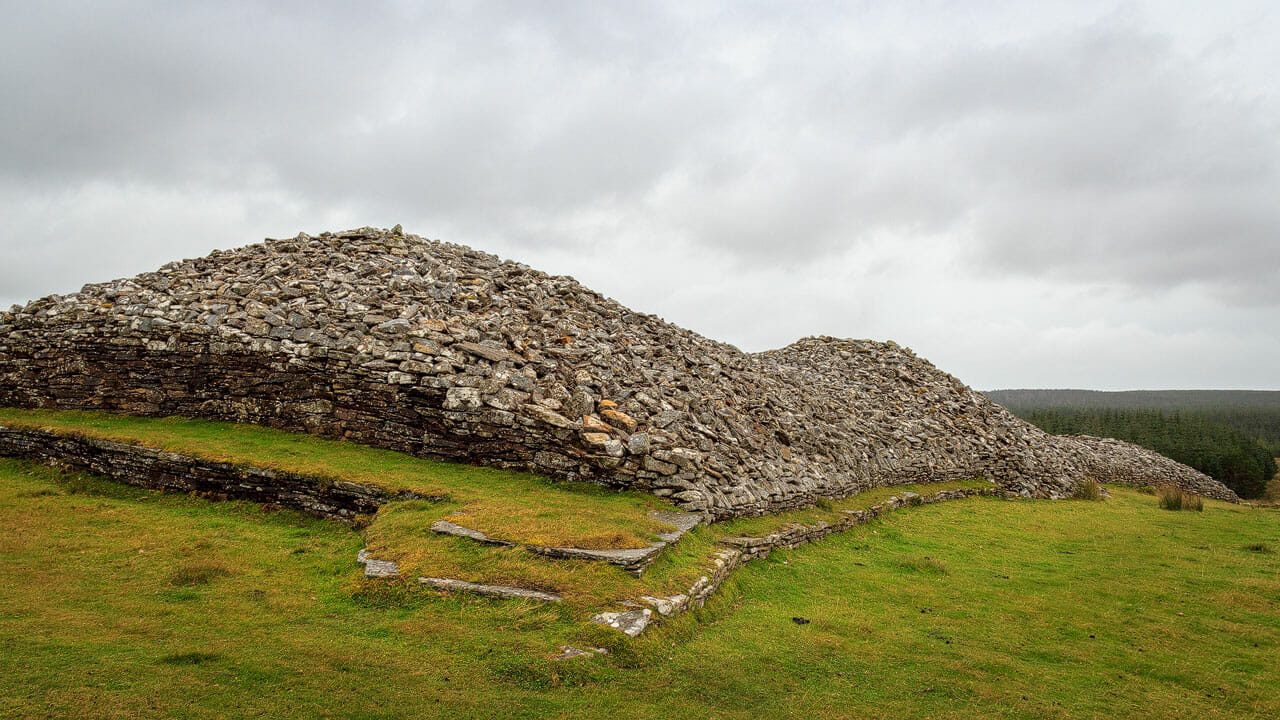
Several thousand years ago, Caithness and Sutherland had a considerably milder climate. As a result, particularly along the east coast – much like on Orkney – many relics survive from the Neolithic period. Take, for instance, the Camster Cairns – stone mounds with chambers you can walk into. Add to that the mysterious Iron Age brochs; there are so many of them that a dedicated museum, the Caithness Broch Centre, was set up for them.
Sutherland was largely Pictish territory, so Gaelic only spread eastward relatively late. In between, of course, the Vikings occupied both counties, before eventually being driven out. The name Caithness, for instance, comes from Old Norse and means roughly “headland of the Cait” – Cait being, it’s now believed, a former Pictish kingdom.
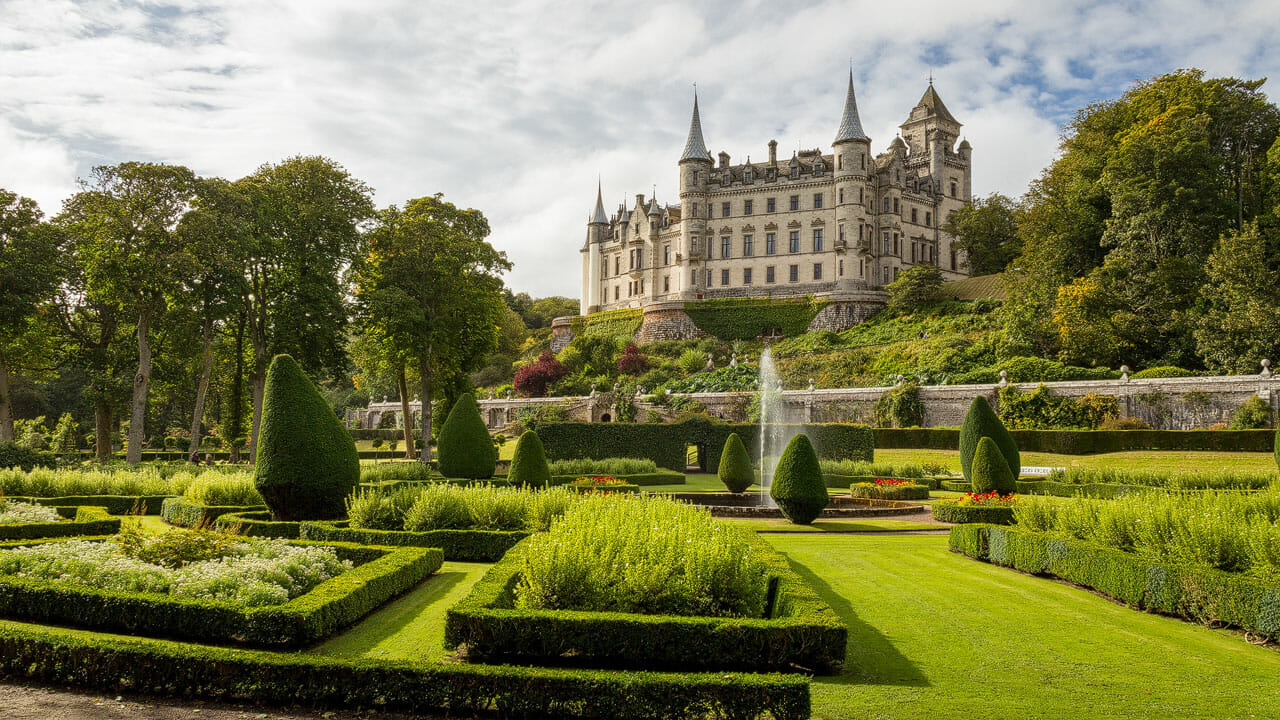
After the Vikings, Sutherland was ruled by the earldom of the same name, whose seat was Dunrobin Castle – certainly one of Scotland’s most beautiful castles. But the Sutherland name is also linked to one of the most brutal episodes of forced eviction during the Highland Clearances.
Population and places
The vast county of Sutherland has only around 13,000 residents, of whom roughly 8,500 are spread across the settlements of the east coast. The main towns of the old county are Golspie and Dornoch, right in the south.
Caithness, at roughly 50 by 50 kilometres, is considerably smaller, but with Thurso and Wick it has two larger towns, each home to more than 7,000 residents. So, in fact, more people live in small Caithness than in vast Sutherland.
Gaelic and its culture have barely any presence in Caithness in particular – the Vikings and Norse held sway here for too long for the Celtic language to ever really take hold. Since Caithness is nonetheless part of the Highland Council area, bilingual signs are found here too, meaning Gaelic appears here by administrative necessity – which has apparently caused some controversy.
