A romantic excursion into Scottish railway history. On the Bo’ness and Kinneil Railway, passengers marvel at steam locomotives and old stations.
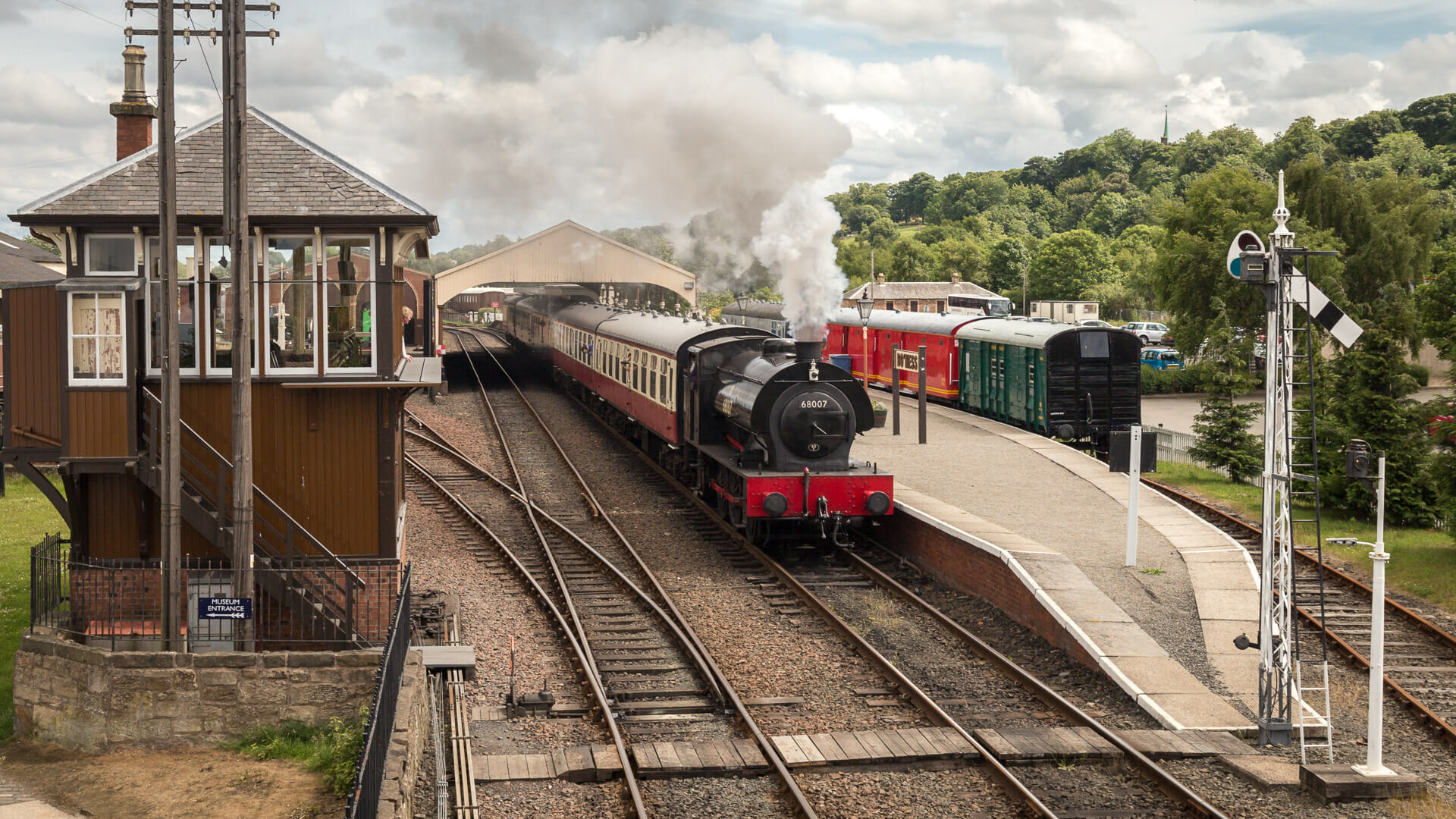
This is what it looks like when Scots play trains: instead of models, they build a real line, place a few life-size stations alongside it, and run locomotives and carriages along it. The lovely thing about it: anyone can join in.
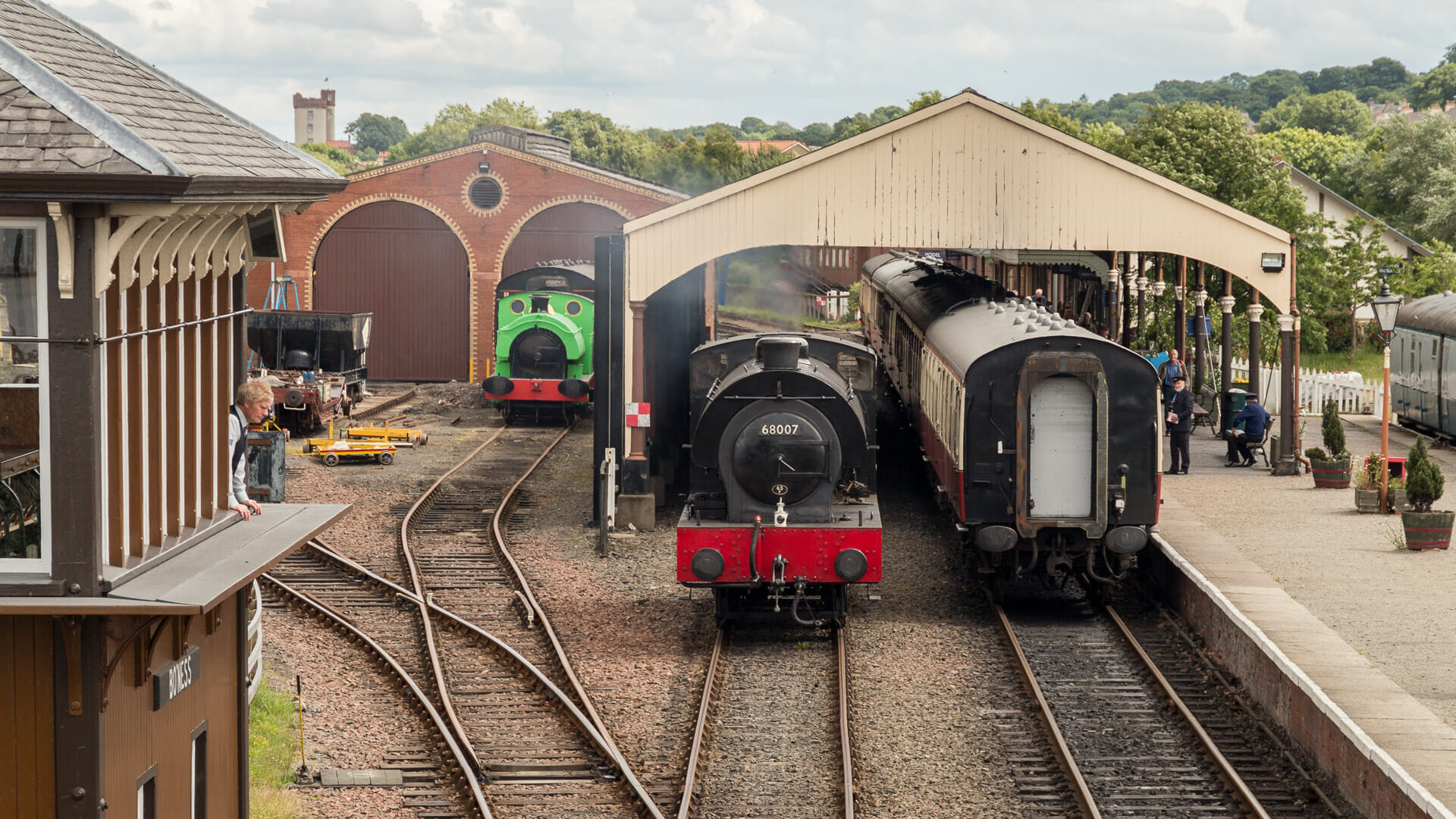
The Bo’ness and Kinneil Railway runs near Edinburgh along the Firth of Forth, the long sea inlet into which the River Forth flows. Here the enthusiasts of the Scottish Railway Preservation Society (S.R.P.S.) have set up one of their bases. The starting point is Bo’ness station. Parts of the building were once transported here from the Tay Bridge, some 60 kilometres to the north-east.
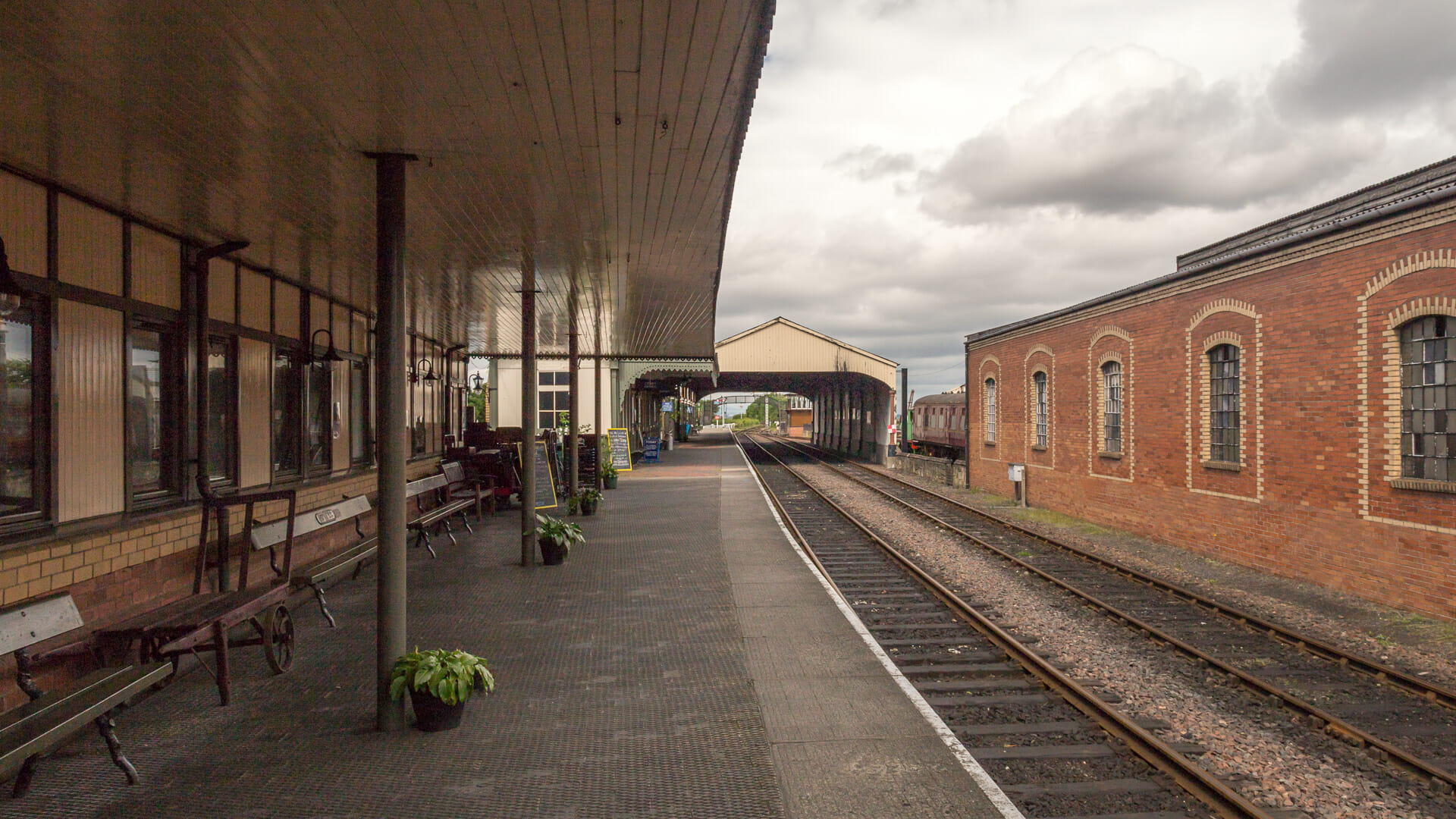
Keen TV viewers might recognise the platform. In the series Outlander, this is where Frank says goodbye to Claire in the first season, before both head off into the Second World War.
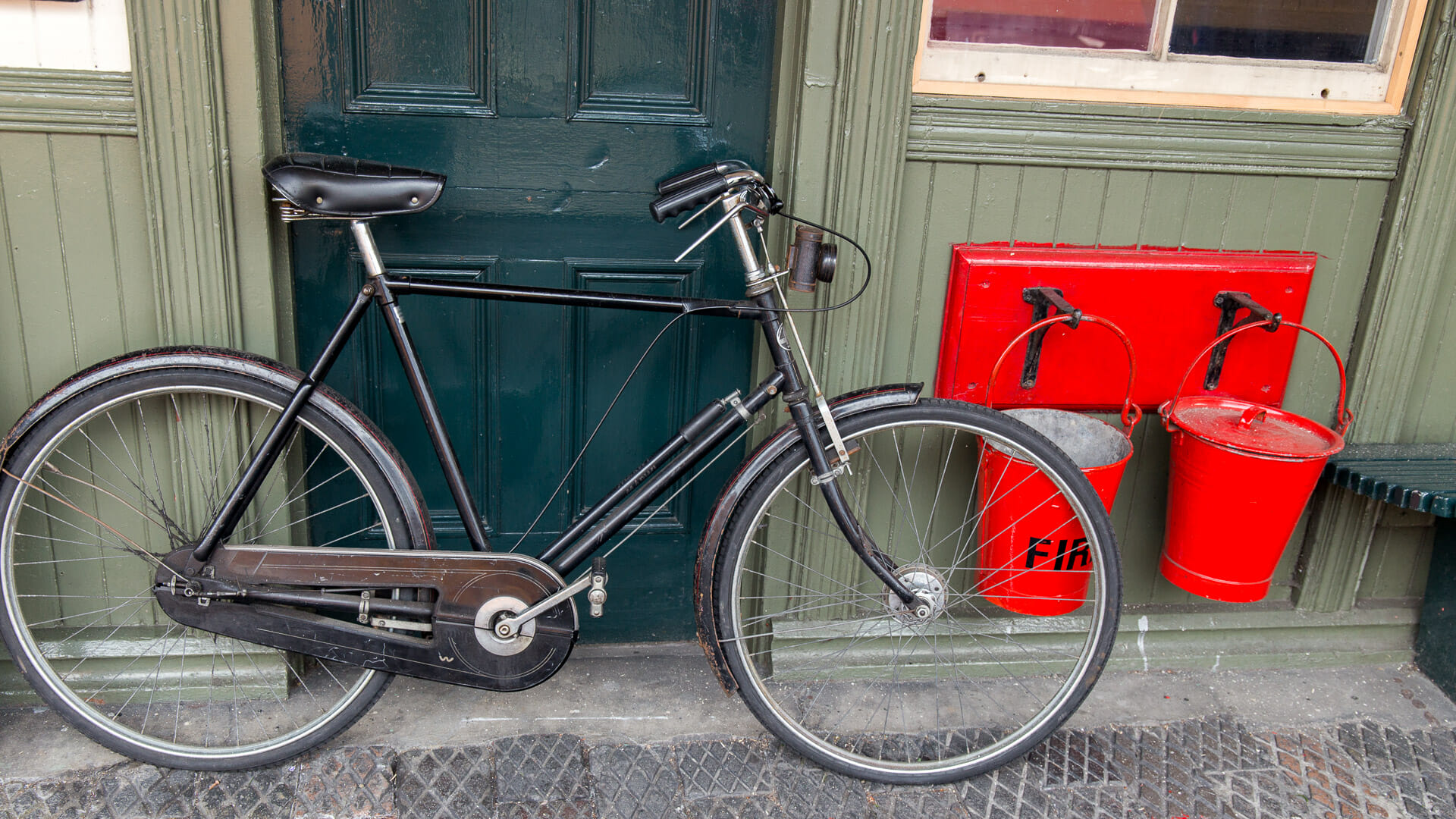
A real sense of railway romance can take hold here, as the love of detail shines through everywhere. Take, for instance, the old bicycle casually leaning against the wall.
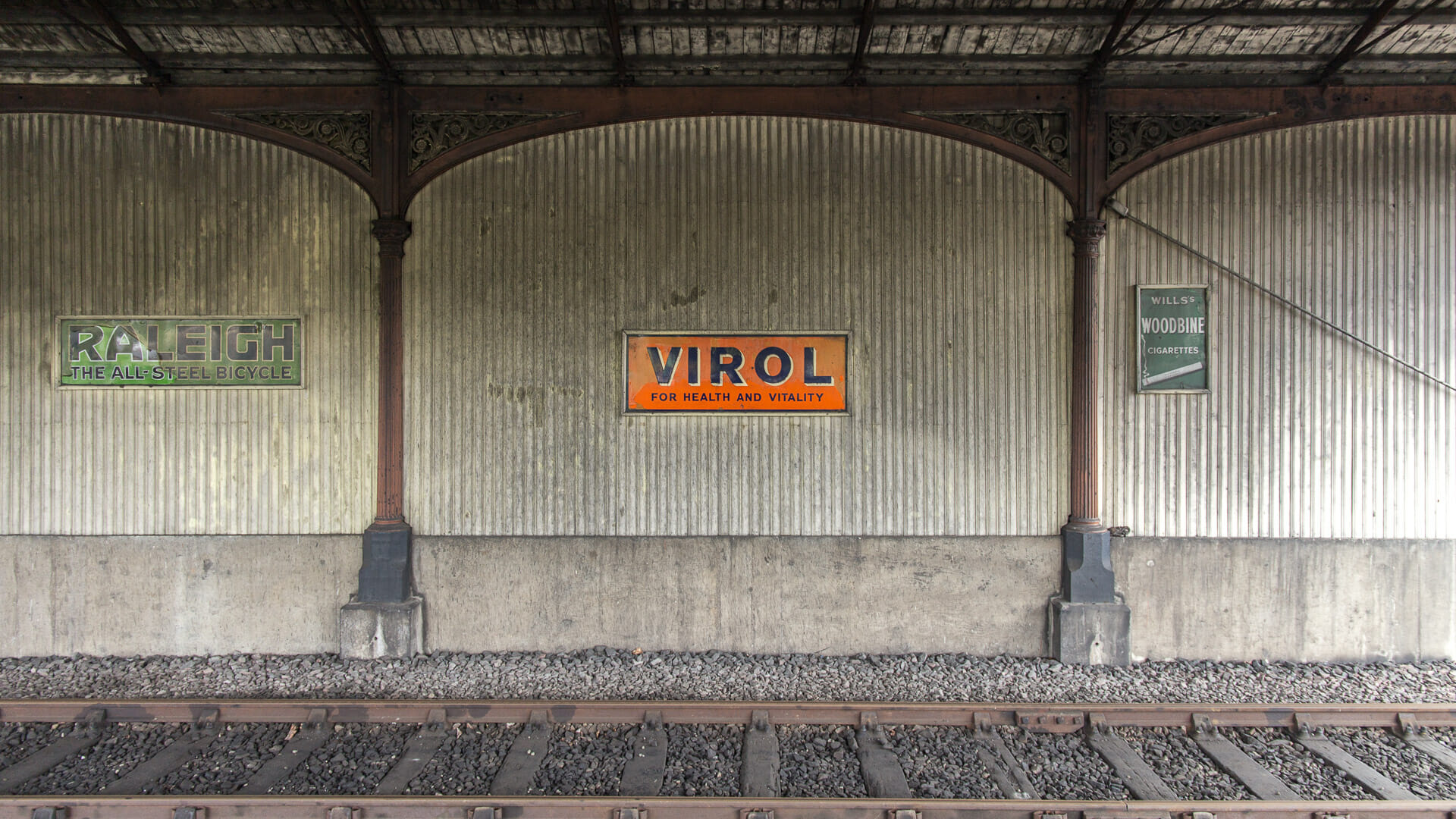
Or the advertising signs in the shelter.
Simply pottering around the station is already fun in itself – the only thing missing is the steam train. And much like at the Jacobite Steam Train, most people want to be a passenger on the historic train too. All you need for that: a ticket from the ticket office.
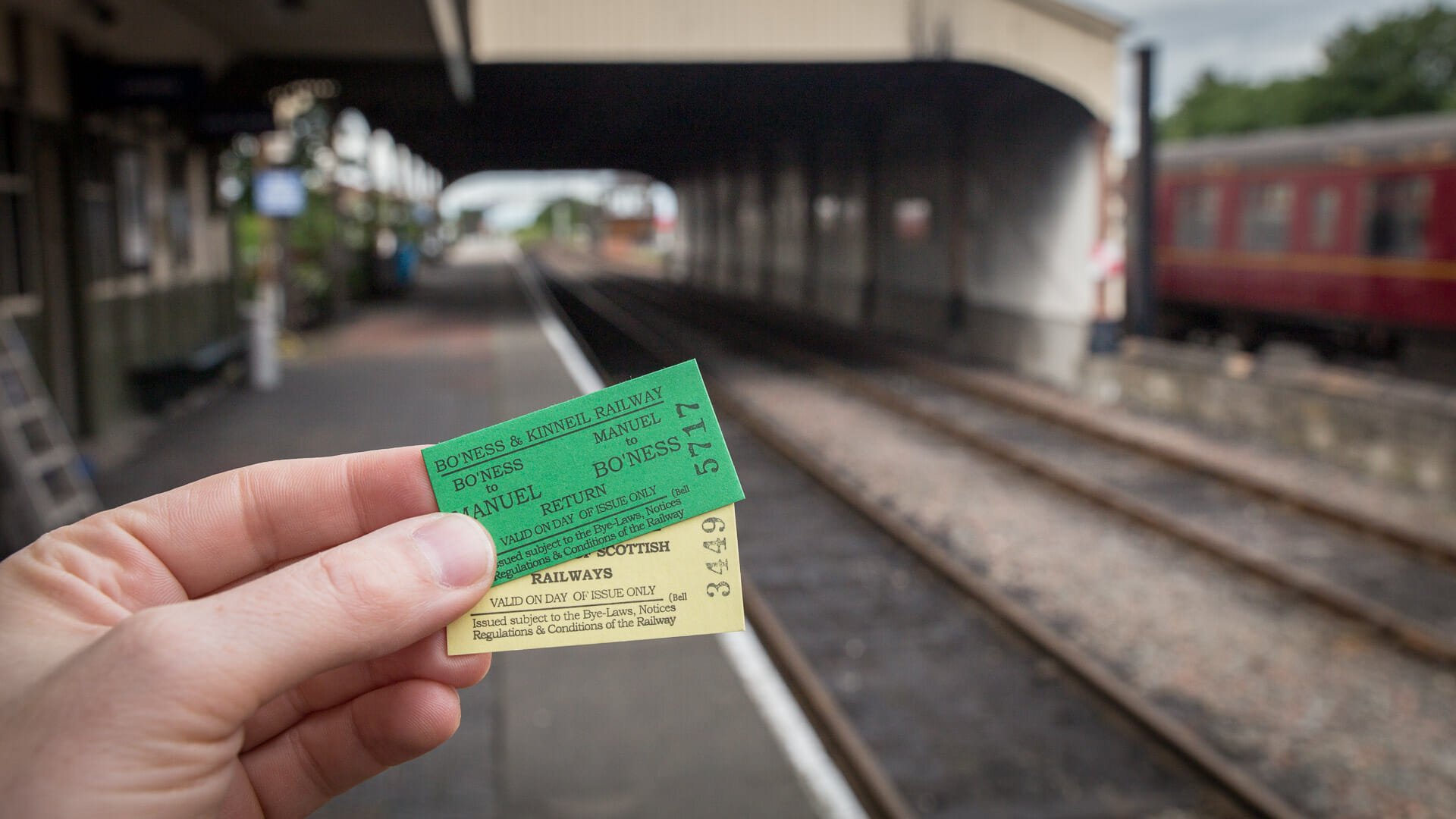
The journey to Manuel – the current terminus of the line – and back costs only a few pounds. For another two pounds, passengers also get admission to the nearby railway museum thrown in.
Now all that’s missing is the train. As one member of staff put it: “We in the station are always on time. The train drivers, sadly, not so much.” But precision timing really isn’t the point here. And so the train duly puffs in a few minutes late. Nobody here is in a hurry. The journey is the destination.
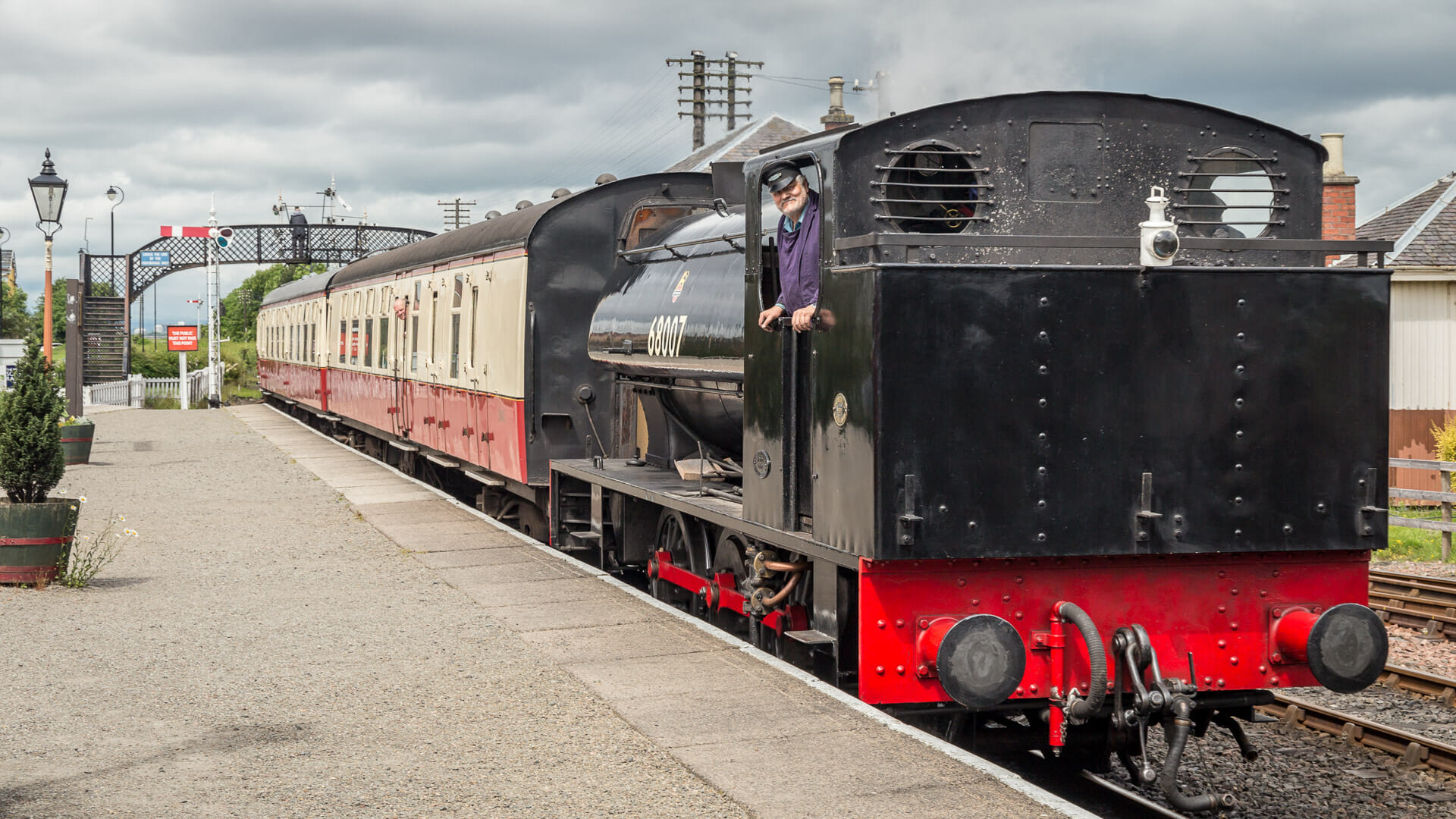
Anyone who boards the train straight away, though, misses a bit of a show. Because the locomotive has to get back to the front of the train. So it’s uncoupled and driven off. Along the way, it also picks up a load of water.
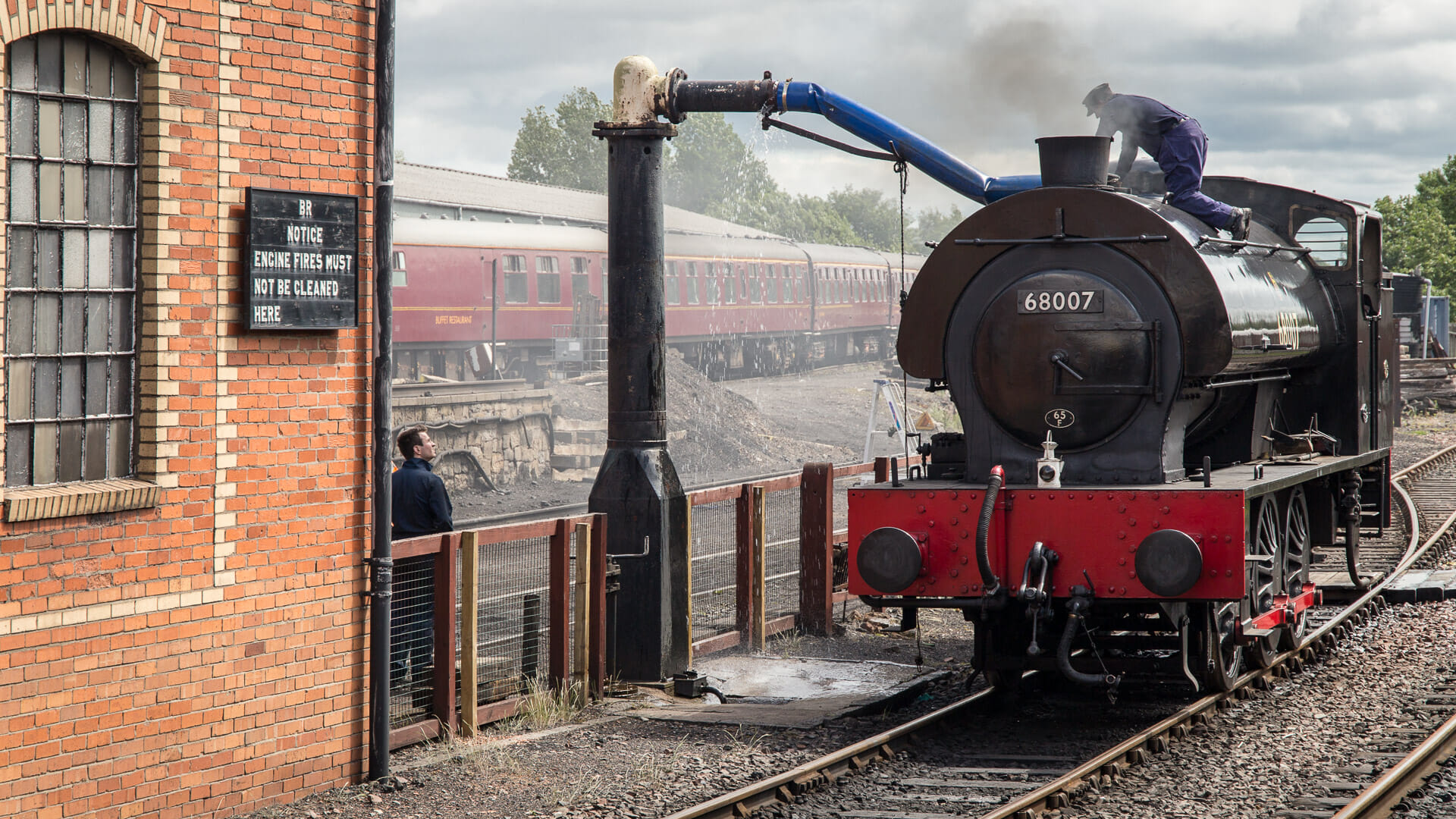
Then the locomotive moves in front of the carriages. Now it really is time to climb aboard. Mind you, this is not a luxury train.
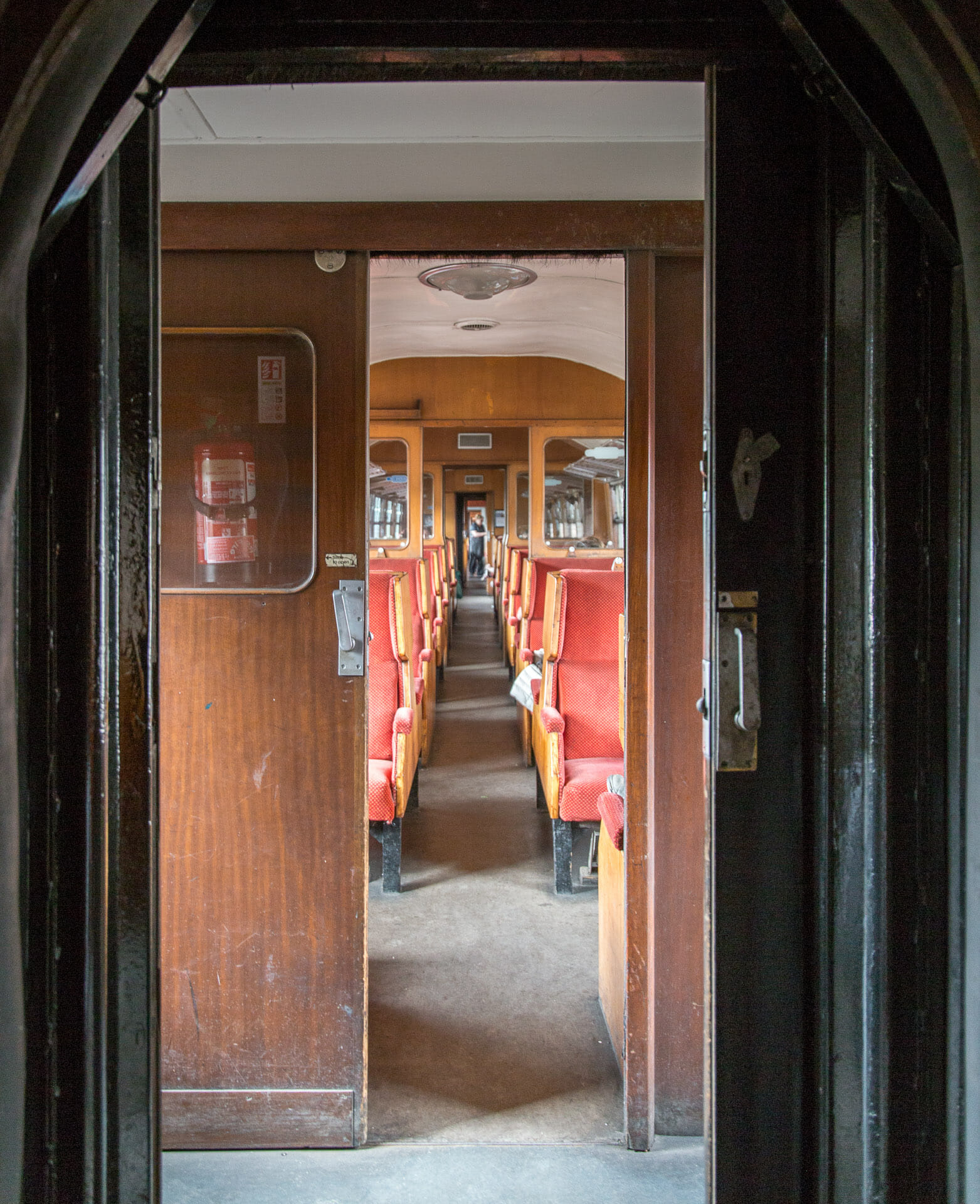
What stands out positively, though: a whole group of people with disabilities were able to board the train effortlessly via a ramp. So inclusion works even on historic carriages.
Then it’s off. The line first runs through the nature reserve near Kinneil.
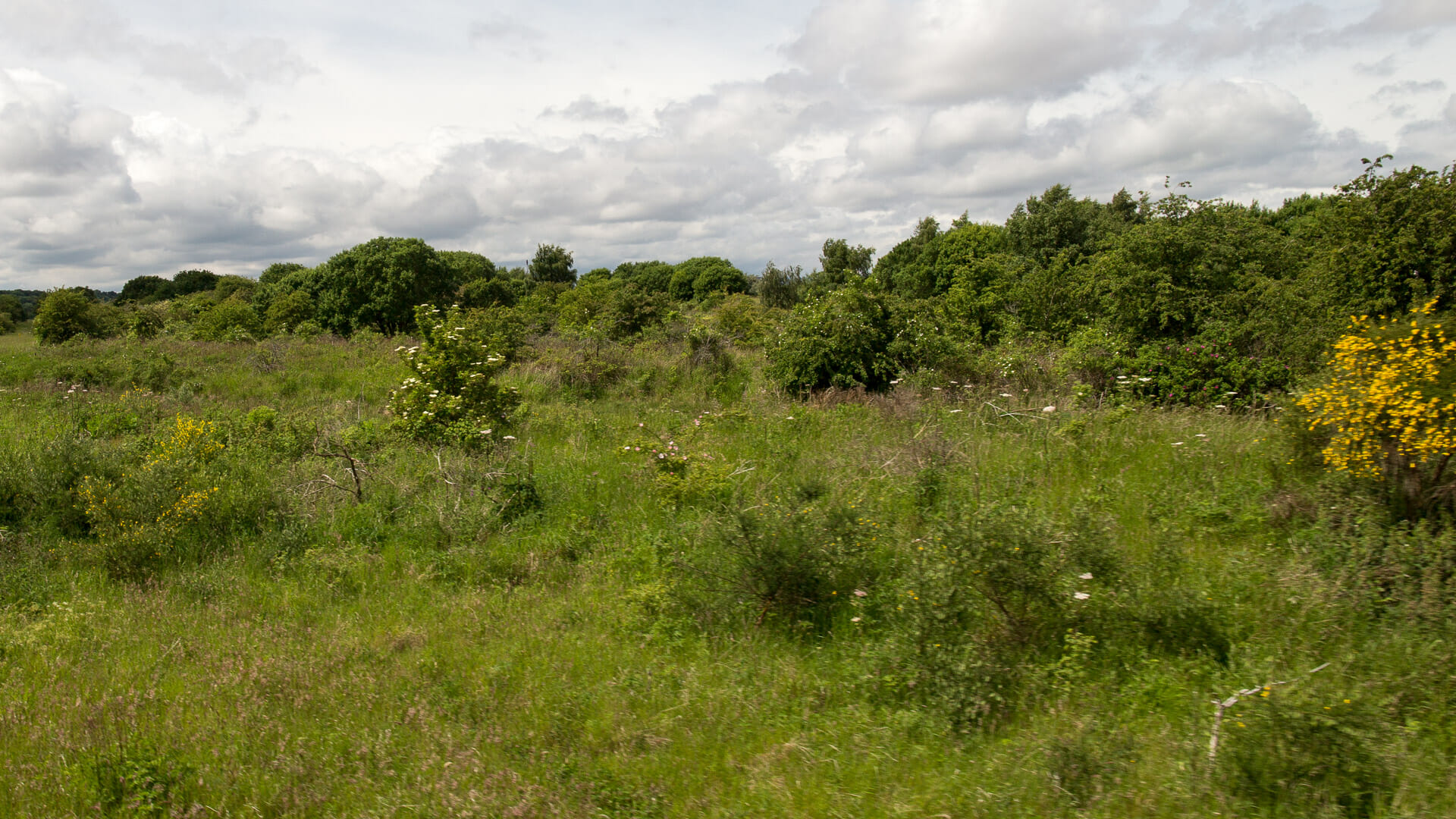
There, the train makes its first stop after just a few minutes. Some passengers already get off here and walk back to Bo’ness. It’s said to be a very pleasant walk of around a quarter of an hour.
The train continues. You can see the large industrial area of Grangemouth.
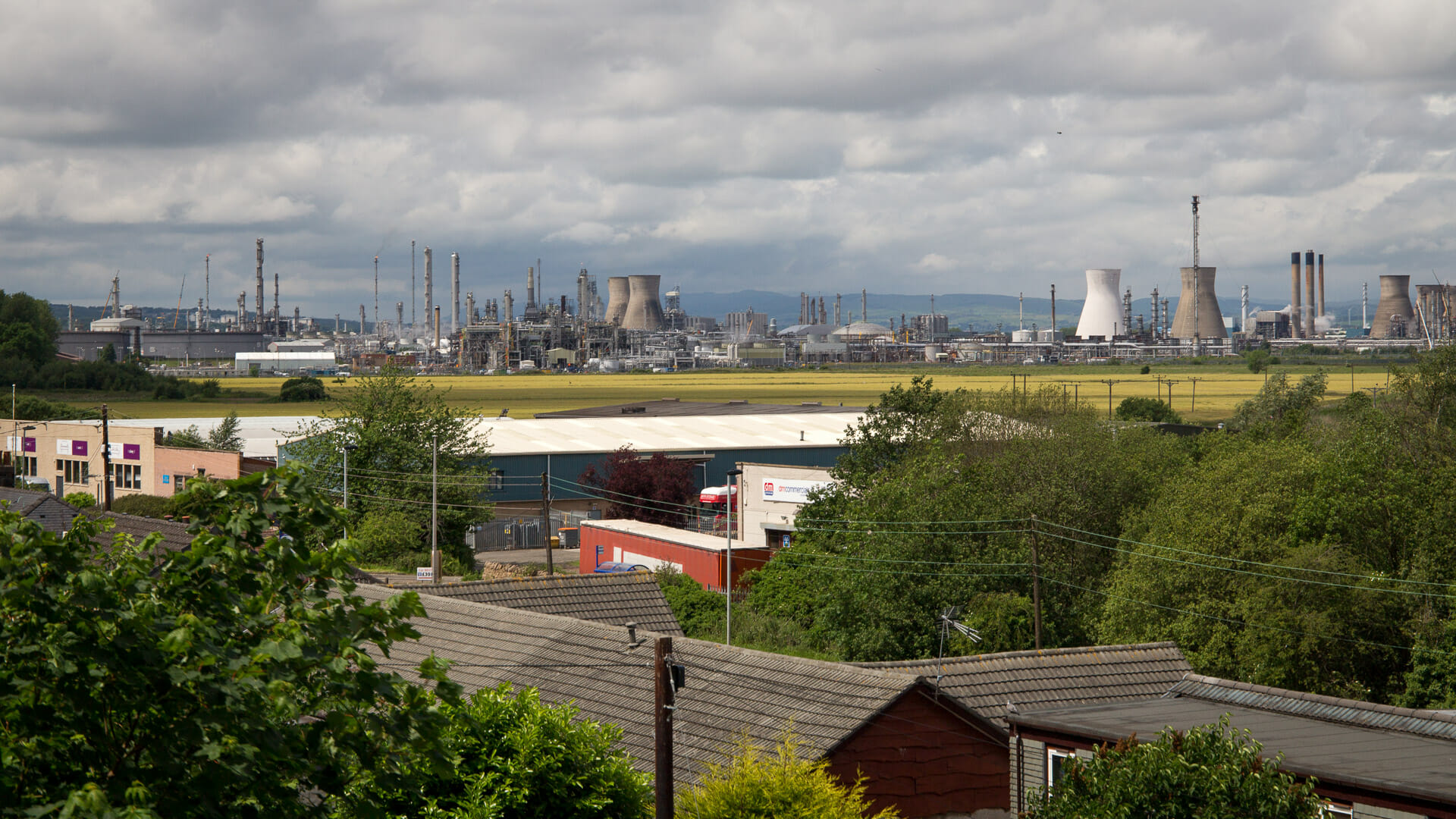
Then the train turns off and leaves the Firth of Forth behind. The next station is Birkhill.
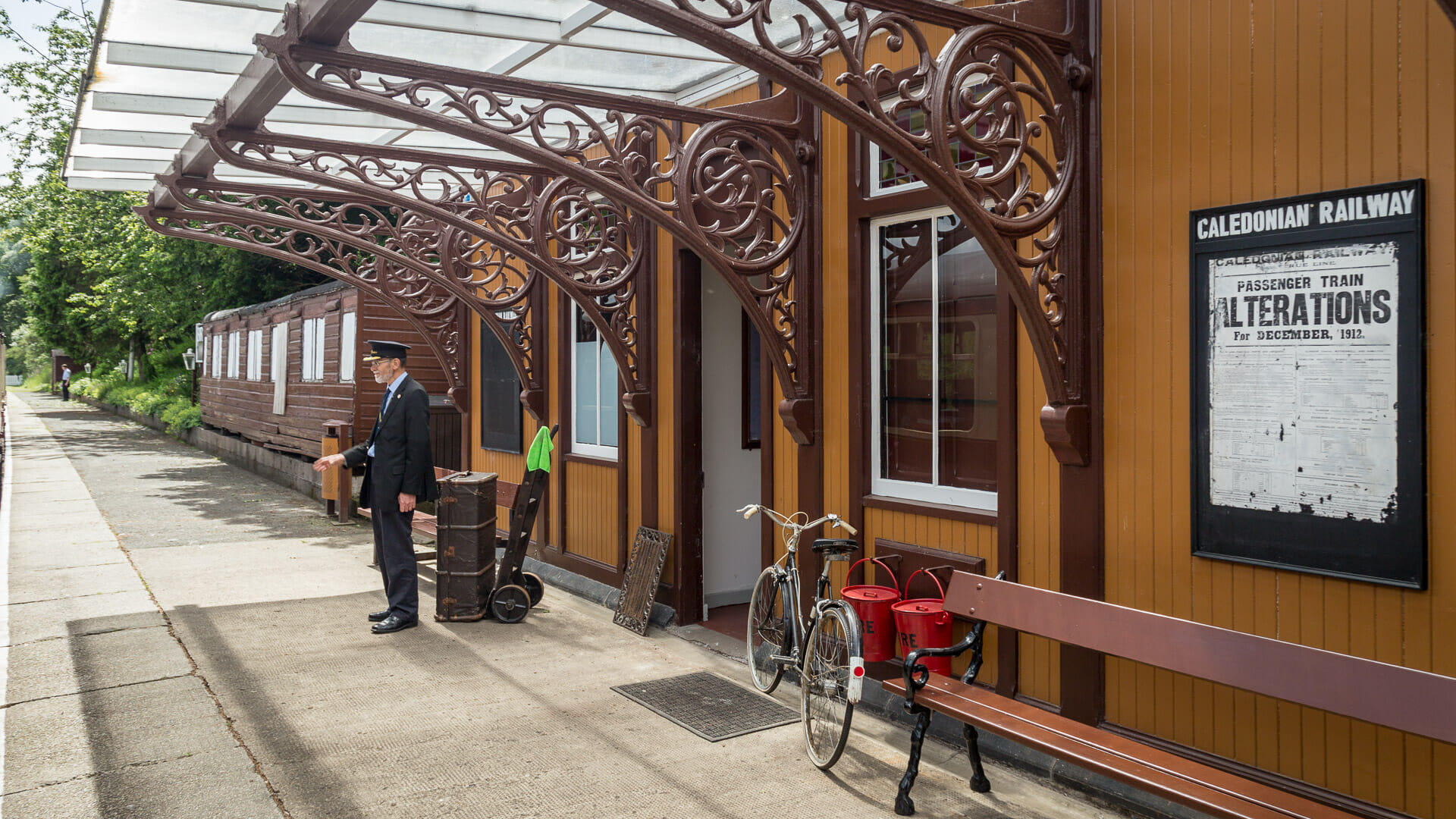
It, too, was assembled from the remains of another station. Parts of the building actually come from Monifieth railway station near Dundee. In any case, the station is beautifully dreamy and richly decorated. On we go.
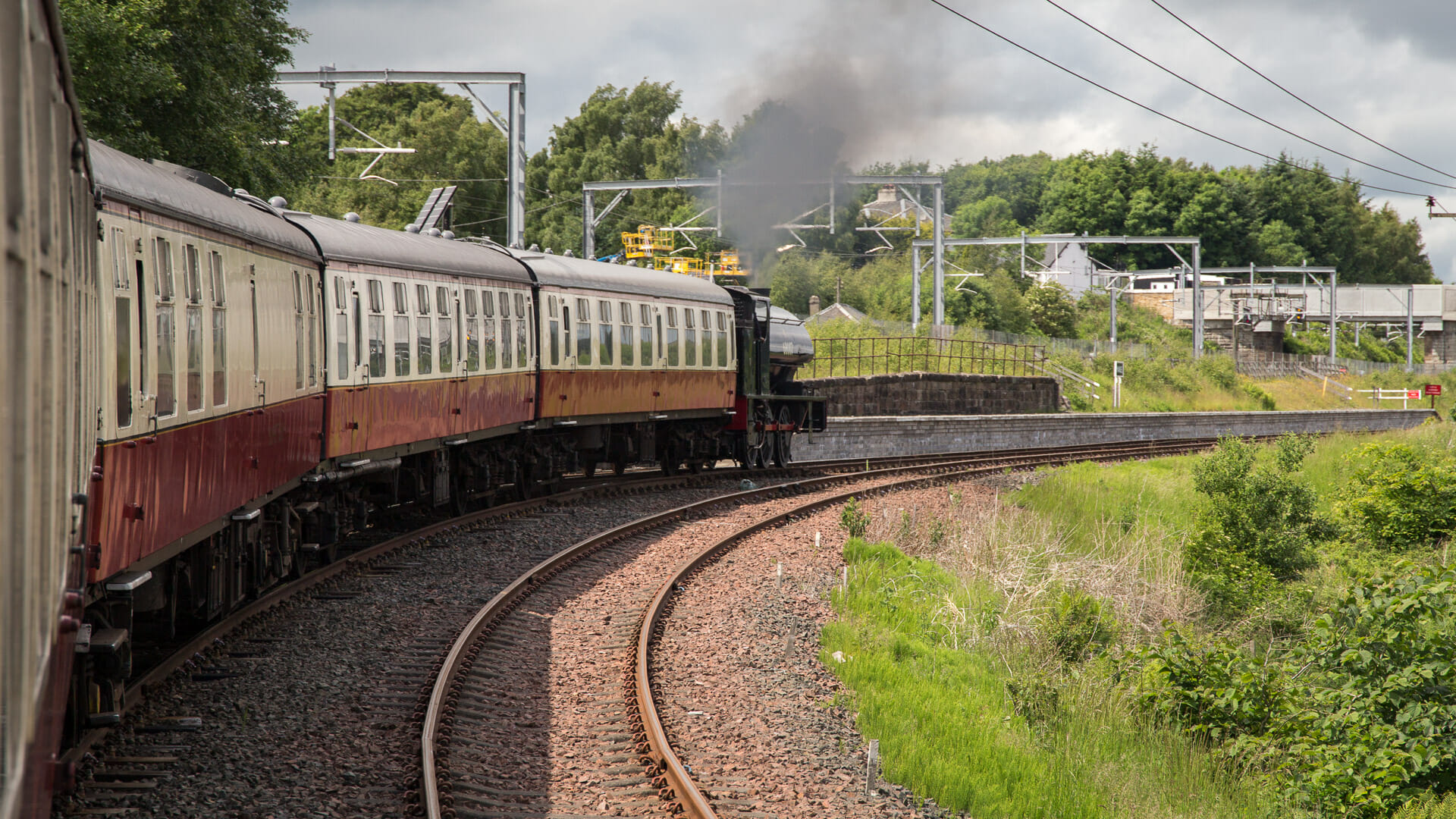
The next stop is already Manuel, the end of the line, a platform in the middle of nowhere. Most passengers only get off here because the locomotive has to get to the other end of the train again. A golden opportunity for a photo.
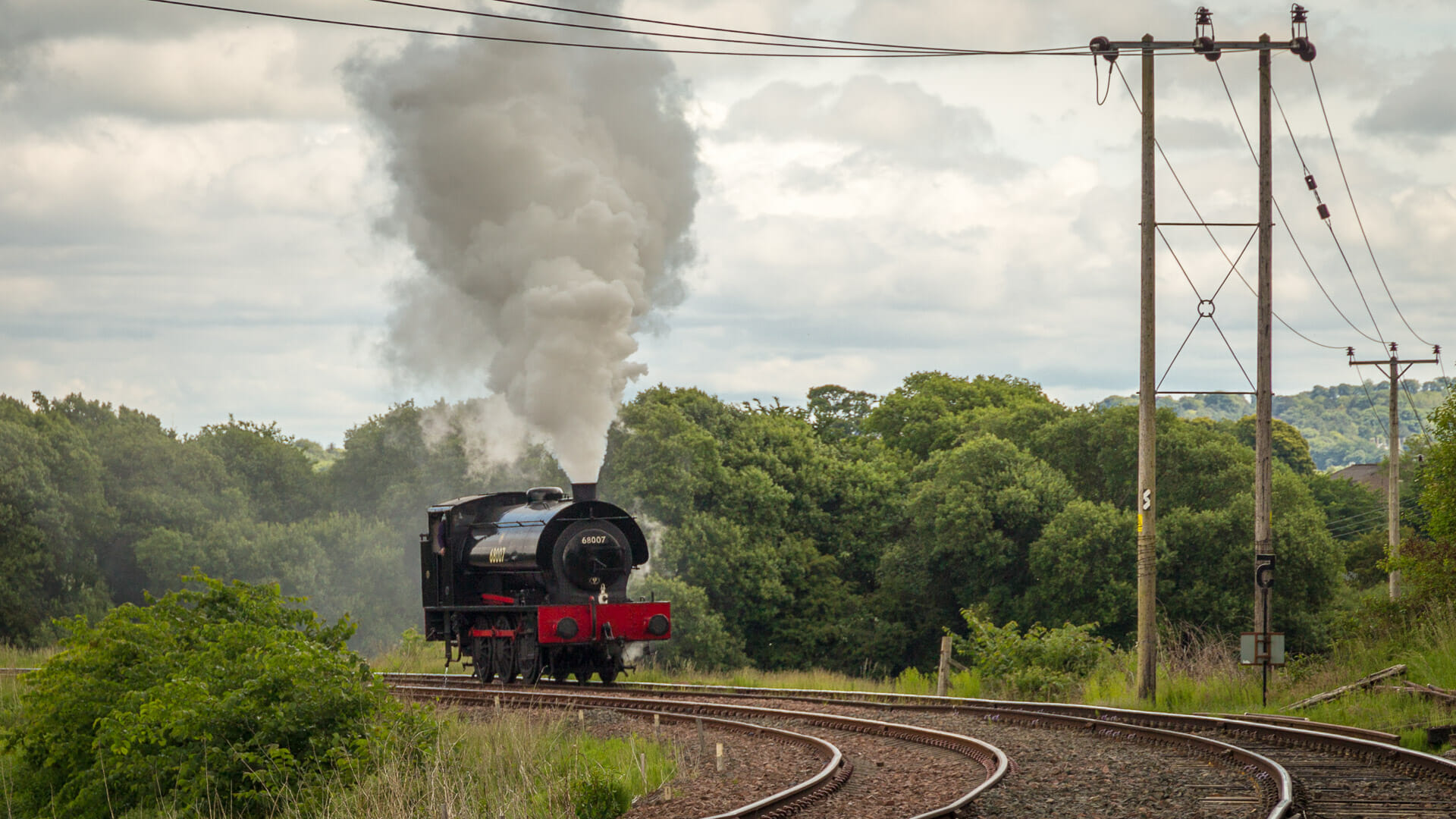
After that, it’s back the way it came, to Bo’ness.
Anyone who still hasn’t had enough of railways can wander around the three halls of the railway museum next to the station. To get there, incidentally, you have to cross the metal bridge over the tracks.
Inside the halls you’ll find Scottish locomotives, carriages and other equipment from several eras.
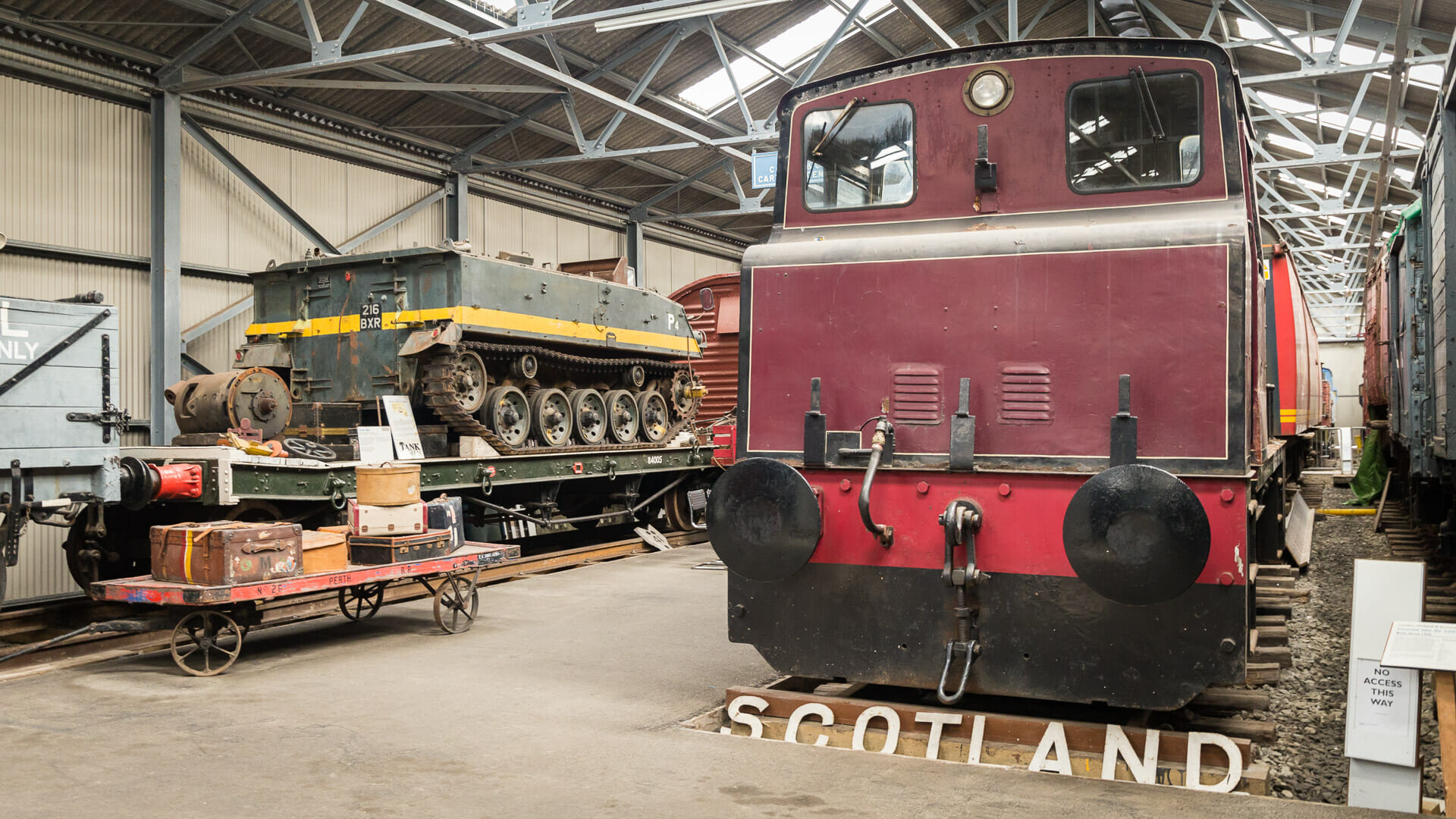
Not all pieces are finished yet. For example, you can see the condition in which new acquisitions arrive at the museum, and just how much restoration work goes into them before they become exhibits.
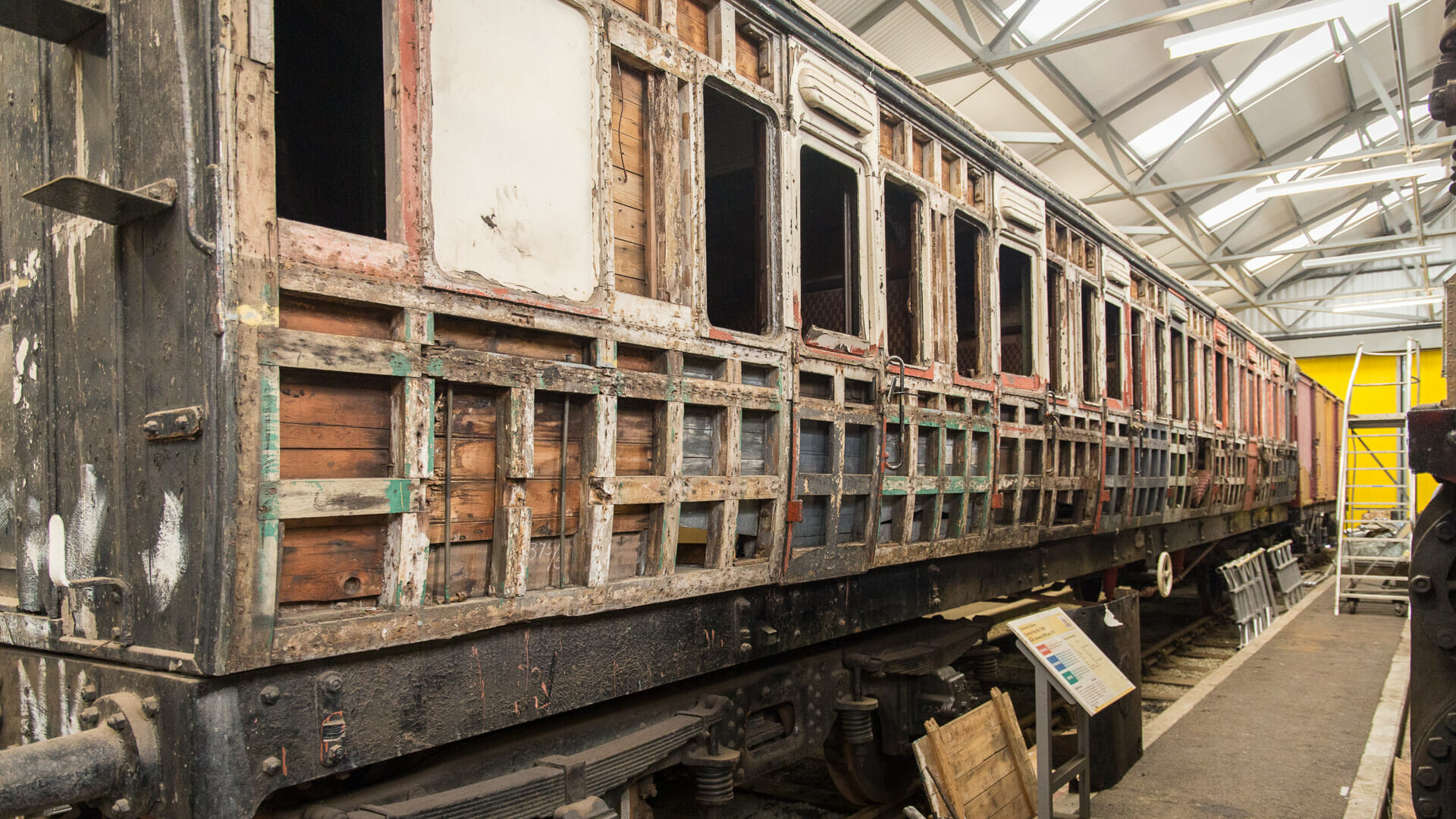
If you time it right, incidentally, you can be back on the bridge over the tracks in time after the museum and watch from there as the locomotive is recoupled and the train sets off again.
Good to know: About the Bo’ness & Kinneil Railway and the S.R.P.S.
Ticket prices are modest, the effort involved gigantic. So how does the society that runs all this fund itself?
On the one hand, the S.R.P.S. has around 1,500 members, of whom around 300 actively help out. On the other, the society draws income from sources such as the National Lottery, which repeatedly supports projects. On top of that come donations from all sorts of people.
Work on the Bo’ness & Kinneil line has been under way since as early as 1979. Bo’ness station opened in 1981, the stop at Kinneil six years later, Birkhill two years after that, and the train has only run as far as Manuel since 2013. Next project: a second platform for Birkhill, since a historic footbridge for it already exists.
Personal note: No “Harry Potter train”, but more detail
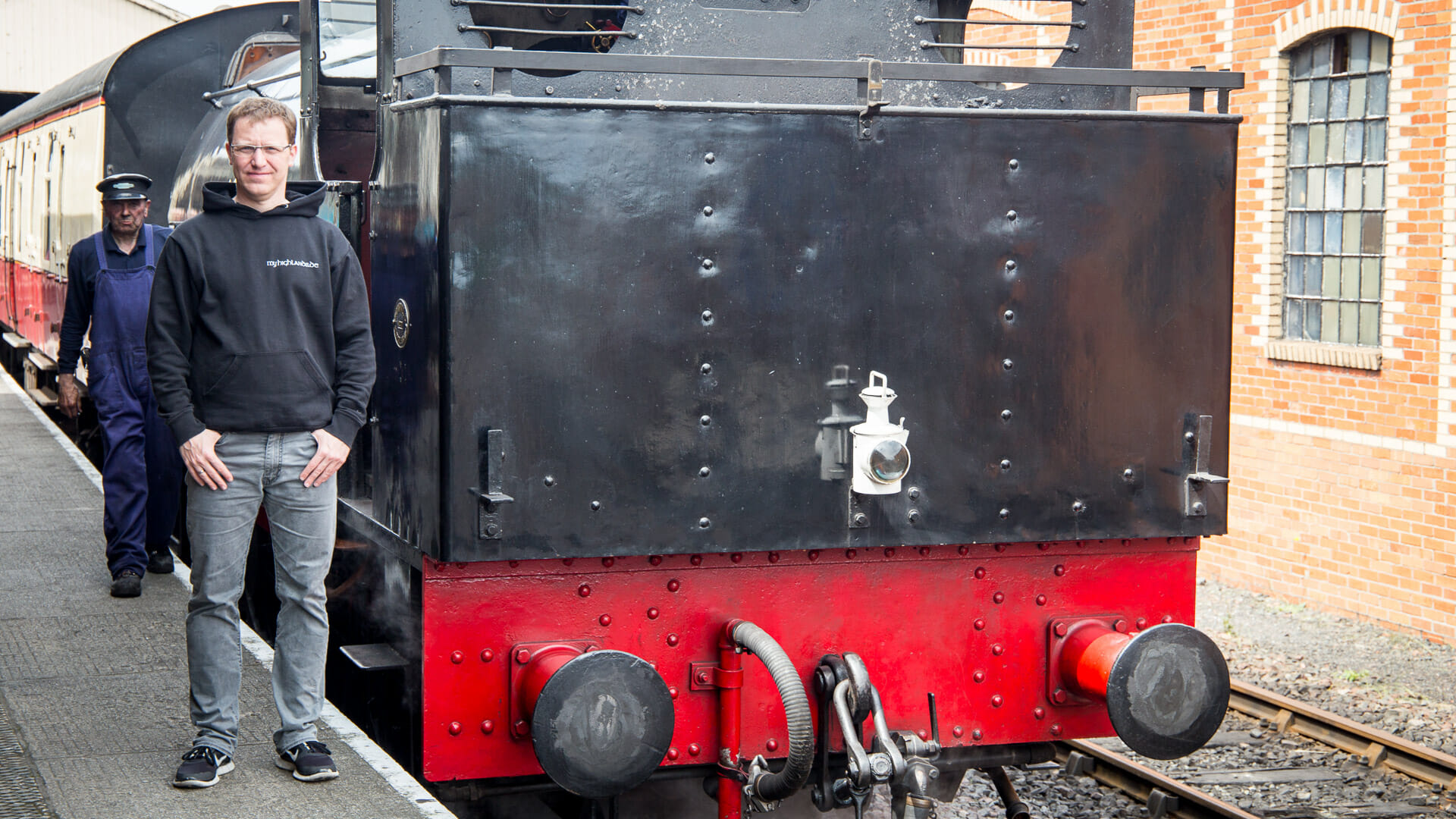
Sure, the Jacobite Steam Train is a different league. The scenery is more dramatic, and the Bo’ness and Kinneil Railway doesn’t have a structure like the Glenfinnan Viaduct. But in return, it’s far richer in detail and much more in love with its historical context. In short: less movie romance, more real history.
That brings another advantage with it. Because even though we visited during peak season, the crowds were very manageable.
In any case, I can wholeheartedly recommend the ride if you’re interested in more than just scenery.
Tip: Look out for the addresses in the mail carriage
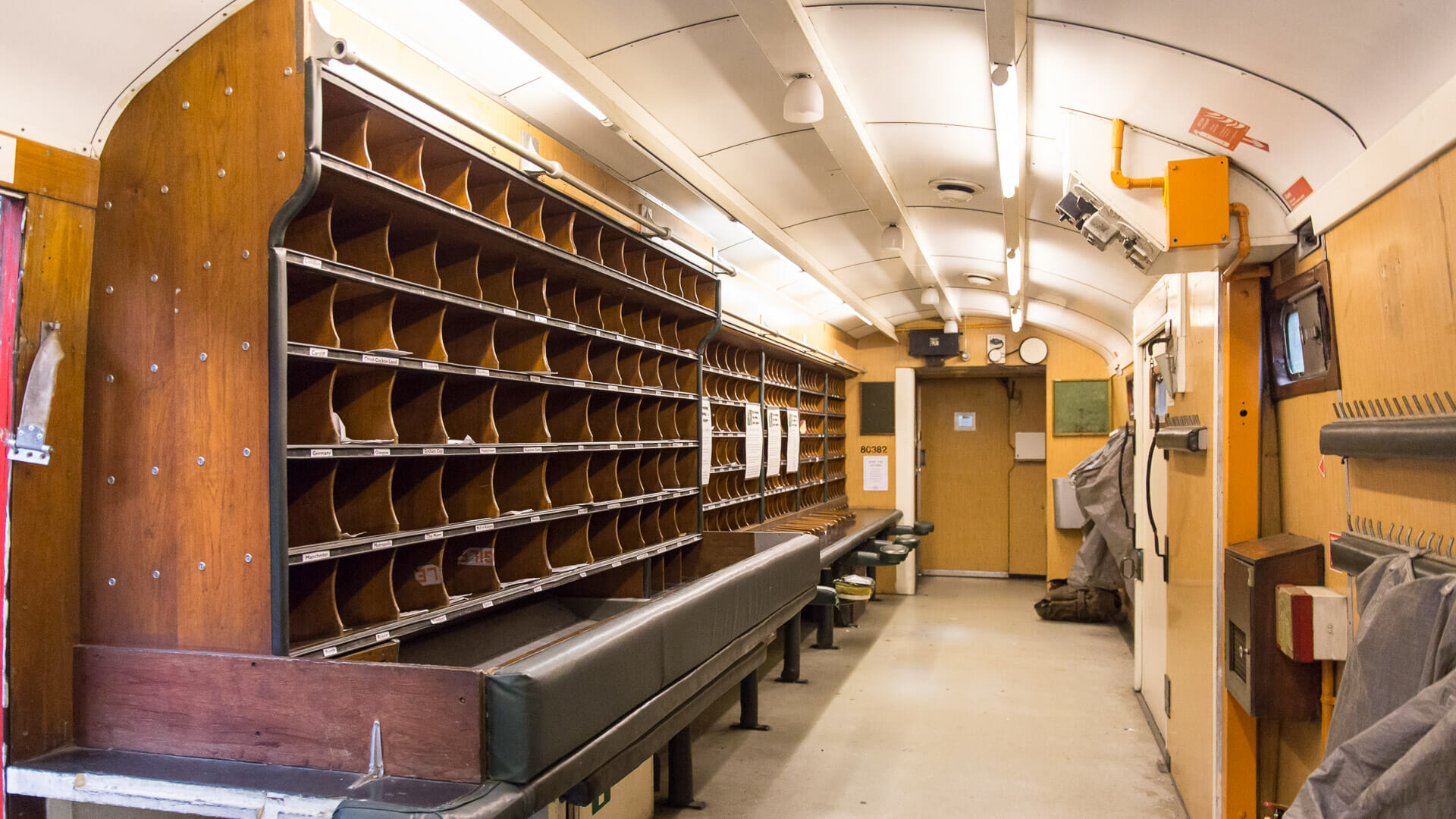
In the museum stands an old mail carriage fitted with pigeon-holes for letters, each labelled with where they’re supposed to go. It’s worth taking a closer look here. Because alongside London and Glasgow, you’ll also spot Gotham City or Metropolis, among other jokes.
Getting there:
With a sat nav: The postcode “EH51 9AQ” gets you right nearby. Watch for signage there.
Without a sat nav: From Edinburgh, take the M9 motorway. Junction three is Bo’ness. Follow the signs to Bo’ness on the A904. Shortly before the town, a brown sign points to the “Steam Railway”. Turn right here and continue along the main road. After a bend to the left, you enter Bo’ness. Follow the road until, between two houses, a brown sign points to the road for the “Bo’ness Kinneil Railway”. A little further on, follow the signs to the car park.
