Castle Leoch in Outlander or Castle Anthrax in Monty Python – Doune Castle has already had many names in many films. But a visit is worthwhile for more than that reason alone.
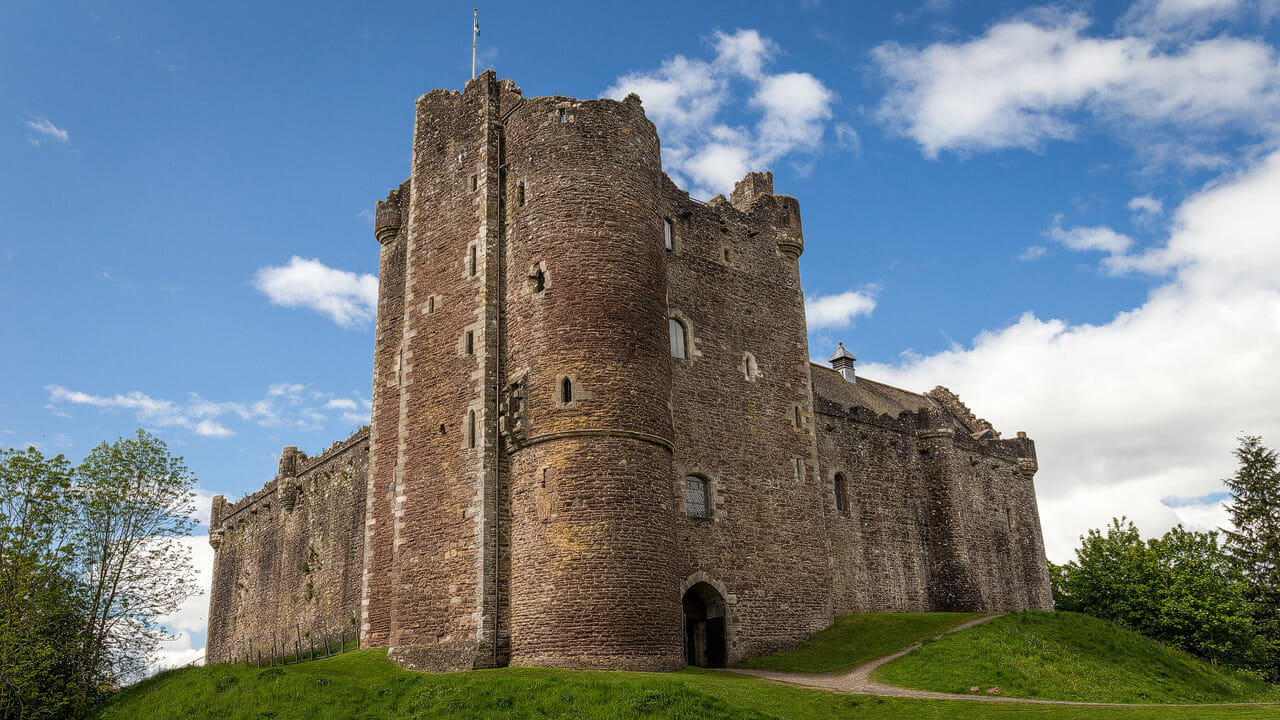
Robert Stewart, the first Duke of Albany, presumably never intended to create a perfect film set – after all, cinema didn’t exist yet in the 14th century. And yet Doune is now probably best known for its appearances on the big and small screen.
Most recently, Doune Castle served as a filming location for the Highland romance “Outlander”, based on Diana Gabaldon’s “Outlander” book series. There it goes by the name Castle Leoch. Almost forty years earlier, it had already served the Monty Python troupe as a set for “Monty Python and the Holy Grail”. The English comedians turned Doune into several castles at once in the film: Swamp Castle, Castle Anthrax, and Camelot itself.
Achtung: Die Betreiber dieser Sehenswürdigkeit, das Historic Environment Scotland (HES), führt seit 2021 an vielen Sehenswürdigkeiten Untersuchungen oder Baumaßnahmen zum Erhalt der Gebäude durch. Dieses gehört dazu. Darum vorher informieren, ob und was begehbar ist. Mehr Hintergrund hier.
Doune Castle was even allowed to play part of Winterfell in the pilot episode of the hit series Game of Thrones.
So what makes Doune so popular with film producers?
Doune is one of the last castles in the whole of Europe from the 14th century to be so well preserved. That’s the claim made by Historic Scotland, at least. Archaeologists suspect that some parts were already built as early as 1260, but the castle owes its present form to Robert Stewart.
The castle offers filmmakers another advantage too: it has a large, almost empty courtyard.
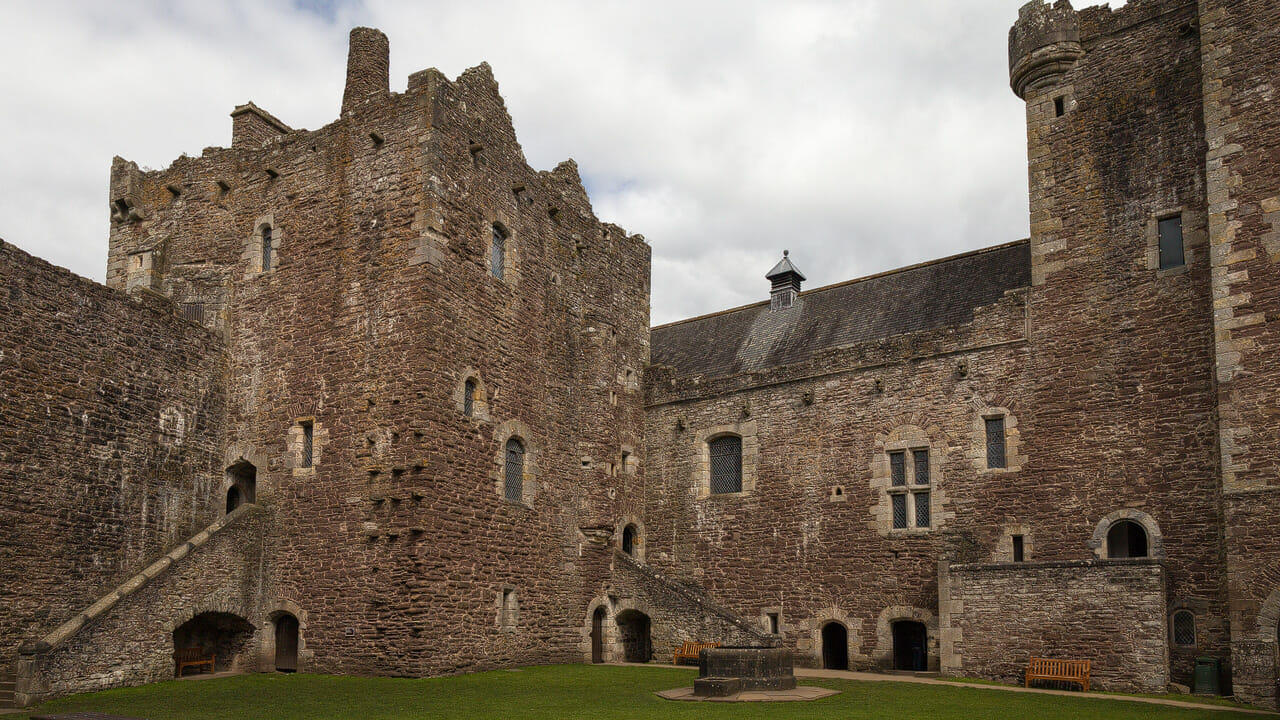
Ideal for set designers – with one small catch: since the castle belongs to Historic Scotland and is meant to be preserved, nothing may be anchored into the ground or the soil, which isn’t exactly helpful for the stability of a film set.
Anyone who stands in the courtyard themselves will soon notice something:
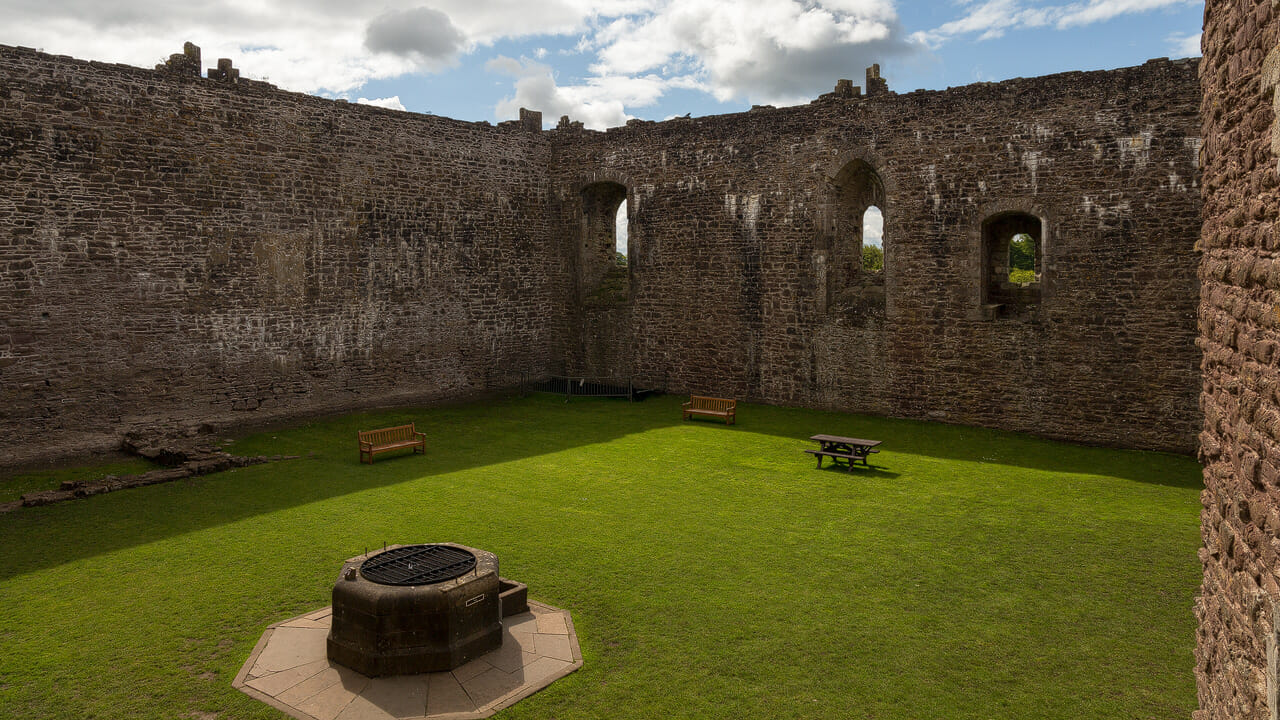
Two sides of the castle courtyard have no buildings at all – and yet there are window openings in one of the walls. Whether buildings once stood here, or were merely planned, is a matter of dispute among scholars. In favour of the “buildings” theory is the fact that the Duke of Albany received several high-ranking guests here; the dwellings that still exist today would hardly have been sufficient for that. But if large buildings really did once stand there, they have vanished without a trace.
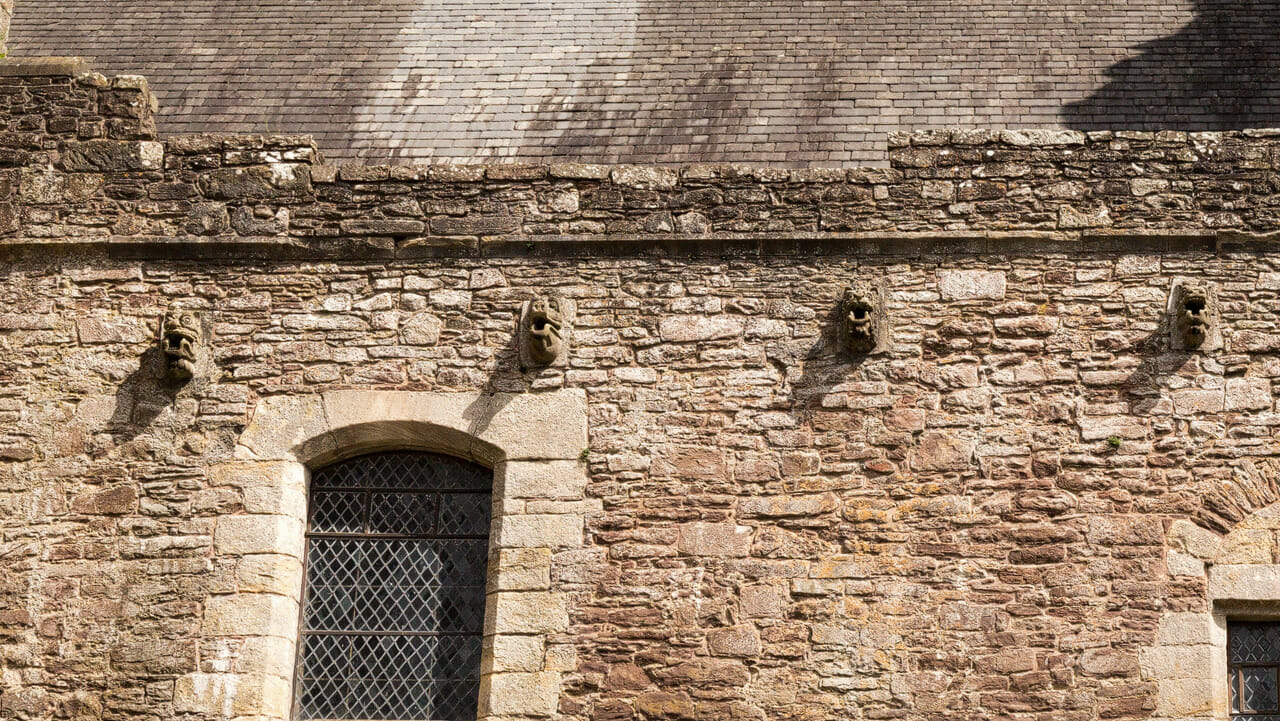
A glance upward is worthwhile too, by the way. On the main building, gargoyles with different animal heads line up in a row.
While the series “Outlander” mainly used the castle’s exterior grounds as a backdrop, Monty Python took us inside multiple times. The advantage here too: space and emptiness. Because unlike, say, Stirling Castle, the rooms here haven’t been stuffed full of mannequins and plastic decorations. Doune Castle is largely empty. That creates a very particular atmosphere and allows an unobstructed view of the architecture.
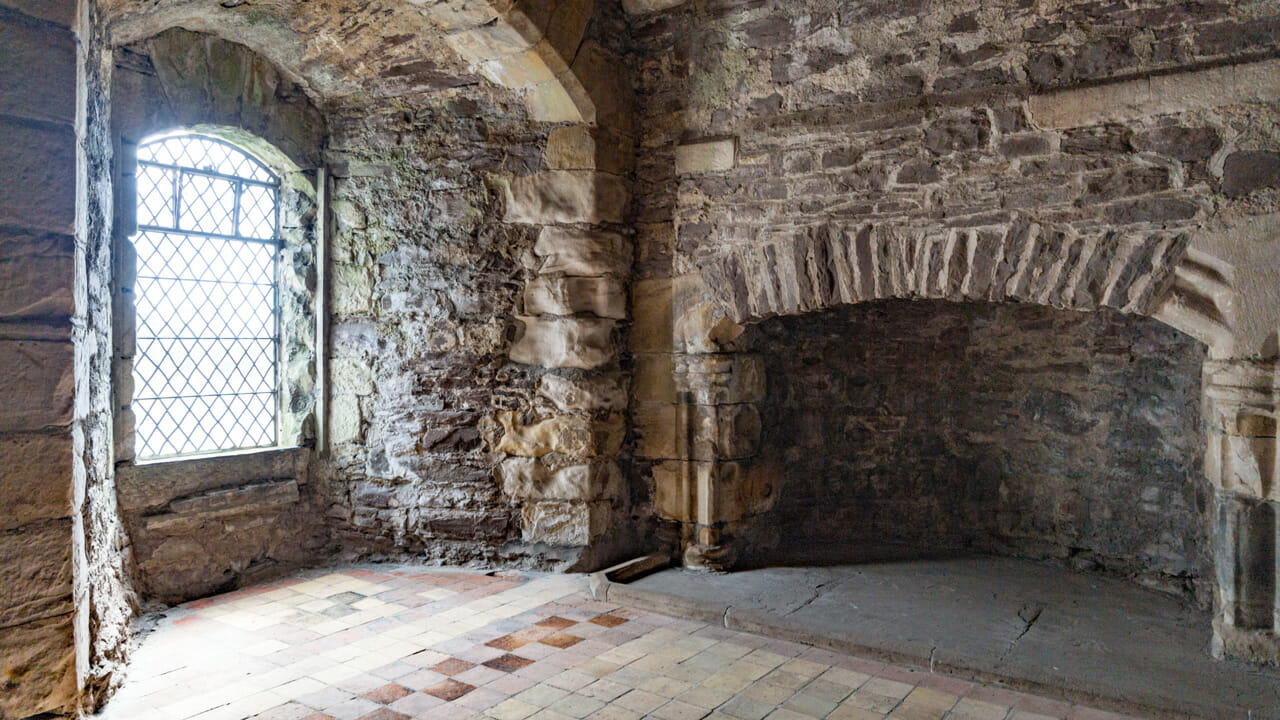
That also suited the film crew well, since they could easily bring in their own furniture and recreate the interiors of several different castles, as here in this clip for Swamp Castle:
Although “Outlander” chose not to use the castle’s interiors, the studio sets were still modelled on the look of, for example, Doune Castle’s kitchen.
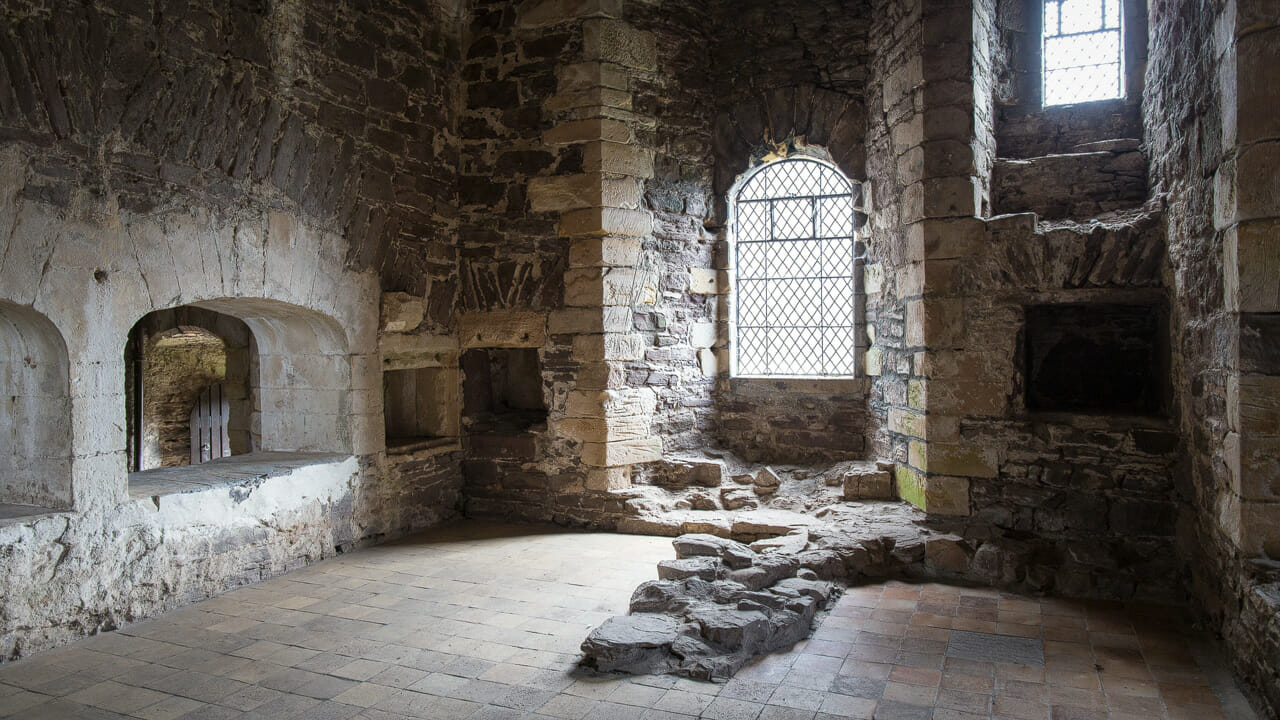
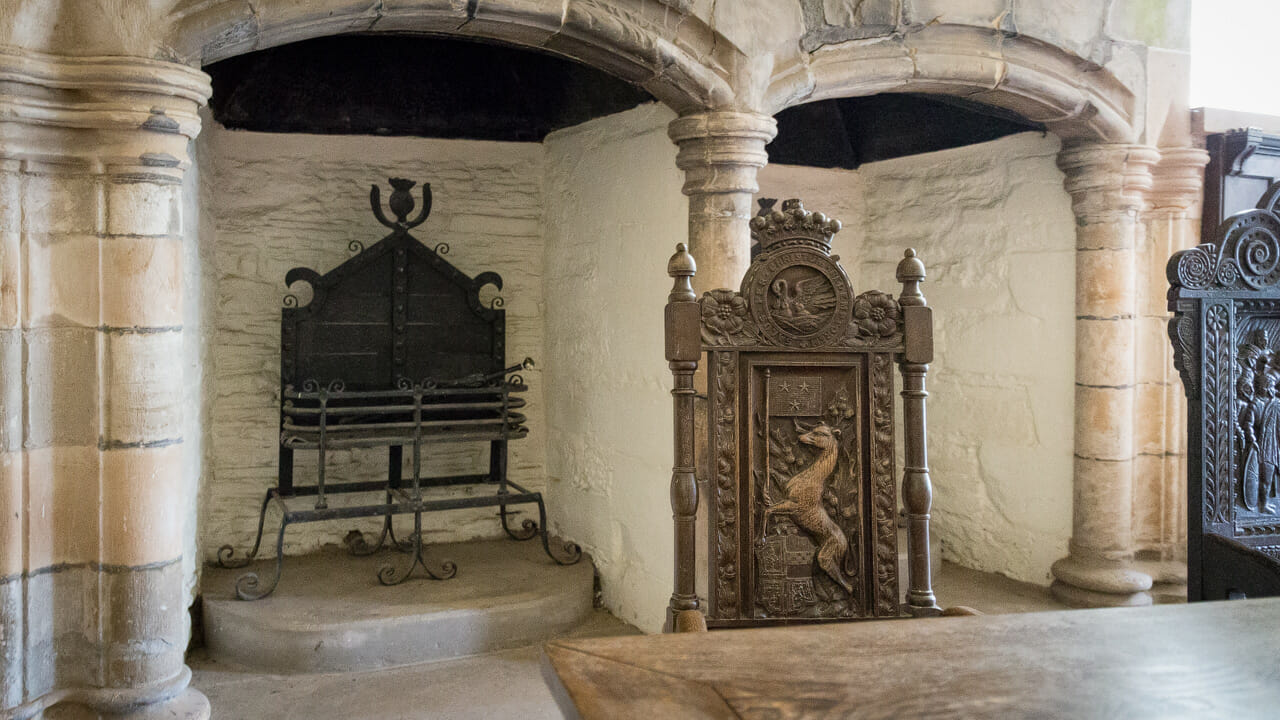
Rather sparse, isn’t it? By comparison, the stately Lords Hall feels a bit cosier.
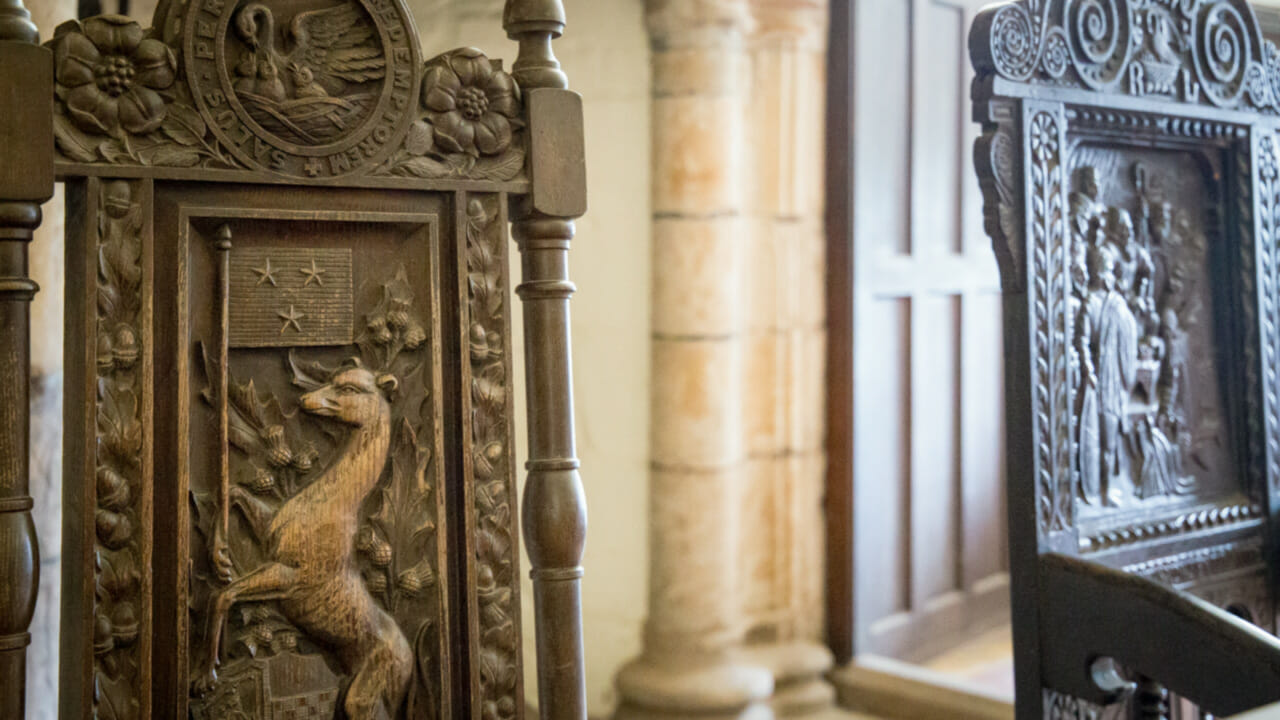
Cosier not just because of the two throne-like chairs, but also because of the “seat heating” behind them: each chair has its own fireplace.
The castle’s centrepiece, meanwhile, stands almost entirely empty – which is precisely what gives it just the right effect: the Great Hall.
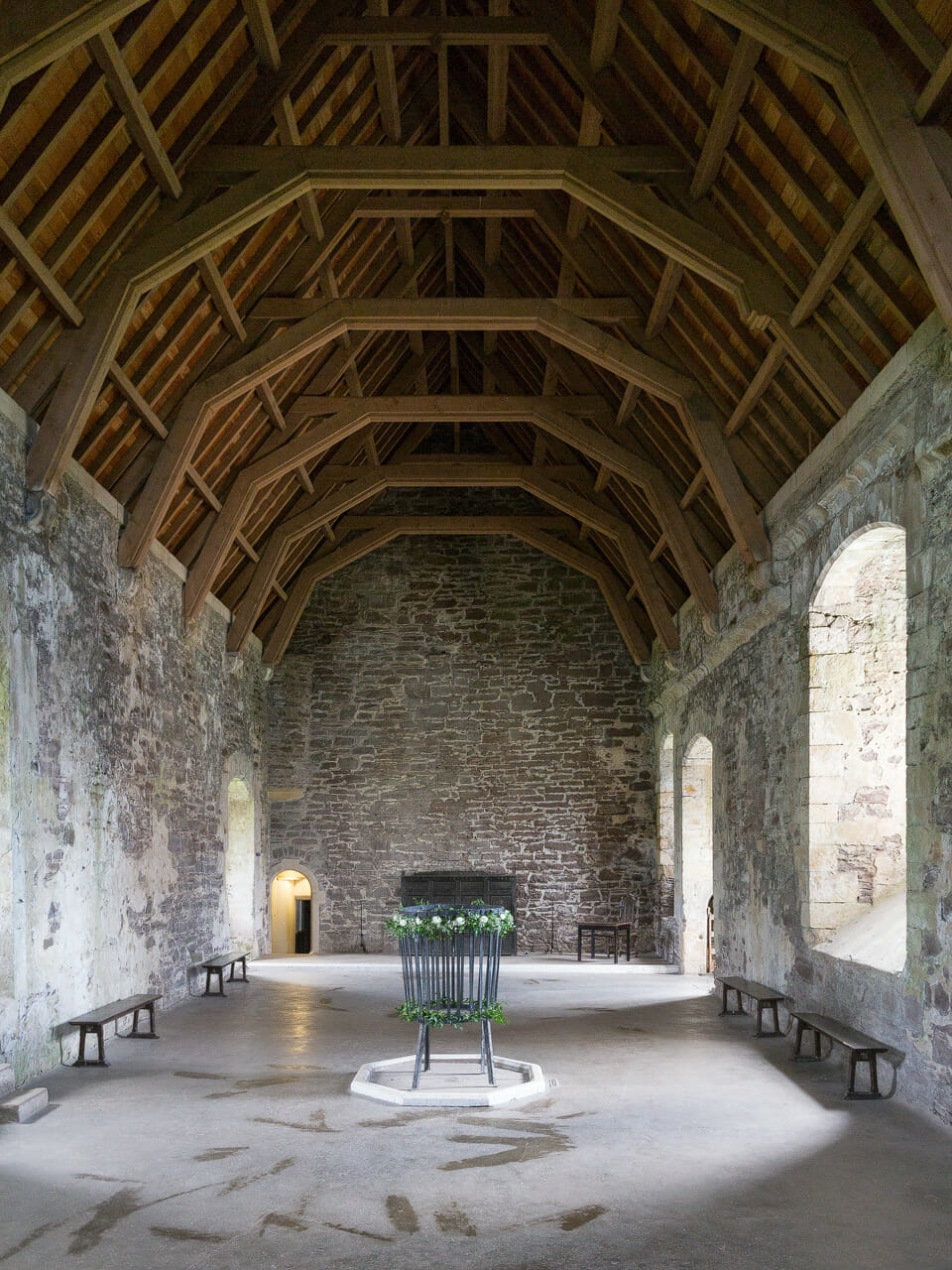
By this point at the latest, it becomes clear to the visitor why Doune Castle is so popular as a film location. It looks magnificent and authentic, and it doesn’t take much to bring the Middle Ages back to life in and around the castle. And anyone who visits can feel some of that same flair.
Good to know: Robert, the king without a crown
The 1st Duke of Albany wasn’t just the man who brought Doune Castle to its present size. He was also one of Scotland’s quiet regents. No wonder, given his ancestry: Robert the Bruce, victor of the Battle of Bannockburn (in German for now), was his great-grandfather. Robert himself belonged to the Stewart family, who would soon go on to provide Scotland’s kings all the way into the 17th century.
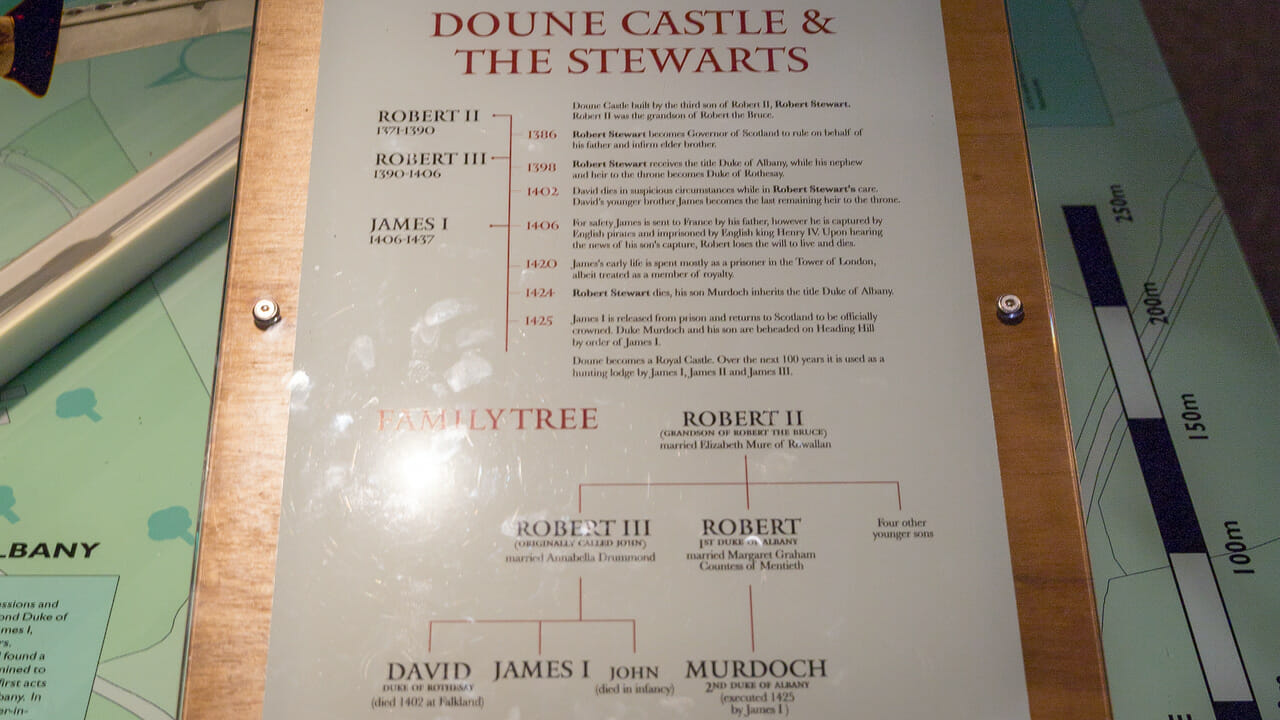
He lived through three kings of Scotland: his father as Robert II, his brother as Robert III, and his nephew James I. But none of the three was capable of ruling the realm. They were either sick and weak, or – in the case of James I – held captive by the English. As a result, the 1st Duke of Albany effectively ruled the Kingdom of Scotland for a long period. And he was not squeamish about it: he had his rival, the Duke of Rothesay, arrested without further ado. Rothesay died in the dungeon – rumour has it that Albany’s hand was in that too.
Robert Stewart, 1st Duke of Albany, died in 1420 at Stirling Castle. Doune soon passed to the Crown after his death.
Personal note: A fantastic audio guide at Doune Castle
I really enjoyed my visit to Doune Castle – so much so that I thanked the Historic Scotland staff quite effusively when returning the audio guide. Why? Quite simply: the narration was recorded by Monty Python’s Terry Jones. On the one hand he tells the history and function of the castle, but on the other hand he links the locations to the filming of “Monty Python and the Holy Grail” and scenes from it. Jones is a wonderful narrator, his humour is one of a kind, and even the sound effects are funny.
A sample from the Historic Scotland website illustrates this:
I had a smile on my face throughout the whole tour of the castle, and when I returned the player I said goodbye with the words “best audio guide EVER”.
Update: Outlander fans will be pleased to hear that there is now also an audio guide voiced by “Jamie”, i.e. Sam Heughan.
Getting there:
With a sat nav: Enter “FK16 6EA” and you’ll reach Doune. From there, follow the signposts.
Without a sat nav: Whether coming from Edinburgh or from Glasgow, follow the motorways towards Stirling until they become the M9. On the M9, drive past Stirling and Bridge of Allan until you reach a roundabout. At the roundabout, a small sign points left towards “Doune B824”. Follow this sign. You’ll come onto a winding and somewhat confusing road, which nonetheless leads through beautiful countryside. It ends at a T-junction on the A820 – turn left here. After the “Doune” village sign, watch for the signpost pointing left to “Doune Castle”. The road turns off at a sharp angle and immediately leads down the hill. Keep right and follow the road to the visitor car park.
