Anyone expecting an actual abbey at Glenbarr Abbey is in for a surprise. The house and its occupants are far more fascinating than an old monastery.
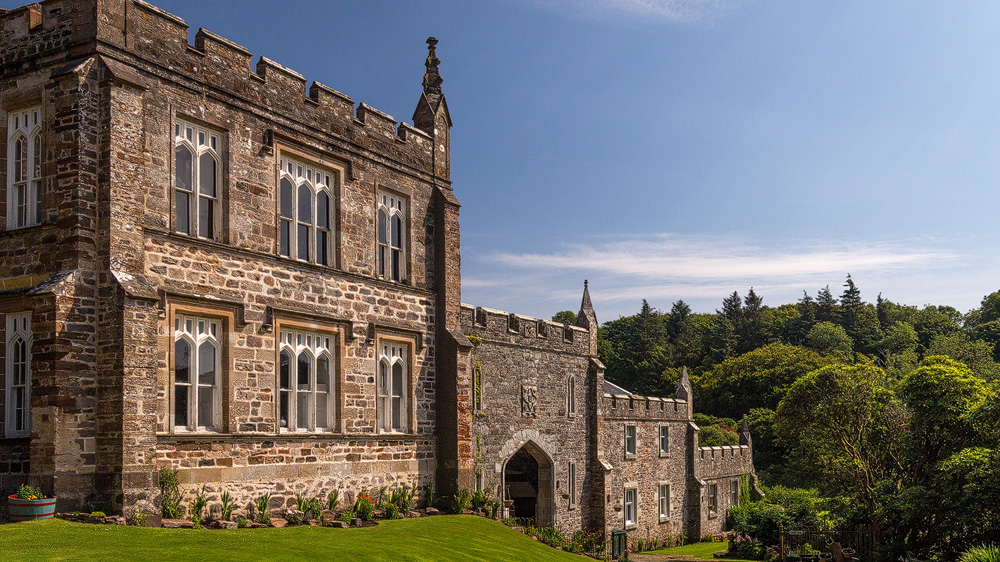
Update: Glenbarr Abbey is currently closed and its future is uncertain. Efforts are finally underway to preserve the house, however. A project was launched in 2025.
“Look, darling, an abbey! Turn left here.” The sign reads Glenbarr Abbey. We turn off the main road and keep an eye out for something resembling a monastery. What we actually find doesn’t match our expectations at all.
Glenbarr Abbey is shaped like a great staircase with four steps – a house with several wings following the slope of a hill. There’s nothing sacred about it. That makes us properly curious: how did it get that name, and what’s hiding inside this house? We walk up to the entrance and get our next surprise: we have to ring the bell!
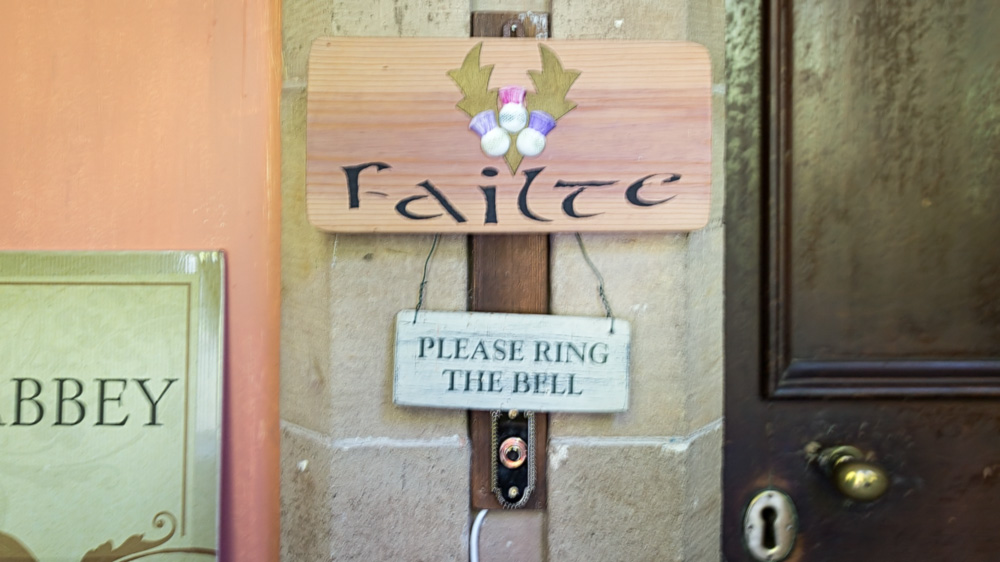
That’s nothing like what we’re used to from the usual Scottish visitor centres. After a short wait, an elderly lady opens the door and lets us in. “The Lady of the house will be along shortly,” she says, leaving us standing in the entrance hall. Lady of the house? Uh-oh, which nobleman’s wife have we just disturbed? We only wanted an ordinary tour!
We do as we’re told and wait. There’s plenty to explore here in the meantime, at least:
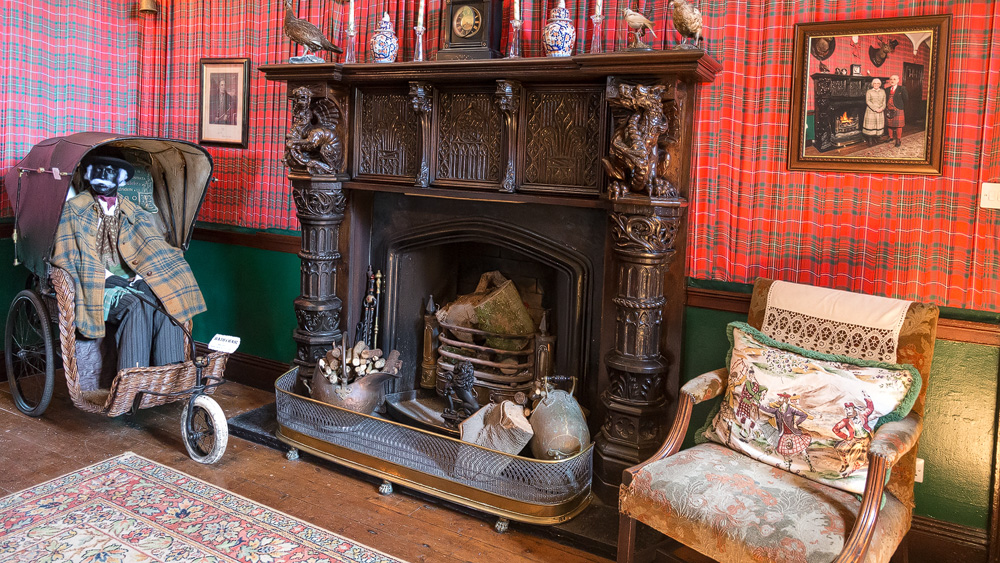
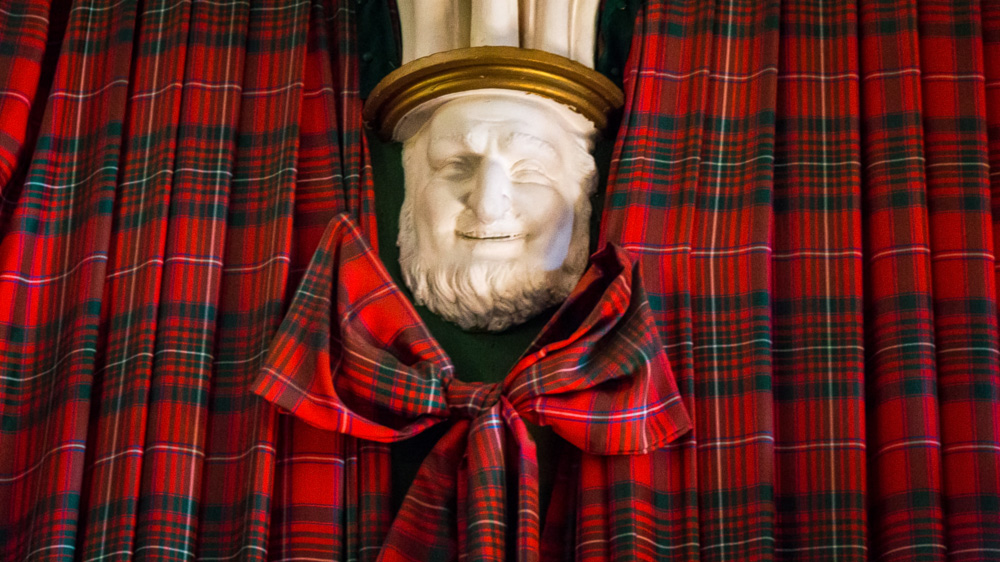
Looking closer, we already spot some interesting details, like the carved heads at the ends of the decorative columns:
Finally the lady of the house appears – dressed much like a typical tour guide, and just as open and friendly with us. It turns out she’s Jeanne Macalister, Dowager Madam Glenbarr, widow of Angus Charles Macalister, who passed away in 2007. She first leads us up the staircase, framed by dozens of stag antlers – it feels genuinely ancient. The life-sized plastic Santa Claus at the top of the stairs, on the other hand, feels considerably less ancient – it’s August!
She says she simply has nowhere better to put him. It slowly starts to dawn on us that nothing here is quite like Scotland’s “normal” attractions.
That mix of artful old and kitschy new follows us through the entire house, which seems to be bursting at the seams in every room. In the dining room, for instance, behind an elegantly laid table stands a small army of kitschy singing figurines – a collecting passion, the Lady tells us. The figurines come from her home country, the USA.
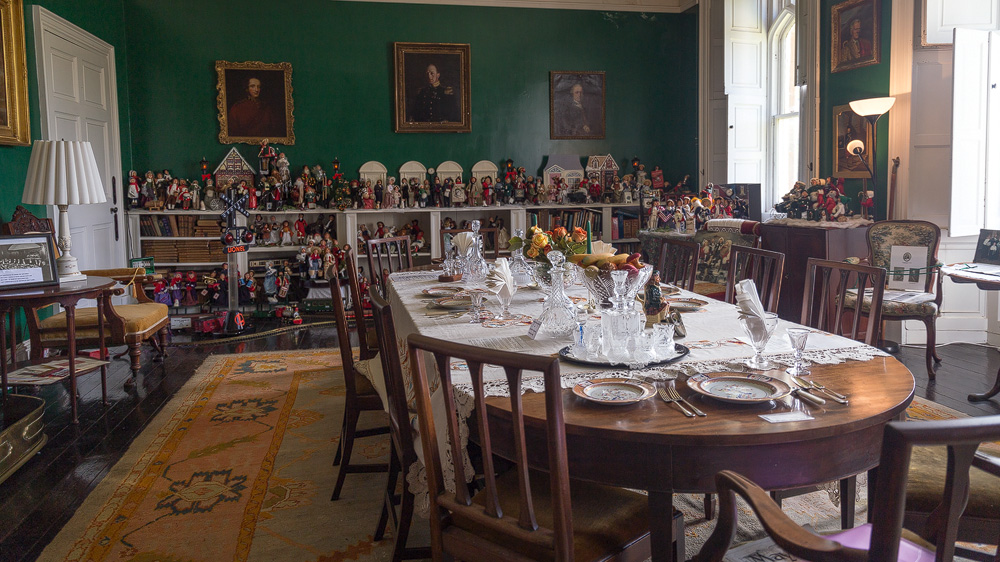
And so it goes, room by room – the Lady really does take her time with us, answers our questions, and every now and then dazzles us with a bit of golden humour.
But why does she do this? Why does Lady MacAlister give tours herself, instead of simply enjoying the comforts of Glenbarr Abbey?
One look at the ceilings is enough to understand: in many places you can see water stains, or worse damage. The roof leaks. And that’s just one of many repairs needed to keep Glenbarr Abbey standing. The house no longer belongs to her either, but to the Clan MacAlister Charitable Trust – a foundation. Since her husband’s death, the Lady herself has lived downstairs, in what was once the coach house.
Yet moping doesn’t seem to be part of her character, and she leads us cheerfully into the next rooms to share more anecdotes – about uniforms, silverware, dollhouses… perhaps she’s simply glad she can keep welcoming visitors.
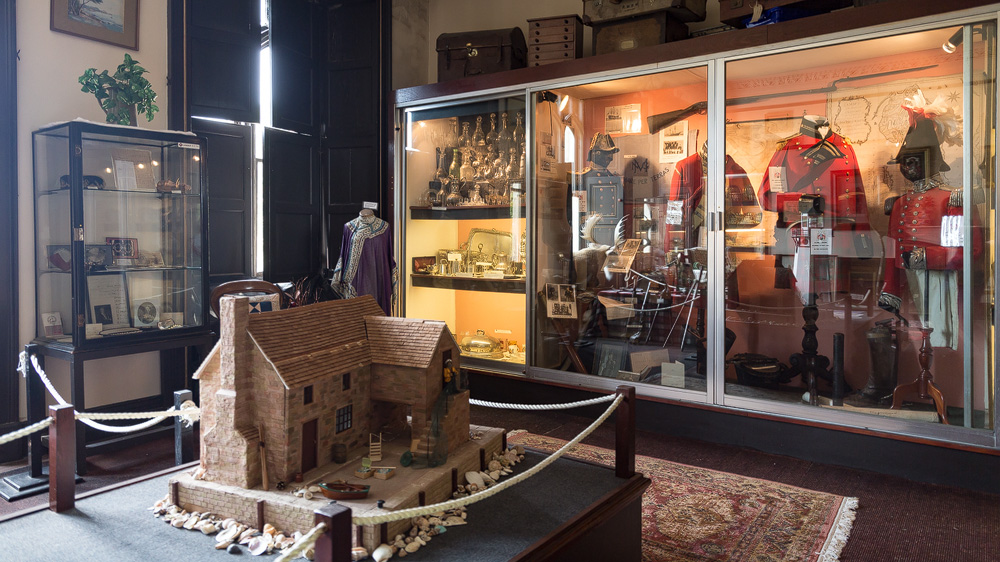
What’s nice: she really does give us enough time to look at every piece in peace. Here a lock of Bonnie Prince Charlie’s hair, there a war club from the tropics. Not once does she rush us.
Eventually we’ve had our fill and head back down the stairs. Lady Glenbarr has saved the highlight for last: the former nursery.
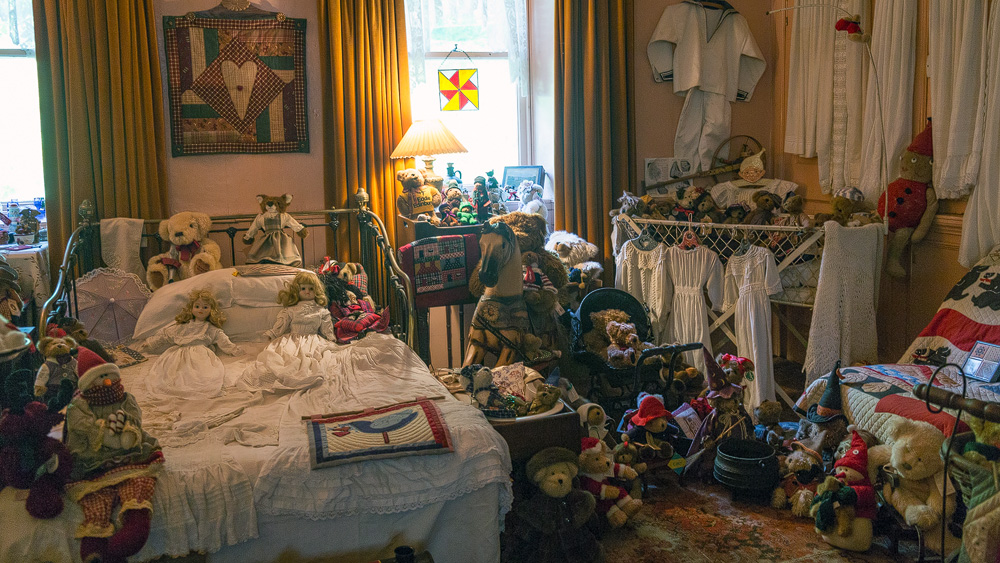
A sea of dolls and teddy bears floods over every piece of furniture in here. And whatever space is left is claimed by a collection of several hundred thimbles from all over the world. I’ve never seen a room quite like it! And with that, we’ve truly had enough.
After a brief stop in the little shop, run by the same woman who opened the door for us, and a warm goodbye from Lady Glenbarr, we leave the house.
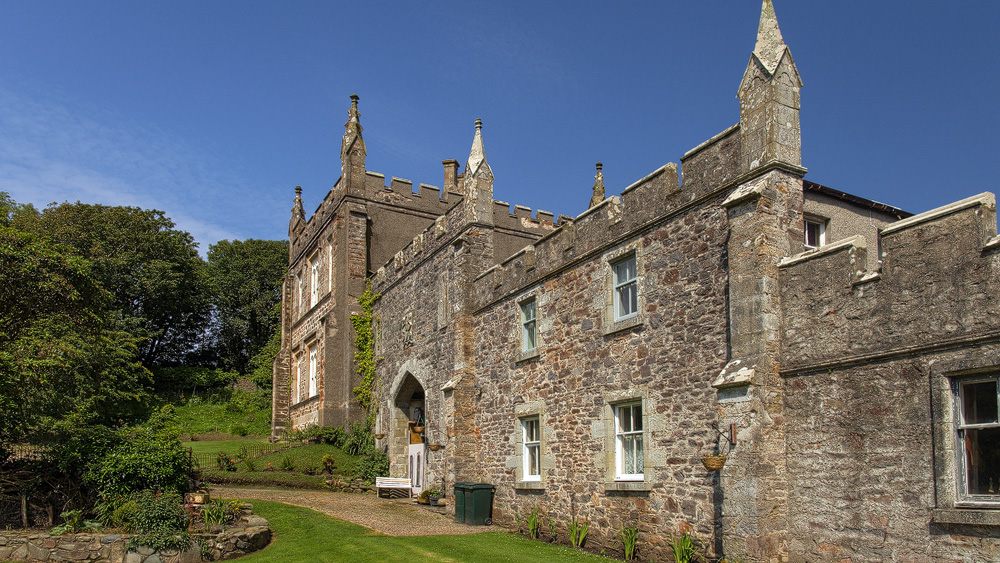
It was a worthwhile stop on our way south through Kintyre. We’d expected an abbey. What we found instead was the hospitality of a wonderfully humorous lady in a truly one-of-a-kind manor house.
Good to know: The history of Glenbarr Abbey
So why is this house called an “Abbey” at all? Was it perhaps once an actual abbey in the past?
No. When the first part of the house was built around 1700, it was likely a kind of wayside inn for travellers. Only 50 years later did it become a manor house, which Matthew MacAlister bought, along with the surrounding land, in 1796. He engaged the well-known architect James Gillespie Graham, who substantially extended the house and gave it the Scottish Baronial style typical of the era. The new seat was finished in 1815. The old name “Barr House” no longer suited the new building, so MacAlister renamed it “Glenbarr Abbey”. Using the word “Abbey” was apparently something of a fashion at the time – Glenbarr Abbey, however, never actually served any religious purpose.
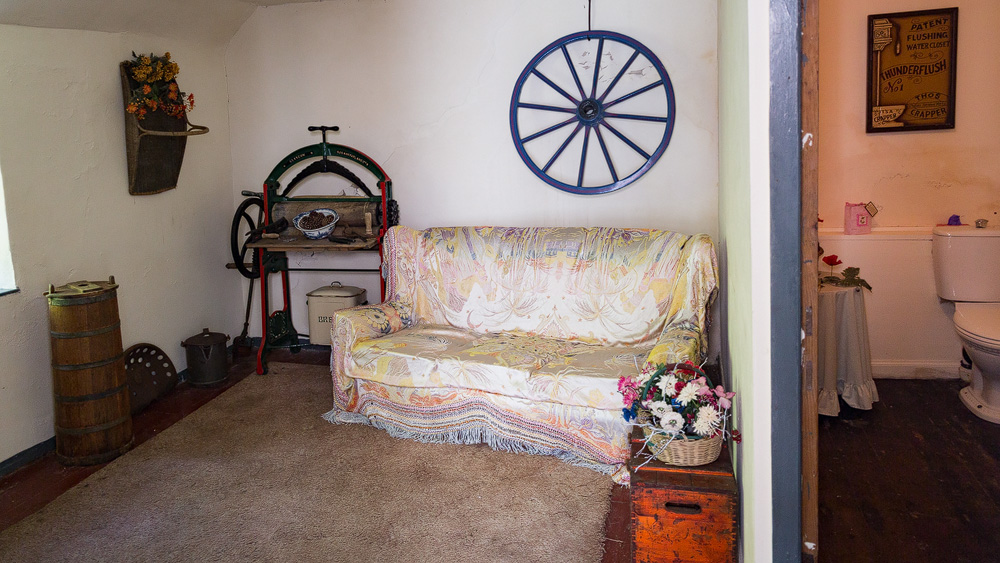
Tip: A bathroom worth seeing
Even if nature isn’t calling, it’s worth taking a look at the toilet behind the shop – its decor certainly surprised us:
Personal note: Glenbarr Abbey feels almost surreal
I’ve rarely seen such a jumble of objects inside a manor house – somewhere between art and kitsch. But that’s exactly the kind of find I love most in Scotland: the places that haven’t yet been fully professionalised for hundreds of visitors a day, but still carry a personal touch. And Glenbarr Abbey certainly has that, thanks to its wonderfully unique lady of the house.
Getting there:
With sat nav: “PA29 6UT” gets you to the village of Glenbarr; before that, just make sure you find the turn-off to the manor house.
Without sat nav: there’s really only one main road on Kintyre, the A83 between Tarbert and Campbeltown. Coming from Tarbert, or from the Islay ferry at Kennacraig, heading south takes about 30 minutes; from Campbeltown heading north, about 20 minutes. Watch for the brown sign to the “Glenbarr Abbey Visitor Centre” and leave the main road there. After a short distance you’ll cross a stone bridge, then soon turn right towards the manor house. You can park right in front of it.