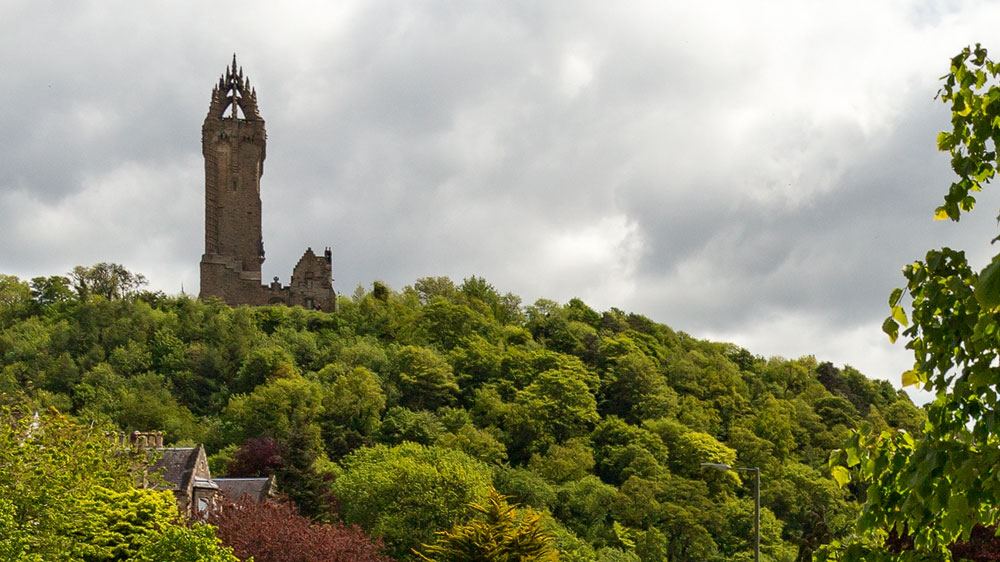
It’s a monument to a hero that didn’t even show the hero at first. It’s a monument to a nation, but built as far from the people as possible. And it’s a long climb to the top. I visit the National Wallace Monument.
At first everything here seems clear enough: William Wallace, known since the Mel Gibson film as “Braveheart”, defeated the English King Edward I at Stirling in the 13th century. He was later betrayed, convicted, and hanged in London, then disembowelled and quartered. All of this because he refused to swear allegiance to the English king. Even during his long and agonising execution, he’s said to have hurled the foulest abuse at the English.
So far, so heroic. A man like that certainly deserves a monument.
Yet construction of the National Wallace Monument only began in 1860 – a good 500 years after his death. Why then, of all times? And why was he, of all people, chosen and honoured with such an enormous tower? After all, Scotland had plenty of other heroes. Was he already as famous back then as the film Braveheart with Mel Gibson would later make him for us?
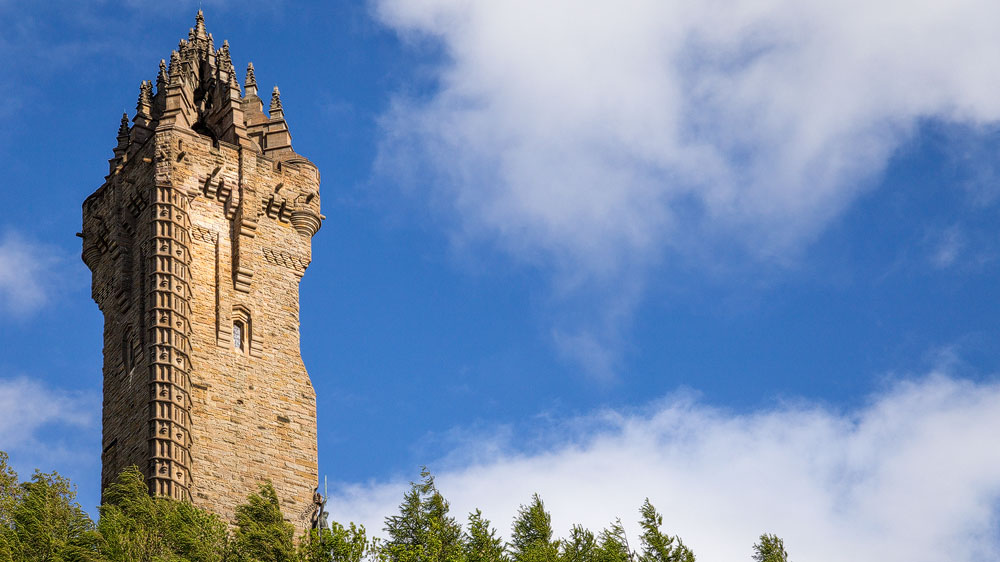
I want to find out, so I set off near the spa town of Bridge of Allan to the hill of Abbey Craig, to visit the 67-metre-high National Wallace Monument and understand what moved people at the time to build this tower.
I arrive at the foot of Abbey Craig, where the Visitor Centre for the monument stands. Visitors have to pass through here and pay, before finally reaching the path that leads up to the actual monument. A small tarmac road runs alongside it, on which a shuttle bus takes visitors up. I, of course, choose the hard way: climbing on foot.
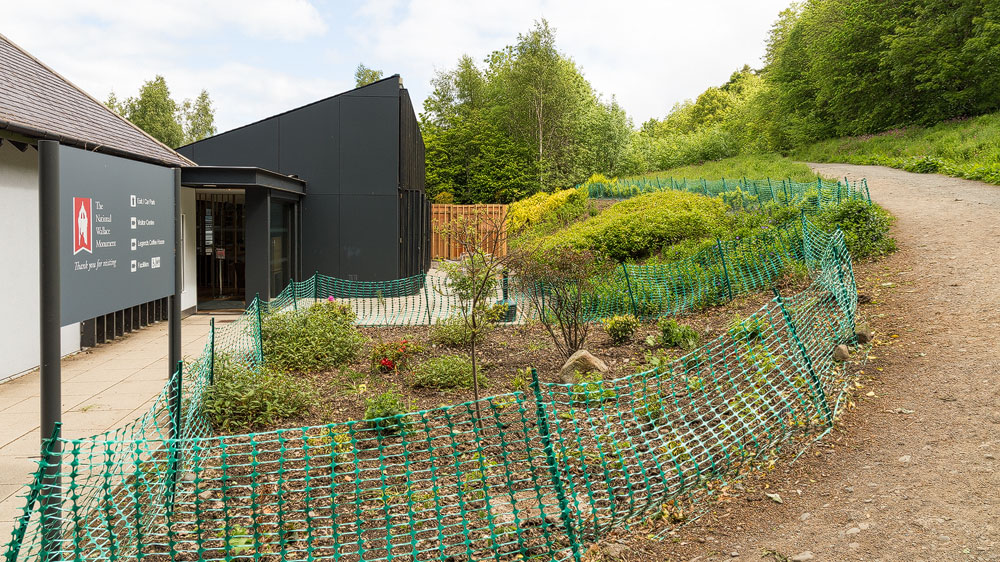
The monument was never meant for ordinary people. It stood well away from the working-class and industrial centres that had also lobbied for the memorial. The National Wallace Monument was built for the Victorian elite, who could afford the journey – both in time and in money.
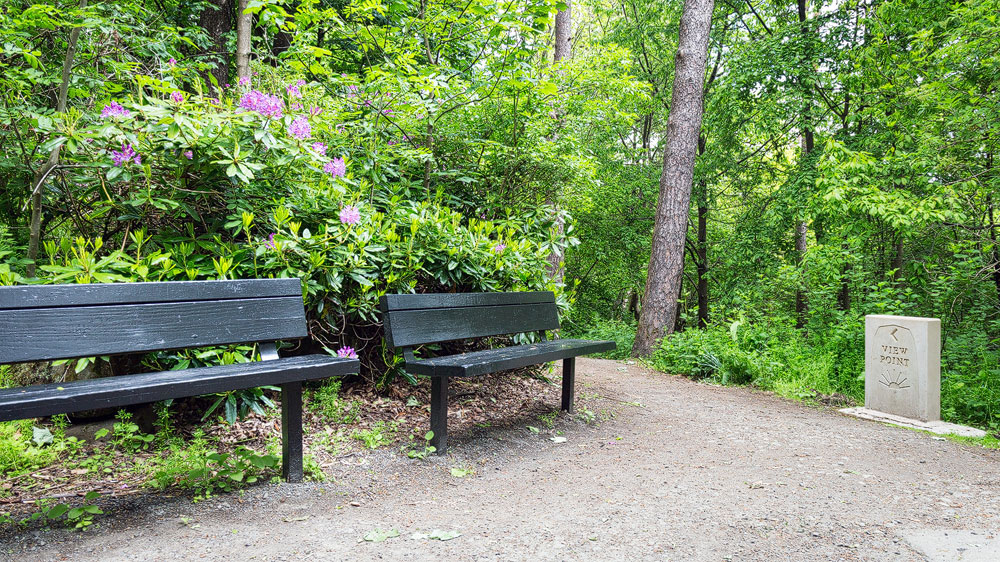
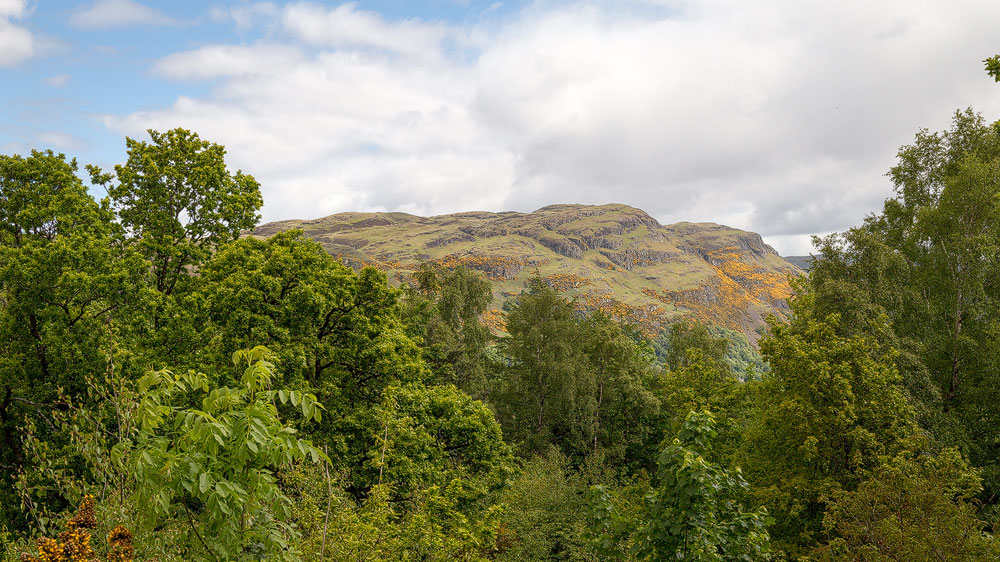
Still, the site wasn’t chosen at random. For one thing, Wallace’s army had waited on Abbey Craig before the Battle of Stirling Bridge took place. For another – as I discover myself, following the sign to the View Point on my way up – the hill still offers a wonderful view over the Ochil Hills today.
Onward through the park of Abbey Craig. A few more minutes’ walk and I’m standing at the entrance to the monument, crowned by the Wallace family coat of arms and a Scottish thistle.
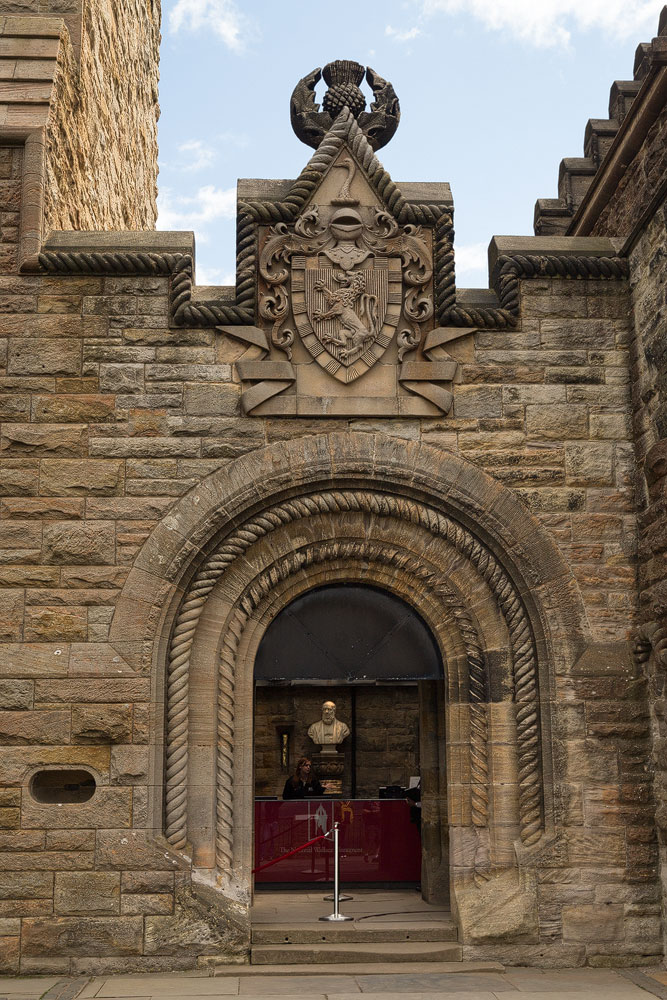
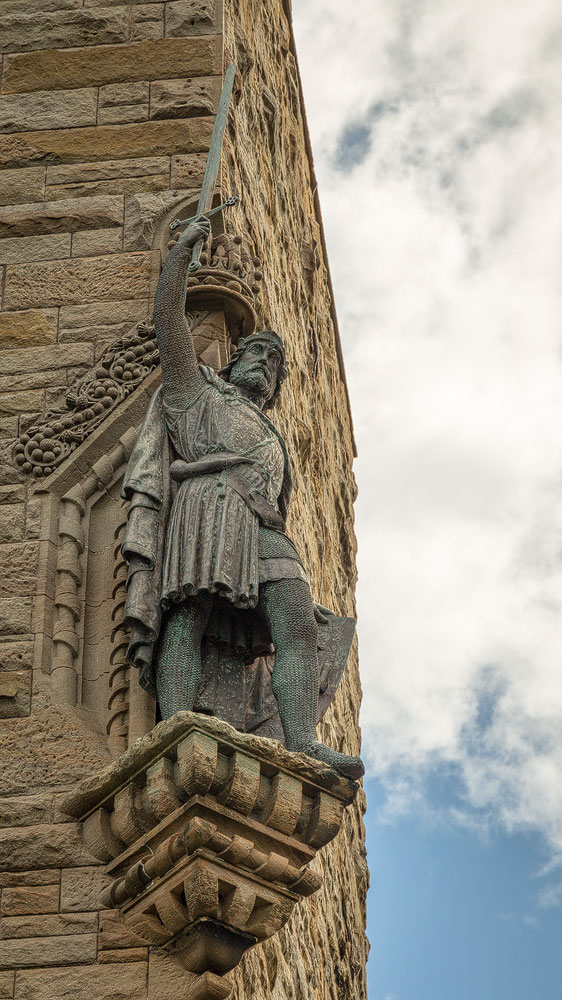
To the right, at the corner of the tower, stands the clearly visible statue of the hero himself. But that wasn’t always the case. The tower was originally planned without a statue – so at its opening in 1869, almost nothing about its exterior recalled William Wallace at all. His statue was only installed in 1887, a full 18 years after the tower opened. It was a strange sort of monument back then.
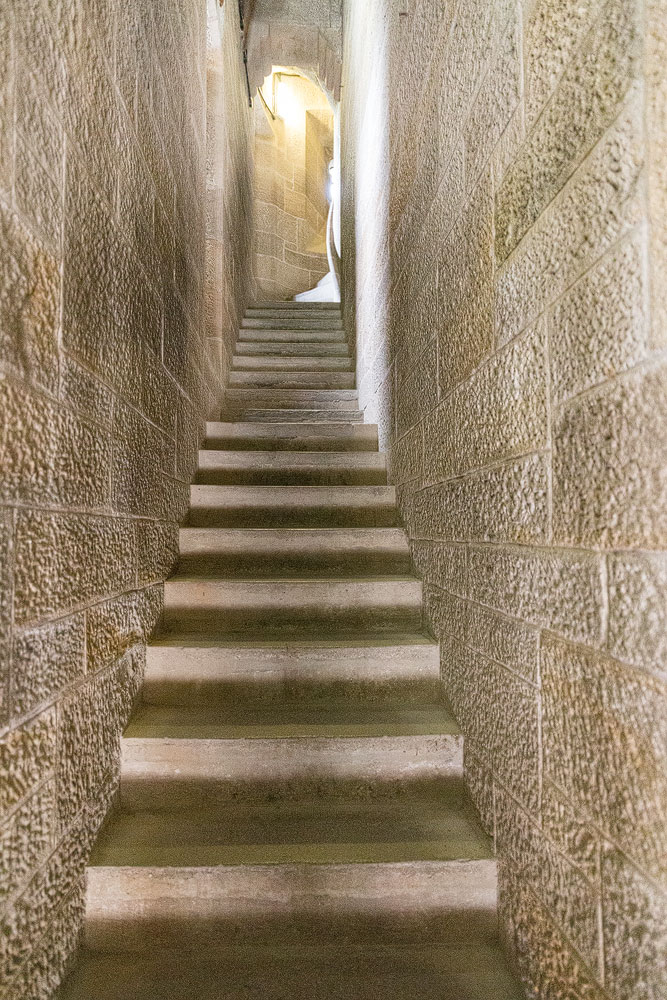
But onward – I want to get all the way to the top. The staircase, by the way, doesn’t run comfortably through the middle of the great tower. Instead it winds along one corner of the building, lit and chilled in equal measure by narrow, slit-like windows. It’s tight going, and again and again I have to press myself against the wall to let other visitors pass.
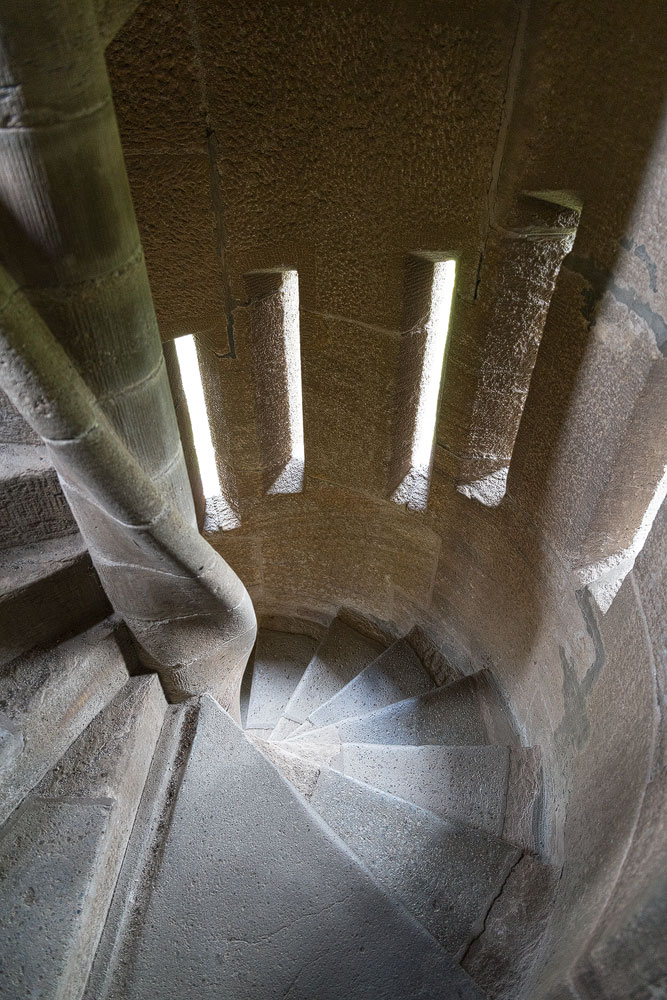
Just as tight were the corsets of the ladies who struggled their way up here in the 19th century – climbing in wide dresses must have been quite the ordeal for them. And for some it still is today. It’s a relief that there are landings along the way where you can stop and rest.
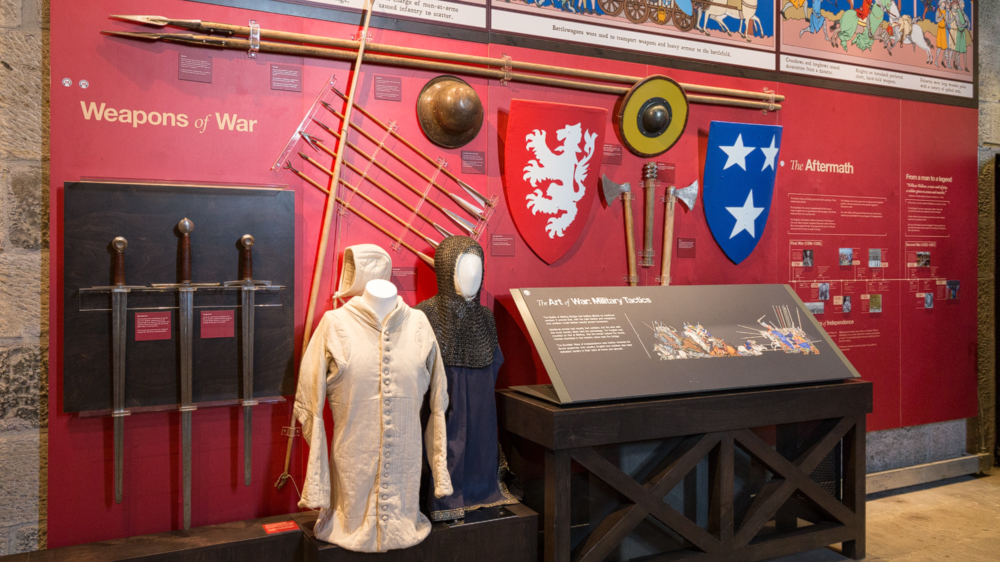
On the first floor, for instance, there’s the Hall of Arms, which also explains the history and background of the battle:
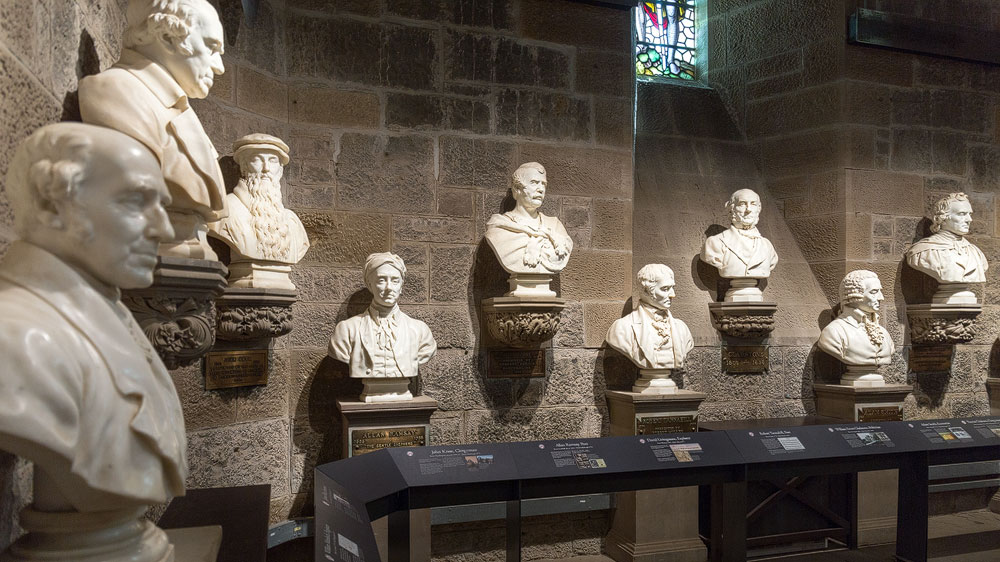
On the second floor, alongside busts of various famous Scots, William Wallace’s sword is also on display.
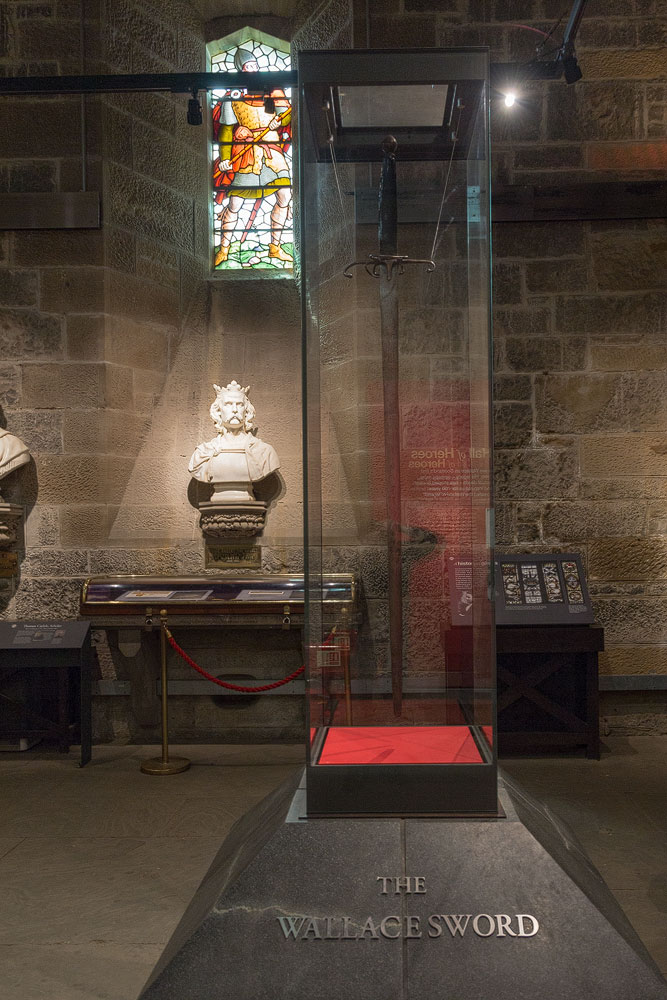
Well, at least that’s what’s displayed as what was once believed to be the freedom fighter’s weapon. Today, some experts doubt that the sword in the National Wallace Monument was actually his. Certain parts simply don’t fit the historical period – the blade, for example. So I leave the room again, back down the spiral staircase.
Third time’s the charm. And indeed: on the third floor I finally find the answer to my question – why this particular monument, at this particular time, for this particular hero:
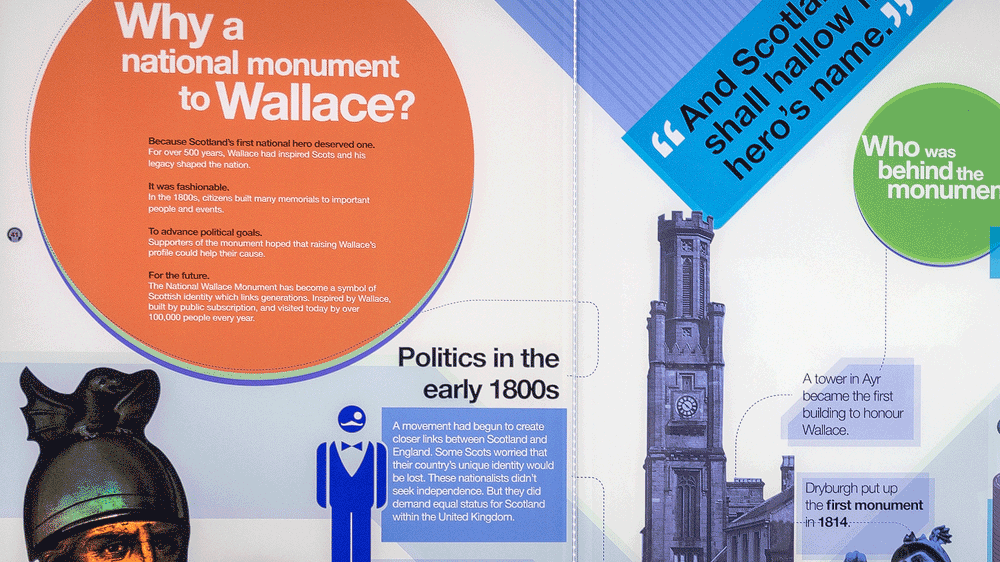
The most convincing explanation to me is simply fashion: back then, monuments like this were “in”. It also created a source of income, since admission already cost money even in Victorian times. (I’ll explain what role politics played in the “Good to know” section of this article in a moment.) Either way, I’m satisfied with the answers and now want to climb the last few stairs.
Finally I reach the viewing platform at the crown of the National Wallace Monument. The view is breathtakingly beautiful, framed by an elaborate piece of architecture:
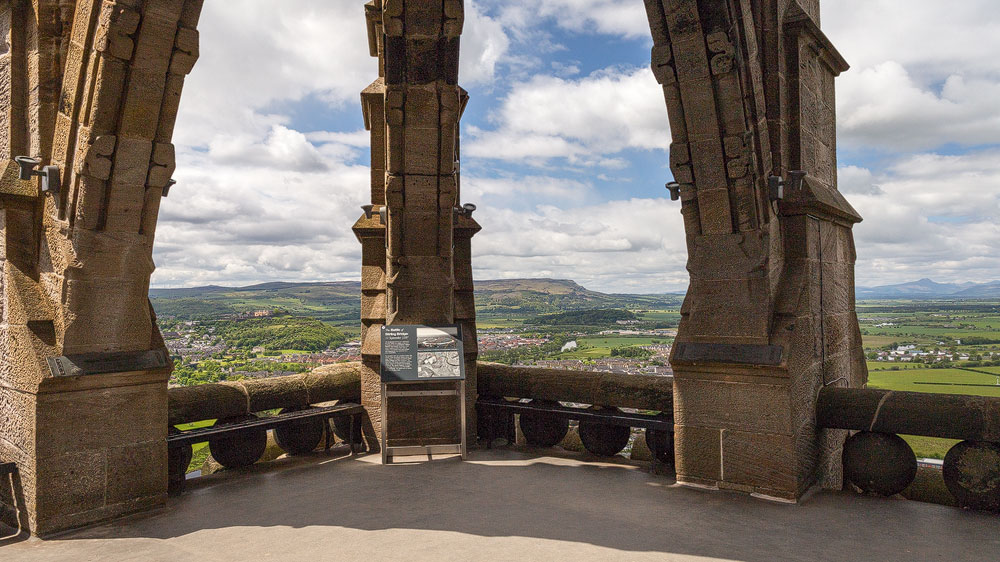
Abbey Craig itself rises 91 metres, and then there are the 67 metres of the National Wallace Monument on top of that. So you can see far across the land from up here. The loops of the River Forth are especially beautiful to make out from this height:
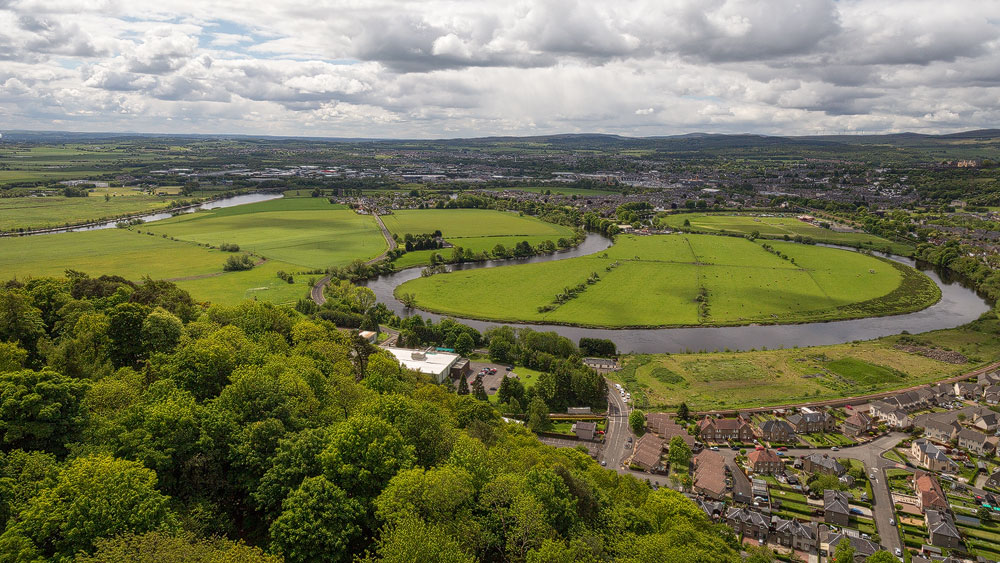
I find it hard to tear myself away from the view, but eventually it turns breezy up here even on a good day. And of course, other visitors want to enjoy it in peace too. On average, around 120,000 people visit each year – roughly ten times as many as in Victorian times.
No wonder: distances no longer carry the weight they once did, the world has shrunk. By car, people from Glasgow reach the Wallace Monument in three-quarters of an hour, and can enjoy the nature of the park while learning plenty about the freedom fighter. Today, around 150 years after its opening, the monument is no longer reserved for the elite alone.
Good to know: Politics and the National Wallace Monument
The National Wallace Monument was also an attempt to reinterpret and put to use the image of a hero. Because in the early and mid-19th century, Britain saw the rise of the Chartist movement. Its goals: trade unions, better working conditions, and universal suffrage. One stronghold of this movement was Glasgow, where at one point 150,000 supporters of the movement gathered.
Wallace was a fitting hero for this movement. On the one hand a figure of national conviction, he also, at the same time, represented an image of freedom. In the newspaper “Chartist Circular”, Thomas Campbell published the poem “The Dirge of Wallace” in 1841, in which the author subtly wove contemporary concerns together with the earlier freedom fighter. The Chartists soon collapsed, but it had become clear: Wallace could be a hero for any movement at all.
The elites of the time were, without exception, unionists of various stripes, arguing amongst themselves over how much more or less union Britain ought to have. And yet they still claimed the Scottish freedom fighter as their own, and wanted to raise him a great monument.
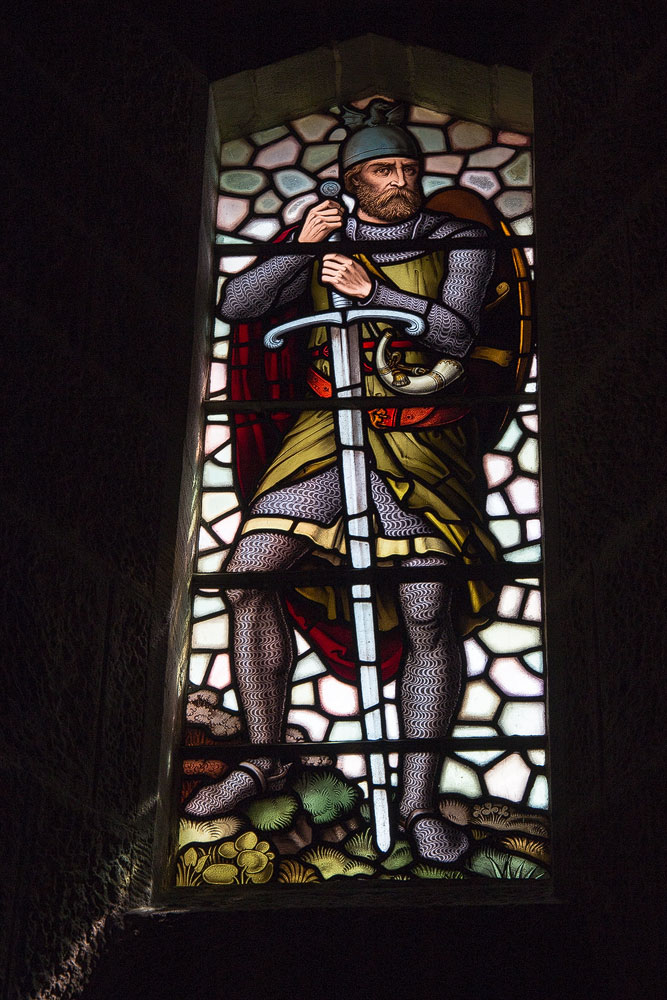
In 1856 a competition was held among architects, which John Thomas Rochead ultimately won. His design showcased what was then the fashionable Scottish Baronial style, an architecture built around battlements, small watchtowers and stepped gables – which is clearly visible in the monument today. Critics at the time rightly noted that the tower itself bore little visual resemblance to Wallace. It was only the statue, the stained-glass windows, and, a year later, the sword, that gave the hero a clearer face.
Personal note: A similar monument stands in Dillenburg
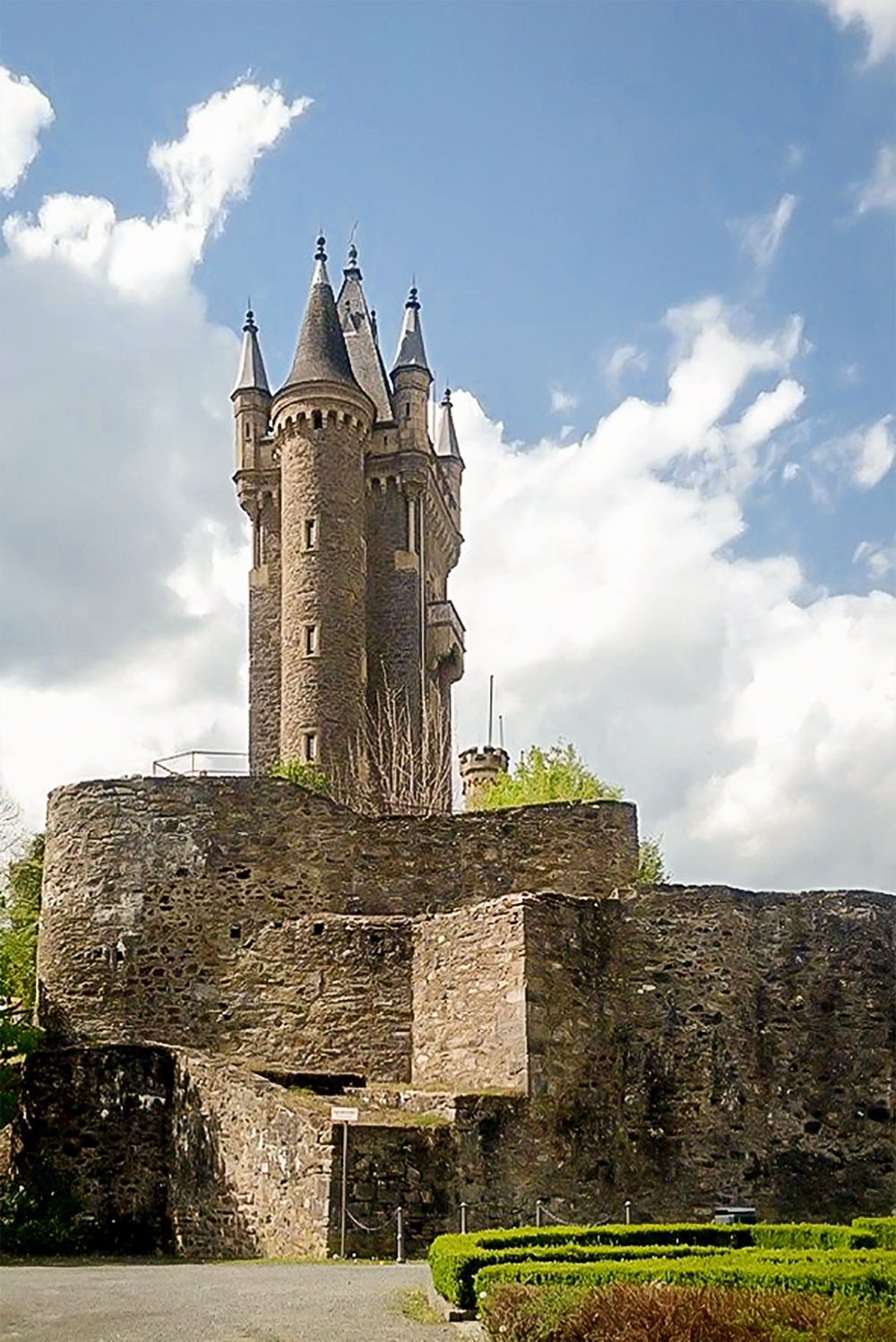
A trip to my wife’s home region taught me that monuments like this actually sprang up all across Europe. In Dillenburg, in the German state of Hesse, stands a very similar tower, one that in this case commemorates William of Orange: the Wilhelmsturm. It opened in 1875.
Here too, various floors are dedicated to the memory of a freedom fighter. His house, incidentally, would go on to play an important role for Scotland as well. William III of Orange-Nassau replaced the Stuart monarchy on the British throne. The result was the later Jacobite Risings (currently only available in German), which finally came to their sad end at the Battle of Culloden.
Getting there:
With a sat nav: entering “FK9 5LF” brings you right to the National Wallace Monument.
Without a sat nav: coming from Glasgow or Stirling Castle, the way first leads you through Bridge of Allan. Pay close attention here. The signage isn’t entirely clear, and if you’re unlucky you’ll end up doing a full loop around the village past the church. You need to turn onto the B998, Logie Road, between “The William Wallace” and “The Cooperative”. Further signs then guide you to the car park.
Coming from Edinburgh, take the M9 and then the A91 towards Stirling. Stay on the A91 until the brown signs point the way to the Wallace Monument.