A long, narrow valley between high rock walls. The walk through Puck’s Glen is one of the most beautiful on the Cowal Peninsula.
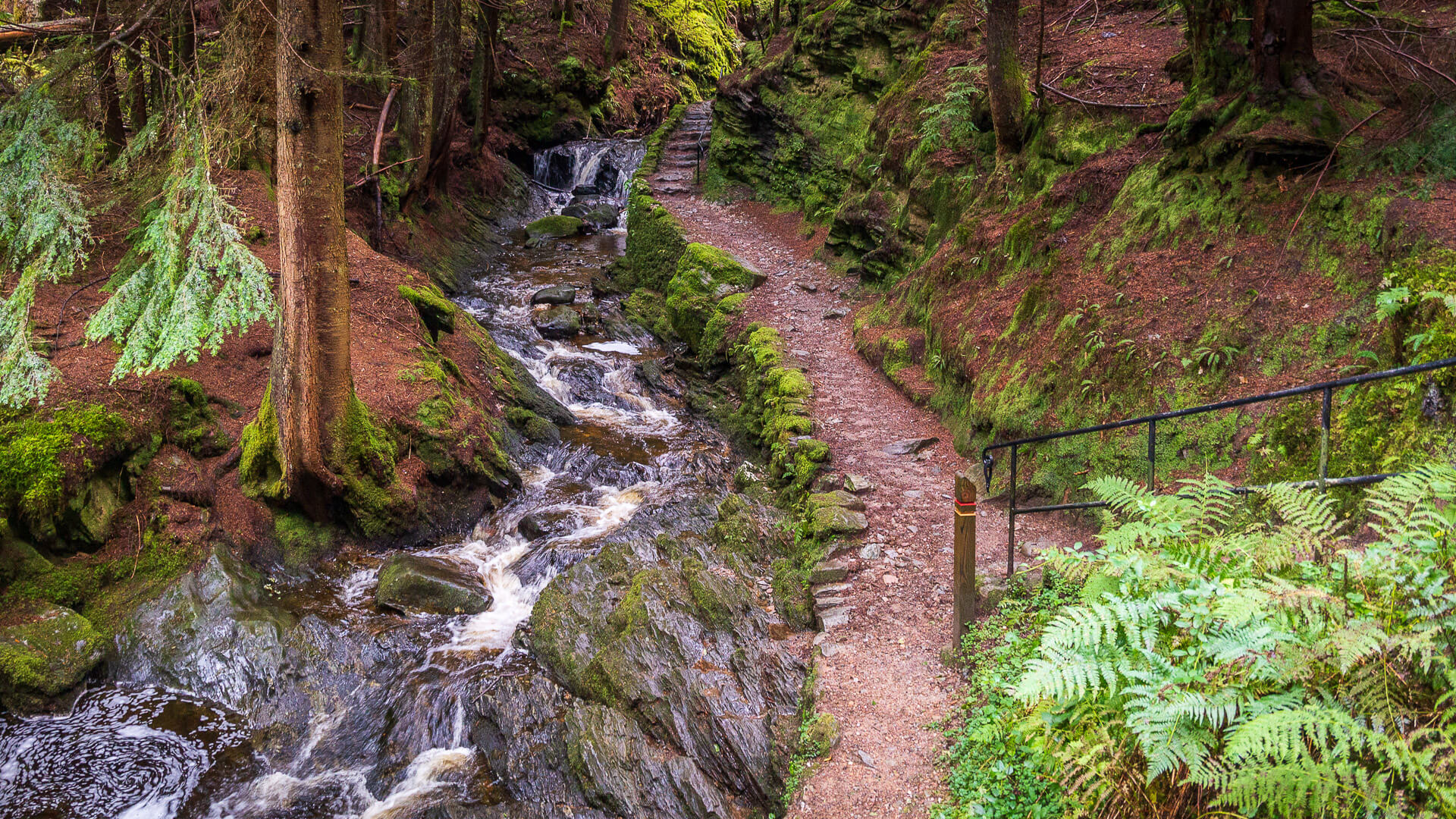
Unfortunately, Puck’s Glen was badly damaged by Storm Eowyn in early 2025. As of late 2025, it was still not passable again.
Puck is what the British call a goblin-like sprite who’s been up to mischief for centuries. He enjoys playing little tricks, though he can sometimes help out too. In any case, he’s a bit of a trickster. These traits seem to fit the valley that the little river has cut deep into the landscape here: Puck’s Glen.
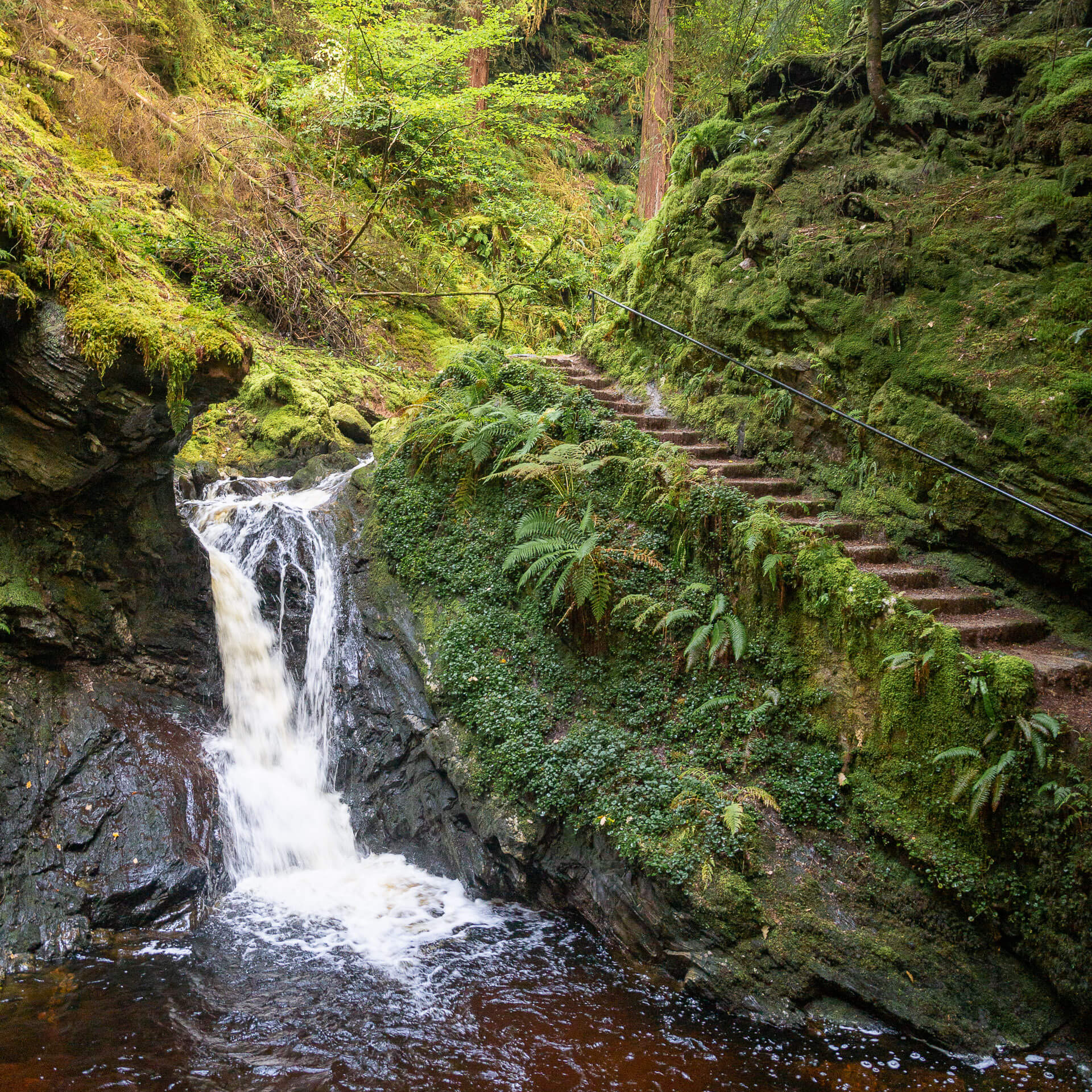
Puck’s Glen lies on the Cowal Peninsula, around 8 kilometres north of the large town of Dunoon. A stone path maintained by the Forestry Commission leads through the narrow gorge, giving visitors safe access to its wonders: cascading waterfalls between steeply rising rock walls, crowned by tall conifers. Small bridges, gnarled tree trunks …
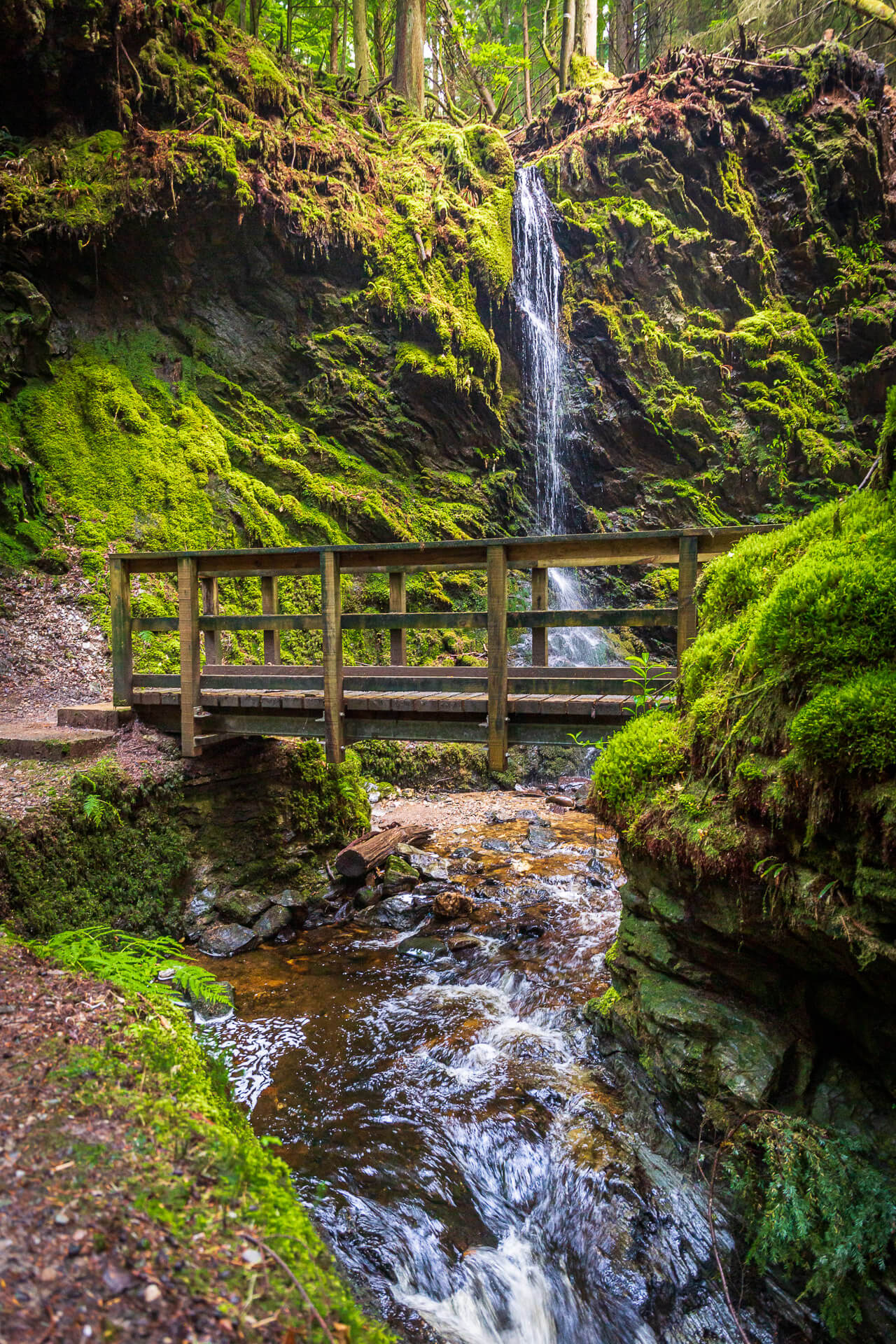
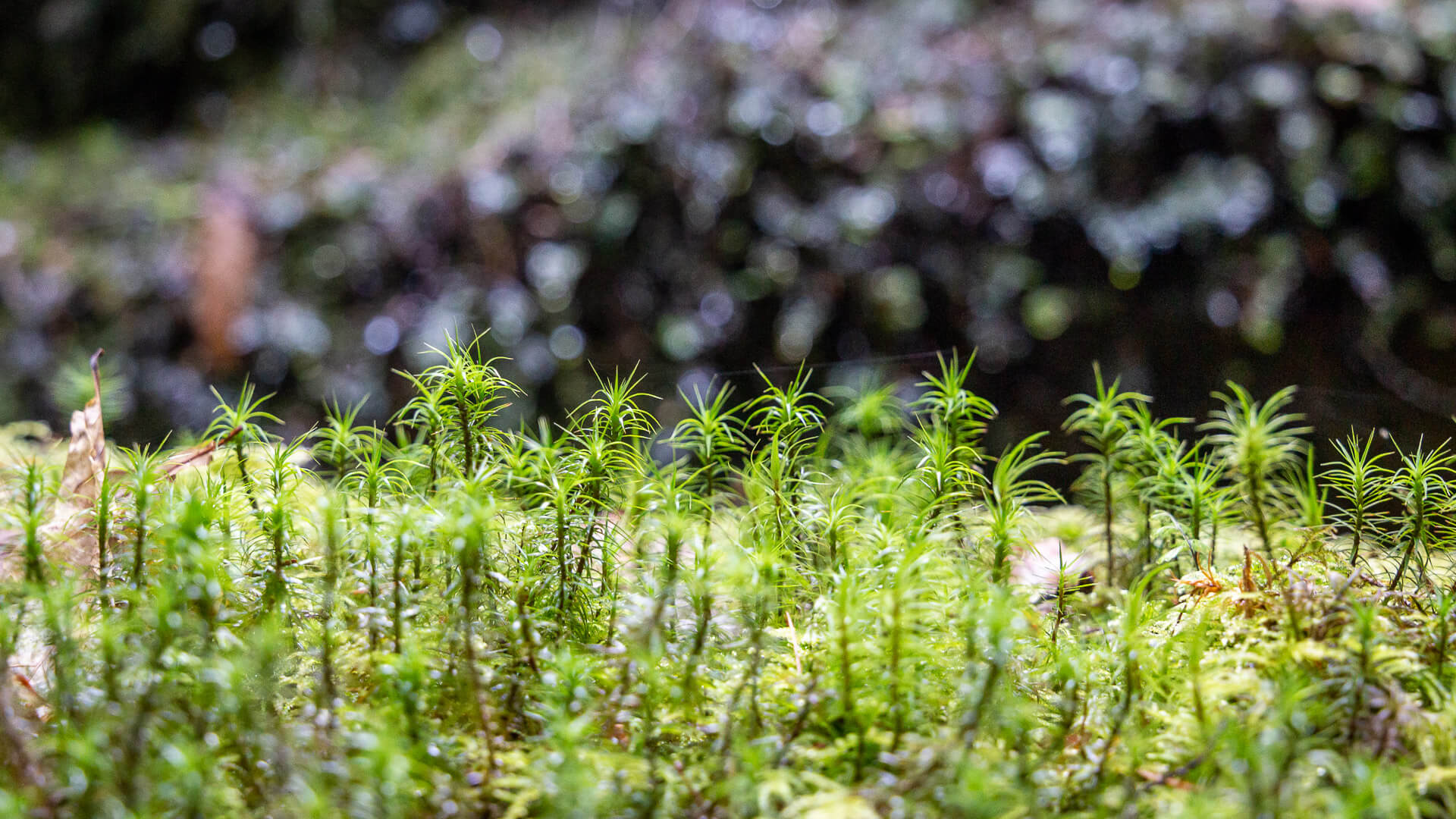
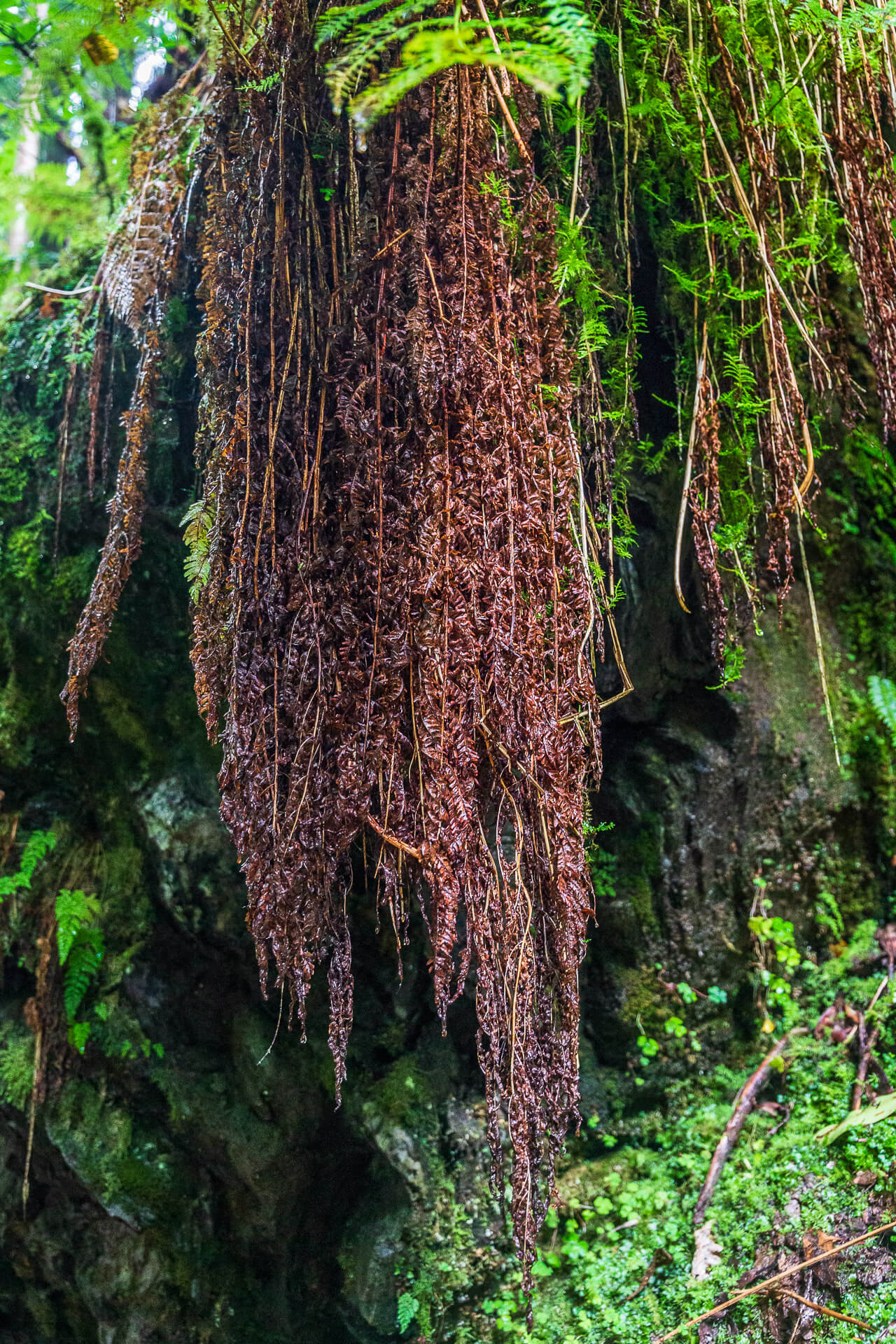
Puck’s Glen is also green. The moisture favours mosses and lichens, which cloak the rocks in a deep green velvet layer. Ferns grow along the edge of the path, or hang in places like beards down the rock face.
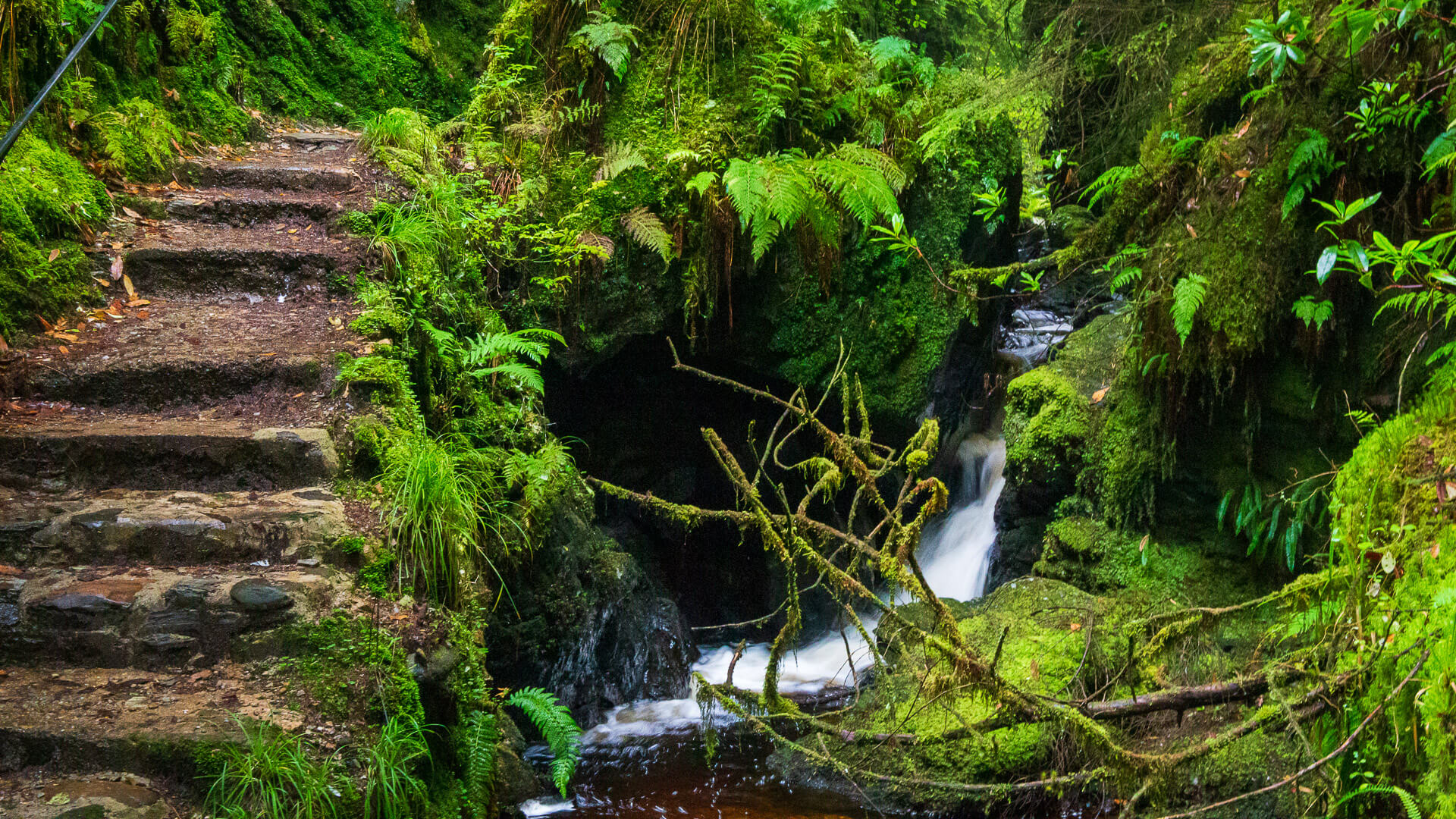
But amid all this enchanting beauty, visitors shouldn’t forget: Puck likes to play tricks. The stone steps are often damp and slippery, and quite a few walkers have already ended up with muddy trousers here. So: stay alert!
Did you know: About Puck
The path through Puck’s Glen was laid out for visitors as early as 1870 by the then landowner James Duncan. He was also the one who gave the valley its name, after the sprite who plays a central role in Shakespeare’s A Midsummer Night’s Dream.
Shakespeare didn’t invent Puck, though. The figure has been haunting folklore since the 16th century or earlier, whether as Puck, Robin Goodfellow, or Hobgoblin. The name for small fairies, “pixie”, is in fact derived from “Puck”.
Puck has both good and bad sides. He can even take care of small household chores – a bit like our own house-elves. But he’s just as capable of playing tricks.
Route: Directions through Puck’s Glen
The walk takes around an hour and a half and covers about 3 kilometres – though there are plenty of steps in between, and it’s constantly going up or down.
The starting point is the car park laid out specifically for the circular route. Information boards here also let you know about any closures, since the path sometimes needs maintenance.
I’d recommend exploring the glen uphill. From the car park, that means heading first towards Benmore Gardens – so, standing in front of the information boards, turn left.
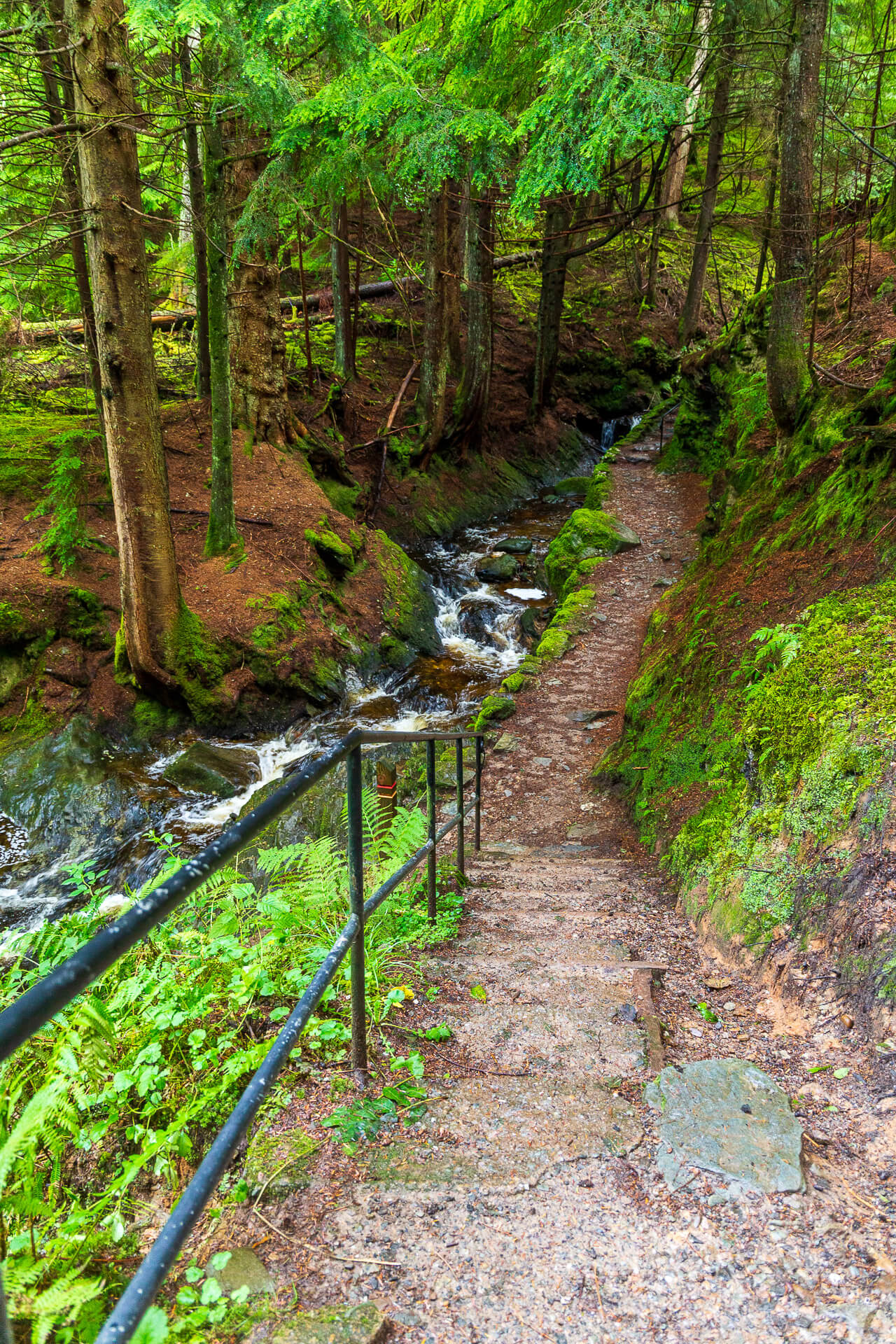
After a few hundred metres, a set of steps on the right leads down into Puck’s Glen. The path then follows the valley upwards, crossing the small river several times over bridges.
Anyone who’s had enough after a while can leave the valley halfway along via a steep flight of steps. The path then ends at a wide track. Here, walkers can decide whether to walk back down through the valley or take the parallel forest path.
To head back through the forest, keep right on the wide track, and after a while you’ll likewise find the path branching off to the right.
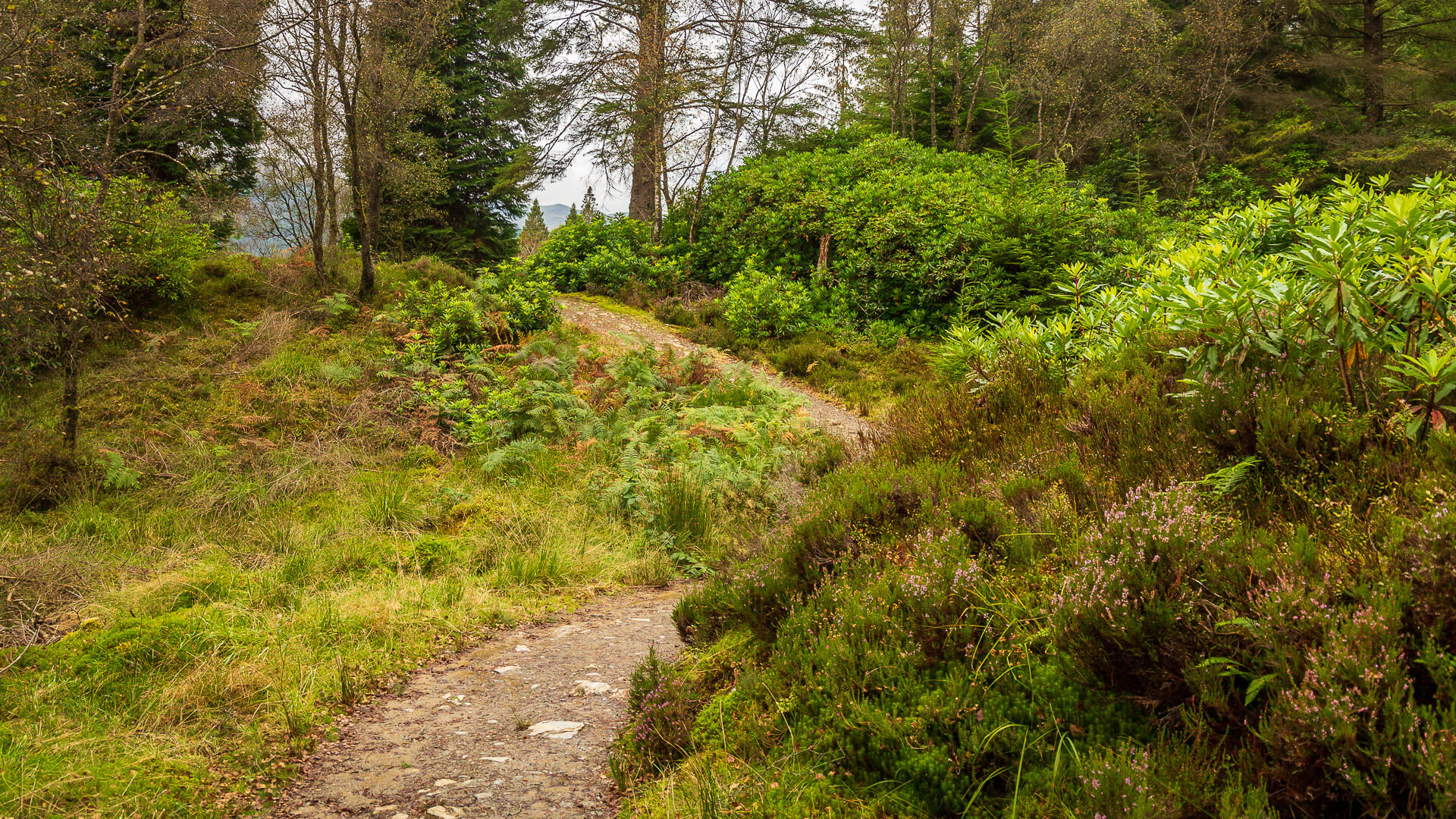
The forest path is also worth seeing in its own right, winding through fungi, lichen and conifers. In summer, the rhododendrons may be in bloom, which looks wonderful, though it’s a disaster for the native plant life.
The same caution applies on the descent through the forest: watch your step, since some roots and stones on the steeper stretches get genuinely slippery.
The path ends back at the starting point, the Puck’s Glen car park.
Getting there
With a sat nav: The postcode “PA23 8QT” takes you to the area.
Without a sat nav: From Dunoon, head north on the A815. After about 8 kilometres, the car park for Puck’s Glen lies on the right.
