It was the spiritual centre of Scotland in the late Middle Ages: St Andrews Cathedral drew pilgrims from across Europe. Today it draws awestruck visitors instead.

A few bones. That alone was enough to turn a spot on Scotland’s east coast into a place of pilgrimage. A clergyman brought these bones here in the 8th century. Over the following centuries, they transformed a small church into one of the largest cathedrals in Scotland – St Andrews Cathedral.
Of course, these weren’t just any old bones the clergyman carried with him. They were relics of fingers and an arm, said to have once belonged to Saint Andrew – St Andrew himself, Scotland’s patron saint, whose cross still adorns the country’s flag (currently only available in German) today.
Towards the end of the first millennium AD, Europe entered its great age of cathedral building. Whether Notre Dame in Paris or Cologne Cathedral, cities everywhere competed to build grand houses of God. Scotland, too, wanted to show off its grandeur. So construction began at St Andrews in the year 1160. Yet it wasn’t until 1318 that the building was ready to be consecrated – in the presence, incidentally, of Scotland’s hero of independence, King Robert the Bruce.
Visitors today should keep all this in mind when they come upon the sparse ruins now standing at St Andrews. There isn’t much left to see of its former beauty.
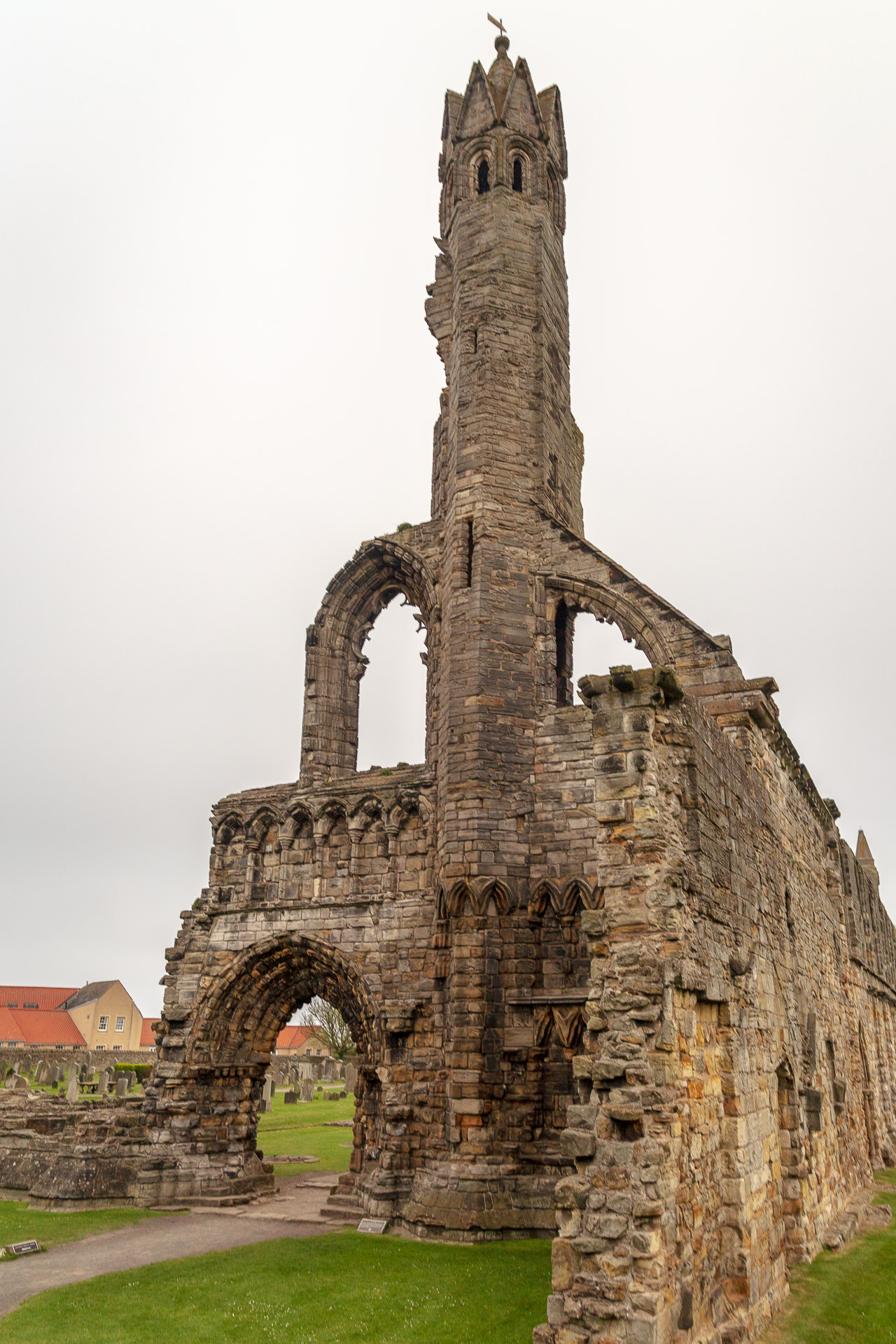
Stepping through the main portal once brought visitors into the vast nave. Picture it: a passage stretching 50 metres ahead, with a vaulted ceiling soaring 20 metres above the walls. It wasn’t grey stone that struck the senses but vivid colours and the scent of incense.
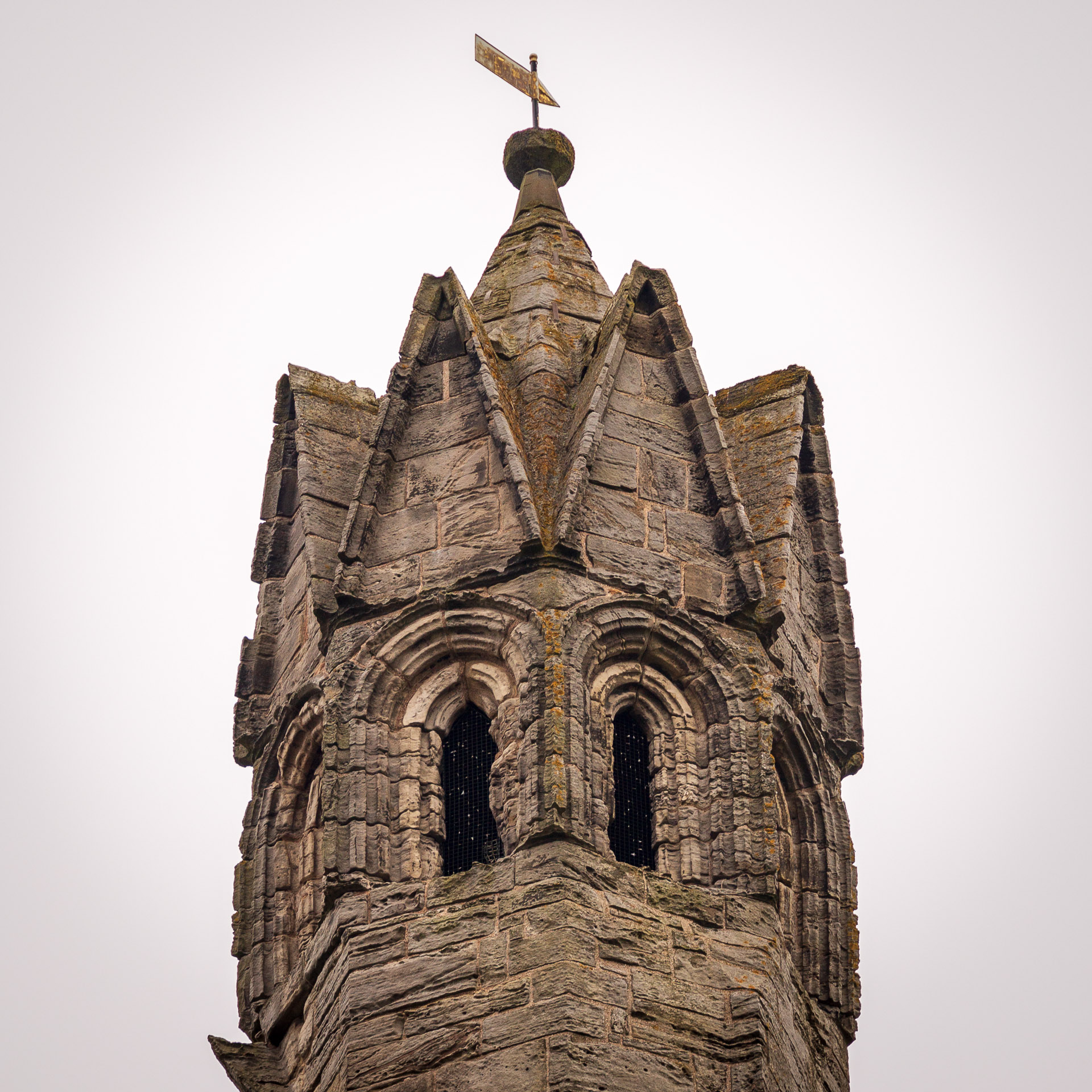
St Andrews Cathedral didn’t just awe pilgrims with its sheer size, but also with its Gothic architectural style, still clearly visible in the small towers.
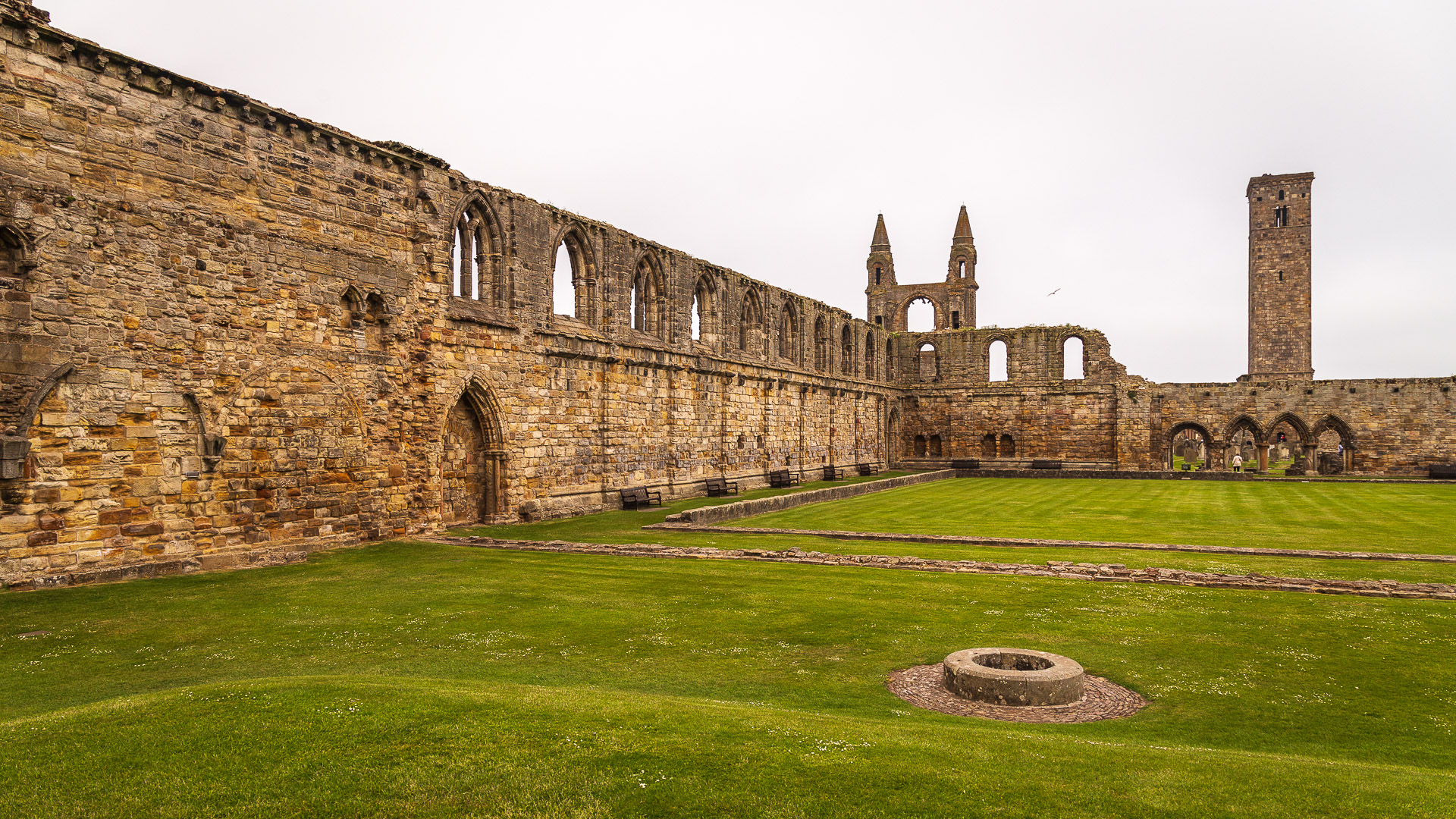
Not much remains today. A side wall, part of the entrance portal, the wall of the former chancel… the bases of the pillars that once carried the enormous vault still show through the ground.
Yet St Andrews Cathedral isn’t the only church on this site. A 33-metre-high tower draws the eye. It belongs to St Rule’s Church, built here in the year 1130, which once displayed the relics. The tall tower was meant to point pilgrims the way from far off.
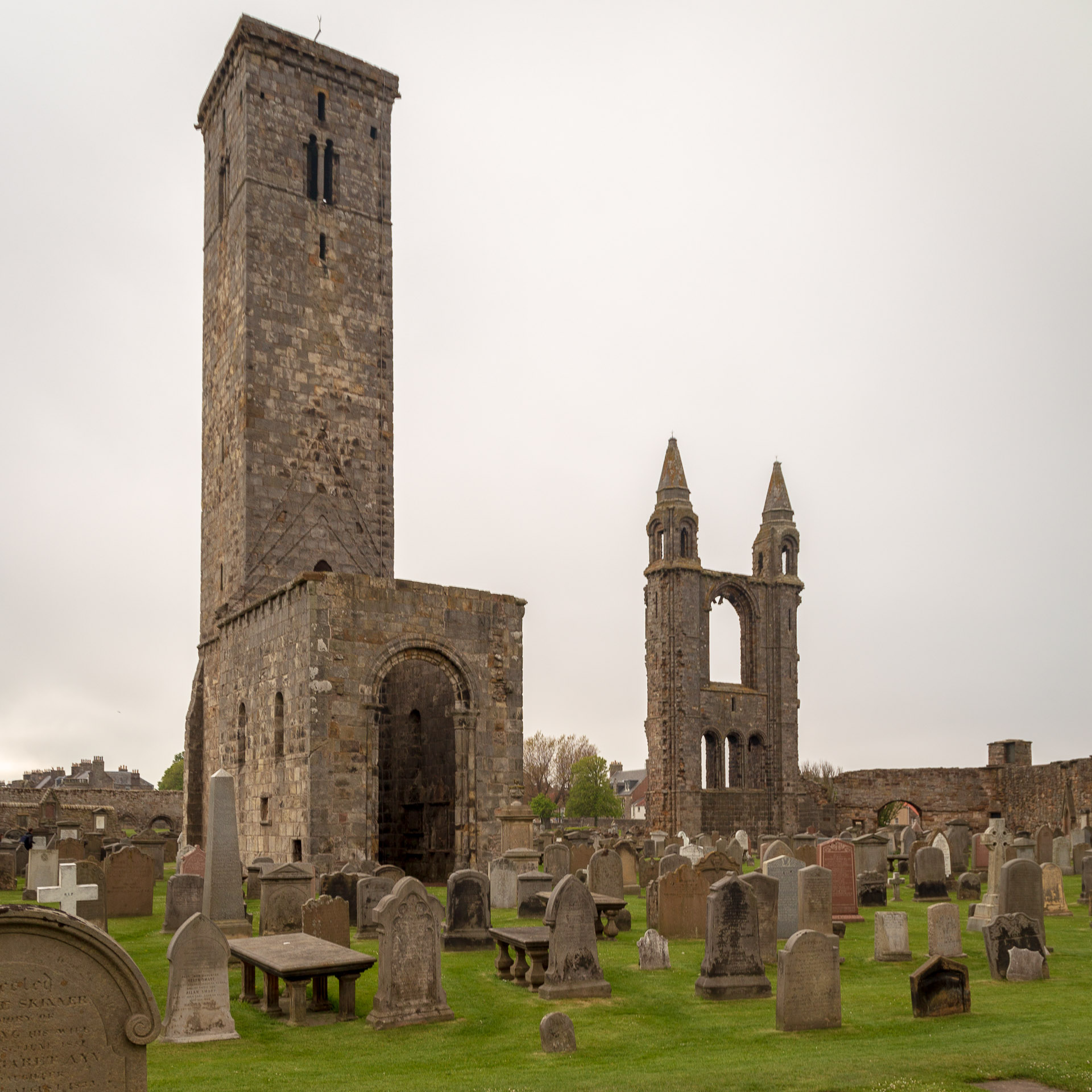
Visitors can still climb it today for a view over the whole site. To do so, you need to buy an extra token at the visitor centre, which lets you through the turnstile at the base of the tower.
Old and not-so-old headstones rise up around the ruins. One in particular stands out: that of Young Tom Morris. Like his father, he was one of the most successful professional golfers of the 19th century. At times, he and his father took first and second place at tournaments between them.
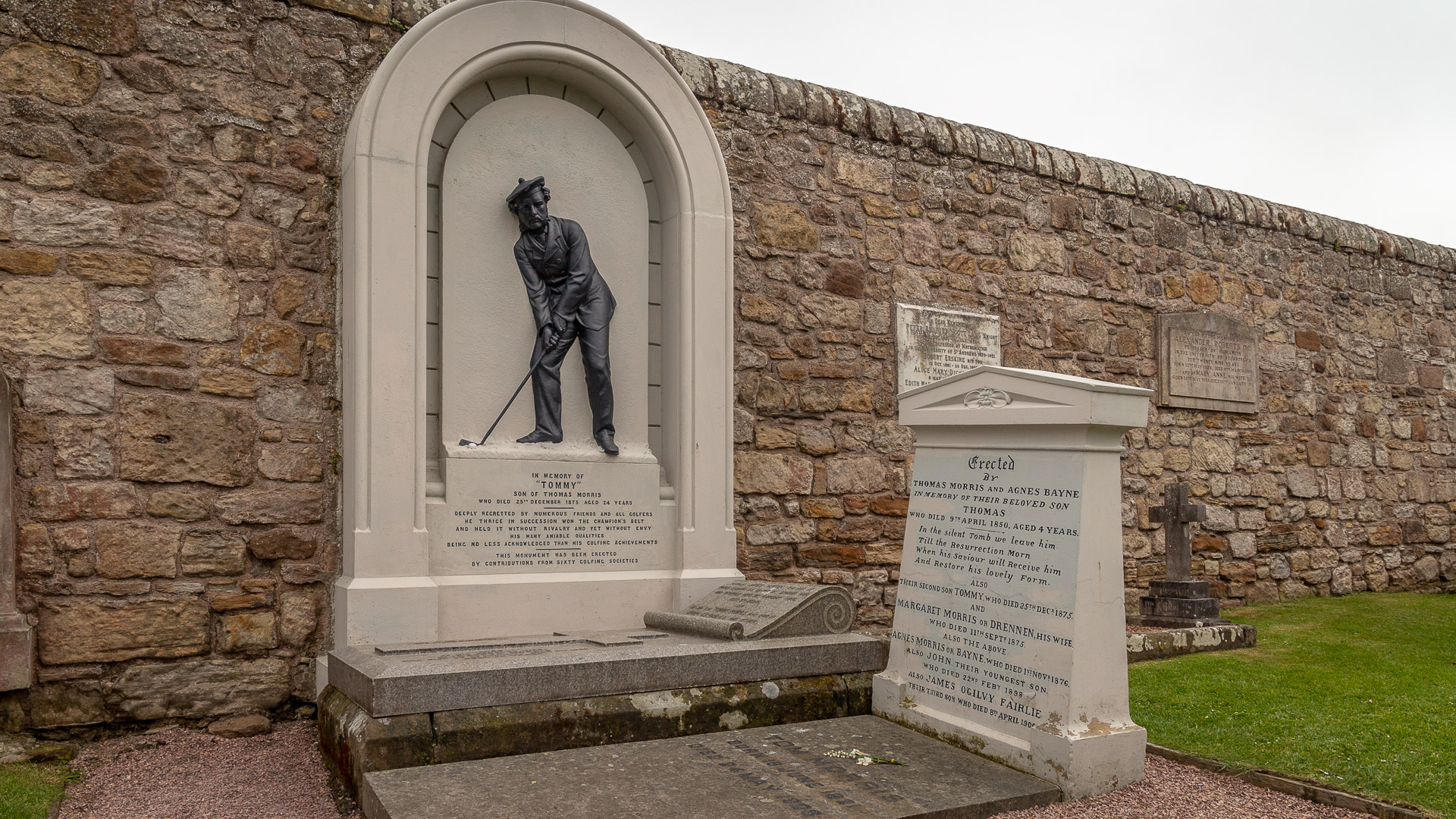
And then this: during a tournament, he received word that his pregnant wife had fallen ill. He rushed home as fast as he could, only to find both his wife and child dead. He never recovered from it and died at just 24 years old.
Despite the tragedy of the place, there’s beauty here too. Just beyond the graves stretches a beautiful sandy beach.
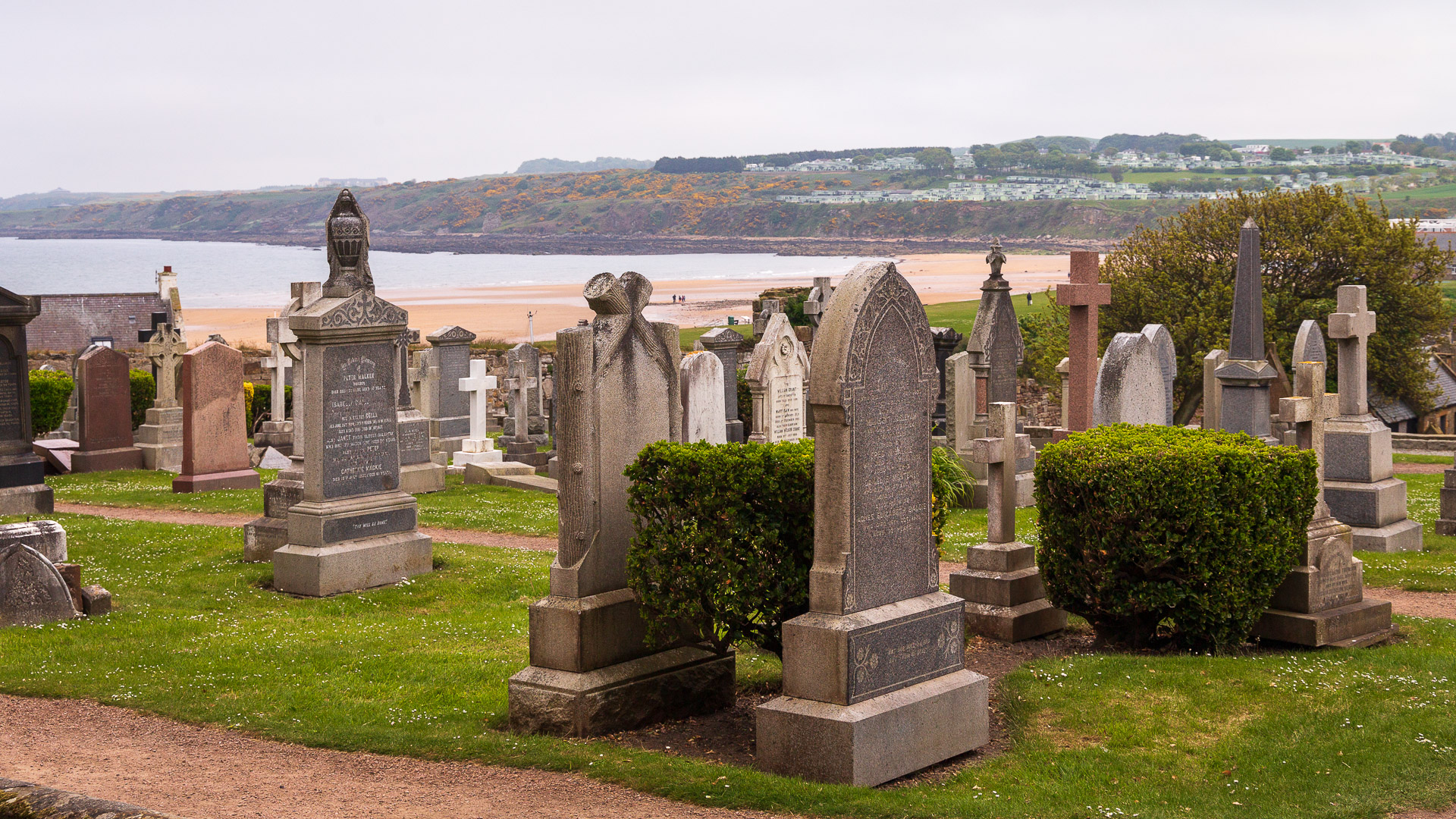
Visitors to the ruins of St Andrews Cathedral discover both a sprawling site and a great deal of Scottish soul here.
Good to know: The end of St Andrews Cathedral
Notre Dame in Paris still stands, so why is St Andrews now just a ruin? One man was to blame: John Knox, the Scottish reformer. He railed against Catholic decadence. After he preached nearby in 1559, an enraged Protestant mob went on to destroy the interior of the cathedral.
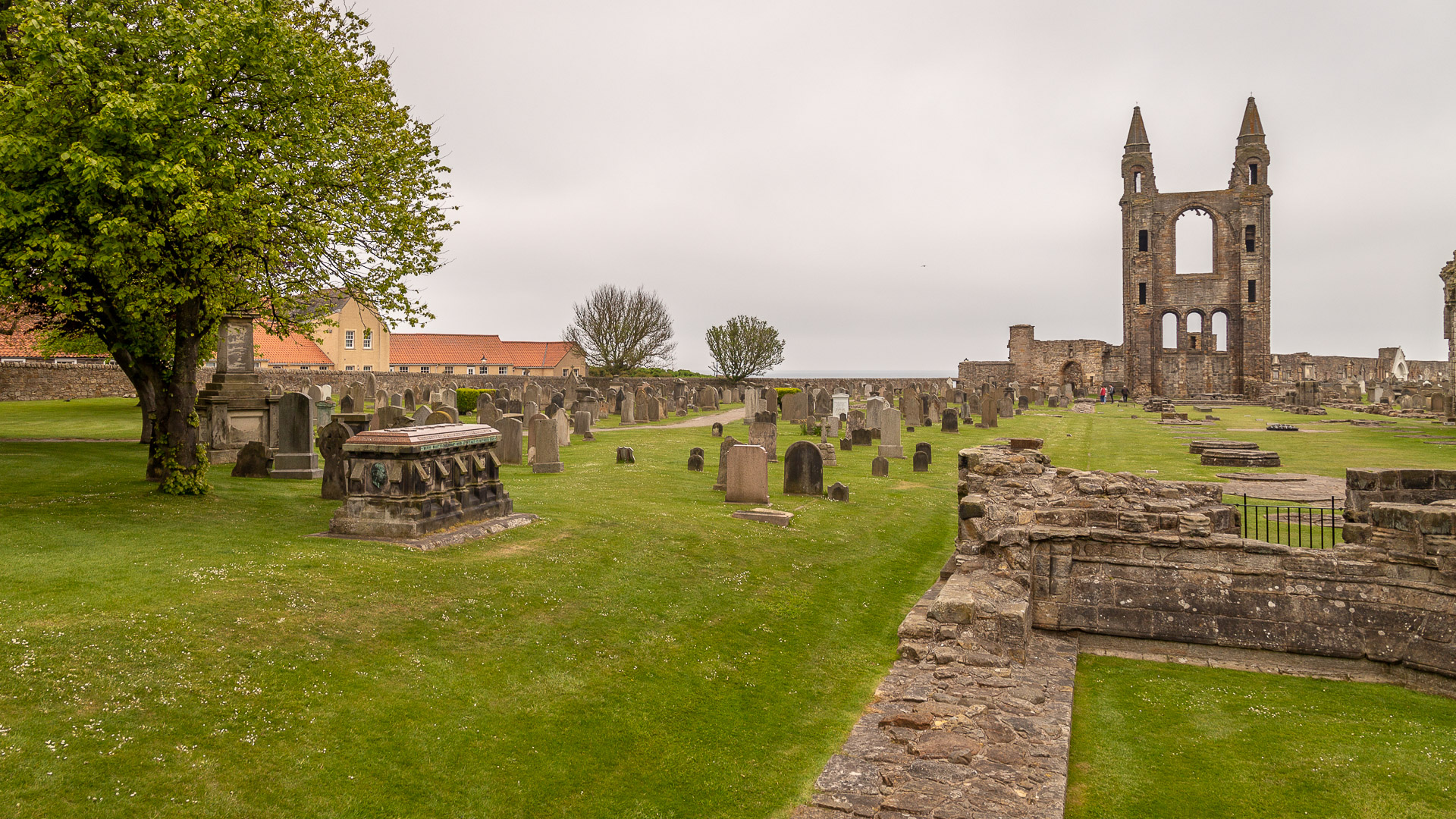
Once the Reformation had taken hold in Scotland, St Andrews Cathedral was simply left to decay. Literally. Just a few decades later, the north tower collapsed, bringing down parts of the walls with it. St Rule’s, too, fell increasingly into ruin.
A sad end for this place.
Getting there:
With a sat nav: enter “KY16 9QL”, which will bring you to St Andrews.
Without a sat nav: from Edinburgh, take the M90 motorway across the Queensferry Crossing. Shortly after, exit onto the A92. At the large roundabout, take the exit towards Kirkcaldy and onto the coast road, the A921. At the next roundabout, St Andrews is already signposted. Follow the A915 all the way to St Andrews. Once there, drive through the town gate and continue straight on until the cathedral appears. Park along the street.