Annandale whisky is still brand new. Yet the distillery works out of an old plant that offers fascinating insights.
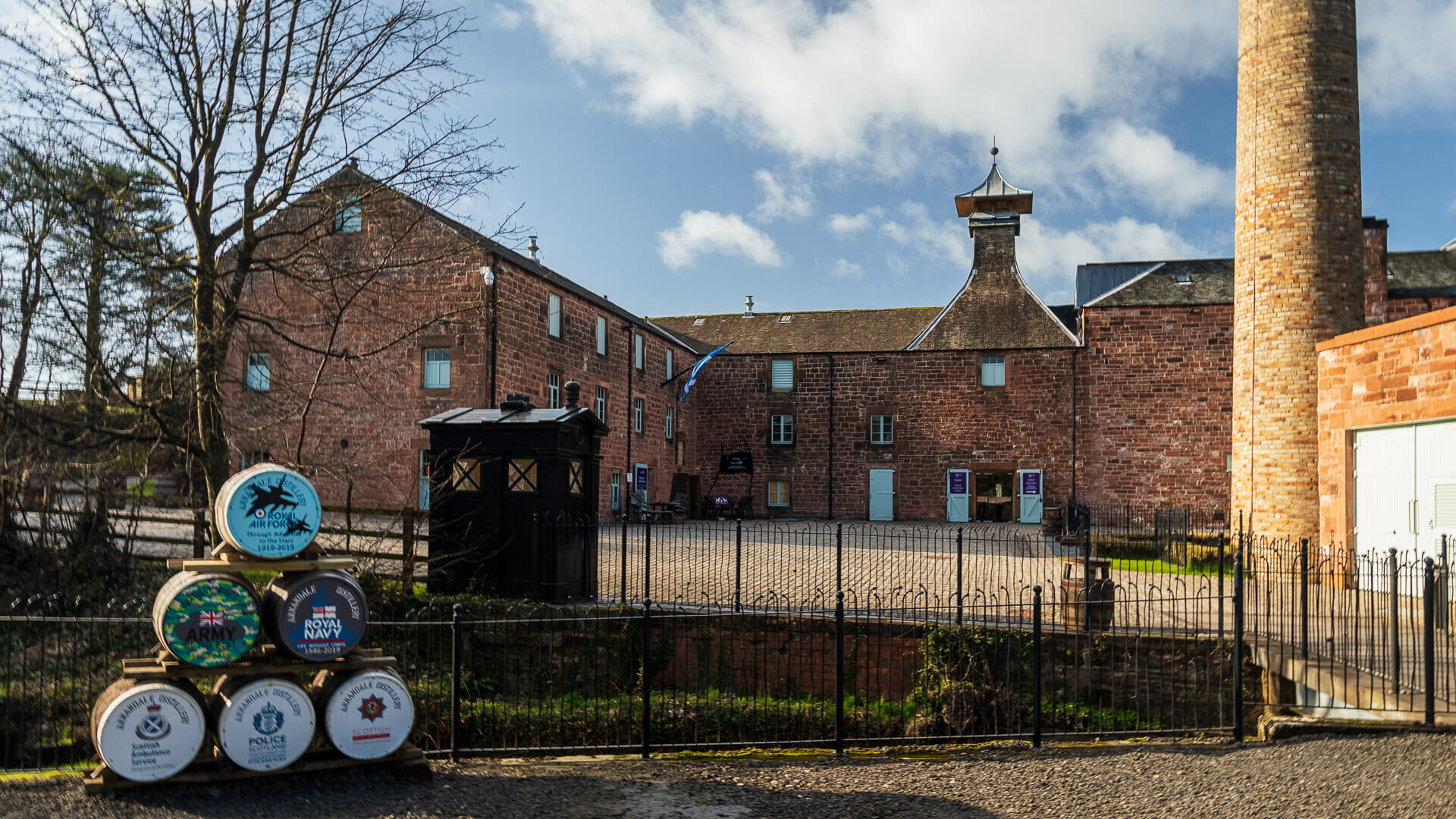
The two founders of today’s Annandale Distillery make no secret of it: they weren’t whisky enthusiasts when they bought the old building in 2007. Their reasons were different. So how did things end up here, and why is a visit still worthwhile?
One of them, Teresa Church, simply liked old buildings — and the old Annandale Distillery was certainly that. Back then, it was overgrown with plants, with gaping holes in the walls and at risk of collapse.
Today, the distillery grounds, with their large brick buildings and imposing chimney, once again radiate the grandeur that Annandale Distillery already had over a hundred years ago. A very distinctive look, quite different from that of the island distilleries.
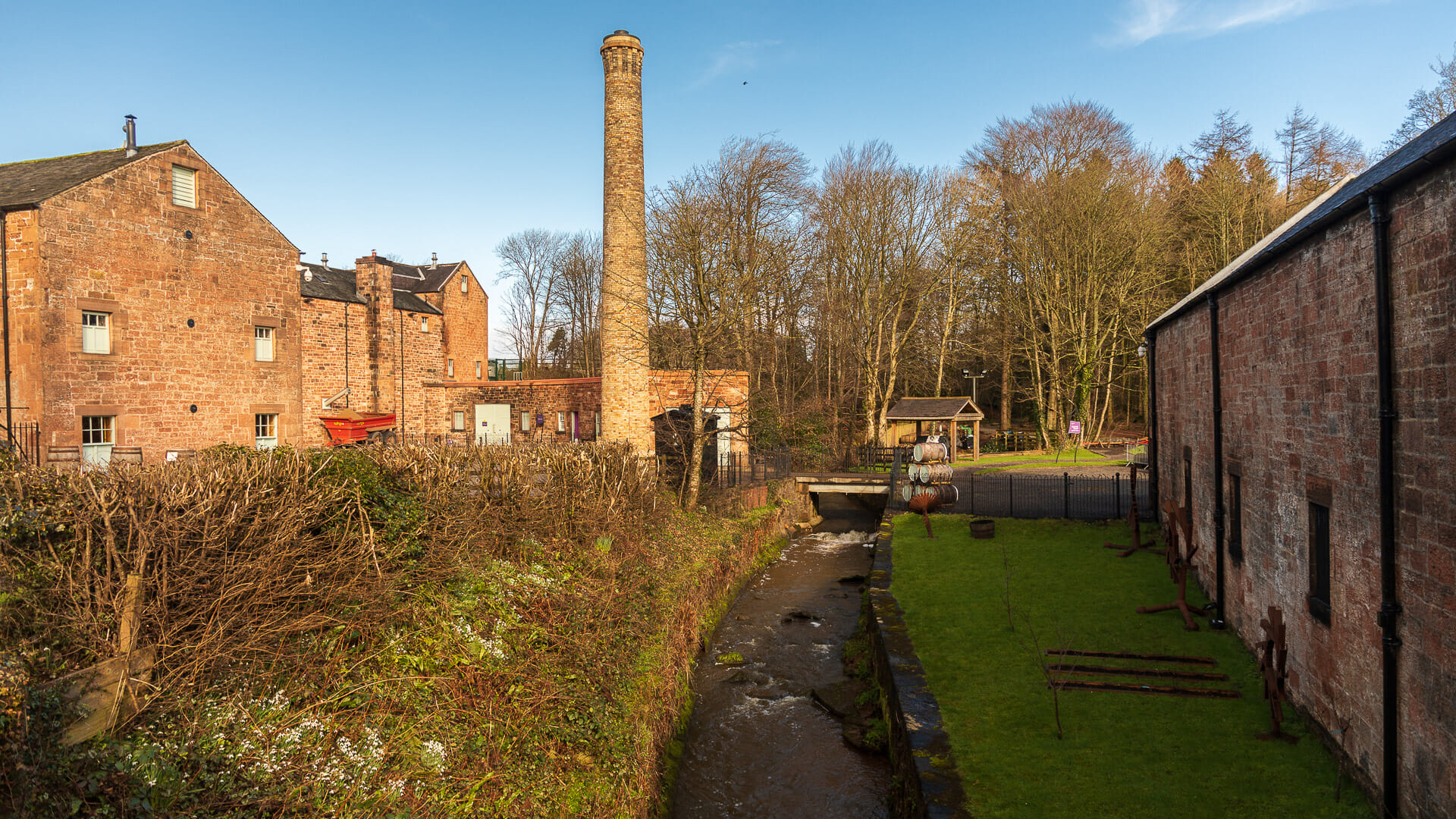
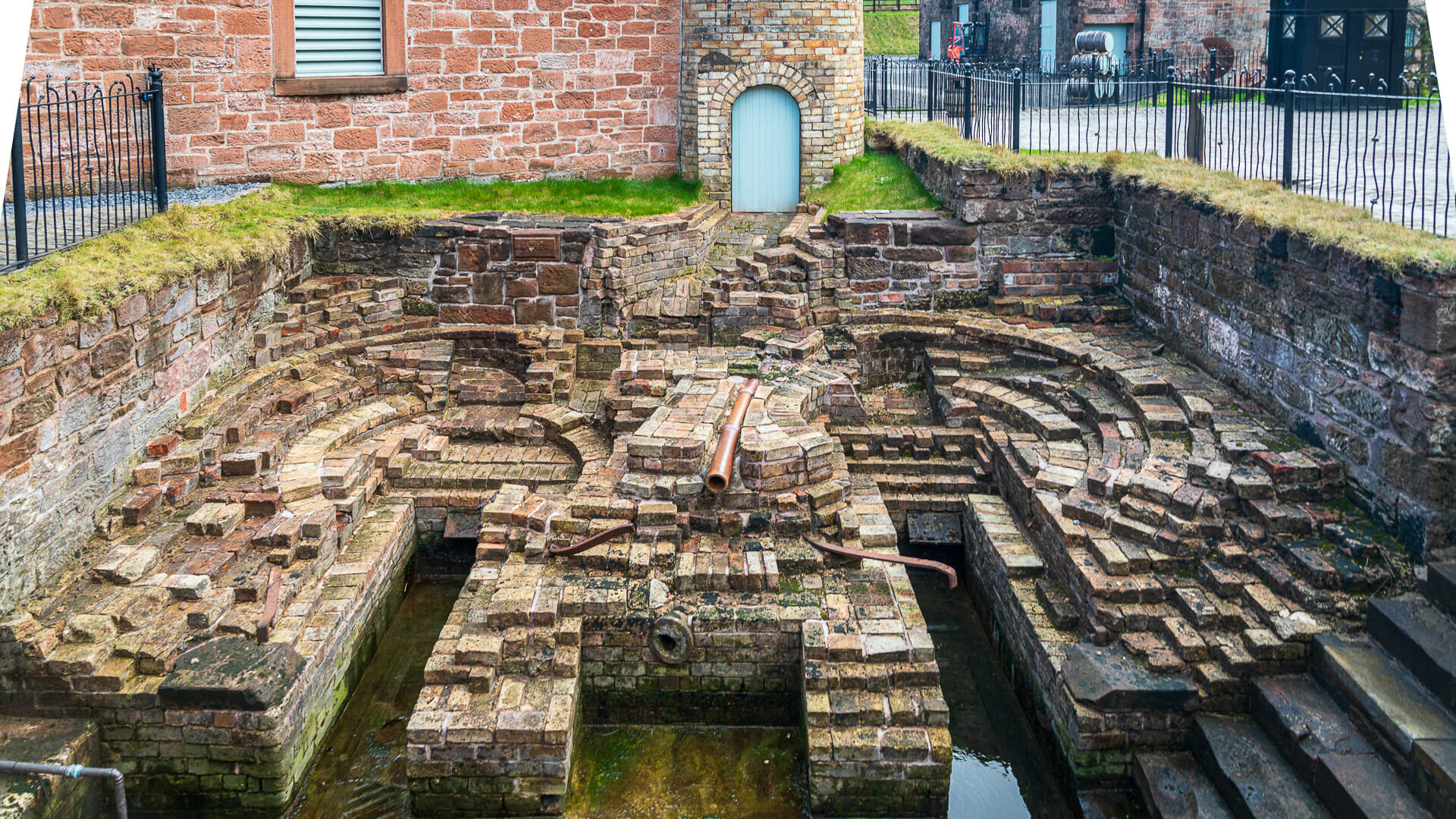
A factory chimney towers over the grounds, dominating the scene. It dates back to the old Annandale Distillery, which produced whisky here from 1836. During renovation, an exciting find was made at the foot of the chimney: the base of the old stills.
They were heated with coal, and the smoke would then rise up through the chimney. Seeing the remains of such an old installation is a genuine rarity. No wonder that archaeologists from Glasgow even studied the old still house in 2009.
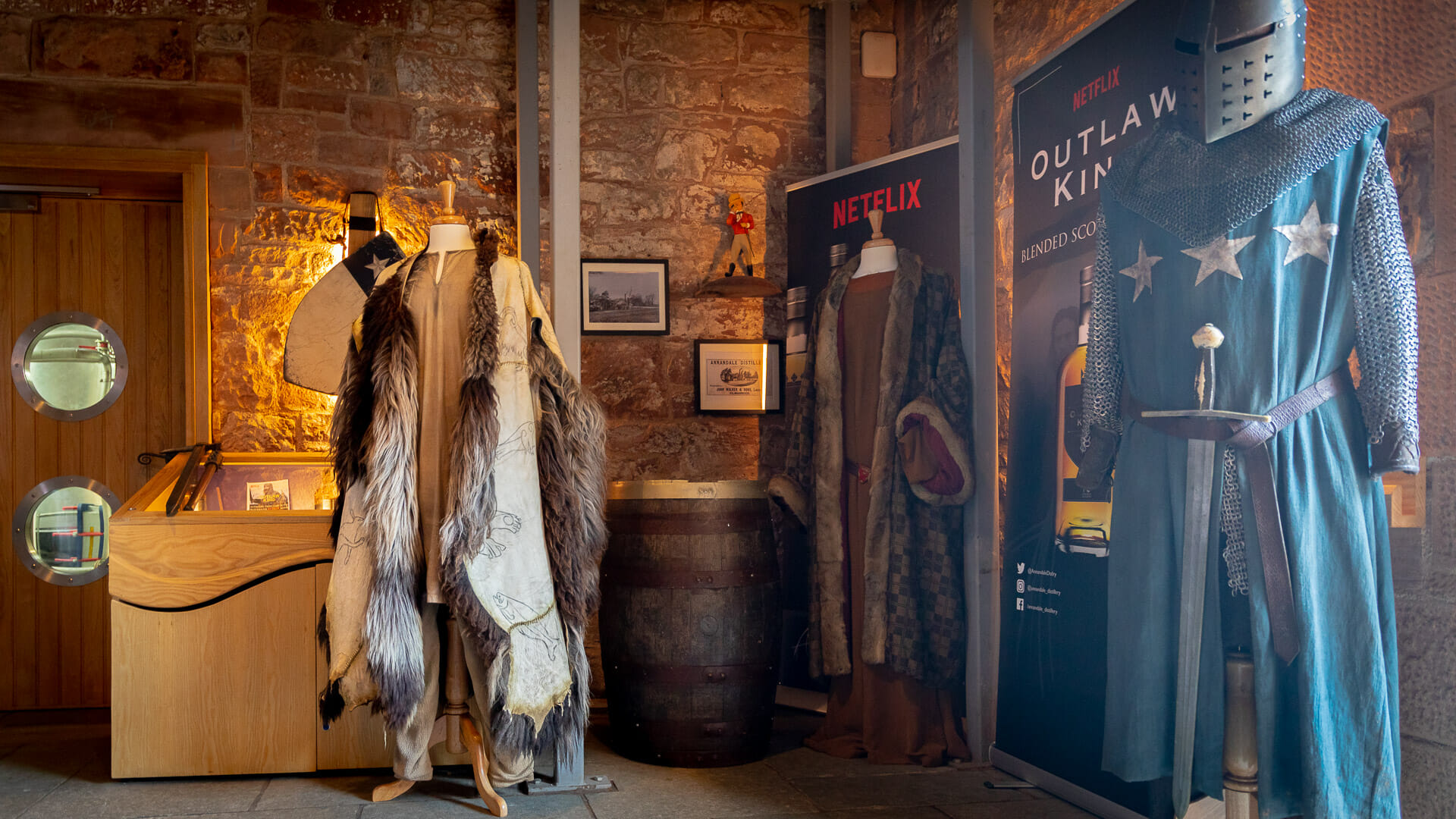
Of course, there’s also the typical pagoda on the roof — the “Doig ventilator”, to give it its correct name. Nowadays, though, it’s purely decorative, since malt is no longer dried beneath it as it once was. It now crowns the entrance to the visitor area, where the tours begin and a few film props are on display. That’s because the special “Outlaw King” bottling was released to tie in with the Robert the Bruce film of the same name on Netflix — after all, Annandale was once part of Bruce’s estate.
Now, we’ve heard a lot about the distillery, but what about the whisky itself? That’s where David Thomson comes in. He’s the other founder, and in 2007 he was looking for a project that would root him back in Scotland — he had previously been living abroad. Thomson knew Dr James (Jim) Swan, that legendary whisky expert who sadly passed away in 2017. Together, they planned the production of a whisky whose flavour profile they had first worked out through market research.
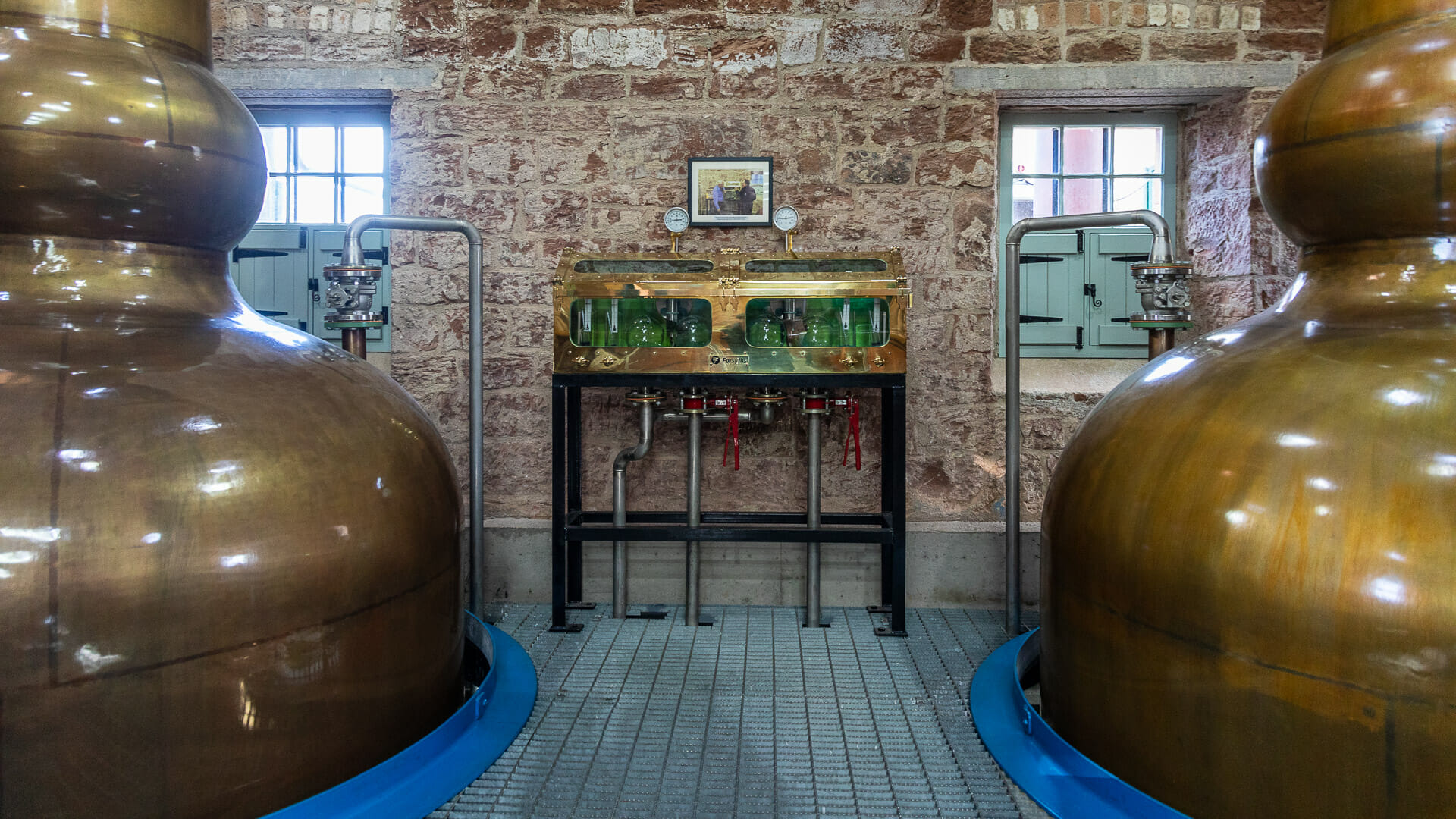
One special feature: the production process needed to be able to switch seamlessly between peated and unpeated whisky. The heart of the concept became the double spirit still. Ordinary distilleries have a wash still for the first stage of processing and a spirit still for the second distillation. Annandale has three stills: one large wash still (12,000 litres) and two smaller spirit stills (4,000 litres). This gives the spirit more contact with the copper.
On 15 November 2014, Annandale Distillery filled its first cask. And for some time now, drinkable whiskies have been available. The unpeated single malt is called “Man O’ Words” — a tribute to the poet Robert Burns, who lived nearby and worked in Annandale as an exciseman. The peated line is the “Man O’ Sword”, which recalls the Lord of Annandale: Robert the Bruce, King of Scots.
All in all, Annandale Distillery is a modern operation producing a young whisky, yet one that is visibly rooted in the past and traditions of the surrounding area. A visit is well worth it.
Know: The old Annandale Distillery
Somehow, a misconception has crept in that there’s no whisky culture, and never was, in the Lowlands below the major cities of Edinburgh and Glasgow — certainly none with any peaty flavour to it. The thing is, though: peat is nothing unusual for the region at all, and Annandale Distillery is striking proof that distilleries certainly did exist here.
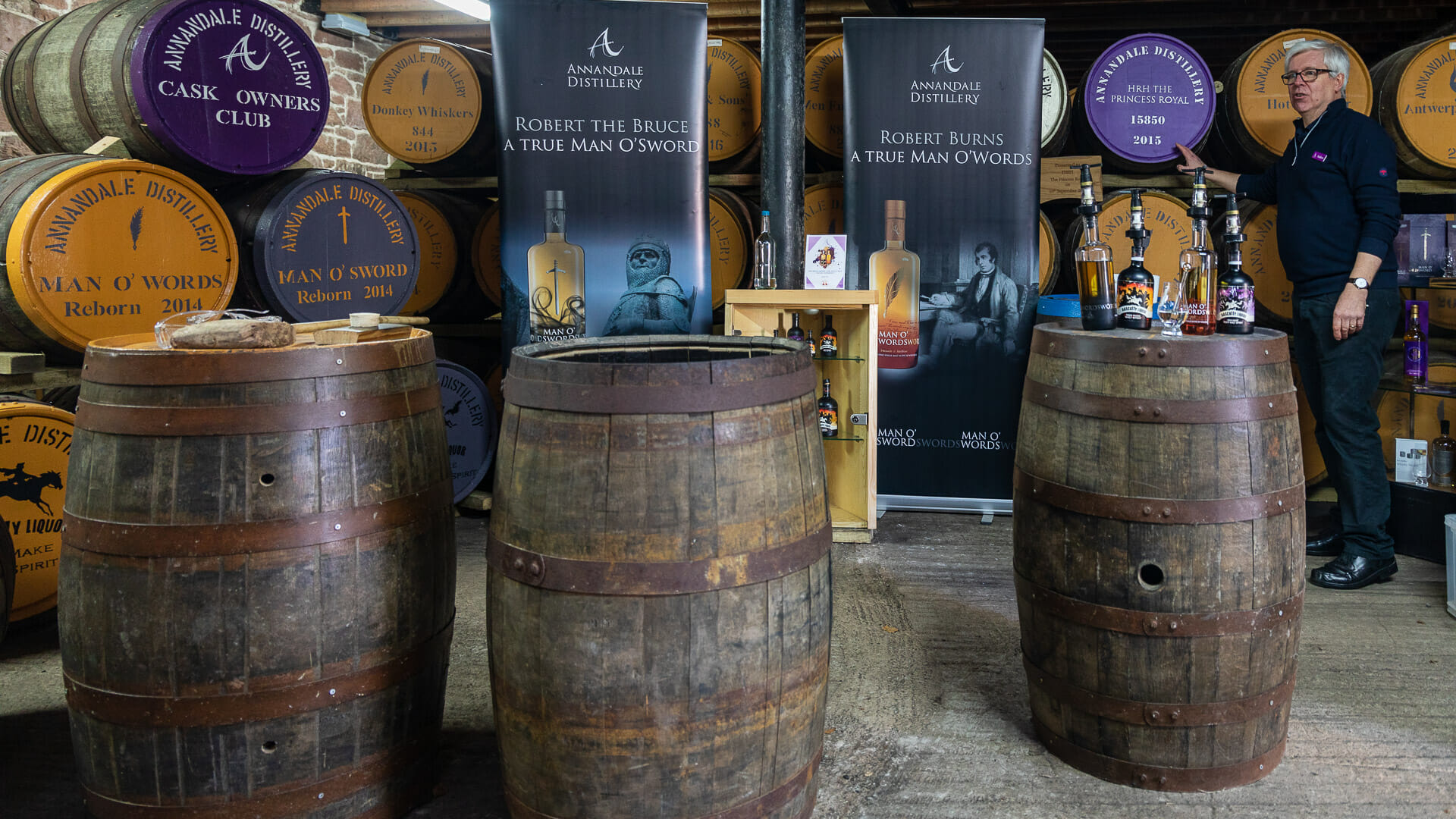
While it’s considered a newcomer today, it was in fact a heavyweight of production for almost a hundred years. In 1830, local businessmen, led by George Donald of Elgin, built the premises, and production began in 1836. Coal for firing the stills, peat for drying the malt, and a mild climate for maturation were all ideal here. Only the grain had to be brought in — though Annandale’s central location within the United Kingdom worked in its favour there.
In 1896, John Walker & Sons bought Annandale Distillery. But in 1919, the company decided to sell up again, choosing to focus entirely on its blended whisky “Johnnie Walker”. Finally, in 1921, production ceased. The buildings began to fall into disrepair, partly because stones from them were used for other houses.
When the two founders took over the buildings, they actually managed to recover the original stones from some of those other houses. The old malting floor now houses a café, and the semicircular extension holds the shop, where you can taste and buy the whisky.
Getting there:
With sat nav: “DG12 5LL” will get you right nearby.
Without sat nav: the A75 runs between Dumfries and Gretna Green. Roughly midway between the two towns, leave the road at the sign for Annan. This brings you onto the high street. In the town itself, just follow the brown signs to the distillery, which lead you onto the B722. A large car park is available.