In Scotland, antique auctions are down-to-earth, entertaining, and utterly fascinating. We visited one and are here to tell you about it.
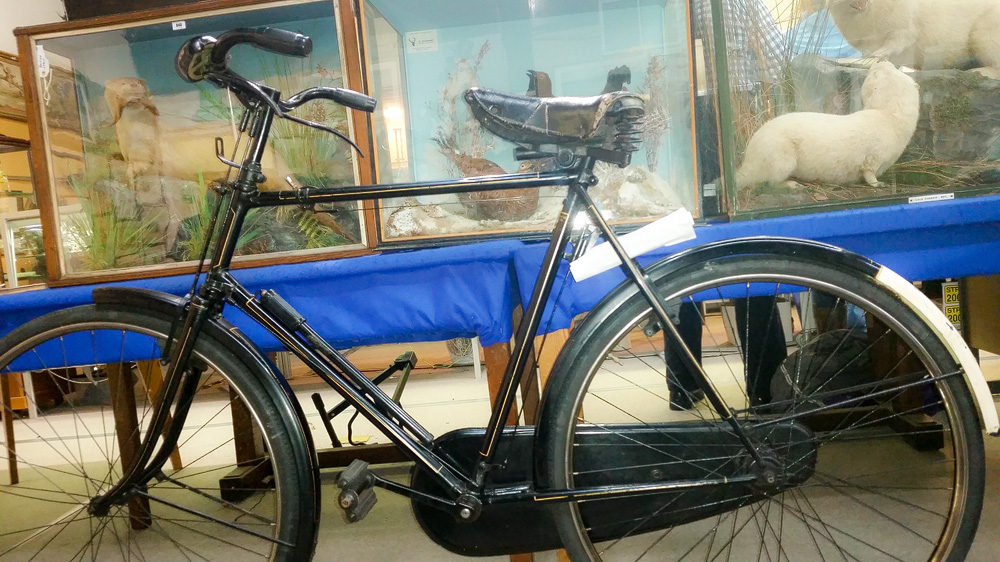
“Are you starting a party, my dear?” – I freeze. Did she really just speak to me? Her? Me? Here, while I’m inspecting a whisky collection?
She did. Anita Manning, the queen of auctions, jokes around and starts a little chat with me. The petite lady with black hair and a disarming laugh is well known across Britain. She appears on BBC shows like Antiques Road Trip or Bargain Hunt – a must for fans of small curios or, as they call it here, “Antiques, Collectables and Curiosities”.
That she’s walking around chatting to people isn’t surprising, since we’re in the house of Great Western Auctions, owner: Anita Manning. Yet I’m repeatedly struck by how open and pleasant everyone is with each other here. Imagine that at an auction house in Germany, the snobbery …
My wife and I are at Great Western Auctions, it’s Wednesday evening, two days before the auction. The right moment to get registered, receive a bidder’s number, pick up the current catalogue, and take a look at the antiques on site. They’re all displayed in the large room of this former church. Only the furniture pieces are one floor below.
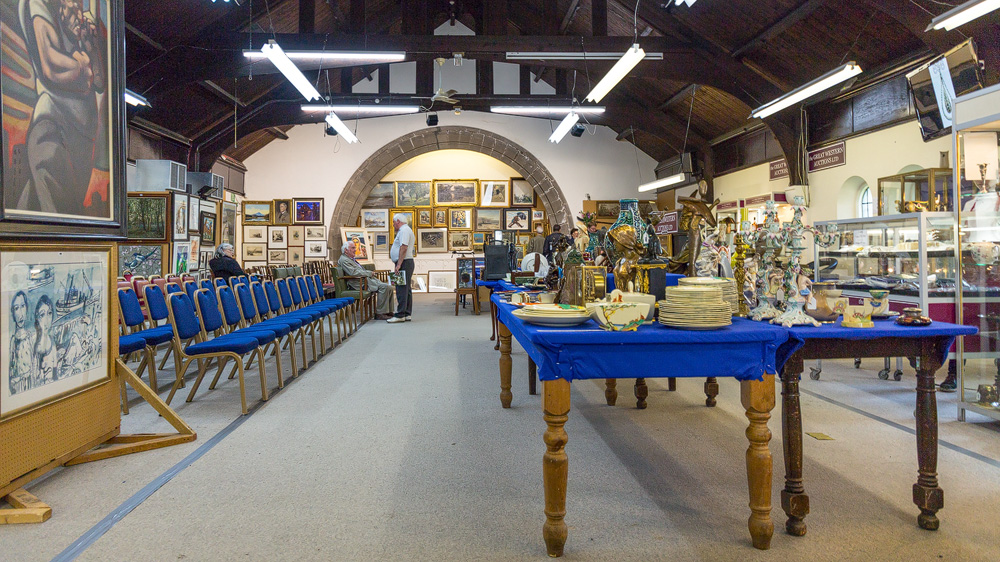
There are paintings here, porcelain, candlesticks, silverware, ornate serving platters … valuable items like jewellery are kept in display cases, but staff will hand them over for inspection on request. Japanese and Scottish swords hang on the wall.
My wife is on the hunt for a tea caddy. Tea caddies are small wooden boxes for tea, usually nicely decorated with little compartments. There are three here, but only one really fits the style – and you should also be careful: you buy as seen. So you have to spot any defects yourself beforehand.
The auction runs over three days, and we can’t be there the whole time, including whenever the tea caddy is due to go under the hammer. So my wife places an “absent bid”, a bid made in absence. For this she fills in a separate form, which she leaves with the auctioneer. When the item comes up, the bid is then taken into account. If it works out, she’ll get the winning bid and can collect it in the next few days.
In fact, nobody has to be there in person to bid at all. Collectors and interested parties dial in by phone or log in online. So you can end up with a duel between people in the room and bidders from all over the world, driving each other’s prices up.
Anita has already moved on by now, talking to another auctioneer.
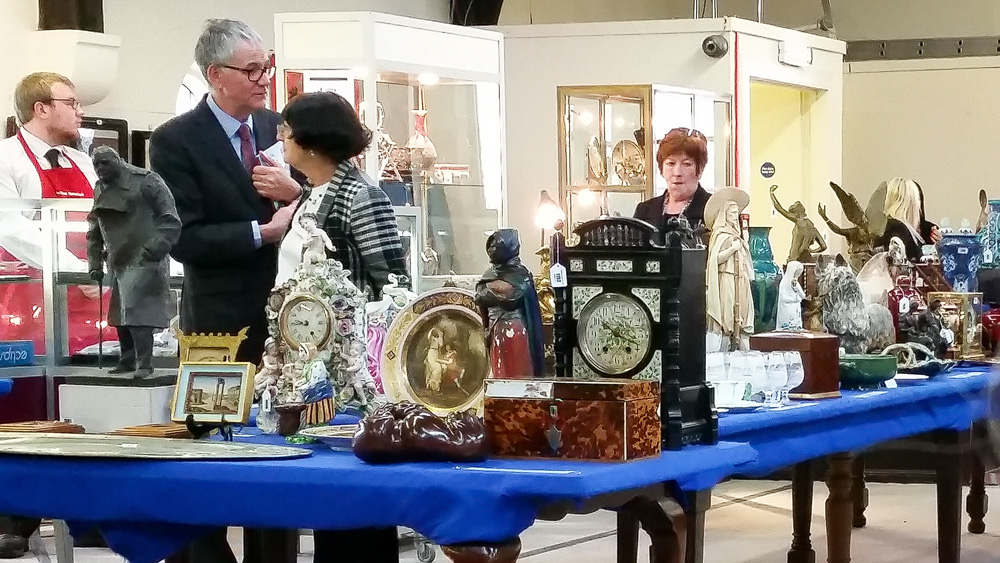
As I glance over at her, I notice the chunky little statue of Winston Churchill on the table – it’s the highlight of the upcoming auction, it was even in the newspaper.
We decide to head off and come back in two days to follow the auction.
Auction day
My wife has the catalogue with her, marked up with what we’d like to bid on. The items are then announced by number and briefly described by the auctioneer. The monitor also shows a photo of the piece.
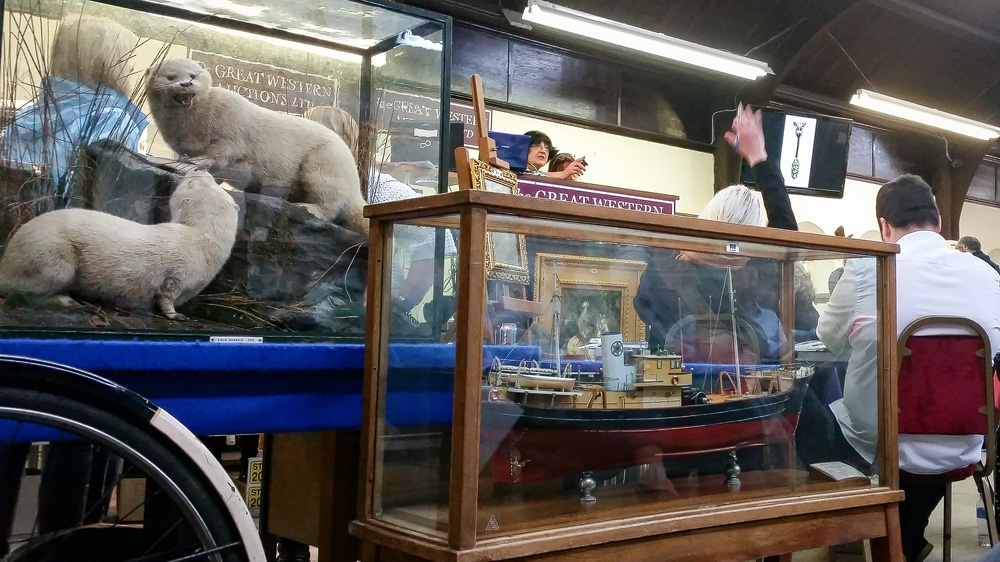
Then things get serious. Anita herself takes the first few lots. She first throws out an estimated bid, to which mostly nothing happens at first. Everyone knows: she’ll keep going lower until the first person loses their nerve and bids. From then on, the price climbs again. The auctioneer doesn’t keep an eye on everyone though, but usually locks onto two or three “rivals”. Only once they’ve stopped driving each other up can a new bidder come in and outbid them.
Bidding is sometimes done with just a nod or a quick raise of the paddle with the number on it. Only newcomers to the race have to make themselves more clearly noticed at first.
When finally nobody bids anymore, the end sounds like this:
https://youtu.be/EhunIydvaTI
In the video, a lady on the left raises her hand too late – bad luck! Once the hammer falls, it’s over.
The numbers just whizz past our ears. My wife has set maximum bids for the pieces she doesn’t want to go beyond – after all, the exchange rate and fees still get added on top of the stated sale price. But the bidding usually starts above the limit we’d set ourselves anyway. That’s frustrating.
From a purely spectator’s point of view, though, it’s hugely entertaining. Not just because Anita Manning knows how to play with the tension in the room, ramping it up and then defusing it again with a well-timed joke before it starts all over. Also because of the bidding duels in the room. There are the Japanese buyers, fighting other collectors over the samurai swords. It quickly runs into the tens of thousands. Much the same with the jewellery. There are a few pieces whose price quickly hits five figures. During their auction, we don’t dare so much as twitch, for fear it might be mistaken for a bid.
We stay for a few hours before leaving the auction empty-handed but with new experiences. We already know: we’ll be back.
Oh, and the little statue of Churchill? We’re no longer there when it’s auctioned. But we later learn it fetched £31,000, roughly €42,000.