Barra Airport is something you really have to see. At this small airport on the Outer Hebrides, technology and nature meet in the most enchanting way.
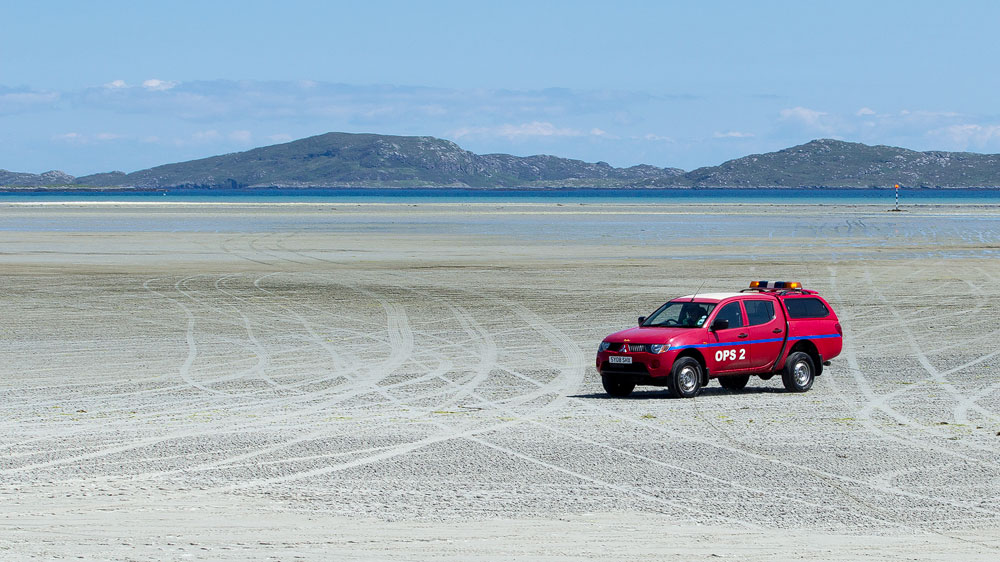
The plane from Glasgow arrives at 1pm, so the beach has to be clear by then. A red SUV marked “OPS 2” races across the sand towards a small group of people who have apparently strayed onto the beach. But right now, just before 1pm, there is no beach here any more. There’s only the airport. The red vehicle brakes briefly next to the pedestrians, who hurriedly retreat. Then the car speeds back at breakneck pace. The runway is clear again.
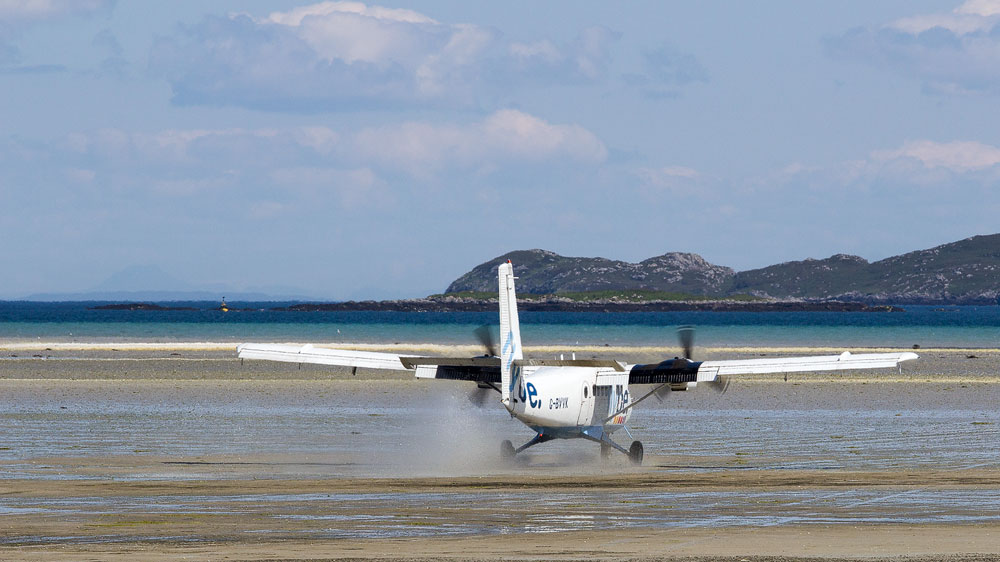
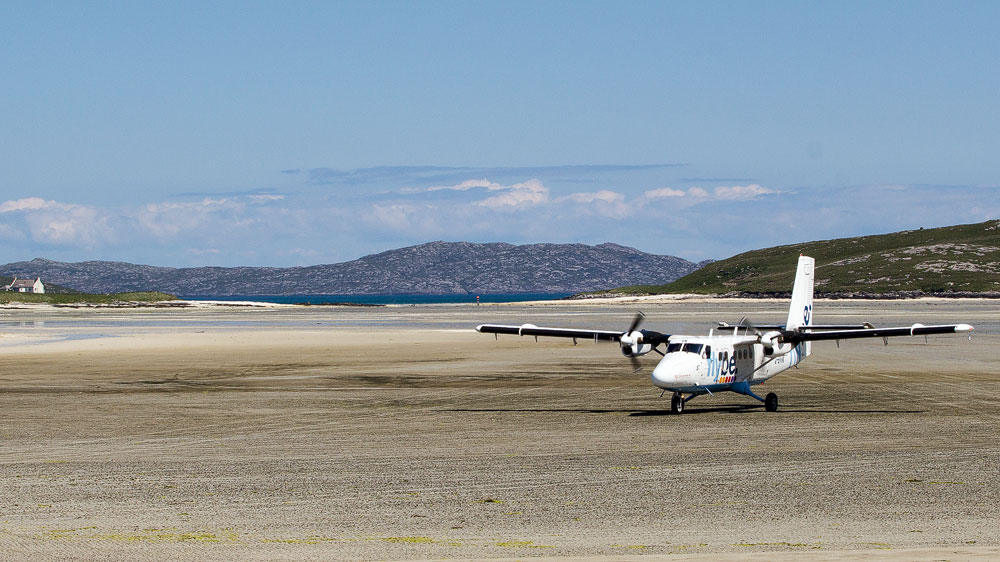
Barra Airport doesn’t have a conventional tarmac runway. Instead, the planes here taxi across the Traigh Mhòr – the “big beach” of this small Hebridean island, an almost endless stretch of sand. And it’s precisely this quirk that makes Barra Airport so special.
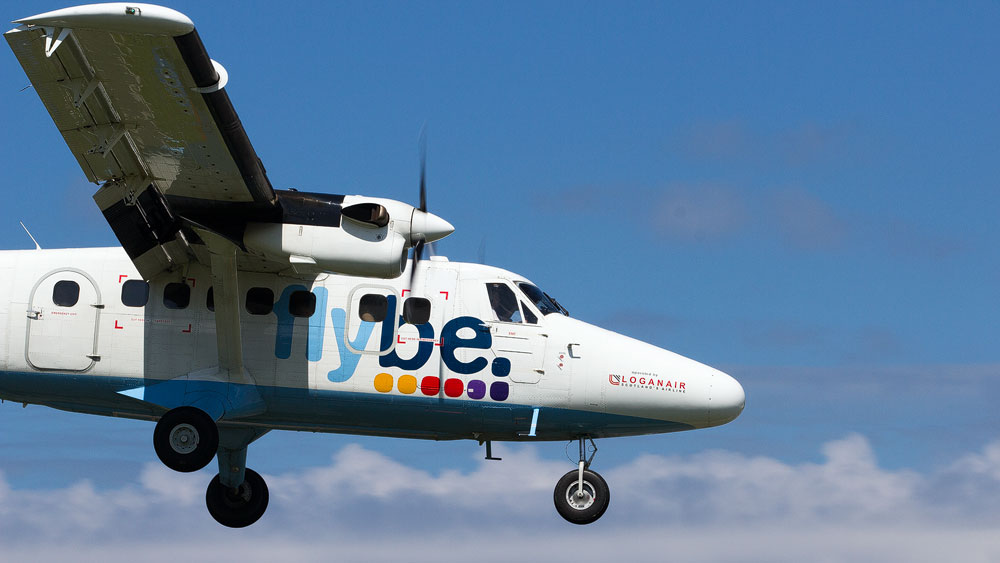
Naturally, no jets land here. Scheduled flights to Barra are operated by Loganair using a de Havilland Canada DHC-6 – known as the “Twin Otter”. This is a propeller aircraft specifically designed for short take-off and landing runways. The small plane can carry 18 passengers, getting them to their destination within about an hour and a quarter – and it does so twice a day. Quite a contrast to the major airlines transporting over a hundred passengers at once.
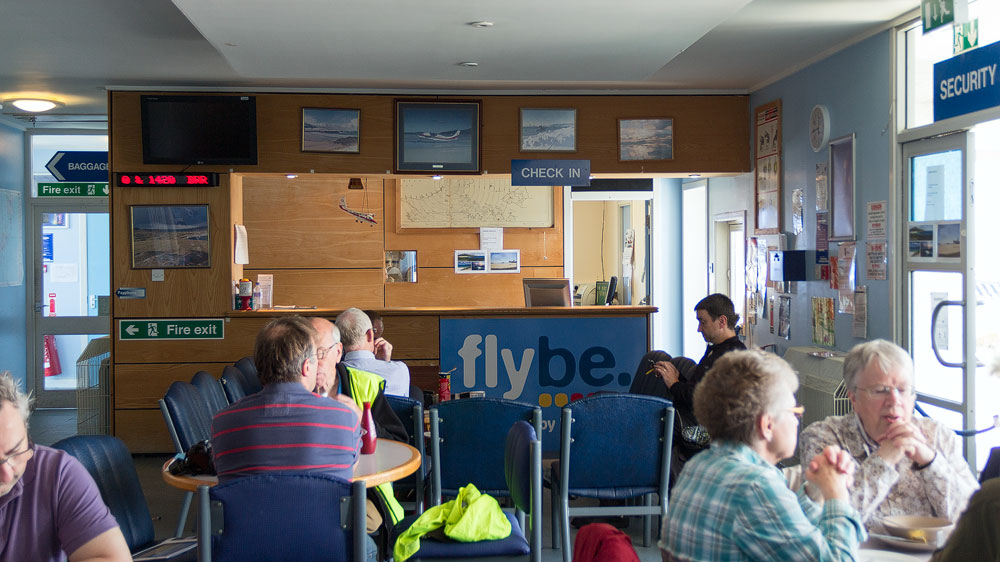
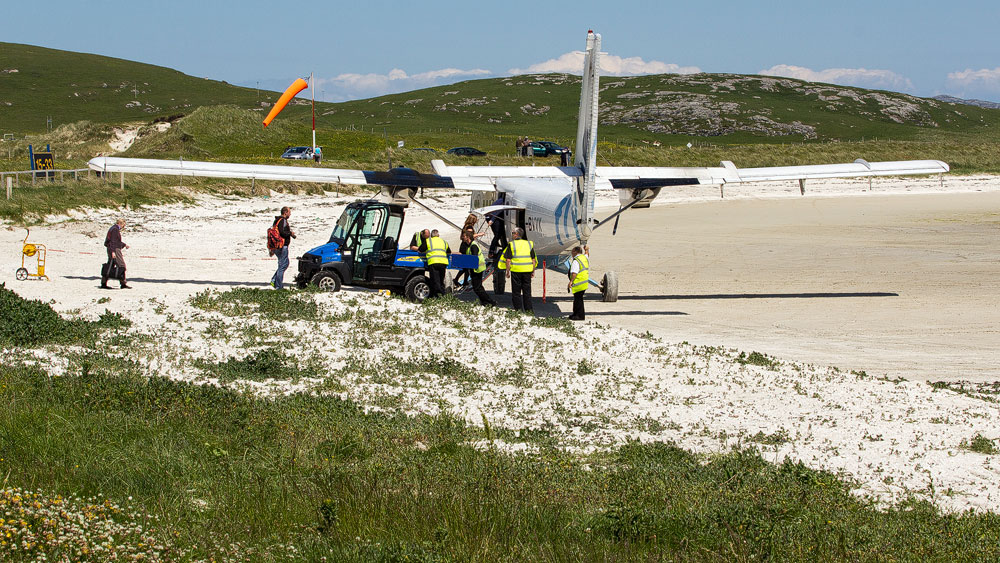
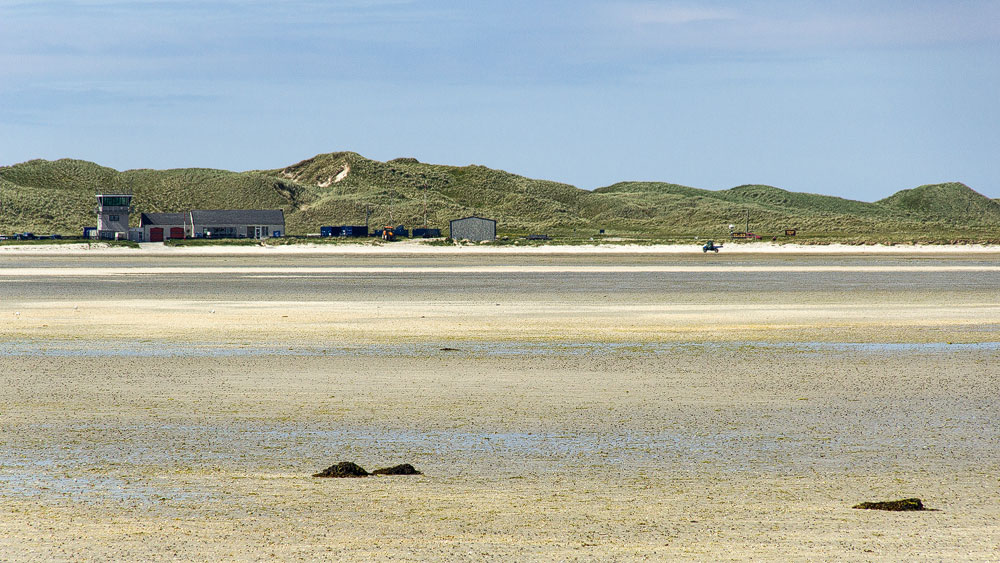
At Barra Airport, everything is just that little bit smaller and more personal. Instead of large halls with rows of check-in counters, passengers check in right here in the airport café, mingling with the other guests. Security is only a couple of steps further along, and there’s only ever one gate anyway.
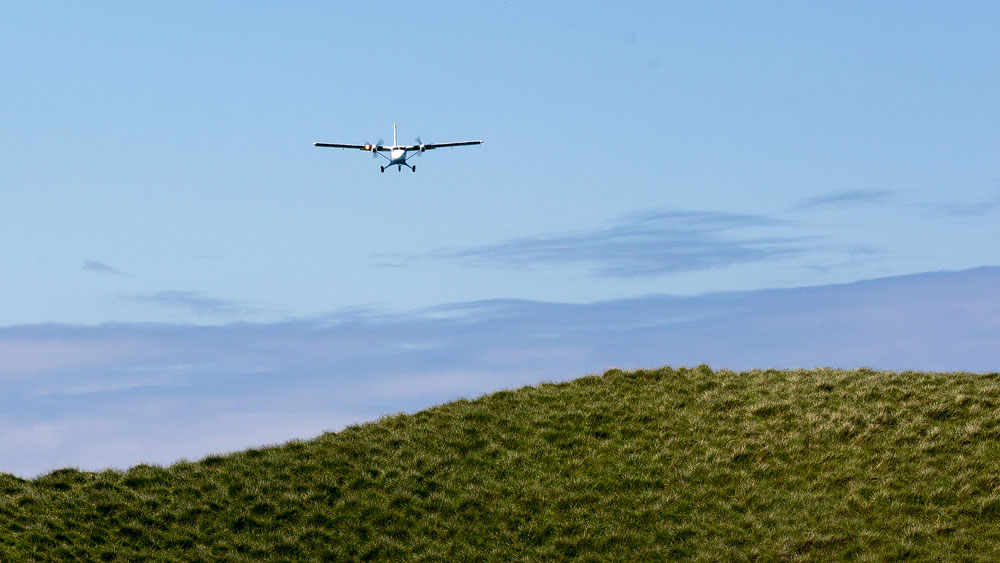
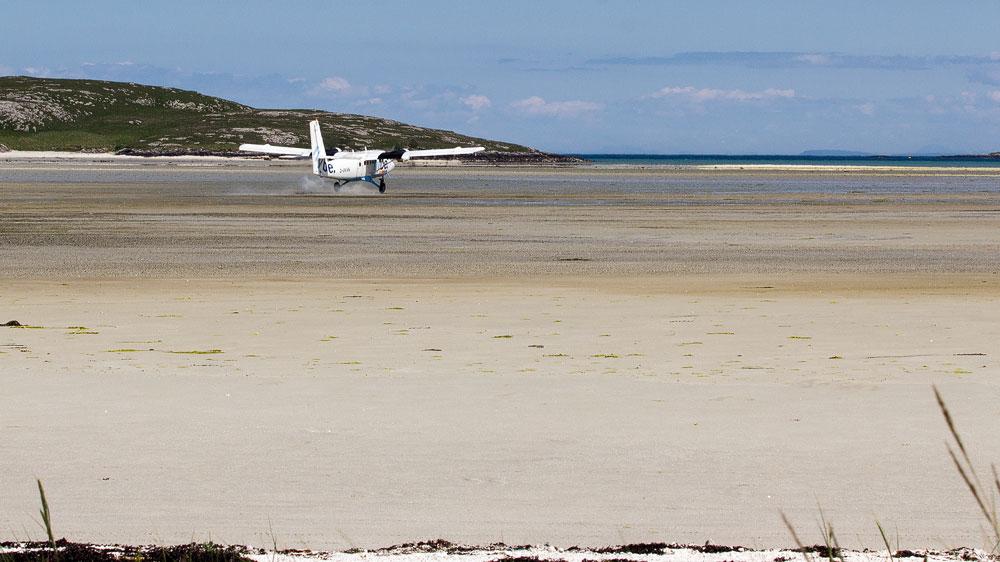
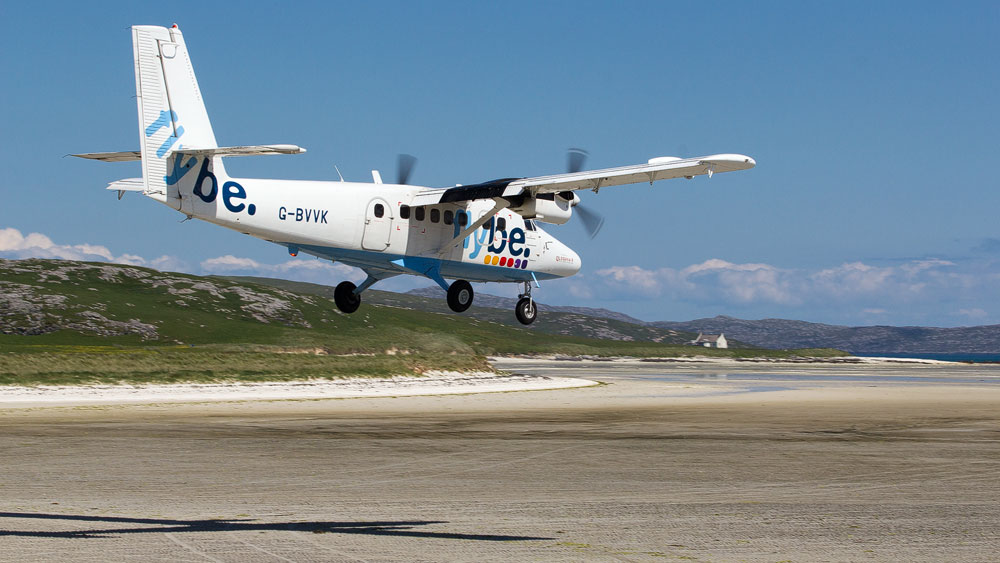
Shortly before 1pm. A droning sound fills the air over the beach; a small dot grows steadily bigger. The plane from Glasgow first flies over the airport, then banks into a wide turn and comes in to land over the dunes. This is the point at which it’s well worth standing in the car park, since the aircraft sweeps in low, right over the heads of onlookers. So low, in fact, that some instinctively duck (my wife Katrin, for one). It finally touches down on the sand, sending up hissing sprays from a few puddles on the beach. Once it’s rolled to a stop, it turns and taxis its way towards the terminal building.
A small baggage cart darts over to collect the suitcases, while the handful of passengers climb out through the door. Within minutes, the new passengers are already boarding. The door closes and the beach is cleared once more. For a moment, silence returns; nothing stirs. Then the propellers start up. The Twin Otter taxis into position and revs up to full power, throwing up an impressive plume of sand behind the aircraft. Only then does the pilot release the brakes. Barely four hundred metres later, the plane lifts off into the blue sky.
Calm returns to the beach once more, until the next morning’s flight arrives.
Good to know: facts about the airport
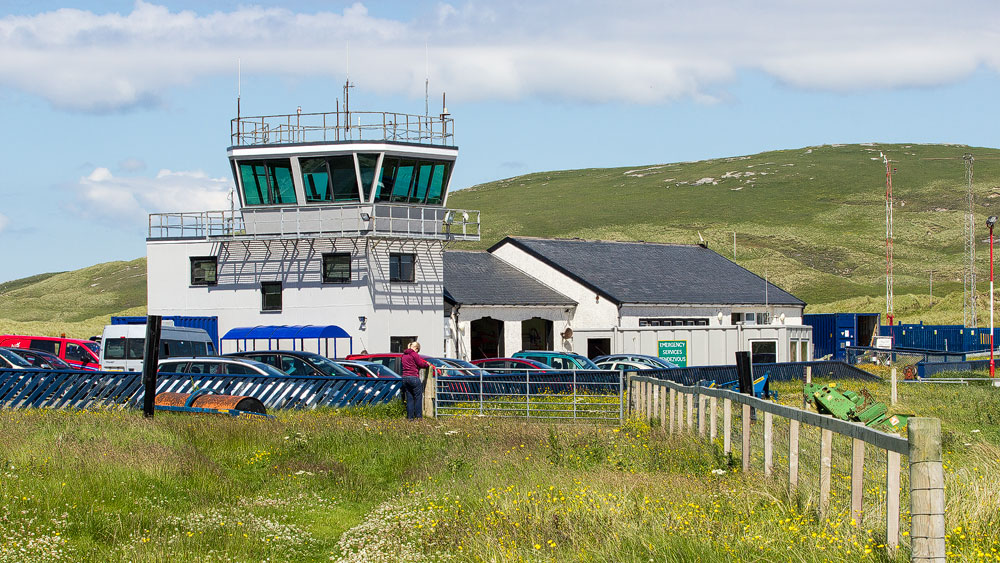
Barra Airport (airport code BRR) was first flown to back in 1936, and the connection between Scotland and this small Hebridean island has existed ever since. It’s the only airport in the world with a beach runway that operates scheduled flights. Strictly speaking, there are even three runways, each marked out roughly by a concrete post the pilot can steer towards. No further markings are visible.
That said, flight operations have to take a number of things into account – the tides, for one, which the flight schedule is built around. Barra Airport also can’t operate at night. It’s run by Highlands and Islands Airports – or “HIAL” for short – with Loganair operating the flights for flybe. Loganair also operates the shortest scheduled flight in the world, to the Orkney Islands.
The name of the beach, “Traigh Mhòr”, is Gaelic, and simply translates as “big beach”.
Tip: watch out for flying sand
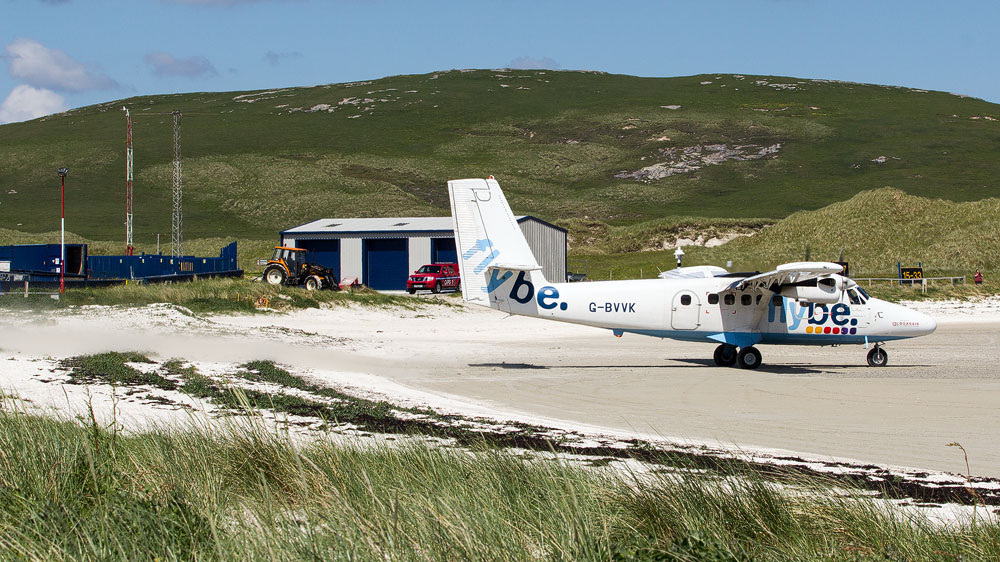
There are dedicated signs at the airport: “caution: beware of sandblasts during aircraft movements”. And indeed, the sand thrown up behind the Twin Otter left our camera housing peppered with numerous small dents, that’s how forceful it was.
Personal note: an uplifting experience
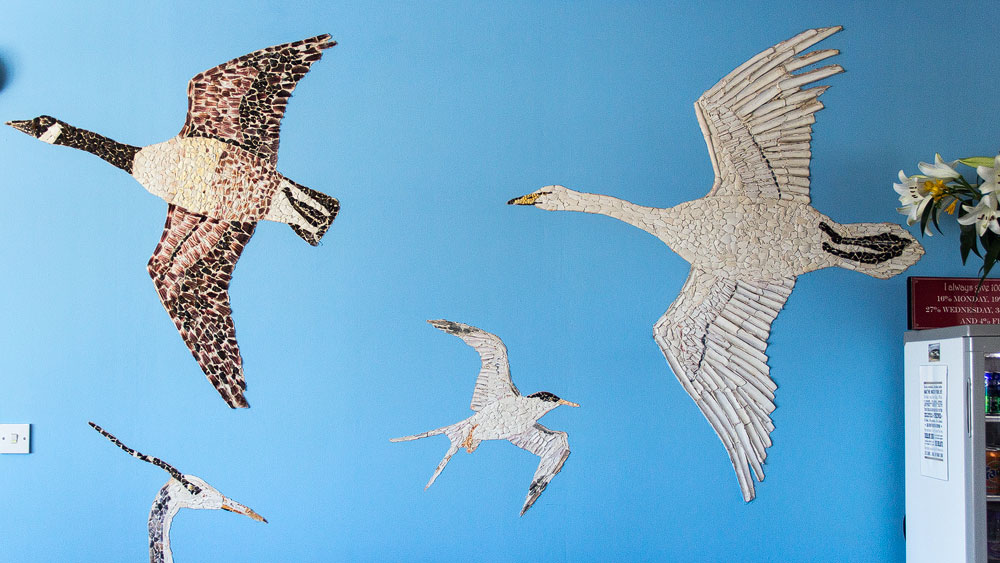
As an onlooker, I genuinely had a great hour here. The weather was phenomenal, and the combination of technology set against such a beautiful backdrop made my heart skip a beat. You can happily pass the time before and after in the café with a latte macchiato (yes, that’s made its way to Scotland too now) and a slice of cake. While you’re there, do take a look at the lovely bird mosaics: they’re made entirely from pieces of seashell.
Getting there:
With sat nav: “HS9 5YD” will get you there.
Without sat nav: in the north of the island, turn off the ring road, the A888, towards “Port-adhair Bharraigh” and continue until the tower comes into view. You can park directly in front of the building, in the visitor car park.