Just a few minutes from Edinburgh’s city centre lies Dean Village. Walking past picturesque houses along the Water of Leith, you can forget all about the hustle and bustle of the city centre.
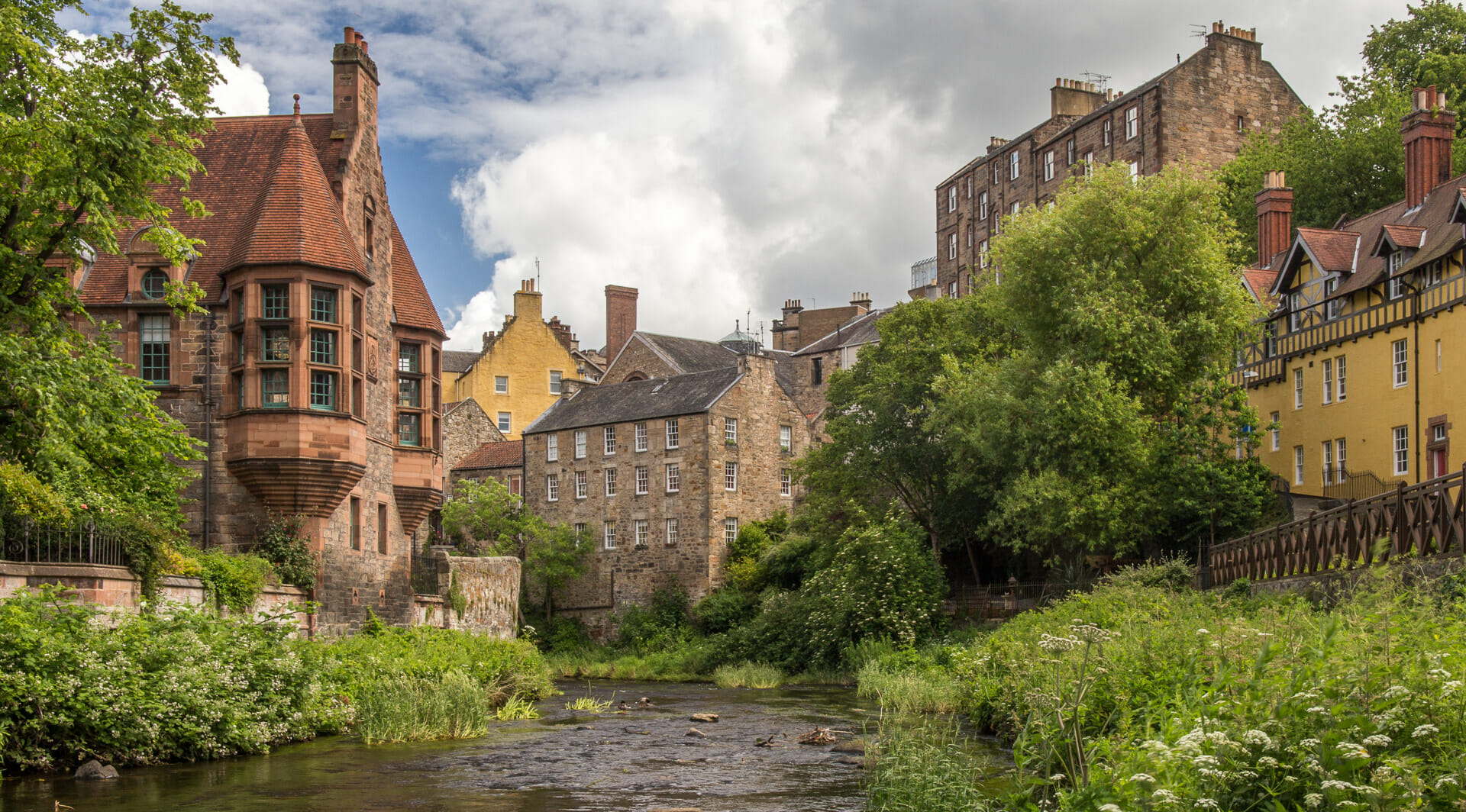
Before the “Water of Leith” flows into the North Sea at the harbour of the same name, it passes close to the centre of Edinburgh. Over the millennia it has carved out a valley here, around which some of Edinburgh’s most beautiful buildings are gathered. You can explore it on a pleasant, somewhat longer walk.
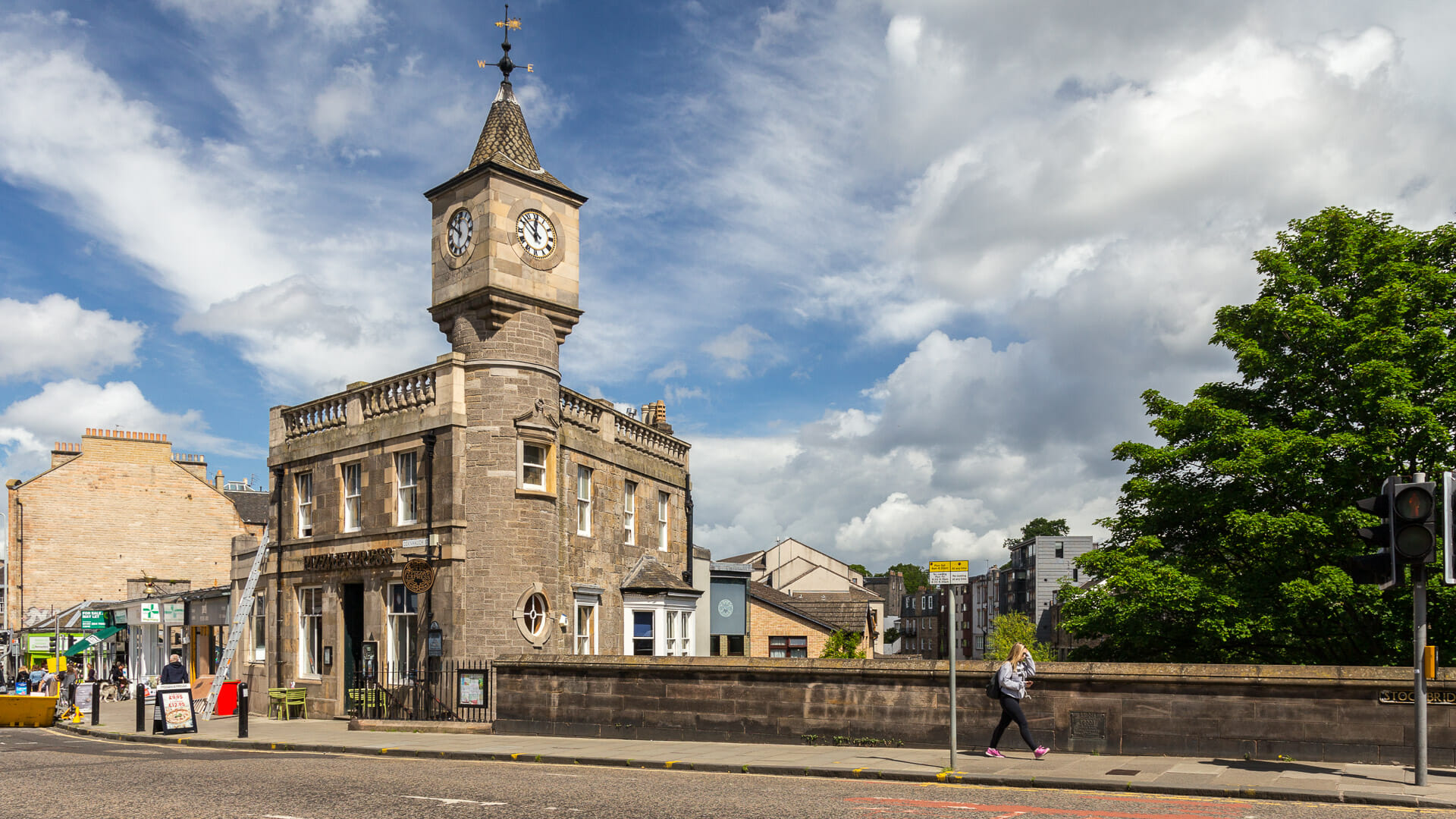
Our walk begins at Stockbridge, opposite which stands the old bank building with the clock tower. Today it houses a branch of Pizza Express.
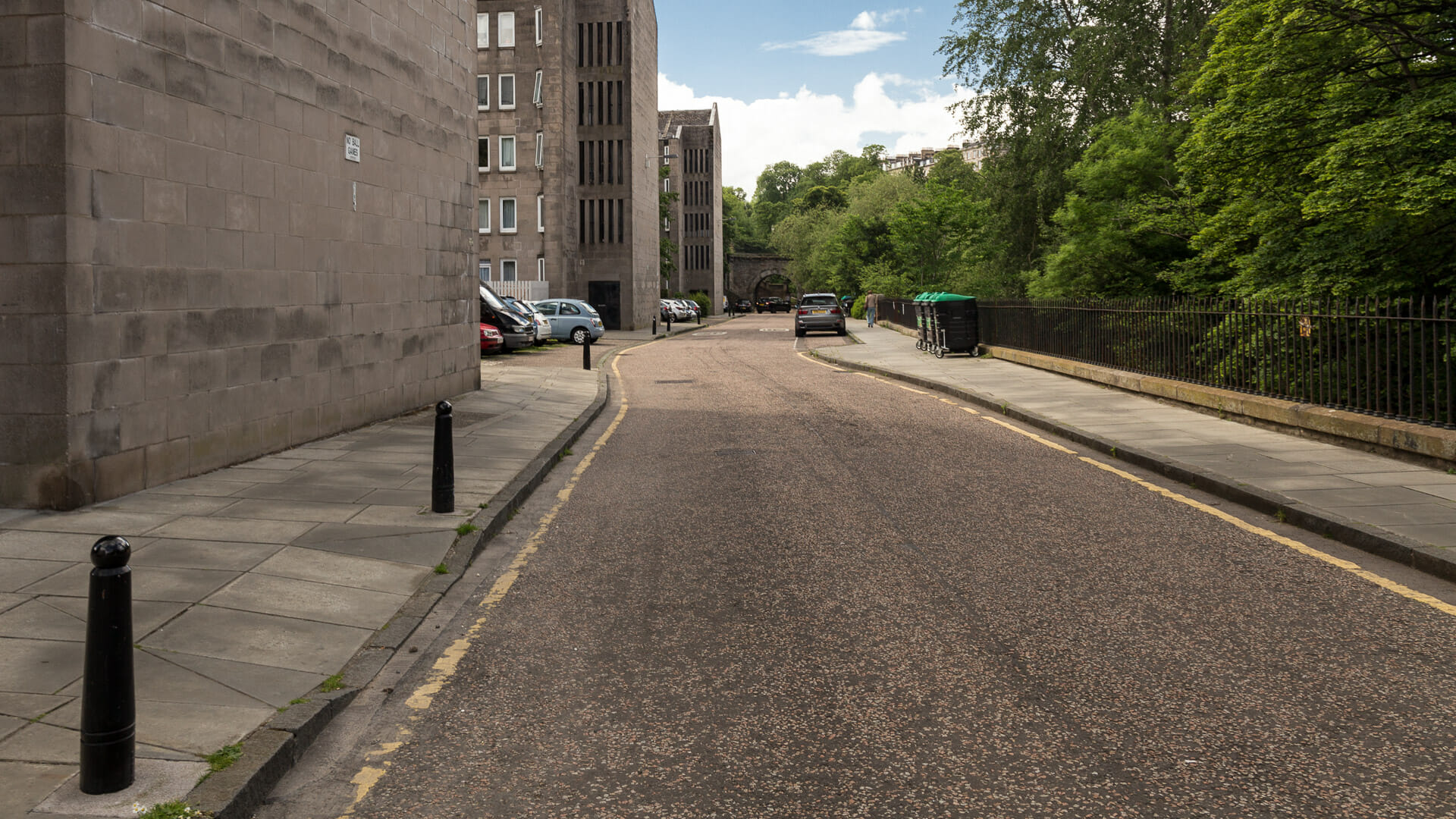
Beneath the bridge, the Water of Leith is already flowing. The first stretch isn’t very pretty yet; Saunders Street passes a few unattractive housing blocks.
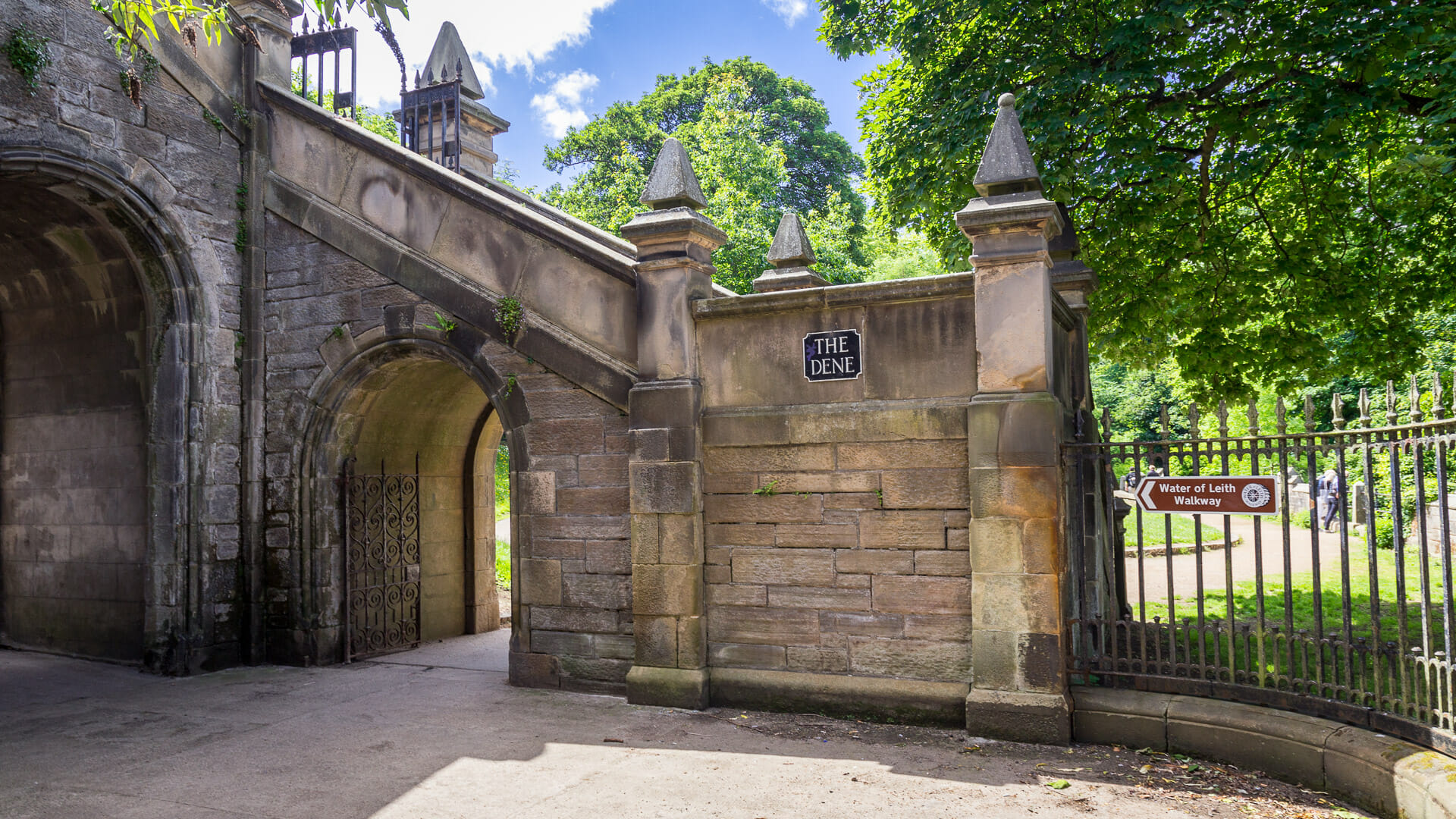
But the street ends at a beautiful old bridge, beneath which we find the entrance to the Dean Gardens.
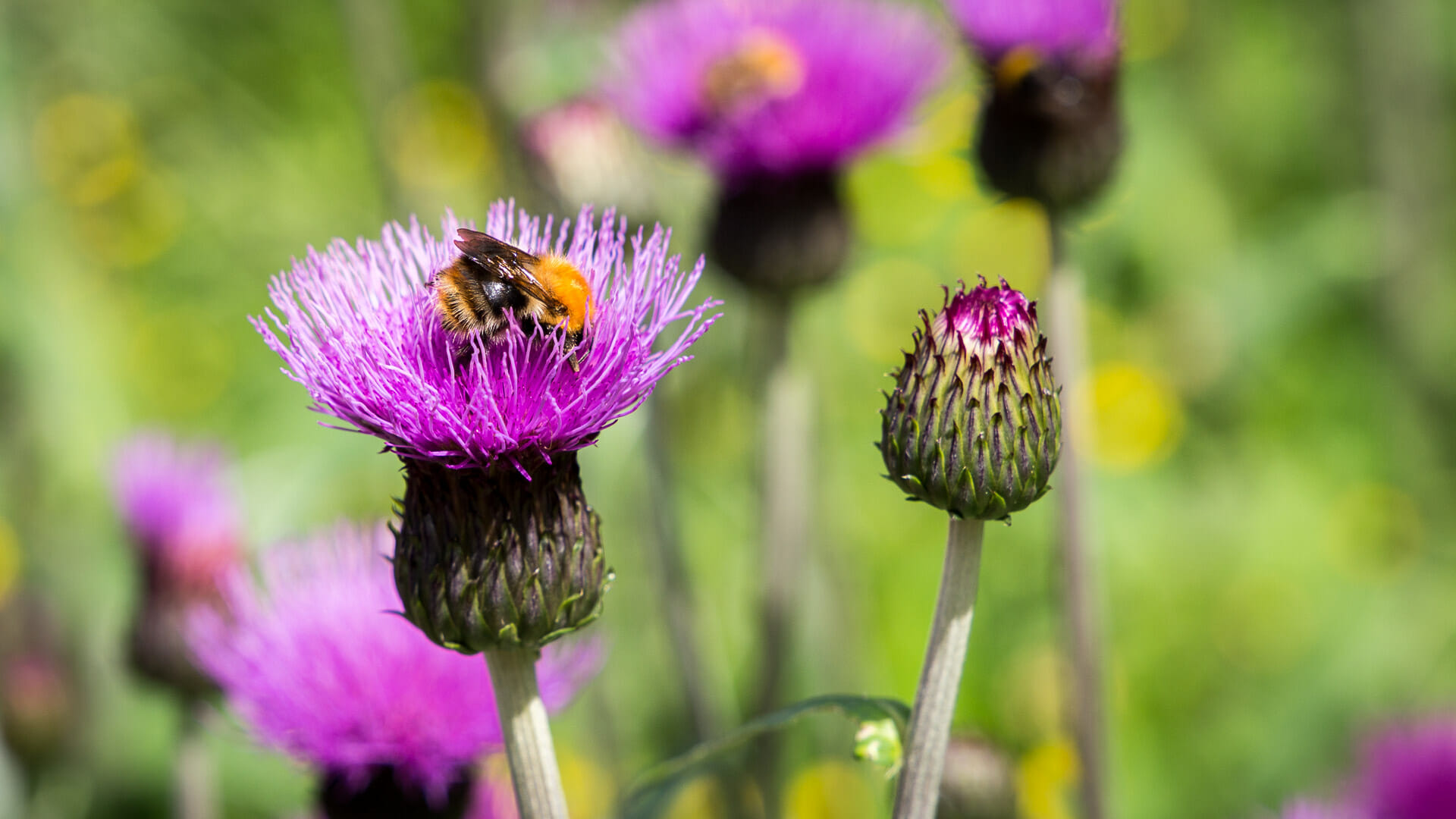
From here on, the path is lined with greenery, the river babbling along on our right. In summer, thistles bloom – part of the Scottish coat of arms (in German for now). Bees hum through the air. In short: there’s little sign of Edinburgh’s hustle and bustle here. And even in summer, the number of other tourists is bearable.
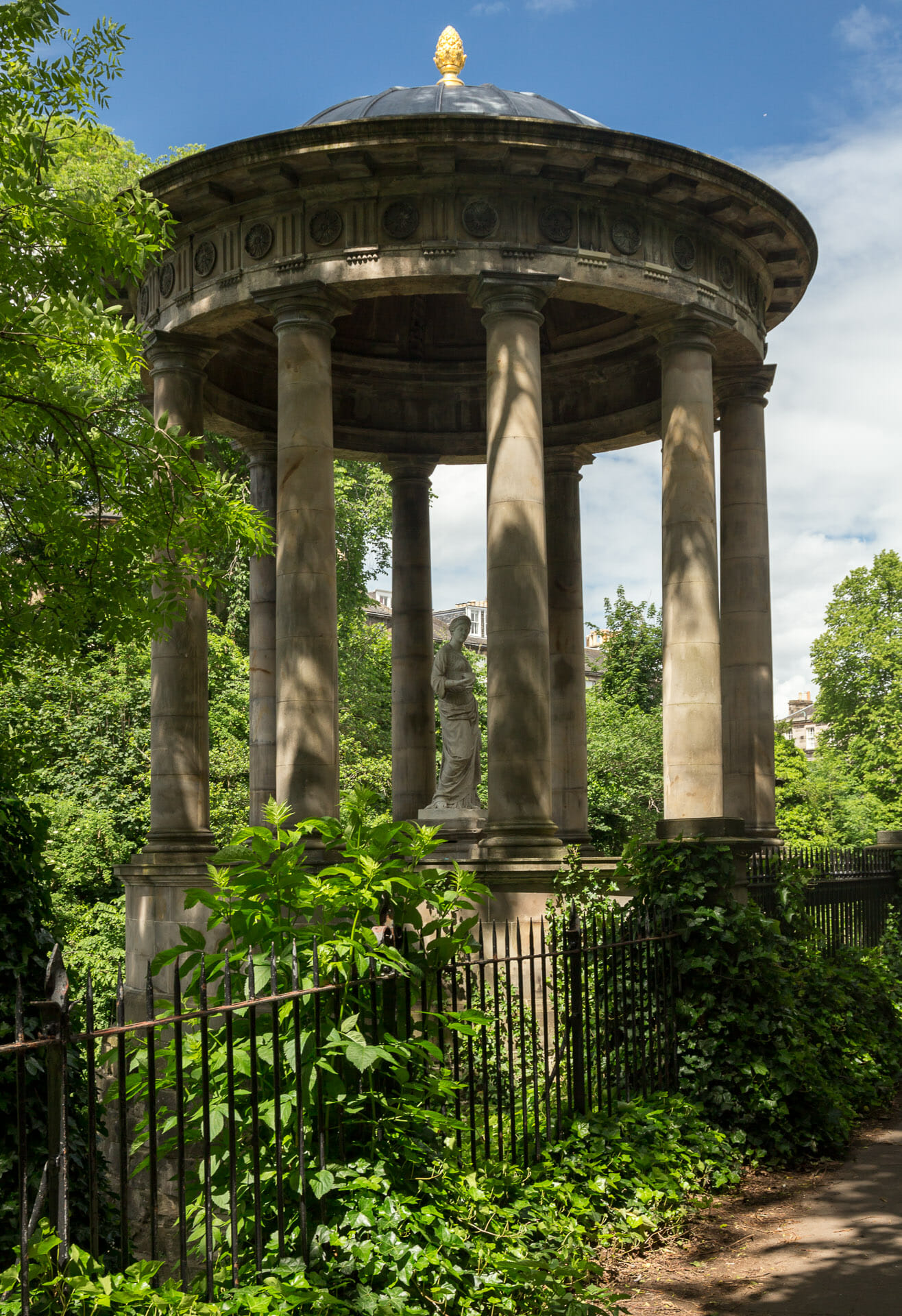
After a while, the first sight already appears along the path: St Bernard’s Well.
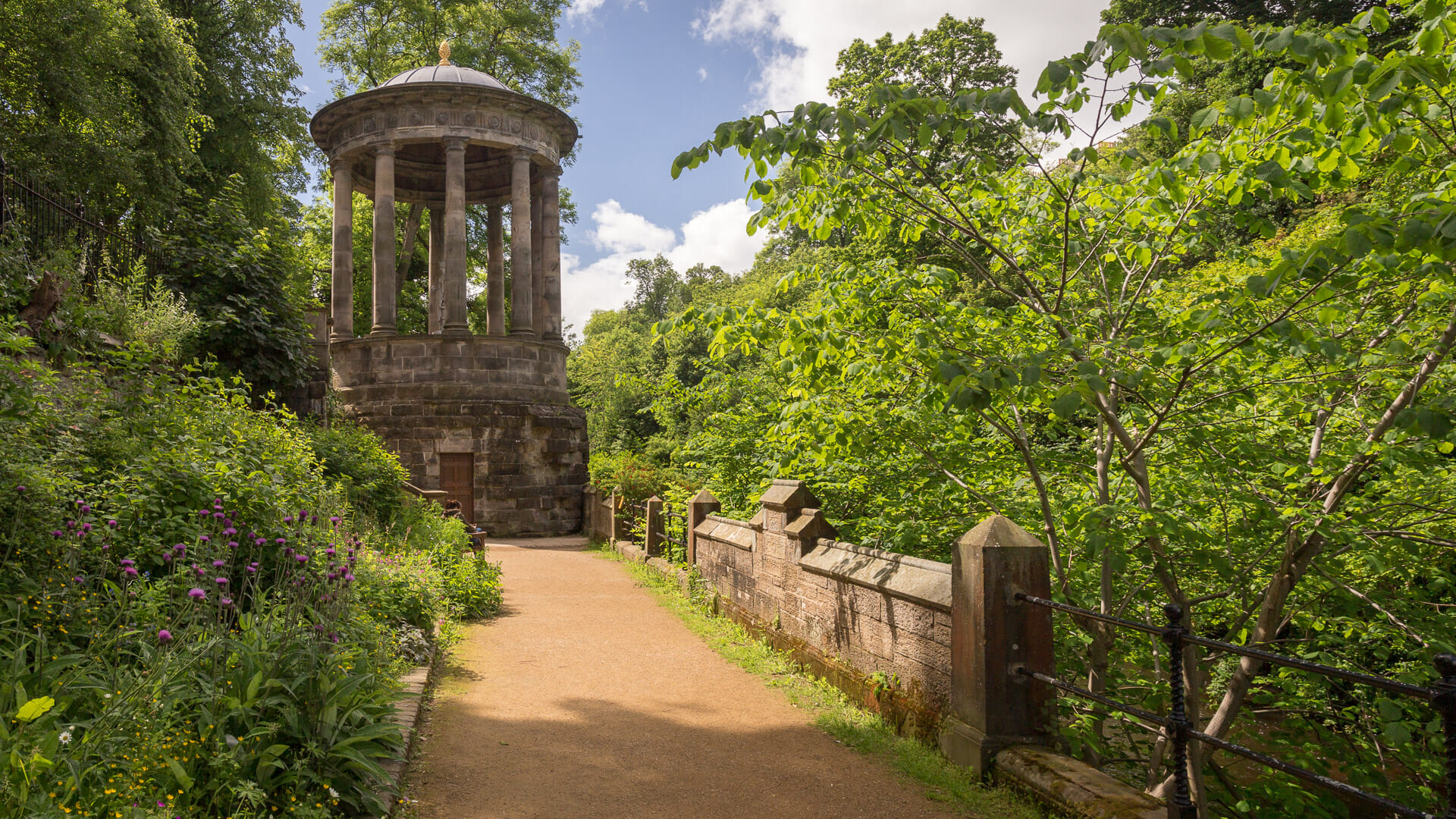
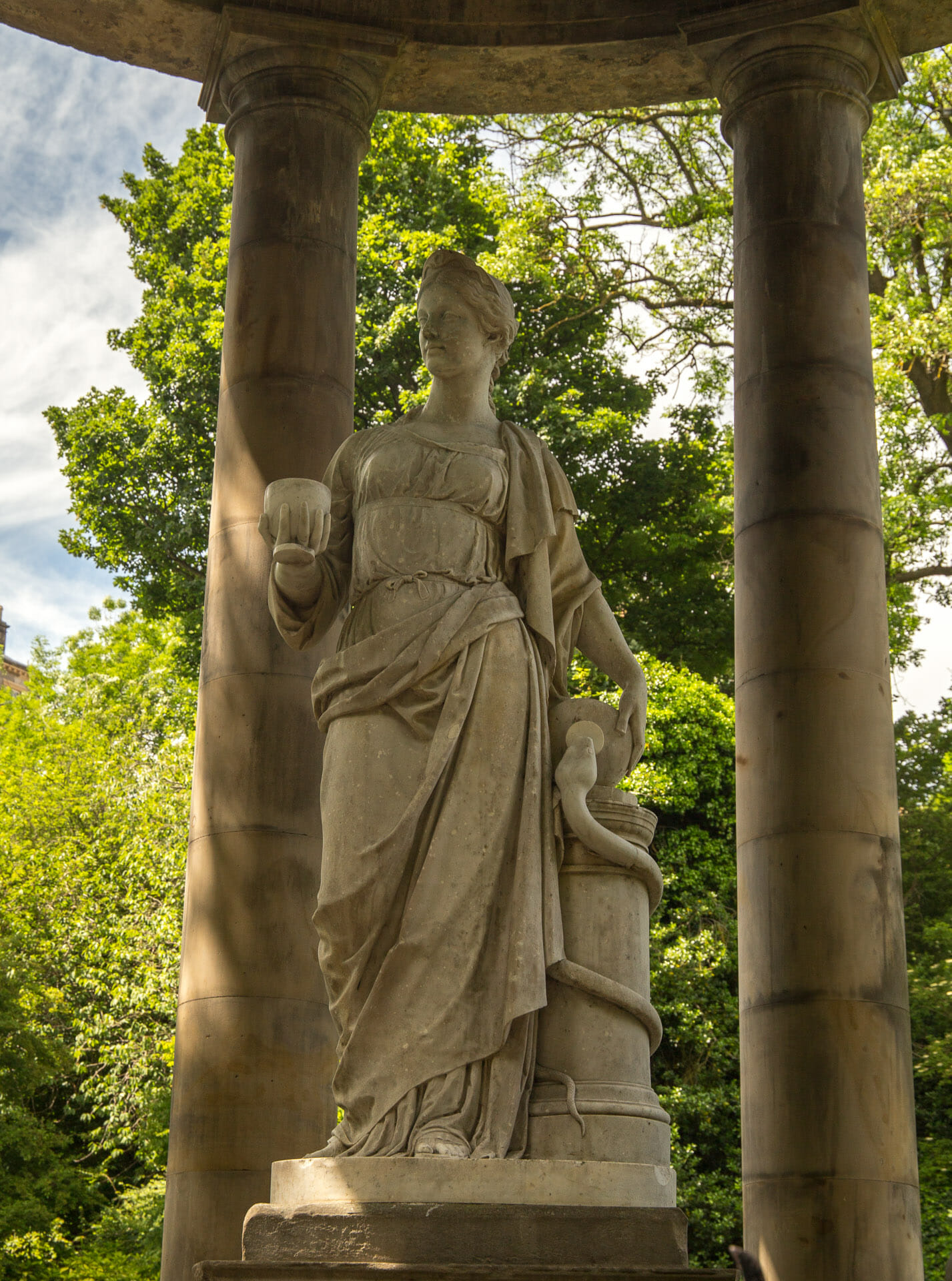
In 1760 a mineral spring was discovered here, which residents soon claimed had healing powers. Lord Gardenstone, a judge, truly believed this spring had helped ease his ailments. So he commissioned the painter Alexander Nasmyth to design a building for it. The result was a kind of Greek temple with ten columns and, between them, a statue of Hygieia, the goddess of health.
You can often go inside the building; the spring itself sits beneath a magnificent mosaic ceiling.
A flight of steps leads up a little further here, where the path continues along the river.
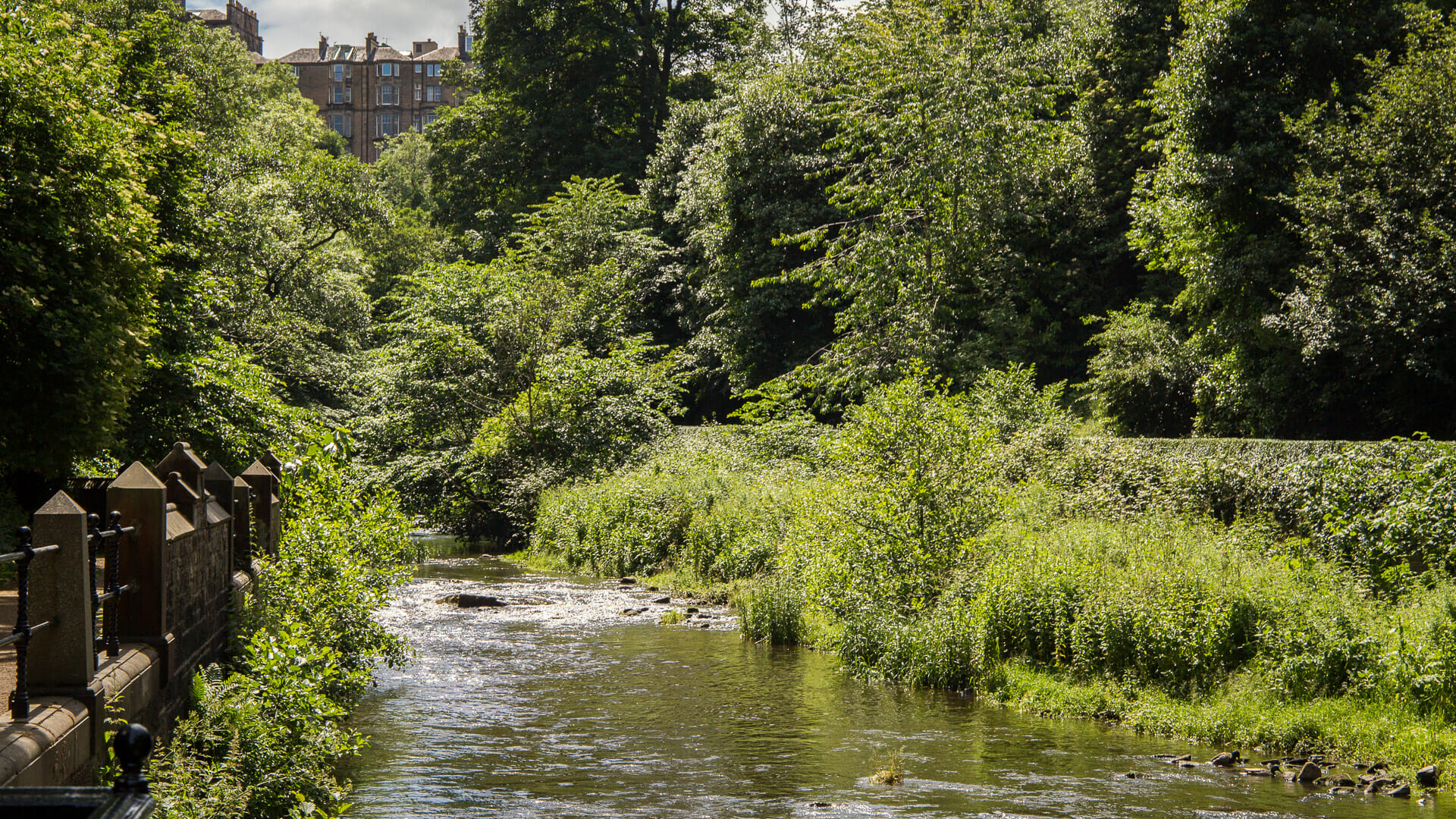
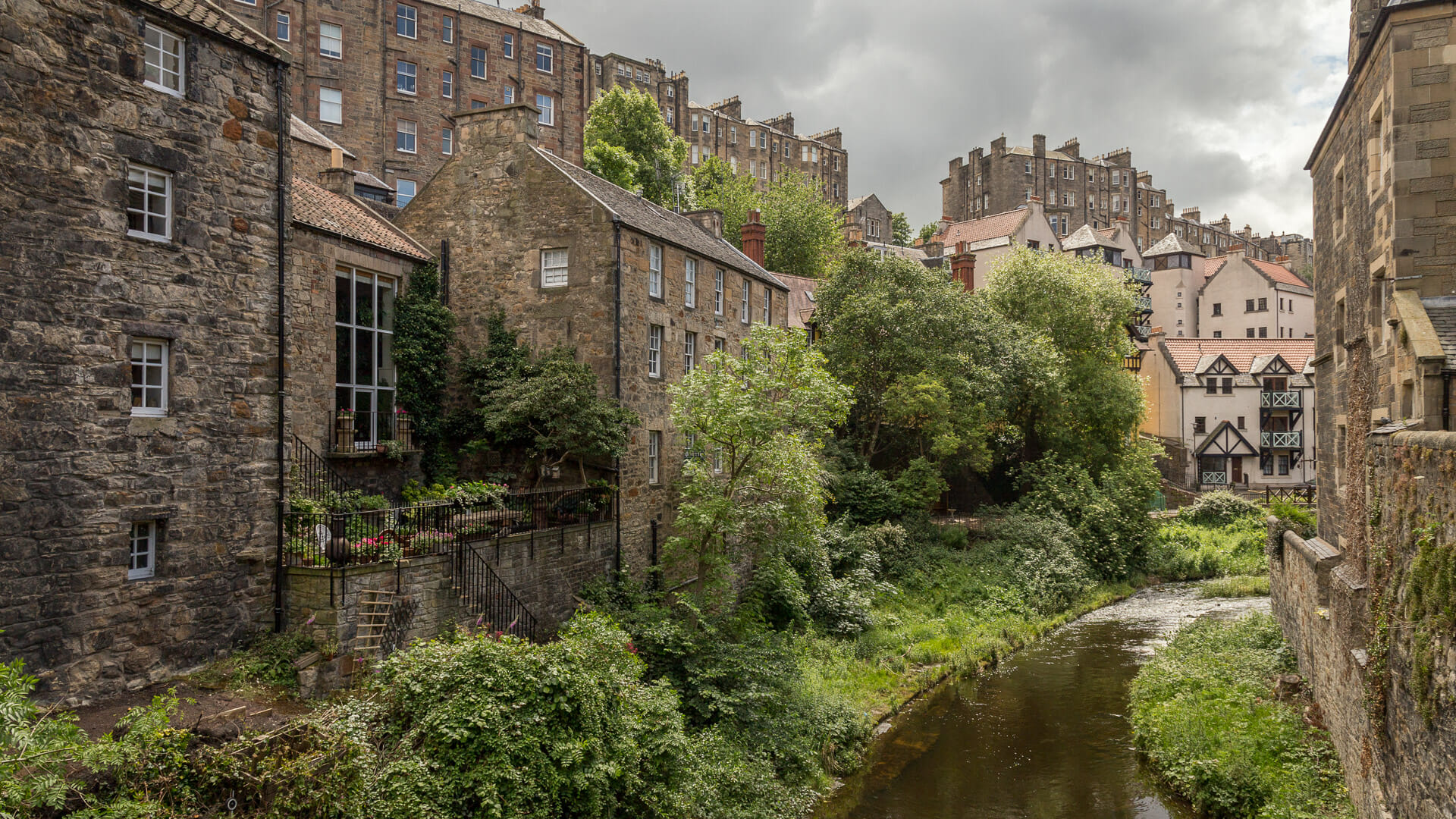
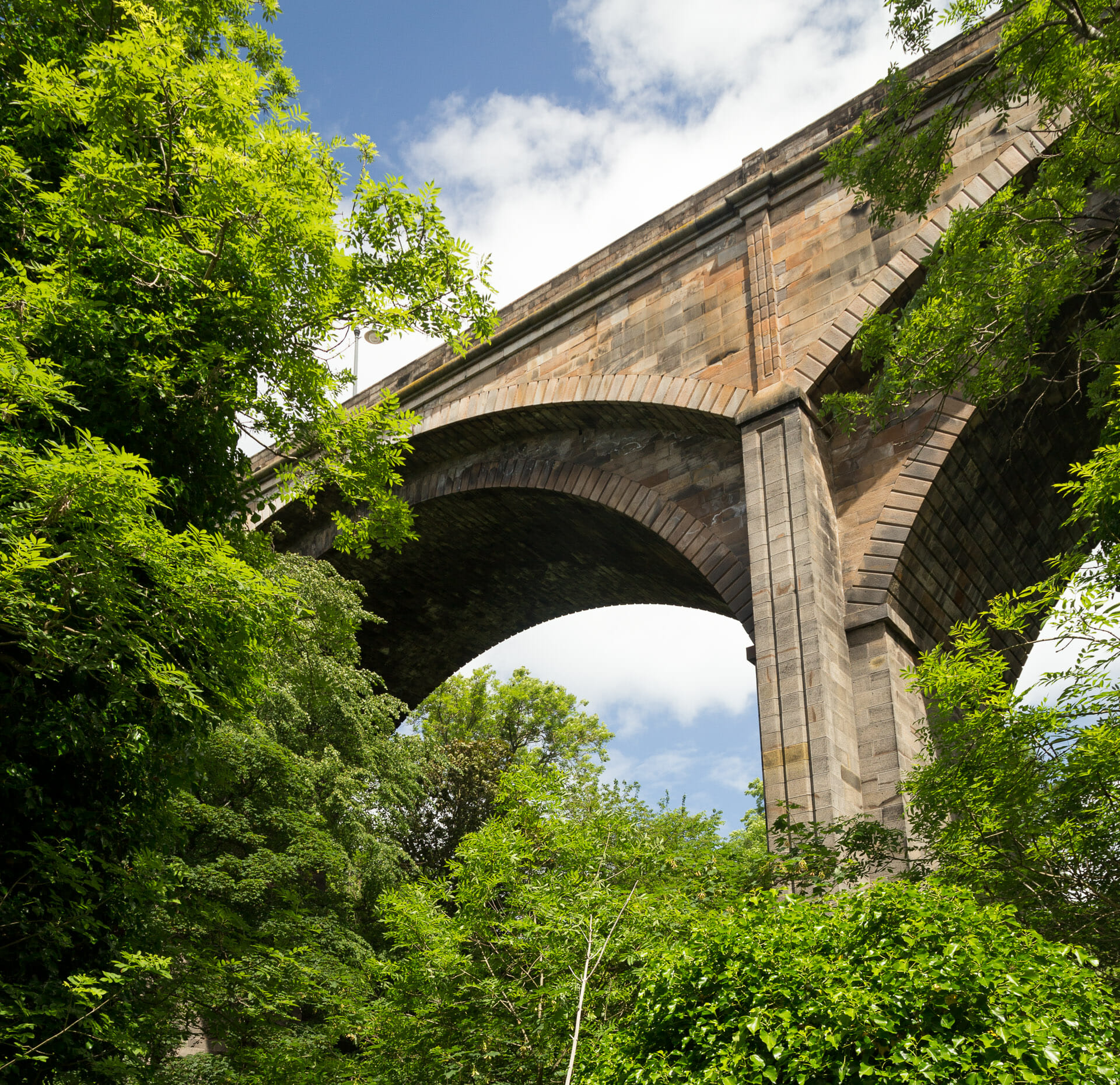
We follow it beneath a large road bridge. This is the Dean Bridge. And from here the actual Dean Village begins. The street here is already called “Miller Row”, pointing to the village’s former main trade: milling grain. Back then, the river once drove as many as ten mills in this valley. Millstones along the path serve as a reminder.
Past Miller’s Row, a stone bridge crosses the Water of Leith on the right. We leave it for now and continue along the left bank of the river, where the houses grow ever more picturesque.
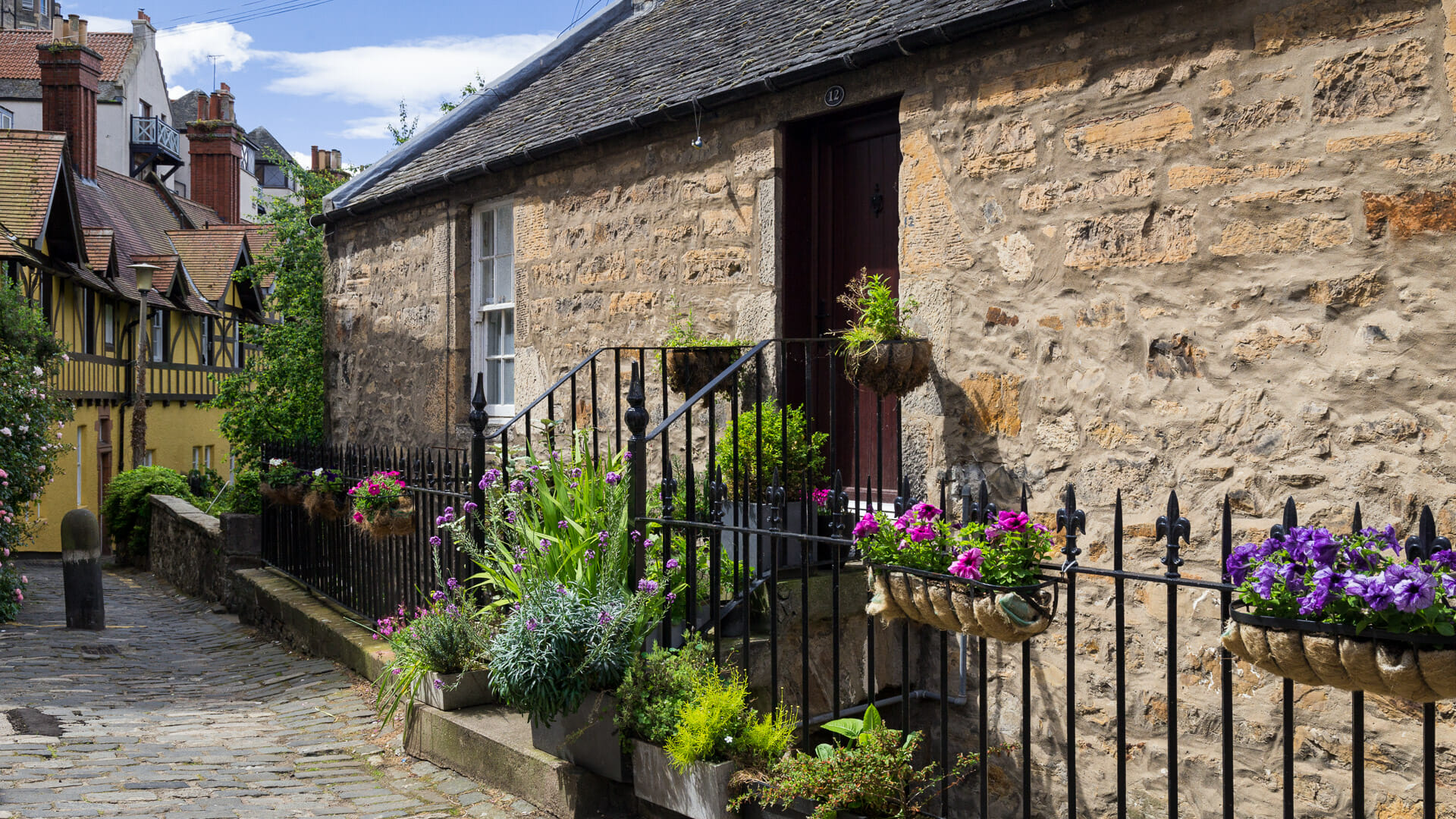
This is Hawthornebank Lane; hardly any cars come through here, as it’s meant as a footpath. On the left, yellow timber-framed houses rise up.
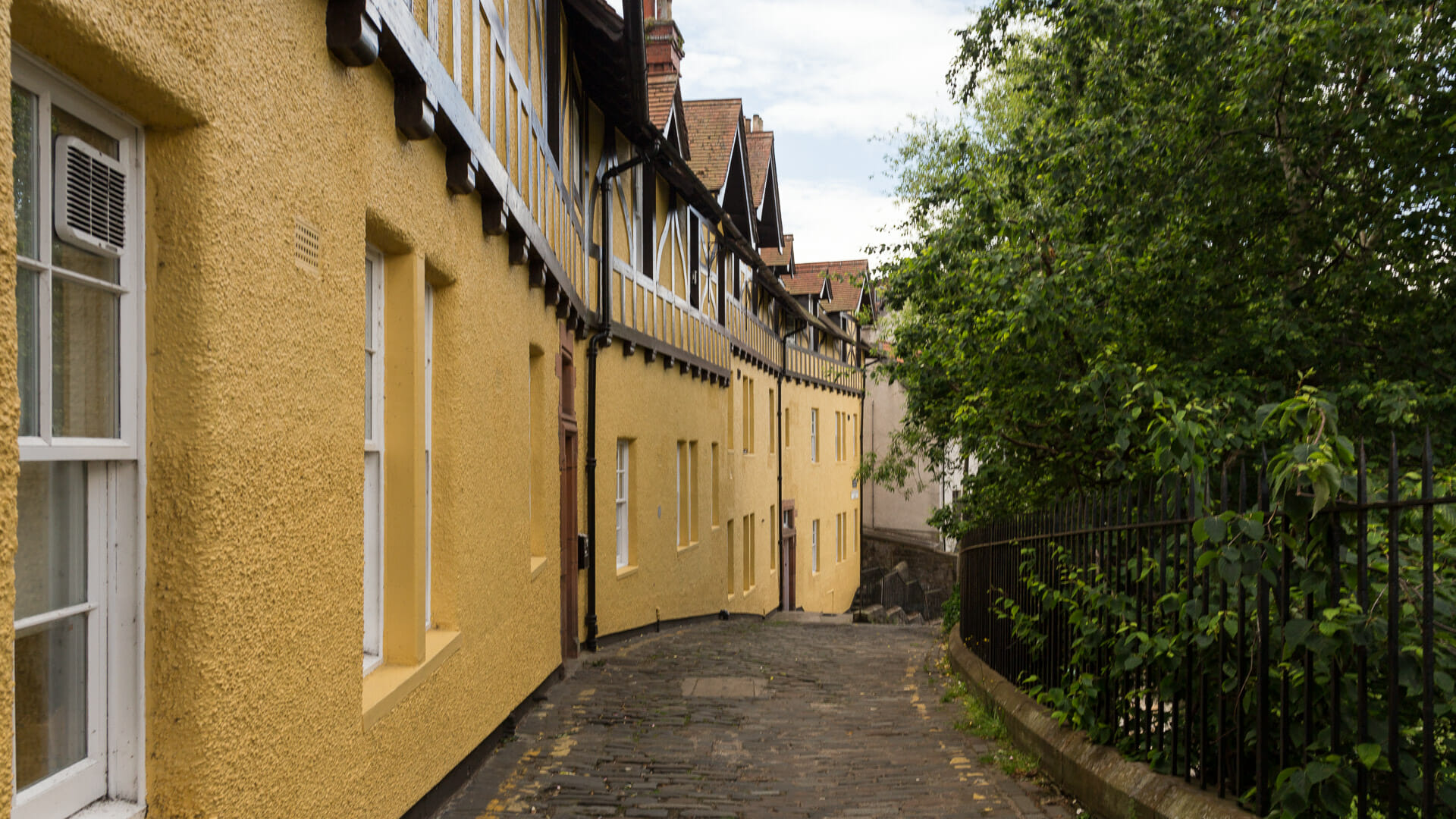
A view of Well Court opens up on the right. The building was completed in 1886 and belonged to the then owner of the newspaper “The Scotsman”.
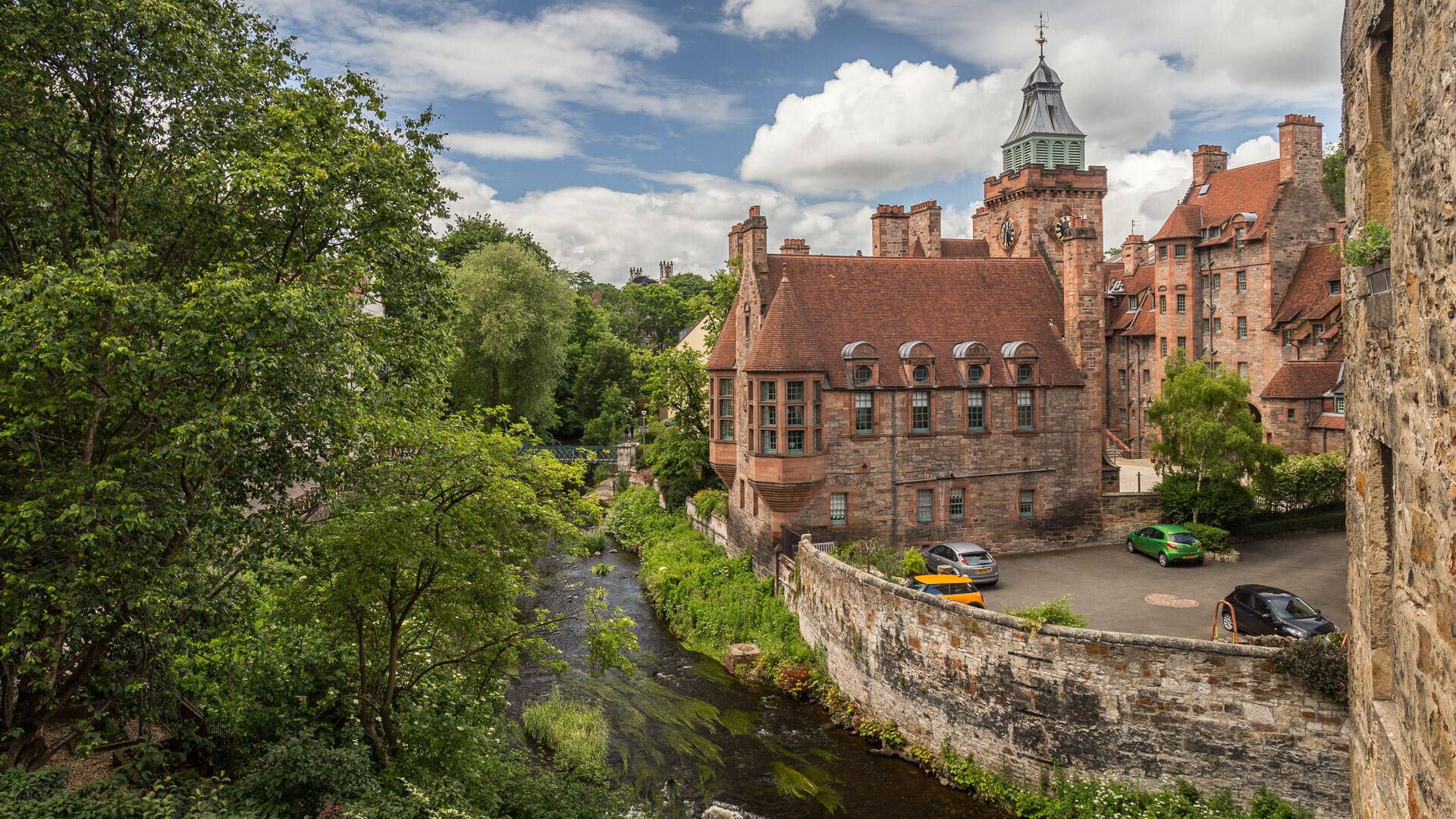
The lane widens back into a street and turns left. On the right, though, an iron footbridge crosses the Water of Leith. This is the spot where the classic Dean Village photos are taken, as you can also see right at the top of this article.
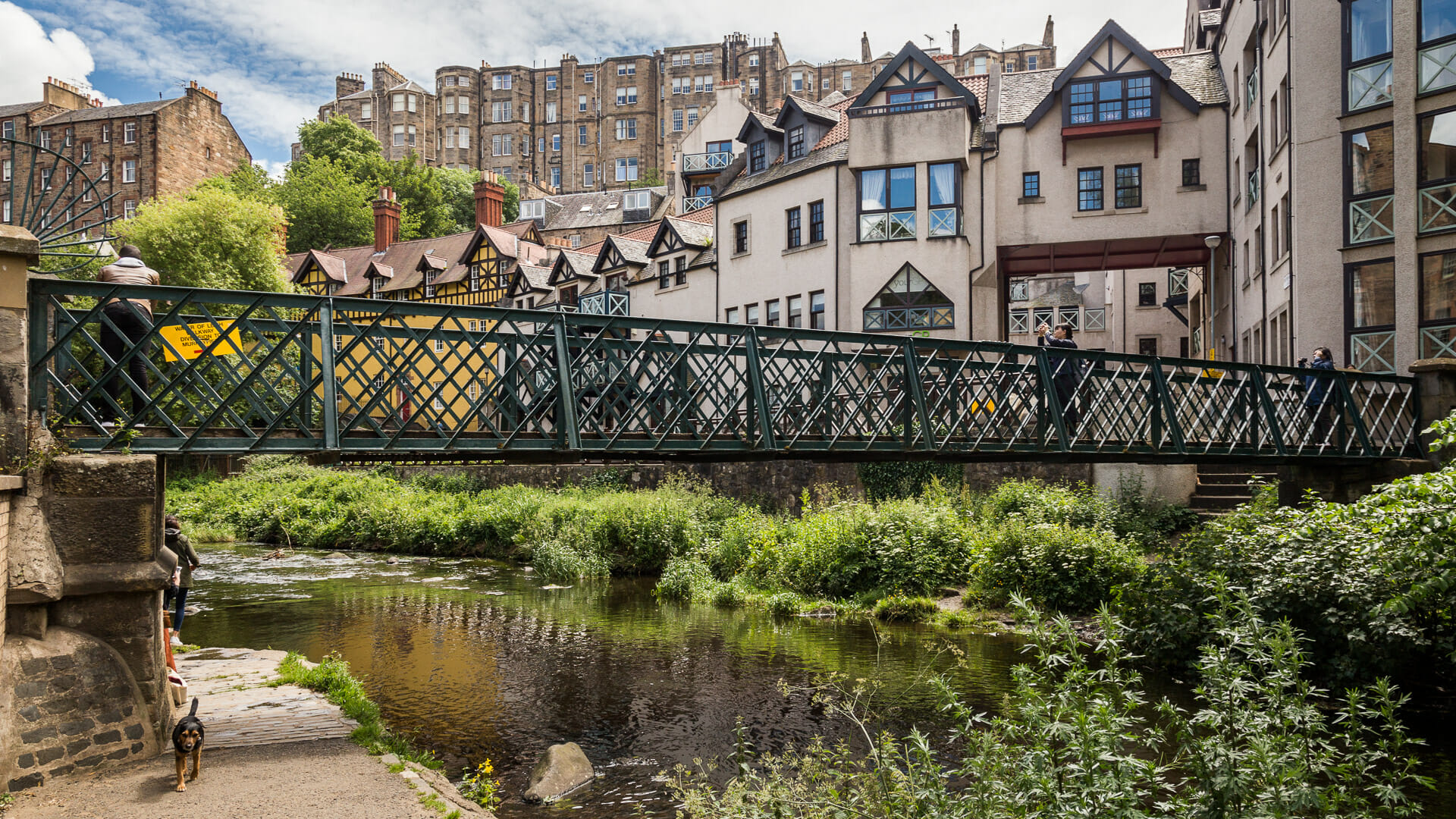
After we have enjoyed this view for a while, the path continues on the other side of the river. A small waterfall appears.
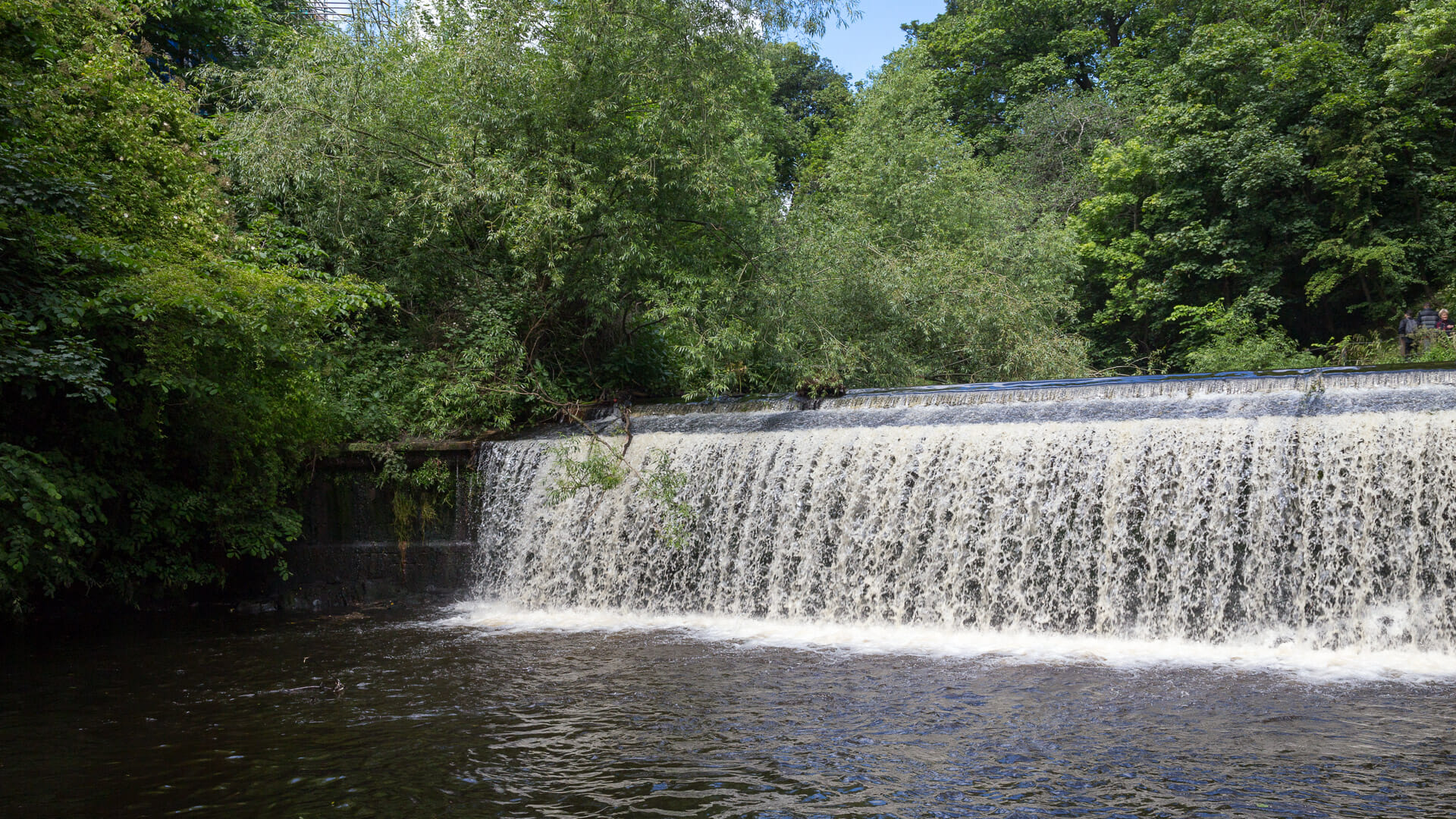
You can continue along the river for a little further. Then the path ends at a gate. It used to be possible to carry on here, but a landslide in 2016 made the path unsafe. Because there were also legal issues with restoring it, there was still no sign of the path reopening as of summer 2020. According to a newspaper report, however, the path has reportedly been passable again since May 2022.
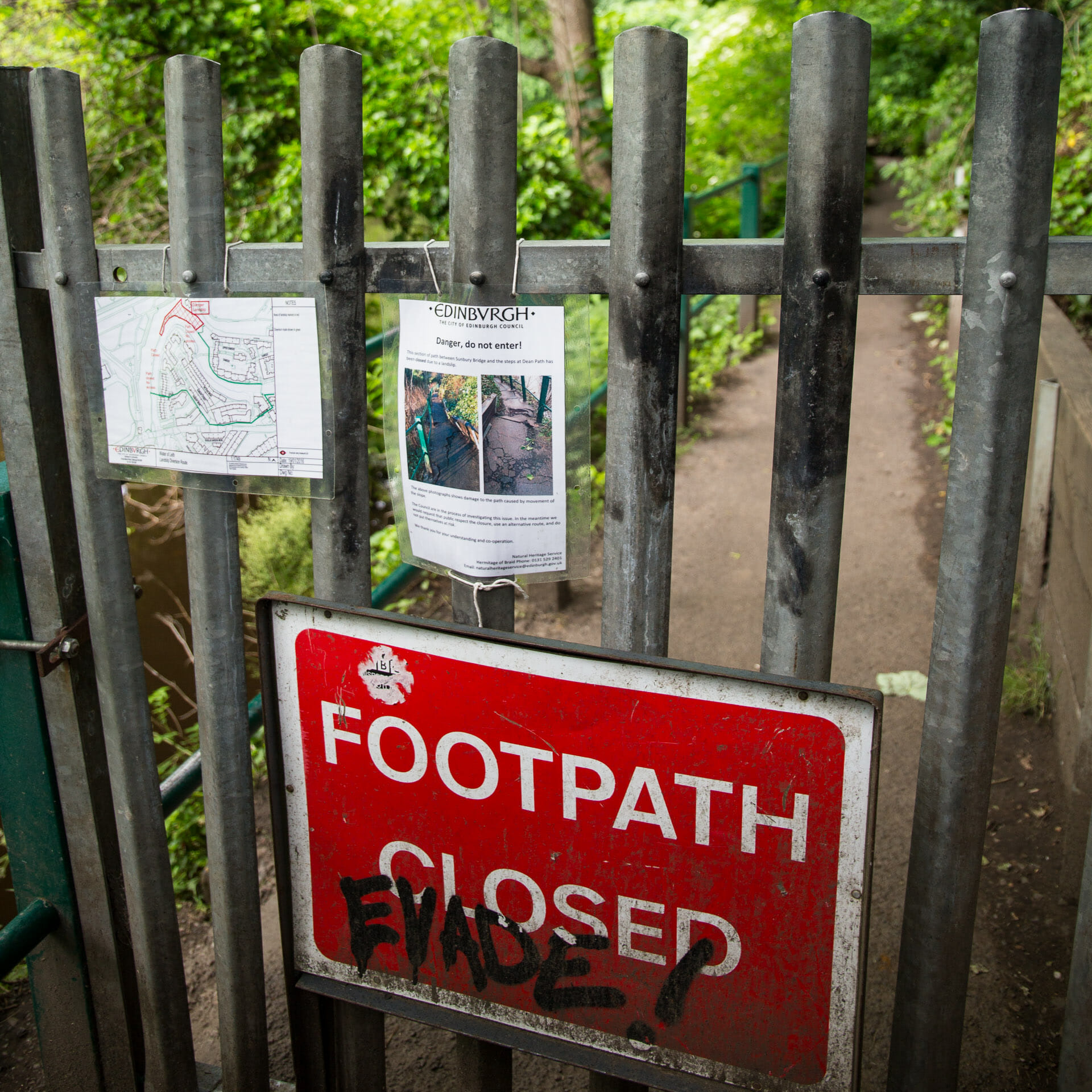
There are basically two options now. First: continue on the (hopefully reopened) path. Second: take the path up to the right, to the street. We choose the second option and pass through a stone doorway.
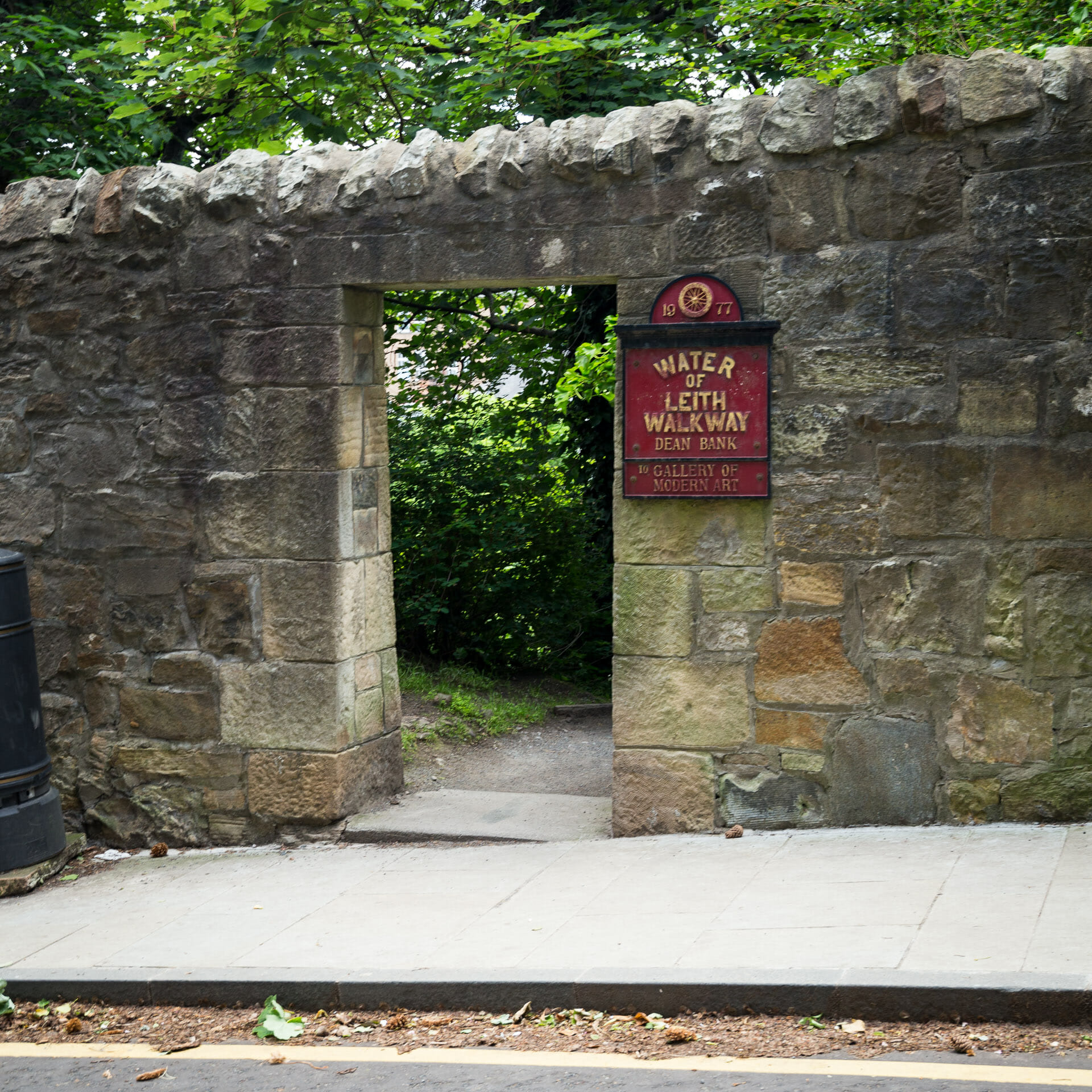
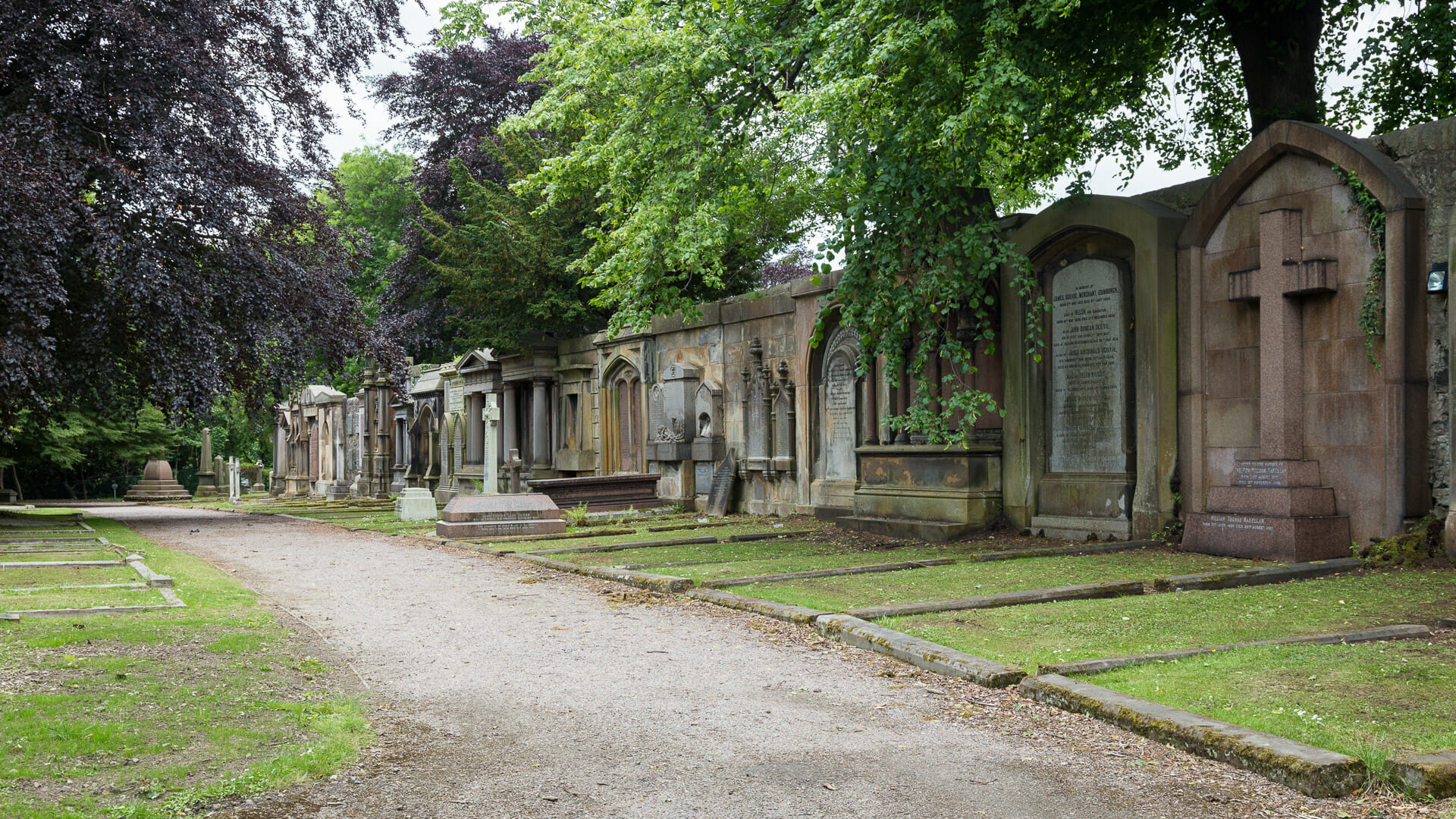
We follow “Dean Path” only a few more metres uphill, and can already enter the Dean Village cemetery, “Dean Cemetery”. Several paths lead through the gravestones, which are truly worth seeing. One of the most striking is that of Major General William John Gairdner.
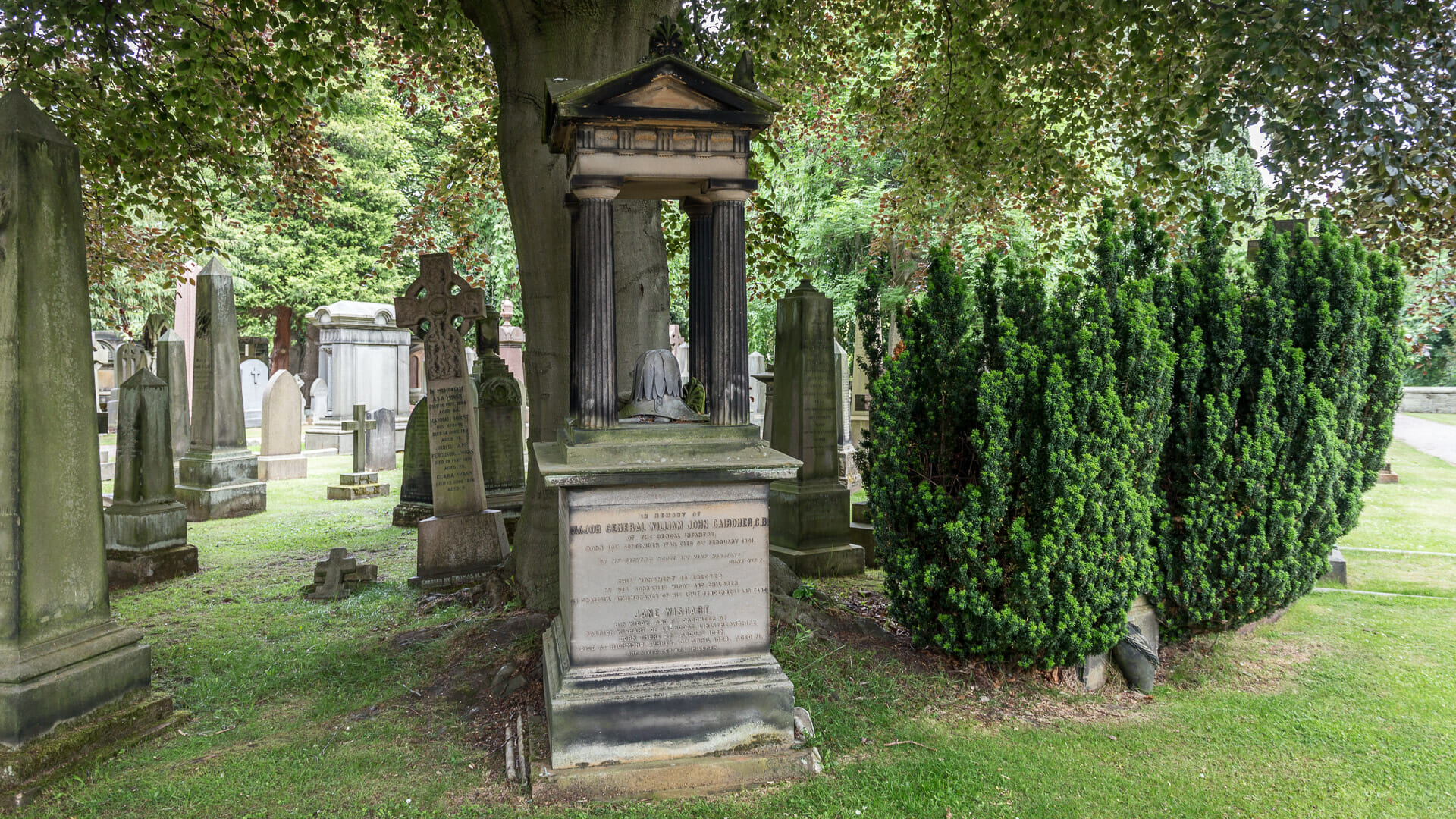
He was a soldier all his life, fighting in many wars, including against the Sikhs in India. The monument shows his hat beneath a roof set on Greek columns.
Eventually we reach the end of the cemetery, at the wall.
Depending on which path you took, you now need to find the small wrought-iron gate.
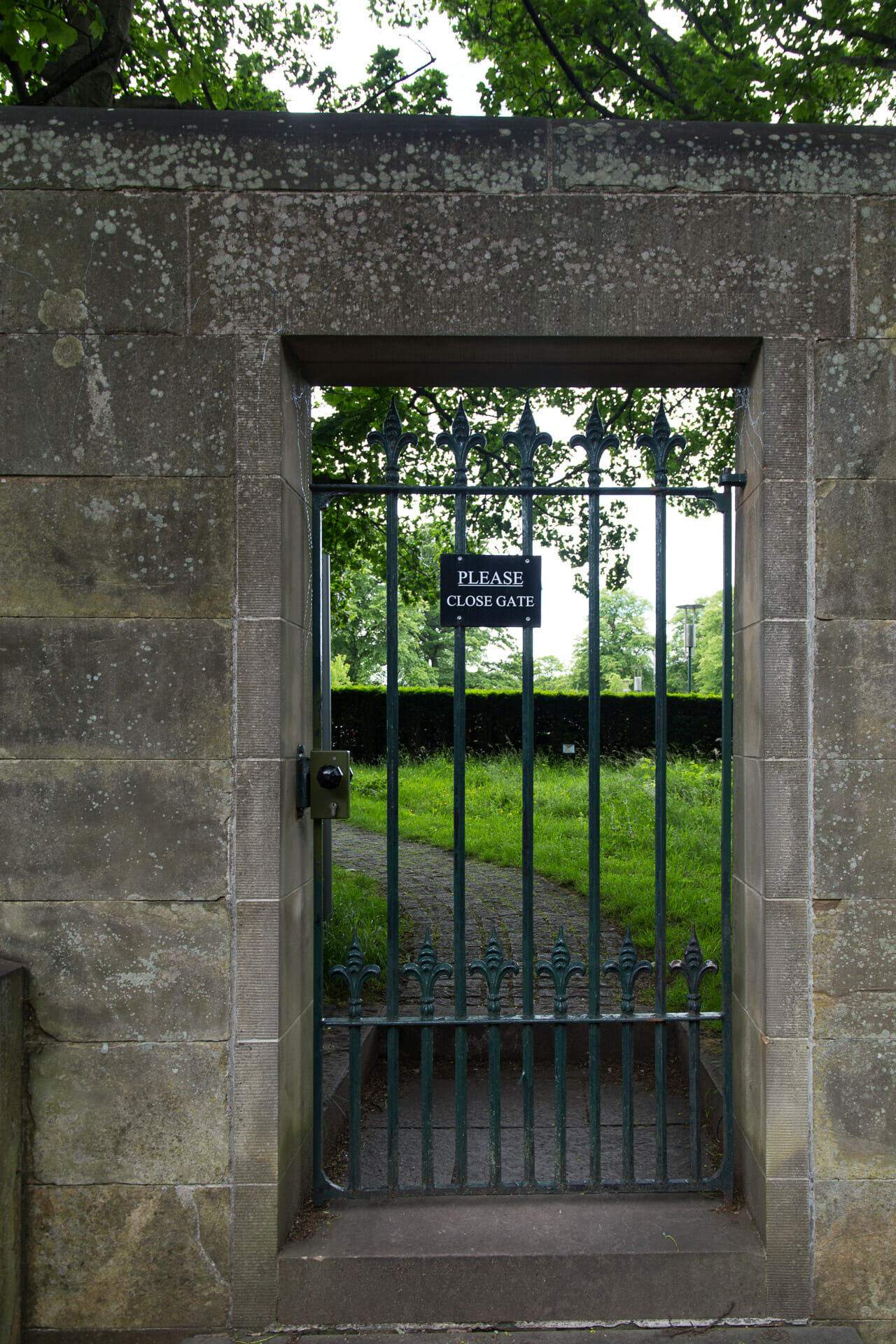
We walk through it and find ourselves in the car park of the Scottish National Gallery of Modern Art. We walk past the Scottish National Gallery of Modern Art, “Modern Two” or “Dean Gallery”. It used to be an orphanage.

Past it and through the grounds, where sculptures already appear, a zebra crossing leads to the entrance into the grounds of building one of the art gallery.
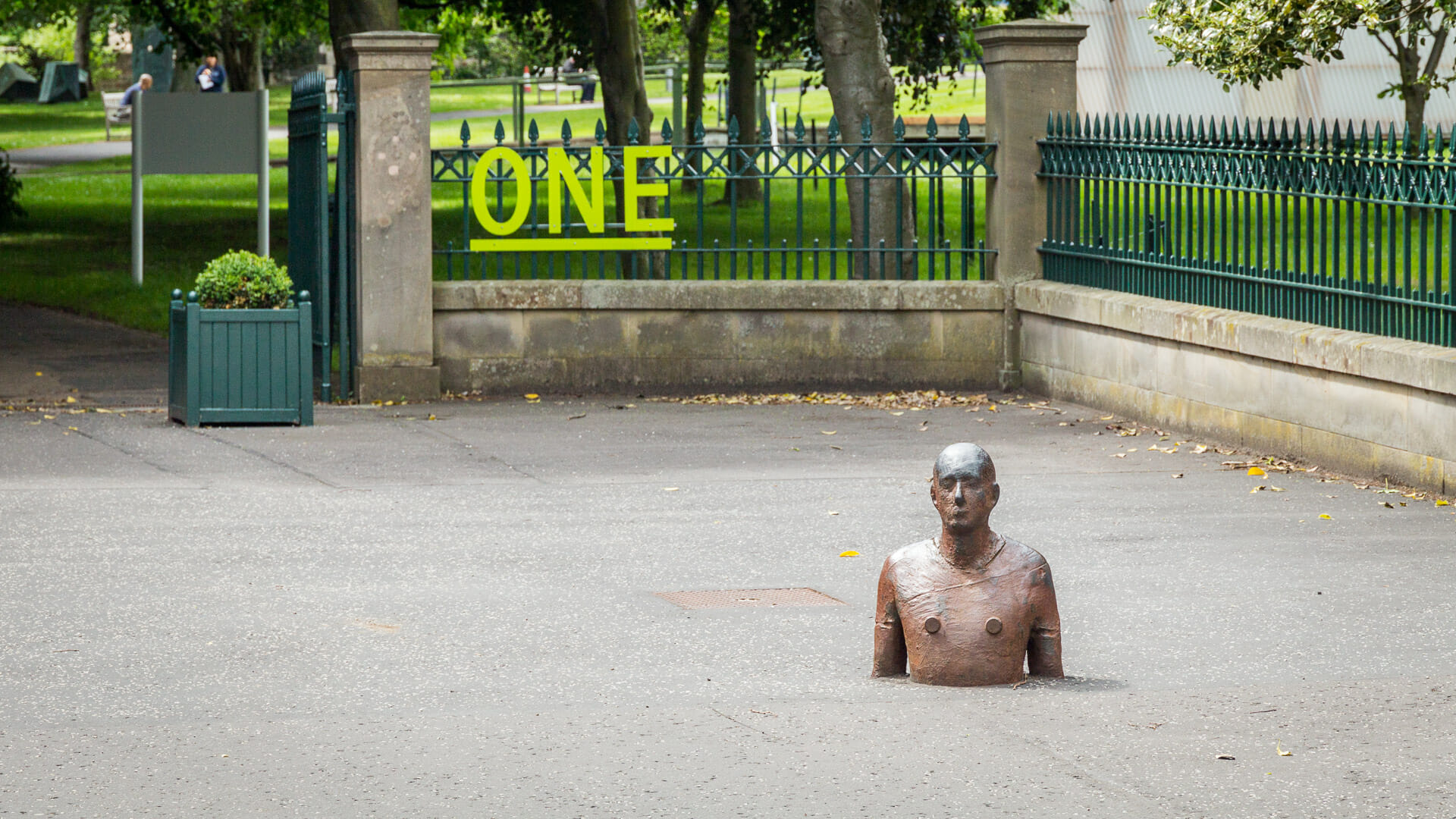
We walk a few steps into the grounds towards the building of the Scottish National Gallery of Modern Art.
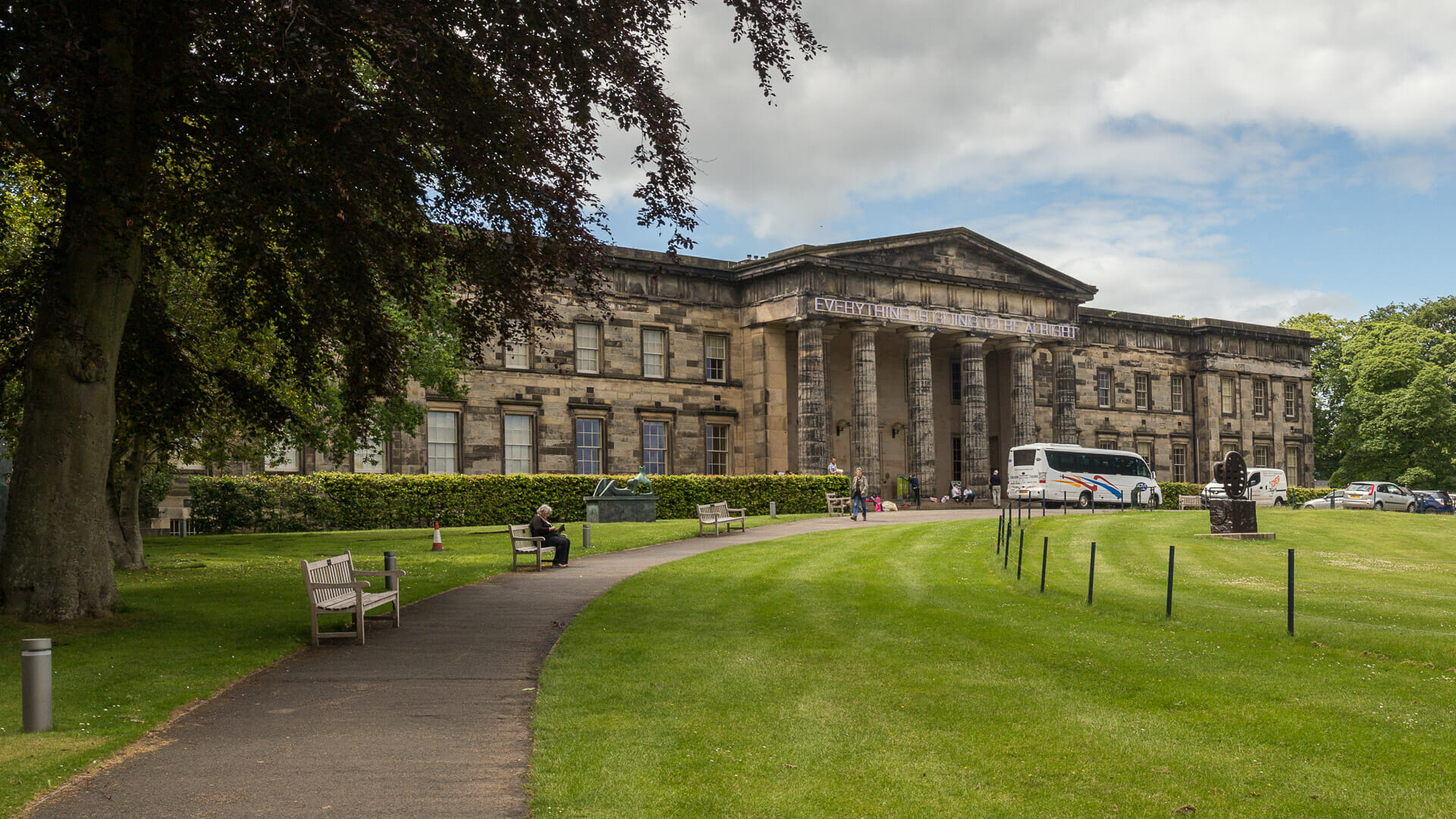
The park itself, by the way, is already a piece of art.
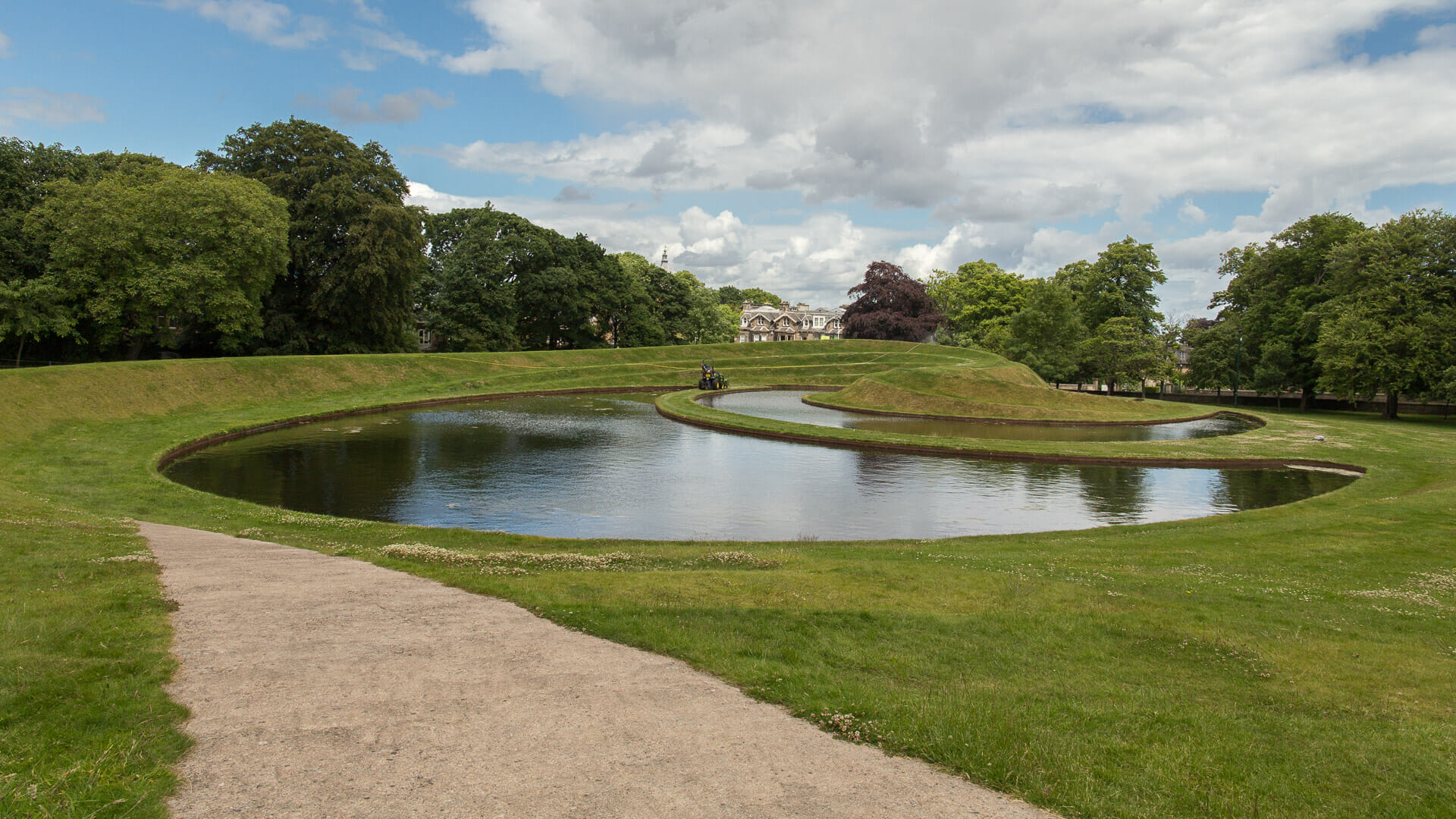
We rest for a while on the benches, before heading back the way we came, once again through the cemetery.
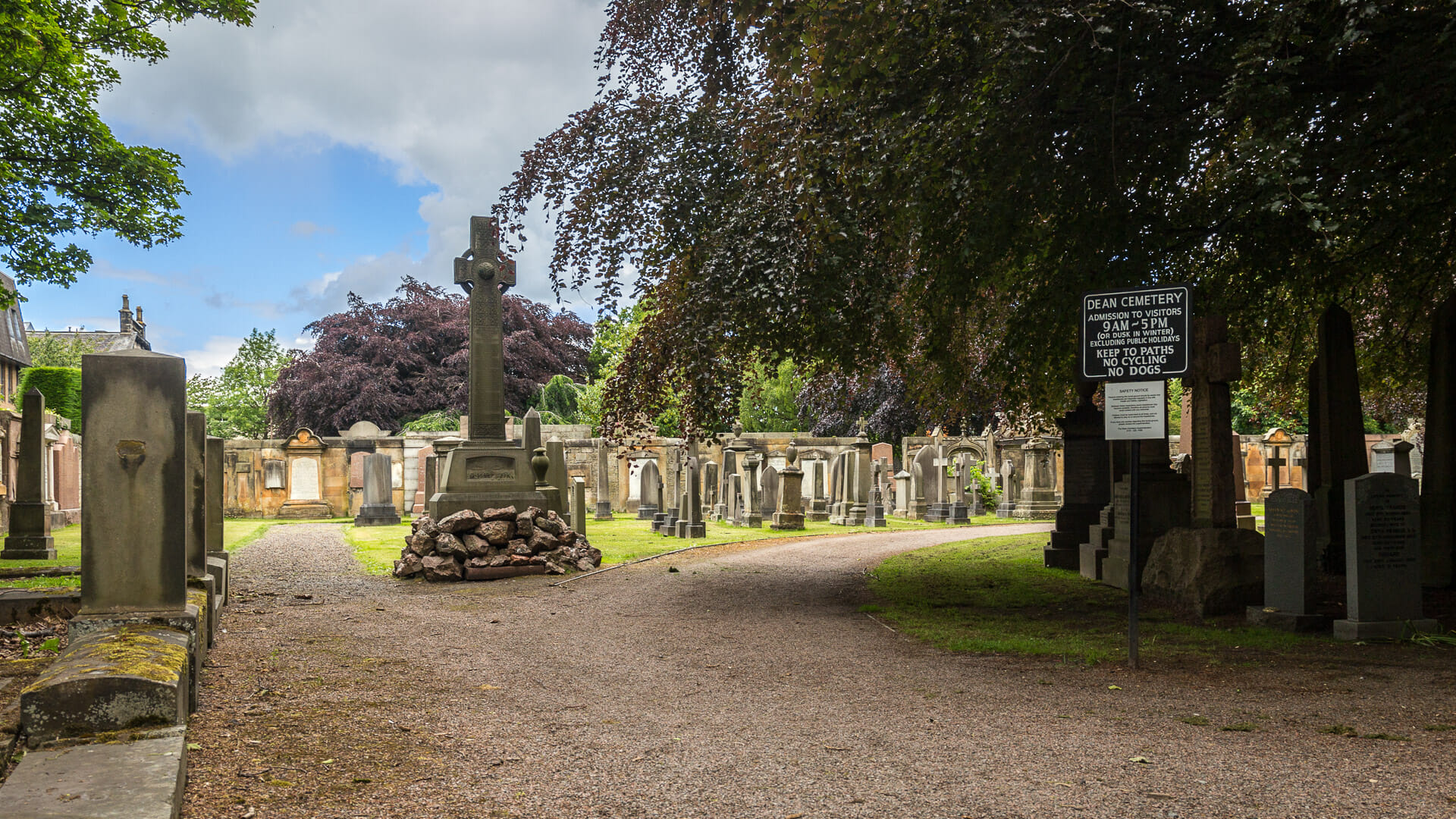
Back on Dean Path, but this time not down to the Water of Leith Walkway. Along the street there are more beautiful stone houses to see. And we cross the stone bridge that we saved earlier for the way back.
We head back along the path past St Bernard’s Well.
Until we finally reach the exit of the Dean Gardens again, the one through which we had entered earlier.
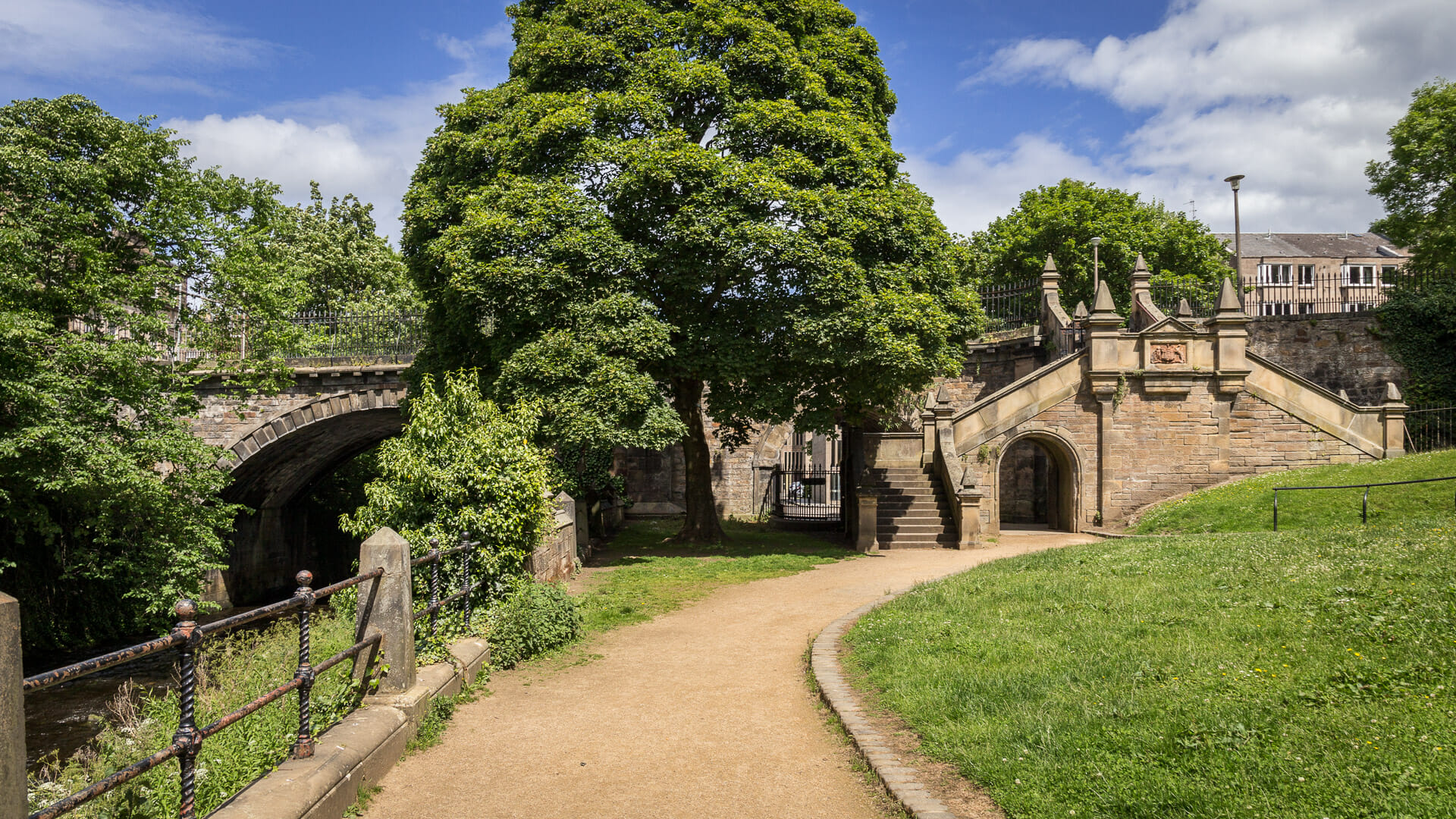
The walk is over; we took our time and it took us about two hours.
Did you know: about Dean Village
“Dean” comes from the word “Dene”, meaning “deep valley”. At the entrance to the gardens, “The Dene” is still written. The settlement was already mentioned in the 12th century and was an independent community. The River Leith drove the mills here for which Dean Village was famous. It wasn’t until the 19th century that Dean Village was absorbed into the ever-expanding city of Edinburgh.
The Dean Bridge, which today carries the Queensferry Road, stands as much as 32 metres high and stretches 136 metres long. Its purpose was to connect North Edinburgh with Dean Village.
Stockbridge, from where we started, dates back to 1801. Its name comes from “stocc brycg”, meaning wooden bridge. The neighbourhood around the bridge shares the same name.
Tip: a coffee after the walk
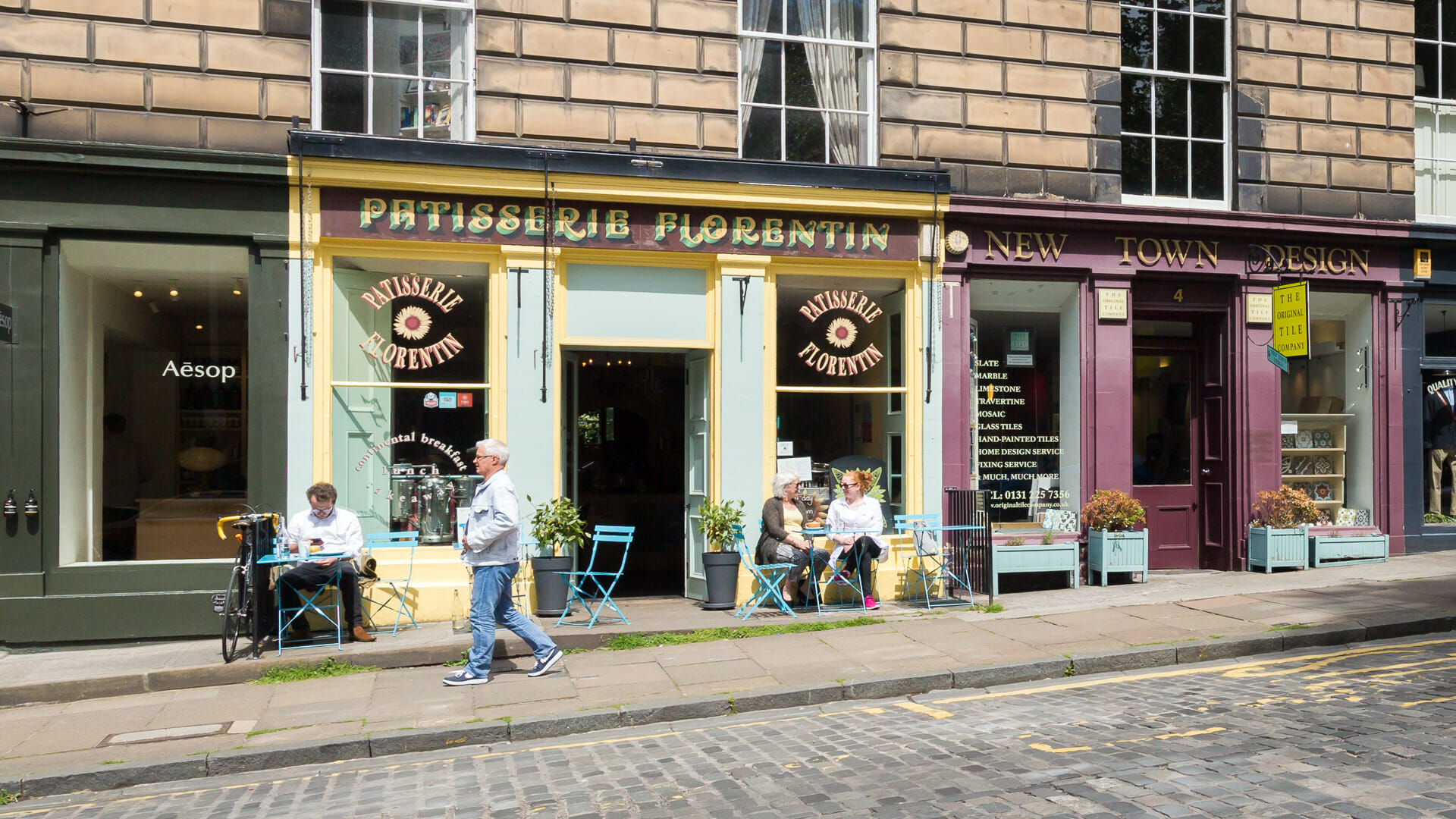
Back from the walk, you can head right towards Edinburgh’s city centre. Just a little way up the hill, on the left, there’s a delightful café called “Patisserie Florentin”, whose pastries we thoroughly enjoyed.
Getting there:
On foot, Stockbridge is roughly a quarter of an hour from the Princes Street Gardens, with the route also passing through the Queen Street Gardens.
By bus – for example route 29 – it takes about 10 minutes. Get off at St Stephen Street.
By car, you can of course drive here too. You can park on Kerr Street. However, parking tickets aren’t exactly cheap. And beware: parking time is constantly checked and quickly fined at 30 pounds.
