Dun Carloway rises up like a fang, jagged and sharp. The Iron Age tower is considered one of the best-preserved brochs in Scotland. And it once played a gruesome role in a clan feud.
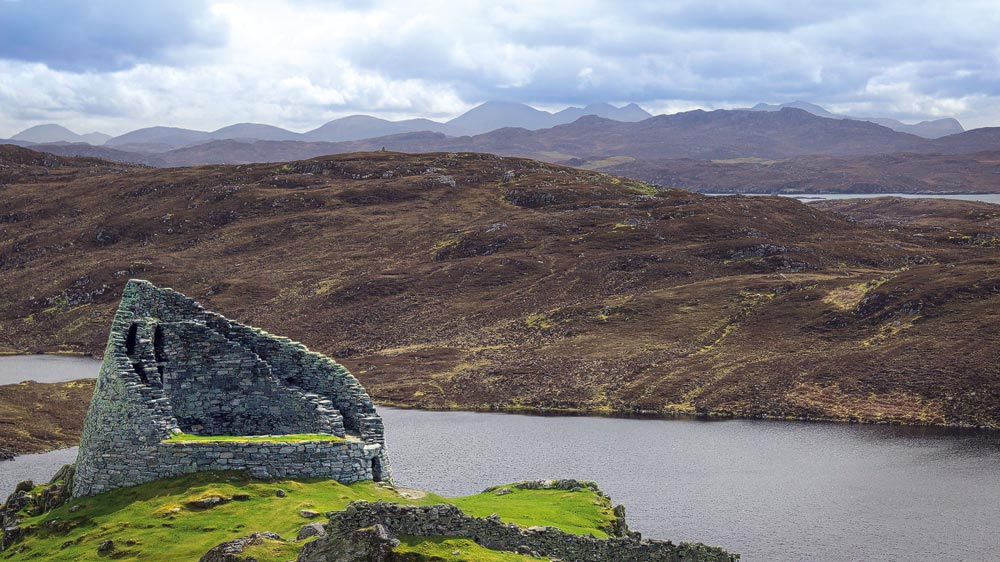
The Morrisons were mangy cattle thieves! And this time they were foolish enough to get caught. Donald Cam MacAulay and his men had already been chasing the gang for days, had driven them right across the sea loch Ròg, and now the Morrisons saw no other way out than to barricade themselves inside the broch Dun Carloway. They believed themselves safe behind the tower’s tall old walls.
Dun Carloway had always been there. Long before the MacAulays and the Morrisons. It had given whole families shelter, had defied the centuries. But now, by Donald’s hand, it was about to fall.
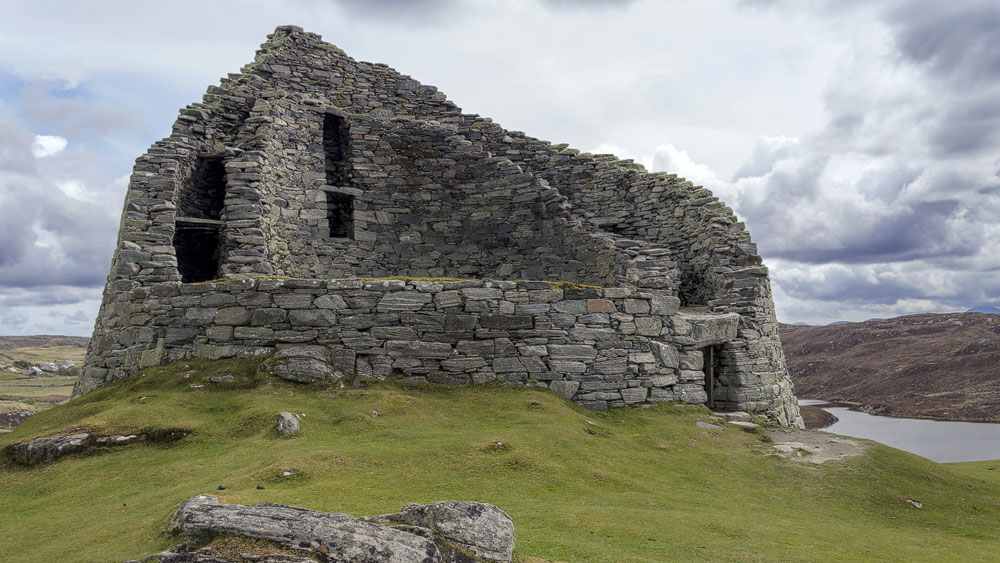
First he killed the guard posted outside, and his men blocked the exit. Then – a dagger in each hand as climbing aids – Donald scaled the broch’s outer wall, metre by metre. Up on the rim, he then hauled up bundles of heather, set them alight, and threw them down. More and more of them, until smoke and fire had done their work, until not a sound could be heard from inside the broch any more.
The cattle thieves were dead, the broch their grave. The daring tale of Donald Cam MacAulay is still told to this day.
Good to know: A remarkable Dun Carloway
Brochs are circular Iron Age towers. Archaeologists know of around 500 surviving examples of these structures in Scotland. Dun Carloway on the Isle of Lewis, however, stands out in several respects. For one thing, unlike, say, Dun Telve, it wasn’t completed until the first century BC. For a broch, that’s very late.
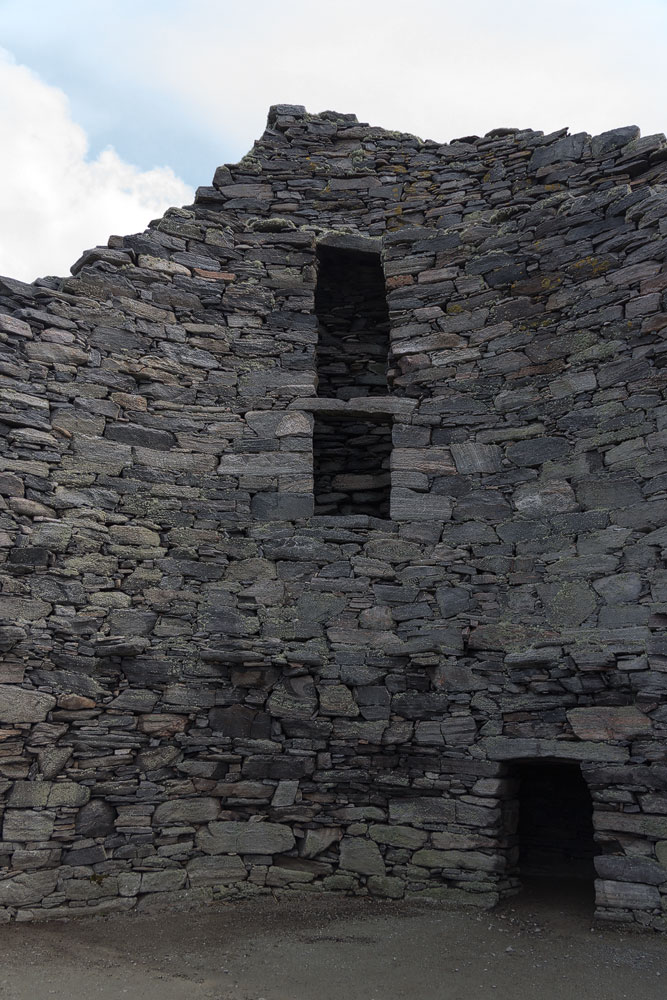
For another, it’s one of the best-preserved examples. The east wall still rises almost nine metres into the air. You can still make out many chambers and clearly see the gap between the two outer walls, where food used to be stored.
Dun Carloway also remained complete for a very long time, and it’s thought it may even still have been inhabited in the 13th century AD. When Donald MacAulay smoked out the Morrisons, the broch must still have been fully intact. Only afterwards did local residents apparently start using its stones as building material for their houses.
Brochs, incidentally, were built entirely without mortar. Dun Carloway was a masterpiece of its builders. After all, the tower has a diameter of 14 metres and still had to support timber galleries inside, on which the inhabitants could sleep and live.
Tip: Start at the visitor centre
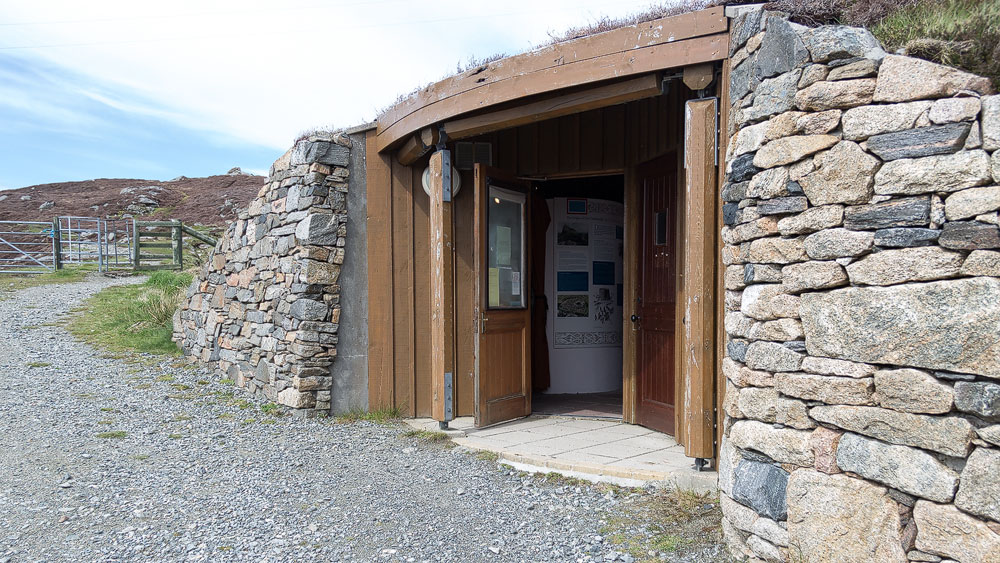
It’s well worth treating yourself to the visitor centre at the foot of the hill by the car park before visiting the broch. Inside, scenes have been recreated showing what life in Dun Carloway may have looked like. The staff there are happy to answer questions, usually in great detail.
With that knowledge in mind, and your imagination fired up, you can then bring the life of the former inhabitants back to life in the ruin and feel more of the stone tower’s atmosphere.
The tiny visitor centre is, incidentally, very nicely done itself: it’s half underground and blends smoothly into the landscape.
Personal note: A magnificent backdrop
I was already impressed by Dun Telve – but Dun Carloway is in a class of its own. It stands on raised ground, so you get a magnificent view over the wild lochs and jagged mountains of the islands of Lewis and Harris.
Getting there:
For your sat nav: Entering “HS2 9AA” gets you very close to the turn-off for the broch. Watch for the signs here.
Without sat nav: You can approach either from the north or south via the A858, which runs along the west of the Isle of Lewis. Coming from the north, turn right about two kilometres past the village of Carloway. Coming from the south, the turn-off is on the left, about 10 kilometres past the Callanish Stones.
