Dunfermline, near Edinburgh, was a centre of the Scottish kings in the Middle Ages – in life as in death. Today the abbey reveals to us a unique piece of medieval architecture.
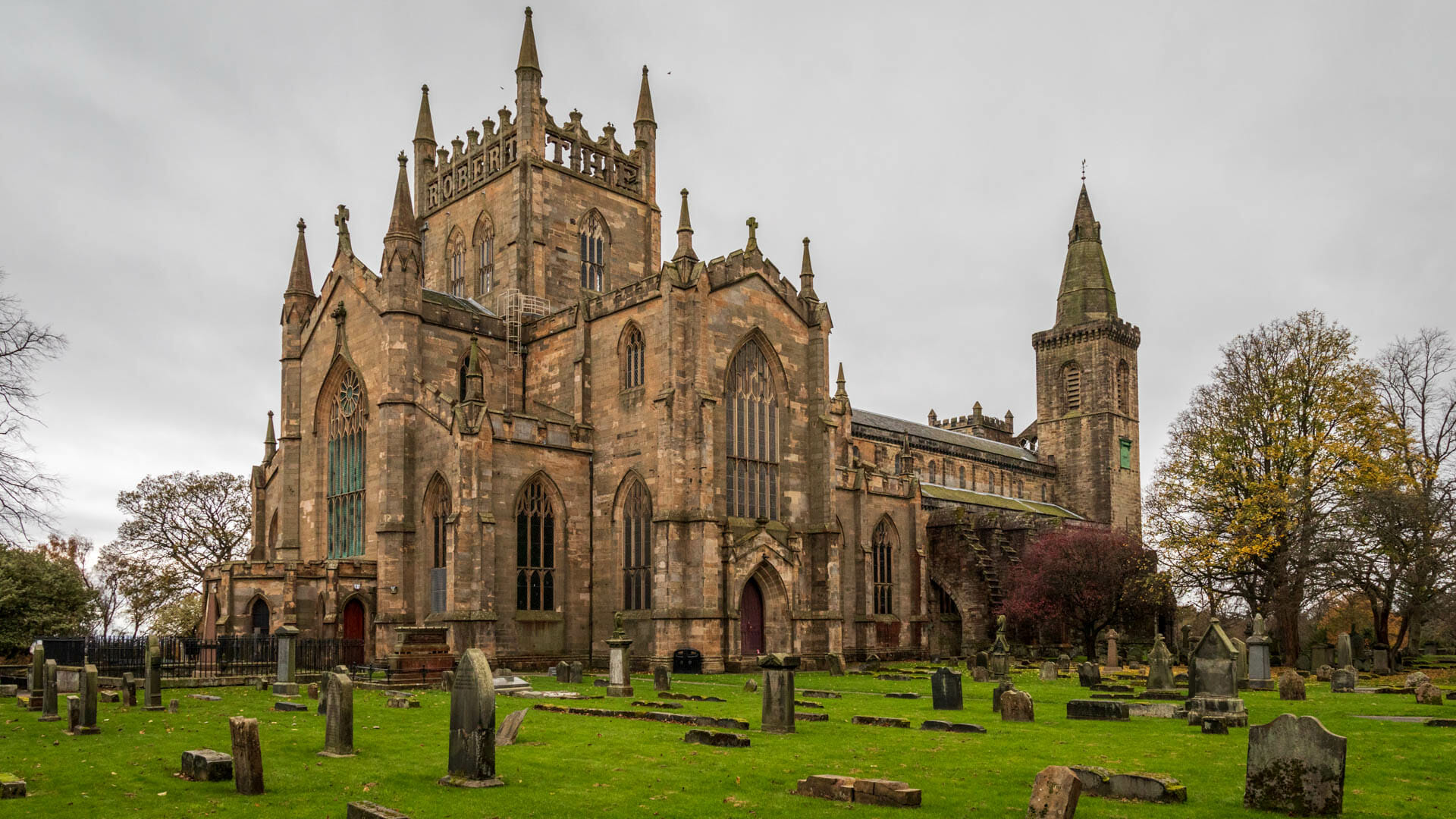
Today Dunfermline is a suburb of the Scottish capital, Edinburgh – some 20 kilometres separate the two. But once its abbey was an important royal seat, and with it, the centre of the kingdom. That’s still evidenced by the ruins of the imposing monastery and the graves of 22 kings – not least that of the hero-king Robert the Bruce.
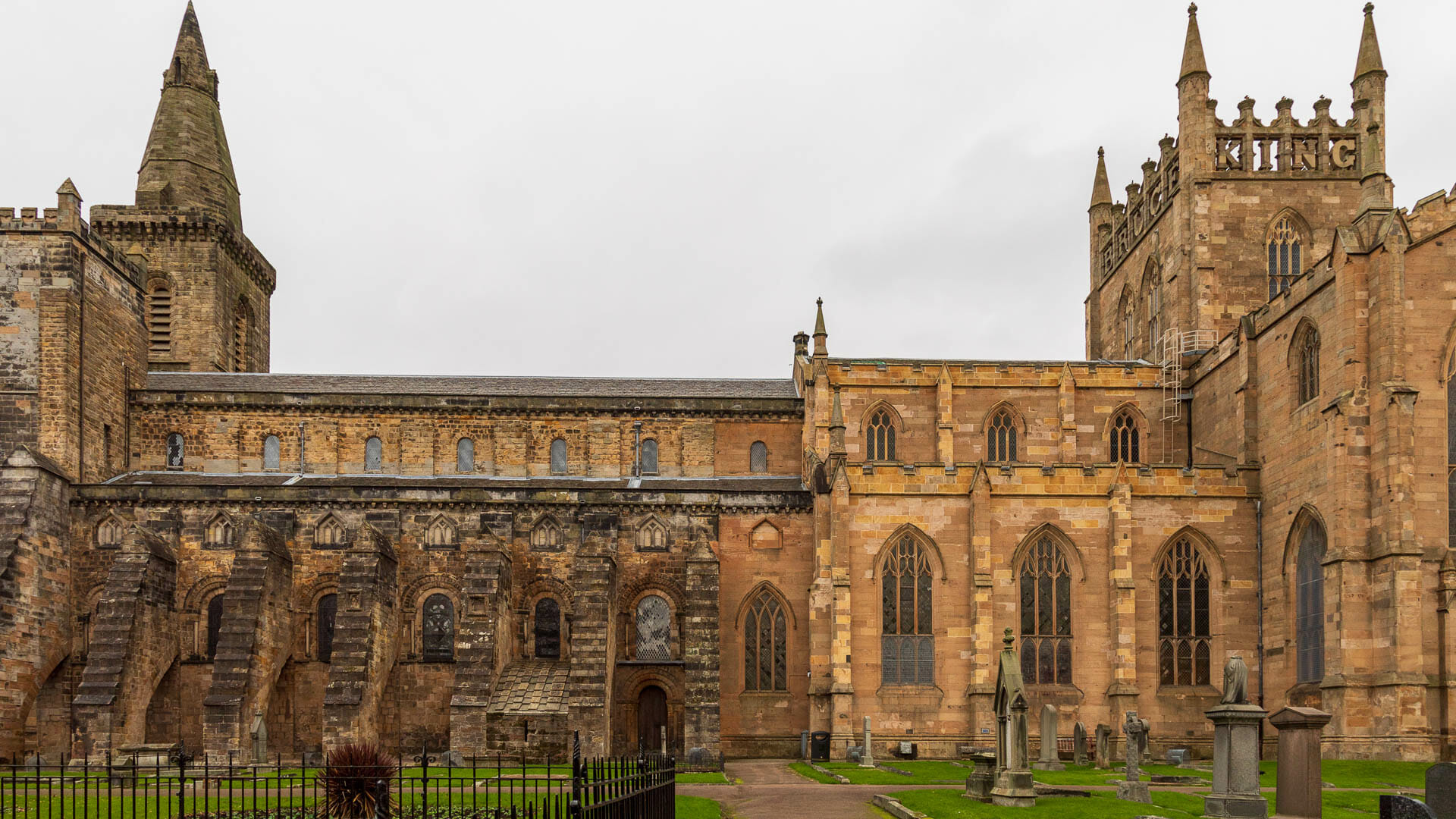
When visitors first see Dunfermline Abbey from a distance, their gaze tends to fall first on the newest buildings: the parish church, in Gothic Revival style, dates from the 19th century. But the traces of the past soon reveal themselves – and they’re impressive.
Achtung: Die Betreiber dieser Sehenswürdigkeit, das Historic Environment Scotland (HES), führt seit 2021 an vielen Sehenswürdigkeiten Untersuchungen oder Baumaßnahmen zum Erhalt der Gebäude durch. Dieses gehört dazu. Darum vorher informieren, ob und was begehbar ist. Mehr Hintergrund hier.
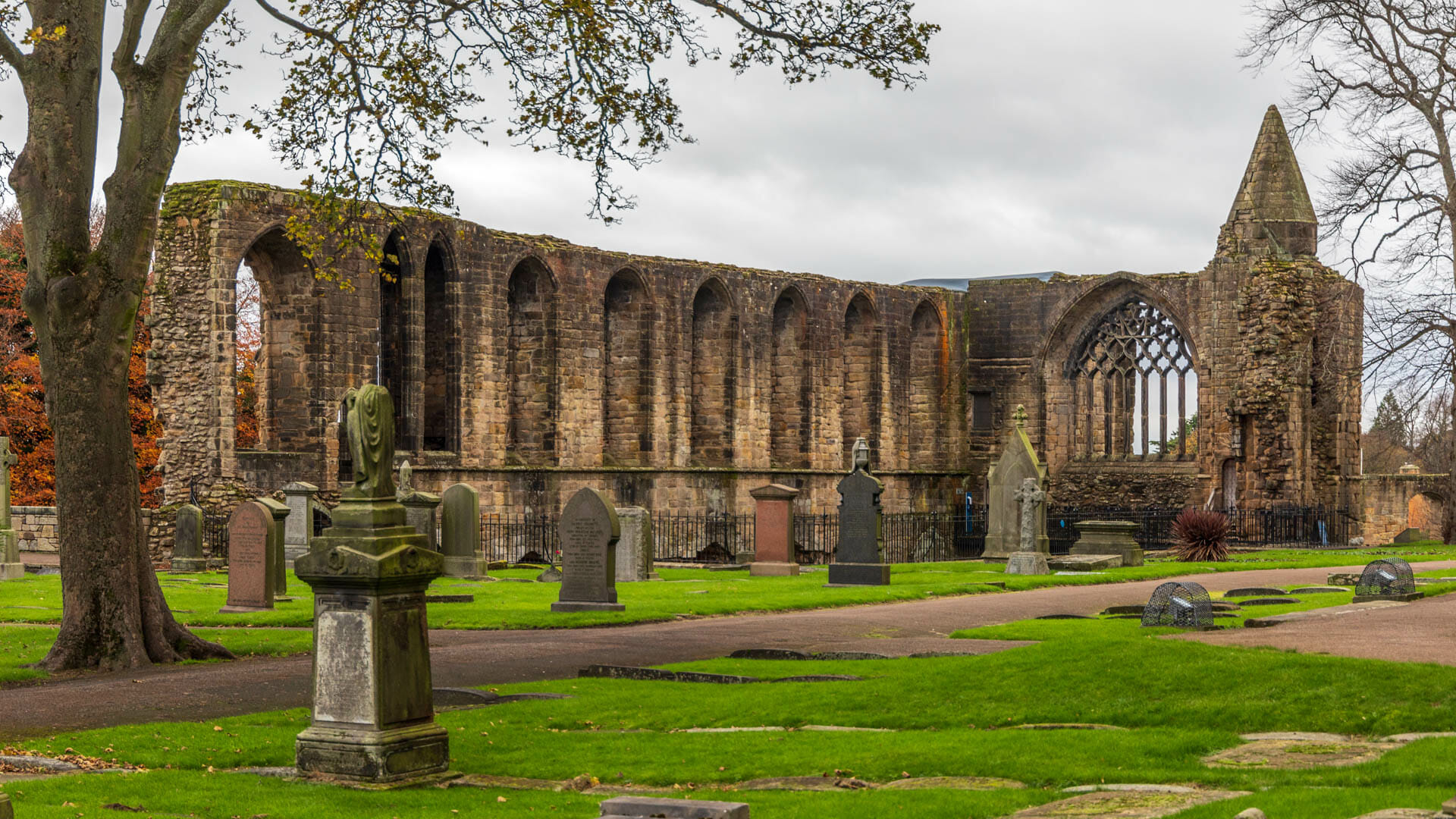
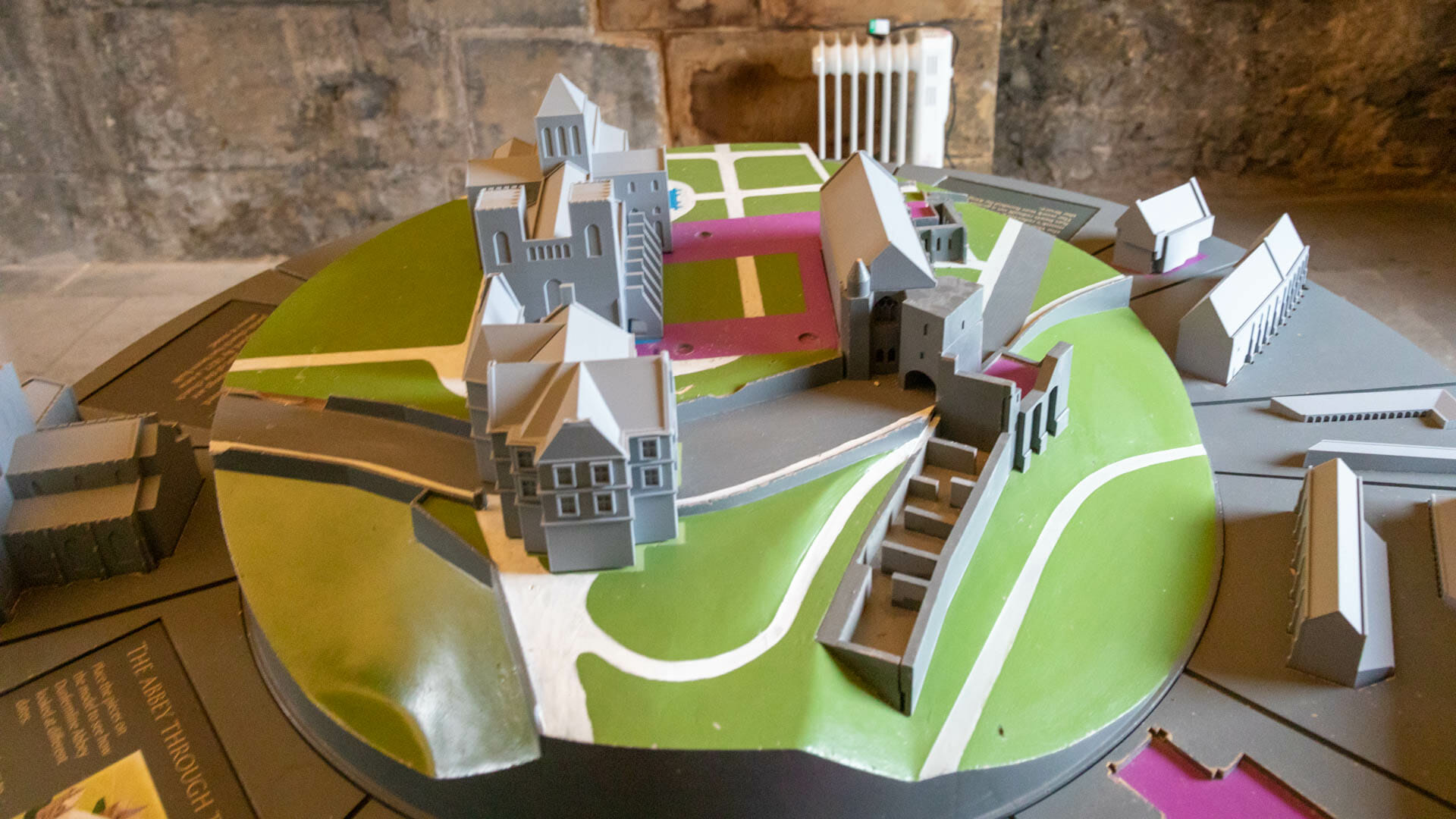
The starting point isn’t the great church, but the small shop within the monastery ruins. Here an exhibition shows how the various parts of the abbey expanded over the centuries. Visitors can, incidentally, rebuild it themselves using a model.
But when and how did the development of Dunfermline Abbey begin? It’s tied to a flight from England. At the Battle of Hastings, the Normans defeated the Anglo-Saxons who had ruled until then. Margaret, daughter of Edward Ætheling, fled to Scotland to the court of Malcolm III – and the two married. The queen is known today as Margaret of Scotland, and she was even canonised.
Why? Because she lived and spread Christianity. She was regarded as pious and charitable. And it was she, too, who founded Dunfermline Abbey. St Margaret’s Chapel at Edinburgh Castle is also dedicated to her, incidentally – the oldest building in the city, no less.
What was still missing, of course, was a suitable monastic order. The royal couple invited the Benedictines, and they came. Margaret’s son, King David I, extended the building, and from then on the stately “Benedictine Abbey of the Holy Trinity and St Margaret” stood on this site. David went on to found many further abbeys, such as Jedburgh Abbey (currently only available in German) or Melrose Abbey in the south of the country. But none of them was as important as Dunfermline.
When Margaret died, her remains were kept in a precious shrine. And once she was finally canonised in 1250, many began making pilgrimages to her grave. She was regarded as the protector of queens in childbirth. This took on some rather grotesque forms at times: in 1566, Mary, Queen of Scots, had the saint’s head and hair brought to Edinburgh as she gave birth to James VI.
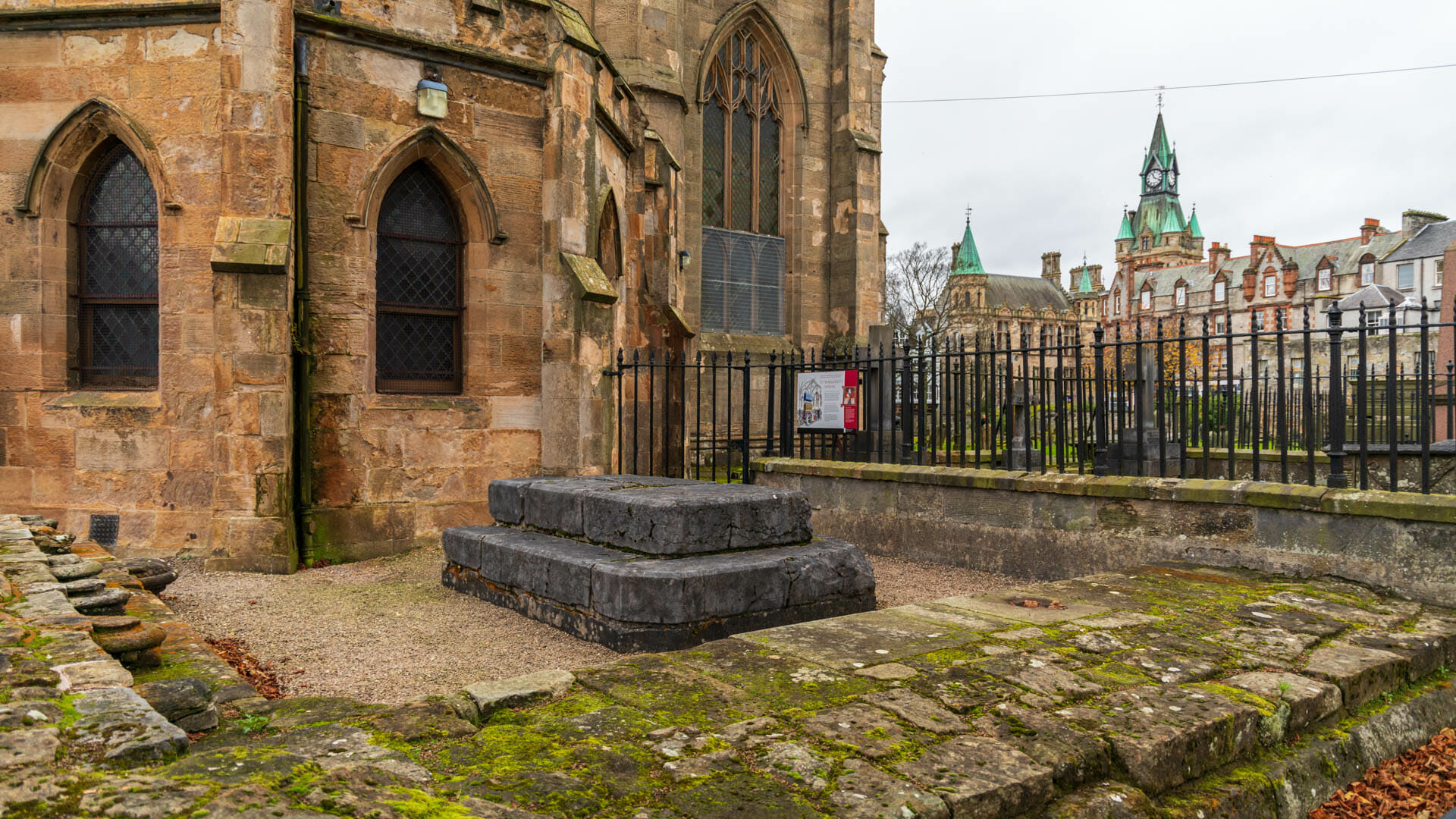
Today, the plinth on which the shrine containing the saint’s bones once stood is empty. Her remains have been lost. The Reformation in the 16th century put an end to the veneration of saints – and to the whole abbey.
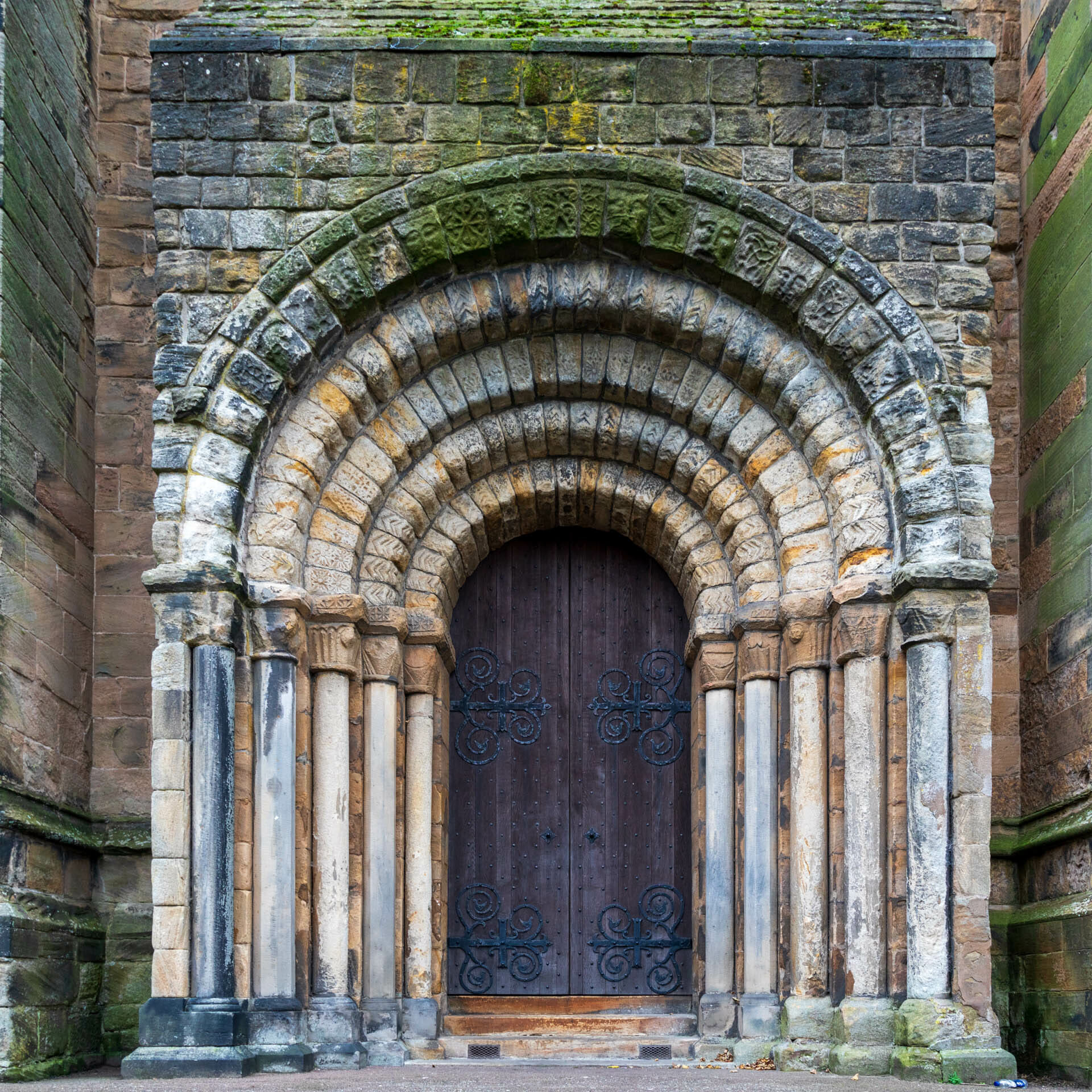
But Dunfermline Abbey was still to experience its golden age first. Under the reign of Robert I, better known as Robert the Bruce, it grew in importance. A great nave with several towers was built. The interior, too, displayed the finest medieval craftsmanship – and that can still be admired today, in the old part of the cathedral.
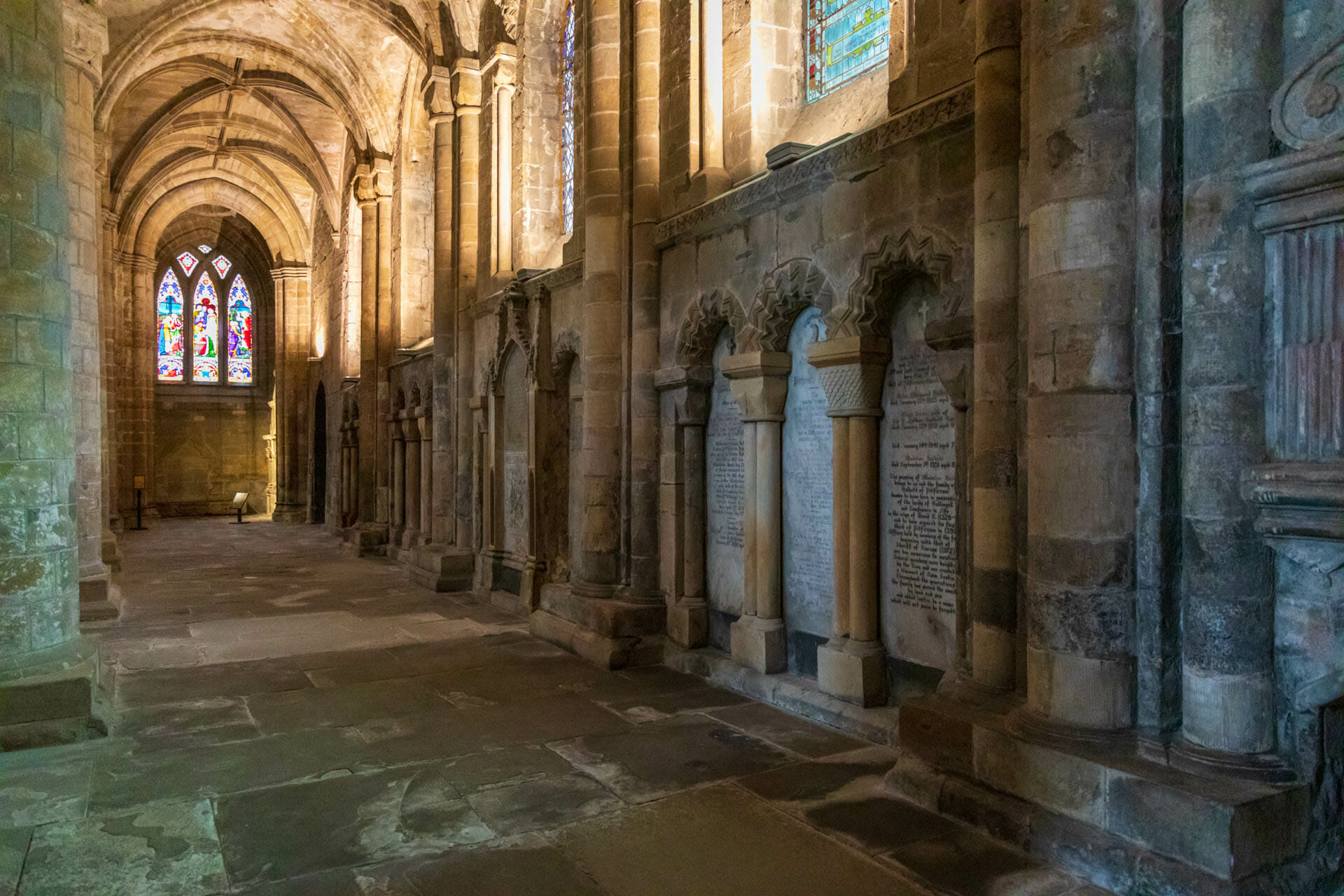
At first glance the building looks rather empty – there’s no altar, no pulpit, no candlesticks – somehow everything you’d expect to find in a church is missing. But this apparent emptiness leaves room for the real beauty: the medieval architecture and stonemasonry, dating back to the 12th century – such as the elaborate pillars and arches with their rich ornamentation.
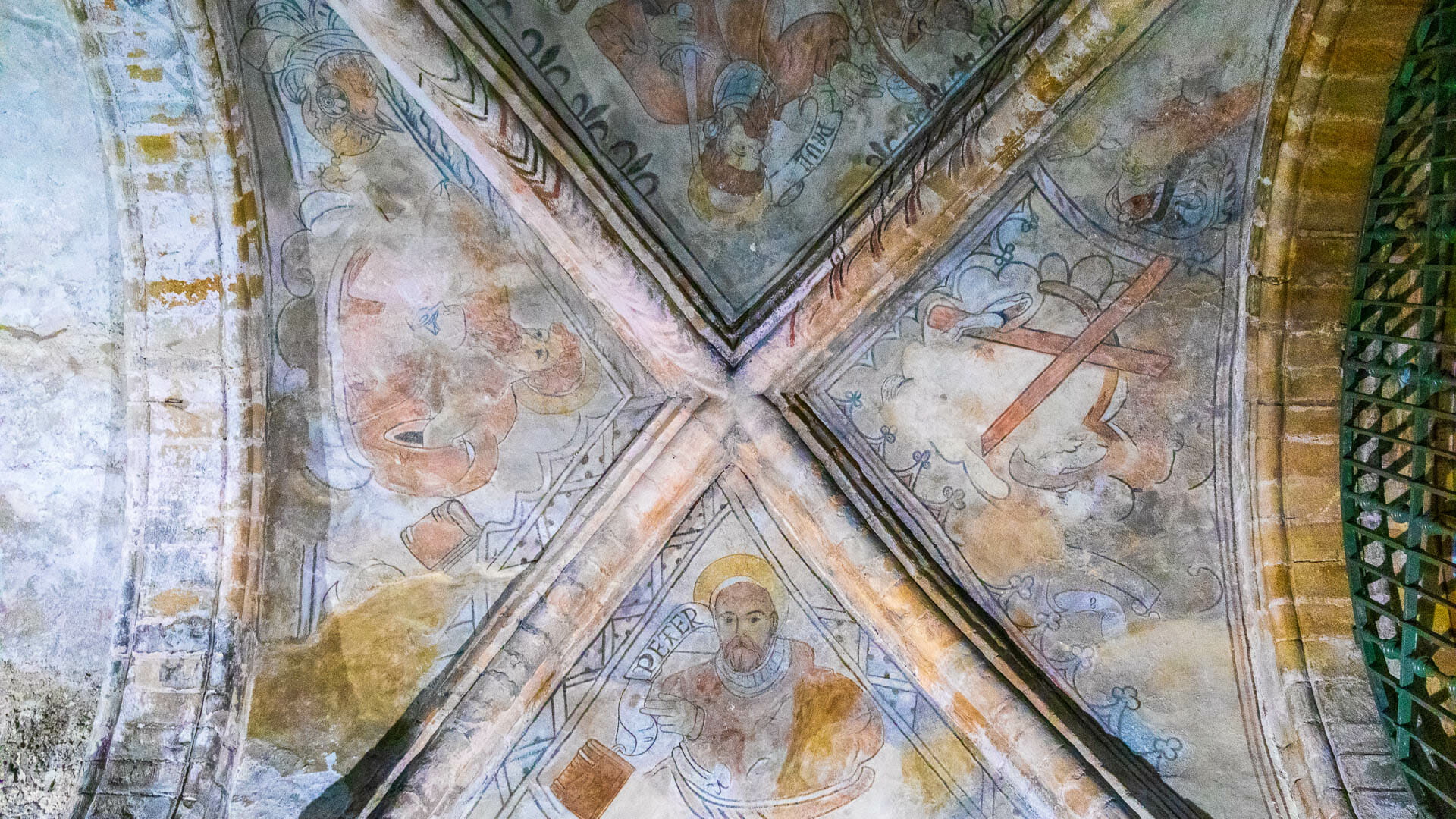
The faded 16th-century frescoes in the vaulted ceiling hint at just how colourful the old nave once was.
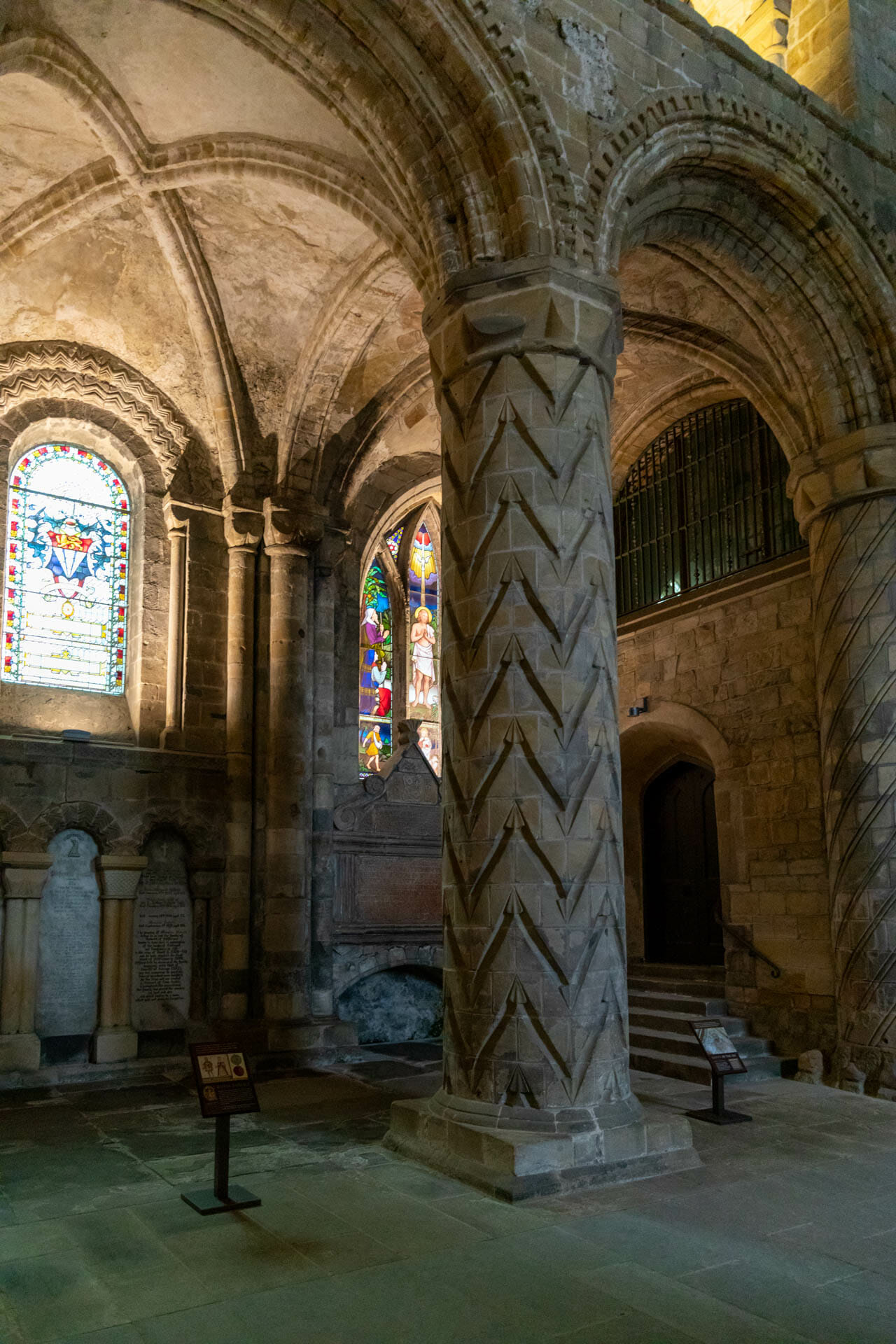
And of course, the stained-glass windows glowing between the arches draw the eye. Beneath them are often striking graves or old archways.
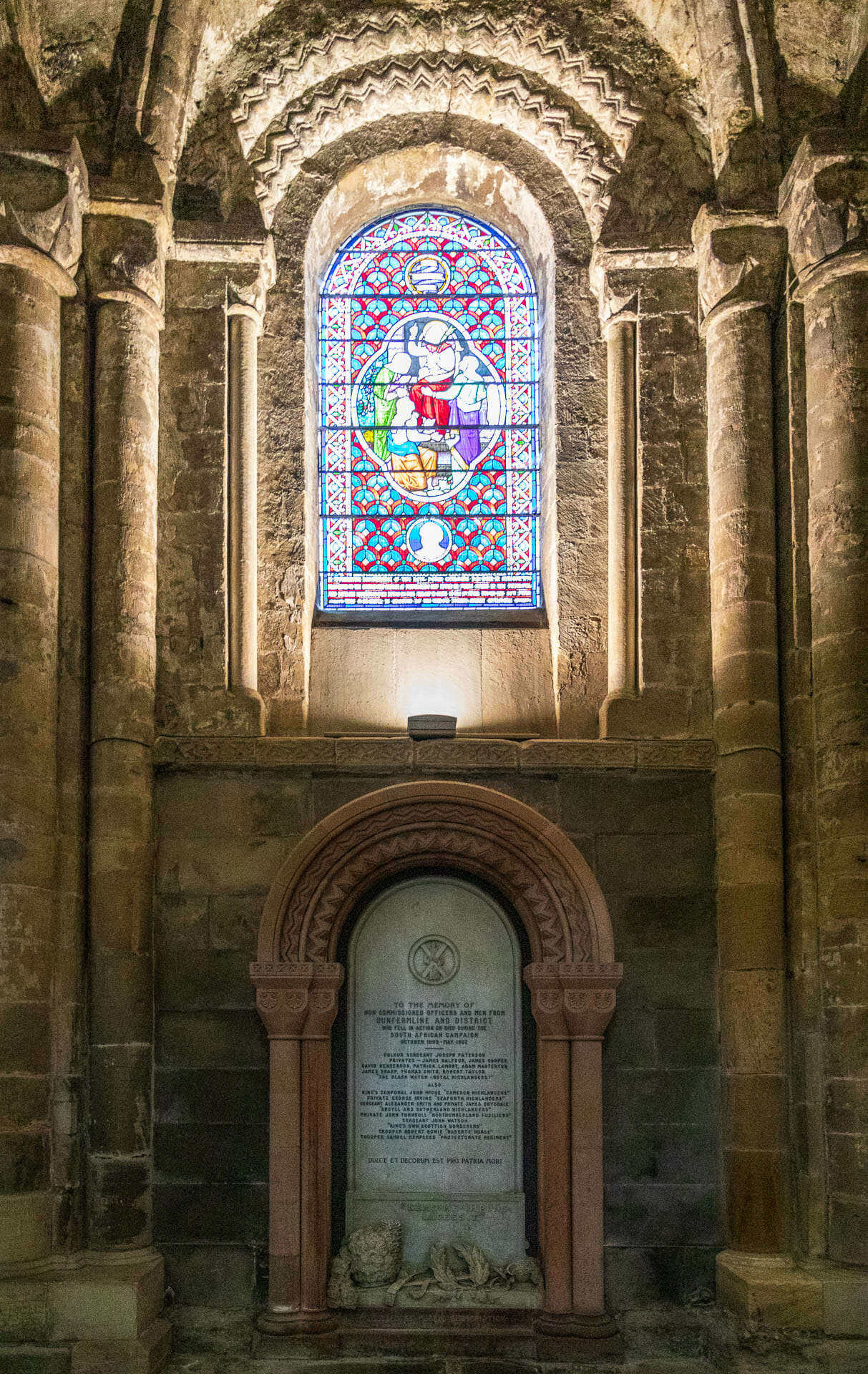
The stained-glass windows, however, aren’t as old as the stonework. Most date from the 19th or even 20th century. Even so, they tell their own story and are no less impressive. Because many of the windows were donated by the American steel tycoon Andrew Carnegie.
Carnegie was born in Dunfermline in 1835, emigrated to America and became a multimillionaire. Along the way, he was also known for never forgetting his hometown, and he founded a number of charitable trusts. He donated several stained-glass windows in Dunfermline Abbey, one of which is said to commemorate his family. It’s called “The Dawn of a New Age”.
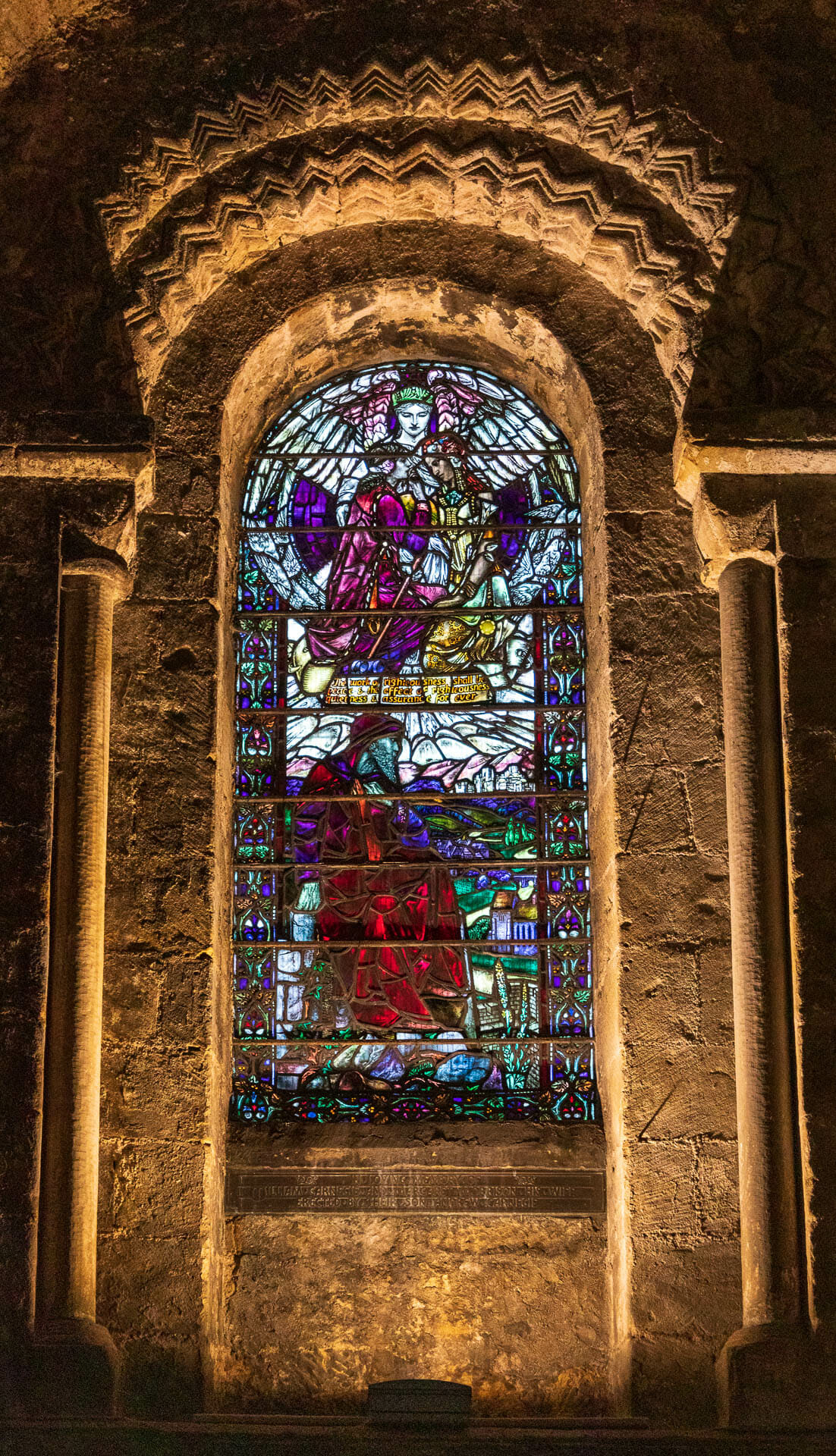
(Author’s note: what unfortunately can’t be found in the old nave, but only in the newer part, is Carnegie’s Tiffany window. Unfortunately, we weren’t able to enter that part of the church during our visit – the part that also holds the grave of Robert the Bruce.)
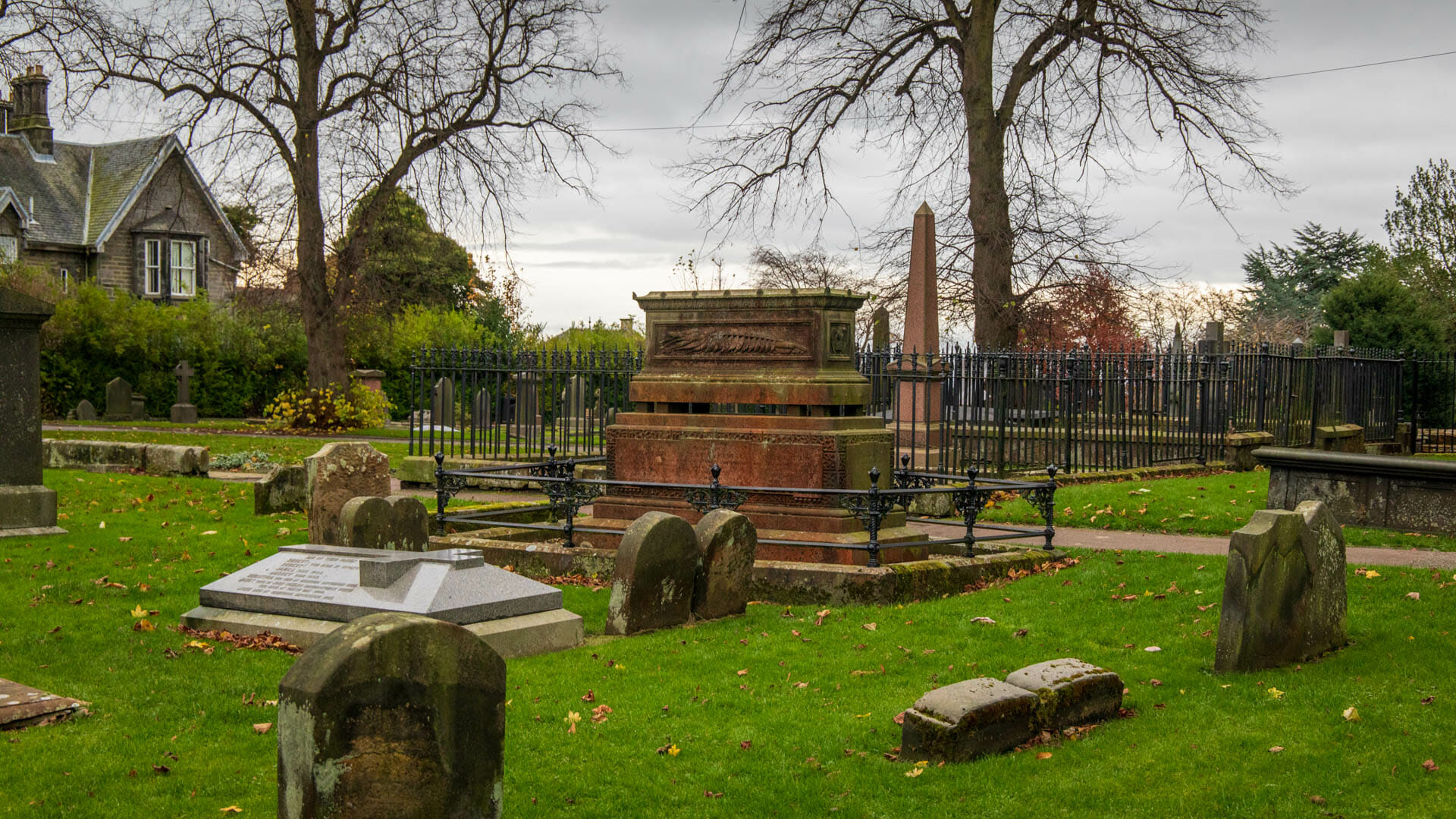
The nave was certainly a centrepiece, but the abbey complex as a whole was considerably larger. A large graveyard, with some ancient headstones, spreads out around the building.
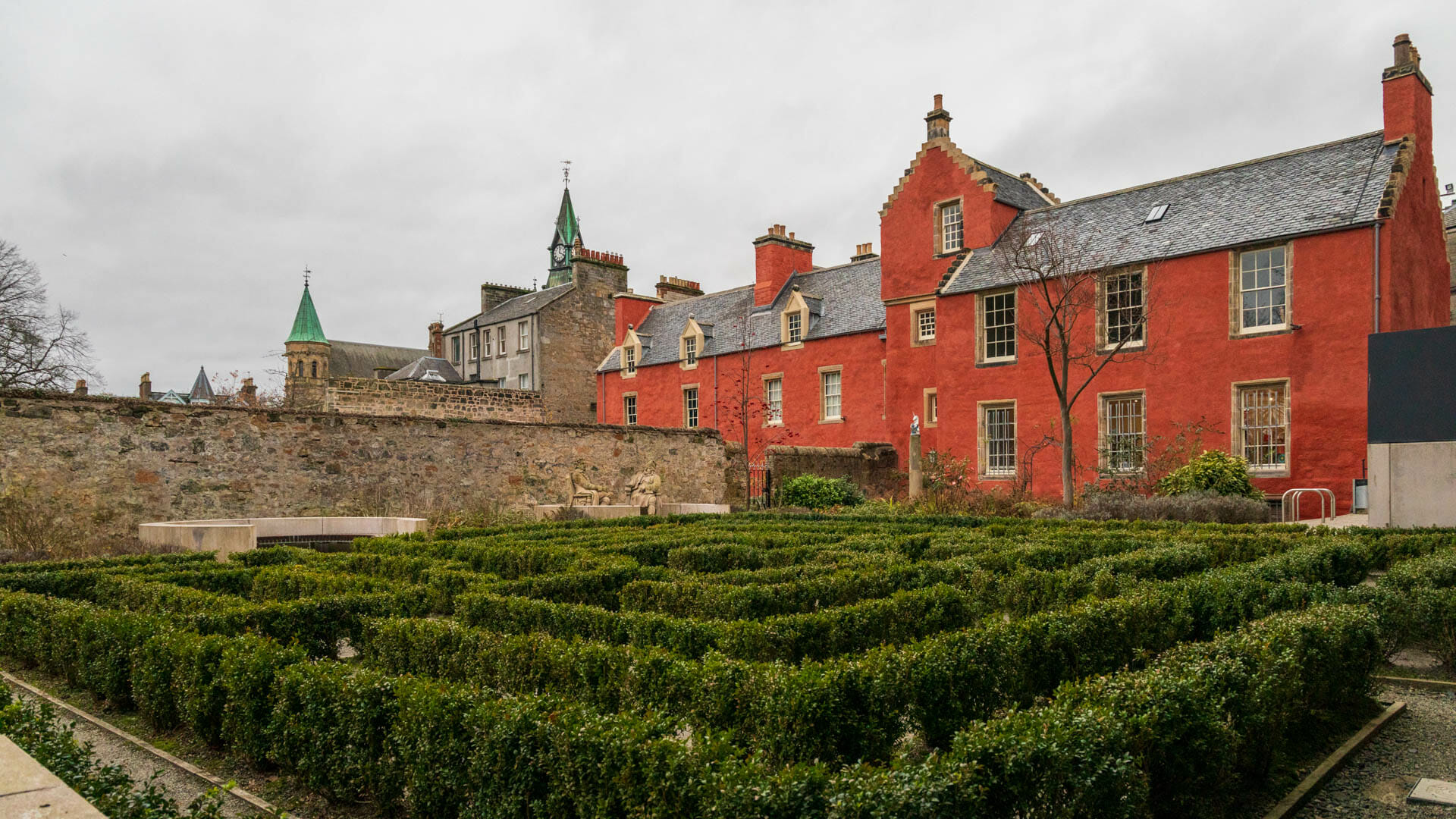
On the edge of the site stands Abbot House. It’s Dunfermline’s oldest house, with parts dating back to the 16th century. On the ground floor there’s a small, interesting shop selling soaps, pens and other handcrafted products.
So there’s a great deal to discover around Dunfermline Abbey, and by no means everything could be covered here. A visit to this historic seat of the kings gives every traveller a new understanding of Scotland.
Good to know: The grave of Robert the Bruce in Dunfermline
It was a sensation! In 1818, construction workers uncovered a burial vault in Dunfermline Abbey. Inside was a skeleton, presumed to be that of a king – not implausible, given that 22 Scottish monarchs are buried here. The scientists who examined the skull came to a fascinating conclusion: the deceased had to be King Robert I. Robert the Bruce, hero and liberator of Scotland.
But doubts from other scientists soon followed. Suspicion was also fuelled by the plaque identifying the grave as that of Robert I. It turned out that it had only “appeared” during the investigations – and was, in fact, a forgery.
So why is it so hard to be certain who’s buried there? That Robert the Bruce was buried at Dunfermline was his own wish. And the fact that the remains indicated his heart had been removed also points to Robert I. At his request, his heart was carried on crusade to the Holy Land and afterwards buried again at Melrose Abbey.
The exact location of the king’s grave was unclear, since the Reformation destroyed many churches and their interiors. On top of that, the abbey has been altered again and again over the centuries. So well-founded doubts remained then, and remain now, even though there are indeed strong reasons to believe these are the remains of Robert the Bruce.
That did nothing to dampen the excitement at the time. The construction work on the abbey wasn’t just simple upkeep, but the foundation of a new abbey. And after the grave’s discovery, the plans for the new building were very quickly adapted, so that at its consecration in 1821, the inscription “King Robert the Bruce” crowned the new tower.

The remains of the Scots’ hero-king were moved into the new building. In 1889, the Earl of Elgin donated an elaborate brass plate, which still marks the grave today.
Casts were taken of the king’s skull at the time, incidentally. Yet despite these templates existing, no one really knows what Robert the Bruce looked like. That’s because, without DNA, important information was missing: were there signs of disease in the bones? Could DNA even have been recovered from them? That, in turn, could have provided information on eye and hair colour, or on any illnesses that might have shaped the king’s appearance.
Getting there:
With a sat nav: “KY12 7PE” brings you right nearby.
Without a sat nav: take the M90 motorway out of Edinburgh, over the famous bridges across the Firth of Forth. Already the second exit points to the A823 towards Dunfermline. Follow it until the large roundabout. Here, get into the lane marked “D’line” and take the exit for Dunfermline. Keep following the road. From here on, simply watch for the brown “Historic Buildings” signs. They lead to the car park at Dunfermline Abbey.