How well, or how badly, are the Scots really doing? Facts about Scotland’s economy that debunk some clichés – and confirm others.

21, 22, 23 … counting along? With every one of those numbers, Scotland has sold another 40 bottles of whisky to the world. 40 bottles per second!
Despite this superlative, many people carry a strange image of Scotland in their heads – of a country somewhere near the economic output of Portugal or Greece. But that’s wrong. Modern Scotland presents itself far better than that, economically broad-based and healthy. Of course, there are also people here without work, or who have to take on several jobs just to get by.
Scotland has only just over five million inhabitants. So how can you make a meaningful comparison with countries like Germany, with its 80 million people? To compare, the EU draws on gross domestic product per capita (GDP per capita). And that helps us better understand Scotland’s economic performance. Data on exports and unemployment will round out the picture.
Export champion no. 1: food and drink
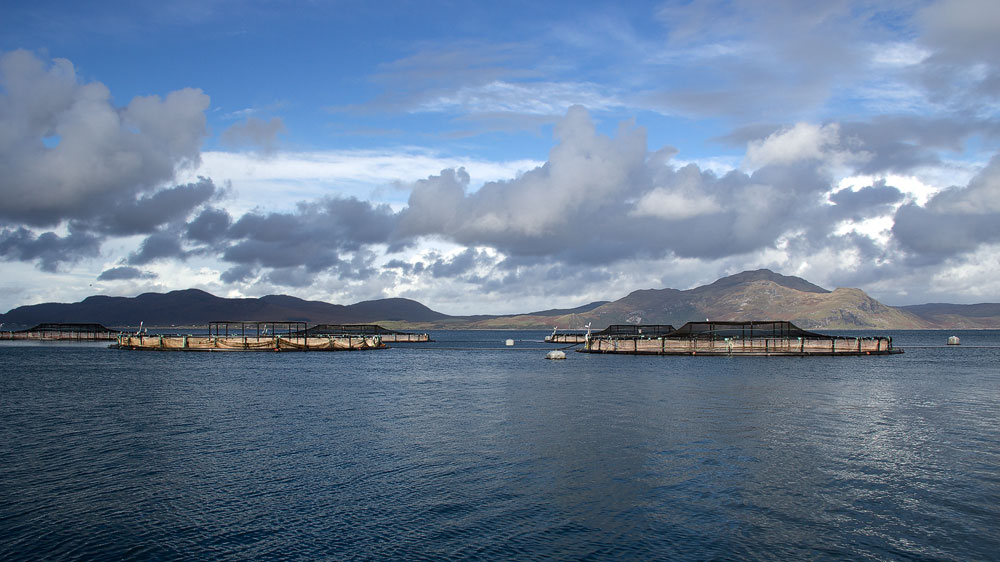
Naturally, “food and drink” leads the export charts. As already mentioned: 40 bottles of whisky per second! But although whisky accounts for the lion’s share of this sector, at around 80 percent, the remaining 20 percent are worth a look too. Scotland also supplies the world with other foodstuffs – salmon, for instance. This has nothing to do any more with the impoverished fisherman heading out in his trawler and casting his nets. Locals have long been running automated salmon farms that breed, feed and protect the fish. Then there’s Highland cattle, which many tourists tend to see as scenic decoration, but whose meat is being cooked in an ever-growing number of kitchens around the world. Cheese, biscuits and crisps are further food products in demand worldwide.
So you can see: there’s more at play here than just whisky … “food and drink” is a lucrative industry, employing almost one in five Scots.
Second place in the export charts goes to the “chemicals” sector – which also includes oil refining (not extraction!). This sector runs almost neck and neck with “food and drink”, so a healthy industry is at work here too. Third place goes to the services sector. Fourth and fifth go to engineering and machine building.
Exports, incidentally, don’t go primarily to the EU, but mainly to the USA. Perhaps that’s one reason why we in Germany barely notice these economic goods?
Job engine: tourists from all over the world

Of course, a certain dependence of the country on tourism can’t be denied. After all, one in twelve working-age Scots is employed in the travel industry or in a profession that benefits significantly from it. This is made possible by 15 million visitors from home and abroad every year, who leave around 4 billion pounds in the country.
This flow of visitors doesn’t happen by chance. Through targeted measures, the government has driven the development of tourism. More and more attractions are being restored, infrastructure keeps improving, and advertising abroad keeps growing stronger – and lately Hollywood has been doing its bit too, using Scotland’s landscapes as a backdrop in films like Harry Potter or Brave.
North Sea oil: the Scots’ secret treasure
The export ranking shown above is a bit misleading, since it leaves out one important commodity: North Sea oil. It’s not included in the calculation, since it’s essentially generated outside the country – “offshore” on oil platforms.
What few people know: Scotland is the EU’s largest oil producer – ahead even of Norway. This rich treasure from the sea was expected to keep flowing at roughly the same level until 2020.
Just for fun, the Scottish government once went to the trouble of including oil in the GDP calculation. The result: Scotland would have the sixth-highest GDP per capita in the world – ahead even of Germany, which would then rank 14th. Whether this calculation is really credible is another matter. But the wealth that oil brings can’t be dismissed either.
EU comparison: Scotland in the middle of the pack
All of this doesn’t yet say much about how Scotland stacks up against other countries – against the rich and poor within the EU, for instance. To get a sense of scale, here’s the GDP per capita of a few countries for comparison.
- Germany €30,500
- United Kingdom €27,500
- Scotland €26,500 (Highlands €21,000)
- Greece €19,600
- Romania €5,800
Source: http://epp.eurostat.ec.europa.eu
But how are the individual regions of Scotland doing? Are the Highlands, for instance, really as poor as their reputation suggests?
First, a surprise: among the top 20 regions with the highest GDP per capita, the area around Aberdeen ranks 12th, on a par with Upper Bavaria including Munich. From the UK, only London otherwise makes it into the top 20 – though it sits at number one. (No wonder. The banking hub has barely any residents of its own; most people just commute in to work.)
The West Highlands, by contrast, really do belong among the poorer regions of the UK – though not the very poorest; that would be West Wales, with a GDP per capita of €17,400. And certainly not among the poorest in Europe – that title goes to a region in Poland.
GDP isn’t everything: unemployment in Scotland
Of course, what’s produced doesn’t necessarily say much about how people are generally doing. A better indicator, by contrast, is unemployment. Let’s take a look.
Unemployment in Scotland stands at 7.4 percent – for comparison: France has around 10 percent, Germany 5 percent, and the UK as a whole 7.8 percent. In terms of unemployment, the Highlands are actually slightly below the Scottish average.
Here too, then, you can say that Scotland doesn’t occupy a particularly poor position.
Poverty: how is money distributed in Scotland?
Unemployment seems to be at a normal level, but can Scots actually live off their work? Here we see a similar trend to Germany: many Scots’ net incomes are falling, and they often have to take on several jobs, or would like to work more but can’t find the opportunity.
I’ve tried to track down the latest available figures throughout. However, many evaluations for 2012 aren’t available yet. Looking at the time series, though, there are hardly any sharp reversals in trend, so a degree of comparability should still be valid.
Overall, in 2010, 17 percent of Scots lived in relative poverty (Germany: just under 16 percent). “Relative” means measured against the rest of the country in that same year. It’s important to note here: the figure would have decreased, but rising household costs such as rent and food have prevented poverty from declining.
Another point: child poverty is very high. There are 13 districts in Scotland where 30 percent of young people live below the poverty line. These areas are clustered mainly around Glasgow, Edinburgh and Dundee.
Across Scotland as a whole, on average 20 percent of children live in households earning less than 60 percent of the average income – meaning they count as poor. In Germany, the figure was around 17 percent in 2011, if calculated purely on household income (the federal government pushed the poverty rate down to 10 percent through social benefits; unfortunately, I don’t have that equivalent figure for Scotland).
The good news: the number of children in poverty has been falling in Scotland (as in Germany too) for years. The bad news: far too little, and far too slowly.
The gap between rich and poor is wide in Scotland. Although, in 2011 specifically, this gap narrowed – not because the poor were doing better, but because the rich were doing worse. To assess this, the Gini coefficient is compared across the EU. The smaller it is, the more equally a country’s wealth is distributed – at one, all households would have exactly the same amount of money; at 100, all the money would belong to a single household.
Some Gini figures for 2011, compared:
- Bulgaria 35.1
- United Kingdom (incl. Scotland) 33
- European Union (average of 27 countries) 30.7
- Scotland 30
- Germany 29
- Norway 22.9
Here too, the picture is the same: there’s plenty still to do in Scotland, but compared to the rest of Europe it holds an average position.
Conclusion: Scotland is solidly average
Whisky, oil, salmon and tourism are extremely important, but alongside them there’s also a whole range of other healthy industries, which export mainly to the USA.
When it comes to poverty and unemployment, Scotland sits comfortably in the middle of the pack when compared with the EU, and usually does better than the rest of the UK.
So Scotland doesn’t belong in Europe’s poorhouse – quite the opposite, it’s among the wealthier economies. But within Scotland, as in Germany too, there’s often significant poverty.