One of Scotland’s most enchanting ruins stands on Loch Awe: Kilchurn Castle tells the story of the expansion of Clan Campbell and its strong women.
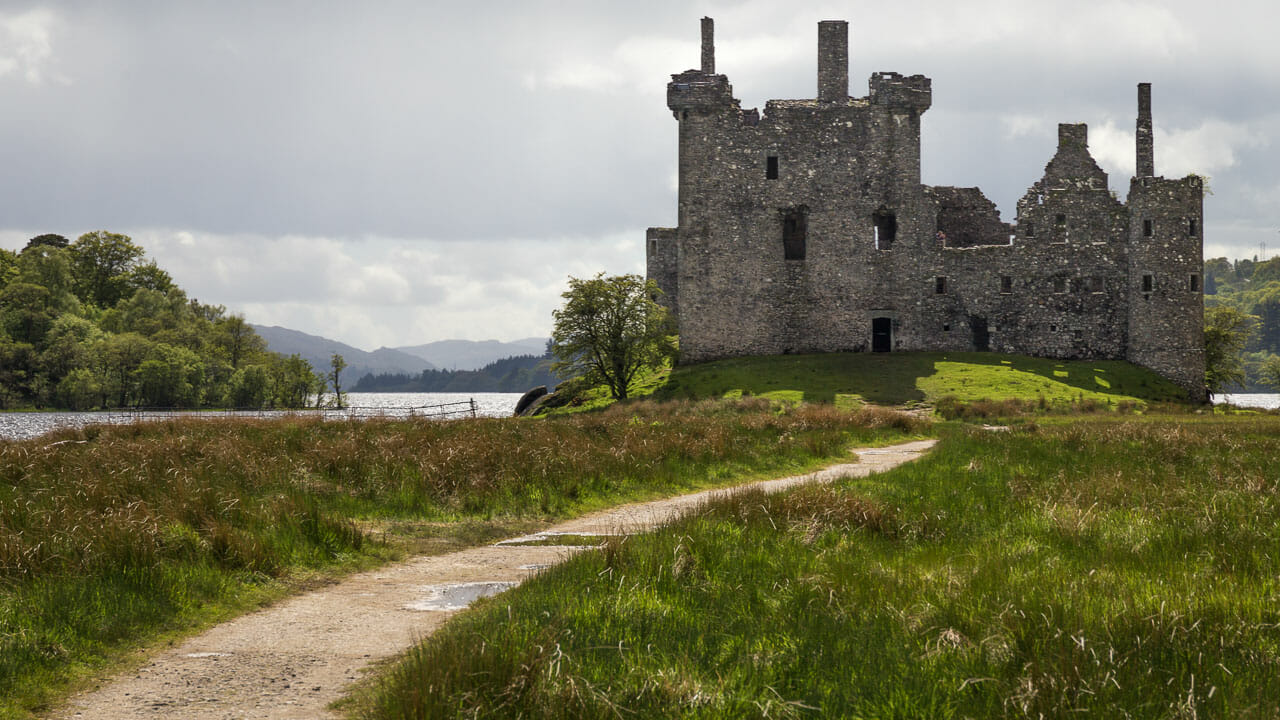
Two women decided the fate of this castle. One is said to have overseen its construction, the other unwittingly sent the castle into obscurity. Between them lay around 200 years, during which Kilchurn Castle played an important role in the expansion of the Campbells of Glenorchy.
According to legend, Margaret was the first. She lived as one of four wives of Colin Campbell, nicknamed “Cailean Dubh na Roimhe” – “Black Colin of Rome”. Colin was a crusader, so he was often away travelling. That’s why his wife Margaret supervised the building of Kilchurn Castle as a seat over the lands at Glen Orchy that Colin had inherited.
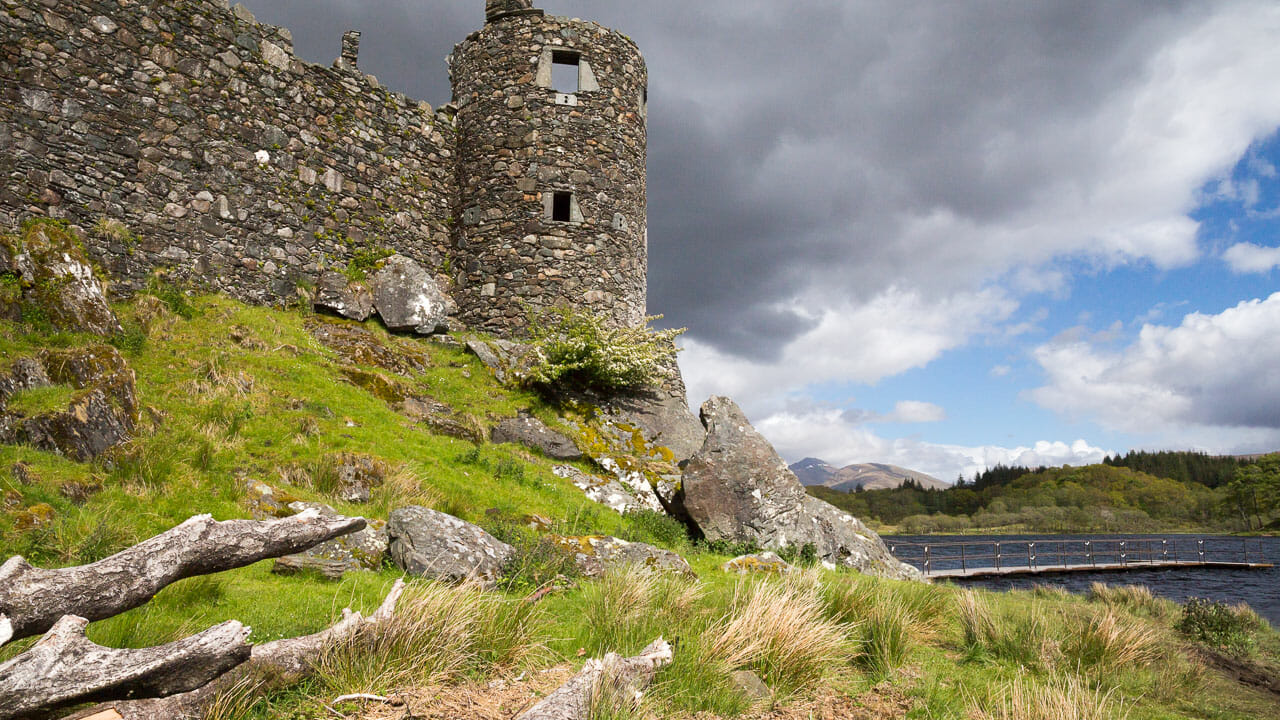
Visitors standing atop the castle quickly understand why Margaret and her husband built Kilchurn Castle in exactly this spot: looking west, you can see almost the entire length of Loch Awe – at 41 kilometres, the longest freshwater loch in Scotland.
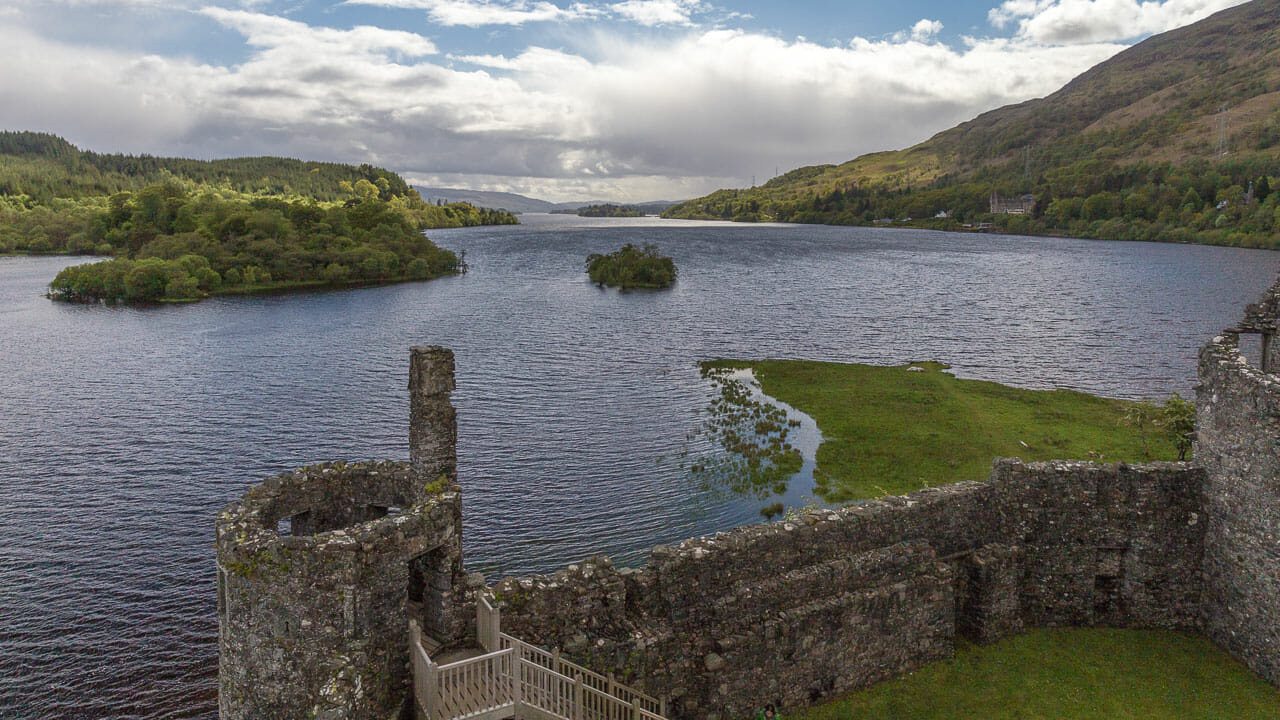
Towards the northeast stretches Glen Strae, and finally to the east, Glen Orchy. Kilchurn thus dominated the junction of many routes on the way to the coast.
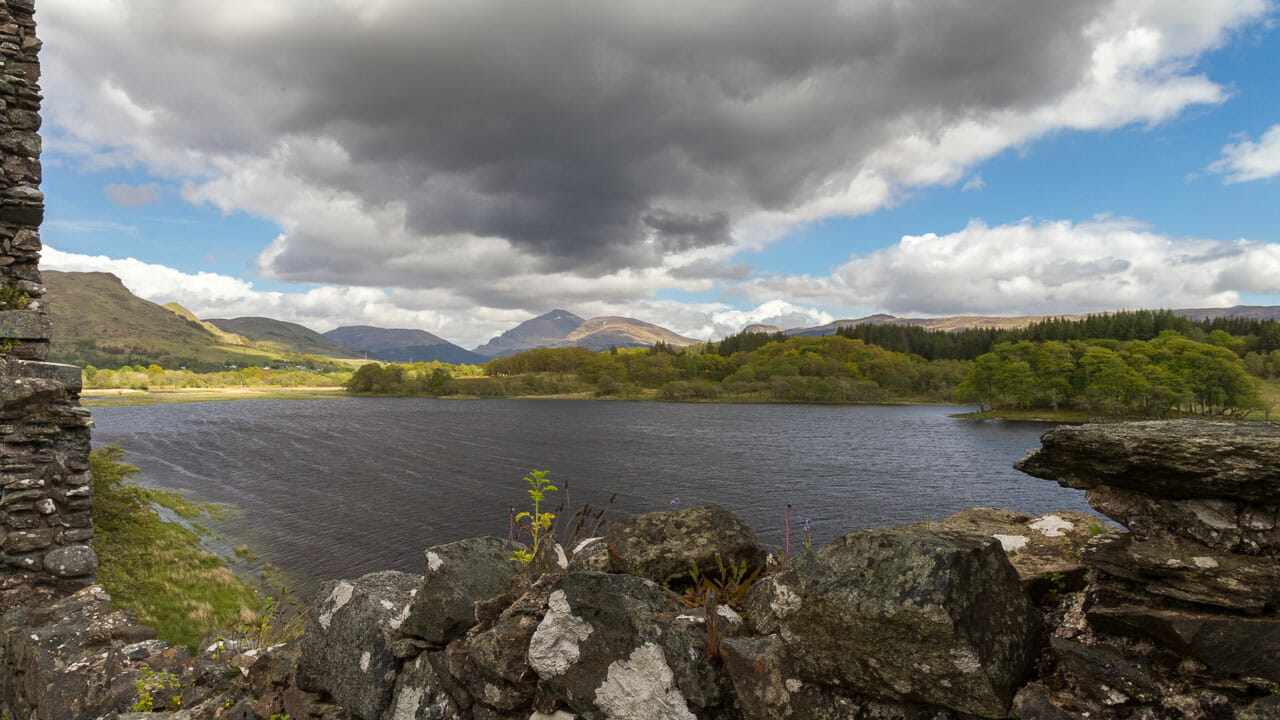
The site was also perfectly suited for defence. Today Kilchurn Castle stands on a spit of land jutting into Loch Awe, which only becomes impassable at high water. But the loch’s water level only dropped in the 19th century, when the outflow to Glen Etive was widened. Before that, Kilchurn stood on an island. Some sources say there was a causeway lying just below the waterline as a crossing.
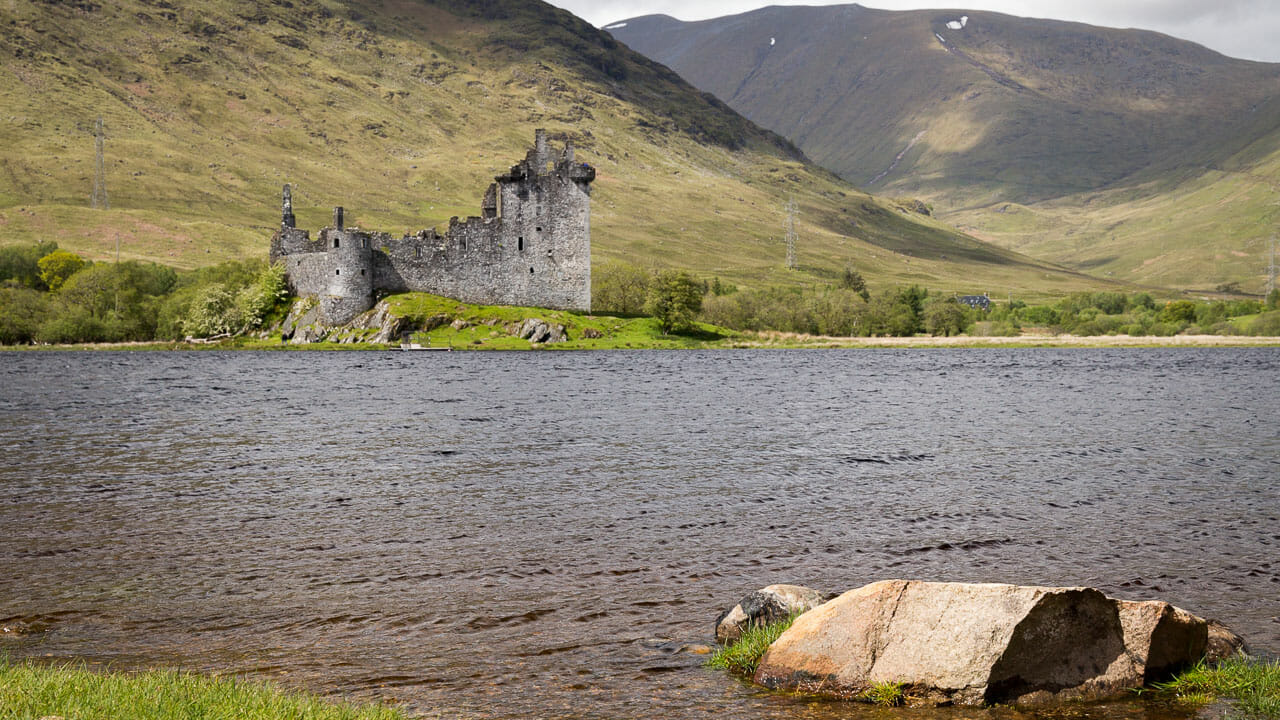
At first, Kilchurn Castle was also a “tower house” – similar to how Castle Stalker (in German for now) still stands today. Over the next 200 years, however, further elements were continually added.
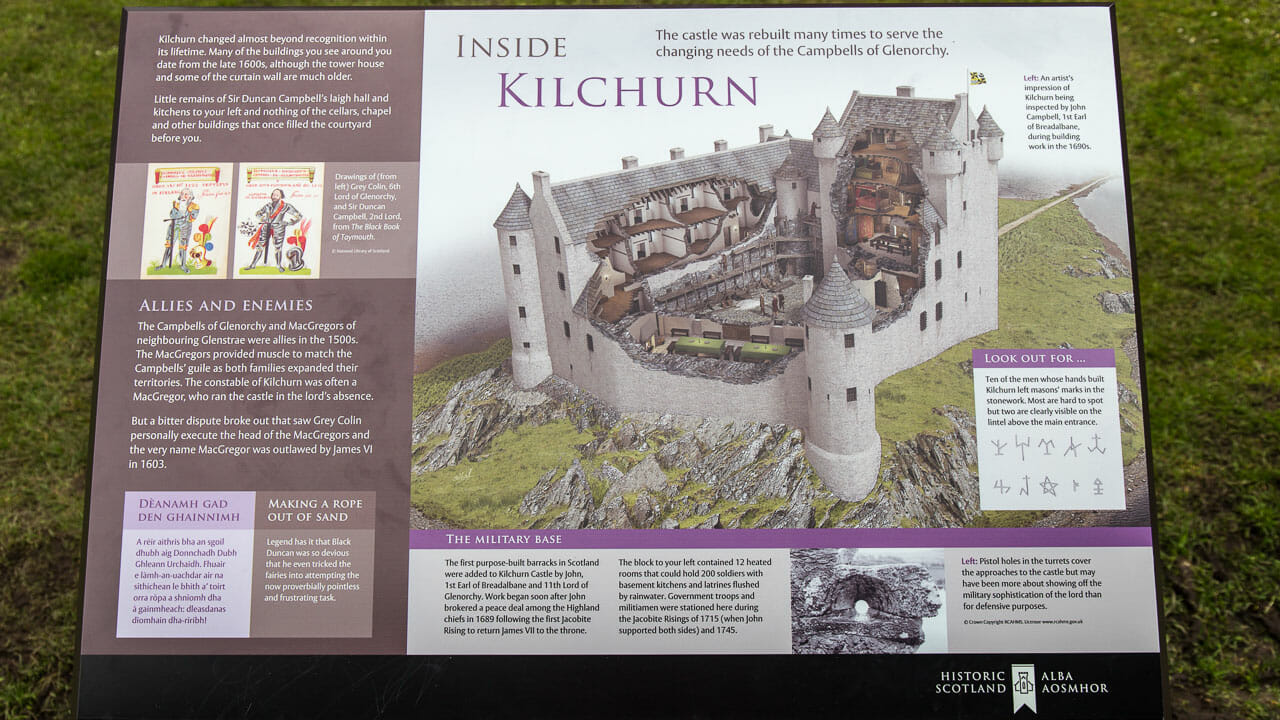
Grey Colin Campbell, who was Laird of Glenorchy in the second half of the 16th century, also extended Kilchurn with round towers and further elements.
Kate Ruthven, wife of Grey Colin Campbell, played a decisive role in Kilchurn’s slow slide into obscurity. The Ruthven family came from Perthshire, far to the east of Loch Awe. Through her, Colin too forged lively connections eastward, into the Scottish Lowlands. This drew the Campbell of Glenorchy family further in that direction. And so they acquired large parts of Breadalbane, the land of the MacNabs near Loch Tay and Killin.
There, at the easternmost end of their domain at the head of Loch Tay, the Campbell of Glenorchy family built their new seat: Balloch Castle, today known as Taymouth Castle. And the Glenorchys later became the House of Campbell of Breadalbane.
Kilchurn Castle initially had castle stewards: the MacGregors, a neighbouring clan. That, however, didn’t go well for long. Even during Grey Colin’s lifetime, a blood feud broke out between the two clans, which Colin won – he personally executed the chief of the MacGregors.
Grey Colin’s descendants continued to hold the castle. In 1685, Kilchurn was even besieged for the only time in its existence: the Campbells of Breadalbane inside, the Campbells of Argyll outside. An internal clan feud.
Thanks to its strategic location, the castle made good accommodation for government troops during the Jacobite risings. So the Earl of Breadalbane had Kilchurn extended with barracks, which gave the castle its present-day form. The Earl, however, tried in vain to sell Kilchurn Castle to the government. After the Battle of Culloden and the building of fortifications like Fort William, the government had no interest in it.
And so the Breadalbanes let Kilchurn Castle fall into ruin.
The ruin soon led a second life – as a romantic backdrop for many travellers to Scotland, among them many painters and poets. All of them were enchanted by the castle’s setting and surroundings. And Kilchurn Castle hasn’t lost that magic to this day.
Facts: the Campbells of Glenorchy
A fair amount is known about Katherine Ruthven and Grey Colin, since their correspondence has survived – a rare stroke of luck for researchers, who were able to work through the so-called Breadalbane Collection. Besides the letters, three pieces of embroidery by Kate have also survived, in the form of cross-curtains. On one you can see a depiction of the Creation, along with the coats of arms of the Campbells and the Ruthvens.
The curtains are considered the earliest surviving embroideries from Scotland and are on display at Pollok House in Glasgow.
Tip: on the battlements of Kilchurn Castle
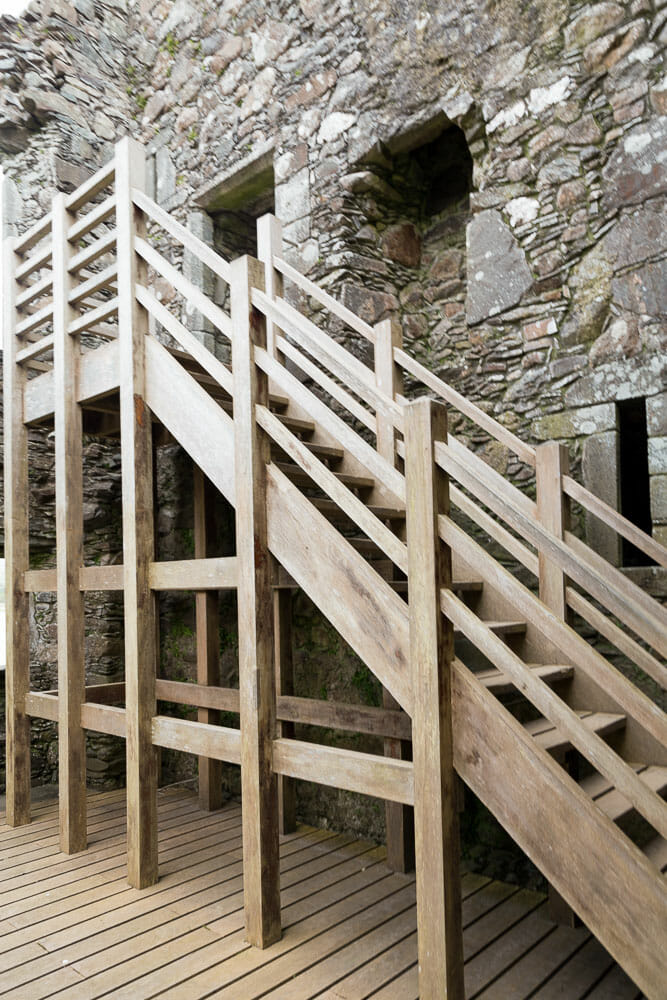
Note: the inner courtyard is currently closed due to risk of collapse, so the castle can only be viewed from the outside.
Anyone reasonably comfortable with heights should climb up to the battlements and tower corners. From here you can enjoy views in every direction.
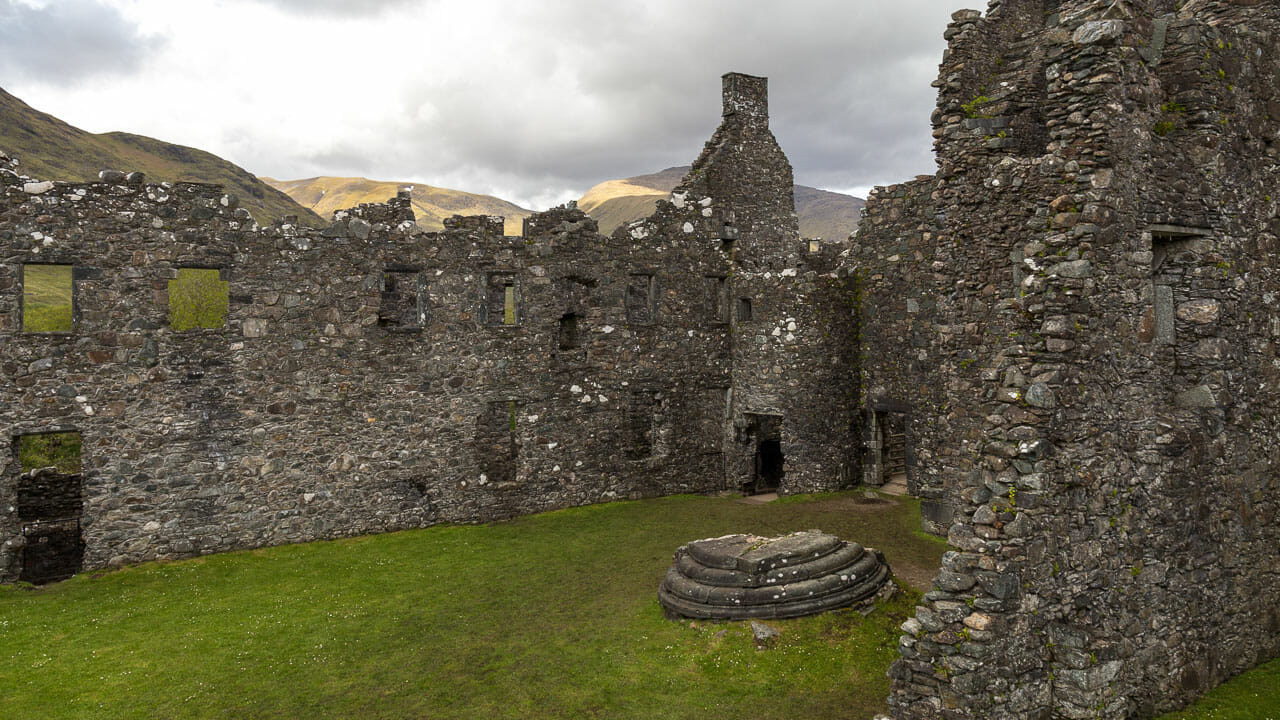
In the castle courtyard, look out for the odd round platform in the grass:
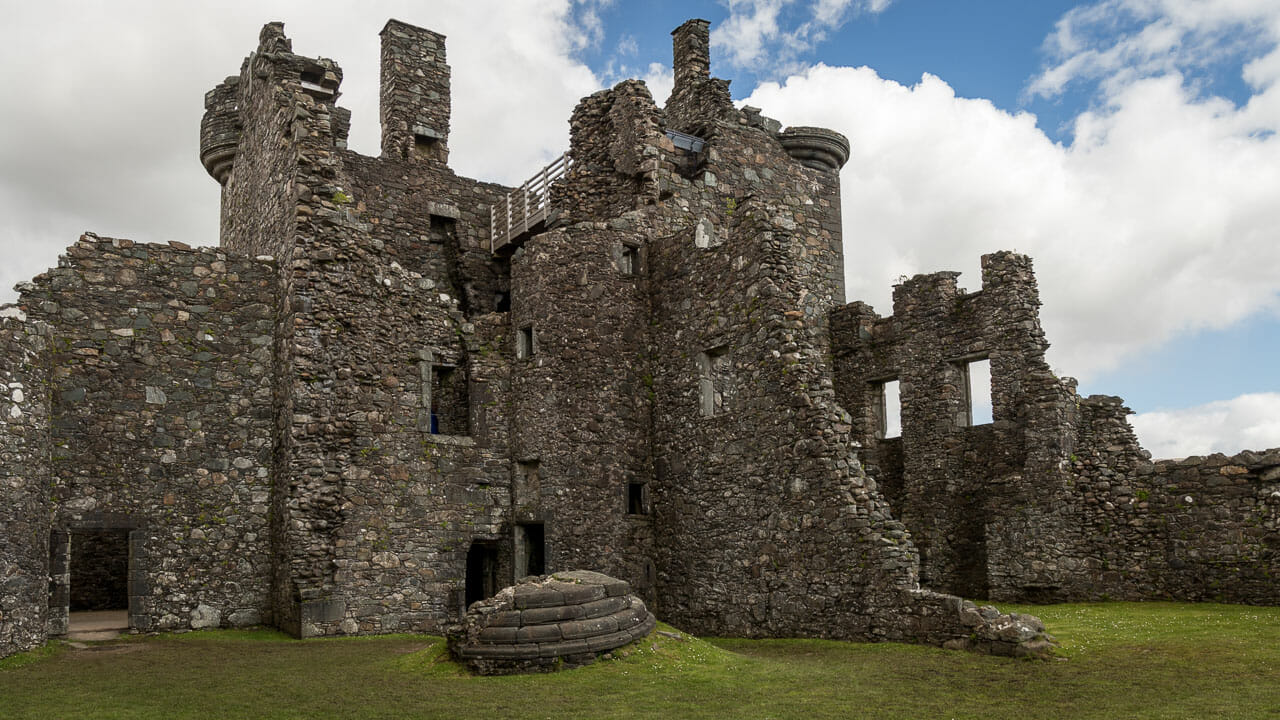
This is actually one of the castle’s tower bases, which was blasted off by a lightning strike and fell into the courtyard.
Otherwise, you should also take the time to walk once around the castle, to appreciate its height and defensive strength.
One more tip, which a reader named Charly gave us in the comments (on the German page): from the castle, you can drive along Loch Awe into Glen Martin, off the main road. It starts from the A85 right by the castle, onto the A819 first towards Inveraray, but then after a while towards Cladich and Ford on the B840. You end up on the A816 shortly before Kilmartin.
Getting there:
With a sat nav: the postcode for the area is “PA33 1AJ”.
Without a sat nav: the A85 runs past the northern tip of Loch Awe.
It starts either in the west, coming from Oban – there, follow the signs to Crianlarich. The A85 first heads towards Fort William, then turns off before Connel Bridge towards Taynult and Crianlarich. Keep following the road along Loch Awe all the way to the village of Lochawe. Once you cross the River Orchy, watch out for a car park on the right.
Coming from Glasgow or Edinburgh, you first need to head to Crianlarich and then, at Tyndrum, follow the signs to Oban. After a while, the road coming from Inveraray joins your route on the left. It’s then not much further before the muddy car park appears on the left.
From Inveraray, take the A819 towards Oban and Crianlarich. It then meets the A85, onto which you turn left.
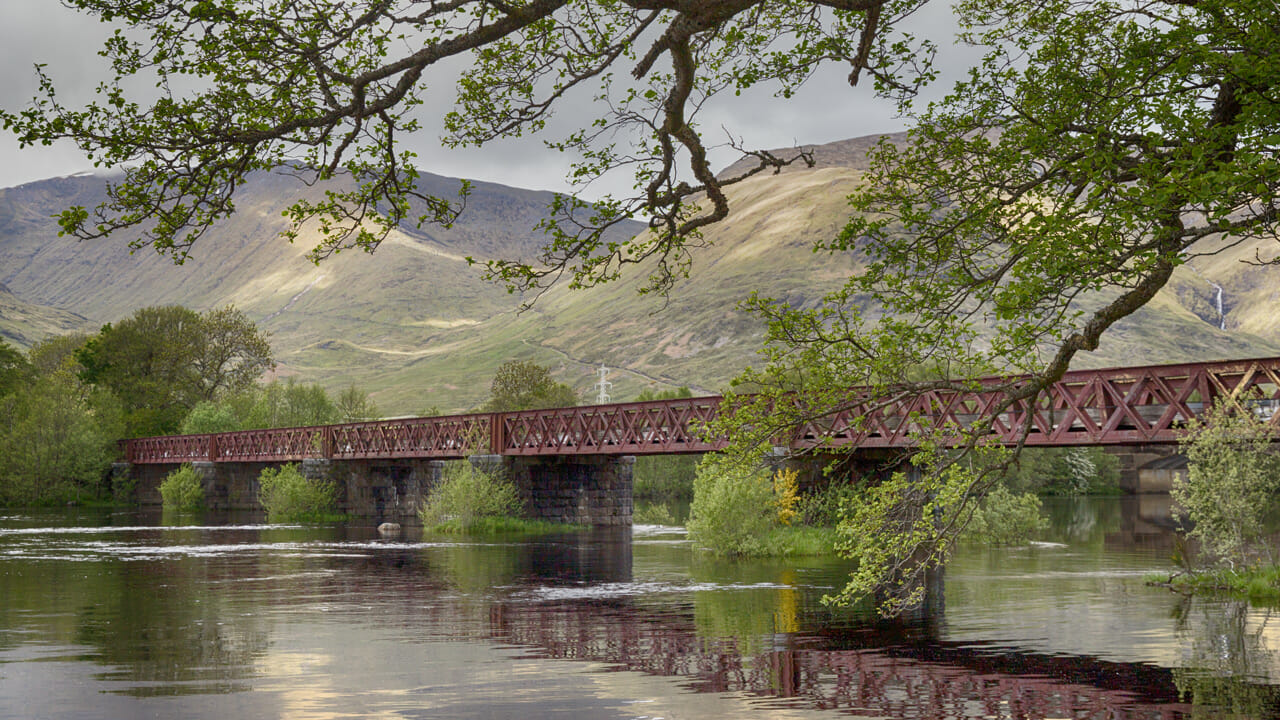
You can park in a larger car park near the road. From here, continue on foot along a path that leads under the railway bridge. Do NOT walk over the railway tracks – that’s dangerous. The bridge also makes for quite a nice photo opportunity:
After that, you’ll already see the castle in the distance.
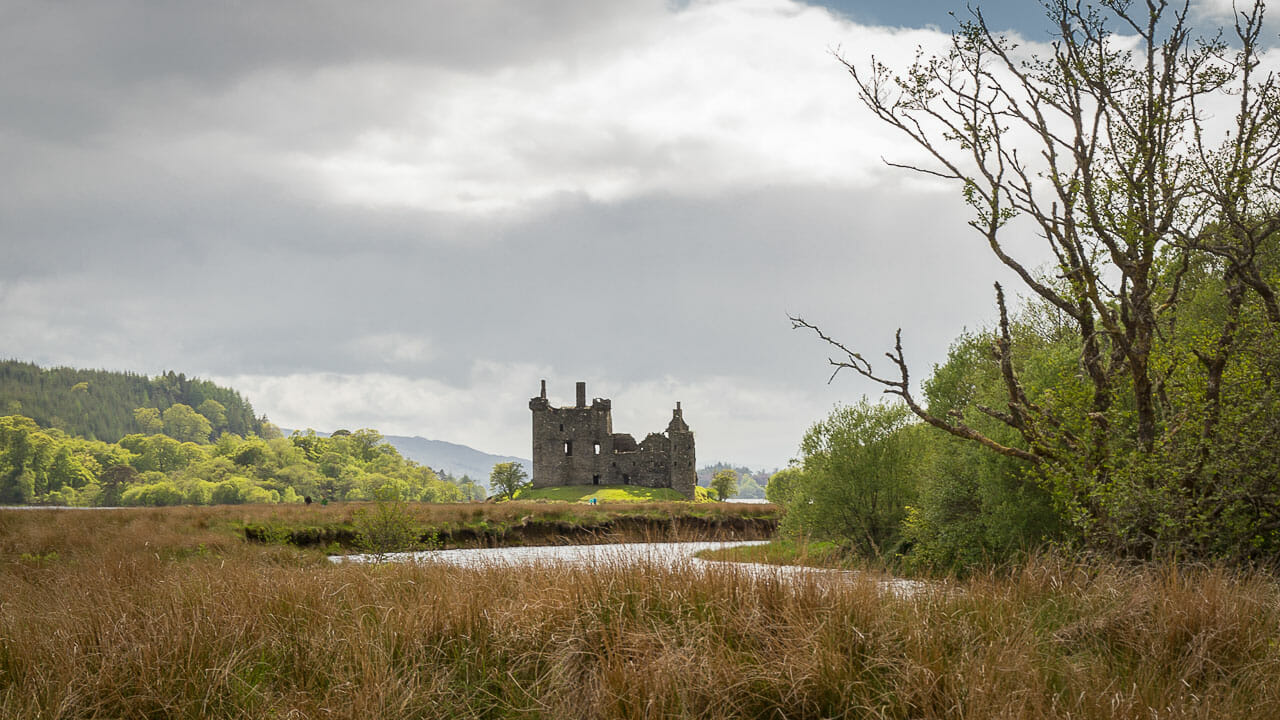
In total it’s just under a kilometre on foot before you reach the entrance to the castle. The path is good, but sturdy shoes are still worthwhile, since many puddles form after rain.
