In Dundee lies the polar research ship RRS Discovery. On board, visitors learn all about the golden age of British polar exploration.
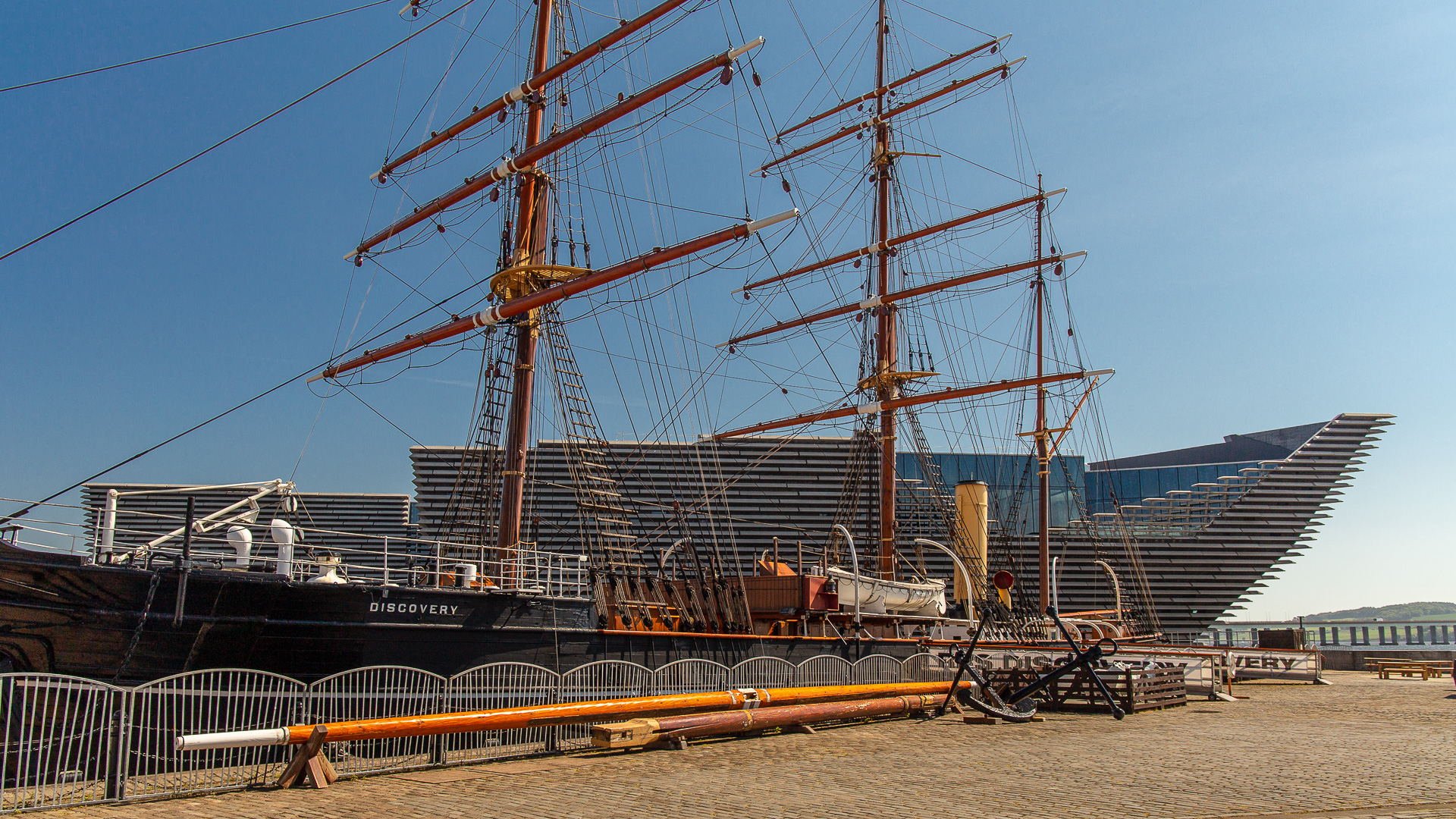
The name says it all. “Discovery” means exactly that – and that was the task of this ship from the shipyard in Dundee: to head for unknown lands and return safely to its home port laden with plenty of discoveries.
Today she lies once again where she was built, right next to the new V&A Dundee. Today it’s visitors, and especially children, who make the discoveries on board the ship.
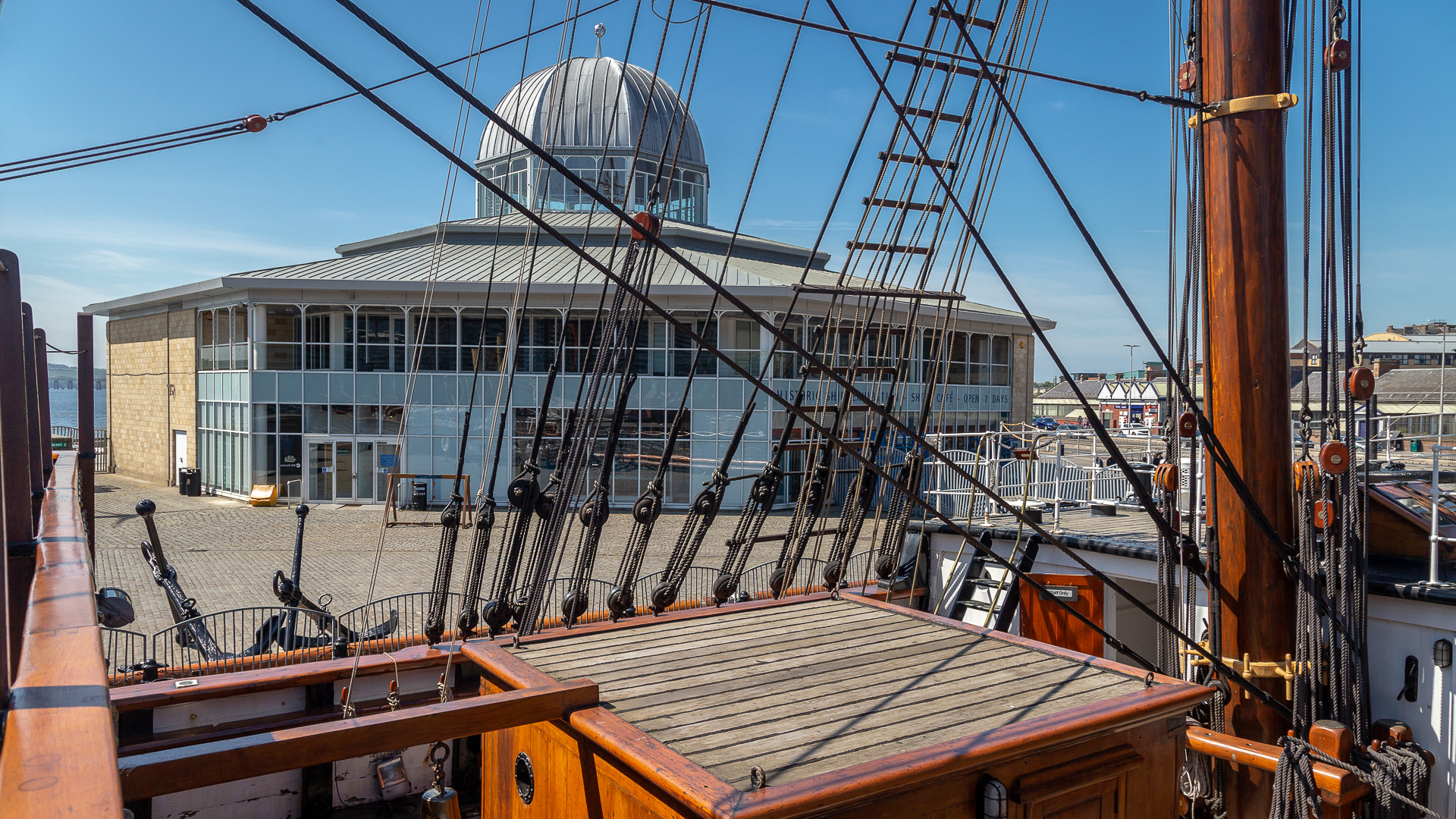
The exhibition in the pavilion tells, in fine detail, how the RRS Discovery came to be.
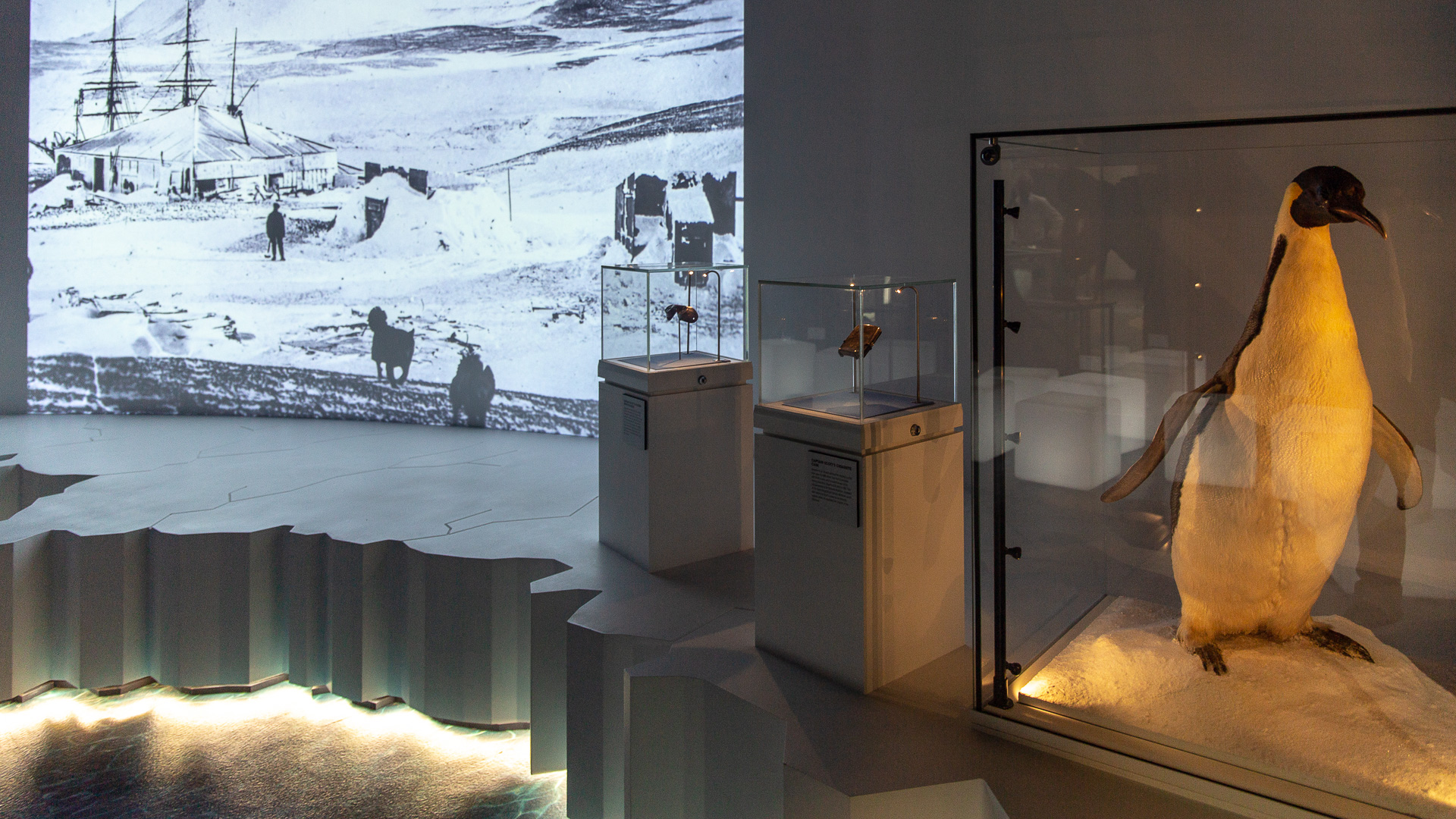
It’s the start of the 20th century, and despite all the advances in technology, unexplored lands still exist – or rather, an entire continent remains unexplored: Antarctica, colloquially “the Antarctic”.
Around 1900, interest in this undiscovered land grew among many European nations – including the British. With the help of the Royal Geographical Society, an expedition was planned.
But the waters to the south are dangerous. A ship heading there has to withstand strong winds and crushing ice. It had to be a very special ship, built by people who already had experience building such vessels.
Like the shipyards of Dundee, which had designed ships for whaling in the ice for centuries. The Dundee Shipbuilders Company won the contract for the sailing yacht Discovery.
Yes, you read that right: although the age of steel steamships had long since begun, they built a wooden three-master – one of the last of its kind ever built. And this was based on sound reasoning: wood was more elastic than steel. It copes better with the pressure that ice would create. What’s more, a wooden hull is easier to repair.
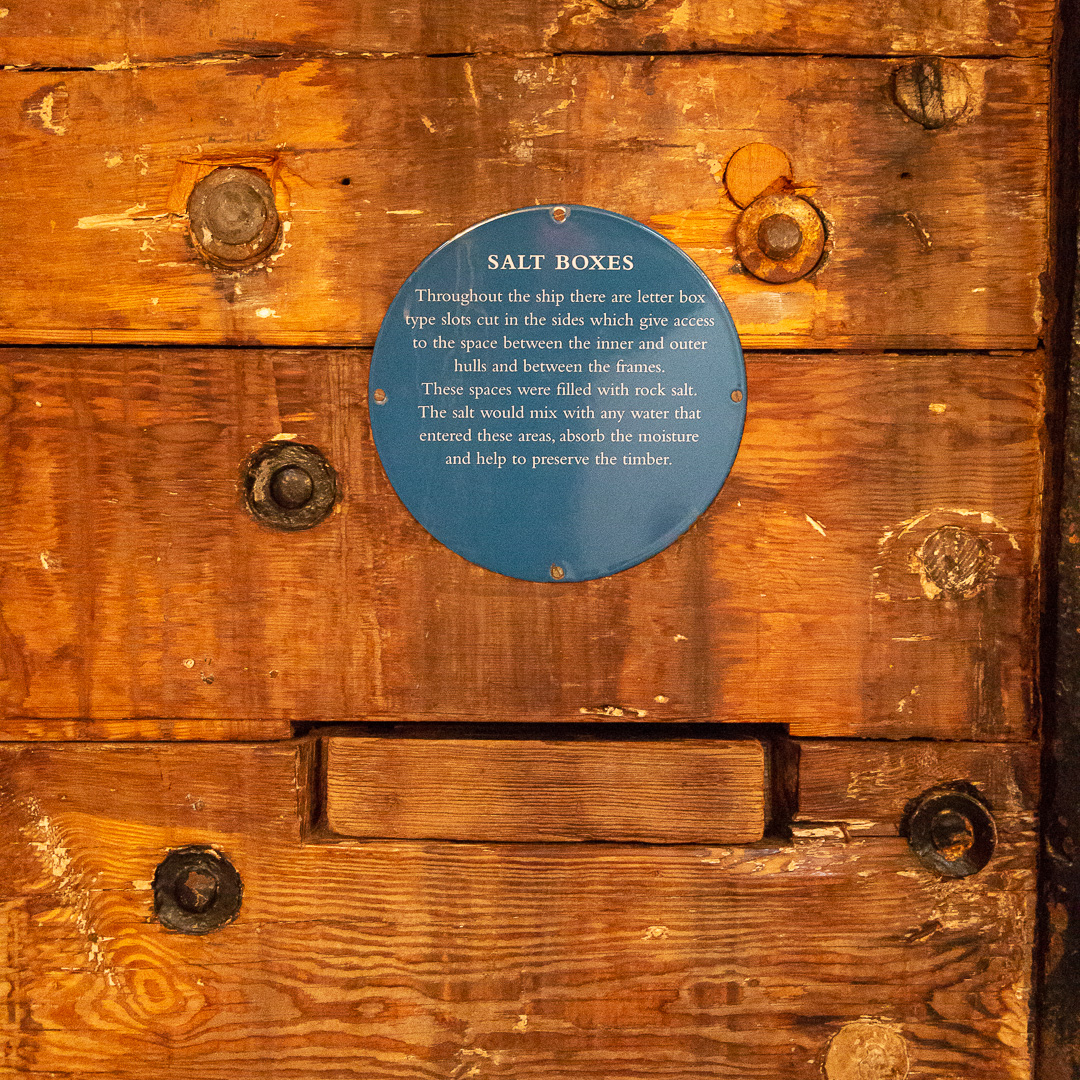
Salt could be poured into the wooden hull through slots to keep it as dry as possible. To make room for this, the typical side portholes had to be given up. Instead, they were placed up on deck, so that light and air could flow in from there. They were first called “mushrooms”, but were later more fittingly nicknamed “ankle-breakers”.
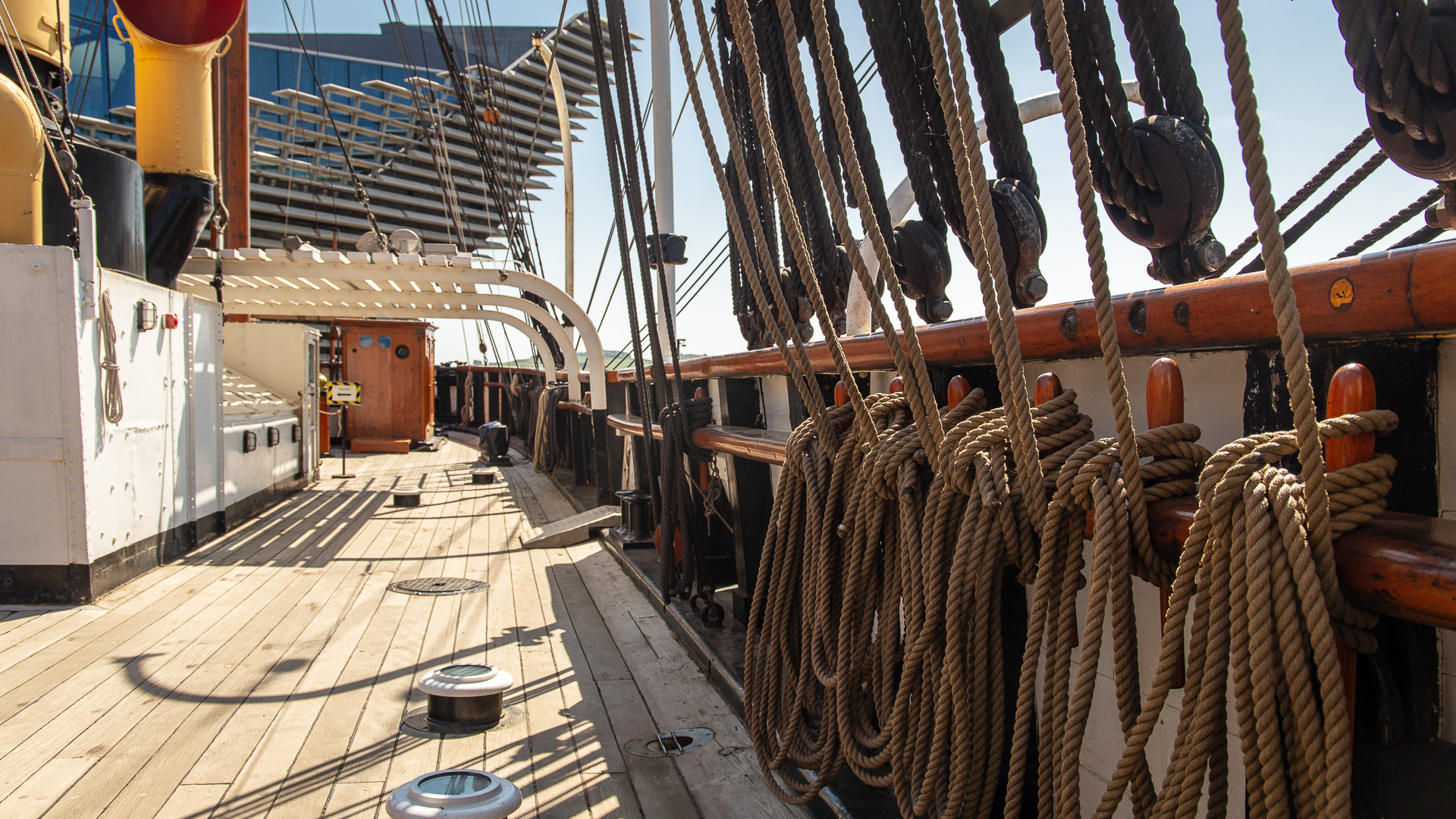
Another important reason for building the Discovery in wood: magnetic studies were to be carried out near the South Pole – an iron hull would have distorted the results. There was a magnetic observatory on the ship’s deck, and not a scrap of iron within a nine-metre radius of it.
The RRS Discovery was launched in 1901. And she got a commander who would later become world-famous – partly thanks to her. Robert Falcon Scott, soon to be elevated to “Scott of the Antarctic”. He hired a crew and researchers.
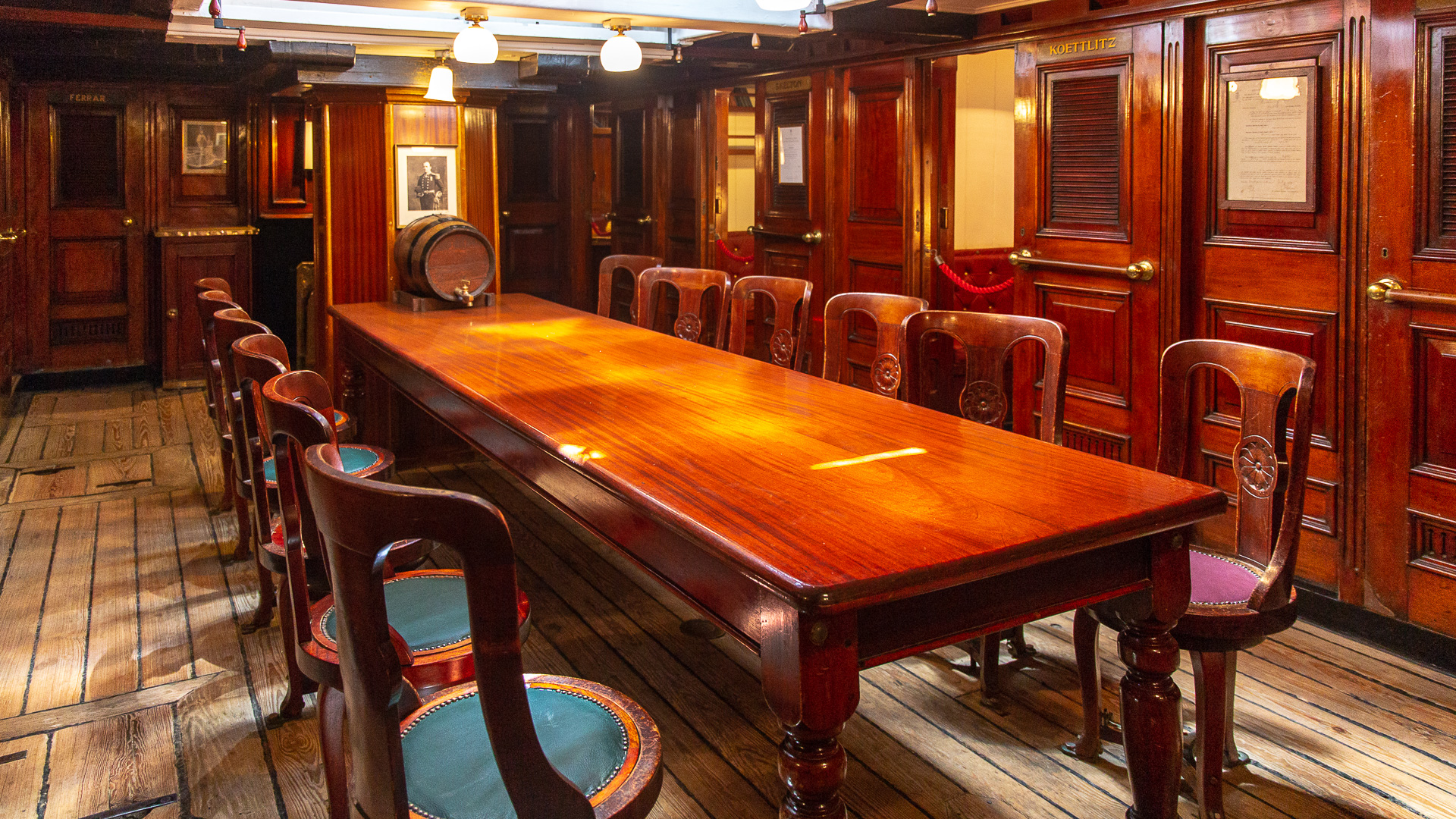
In August, the British National Antarctic Expedition finally got under way. It would take almost another six months before the ship finally reached Antarctica. Once there, the Discovery proved a reliable and protective home for researchers and sailors alike. For two winters she sat trapped, encased in ice. She was almost given up for lost, but then at last – with the help of explosives – she broke free and brought her crew safely home again.
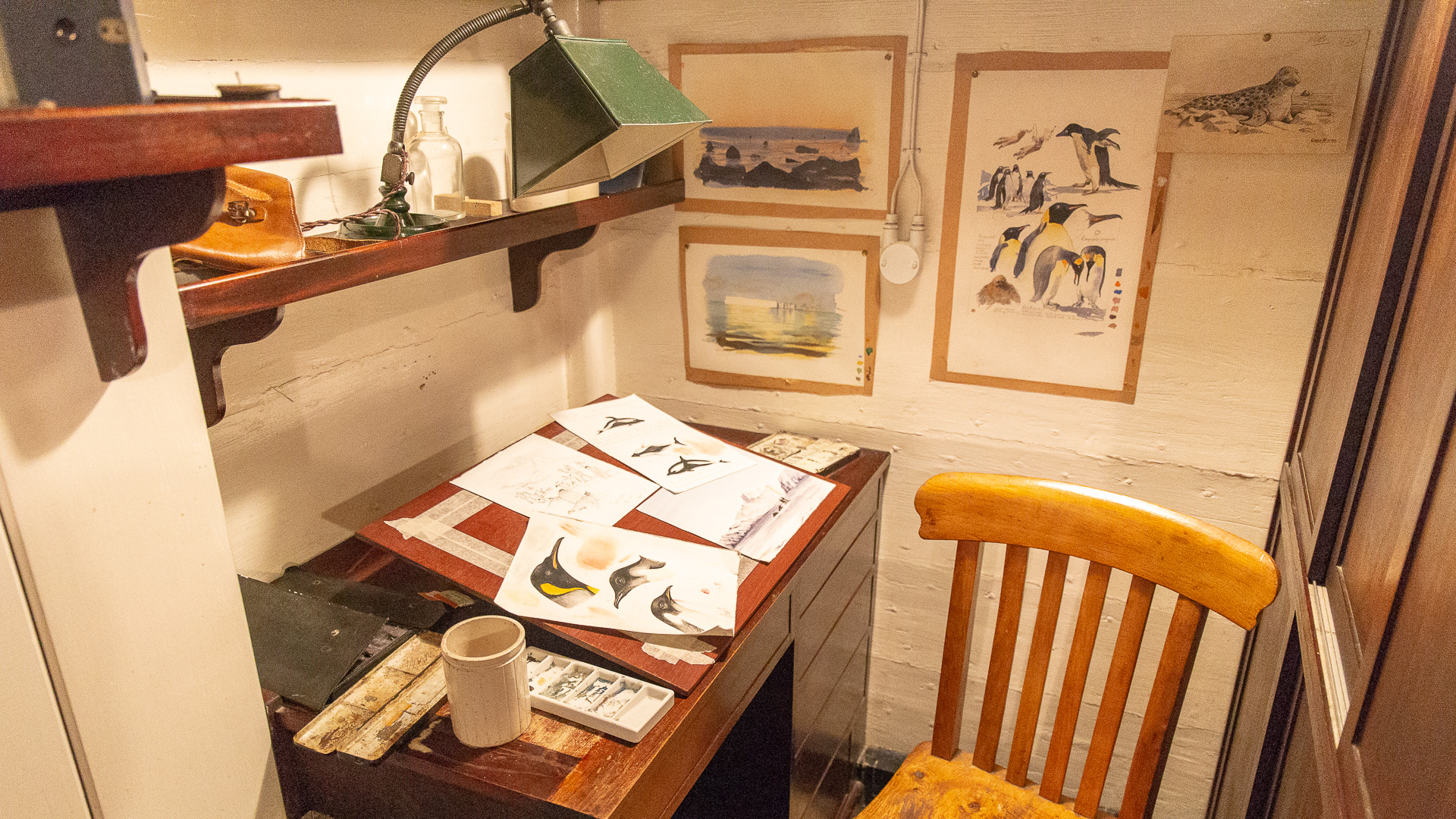
Back in Britain, the research findings and the researchers themselves were celebrated. After all, the explorers had genuinely surveyed unknown mountains and discovered the fearsome Antarctic Dry Valleys. Commander Scott and polar researchers like Ernest Shackleton became famous – even though both would later perish in the Antarctic.
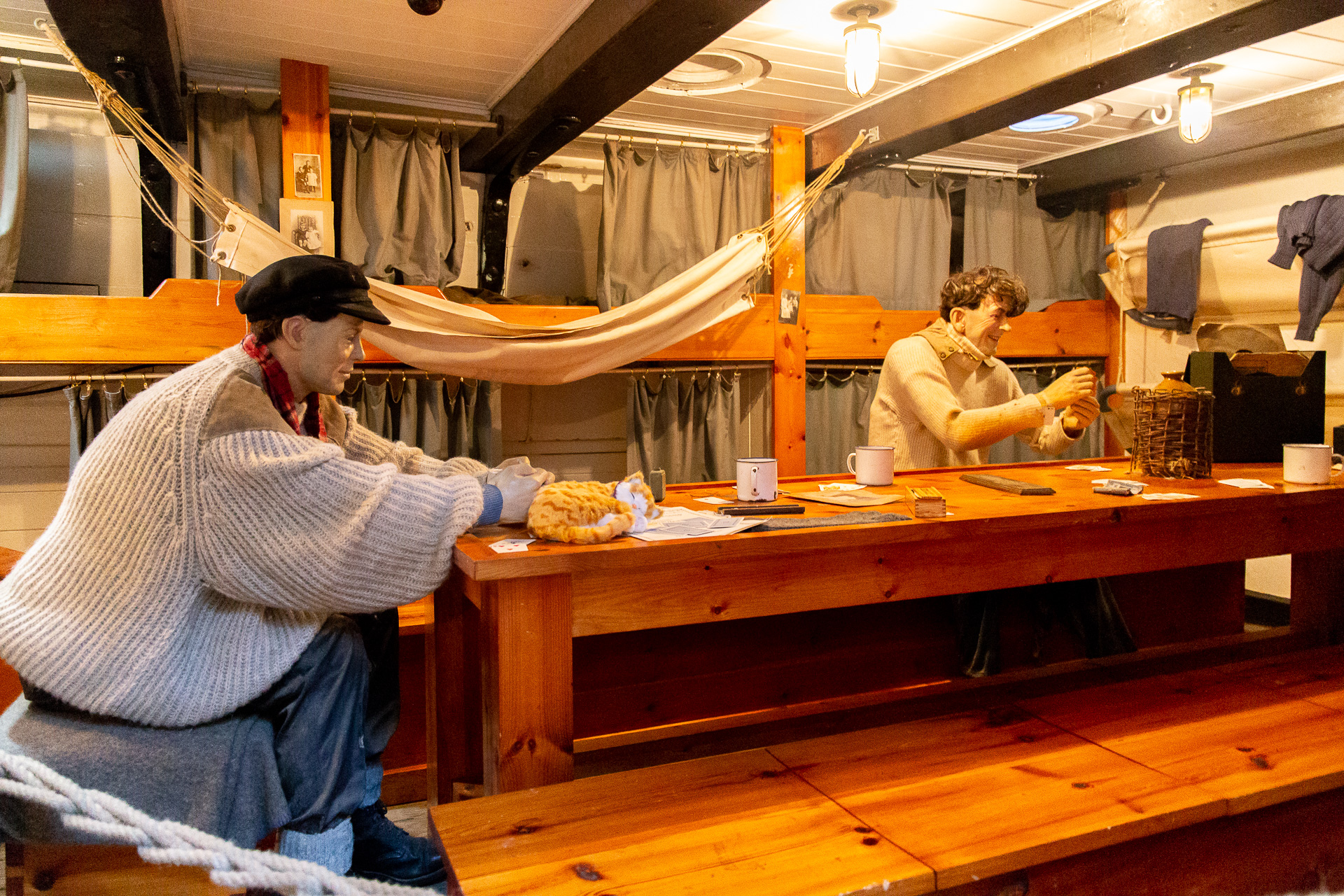
And the RRS Discovery herself? She was sold and served as a trading ship for the Hudson’s Bay Company. Until, in 1923, she was remembered once more and sent back to Antarctica as part of the British Australian and New Zealand Antarctic Research Expedition (BANZARE).
Today, at last, she is given the honour she deserves at Discovery Point in Dundee. The museum is genuinely excellent, and centres on the ship and the expeditions she made possible. A visit is well worth it in every respect, and combines nicely with the V&A Dundee next door.
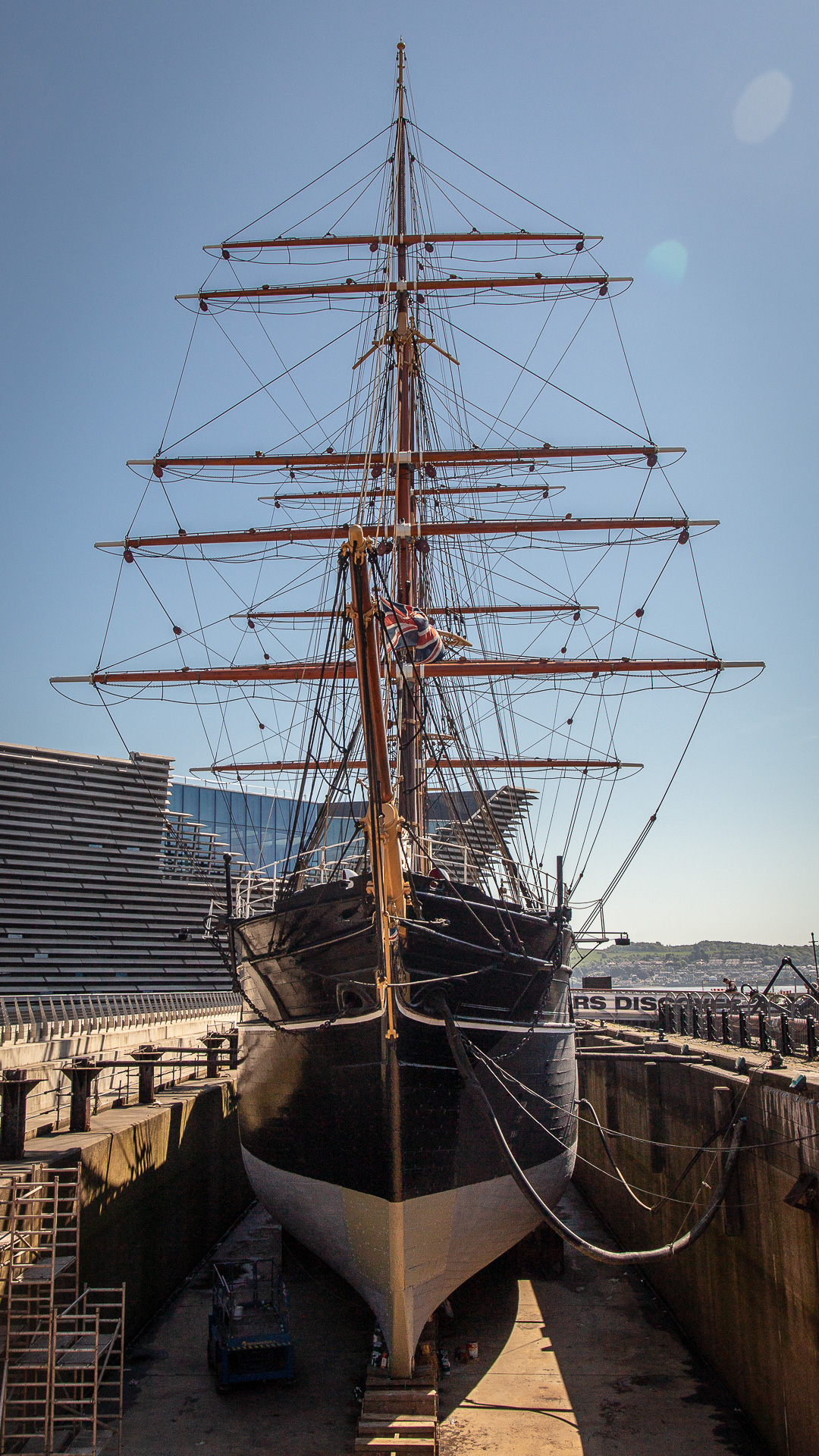
By the way: in the dome on top of the exhibition pavilion is the Dundee Dome Experience, which offers a 360-degree view over the Firth of Tay and the surrounding buildings.
Know-how: The Discovery’s (Scottish) rival
As mentioned: interest in Antarctica grew among many nations. This marked the start of the golden age of polar exploration, which reached its dramatic climax in the race to the South Pole – a race in which Robert Falcon Scott lost his life.
While the Discovery was in Antarctica in 1903, four other expeditions were there too. A German one under Erich von Drygalski was among them. But curiously enough, there was also, at the very same time, the Scottish National Antarctic Expedition (SNAE). Originally, expedition leader William Speirs Bruce had wanted to work together with the Discovery group. But they weren’t interested, so he set off on his own with the “Scotia”. His voyage, too, had successes to report – he discovered new land masses and left behind the first manned weather station. And although – or perhaps because – this expedition went smoothly and cost-effectively, it never received the same attention as the Discovery’s.
Personal note: A beautiful exhibition, but …
The museum in the large pavilion is really wonderfully made. The whole design fascinated me – things like the illuminated stools in the cinema area.
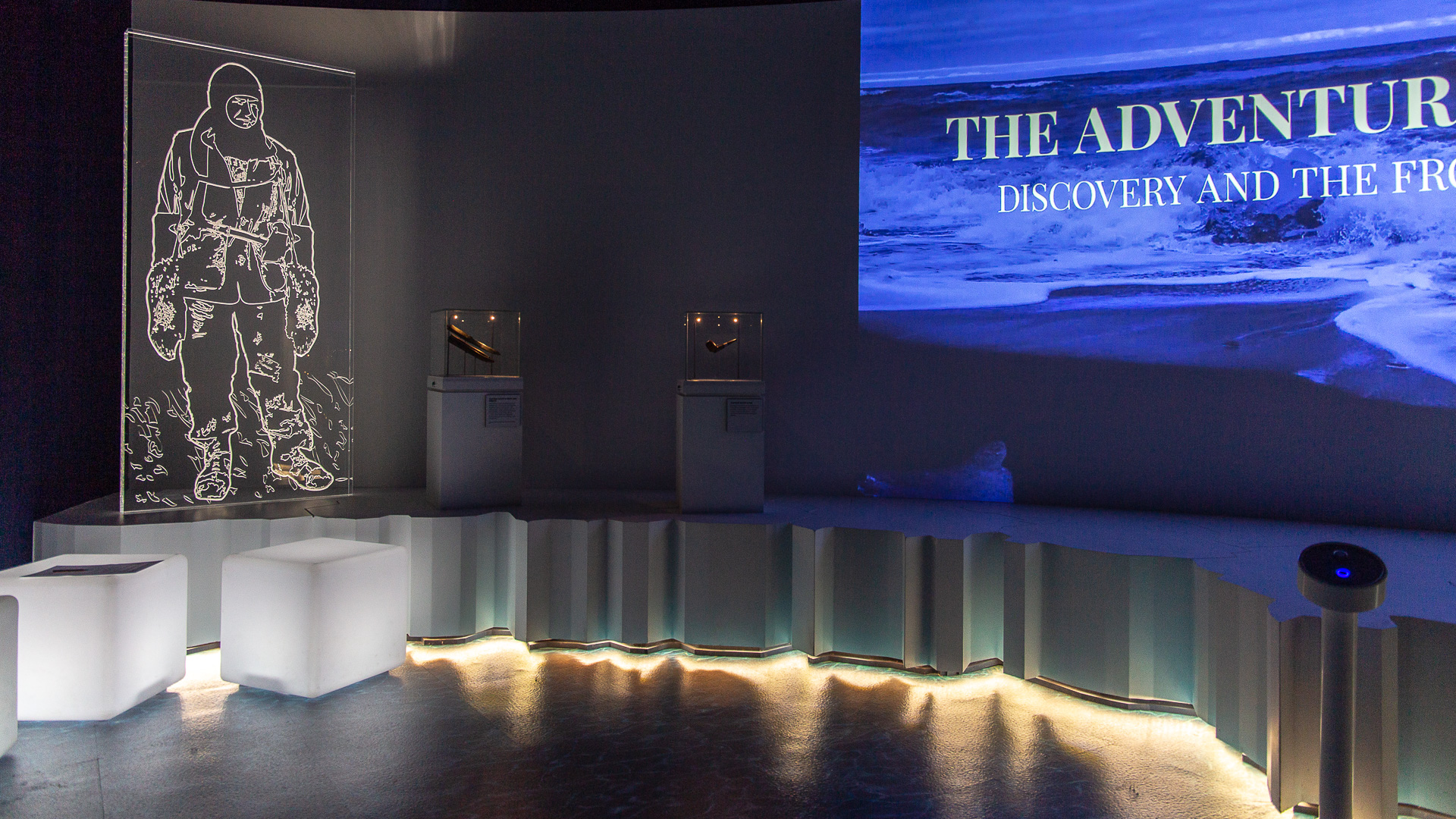
Everything radiates atmosphere and feels thoughtfully designed.
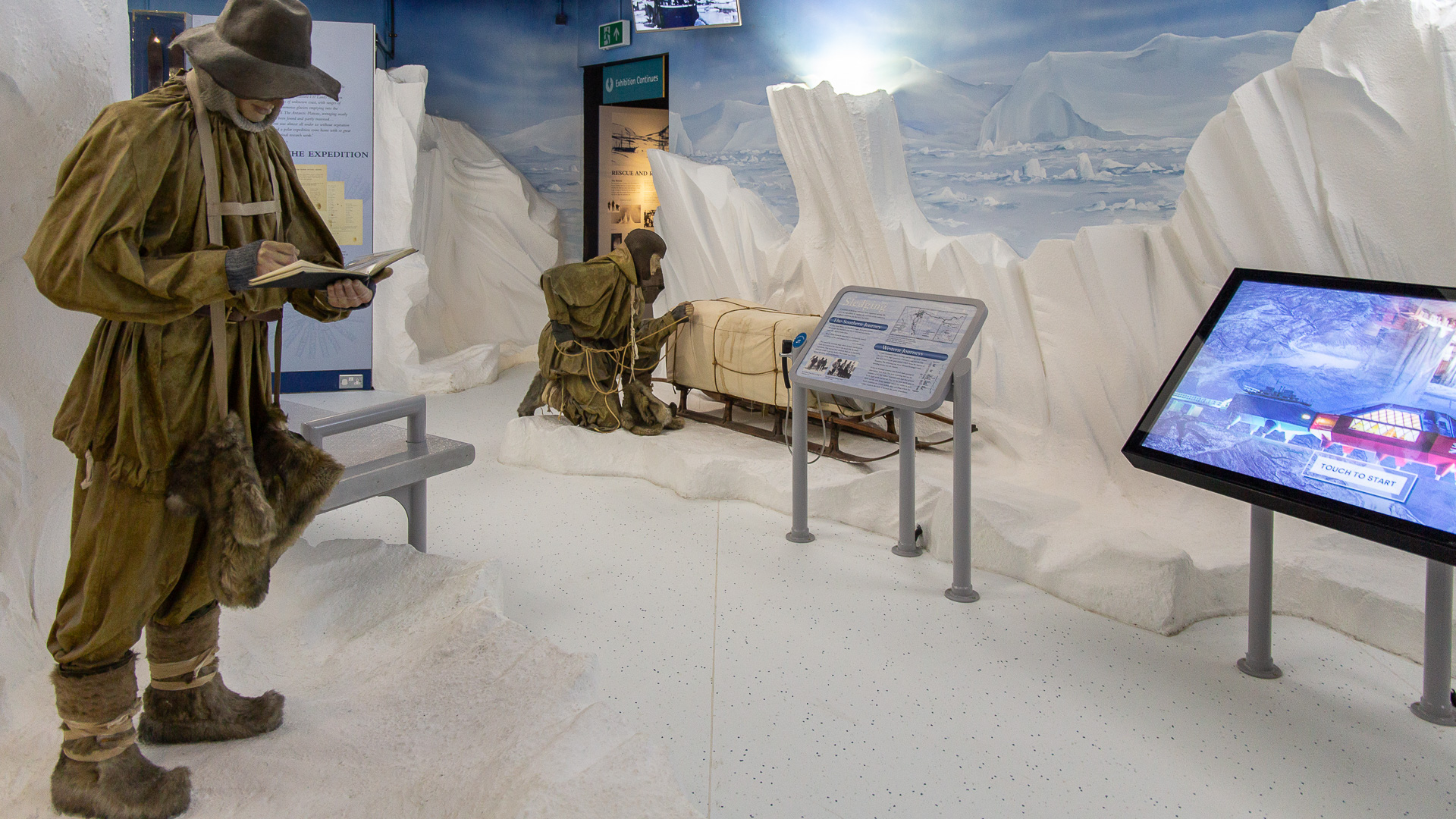
The ship itself is magnificent, and the whole route through the visit is genuinely fun.
Now for the “but”: on reflection, I feel the figure of Robert Falcon Scott is treated a little too uncritically here. There have since been controversies about his character and his decisions, which in my view deserve at least a brief mention here. But this really is only a small “but”.
Tip: Dundee city centre and the V&A
The Discovery alone would already be reason enough for a trip. But the whole of Dundee is currently reinventing itself – you can read more about the sights of Dundee here. It’s definitely worth taking a look at the V&A Dundee, even if only from the outside – the architecture is magnificent.
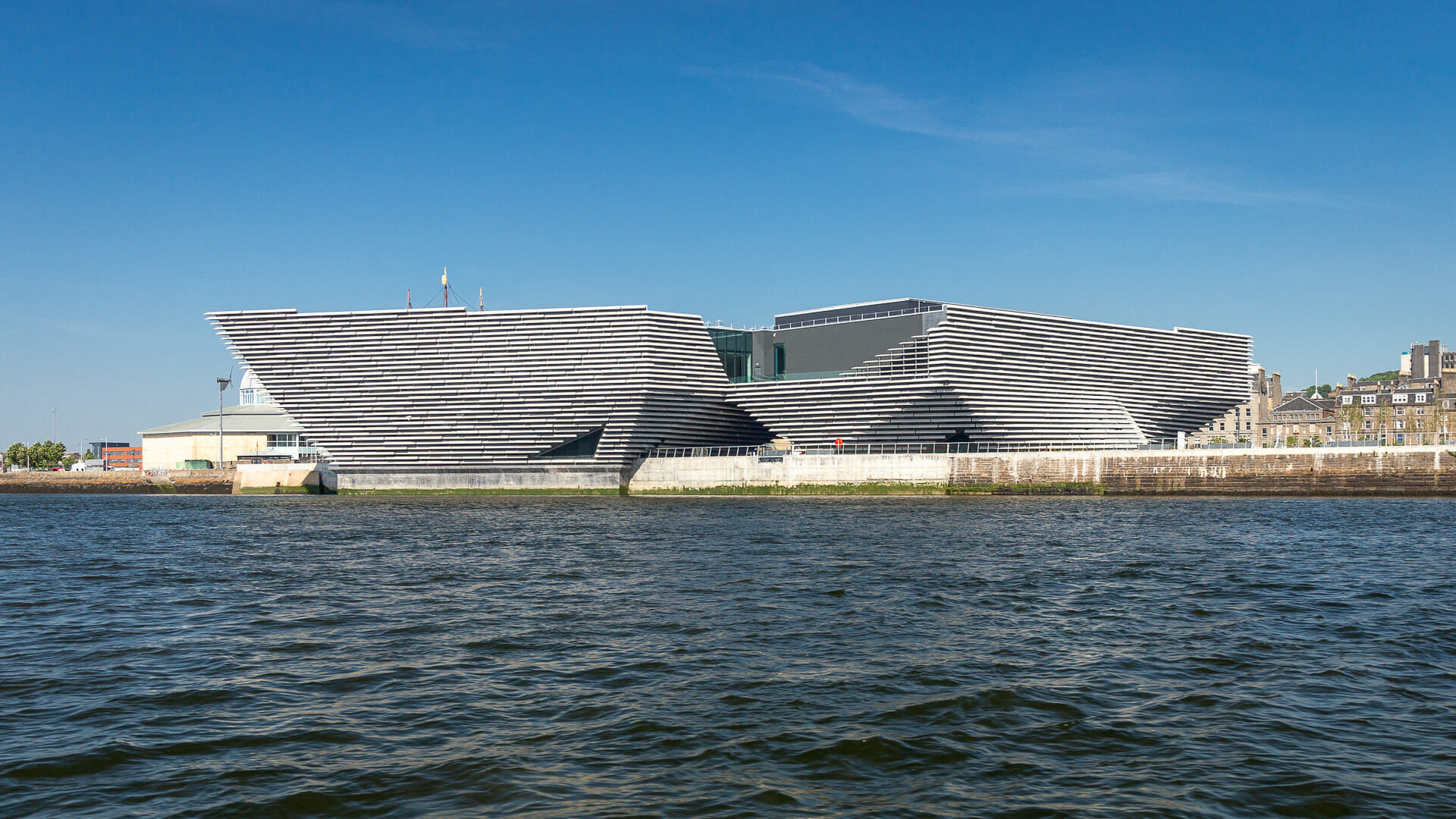
And a stroll into the city centre is worthwhile too.
By the way: all of this can be done as a day trip by train from Dundee.
Getting there:
Dundee is easy to reach by train. The station is just a few metres from the Discovery.
With satnav: anyone wanting to drive instead should enter the postcode “DD1 4XA”.
Without satnav: coming from the Tay Road Bridge, turn right onto the waterfront promenade. The Discovery will then be on your left.
