Shetland lies on the border between the Atlantic and the North Sea, surrounded by the sea. The climate is harsh and windy. Yet the sun often makes an appearance too.
Key facts
- Shetland has a maritime climate with mild winters and cooler summers.
- Rainfall is below the Scottish average, and it is particularly dry from April to August.
- Wind speeds average 14.7 knots, making Shetland windier than the rest of Scotland.
- The weather is changeable, so travellers should be prepared for sudden changes.
- Temperatures vary greatly depending on the month, with the summer months being cool and sunny.
Average Shetland climate: sunshine, rain, temperature
The maritime climate also means that whilst summers are cooler than in the rest of Scotland, winters are correspondingly milder.
Average monthly temperatures in Shetland
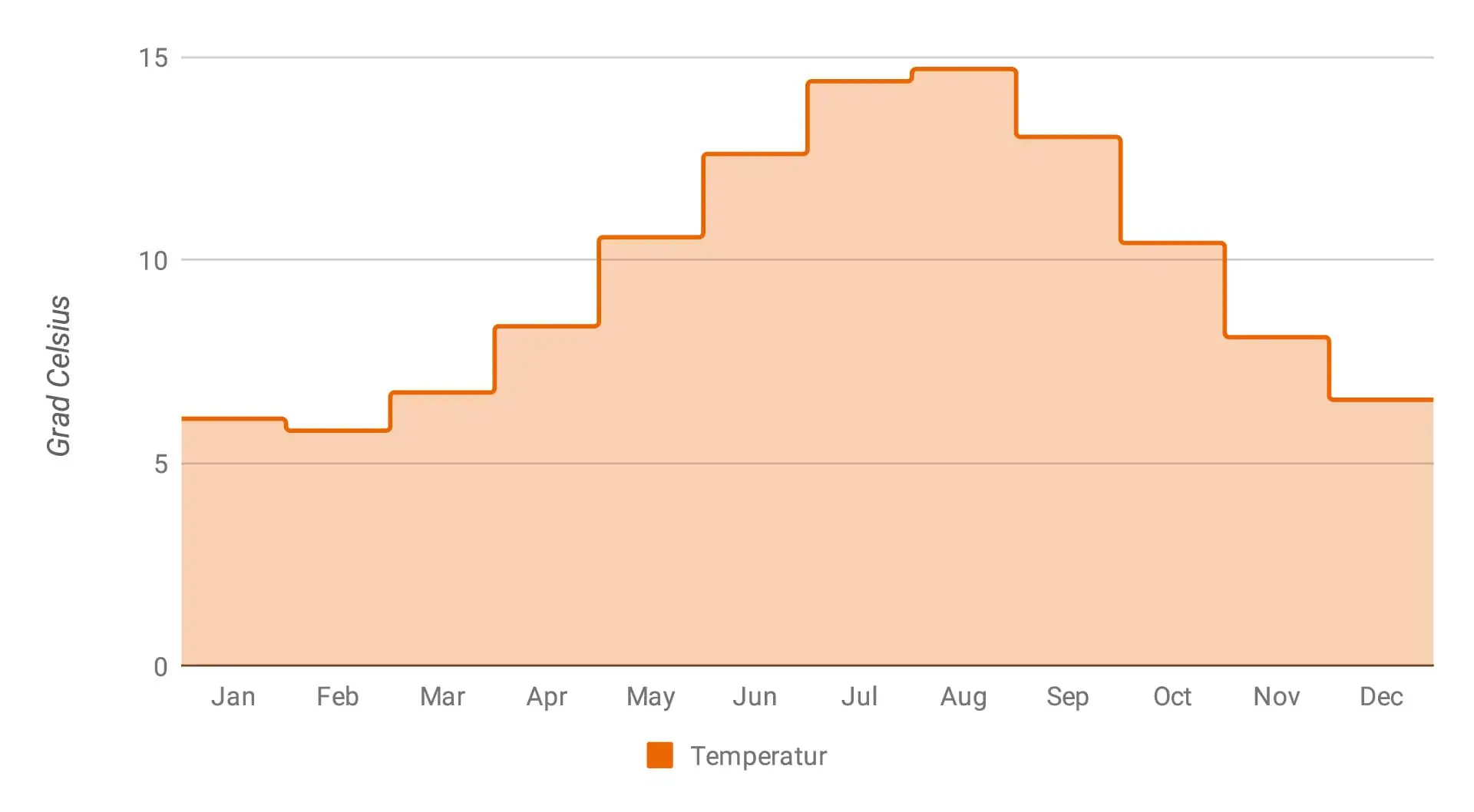
The good news: Shetland also receives significantly less rainfall than the Scottish average. There is very little rain on the islands, particularly from April to August.
Precipitation and hours of sunshine in Shetland

However, you must always expect wind. With an average of 14.7 knots, Shetland is significantly windier than Scotland as a whole (Scotland averages 10.7 knots, Germany averages 11.8 knots). November to March are the windiest months.
However, the wind makes the actually mild temperatures feel much colder. That’s why gloves are a real must, especially in the off-season.
The wind also prevents the notorious midges from making an appearance. They only fly when there is no wind, so almost never in Shetland.
‼️ The weather can be very changeable overall. On my trip in March, for instance , I experienced hail, sunshine, rain and even snow within the space of a few minutes. The wind was always stormy. You should therefore expect the weather to change quickly and take this into account when packing your gear.
| Month | Temperature | Hours of sunshine | Precipitation (mm) | Days with precipitation |
| January | 6 | 27 | 150 | 22 |
| February | 6 | 58 | 123 | 19 |
| March | 7 | 98 | 109 | 19 |
| April | 8 | 141 | 68 | 15 |
| May | 11 | 192 | 57 | 12 |
| June | 13 | 148 | 60 | 12 |
| July | 14 | 129 | 68 | 12 |
| August | 15 | 132 | 89 | 13 |
| September | 13 | 100 | 106 | 16 |
| October | 10 | 75 | 131 | 20 |
| November | 8 | 38 | 143 | 22 |
| December | 7 | 21 | 150 | 23 |
The months in Shetland and what the weather is like
January to March: cool, windy but relatively mild
From January to March, daytime highs on the Shetland Islands usually range between 5.8 and 6.7 degrees, whilst night-time temperatures drop to an average of 1.8 to 2.4 degrees. This is surprisingly mild for such a northerly location. Frost does occur, but is significantly less common than in Scotland as a whole.
These months are typically characterised by many rainy days and, above all, strong winds. In January in particular, the average wind speed in Shetland exceeds 18 knots. Overall, this often makes the weather feel harsher than the temperatures would suggest.
| Period | Shetland: max. temp. | Shetland: min. temp. | Shetland: Rain | Shetland: Rainy days | Shetland: Wind | Comparison with Scotland |
|---|---|---|---|---|---|---|
| Jan–Mar | 5.8–6.7 °C | 1.8–2.4 °C | 109–150 mm | 19–22 days | 16.4–18.3 knots | Milder, significantly windier, less frost |
April to June: drier period and long days
In spring, the weather in Shetland improves significantly. Temperatures rise from an average of 8.4 degrees in April to 12.6 degrees in June. It remains cool at night, but frost is hardly an issue anymore.
May is particularly notable: it is often the driest month of the year in Shetland. At the same time, the days become very long, making this time particularly attractive for travel. The wind remains noticeable, but is weaker than in winter.
| Period | Shetland: max. temp. | Shetland: min. temp. | Shetland: Rain | Shetland: Rainy days | Shetland: Wind | Comparison with Scotland |
|---|---|---|---|---|---|---|
| Apr–Jun | 8.4–12.6 °C | 3.8–8.1 °C | 56.9–67.8 mm | 11.5–14.7 days | 12.3–14.3 knots | Cooler, but often drier |
July to September: a cool summer with plenty of sunshine
Summer in Shetland is mild and cool. Average maximum temperatures range from just 13 to just under 15 degrees. Hot days are rare. However, the weather remains relatively stable, without any major extremes.
July and August bring the warmest temperatures of the year, whilst September already feels distinctly more autumnal. The wind remains present, but is weaker in midsummer than in other seasons.
| Period | Shetland: max. temp. | Shetland: min. temp. | Shetland: Rain | Shetland: Rainy days | Shetland: Wind | Comparison with Scotland |
|---|---|---|---|---|---|---|
| Jul–Sep | 13.0–14.7 °C | 9.1–10.5 °C | 67.7–105.8 mm | 12.1–16.1 days | 11.2–13.8 knots | Significantly cooler, similar or slightly drier |
October to December: significantly harsher again
From October onwards, the weather in Shetland becomes significantly more changeable again. Maximum temperatures drop from an average of 10.4 degrees in October to around 6.6 degrees in December. At the same time, rainfall, rainy days and wind increase markedly.
November and December in particular are often grey, damp and windy. However, due to the maritime influence, temperatures usually remain slightly higher than the Scottish average. Frost is possible, but still not as frequent as on the mainland.
Comparison with Scotland: Shetland is generally slightly milder than Scotland as a whole in late autumn and early winter, but significantly windier. Rainfall is slightly lower, but the number of wet and unpleasant days remains high.
| Period | Shetland: max. temp. | Shetland: min. temp. | Shetland: Rain | Shetland: Rainy days | Shetland: Wind | Comparison with Scotland |
|---|---|---|---|---|---|---|
| Oct–Dec | 6.6–10.4 °C | 2.5–6.6 °C | 130.6–149.7 mm | 20.3–22.6 days | 15.6–16.8 knots | Mild, but windy and very often wet |
