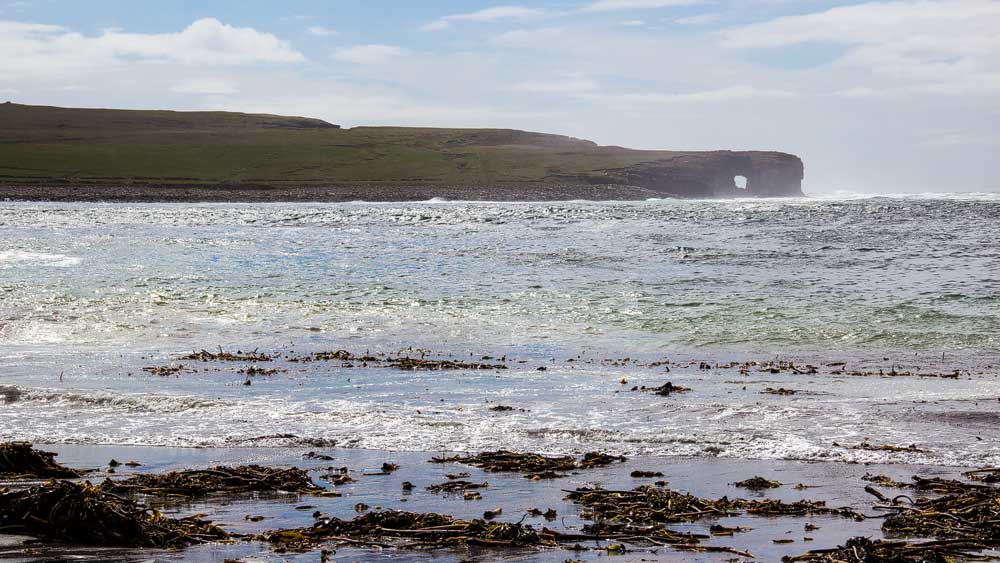
Owning your own terraced house was in high demand even in the Stone Age. At Skara Brae, its residents made that dream come true. The interior: standard issue for the era, right across the board …
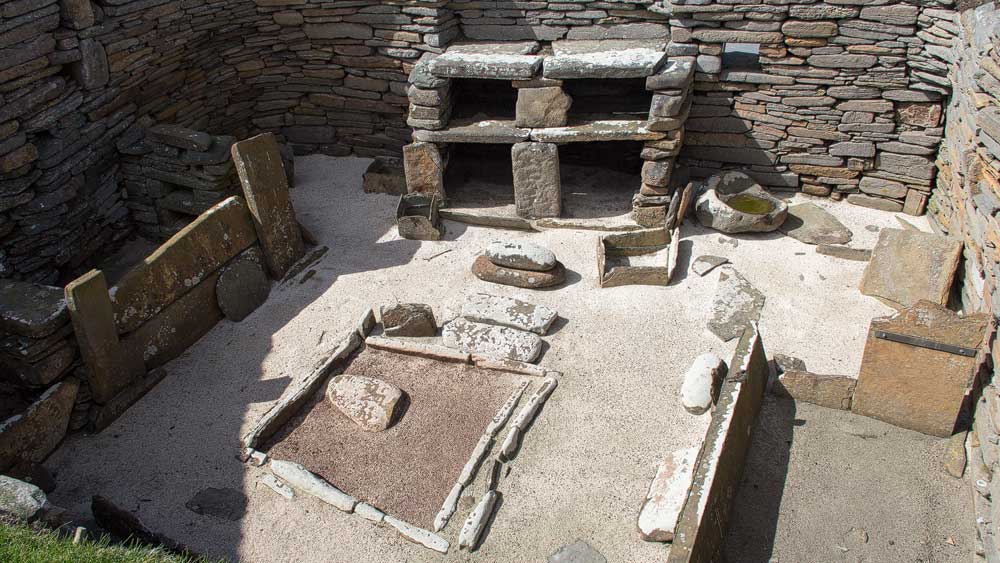
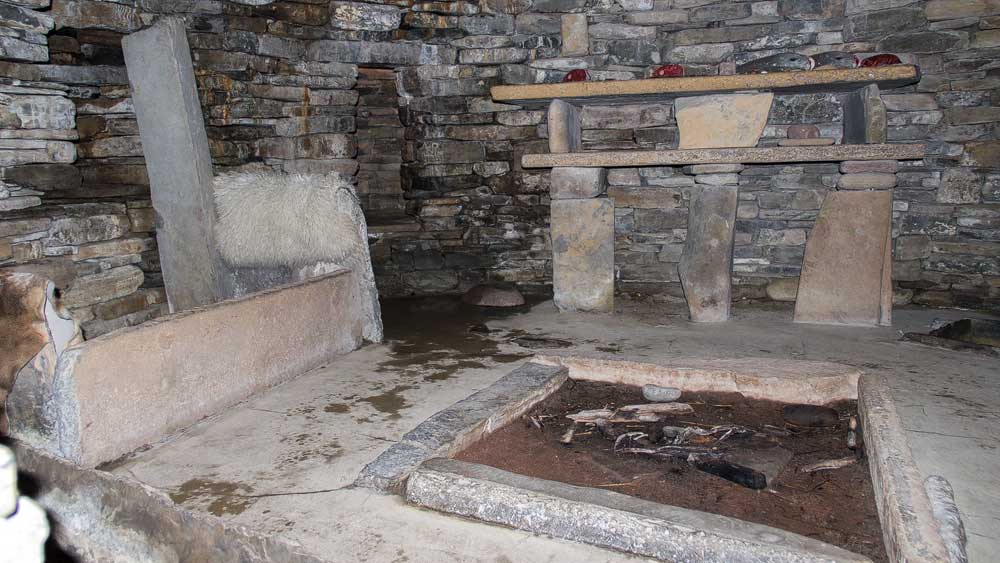
She sighed contentedly, casting one more checking glance at the fish bait in the storage tank. Here in Skara Brae, her dream of owning her own house had come true. Sure, it only had the standard fittings – like all the neighbours, a stone hearth, a stone bed and a stone dresser – but it was a home. Her home! And one barely a few hundred metres from the beach, to boot. So what more could she possibly want?
Maybe a different dresser?
She’d once seen one made of wood, delicate and not as bulky as her current one. But she probably wouldn’t get her way on that: her husband thought nothing of that newfangled stuff. Wood, he said, was only good for burning. A solid house was made of stone – through and through!
No, she really couldn’t complain. It was a lovely house. And so, quite content, she added another log to the stone hearth before settling down to rest in her stone bed.
Good to know: A Neolithic settlement
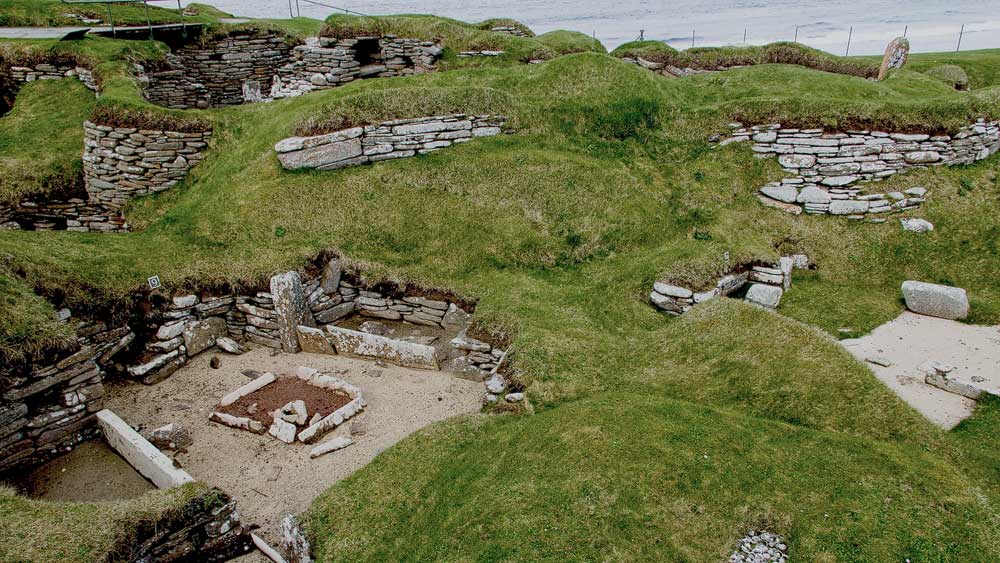
Skara Brae wasn’t a short-lived village. Scientists believe it was inhabited for around 600 years, sometime between 3200 and 2200 BC. There are two building phases, with the second partly covering the first. But of course, no scientist wants to remove the younger layer, as that would destroy the houses that exist today …
In fact, almost all the houses are alike, standard-issue terraced houses of a sort: a hearth, one or two beds, a central stone dresser. Only one building breaks the pattern – House 8 is thought to have been a workshop.
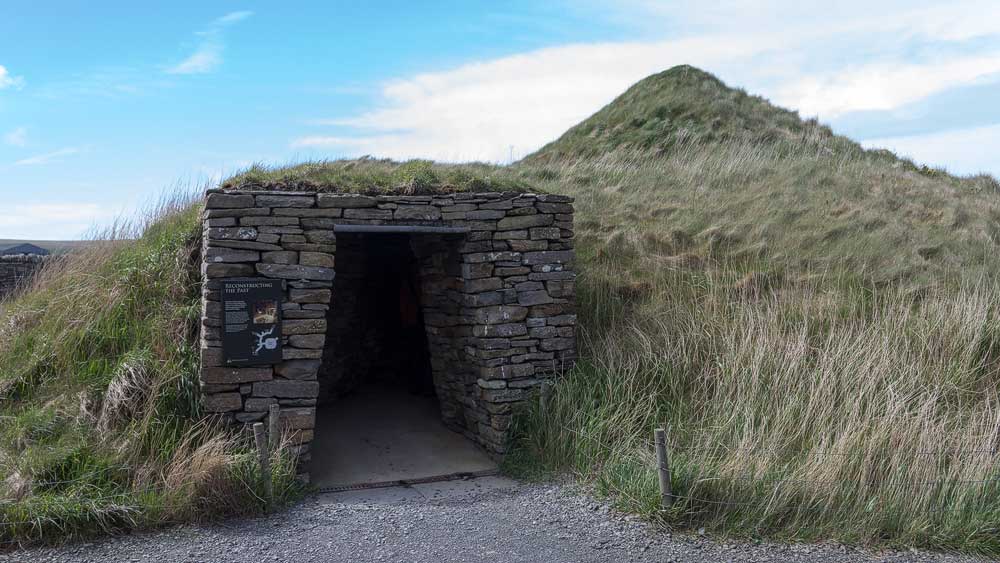
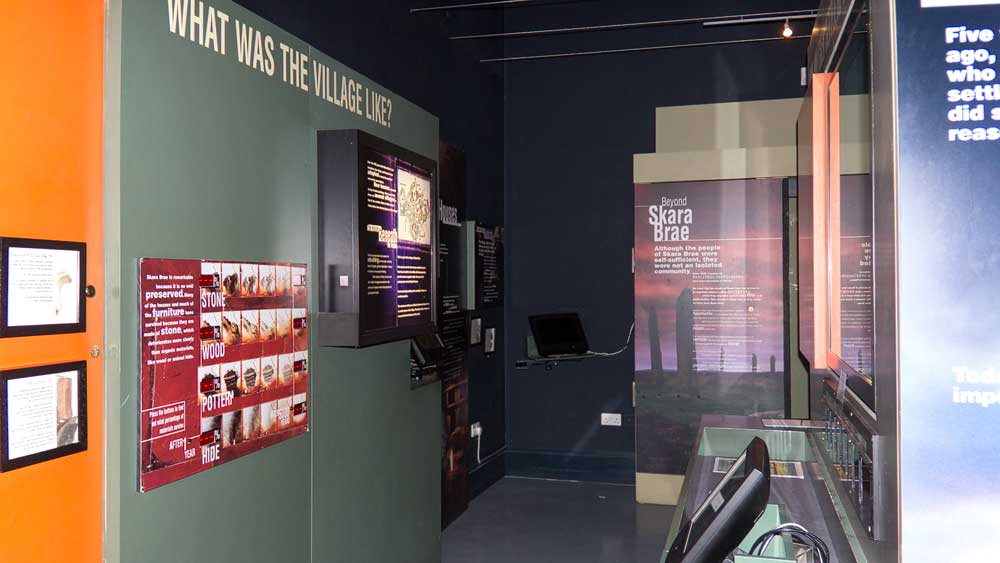
It’s unclear why the settlement was abandoned, and whether that happened quickly or slowly. When it was rediscovered, though, is recorded precisely. It was after a storm in 1850. Since the 1970s there’s also been a visitor centre there with a café, a shop and an informative exhibition. At the exit of the exhibition you can then step into a fully reconstructed Stone Age house and get a feel for what it was like to live there.
Admission to Skara Brae, incidentally, also includes a visit to the nearby Skaill House.
Skara Brae today sits right on Skaill Bay, so close that wind and tides threaten to destroy the village. Fortifications are used to try to prevent that. When Skara Brae was built and inhabited, however, the bay was still dry land. Back then the village lay a little further inland, and so was safer.
Tip: A walk along Skaill Bay
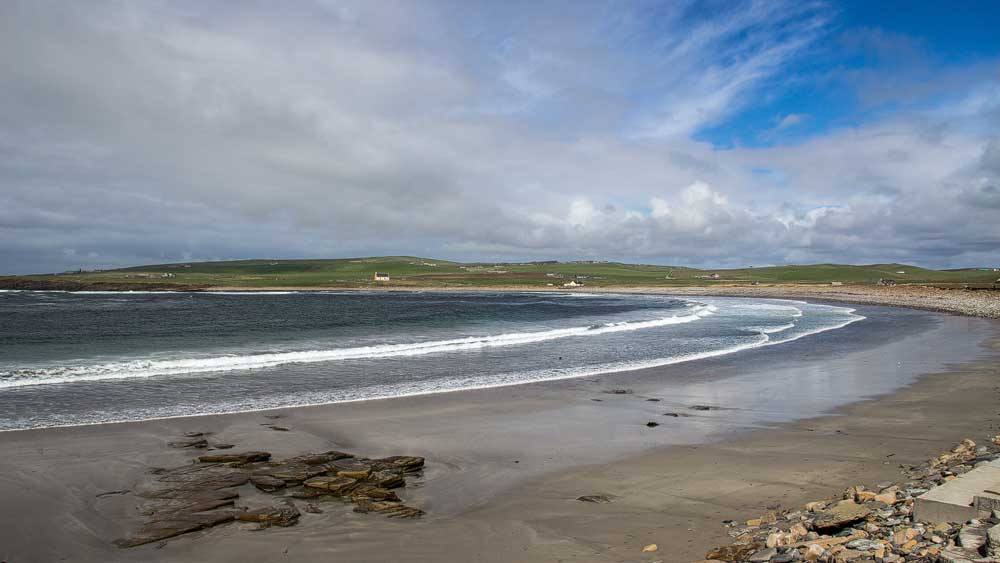
After Skara Brae and Skaill House, it’s well worth lingering here and, in good weather, considering a walk along the bay. To the right in the distance you’ll see a cliff with a sea cave, while to the left the beach curves round in a lovely arc.
Personal note: Great idea! A path as time machine
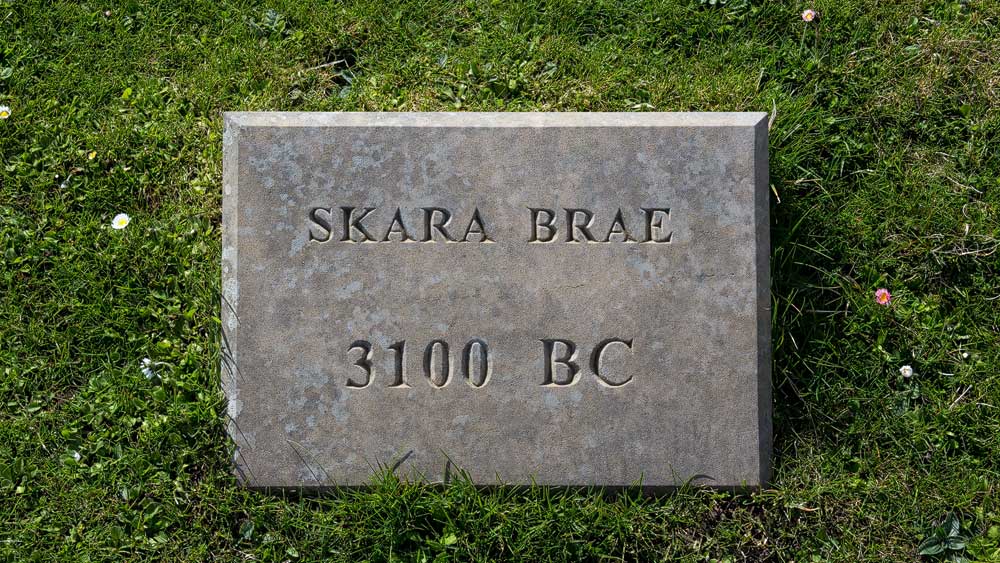
The actual Skara Brae settlement lies a few hundred metres from the visitor centre. Visitors reach it via a path for which the centre’s operators came up with something rather nice. The path starts with a Stone Age panel marking “first man on the moon” and then works backward, panel by panel, through major events all the way back to Skara Brae.
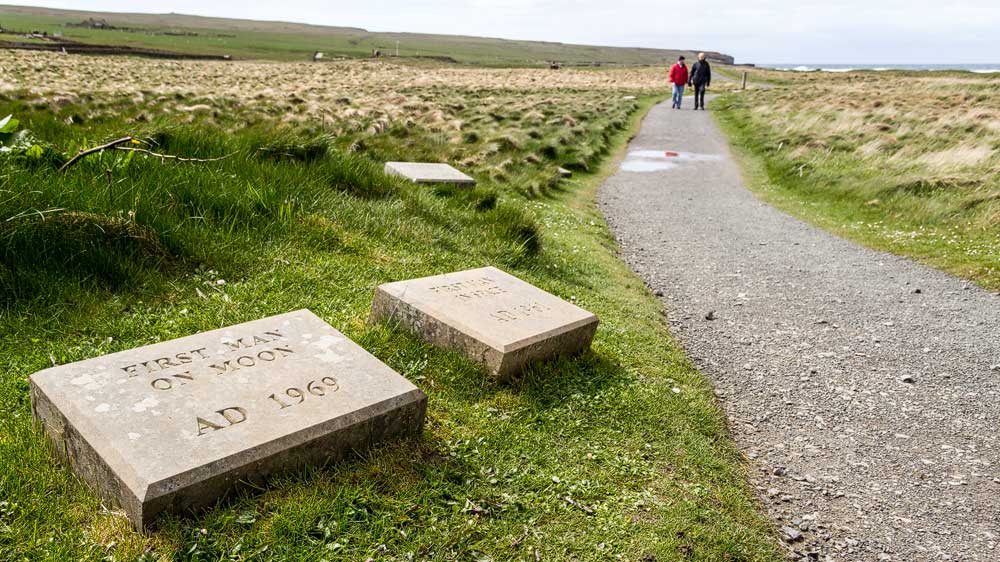
I think that’s brilliant – it keeps me informed while I walk and gives me a real feel for just how long ago this actually was …
Getting there:
For your sat nav: Simply enter “KW16 3LR”, which takes you almost right up to the door of the visitor centre.
Without sat nav: From Stromness, first take the A965, then very soon turn left onto the A967 towards Sandwick. After about five kilometres, keep left towards “Bay of Skaill” and “Marwick”. Stay on this road towards “Bay of Skaill” until an archway-like entrance appears on the left. Brown signs already point the way to Skara Brae here.
From Kirkwall, first take the A965 towards Stromness. Shortly before the town, turn right towards Sandwick and here too follow the signs for “Bay of Skaill” and “Marwick”.