It’s huge, yet it doesn’t stand out. It sits on a busy junction, yet nobody goes inside: St John’s Church is Edinburgh’s underrated sight.
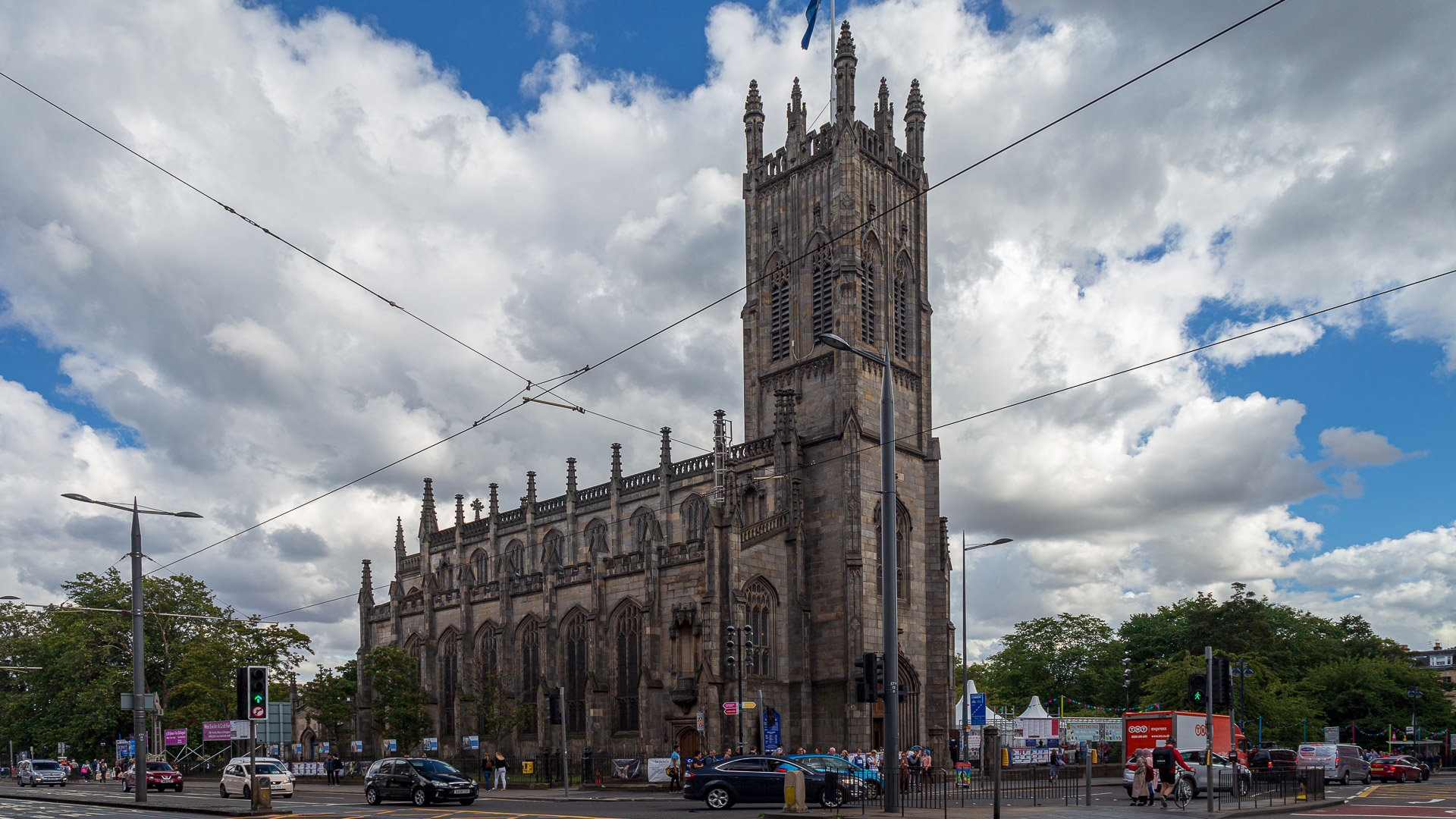
No wonder: unlike St Giles’ Cathedral, St John’s Episcopal Church doesn’t sit directly on the Royal Mile. And even though Princes Street is no bad address either, most visitors turn off beforehand into the gardens or towards George Street. What’s more, St John’s Church has no valuable documents, famous graves, or bagpipe-playing angels to show for itself. So why go inside at all?
There’s one thing that does make this church special: its ceiling.
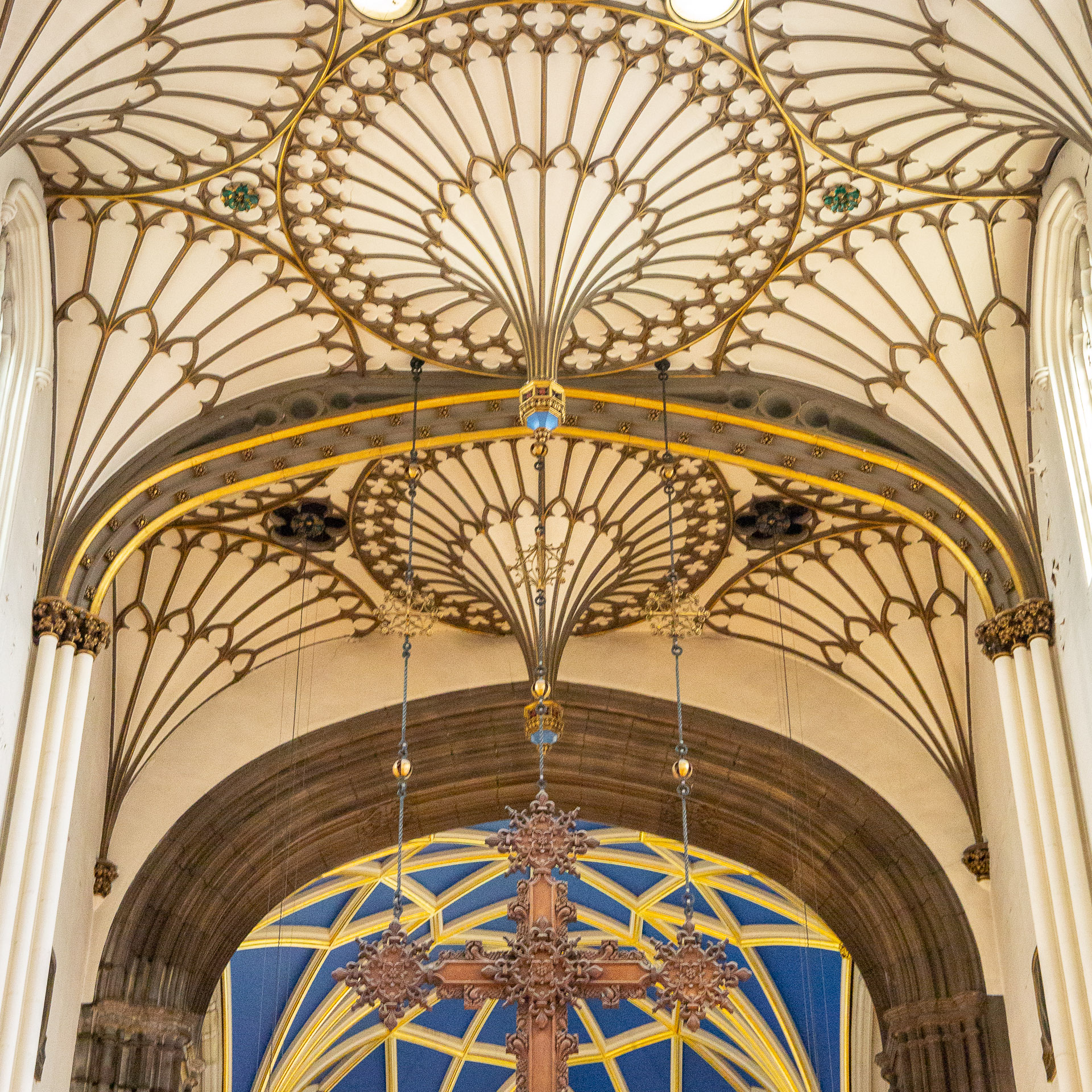
The wonderful symmetry of the ornamented funnels, each finished off with a blue stone, magically draws the visitor’s gaze upward. This style of construction is called a “pendant fan vault”, and it’s a rarity.
St John’s Episcopal Church is otherwise a thoroughly rounded and well-balanced building too.
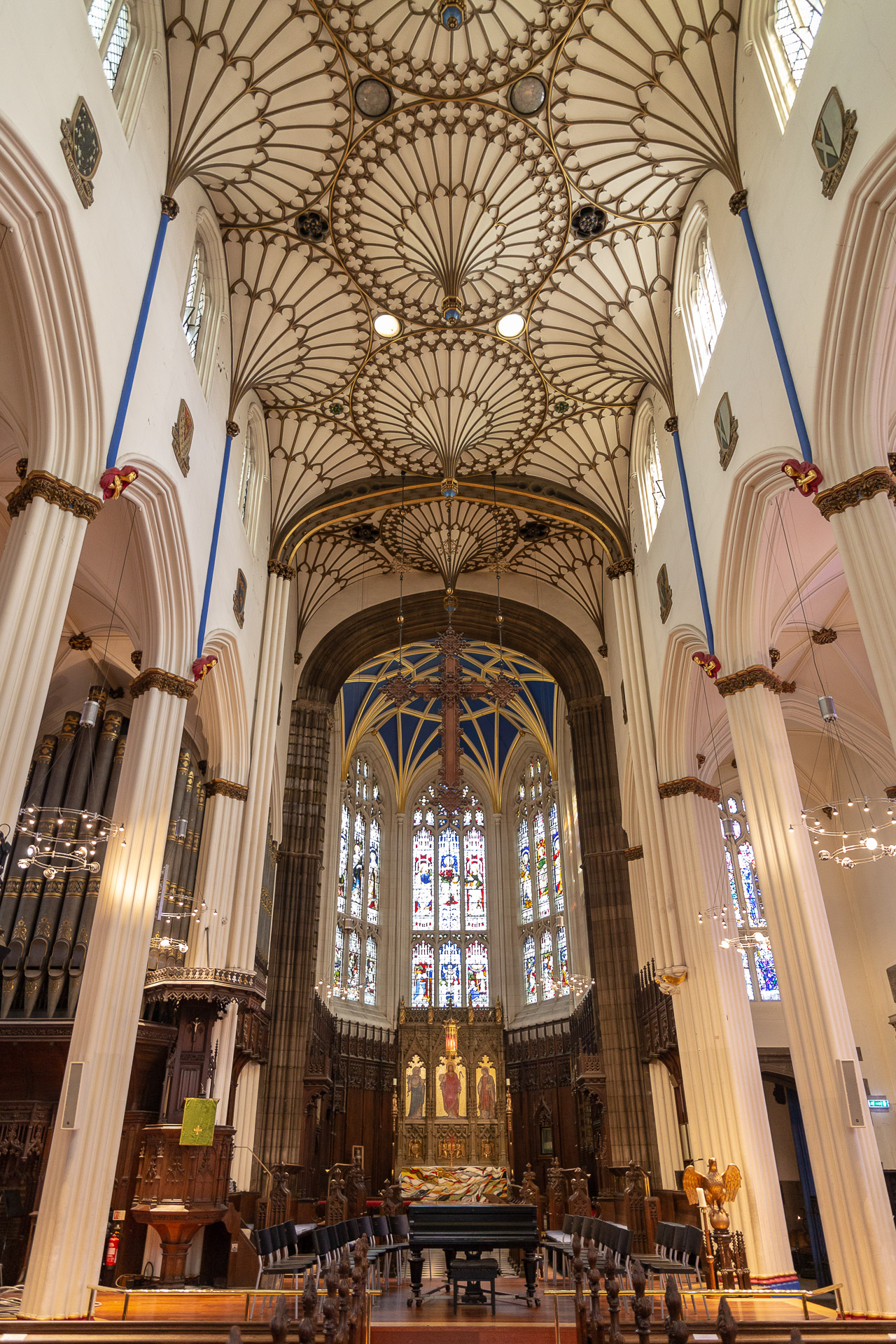
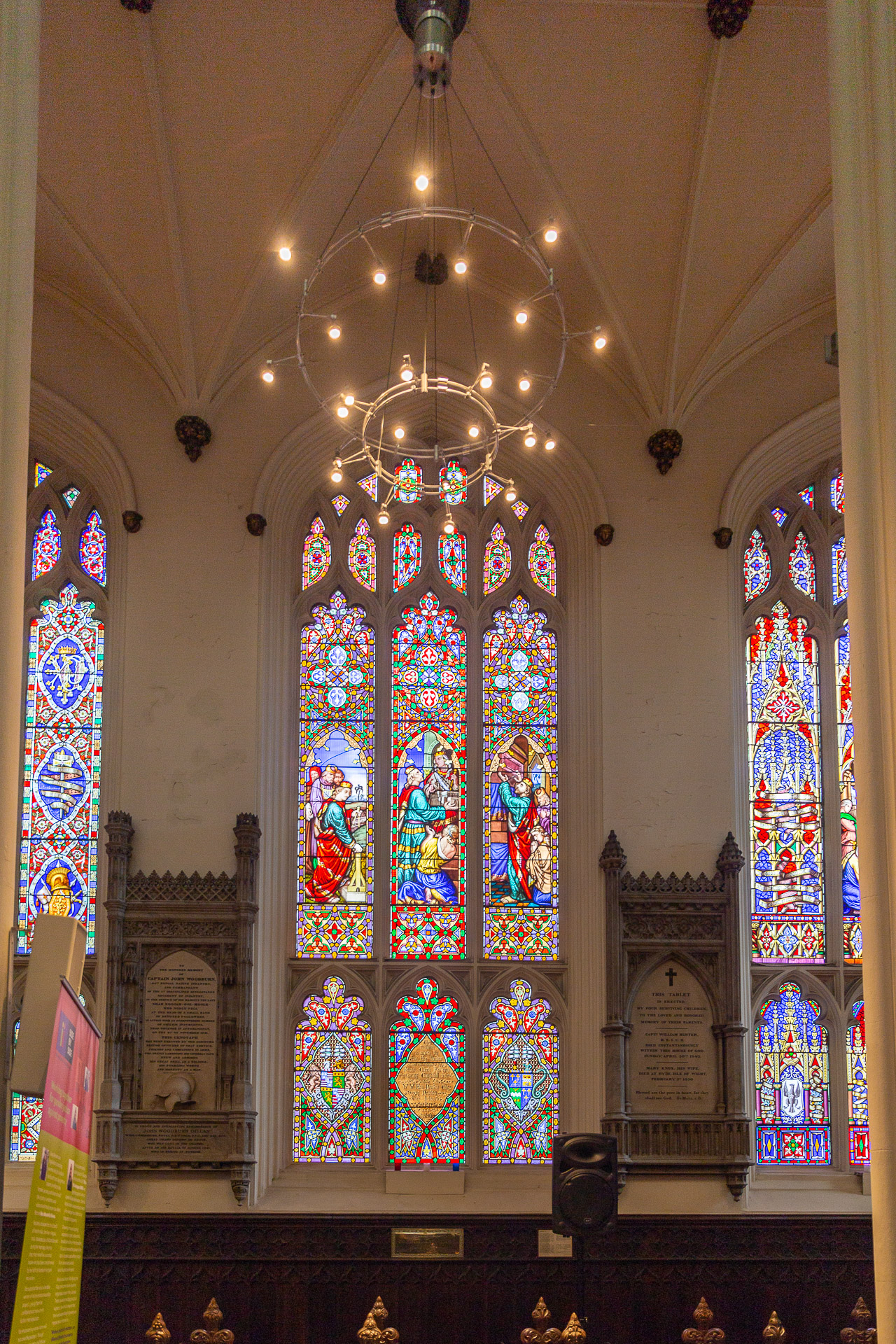
Stained-glass windows let in plenty of light, and above the altar arches a gorgeous blue sky.
There’s one more thing this church has to offer. Around it stretches a walled garden, the “Peace Garden”. The walls were once meant to keep out grave robbers. Parishioners were buried here until 1965; among others, Sir Walter Scott’s mother is buried here too.
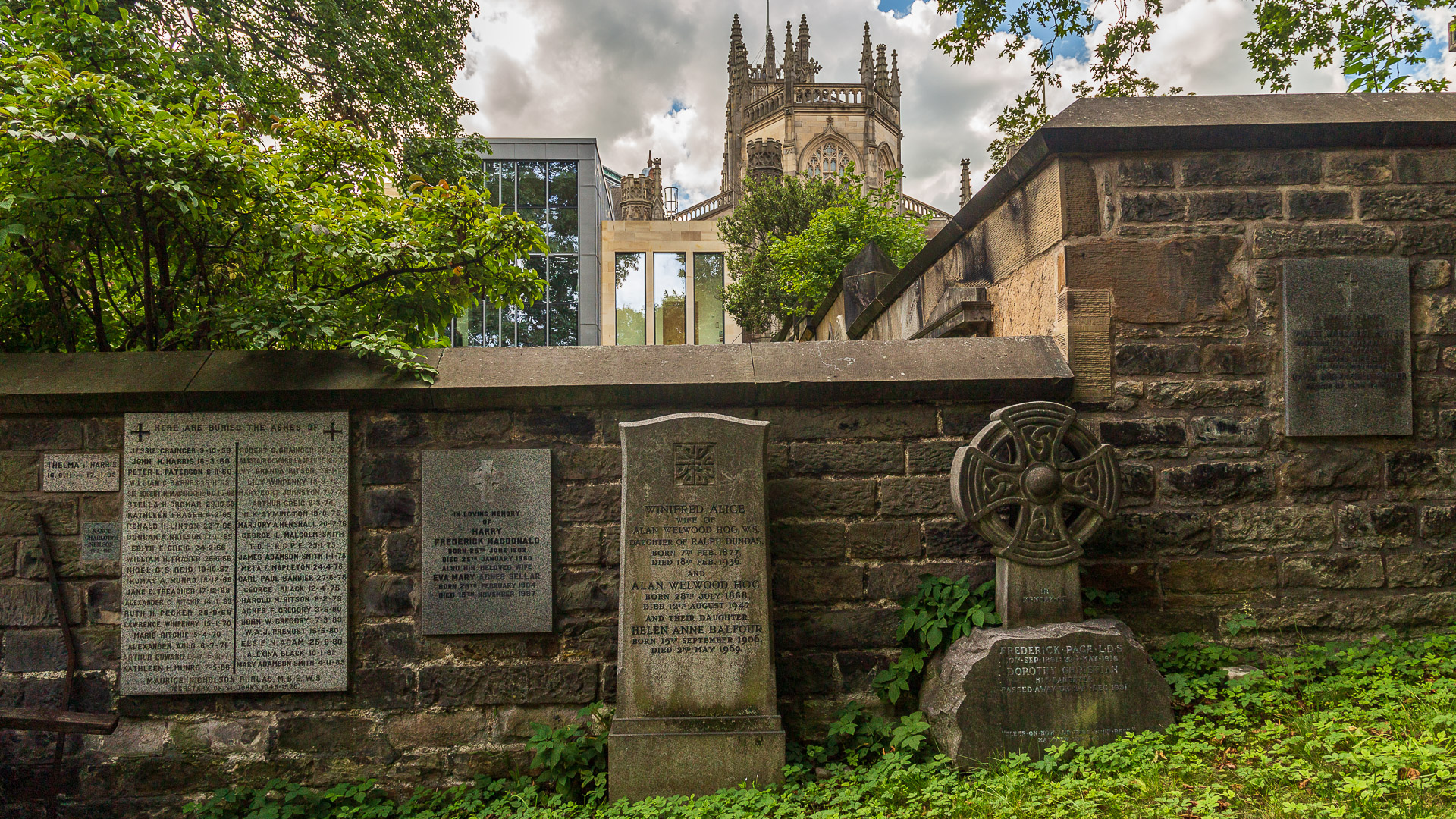
If visitors take the steps at the side of the building down into the garden, they’ll find a Christian bookshop and a One World Fairtrade shop in the lower level.
A short visit to St John’s Church is well worth it in any case.
Did you know: The model for St John’s vaulted ceiling
This church isn’t especially old. It wasn’t consecrated until 1818. But it did have a strong model to draw on: since Episcopal church doctrine had once been enforced by the British king, architect William Burn borrowed from a part of Westminster Abbey in London. There, in the Henry VII Chapel, is an almost identical vaulted ceiling.
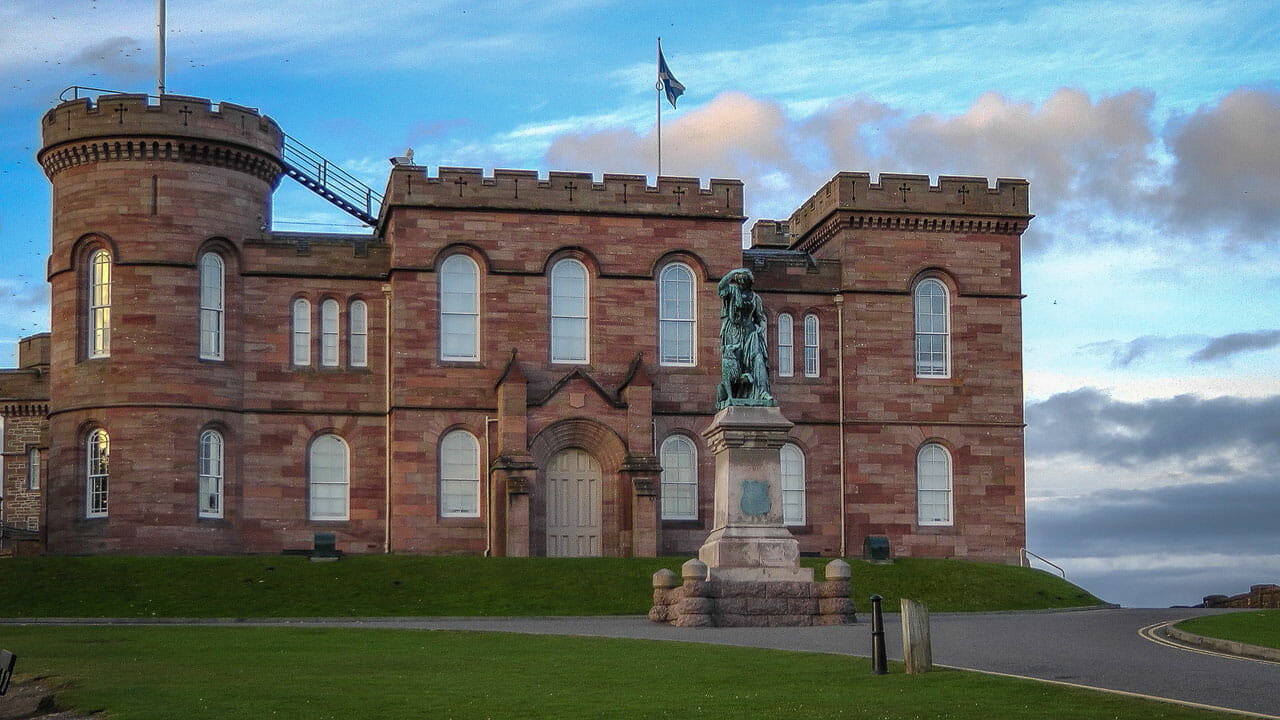
We still come across Burn’s work in Scottish architecture in quite a few places today. For one, he built Inverness Castle, which shapes the look of the Highland capital. For another, he helped to start developing the style that his pupils would go on to perfect: the Scottish Baronial style. One such pupil was David Bryce, who designed Fettes College and the Bank of Scotland building on the Mound in Edinburgh. Another was George Meikle Kemp, who designed the Scott Monument on Princes Street.
Tip: Arts and crafts in the gardens
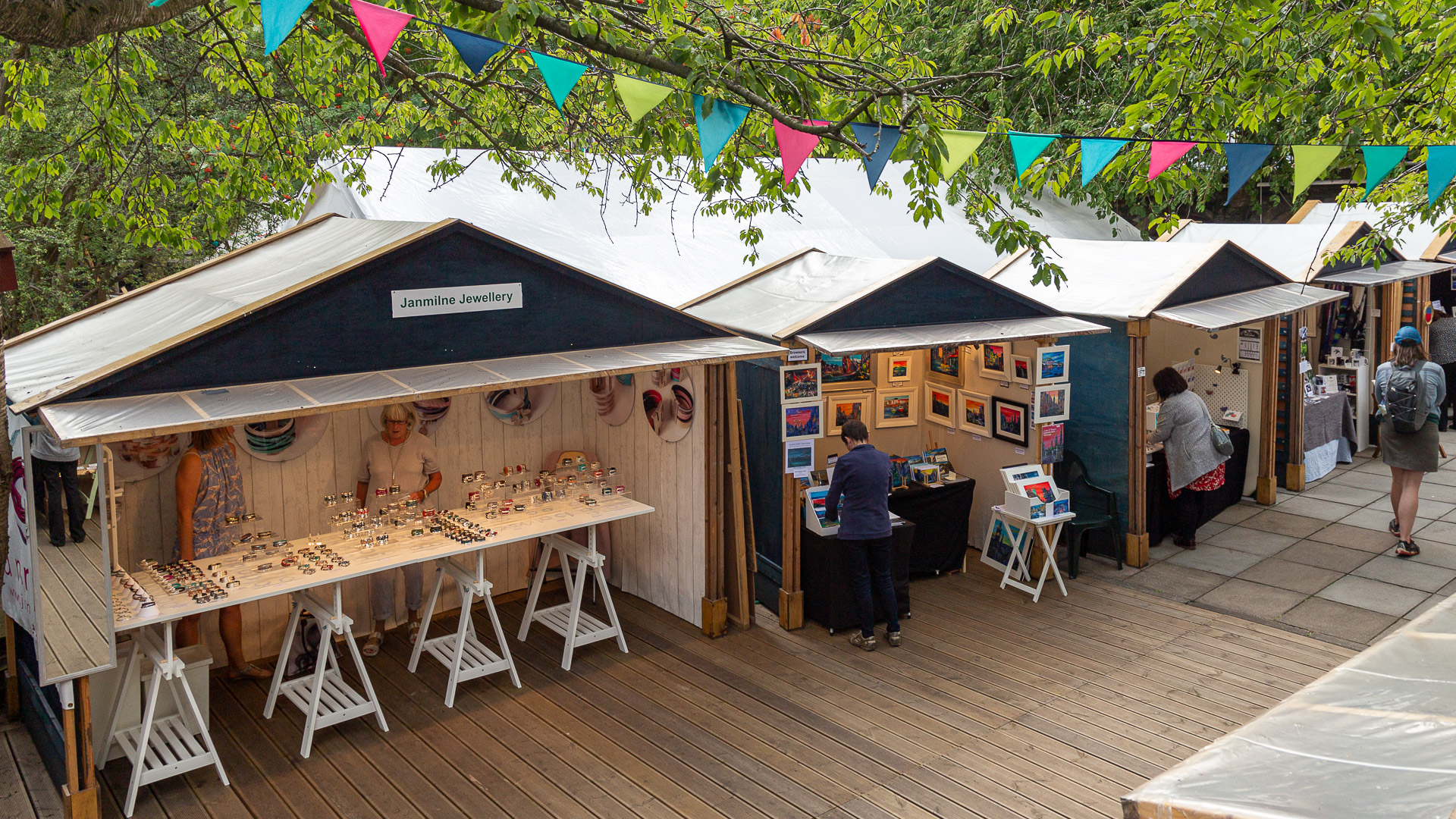
In August, the gardens host the West End Fair, where arts and design crafts are shown and sold. It’s great fun to stroll around the market.
Getting there:
By car it’s tricky, as it is everywhere in Edinburgh. Since everything in Edinburgh is “20 minutes away” anyway, St John’s Church makes for a wonderful stop at the end of a walk along Princes Street or through the Princes Street Gardens. It sits at the junction of Princes Street and Lothian Road.