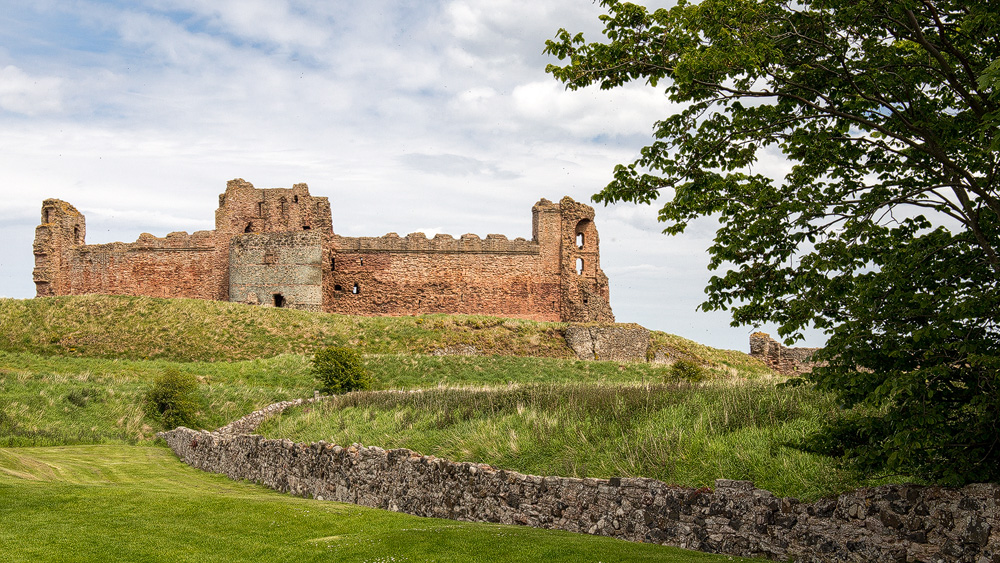
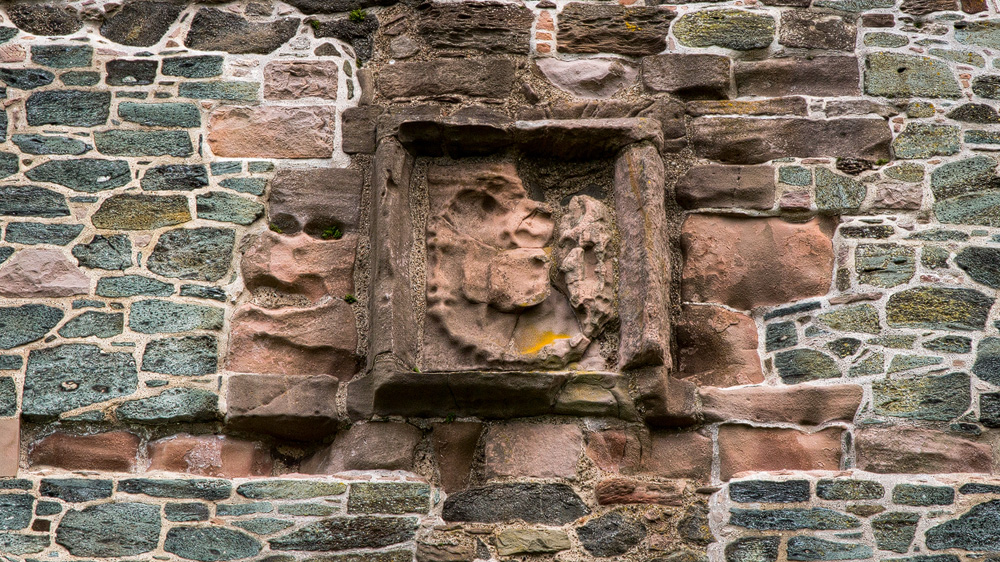
It’s as if someone had put up a wall against the sea – that’s how Tantallon Castle feels. Here’s what else you’ll find in and around this castle.
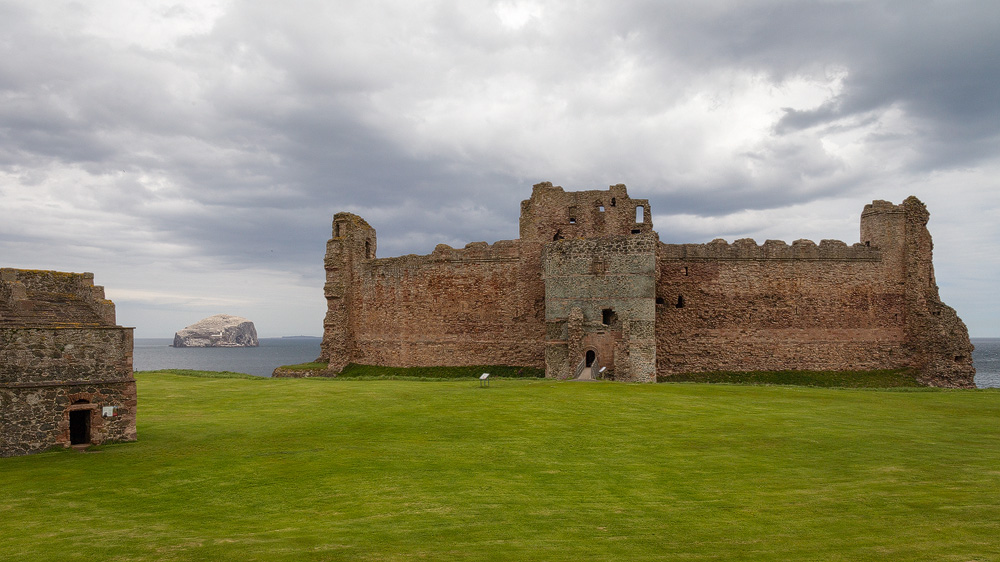
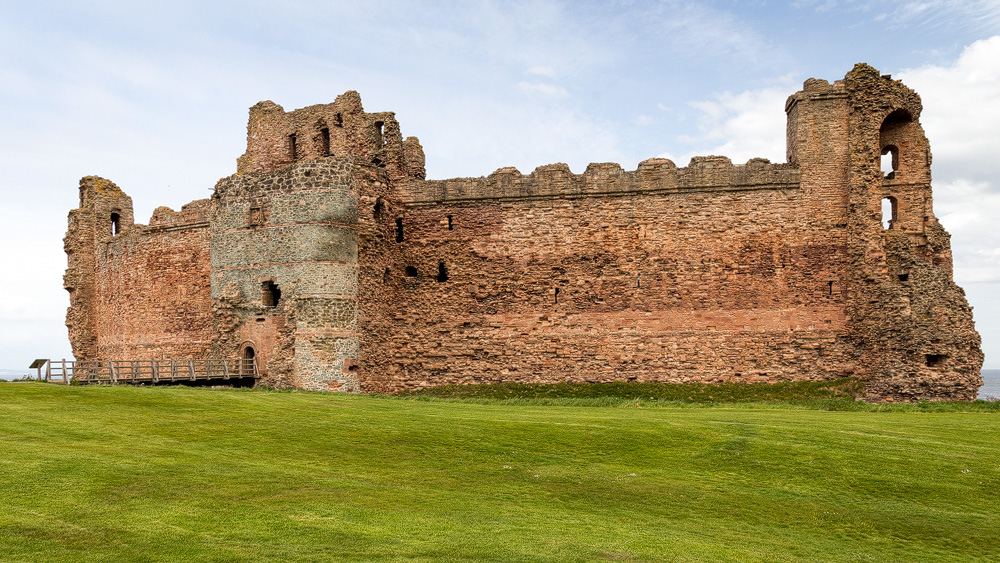
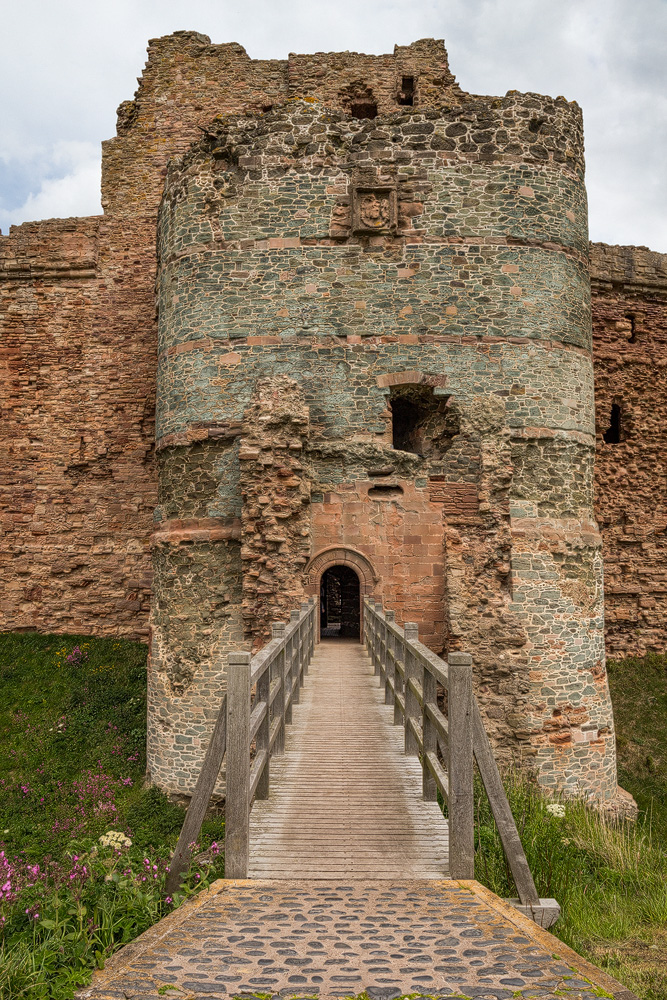
And suddenly you’re standing in front of a wall. A gigantic wall of red sandstone with just a single opening: a narrow door in the middle. But to reach it, visitors first have to cross a ditch via a bridge. Tantallon Castle masterfully conveys its message this way: you don’t get in here, unless we want you to.
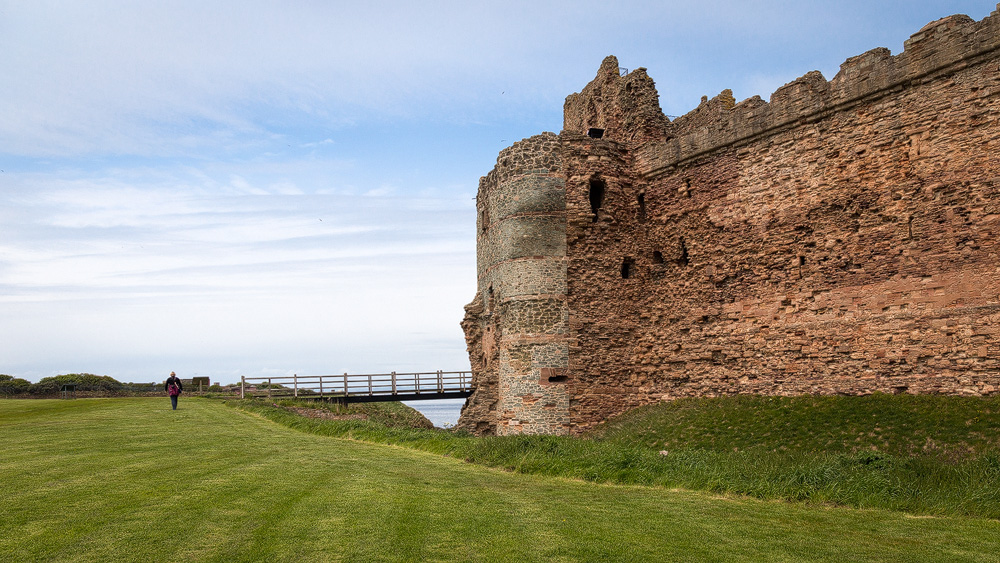
Fortunately, visitors today are also allowed inside the castle, so you cross the bridge and first enter the gatehouse, now hollowed out. Looking up gives you a real sense of just how massive the wall is that you’ve just passed through.
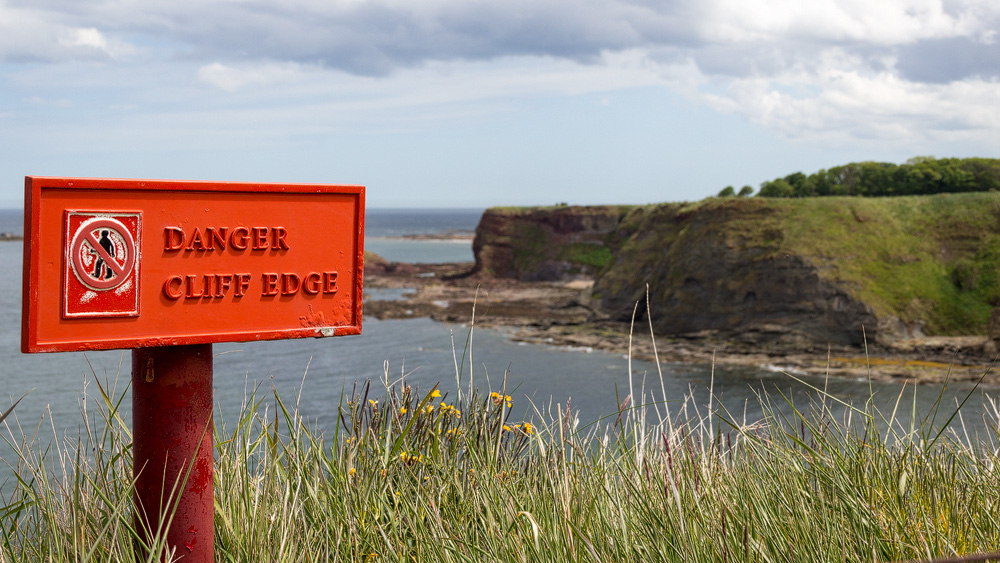
Through another door and you’re back in the courtyard – with an open view all around. No further walls were built here. Why would they be? Tantallon Castle sits on a rocky headland jutting into the North Sea, with three sides dropping away to the crashing waves. Only the front had to be secured by the builders with a gigantic bulwark.
The first builder dates back to the 14th century. Around 1360, William, 1st Earl of Douglas, had Tantallon Castle built. He’d spent his youth in Normandy, which surely shaped his idea of what a castle should be. As a type, Tantallon is really something of a latecomer, since castles with vast enclosure walls like Dunstaffnage Castle were already going out of fashion by then, being replaced by tower-house castles like Castle Stalker.
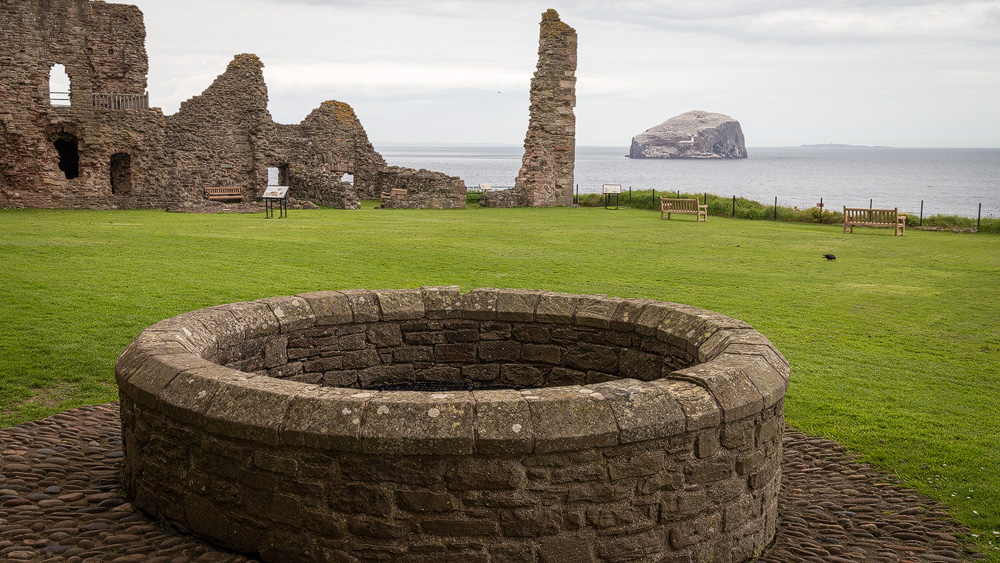
There were, of course, further buildings on the plateau. To the left today, the remains of multi-storey buildings run along the cliffs. In places, wall remnants poke up like fangs, while the rest has already crumbled away.
Whoever once lived in these buildings had a fine view of Tantallon Castle’s constant companion out at sea, the Bass Rock. An impressive, large rock, coloured white as if covered in snow. That “snow”, though, turns out to be the white plumage of thousands of gannets – and their droppings.
There were also those who had no view left at all. Beneath the tower on the left lies the castle’s dungeon. Only a small shaft lets a little light into that cellar hole – not a place you’d want to linger. Better to head up the stairs to the battlements of the great wall instead.
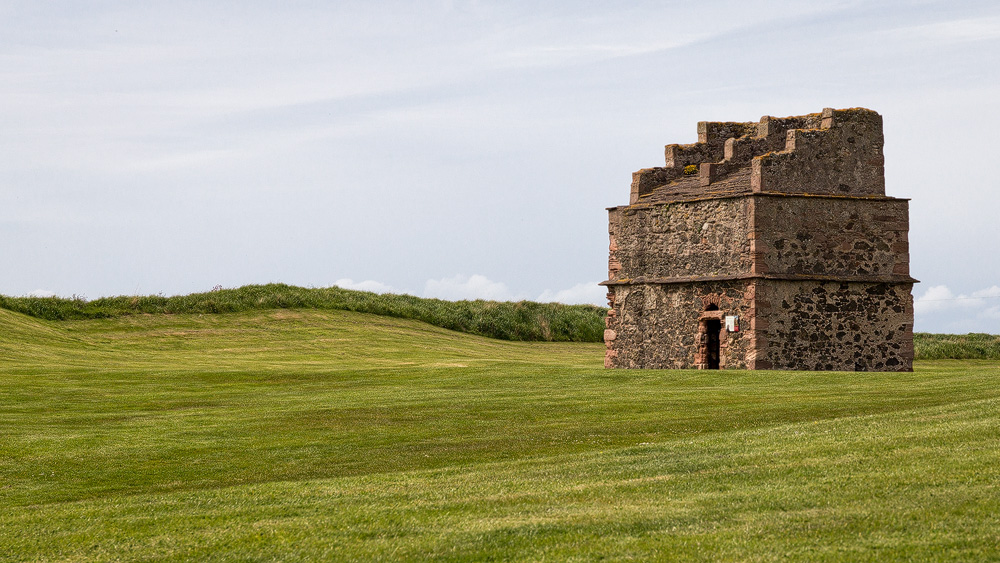
It’s only up here that you really grasp how tall the bulwark is. You look back out to sea, and forward over the land, and realise that further ditches and defences were dug in front of the castle too. In fact, plenty of life went on not just behind the wall, but in front of it as well. A stone building still stands there today – the so-called Doocot, or dovecote. Here the castle’s lords kept hundreds of pigeons as food; mainly young birds were eaten, since their meat was still tender.
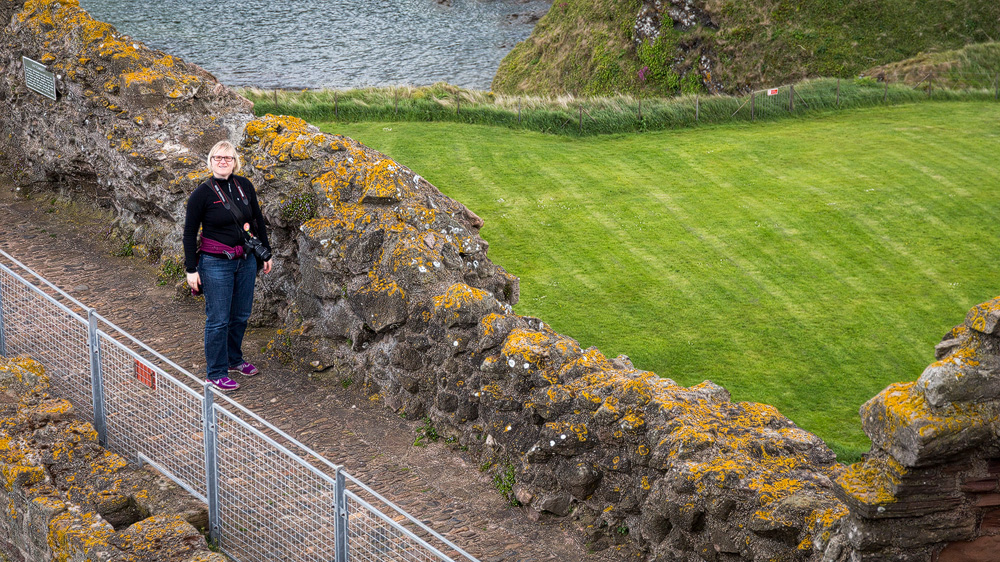
There were also fortifications in front of the castle that were only added in later centuries. That’s because Tantallon’s wall has one weakness: it has no gun loops or cannon emplacements. So the artillery had to be positioned out in front instead.
Tantallon Castle had to prove its defensive strength more than once. In 1491 it was besieged by the troops of the Scottish king James IV, who accused its lord, Archibald Douglas, of treason – he was said to have made a pact with the English king. Before James could properly bring his cannons to bear, Douglas had already surrendered. So the castle escaped unscathed once again.
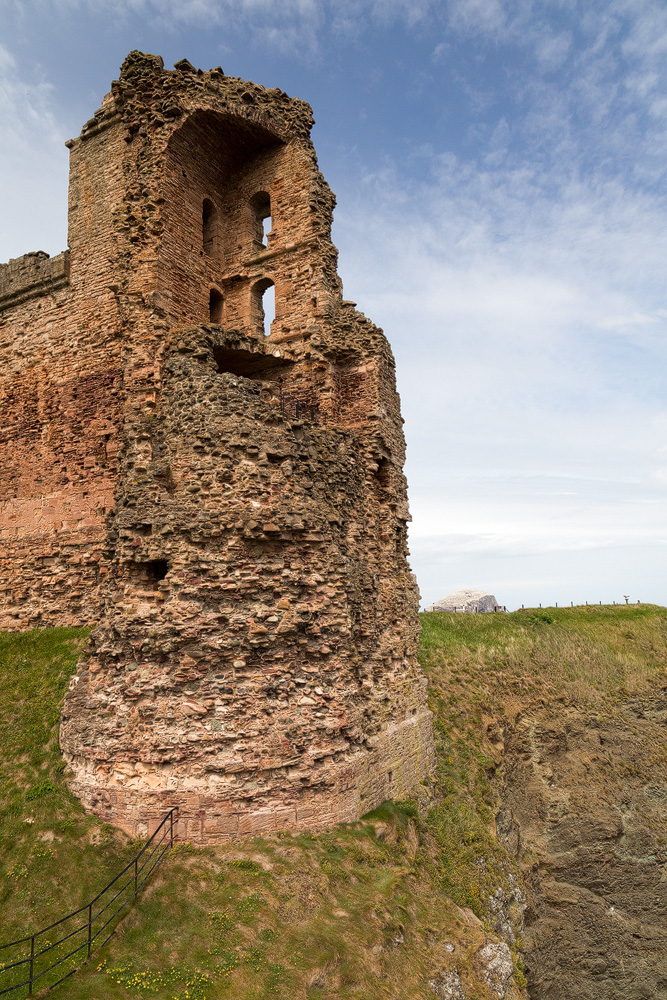
In 1528, Tantallon was besieged again, and also shelled. This time, though, James V’s troops couldn’t bring the artillery close enough, so the castle again went untaken and unscathed. Its fate, however, was sealed when Oliver Cromwell’s New Model Army appeared before the wall in 1651. The bombardment lasted twelve days. The damage is still visible today: both towers collapsed.
Achtung: Die Betreiber dieser Sehenswürdigkeit, das Historic Environment Scotland (HES), führt seit 2021 an vielen Sehenswürdigkeiten Untersuchungen oder Baumaßnahmen zum Erhalt der Gebäude durch. Dieses gehört dazu. Darum vorher informieren, ob und was begehbar ist. Mehr Hintergrund hier.
After that, it was clear: Tantallon would never be able to withstand modern cannon fire. From the 17th century onward, the castle was left to decay. Today Historic Scotland looks after the preservation of this once-proud stronghold.
Good to know: On mortar and ghosts
Looking at the castle from the front, you’ll notice the central tower stands out in colour from the rest of the castle. That’s because the front part of the gatehouse was only built in the 16th century. At the time, the builders wanted to use a softer stone here, believing it would better withstand cannon fire.
Unfortunately, this stone, along with the mortar used, turned out to be more vulnerable to weathering. So from the year 2000 onward, substantial repairs were needed here, with the restorers striving to keep the work as true to the original as possible.
Today that section is secure again.
A different kind of investigative work comes from psychology professor Richard Wiseman, who specialises in debunking paranormal phenomena. During one investigation, he was sent a photo of what looked like a ghost at Tantallon Castle, which he then passed on to the media. Many people see it instead as confirmation of ghosts, especially since there’s a second photo showing a very similar figure.
Tip: Between Bass Rock and Berwick Law
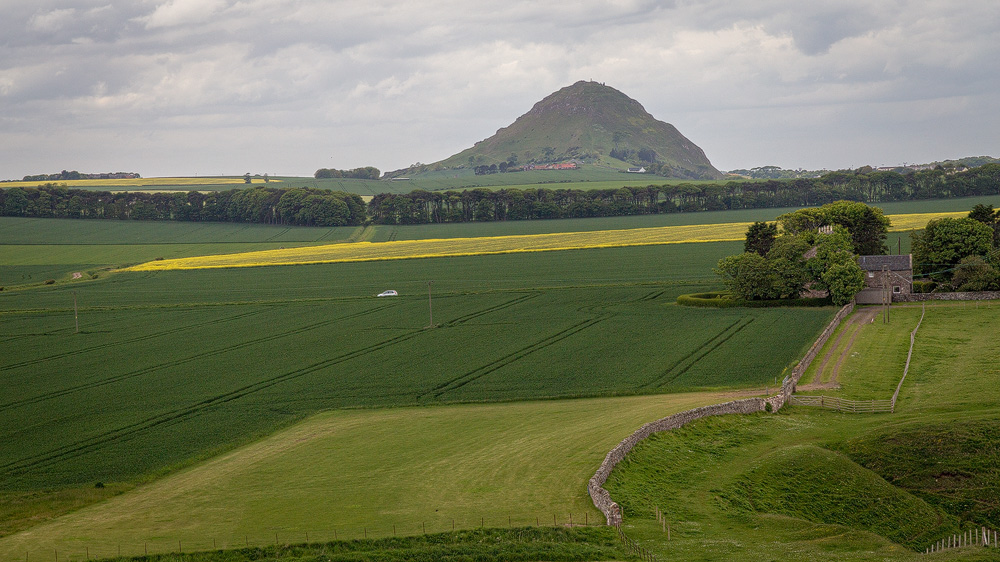
Anyone not bothered by heights should definitely climb up onto the wall. From up there you get a magnificent view of the Bass Rock, and you can also get a sense of how the outworks in front of the castle once looked. And finally, on the other side, in the distance, you’ll spot North Berwick Law, a volcanic cone that suddenly rises to 187 metres out of otherwise fairly flat landscape. It too once held an Iron Age fort, a so-called dun. Up there today you’ll still find replicas of two crossed whalebones – the originals collapsed in 2005.
Personal note: Two things I love about Tantallon Castle
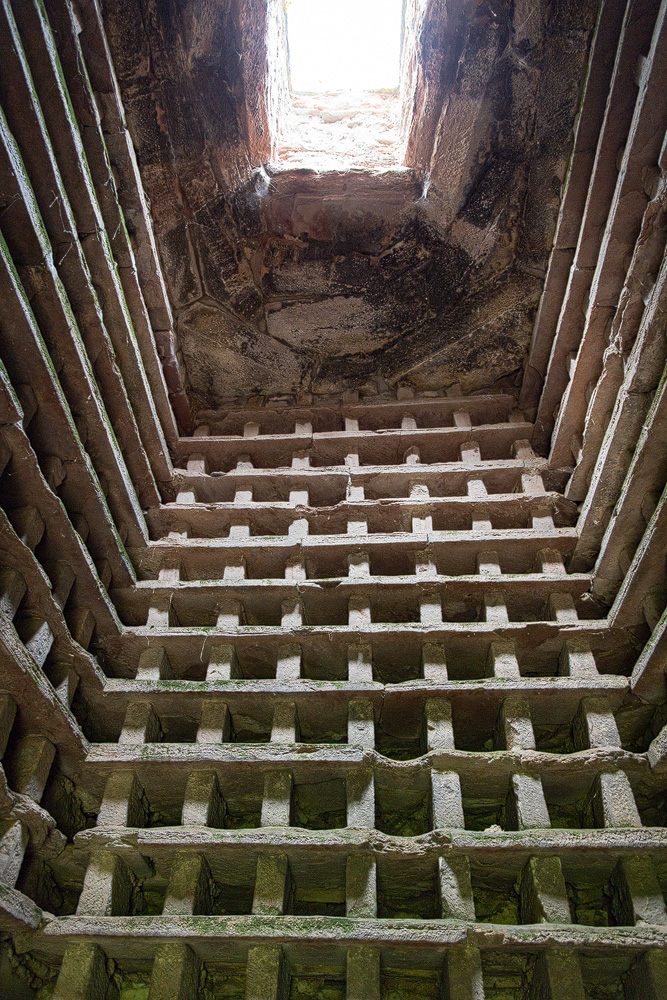
If Tantallon didn’t have two particular things going for it, the visit itself would hardly be worth it. As it is, I really enjoyed the view of Bass Rock on the one hand, and this gigantic wall you can also climb up on the other. A little highlight was the Doocot. These buildings are usually built round, but this one is square. It was also the first time I’d ever been inside a dovecote – though this one, admittedly, was empty.
Getting there:
With sat nav: “EH39 5PN” gets you right to the area.
Without sat nav: Coming from Edinburgh, take the A1 towards “Berwick upon Tweed” (nothing to do with North Berwick!), then take the exit at the “North Berwick” sign onto the A198. That’s the “Coastal Route”, which is quieter and more scenic. Keep going straight through North Berwick, then watch for the brown sign to Tantallon Castle, turn left there, and drive all the way to the car park at the far end.
Coming from the south on the A1, likewise look for the A198 towards North Berwick, but watch for the sign to the castle a bit earlier.