Domhnall Dubh, Clan Donald, the English crown, and the attempt to restore the realm of the Lords of the Isles.
When people remember Scotland’s great uprisings, the Jacobites of 1745 usually come to mind first. Yet two centuries earlier – in 1545 – an almost forgotten rebellion had already taken place. It was far less romanticised, but politically highly significant. It grew out of the rivalry between two royal houses, old alliances, maritime power in the west, and decades of conflict between the crown and the island clans.
Background: The end of the Lords of the Isles
Until the late 15th century, the Lords of the Isles ruled over large parts of the western Highlands and islands. This near-autonomous island lordship posed a serious challenge to royal central power. In 1493, the Scottish crown stripped the last Lord of the Isles, John MacDonald, of his power. The great earldom of Ross had already been lost earlier, and internal rivalries had weakened the clan – giving King James IV his chance to break the old order.
Yet the dismantling of the lordship did not end the idea of an independent island realm. The family ties of the clans, their military strength, and the memory of the old authority all remained very much alive. Clan Donald South in particular remained a central force, often in opposition to royal policy.
In 1540, James V took the next step with the Act of Annexation. Large parts of the western territories were annexed directly to the crown. The king’s subsequent expeditions were meant to enforce obedience and impose new levies – measures that only deepened the clans’ resentment.
Domhnall Dubh: Grandson of the last Lord of the Isles
At the centre of the later rebellion stood Domhnall Dubh, grandson of the last Lord of the Isles. He spent much of his life in the custody of the Campbells – though, contrary to common assumption, not under particularly hostile conditions. Even so, he never gave up his claim.
When the conflict between England and Scotland escalated, he found a powerful ally: Henry VIII. The English king wanted to bind Scotland to England dynastically. A marriage between his son Edward and the young Mary Stuart was meant to unite the two royal houses – but the Scottish parliament rejected the plan. What followed was the period known as the Rough Wooing, a violent courtship of the young Scottish queen.
Henry now looked for leverage in the west. Domhnall Dubh was the ideal candidate, since through him the island clans could be mobilised.
The alliance of 1545
The Earl of Lennox brokered the deal between Domhnall Dubh and the English crown. Domhnall was already being referred to as “Lord of the Isles and Earl of Ross” – a clear sign of just what political project was being pursued here. At the same time, open hostility between Clan Donald and the Campbells surfaced for the first time, a rivalry that would later become a central Highland feud.
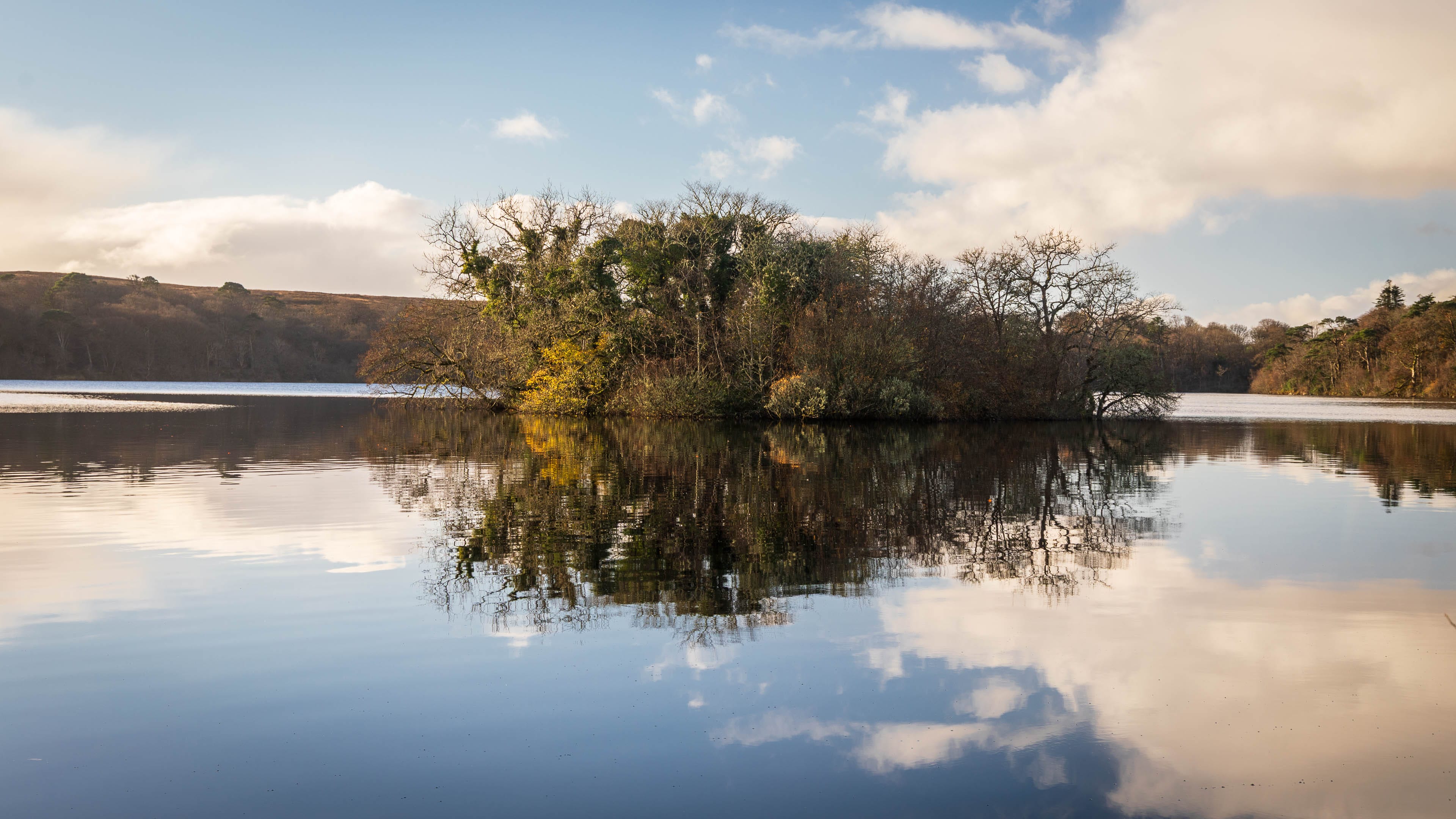
In July 1545, the chiefs of the isles met at Eilean a’ Chàirne on Loch Ballygrant on Islay. Almost every island clan signed the alliance. Just a month later, some 4,000 men stood ready at Carrickfergus in Antrim. From the clans’ point of view, Antrim was by no means “abroad” – it had historically belonged to the sphere of influence of the MacDonalds of Dunnyvaig.
Together with English forces, a two-pronged attack was planned:
- Clan Donald and its allies were to attack Argyll and the west coast.
- English forces were to invade Scotland from the south.
In total, over 10,000 fighters, around 200 ships, many experienced seamen, and even a cannon stood ready – an impressive force for 1545. The island clans’ birlinns guaranteed a mobility that no other region of the kingdom could match.
The collapse of the rebellion
The rebellion fell apart before it even began. The English war chest arrived late and only in part. Chiefs left the muster area, fearing they’d be away from their home territories for too long. Others were unhappy with how plunder and money were being divided. By the time Lennox finally arrived in October, the Highlanders had already scattered again.
Domhnall Dubh remained determined all the same. He returned to Ireland – but with only a handful of men. There he fell ill with fever and died. His death brought the entire alliance crashing down. The attempt to restore the island realm came to nothing.
Aftermath for those involved
Domhnall Dubh left no children behind. His claim passed to James MacDonald of Dunyvaig, who ironically later married the daughter of the Earl of Argyll. About a century later, a further descendant, Alasdair Colla, made another attempt to restore the old maritime realm.
Henry VIII died two years after the rebellion. His son, Edward VI, continued the Rough Wooing – ultimately in vain. Mary Stuart later became one of the most tragic figures in British history. The Earl of Lennox kept fighting and returned to England. His son Lord Darnley would later marry Mary Stuart, and went down in history as the murderer of her suspected lover, David Rizzio.
The significance of the uprising
The uprising of 1545 shows that the old power of the island clans was still very much felt even decades after the end of the Lords of the Isles. Despite the crown’s centralising policies, councils, joint decisions, and a strong awareness of former independence all still existed.
The oft-cited Linn nan Creach – the “age of raids” – only partly does justice to this era. Coordinated cooperation among the clans continued, especially where shared interests against Edinburgh were concerned. The choice of meeting place on Islay was a symbolic nod back to the MacDonalds’ former council island.
Religion played barely any role: the clans remained Catholic, while Henry VIII had already broken with the Pope. What mattered was pragmatic calculation, maritime expertise, and strategic opportunity.
In the end, the rebellion failed not for lack of will, but because of logistics, lack of money, mutual distrust – and the sudden death of its leader.