The village of Auchindrain in Argyll & Bute has survived the turmoil of the centuries intact. Today it’s a very special open-air museum.
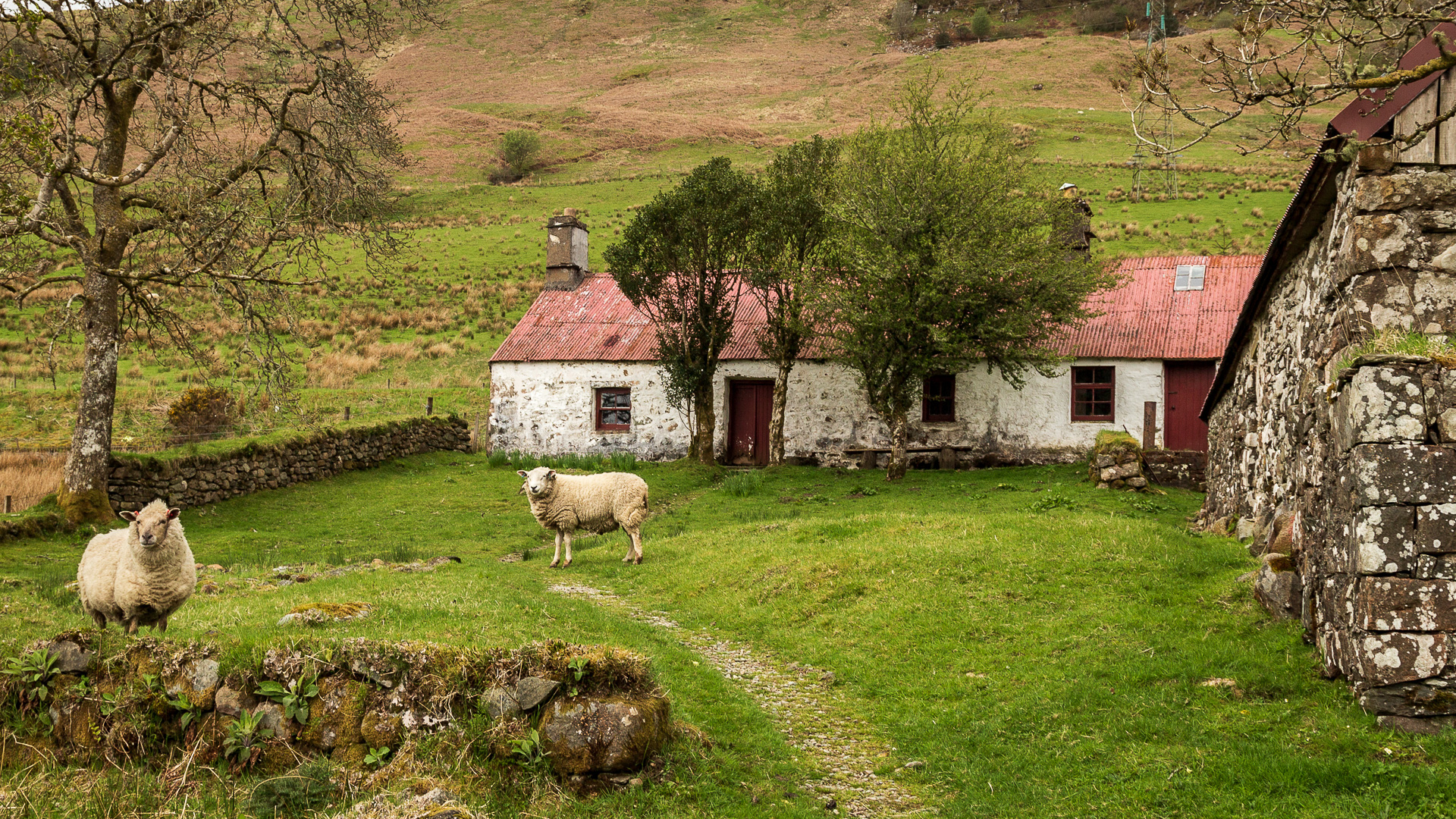
He was the last one to hold out: when Eddie McCallum left the village of Auchindrain in 1967 as its last inhabitant, it threatened to fall into complete ruin – like so many other Highland villages.
But fortunately, Auchindrain’s story took a different turn – one that lets visitors today get a sense of Highland life over the last five centuries. Auchindrain Township became a museum village.
That things could turn out this way was also thanks to the eighth Duke of Argyll, who owned the land in the mid-19th century. The Duke resided at his Inveraray Castle, which is likewise a museum today.
It was the time of the Highland Clearances. Highland inhabitants were driven out of their villages en masse – pushed to the coast or straight overseas. The inhabitants were replaced by sheep, which brought in more profit than farmers.
The Duke of Argyll, too, carried out radical land reorganisation on Mull and Tiree. But not here, not in Auchindrain. Here, he believed, more money could be made through new farming methods. The village became one of his pet projects.
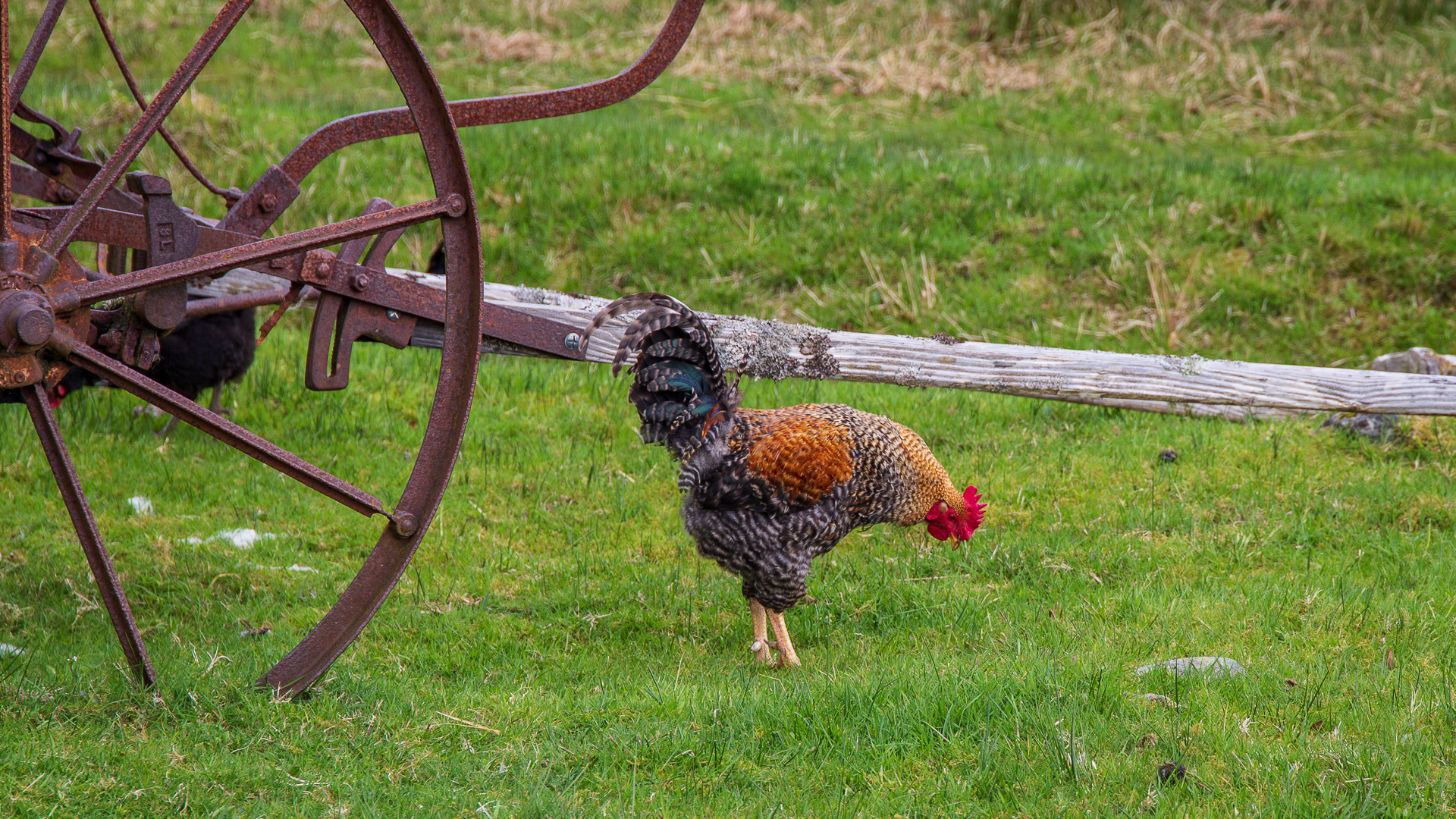
He encouraged the inhabitants to try out new farming methods. Up to 70 people lived here, and not even the potato blight that drove the whole of Scotland into famine could cause chaos here – because at the time, the village was growing grain.
And so Auchindrain survived what destroyed so many other communities – only one family emigrated to Canada. As late as around 1930, the village was still a living community; only after that did the exodus from the land begin, and people gradually drifted away.
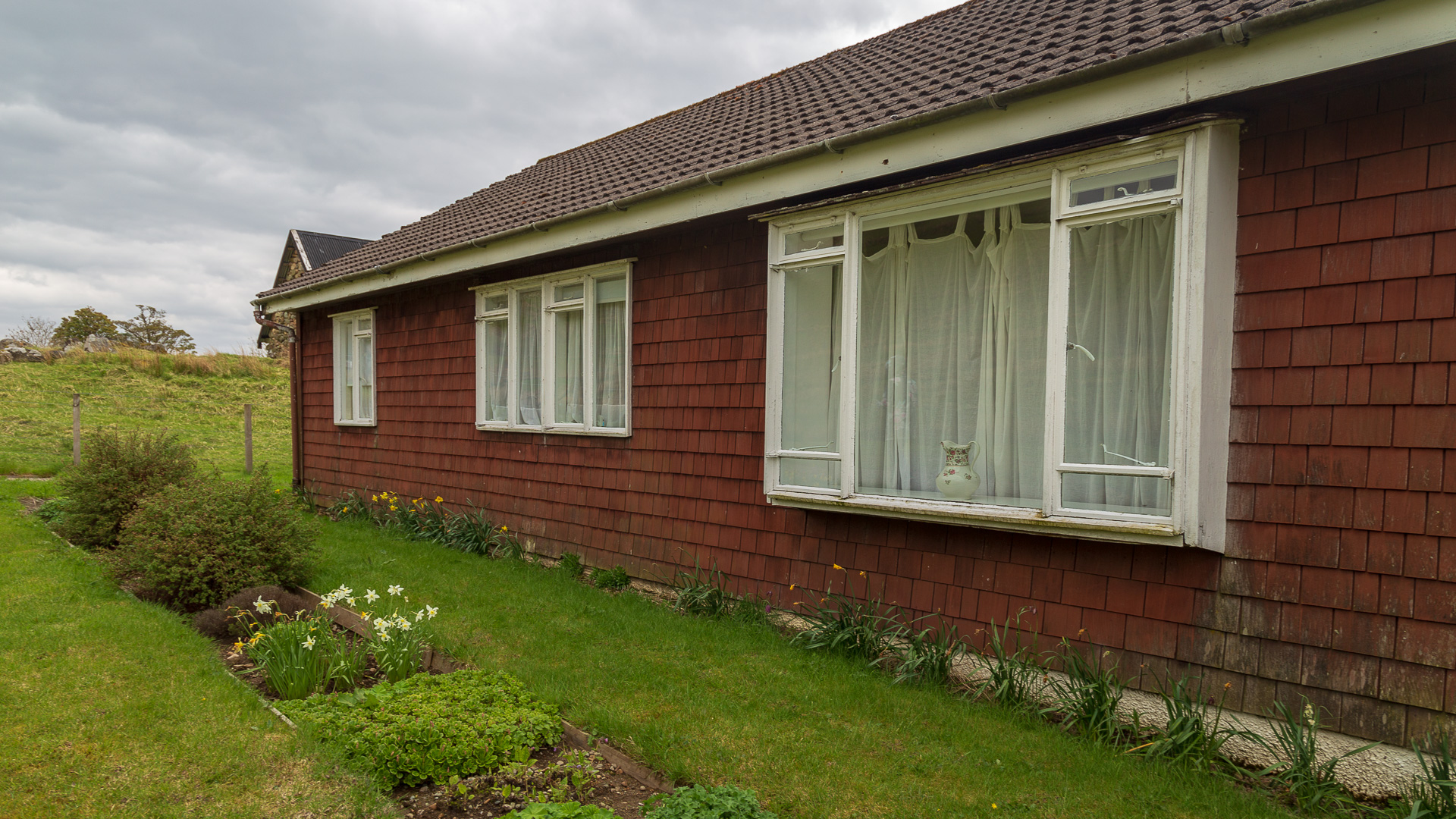
When the last inhabitant, too, left their house in 1967, an almost intact village still stood here – unique in the whole of Scotland.
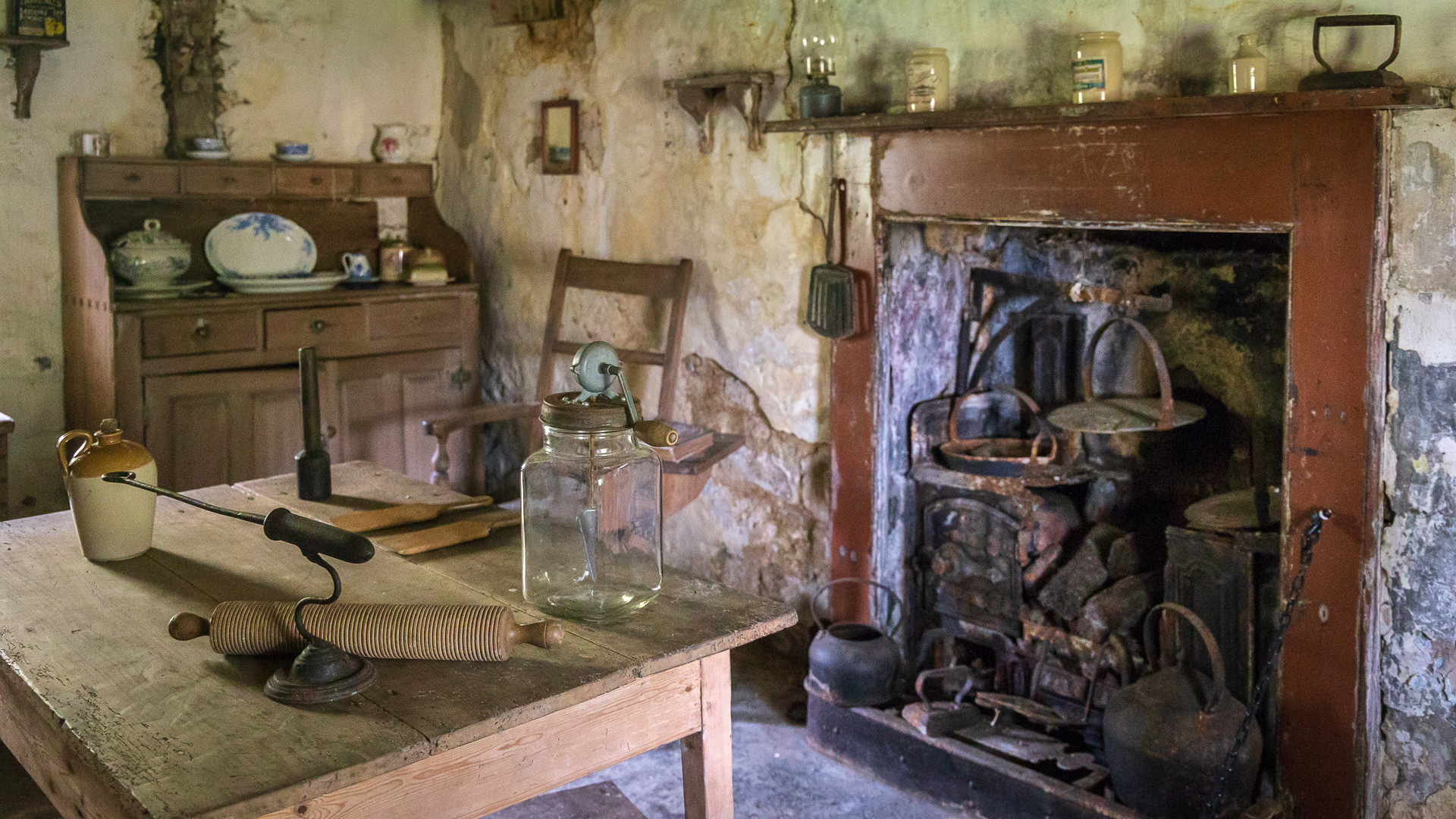
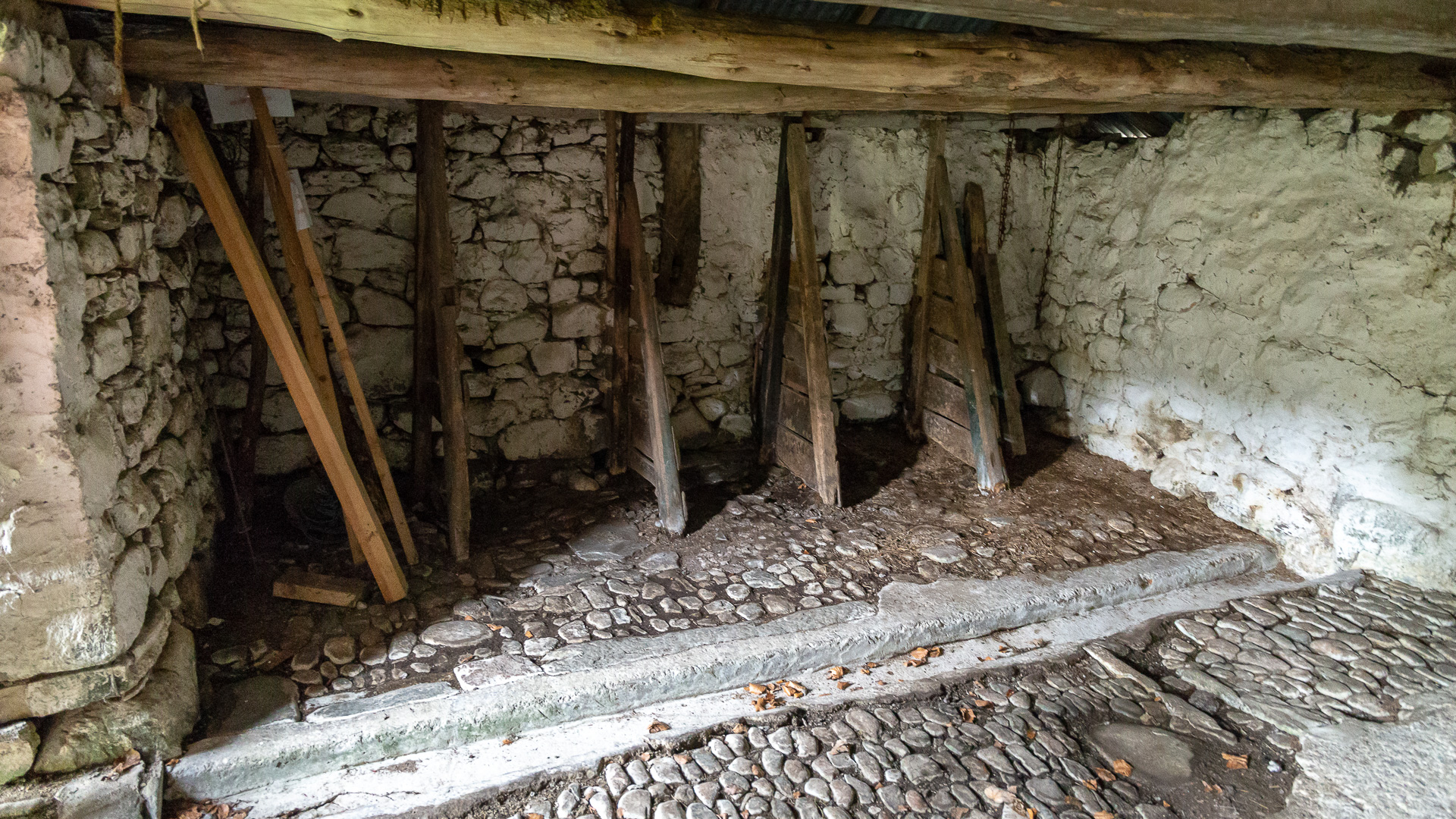
As early as 1968, the buildings became an open-air museum, and a visitor centre was added in 1975. Today, twelve of the 22 buildings are open to visitors. They’re not polished up, but authentic. So much so that it feels as though the inhabitants had only just left, since household utensils still lie on the kitchen table.
Incidentally, all the houses and their interiors are explained by a modern tablet that guides you through the village.
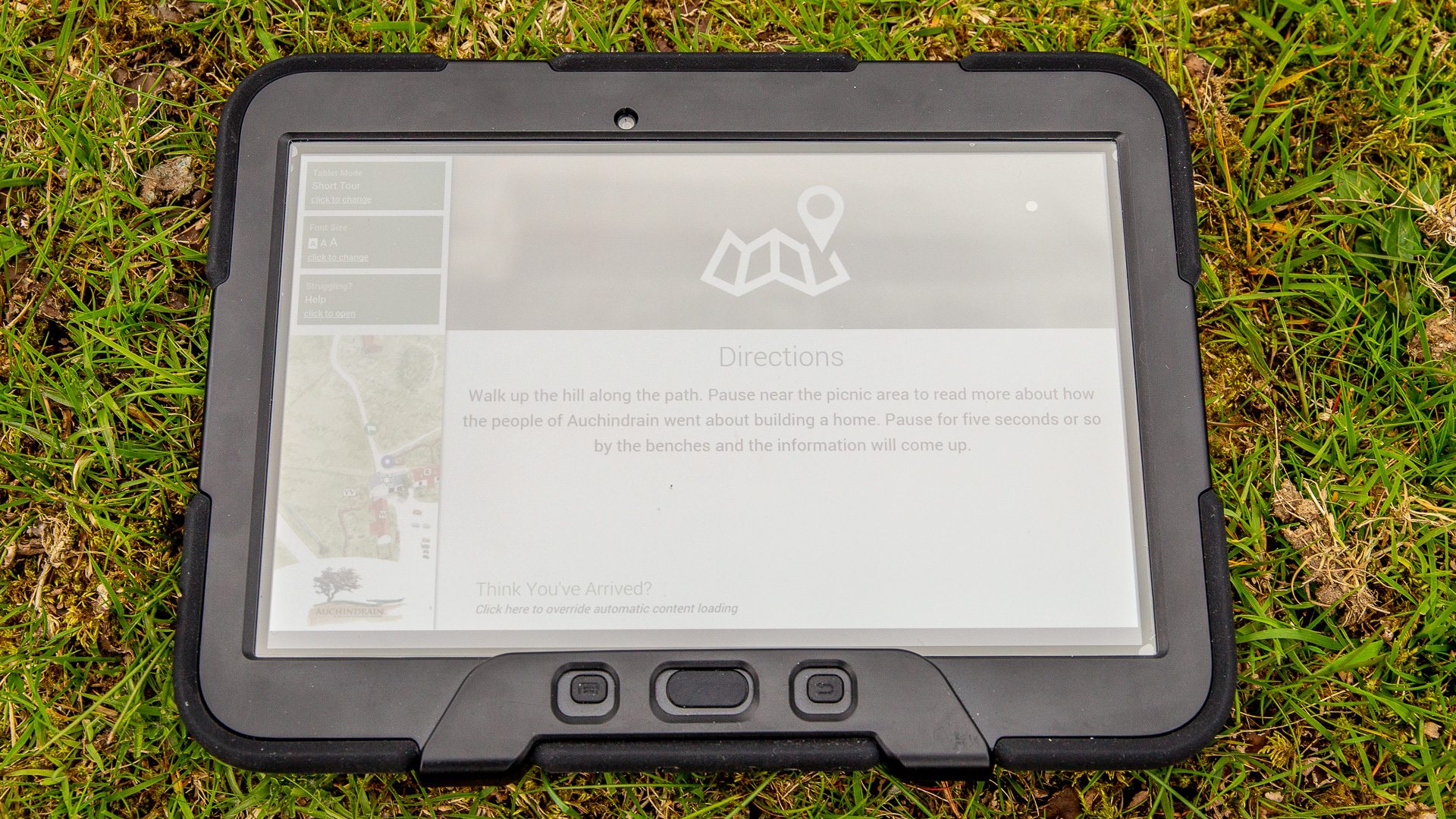
At various points, the tablet also tells the story of famous inhabitants, such as Bell a’ Phuill, who in the 19th century was regarded here as the village wise woman.
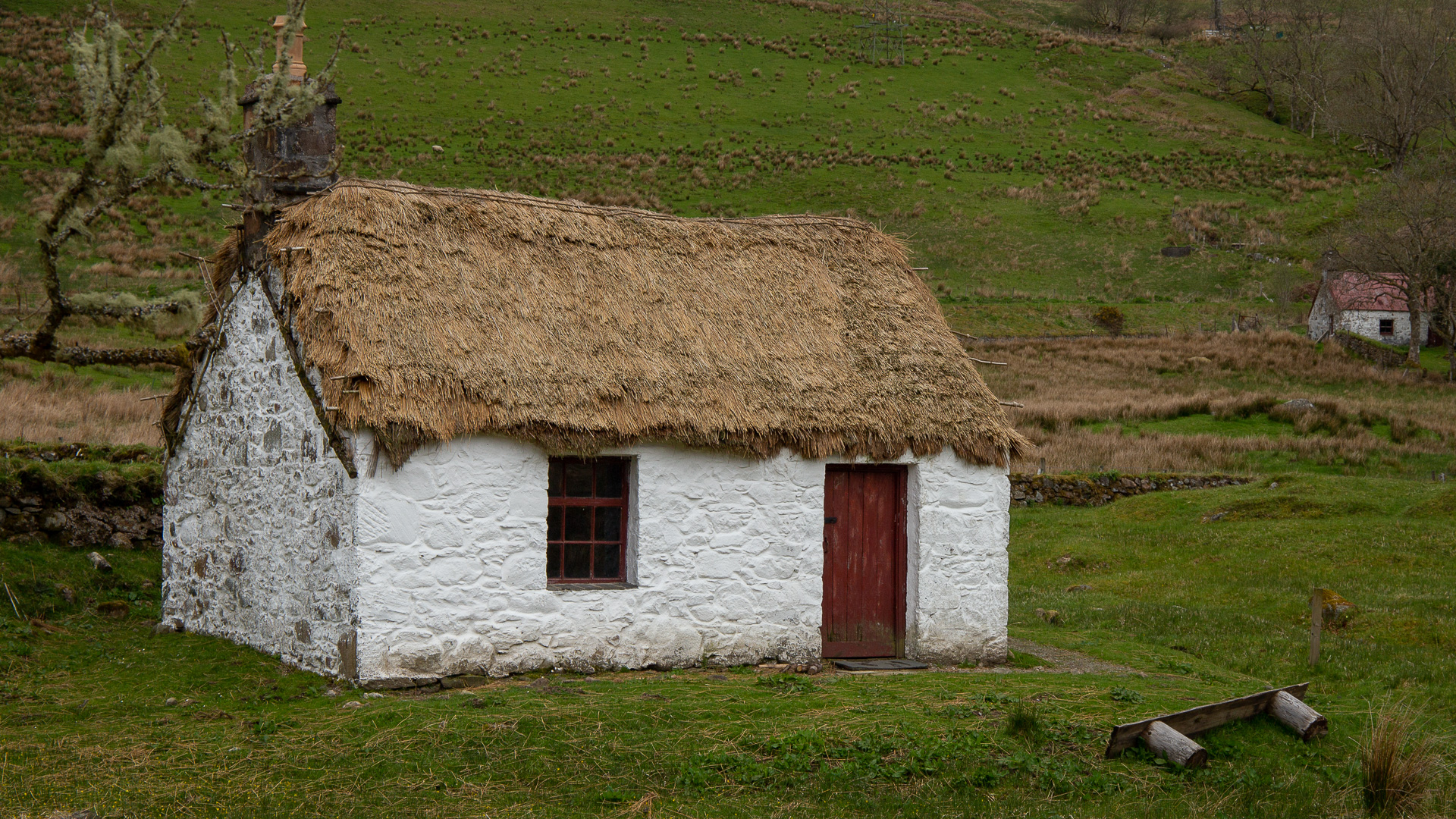
And yet visitors notice that preserving Auchindrain is no easy task. Repairs are being made everywhere, and yet damp still creeps into the houses.
Auchindrain is no polished showcase museum – but there’s no other village that has been preserved so authentically. And that’s why a visit to Auchindrain is a genuine enrichment to any trip to Scotland.
Know-how: Auchindrain and its history
The old Gaelic name of the village is Achadh an Droighinn, “field of thorns”. The name was first mentioned in a document in 1460. As a settlement, Auchindrain came more strongly into the interest of the Dukes of Argyll from 1776 onwards.
In 1875, Queen Victoria visited Auchindrain; her host, the Duke of Argyll, praised it to her as a “primitive village”.
Tip: More villages from times past
Anyone visiting Auchindrain should also take in the town of Inveraray with its castle, and the Inveraray Jail, as a contrast. Both are closely woven into the history of the area here.
Anyone not heading to the south-west Highlands will find the Highland Folk Museum further north instead.
Getting there:
Without satnav: Auchindrain lies directly on the A83. From Glasgow, take the A82 to Loch Lomond first, then turn onto the A83 towards Campbeltown at Tarbet. The route runs over the Rest and Be Thankful pass, then through Inveraray and finally on to Auchindrain. The drive from Tarbet takes about three-quarters of an hour.
With satnav: enter “PA32 8WD”, which brings you right nearby.
