Blackness Castle’s shape is reminiscent of a sailing ship. Here’s why. The castle, incidentally, became famous through the TV series “Outlander”.
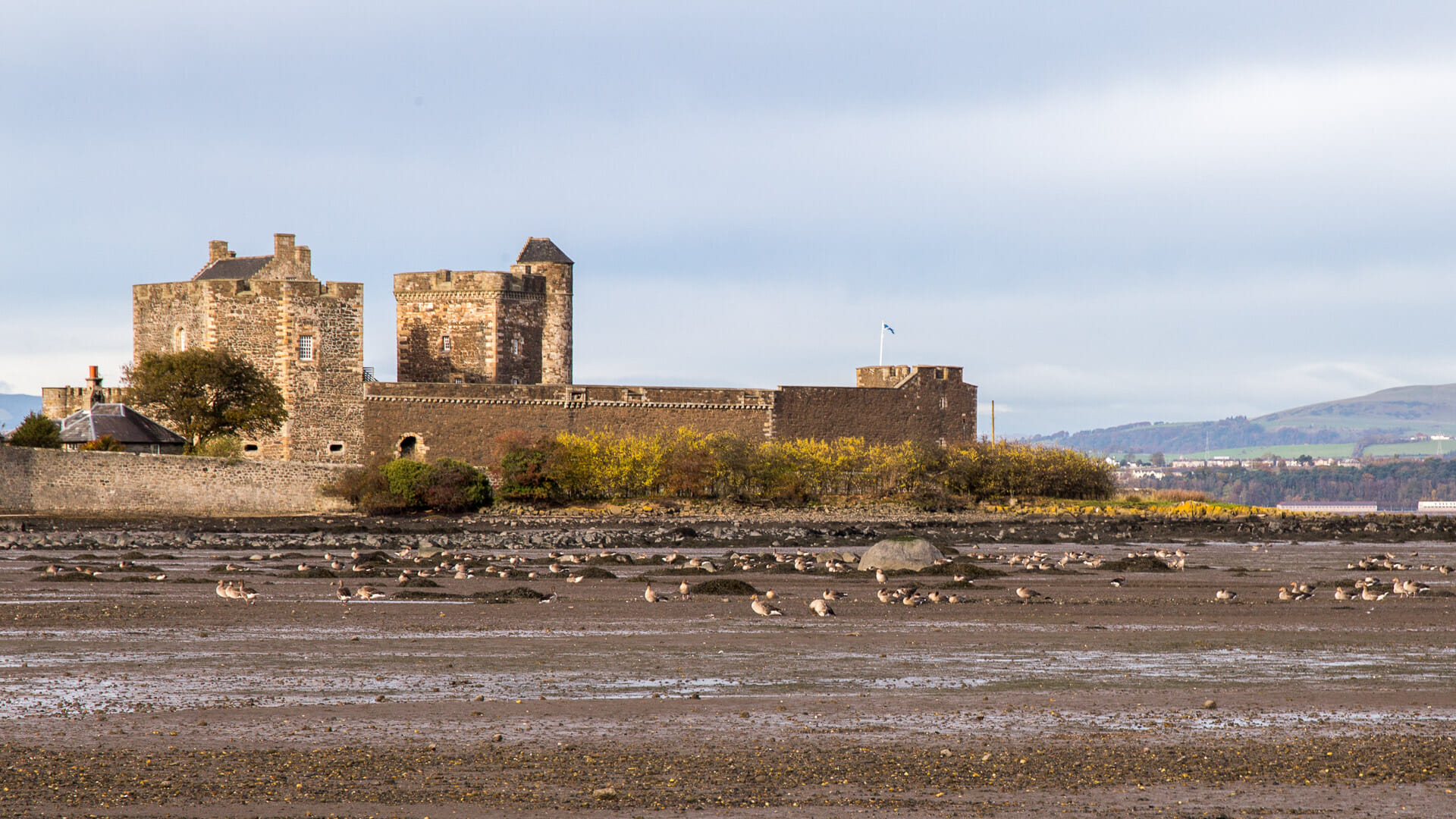
A ship that never sailed the sea – a place that’s supposedly located somewhere else entirely. Blackness Castle has to put up with plenty of comparisons. And yet its history and architecture alone would already be interesting enough.
Even so, Blackness Castle has, until recently, led something of a wallflower existence among tourists compared to other Scottish castles. But just as the film “Highlander” once made Eilean Donan Castle famous, the TV series “Outlander” brought fame to Blackness Castle.
That’s also why it’s a place that’s “located somewhere else”: without much ceremony, the makers of Outlander declared the castle to be an 18th-century “Fort William” within the episodes. In the story, Blackness Castle hardly represents the pleasant side of the Highland saga – the heroes experience little good here, to put it mildly.
That fits both the name and the mood of the castle – grim. And the interior of Blackness Castle isn’t exactly cheerful either. Grey stone dominates both the walls and the floor of the large courtyard. Bare, uneven rock pokes through everywhere.
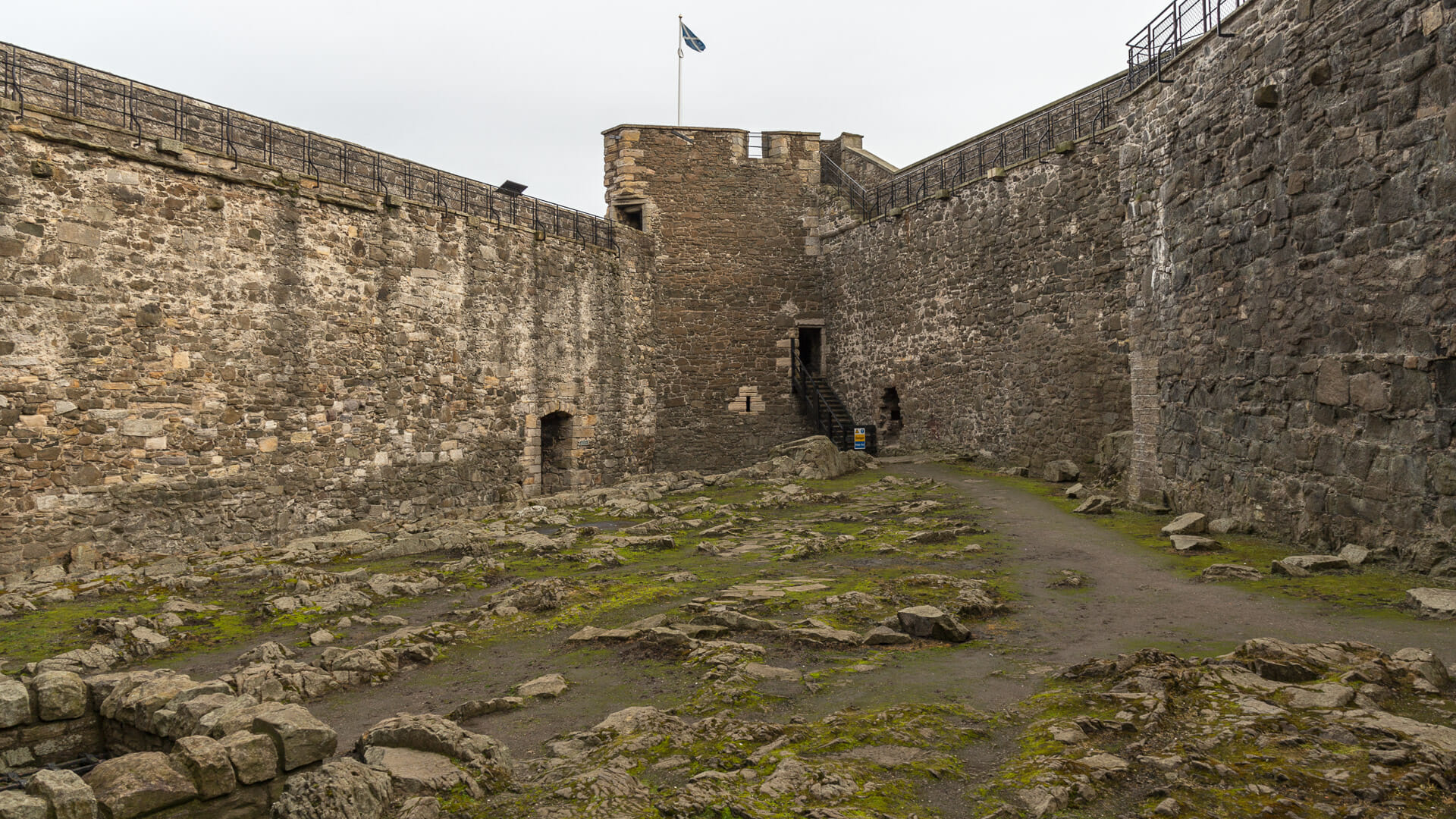
Even so, don’t assume the castle was always such a stony, cold place. In many spots, the garrison had installed stables and wooden floors. The great tower house was probably rendered in lime-white plaster.
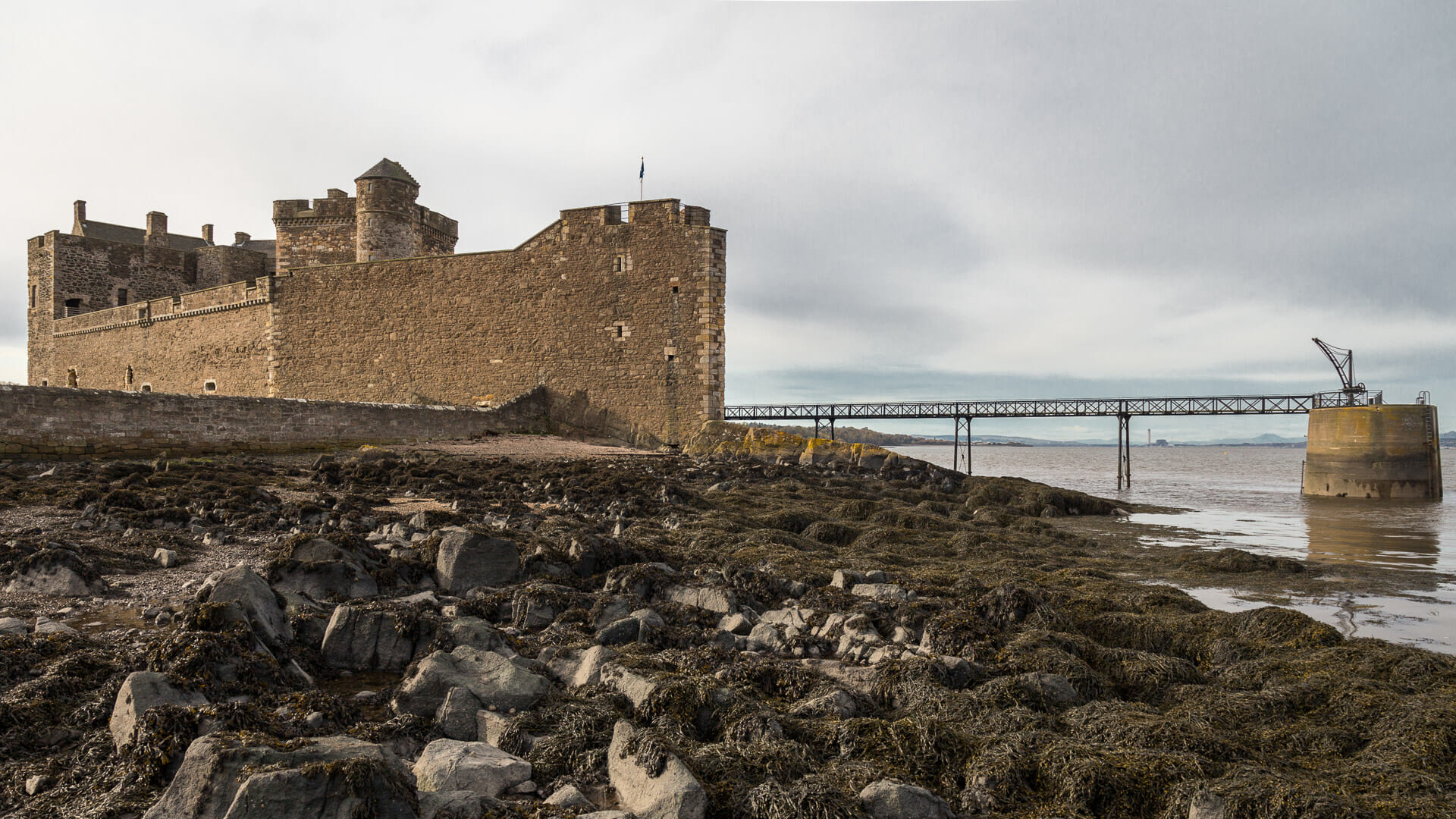
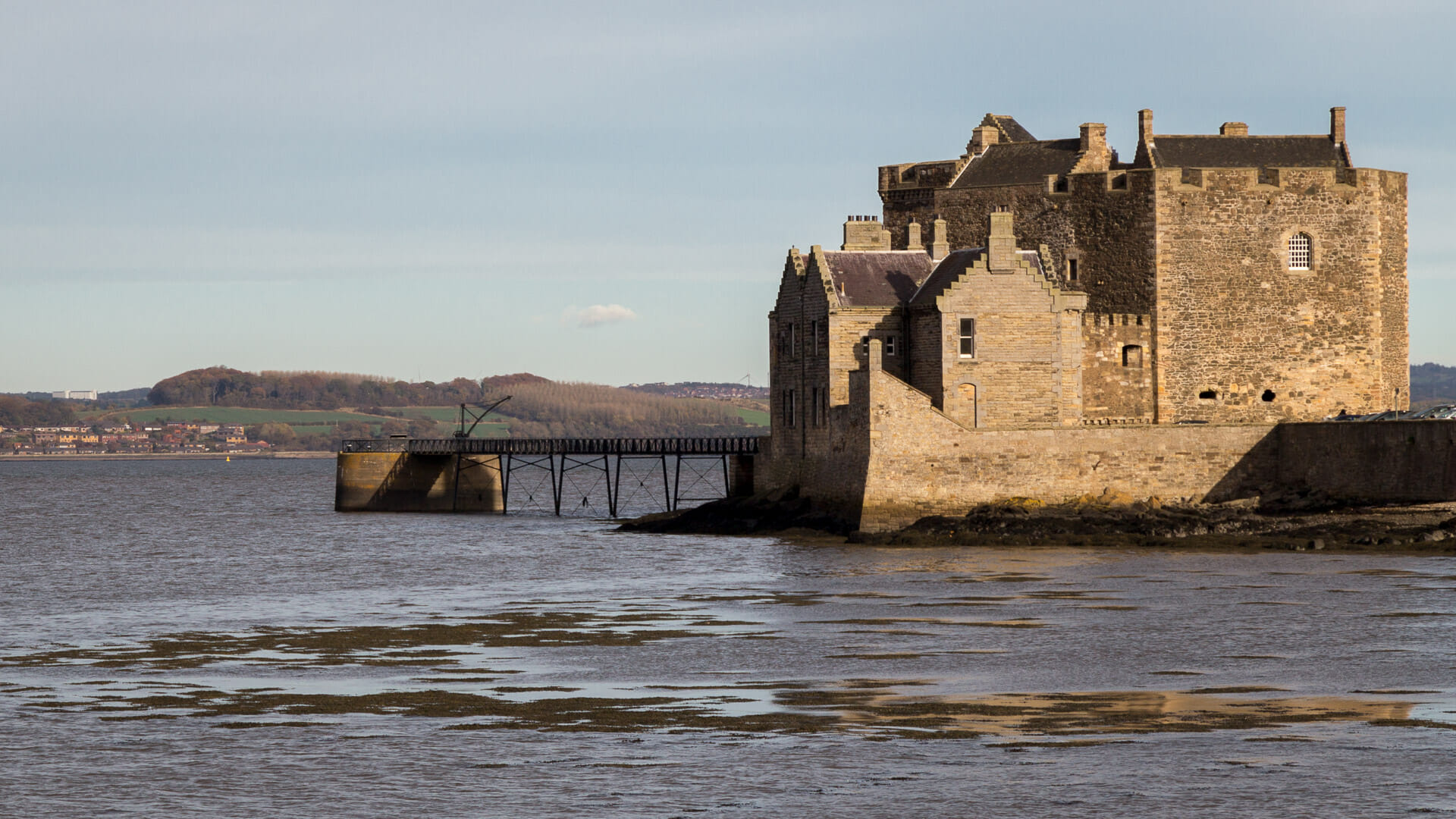
The purpose of Blackness Castle becomes immediately clear to anyone viewing it from the sea. Its walls project out into the Firth of Forth, still an important shipping route today, and one that needed guarding back then. A long jetty extends from the castle out into the deep water. Ships used to dock here right up until the First World War to store ammunition. For visitors today, the jetty is a great opportunity to see the castle from the seaward side – and you get a view of the Forth Bridges along the way, too.
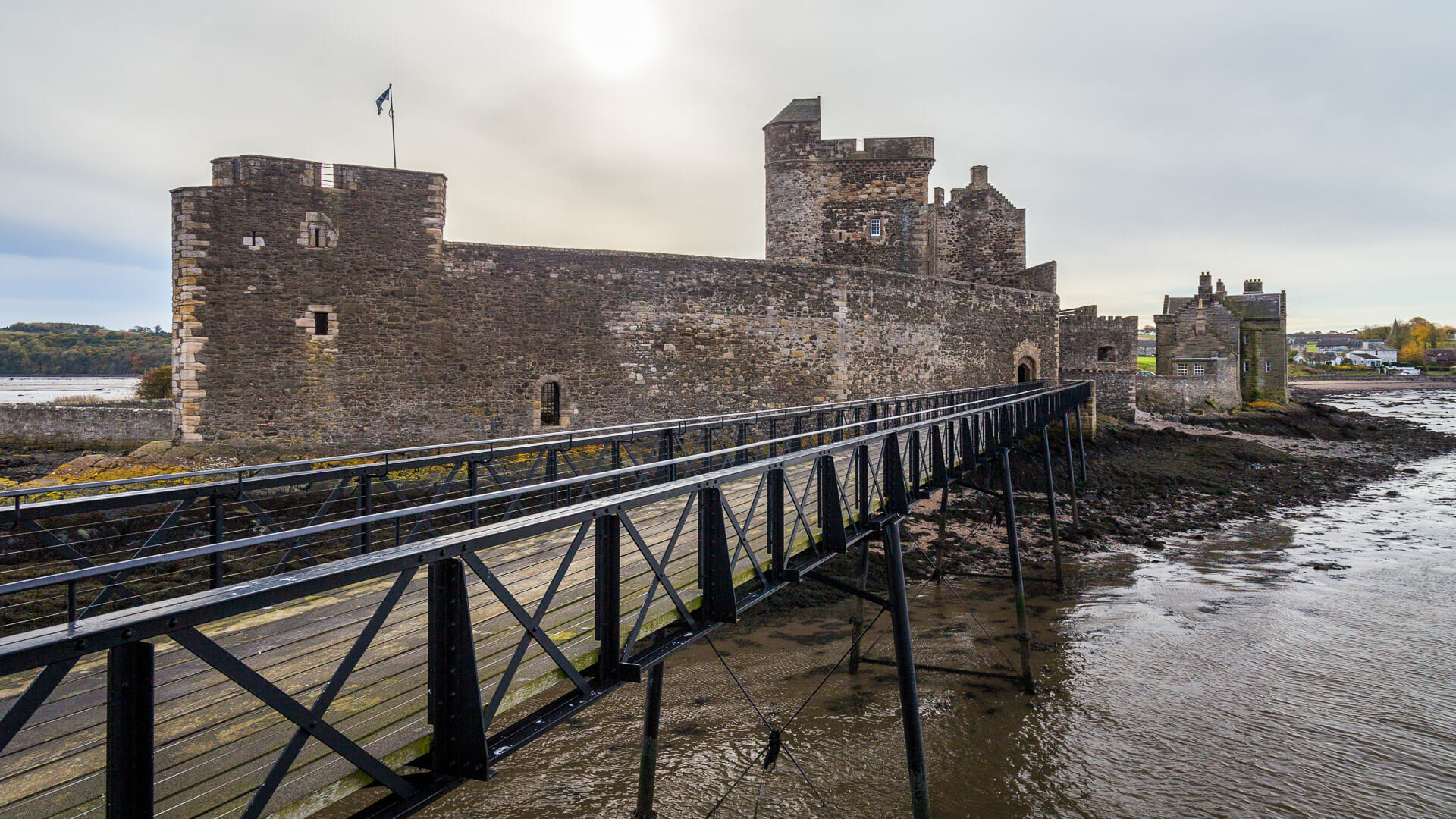
The other opportunity to see Blackness Castle from what’s effectively the sea side is from the beach that stretches along the bay beside the castle. From here, visitors can also see where the nickname “The ship that never sailed” comes from. You can clearly make out that the walls really do form a ship’s bow at the front, pointing out into the water – while at the back, the towers form a stern with a kind of bridge deck.
Good to know: The history of Blackness Castle
It’s perhaps no coincidence that the castle has the shape of a ship. Its builder, around 1440, was a certain Sir George Crichton, Admiral of Scotland. Blackness Castle also guards the harbour, which was already being used as a base for English troops as far back as 1304, during the wars between Edward I and Robert the Bruce (in German for now).
The tower house at the back looks like a bridge deck, and it really did house the high-ranking lords and their servants.
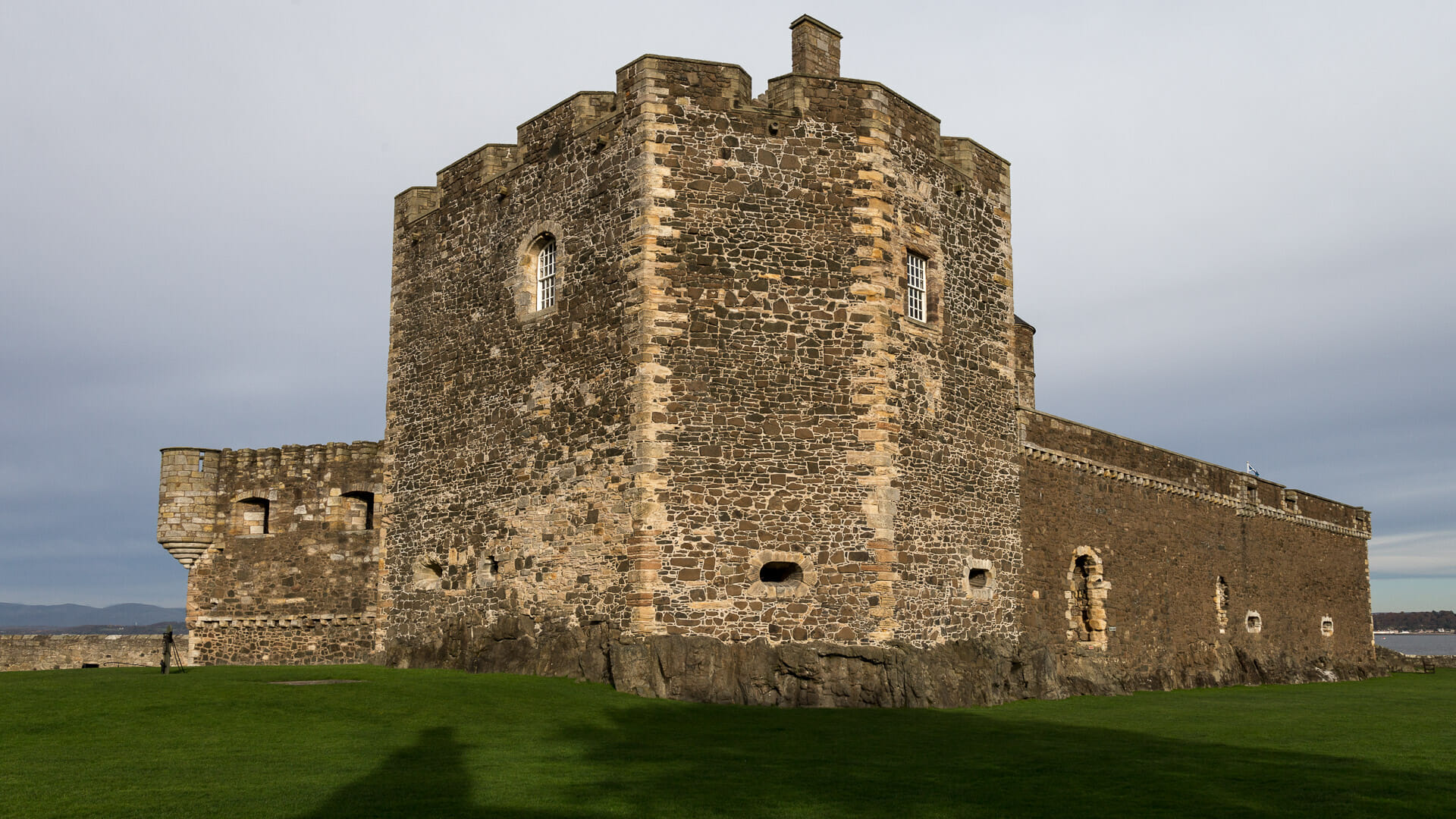
When Crichton died, the castle passed to the Scottish Crown and stayed there. Between 1537 and 1543, James Hamilton of Finnart brought Blackness Castle up to the latest standard in military technology. He moved the entrance from the side of the castle to the rear and created a fortified spur there designed to withstand cannon fire. He also added a so-called caponier. Finnart had brought this fortification know-how back from the continent, where he’d studied the most modern defensive structures of the day. Blackness was, at the time, a very modern fortress indeed.
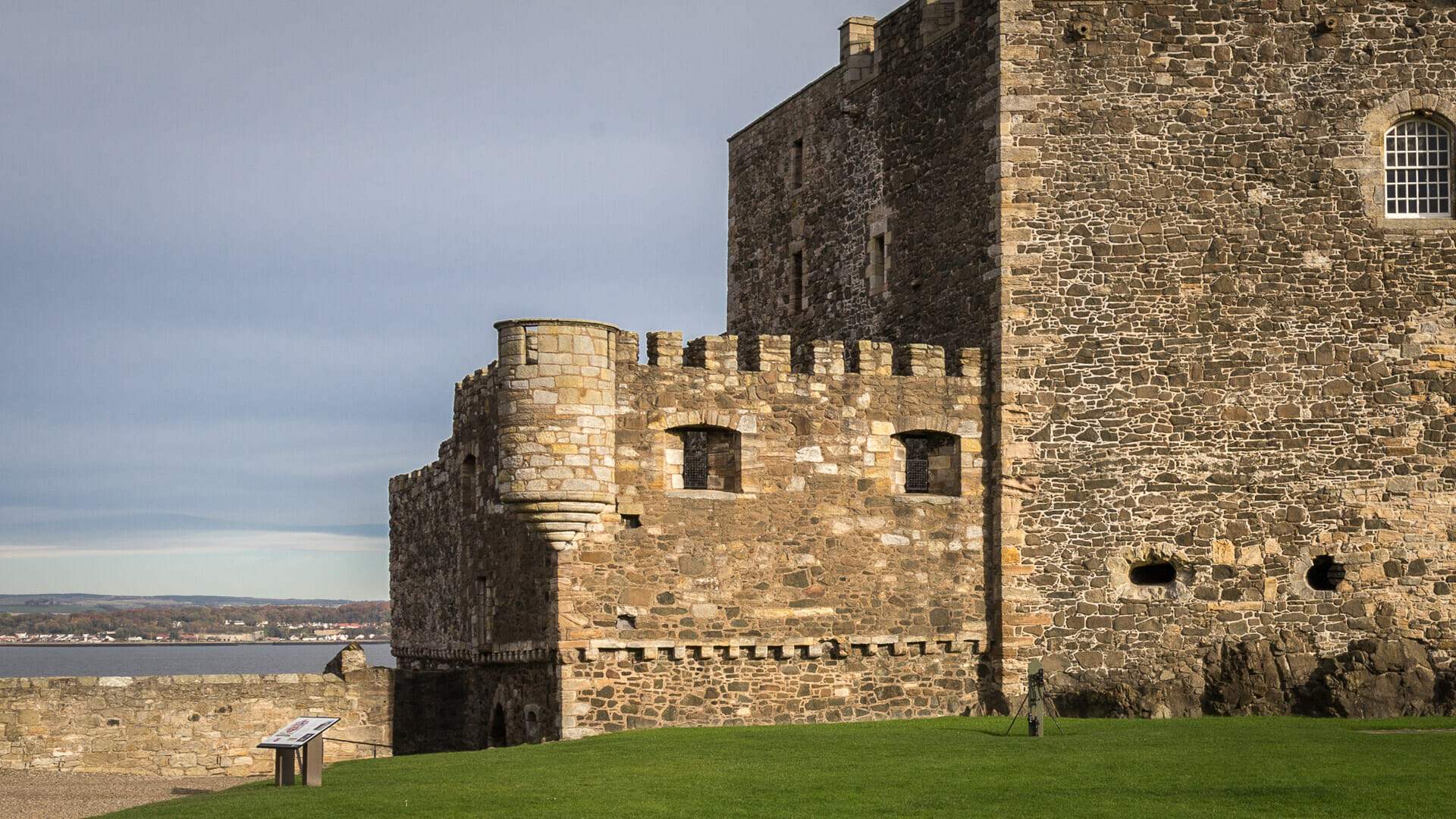
Finnart himself, however, mounted only a weak defence when he was charged with plotting against the king and sentenced to death.
Around the same time, an important prisoner was held in the “mast” of the ship – the free-standing tower in the middle: Cardinal David Beaton, who had tried to seize guardianship of the underage Mary, Queen of Scots, was imprisoned here. The central tower, though, illustrates rather nicely that this wasn’t an unpleasant life for high-ranking prisoners. The tower had room for family and servants, prisoners were allowed to bring their own cutlery and tapestries, and they were even permitted to roam up to three miles from the castle. Serving as a prison tower was, in fact, one of Blackness Castle’s important roles.
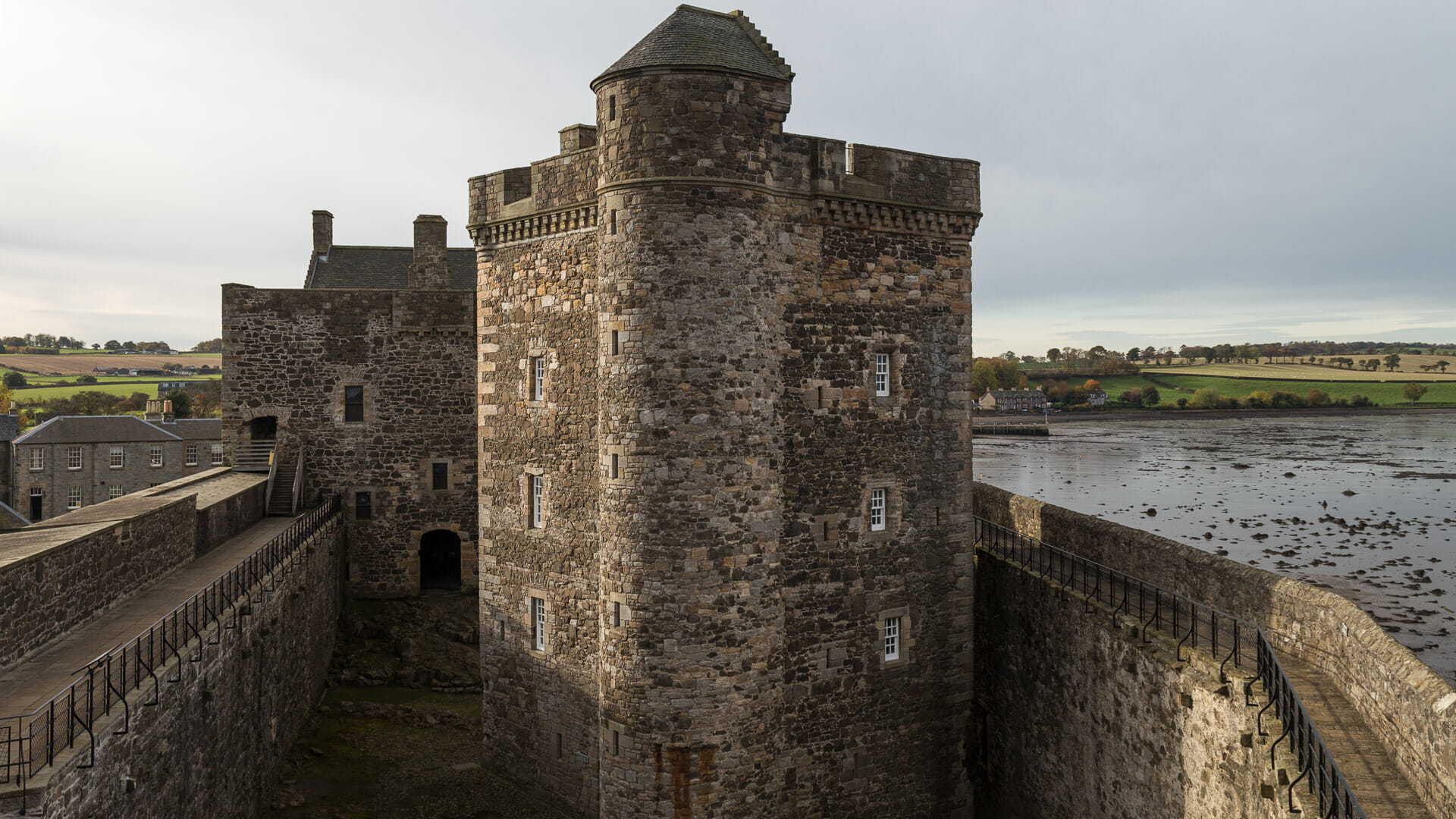
About a century later, the fortress faced its greatest siege: in 1651, Oliver Cromwell’s New Model Army stood before its gates. The damage from the cannon fire is still visible today on the landward side (in the picture above, the first cannon hole from the right is still noticeably “unround”). And the siege succeeded – the garrison was forced to surrender.
After the union of England and Scotland, Blackness Castle lost much of its importance. Later, from around 1870, it was eventually used as an ammunition depot. That’s when the jetty with the crane winch was built out into the Firth of Forth.
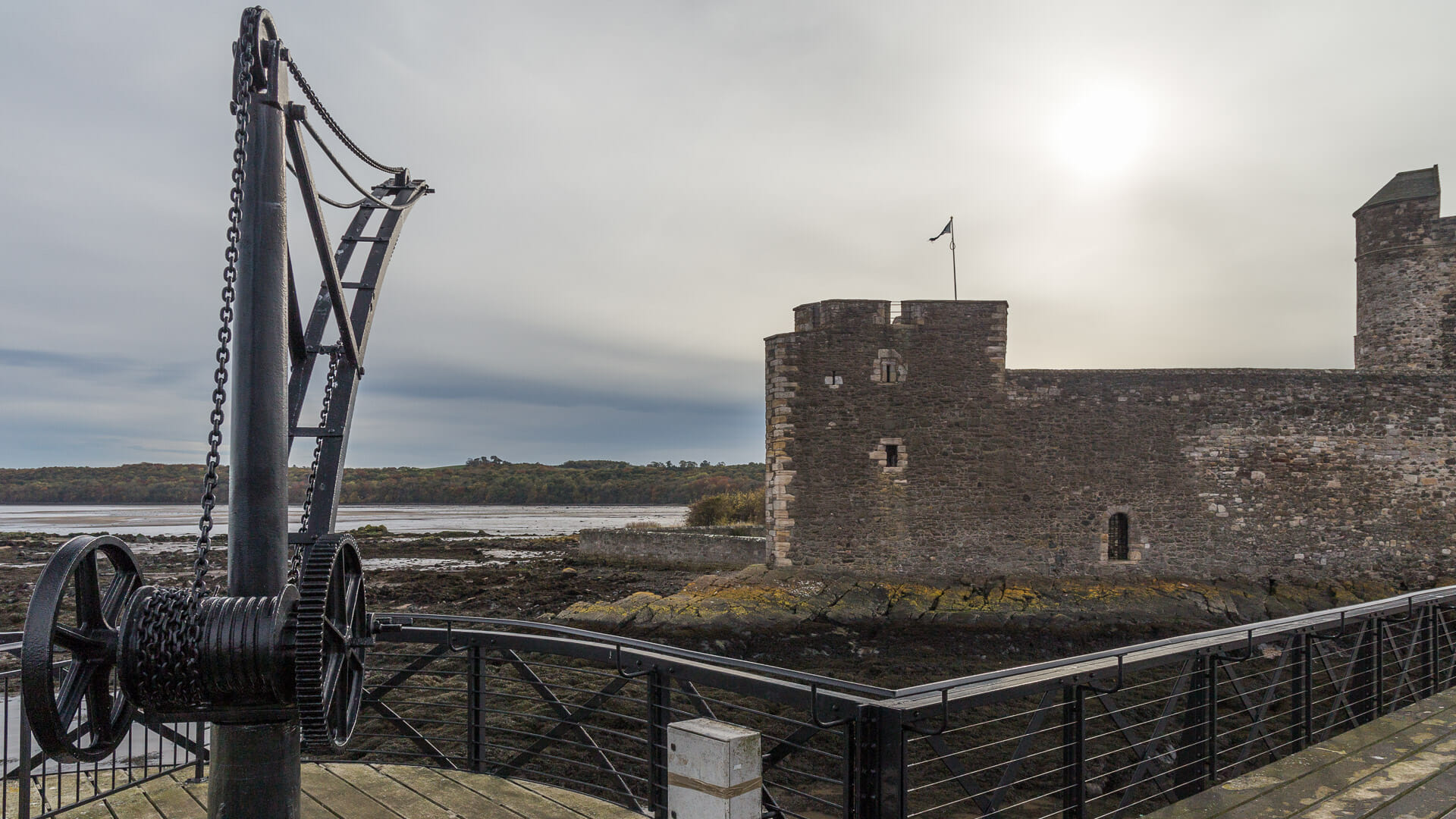
After the First World War, however, Blackness Castle lost all strategic importance for the military. And so it became what it is today: a fascinating, history-steeped castle on the beautiful Firth of Forth.
Tip: A walk to the beach after your visit
On the road to the castle, a path branches off through a small gate and leads to the nearby beach. Along the way, you also get the chance to see the remains of the old castle chapel and the dovecote. Both were destroyed during Cromwell’s siege.
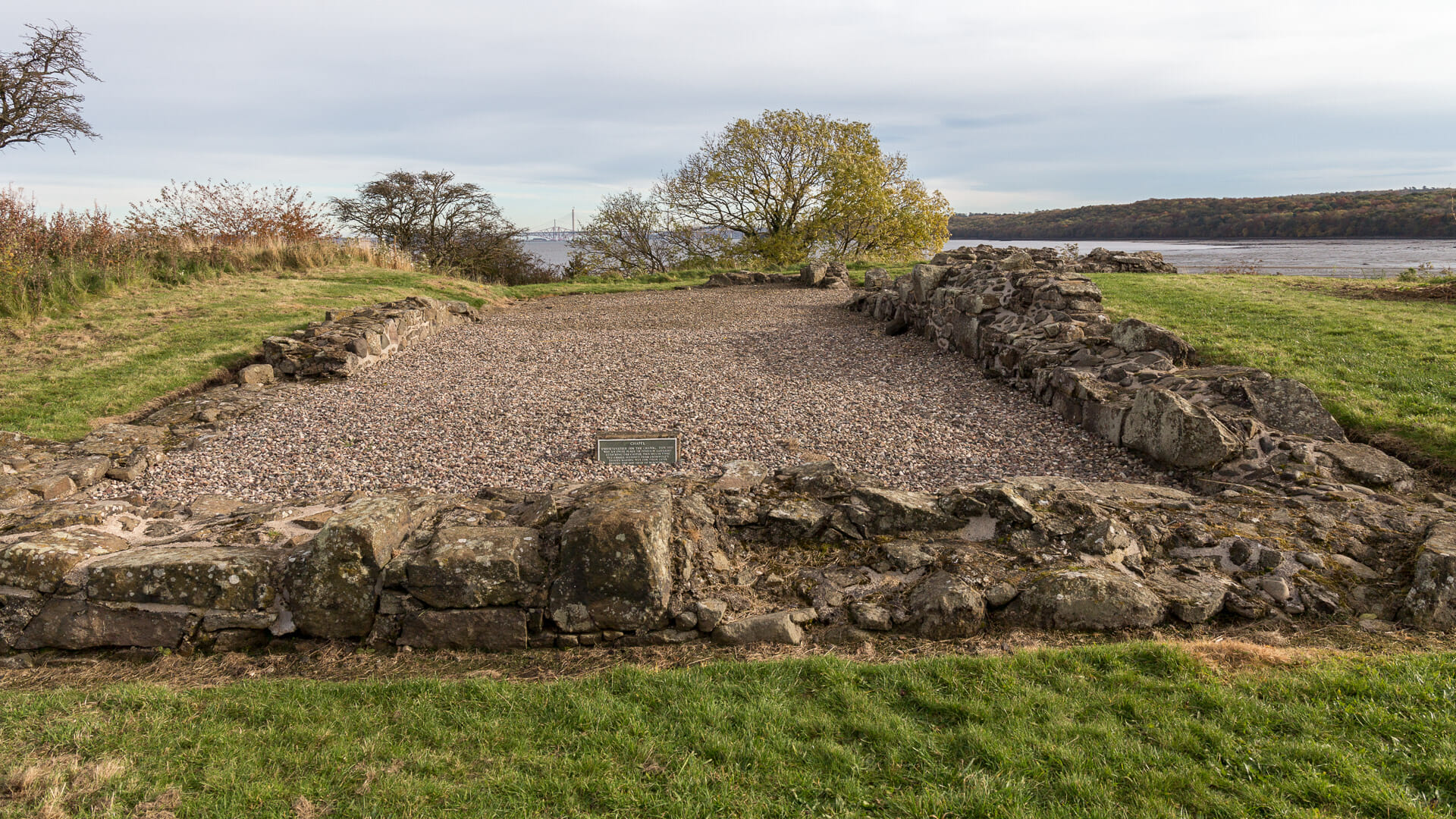
The beach itself consists of a stretch of grass with picnic tables. Many birds gather here, and you get a good view of the side of the castle. I even ventured a little way into the muddy area exposed by the low tide. That went fine, right up until I suddenly sank ankle-deep in one spot …
A good spot for photos can be found on the road back towards the village. From there, you can photograph the other side of the castle, including the landing jetty. Watch the background carefully, though: the cranes and warehouses of the harbour on the far side of the Firth of Forth often sneak into the shot. If you choose your spot correctly, though, they disappear behind the castle.
Personal note: Letting the castle’s own character speak for itself
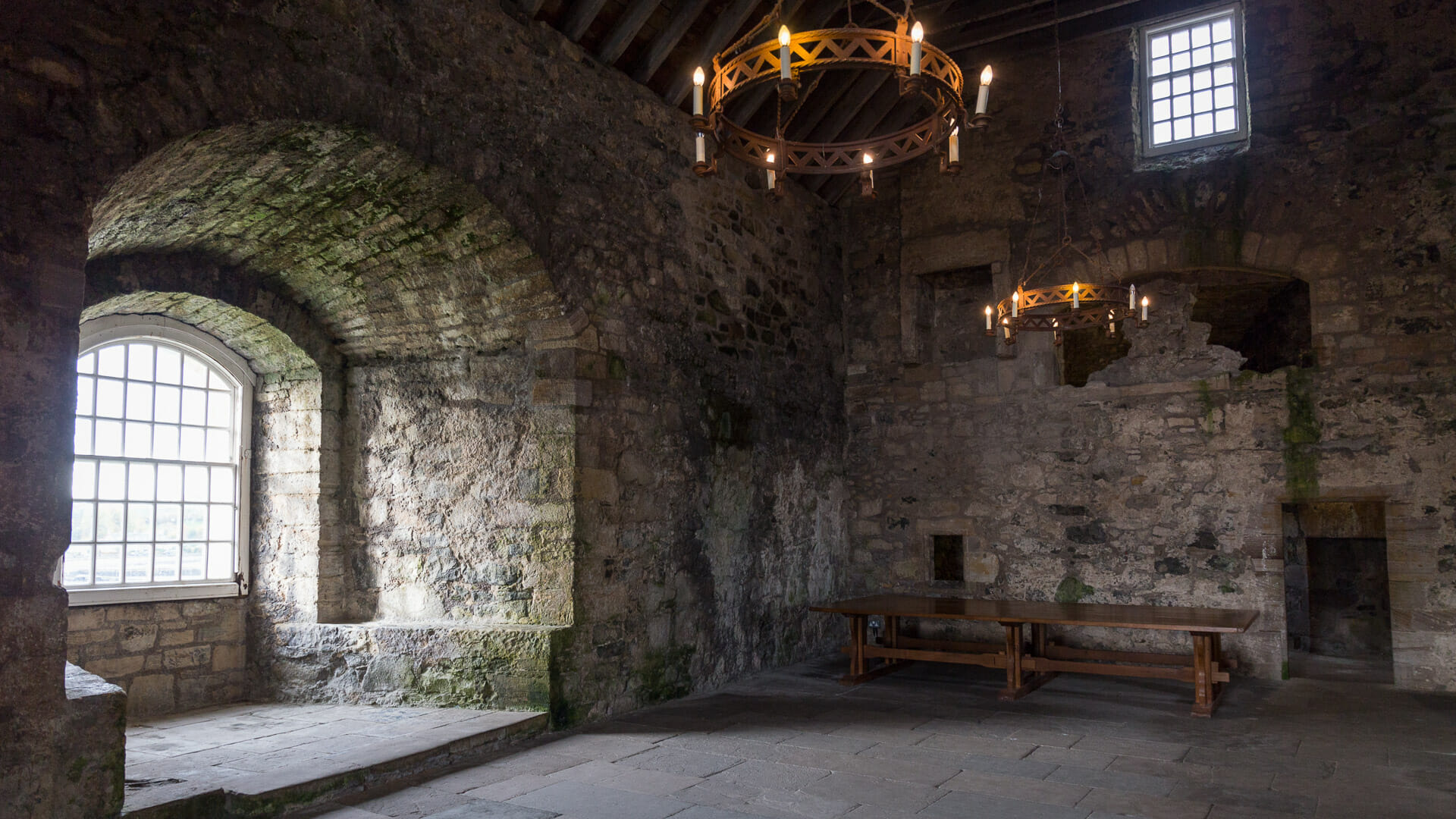
I forgot about the Outlander factor fairly quickly at this castle, because it’s a fascinating building in its own right – especially the outdoor grounds. The interior was less interesting, since there’s no furniture to see.
By the time you reach the gift shop at the latest, Outlander catches up with you again: scarves and all sorts of other souvenirs related to the film series are on display there.
Getting there
With a sat nav: The postcode “EH49 7NH” will take you into the village; from there, just follow the signs.
Without a sat nav: Coming from Edinburgh, head to South Queensferry and from there take the A904 towards “Bo’ness”. After a while, a small road branches off immediately to the right; the sign on the left already points the way to Blackness Castle. At the next T-junction, turn right and into the village. After the “Blackness Inn”, turn right towards the castle – the road leads directly to the car park.
