At the Butt of Lewis, the northern tip of the Outer Hebrides, storm and sea lash the cliffs so relentlessly that the lighthouse standing there had to be built from special material.
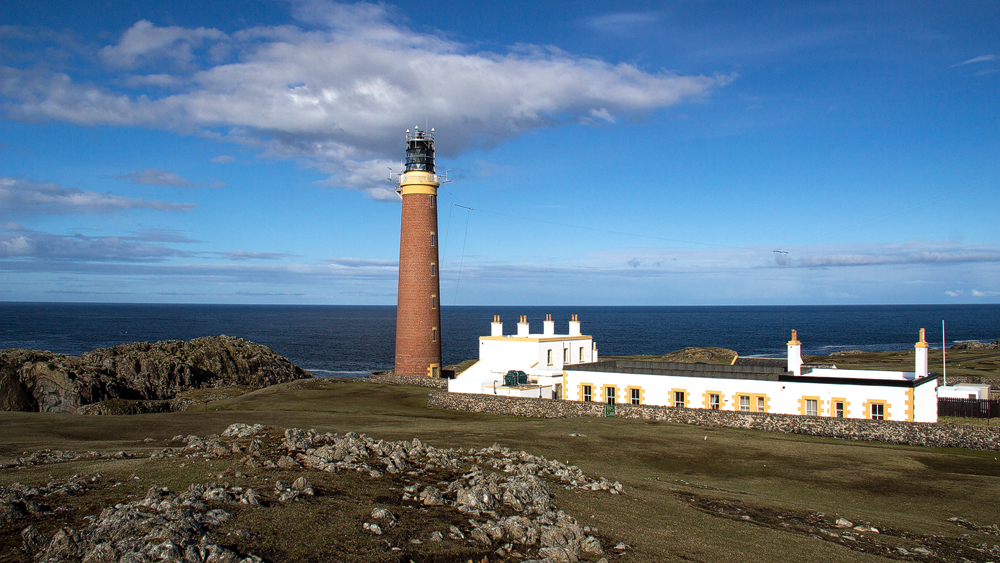
It feels like the Scots’ last outpost – after this, there’s only the sea, with all its eerie consequences. You sense immediately just how harsh those consequences can be; here, at the “thick end” of the Hebridean island of Lewis, at the “Butt”, the wind howls so fiercely that the spot once made it into the Guinness Book of Records – as the stormiest place in Britain.
The lighthouse at the Butt of Lewis is genuinely a last point of contact for anyone still venturing further out into the merciless Atlantic. And yes, such people do exist. Take the guga hunters, for example, who sail out to the rock of Sula Sgeir to spend a few days there culling young gannets. Sula Sgeir lies 70 kilometres north of the Butt and is a tiny island in the middle of nowhere. Continue north from there, and there’s nothing left but the Arctic.
There used to be another remote outpost the lighthouse kept in radio contact with: the small Flannan Isles, around 30 kilometres to the west. Another lighthouse stands there, a kind of little sibling, which was manned by one or more keepers until 1971. But the place is said to be cursed! The 1900 crew vanished under circumstances that remain unexplained to this day. The three men were presumably simply swept off the island by the Atlantic – or did the fairies have a hand in it after all? Legends still surround the incident to this day. In 2017, the mystery of the Flannan Isles was even made into a film, “The Vanishing”, starring Gerard Butler. Nowadays there’s no longer any need for radio contact with the Flannans – the light operates automatically, and a maintenance crew visits only once a year.

Back to the Butt of Lewis. Even the lighthouse’s builders, two members of the famous Stevenson family of engineers, recognised that the weather here was particularly harsh and called for a different building material than usual. And so the tower’s appearance today is noticeably different from that of its relatives. Instead of being entirely white, like all the other Scottish lighthouses, it’s dressed in brick red – because brick is sturdier than the usual stone and barely absorbs water.
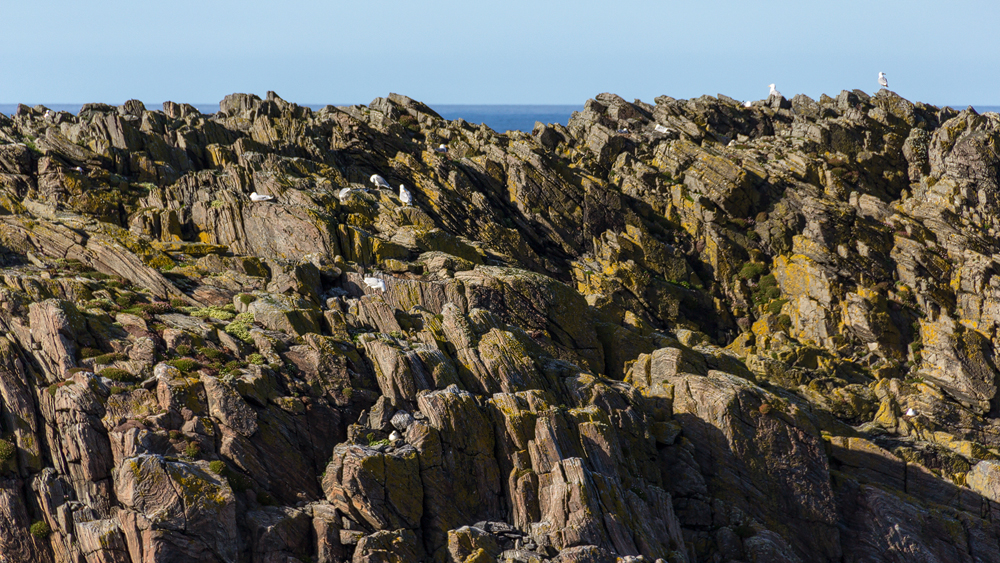
As high as the tower rises, the cliffs drop just as steeply a few metres behind it. It plunges down sharply to the roaring sea below, with individual rocks still jutting out of the water, offering birds an offshore nesting spot. To feed their chicks here, they undertake breakneck hunting flights and just as daringly steer back to the rock, beaks full, on their final approach.
The Butt of Lewis really is a place where visitors sense that beyond it lies nothing but nothingness. And precisely for that reason, it shouldn’t be skipped on any island tour.
Know: Names and facts about the Butt of Lewis
“Butt” in English really does mean “thick end”, though in American English the word is also happily used for the human backside. In Gaelic, the Butt of Lewis at least carries a somewhat friendlier name: Rubha Robhanais – the “cape of the loch”. This refers to a nearby rock with a circular opening.
A few more technical facts about the lighthouse: its light sits 52 metres above sea level in total and can be seen from around 25 nautical miles away. The tower itself stands 37 metres tall.
Personal note: Birdwatching
What I enjoyed most was watching the birds on the great cliff in front of the lighthouse.
Tip: Walking along the cliffs
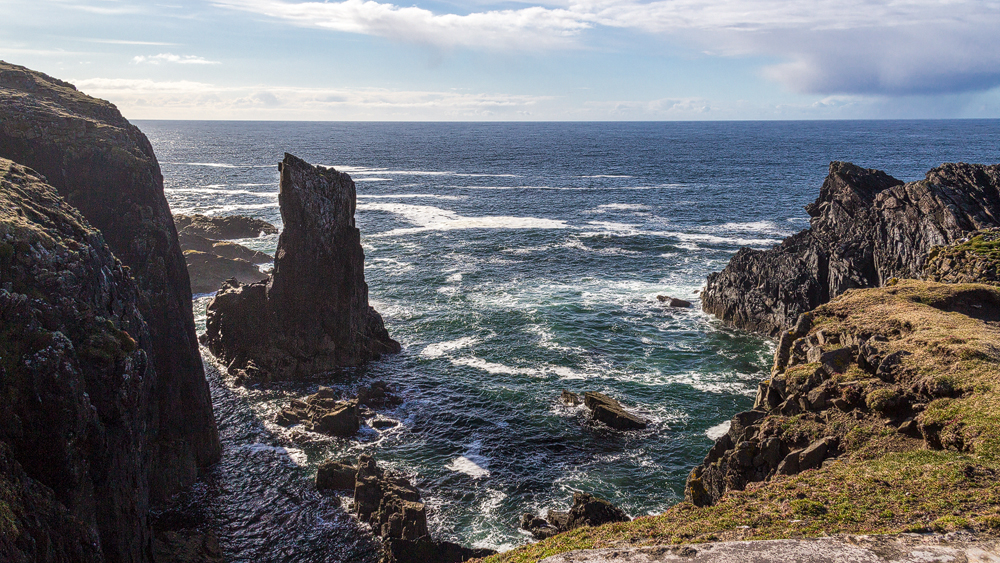
If the weather allows, you should take some time for an extended walk here. There aren’t many marked paths, but the ground is almost entirely covered with short grassland that’s easy to walk on. Heading west takes you along dramatic cliffs. Heading east, on the other hand, you’ll soon reach Port Stoth bay. This is where the building material for the lighthouse was landed in 1862 – the road didn’t exist yet at the time.
Getting there:
With a sat nav: “HS2 0XH” takes you to the small village of Eoropie, from where the road to the Butt of Lewis is signposted.
Without a sat nav: from Stornoway, take the A857 and follow it all the way to the end, about 42 kilometres (26 miles). In the village of Lionel, turn left onto the B8013 towards Eoropie and Rubha Robhanais, then keep following the signs for Rubha Robhanais and the Butt of Lewis.