Even as a ruin, the moated castle of Caerlaverock still radiates strength. It was meant as a defence against the English. Fate had other plans.
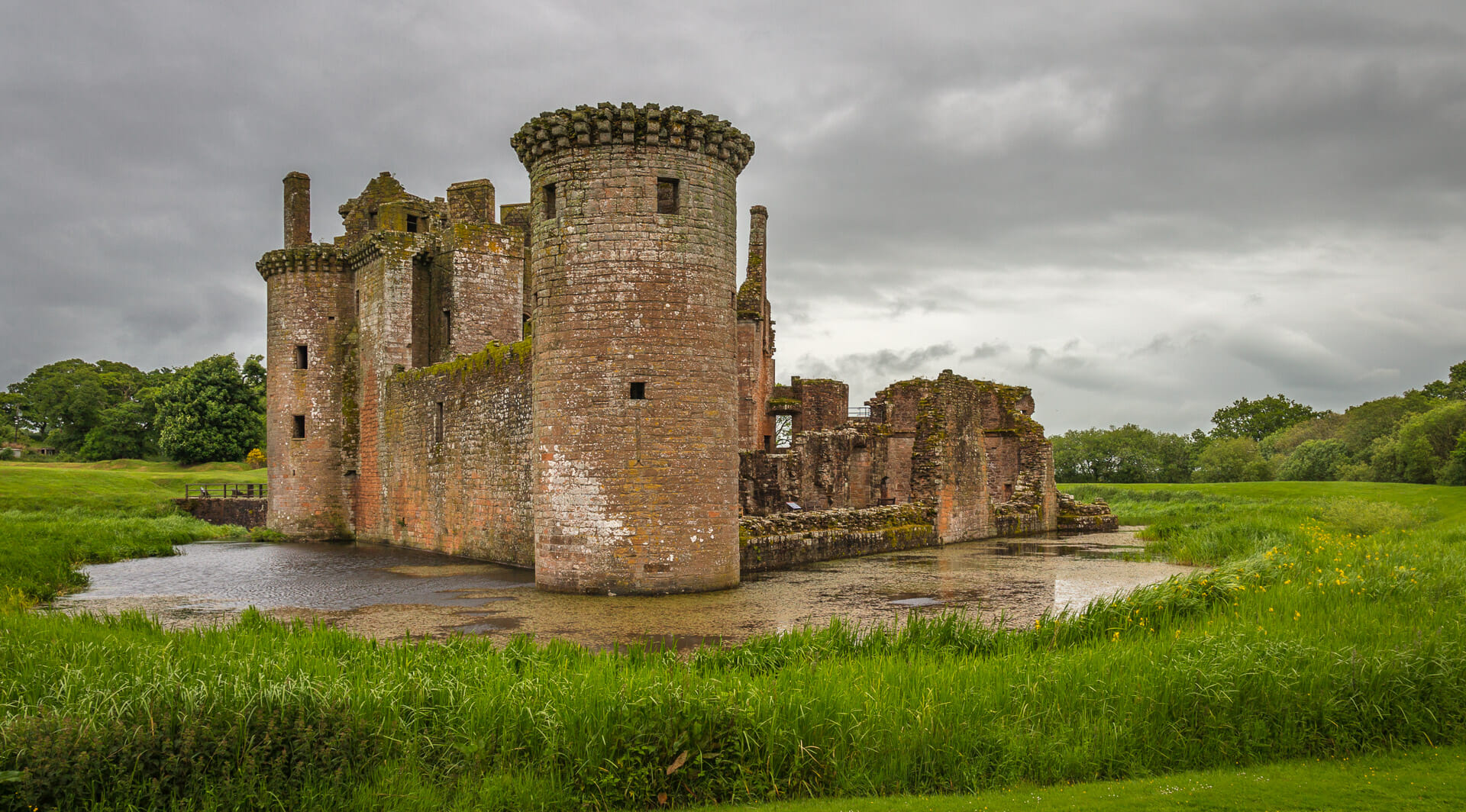
It’s hard to stand out among all of Scotland’s impressive castles. Yet Caerlaverock Castle, in the south of the country, manages it thanks to its distinctive appearance. There simply aren’t many castles with a triangular floor plan that also happen to sit right in the middle of the water.
Caerlaverock Castle stands not far from the Scottish-English border, right where the British coastline takes a deep bend inland: the Solway Firth. It was this position that made the castle so strategically important – and at a time when relations between Scotland and England were approaching an all-time low.
Achtung: Die Betreiber dieser Sehenswürdigkeit, das Historic Environment Scotland (HES), führt seit 2021 an vielen Sehenswürdigkeiten Untersuchungen oder Baumaßnahmen zum Erhalt der Gebäude durch. Dieses gehört dazu. Darum vorher informieren, ob und was begehbar ist. Mehr Hintergrund hier.
Because just shortly after its completion in 1277, conflict broke out between Robert the Bruce and Edward I of England. Around 1300, the English king set off to seize strategically important positions. One of his first targets: Caerlaverock Castle.
The castle’s garrison believed themselves safe. Strong walls tapering to a point at the gate. Two defensive towers alongside, guarding the access perfectly. A moat, and earthworks piled up around it. Caerlaverock was, so to speak, state of the art.
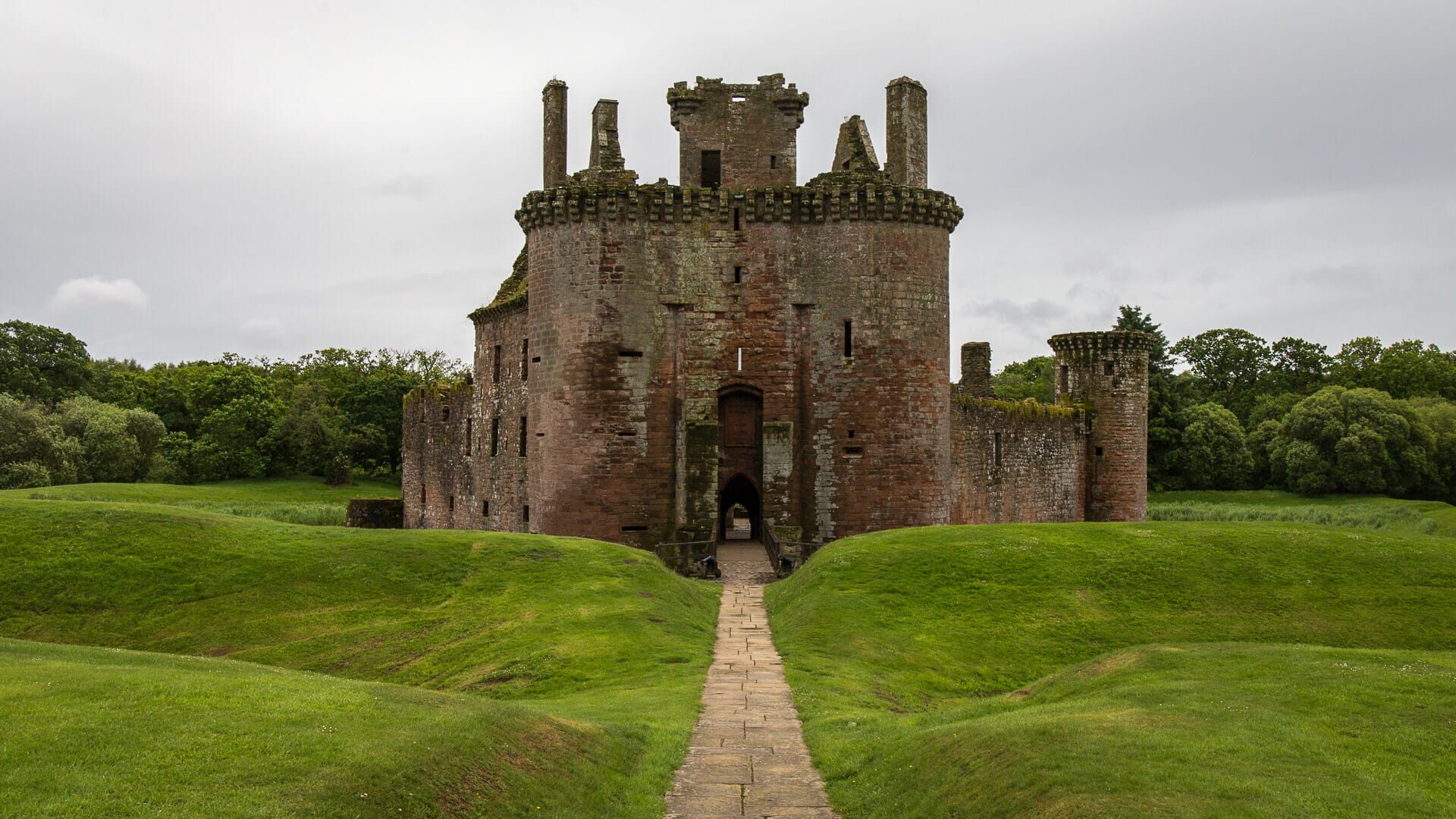
When the English troops rolled in with their heavy catapults, they quickly battered the walls down. Yet the defensive towers held firm – they could not take the castle.
The problem: getting out under siege was just as hard as getting in. The builders hadn’t provided any secret passages. Meanwhile, the English had mustered over 3,000 soldiers and plenty more artillery besides. Faced with this overwhelming force, the garrison eventually surrendered and left the castle. The English were rather taken aback: just 60 Maxwells had tied down a massive army here.
When the Scots finally regained their independence, after years of conflict, at the Battle of Bannockburn, Caerlaverock passed back into the hands of the Maxwells.
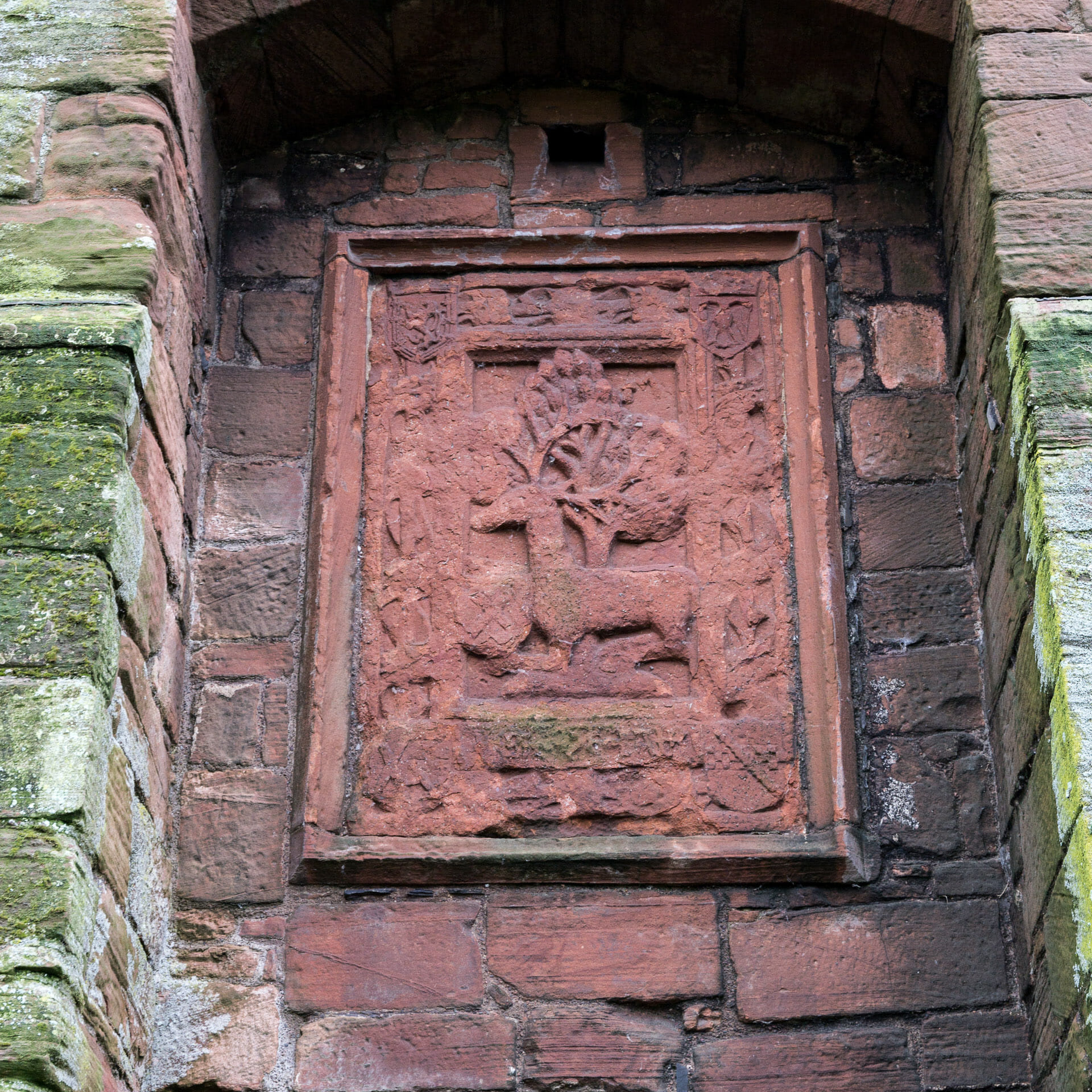
Around 1630, Robert Maxwell, 1st Earl of Nithsdale, built a residence with a façade typical of the period. Coats of arms can be found above the windows – a very similar façade can be found, for instance, at the royal palace of Linlithgow.
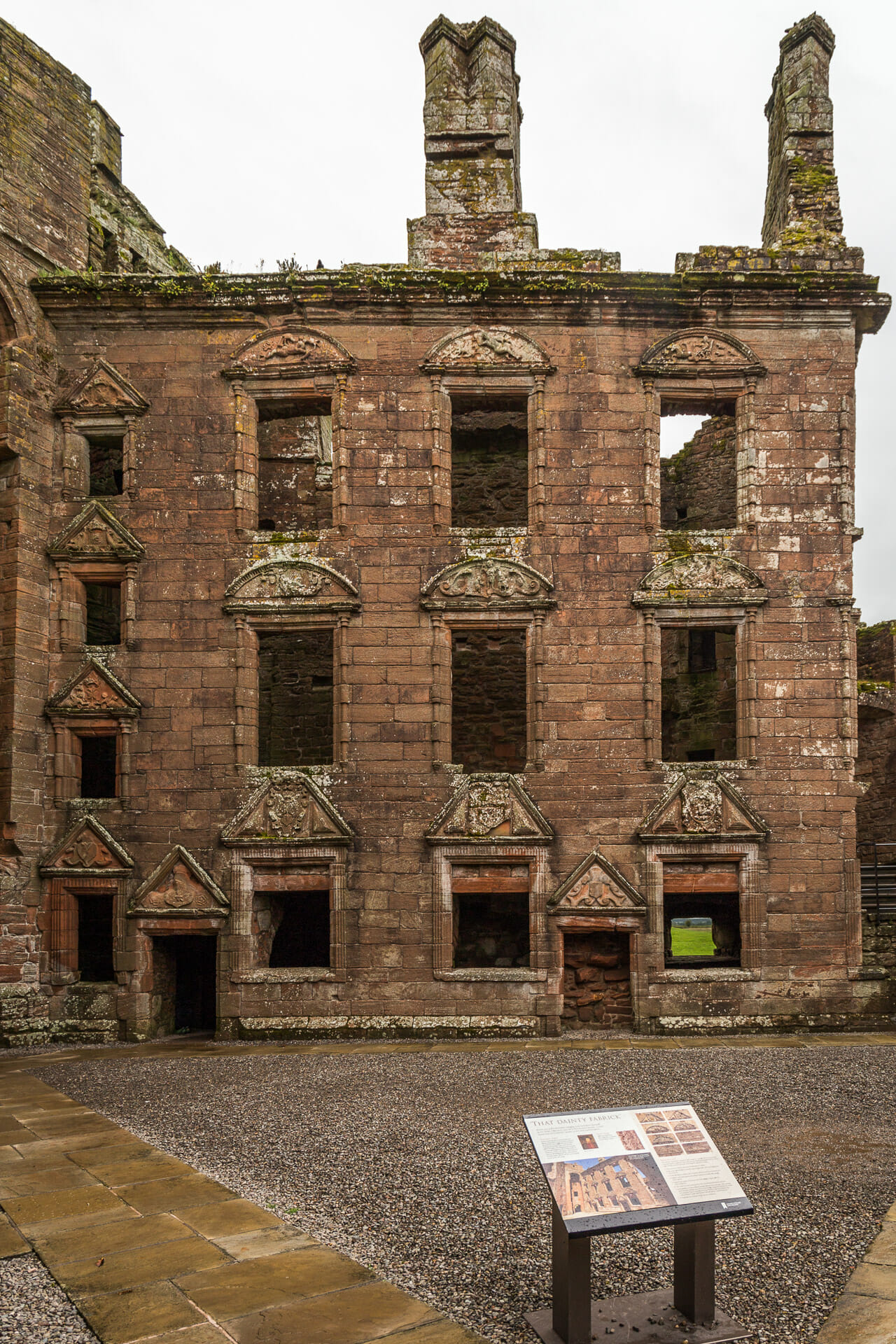
This building is named after its builder and is known today as the Nithsdale Lodging. Robert Maxwell, though, didn’t get to enjoy it for long.
Because roughly ten years later, the castle’s second notable siege took place: in 1640, Covenanters surrounded the castle for a full 13 weeks, before the garrison was finally forced to surrender. The victors tore down one of the walls and plundered the castle. Caerlaverock Castle fell into decay, eventually reaching the state we see it in today.
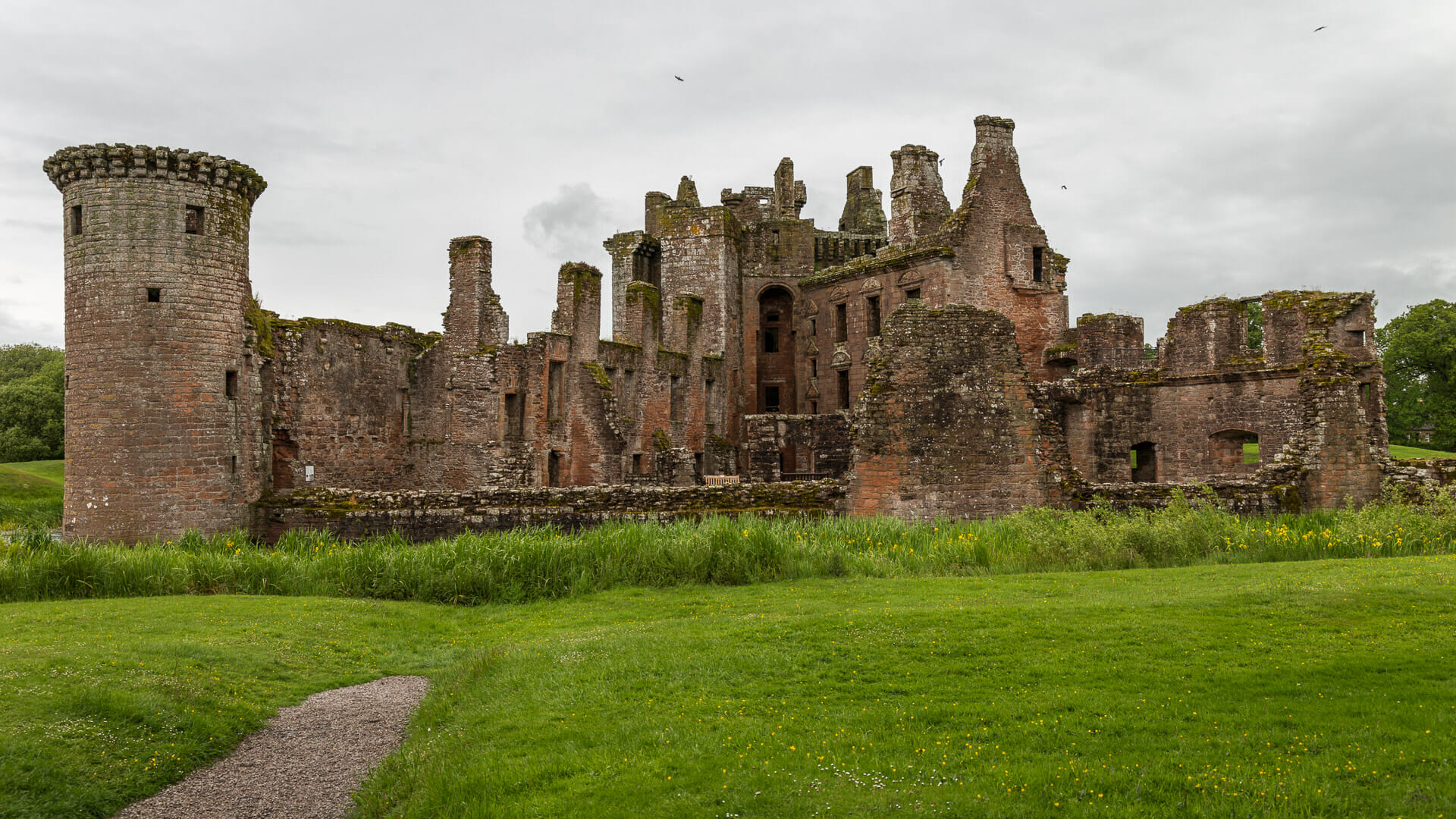
Today, the castle and its surroundings are looked after by Historic Scotland, who make Caerlaverock Castle accessible to visitors. And a visit is well worth it.
Did you know: about Caerlaverock Castle
The name Caerlaverock means “castle of the lark”. It sounds idyllic, calling to mind gentle birdsong. It’s pronounced roughly “care-LAV-rock” – the element “Caer” still means “castle” or “fort” in Welsh today.
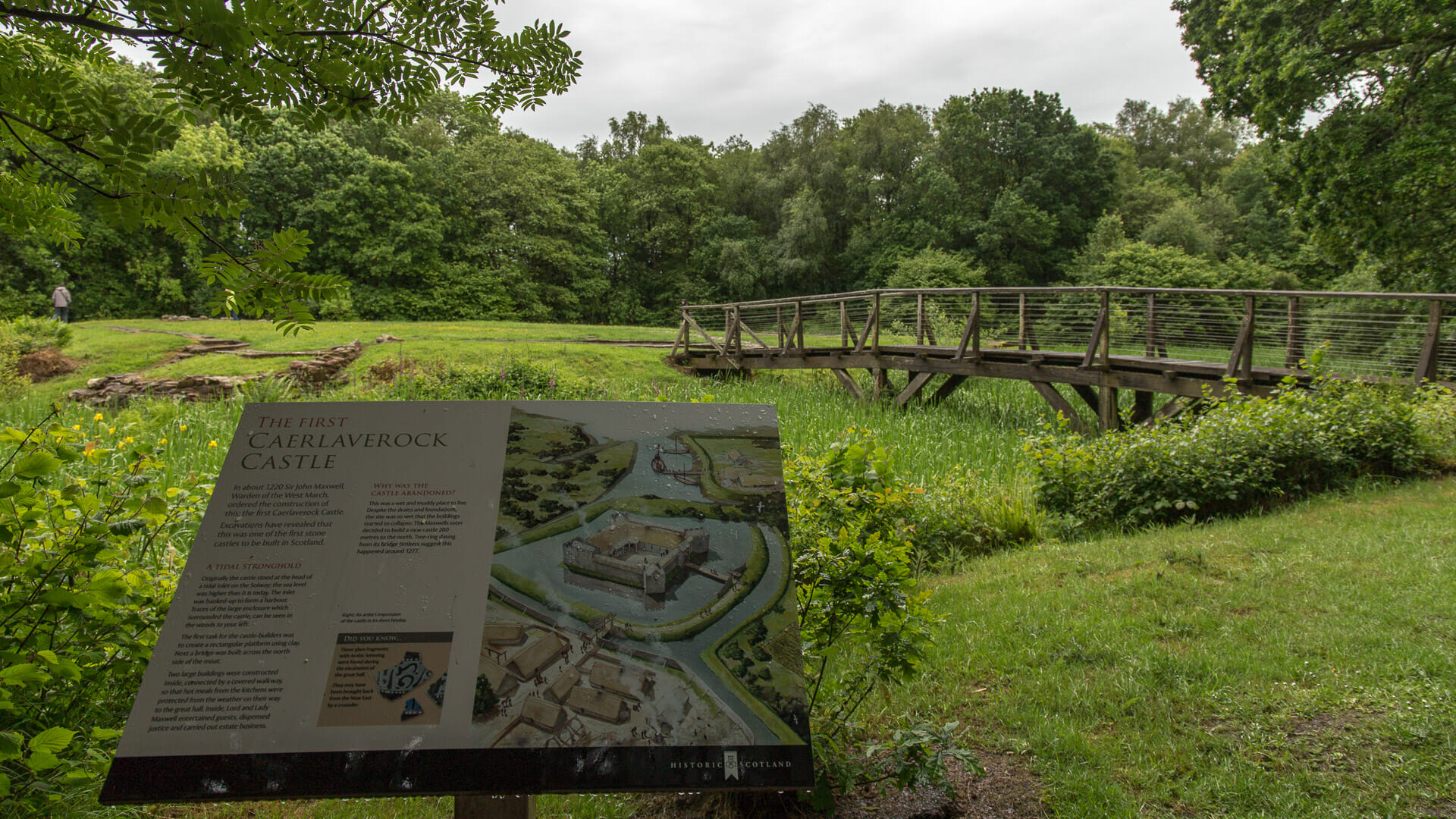
Caerlaverock Castle was already the Maxwells’ second attempt at building a castle here. The first ended up sinking into the surrounding marsh. Its remains can still be seen today, around 200 metres away.
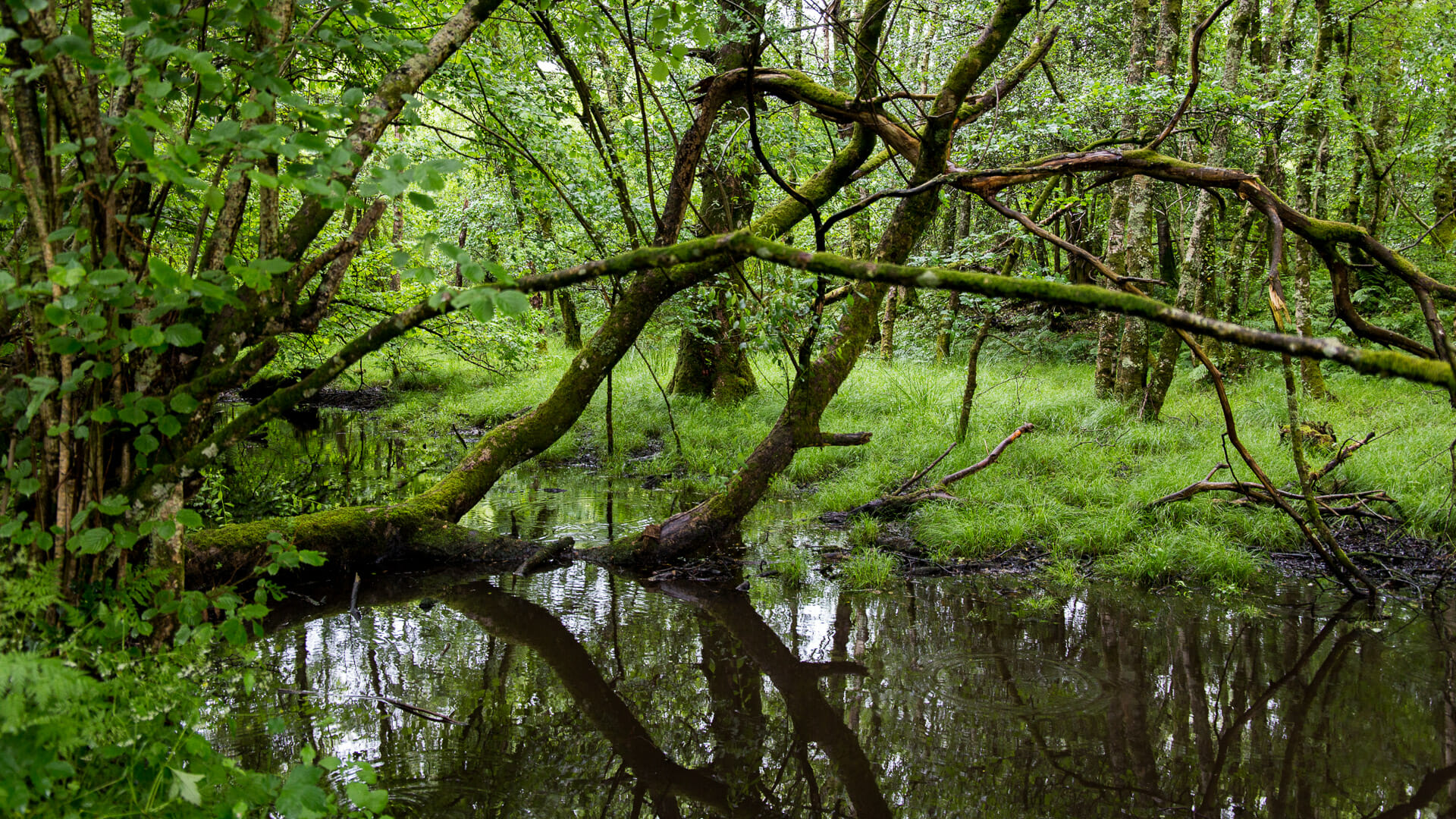
This marshland, with its woods, pools and meadows, now forms a nature reserve, which visitors can walk through.
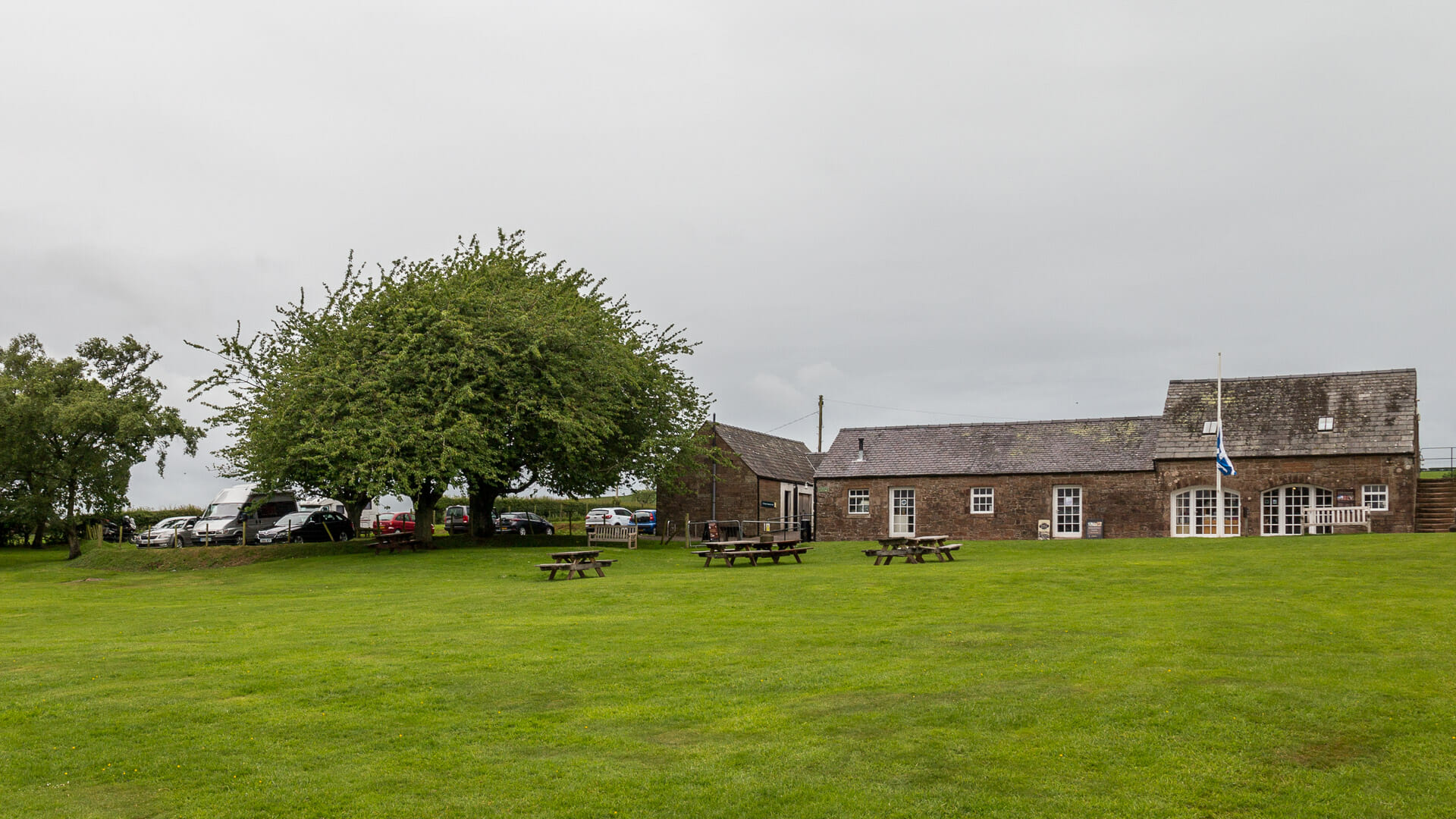
The visitor centre in front of the castle also features an exhibition with plenty of information panels on the castle and its sieges.
Tip: visit the old castle first, then the new one
Naturally, the old castle isn’t quite as impressive if you see the large one first. So I’d recommend taking the circular walk through the wild marshland to the old castle first.
The route passes by pools of water through the woods.
Along the circular route, a small footbridge appears, leading to the remains of the first castle.
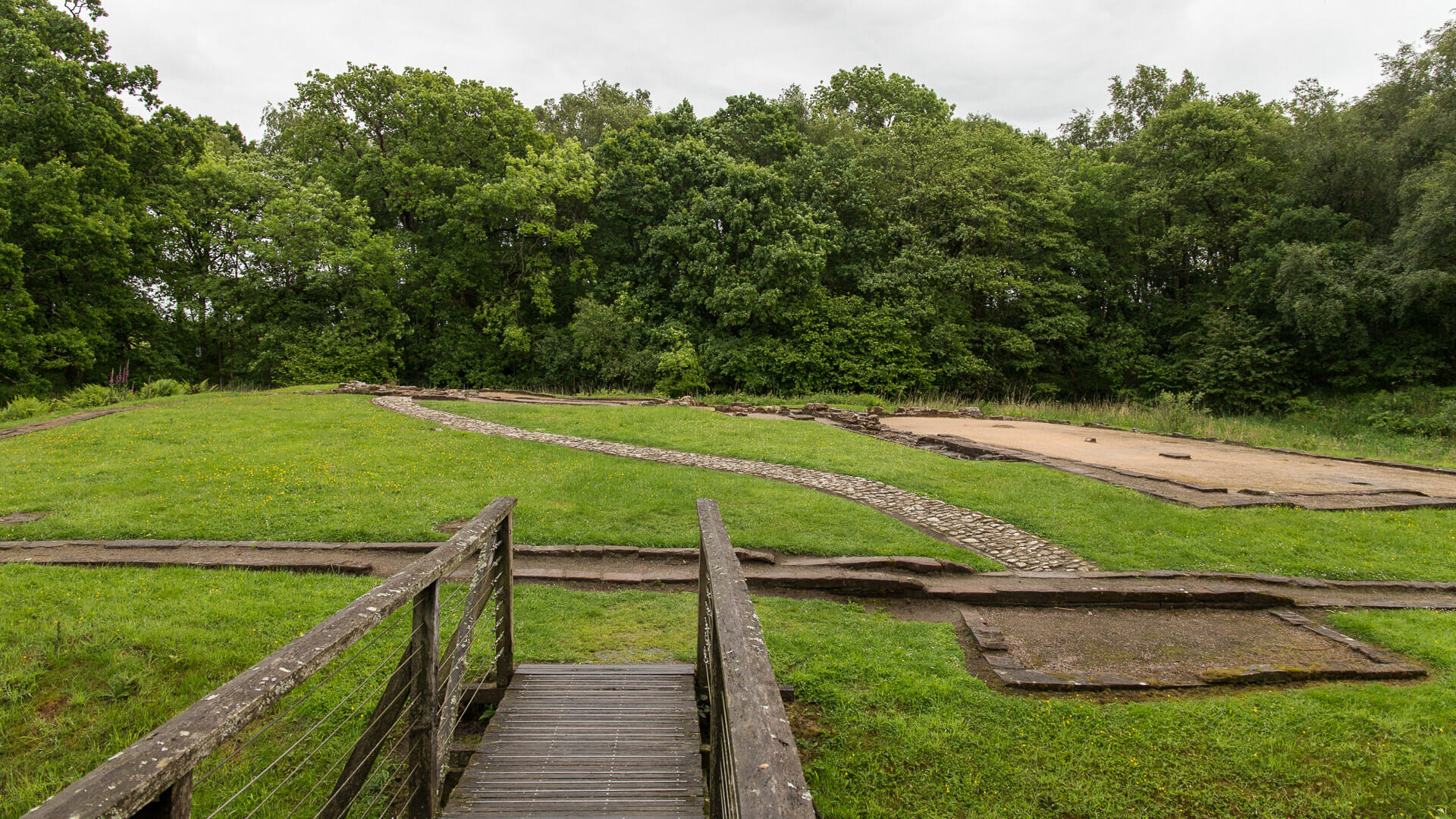
After viewing the ruin, you return to the circular path.
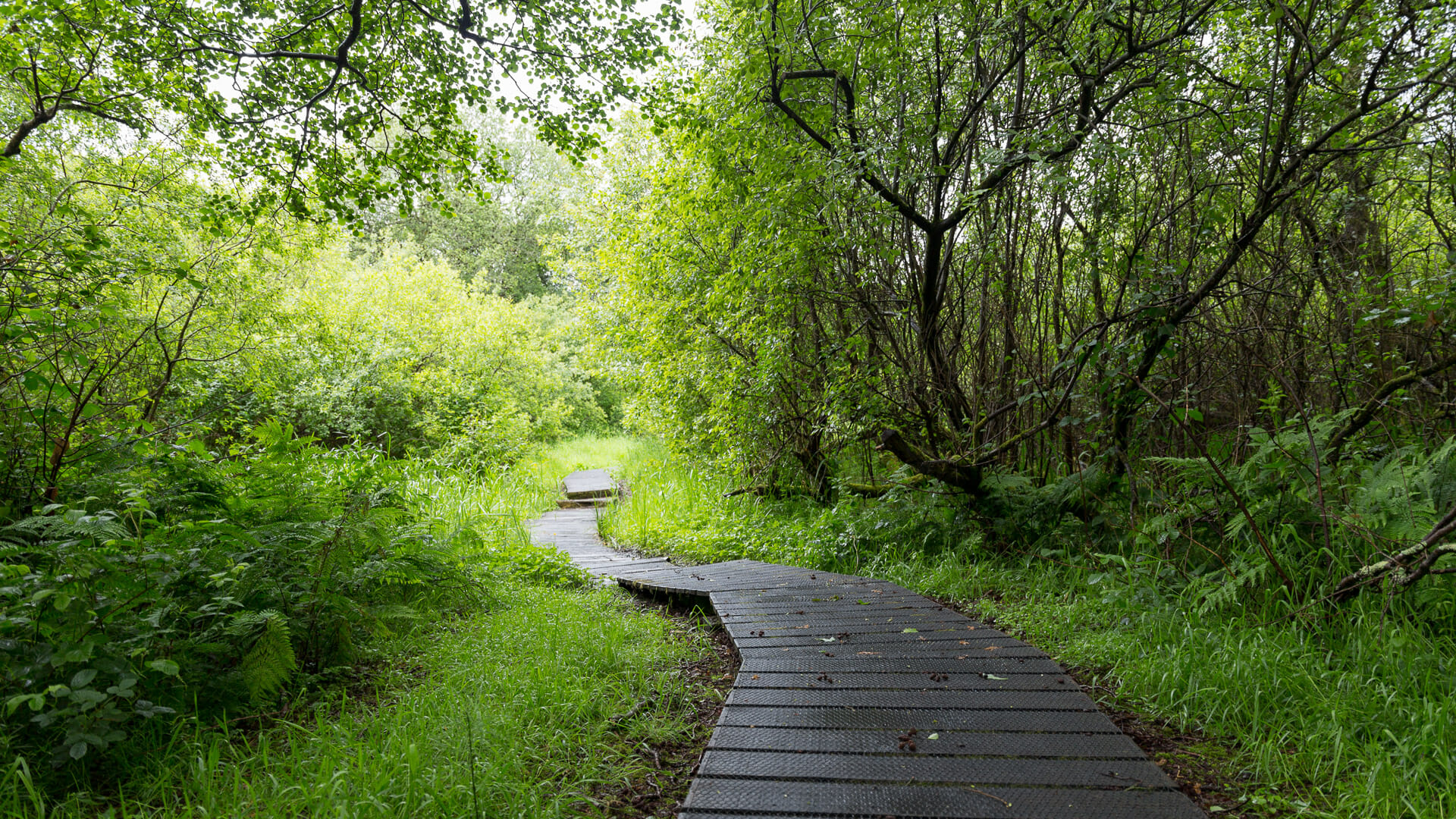
Eventually you reach Caerlaverock Castle from the side with the destroyed wall. From there you can walk around to the entrance.
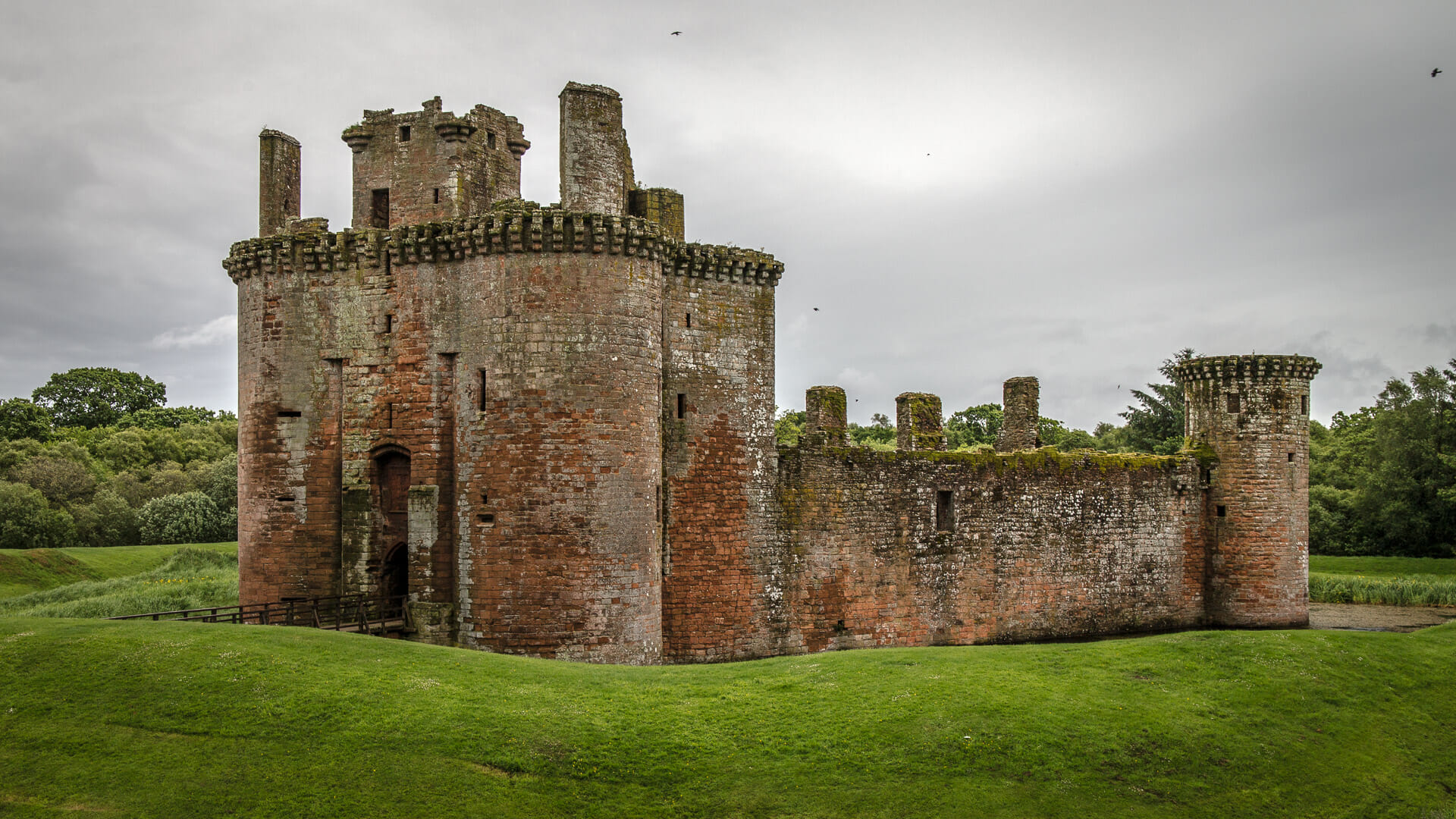
Inside the castle, incidentally, the view from up top is well worth it.
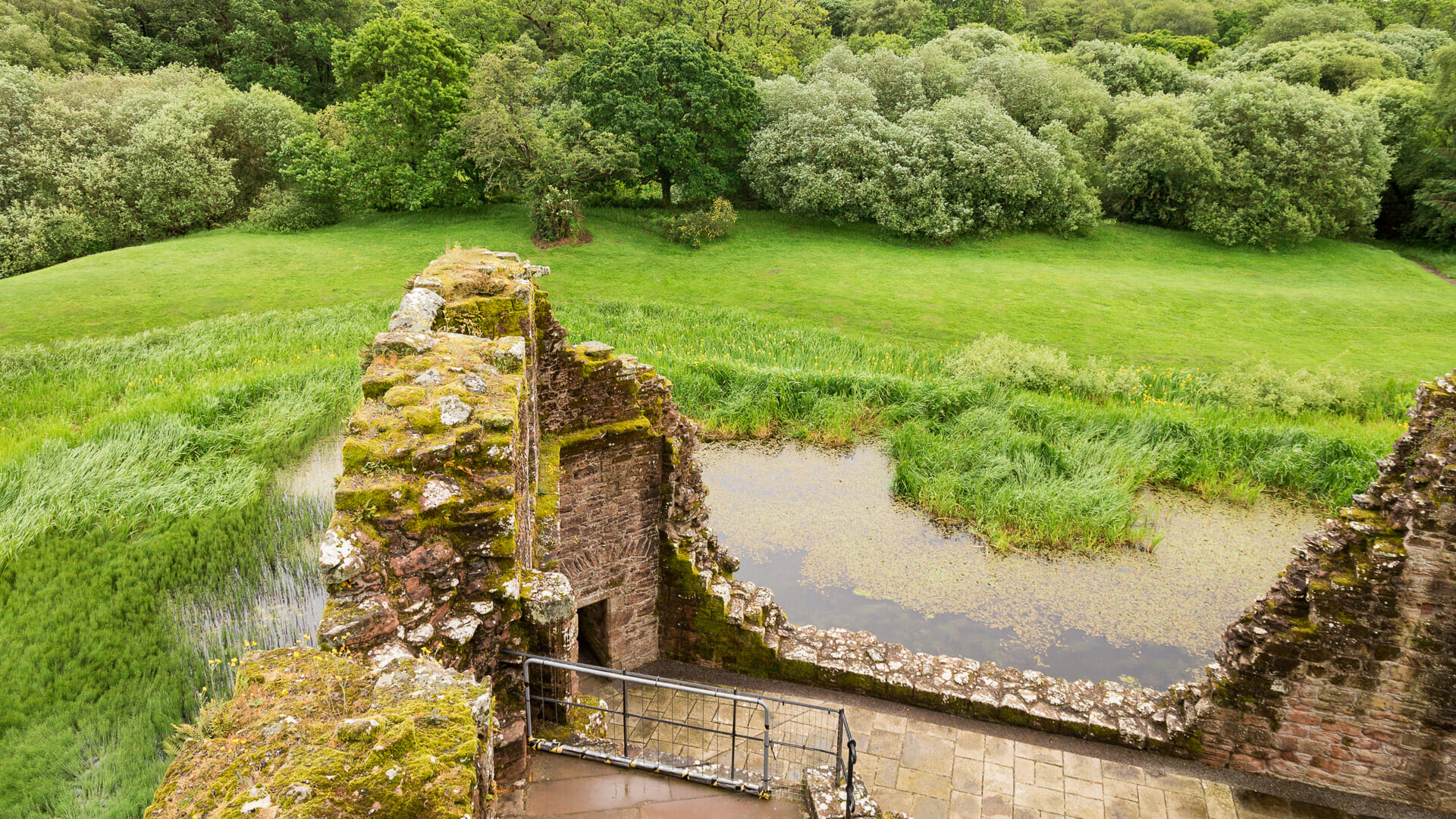
Personal note: rain
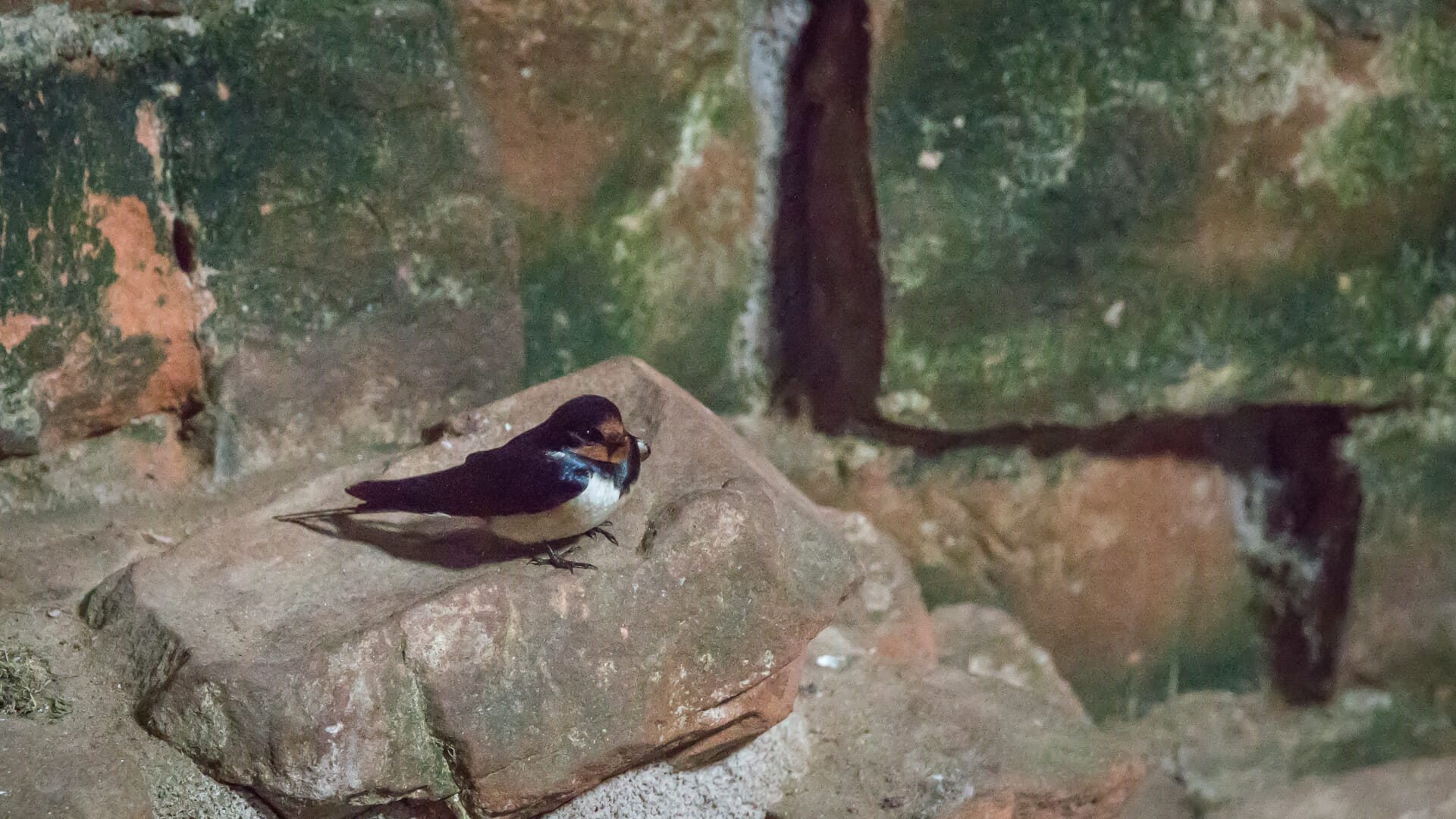
Unfortunately, we weren’t lucky with the weather on our visit. Wind and rain lashed us mercilessly. We went into the exhibition first, before taking the circular walk and then exploring the castle. Even the birds sought shelter from the weather that day, as one castle resident showed us:
Getting there:
By sat nav: “DG1 4RU” will bring you to the castle.
Without sat nav: from Dumfries, follow the B725 towards Glencaple, then continue on along the river. A little further on, a brown signpost to the castle appears by the road. Follow it and turn off. Continue on through the gate and park at the visitor centre.