Once they protected the flank of Scapa Flow, the great natural harbour of Orkney. Today they are convenient crossings between the islands: the Churchill Barriers have a turbulent history.
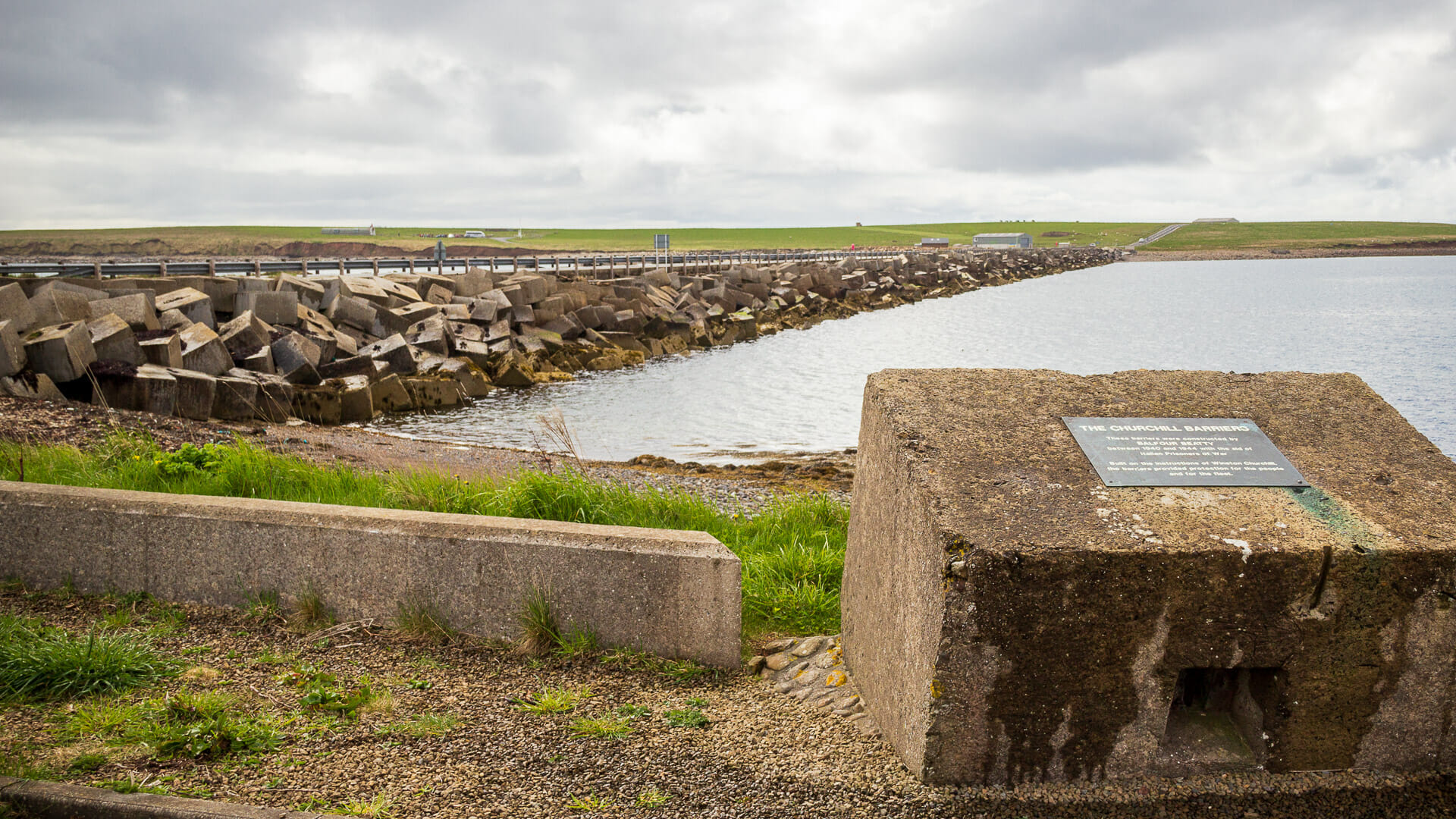
Scapa Flow was a safe harbour. Safe from the Germans – however many U-boats they had. As early as the First World War, they had tried to force their way in and attack. They had failed miserably, losing two ships in the process. Underwater nets, shipwrecks, patrol boats and a powerful current made the bay all but impregnable.
Scapa Flow was a safe harbour – until that beautiful new-moon night, when the northern lights conjured green veils across the sky.
Until the bang.
Some machine must have exploded, or someone had been careless with the stored ammunition. Tense listening… silence. It was just the one explosion. This couldn’t be an attack, surely more would follow. And besides – Scapa Flow was safe!
The northern lights…
There: one… two… three more explosions. Flames plunged the Royal Oak into an eerie orange glow. She began to list. Sirens wailed into the night. Screams.
Scapa Flow was not a safe harbour.
Good to know: The attack by U-47 and Churchill’s barriers
On 13 October 1939, the submarine U-47, under Commander Günther Prien, sank the British battleship HMS Royal Oak. Despite the unusually bright night, he managed to slip, surfaced, into the great natural harbour of Scapa Flow. No patrol boat spotted him, and so he first fired three torpedoes at the Royal Oak. Only one struck the ship, apparently hitting the anchor chain. The crew assumed the explosion had come from kerosene or similar stored powder. When nothing further could be found and no further danger seemed apparent, most of the crew went back to their bunks.
Prien circled around, and a quarter of an hour later fired another salvo – this time he hit his mark. A wall of fire tore through the Royal Oak, the battleship listed heavily and sank soon after. She took 833 sailors down with her, more than a hundred of them still under 18 years old.
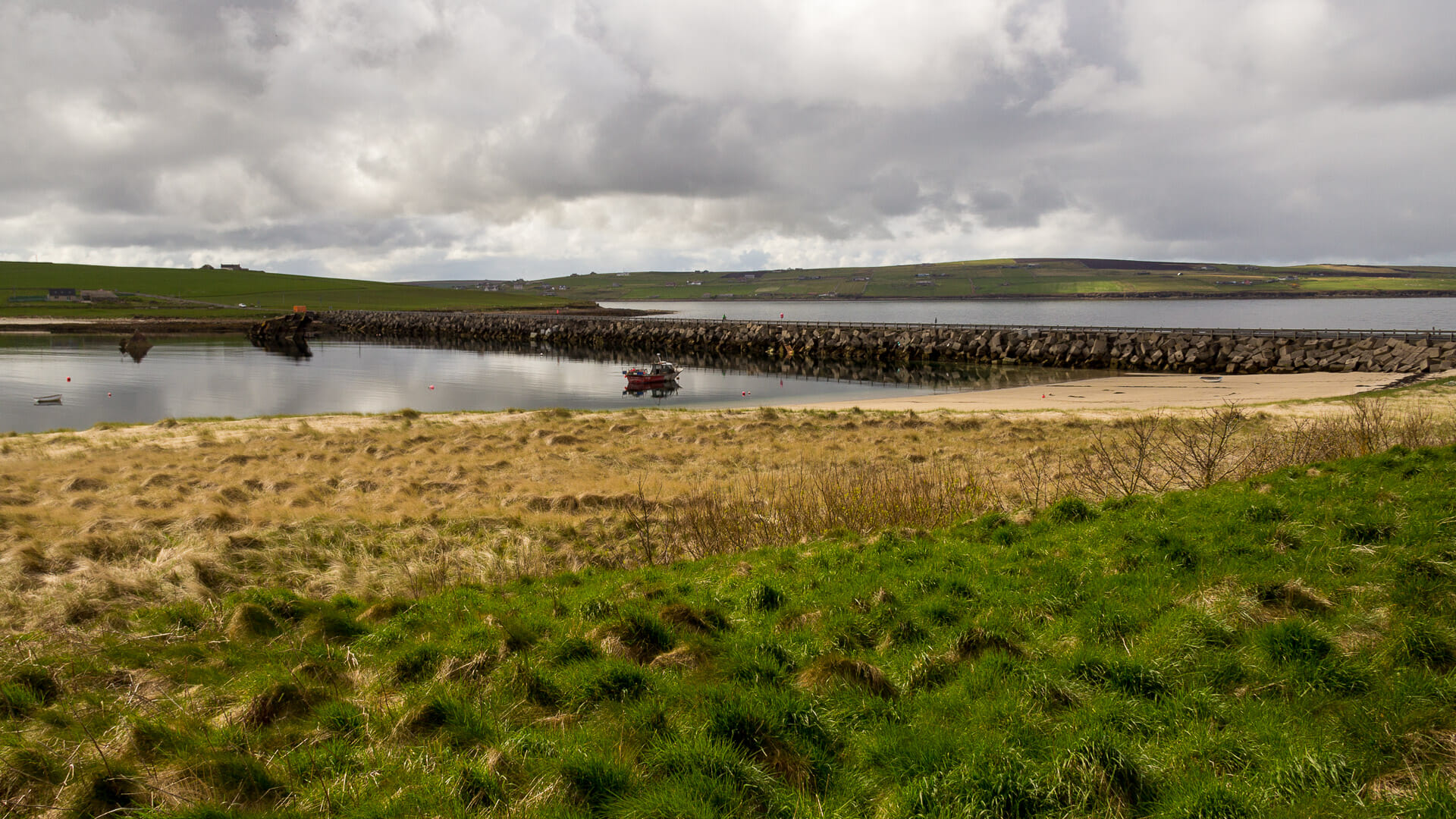
One man drew his own lessons from this disaster for the Royal Navy: Winston Churchill, at the time First Lord of the Admiralty, ordered that the eastern islands around Scapa Flow be linked by massive barriers. Causeways were to be raised between the Orkney islands of South Ronaldsay, Burray, Glimps Holm and Lamb Holm.
Construction work continued throughout the war and was carried out partly with the help of Italian prisoners of war.
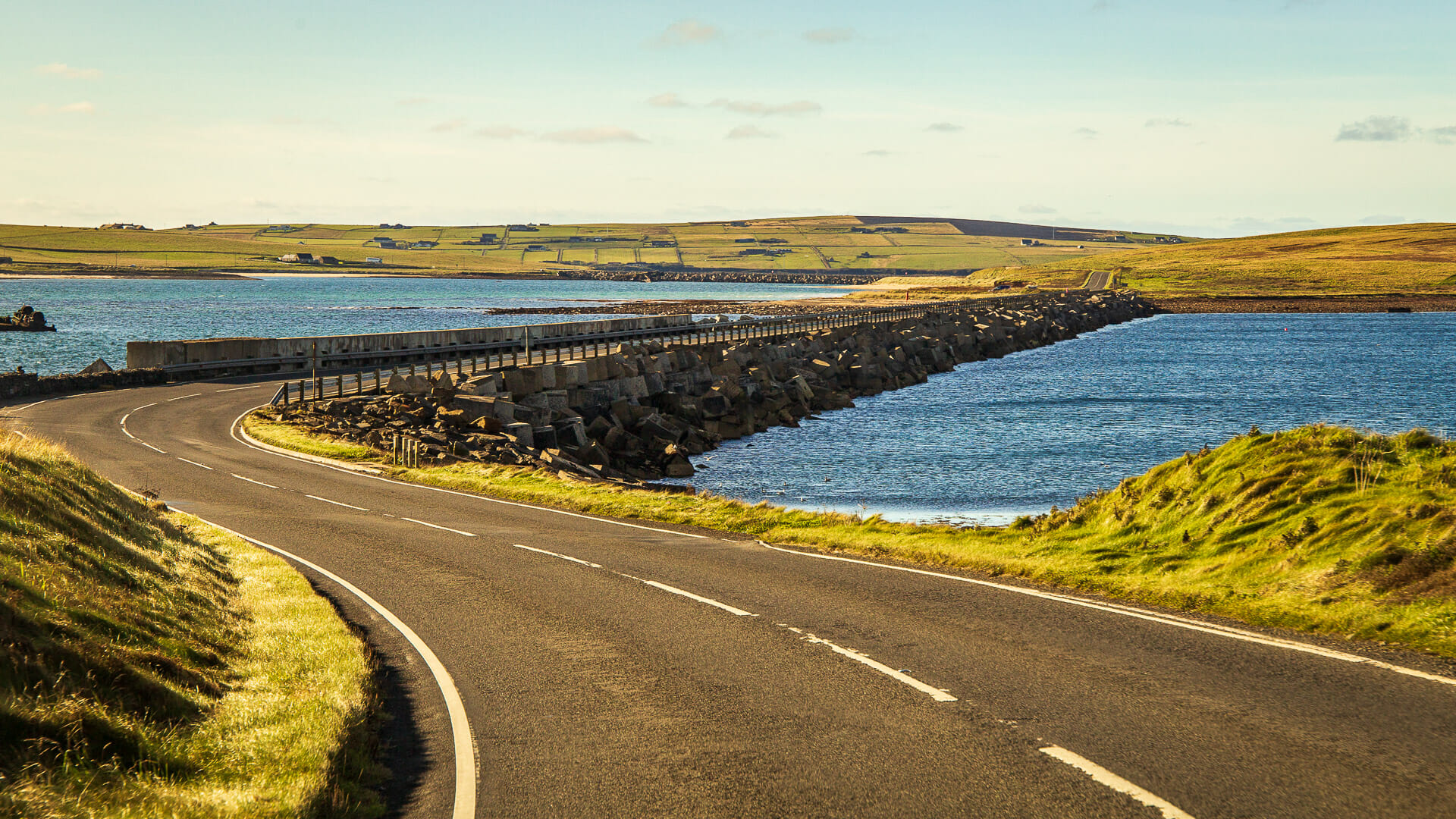
250,000 tonnes of rubble were packed into wire cages and sunk into the sea, up to 18 metres deep. These formed the base of the causeways. On top of this, a further 66,000 concrete blocks were stacked. At times, more than 2,000 people were involved in the construction.
The Churchill Barriers weren’t finished until four days after the war had ended. But what arose out of wartime necessity is a real boon today for the residents of these small islands: a road now runs along the top of the causeways, linking them to the main island. A stroke of luck for tourists too, since this road is what makes the ferry crossing from South Ronaldsay to the Scottish mainland possible in the first place.
Tip: Stop off at the barriers
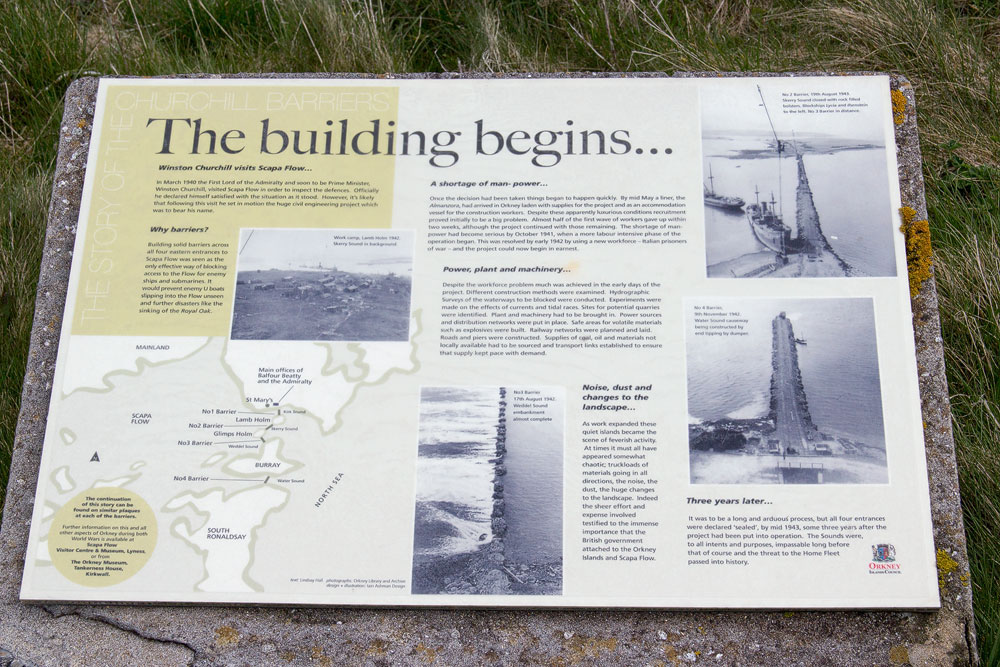
You can genuinely experience the history of the Churchill Barriers first-hand: in front of each causeway stands a board offering a little more background and detail. It’s well worth stopping.
Personal note: A modest attraction
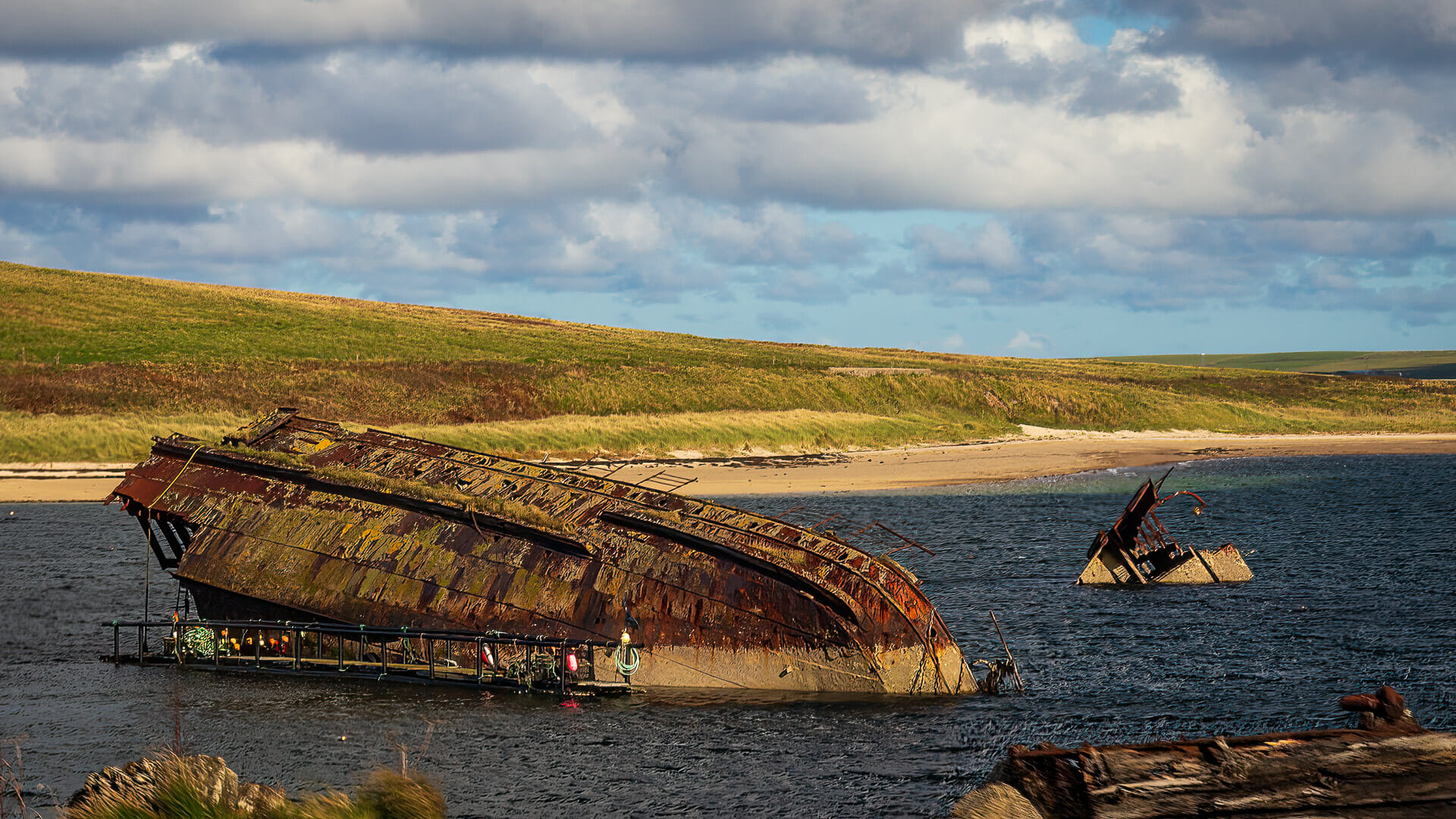
It’s only with the background knowledge of Scapa Flow and the HMS Royal Oak that these stone ramparts in the water become gripping pieces of living history. I’ve driven across them several times now, but it was only on my most recent visit that I truly grasped the rusting wrecks and concrete blocks as an attraction in their own right.
Without that context, the Churchill Barriers are, for many, a fairly modest attraction.
Getting there:
With a sat nav: “KW17 2RU” will bring you to St Mary’s. The first causeway begins from here – but don’t leave the main road.
Without a sat nav: From Kirkwall, follow the A961 towards St Mary’s. After around 11 kilometres, you’ll reach the barrier towards Lamb Holm.
