Stone circles, cliffs, palaces – the Orkney Islands have a beauty all of their own. Not just the Vikings left deep traces here, but also long-vanished peoples from the Stone Age.
Orkney info:
» General
» Sights
» Best Time to Visit
» Accommodation
» Getting There
» Day Tours
» History
Water and stone. The interplay of these two elements – sometimes wild, sometimes gentle – shaped, and still shapes today, Orkney, that island group just above the northern tip of the Scottish mainland. Here the azure waters of the North Sea and the Atlantic meet and artfully carve large and small islands out of the soft red sandstone. Over them all lies a carpet of lush green.
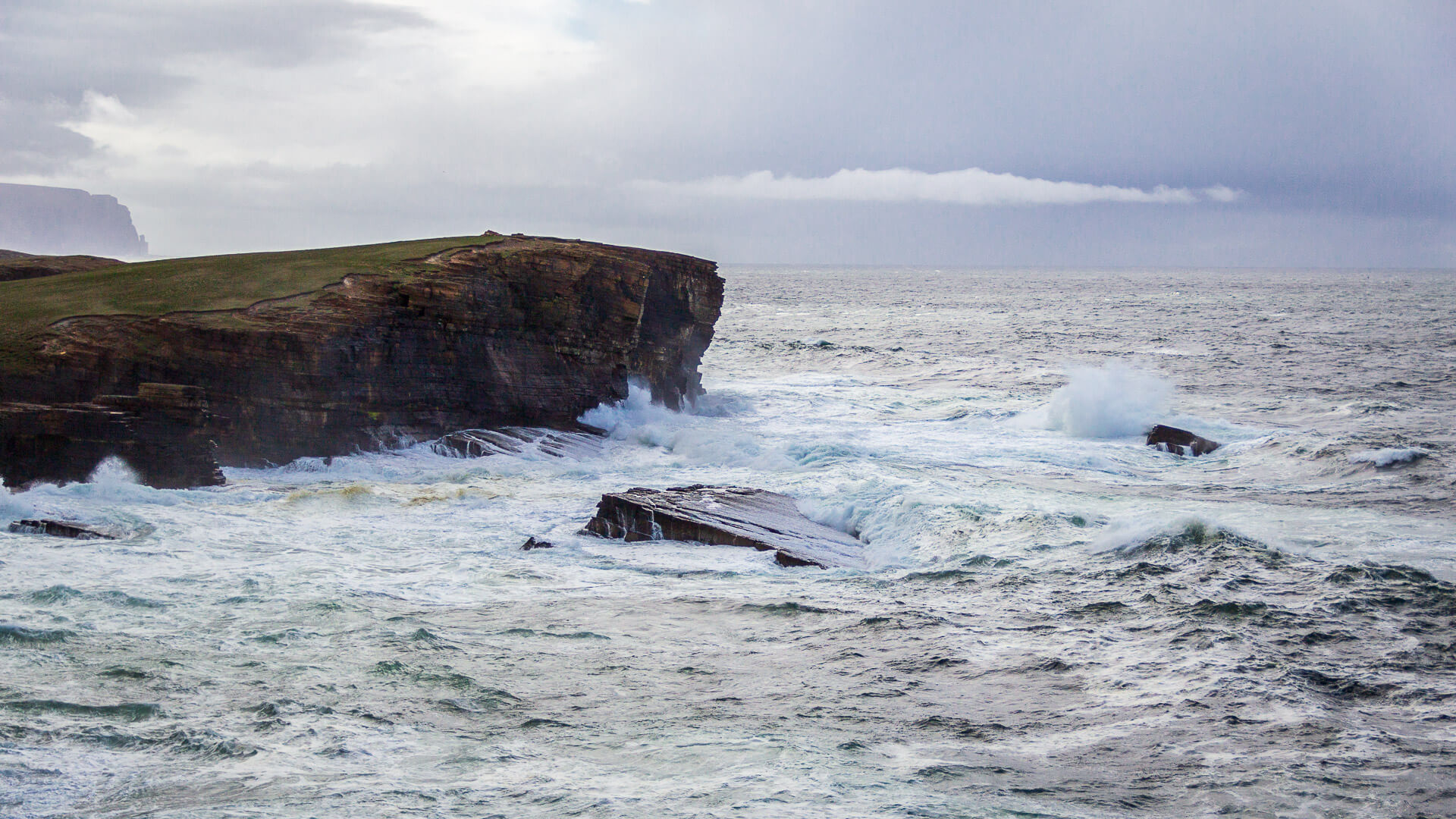
The Orkney archipelago tends towards flat islands – only Hoy offers any real hills. Elsewhere, fertile plains of heather and grass stretch across the islands, often dropping steeply to the sea, producing rugged beauties such as the Cliffs of Yesnaby.
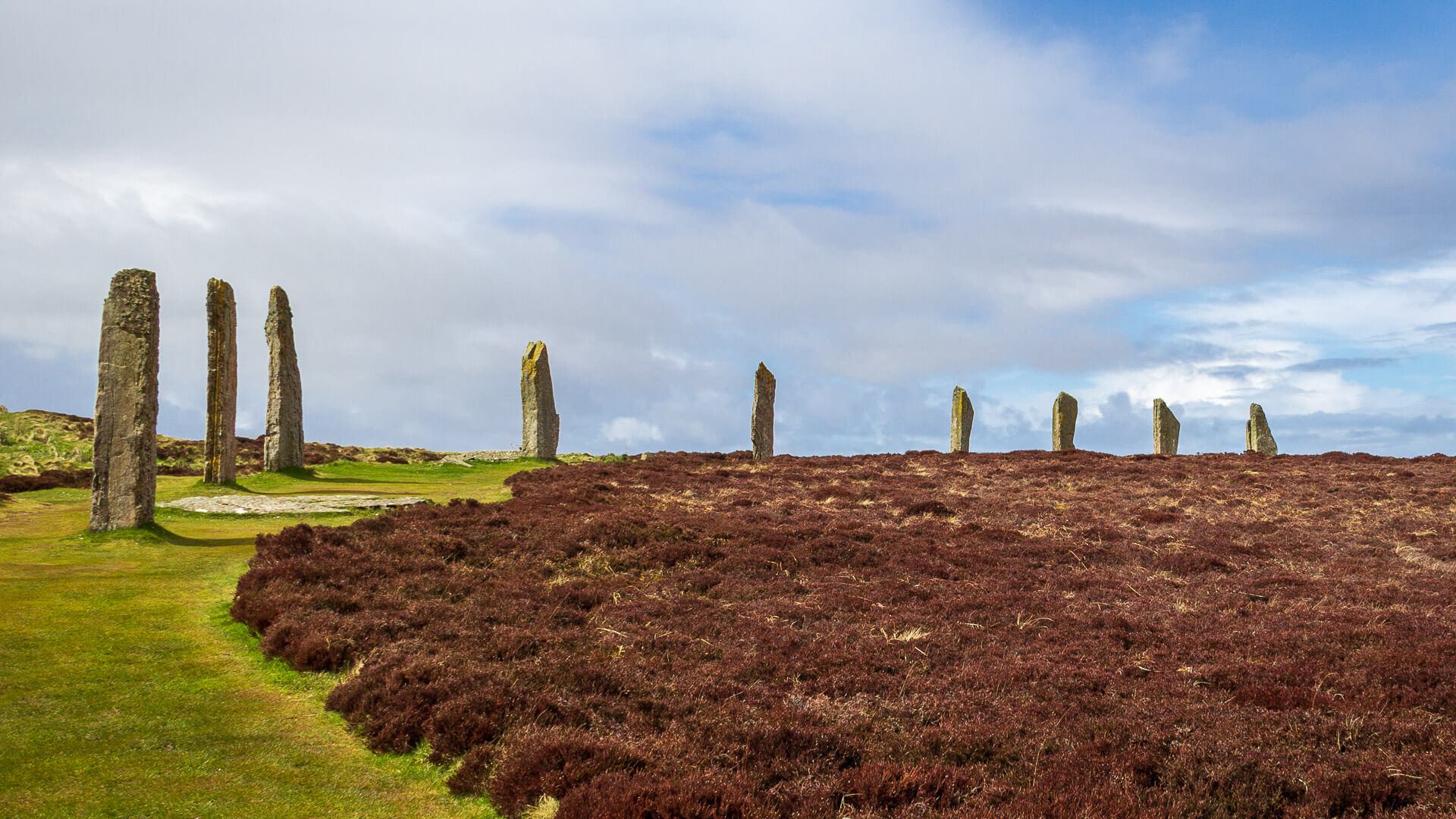
But Orkney is famous above all for its historical heritage. With the Ring of Brodgar, the Standing Stones of Stenness and the Neolithic village of Skara Brae, the northern isles offer significant and magnificent evidence of the building skills of Stone Age peoples. Known as the Heart of Neolithic Orkney, these finds are today part of the UNESCO World Heritage.
No less impressive are the legacies of the Vikings and, later, the Norwegians. They built palaces and cathedrals here.
Orkney is therefore well worth an extended visit, one that carries you back through past millennia amid astonishing landscapes.
General: Info on the Orkney Islands
Orkney is an archipelago of no fewer than 62 islands, 16 of which are inhabited. The main island is simply called “Mainland” and measures 40 kilometres in length and 26 kilometres in width.
The name comes either from the Norse “Orkn-eyjar”, meaning roughly “seal islands”. Or, more likely, the “Orc” part of the name refers to a Pictish tribe whose symbol was the boar.
Besides Mainland, the “high island” of Hoy is the second-largest of the Orkneys. It’s known for the sea stack Old Man of Hoy, which even appeared in an Eurythmics music video. Hoy owes its name, meaning “high island”, to the comparatively tall Ward Hill, at around 480 metres.
Other large islands in the archipelago include Burray, South Ronaldsay (both linked to Mainland by a causeway), Shapinsay, Rousay, Stronsay, Eday, Sanday, Westray, North Ronaldsay, Wyre and Flotta.
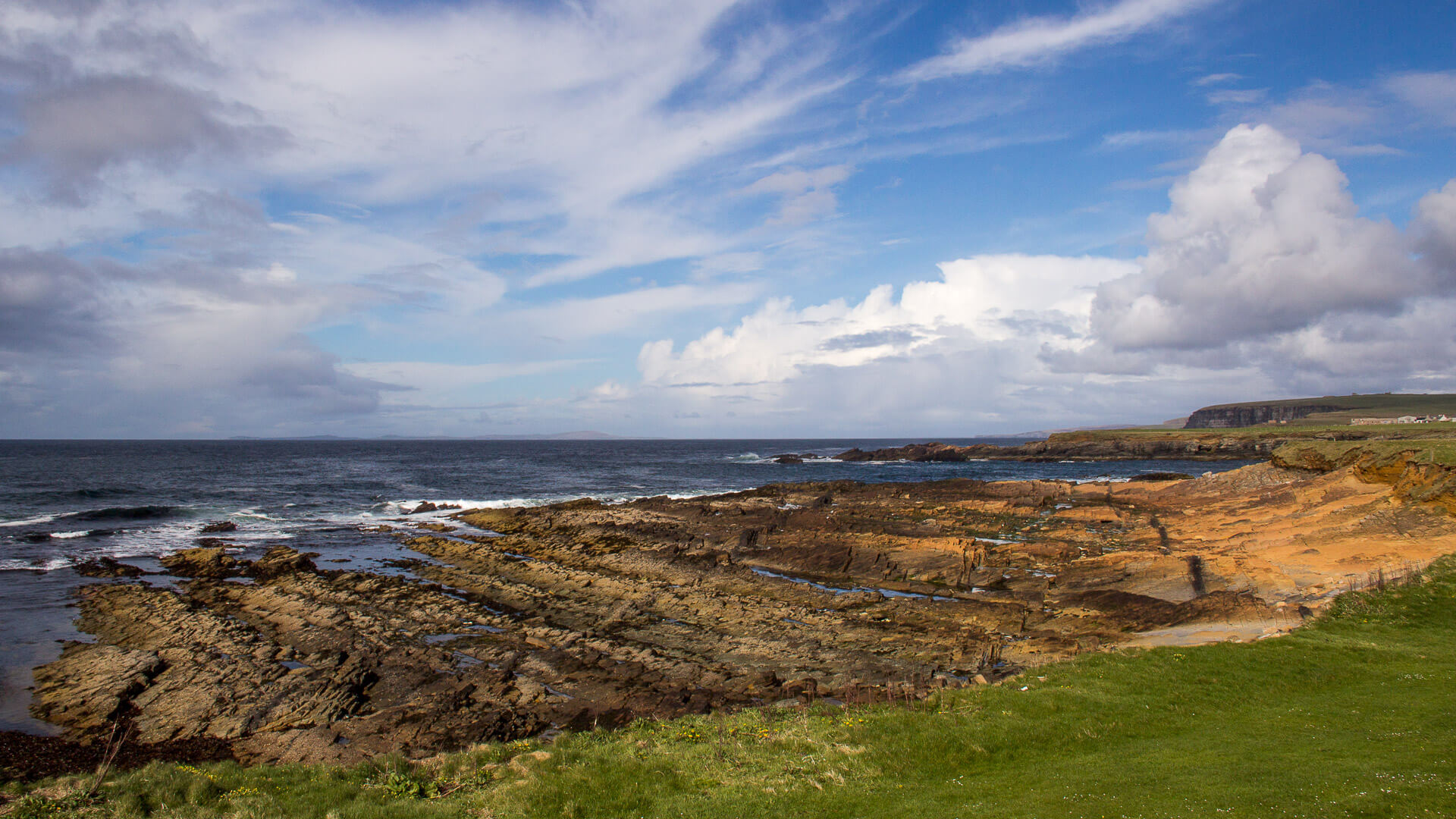
All of them share one thing: the material they’re built from. Here, “old red sandstone” dominates, and it really does give Orkney a distinctive colouring, wavering somewhere between red and ochre. You see it not just on the coast, where the rock emerges from beneath the green blanket of grass and heather, but also in the buildings and monuments erected across the various islands over five millennia. Since there’s almost no timber on Orkney, sandstone naturally became the key building material too.
Sights: The Highlights of Orkney
Of course, the sights below are only a select handful of highlights. There’s much more to see on the islands.
St Magnus Cathedral
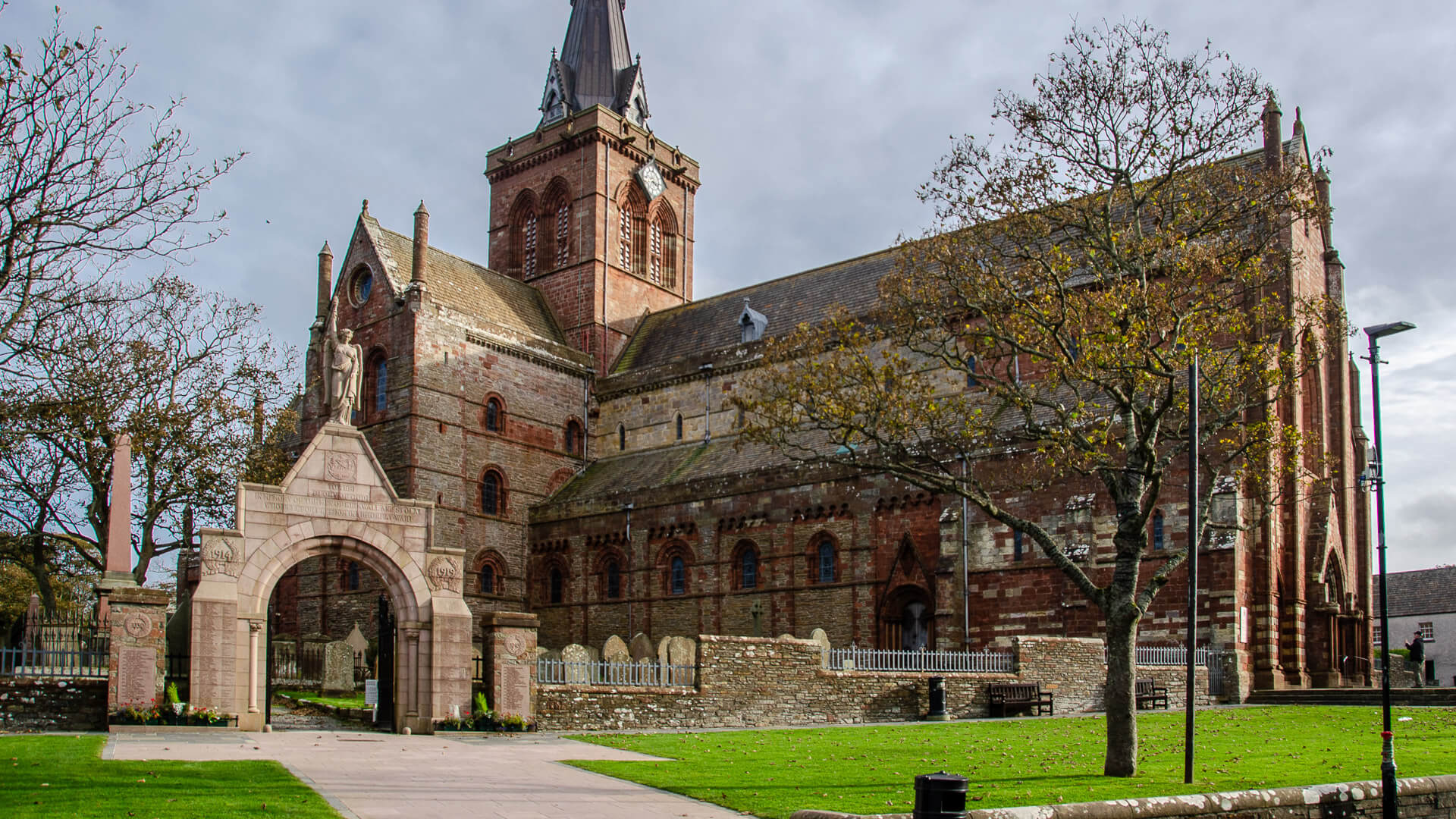
Orkney’s spiritual centre belongs to the people, not the church, which is why admission here is free. St Magnus Cathedral isn’t just beautiful – it also reflects many milestones of history, from the bones of St Magnus himself to the memorial plaque for the victims of the Royal Oak, sunk by a German U-boat.
More on St Magnus Cathedral here.
Bishop’s Palace
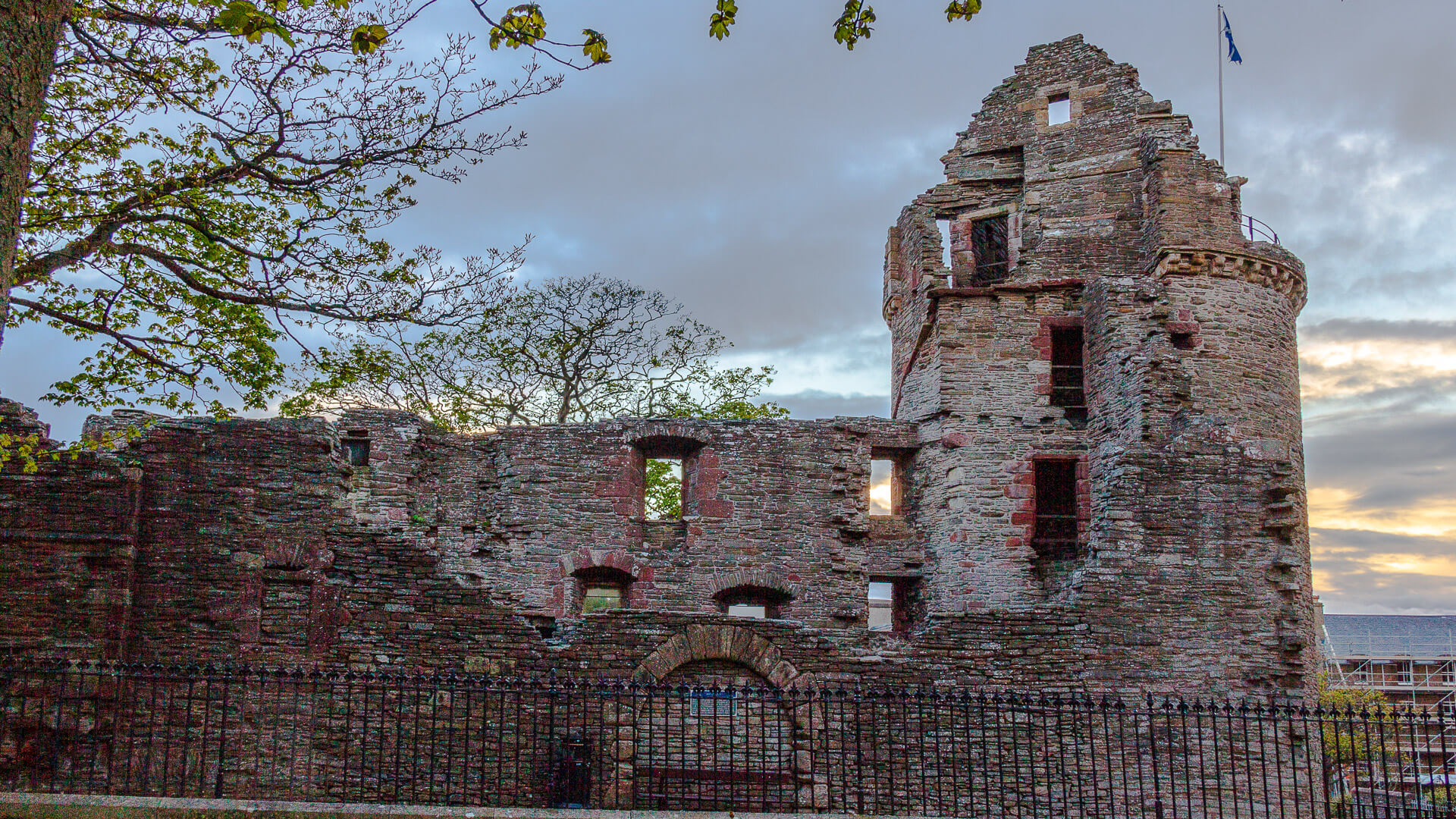
The Bishops of Orkney resided here from the 12th century onward, and it’s also where the Norwegian King Haakon IV died. Today visitors can wander the ruins of the palace. The admission ticket also covers the neighbouring Earl’s Palace.
More info on the Bishop’s Palace here.
Earl’s Palace
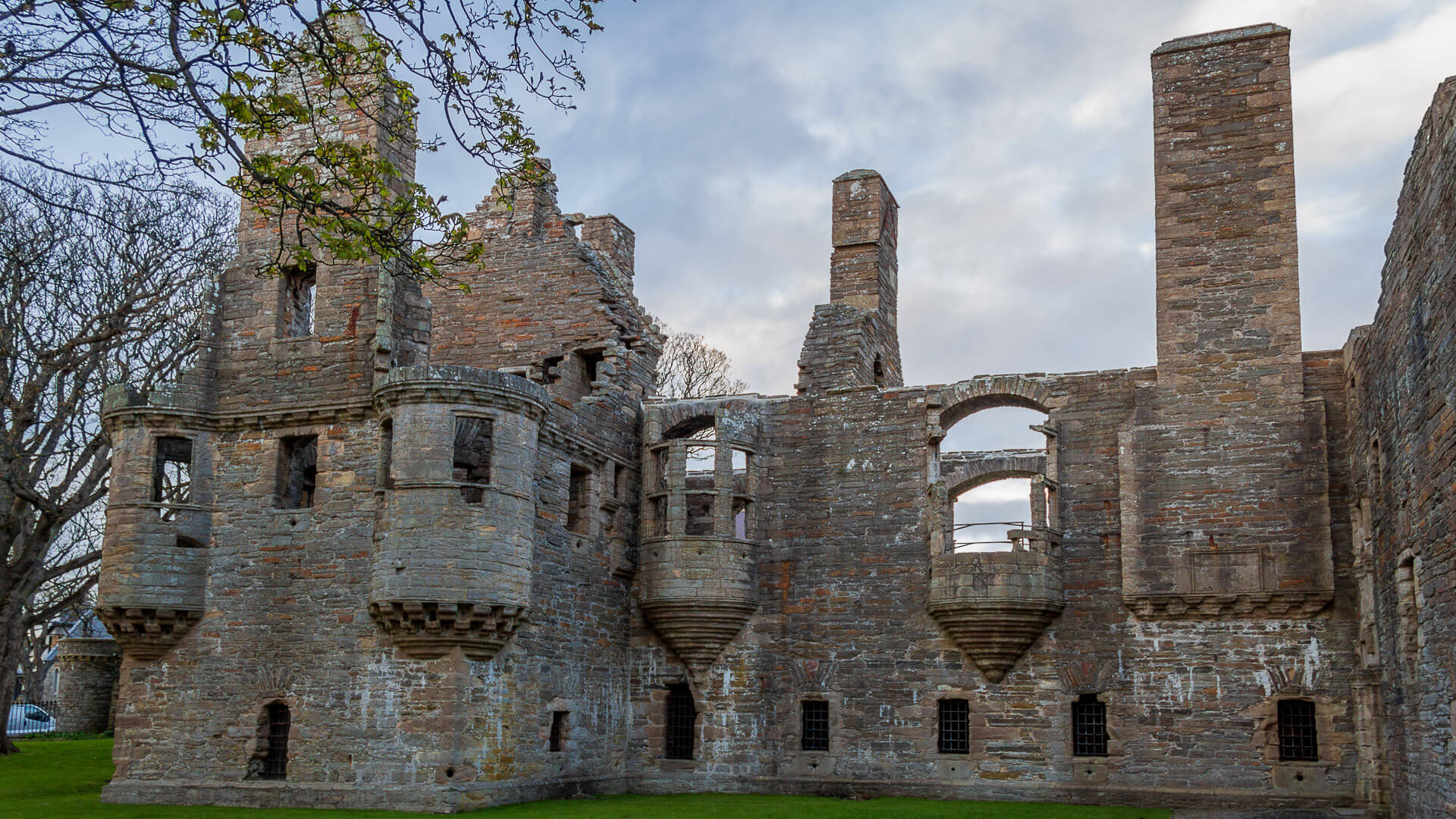
Just a stone’s throw from the Bishop’s Palace lies the Earl’s Palace, dating from the Renaissance – in this case, the 16th century. Visitors can likewise wander the former halls, with info boards explaining in detail how the palace looked in its heyday.
More info on the Earl’s Palace here.
Highland Park Distillery
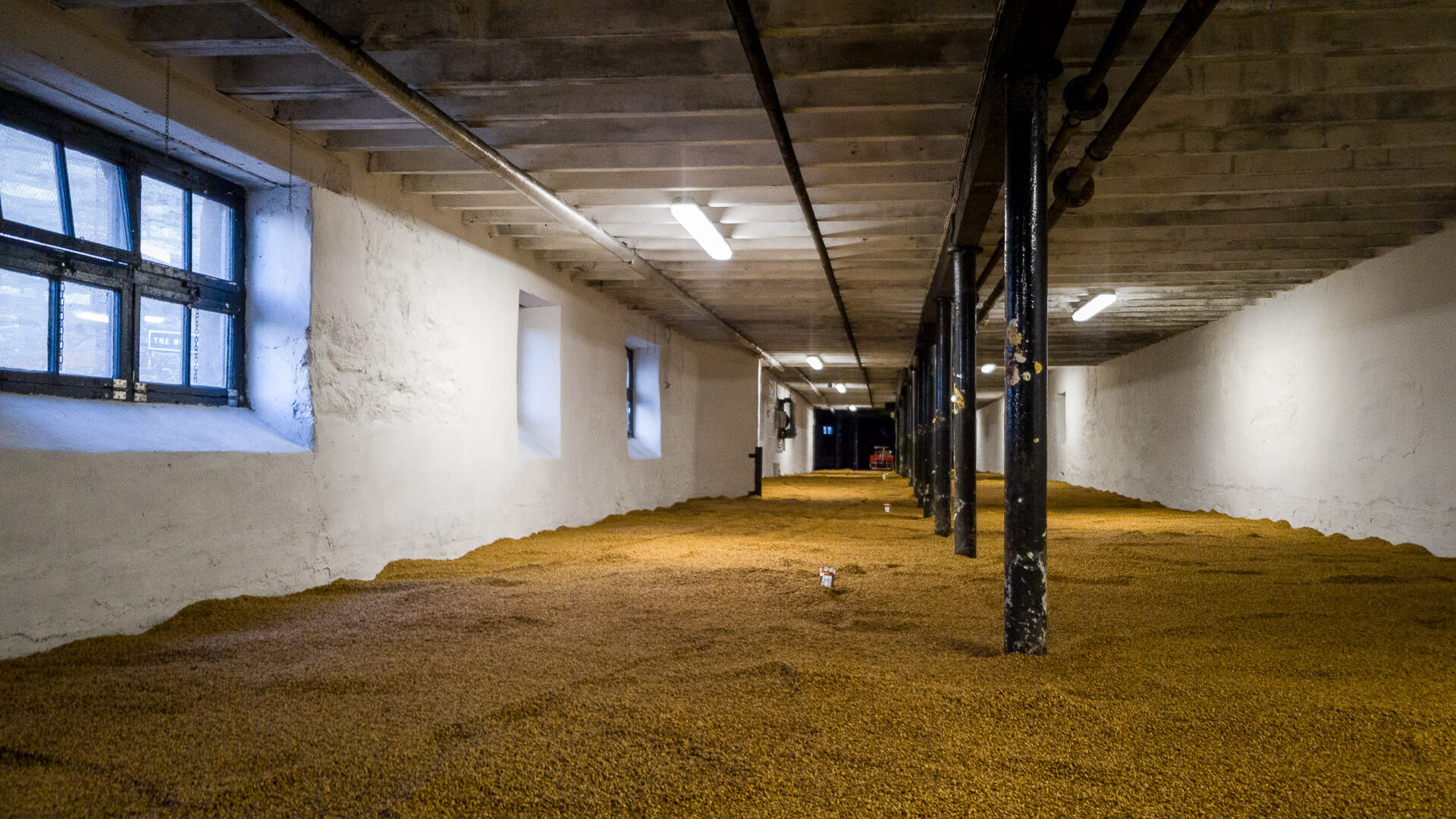
Whisky has been distilled here for over 200 years, and the building itself is more than 190 years old. Highland Park is one of the few Scottish distilleries that still malts its own grain. Tours naturally end with a tasting.
Scapa Distillery
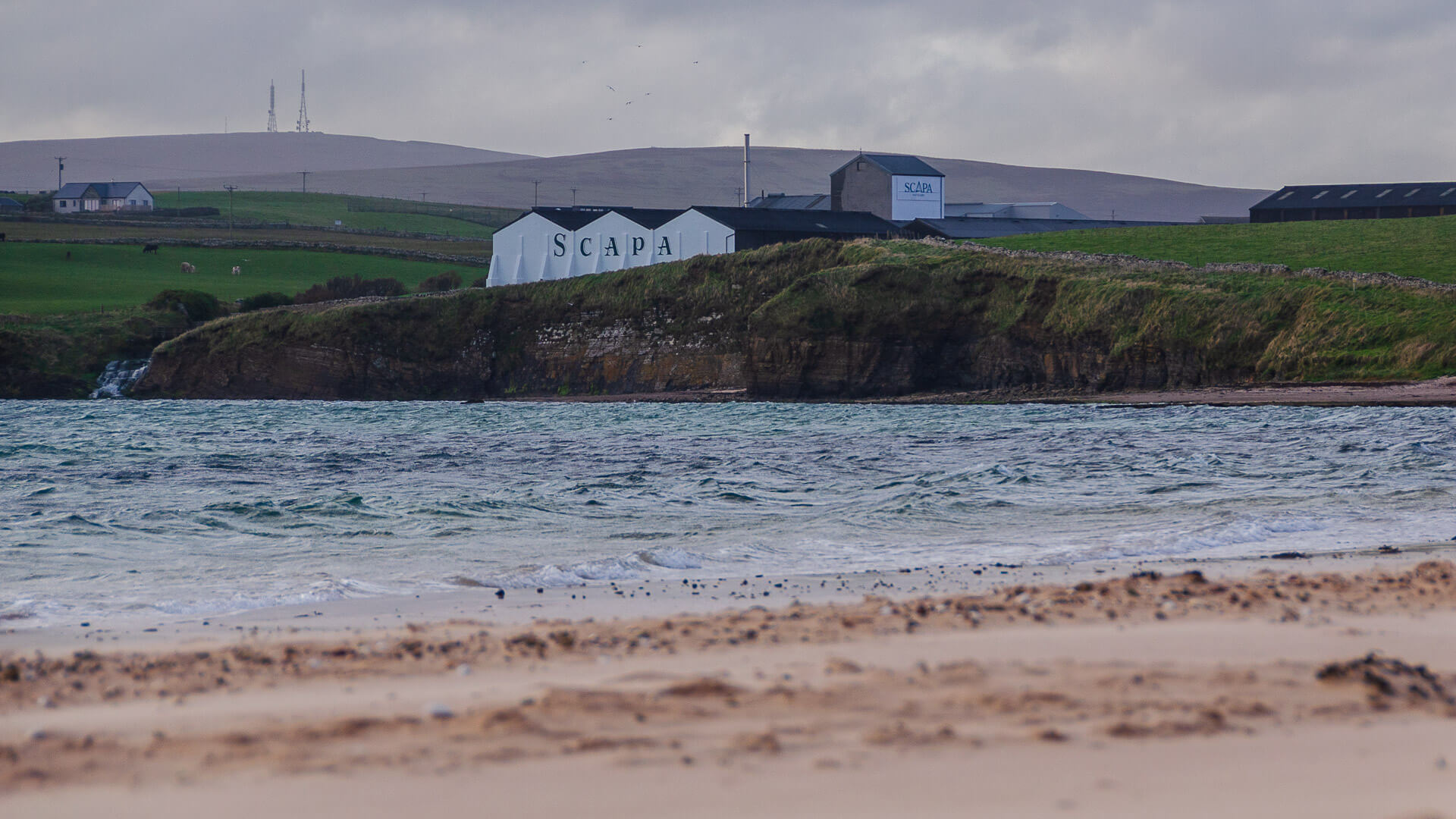
A little younger, but by no means lesser, is Scapa Distillery. It sits just outside Kirkwall, scenically perched above a bay with a sandy beach. Scapa Distillery was founded in 1885 and has had several pauses since, but has been fully operational again since 2004 and can be visited.
Italian Chapel
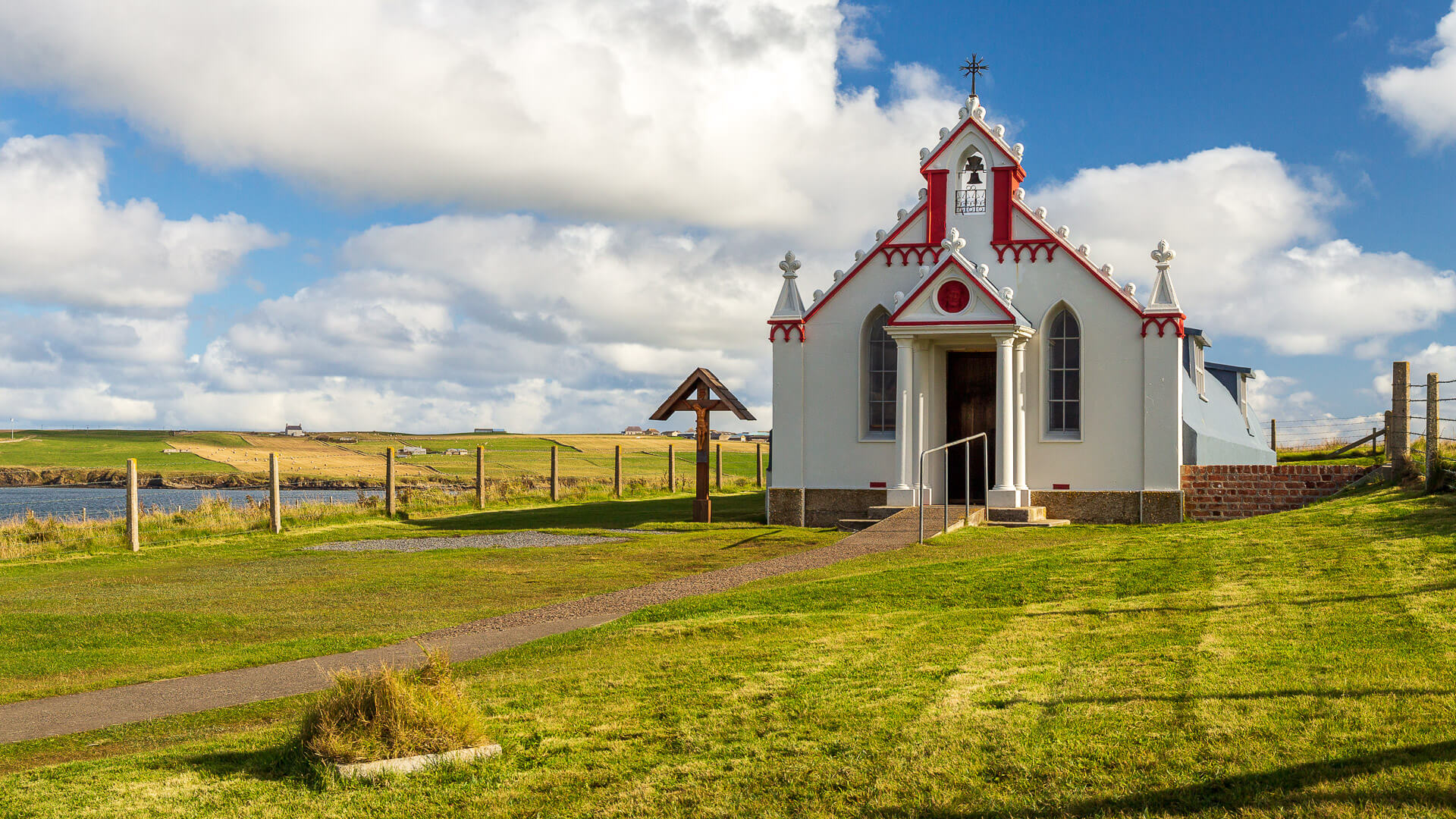
Italian prisoners of war were interned on Orkney during the Second World War. Alongside the hard labour they carried out building the Churchill Barriers, they improvised an Italian chapel that today ranks among Orkney’s most beautiful sights.
More on the Italian Chapel (German only for now).
Maes Howe
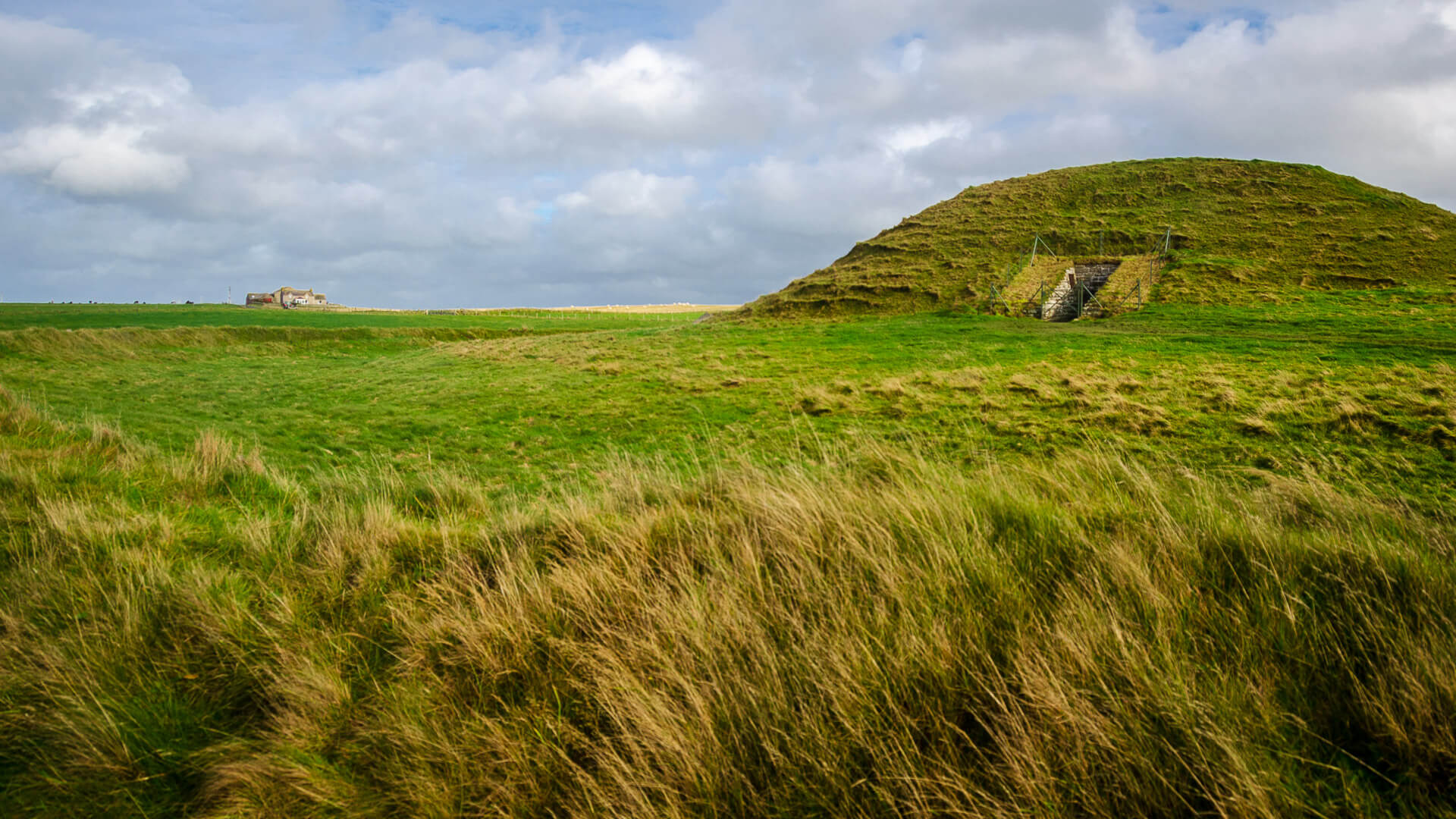
Older than the pyramids, and at least on the inside, almost as good-looking: Maes Howe is a Neolithic chambered cairn and an example of just how skilfully people could build back then. Inside, you’ll also find Viking graffiti.
More on Maes Howe here.
Standing Stones of Stenness
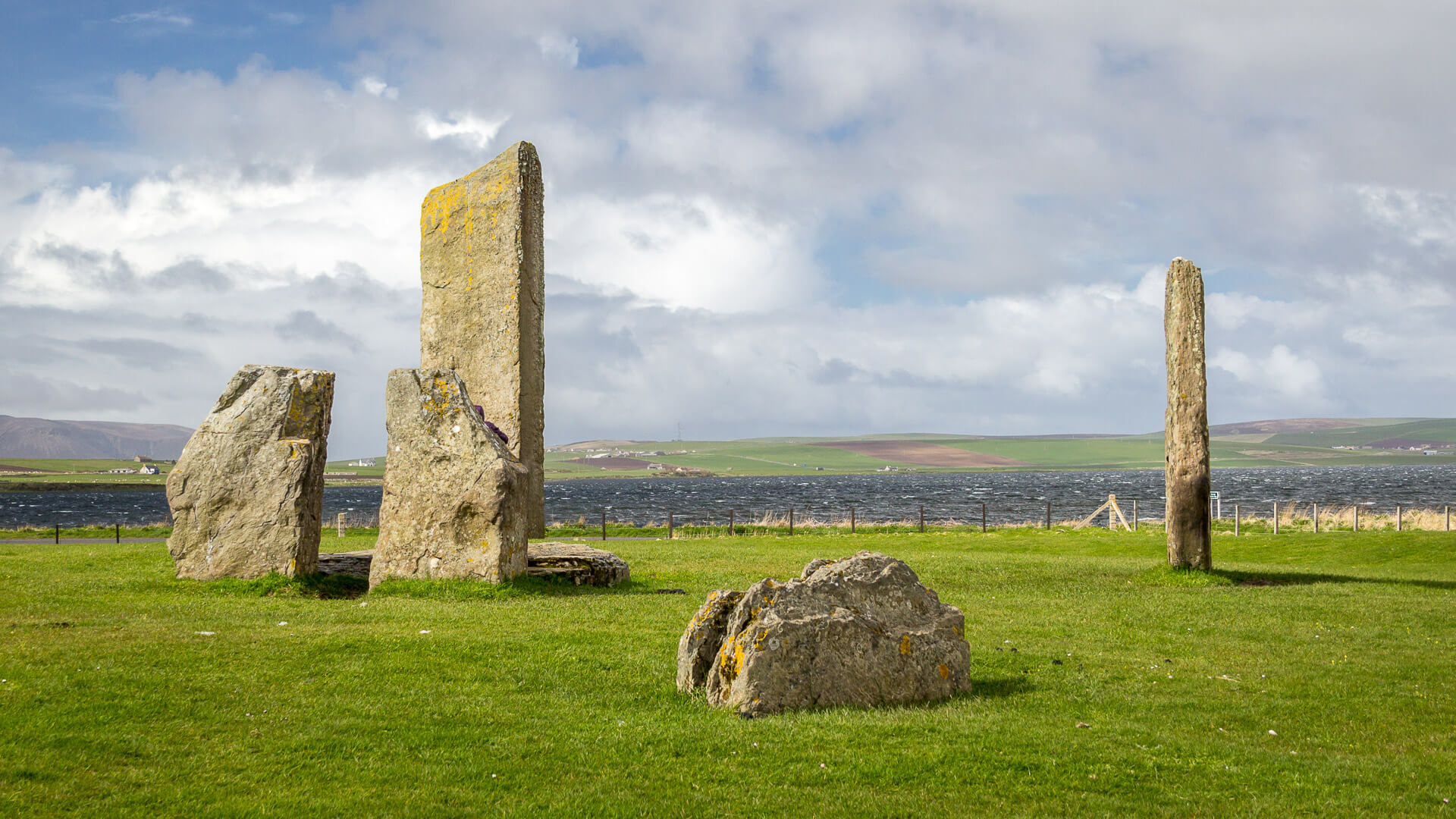
Erected around 3100 BC, three giant monoliths stand here, reaching up to six metres into the air. A must-see.
More on the Standing Stones of Stenness here.
Ring of Brodgar
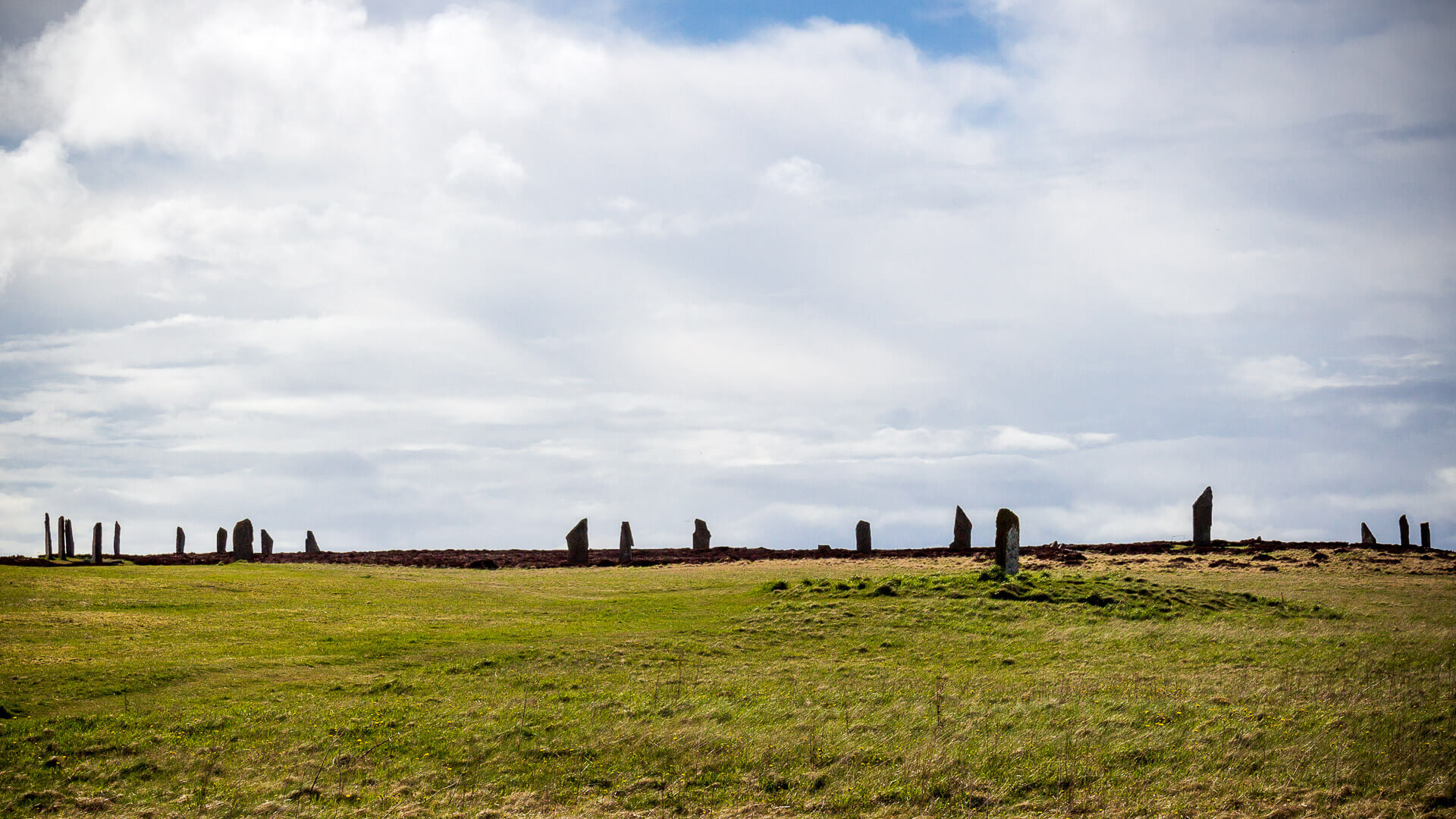
36 stones stand here, arranged in a ring – one of them was even struck by lightning. They too date from the Neolithic, around 2700 BC.
More on the Ring of Brodgar here.
Stromness
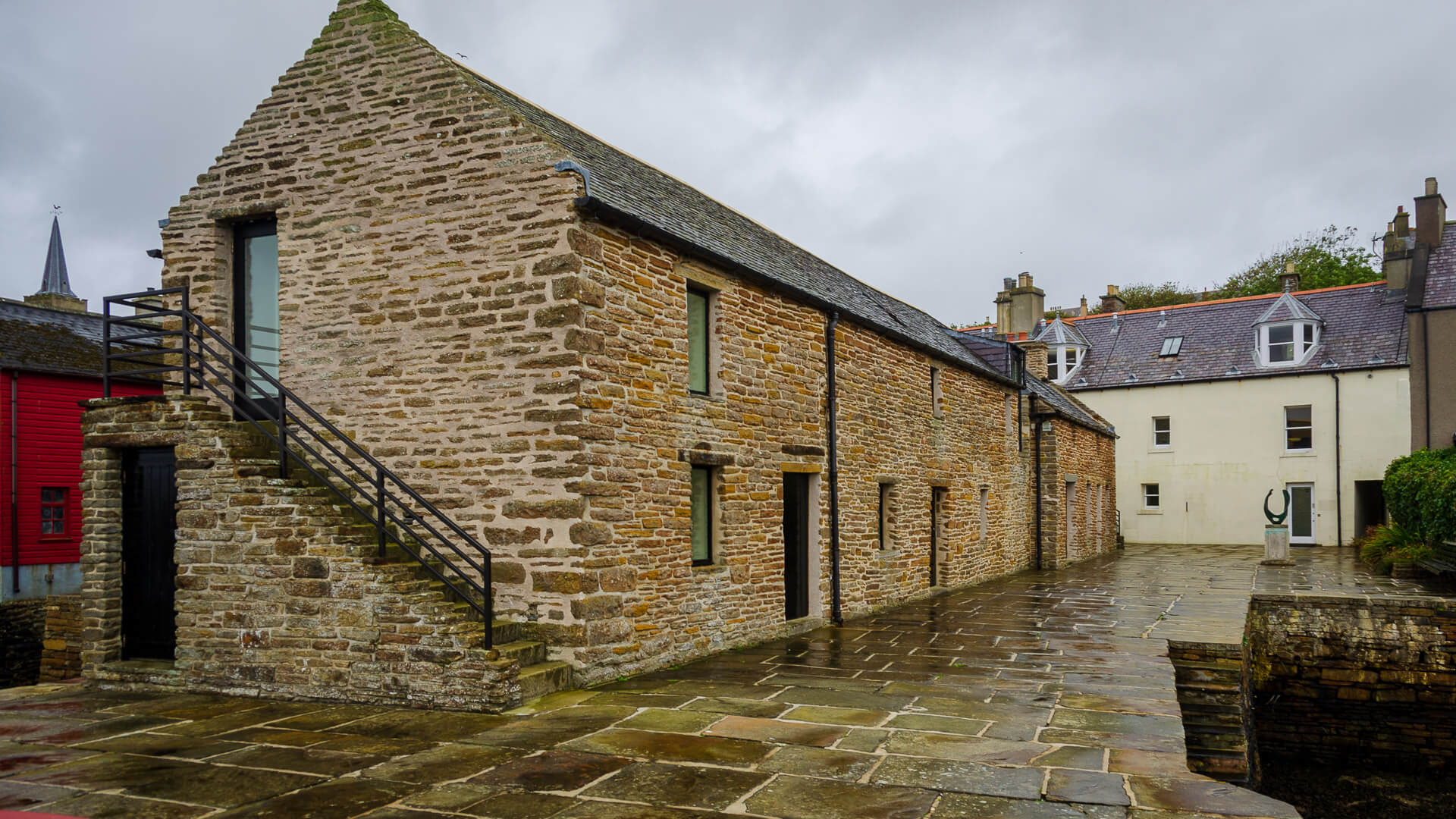
The town of Stromness carries its own long history. Wandering its old streets and taking in the harbour view is a pleasure. There are also a few small museums, such as the Stromness Museum, showing historical exhibits, and the Pier Arts Centre.
Yesnaby Cliffs
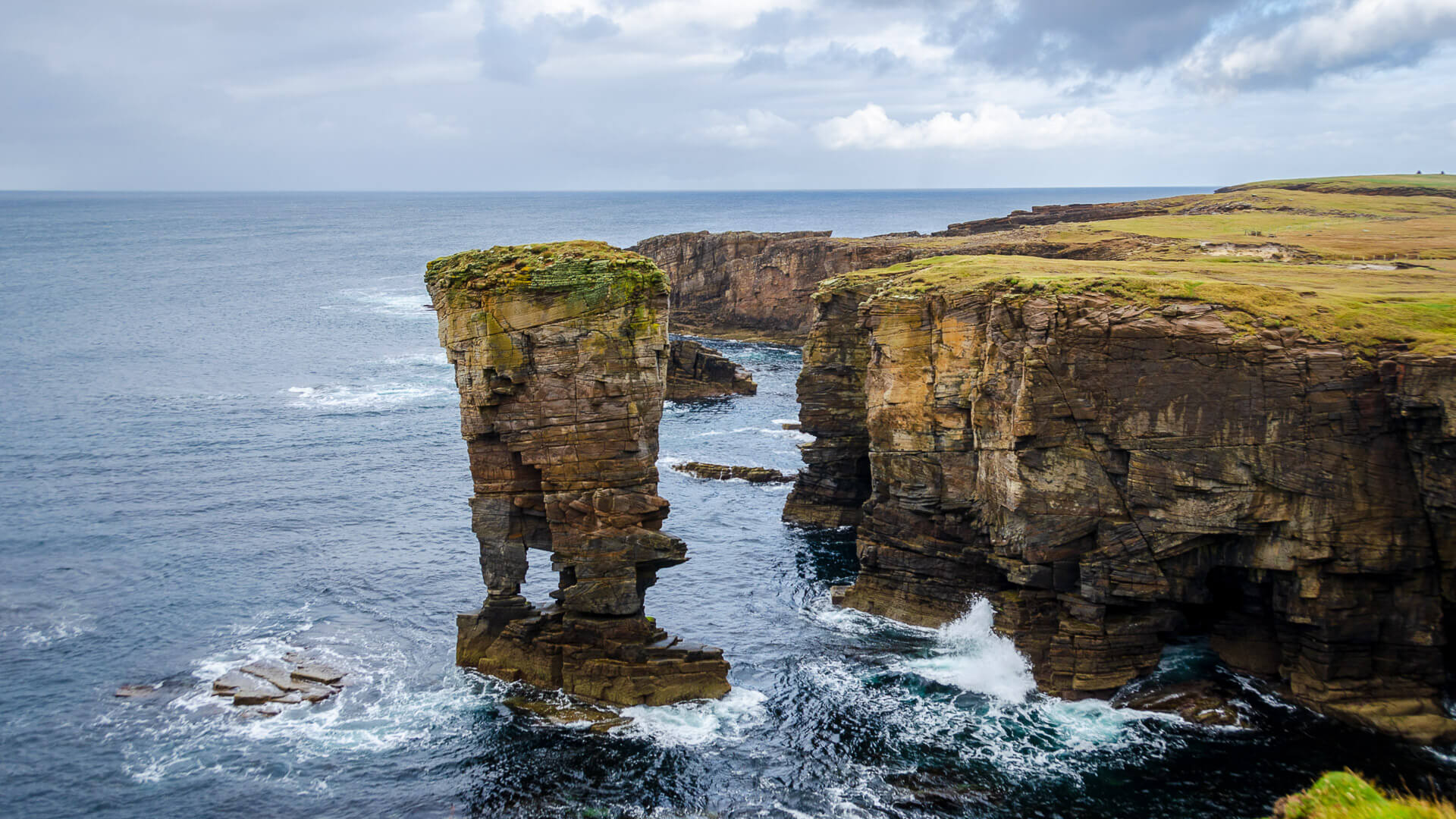
Fancy a short walk with a stunning backdrop? Head to the Cliffs of Yesnaby, one of Orkney’s natural wonders. From the car park it’s just a few steps to see the cliffs. Those with a bit more time can walk along the coastline to the Yesnaby sea stack.
More on the Cliffs of Yesnaby here.
Skara Brae
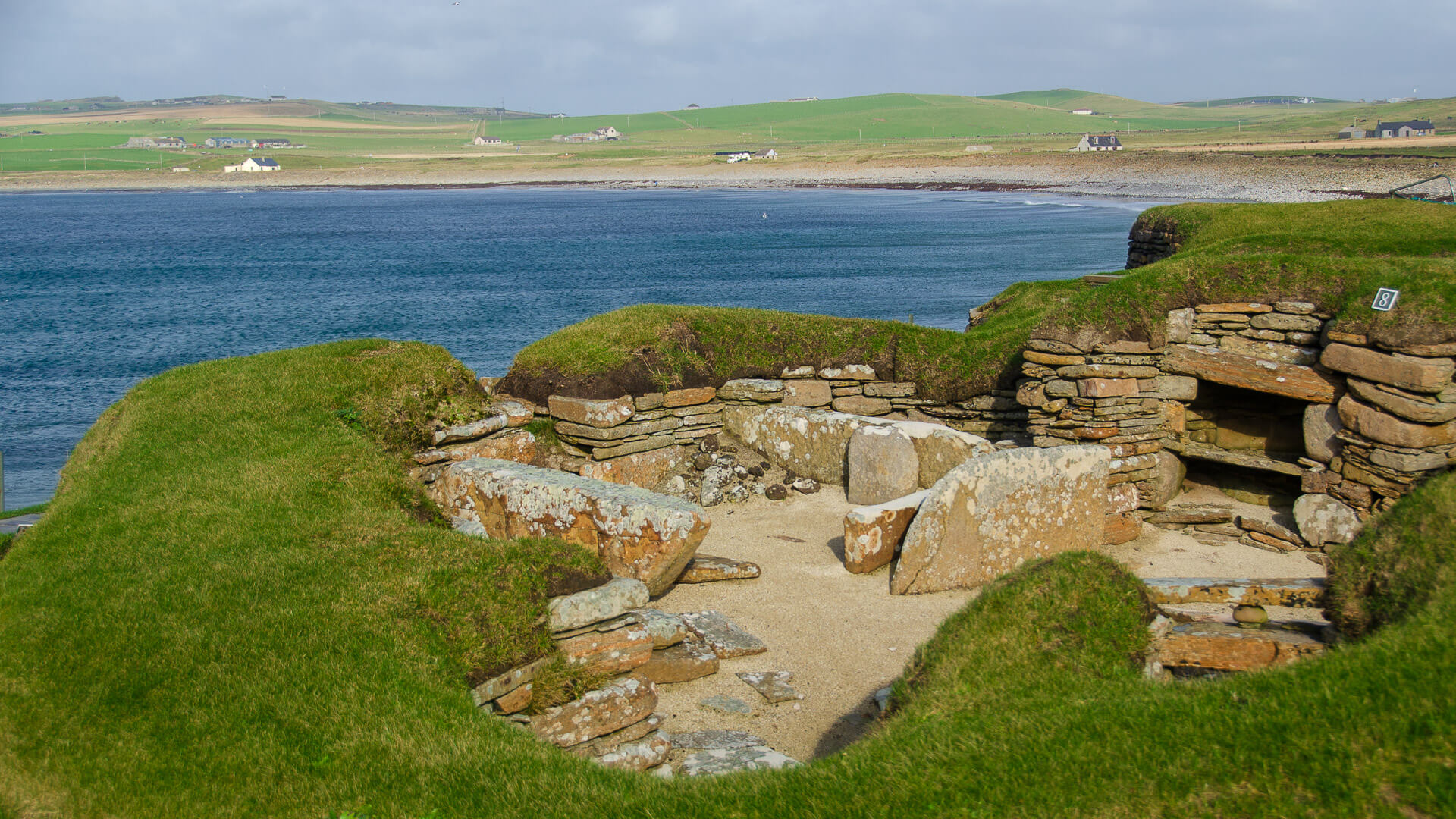
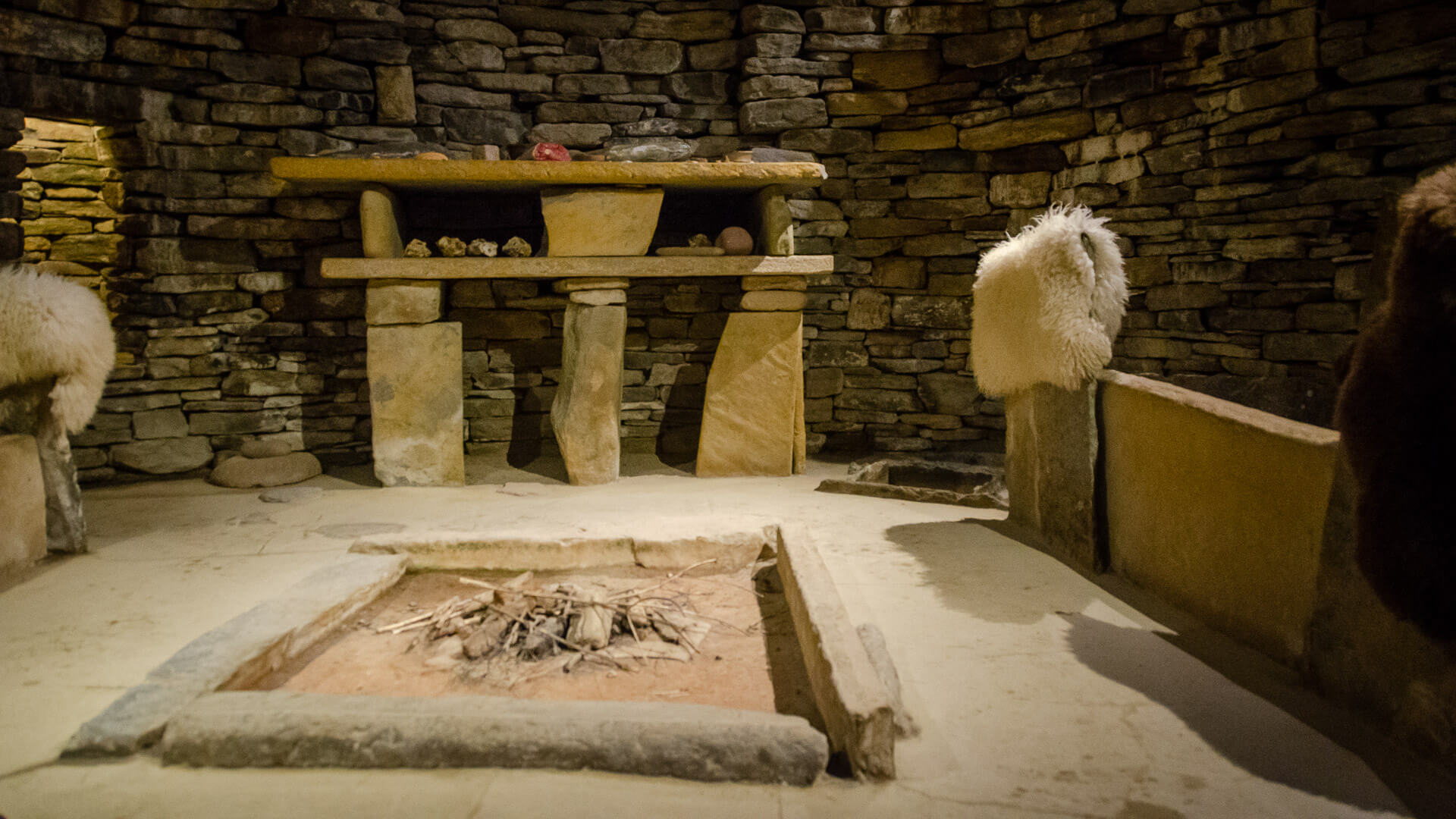
You could almost call it a Stone Age terraced housing estate – that’s Skara Brae. Sometime between 3200 and 2200 BC, people here lived almost like we do. They had beds, hearths and shelves. Part of the UNESCO World Heritage.
More info on Skara Brae here.
Skaill House
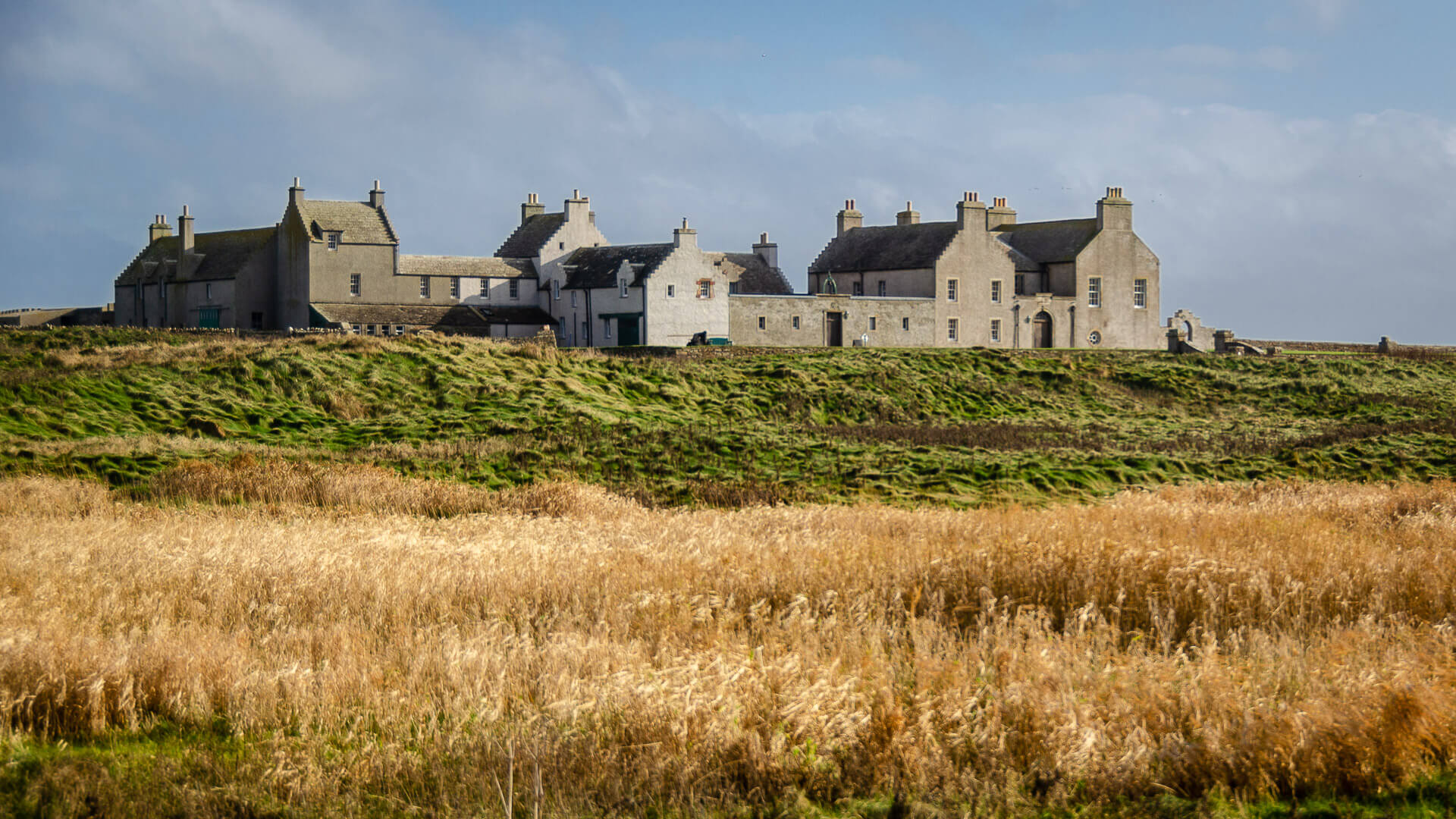
Skaill House is home to the man who discovered Skara Brae, which is why it sits right next door. Visitors to Skara Brae walk a few hundred metres over with the ticket bought at the visitor centre. You can explore a manor house with some lovely treasures inside. A falconry with a flying display is also on site.
More info on Skaill House (German only for now).
Orkney Brewery
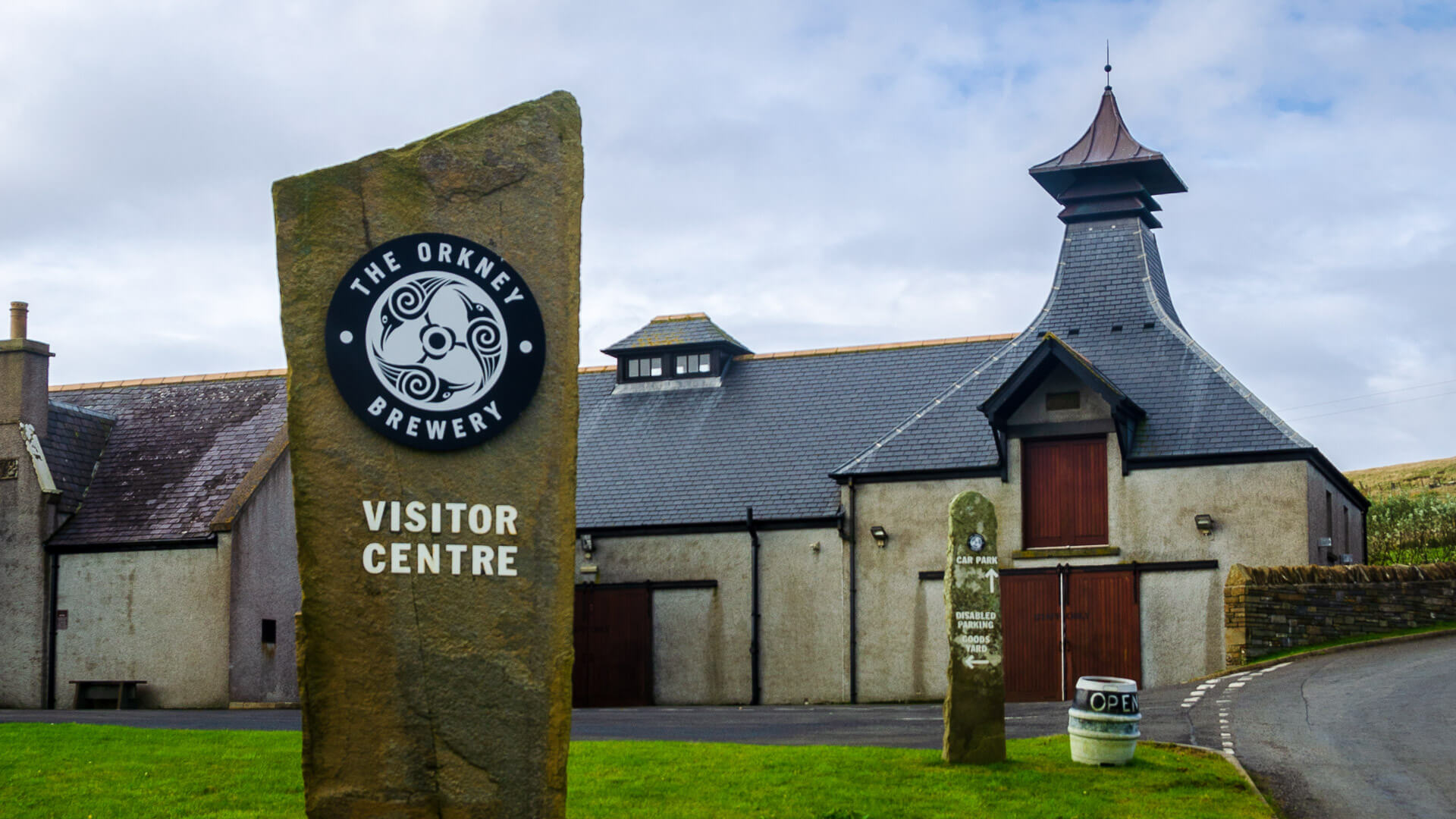
In a village with the curious name of Quoyloo stands the Orkney Brewery. It produces several tasty beers, which visitors can sample on so-called paddles – small trays holding several little beer glasses. There’s also solid lunch fare on offer. In summer it’s worth booking a table in advance.
Earl’s Palace, Birsay
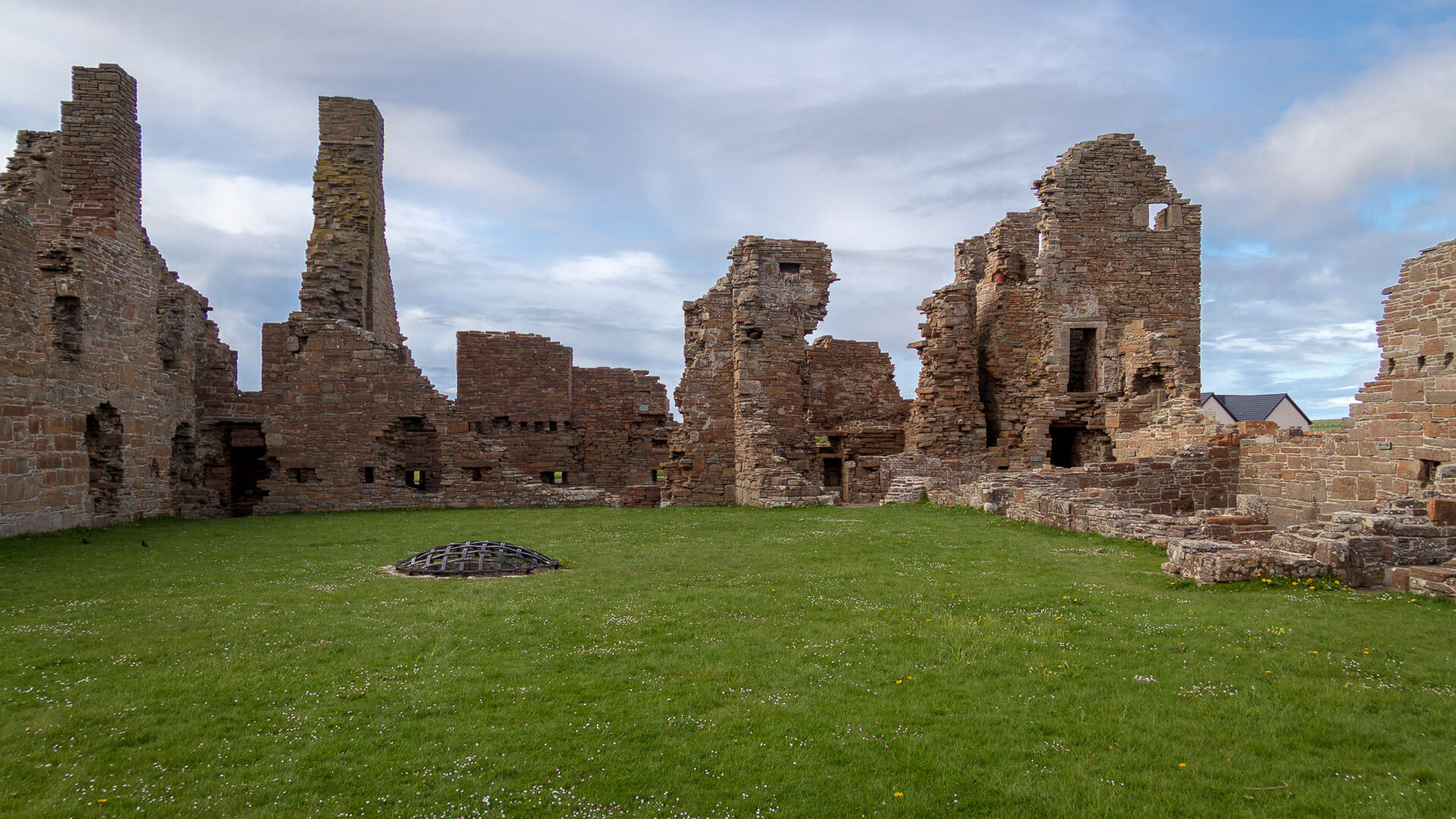
The predecessor to the Earl’s Palace in Kirkwall stands near Birsay. It was likely once no less impressive than the palace that eventually replaced it. Today visitors can wander the ruins, and the info boards help you picture its former grandeur.
More info on the Earl’s Palace (German only for now).
Brough of Birsay
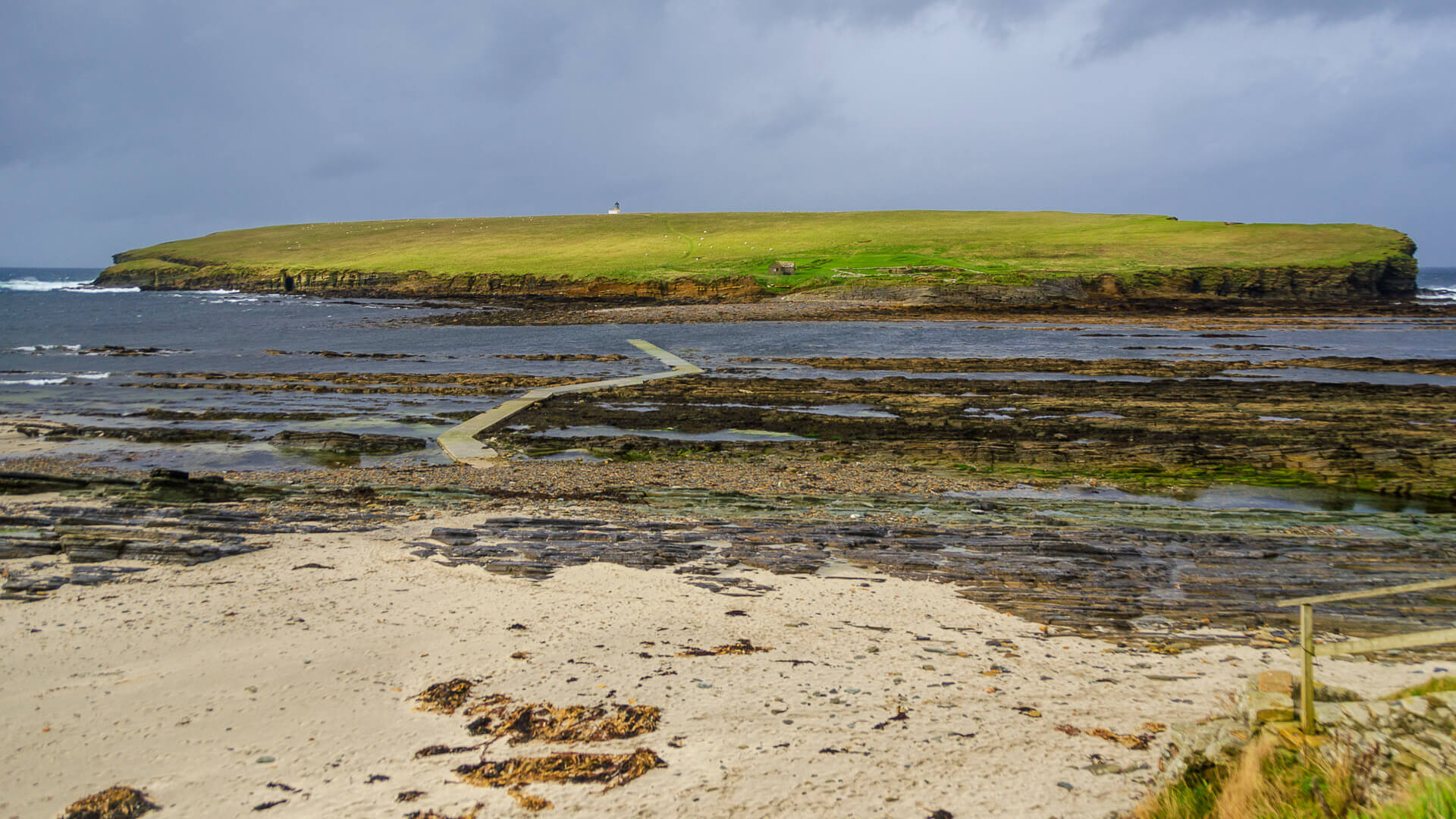
A small tidal island lies off the west of Orkney Mainland: the Brough of Birsay. Just the view from the car park across to this little gem offshore is worth it – the waves, the rocks, the beach … magnificent. Walking across is even better, though visitors need to check the tides, since there are no residents on the other side to offer shelter.
More info on the Brough of Birsay (German only for now).
Broch of Gurness
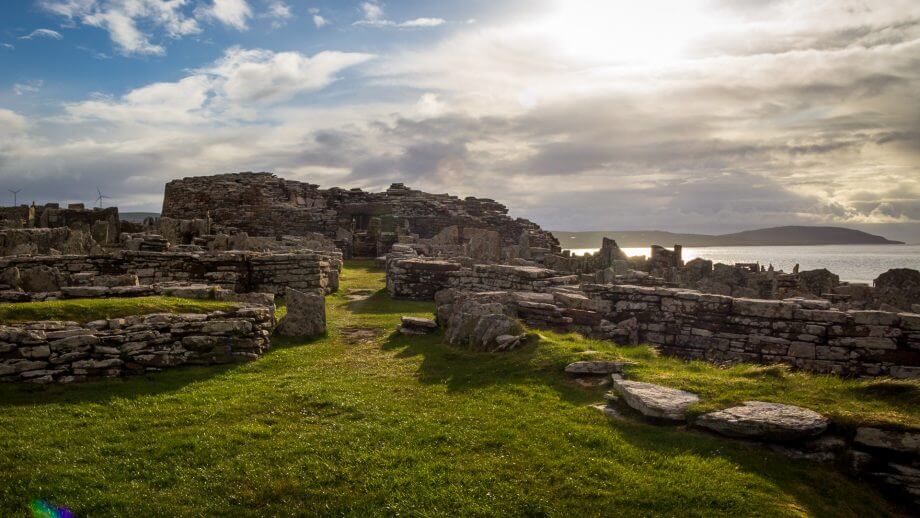
Between the Stone Age peoples and their monuments and the Vikings, another people lived here: the Picts. They too left traces, and one of them is the Broch of Gurness, a former giant stone tower surrounded by the ruins of a Pictish village.
More info on the Broch of Gurness (German only for now).
Old Man of Hoy
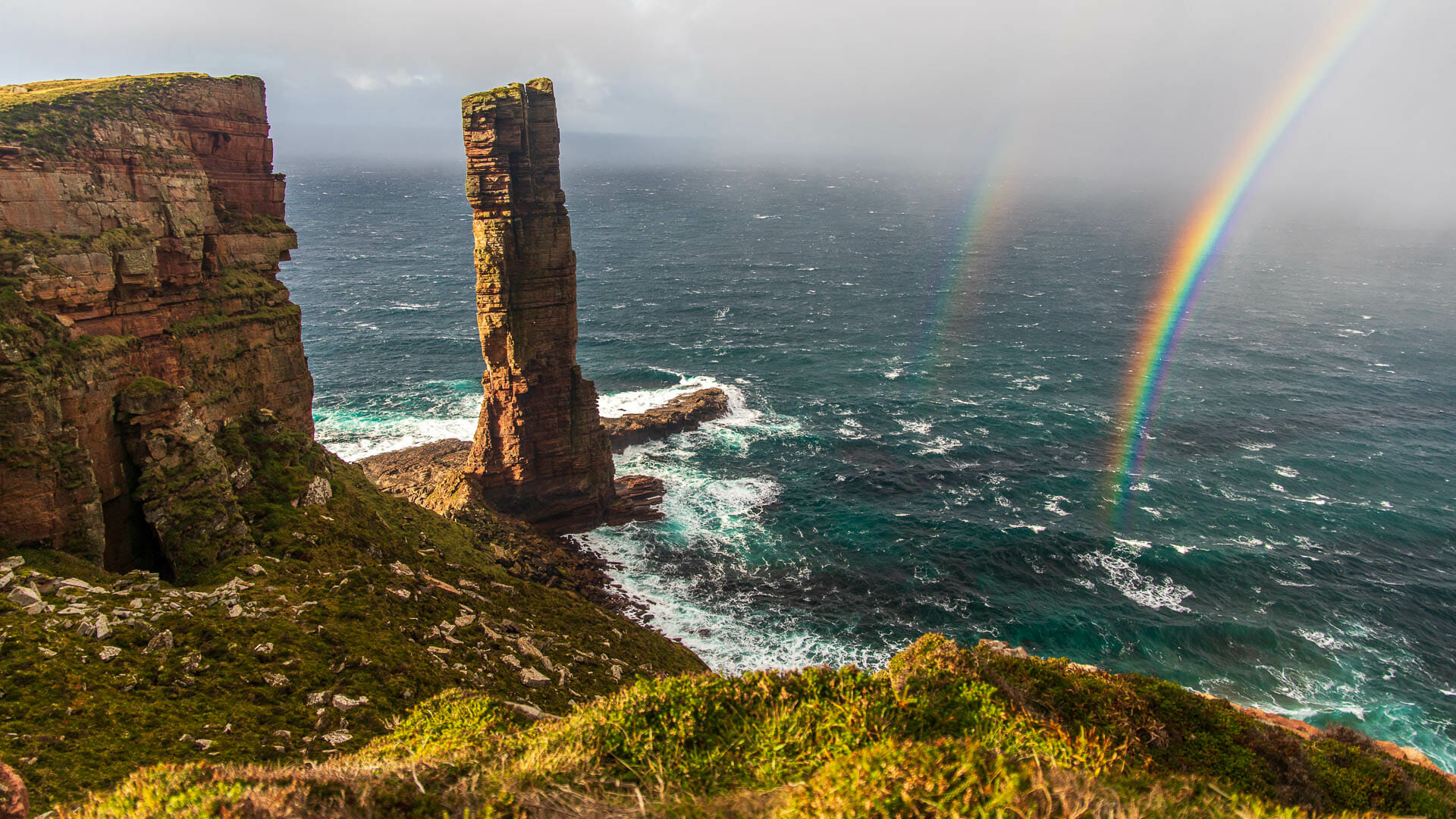
This gigantic sea stack can only be seen from the ferry between Stromness and Thurso, or on a hike on the island of Hoy. Either way, it’s well worth seeing.
More info on the Old Man of Hoy here.
Brough of Deerness
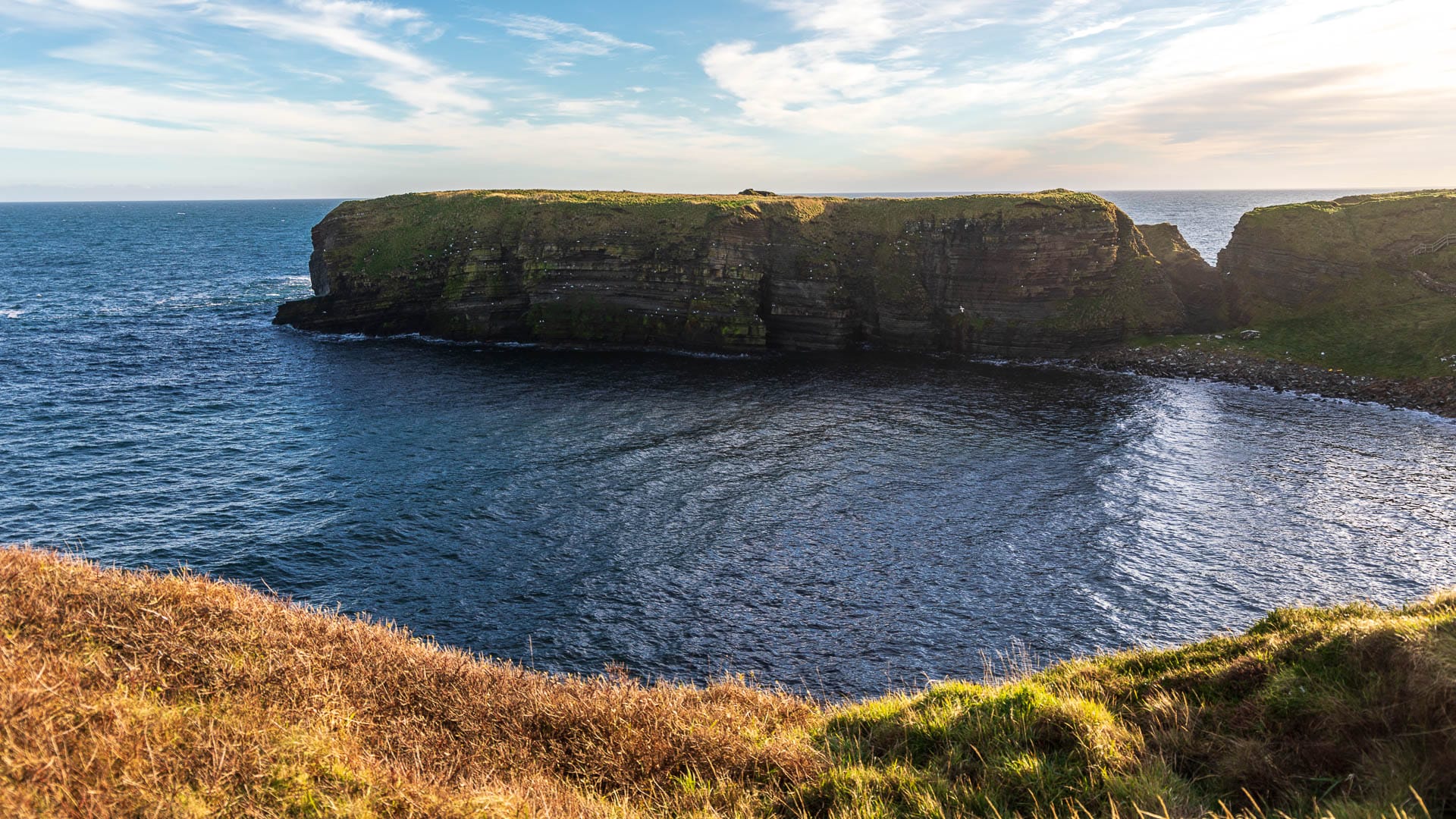
To the east of Mainland lies the Deerness peninsula, home to the Mull Head Nature Reserve. Two sights are particularly interesting here: the collapsed sea cave “The Gloup”, and the headland “Brough of Deerness” with the remains of a Viking settlement on top. A walk here lets you take in the nature, history and geology of the area all at once.
More info on the Brough of Deerness (German only for now).
Inspiration: Orkney’s Natural Wonders
More Interesting Sights
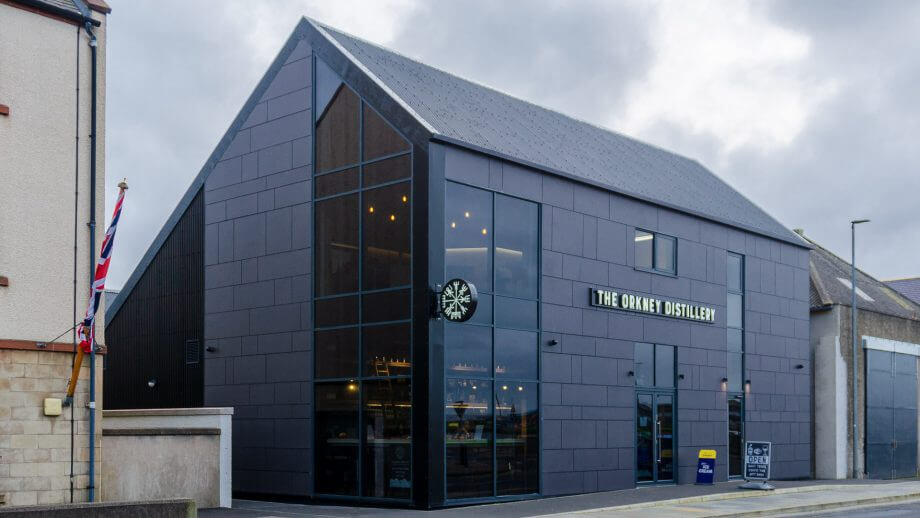
In Kirkwall, an evening visit to the Orkney Distillery is worthwhile – one of the archipelago’s two gins is produced here, and you can also book tours. The second gin is produced on the Isle of Burray, though a visit doesn’t currently appear to be possible there.
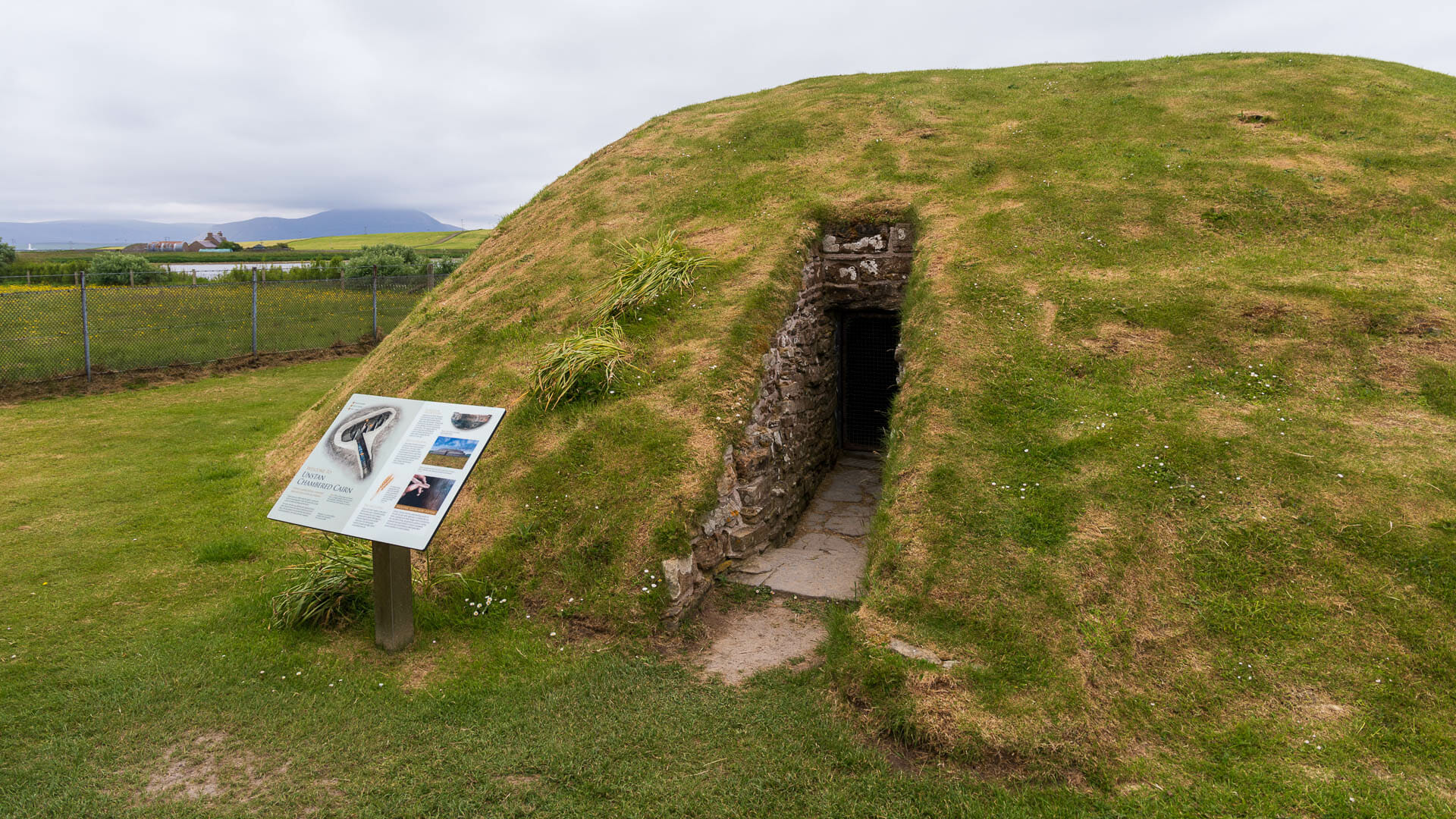
If you already know Maes Howe, you can also visit the Unstan Chambered Cairn nearby, (German only for now).
Best Time to Visit: Climate and Weather
Orkney’s weather is a lucky dip. On a visit in 2019, within three days I had warm sunshine, cold drizzle, and gale-force winds that nearly delayed the flight home. At least wind itself is something of a constant on the islands – which is why you’ll see almost no trees, except in a few sheltered hollows.
Even so, Orkney does have preferred travel months, as the climate chart shows:
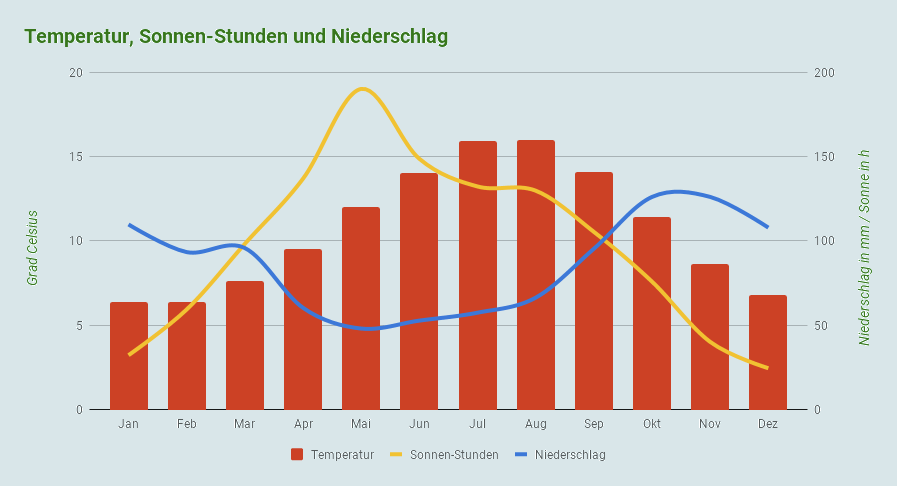
You can clearly see: May, as in almost all of Scotland, is a good month to travel. Rainfall is lowest at this time and the sun shines generously – only warmth is still missing. That builds over the following months: June, July and August offer the best travel conditions. From October the weather worsens, though even then you can still enjoy good days.
The northern location has another effect: days are very long in summer and very short in winter. In June you’ll often have daylight from three in the morning until half past nine at night, while in winter the sun doesn’t rise until nine and sets again by half past three.
Orkney often has clear weather, which is fantastic for stargazers and often for those hoping to spot the Northern Lights too. Don’t forget: Orkney sits at the same latitude as the southern tip of Greenland and the Swedish capital, Stockholm, so the odds for this celestial phenomenon are actually pretty good.
Good news for anyone who hates Highland midges : the nasty little biters have little say on Orkney. However many times I’ve been there (and from what I hear from other travellers and locals too), the biting flies simply haven’t been a problem. There’s usually a light breeze on Orkney anyway, which the midges can’t stand.
Getting There: Ferries and Flights to Orkney
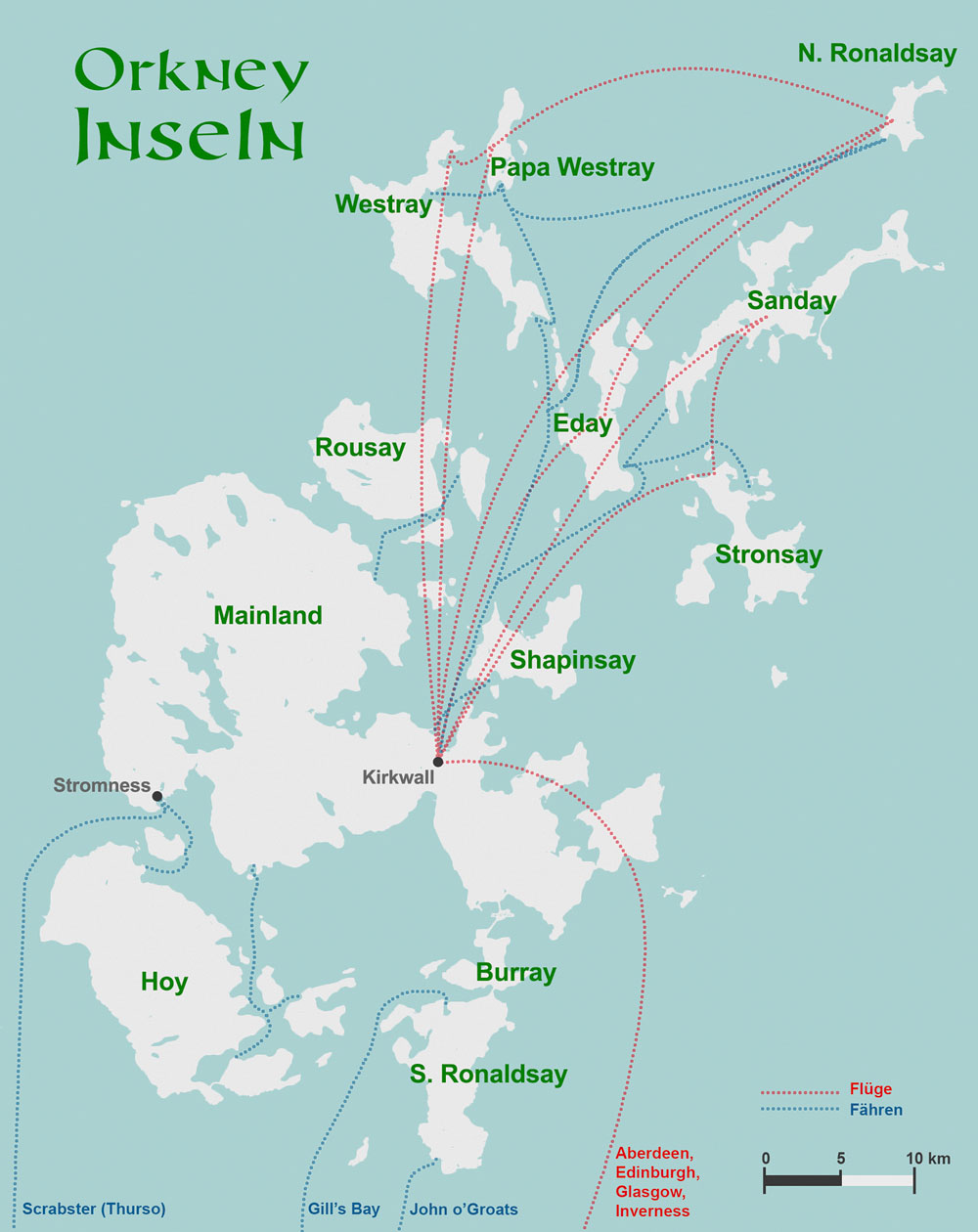
To reach Orkney, you first need to head north on the mainland. From there, ferries depart to take you across to the islands.
Since most visitors to the islands pick up a rental car at one of Scotland’s major airports, the two car ferries are the most popular link between the British mainland and Orkney. Where once there was only Northlink Ferries, for several years now Pentland Ferries has offered some competition.
Since most visitors to the islands pick up a rental car at one of Scotland’s major airports, the two car ferries are the most popular link between the British mainland and Orkney. Where once there was only Northlink Ferries, for several years now Pentland Ferries has offered some competition.
Northlink Ferries: Thurso – Stromness, Aberdeen – Kirkwall
Northlink Ferries usually run the route from Scrabster near Thurso three times a day during high season (June to August): 8:45am, 1:15pm and 7pm. The crossing takes almost exactly ninety minutes. Fares vary considerably depending on the season.
- Low season is roughly early January to just before the end of March, and November to just before Christmas
- Mid season from the last week of March to mid-June, plus September and October, as well as the last two weeks of November and the first week of January.
- High season runs from mid-June to the end of August
Scrabster-Stromness Route
| Low season | Mid season | High season | |
| Passengers | |||
| Adults | £21.35 | £23.15 | £24.95 |
| Children | £10.80 | £11.60 | £12.55 |
| Infants | free | free | free |
| Concessions | £19.22 | £20.84 | £22.46 |
| Vehicles | |||
| Car/motorhome (under 6 metres) | £69.00 | £72.00 | £77.00 |
| Vehicles over 6 metres, surcharge per metre | £12.55 | £14.75 | £16.15 |
| Bikes | free | free | free |
| Motorbikes | £20.50 | £23.15 | £26.00 |
Aberdeen to Kirkwall Route
Alternatively, you can also sail directly from Aberdeen to Kirkwall with Northlink. The crossing takes six hours.
| Low season | Mid season | High season | |
| Passengers | |||
| Adults | £28.00 | £36.00 | £43.00 |
| Children | £13.90 | £17.55 | £21.05 |
| Infants | free | free | free |
| Concessions | £25.20 | £32.40 | £38.70 |
| Vehicles | |||
| Car/motorhome (under 6 metres) | £113.00 | £144.00 | £151.00 |
| Vehicles over 6 metres, surcharge per metre | £15.20 | £18.75 | £22.35 |
| Bikes | free | free | free |
| Motorbikes | £29.50 | £33.50 | £36.50 |
You’ll find all the exact figures at this link.
Pentland Ferries: Gill’s Bay – St Margaret’s Hope
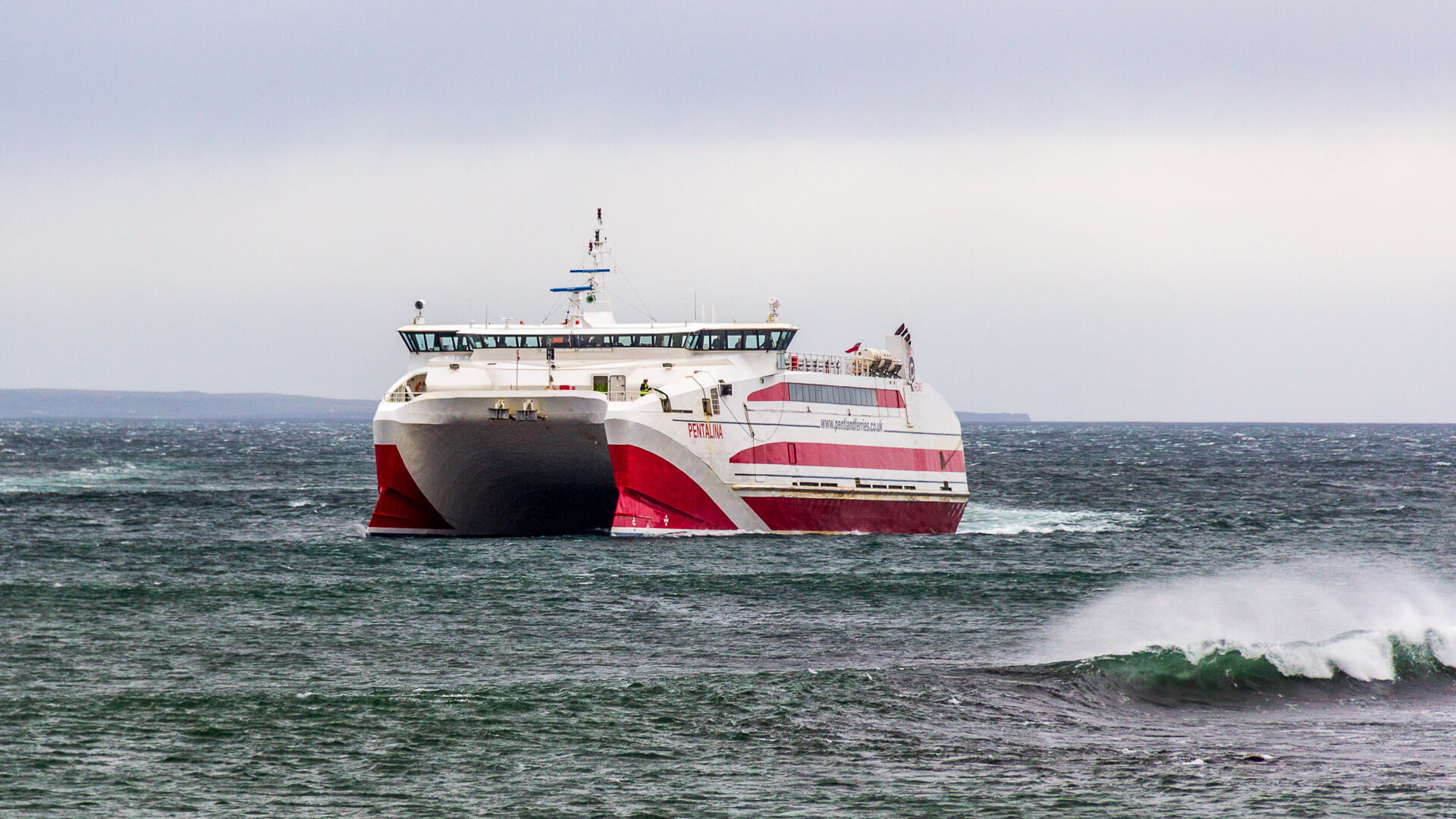
Pentland Ferries sail three times daily, and even four times during high season (July/August). They dock at the southern tip of Orkney on South Ronaldsay, so the crossing only takes an hour – great news for anyone prone to seasickness. Rough costs:
- Adults: £22
- Children: £11
- Cars: £49
- Motorbikes: £22
- Motorhomes
- up to 5 metres: £49
- 5-6 metres: £67
- 6-8 metres: £92
- over 8 metres: £131
- Bikes: free
- Bike racks: £6
The ferry usually departs Gill’s Bay towards Orkney at 9:30am, 1:00pm and 6:45pm, and heads back to the mainland at 7:45am, 11:30am and 5:00pm.
More info on the Pentland Ferries website.
Loganair: Getting There by Plane
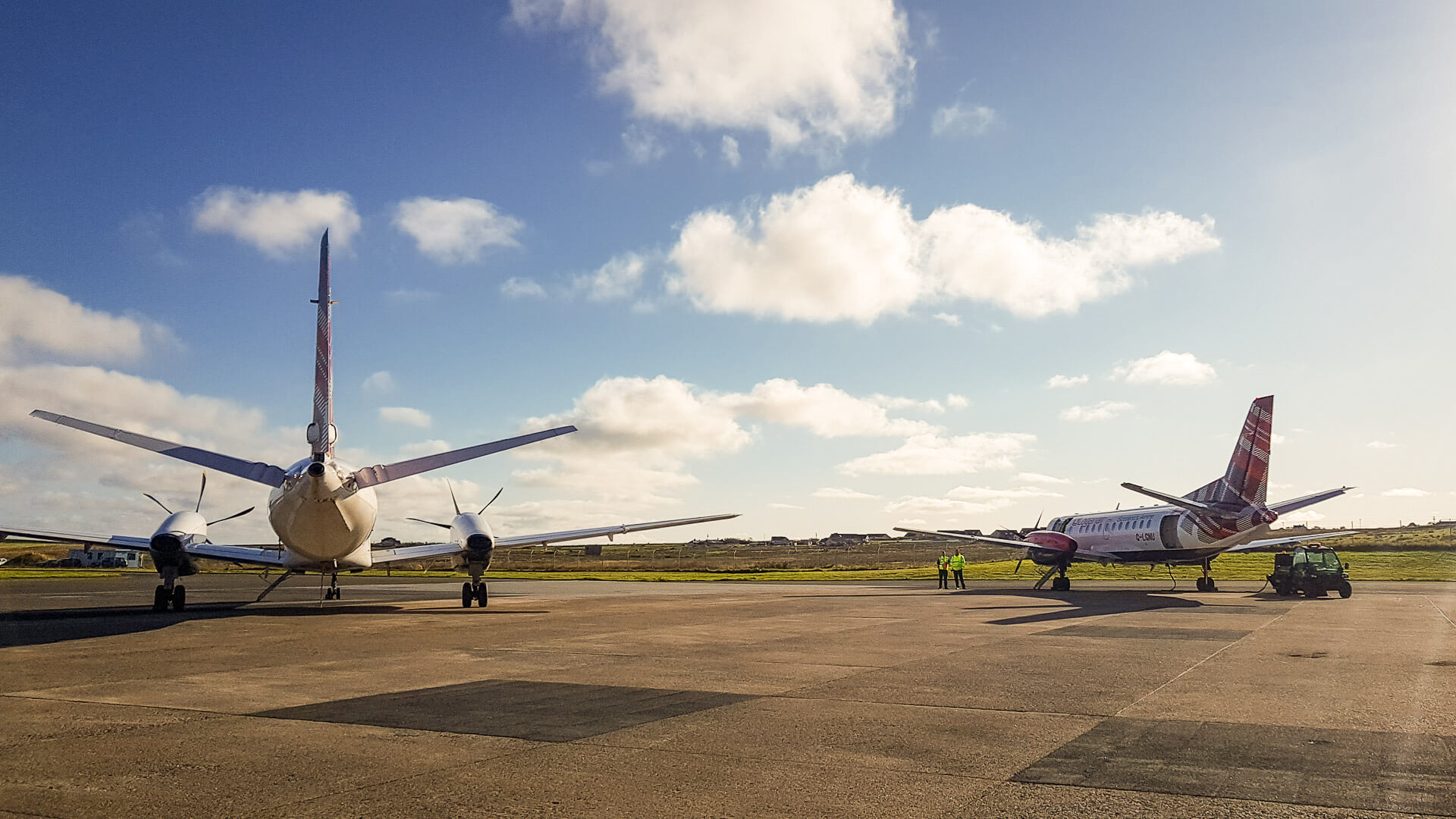
Loganair doesn’t just fly between the islands – it also serves Kirkwall from Aberdeen, Edinburgh, Glasgow and Inverness. There are daily flights from Edinburgh and Glasgow, and a daily flight from Aberdeen and Inverness too, with prices fluctuating depending on booking and airport.
Note: the earlier you book, the cheaper it gets!
Reaching the Ferries Without a Car
You can reach the Scrabster ferry port near Thurso for Northlink Ferries by Citylink bus. From Glasgow or Edinburgh, expect to pay around £75 one way, with a journey time of over six hours and at least one change in Inverness.
Gill’s Bay for the Pentland Ferry isn’t reachable directly by bus. The X99 Citylink service gets you to Wick for around £60 per person one way. From there, a private bus connects on to Gill’s Bay.
By train from Glasgow or Edinburgh to Thurso, the journey takes around eight hours, with at least one change in Inverness. One-way fares run roughly £40 to £75.
IMPORTANT NOTE: All prices given here are meant as rough examples. I’ve gathered them from the online booking tools. They apply to 2025 and come with absolutely no guarantee.
Accommodation: Staying Overnight on Orkney
Here’s a selection of accommodation on an interactive map. I receive a share if you book (advertisement).
You are currently viewing a placeholder content from Default. To access the actual content, click the button below. Please note that doing so will share data with third-party providers.
More InformationDay Tours: Two Day Tours on Orkney
Stone giants, Viking settlements and mysterious tombs – that’s what defines Orkney. Two day tours let you take in the main island’s most important sights.
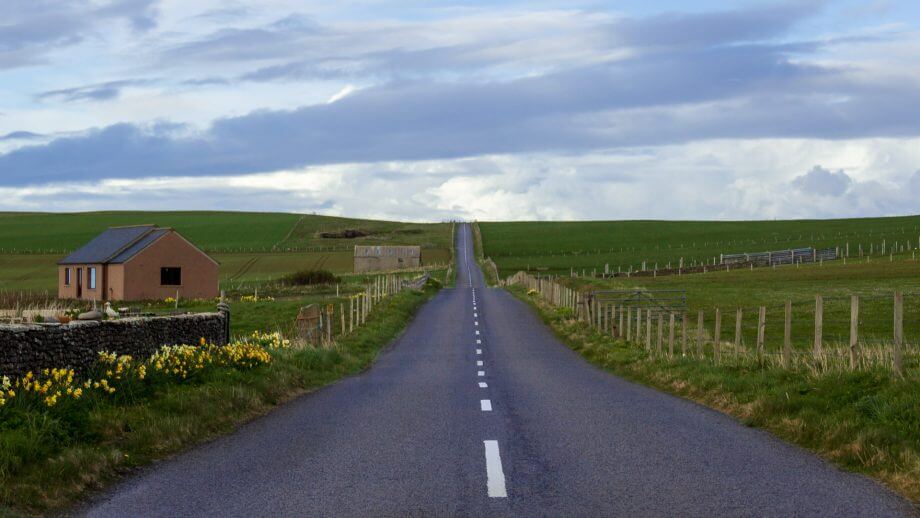
What awaits you on the Orkney day tours? Above all, the islands aren’t shy about their Stone Age relics: graves, stone circles and old Neolithic settlements are plentiful here. But palaces, cathedrals and astonishingly beautiful landscapes are also among the archipelago’s charms.
Orkney, of course, deserves more time – four or five days to enjoy all the sights at leisure. But often the islands in the north of Scotland get folded into one big road trip round the country, leaving far too little time. Even so, visitors should treat themselves to at least one overnight stay here, ideally two – otherwise you’ll miss out on important sights on the islands.
Of course, you can also make just a single day trip to Orkney. Bus tour operators from John o’Groats, for example, offer trips that fit the bill. Or you take the car ferry over and limit yourself to the first tour described here.
Both tours are kept fairly tight, with no breaks factored in. You should set off by nine o’clock at the latest. It’s also worth familiarising yourself with opening times, so you don’t end up standing in front of locked doors. Sturdy shoes and weatherproof clothing are also useful – the weather on Orkney can change quickly.
Enjoy, and I look forward to your comments on the tours.
1. The Great Mainland Loop – (85 kilometres, 2 hours driving time, 9 hours total)
This tour packs many of the sights of the northern part of the main island into one route. The actual driving time isn’t very long, at around two hours. That said, the loop is packed with stops. Anyone with more time on Orkney could consider splitting it into two day tours and slot in a visit to the island’s second main town, Stromness.
STARTING POINT – Kirkwall
We set off in Orkney’s capital. Aim to be on the road by nine o’clock at the latest. Head out on the A965 towards Stromness, until the sign for Maes Howe appears.
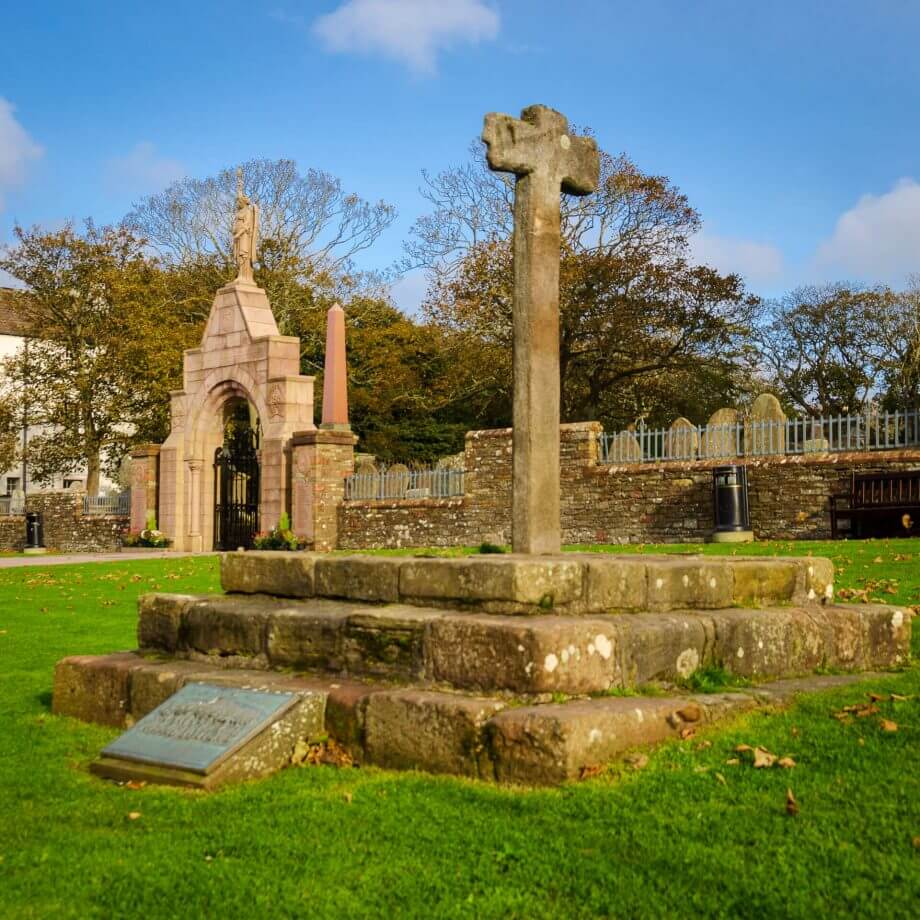
STOP 1 – Maes Howe (1 hour)
The first tour into this unique chambered cairn runs at ten o’clock – and that’s really the only way to appreciate a visit to Maes Howe, since from outside you’ll only ever see a grassy mound. The interior is impressive, and the trained guides skilfully bring the history back to life in front of visitors’ eyes.
Important: be sure to call a few days ahead and reserve the ten o’clock tour by phone (tel: +44 1856 761 606). It’s not possible to visit without a prior reservation.
Photo tip: Unfortunately, photography isn’t allowed inside. So all that’s left is a frontal shot of the entrance.
STOP 2 – Standing Stones of Stenness (30 minutes)
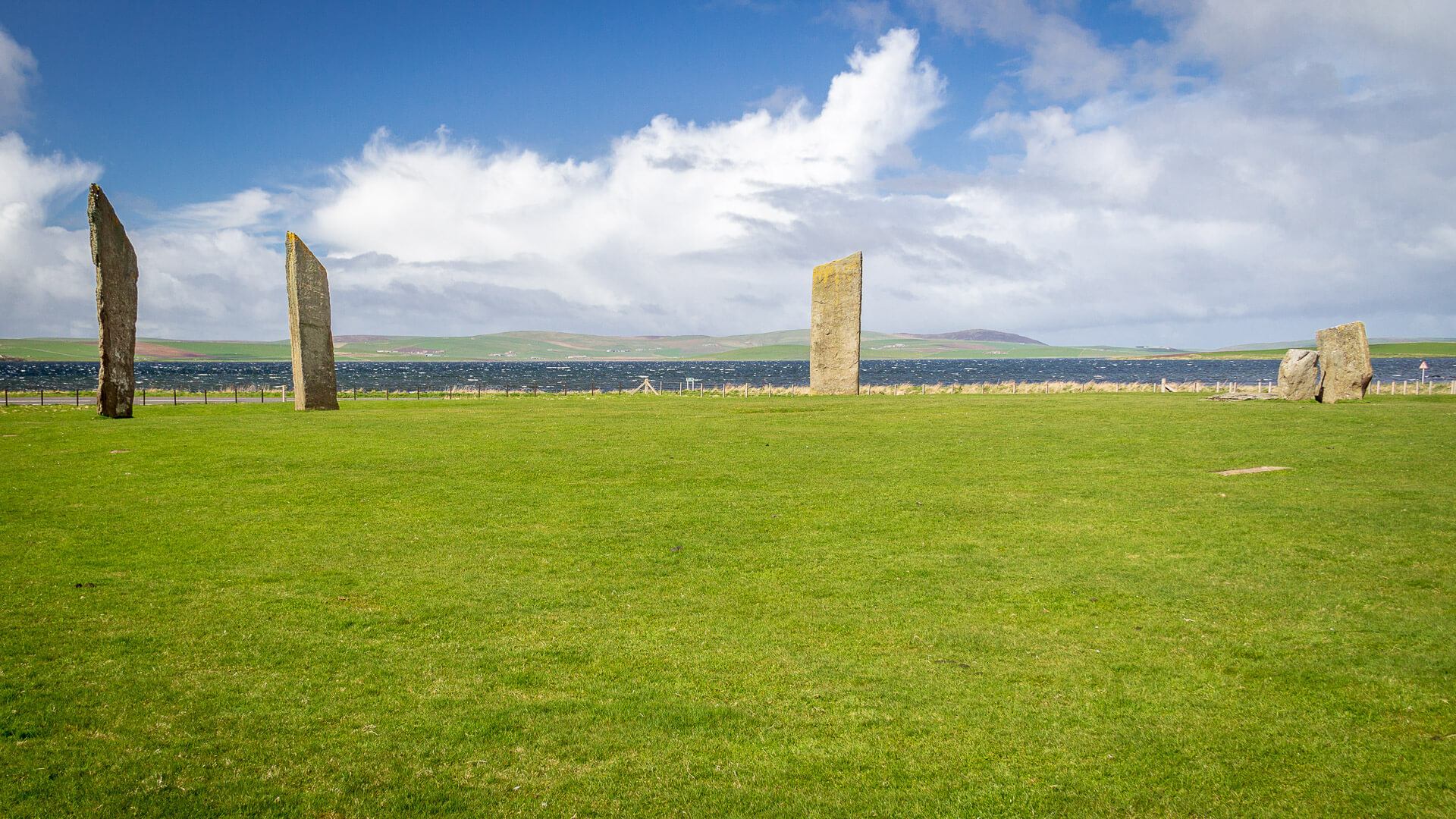
Now on to the stone giants of Stenness. From the Maes Howe car park, rejoin the A965 towards Stromness, but after just a few hundred metres turn right onto the B9055 towards Bay of Skaill. A lay-by for the Standing Stones of Stenness appears on the right. These three stone giants, and the settlement discovered behind them, are certainly worth a closer look.
Photo tip: Best to park a little towards the far end of the lay-by, so your own car doesn’t get in the way if you want to shoot towards the road. That’s worth doing, since it puts the loch in the background of the shot.
STOP 3 – Ring of Brodgar (30 minutes)
Back onto the B9055 towards Bay of Skaill. After a few hundred metres, a large car park appears again on the right. From here a path leads up across the road to the Ring of Brodgar, a large stone circle with 21 monoliths still standing – one of which was even struck by lightning.
Photo tip: Get close to one stone and position it off to the side of the frame, so the row of stones gradually fades away towards the other side.
STOP 4 – Cliffs of Yesnaby (30 minutes)
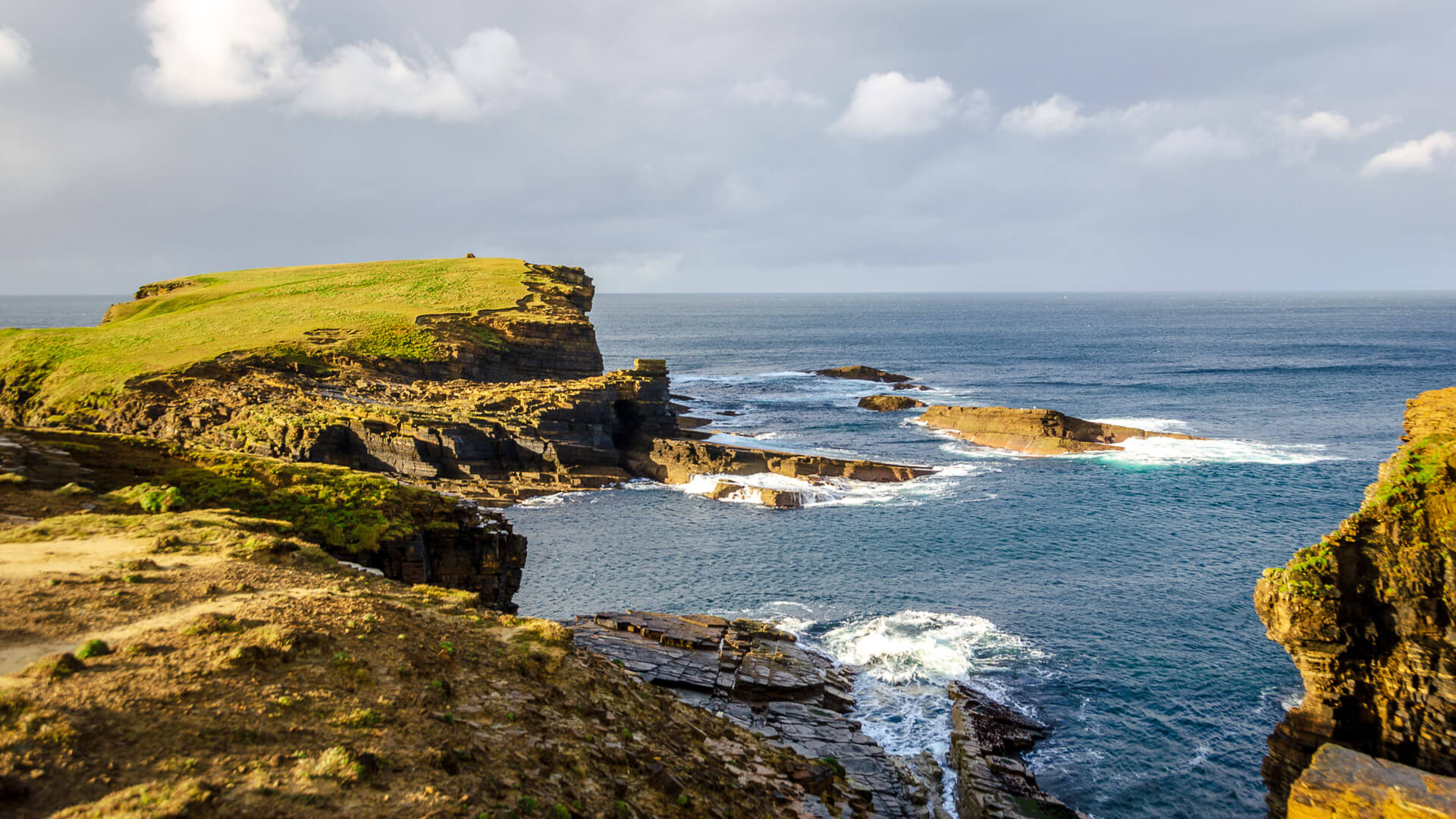
Back onto the B9055 and keep straight on towards Bay of Skaill. At the A967, turn left first towards Stromness, and after about a kilometre take a right at the bend. A few hundred metres further, a road turns off left signed “Yesnaby”. Follow it to the end and park.
Put on sturdy footwear, walk the short distance to the cliffs, and simply take in the Cliffs of Yesnaby.
Photo tip: Just make sure you don’t fall off. Otherwise the cliffs are spectacular enough on their own. If there’s a good swell running, watch closely how the waves roll in and where they break. I find waves that are just about to break a little way out the most photogenic.
STOP 5 – Skara Brae, Skaill House / Skaill Bay (1 hour)
Next stop: the Stone Age settlement of Skara Brae. Take the side road from the cliffs back to the next T-junction, the B9056. Turn left there and drive for around 10 minutes. The sign for Skara Brae soon appears.
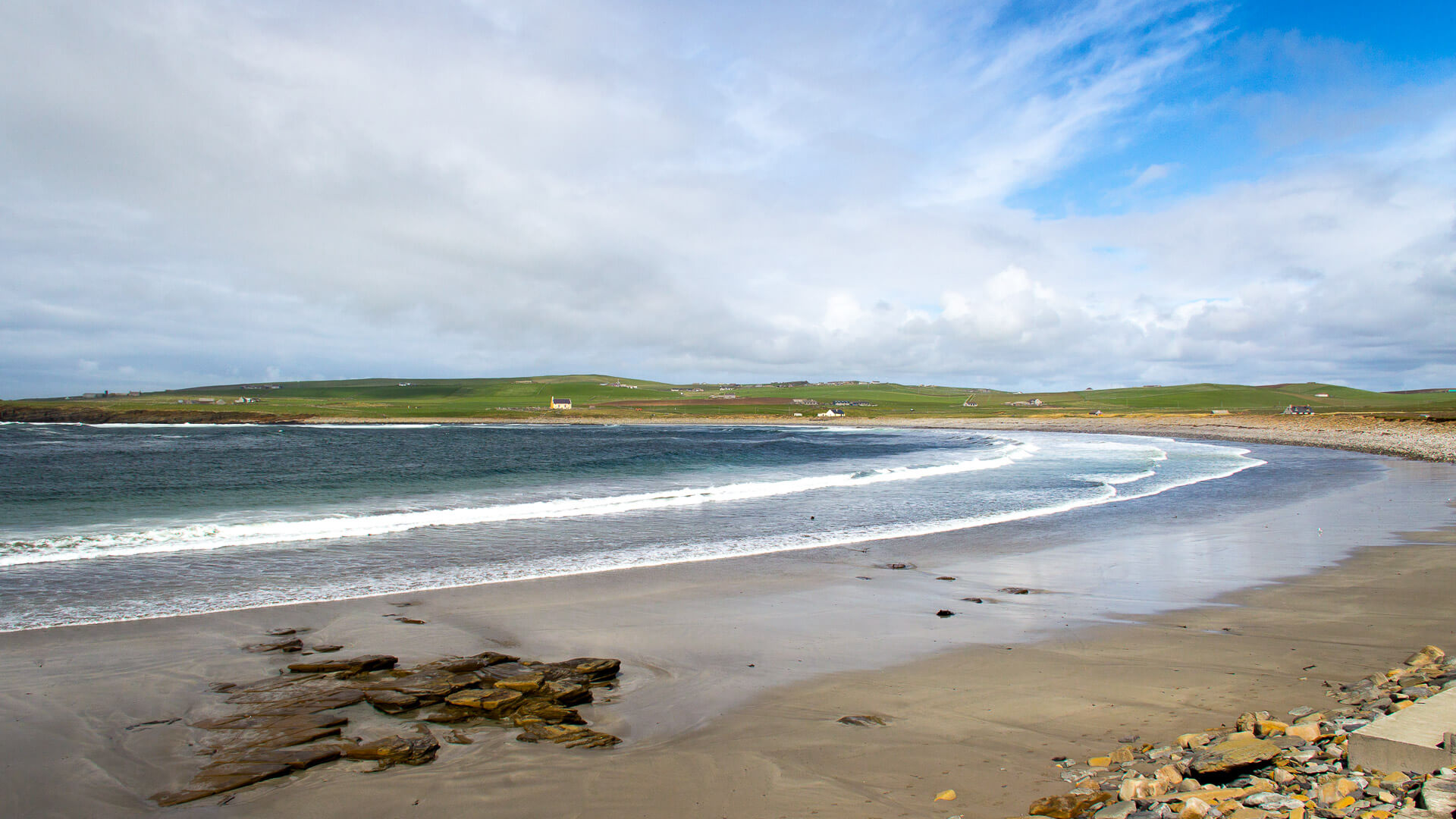
This ancient Stone Age settlement isn’t the only thing of interest in the area. Both the Bay of Skaill, the bay Skara Brae sits on, and Skaill House are worth a visit too, (German only for now).
By the way: your Skara Brae ticket includes entry to Skaill House too.
Photo tip: Definitely photograph Bay of Skaill – it traces a wonderfully photogenic curve. At the northern end, incidentally, there’s a cliff with a hole through it.
STOP 6 – Brough of Birsay (1 hour)
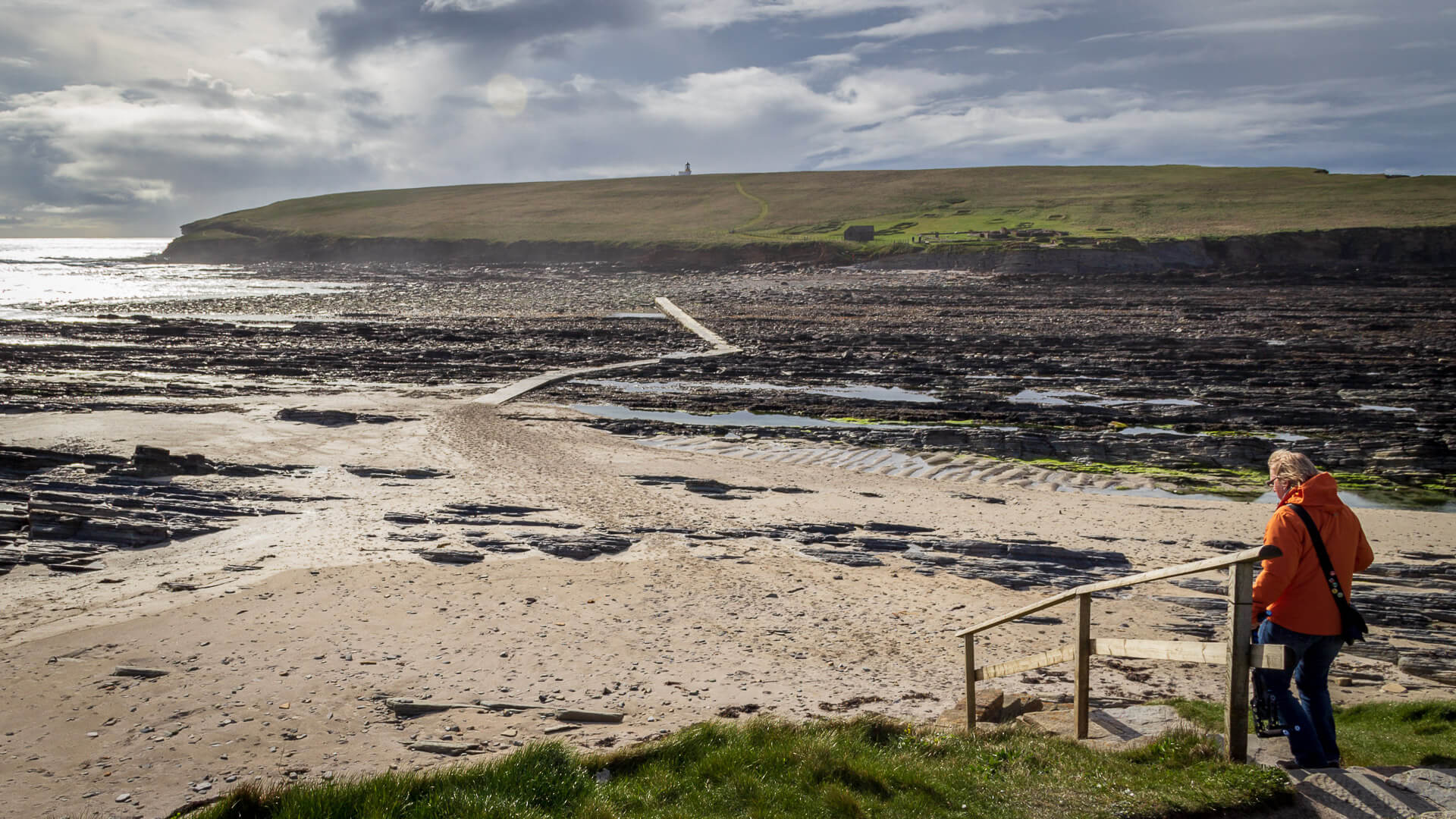
Okay, that’s a lot all at once, and you keep driving around. Ready for the island bit? Please – this is part of the tour too: the Brough of Birsay is a small tidal island. To cross safely and get back again, check when the tides suit, since you can only walk across at low tide. You can check that here, (German only for now for the Brough of Birsay page itself).
Leaving Skaill House, you’ll pass an exit with stone pillars. This exit ends at a T-junction on the larger road, the B9056, where you turn left. A few kilometres further, it too ends at a T-junction on the A967. Birsay is already signposted here – at the next major junction with a give-way sign, turn left. Follow the road, and shortly before the old Earl’s Palace (which is well worth a quick look too) a brown sign points the way to the Brough of Birsay. Just follow the road to the car park from there
Photo tip: The island from the car park, the path leading towards it, and a person just heading down the steps. That adds depth and gets the proportions right in the shot.
STOP 7 – Broch of Gurness (30 minutes)
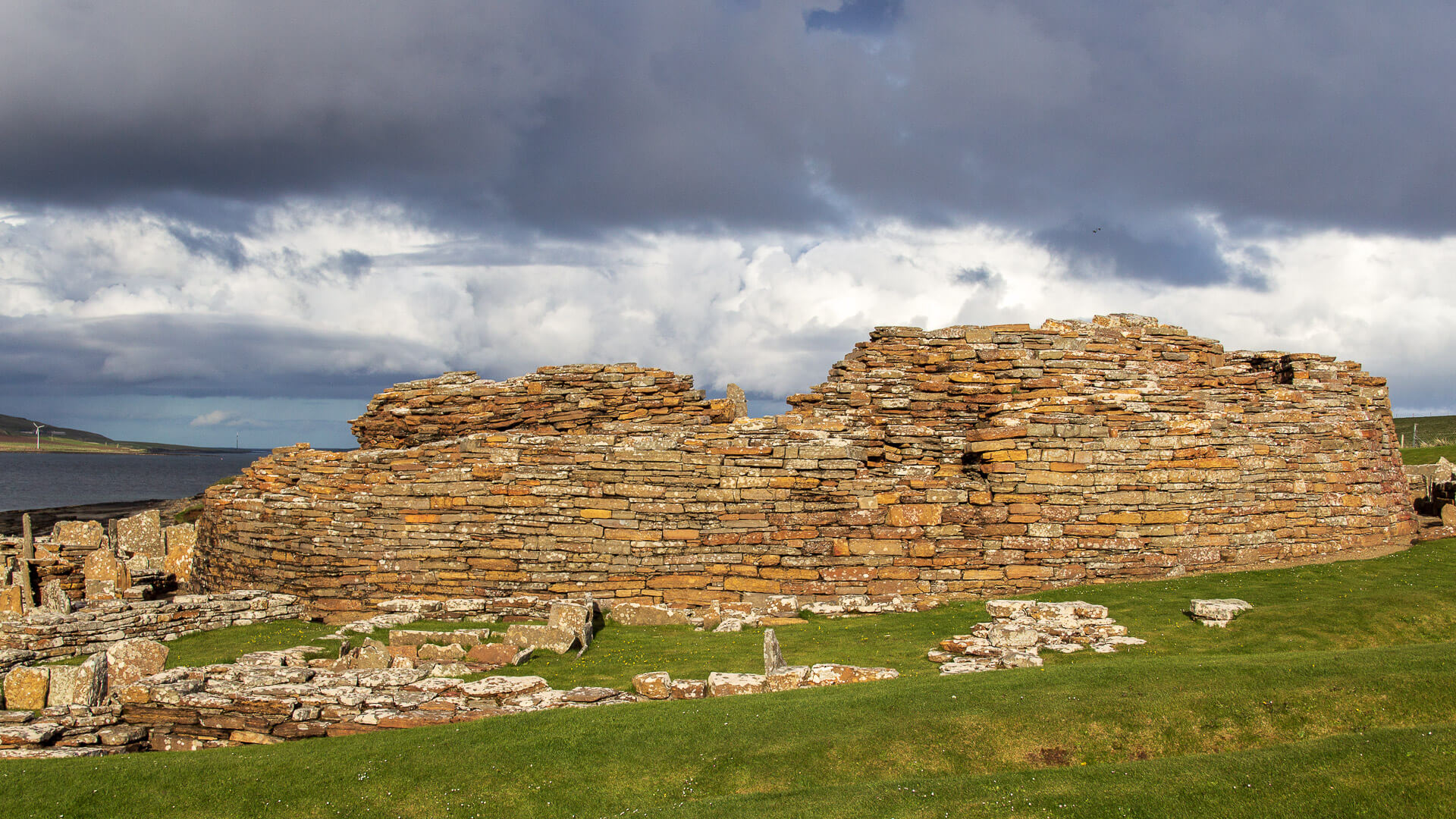
On to the last stop before heading home, the Broch of Gurness, an Iron Age complex with a round tower and a settlement in front of it, (German only for now).
Back on the road, past the ruins of the palace and straight on along the A966. After around 20 minutes’ drive, turn left at the sign for the Broch of Gurness, opposite the school in Evie. Drive to the end and park there.
Then take in the museum and the broch itself.
Photo tip: Honestly, I found it tricky to get a good photo here. There are too many individual elements to see, so choose your subject carefully. Climbing a little way up the rise off to the side might let you get a shot looking down at an angle from above.
FINAL STOP – Kirkwall
Heading home, go back to Evie school and turn left there onto the A966. It ends at the T-junction with the A965. Turn left again there towards Kirkwall. After a few minutes you’re back in town.
2. The Small Mainland Loop – (95 kilometres, 1:45 hours driving time, 5 hours total, plus time in Kirkwall)
The second tour focuses mainly on the southern part of Mainland, including the Deerness peninsula and the islands of Lamb Holm and South Ronaldsay, which are linked by causeway roads. Along the way there’s an astonishing chapel, remnants from the Second World War, and relics from the Pictish and Viking eras to see.
After that, there’s some time for a stroll through Kirkwall itself, since there’s plenty to discover there too.
STARTING POINT – Kirkwall
We start again in Kirkwall, heading from there onto the A961 towards St Mary’s.
STOP 1 – Churchill Barriers (short stop)
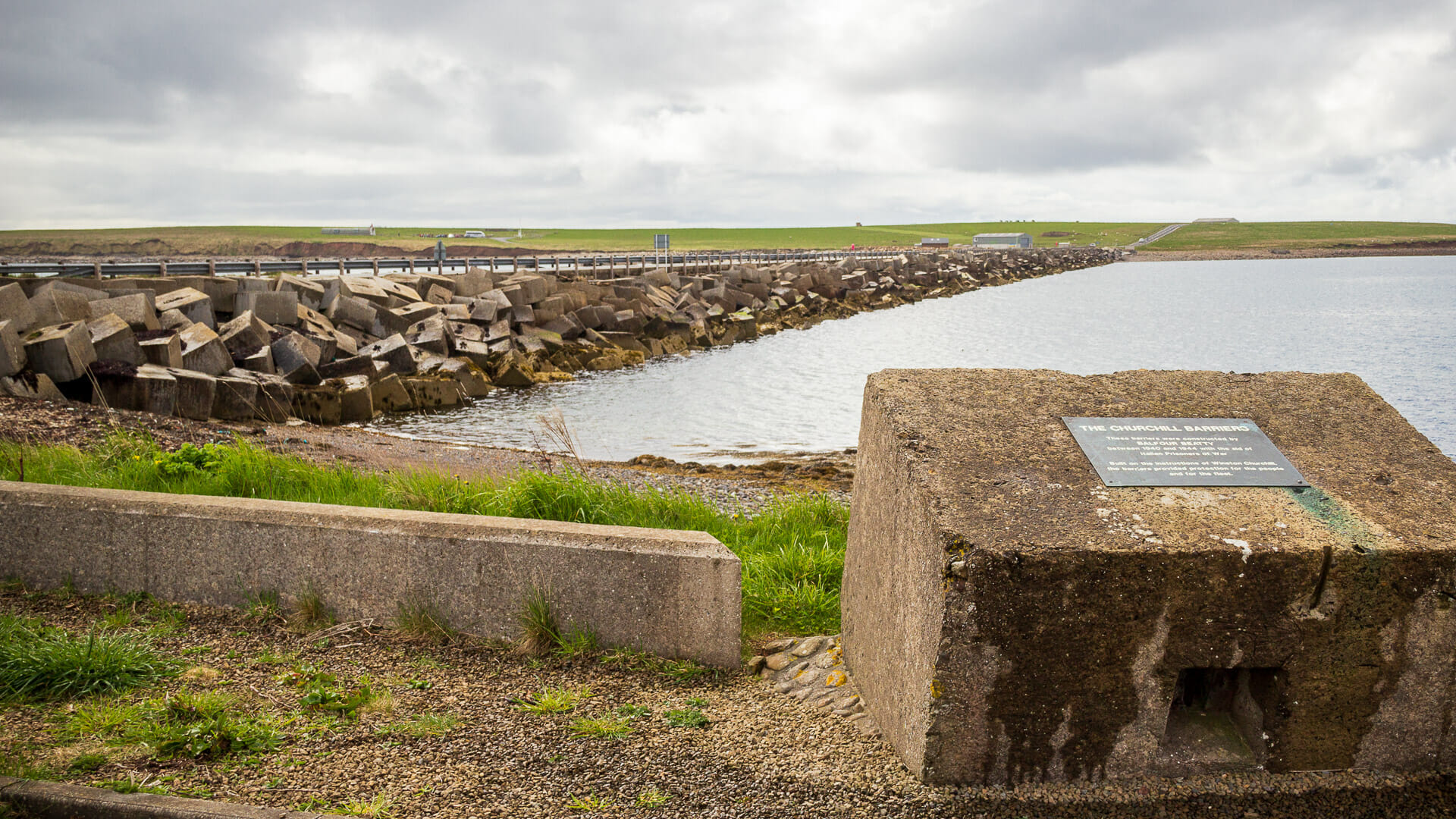
At St Mary’s, the first causeway to Lamb Holm branches off to the right. Just before you turn onto it, there’s a bay with an info board. This is the first of the Churchill Barriers, (German only for now). More follow along the way, each with boards and information. It’s well worth a short stop to read each one.
Photo tip: The rusted shipwrecks are well captured with a telephoto lens. The causeways themselves aren’t especially photogenic.
STOP 2 – Italian Chapel (15 minutes)
Cross onto the first island and turn left immediately, following the sign to the Italian Chapel. The Italian Chapel is a small church built by Italian prisoners of war, bringing a little piece of South Tyrol to Scotland, (German only for now). The story of how it came to be, and the friendship that followed, makes the stop here well worth it in any case.
From here you can decide whether to carry on to the Tomb of the Eagles, or save the time and head straight for the Brough of Deerness.
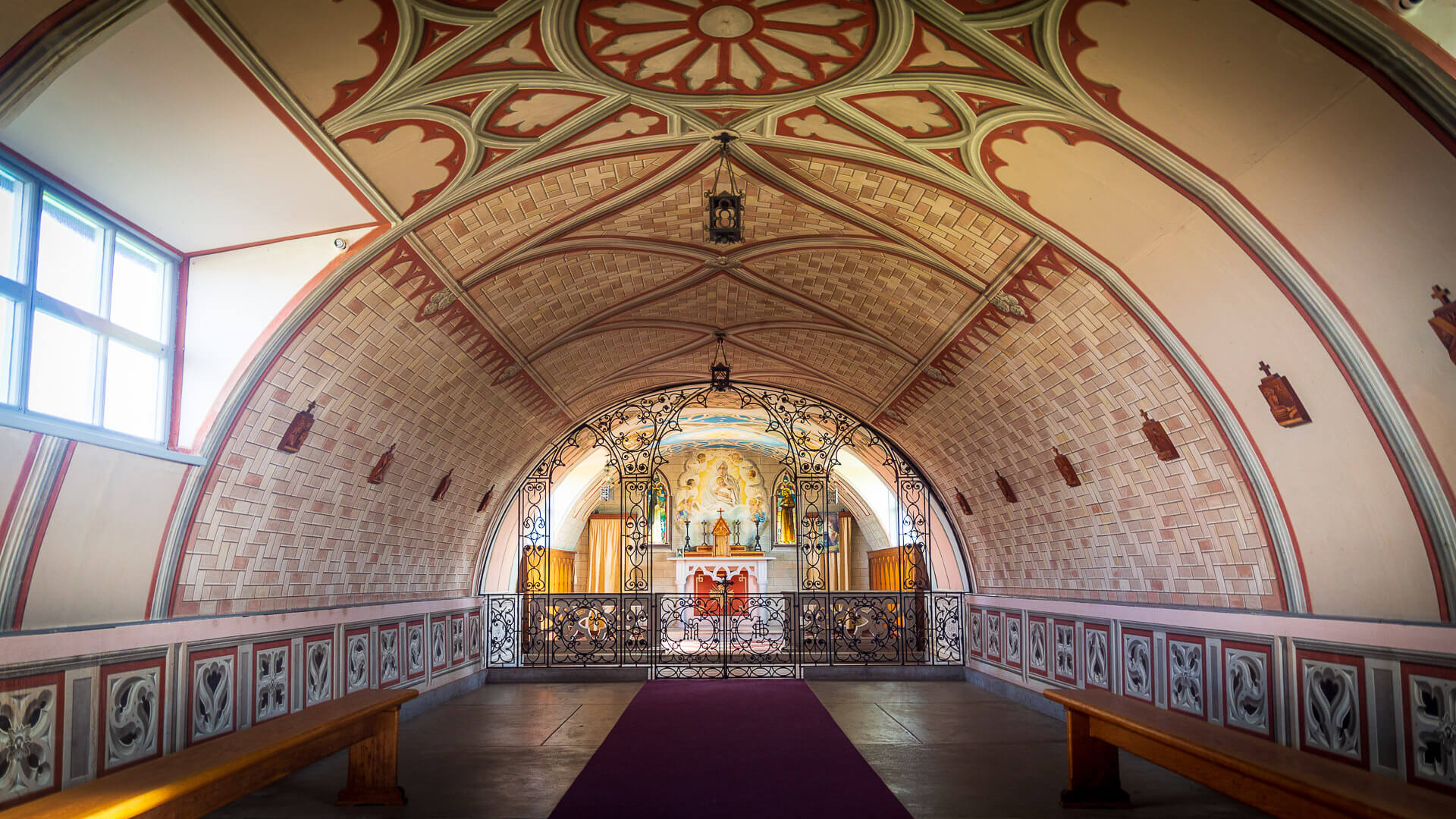
Photo tip: The chapel has so many beautiful subjects inside and out that photos practically take themselves. Inside, use indirect flash.
STOP 3 – St Margaret’s Hope (1 hour)
The small town of St Margaret’s Hope is the main settlement on the island of South Ronaldsay. Lanes wind between the partly old houses, and the side facing the sea is picturesque. You can grab a bite at Robertsons Coffeehouse & Bar.
STOP 4 – Brough of Deerness (1.5 hours)
Like Birsay, the Brough of Deerness is a tidal island. Remains of a Pictish and Norse settlement sit on the headland, though the crossing itself is still closed off. It’s still well worth the drive out – the scenery is magnificent, and the huge sea cave “The Gloup” right by the car park is worth it alone. A walk here can also be done, taking more than an hour if you like, depending on time and inclination.
Coming from the south, simply drive back the way you came to Lamb Holm. Once you’ve crossed the causeway onto Mainland, turn right towards Deerness, joining the A960 and later the B9050. About 1.5 kilometres past the village of Skaill, a car park appears on the right. From there it’s a walk on foot to the Brough.
Afterwards, simply retrace the road back – the A960 takes you safely to Kirkwall. Once in Kirkwall, though, turn left onto Ayre Road and then take the next street, “Holm Road”, left again. Highland Park Distillery will appear.
STOP 5 – Highland Park Distillery (1 hour)
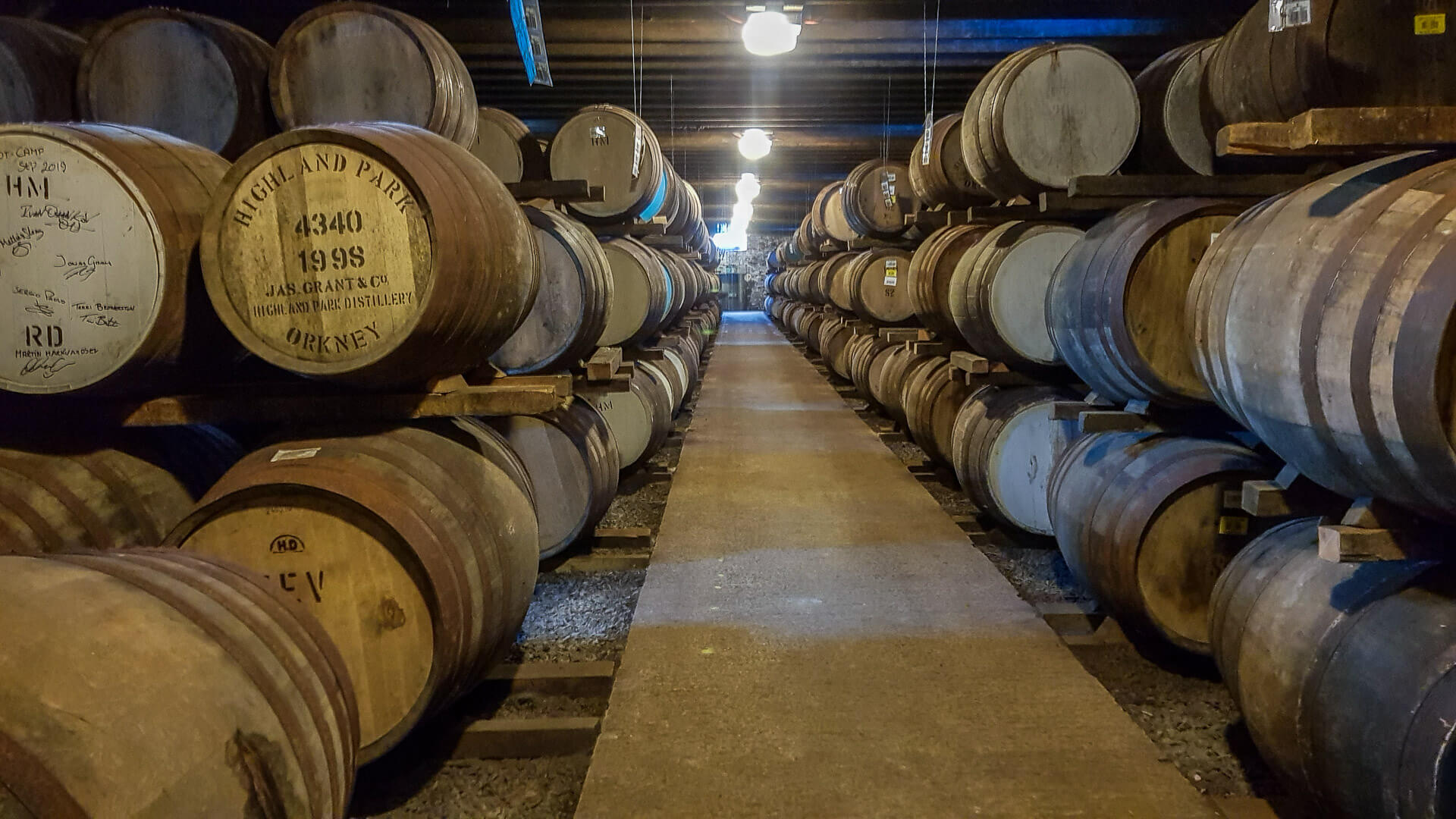
Before finally heading home, a short stop at the distillery above Kirkwall. The last tour there starts at four in the afternoon, so don’t miss it. You can leave the car in the car park out front. After the tour and a little shopping, head back to Kirkwall.
KIRKWALL – Final Stop and a Stroll Round Town
Anyone with time and energy left can now take a look around the town centre.
The highlights are St Magnus Cathedral, the Bishop’s Palace and the Earl’s Palace. All sit close together, practically at the same street corner.
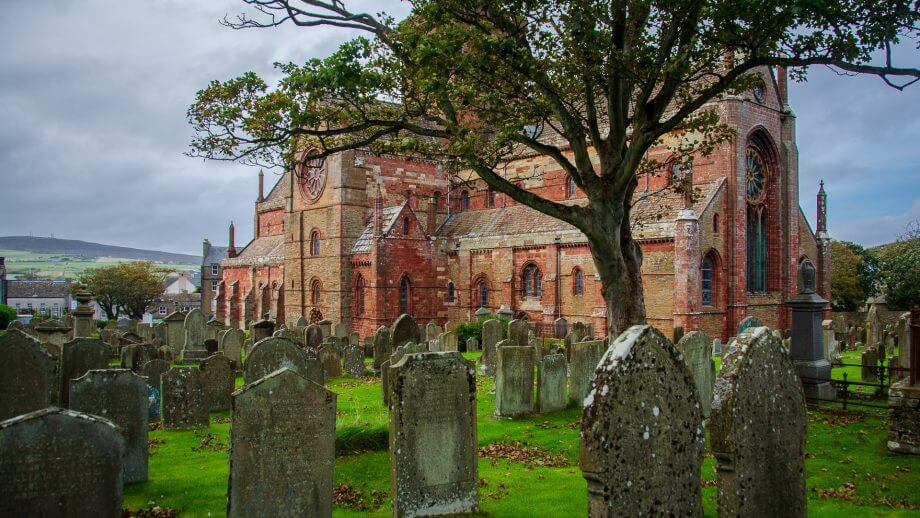
Photo tip: You’ll need a wide-angle lens to fit the whole cathedral in shot.
History of Orkney: Stone Age, Picts, Vikings
Between 4000 and 2000 BC, Orkney experienced a first golden age of culture. By this time the former hunter-gatherers had settled down and begun farming the islands’ fertile soil. This settled way of life went hand in hand with a flourishing of architecture: Neolithic peoples built numerous stone mounds with internal chambers – so-called chambered cairns.
The most famous example is Maes Howe near Stromness, though there are almost seventy more of these cairns. Then there are stone circles and monoliths, such as the Standing Stones of Stenness, the Watch Stone, the Odin Stone and the Ring of Brodgar. And finally there’s the Stone Age village of Skara Brae, said to have been settled as early as 3200 BC. Most of these monuments, incidentally, are part of the UNESCO World Heritage, grouped together under the name “The Heart of Neolithic Orkney”.
But during the Bronze Age, from 1800 to 800 BC, the communal structures of the Neolithic peoples fell apart. The climate changed too, making life harder – it grew colder and wetter, a trend that continued into the Iron Age. This era produced buildings such as the brochs, a kind of round defensive tower, of which more than a hundred once stood on Orkney – a style that also caught on across the Scottish mainland, for instance in the county of Caithness. Whether people built these elaborate structures for protection or simply for show remains unclear to this day – but they’re a delight to look at regardless.
As the Iron Age was drawing to a close, in the first century BC, the Romans annexed much of Britain. There’s no evidence a Roman soldier ever set foot on any of the islands, yet the Romans and the Orcadians knew of each other. Local chieftains are said to have submitted to the Romans to avoid trouble, and finds of amphorae at least hint at some exchange, though any real submission was probably more a case of Roman historians exaggerating.
In the first centuries after Christ, Orkney was part of the Pictish nation – albeit one lying far from the heartland. Even so, finds from this era clearly confirm the connection, such as the Pictish stone at the Brough of Birsay, a copy of which can still be seen there today.
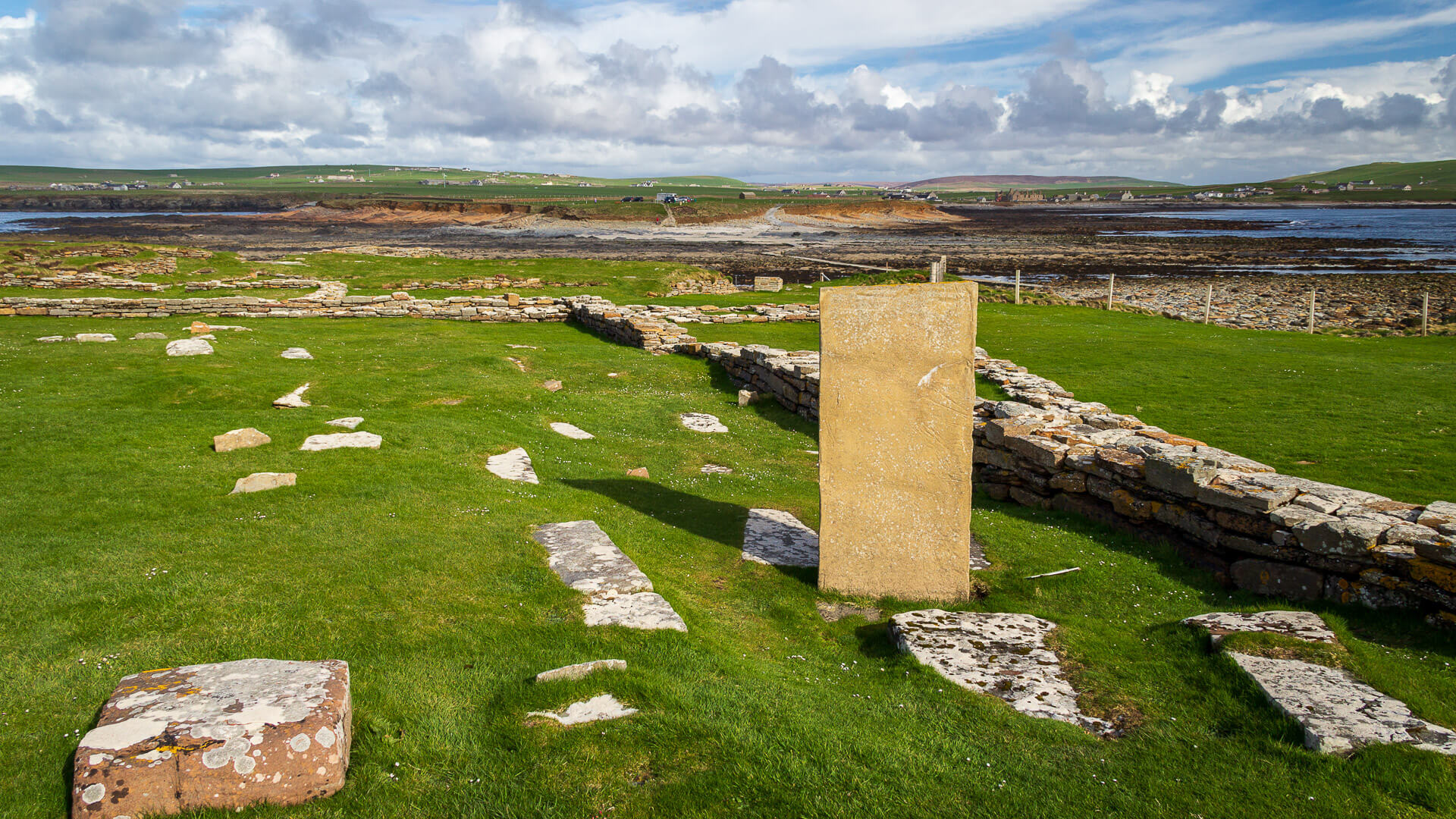
But it was the Vikings who left a truly lasting cultural stamp on Orkney, (German only for now). They stayed a very long time, shaping Orkney for centuries. They first appeared here as early as the 7th century AD, and by the time their descendants, the Norwegians, finally ceded control of the island group to Scotland in 1468, almost 800 years of Norse rule had passed. This period even produced an entire saga, the Orkneyinga Saga, which tells – half fact, half fiction – the events that unfolded on Orkney.
The worst tyranny Orkney experienced, though, came under the Stewarts, at the end of the 16th and start of the 17th century. Their rule knew only greed, something reflected in the ruined Earl’s Palace.
The natural harbour of Scapa Flow, incidentally, plays a major role in Orkney’s story. Between the islands of Mainland, Burray, South Ronaldsay, Flotta and Hoy, the sea forms a sheltered basin. This natural harbour was already known to the Vikings, but it was only once conflict with France made the English Channel a dangerous stretch of water that the British Navy’s interest grew. From then on, Scapa Flow would be the stage for dramas closely tied to German history too.
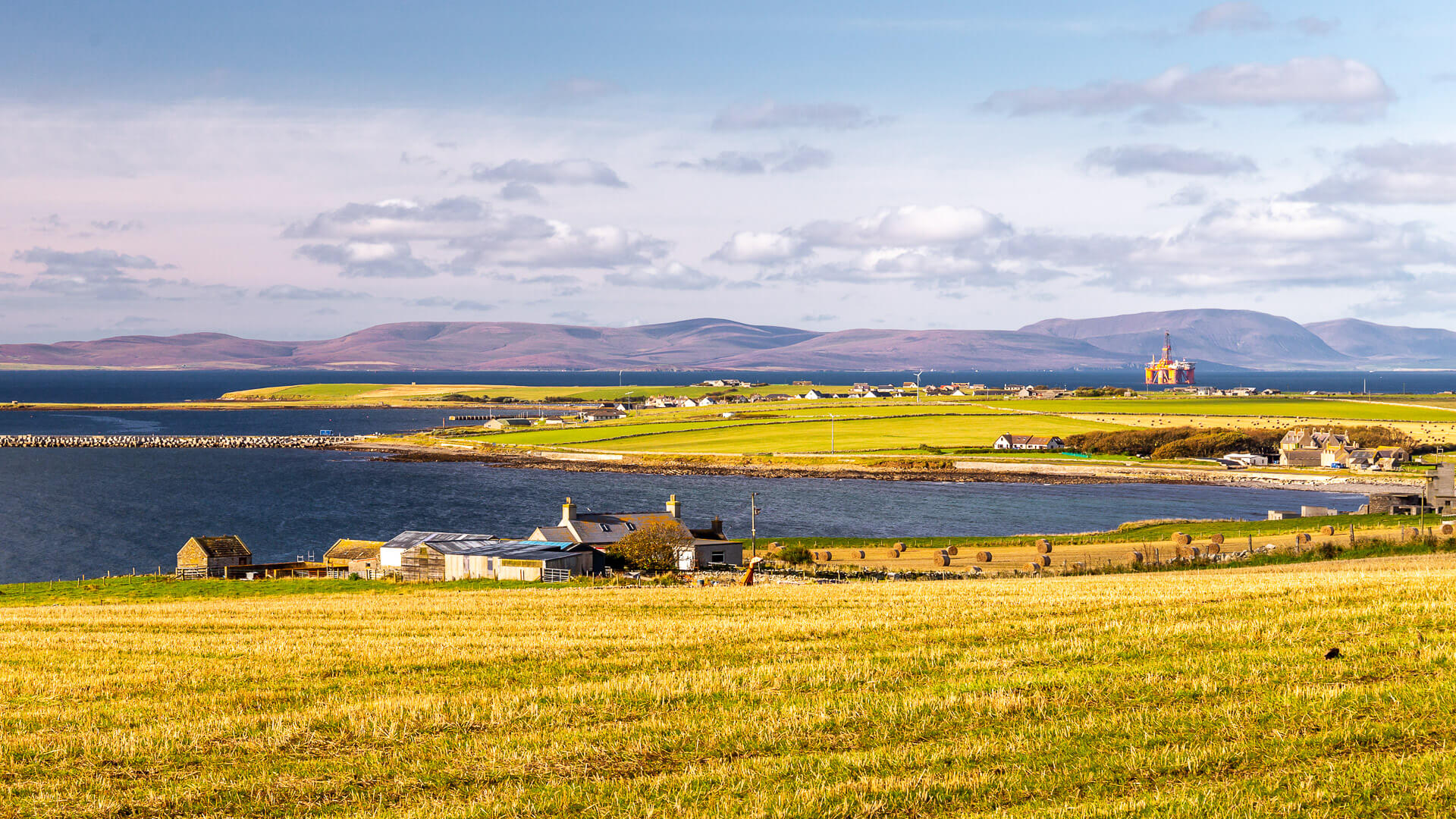
The ships Dresden, Köln, Karlsruhe, Kronprinz Wilhelm, Markgraf, König and Brummer are among the names of the German warships still resting on the seabed at Scapa Flow – just seven of the 52 once anchored there. After the armistice at the end of the First World War, the German High Seas Fleet, under the command of Rear Admiral Reuter, was to be handed over to the British here. When the peace treaty was finally signed in June 1919, Reuter ordered the fleet scuttled. It remains the greatest loss of shipping ever recorded in a single day. The British salvaged most of the vessels in the years that followed, but seven remained on the seabed – very much to the delight of today’s hobby wreck divers.
Orkney’s connection to German history isn’t an entirely comfortable one. Not only does the German fleet from the First World War rest here – meant to be handed over to the British, but scuttled instead by its captain – but Orkney was also the site of a devastating attack by German U-boat commander Günther Prien on the battleship Royal Oak, then anchored in the harbour of Scapa Flow near Kirkwall. On 14 October 1939, Prien sent over 800 sailors to their deaths, around 120 of whom were between just 14 and 18 years old. In response to this attack, the Churchill Barriers were built, which today link a string of small islands to Mainland, (German only for now).
