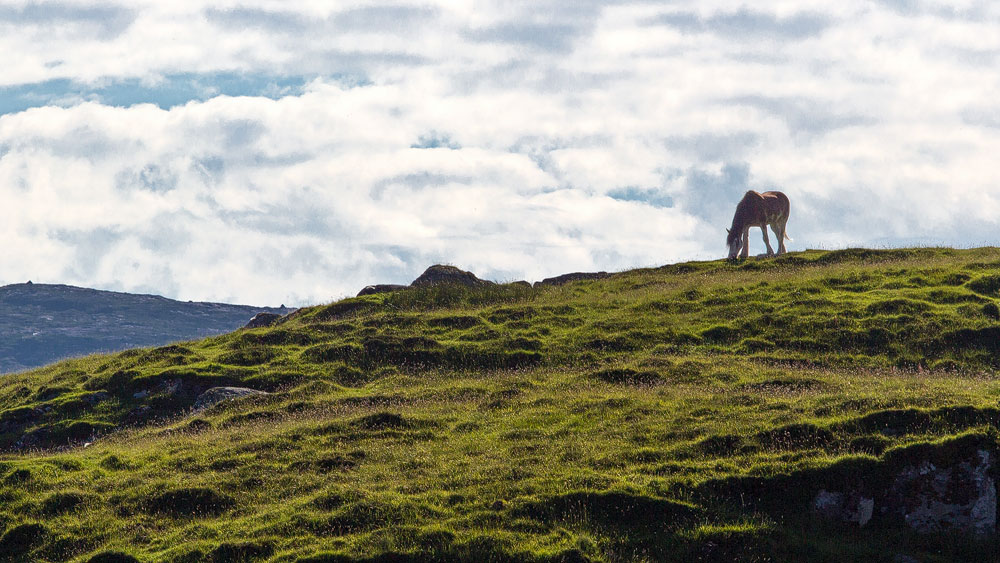
There are only very few Eriskay Ponies left in the world. We were lucky enough to experience them up close in their home, the Isle of Eriskay. Here’s our story.
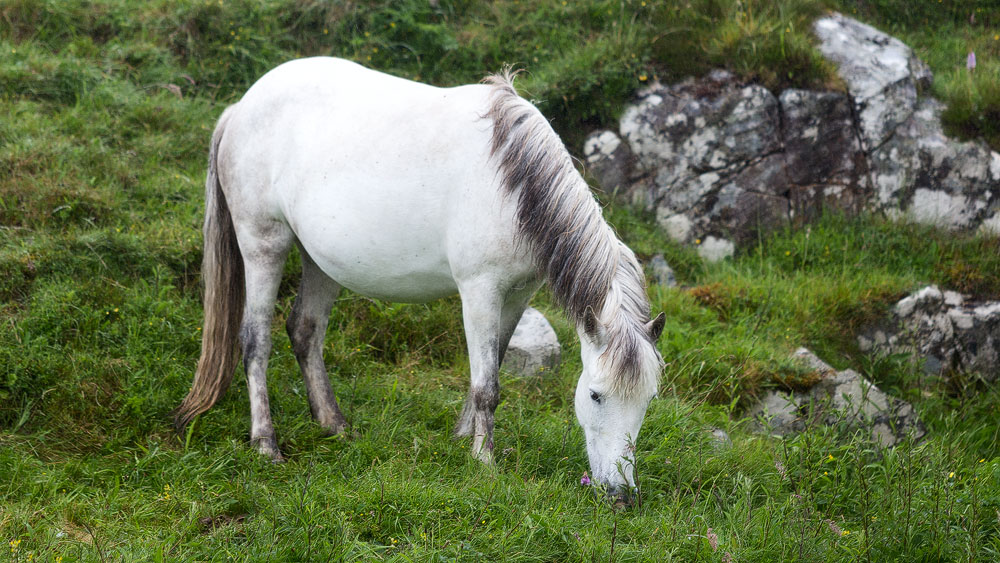
We were disappointed. It was our last day on the island of Eriskay, and just like the year before, we hadn’t seen a single one of the famous ponies. According to many travel guides, the little horses are supposed to roam semi-wild all over the island.
I was starting to wonder: was any of that actually true?
Famous: the special horse of the Isle of Eriskay
Eriskay ponies are truly unique animals. They’re said to have already been known to the Vikings, who supposedly even took some ponies from Eriskay with them when they settled in Iceland. The Icelandic horse there is said to have descended from these Eriskay ponies. Even the legendary Scottish king Robert the Bruce is said to have ridden an Eriskay pony at the Battle of Bannockburn.
These small horses on the Outer Hebrides have a long tradition as working animals. Through careful breeding, they’re both remarkably friendly and incredibly tough – they have to cope with the harsh island weather, after all.
Weather like today’s. It had already been raining all morning.
Eriskay pony: off to the paddock by estate car
While settling up at the bed and breakfast, we got chatting briefly with our host, John – as you do in Scotland. A bit about the rainy weather currently setting in, a bit about our time on the island – and about how disappointed we were not to have seen an Eriskay pony again.
Eriskay ponies? Oh yes, beautiful animals. He knew them well, our host told us, since he was involved with the society working to preserve this unique breed. Would we like to see some, right now?
Of course we did! So without further ado, John bundled us into his estate car and drove us about a kilometre through the rain, turned onto a farm track by a derelict house, and stopped a little further up the hill.
There they were!
So much for “wild”: most are privately owned
But they were fenced in. I thought they were supposed to roam freely across the island? Usually not, John explained to us. And certainly not when they’d just had a foal, like the mare further back.
Sure enough. I had to look closely to spot it further back in the paddock. There, a small brown bundle lay on the ground in front of the white pony.
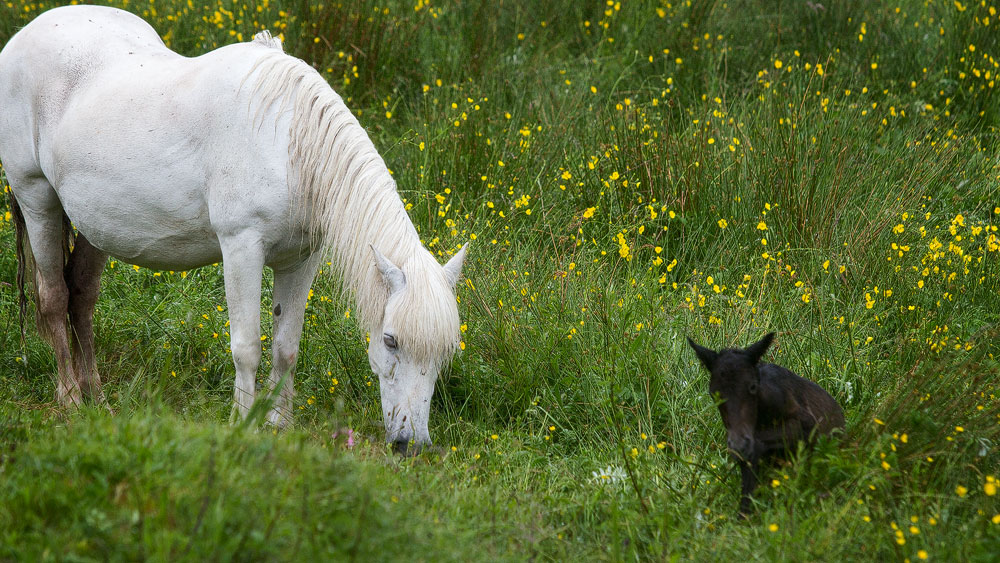
The pony was still so young that getting up was a proper feat of strength. First one front leg, then the other, then – with great effort – the rest. Done. Proud but a little wobbly, it sought the closeness of its mother.
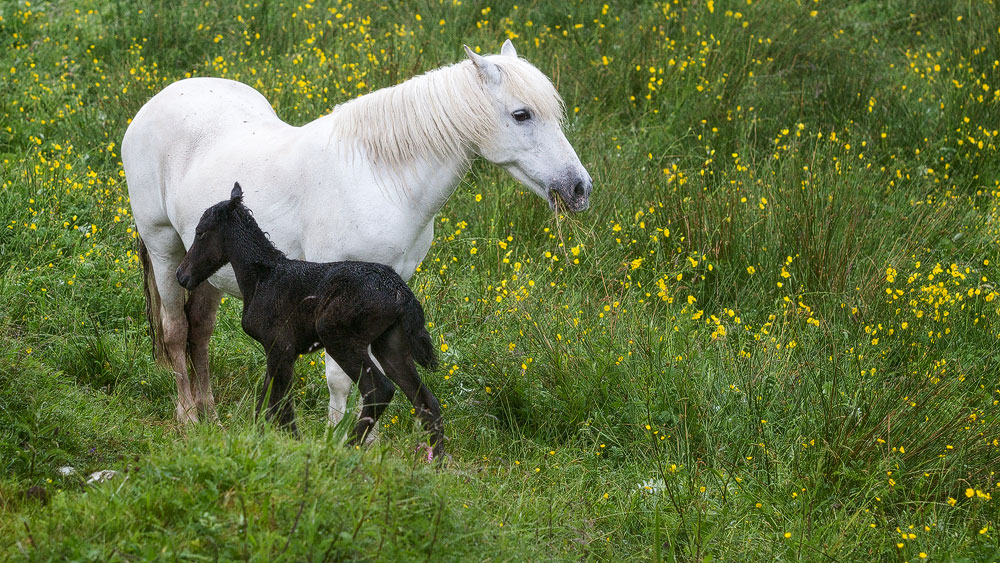
The few remaining animals were all in the hands of breeders, John let us know. Most of them now actually lived on Uist rather than on Eriskay itself, where there were fewer than twenty animals left.
While we were chatting away, a brown pony crept up to us. In our sheer fascination with the foal, we’d completely overlooked the young animal nearby. It was curious and happy to be petted.
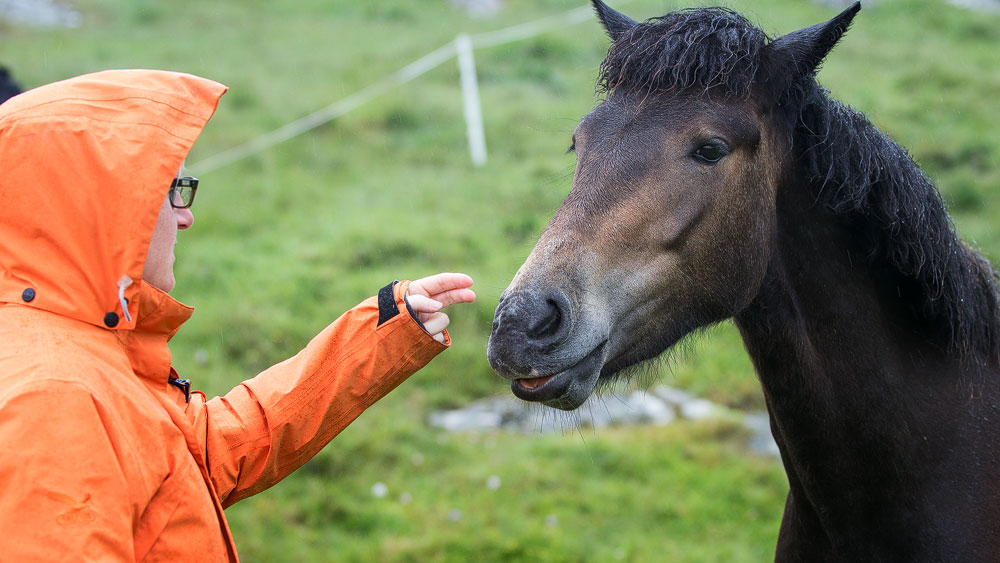
This pony, too, was brown just like the foal. All Eriskay ponies start out this dark, our host explained to us. It only changes after four to six years, when the adult animals typically turn white-grey.
The young pony was particularly interested in my camera, which I’d wrapped in a plastic bag to protect it from the constant rain. It seemed to draw the little horse in like a magnet – probably because, in its experience, plastic bags usually contained food.
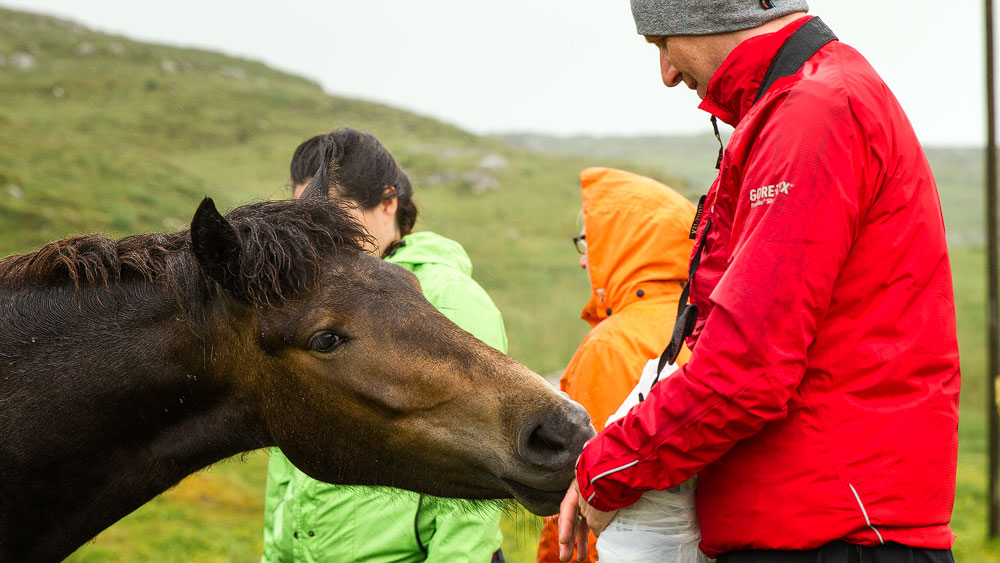
Worldwide, John told us, there are only a few hundred Eriskay ponies left, and keeping the breed pure is difficult. His biggest worry, he said, was finding suitable breeding stallions for his mares.
Gradually the rain worked its way through to our skin. My wellies had kept my feet dry, and the jacket was waterproof too, but my jeans were soaking up more and more moisture. So it was time for us to say goodbye to the animals.
All that’s left to hope is that the Eriskay ponies are still here next time we visit – because they really are the last of their kind.