Some false claims don’t become true just because everyone keeps repeating them. This interview clears up a few of the historical misconceptions surrounding Flora MacDonald.
While researching Flora MacDonald’s birthplace, I found that most texts said almost exactly the same thing. It was obvious that one had simply copied from another, even though clear contradictions existed. What made me genuinely suspicious, for instance, was that excavations around the supposed “birthplace” of Milton dated the earliest finds to 1790 – long after Flora’s birth.
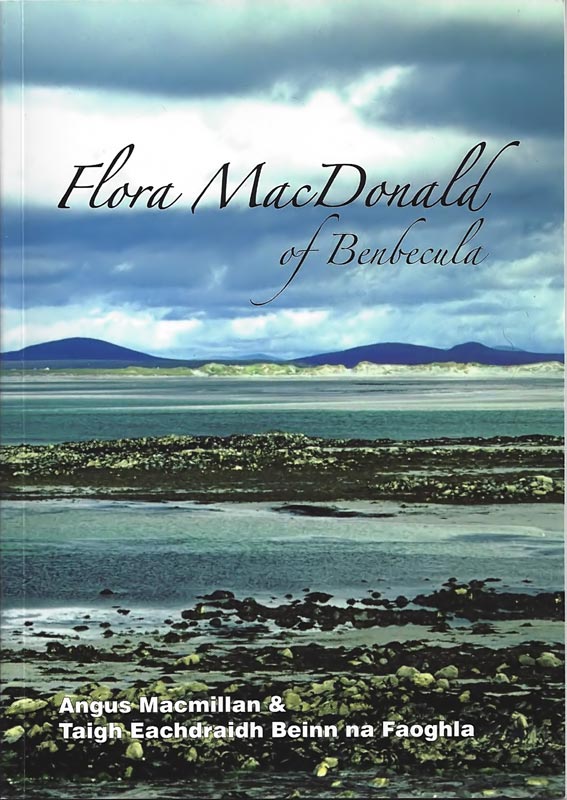
So it was time to properly get to the bottom of things, and I eventually came across Angus MacMillan, author of the book “Flora MacDonald of Benbecula”, who shed some light on the matter and kindly agreed to an interview with me.
Stephan: Angus, can you tell us a little bit about yourself. Why should we believe what you are saying?
Angus: My own roots, unlike those of any other relevant author I am aware of, are in the islands of Benbecula and South Uist. That is not to say that I know the truth by proximity or osmosis, but that I do know the timing and geographical context. Others talk of crofts in Flora’s time, something that did not appear for 70 or 80 years after the ’45 rising. It is impossible to make sense of the landholding arrangements without understanding the interplay among Balivanich, Nunton and the carving out of Belfinlay in Benbecula; or that there was no ‘Milton’ in a monoglot Gaelic speaking area at the time, simply Airidh Mhuillin, the shieling or summer pasture of the Mill.
Stephan: So what qualifies you?
Angus: I have a professional background as regional planner for South East England for thirty years, sixteen of them as Chief Planner, and was incidentally President of the Conference of Regions of Northwest Europe, KRENWE, for five or six years in the 1990s, so I understand the importance of sound evidence and authority buttressing claims. I have a history qualification from Oxford University and have studied the history of the islands as my main interest for some thirty years.
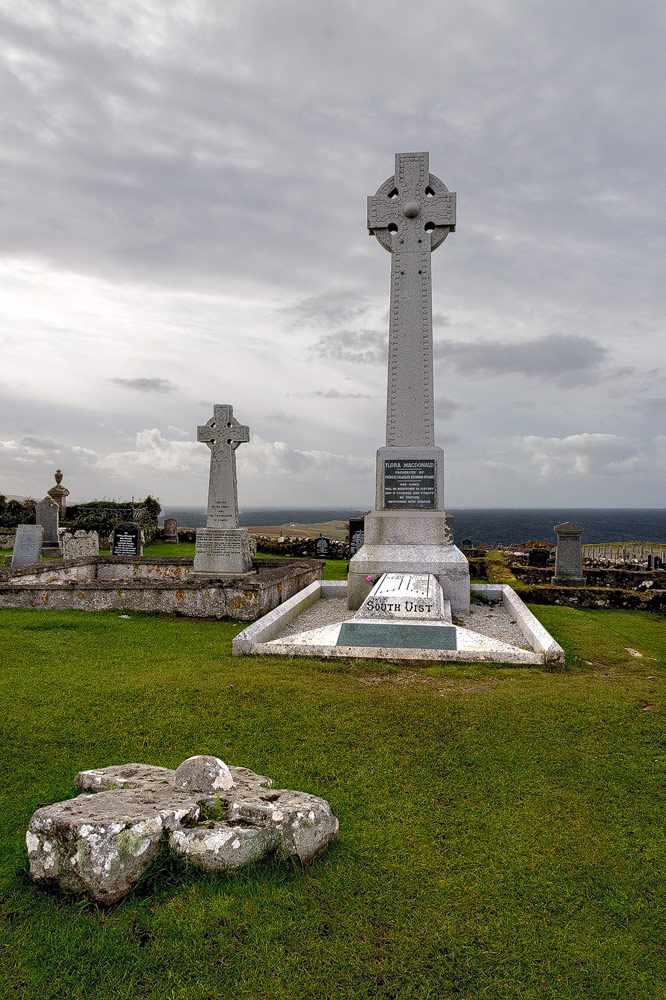
Stephan: We came across each other when I did some research on the Highland heroine Flora MacDonald. There is a strong tradition all across the web that her birthplace is Milton or Frobost on South Uist. Even on her grave on the Isle of Skye there are letters saying “South Uist”. But your statement is: it’s all wrong. Why?
Angus: Once an idea has been accepted and, above all, published or apparently ratified by the building of a monument, it is repeatedly copied and finds a place in the public understanding that is enormously difficult to overturn, even when the evidence is conclusive.
I make no claim to have had a Eureka moment or discovered Flora’s origins through clever personal research, by the way. The Benbecula tradition has always been absolutely clear about the matter, and anyone who cares to visit the Edinburgh University library and access the ms history of the two islands written by the Rev Dr Angus MacDonald ‘of Killearnan’, but born at 1 Griminish in Benbecula, will find that he says the ruins of Flora’s family home were still standing in Balivanich when he was at school there in 1868. Mention of South Uist, as opposed to Milton, is technically not wrong, as the reference was often, as in the later Censuses, to the parish that included both the islands of Benbecula and South Uist.
Stephan: So what is the evidence against Milton?
Angus: Flora’s great grandfather was Angus I of Balivanich and later of Balivanich and Milton. That was also her father’s title at one point but, whether for convenience, because her father did not have a qualifying lease to be ‘of Balivanich’, or because the family from her brother taking over as representor had lost Balivanich, Milton eventually became the title in use. There have been two archaeological interventions. Parker-Pearson’s book on South Uist is specific that there was no significant house in Milton until the 1790s. Even since I wrote the book, there has been cause to dig the family house in Balivanich, and they even found the family greyhounds buried there. The monument at Milton itself is equivocal, claiming a birth near there rather than anything specific. It does not help that Flora’s brother, who first relocated from Balivanich, and his son, who was pretty certainly the man who, in line with the South Uist tradition, camped out at Milton while a substantial house was built, were both named Angus MacDonald and hence would seem to have become confused in the relating of the South Uist tradition.
Stephan: So where is her birthplace instead?
Angus: No-one knows, as a birth could have taken place on a visit or anywhere else and, unless recorded, must remain uncertain. However, there is no doubt about where the midwife will have been waiting, or where Flora was raised and educated until, as a marriageable woman of 23/24, her mother and stepfather had to relocate to Skye in 1746.
Stephan: What exactly is Balivanich on Benbecula?
Angus: Balivanich, the town of the monks, site of the family home, was and remains the principal settlement in Benbecula. Together with Nunton, the place of the adjoining nunnery, from 1725 it was the caput of the Clanranald territories, and Nunton itself was the home of the clan captains.
Stephan: That was about her birthplace. But you challenge some more common knowledge as well. About Flora’s youth, for instance. What can you tell us about that?
Angus: There is not a great deal of detail known beyond that her father, a relatively old man, died in 1724 when Flora was about two, that her brother, who is usually said to be a few years older, may even have been posthumous, and that her mother, a beautiful woman, remarried, to Hugh Cam MacDonald from a Skye family, when Flora was about five years of age. They then lived in Balivanich for some eighteen years. From later records about her, Flora was evidently very soundly educated and well brought up, and this was very probably in company with her cousins at Nunton House, a mile down the road. Life cannot then have been too comfortable when her stepfather, who may not have been a very nice man, had the affair that forced the family to leave Benbecula.
Stephan: Another issue is that people say that Flora was in Edinburgh for her education …
Angus: Flora’s own evidence, provided to Bishop Forbes for the Lyon in Mourning, was that, until about a year before the Prince arrived, when she visited her mother’s extended family at Largie in Kintyre, she had never been out of the Uists, and there is also a record that, when she arrived at Monkstadt in Skye with the Prince, Lady Margaret pressed Flora to stay on the grounds of a promise to do so when Flora first visited Skye. This establishes that 28 June 1746, aged 24, was her first visit, so she had not been raised or educated there.
Stephan: Angus, why do you think that nearly every site on the internet tells the wrong story, including Wikipedia?
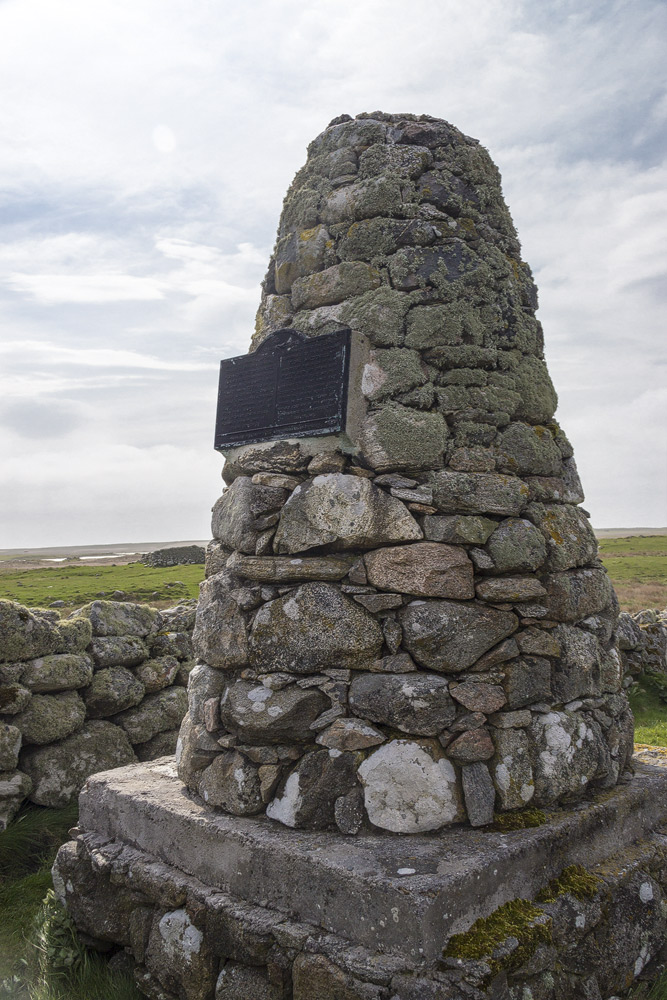
Angus: Romantic Victorian tosh, written by Americans who had never been to the Uists, or such a jolly, who visited Milton for an afternoon, followed by laziness and plagiarism in subsequent publications. It should hardly have been a strain to check the land records at Armadale, which show the family leaving for Skye at Whitsun 1746, just about when the Prince arrived in the islands. All this is given an air of verisimilitude by Clan Donald’s installation of the misleading 1955 monument at Milton, without any of the requisite research being commissioned.
Stephan: But where does this mistake come from? There must be one who did it wrong in the first place. Where lies the original sin?
Angus: There is not one origin or issue but dozens; for example, people could not believe that a cultured and educated Flora had not been educated in Skye and/or Edinburgh, and that speculation became accepted. They did not comprehend that the islands were the residual site of one of the great cultures of Europe, still home in her time to the MacMhuirich bards who had served the Lords of the Isles from just after 1200 to just after 1500, and maintained the succession by service to Clanranald from 1490, many of them educated at the bardic schools in Ireland and still capable of producing such as the bard Alasdair MacMaighstir Alasdair, Flora’s slightly older cousin, the Prince’s Gaelic tutor and author of substantial books in Gaelic. The bards were still at Borve in Benbecula and Stilligarry in South Uist, where they had run a bardic school, well after Flora’s birth.
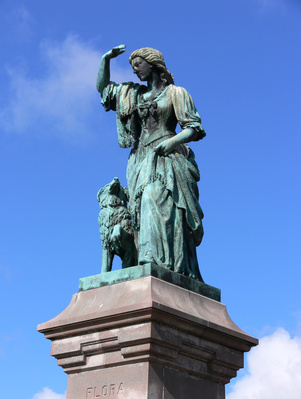
Stephan: In your opinion: is Flora still a heroine, or do you think she’s probably a bit overstated?
Angus: Flora evidently appealed to the sentiment of the time and, for instance, there was a substantial collection for her while she was incarcerated in London. This was probably exaggerated by the romantic notions attaching to the Prince and the suggestion that they might have had a liaison. Though Flora was crucial to the actual plan of escape from Benbecula to Skye, with the pass provided by her stepfather and the Prince dressed as Betty Burke, she was really no more than an agent, the real mover being Neil MacEachan, who had taken care of the Prince for some while in his brother’s house, for the months Charles was ‘skulking’ in the islands. So there was bravery on Flora’s part, and to that extent, “heroine” probably applies, but she was not the principal figure in the affair.
Stephan: Angus, these are great insights. Thank you very much.
Angus: I am glad to have the chance to address the issue like this, but for detail and evidence, the book written on behalf of the Comunn Eachdraidh Beinn na Faoghla, the Benbecula History Society, is the best witness.
