Four walls, four towers, a ruin – Inverlochy Castle doesn’t look like much. But that’s exactly what makes it so worth seeing. Sounds odd, but it’s true.
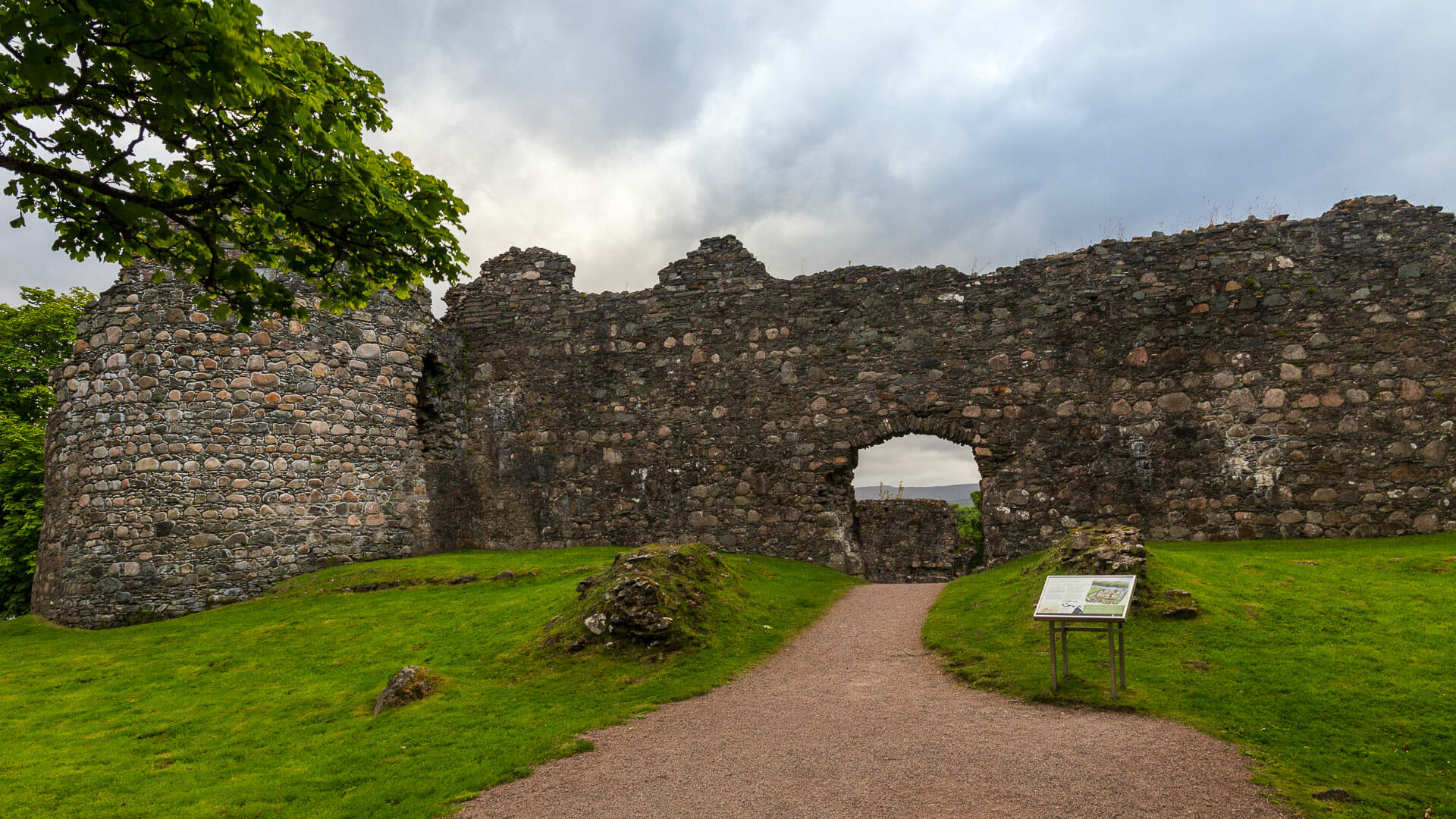
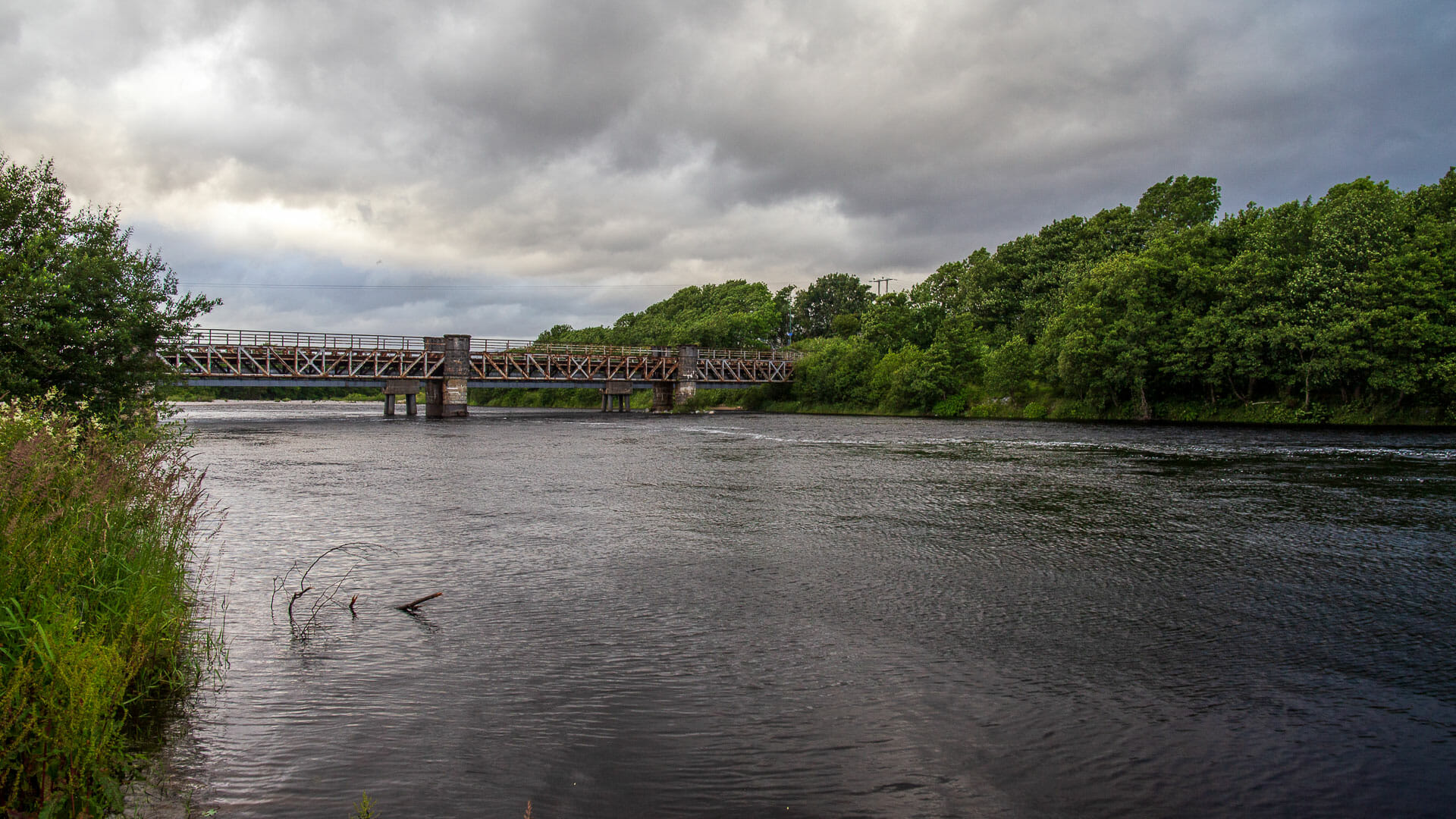
Its location was surely no accident: sitting on the River Lochy, Inverlochy Castle guards the crossing point between Loch Linnhe, the sea loch cutting deep inland, and the Great Glen running through the Highlands.
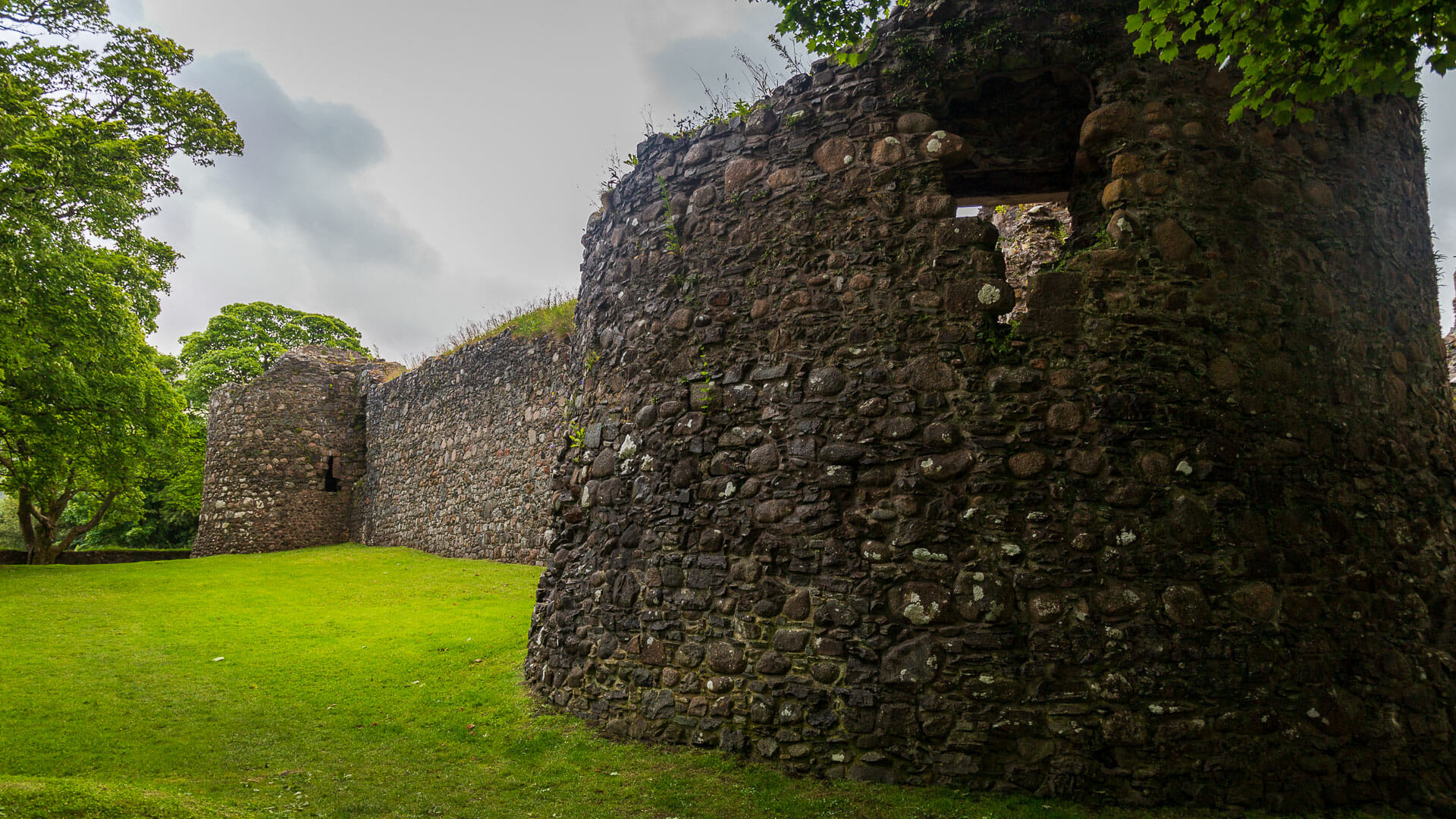
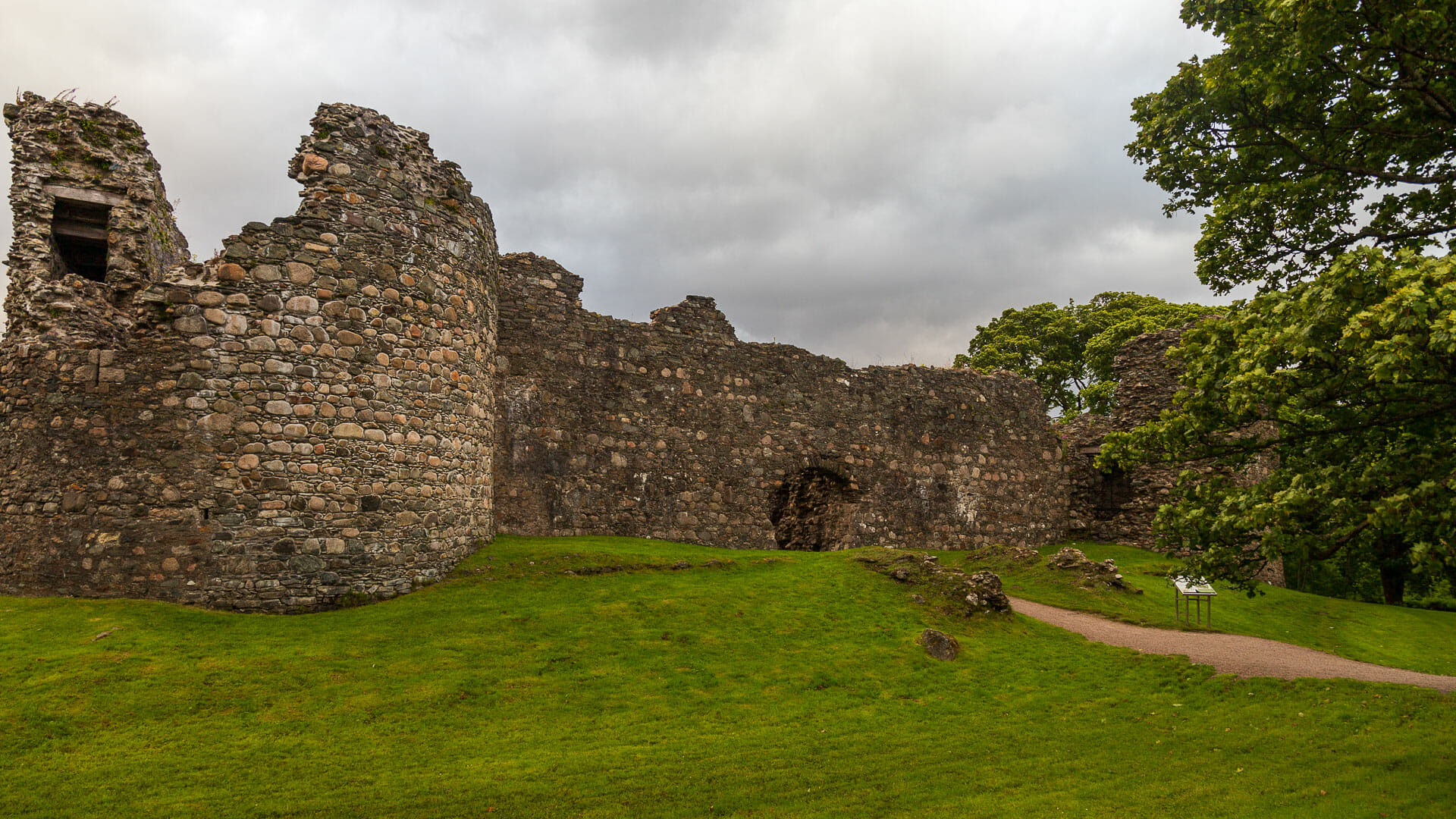
This strategic spot was probably already fortified by the Pictish inhabitants (in German for now), but it was the powerful Comyn family who first built a stone castle here around 1280. And they built it in the typical style of their time: high stone walls with towers at the corners, containing stairs leading up to the wall walks. The buildings in the courtyard were not directly connected to the walls.
Inverlochy Castle still sits on the River Lochy today. But in the 13th century, the other three sides were also surrounded by water. The river fed the surrounding moat. On one side, a drawbridge crossed the moat – that was the access point to the land. The other exit led to the water, where boats coming in from the sea could dock.
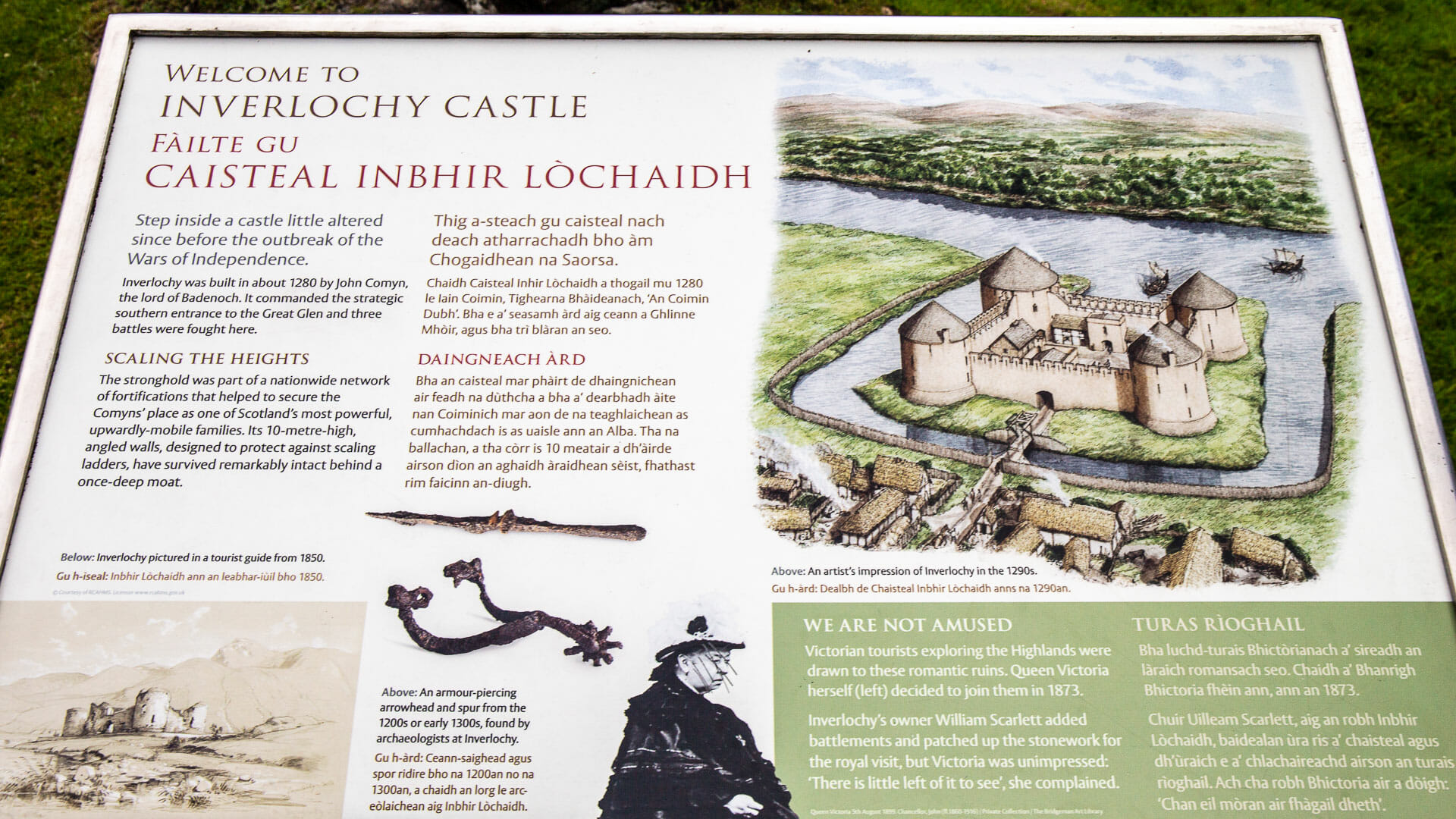
In the 13th century, the Comyn family held vast estates. Badenoch, in the centre of the Highlands, belonged to them just as much as Lochaber in the west, whose main settlement today is Fort William. Little wonder, then, that Inverlochy Castle occupied this strategic junction.
The Comyns, however, didn’t get to enjoy their power for too long. They were, after all, rivals to Robert the Bruce in the struggle for Scotland’s crown. At the Battle of Bannockburn (in German for now), the last Comyn lord fell fighting on the English side. The Comyns never regained such power again, and had to abandon Inverlochy Castle – the castle fell into ruin.
It was never properly rebuilt, yet it still played a role in important battles. There was, for one, King James I of Scotland’s attempt to bring the Lords of the Isles (in German for now) under his control. James sent an army under the command of the Earl of Mar. He camped by the castle and was ambushed there by the forces of the Lords of the Isles. Around 800 of the king’s fighters died in the attack.
An even worse bloodbath took place around 200 years later. That’s when Sir Duncan Campbell of Auchinbreck stationed a Covenanter army here to defeat the Royalists Montrose and Alasdair MacColla (in German for now). Watching the events from a safe distance, on a ship in Loch Linnhe, was his “chief” – the great commander Archibald Campbell, 1st Marquess of Argyll.
What he saw did not please him. 1,500 of his men died in the shadow of the castle. It was the greatest victory for the Royalists Alasdair MacColla and Montrose during the civil war in Scotland.
Throughout all this time, not much changed at Inverlochy Castle – it remained a fairly simply built structure. So simple, in fact, that Queen Victoria, on her travels through the Highlands, merely remarked that there probably wasn’t much left to see.
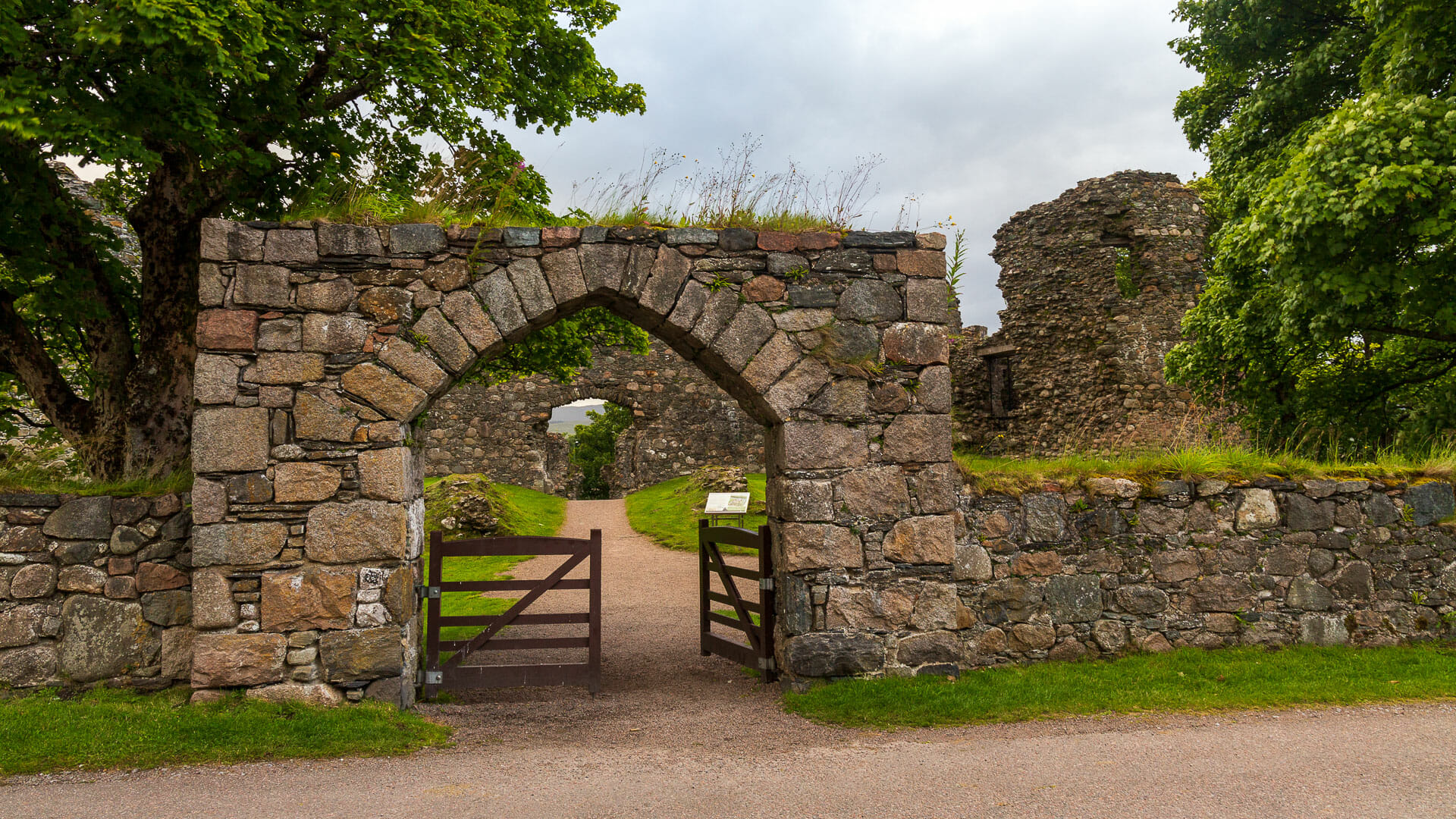
But that’s exactly what makes Inverlochy Castle special today: the castle may have fallen into ruin, but it has barely changed. It still shows visitors today how fortresses were built in the 13th century.
Inverlochy Castle is a witness to its time – and to many times since. It shows an unspoiled authenticity, and it has witnessed important battles. So far, it has been spared the tourist crowds, and it doesn’t even charge an entry fee.
Good to know: “Old” Inverlochy Castle?
Inverlochy Castle is often also referred to as “Old Inverlochy Castle”. That’s because there’s a hotel called the “Inverlochy Castle Hotel and Restaurant”. This mansion dates from the 19th century and is built in the typical style of that period. It lies a fair distance to the north-east of the old castle.
Even the signposts to the old castle refer to it as “Old Inverlochy Castle”. However, Historic Environment Scotland continues to refer to the castle on its own pages simply as Inverlochy Castle (as does Wikipedia). Various books, too, always mean the medieval castle when they say the name, never today’s hotel. For that reason, this article also sticks with the castle’s “real” name: Inverlochy Castle.
Tip: A glimpse of the sleeping Jacobite Steam Train
Shh. Near Inverlochy Castle, if you keep driving along the road instead of turning off over the bridge to the castle, you’ll reach a gate. Behind it – with a bit of luck – stand one or two of the locomotives that pull the Jacobite Steam Train.
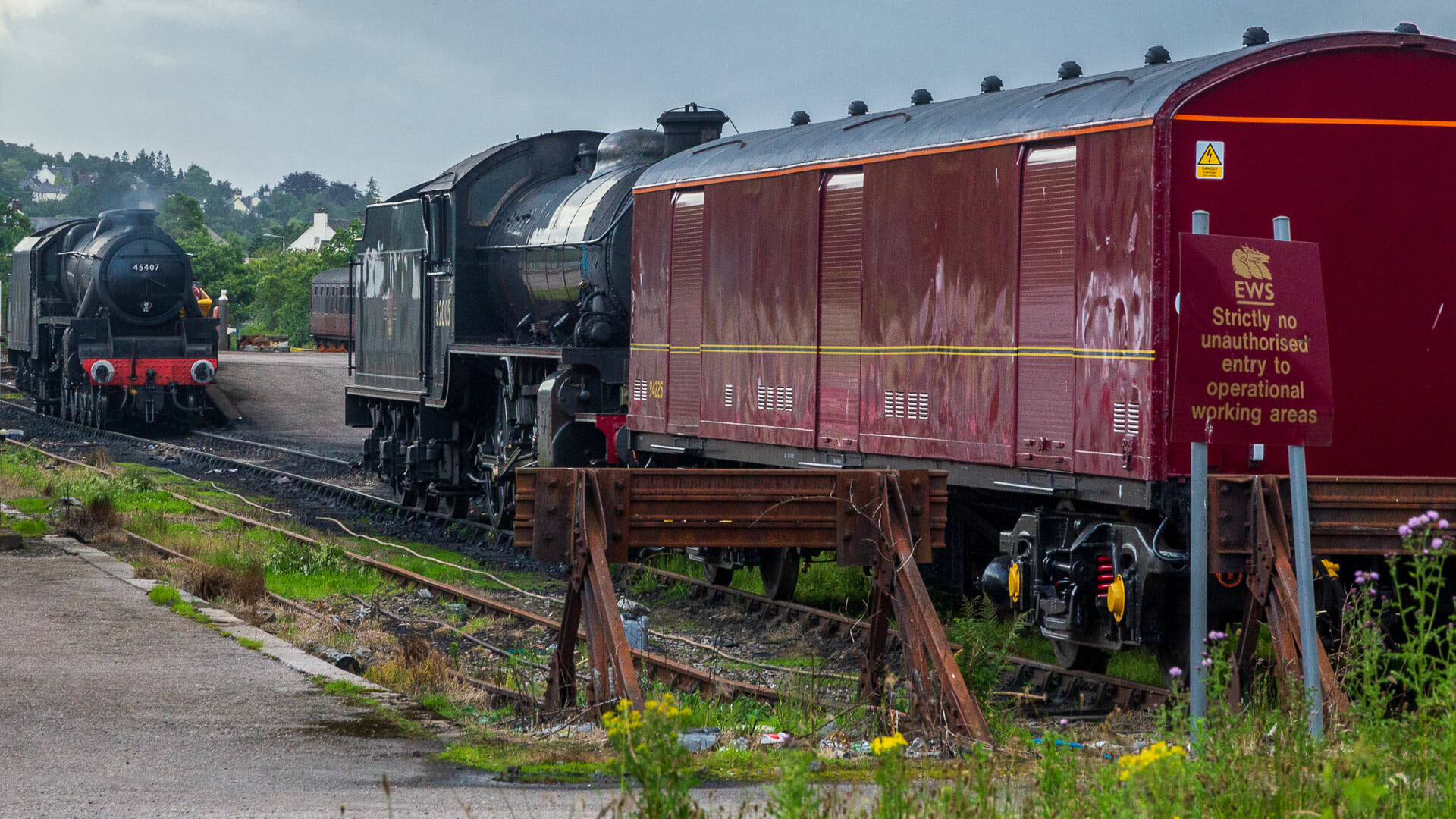
A cautious peek through the gate is fine, as long as you’re not blocking anyone’s way. Visitors are, of course, not permitted to enter the grounds.
Getting there:
With a sat nav: “PH33 6TF” will take you in the right direction.
Without a sat nav: Head for the stretch of the A82 north of Fort William that joins the “North Road”, along with the roundabout with the A830, which leads to Mallaig along the Road to the Isles (in German for now). On this stretch there’s a petrol station, and close by a brown sign pointing to “Old Inverlochy Castle”. Turn onto this road and follow it around a bend. Right after that, a smaller road turns off to the right over a bridge marked with a “Weak Bridge” sign. The castle sits directly on the other side; a small car park is located on the roadside opposite the castle entrance.
