It’s the top attraction on Shetland. And rightly so. Jarlshof is a fascinating piece of history set against an impressive backdrop.
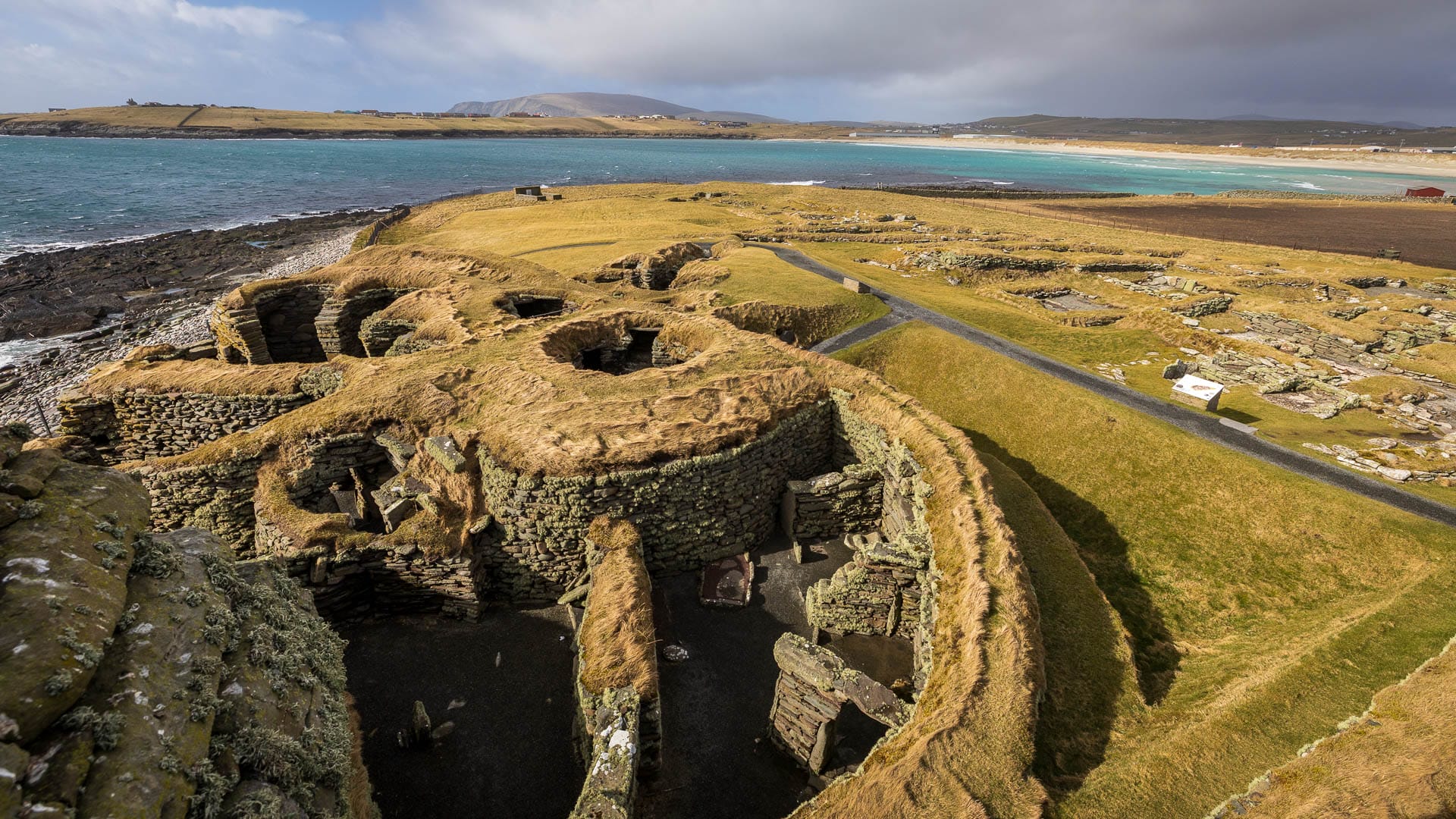
What makes Jarlshof special: it’s like a core sample drilled through the history of Shetland. You can see, layer by layer, which people lived here and how. From the New Stone Age, the “Neolithic”, right up to the 17th century – roughly 4,000 years – can be admired here. In one place!
Jarlshof lies at the very southern tip of Shetland – from here you can see Sumburgh Head Lighthouse, which marks the end of the islands. It sits right by the sea, even though the coastline has surely changed over the millennia.
The constant wind has carried sand from the dunes and beaches into the ruins and sealed them, layer by layer. And again and again, new peoples built their homes on this spot.
The location is also favourable, since from here the natural harbour of West Voe can be overlooked and monitored.

This connection was important. At the latest from the Iron Age around 500 BC, the residents traded with other Europeans.
The shallow bay also gave residents easy access to fishing grounds and shellfish beds throughout the millennia – an important source of food. Together with access to fresh water, this made the land around Jarlshof so consistently sought-after.
Today’s visitors to Jarlshof can look forward to a walk through the various eras. It begins at the remains of the first house, dating from around 2000 BC.
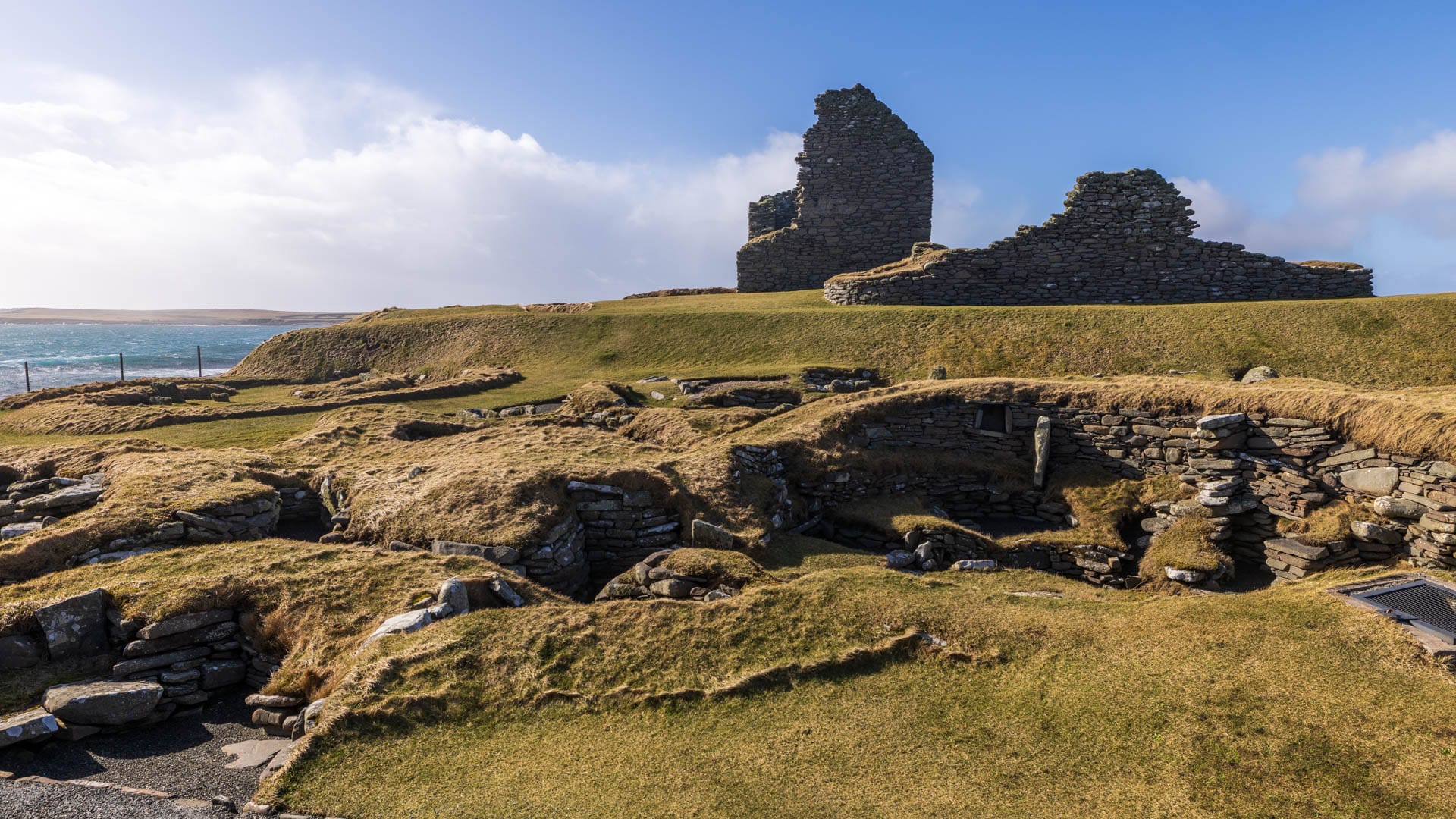
Finds from the Bronze Age are relatively rare on Shetland. At Jarlshof, however, stand the remains of a bronze forge from 800 BC. The slag proves it – and also that trading relationships already existed at that time. Bronze, after all, consists of copper and tin, and back then tin in Britain was only found in Cornwall and Devon – that is, south-west England. Without trade and seafaring, it couldn’t have got here.
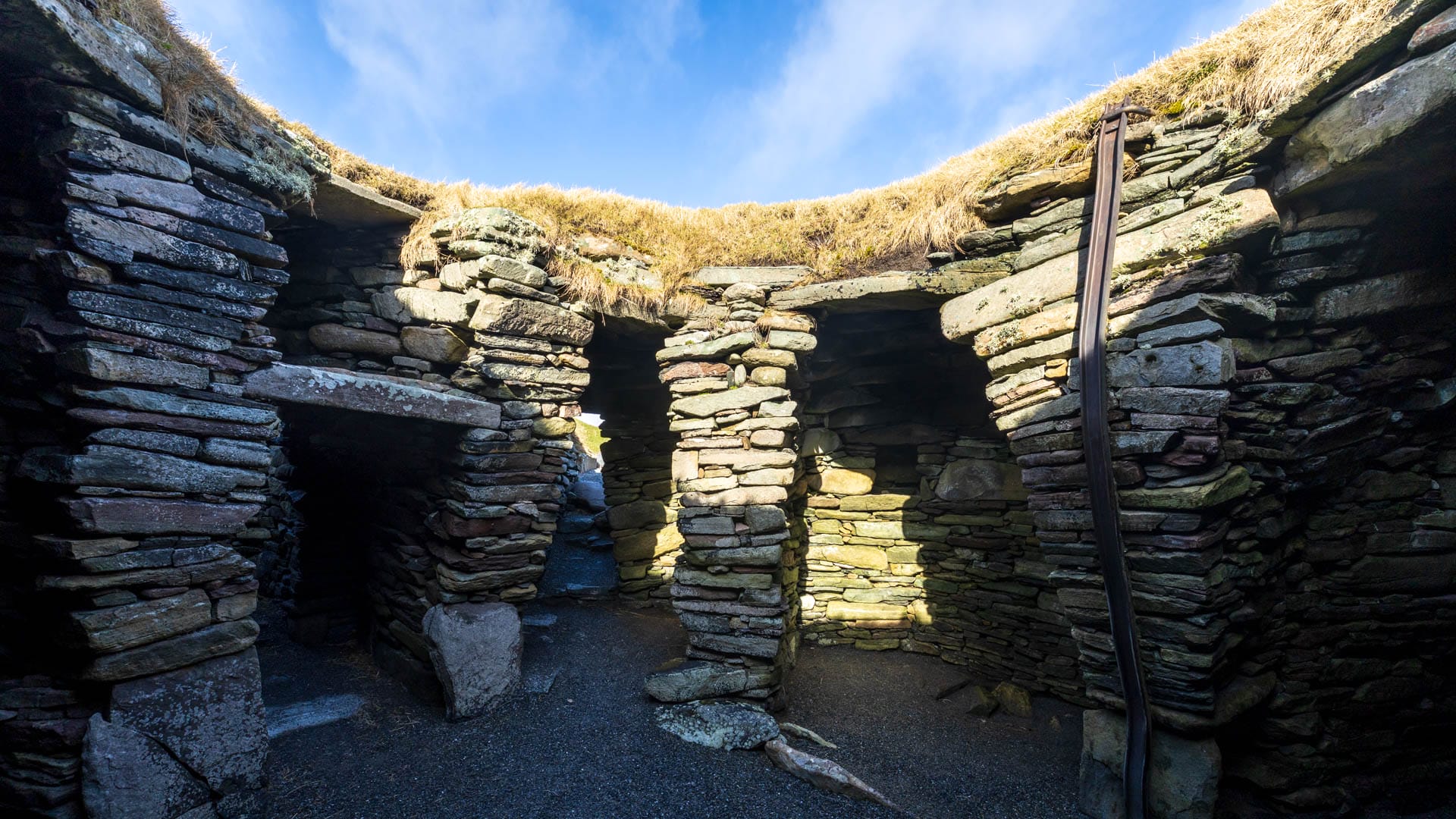
The Iron Age remains have already been nibbled away a little by the sea. The former broch stands only half intact, and yet it’s still impressive. It’s accompanied by four wheelhouses. They’re among the best-preserved areas – visitors can go inside and transport themselves back in time.
The largest area of the site is taken up by the Norse farmstead. It existed here from 800 AD onward. It began with a so-called fire-house, an elongated building with a large hearth at its centre – a typical construction of Norse settlers, repeated at many settlements.
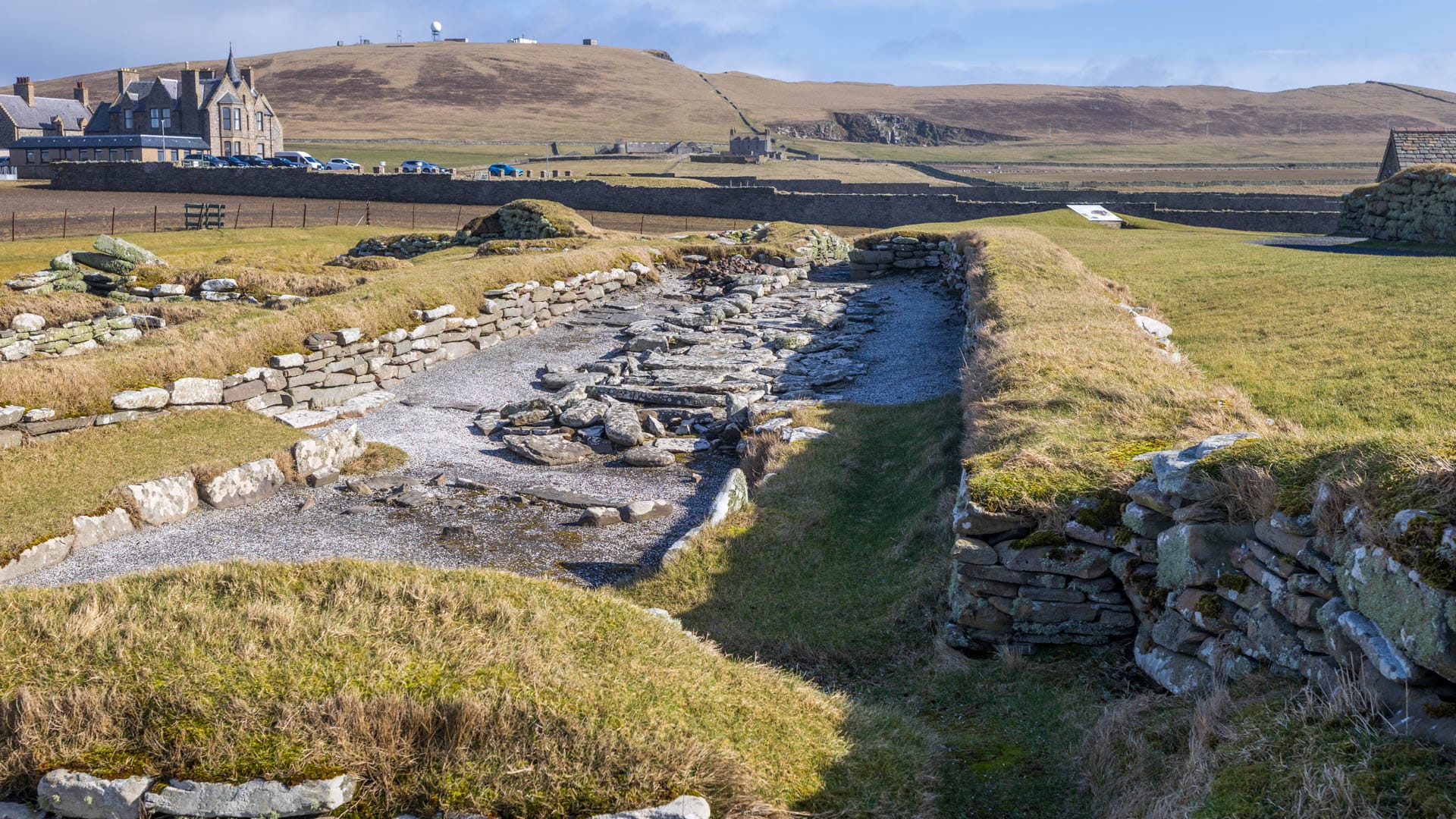
Interesting for archaeologists: in the 11th or 12th century the settlement changes to longhouses with stables inside. Still Norse, this reflects a shift in society. The theory: taxes now forced residents to increase their livestock’s milk production, which was easier to achieve in warm buildings.
By the end of the 13th century the farmstead also had a barn and a grain-drying kiln. This feature marks the transition to a medieval farm.
The grand finale then came with what became known as Jarlshof – a name, incidentally, given to it by the Scottish national poet Walter Scott. The large manor house was built by Earl Patrick, who also had the Earl’s Palace on Orkney built.
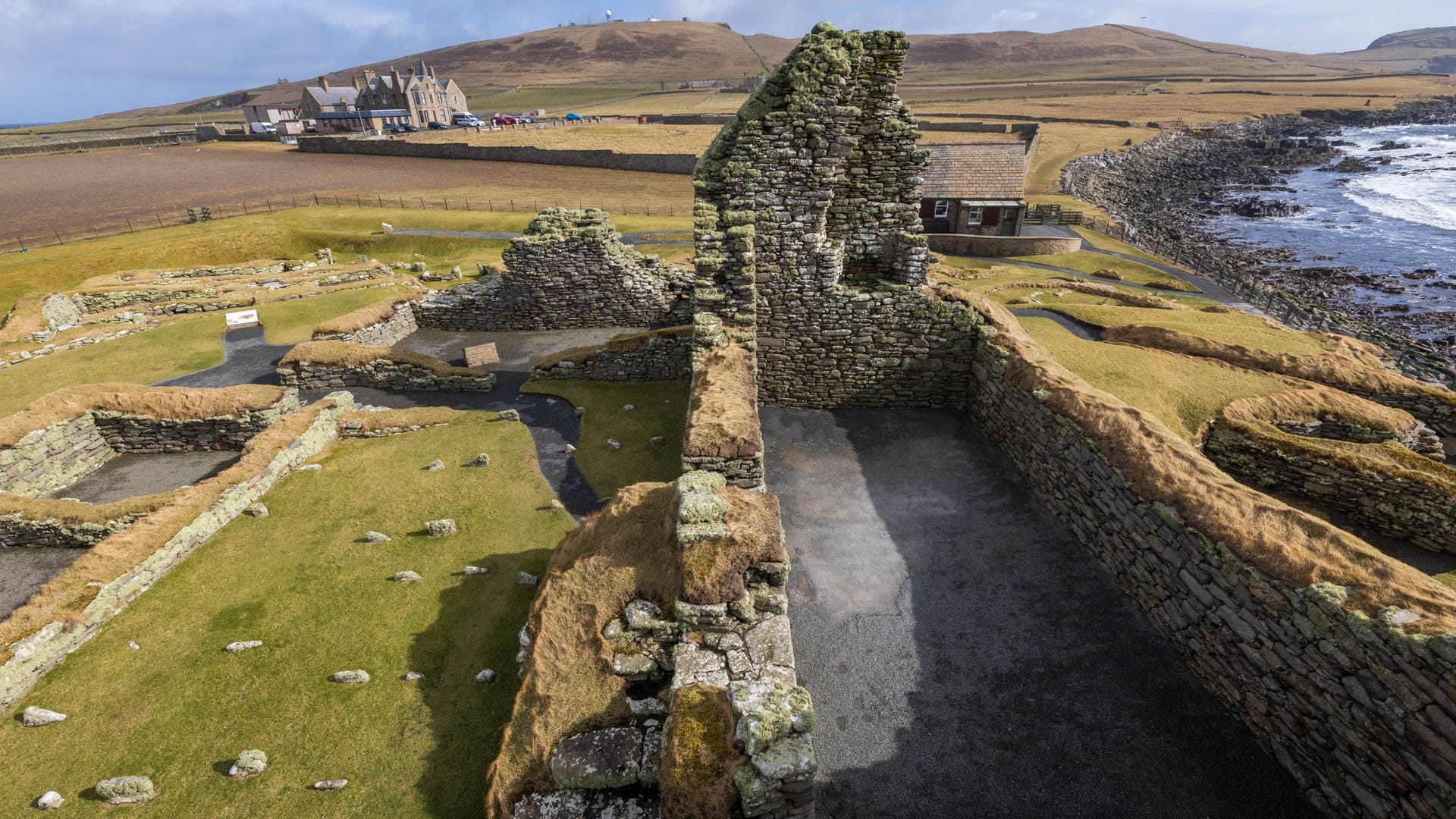
Before Scott invented the name Jarlshof, the building was simply known as Sumburgh House. Today only the walls remain. But stairs lead up the old tower, and from here visitors can admire the buildings of Jarlshof once more from above – along with a view over the surrounding landscape.
The walk through all these stages of Shetland’s history ends back at the small visitor centre. Visitors to the islands should on no account miss this attraction on Shetland. That’s why Jarlshof is also open all year round.
Knowledge: The Viking Takeover of Shetland
Similar to Skara Brae on Orkney, a storm exposed the first remains of the settlements at Jarlshof around 1890. Over the following 60 years, archaeologists excavated the houses.
One aspect was particularly interesting here: one of the houses openly marked a transition between Pictish and Norse culture. One of the houses showed a combination of Pictish and Norse construction. Finds from both peoples were also discovered there. It could therefore be one of the buildings marking this transition.
The takeover by settlers from Scandinavia likely took place in stages: first a pioneer phase, in which the Norsemen only came to Shetland briefly to trade and raid. Then a settlement phase, in which both peoples still coexisted. And finally, the complete takeover by the newcomers.
The house could offer a clue to the first two phases, during which there may even have been intermarriage between the peoples.
Getting There
With satnav: The postcode “ZE3 9JN” leads to Sumburgh.
Without satnav: Jarlshof is located on the A970 between Sumburgh Head and West Voe Beach, right next to Sumburgh Airport. The turn-off is signposted.
