Jedburgh Abbey is one of four great abbey churches in the Scottish Borders. And like the other three, it’s a ruin – there’s a reason for that.
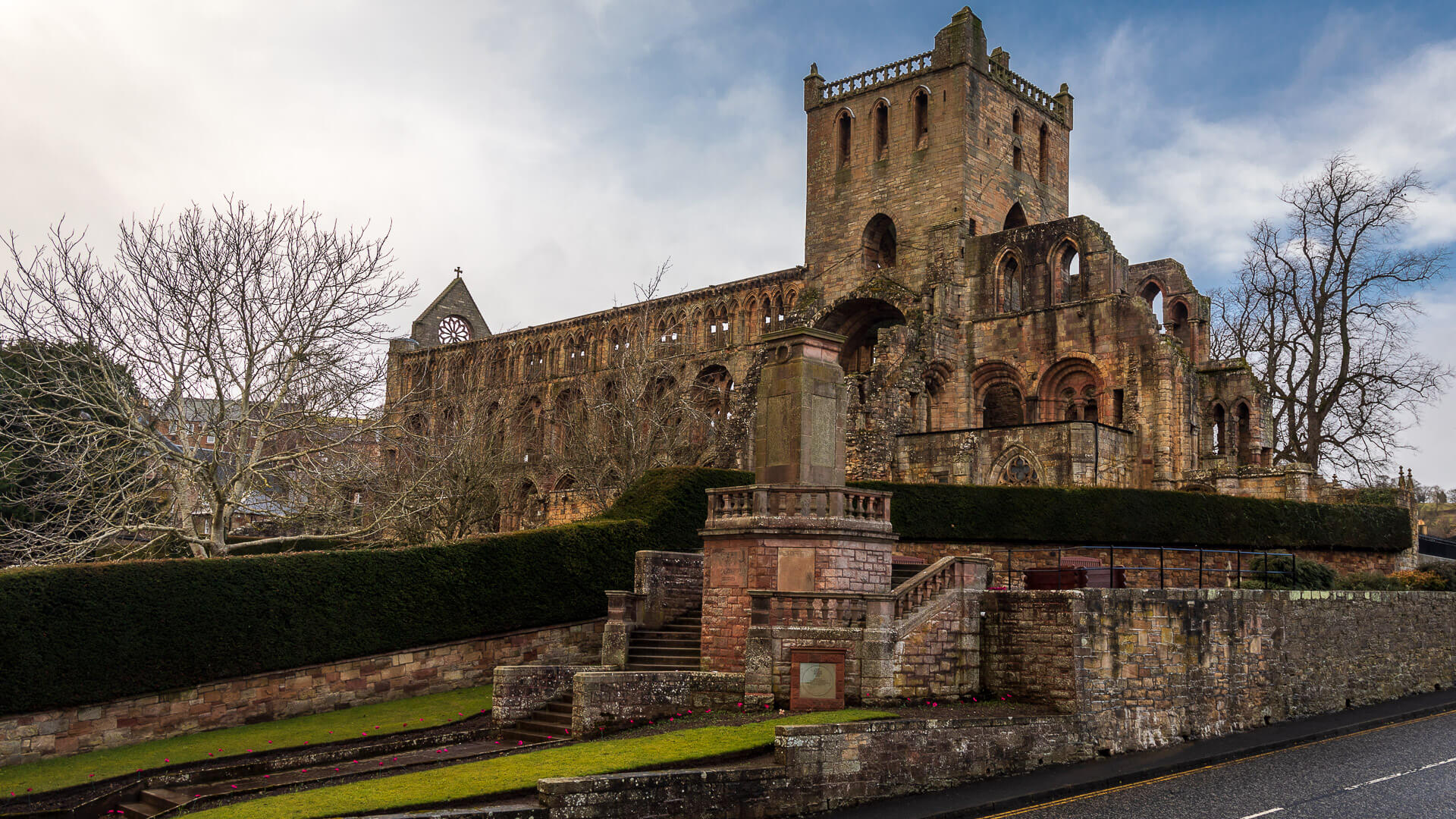
No roof, no windows – it looks like the proud skeleton of a once-mighty body. And that’s exactly what Jedburgh Abbey once was: a magnificent abbey church. It was its location that kept bringing it trouble, again and again.
Because Jedburgh, the town where the church stands, lies less than 20 kilometres from the border with England – a border that was always fiercely contested and constantly shifting between two kingdoms.
Achtung: Die Betreiber dieser Sehenswürdigkeit, das Historic Environment Scotland (HES), führt seit 2021 an vielen Sehenswürdigkeiten Untersuchungen oder Baumaßnahmen zum Erhalt der Gebäude durch. Dieses gehört dazu. Darum vorher informieren, ob und was begehbar ist. Mehr Hintergrund hier.
King David I of Scotland founded the monastery here in 1138, which soon rose to the status of an abbey. David founded numerous churches and monasteries, among them St Margaret’s Chapel, today considered the oldest building in Edinburgh. David developed Scotland at the time and had further abbeys built too: at Dryburgh, Kelso and Melrose. It was also a sign of the Scottish king’s power in a border region that had always been contested.
Jedburgh Abbey was run by Augustinians – though not monks, but canons regular. The difference? These men would leave the abbey church and carry out religious duties within the community surrounding the building.
Yet the community at the southern edge of Scotland barely got a century of peace to enjoy. Then it was caught up in a conflict lasting centuries. It began with William Wallace. When he inflicted a stinging defeat on the English at Stirling, the losers’ revenge followed promptly at Jedburgh. It was only the first time the church was devastated.
Robert the Bruce (currently only available in German) and his successor rebuilt Jedburgh Abbey in the 15th century, even expanding it further. The English responded in the 15th century with repeated destruction.
The Augustinians held out bravely, but the future didn’t look bright. Because the age of the Reformation was dawning, and suddenly Scots themselves turned against this abbey church too. Augustinians were still permitted to live here, but the church itself was now used by the Protestant congregation.
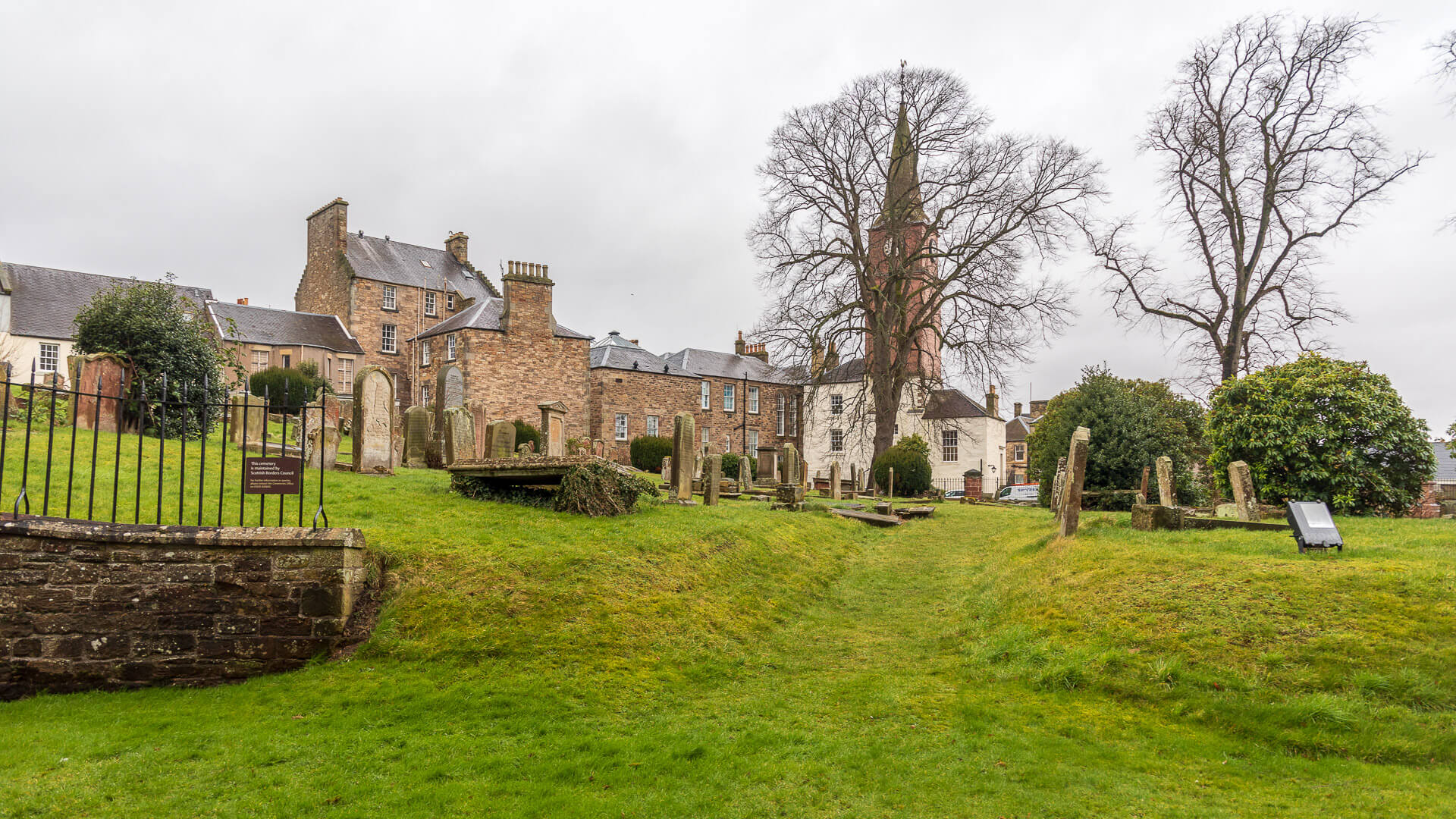
The final blow came in 1547, when French troops supporting the Scots against the English fitted out the east side – the side facing the road – with ramps and cannon emplacements. By then, there wasn’t much left to feel of a “house of God”. And in the 17th century, a new church was built within sight of it. Ever since, Jedburgh Abbey has simply stood here, quietly decaying. Today Historic Scotland looks after the building.
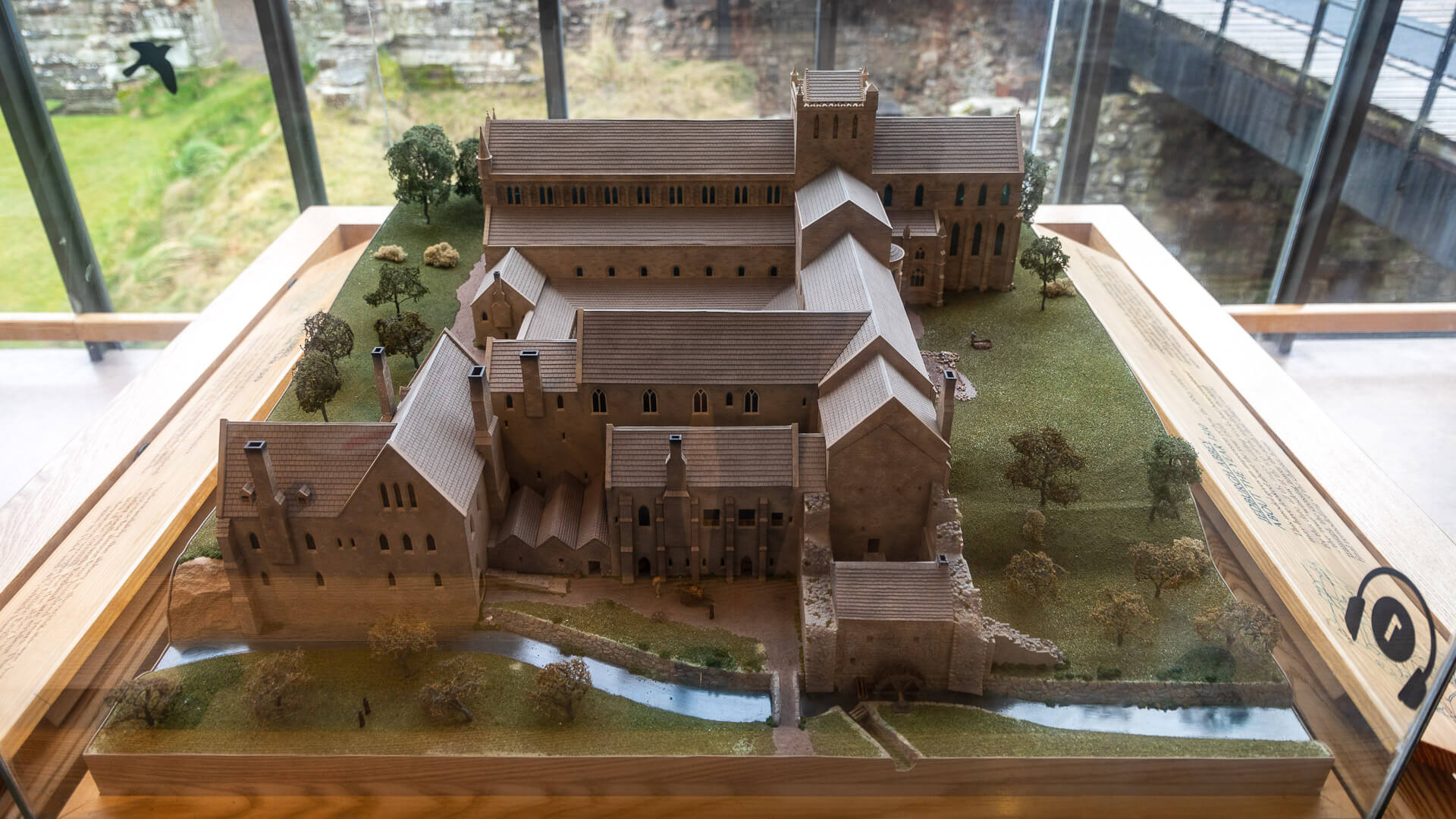
And so Jedburgh Abbey has finally received its due after all. Today it’s a top attraction of the Scottish Borders. And there’s more to see here than just the church, since excavations around the abbey have turned up quite a bit, now on display in the small museum.
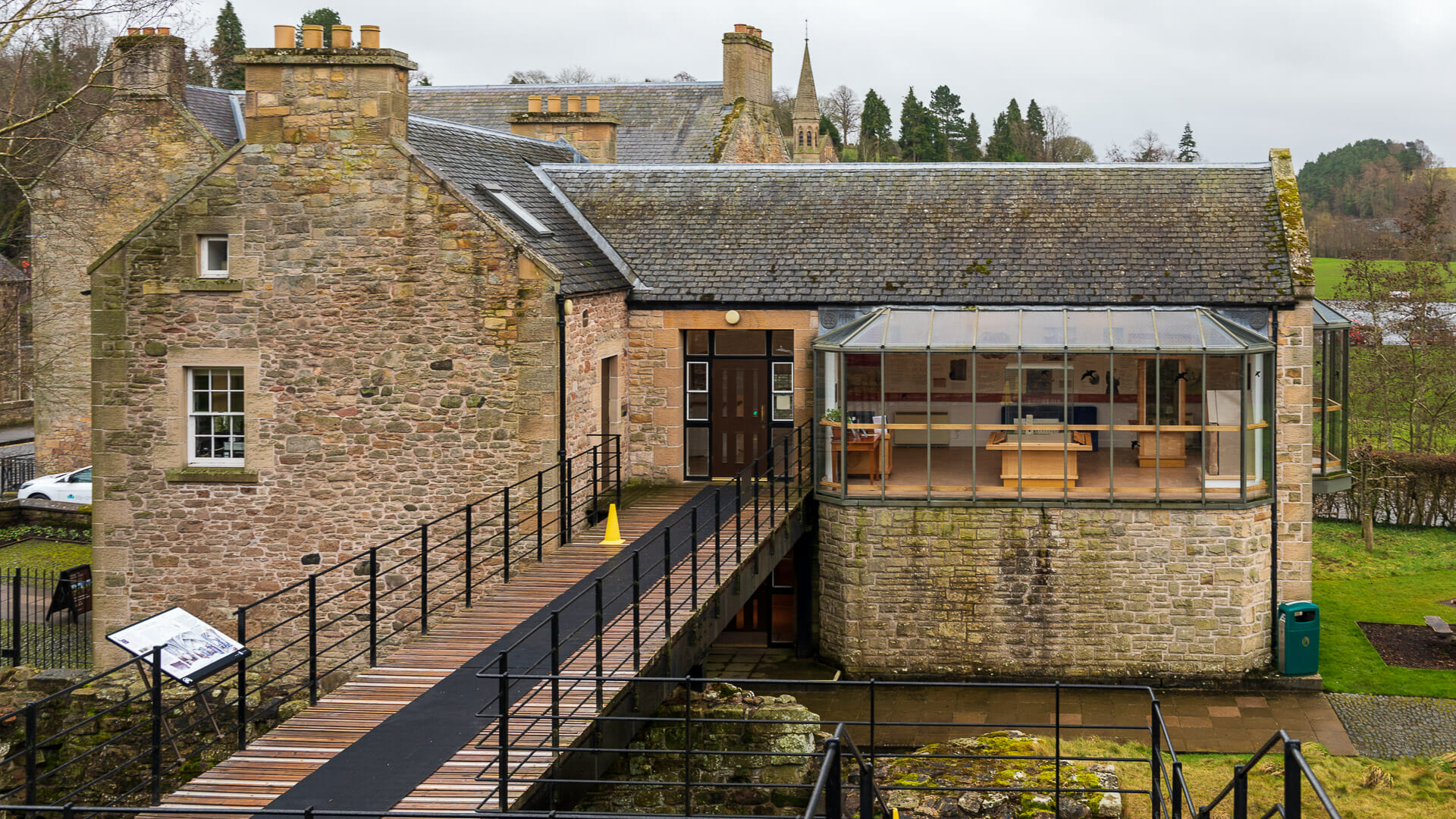
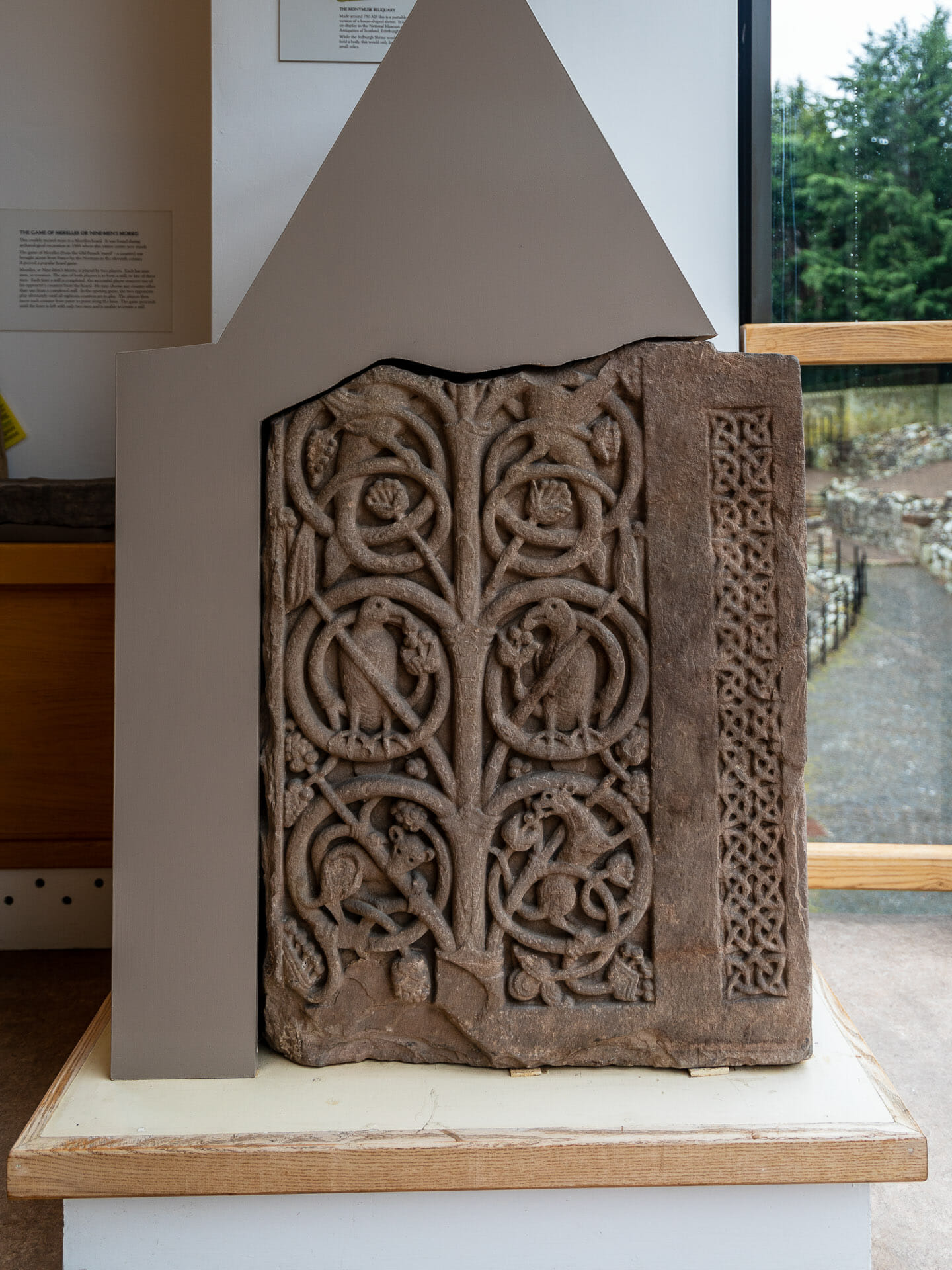
There, you learn not only the history of the abbey, but also of the time before it. Beautifully carved old stones are on display, once part of a shrine.
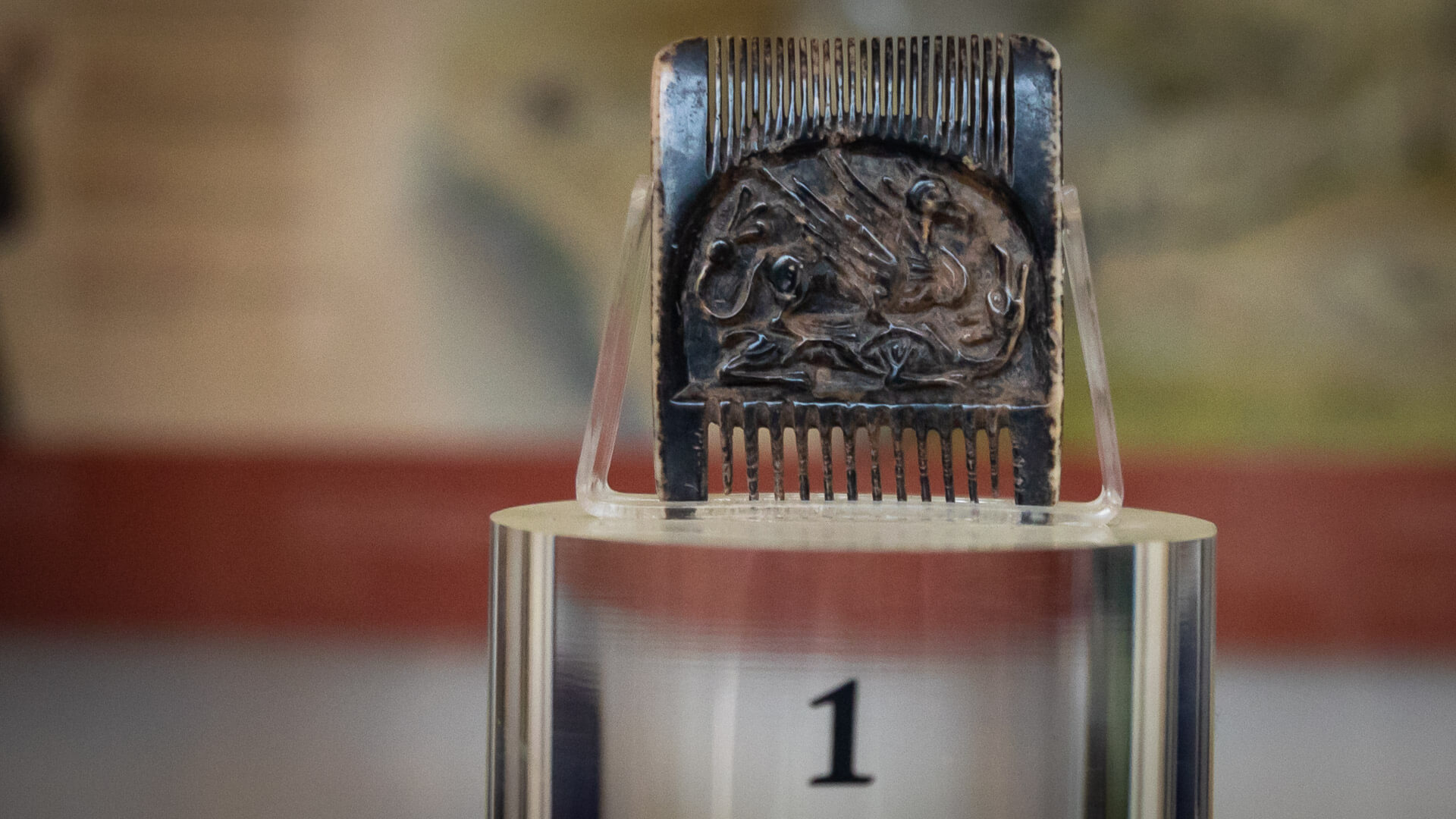
And a comb, the famous Jedburgh Comb. Likely used for beards, it dates from around the year 1100. Material: walrus ivory. Richly decorated.
Good to know: Jedburgh Abbey – a wonderful mix of styles
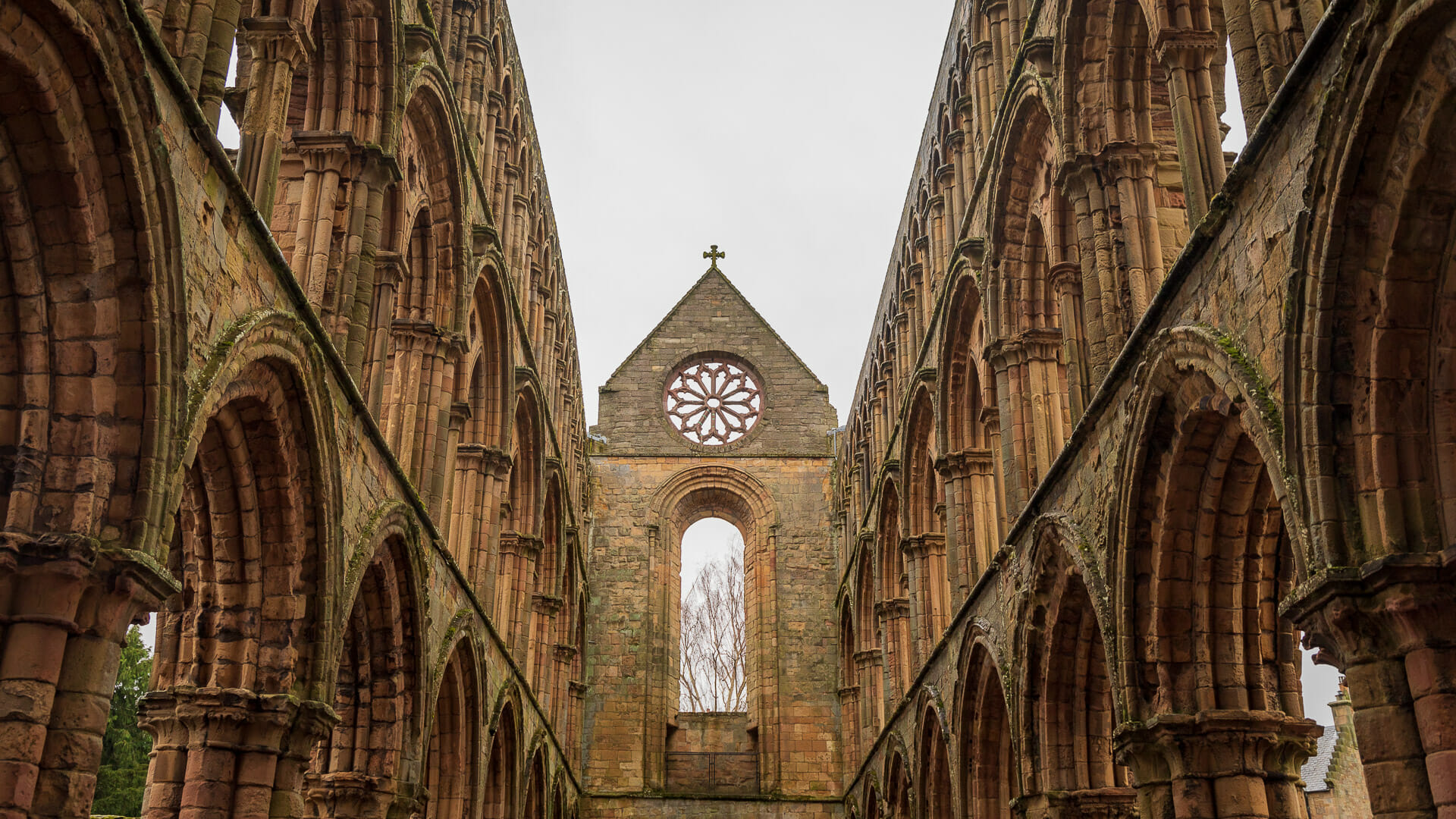
The first phase of construction at Jedburgh Abbey took 70 years. During that time, architectural fashion changed – from Romanesque to Gothic. And the abbey shows this beautifully. Round arches and pointed arches both appear here. Add to that the rich ornamentation, visible on the southern entrance door to the nave.
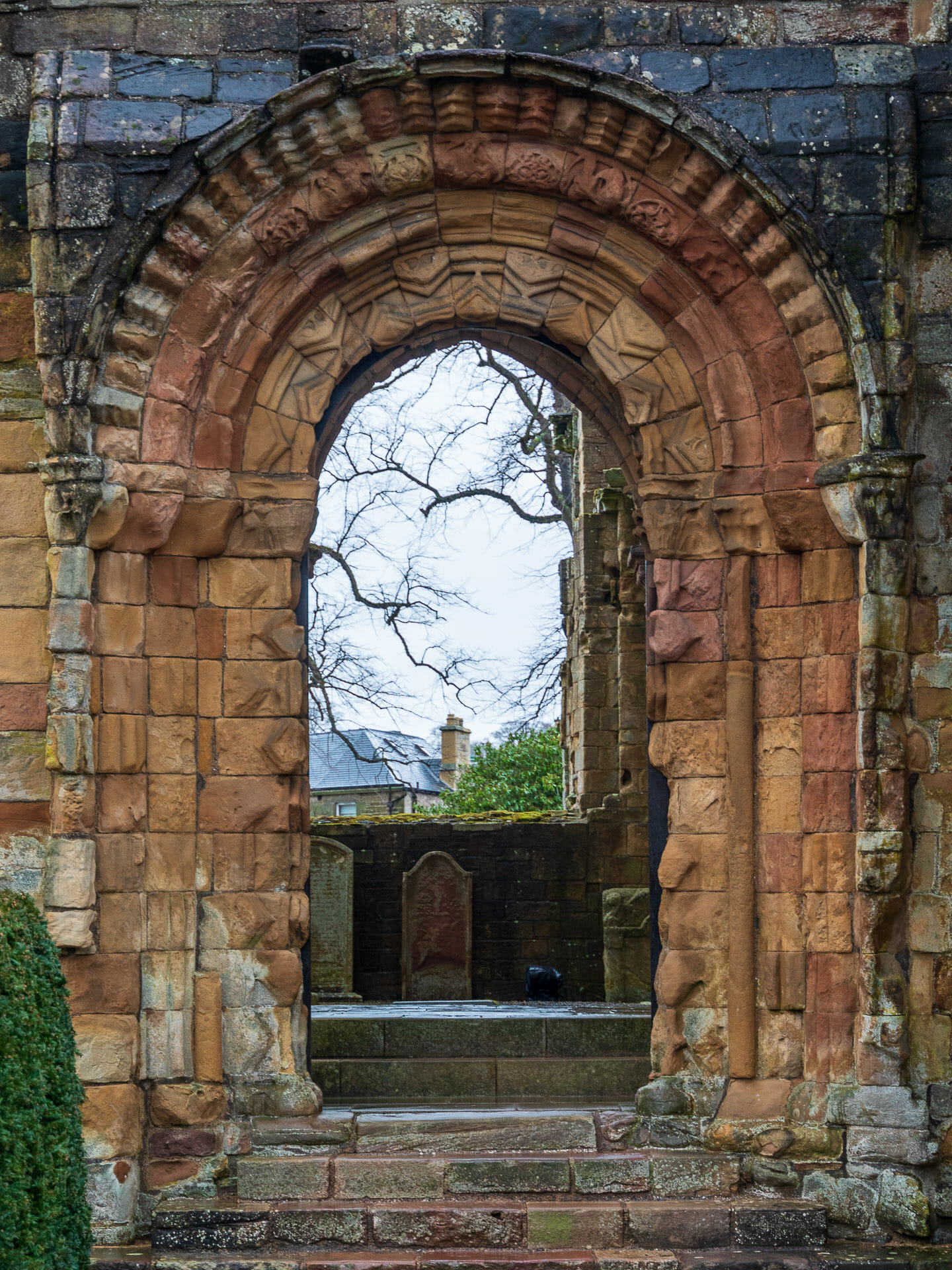
The matching entrance opposite, incidentally, has been restored and shows what the arches may once have looked like.
Adding to the mix of styles are structures that were only built after the church had already fallen out of regular use – such as the tomb at the east end of the church, which is nonetheless lovely to look at.
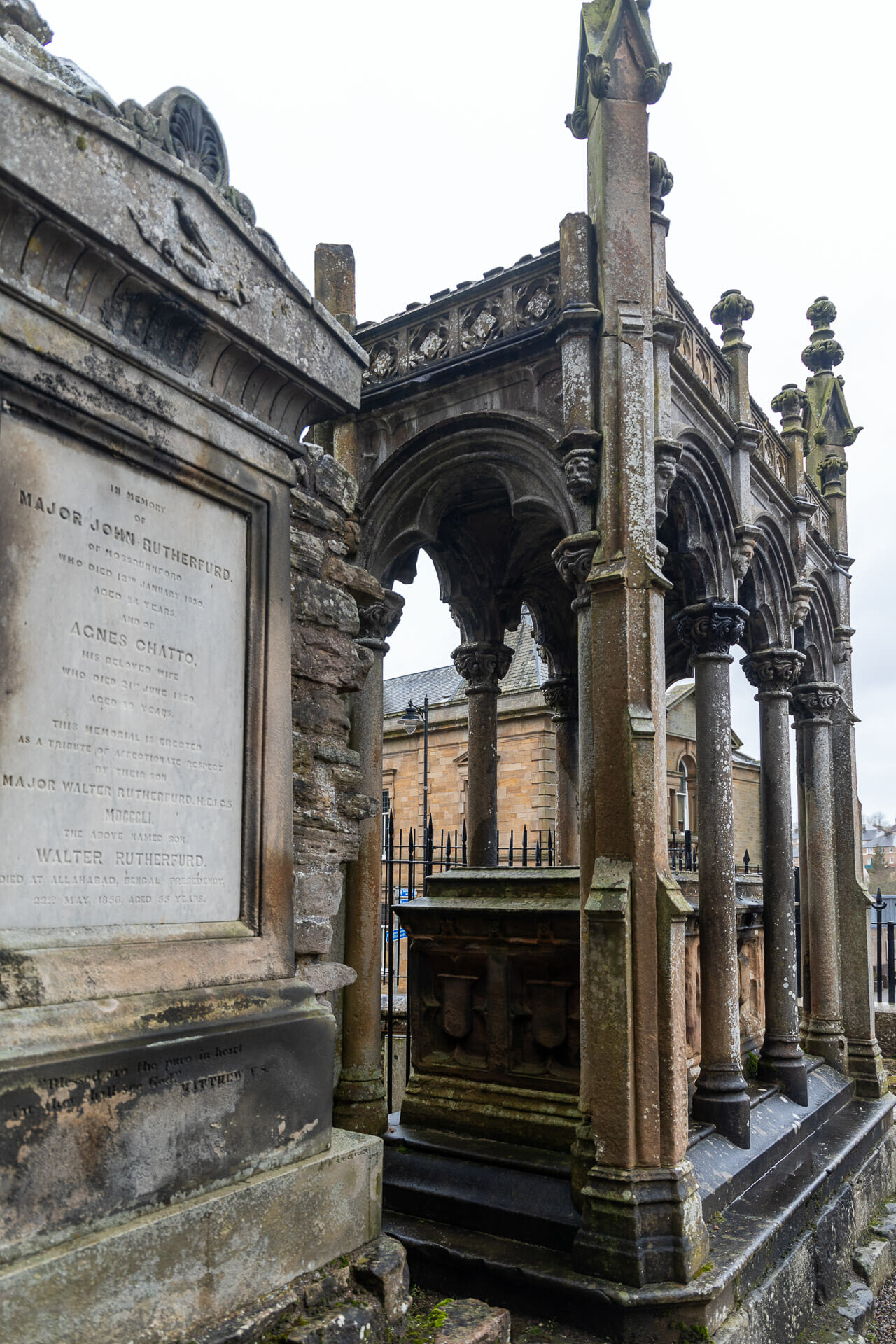
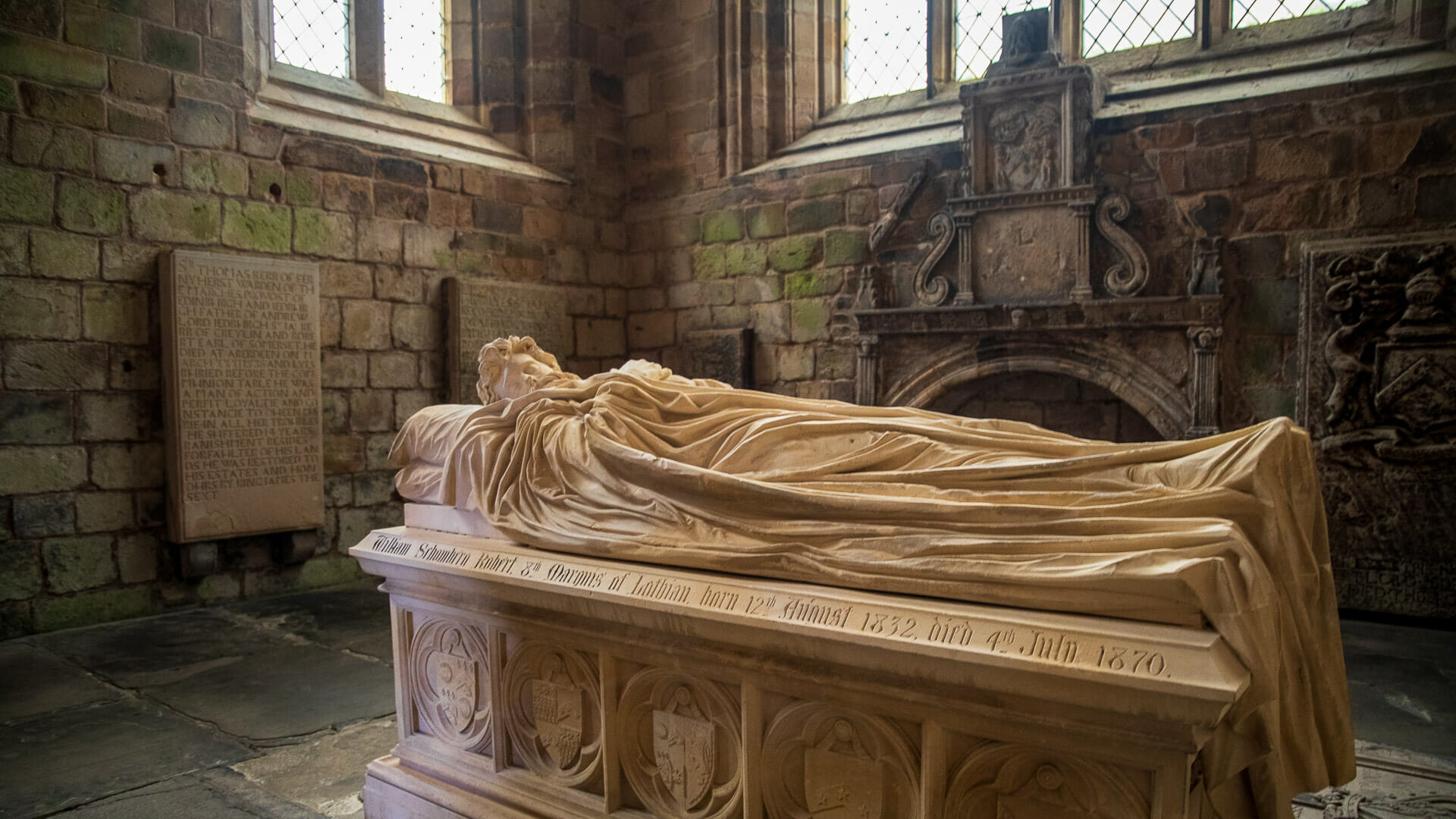
Also famous is the Lothian Burial Aisle, a chamber housing the graves of the Earls of Lothian.
Getting there:
With a sat nav: enter “TD8 6JQ” into your sat nav, and it will take you to Jedburgh.
Without a sat nav: from Edinburgh, take the A68 to Jedburgh.
Parking: on the A68 in Jedburgh, after the sign for the town centre, a small sign reading “Abbey” appears. Turn right here and drive straight to the large car park by the river. It’s less than 100 metres across the river to the museum and the entrance.