They were one of the most powerful clans: the Campbells of Breadalbane, and Taymouth Castle in Kenmore was their seat. The story begins with a beheading.
Sir Colin Campbell himself wielded the sword that cost Gregor MacGregor his head. This brutal act drew a line under a long-running feud, and was certainly one of the most pivotal moments in the settlement that would later become Kenmore. But how did it come to this?
For centuries, the Campbells had been steadily expanding their power. First in Argyll, where the imposing Inveraray Castle stands, still ruled today by the Dukes of Argyll. But bit by bit the clan crept from the west coast inland. The Campbells of Glenorchy built Kilchurn Castle on the north-eastern shore of Loch Awe. And they kept marrying, buying, and seizing their way further east.
At their side stood another clan, the MacGregors. For as gruesome as the ending was, the two families had shared common interests at first. The MacGregors lived on lands under the rule of the Campbells of Glenorchy. And by this point these lands stretched all the way to the north-eastern tip of Loch Tay, where Kenmore stands today. There, “Grey Colin” Campbell built Balloch Castle in 1559, initially as a stronghold, not without first driving out the MacGregors who lived there.
When Colin then refused to recognise the new chief, Gregor Roy MacGregor, and would not grant him the lands his father had held, war broke out between the two. For seven years, skirmishes raged, until in 1569 MacGregor was captured while at his wife’s side. There was a trial, then an execution. MacGregor’s wife watched it happen – and afterwards wrote a lament that still moves people to tears today.
Around a hundred years later, the Campbells of Glenorchy had transformed themselves. John Campbell was now “1st Earl of Breadalbane and Holland”, and Balloch Castle was expanded. John Campbell, incidentally, played a role in the Massacre of Glen Coe. He is said to have been one of the ringleaders behind the plot.
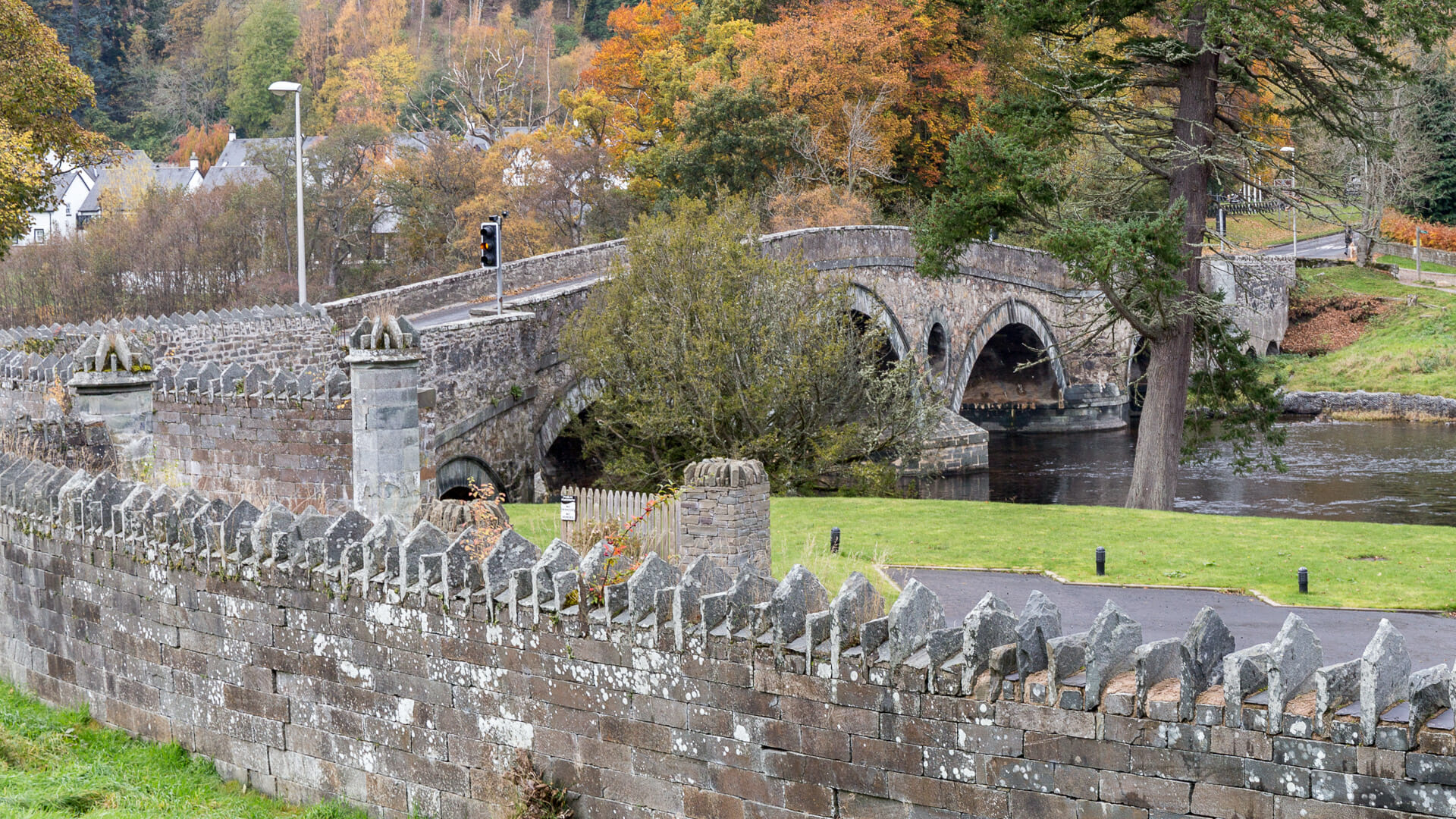
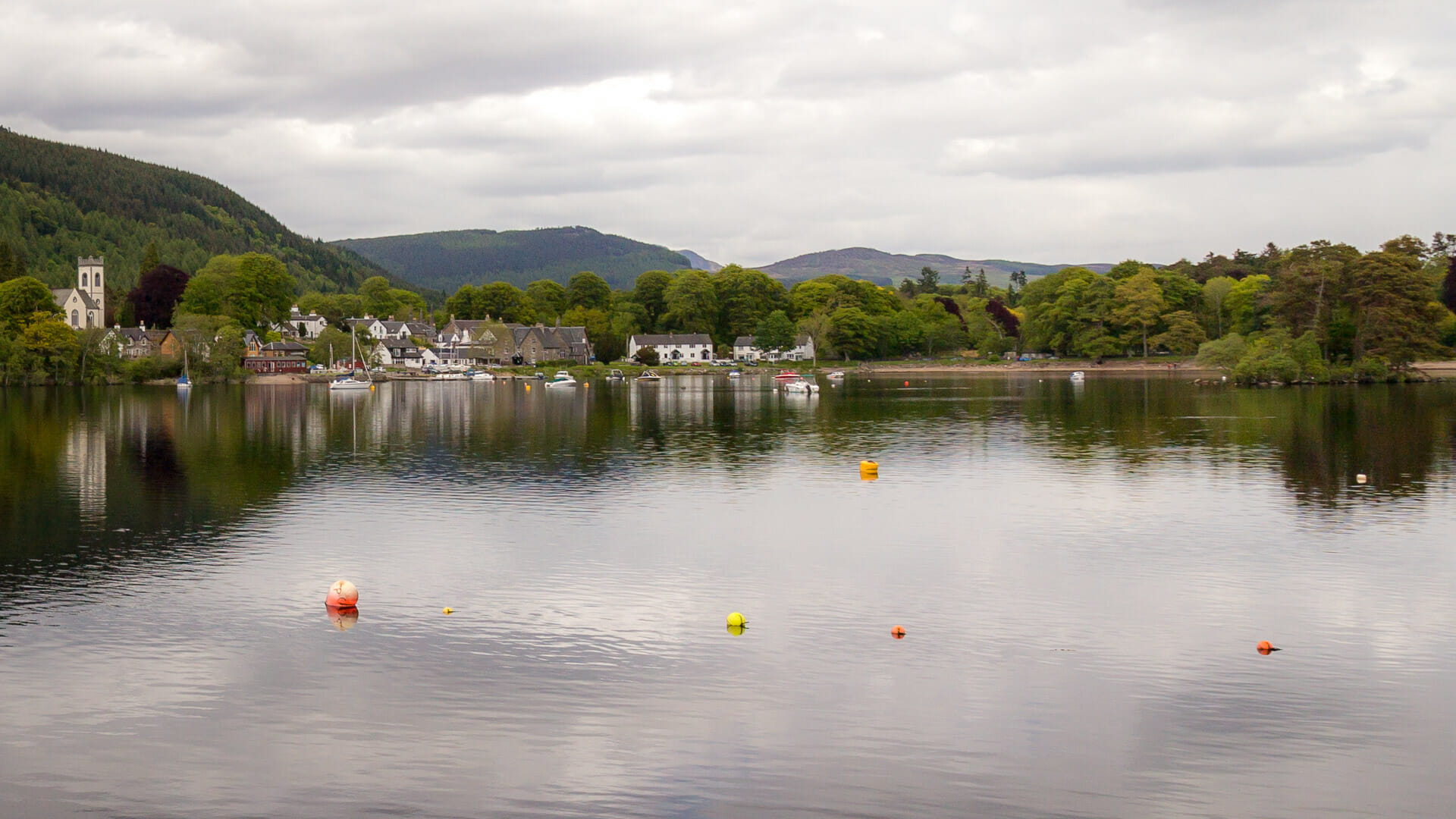
And Kenmore itself? The village owes its present form to the 3rd Earl of Breadalbane, who built a fair amount of modern infrastructure. He had a bridge built across the River Tay, which still stands today.
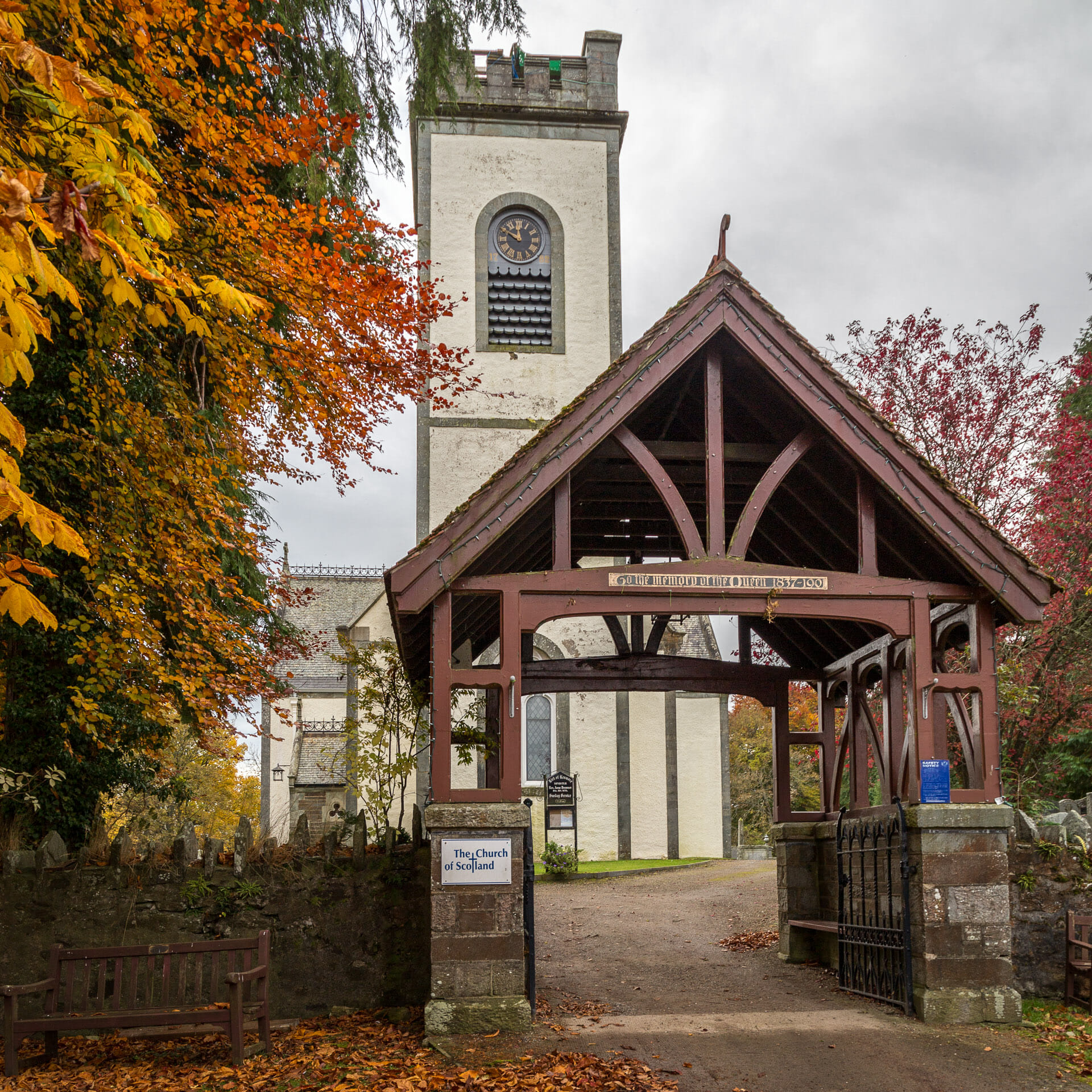
He also had the church rebuilt.
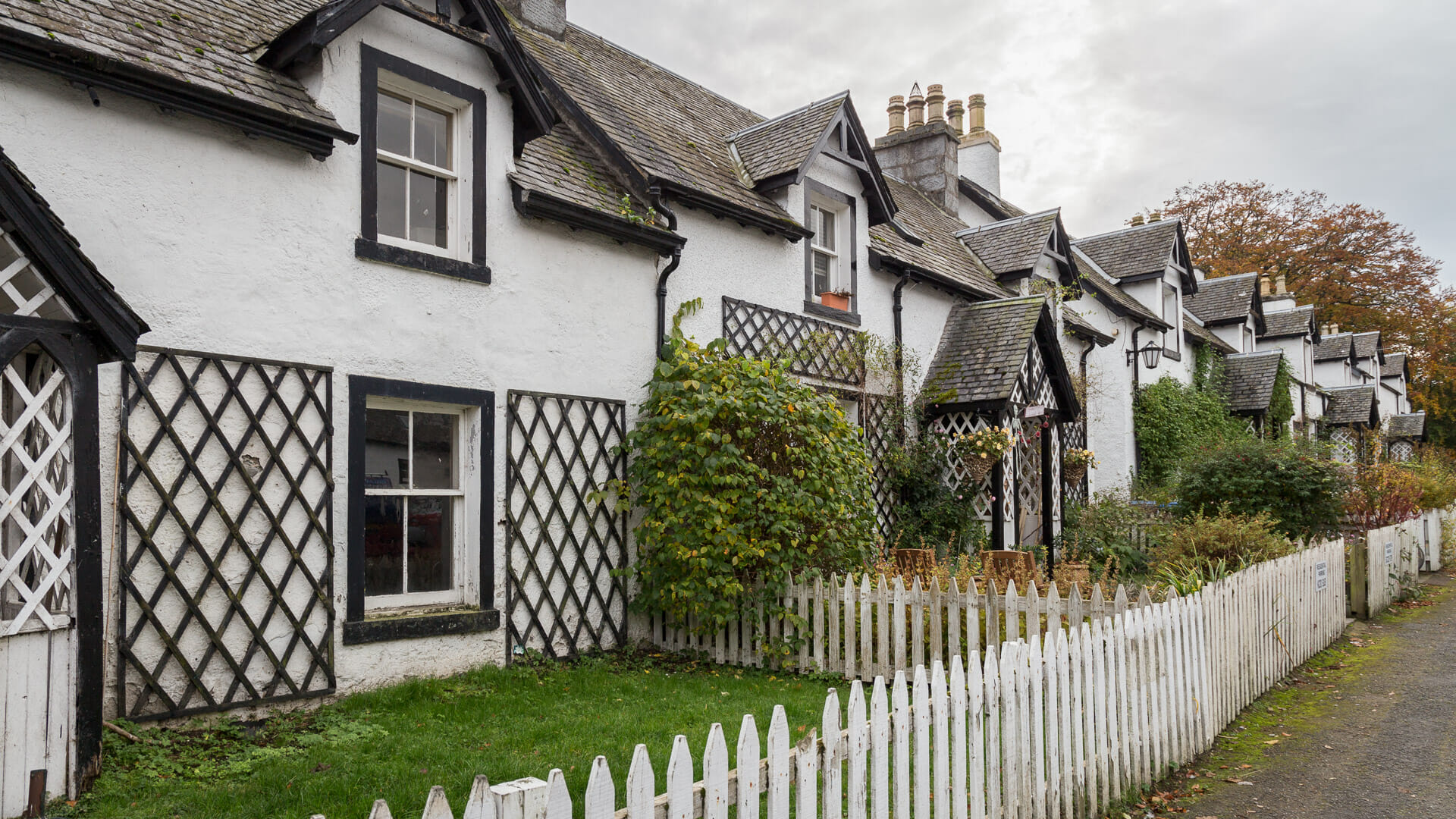
And built modern houses for his tenants.
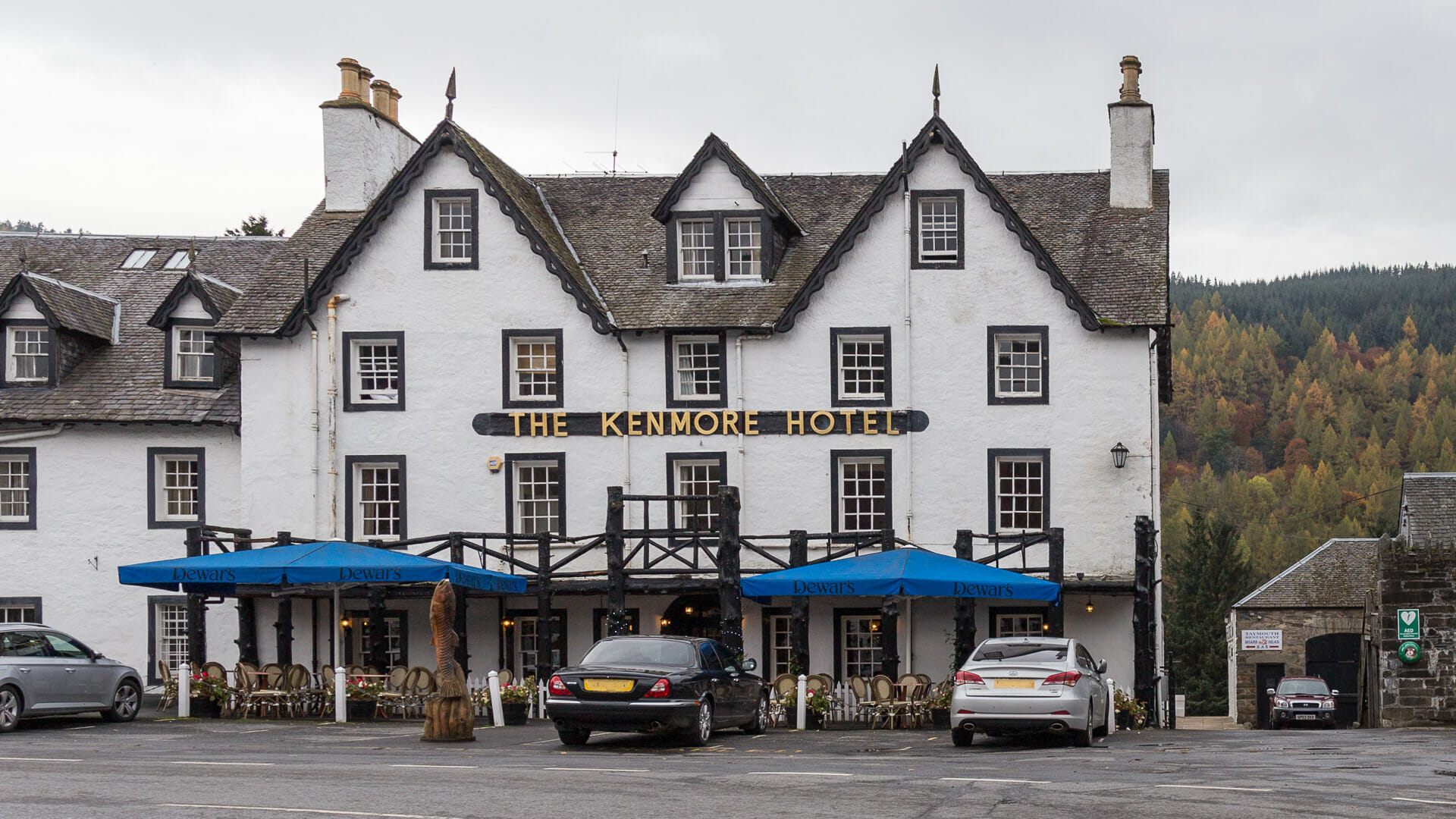
The Kenmore Hotel on the square, incidentally, claims to be Scotland’s oldest inn, with a history said to stretch back to 1572. Only the Drovers Inn at Loch Lomond is likely to be of similar age.
Taymouth Castle
By the early 19th century, there was no longer any need for old-style castles. Instead of protection, the nobility now needed grand, representative houses. And so Balloch Castle was dismantled. In its place, John Campbell, 1st Marquess of Breadalbane, had the new Taymouth Castle built, completed in 1842. A large neo-Gothic mansion.
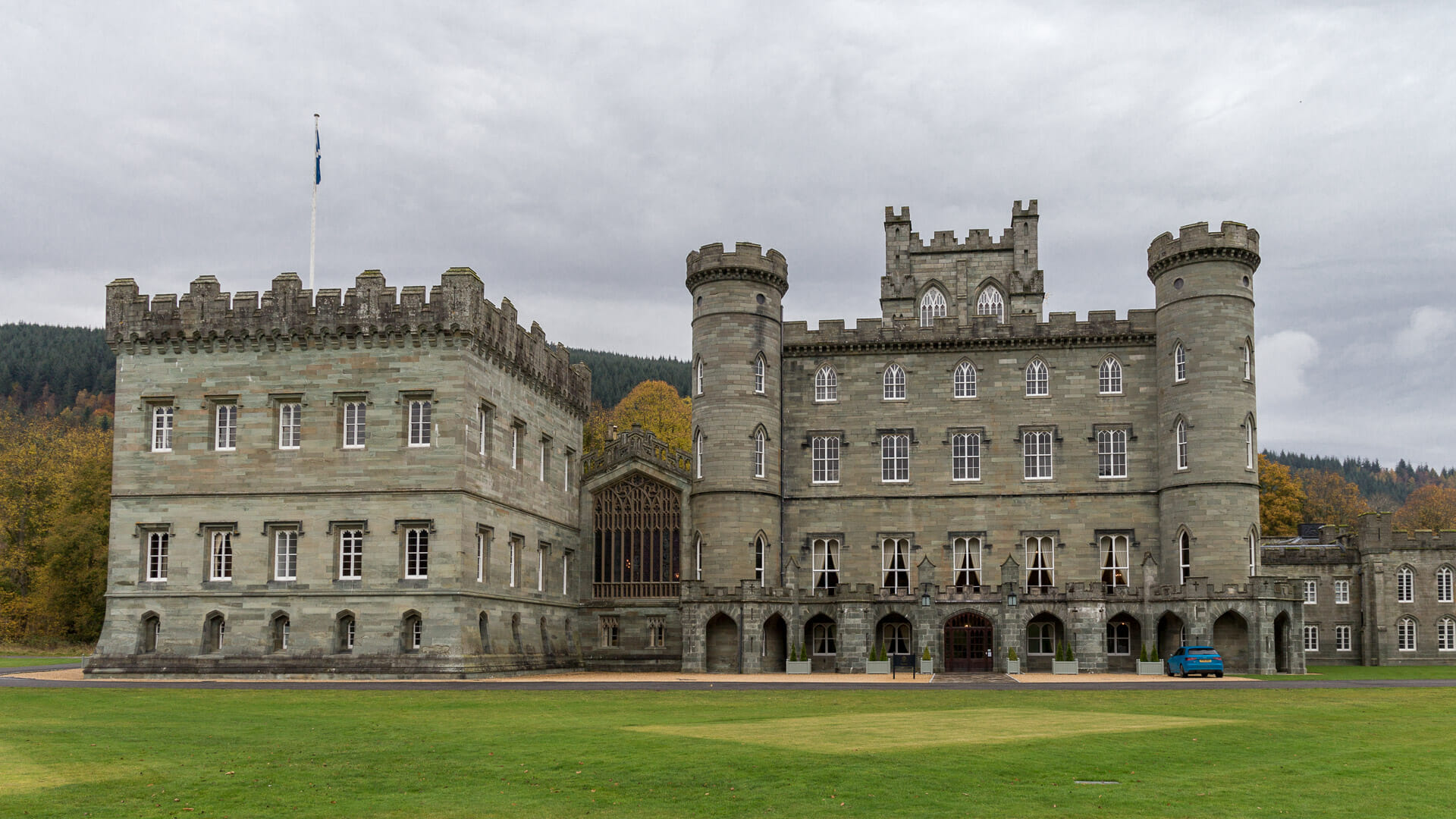
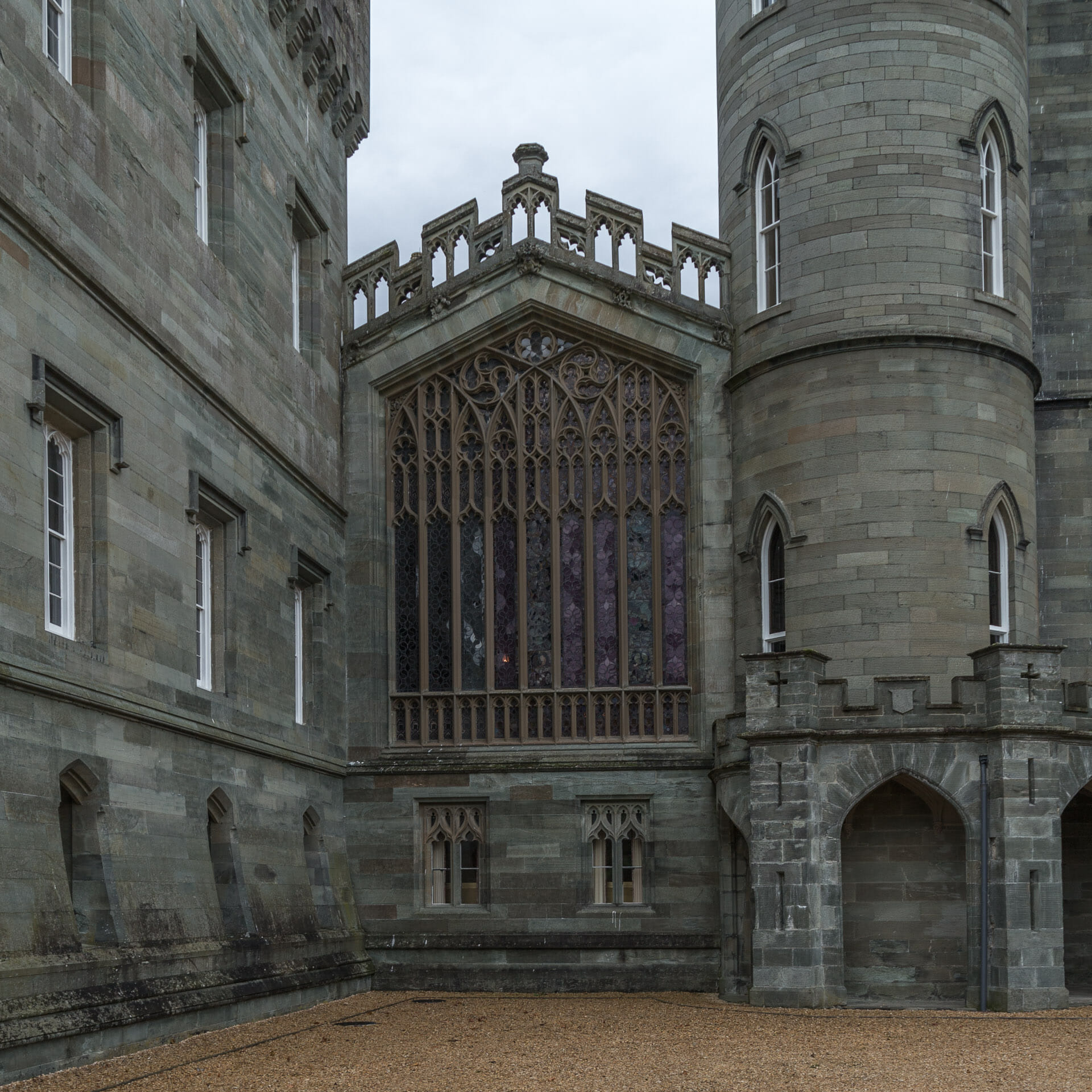
In terms of appearance and layout, there are certainly strong similarities to Inveraray Castle. Yet Taymouth is noticeably larger and impresses with a number of beautiful details, such as its stained-glass window, which unfortunately we could only see from the outside.
The castle sits amid an extensive estate, with a golf course right on its doorstep.
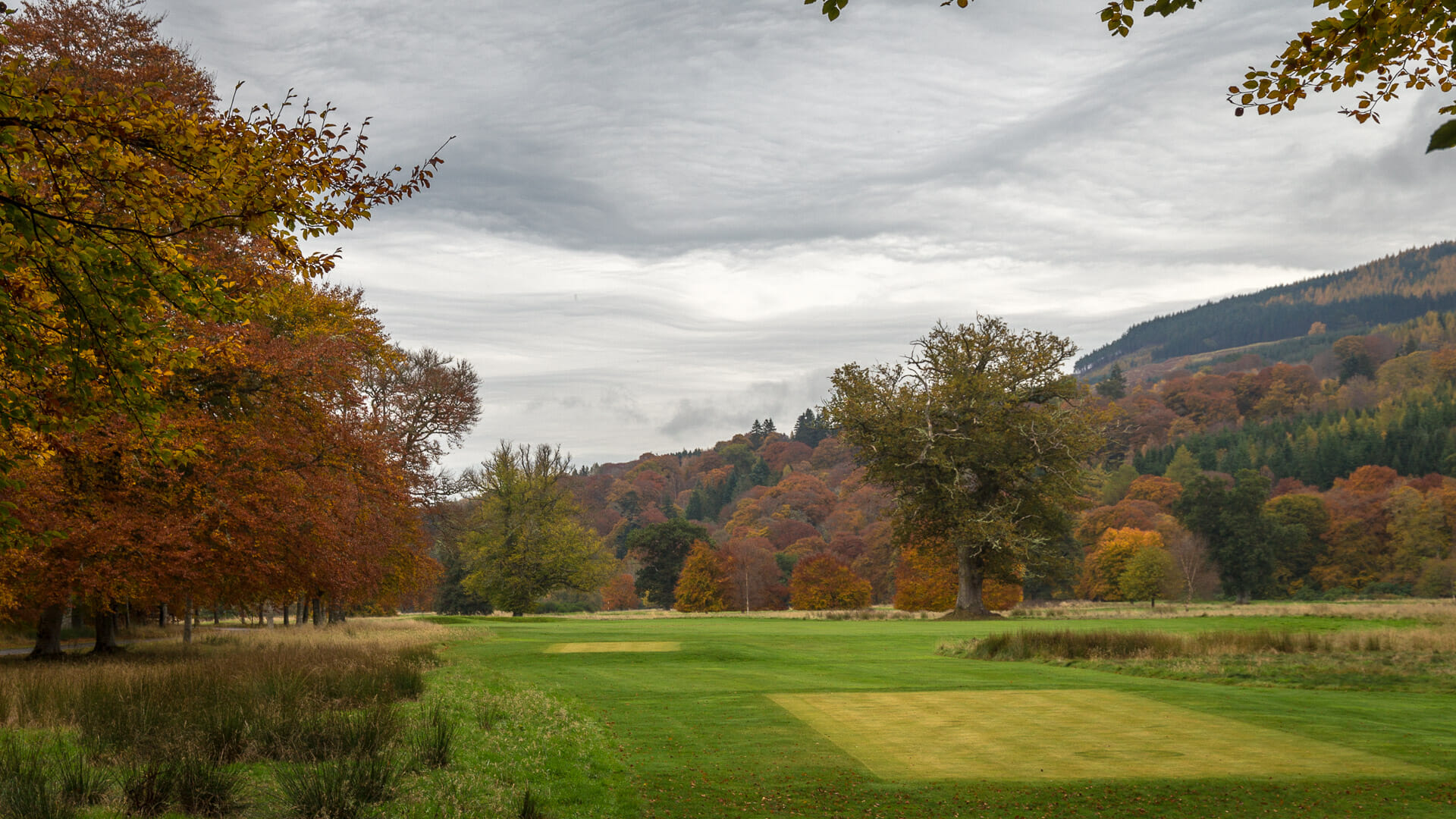
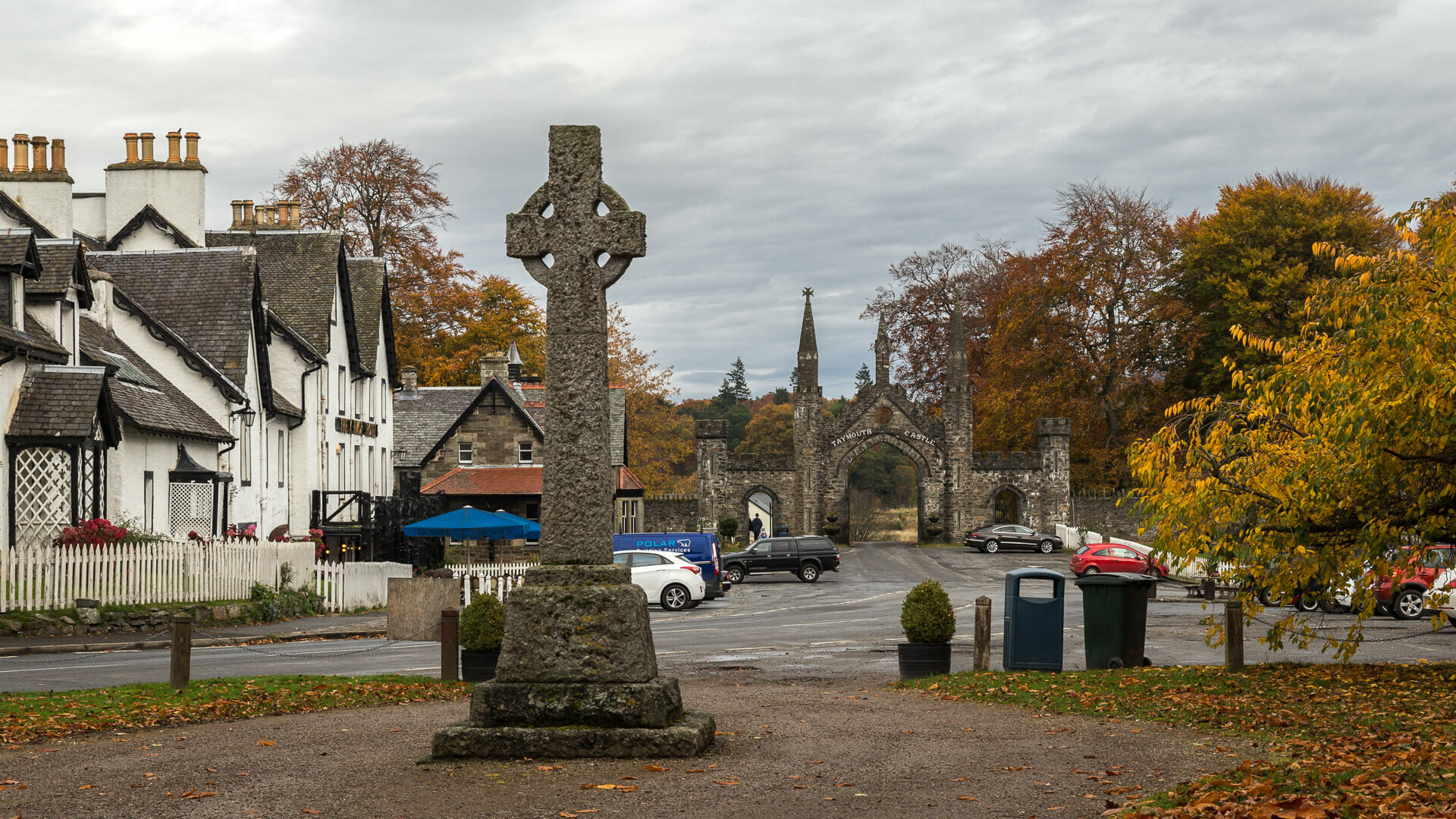
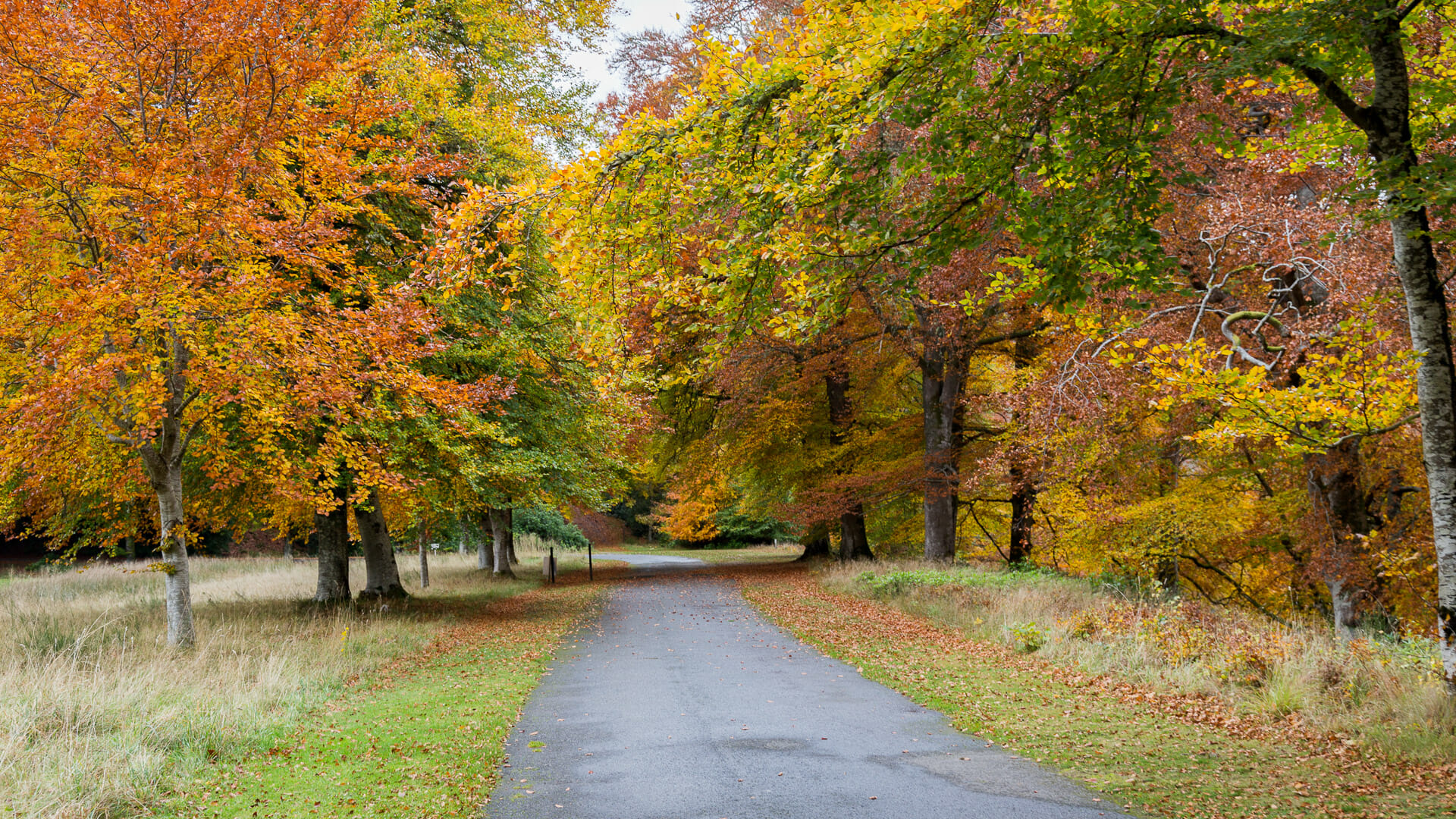
Just how large the park is, every visitor to Kenmore can find out for themselves on foot. Right on Kenmore’s large square stands the great gatehouse, from where the single-track road leads to the castle. A genuinely lovely walk through plenty of trees.
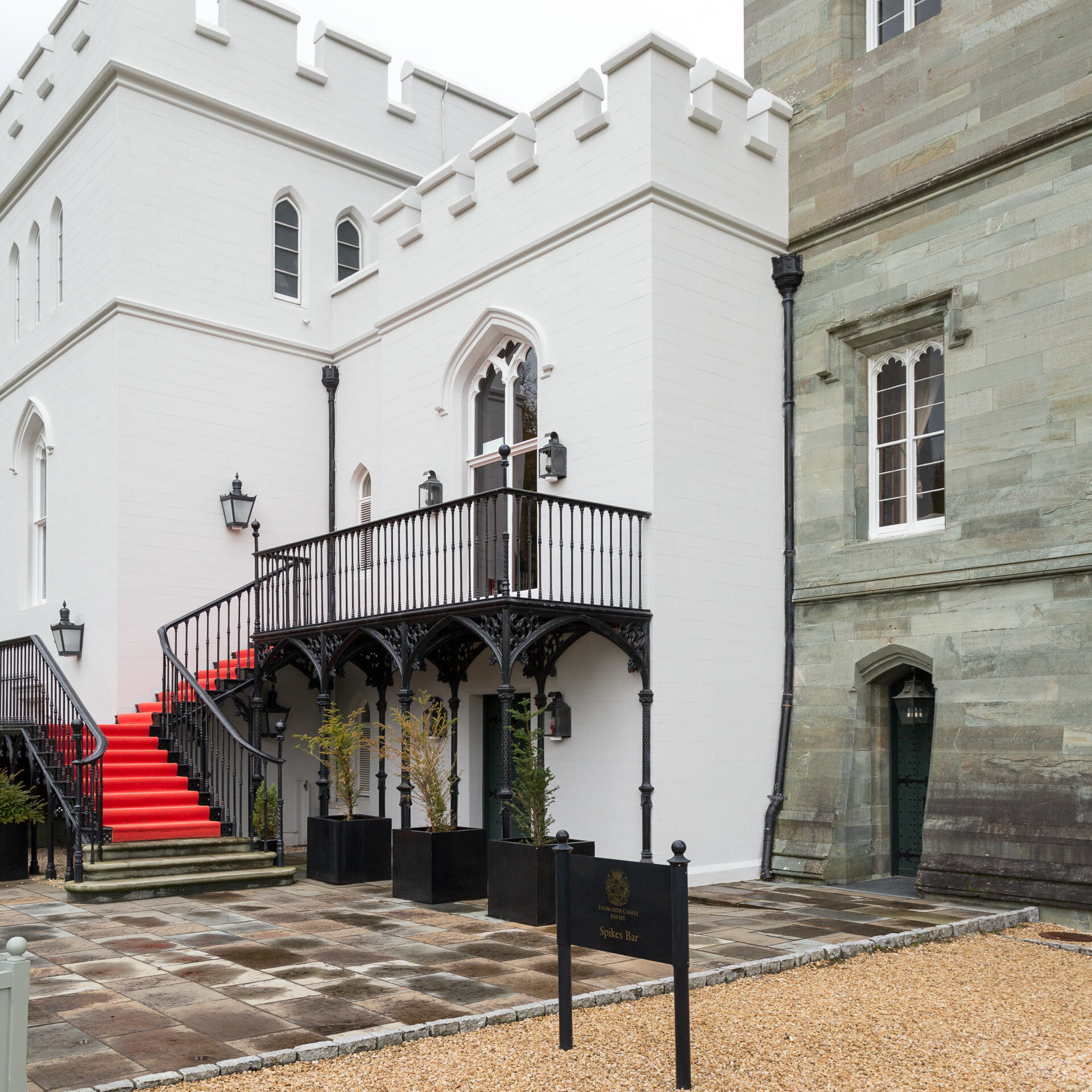
Taymouth Castle continues to be restored in several phases and developed into a hotel and leisure resort. Parts of the building shell have already been completed, while other wings are still under construction. The castle is not regularly open to visitors.
After the First World War, the Breadalbane Campbells were forced to sell the estate. Today it is privately owned.
Did you know: where the name Kenmore comes from
Kenmore is – as is so often the case – an anglicised pronunciation of a Gaelic name. Originally, it was called “A’Cheann Mhòr”. “Ceann” means head, “mòr” means “big” or “great”, giving together “the big head” or “the great end”.
Names ending in Ceann at a loch aren’t uncommon. They usually simply refer to one end of the loch, and the settlement located there.
Balloch Castle, on the other hand, takes its name simply from the word “pass”, pronounced “bealach” in Gaelic.
The name “Taymouth”, meanwhile, is fairly straightforward: this is where the River Tay flows into (“mouths” into) Loch Tay – Taymouth.
Tip: a tour through Breadalbane
Breadalbane, the region where Kenmore lies, has plenty of charm to offer. Close by, of course, is the Crannog Centre, with its Iron Age reconstruction.
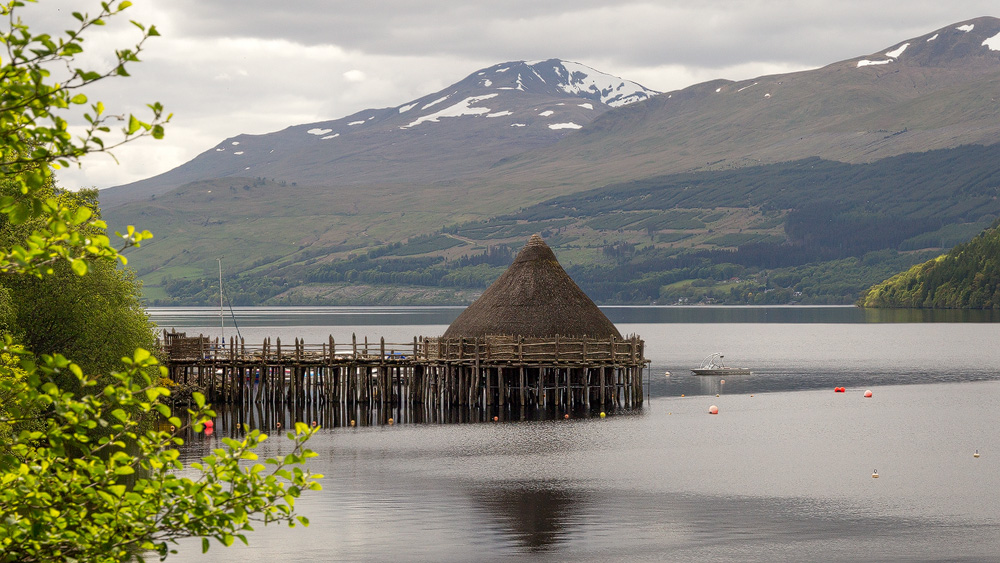
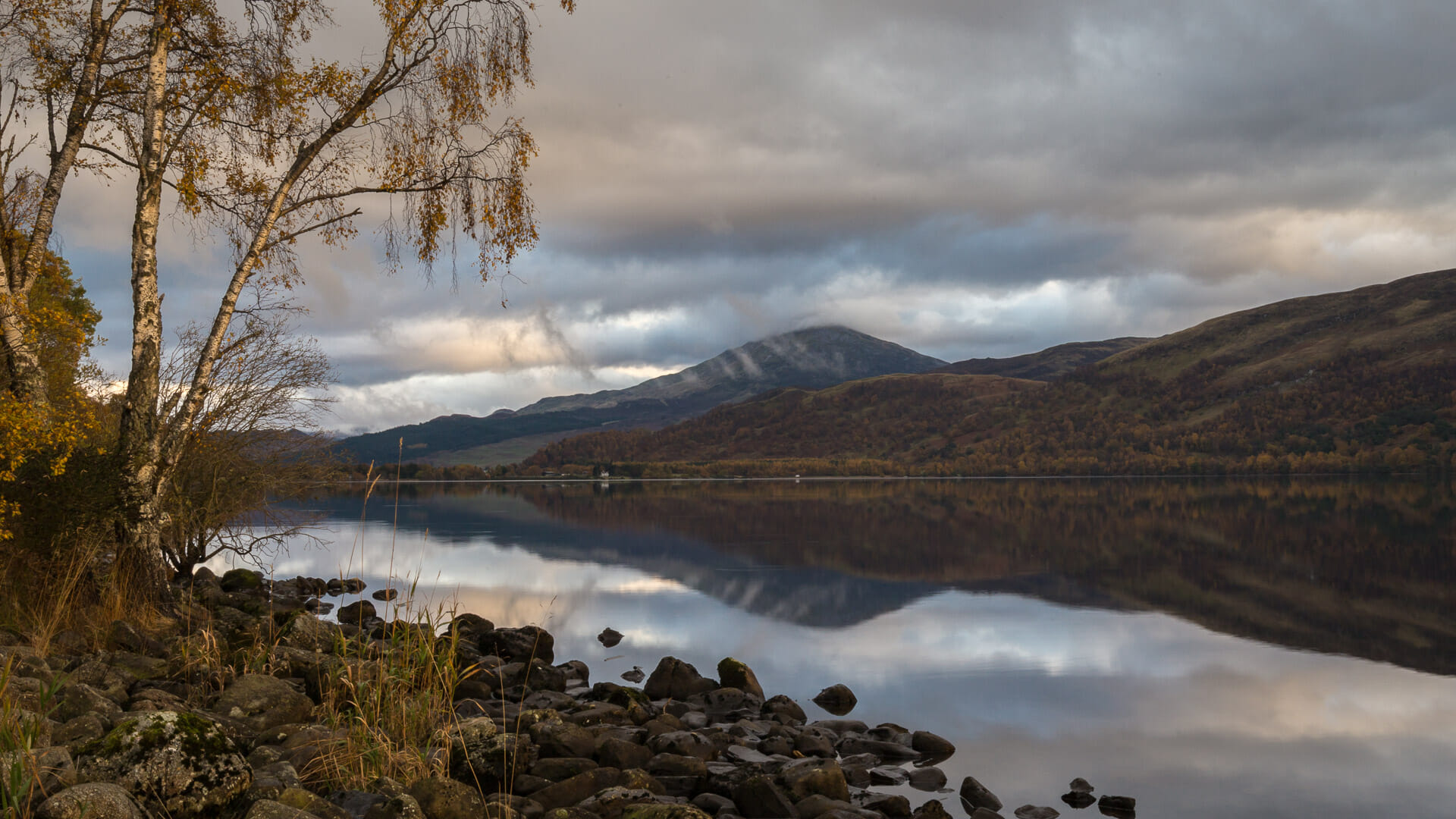
Along Loch Tay, you can then drive from the Crannog Centre all the way to Killin and its waterfall. The route follows a single-track road along the southern shore and offers lovely views. The alternative northern route, however, is more comfortable and quicker, as the road there is better developed.
From Kenmore you can also visit Loch Rannoch to the north via a small scenic road that passes by Schiehallion mountain.
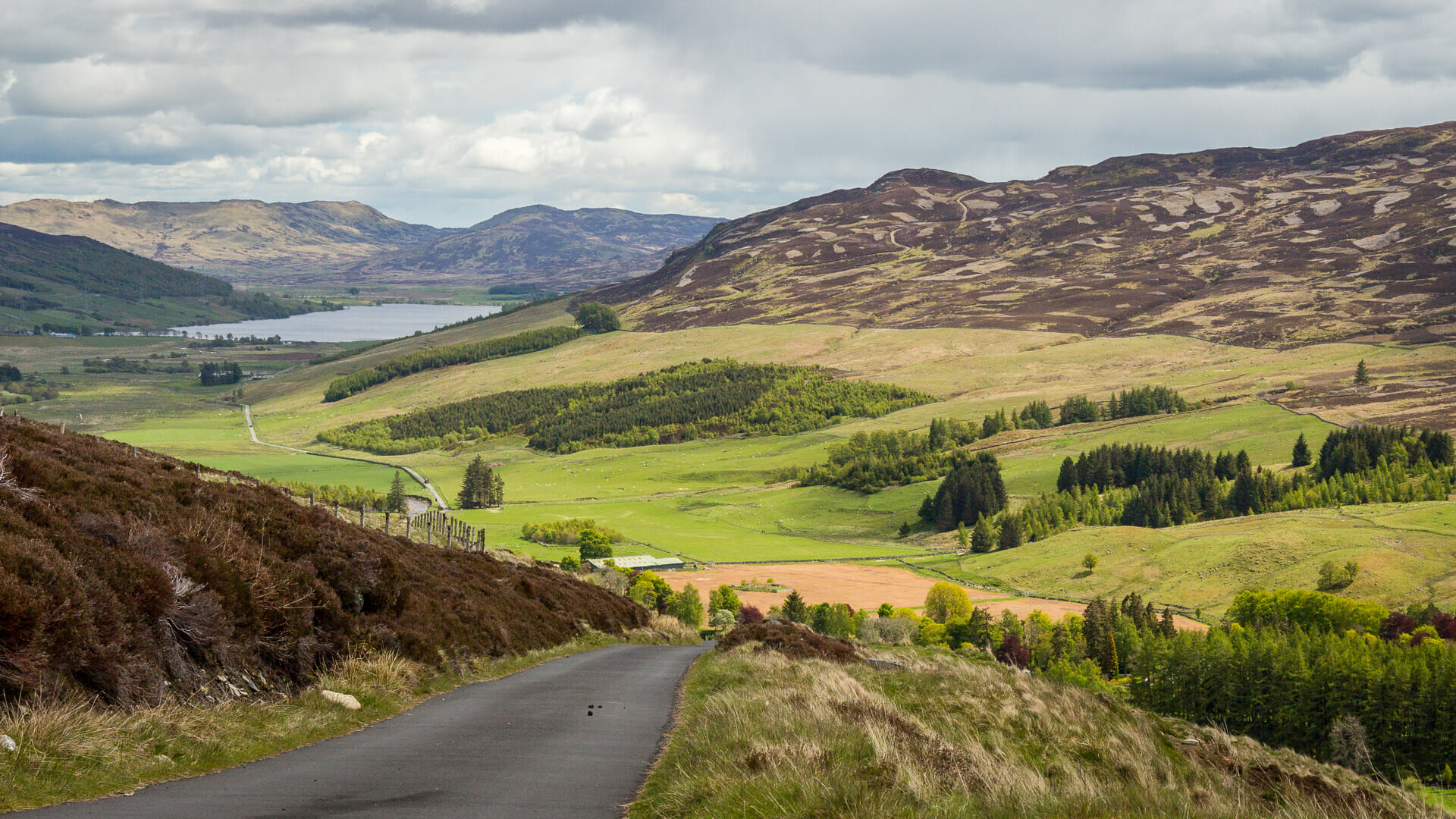
To the south, meanwhile, a barely-travelled but beautiful road leads into Glen Quaich. It begins just after you turn off the A827 towards the Crannog from Kenmore. Warning signs caution about the “Narrow Road” ahead. And indeed, the single-track road climbs steeply, with several hairpin bends. This would likely prove quite difficult for motorhomes.
But at the top you’ll find a lovely plateau, and on the way back down, this view opens up.
Personal note: a walk below the church down to the loch
We walked from The Square, the square in front of the church, towards the bridge, and turned off just before the house marked “The Orphanage”.
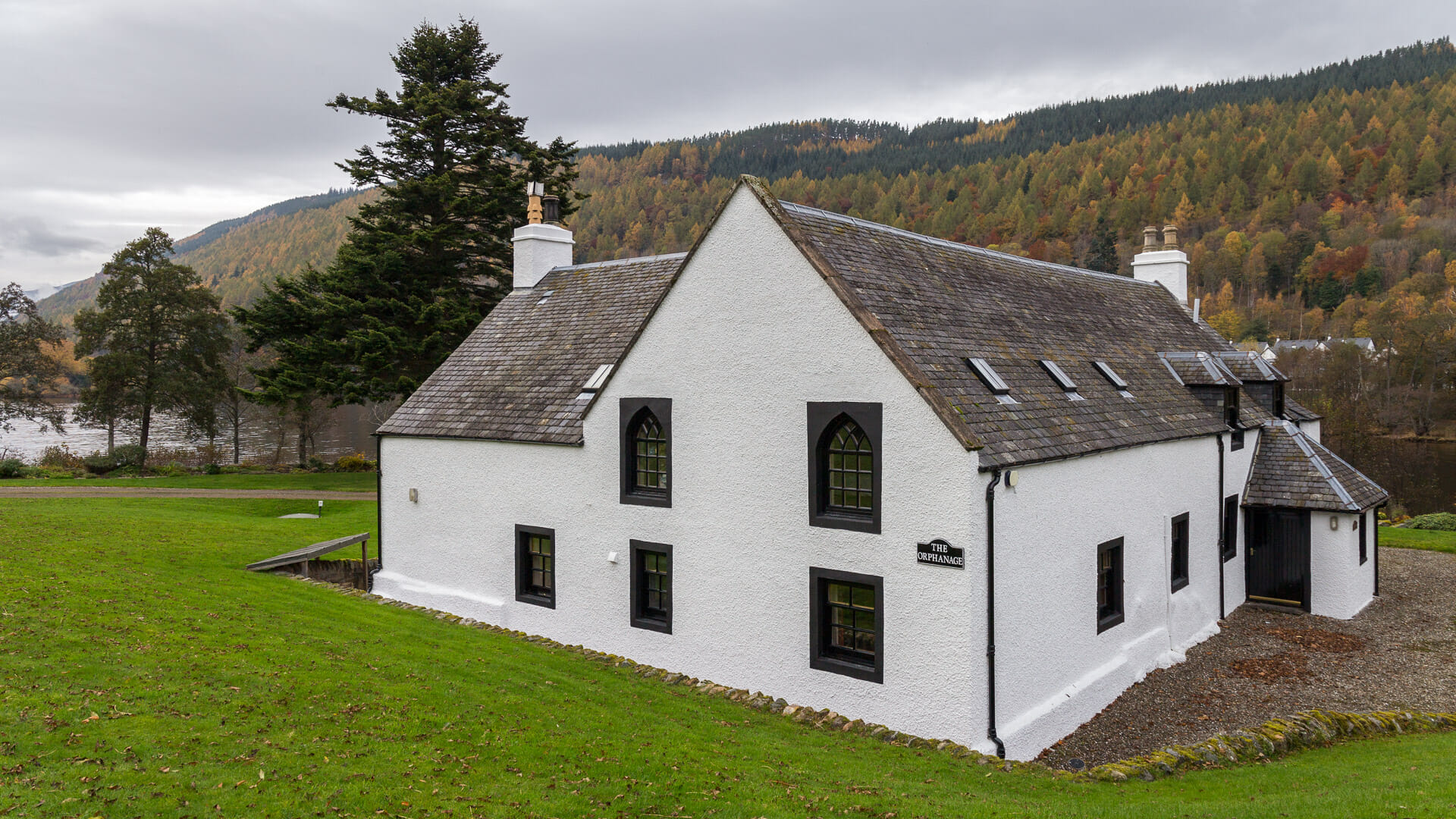
Until recently this must still have been a rentable cottage, and perhaps it still is – though I could find little information about it. In the past, however, it really was an orphanage, which around 1900 took in children from the surrounding area. Even surviving children from the Titanic disaster are said to have found shelter here.
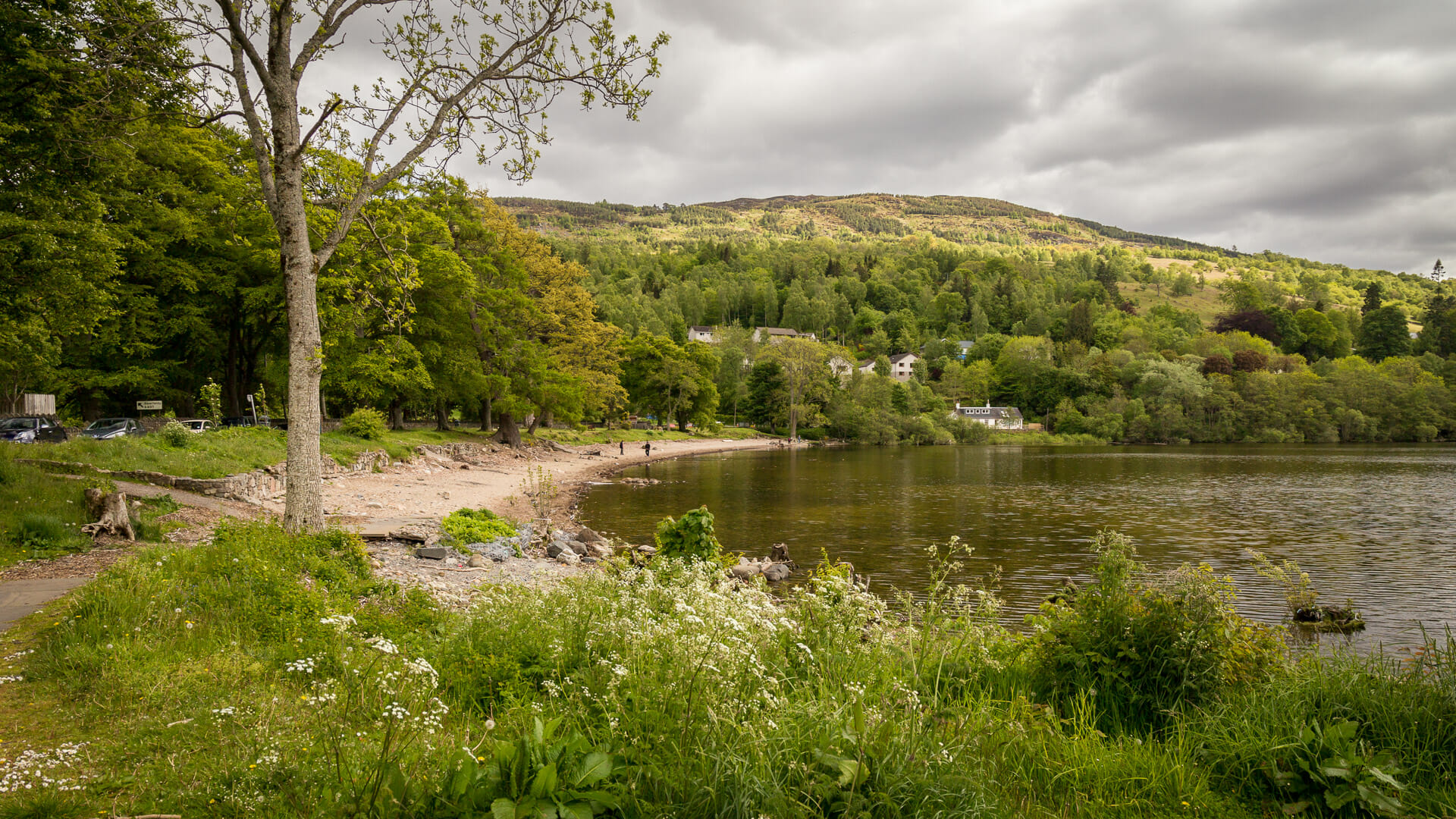
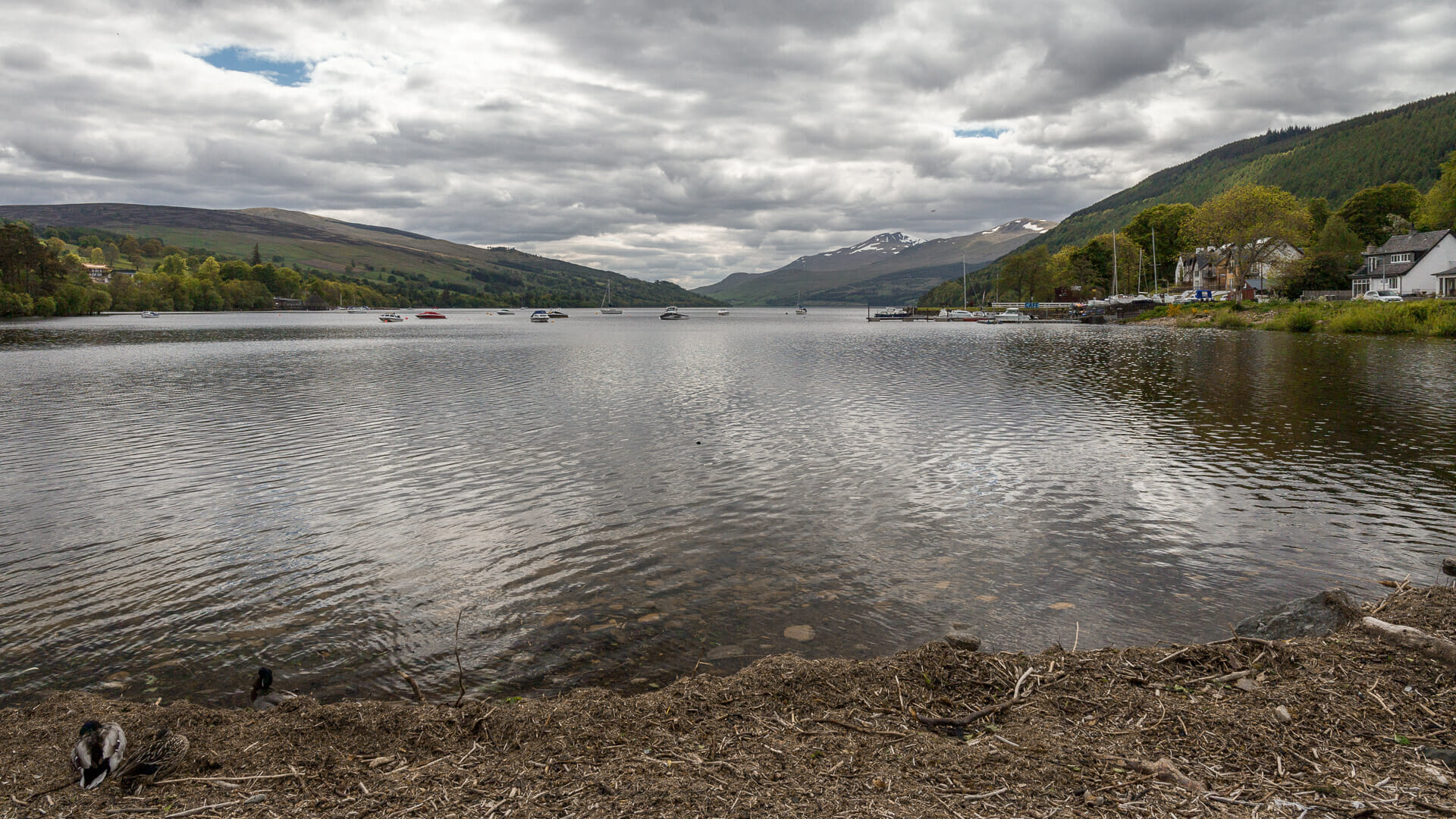
The path below the church offers views out over Loch Tay.
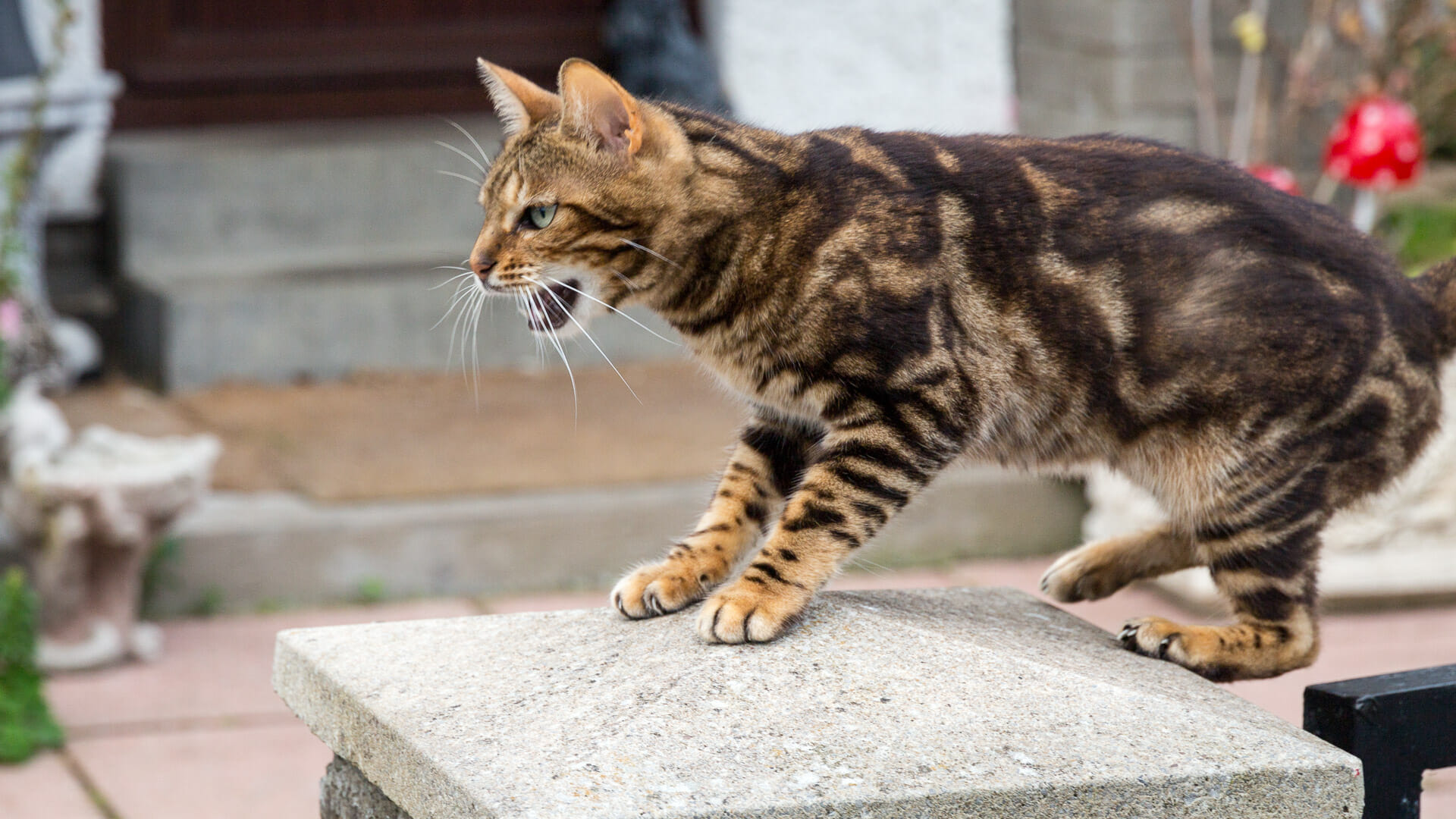
My personal highlight of the walk, though, was a Bengal cat who came to greet us. :)
Getting there
By sat nav: enter the postcode “PH15 2HH” into your navigation system.
Without sat nav: In the east, the A827 branches off from the large A9, which connects Edinburgh and Inverness, towards Ballinluig and Aberfeldy. Follow it all the way to Kenmore.
In the west, on the other hand, the A827 branches off from the A85, which connects Glen Coe with Callander and Stirling. Here drivers follow the signs to Killin and the Falls of Dochart, and after Killin either continue along the main road, or follow the signs for “Ardeonaig South Loch Tay” to take the southern route described above.