These stunning cliffs became a cold grave for many soldiers. On the Mull of Oa stands the American Monument. Here’s the story behind it, and why a visit there is well worth it.
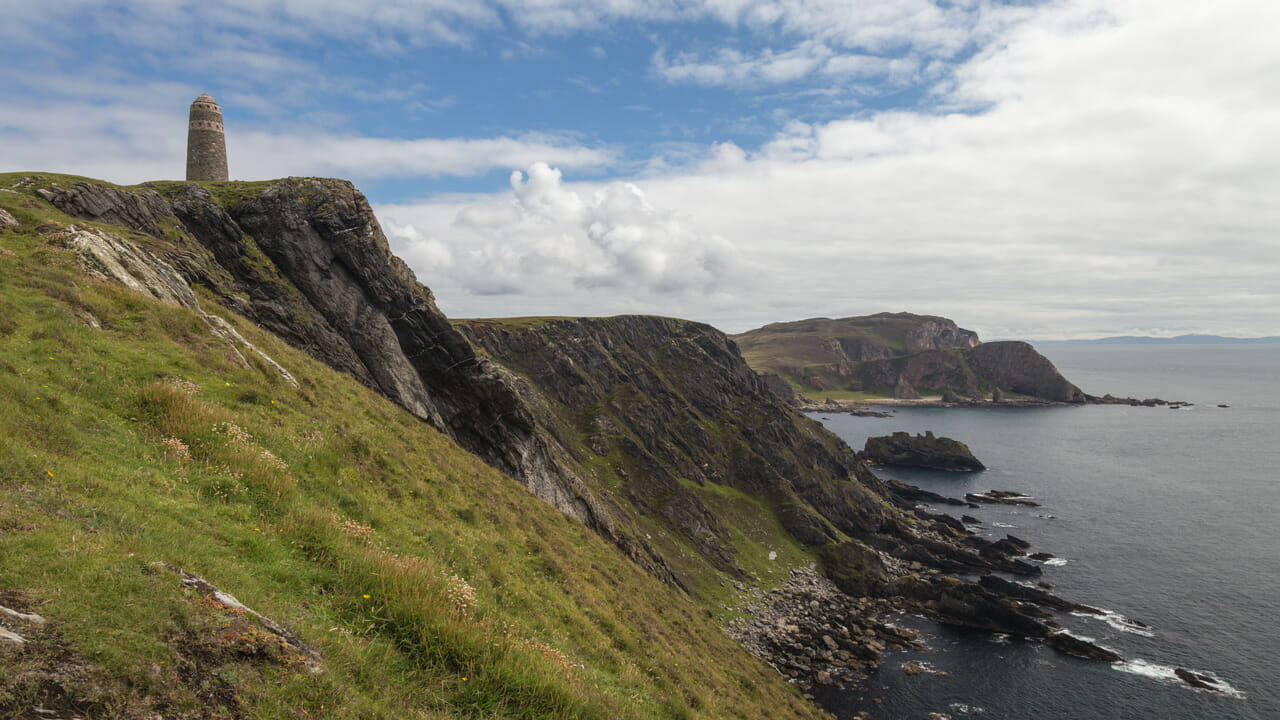
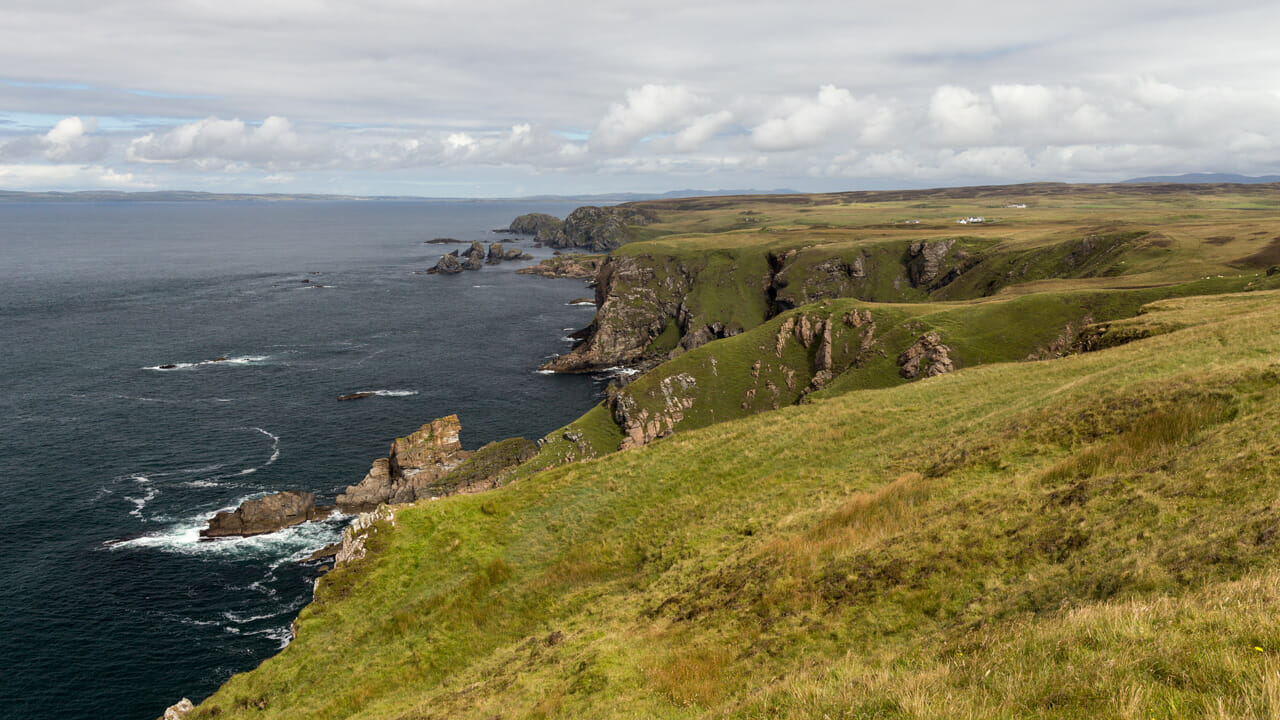
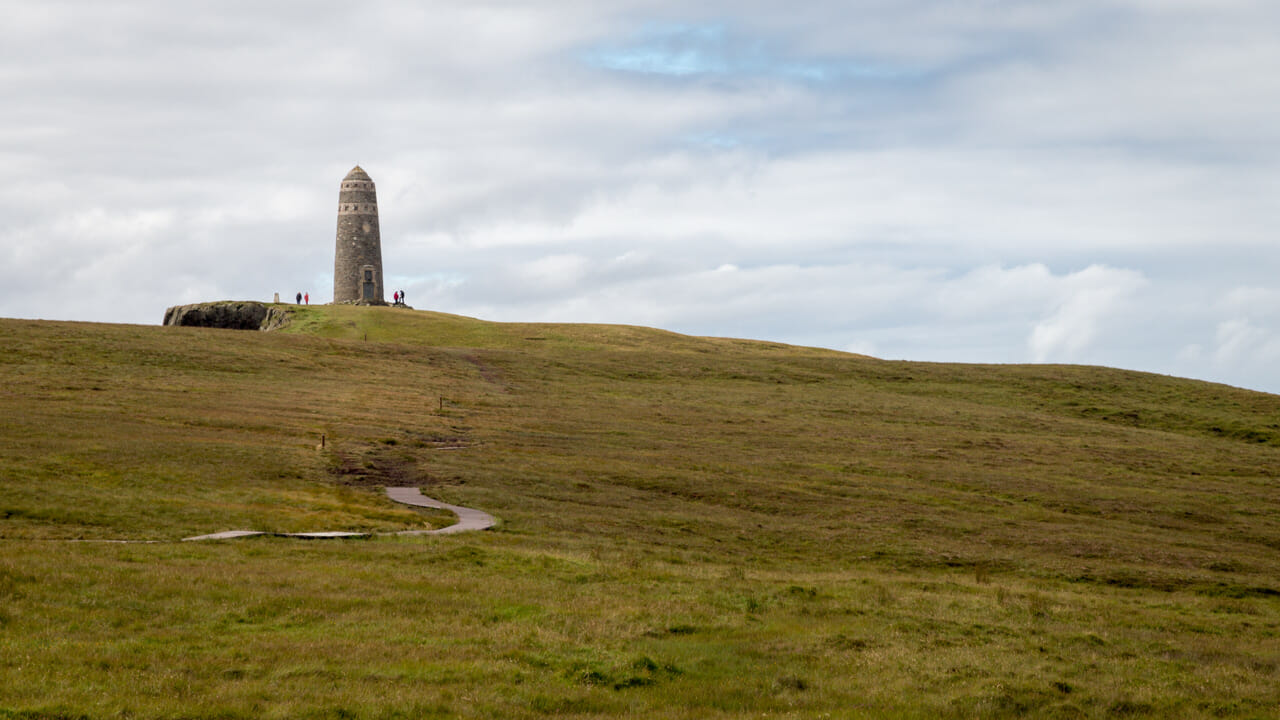
It’s the end of Islay – and what an end. At the Mull of Oa, the south-western tip of the Hebridean island, nature pulls out all the stops one last time: rugged cliffs plunge deep into the Atlantic, wild meadows lay a colourful carpet of flowers across the rock plateaus, eagles circle majestically in the air. And right in the middle of this untouched landscape, on one of the highest cliffs, stands a dark tower. This is the American Monument. It commemorates the tragic deaths of many soldiers. So what happened here?
As sad as it is, many of the historical ties between Germany and Scotland stem from the two calamitous world wars, and in this particular tragedy, a German submarine played the role of villain.
It was February 1918. The troopship Tuscania was carrying around 2,000 American soldiers from New York to France, most of them belonging to the 6th Battalion of the 20th Engineer Regiment. Not combat troops, but lumberjacks. They were meant to supply the front-line troops with timber, used for trenches and dugouts.
After the Tuscania had crossed the Atlantic, she entered the “North Channel”, the sea passage running between Ireland and Scotland. Slightly south of Islay, within sight of the Mull of Oa, the Tuscania met her fate: submarine U-77, under the command of Wilhelm Meyer. Around six in the evening, he had two torpedoes fired at the troopship, one struck its target, and the Tuscania began to sink.
Of the roughly 2,000 souls on board, most were saved, but around 230 of the men died. Not actually aboard the ship, though. Some died while trying to lower the lifeboats. Because of the ship’s list, the boats capsized and threw people into the icy sea. And almost a hundred died off the coast of Islay, thrown by the waves against the rocks of the Mull of Oa.
Small wonder, then, that a monument to the drowned stands here. The American Red Cross had the roughly ten-metre-high tower built here in 1920. Its shape is reminiscent of a lighthouse. But instead of a doorway, there’s a large plaque here.
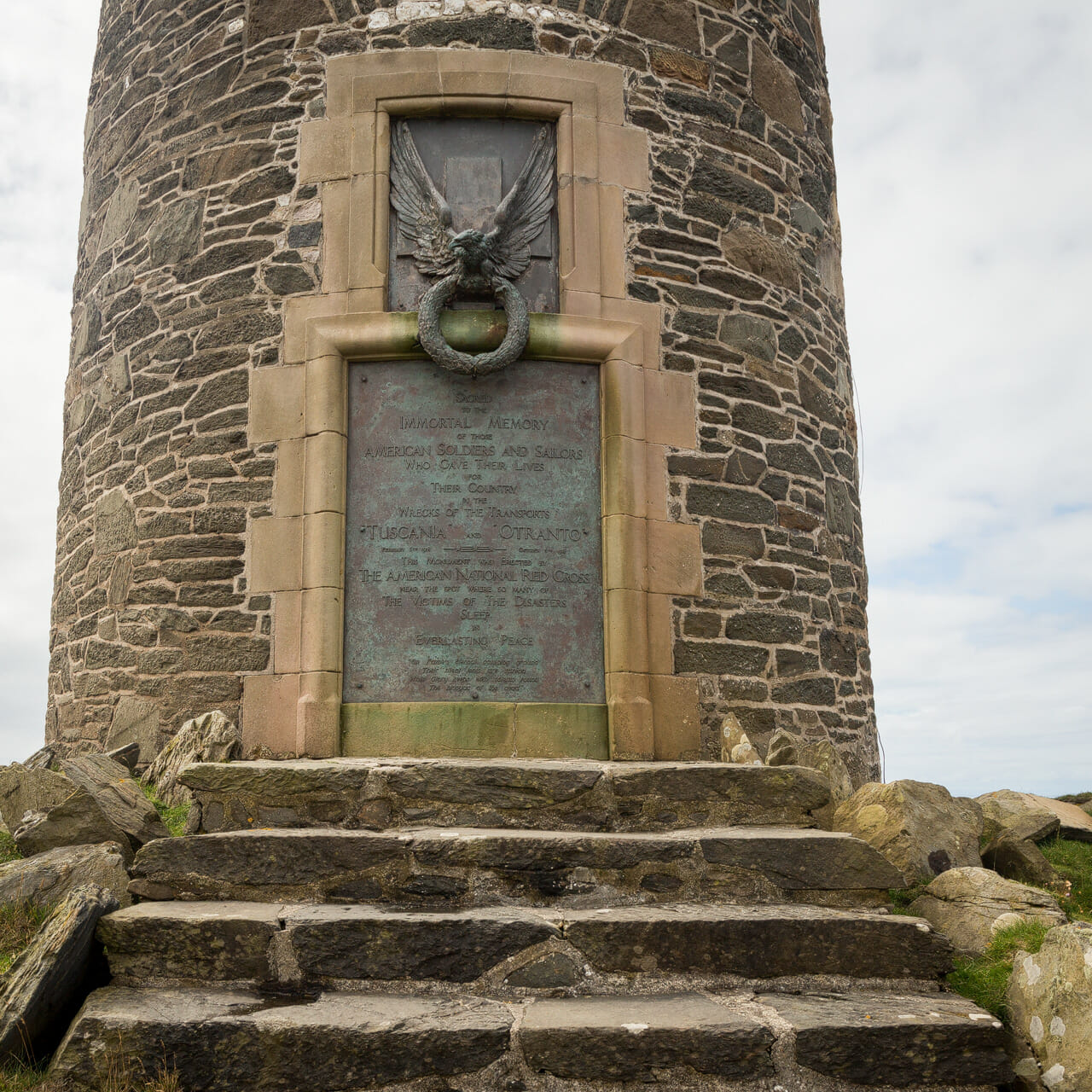
Alongside the Tuscania, the Otranto is also mentioned here, a ship that shared the Tuscania’s fate. She wasn’t sunk by enemy action, but collided with another ship, yet the loss of 351 American soldiers struck the USA hard once again – and in addition, 80 Britons also died. They lie in the cemetery near Machir Bay, where the disaster took place. But the plaque at the Mull of Oa also commemorates the dead of the Otranto.
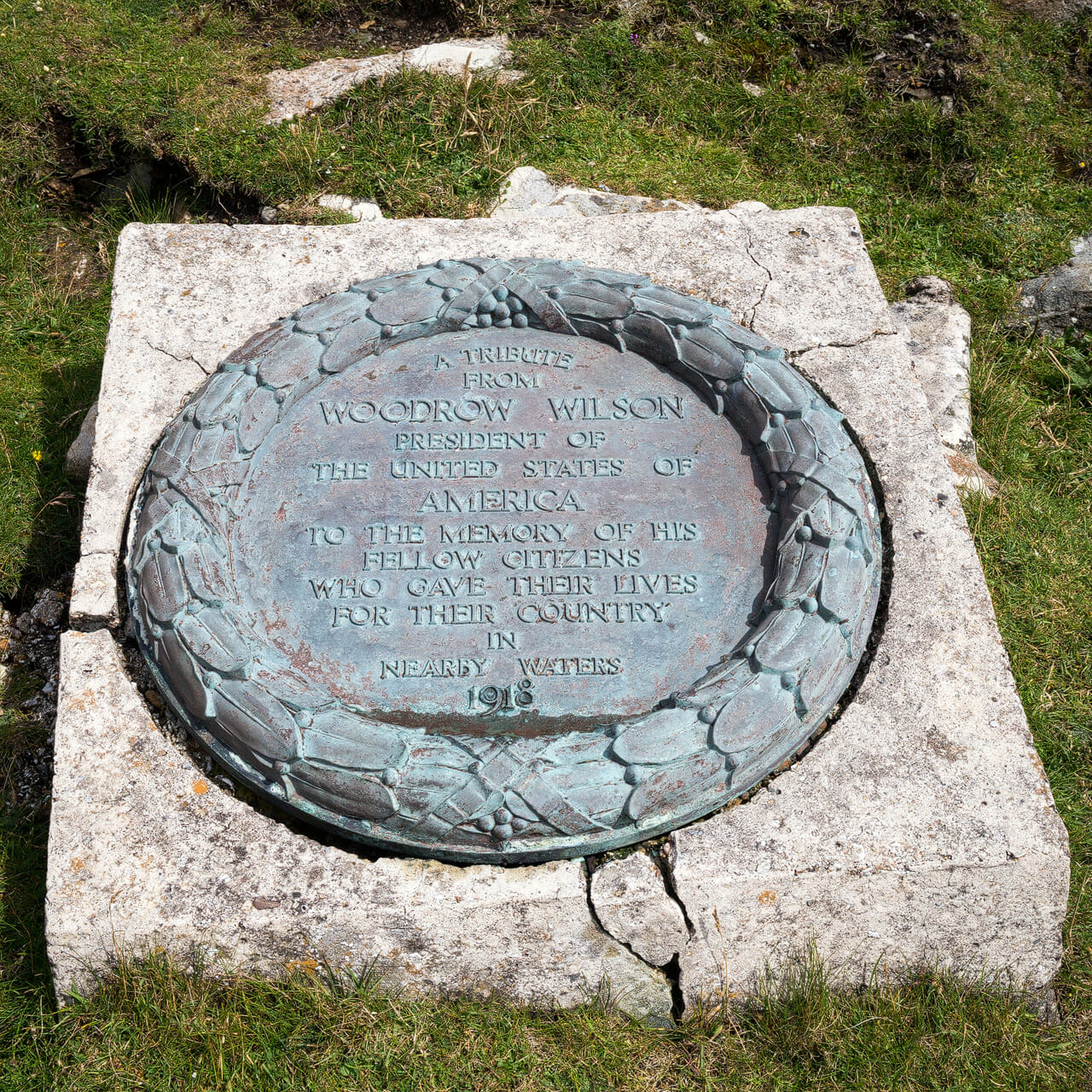
Fortunately, peaceful times prevail today. And so a trip to the monument through this stunning landscape can be great fun. At the monument itself, you won’t meet all that many people. Because despite the magnificent view here, not too many people take on the walk required to get there. From the car park to the monument is about 1.3 kilometres across boggy grassland – sturdy shoes are strongly advised.
Good to know: The name Mull of Oa
Mull of Oa comes from Gaelic and originally means Maol na h-Obha – roughly (!) pronounced “mool na ho-a”. Oa itself is usually just pronounced “oh”. Mull or maol denotes a headland, and that’s exactly what the south-western tip of the island is. Obha is the original name of the Oa peninsula.
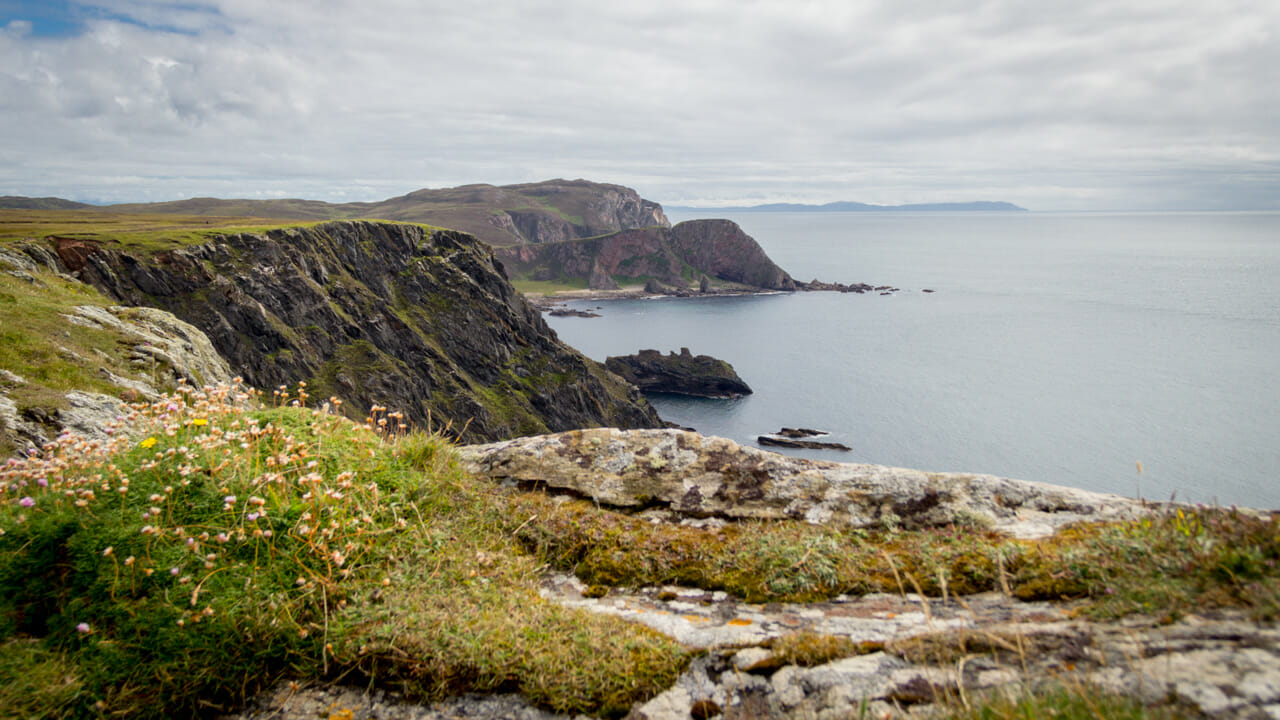
The Oa peninsula is only very sparsely populated today, but around 1850 there were still roughly 800 people living here. Most of them were deported to Canada during the Highland Clearances.
Tip: Bring binoculars for the birds
If you can spare a bit of time, a walk around the Mull of Oa is well worth it. The Walkhighlands website describes the roughly 3.5-kilometre route here.
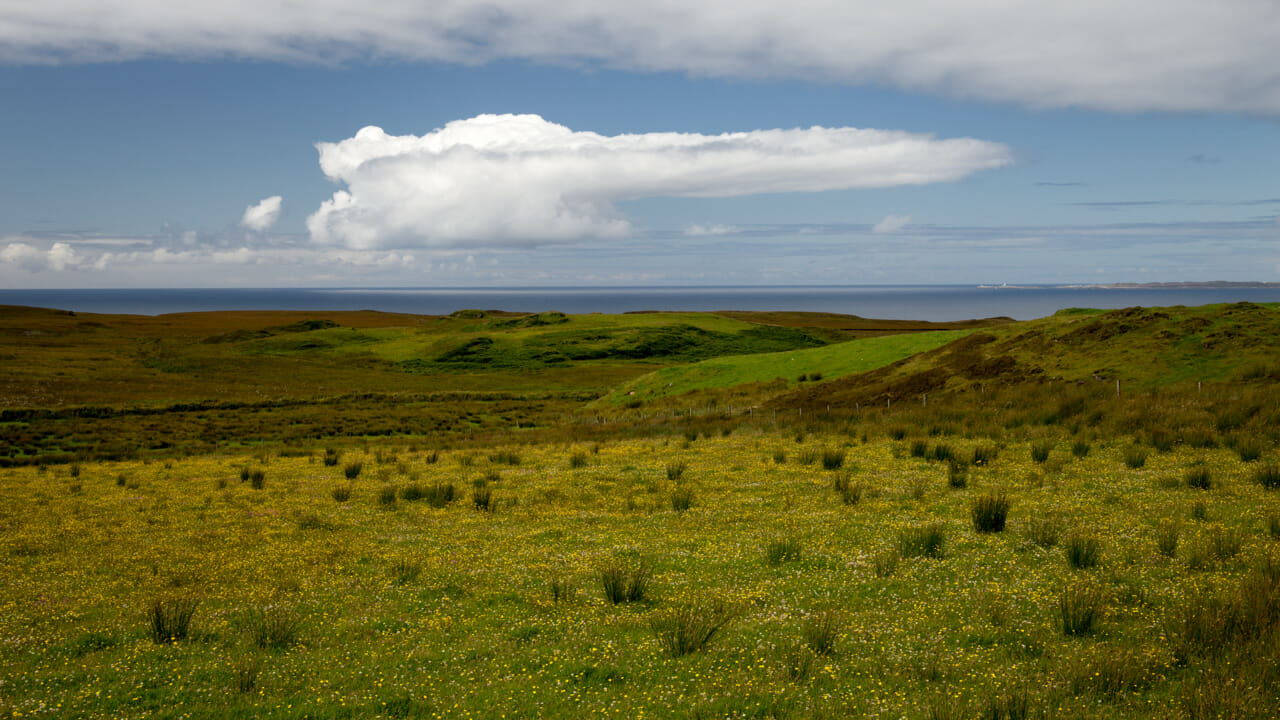
The car park belongs to the Royal Society for the Protection of Birds (RSPB), who have set up a reserve here. So walkers can also spot some interesting birds, right up to circling golden eagles. Binoculars are recommended, then, for watching the wildlife.
Getting there:
With sat nav: “PA42 7AU” gets you nearby, though it actually aims for Kinnabus Farm. Just make sure that shortly before that you stay on the road to the Mull of Oa and don’t turn left.
Without sat nav: coming from the Port Ellen ferry terminal, you pass the beach and then turn left towards Port Ellen Maltings. The road runs between white warehouses. Stay on this road, as there are already signs to the Mull of Oa. You just need to make sure you don’t accidentally take the road to Kintra. Keep going along the winding single-track road until you reach the RSPB car park. Park here and cover the rest on foot.