Want to book a rental car in Scotland? Here are the key experiences and tips, from reserving and picking up to dropping off.
Contents
» Booking
» Vehicle category
» Costs
» Special case: ferries?
» Picking up
» Dropping off
» Car rental comparison
There’s hardly a better way to explore Scotland than with a rental car. Sure, coaches and trains run too, but with a car you can reach remote spots, travel faster, and choose your own breaks and stops. A rental car is also already set up for Scottish roads, meaning the steering wheel is on the right, the gearstick on the left, and so on.
This article explains what to look out for when booking a rental car.
Booking a rental car: best done before you leave home
My tip: reserve the car while planning your trip from home. That way you not only have time to compare rental companies calmly, but with most providers you can save money by paying online in advance. In my last spot checks, I found a difference of around 60 euros between paying immediately and paying at or after pick-up. That’s worth it, and you can even wait calmly for a favourable exchange rate.
Since Brexit and Covid, though, the cost of British rental cars has sadly risen significantly.
To book a rental car in Scotland, you’ll usually need a credit card and a driving licence valid in the EU – not all police officers there can make much of the old grey or pink paper licence. Note: the credit card you book with must also be the card you present later when picking up the vehicle. There are a few exceptions that also allow payment by direct debit or PayPal – Sunnycars was one of these, as of my last research.
The airport is the most convenient rental car station. You might save a little money with a small car picked up from a small local provider, but you’ll first have to get there after landing. It’s worth saving yourself that stress, and the cost of public transport, at the start and end of your holiday.
Minimum age: the minimum age at every provider except Europcar is 25. Europcar offers the option from age 22 with a surcharge. Here’s a quick overview of the minimum ages:
- 22 for categories A, B, C and D;
- 23 for categories E, F, G, H, I, K;
- 25 for category J;
Surcharge for all drivers between 22 and 25: around 30 pounds per driver per day.
(The note on minimum age and categories was kindly sent to me by Ms Ruck from the TUI ReiseCenter in Radolfzell – many thanks!)
Vehicle category: what suits Scotland?
That naturally depends on the number of people travelling and the distances you plan to cover. For shorter day trips from a cottage, without luggage on board, small cars are more agile and easier to manage on single track roads. A smaller car simply takes up less space on the road. On top of that, small cars are considerably cheaper and use less fuel.
But if you value comfort, drive a lot between accommodations, and cover long distances, you’ll prefer a bigger car. On our trips at least, the car ends up doubling as a mobile base for excursions and photo shoots:
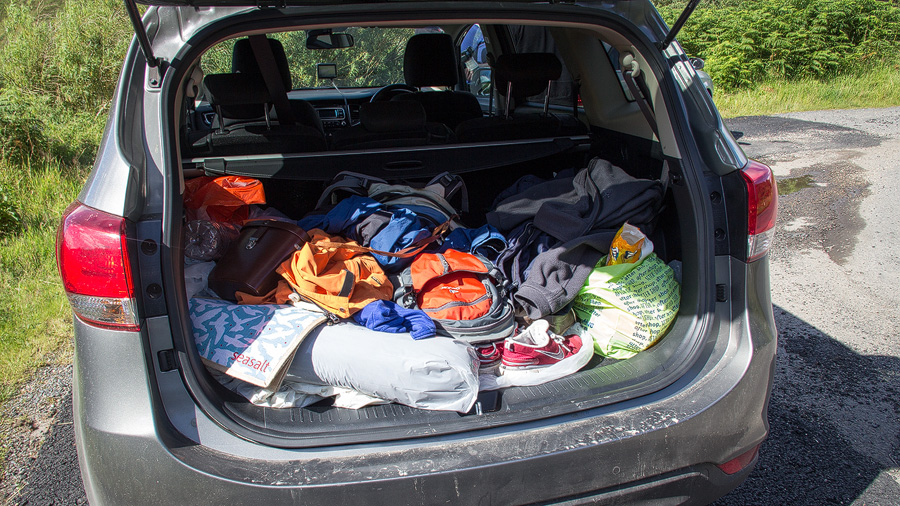
Bigger cars also have a larger fuel tank, and so a longer range, which gives a reassuring feeling especially in the Scottish Highlands. Downside: with a big car, things often get tight on the small roads.
Rental companies offer various classes. It’s worth paying attention not just to size, but also to visibility. An Opel Astra, for example, is a lovely car for the German autobahn – flat and sleek. But on winding single track roads, the small windows and wide A-pillars noticeably hurt visibility.
As for manual or automatic: since the gearstick is on the left and first gear unusually points away from you, many people don’t find it so easy to get used to a manual gearbox. That’s why many “Europeans” prefer an automatic – one less thing to think about. Personally, though, I still prefer a manual even in Scotland, since I use engine braking a lot. So it really comes down to: who’s driving, and how quickly do they get used to the gearbox.
And then there’s the equipment: air conditioning or not? Petrol or diesel? Two doors or four. There’s no one-size-fits-all tip here – it’s down to personal taste. I always like air conditioning, even though it rarely gets very hot in Scotland. To be safe, I usually go for petrol, and I like four doors, since I often put my tripod on the back seat and can pull it out sideways that way.
Tip: if you want to identify a car type at a glance, look at the Acriss codes. In just four letters, they tell you exactly what kind of vehicle you’re dealing with. There’s an Acriss code guide as a PDF.
Price calculation: what extra costs come with a rental car?
Besides the base price for the vehicle class, additional costs can come up (all costs are approximate examples and will of course vary by provider).
Sample rough rental car calculation:
| Item | approx. (!) cost per day |
|---|---|
| Rental car | from 35 to 110 euros |
| pay later instead of paying immediately | 5-10 euros |
| Automatic instead of manual | 15-45 euros |
| Excess reduction down to zero | 20-35 euros |
| Additional driver | 20-30 euros |
| Sat nav | 15 euros |
| Child seat | 15 euros |
Also worth noting:
- Extra days outside the standard weekly rhythm – check, as this can be more expensive
- Fuel costs en route and at drop-off
On the subject of rental car insurance, most rental companies will also try to sell you a package on-site that reduces the excess for an accident to zero. For drivers who feel a bit uneasy about unfamiliar left-hand driving and like to travel worry-free, this can definitely be worth it.
Tip: if you have an automobile club membership (such as ADAC in Germany or similar clubs elsewhere), you may be able to book with various providers through their website. The advantage: insurance and additional drivers are often included through the membership.
However: the excess usually doesn’t apply to the vehicle as a whole, but to each individual claim. Reader Denis Schiller wrote about this:
I’m a car rental operator myself, and I can only recommend taking out the best insurance with as little excess as possible. […] An excess of around 300 euros per claim is still manageable … but in most cases that applies PER claim, not per car. So one scraped rim on the left and one hit-and-run parking bump on the right, and you’re quickly at 600 euros … and rims in particular get scraped easily when you’re not used to a right-hand-drive car.
One reader also pointed out that she always has tyre and glass damage fully covered on Scottish roads.
Also important is the fuel policy: the standard is “full-to-full”. This means the tank is full when you take the car over, and you must return it full too. Here as well, most rental companies will try to negotiate their own fuel arrangement, claiming they can offer cheaper fuel. That said, I don’t know anyone who recommends anything other than the “full-to-full” policy. (If you see it differently, please leave a comment below.)
I find the rental prices for a sat nav completely baffling. At around 220 euros for two weeks in some cases, you could just buy a good device yourself and bring it in your hand luggage. While you’re at it, make sure it supports Mapcodes, which I also use as destination inputs on this site. (More on Mapcodes, in German for now).
The question is whether you need a sat nav at all, or whether a map – or your smartphone – is enough given how clear the Highland roads are. Personally, I’m a sat nav fan and wouldn’t want to be without one. I would never rent one, though.
One more thing about additional drivers: no one should drive who hasn’t also been registered with the rental company. If that person has an accident, nothing will be insured. Insurance cover in Great Britain, unlike in many other countries, applies to the driver rather than the vehicle.
Ferries: is the rental car insured on board ships too?
A question that genuinely comes up again and again: if I book a rental car in Scotland, is it also insured on the ferry to the islands? Some of the uncertainty around this comes from the rather unclear answers and terms given by rental companies.
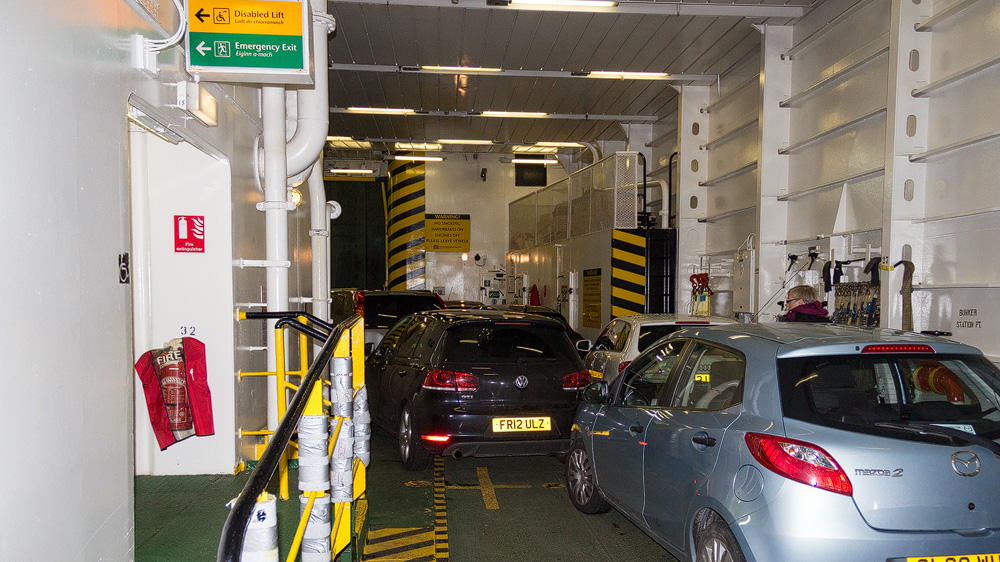
I contacted a number of well-known car rental companies to find out whether their vehicles are also insured on ferries within Scotland.
Result: in most cases, yes – as long as you’re not, say, crossing to Ireland. I’ve collected the short record of my enquiries and the answers from several companies in the article “Are rental cars in Scotland insured on ferries?” (in German for now).
Picking up the rental car: check carefully
The most convenient option, of course, is to pick up the rental car right at the airport. The service desks are usually still inside the airport building – at larger airports, often in their own small hall. There you first collect the key and sort out the paperwork. It’s worth budgeting an hour for the wait and the briefing, just in case.
Note: whatever you’ve booked, most rental company staff will point out the insurance and extra options once more, since all of that brings in more money after all.
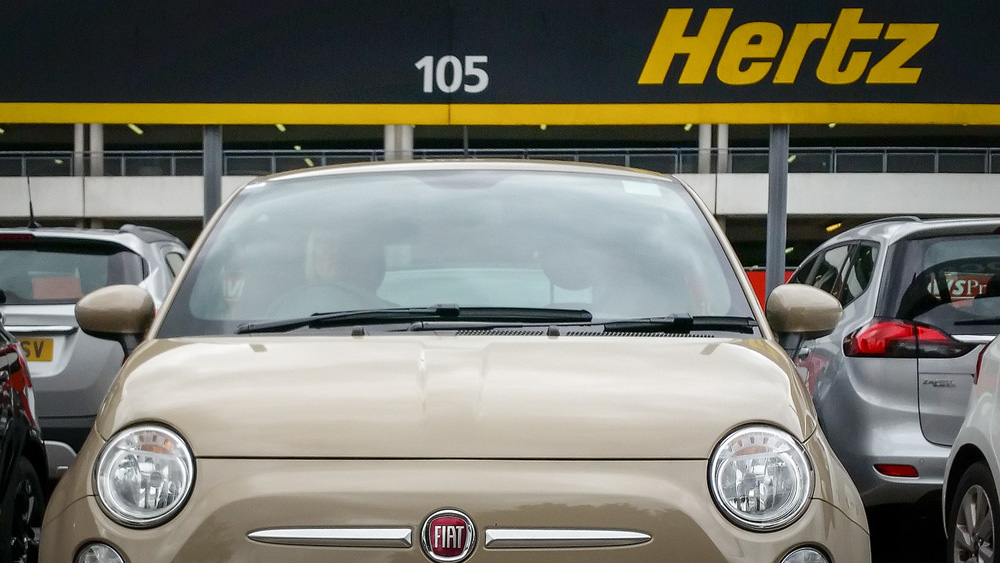
When handing over the car, the rental company staff member gives you a sheet listing existing damage. They’ll ask you to check the car yourself to make sure every scratch and dent really is noted on the sheet. You should do this very thoroughly.
In my experience, the following areas of the rental car are especially worth checking:
- Tyres and rims for scratches, cracks and holes
- Wheel arches – especially the edges
- Wing mirrors for scratches and cracks in the plastic
- Door sills and pillars – damage is often hidden on the inside edges
- Boot – pay particular attention to the loading edge
Very important: also open every door and the boot. Dents and scratches on the inside of the door frames are common, for instance, since careless passengers often let the seatbelt buckle bang against them. In the worst case, the belt doesn’t retract properly and someone still tries to shut the door – that leaves a deep dent. This is exactly the kind of thing that gets overlooked at handover too. Also make sure to check the tyres very carefully for cuts and bulges.
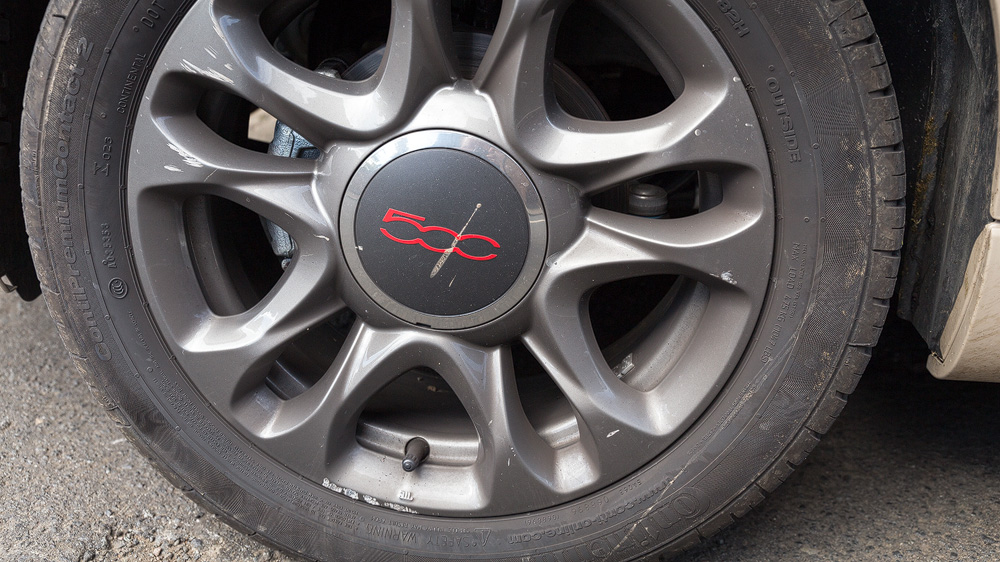
It’s best to photograph the whole rental car as thoroughly as you can. If you arrive late in the evening and it’s already too dark, you may be allowed to report any new damage up until the following midday. Don’t forget to do this under any circumstances – anything discovered after that, you’ll have to pay for!
Returning the rental car: allow enough time
The holiday’s over, the flight is waiting … there’s usually a bit of a rush right at the end. Still, you should allow enough time for the drop-off. I’ve experienced queues in the return yard, and topping up the fuel at the end often takes more time than you’d expect too, since the petrol stations near Edinburgh and Glasgow airports aren’t especially conveniently placed. Even so, they’re often the best choice, since under most rental agreements the car may only be driven up to 15 kilometres after refuelling.
Tip: to reach the petrol station at Glasgow Airport, you need to drive past the rental car drop-off first – you’ll spot it at the next roundabout. You then need to loop around the block once and head back to the drop-off. (Mapcode for the petrol station: 3K.3NQG; Mapcode for the rental car drop-off: 3K.3NS7 – more on Mapcodes, in German for now)
It’s very similar in Edinburgh. The petrol station there is usually on the wrong side of the main road to the airport. So here too you have to make a U-turn, drive back, fill up, and turn around again. (Mapcode for the petrol station: 21.YZYB; Mapcode for the rental car drop-off: 22.YFB5 – more on Mapcodes, in German for now)
At handover, a staff member will inspect the vehicle closely. If they find damage, they’ll charge the driver on the spot. If that happens, you’ll unfortunately have to pay, teeth gritted. It can also have a longer aftermath, though, as my experience with Europcar shows (in German for now).
If there’s nothing to complain about, you’ll be handed a bit more paperwork, and that’s it. You’re free to head home.
Car rental comparison
For an overview, we recommend comparing offers directly with international rental car comparison sites and providers active in the UK, such as Rentalcars.com, DoYouSpain or the major agencies’ own websites.
I hope these tips and info on rental cars in Scotland are helpful.
If you have any comments or particular experiences to share, please let me know in the comments.
