Green-shimmering algae on cold stone walls, an underground waterfall, a vast chamber opening onto a sandy bay – Smoo Cave is a stunning natural wonder in the north of Scotland.
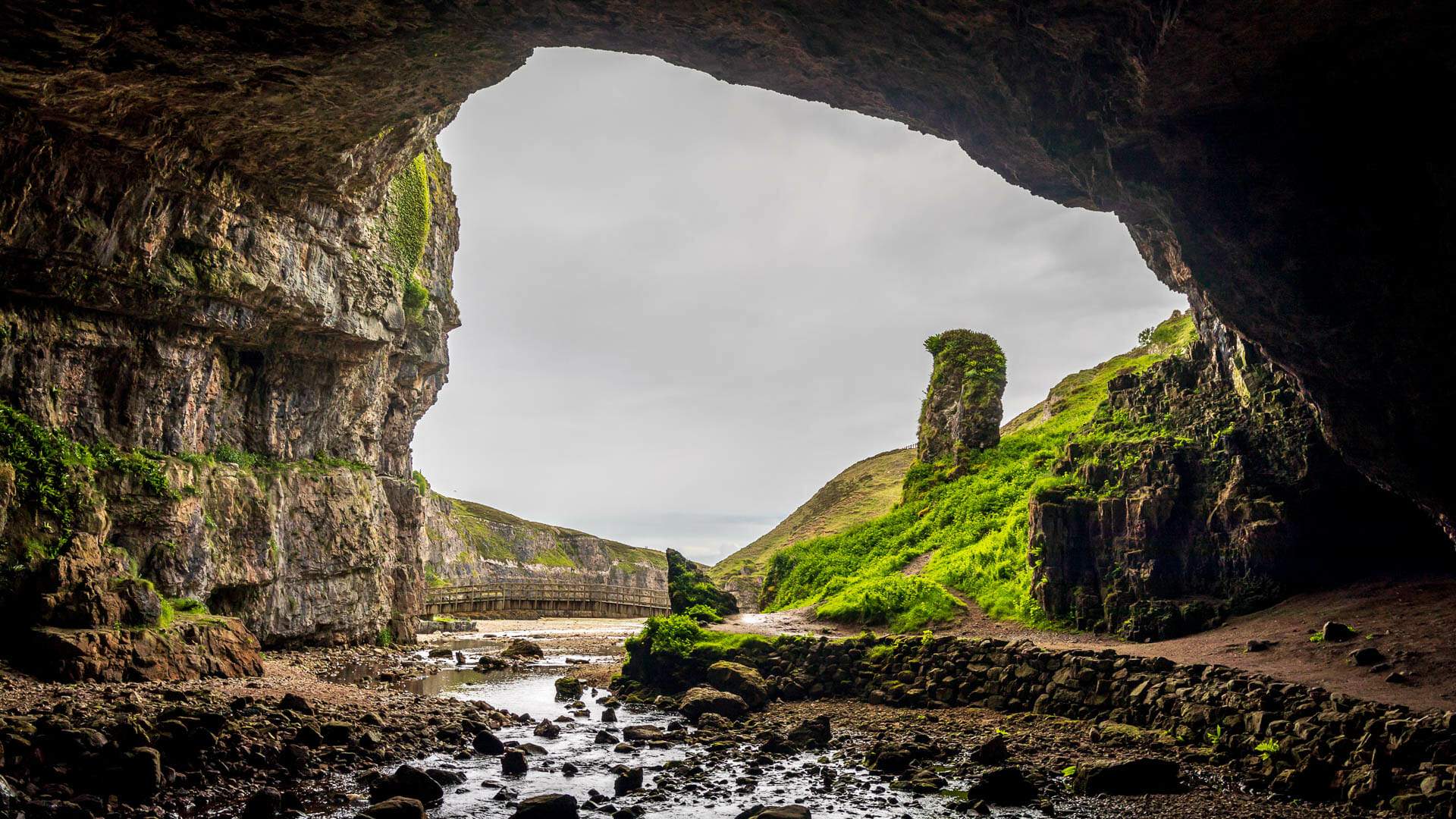
Water shaped this remarkable cave. Over thousands of years, the sea dug deep into the rock, while at the same time a river carved its own underground path from inland. Between them, these forces of nature created three chambers.
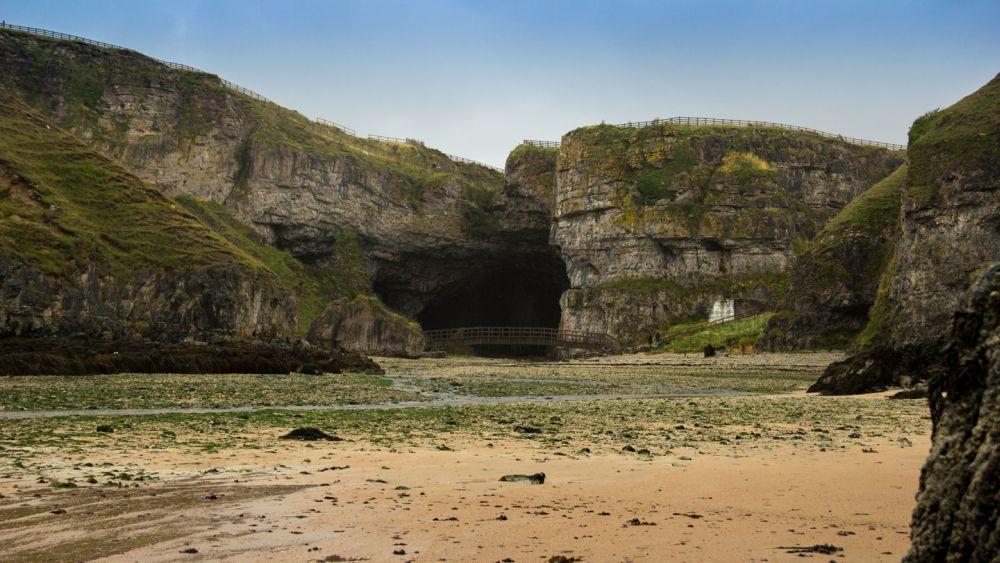
The first is a gigantic stone dome: the entrance rises to a height of over 15 metres, and the cave reaches 60 metres deep into the rock, up to 40 metres wide.
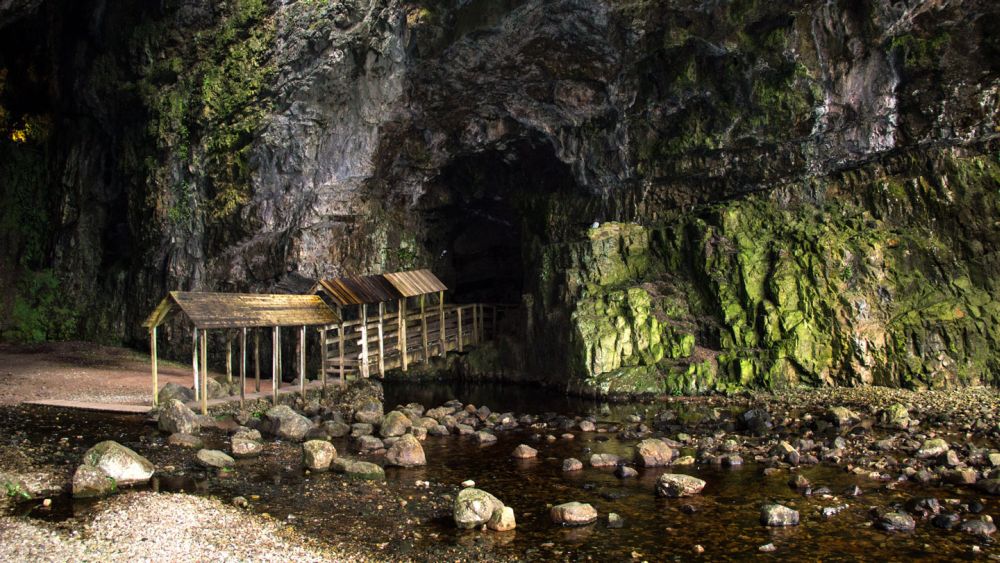
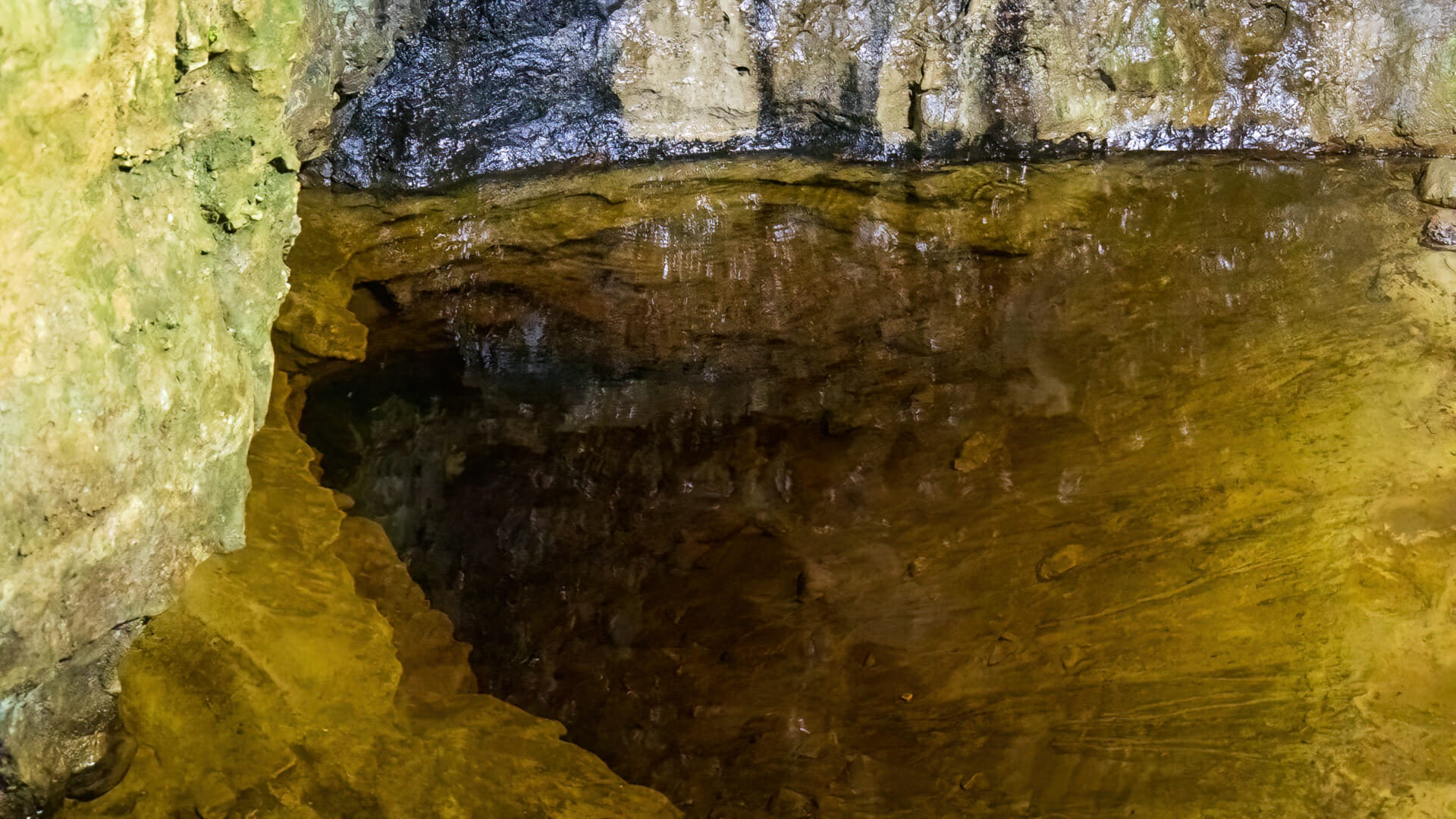
Nature, as architect, has clearly gone to great lengths with the interior design. The peat-brown river carves its path through the middle of the great chamber, its walls shimmering emerald green with algae growth. In places, the cave’s operators have further emphasised this play of colour with artificial lighting.
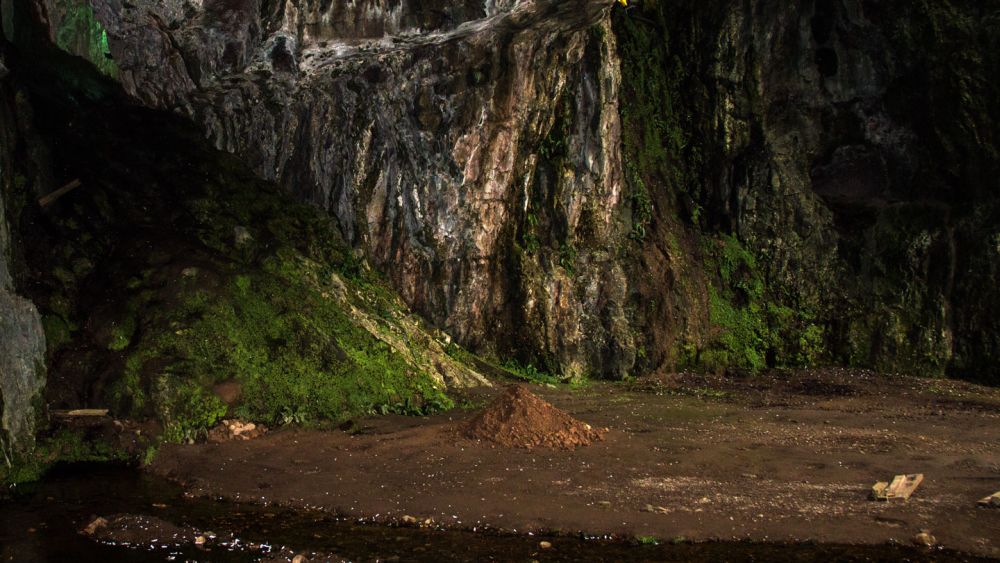
A covered wooden walkway and a tunnel bring visitors onto a wooden platform in the second chamber. It’s filled with water to a depth of eight metres, and here the river comes crashing down through a sinkhole from above.
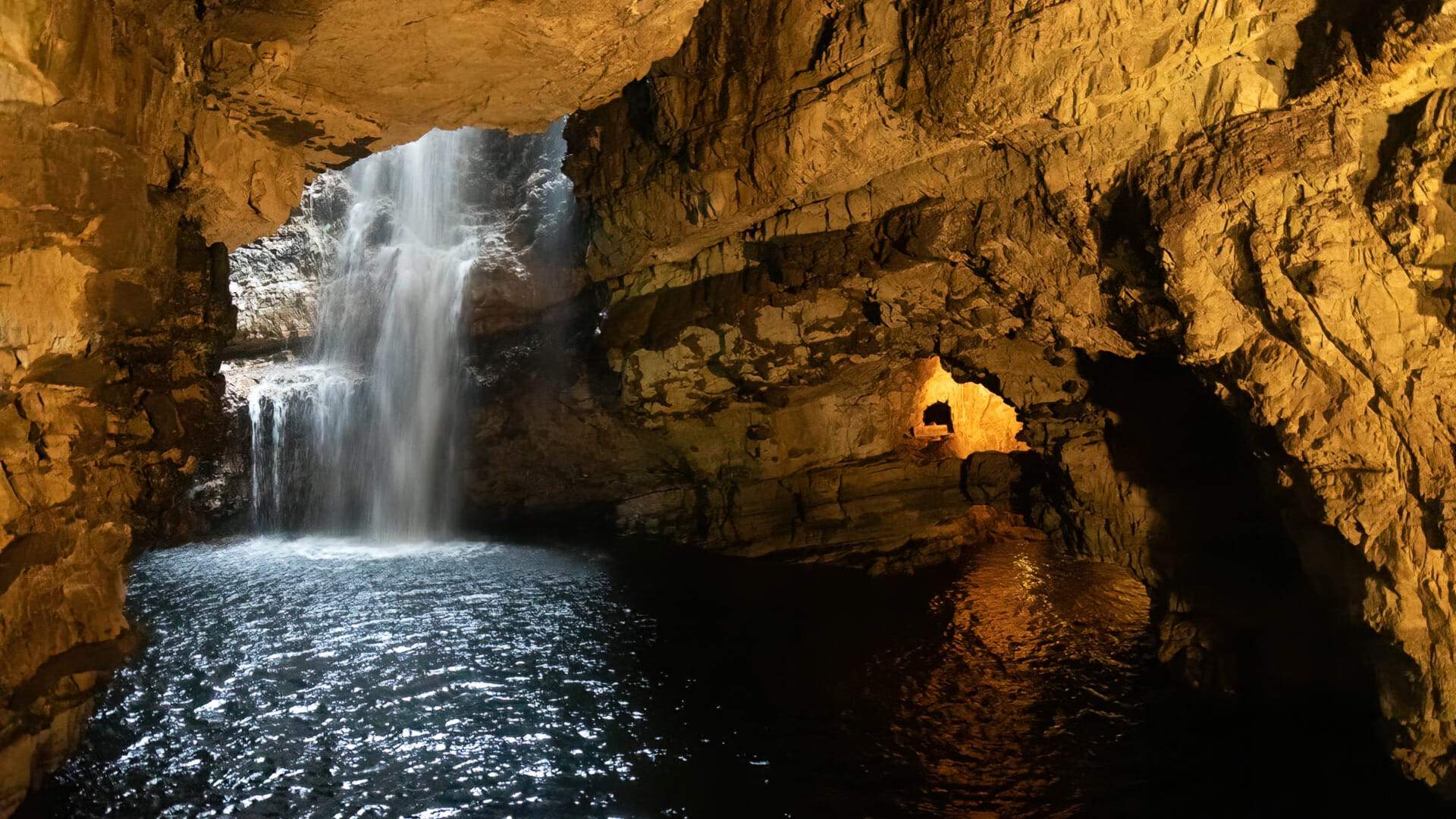
The third chamber can only be reached by inflatable boat – and only when the weather cooperates. If there’s heavy rain, the water level rises and the boat trip would become a genuinely dangerous undertaking.
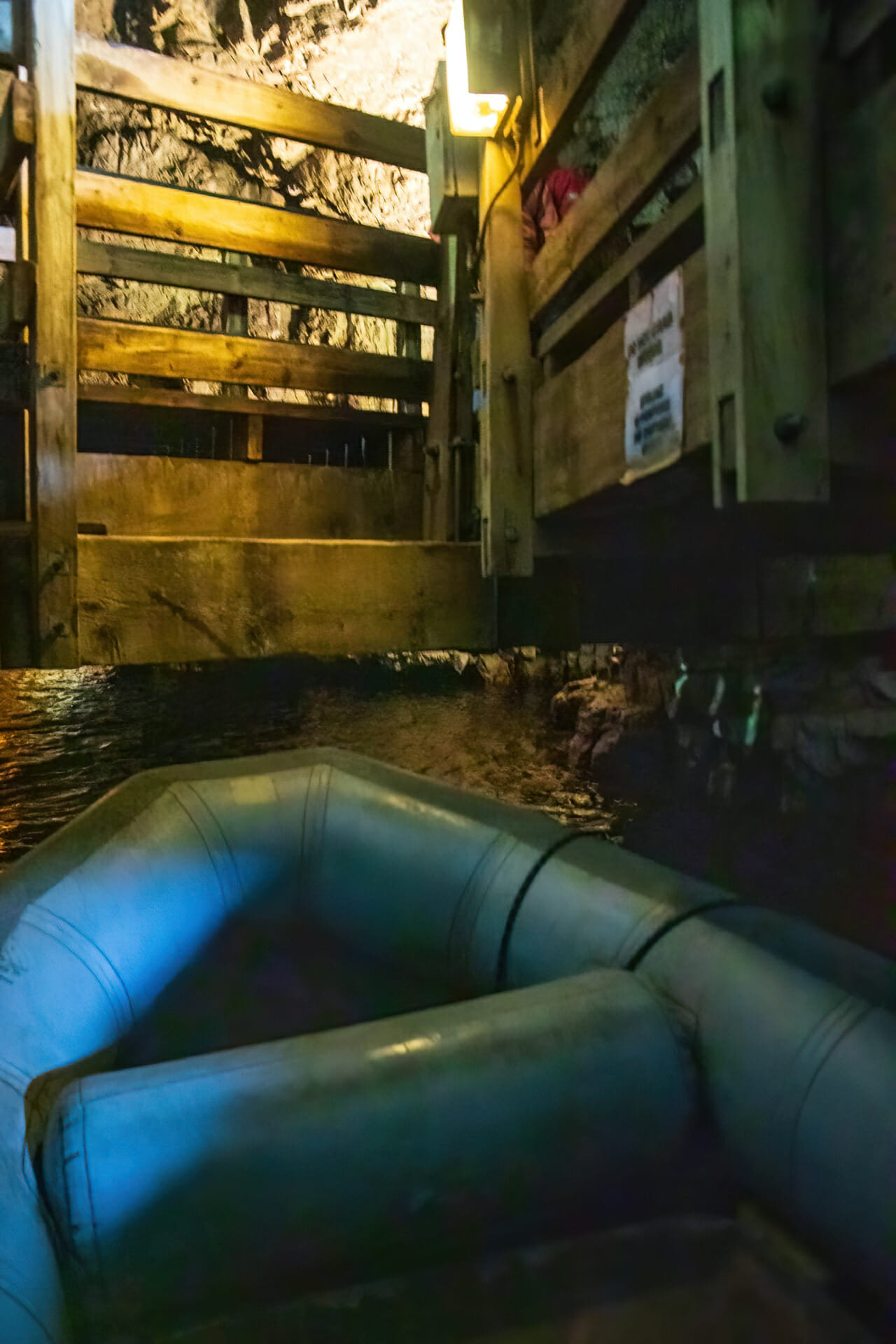
This journey into the depths of the cave is genuinely interesting, though, since it’s led by qualified guides who explain, for instance, the significance of the sinkhole at the far end of the cave – and plenty more besides.
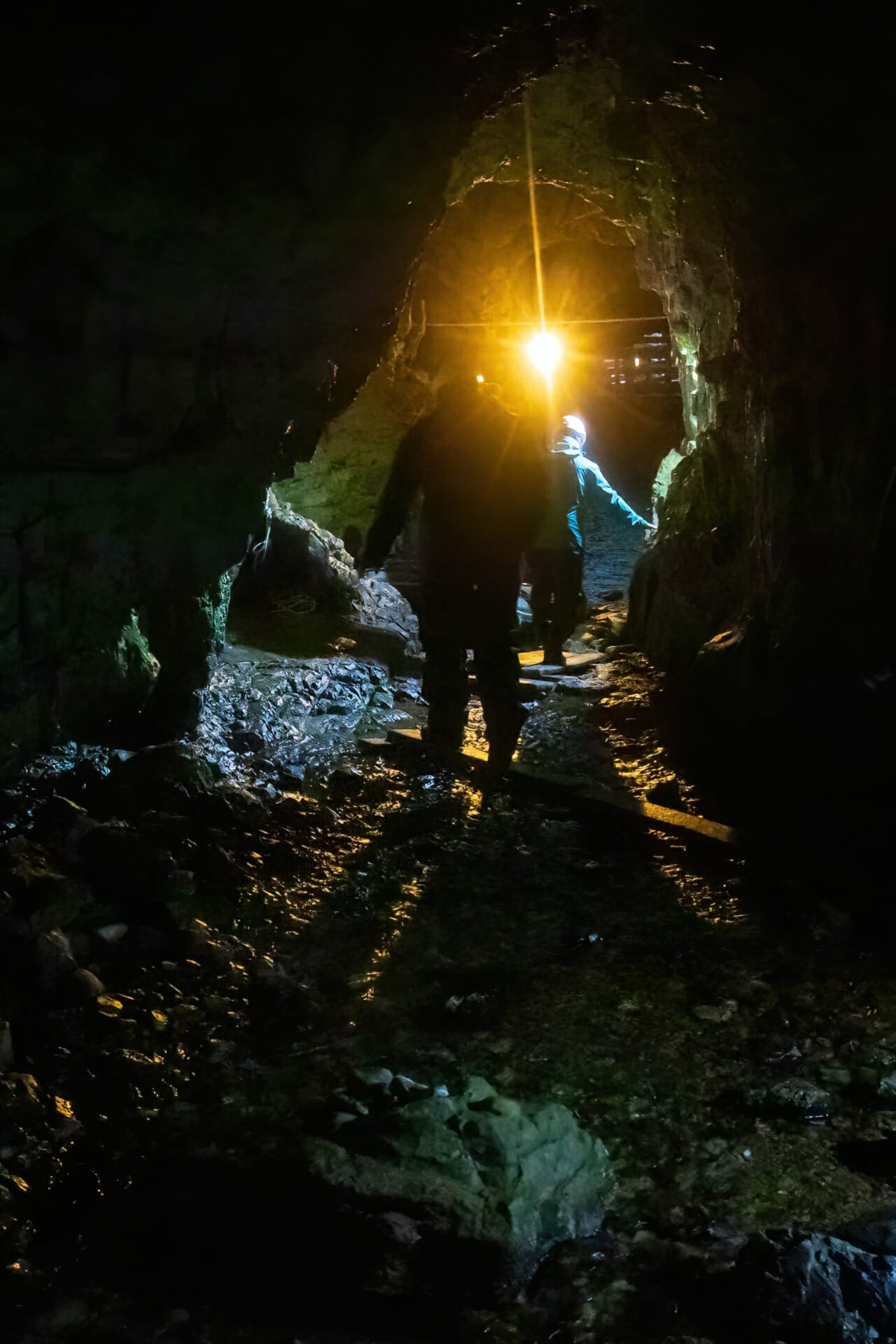
You can feel entirely safe on the trip into the rear chamber, incidentally, since helmets and lights are provided for every participant on the tour.
The sea, incidentally, still reaches all the way into the first chamber today during particularly high tides…
Special features: bodies in the river, and a famous visitor
Alongside the superstition that the devil lives in this hole, folklore also tells of the murderer Donald McMurdo – or Domhnull MacMhurchaidh in Gaelic – who is said to have disposed of some of his victims here in the 17th century. Eighteen people are said to be on his conscience (the exact number of his victims isn’t entirely certain), and he’s said to have thrown some of their bodies through the river’s sinkhole into the cave. The culprit now lies in the graveyard at nearby Balnakeil.
A rather more cheerful note: the first recorded tourist visit here dates from 1760, and the visitor’s name was Sir Walter Scott – the writer who, more than anyone else, brought the romantic myth of the Highlands to new life.
Personal notes: glorious colour, and what we missed
The sheer scale and the colours alone impressed me, and the waterfall did the rest. The only shame was that, because of the rainy weather, we had no chance to see the third chamber.
We also missed the following: the river plunges almost 25 metres down into the cave, and this can also be observed from outside – there’s a platform above the cave, on the other side of the road. Somehow, we simply didn’t notice it.
Don’t make the same mistake.
Did you know: what “Smoo Cave” means
Like many place names in the north of Scotland, this one too comes from the Vikings, from when they occupied parts of the Highlands. The word “smjugg” means roughly “cleft” or “narrow gap”. It’s much the same case as with Cape Wrath – in essence, both words describe the same thing. In this case, simply a cave.
Smoo Cave formed here because the rock at this particular spot is relatively soft – it’s limestone.
Tip: explore the bay
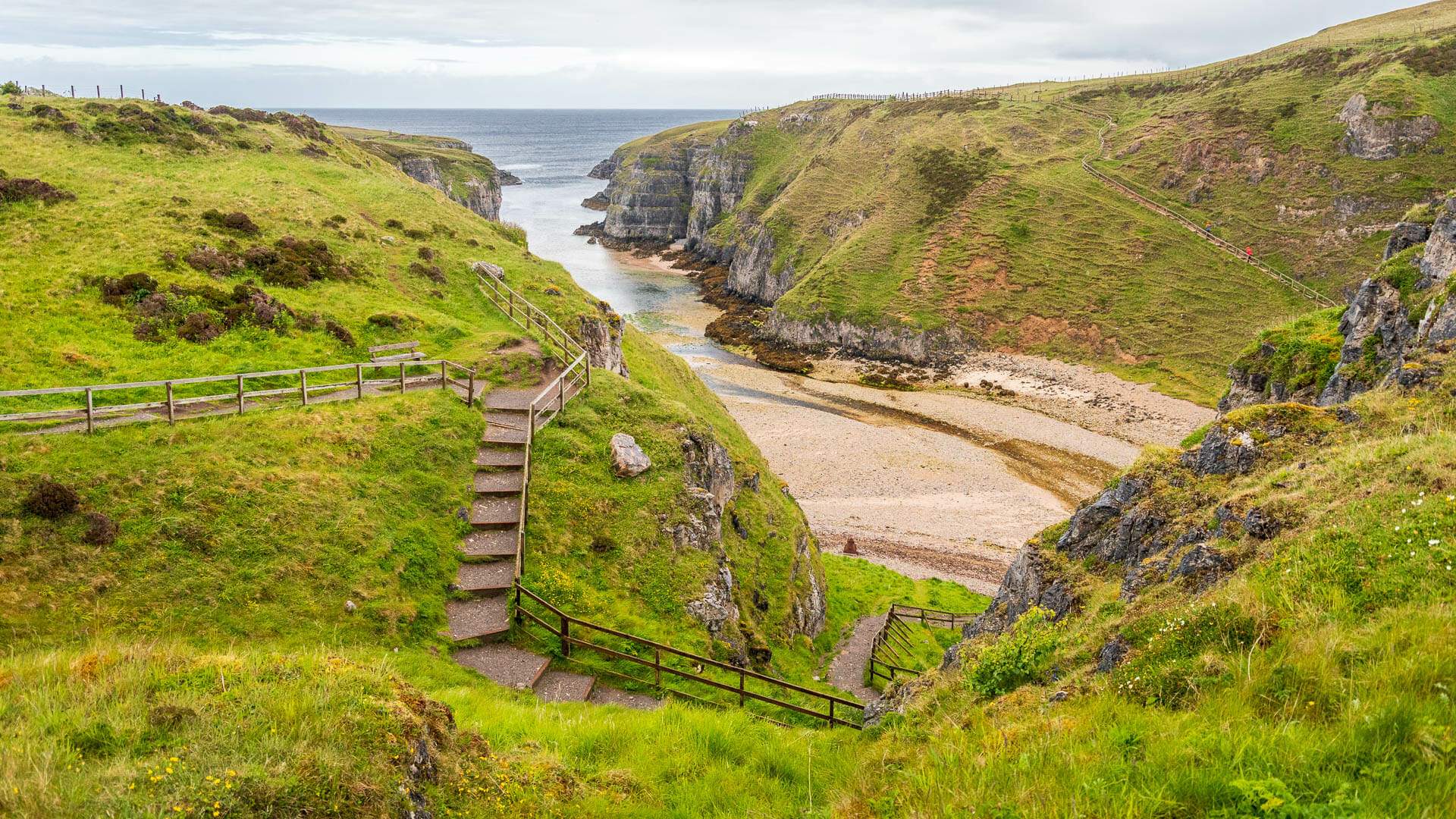
Since it was low tide, we also took the time to explore the beach in the bay in front of the cave. It’s well worth it, since there are further clefts and small caves to find here. But be careful: the tide doesn’t exactly come in slowly.
Getting there:
The cave sits directly on the coastal road in the north of Scotland, the A838. Coming from Tongue, i.e. from the east, Smoo Cave is on the right just before Durness. Thanks to the signposts and a large car park with public toilets, it’s hard to miss.
