In the middle of the Atlantic, far from Scotland, lies the archipelago of St Kilda. Its wild nature once drove the islanders to a sad decision.
As was usual for important decisions of daily life, the men of the island met for the “Parliament”, the village assembly. So it was on this day in 1928 too. The problems were pressing: after the First World War there were fewer and fewer young people on St Kilda. The older residents would soon no longer be able to feed themselves. In fact there were only 36 people left on the island – too few for a viable community.
The men reached a difficult decision: the last families would leave St Kilda. For good.
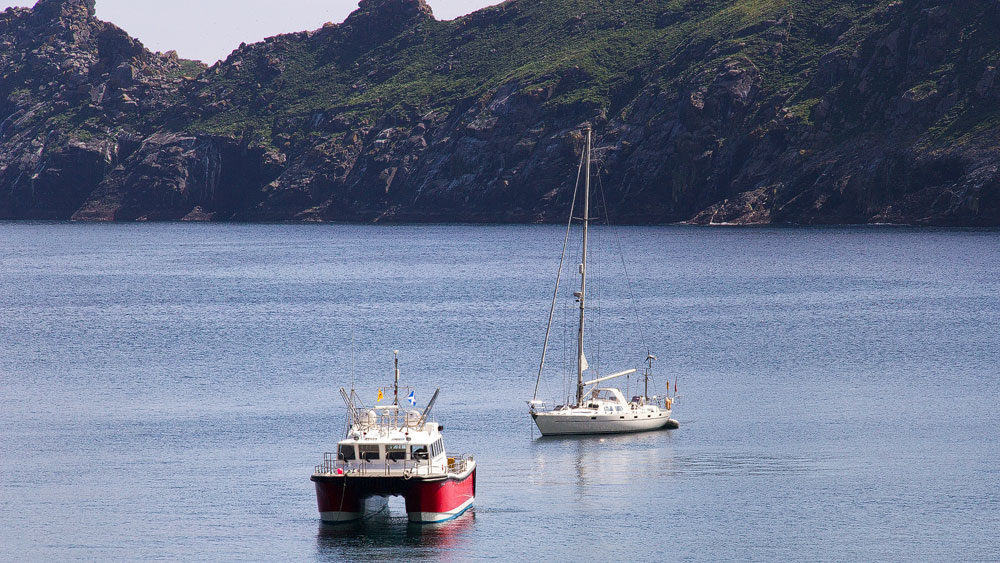
The catamaran “Orca III” ploughs through the waves, spray flying off the bow and drenching the passengers on deck. The crossing from the southern tip of Harris to St Kilda takes a good three hours; the island group lies around 64 kilometres away in the Atlantic, west of the Outer Hebrides. Where the islanders once wanted to leave the island some 75 years ago, today we pay a lot of money to reach the remote archipelago of St Kilda. Around 150 pounds a head, and the trip takes a whole day.
I’m feeling a little queasy. “Going out,” the captain reassures me, “the swell is always a bit rougher.” Either way, I can’t stand it in the warm cabin – the fresh air helps.
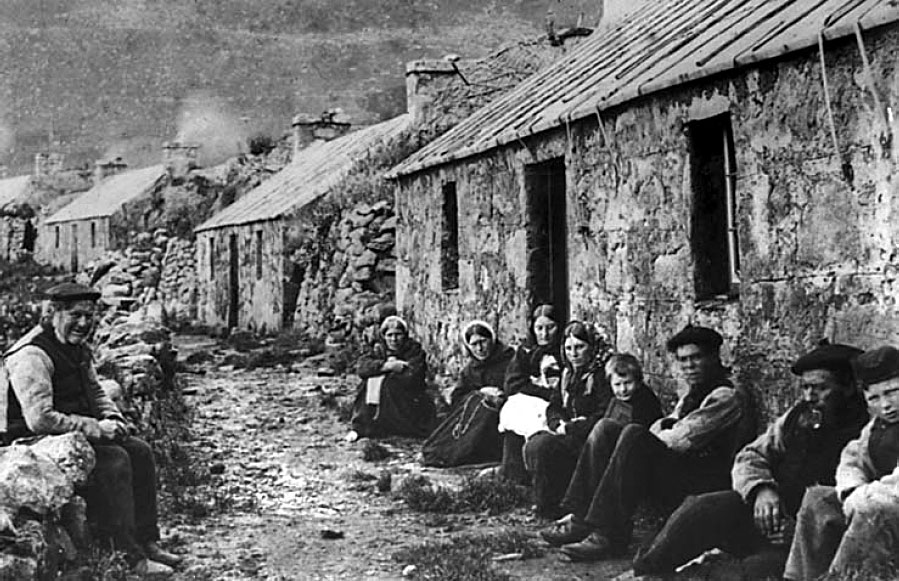
The exodus had begun when the soldiers came. They told the young people about the comforts of the Scottish mainland, of bustling cities like Glasgow and Edinburgh. They stirred up a longing for an easier life. And so, more and more often, men joined the military or women married outside the community. A few fatal accidents did the rest. When, in 1920, an extended family of eleven members emigrated together to Lewis, only a few were left who were willing to submit to the strict regime of church and work. 36 people, of whom only 20 were between the ages of 21 and 65.
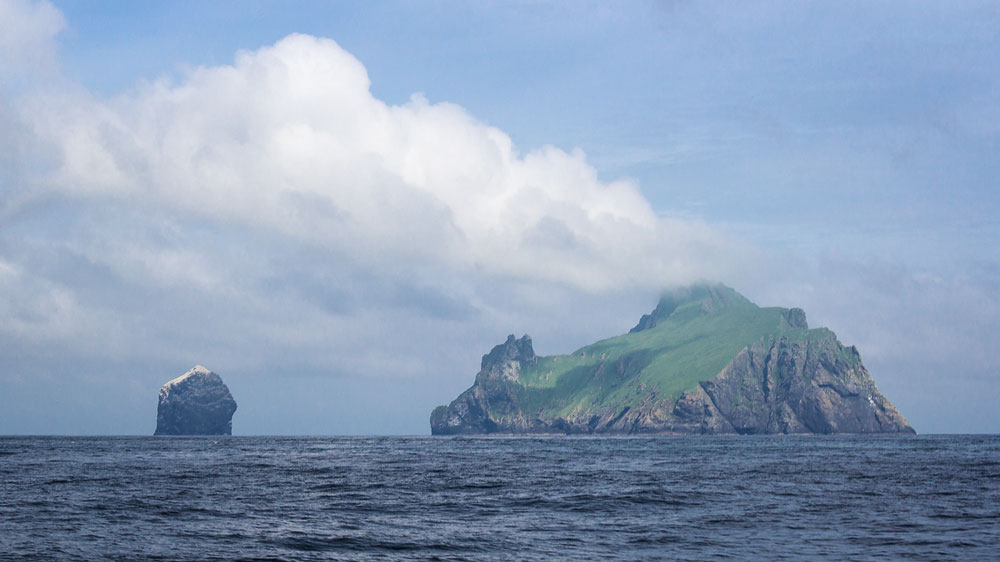
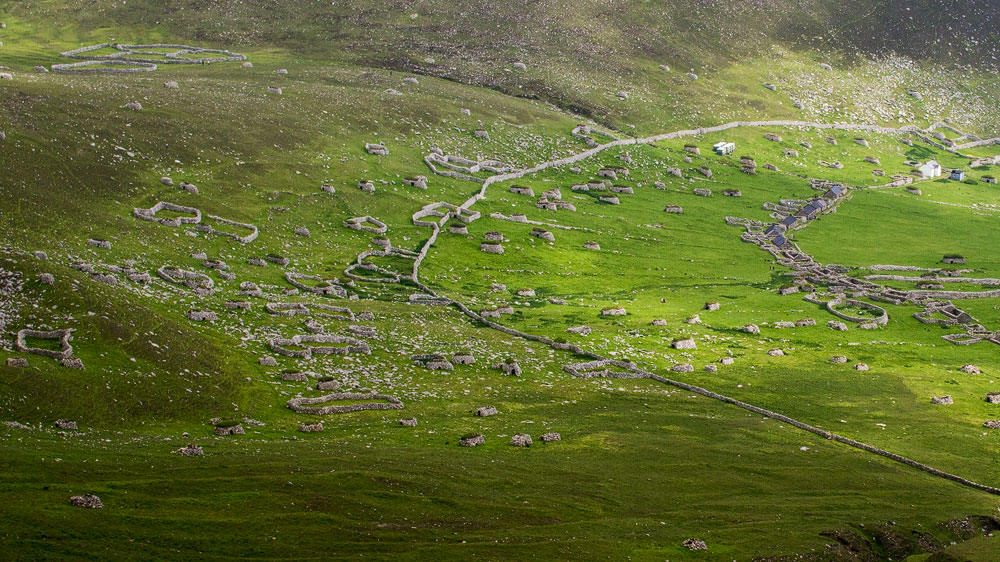
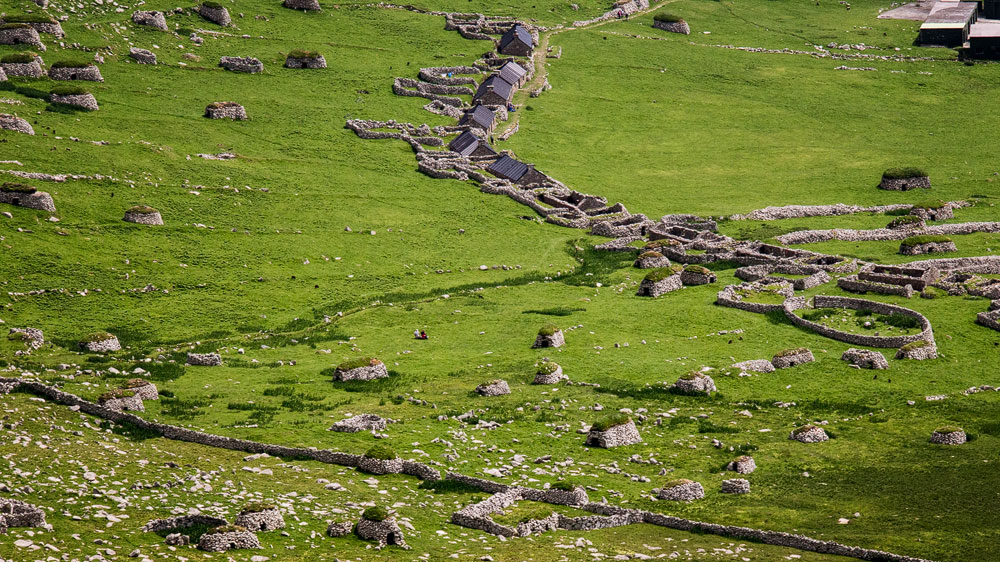
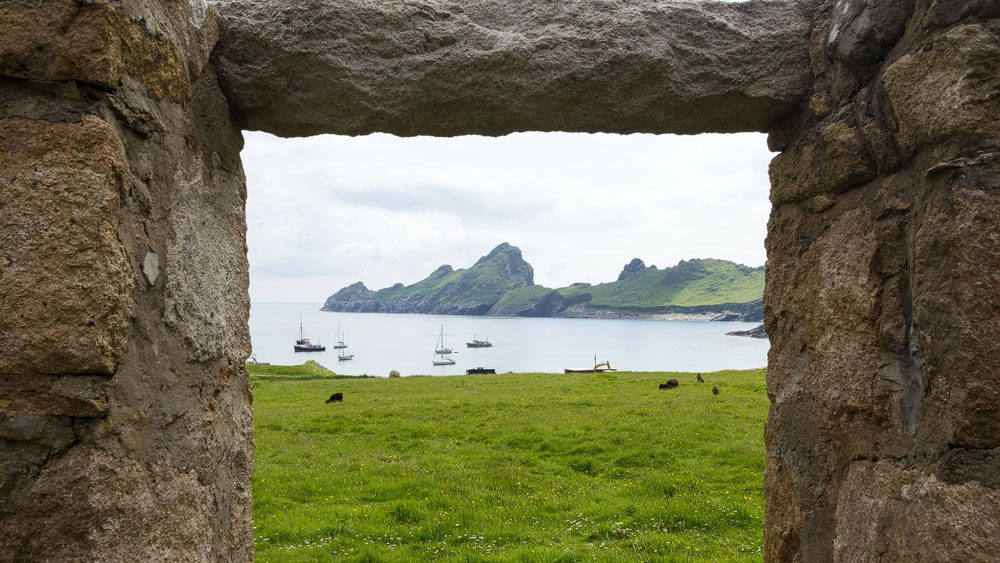
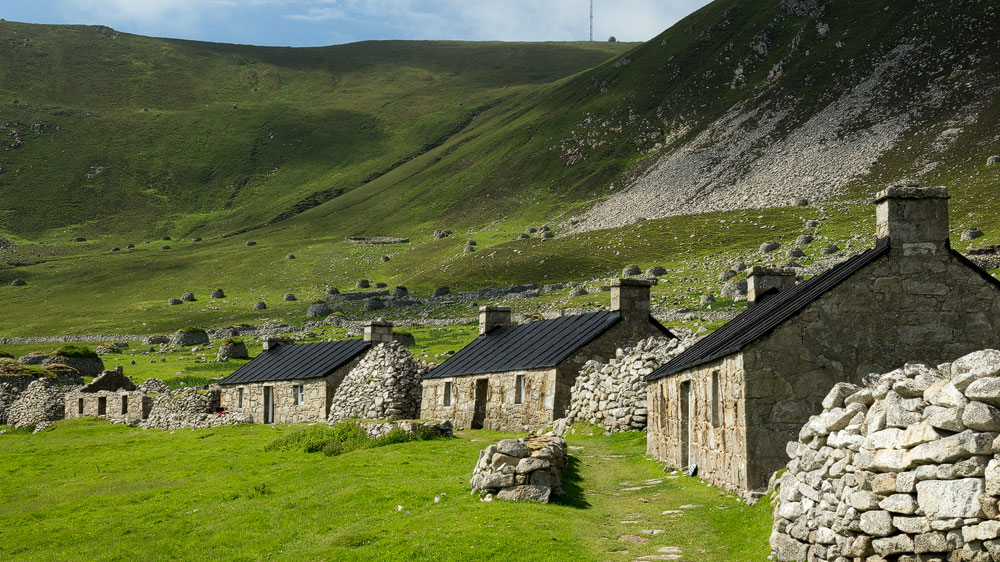
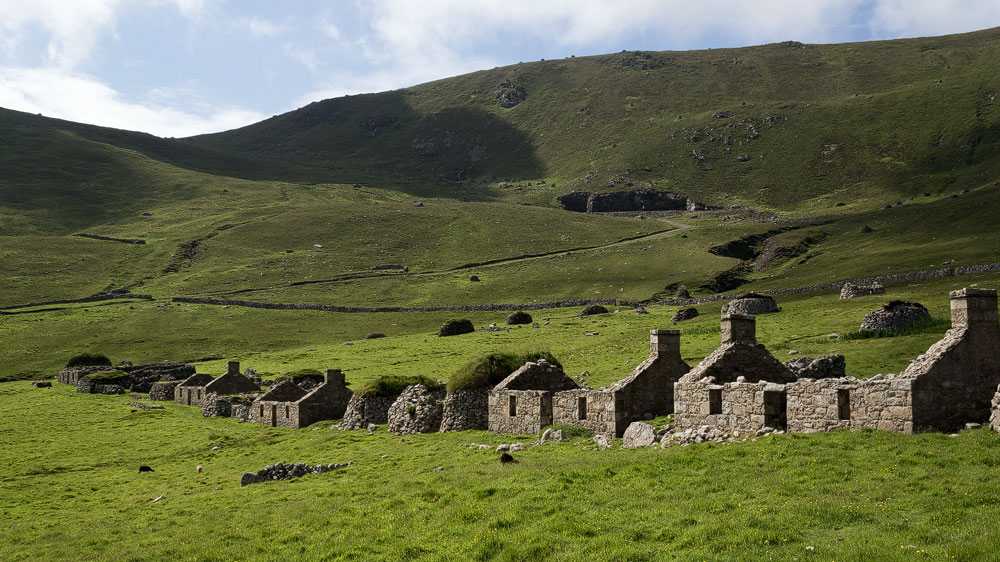
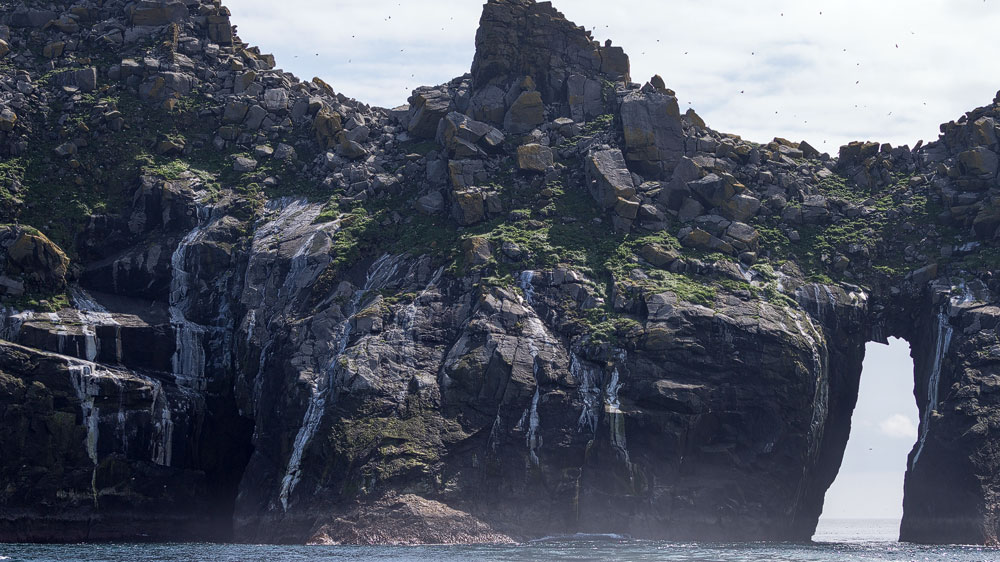
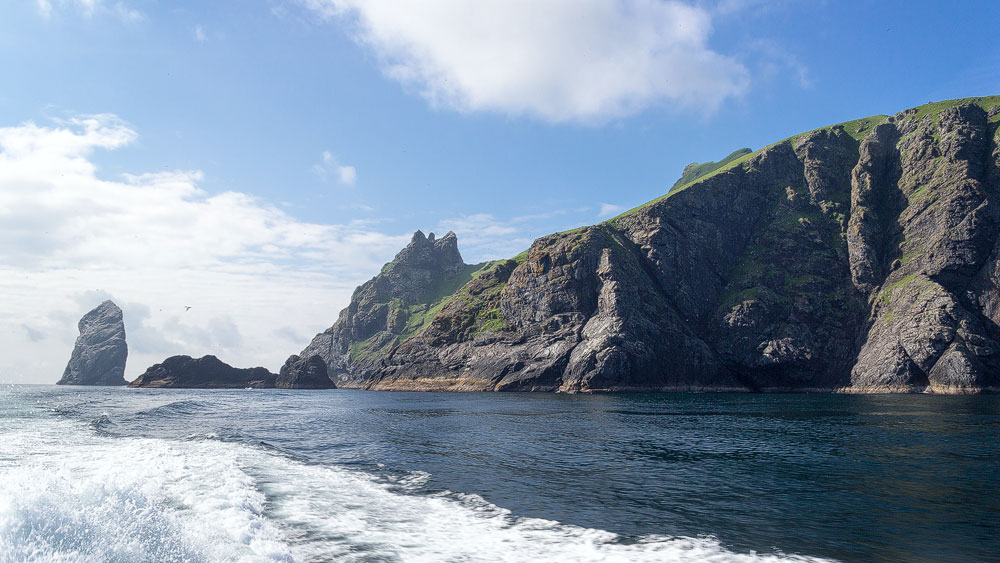
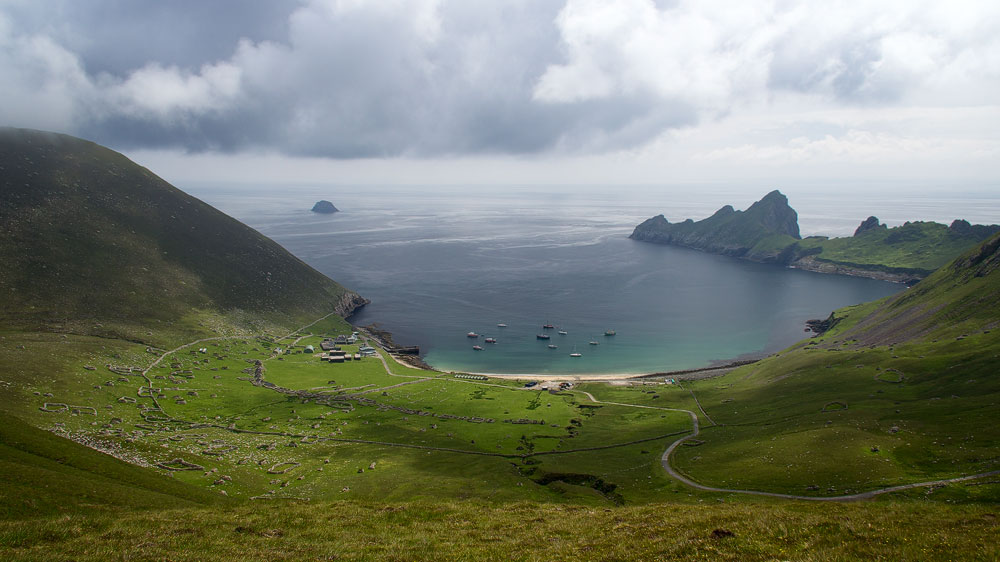
The first thing I see is Boreray, one of the smaller islands, flanked by a lone sea stack. Then the bow slowly turns towards the bay of the main island, Hirta. Hirta or Hiort (Gaelic, pronounced roughly “Hirsht”) was the island where the former village of St Kilda stood. As we enter the bay, the row of former blackhouses appears behind the military installations. They all faced the bay with their doors. The islanders confidently called the path in front of the houses “Main Street”. Behind it – scattered across the whole hillside – are the cleits, a kind of stone storage hut.
The catamaran cannot dock in the bay. The swell can be treacherous, so we passengers are brought to the pier by a small boat.
St Kilda is certainly one of the most remote islands. Yet you’re not alone here. No sooner have we set foot on the island than we, along with other groups, are greeted by the ranger, who explains the rules on land to us. The archipelago is today in the care of the National Trust for Scotland, which looks after its preservation, since St Kilda is a double UNESCO World Heritage Site and thus a treasure for the whole of humanity. While I take all this in, a diesel generator thumps loudly in the background inside one of the military’s ugly corrugated-metal buildings. Solitude sounds different.
People had lived on St Kilda for 2,000 years, since the Bronze Age. But throughout all those centuries it was never easy to wrest a living from the islands. Life revolved mainly around laying in supplies for the winter: wool for clothing, peat for the hearth, and food. The staple foods were gannets, fulmars and puffins. Each had to be hunted on the cliffs, killed, then salted and stored in the cleits. Fishing played only a minor role, as the swell in the bay was often too strong. There was also some tentative farming, mainly producing potatoes. Occasionally a sheep was brought over from the neighbouring island of Soay.
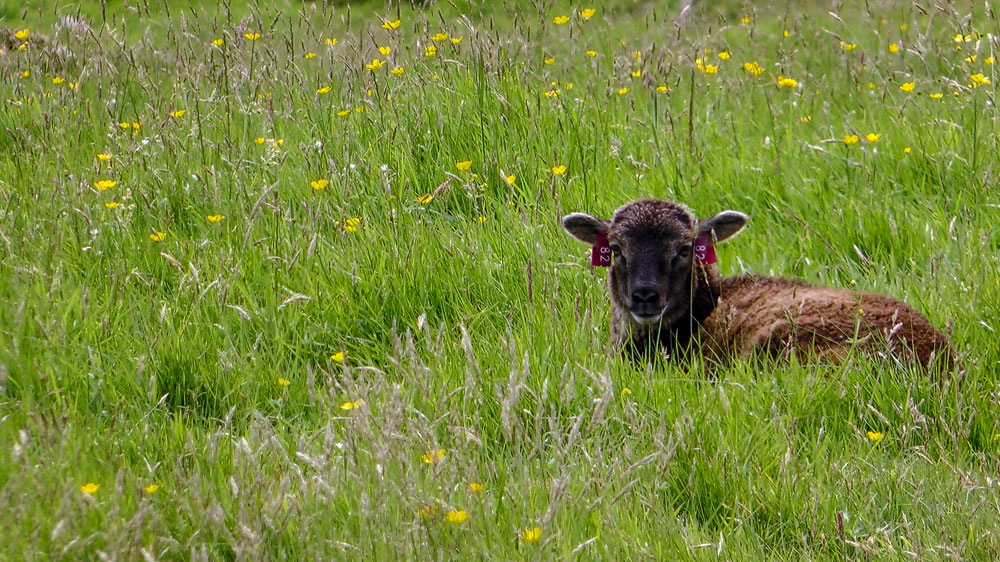
The Soay sheep is found only on St Kilda, which is why it is protected today. Walking around the island, we constantly encounter the animals – and their droppings too. Originally this breed was native only to the western island of Soay, hence the name. Only after the residents were evacuated was a flock brought to Hirta, where it now breeds successfully.
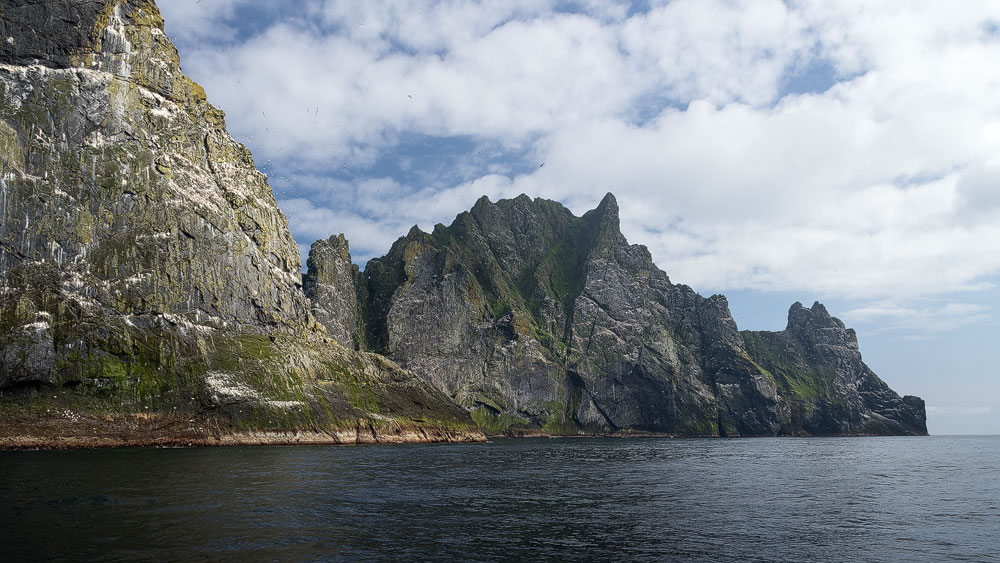
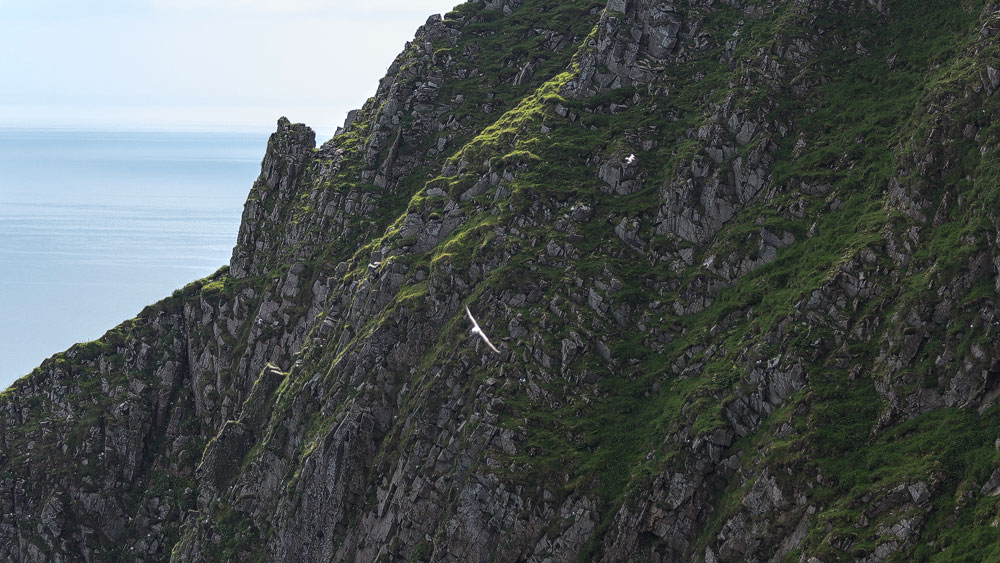
In the few hours we have on Hirta, I naturally want to see as much of the island as possible. As for vehicles, there is only one jeep here for the single paved road up to the military’s radio mast. Anyone who wants to see anything has to walk, so that’s what we do. The mountains rise directly around the bay of Hirta. The ranger recommends we hike north through the dip between two peaks, then curve south in a semicircle and descend on the road from the radio mast. So that’s what we do. Passing the cleits and old stone walls, we quickly gain height. We keep climbing higher until suddenly the ground drops away dramatically before us. We’ve reached the North cliffs. Hirta’s mountains end here at a precipice. These are the highest cliffs in Britain. They give thousands of seabirds a nesting site. They make me dizzy.
Perhaps the residents of St Kilda would have had a chance to survive here if better communication with the mainland had been possible. But since the island was privately owned by a landlord, the state postal service saw no reason to open a branch there. So the islanders had to help themselves with tricks – such as the famous St Kilda mail boats, which were essentially nothing more than a fancier message in a bottle. A float, a container, and a letter inside were thrown into the water, and the current would carry the “mail boat” to the mainland – with a bit of luck. As many as two-thirds are said to have reached their destination – some were found in the Orkney Islands to the north of Scotland. There had been a Post Office since 1906, but only passenger ships in summer took the letters along.
Things only improved once the military built a radio station here. But even that didn’t help quickly enough when an islander fell ill. And so there were tragic cases where residents died of a burst appendix or similar ailments. Even the men of the Parliament could no longer talk their way around that: St Kilda was lonely and isolated.
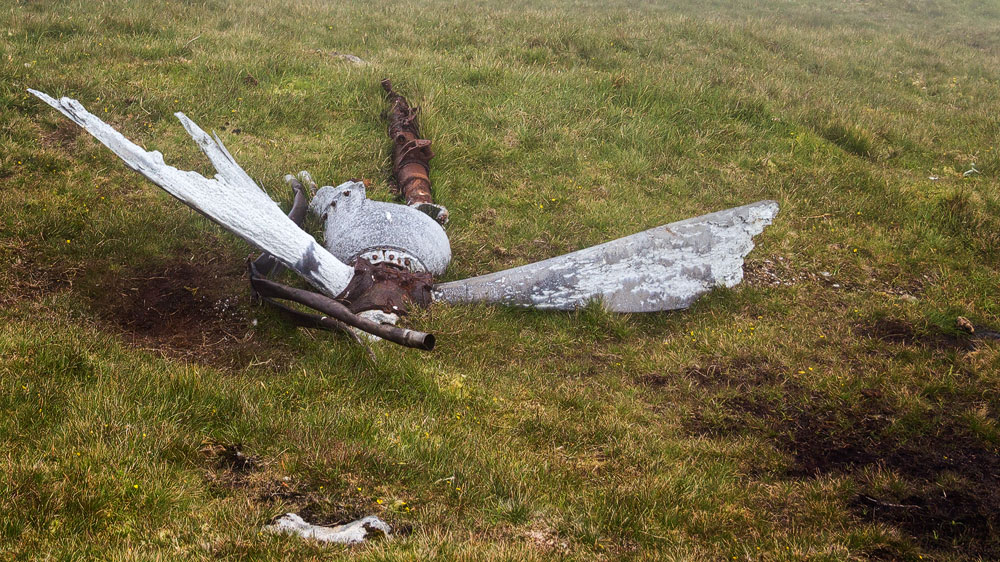
My wife and I climb Conachair, which rises to almost 400 metres. Along the way we’re confronted with the island’s wartime past: a rusting propeller marks the crash site of a Second World War aircraft. Yet the island only saw conflict in the First World War, when a German U-boat surfaced in the bay. The population was kindly warned before the radio station came under fire. Not a single person, nor a single house in the village, came to any harm.
The higher we climb, the less we can see. Clouds cling to the mountain, and it turns damp. To stay on the right path, we orient ourselves by the sound of the radio mast on Mullach Mòr, the “great peak” to the south. As we slowly descend out of the clouds again, a magnificent view of the bay and the village opens up before us.
However isolated St Kilda may have been, the village had the most essential facilities for a vital community. First and foremost, of course, was the church, where the residents gathered at least every Sunday to praise their God – in Gaelic, and without musical instruments. Those, like playing cards, were frowned upon on the island. The devil’s work. There was also a school, which took care of the education of the youngest. In the winter months, every pupil would bring a piece of peat, so there was always enough to heat the room during lessons.
Even so, the possibilities soon reached their limits here too. Many pupils who wanted to further their education had to leave the island. That, too, is one reason why soon only a few young men remained.
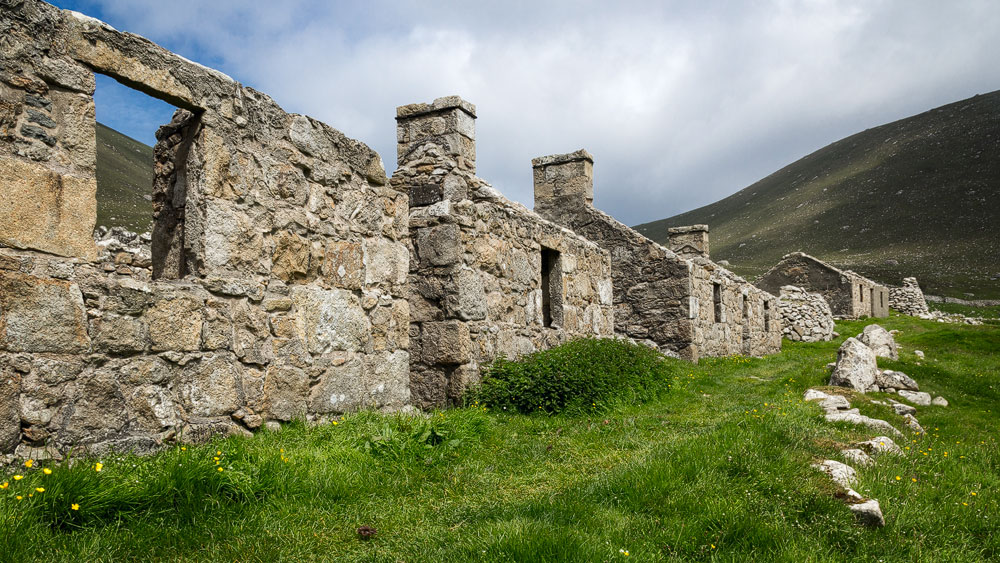
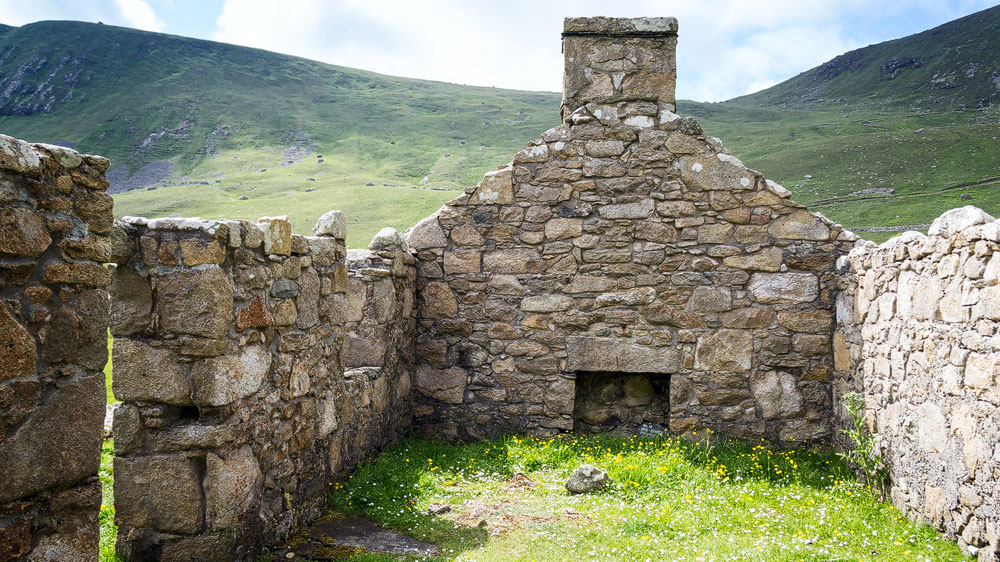
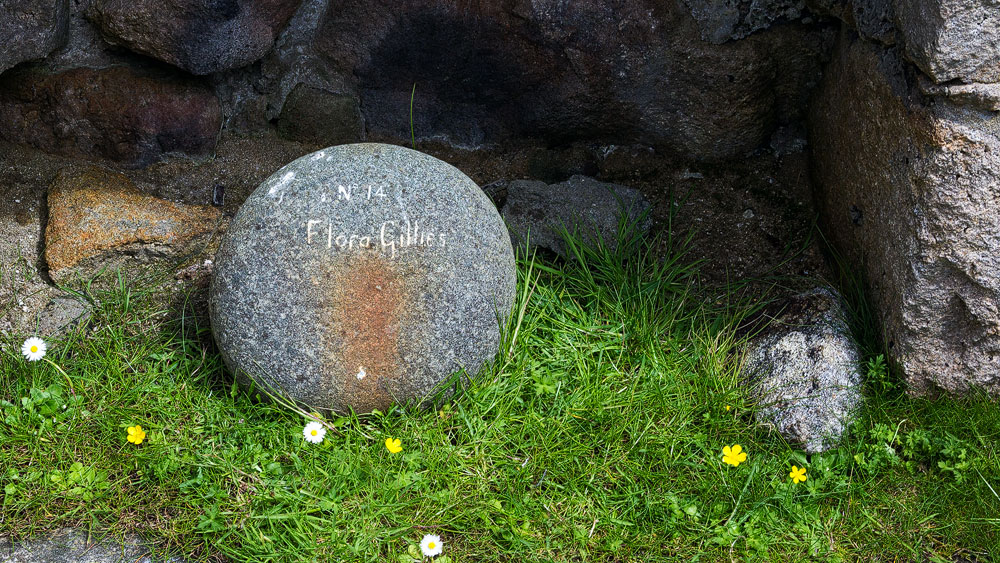
We enter the old village. Hollowed-out houses, which were already sparse back then. Normally there were two bedrooms and a kitchen, where a stove was always burning. In winter, one more room could be heated. In the fireplaces of the houses there are round stones today bearing the names of former residents. “No. 14, Flora Gillies”, reads one, for example. The residents themselves left the stones there, during a visit long after the evacuation.
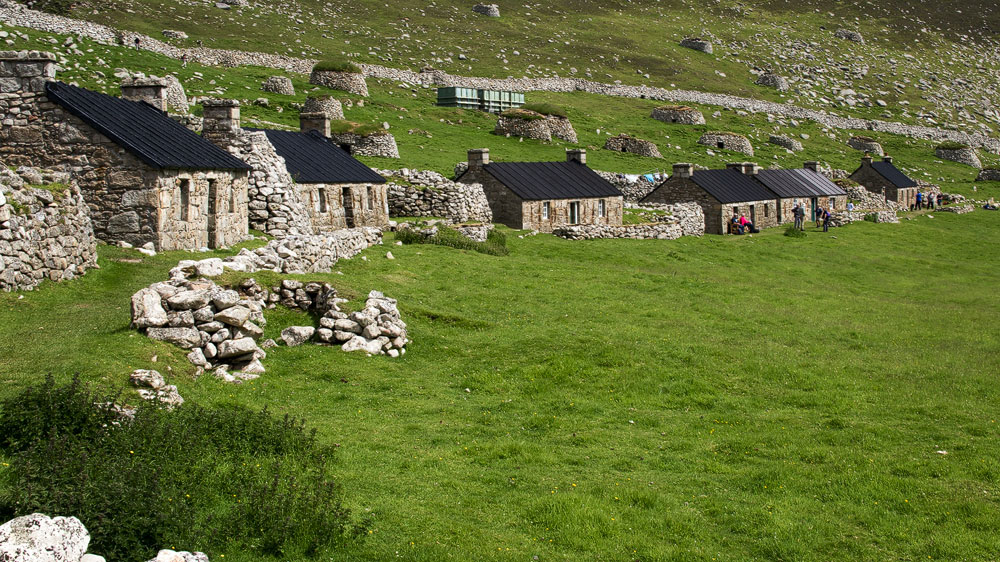
Further along Main Street, though, the picture changes. The houses have roofs, doors, glass windows. Music drifts out of some of them. They’ve been restored for archaeologists and Trust staff who study the island. And the former schoolhouse is today a gift shop and the ranger’s office. Our tour of Hirta ends here. We’re taken back out to the Orca III. After all, we still want to see the other islands.
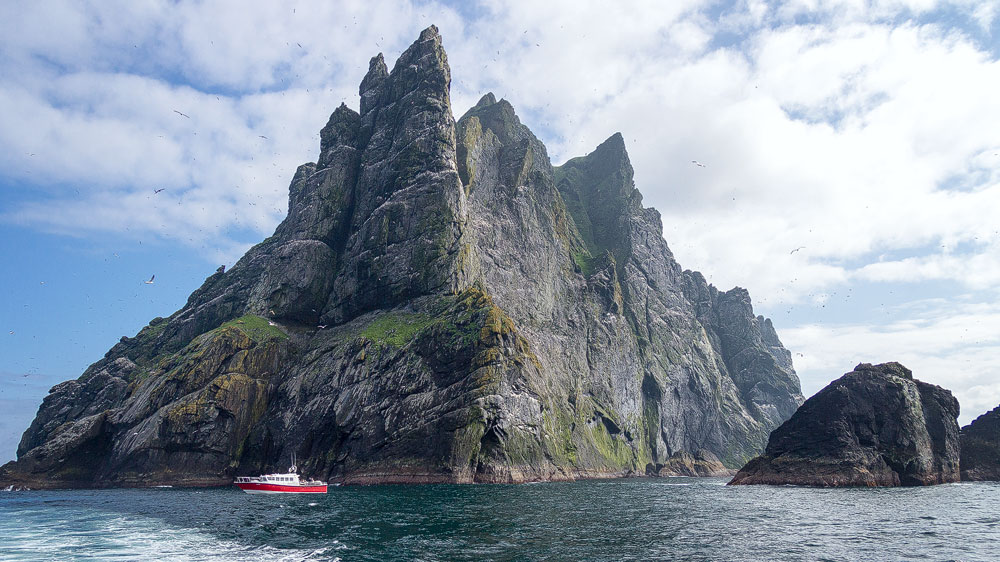
The residents of St Kilda didn’t source their food only from Hirta. In calm weather and the right season, some men would go on expeditions to the sea stacks of Stac an Armin and Stac Lee near the island of Boreray. These were populated by almost endless numbers of birds. On the steep cliffs they would spend days catching hundreds of birds with snares on poles. They spent the nights in small stone huts in the rock, before finally throwing the birds down to the boat, then climbing down themselves and returning to Hirta.
There was work to be done on Boreray itself too. The sheep that lived on the island were sheared to produce wool. But Boreray – like the sea stacks – was really nothing but steep rock faces, and landing there was difficult. Only seasoned men could manage it.
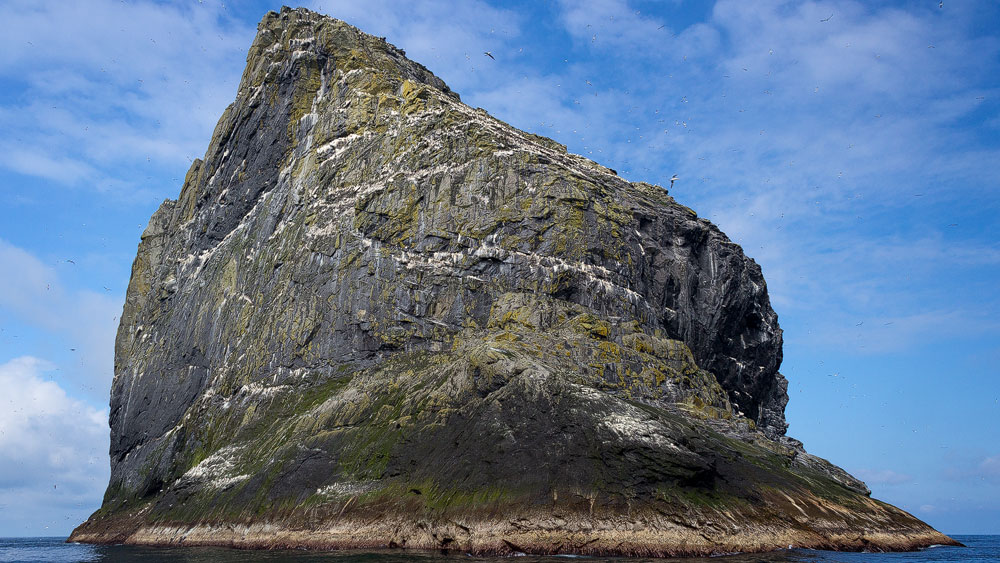
The Orca III leaves the bay of Hirta and sets course for Stac Lee, which rises out of the sea around seven kilometres north-east of Hirta near Boreray. It’s said to be about 172 metres high, making it one of the two tallest sea stacks in Britain. The other stands just a little further along, called Stac an Armin, reaching an impressive 196 metres.
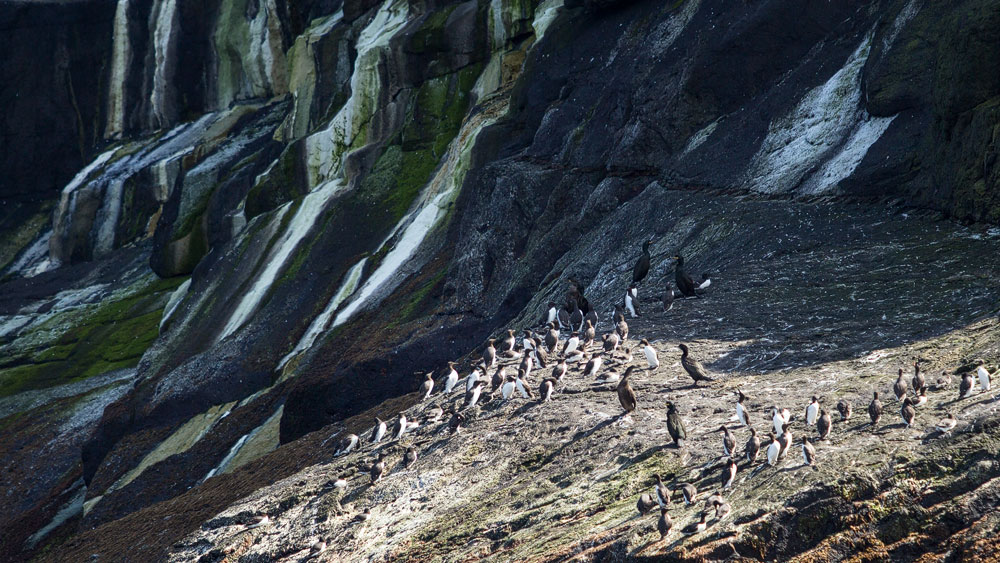
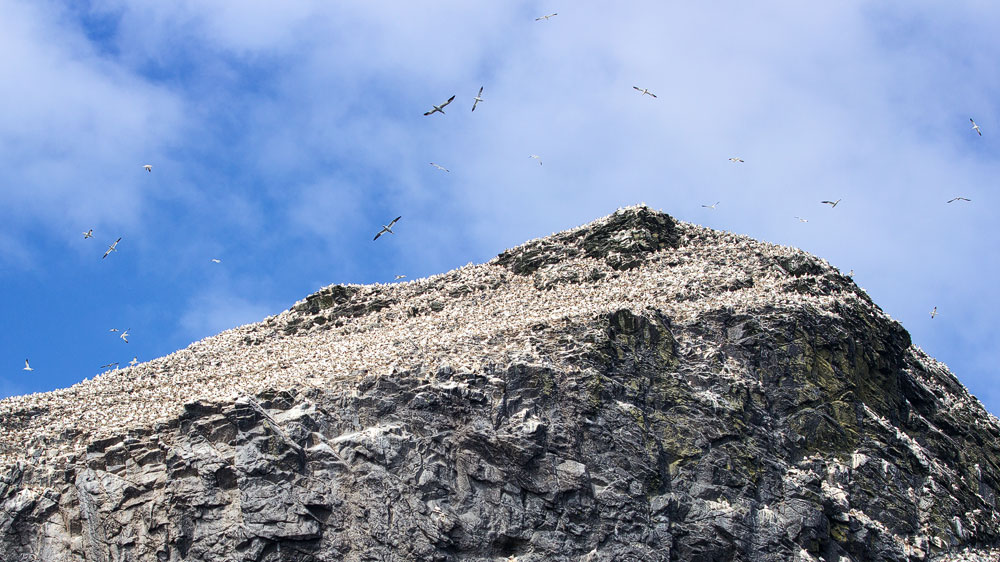
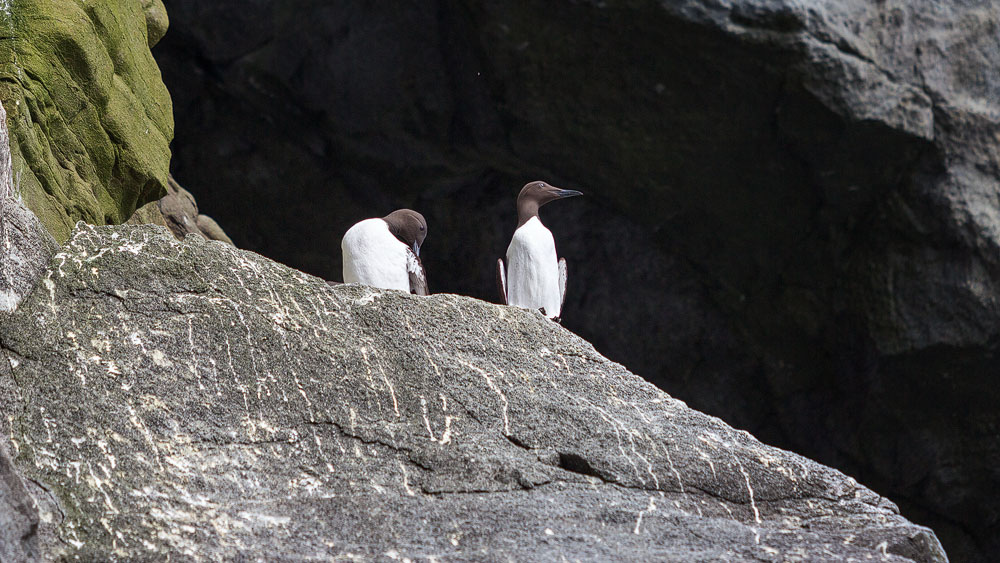
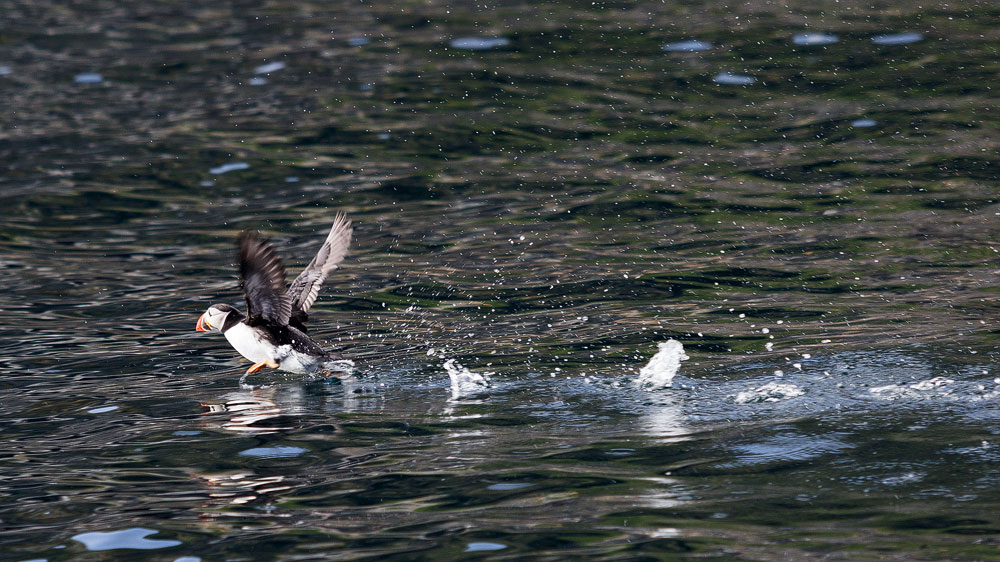
Boreray, Stac Lee and Stac an Armin are a paradise for birdwatchers. In 2004, a total of 60,000 breeding pairs of gannets were estimated across the three islands, making St Kilda the island group with the most gannets anywhere. Puffins bob about in the waters around Boreray, and further bird species are found on the cliffs.
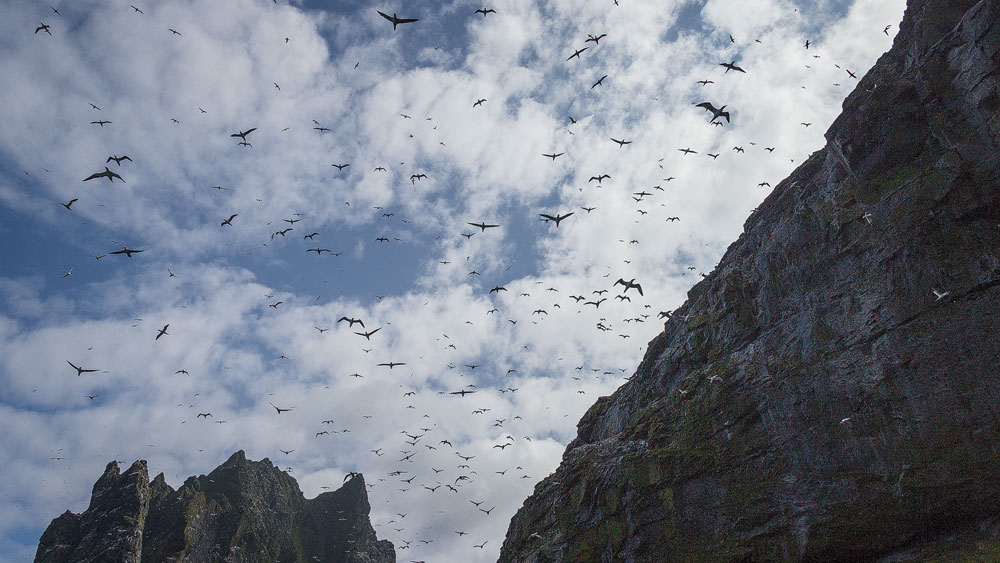
At some point I notice my mouth is hanging open. I’ve never seen such a mass of birds. The air traffic over my head is gigantic – I wonder why there aren’t any collisions.
But after about an hour, our boat has circled Boreray too. The captain starts the engines and heads for home. I leave this wonderful island world with a heavy heart. How likely is it that I’ll ever come here again?
The island’s Parliament had reached the decision that all the residents of St Kilda should be evacuated, at their own request. They wrote to the government, which set the necessary steps in motion. Finally, on 29 August 1930, the families of Hirta boarded the ship Harebell. Most were glad to get away from this barren island and to begin a new life in the west of Scotland, one that was safer and more comfortable.
Yet as the former St Kilda resident Donald John Gillies wrote: “A portion of the earth […] is not abandoned by all its inhabitants on one day without a deep stirring of the heart […]”
Good to know: History and a false myth
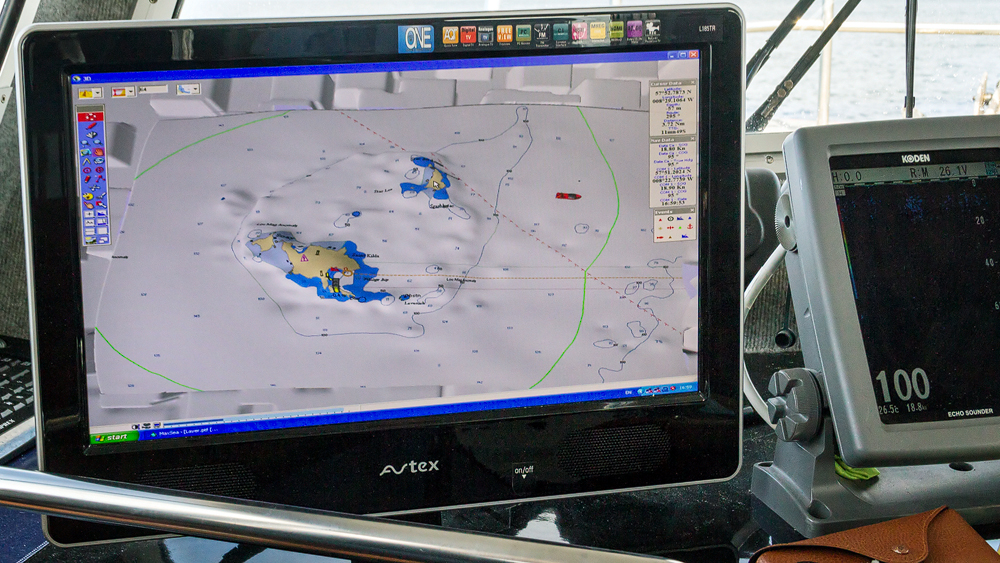
St Kilda is actually an extinct volcano. This can be seen clearly on sonar, since it shows that the seabed also rises up around the visible islands, up to 40 metres below sea level.
The islands have been inhabited for around 4,000 years, since the Neolithic period. Archaeologists have found burial sites from that era, as well as from the Bronze Age. Jewellery finds and place names point to Viking occupation of the island. St Kilda belonged to the MacLeods of Dunvegan on the Isle of Skye. In the 17th century, around 180 people rented the island from the landowners, and from then on there was a village there, though it changed shape several times over the years.
UNESCO has recognised St Kilda for its natural and cultural heritage.
The St Kilda Parliament, at which the men of the island are said to have met to talk, did not in fact meet daily as claimed on Wikipedia. Former resident Donald John Gillies clears up this legend in his memoirs. It usually convened to settle the distribution among families of the cliff sections on which each was allowed to hunt fulmars. Other topics included the support of widows and orphans, the joint construction of storage buildings, and the management of shared supplies such as flour from the mainland. During set working periods, however, there was no Parliament. Gillies puts it laconically: “Many authors refer to the St Kilda Parliament. To my recollection, none of these authors ever attended the Parliament […]” (“The Truth about St Kilda – An Islander’s Memoire”, Donald John Gillies, p. 19).
Tips: Beware of the skuas
If you take the classic hike up the mountain on Hirta, at certain times of year you may end up getting too close to the skuas’ nests. They then start attacking, which can be dangerous. They swoop in low and try to peck at you.
However, the birds always attack the highest point. So if you’re carrying a walking pole or a tripod, you can simply hold it straight up above your head and keep walking. The skuas will then only go for the pole.
Personal note: A dream day on St Kilda
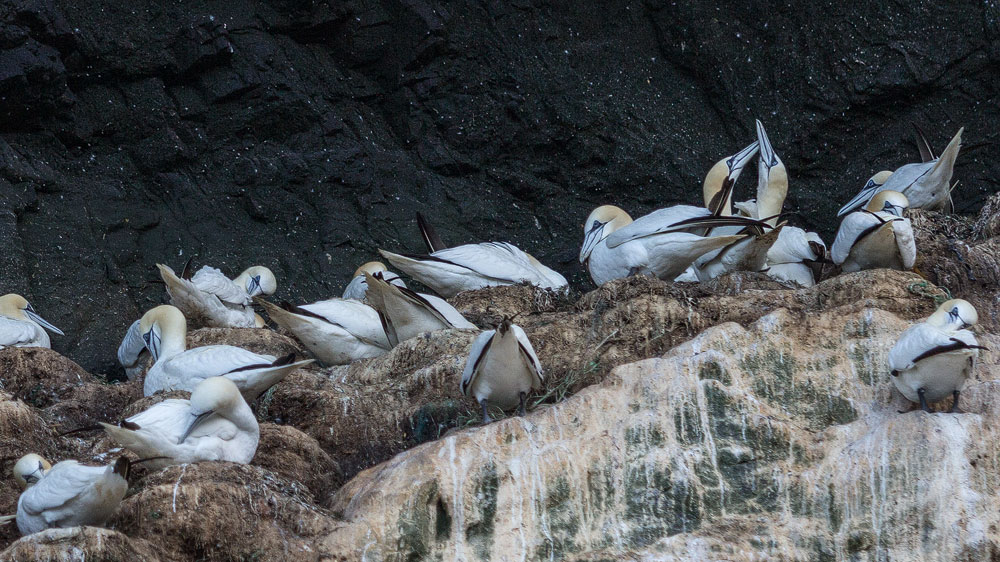
Travelling there, to the edge of Europe, had long been a dream of mine, one I fulfilled together with my wife after our wedding in the Highlands. We were both deeply impressed by the sheer mass of birds, the sea stacks and cliffs, and the history of the islands.
Getting there:
St Kilda can, of course, only be reached by sea. Operators offering trips from Harris include Kildacruises, Sea Harris and St Kilda Sea Tours.
More photos of St Kilda: