For over 850 years, the cathedral in Kirkwall has commemorated St Magnus of Orkney. It’s also Britain’s most northerly cathedral – and a rather special one at that, with a few quirks of its own.
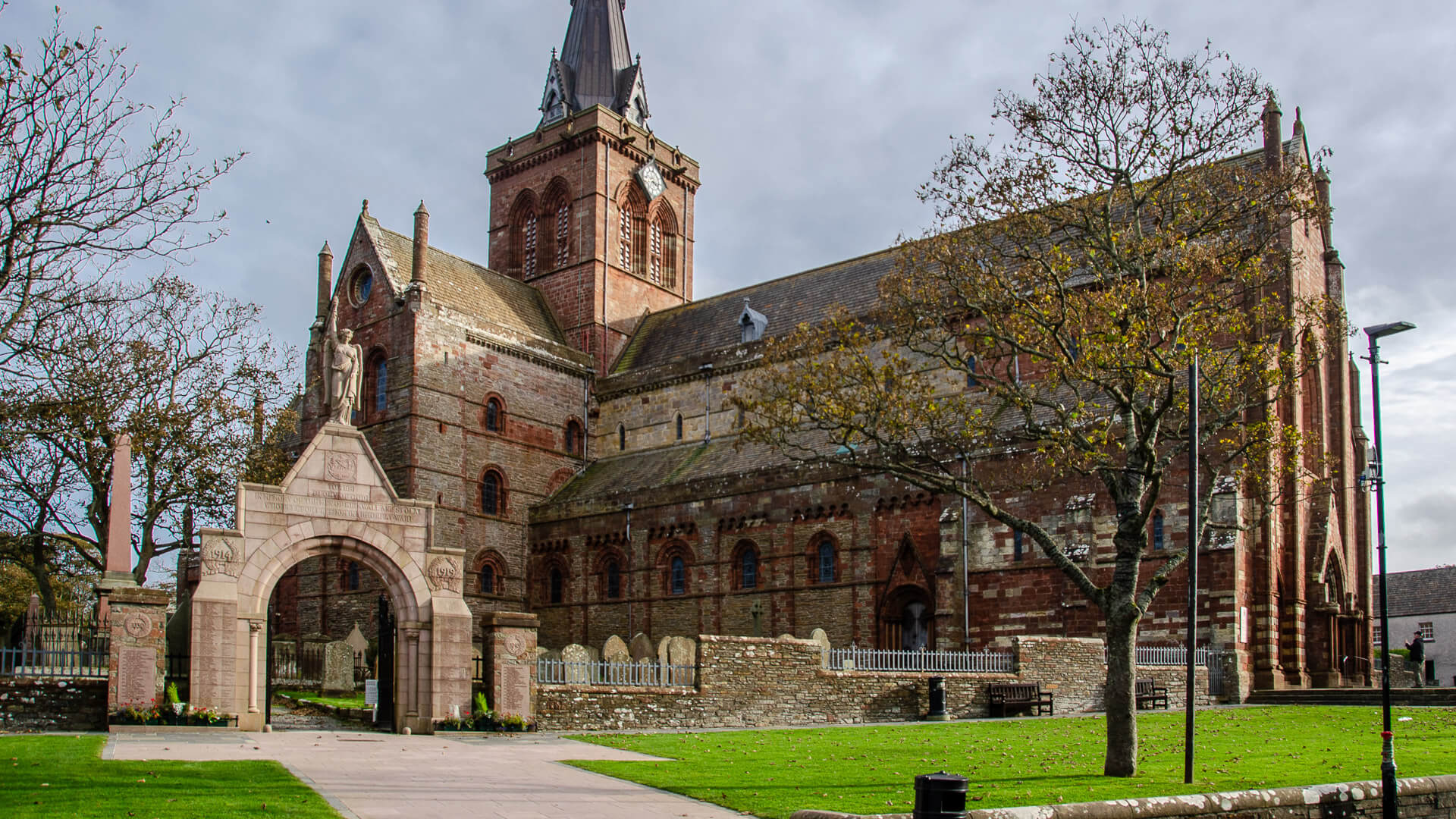
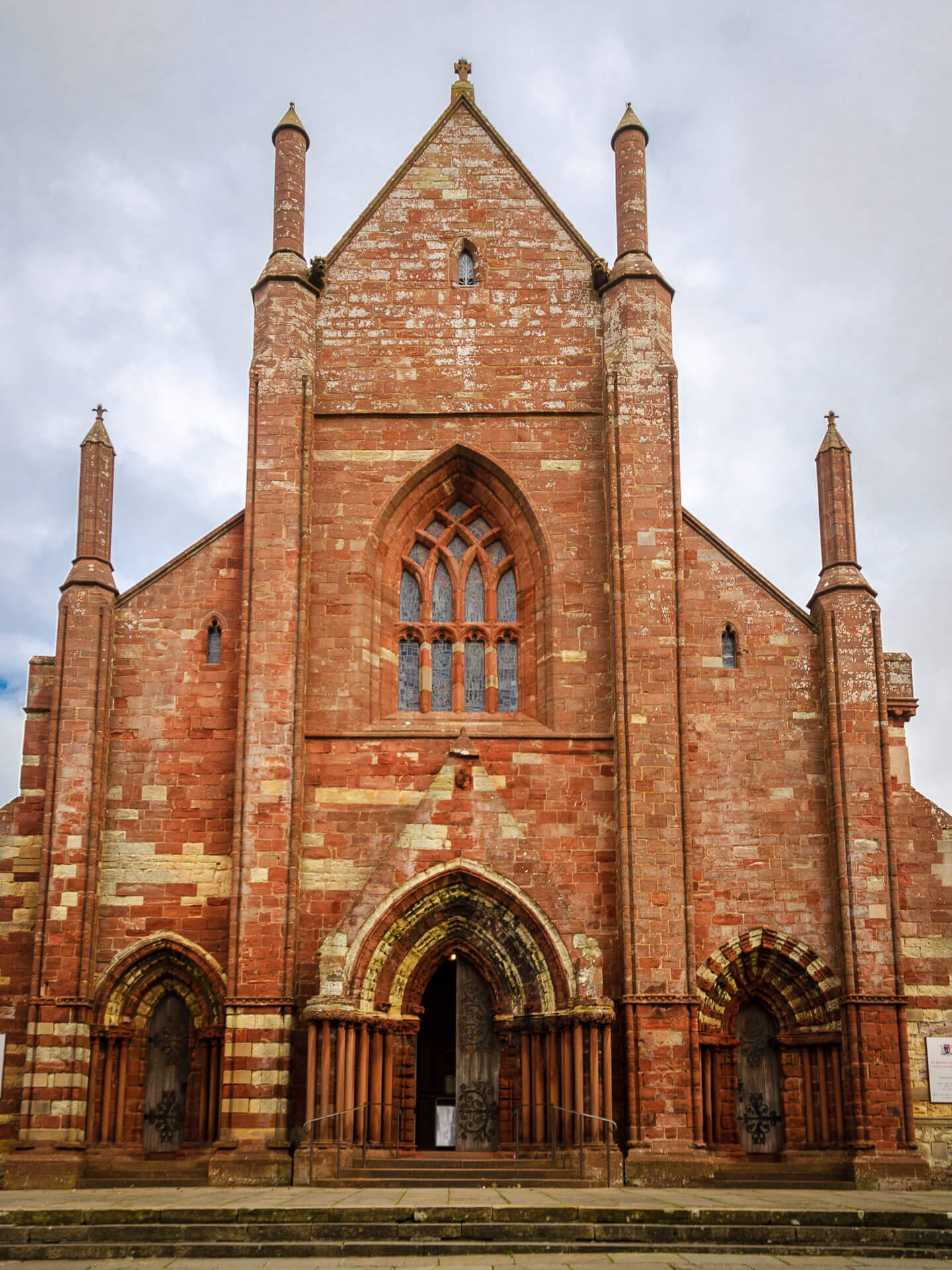
St Magnus is admittedly a fairly small cathedral compared with Britain’s other buildings of this kind. But it’s beautifully adorned with ornamentation and stone-carving, and the two-tone sandstone used gives the building’s appearance a look all of its own.
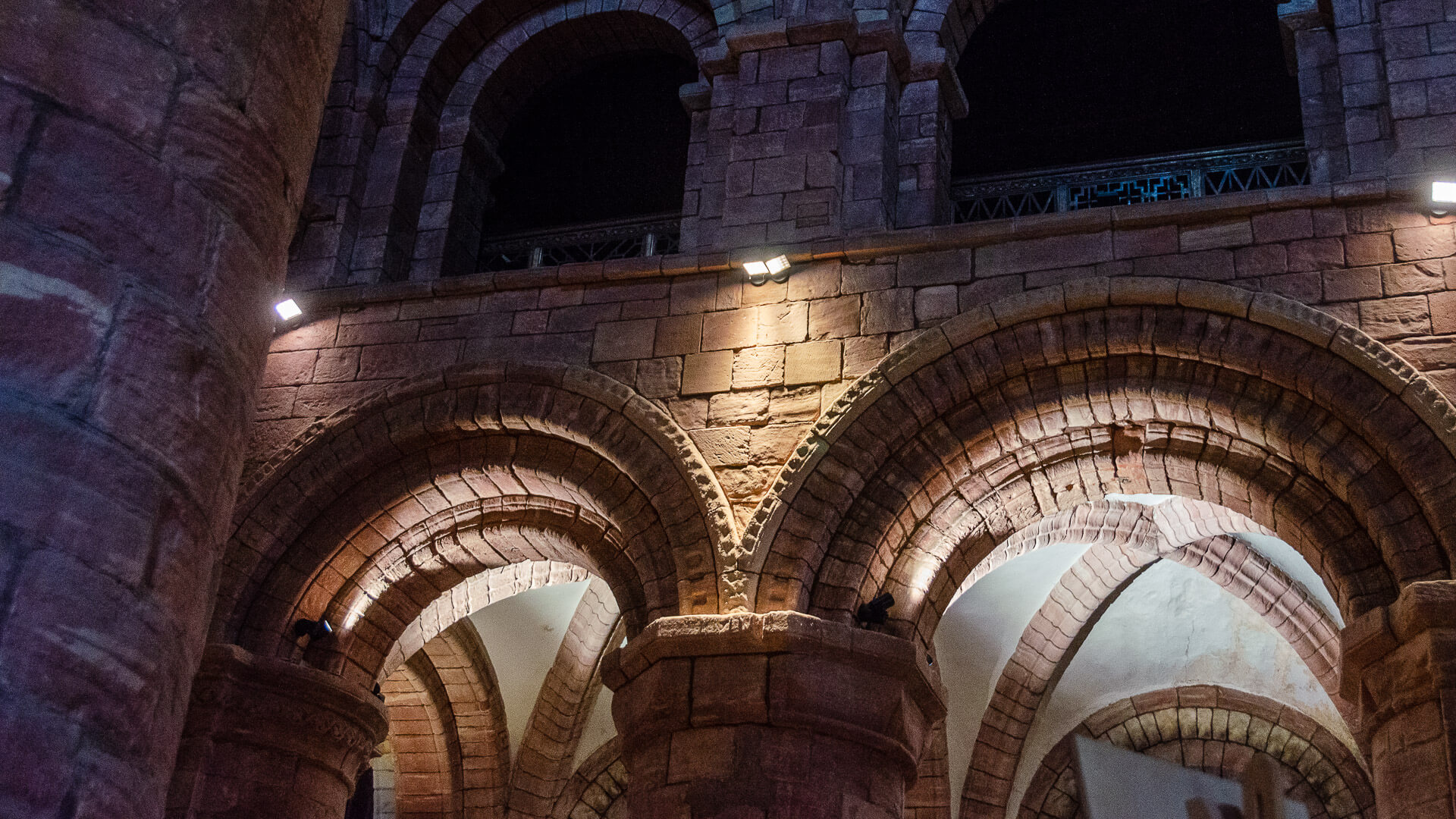
Since the church’s windows are small, the interior is fairly dim – and the stained-glass window unveiled by Queen Elizabeth in 1987 does little to change that. That window, incidentally, marked the cathedral’s 850th anniversary. St Magnus Cathedral was commissioned by the nephew of its namesake in 1137.

Special features: a dungeon in the cathedral
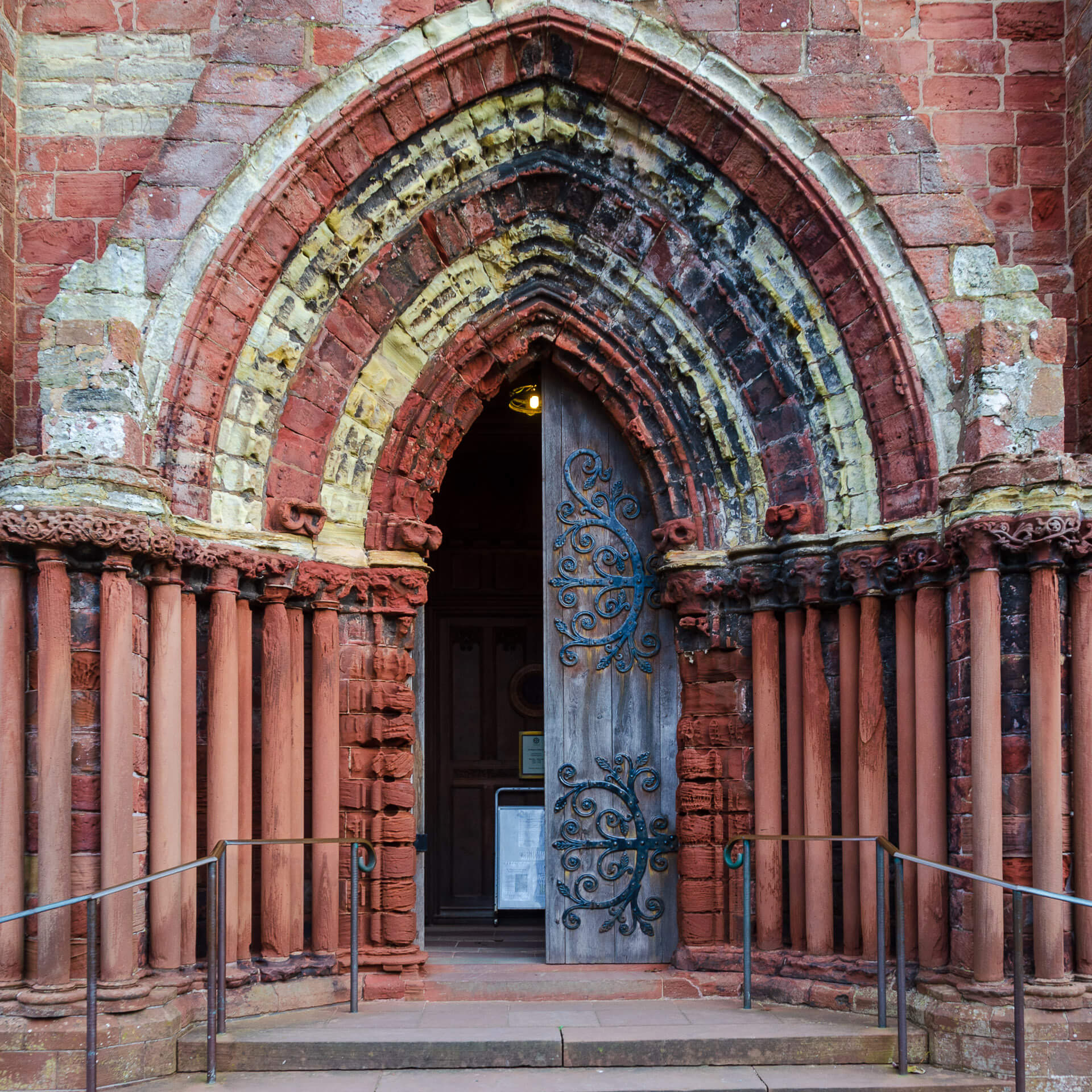
St Magnus Cathedral was built using a polychrome technique – meaning that some decorative elements, such as the window and door arches, were built from stone in two different colours. To do this, the builders used two types of sandstone: a yellow one from the island of Eday, further north, and a red one quarried near Kirkwall.
One quirk proves that divine forgiveness wasn’t always the only thing on the agenda inside this building: St Magnus is one of the few cathedrals to have its very own dungeon – known as “Marwick’s Hole”.
St Magnus Cathedral, incidentally, belongs to the people: in 1854, the town council of Kirkwall took ownership of the church.
Personal notes: German history in Kirkwall’s church
What moved me most was a memorial plaque inside the church. It commemorates the victims of the U-boat attack by Kapitänleutnant Günther Prien on the battleship HMS Royal Oak, which lay at anchor in Scapa Flow near Kirkwall. On 14 October 1939, Prien sent more than 800 sailors to their deaths – around 120 of them were just 14 to 18 years old.
Although the attack is still regarded, then as now, as a daring feat of arms, it’s easy to forget the consequences: people died. The memorial plaque brings that back into focus. The recovered ship’s bell from the Royal Oak is also kept inside the church.
Did you know: the story of St Magnus
St Magnus is the patron saint of Orkney. He lived around 1100 AD. At the time, this Christian made few friends among his Viking companions when, according to legend, he refused to take part in raids on monasteries.
He later became one of two Earls of Orkney, the other being his cousin Haakon. For almost ten years (roughly 1105 to 1114), the two ruled harmoniously together – but, as these stories tend to go, it ended in betrayal.
After tensions first arose between the two, they agreed to peace talks to be held at Easter on the island of Egilsay. Magnus arrived there in good faith and unarmed, which Haakon exploited, taking him prisoner. Magnus was sentenced to death and executed by having his skull split open.
A short time later, the people of Orkney began witnessing miracles, which they promptly attributed to the Christian earl. Even Bishop William the Old, of the Bishop’s Palace, is said to have been cured of a sudden blindness at Magnus’s grave.
Today, the people of Orkney celebrate St Magnus on his (presumed) death day, 16 April. His remains lie in the cathedral named after him, though historians still dispute the authenticity of the bones.
Tip: up high and down below
These days there are also guided tours of the upper parts of the church and up the tower – genuinely worthwhile views, both looking in and looking out.
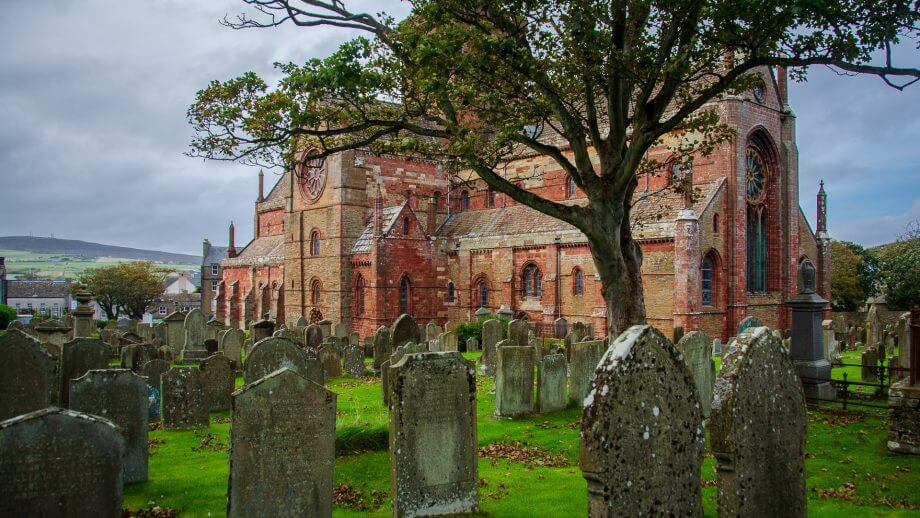
A walk around the graveyard surrounding the church is also well worth it.
Getting there:
With sat nav: “KW15 1PD” will take you straight into the centre of Kirkwall. Better to park just outside it.
Without sat nav: Coming from Stromness (ferry), simply follow the signs to Kirkwall by car on the A965. Park at the harbour in Kirkwall at the start of Albert Street and walk along it (a few minutes’ stroll past the shops) – it leads directly to St Magnus Cathedral.